MAR 3203 Chapter 4: Forecasting
 Call Kai
 Learn
Learn Practice Test
 Spaced Repetition
 Match
Match Flashcards
 Knowt Play
1/29

Earn XP
Description and Tags
Name | Mastery | Learn | Test | Matching | Spaced | Call with Kai |
|---|
No analytics yet
Send a link to your students to track their progress
30 Terms
Forecasting
The art and science of predicting future events that serves as the underlying basis of all business decisions
Short-range forecast
Up to 1 year, generally less than 3 months
Tend to be most accurate
Purchasing, job scheduling, workforce levels, job assignments, production levels
Medium-range forecast
3 months to 3 years
Deal with more comprehensive issues
Sales and production planning, budgeting
Long-range forecast
3+ years
New product planning, facility location, research and development
Economic forecasts
Planning indicators that are valuable in helping organizations prepare medium to long-range forecasts
Technological forecasts
Long-term forecasts concerned with the rates of technological progress
Demand forecasts
Projections of a company’s sales for each time period in the planning horizon
7 Steps in the forecasting system
Determine the use of the forecast
Select the items to be forecasted
Determine the time horizon of the forecast
Select the forecasting model(s)
Gather the data needed to make the forecast
Make the forecast
Validate and implement the results
Realities of forecasting
Forecasts are rarely perfect, unpredictable outside factors may impact the forecast
Most techniques assume an underlying stability in the system
Product family and aggregated forecasts are more accurate than individual product forecasts
Time-series forecasts
Set of evenly spaced numerical data
Obtained by observing response variable at regular time periods
Forecast based only on past values, no other variables important
Assumes that factors influencing past and present will continue influence in future
Time-series demand components
Trend
Cyclical
Seasonal
Random
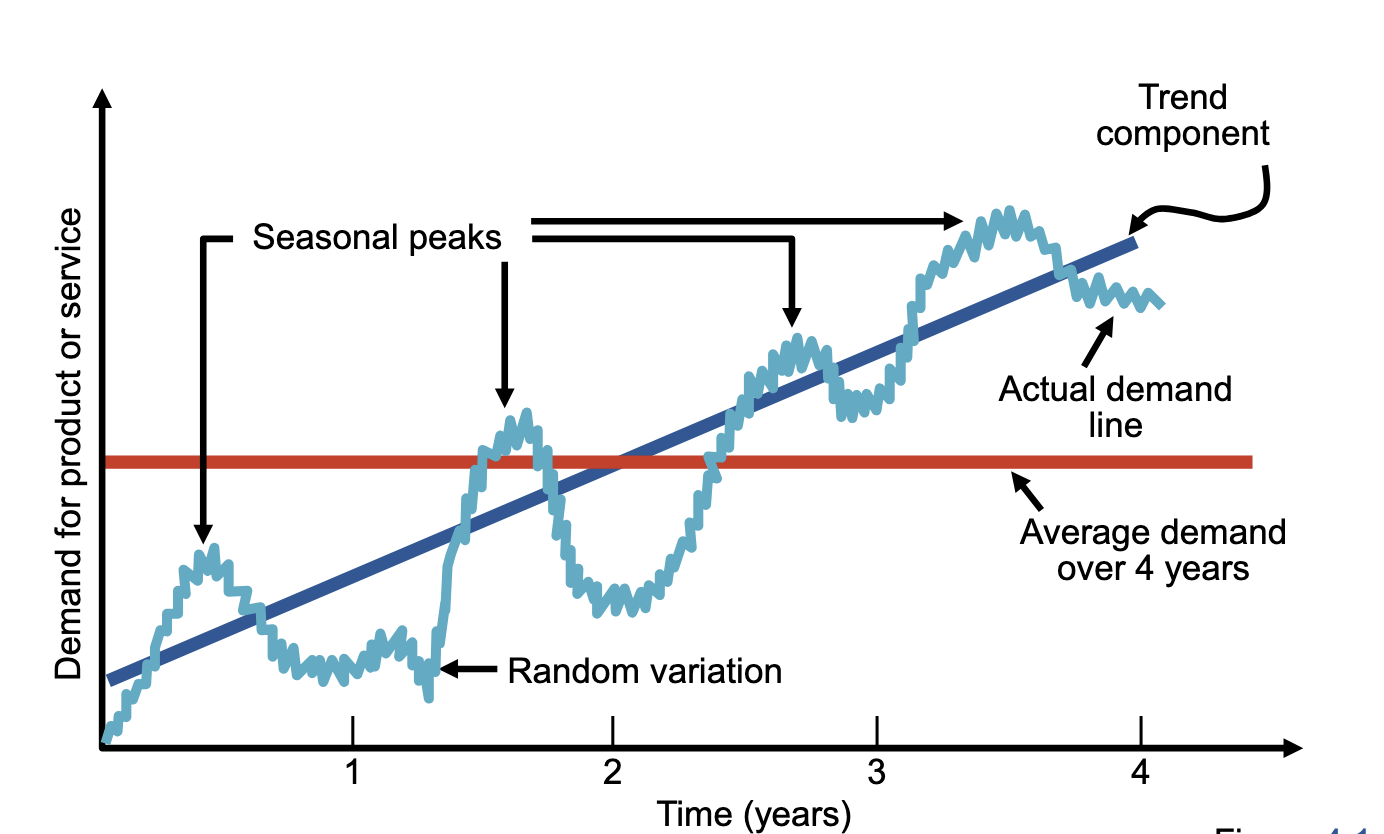
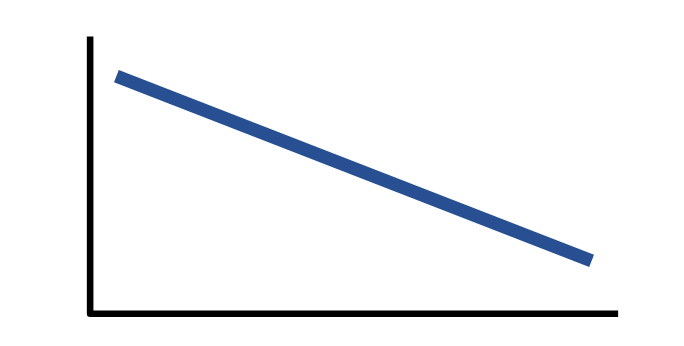
Trend component
Persistent, overall upward or downward pattern
Changes due to population, technology, age, culture, etc.
Typically several years in duration
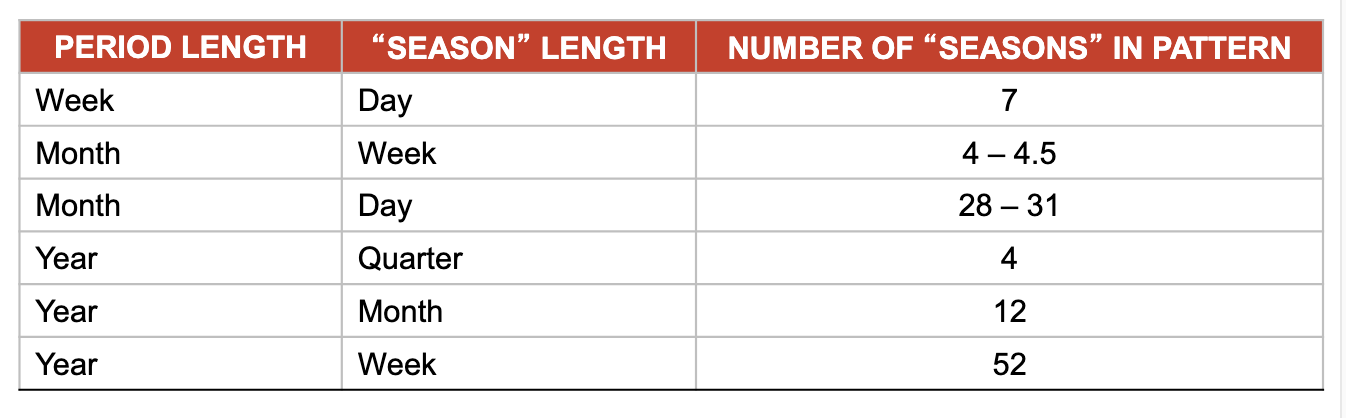
Seasonal component
Regular pattern of up and down fluctuations
Due to weather, customs, etc.
Occurs within a single year
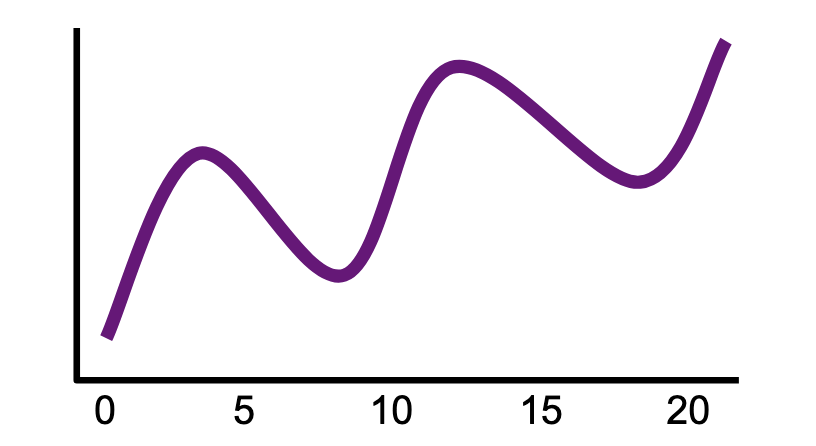
Cyclical component
Repeating up and down movements
Affected by business cycle, political, and economic factors
Multiple years in duration
Often causal or associative relationships
Random component
Erratic, unsystematic, ‘residual’ fluctuations
Due to random variation or unforeseen events
Short duration and nonrepeating
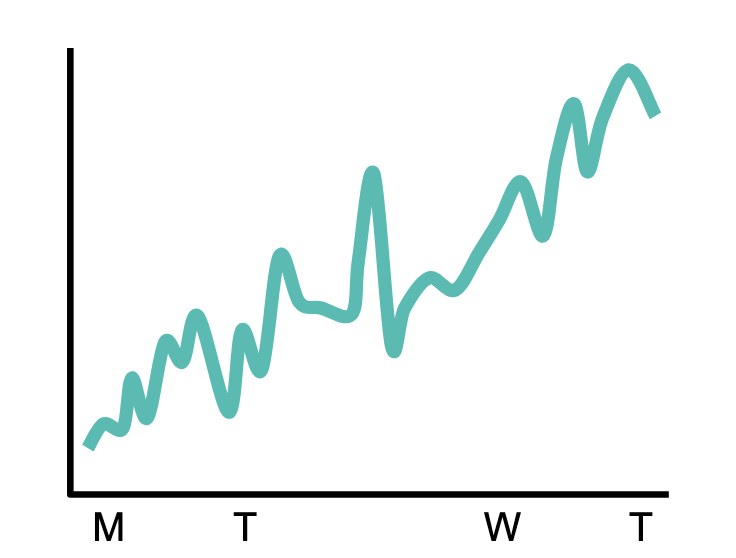
Naive approach
Assumes that demand in the next period is equal to demand in the most recent period
Sometimes cost effective and efficient
Can be a good starting point
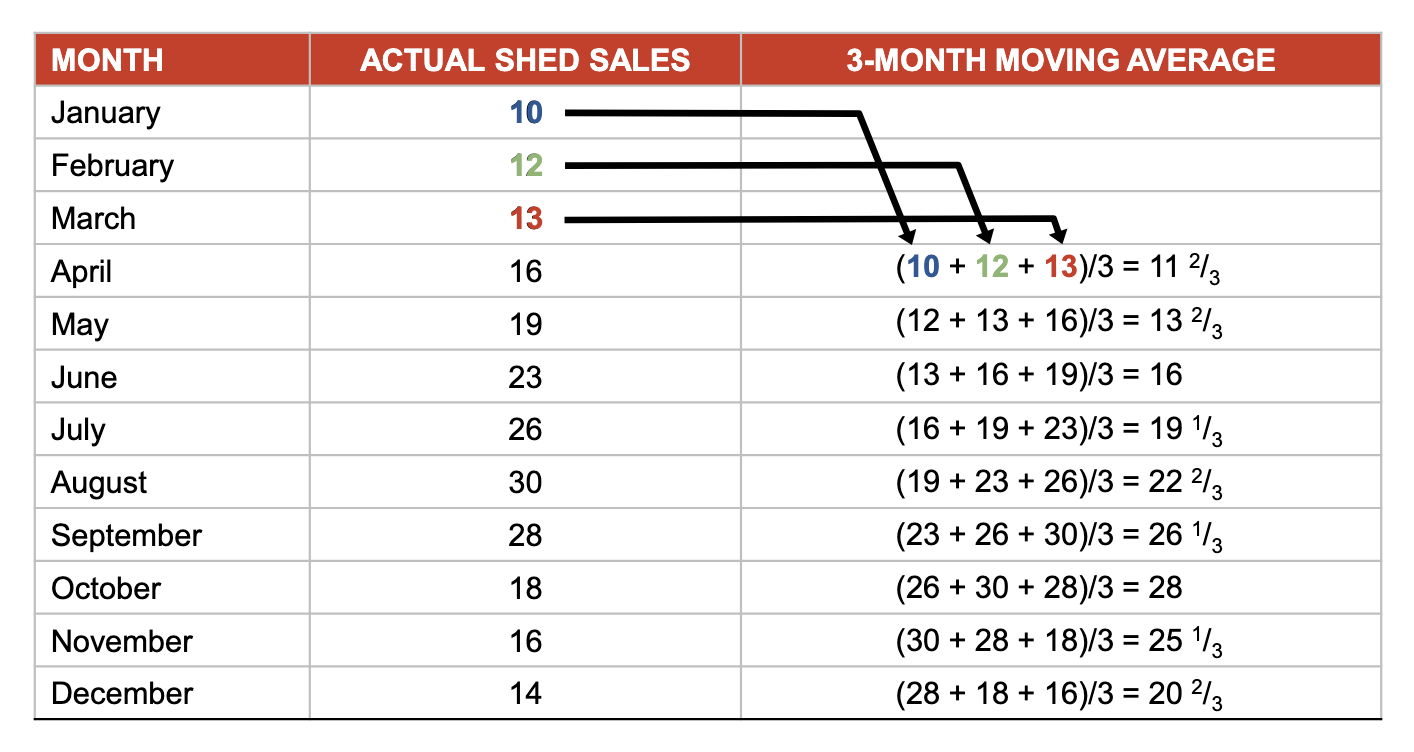
Moving average
Uses an average of the n most recent periods of data to forecast the next period
A series of arithmetic means
Used if little or no trend
Often used for smoothing—provides overall impression of data over time
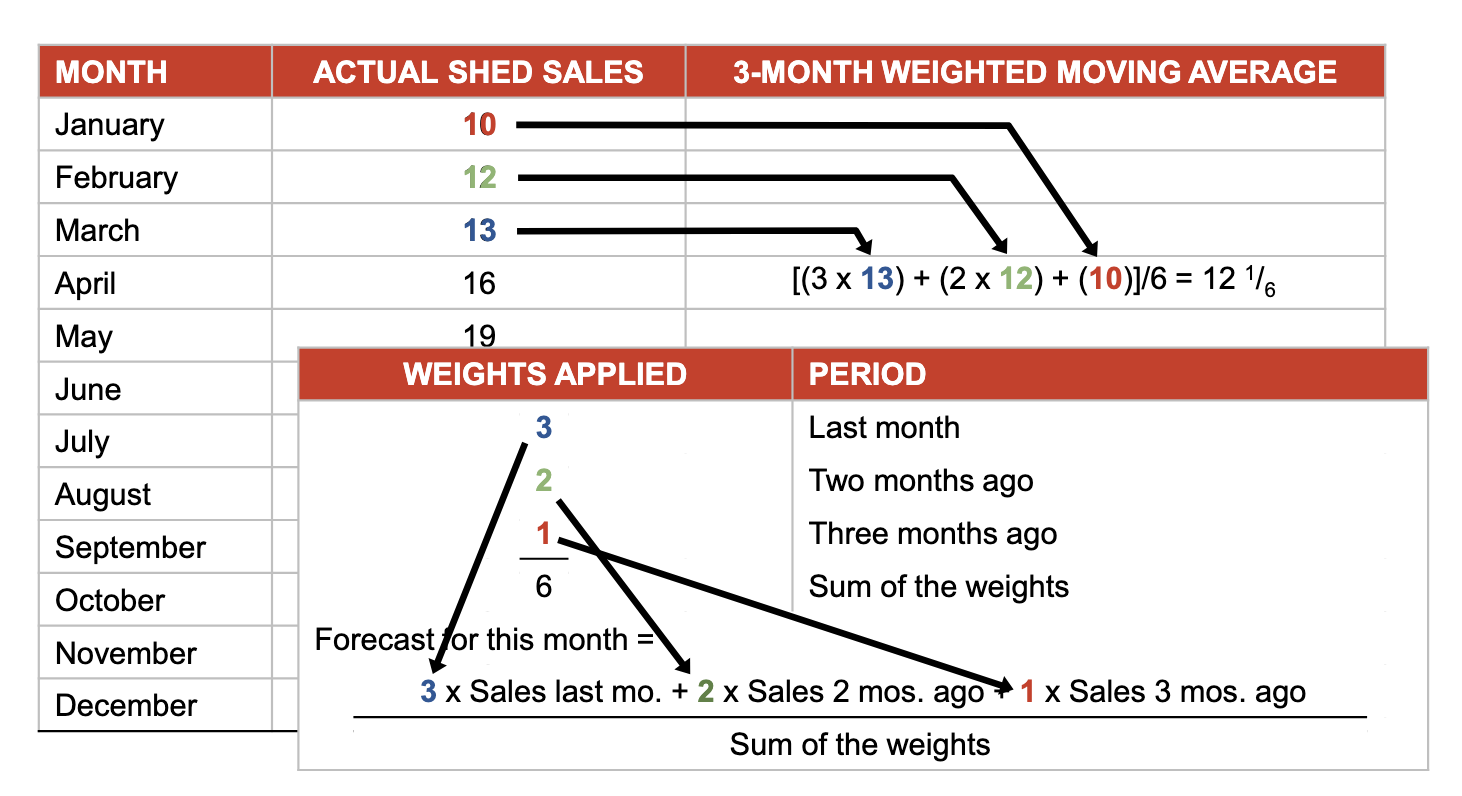
Weighted moving average
Used when some trend might be present with weights based on experience and intuition
Older data usually less important
Potential problems with moving average
Increasing n smooths the forecast but makes it less sensitive to changes
Does not forecast trends well
Requires extensive historical data
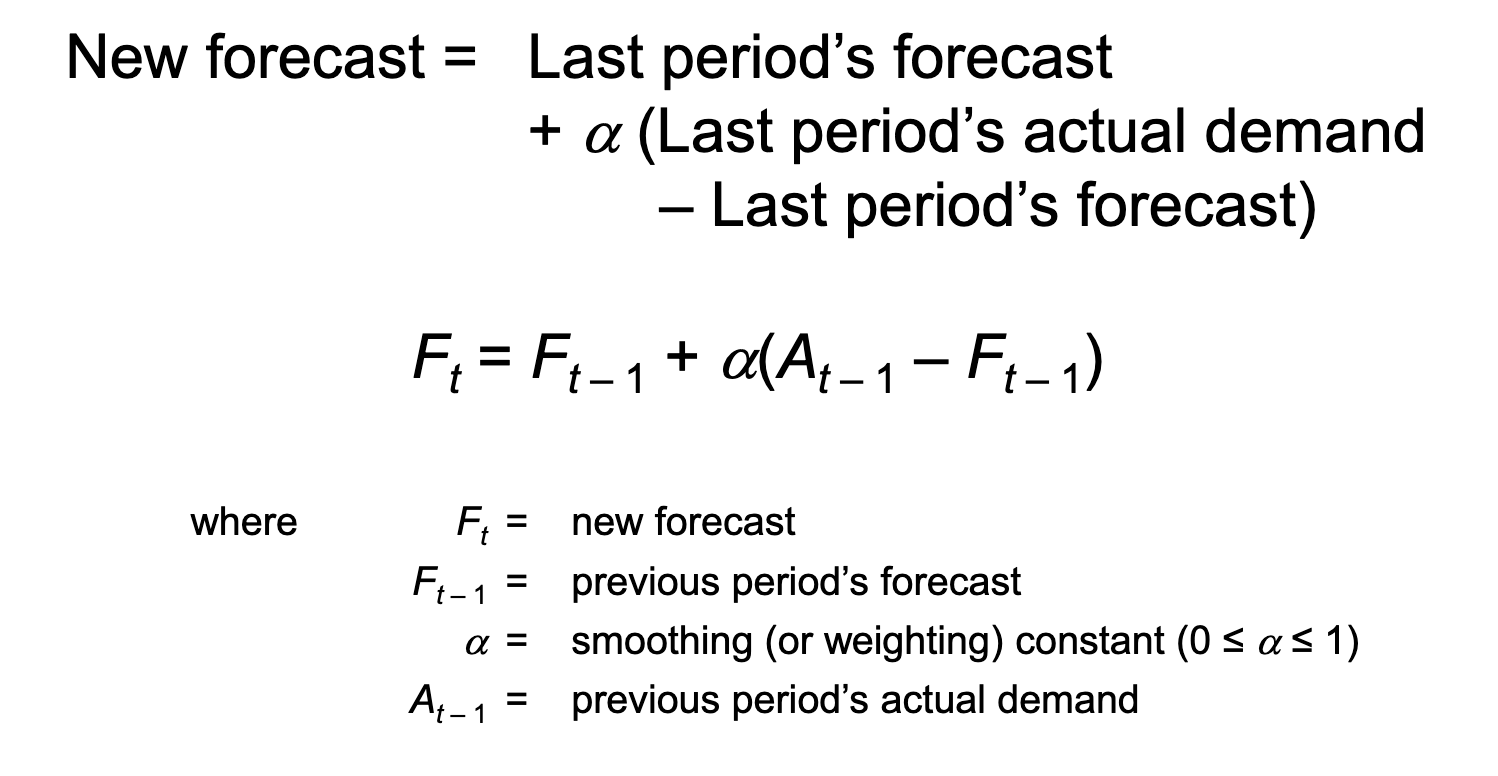
Exponential smoothing
Form of weighted moving average in which data points are weighted by an exponential function
Weighted decline exponentially
Most recent data weighted most
Involves little record keeping of past data
Requires smoothing constant alpha (α)
Ranges from 0 to 1
Subjectively chosen (given)
Effect of smoothing constraints
Smoothing constant generally .05
As α increases, older values become less significant
Choose high values of α when underlying average is likely to change
Choose low values of α when underlying average is stable
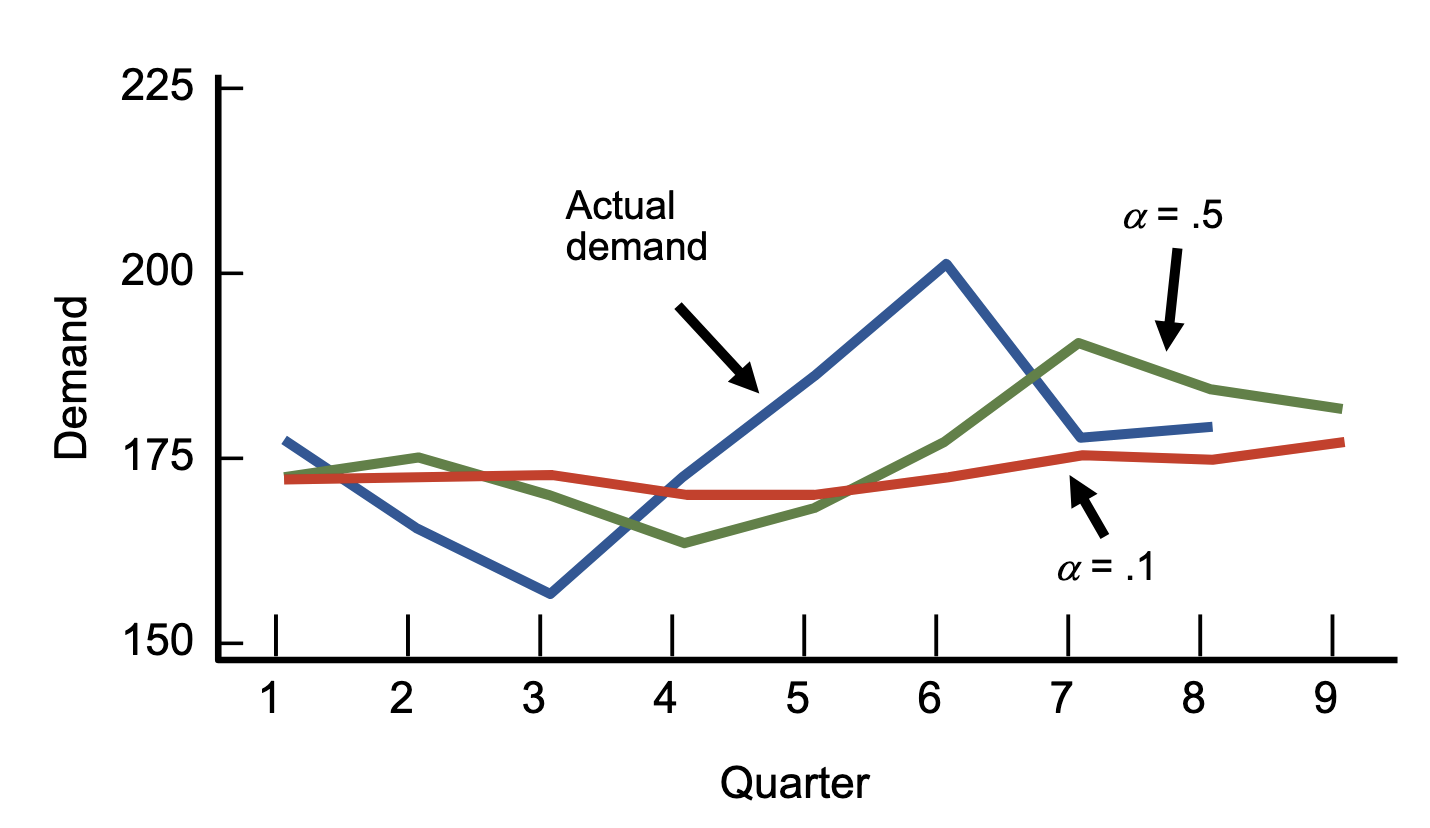
Selecting the smoothing constant
The objective is to obtain the most accurate forecast no matter the technique
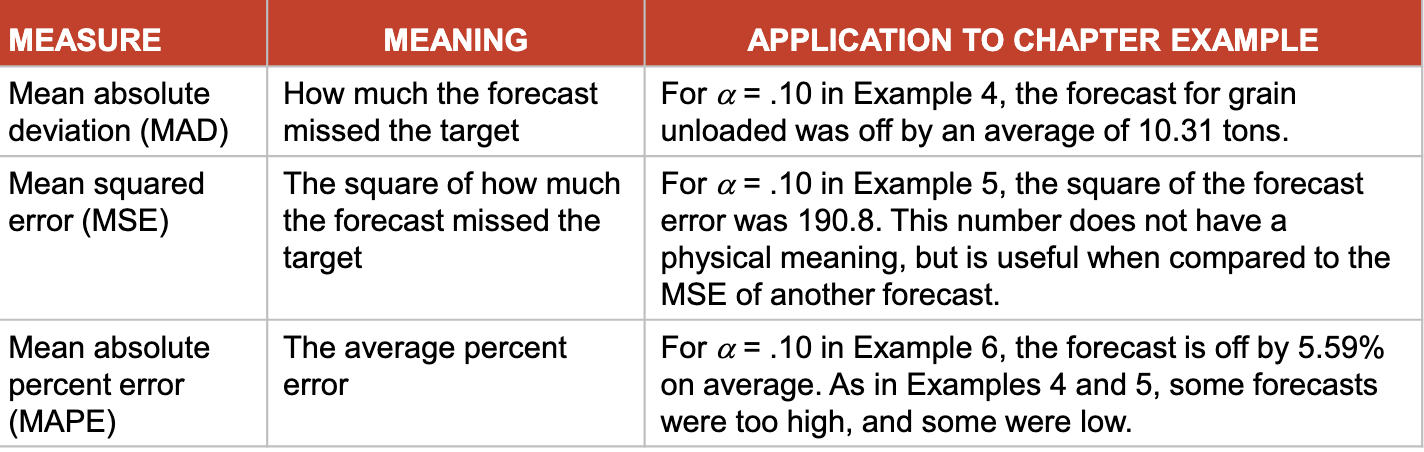
Do this by selecting the model that gives us the lowest forecast error according to one of three preferred measures:
Mean Absolute Deviation (MAD)
Mean Squared Error (MSE)
Mean Absolute Percent Error (MAPE)
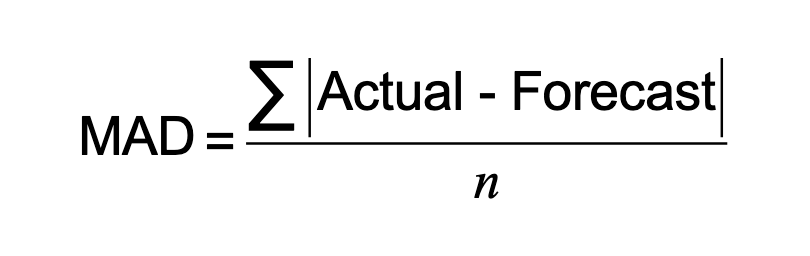
Mean Absolute Deviation (MAD)
Computed by taking the sum of the absolute values of the individual forecast errors (deviations) and dividing by the number of periods of data (n)
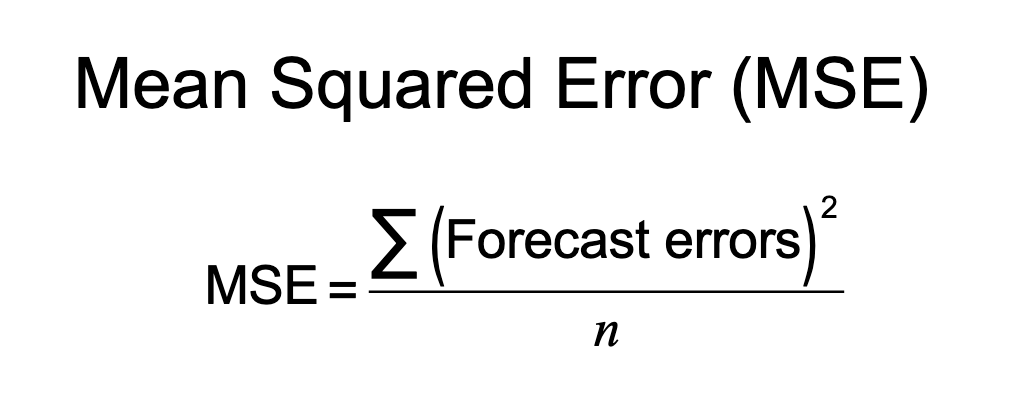
Mean Squared Error (MSE)
The average of the squared differences between the forecast and observed values
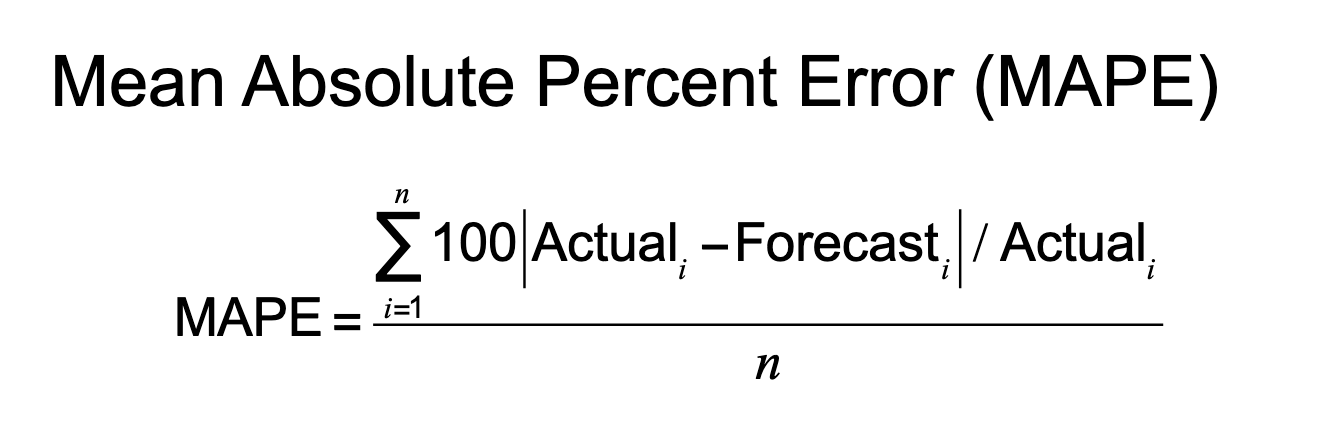
Mean Absolute Percent of Error (MAPE)
Computed as the average of the absolute difference between the forecasted and actual values, expressed as a percentage of the actual values
Avoids the issue of the magnitude of items forecasted making MAD and MSE disproportionately large
Comparing measures of forecast error
Trend projections
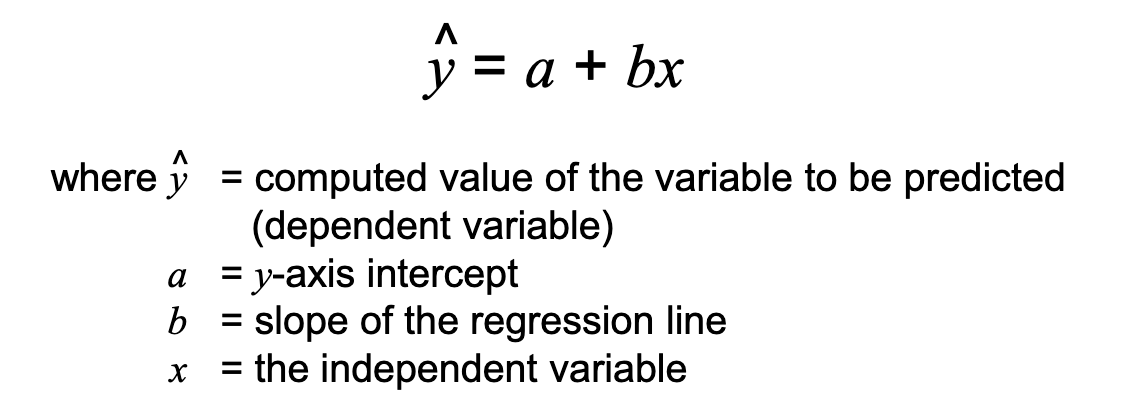
Fitting a trend line to historical data points to project into the medium to long-range
Linear trends can be found using the least squares technique
Seasonal variations
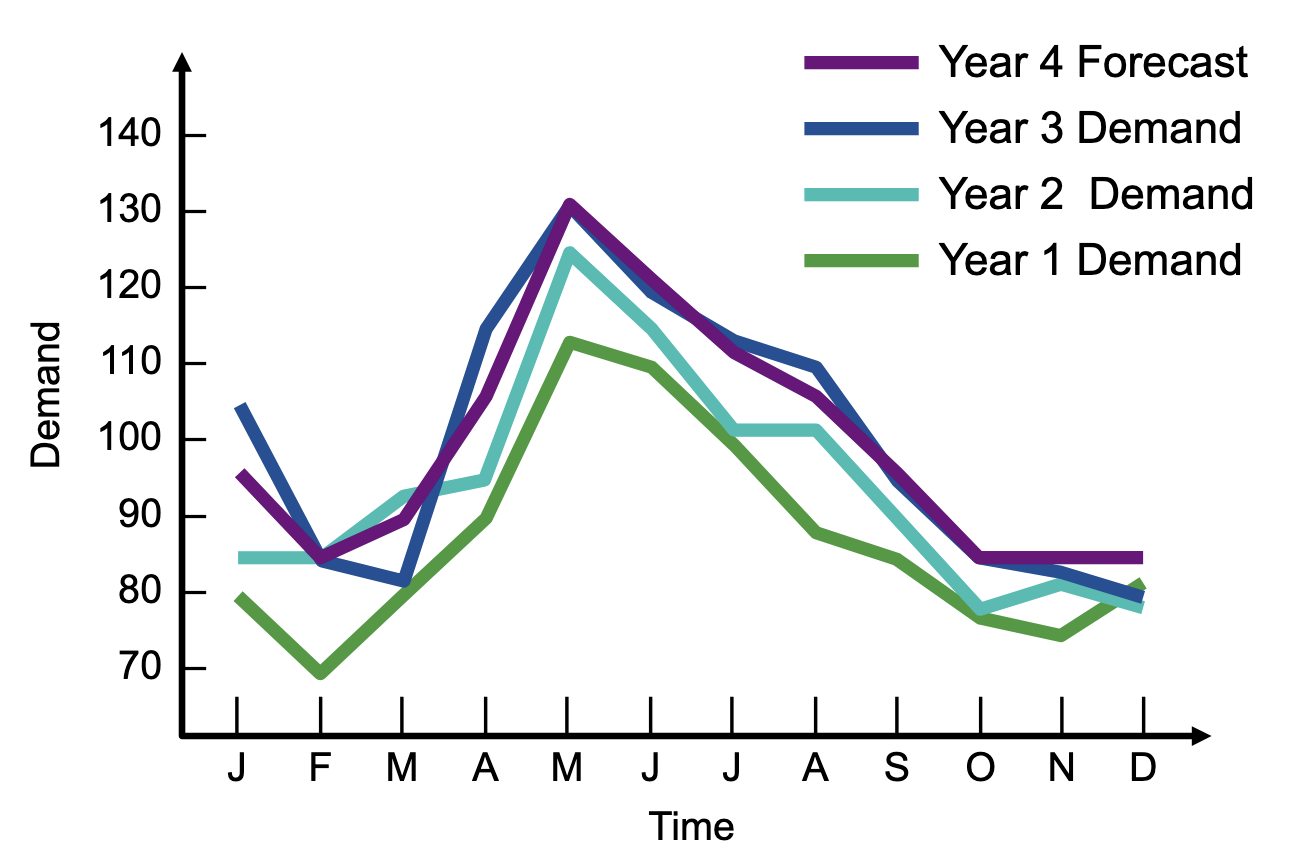
Regular upward or downward movements in a time series that tie to recurring events
Can be applied to hourly, daily, weekly, monthly, or other recurring patterns
Calculating seasonal forecasts for monthly seasons
Find average historical demand for each month
Compute the average demand over all months
Compute a seasonal index for each month
Estimate next year’s total demand
Divide this estimate of total demand by the number of months, then multiply it by the seasonal index for that month
Cycles
Similar to seasonal variations in data but occur every several years (not weeks, months, or quarters)