General Principles of Animal Husbandry
 Call Kai
 Learn
Learn Practice Test
 Spaced Repetition
 Match
Match Flashcards
 Knowt Play
1/69

Earn XP
Description and Tags
Year 1 - Normal Animal
Name | Mastery | Learn | Test | Matching | Spaced | Call with Kai |
|---|
No analytics yet
Send a link to your students to track their progress
70 Terms
features of housing/environment
shelter from weather, stocking density, bedding, cleanliness
animal husbandry
the breeding, rearing and daily care of domestic animals
impact of poor husbandry on animals
hunger, thirst, fear, distress, disease, discomfort, abnormal behaviour
impact of poor animal husbandry on people
zoonotic disease, emotional toll, treatment costs, poor performance, production losses, injuries
What are some factors to consider when assessing animal husbandry?
handling, health and welfare of animals, legal requirements, owner abilities, food and water, routine procedures, biosecurity, housing and hygiene, breeds and reproduction
What are the different ways to assess animal husbandry?
analysis of records, evaluation of resources, animal assessments, people assessments
advantages of analysing records to assess animal welfare
specific information on health, disease and production levels, can see changes over time
disadvantages of analysing records to assess animal welfare
relies on animal keeper to correctly identify and record disease, easy to manipulate/falsify, often no records
advantages of evaluating resources to assess animal welfare
often objective measurements, assessor doesn’t need expertise in animal health
disadvantages of evaluating resources to assess animal welfare
doesn’t account for how animal copes in the environment, resources could meet standards and welfare still be poor, less commonly done in small animal practice
advantages of animal assessments to assess animal welfare
direct assessment of animals in their normal environment, takes into account how the animals cope in their environment, can use automated monitoring as an early warning system
disadvantages of animal assessments to assess animal welfare
requires expertise so more expensive, assessments may be more subjective, animals may not show obvious signs of disease or injury
CARE
client, animal observations, records, environment and resources
reasons for housing animals
protection from predators and bad weather conditions, easier to handle animals, more efficient, protects land from overgrazing, increased stock densities, control over feeding, increased control over health and observation
why ventilation is needed in animal housing
to remove harmful gases, to remove moisture and excess heat, to provide fresh air, to remove unpleasant smells
consequences of not enough ventilation
increased concentration of pathogens, buildup of harmful gases (e.g. CO2, ammonia), increased risk of respiratory diseases, high humidity and temperature
consequences of too much ventilation
animals get cold, increased stress, higher susceptibility to disease
methods of ventilation in animal housing
space boarding, slotted roof, open roof ridge, fans
stack effect
animals in a building heat the air around them
hot air rises and leaves the building through a warm air outlet in the roof
the hot air leaving causes cold air to enter the building lower down from outside through a cold air inlet (e.g. side openings)
this process creates a convection current of air which replaces stale, warm, moist air with fresh, cool, oxygen-rich air
ways to assess ventilation in a building
smoke bomb test, min-max thermometer, relative humidity monitor, smell, observe animals
smoke bomb test process
release a small amount of smoke into building to be tested (smoke bomb pellet or controlled burning)
observe how quickly the smoke dissipates from the building
identify dead spots where the smoke lingers, indicating poor air movement
ensure animals are in the building during the test to assess ventilation with them present
factors to consider with flooring for animals
comfortable for animals to lie down on, not too hard to prevent injury, is it slippery when wet, ease to clean, durability
cow flow
allowing animals to move freely without getting trapped, this system avoids dead ends in feeding areas or passageways where dominant animals can block subordinate ones which may prevent them from feeding or sleeping
why are pig farms found more in the East of the UK?
more sandy soil which drains more easily and less rainfall which allows breeding sows to be kept outside
why are more dairy farms beginning to house cows inside all year?
to ensure more even nutrition across the year so milk production remains more consistent
what is a recent change to the way dairy cows are bred?
bull semen can now be sex selected during artificial insemination so farmers select for heffer dairy cows and the remaining dairy breeding cows are inseminated with beef cow semen to produce higher value cows
stratification
using different breed characteristics and climate-dependent husbandry types when breeding to produce animals with specific traits
why are beef cows and sheep often kept together?
they graze different grass types and provide work in different seasons
What does the pig pyramid represent?
the 3 stages of pig farming: breeding, weaning/growing and finishing (usually occurs at different farms)
variable costs for farms
feed, forage, bedding, vets and medicines, fertiliser, transport, casual labour
fixed costs for farms
rent, rates, utilities, staff
factors affecting biological efficiency
reproductive efficiency, lactation ability, growth and development, replacement rate
fecundity
litter size
oestrus
the period of sexual receptivity in female mammals during the oestrus cycle which precedes and accompanies ovulation
factors contributing to reproductive efficiency
fertility, fecundity, breeding frequency, peri- and post-partum problems, offspring nutrition, indirect/direct male factor
factors contributing to lactation ability
availability and immunoglobulin concentration of colostrum, lactation curve, nutrition
importance of colostrum
calves are born without gamma globulins as they can’t cross the placenta so colostrum from the mother provides antibodies to calves
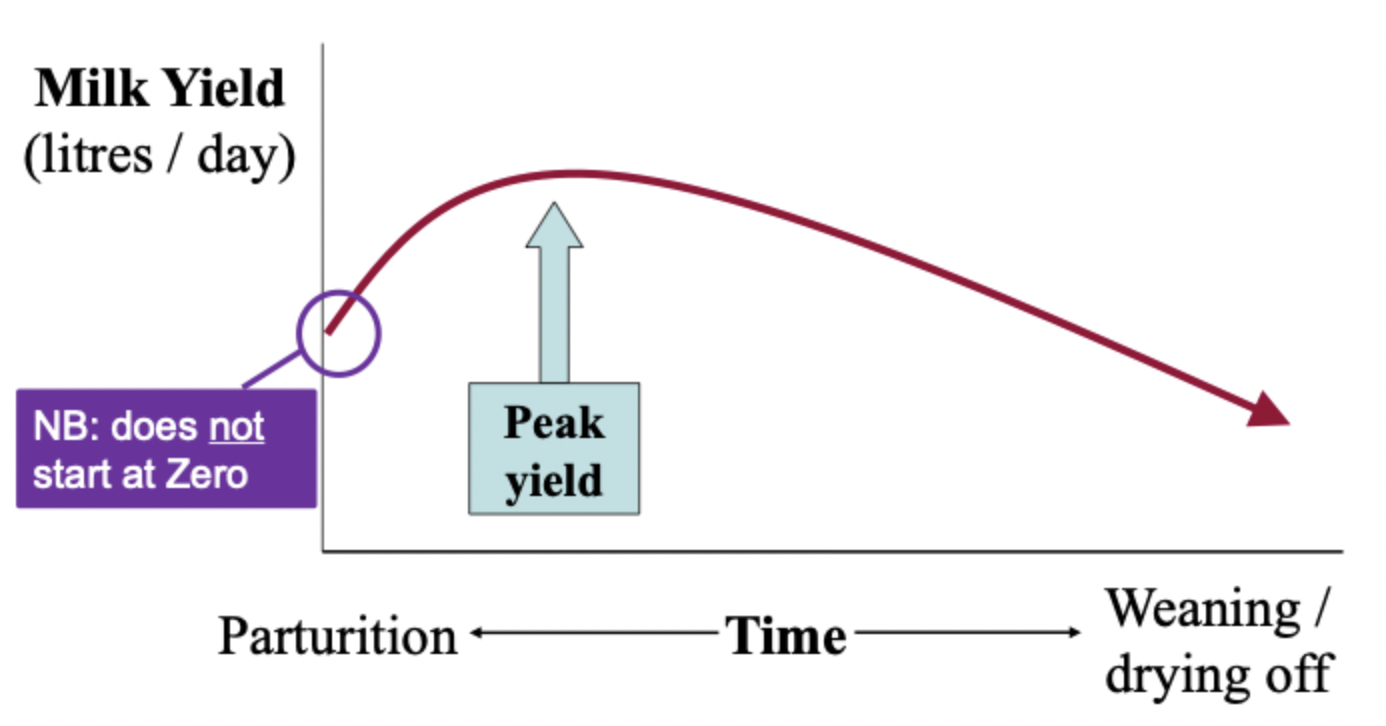
parturition
point of birth
lactation curve
the increase in milk yield from an animal from parturition to peak yield after which it decreases as offspring begin weaning, can be influenced by how often the animal is milked
hyperplasia
increase in cell numbers
hypertrophy
increase in cell size
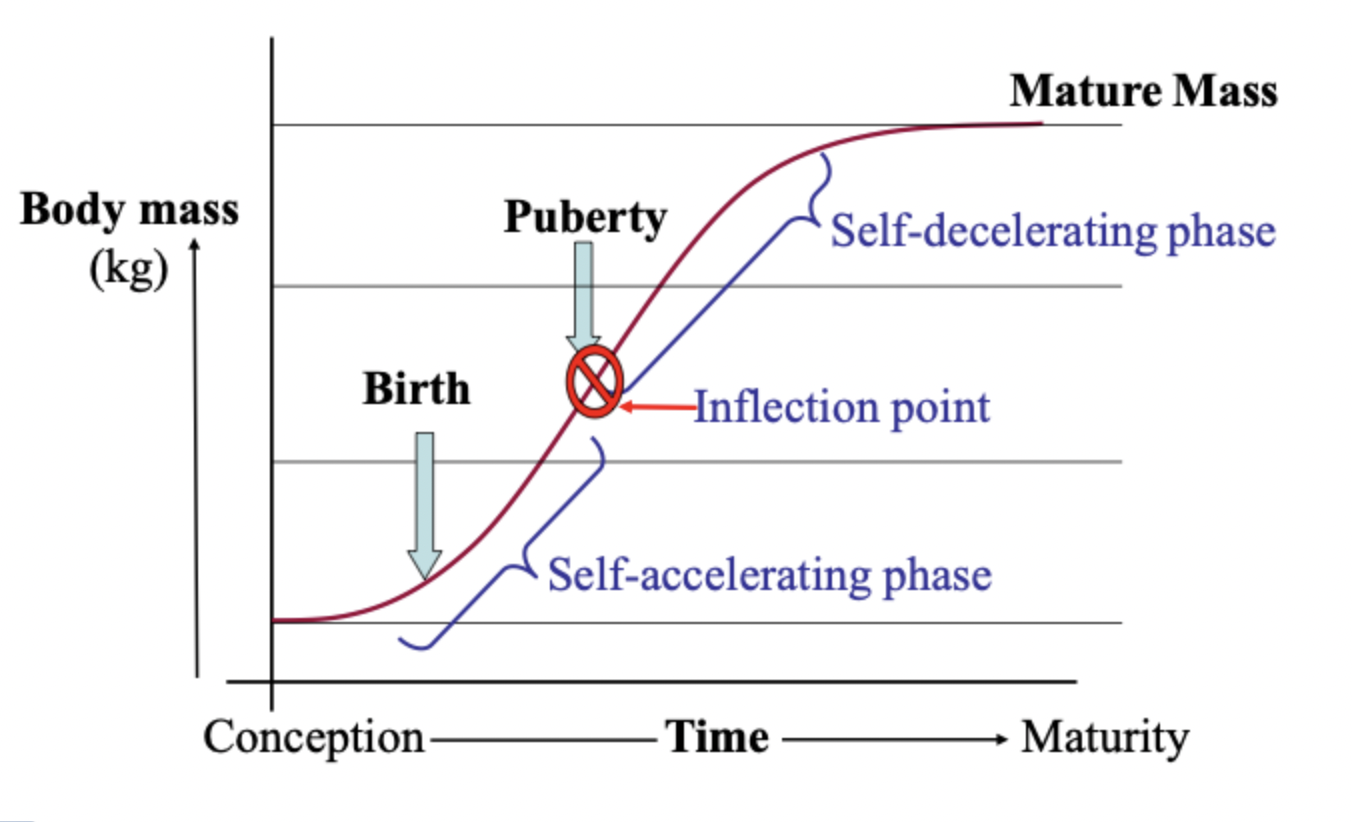
What does the sigmoidal growth curve show?
increase in body mass which increases fastest at puberty and then at a decreasing rate towards maturity, explains why most animals are sent to slaughter around puberty as after that it becomes more expensive to feed them enough to maintain growth so less efficient
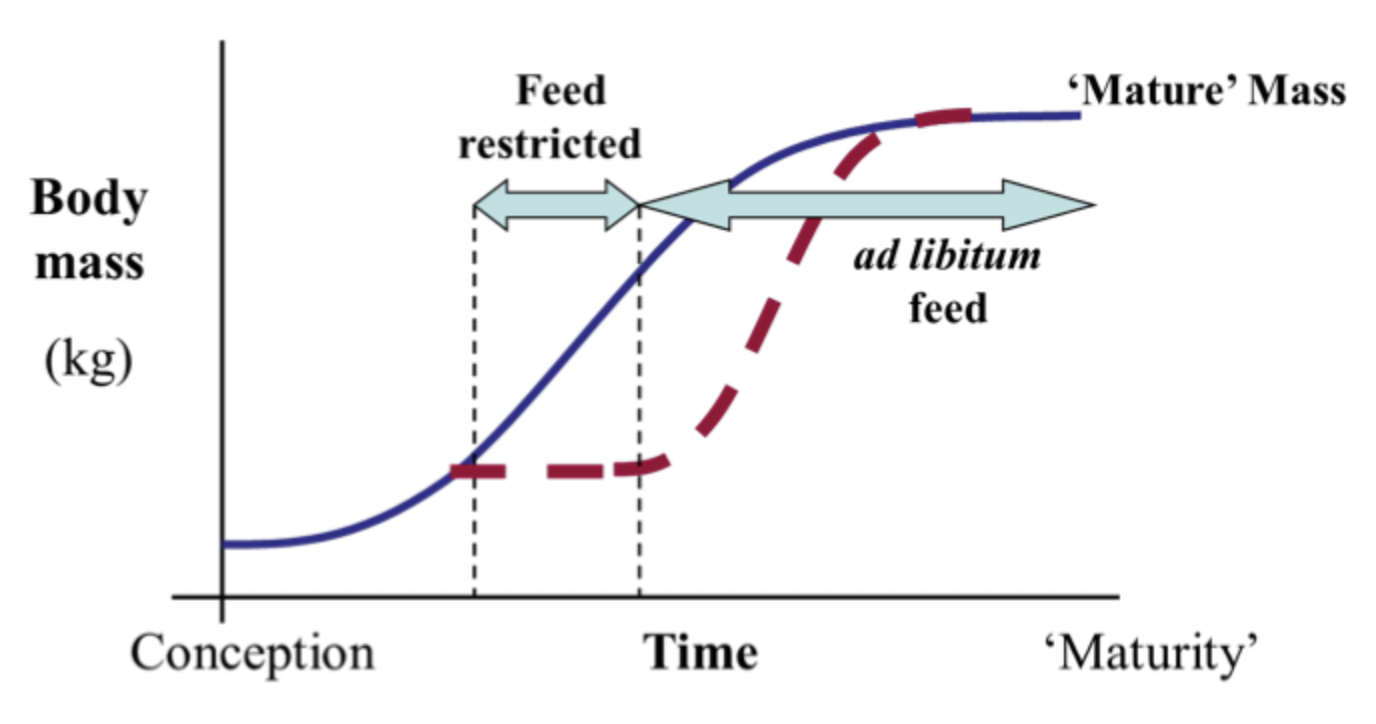
compensatory growth
farm model which involves restricting food for a period of time and then feeding a lot to allow rapid growth, often used in winter when food is more scarce and then animals are able to graze in spring
problems caused by rapid growth
fat can be deposited in the udder or pelvis in cows, joint problems as skeleton can’t support the weight, developmental orthopaedic diseases, bone growing rapidly may be less dense
precocial animals
animals that can walk, maintain body temperature and perform basic functions shortly after being born
altricial animals
animals that are not self-sufficient for a significant period after birth
differences in chemical composition between younger and older animals
younger have more bone, muscle, water and protein while older have more fat/lipids
physical processes that transport heat between body and surroundings
radiation (different colours radiate/absorb more/less heat), conduction (heat flow from animal to ground via direct contact), convection, evaporation of water
relative humidity
percentage saturation of the air by water vapour
endotherm
organism that uses internal generation of heat to maintain a stable internal temperature
poilkilotherm
an organism that has a varying body temperature that fluctuates with its environment
thermo-neutral zone (TNZ)
the optimum temperature range for an animal in which no heat production/loss adjustments are required to maintain body temperature within normal core values and the use of food for growth and production is optimal as no good energy is needed to maintain body temperature
lower critical temperature (LCT)
the lowest temperature an animal can tolerate before going into cold stress
reasons why young animals have higher LCTs and lower TNZs than adults
higher surface area to volume ratio, poor tissue and surface insulation, wet birth coat (evaporation), higher proportional surface area of head, lack of musculature and inability to shiver, inability to move away from cool areas, some species have no brown fat (e.g. piglets)
neonate
newborn animal
animal responses when too hot
mud bath, panting, lying down on cold surfaces, moving away from heat source, seeking air movement and shade, maximising body surface area, minimising surface and tissue insulation, minimising heat production - less active
animal responses when too cold
shivering, huddling together, seeking shelter, withdrawing extremities, counter-current heat exchangers
counter-current heat exchangers
blood vessels are close together so can transfer heat between each other on the way to extremeties which cools arteries and heats veins so less heat is lost from extremities and more reaches the core of the body
non-shivering thermogenesis
ability to produce heat internally
ways neonates survive cold exposure
increasing metabolic rate, activating brown adipose tissue, early colostrum intake
environmental impacts of agricultural expansion
habitat loss, reduced biodiversity, reduced carbon storage, poorer soil conditions, increased greenhouse gas emissions, water degradation
environmental impacts of agricultural intensification
irrigation, fertilisers and pesticides all contribute to soil degradation and reduced biodiversity
key goals to achieve global food security
increase agricultural production, increase total food supply, improve distribution and access to food, increase resilience of whole food system
key goals to reduce the environmental impact of agriculture
reduce greenhouse gas emissions, reduce biodiversity and habitat losses, reduces unsustainable water withdrawals, phase out water pollution from agricultural chemicals
how to achieve global food security
stop expanding agriculture, close yield gaps, increase agricultural resource efficiency, shift diets and reduce food waste
yield gaps
the difference between observed and potential crop yields given current agricultural practices and technologies
mulching
using dead plant material around plants to reduce water loss and provide nutrients
strategies to increase agricultural water use efficiency
drip irrigation, mulching, reduce evaporation from irrigation canals
ectotherm
an organism that relies on external heat sources to regulate body temperature
homeotherm
an organism that self regulates temperature through thermoregulation