HUMB C10
 Call Kai
 Learn
Learn Practice Test
 Spaced Repetition
 Match
Match Flashcards
 Knowt Play
1/30

There's no tags or description
Looks like no tags are added yet.
Name | Mastery | Learn | Test | Matching | Spaced | Call with Kai |
|---|
No analytics yet
Send a link to your students to track their progress
31 Terms
Chemical Communication Methods
Autocrine
Paracrine
Neurotransmitter
Endocrine
Characteristics of Endocrine System
regulation requires duration, not speed
Glands secrete chemical messengers (hormones) into circulatory system
(blood)
Target cells respond to a hormone because they have the correct receptor
Hormone characteristics
Produced in small quantities
Transported in circulatory system
Act on target tissues elsewhere in body
Types of hormone secretion
Acute - sudden release due to stimulus, e.g. adrenaline in response to stress
Chronic - small variations over long periods, e.g. thyroid hormones
Episodic - e.g. estrogen & progesterone during menstrual cycle
Functions of the Endocrine System
Metabolism
Controls food intake and digestion
Tissue maturation
Ion regulation
Water balance
Heart rate and blood pressure regulation
Controls reproductive functions (gametogenesis and pregnancy)
Immune system regulation
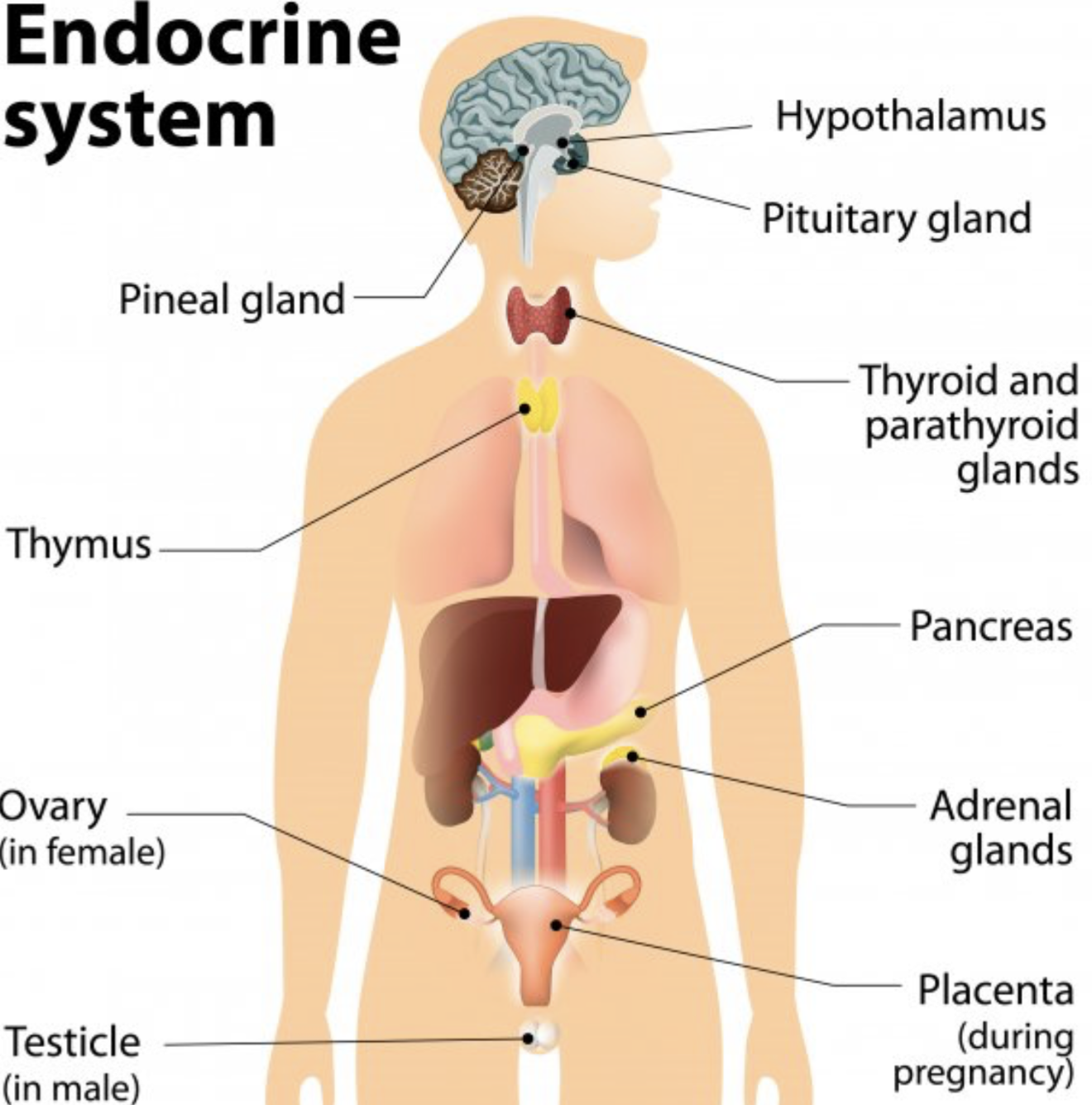
Endocrine glands
(superior to inferior)
Pineal gland - circadium rythym
Hypothalamus - makes key hormones, regulates anterior pituitary
Pituitary gland - makes tropic hormones
Parathyroid glands - bone metabolism
Thyroid gland - stress, growth
Thymus gland - immune system, changes with puberty
Adrenal glands - cortex produces cortisol, medulla produces adrenaline
Pancreas - sugar metabolism
Gonads (ovary and testis) - produce hormones, sperm
Nervous vs Endocrine Systems - Similarities
Associated with brain via link between hypothalamus and pituitary gland
May use same chemical messenger as neutrotrasmitter and hormone
Cooperative - some parts of ES directly innervated by NS
Nervous vs Endocrine Systems - Differences
Mode of transport (axon vs blood)
Response speed (ms vs s)
Response duration (ms/s vs min/day)
Pituitary Gland Structure
Sits on inferior side of brain below hypothalamus
Posterior pituitary (neurohypophysis): extension of hypothalamus via infundibulum, secretes neuropeptides, developed by downward growth of nervous tissue during gestation
Anterior pituitary (adenohypophysis): secretes traditional hormones, developed by upward growth of oral cavity (glandular tissue) during gestation
Pituitary Gland - Hormone production
Produce 9 hormones (7 by anterior, 2 by posterior) that regulate body functions and the secretions of other endocrine glands
Hypothalamic control of Posterior Pituitary
Hormones produced and released by hypothalamic neurons then stored in posterior pituitary
axons form hypothalamohypophysial tract that runs down the infudibulum to connect hypothalamus to posterior pituitary
Hypothalamic control of Anterior Pituitary
Blood vessels make up hypothalamohypophysial portal system that connects hypothalamus to anterior pituitary
Hypothalamic neurons make releasing/inhibiting hormones that stimulate/inhibit anterior pituitary from releasing its own corresponding hormone
Hypothalamus, Anterior Pituitary, and Target Tissues
Stimuli in nervous system regulates secretion of releasing hormones from hypothalamic neurons
Releasing hormones go to anterior pituitary to stimuate the release of hormones
Hormones travel in blood to target tissue, which may be another endocrine gland
Anterior Pituitary Hormones
Growth hormone (GH): overall metabolism and growth
Thyroid stimulating hormone (TSH): Stimulates thyroid to secrete T3 and T4
Adrenocorticotropic hormone (ACTH): Stimulates adrenal cortex to secrete cortisol, androgens, and aldosterone
Melanocyte-stimulating hormone (MSH): Causes melanocytes to produce more melanin
Luteinizing hormone (LH) and Follicle-stimulating hormone (FSH) regulate production of gametes (sperm, oocytes) and reproductive hormones (testosterone, estrogen, progesterone)
Prolactin for milk production (lactation)
Tropic vs Non tropic Hormones
Tropic: stimulate the secretion of other hormones from target tissues
Non tropic: initiate an effect
GH is both
Most anterior pituitary hormones are tropic
Hypothalamus, Posterior Pituitary, and Target Tissues
Stimuli within nervous system cause hypothalamic neurons to increase or decrease action potential frequency
AP’s travel from hypothalamic neurons to posterior pituitary
Axon terminals of neurons in posterior pituitary store neurohormones that are released into circulatory system by AP’s to go to target tissue
Posterior Pituitary hormones
Both non-tropic
Antidiuretic hormone (ADH): When BP decreases, it stimulates increased reabsorption of sodium and water from nephrons so less urine is produced
Oxytocin: Uterine contractions during birth, milk ejection from lactating breast
negative feedback
Stimulus causes anterior pituitary to secrete a tropic hormone which travels in blood to target endocrine cell
Non-tropic hormone from target endocrine cell travels to its target to maintain homeostasis
Negative feedback produced that has opposite effect on hypothalamus and anterior pituitary to decrease secretion of tropic hormone
Positive feedback
Stimulus cause anterior pituitary secretes a tropic hormone which travels in blood to target endocrine cell
Non tropic hormone from target endocrine cell travels to its target
Positive feedback effect on hypothalamus and anterior pituitary increases secretion of tropic hormone
Cycle continues until stimulus is removed
Growth Hormone (GH)
Released by anterior pituitary when stimulated by growth hormone-releasing hormone (GHRH) from hypothalamus
Stimulates uptake of amino acids for protein synthesis and breakdown of fats to be used as energy
Promotes bone and cartilage growth
Regulates blood levels of nutrients after eating
Stimulates liver and skeletal muscle to make IGF-1 (non tropic effect)
Peak GH level during deep sleep
Uses negative feedback
Thyroid Stimulating Hormone (TSH)
Released from anterior pituitary when stimulated by thyroid-releasing hormone (TRH) from hypothalamus
Stimulates thyroid gland to release T3 and T4
Increases metabolism, body temp, and normal growth/development
Uses negative feedback loop
Thyroid Gland
One of largest endocrine glands
Highly vascular
Stores hormones in follicles
Increases metabolism in many tissues which increases body temp and essential for normal tissue growth
Adrenal gland
Loctaed at superior poles of kidneys
Medulla and cortex
Adrenocorticotrophic hormone (ACTH)
released by anterior pituitary when stimulated by corticotropin-releasing hormone (CRH) from hypothalamus
causes adrenal cortex to secrete:
cortisol (a glucocorticoid) - suppresses non-essential functions and raises blood pressure and glucose
aldosterone (a mineralocorticoid) - regulates salt, water, and blood pressure
Adrenal Medulla
Stress, physical activity, and low blood glucose stimulate hypothalamus to increase frequency of AP conducted through sympathetic nervous system
This stimulates adrenal medulla to secrete epinephrine (adrenaline) and norepinephrine (noadrenaline), which cause fight or flight responses
Melanocyte stimulating hormone (MSH)
Released from anterior pituitary by MRH and sunlight from hypothalamus
MSH causes skin cells to release melanin (colour pigment), as well as influencing appetite and sexual behaviour
LH & FSH
Gonadotropins: promote gonad growth and function
Released from anterior pituitary by GnRH from hypothalamus
Cause testes to make testosterone and sperm
Cause ovaries to make estrogen, progesterone, and oocytes
Prolactin
Released from anterior pituitary when stimulated by prolactin-releasing factor (PRF) from hypothalamus
Non tropic
Lactation, Supply and demand
Positive feedback
Oxytocin
Urine stretching/Nipple suckling stimulates hypothalamus to make oxytocin, released by posterior pituitary
Causes increased uterus contractions/release of milk
Positive feedback
Non tropic
Supply and demand
Anti diuretic hormone (ADH)
Reduces urine production to keep water in body, increasng blood volume and pressure
Pancreas Endocrine Function
pancreatic islets (endocrine cell clusters) maintain homeostasis by regulating blood sugar levels
Pancreas detects rising blood glucose levels after eating, alpha cells secrete insulin which goes to body cells and liver
Pancreas detects declining blood glucose levels when fasting, beta cells secrete glucagon which stimulates liver to release stored glucose