Biology Holt McDougal Chapter 7
 Call Kai
 Learn
Learn Practice Test
 Spaced Repetition
 Match
Match Flashcards
 Knowt Play
1/37

There's no tags or description
Looks like no tags are added yet.
Name | Mastery | Learn | Test | Matching | Spaced | Call with Kai |
|---|
No analytics yet
Send a link to your students to track their progress
38 Terms
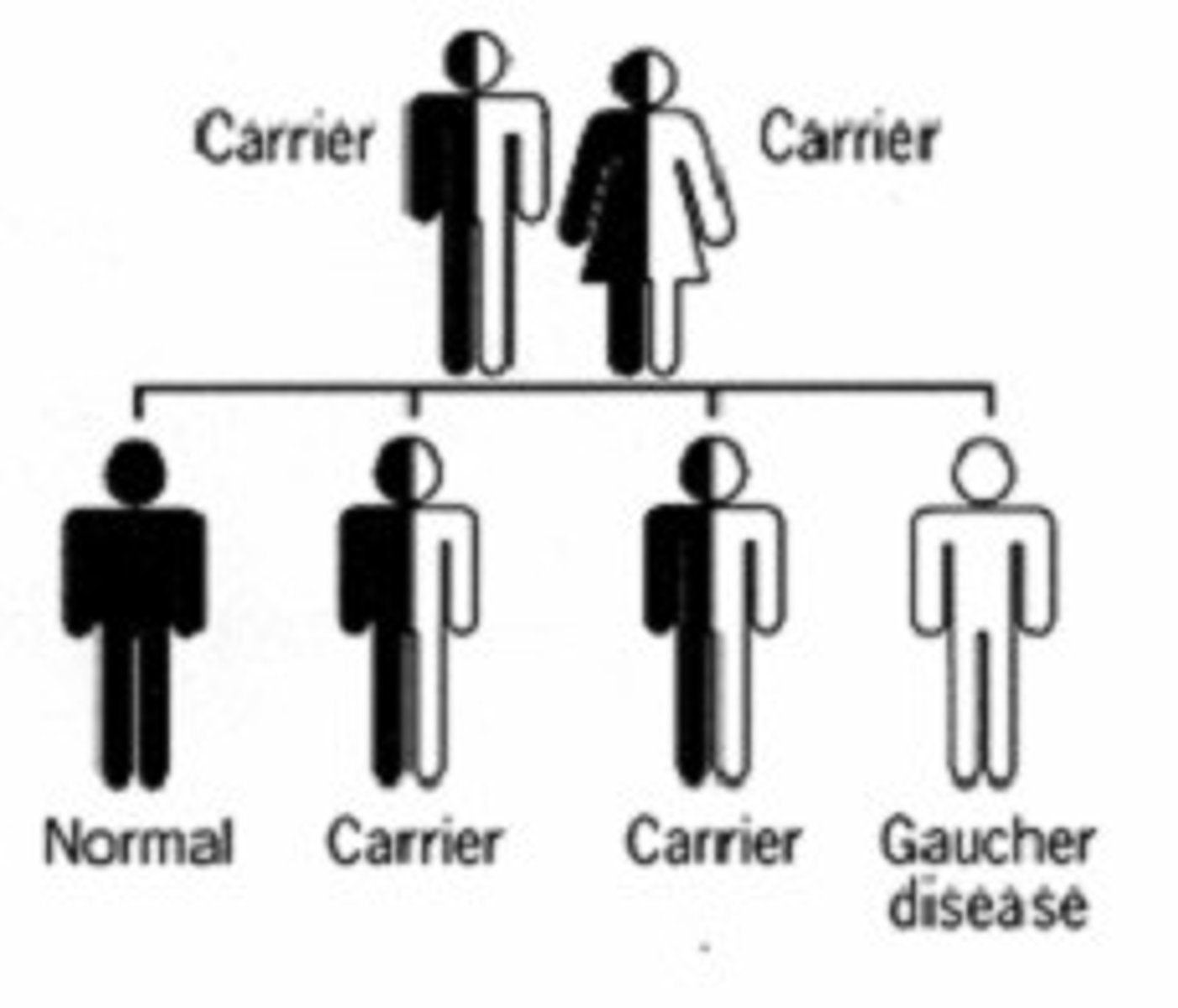
Carrier
an individual who has one copy of a recessive autosomal allele that causes disease in the homozygous condition
Sex Linked Gene
gene found on one of the sex chromosomes, such as the X chromosome or the Y chromosome in humans
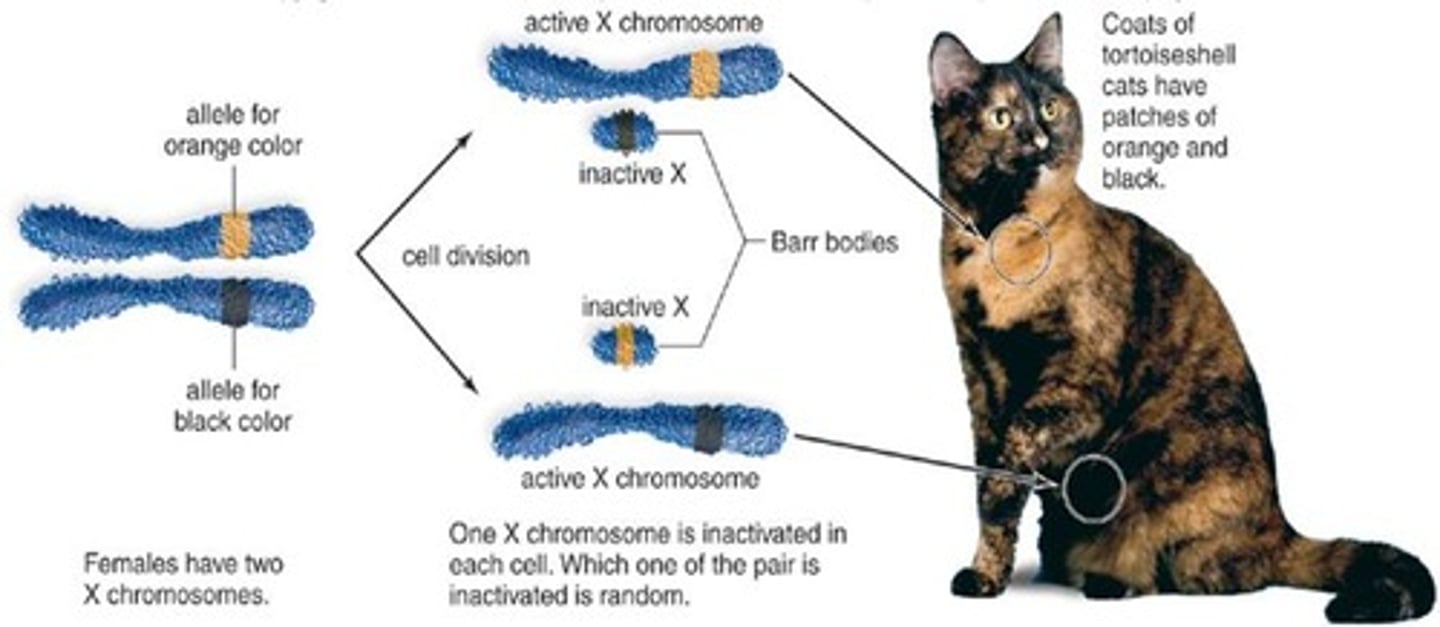
X- Chromosome Inactivation
process that occurs in female mammals in which one of the X chromosomes is randomly turned off in each cell.
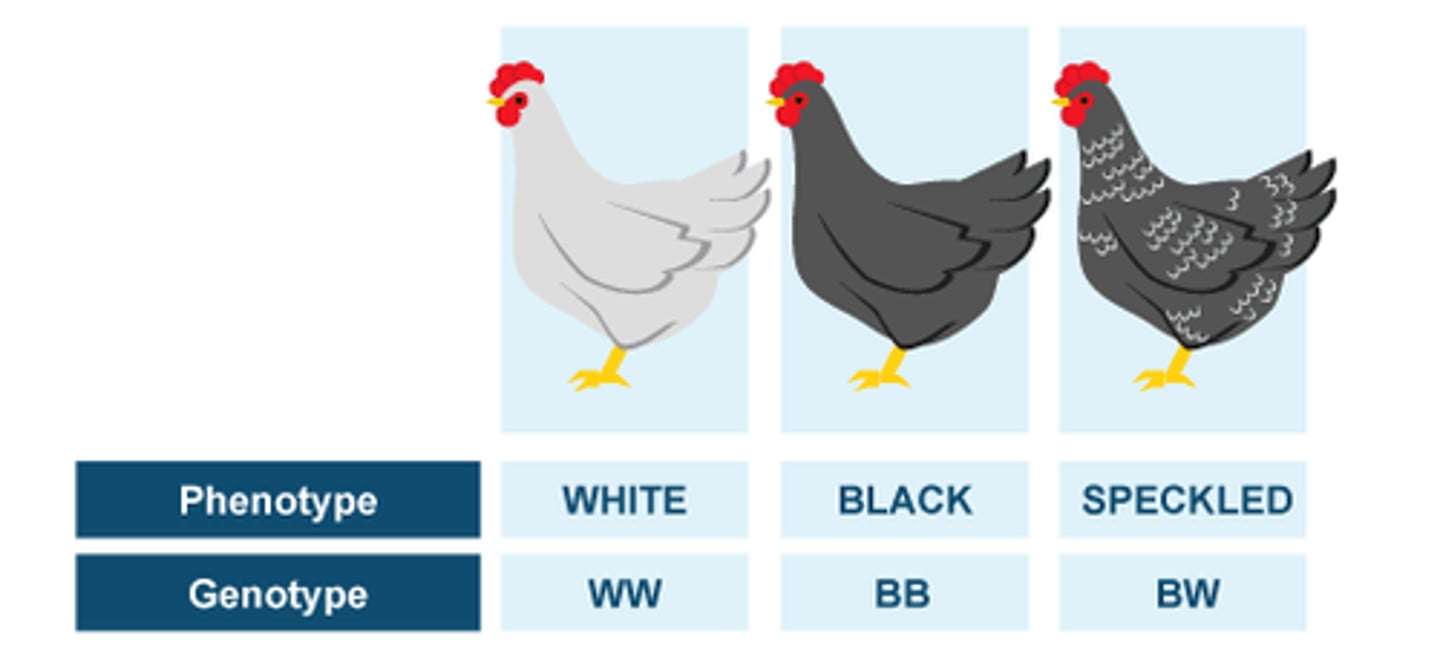
Incomplete Dominance
a form of genetic inheritance where neither allele is completely dominant over the other, resulting in a blended or intermediate phenotype in heterozygous offspring.
Codominance
a condition in which both alleles for a gene are fully expresse
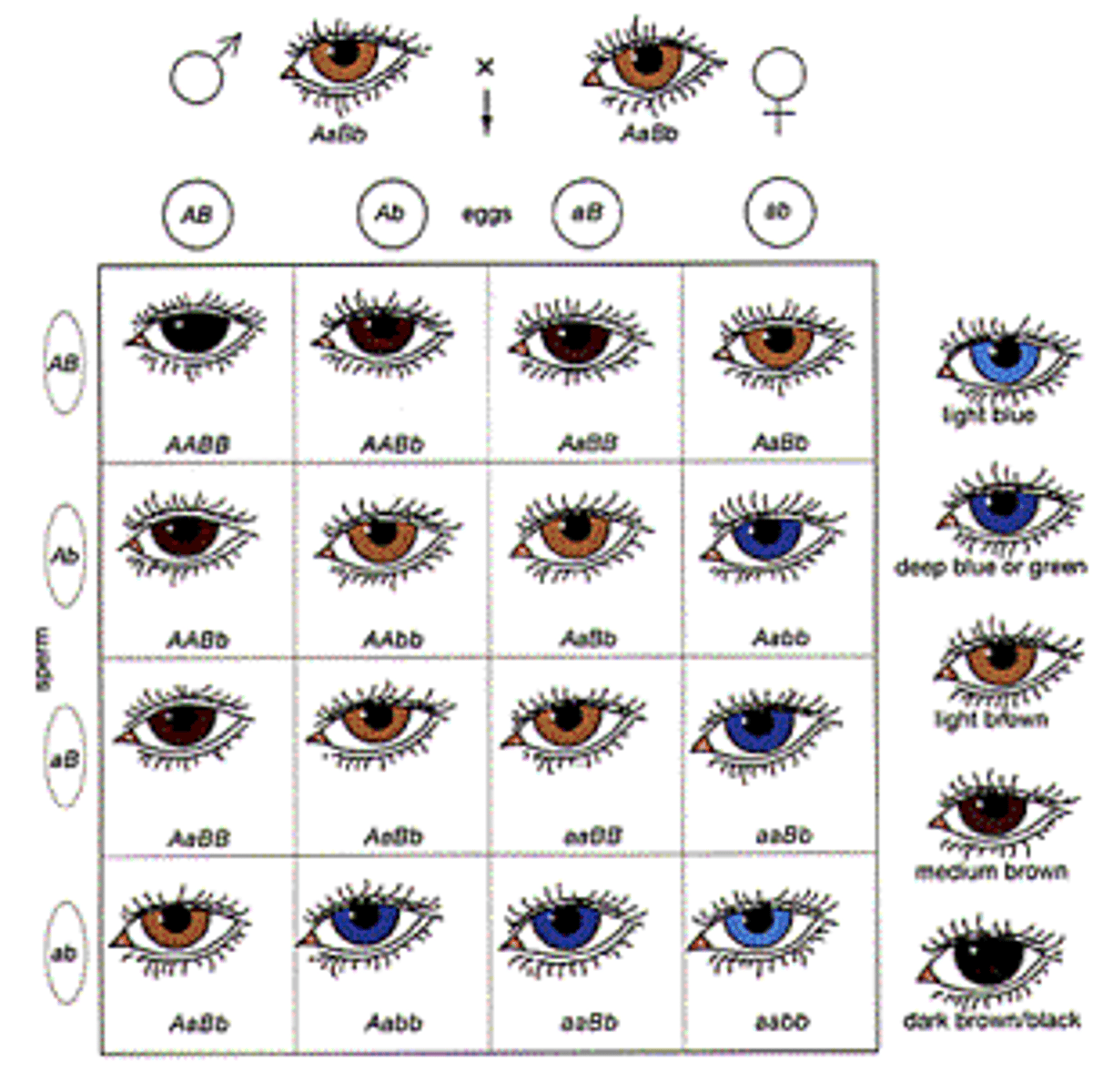
Polygenic Trait
a characteristic of an organism that is determined by many genes
Linkage Map
diagram that shows the relative locations of genes on a chromosome
Pedigree
a diagram that shows the occurrence of a genetic trait in several generations of a family
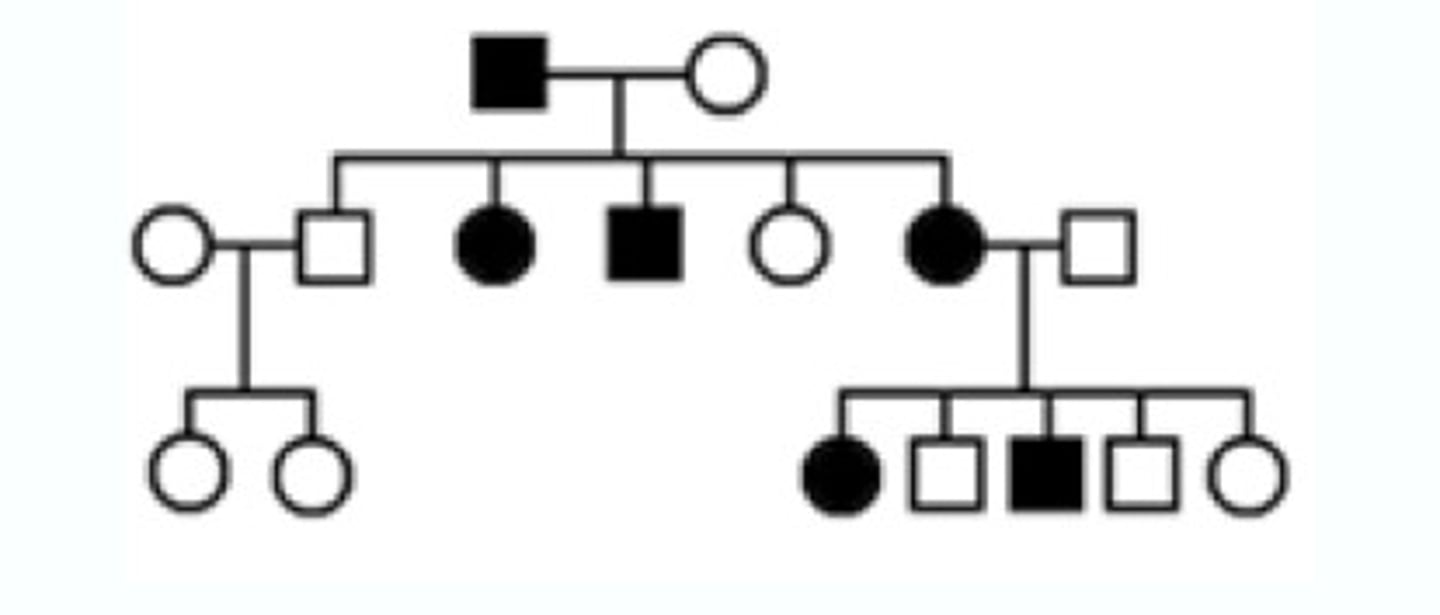
Karyotype
image of all of the chromosomes in a cell
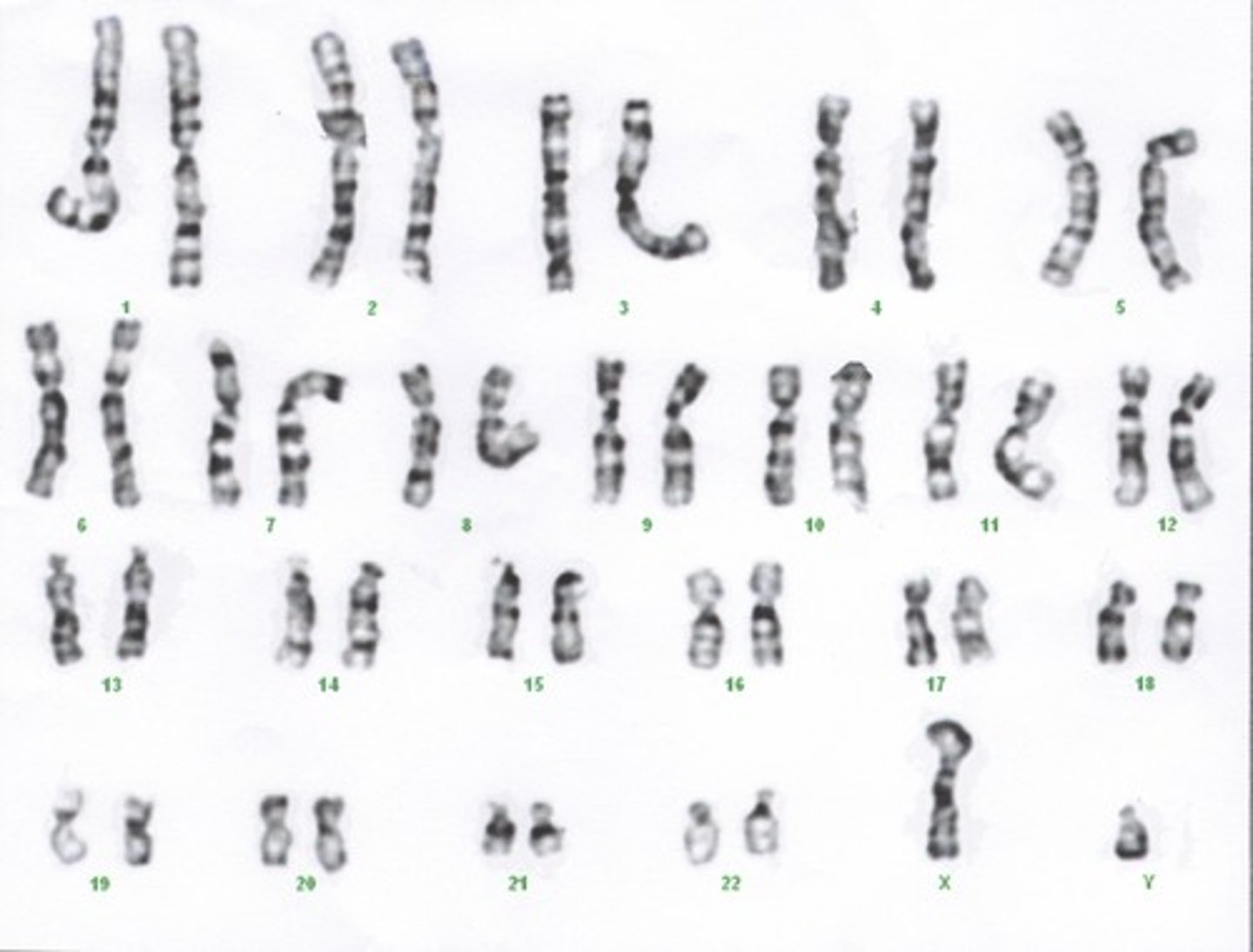
Heterozygous
having two different alleles for a trait

Homozygous
having two identical alleles for a trait

Recessive
An allele that is masked when a dominant allele is present
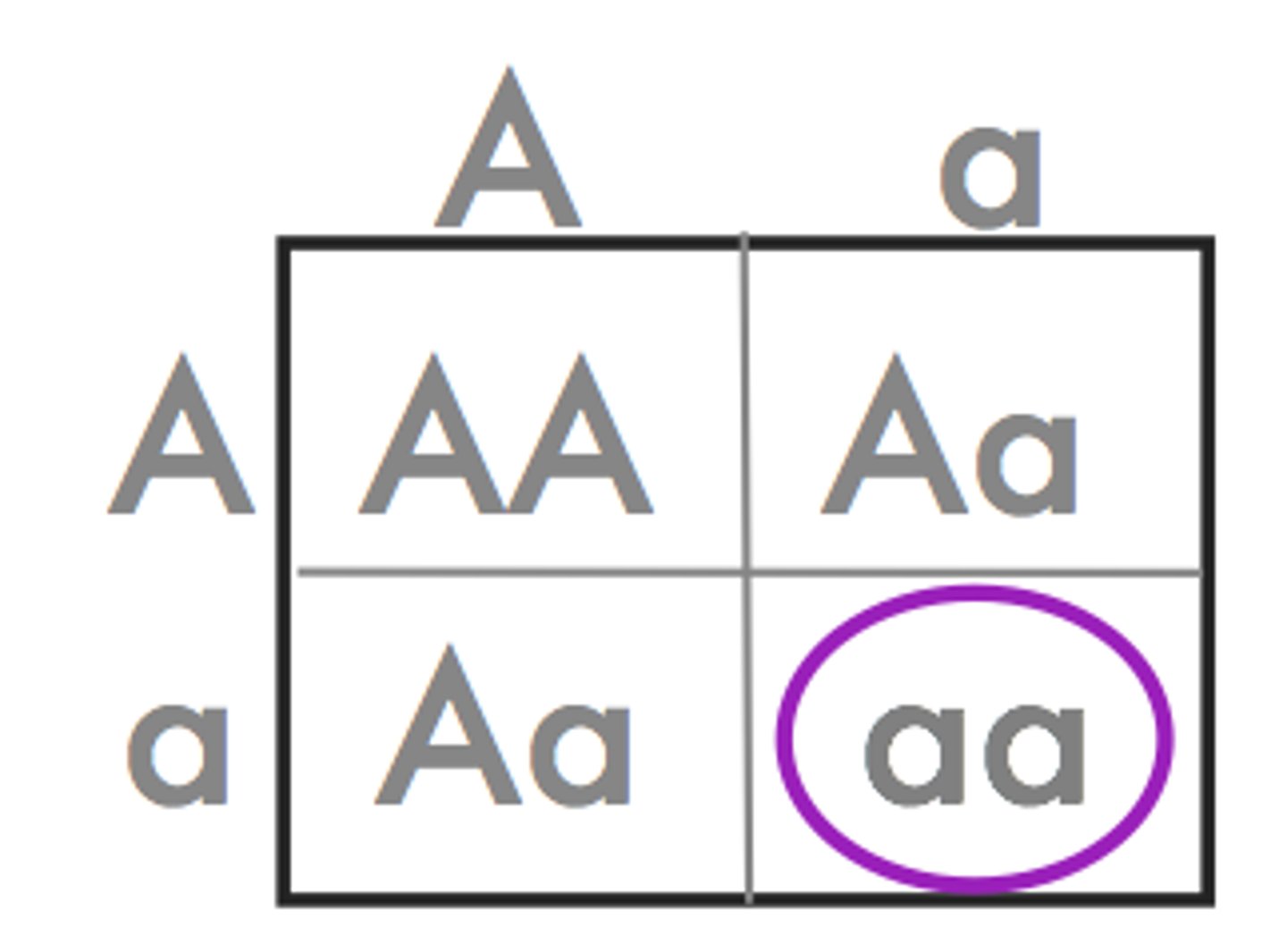
Dominant
An allele that is always expressed
Square in a Pedigree
represents a male
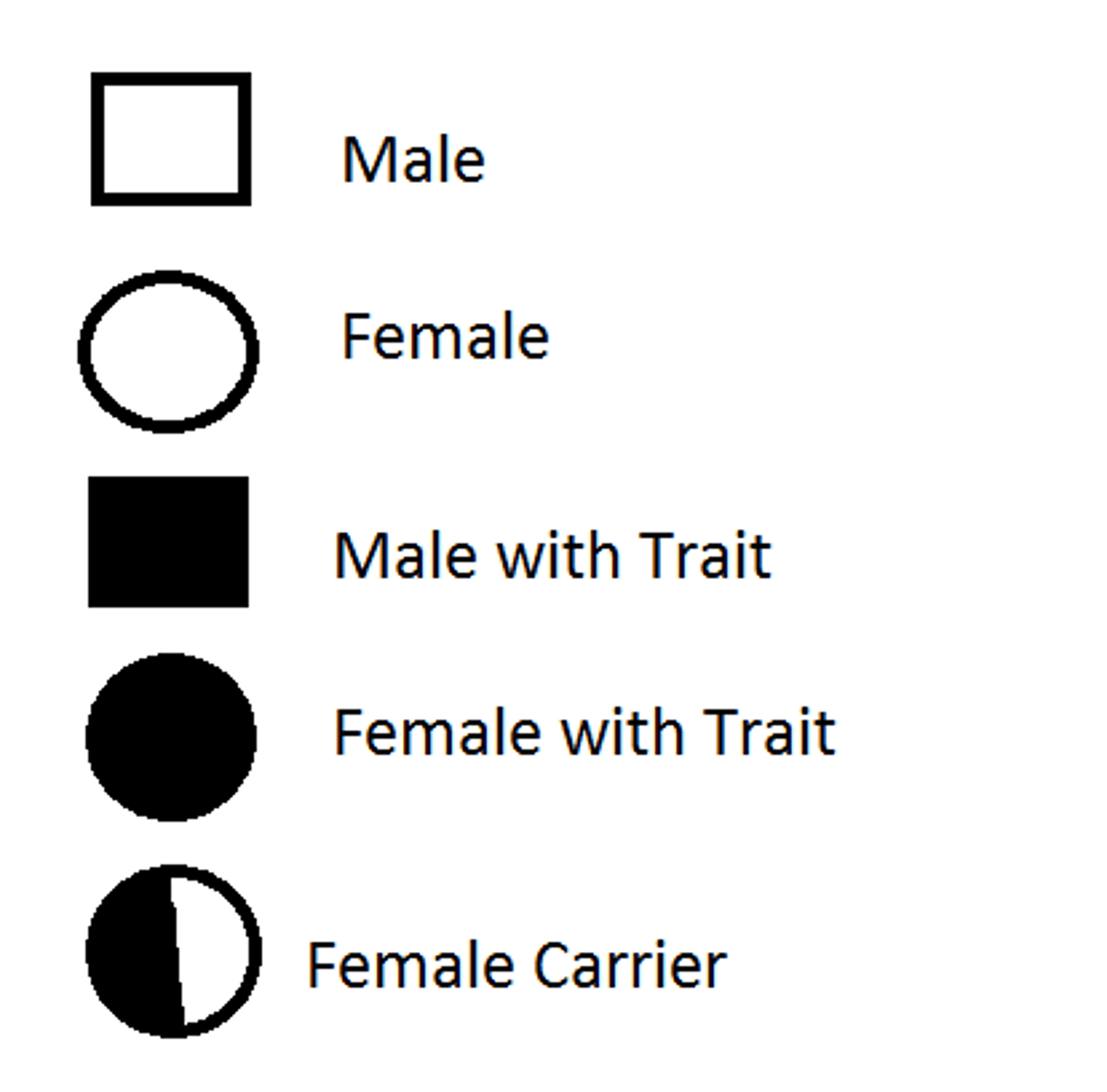
Circle in a Pedigree
represents a female
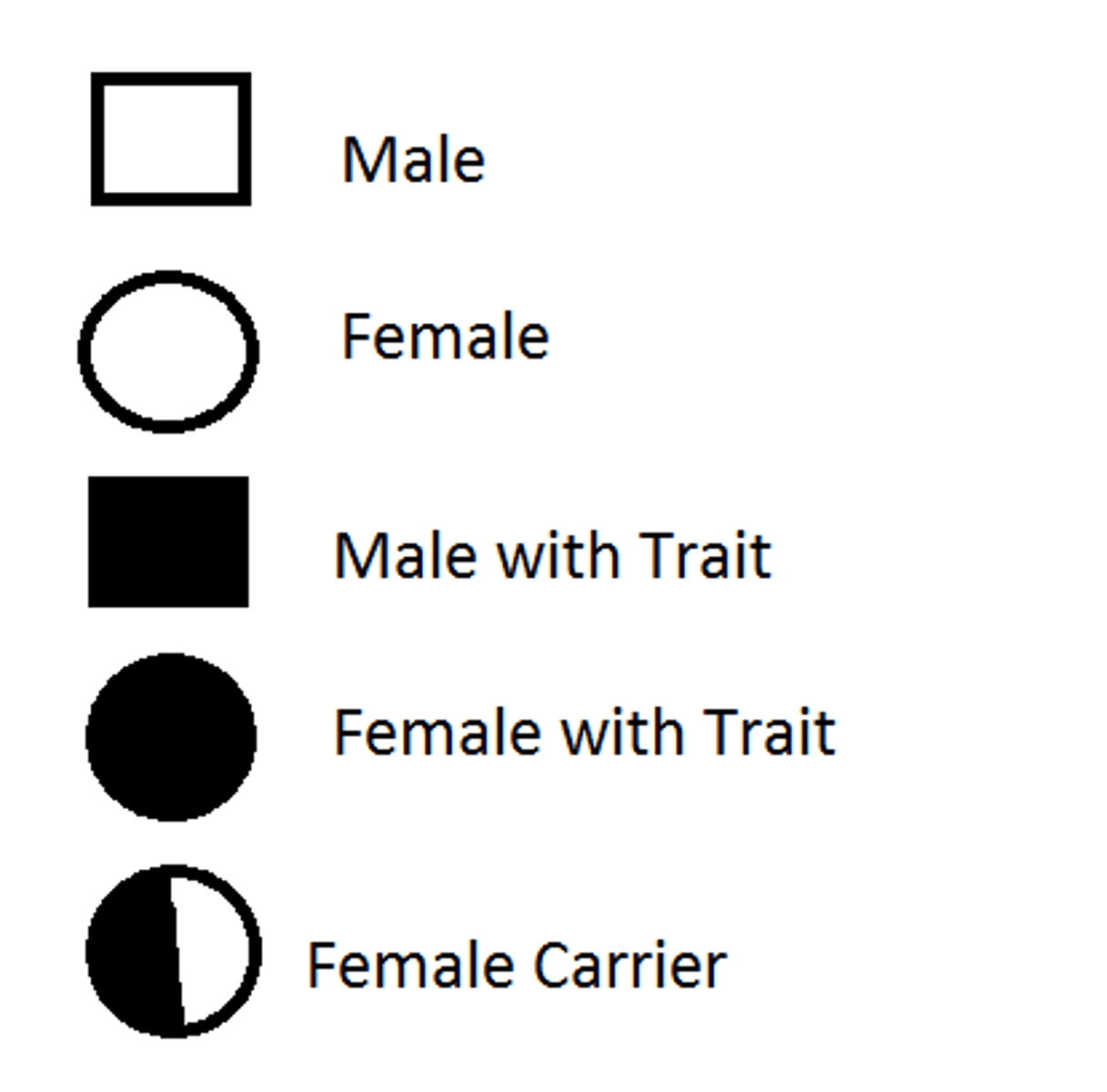
Shaded shape in a Pedigree
has recessive trait/disease/disorder
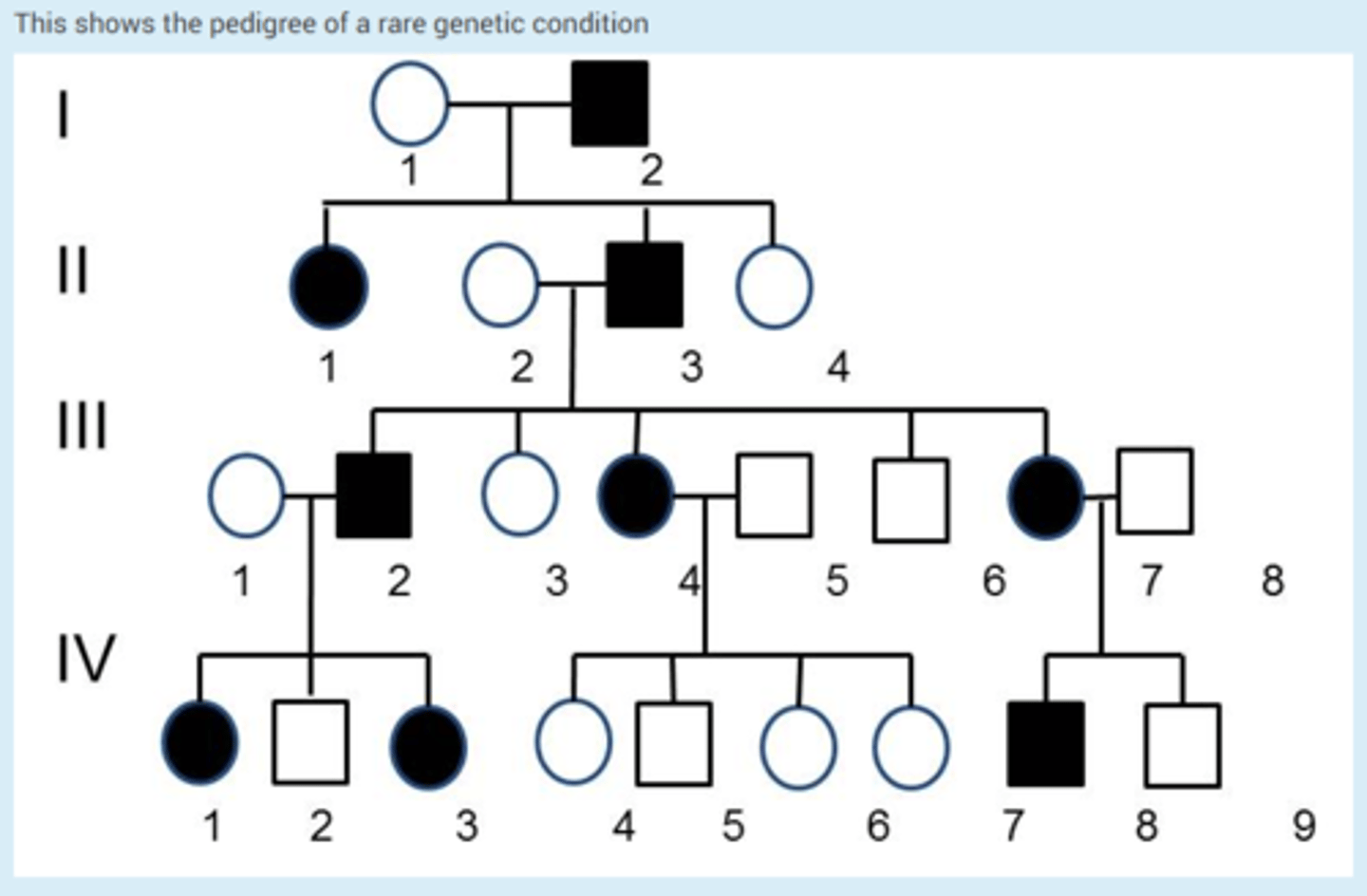
Horizontal Line in a Pedigree
marriage/mating
Vertical Line in a Pedigree
offspring/children
Epistasis
interaction between alleles in which one allele hides the effects of another allele
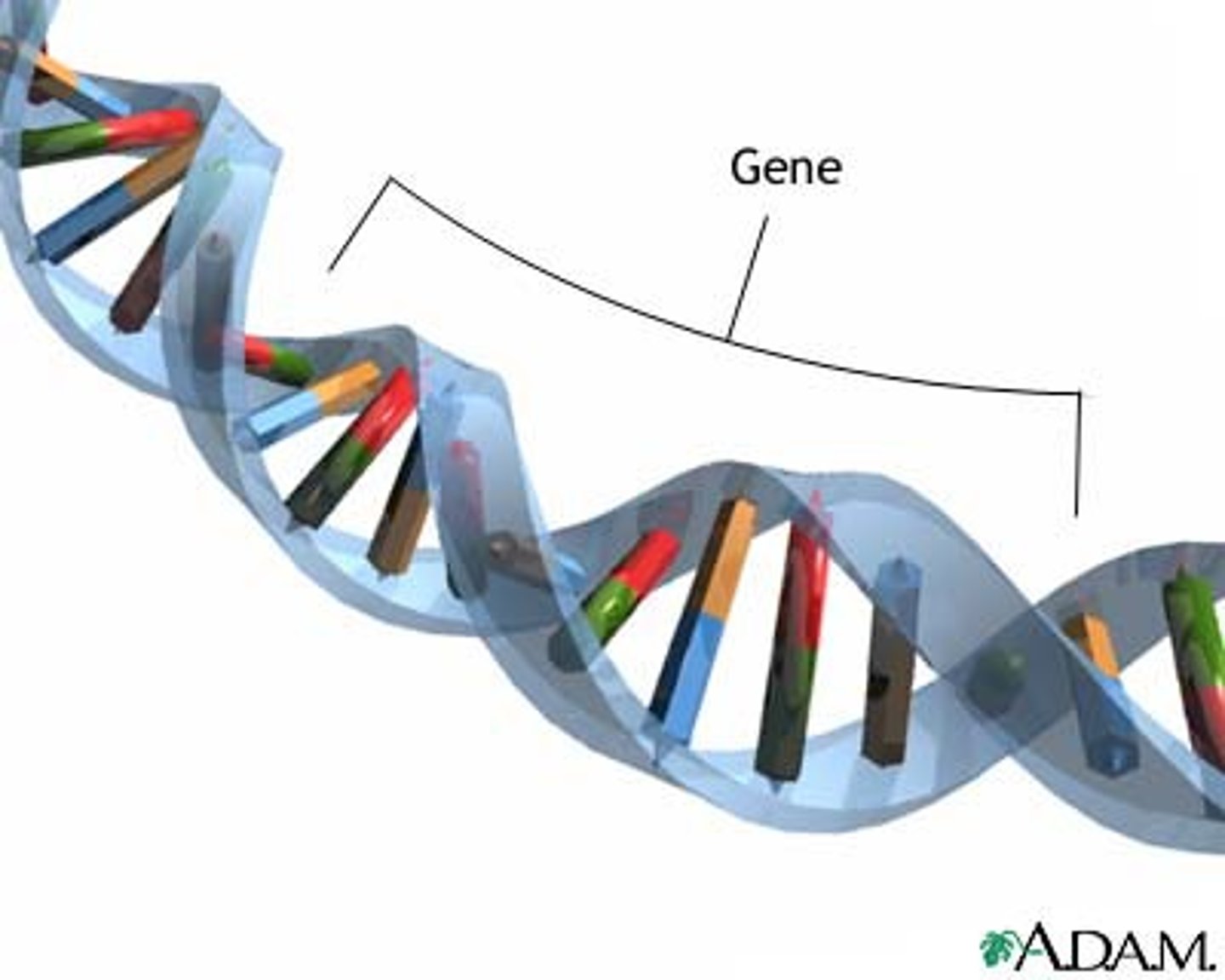
Gene
A segment of DNA on a chromosome that codes for a specific trait
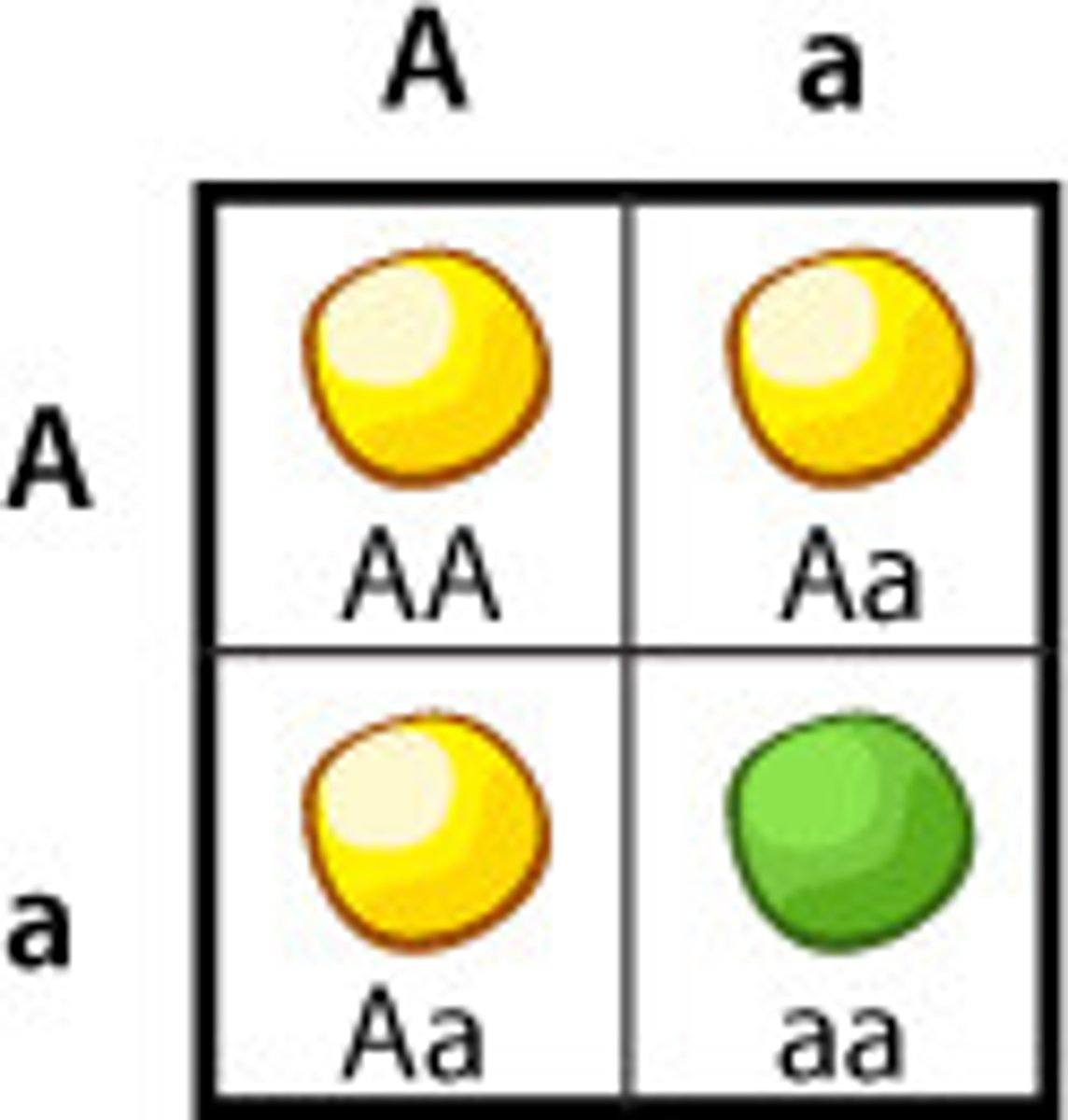
Allele
Different forms of a gene
Genome
All the genetic information in an organism; all of an organism's chromosomes.
Chromosome
A threadlike, gene-carrying structure found in the nucleus
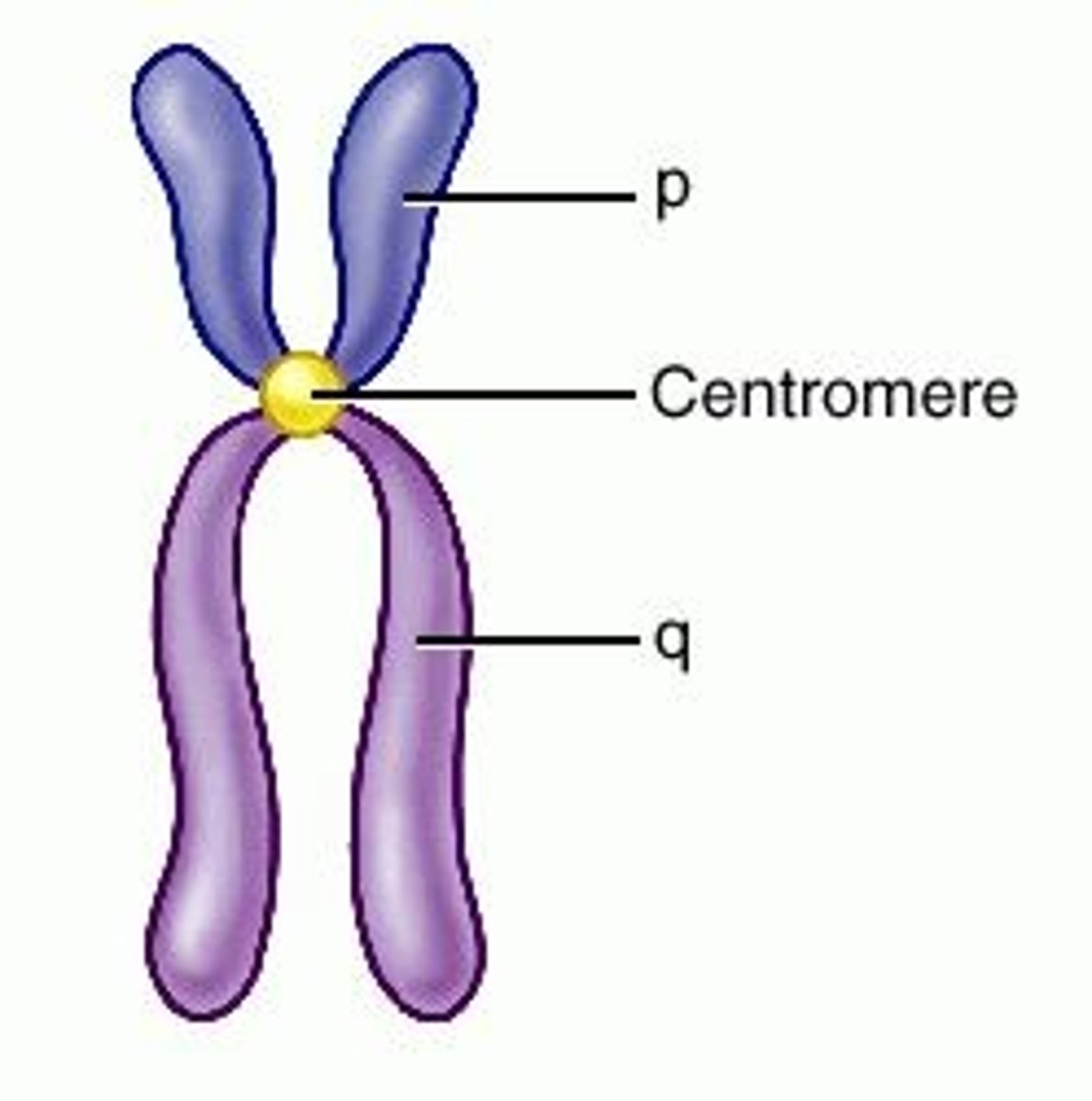
Hemophilia
An X-linked recessive disorder in which blood fails to clot properly, leading to excessive bleeding if injured.

multiple alleles
three or more forms of a gene that code for a single trait; blood types is an example (IA, IB, or i)
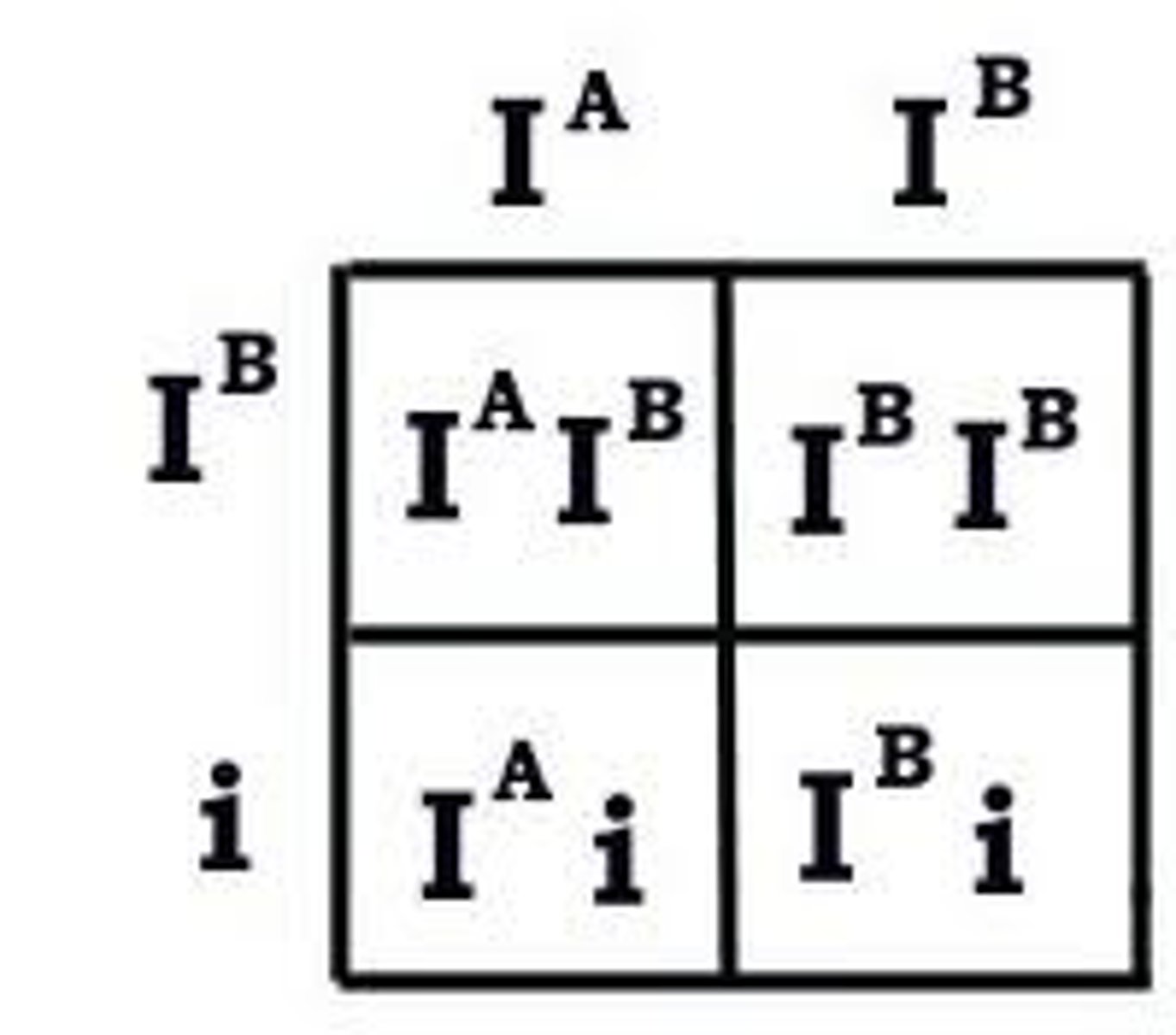
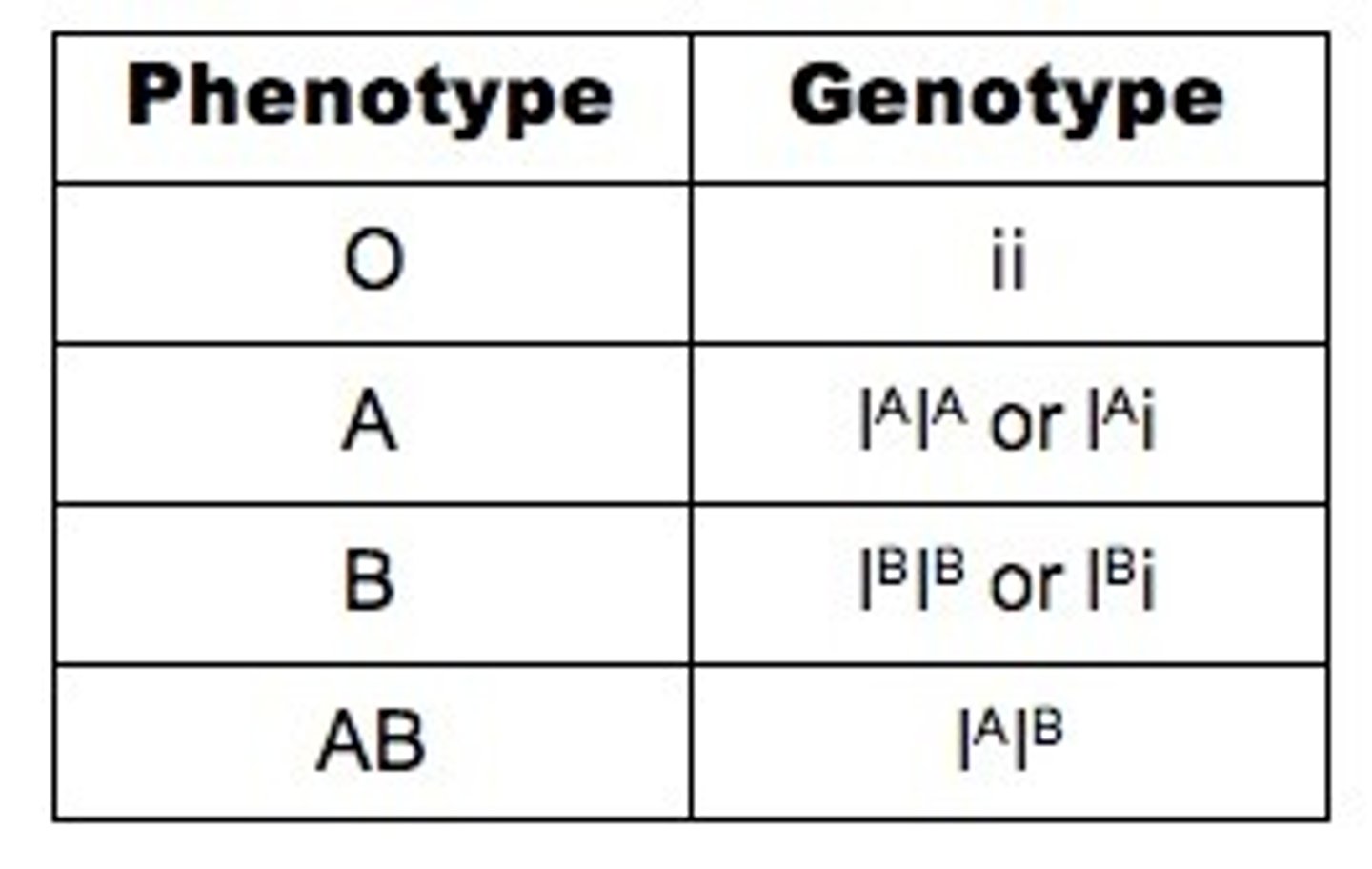
Blood type alleles
Type A - IAIA or IAi
Type B - IBIB or IBi
Type AB - IAIB
Type O - ii
X-linked recessive
examples would colorblindness and hemophilia
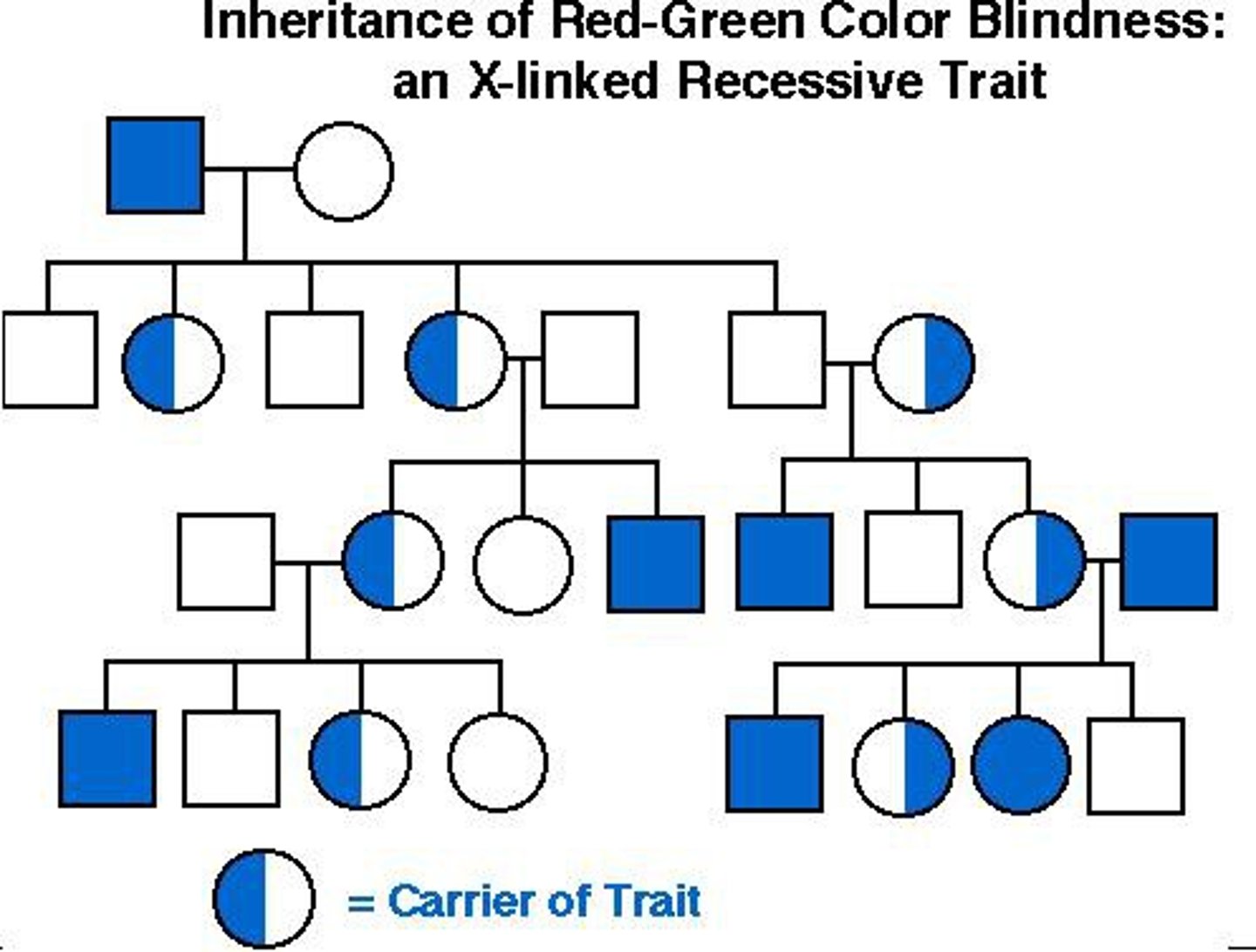
Red/Green Colorblindness is an example of a
sex-linked trait
hemophilia
X-linked recessive disorder causing a defective blood clotting protein
Down syndrome results from
the presence of an extra chromosome in position 21
Explain why disorders caused by dominant alleles on autosomes are less common than those caused by recessive alleles on autosomes.
because dominant disorders can’t hide and show immediate effects, leading to people curing them fast, while recessive disorders hide, causing humans to have a hard time finding them. So in the population, dominant disorders are less common.
Describe how the expression of sex-linked genes can differ between males and females.
Sex-linked genes are usually found on the X chromosome, and males and females express them differently because males have only one X (so traits show easily), while females have two Xs (so traits can be hidden).
How do codominance and incomplete dominance differ from a simple dominant and recessive relationship between alleles?
In a simple dominant–recessive relationship, the dominant allele masks the recessive one. In incomplete dominance, the heterozygous phenotype is a blend of both alleles. In codominance, both alleles are fully expressed at the same time.
Humans have a tremendous range of hair, eye, and skin color. How does the polygenic nature of these traits explain the wide range of phenotypes?
Hair, eye, and skin color are controlled by many genes, and each gene contributes a small effect, so different combinations of alleles produce many phenotypes, creating the wide range of human colors.
Give two examples that demonstrate how the environment can interact with genotype to affect an organism's phenotype.
Hydrangea plants can have the same genes, but their flower color changes depending on soil pH, turning blue in acidic soil and pink in basic soil. Human height is influenced by genes, but nutrition and health during growth can make a person taller or shorter.
How did Morgan's research with fruit flies explain Punnett's and Bateson’s observations of pea plants?
Thomas Hunt Morgan showed that genes are located on chromosomes and can be linked, meaning they are inherited together. This explained why Reginald Punnett and William Bateson saw unexpected ratios in pea plants, because some traits did not assort independently.
Explain how linked genes and cross-over frequencies are used to make linkage maps.
Linked genes are genes located close together on the same chromosome, so they tend to be inherited together. However, during crossing over, chromosomes can exchange segments, separating some linked genes. The frequency of these crossovers is measured, and genes that have higher crossover frequencies are farther apart, while lower frequencies mean they are closer together. Scientists use these frequencies to estimate distances and arrange genes in order on a chromosome, creating a linkage map.
What are two main ways in which human genetics follows the genetic patterns seen in other organisms?
Human genetics follows the same basic rules as other organisms because genes are inherited from parents through chromosomes, following Mendel’s laws of inheritance. It also shows similar patterns like dominant and recessive traits, where some alleles can mask the expression of others.