Ch 9 cellular respiration
 Call Kai
 Learn
Learn Practice Test
 Spaced Repetition
 Match
Match Flashcards
 Knowt Play
1/32

There's no tags or description
Looks like no tags are added yet.
Name | Mastery | Learn | Test | Matching | Spaced | Call with Kai |
|---|
No analytics yet
Send a link to your students to track their progress
33 Terms
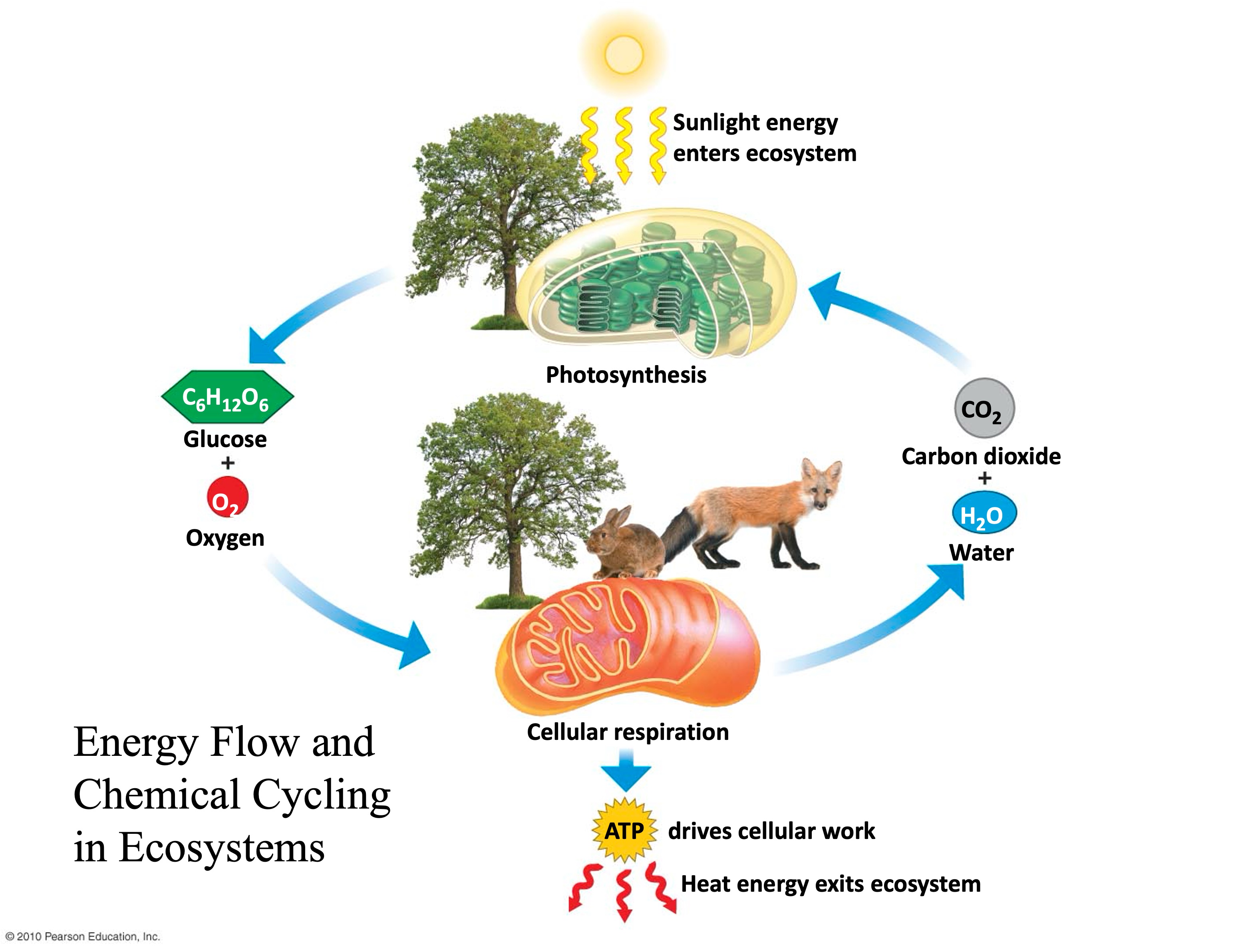
the sun, directly, or indirectly via plants photosynthesis
energy cells need to do work comes from…
cell res and photosynthesis cycle
photosynthesis produces O2 and C6H12O6 which is used in cell respiration, which has byproducts of CO2 abd H2O used by plants in photosynthesis
one way flow of energy
sun → plants → animals
→ energy lost as heat
chemicals are recycled, energy is not
cellular respiration
process by which cells breakdown organic complex molecules into simpler ones with less energy in the presence of oxygen producing energy extracted from these molecules, harnessed and used to make ATP in a series of redox reactions or lost as heat
exergonic reaction
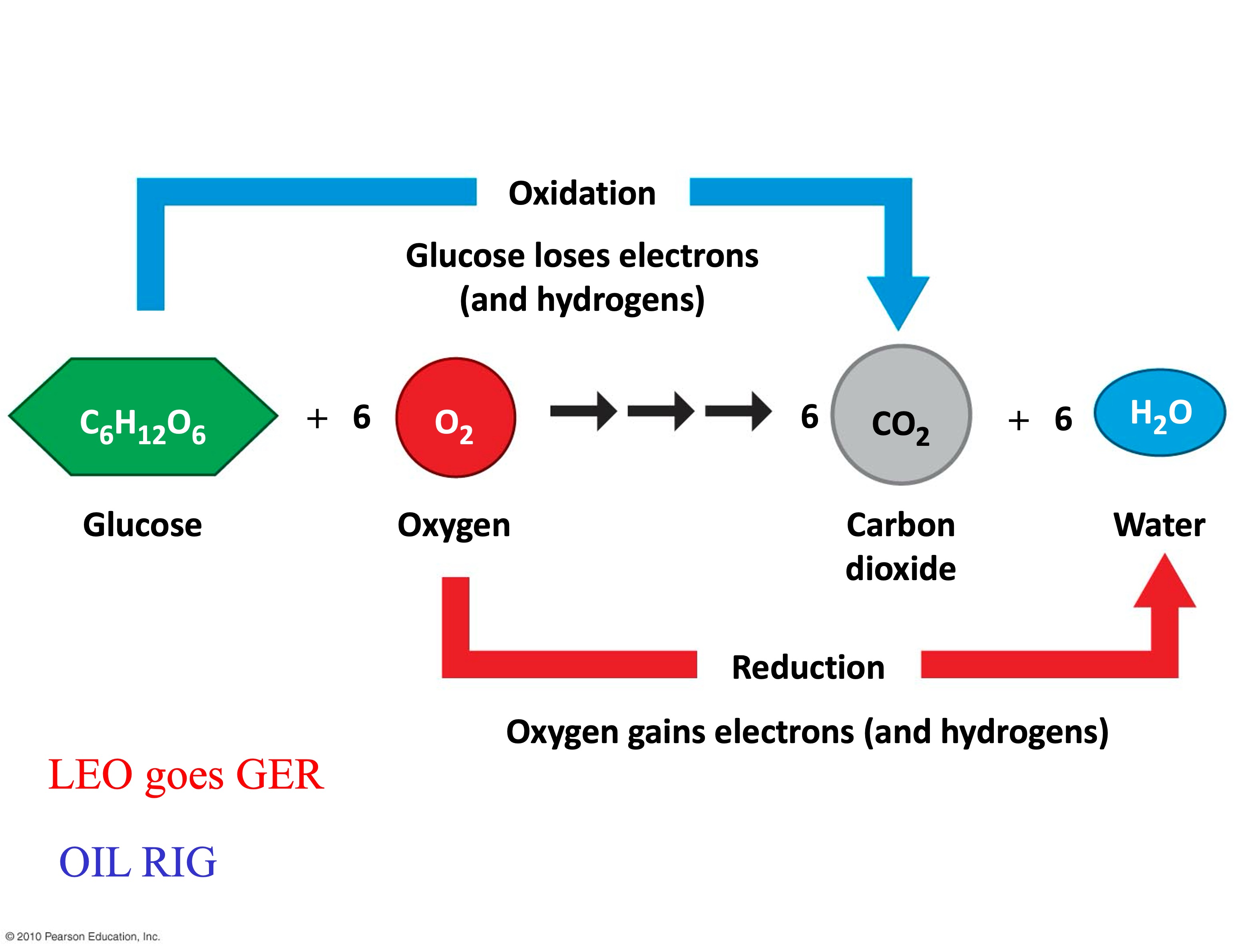
C6H12O6 + 6O2 → 6CO2 + 6H2O + energy (used to make ATP)
electrons passed to successively lower energy levels in a series of enzymatically controlled reactions: energy is released slowly so that more can be used/captured - conservation of energy
→ 12 stages/reactions within from start to finish
redox reactions
chemical reactions where there is a partial or complete loss/gain of electrons
→ oxidation and reduction
electrons in a polar covalent bond have less chemical energy than those in a nonpolar covalent bond→ partial or complete loss
oxidation
partial or complete loss of electrons
reduction
partial or complete gain of electrons
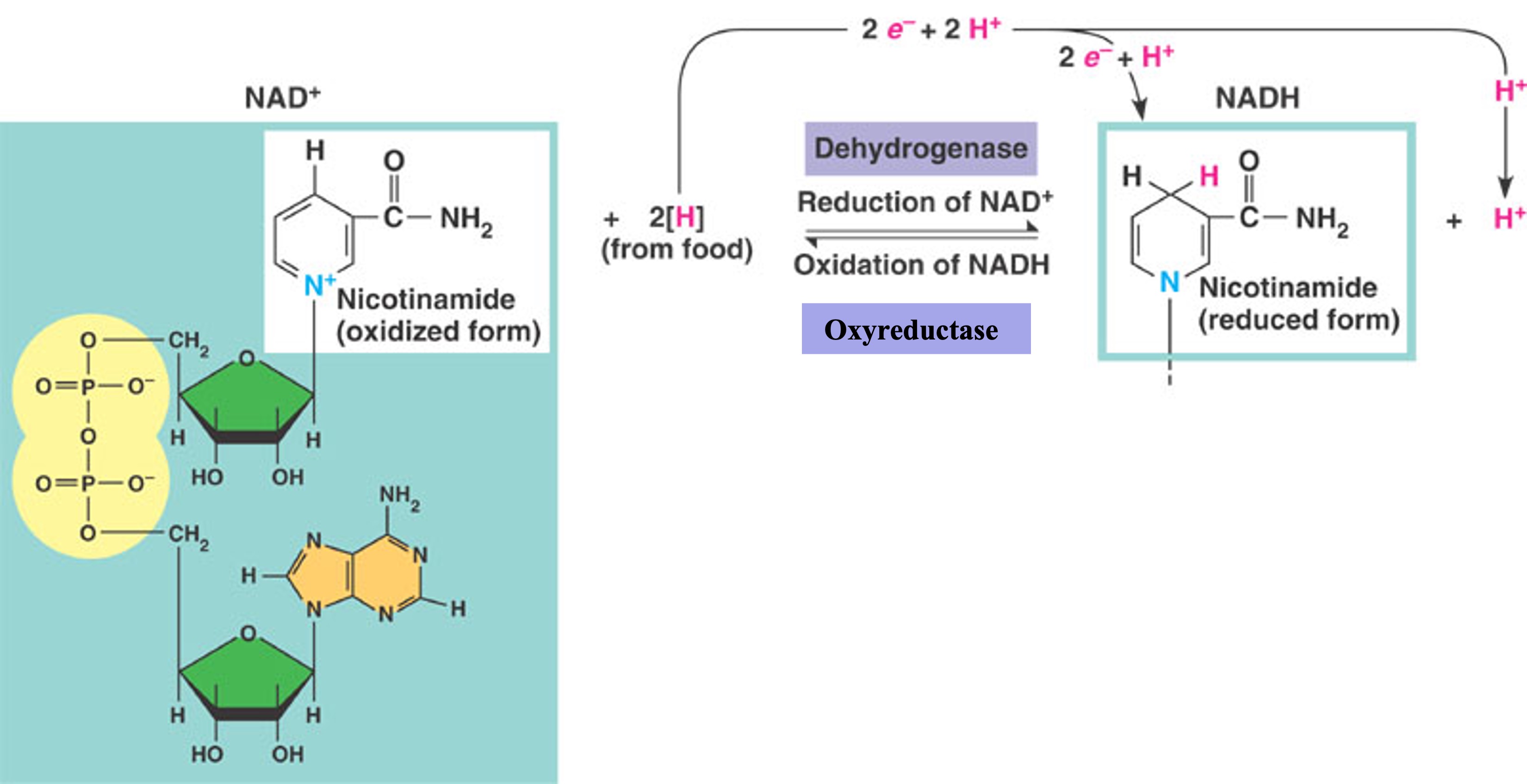
electron carriers
used in cell res to transport the high energy electrons removed from organic molecules (food)
coenzymes: NAD+, FAD+
dehydrogenases
enzymes that remove high energy electrons and hydrogens from organic molecules and transfer them to NAD+ and FAD+
electron transport chain
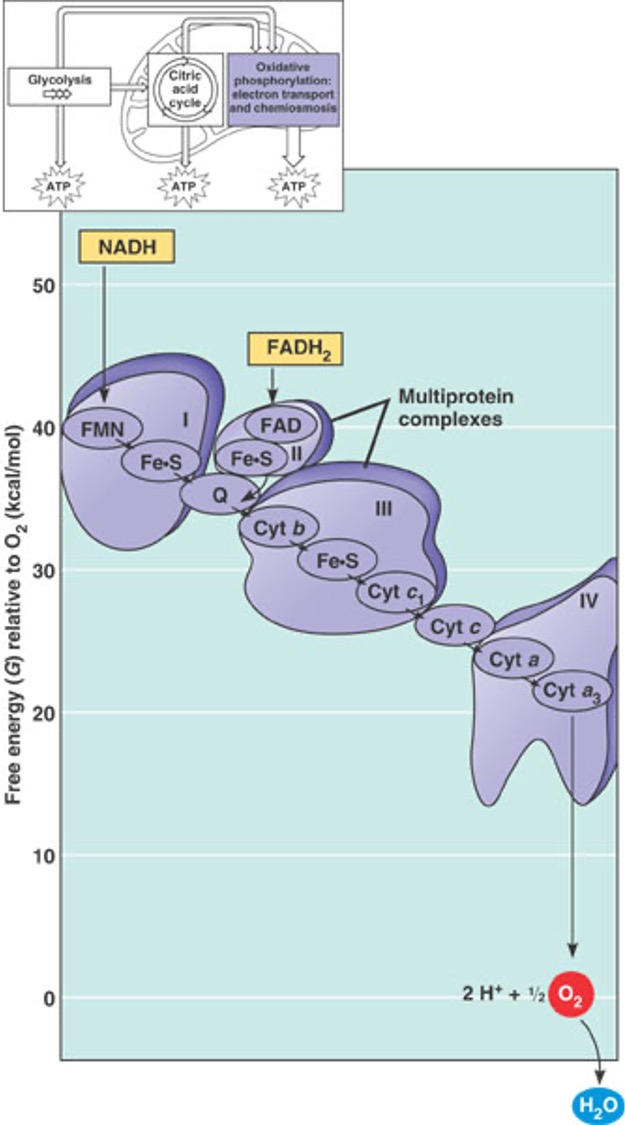
high energy electrons carried by the coenzymes are passed between electron carriers to lower and lower energy states (higher e-neg conditions) in a series of redox reactions and finally to oxygen
as the electrons are passed down, the energy is slowly released and used to make ATP
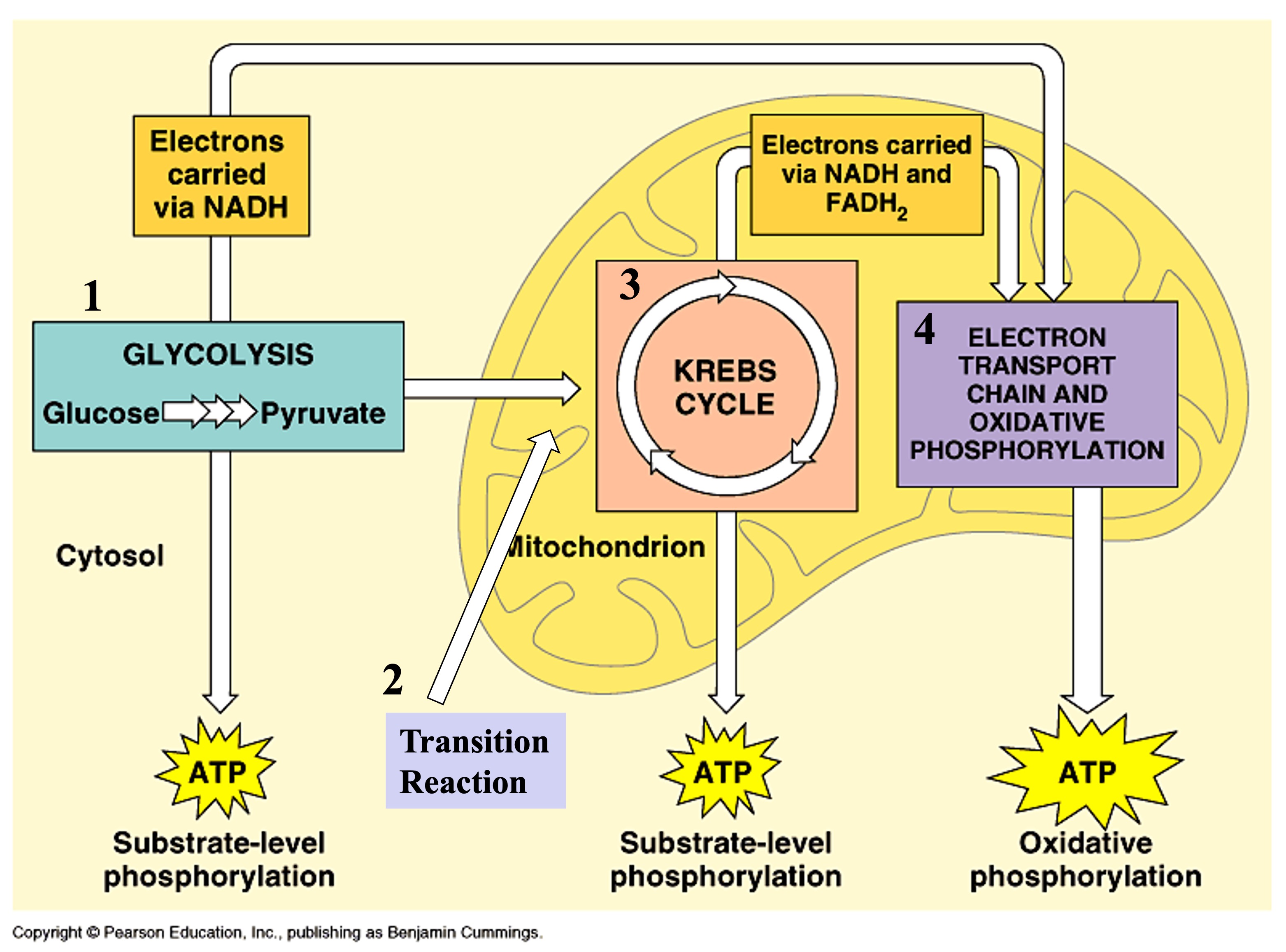
glycolysis
first stage of cell res
“glucose” “splitting”
in cytoplasm
occurs in presence or absence of oxygen
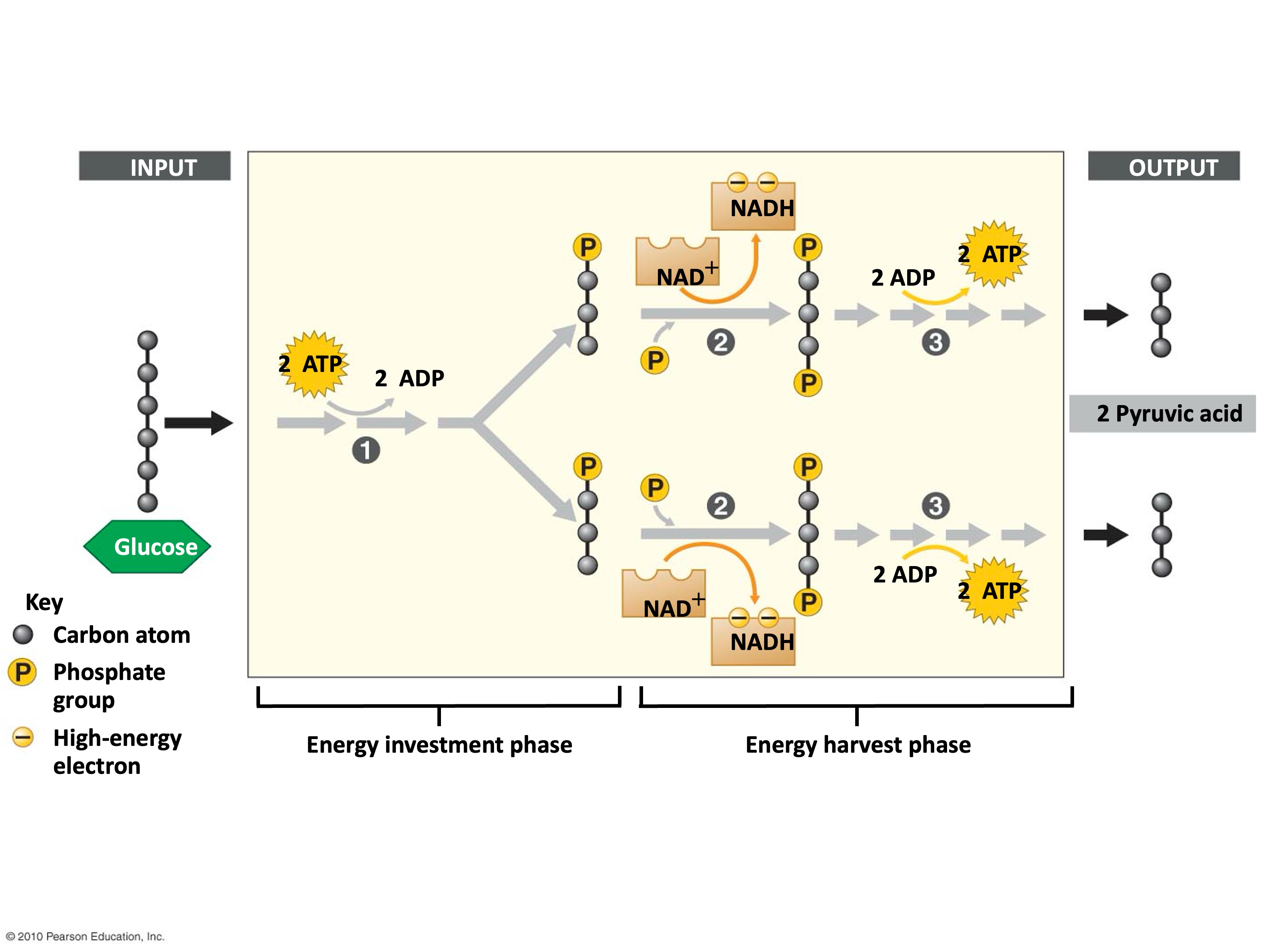
glucose (C6) is broken down into 2 pyruvate (C3) molecules
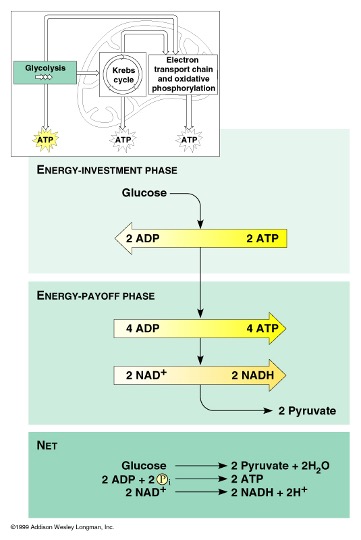
energy investment phase + energy yielding phase
in: glucose, NAD+, ATP, ADP
out: 2 pyruvates, 2 ATP, 2 NADH
starting molecules of glycolysis
glucose, NAD+, ADP, ATP
molecules produced in glycolysis
2 pyruvate, 2 ATP, 2 NADH
energy investment phase
1st phase of glycolysis
activates glucose molecules by using 2 ATP and transfers the phosphates using enzymes kinases
→ glucose (C6) becomes 2 pyruvate (C3) molecules
energy yielding phase
2nd phase of glycolysis
synthesizes the 2 pryuvate molecules by substrate level phosphorylation to produce 4 ATP (for a new gain of 2 ATP) and 2 NADH
high energy electrons produced from breaking the bonds of the glucose molecule into pyruvates are carried to the electron transport chain via NADH
a phosphate group is then removed from the pyruvates and added to an ADP to make ATP, 1 per pyruvate, 2 per glucose
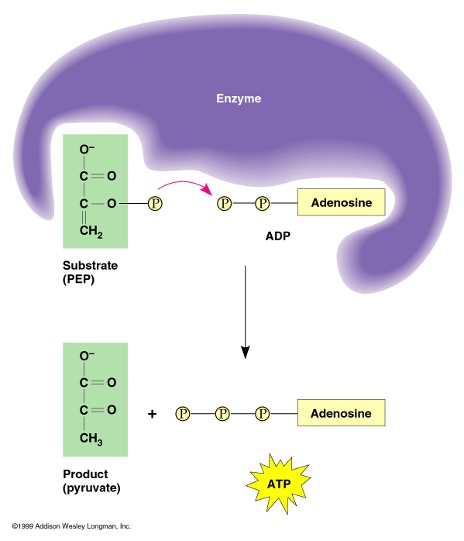
substrate level phosphorylation
transfers a phosphate group from a pyruvate of glucose and attaches it to ADP, synthesizing ATP
transition reaction
2nd step of cell res
only occursin presence of oxygen (aerobic)
no ATP is made
pyruvate continues process of being broken down for cellular res
transported into mitochondrial matrix by facilitated diffusion
carboxyl group is broken off and released as CO2, the bond break becomes energy and molecules
high energy electrons from break are carried via NADH to the electron transport chain (final step)
converts what’s left of pyruvate (acetate) to Acetyl-CoA (adds coenzyme A) → 2 per glucose
in: 2 pyruvates, NAD+, coenzyme A
out: Acetyl CoA, NADH, CO2
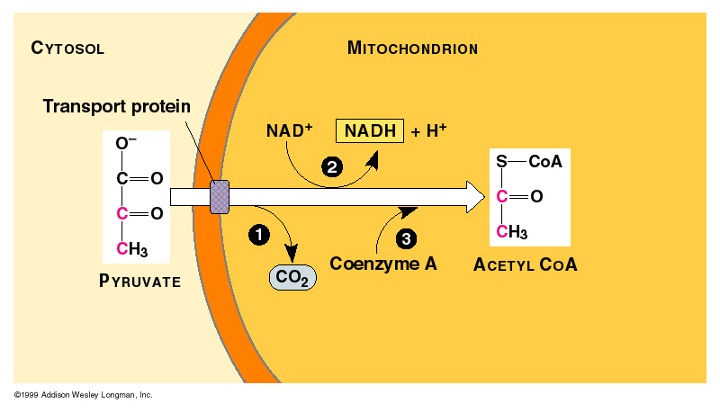
starting molecules in transition reaction
pyruvate/pyruvic acid
NAD+
coenzyme A
molecules produced in transition reaction
acetyl CoA (2/glucose), NADH, CO2
Krebs cycle
3rd step of cell res
completes breakdown of glucose in mitochondrial matrix, extracts most energy from glucose derivatives (Acetyl CoAs)
aka citric acid cycle
2x cycles (1 per Acetyl CoA, 2 per glucose molecule)
8 reactions per cycle
most energy still stored in electron carriers, lot’s of e- produced here (lots of reactions that release high energy electrons)
2 ATP produced
in: Acetyl CoA, NAD+, FAD+, ADP
out: NADH, FADH, ATP, CO2
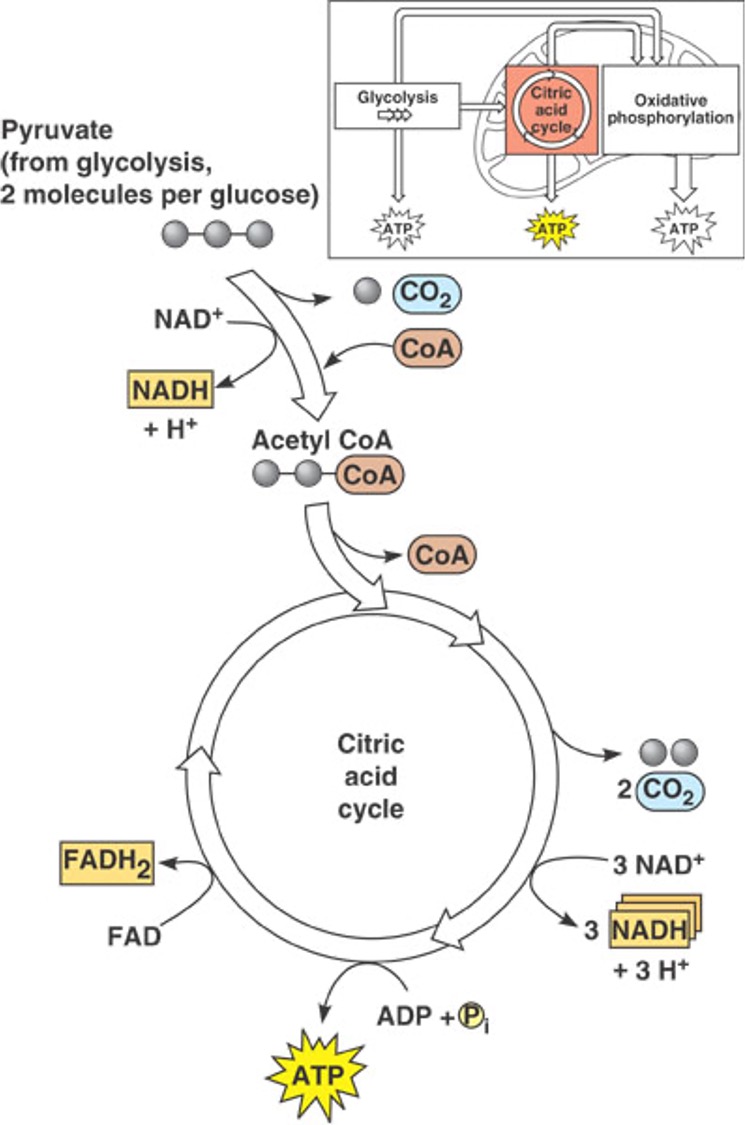
starting molecules in the Krebs cycle
2 acetyl CoAs, ADP, NAD+
molecules produced in the Krebs cycle
electron carriers NADH and FADH2, CO2, and 2 ATP
electron transport chain
4th step of cell res
+ chemiosmosis = oxidative phosphorylation
makes most ATP
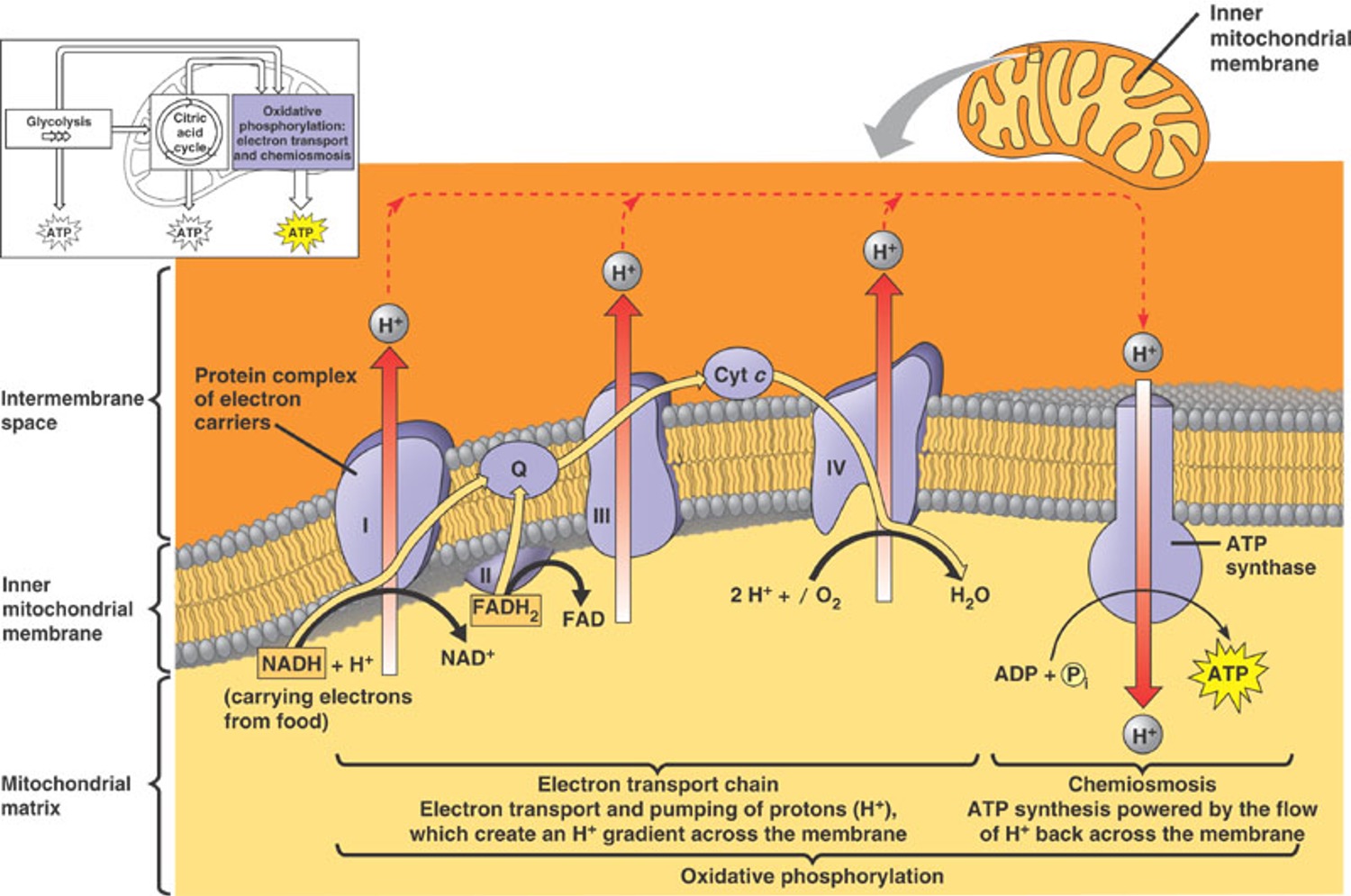
coenzymes donate high energy electrons to chain of proteins along inner mitochondrial membrane
electrons cascade down a series of electron carriers in redox reactions (electrons lose energy as they move through with each step)
oxygen is the final electron acceptor - binds with H+ to make water → released
energy released as protons (H ions) in inter membrane space → ATP by oxidatative phosphorylation and chemiosmosis
in: NADH, FADH2 carrying high-energy electrons, ADP, O2
out: high energy electrons, H2O, H+ ions
chemiosmosis
second part of oxidative phosphorylation
energy released by falling electrons is used to create a proton gradient of H+
protons are pumped through proteins out of the matric into the intermembrane space creating a pH difference
gradient has potential energy, unbalanced sides of the membrane creates pressure (proton motive force)
H+ are released and diffuse back into the matrix through protein pump ATP synthase, embedded in inner mitochondrial membrane, right next to ETC
ATP synthase uses the energy released as the gradient decreases through the pump to make ATP from ADP and phosphates
in: high energy electrons that produce a H+ proton gradient, ADP
out: ATP, heat
→ yields about 36-38 ATP molecules/glucose, rest is lost as heat
starting molecules of ETC
NADH + FADH2 carrying high energy e, ADP, oxygen
molecules produced by ETC/chemiosmosis
32-34 ATP molecules, H2O, NAD+, FAD+
efficiency of cellular respiration
36 or 38 ATP is only 40% of total energy in glucose molecule
rest of energy is lost as heat
after ATP is made in the mitochondria
it is transported out of the matrix and is free to move throughout the cell
→ drive a multitude of reactions that cells need to stay alive and do their job
→ ADP produced from reactions will diffuse into the matrix and the whole process begins again
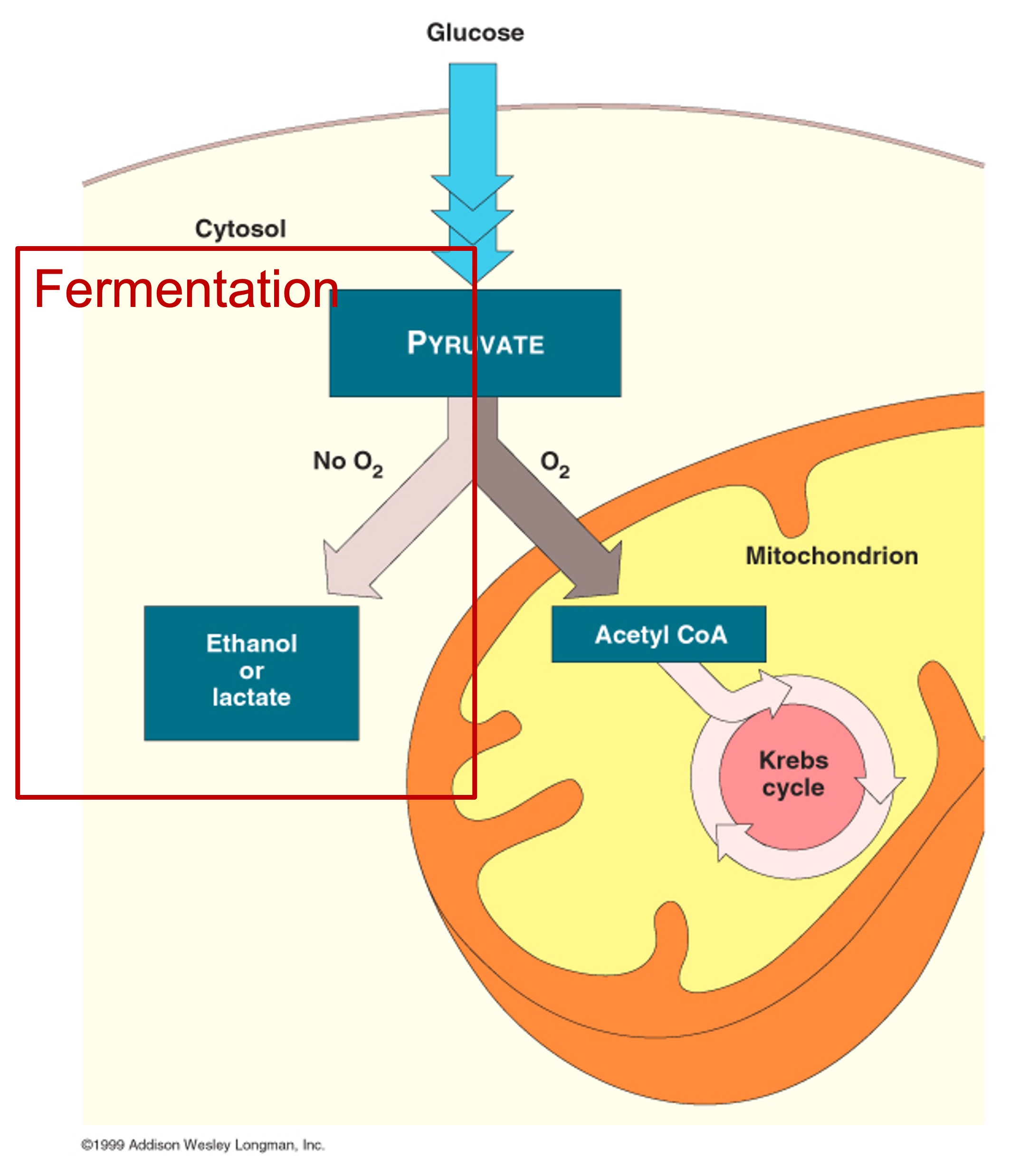
fermentation
process of converting the high energy electrons into lactic acid or alcohol that occurs if oxygen is not present for the NADH to be used in the electron transport chain
anaerobic conditions = no oxygen
regenerates the NAD+ and glycolysis can continue → 2 ATP, 2% efficiency
→ lactic acid build up in muscle is toxic → cramps when working out! b/c used up all the O2s in cells
ex:
lactic acid gives flavor to cheese, yogurt, sour cream
CO2 released from yeast makes bread rise
ethyl alcohol released by yeast makes beer/wine
aerobic respiration
oxygen is present for NADH to carry electrons to ETC and successfully complete cell respiration (oxygen is needed to catch electrons and releases water)
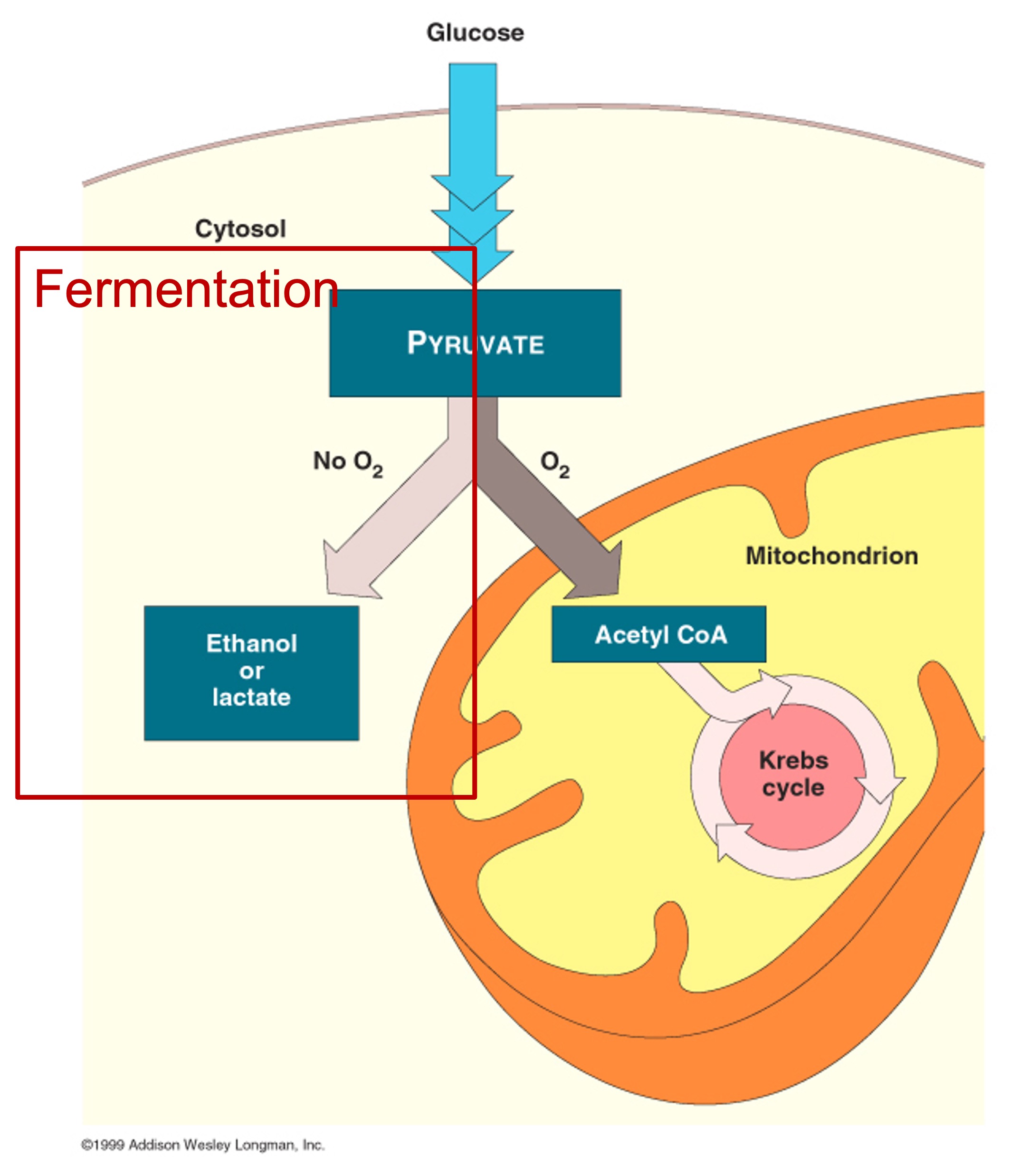
anaerobic respiration
oxygen is not present for cell respiration (the ETC) to function properly and maximize the glucose’s energy → fermentation → production of lactic acid or alcohol instead
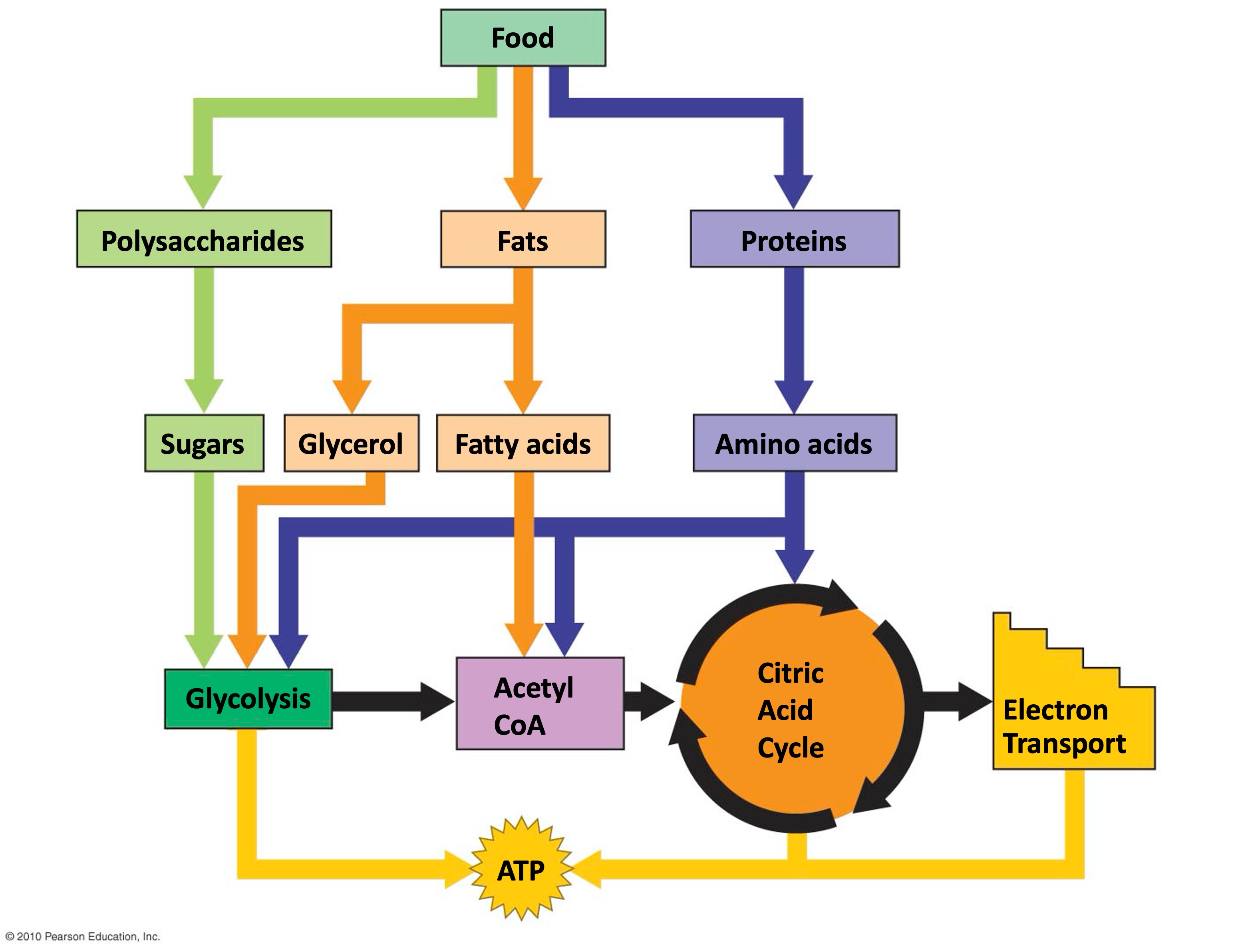
cell res is not just for glucose
breakdown products of other macromolecules (proteins and lipids) can feed into pathway at many different points
intermedieates in the pathway of respiration can be taken out of the process and used as building blocks for macromolecules
this process of cellular respiration is connected to the metabolism of other macromolecules in the grand scheme of cellular metabolism
effects of toxins on ETC
some pesticides block electron transport at first ETC protein carrier
cyaniade and carbon monoxide block ETC protein in complex IV
fungal antibiotic oligomycin blocks passage of protons through ATP synthase
“uncouplers” cause mitocondrial memebrane to leak: diintrophenol used for weight loss drug in 1940s until death stopped its usage