Thoracic Outlet Syndrome
 Call Kai
 Learn
Learn Practice Test
 Spaced Repetition
 Match
Match Flashcards
 Knowt Play
 Podcast
1/28

Earn XP
Description and Tags
syd's quizlet
Name | Mastery | Learn | Test | Matching | Spaced | Call with Kai |
|---|
No analytics yet
Send a link to your students to track their progress
29 Terms
Define Thoracic Outlet Syndrome (TOS).
A neurovascular disorder resulting from idiopathic compression of the neurovascular bundle in the interval between the neck and axilla.
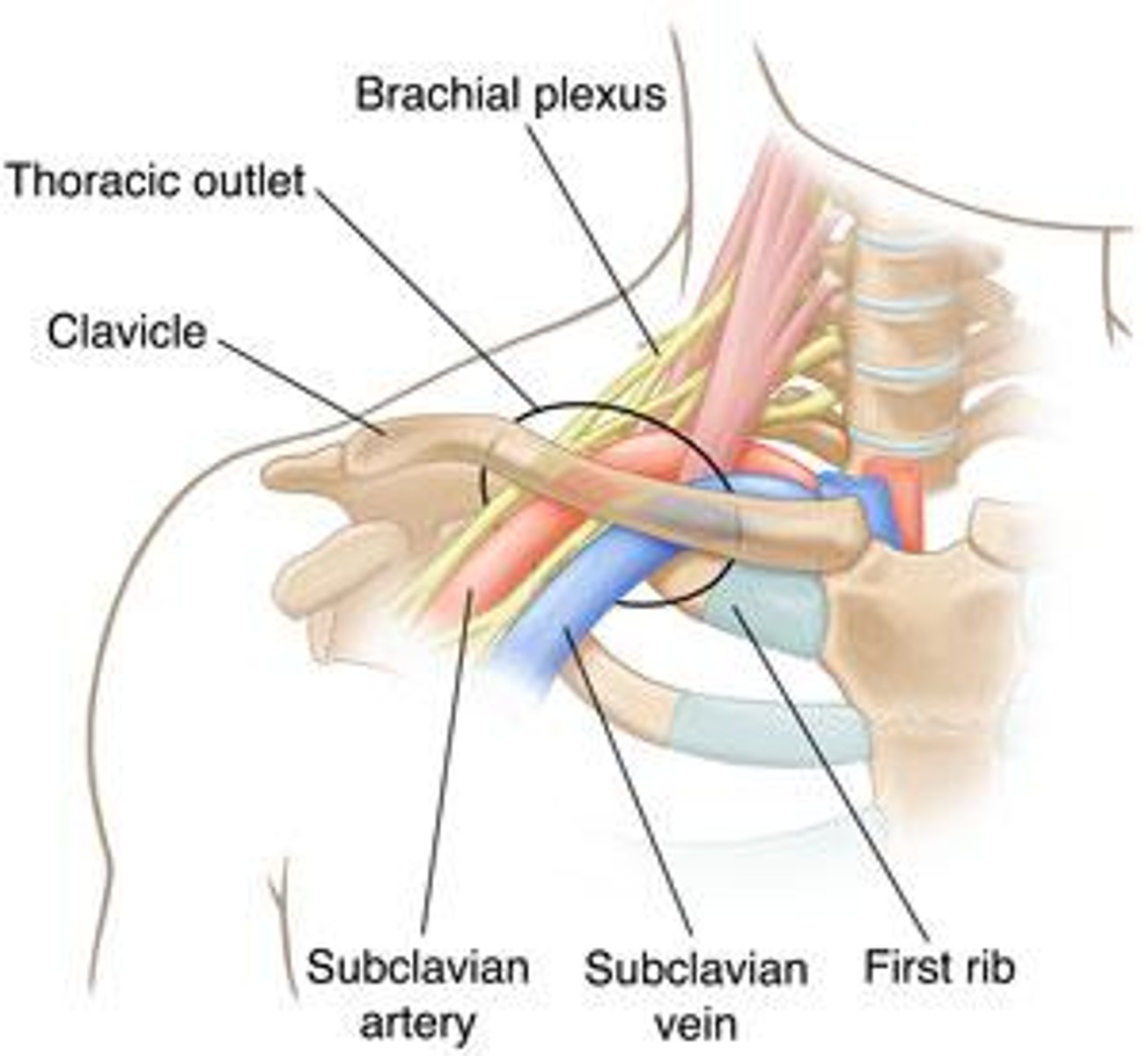
What are common demographic characteristics of patients with TOS?
Females (3:1 ratio), thin build, long necks, and drooping shoulders, typically between 20-60 years old.
What are the two types of TOS?
Neurogenic (MC) and Vascular (Venous and Arterial)
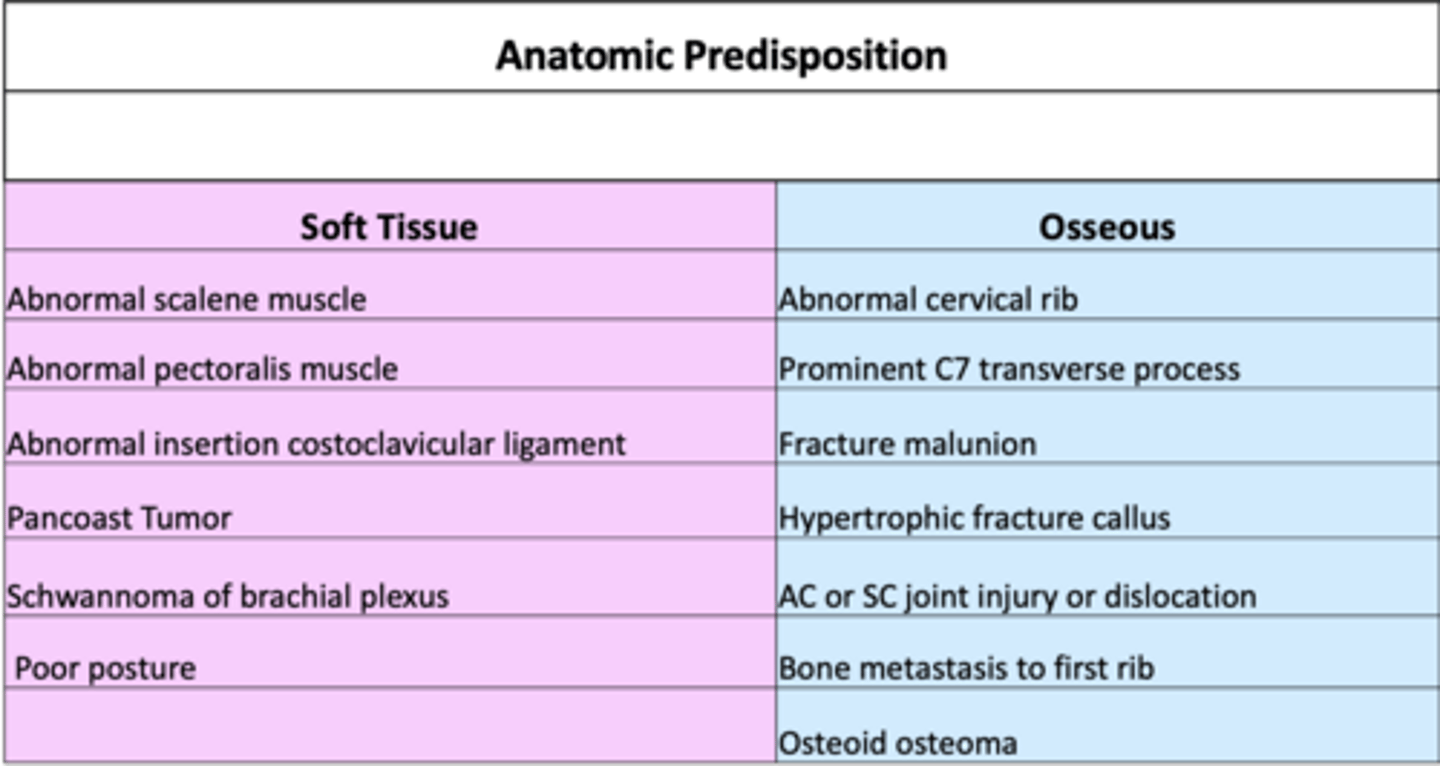
What is the primary pathophysiology thought to cause TOS?
Anatomic predisposition superimposed with neck trauma (acute or chronic/overuse).
What are the classic symptoms of neurogenic TOS?
Pain over the neck, trapezius, chest, and shoulder; upper extremity weakness/heaviness; nonradicular paresthesia.
When is the typical onset of neurogenic TOS?
during activity (overhead especially) and at night (unilateral and bilateral)
What are the classic symptoms of venous TOS?
episodic limb cyanosis, swelling, vein distension, diffuse deep pain, UE heaviness worse with activity
What are the classic symptoms of arterial TOS?
Mild arm ache and fatigue with activity and 5 P's predominating in hand
What are the '5 P's' associated with arterial TOS?
Pain, Pallor, Paresthesia, Poikilothermia, and Pulselessness.
What clinical finding in the affected arm suggests arterial TOS?
A blood pressure decrease of >20 mmHg compared to the contralateral arm.
What is the typical posture of a patient with TOS?
Rounded shoulders, increased thoracic kyphosis, downward rotation scapula
What are the potential findings on physical exam of the skin of TOS?
Cyanosis, pallor, distal ulcerations, hair distribution, nail changes
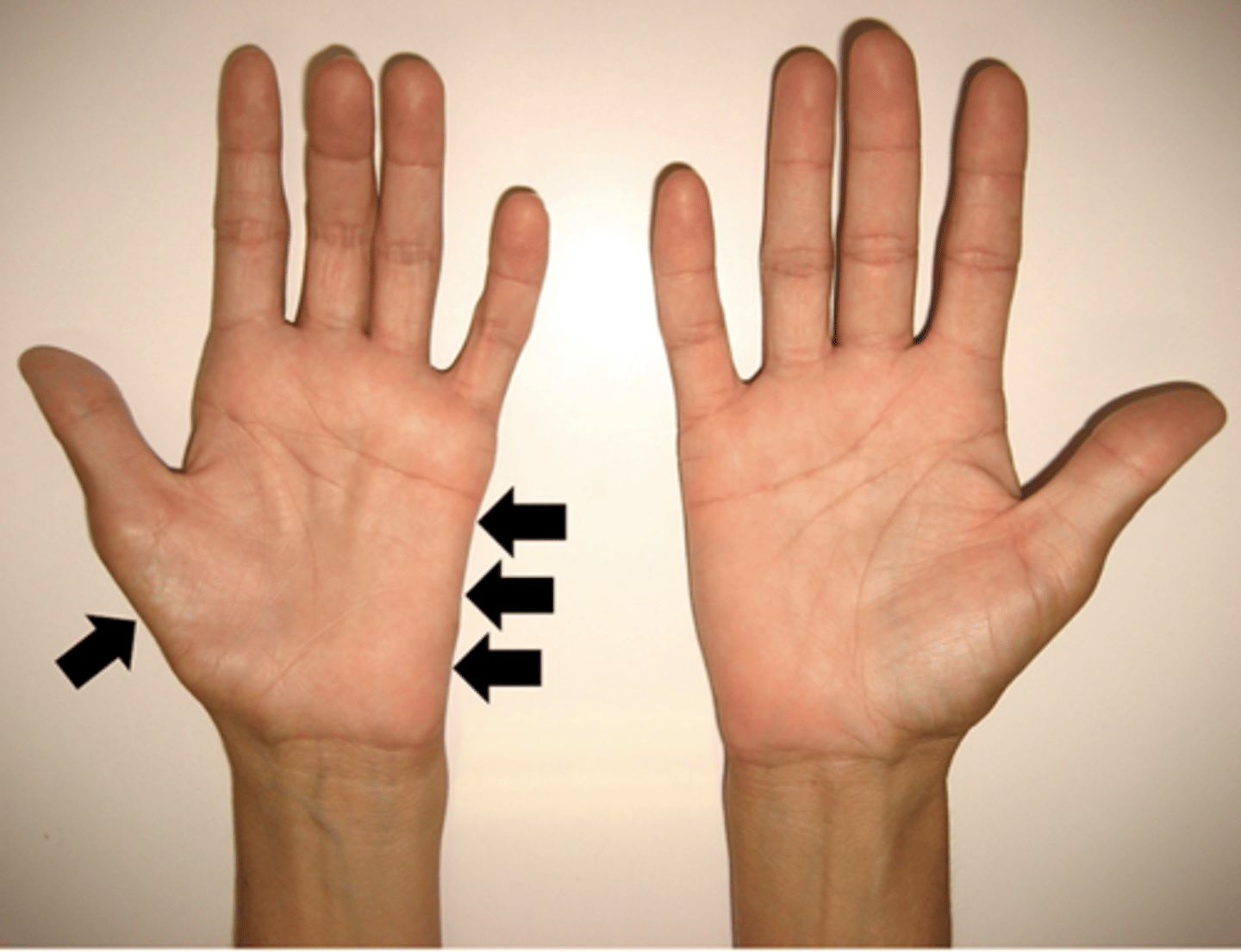
What muscle groups are often atrophied in TOS patients?
Abductor pollicis brevis, hypothenar muscles, and interossei.
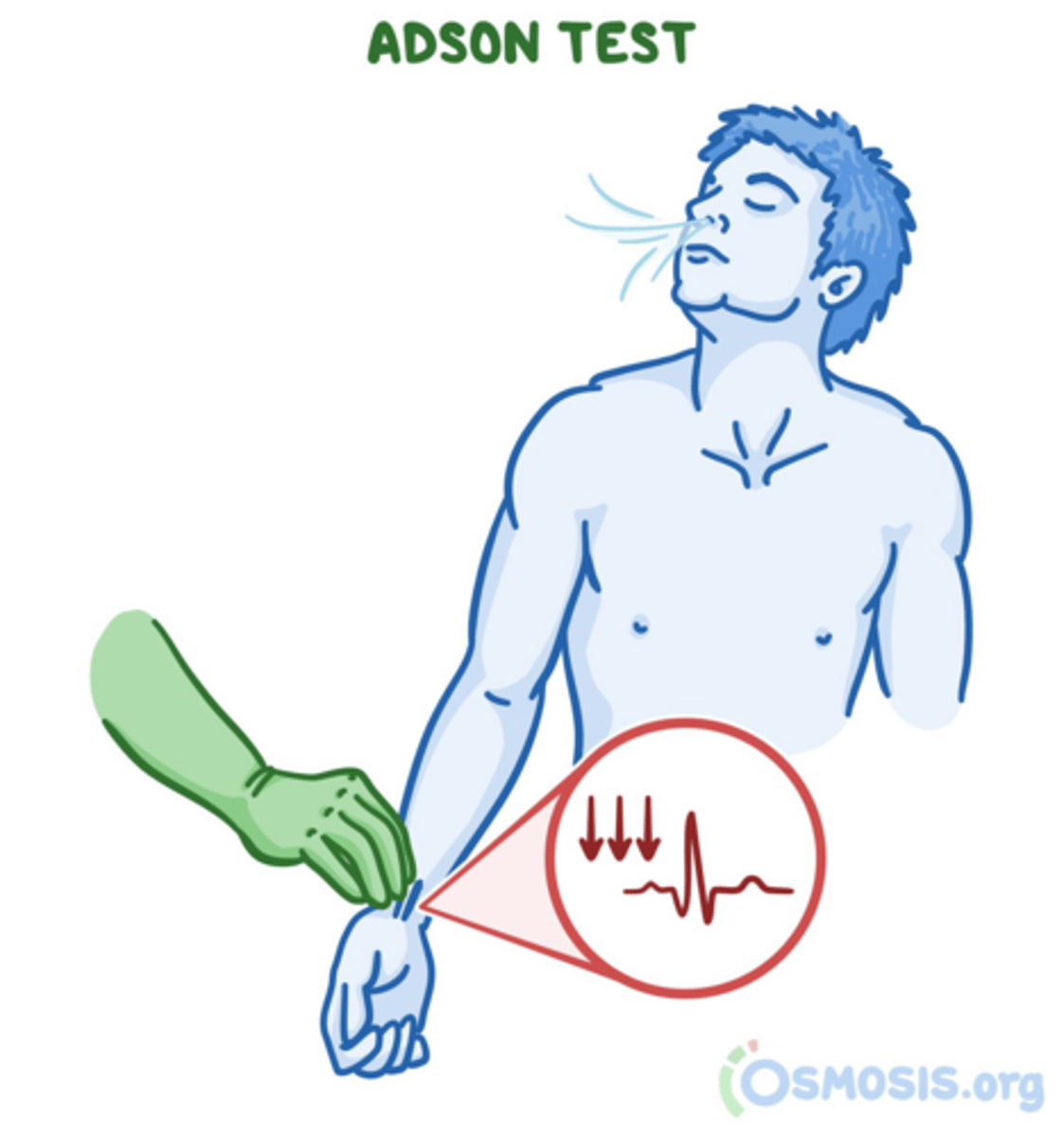
Describe the Adson Test for TOS.
examiner palpates radial pulse while extending/externally rotating the arm; patient then extends and rotates neck toward the test arm and takes a deep breath.
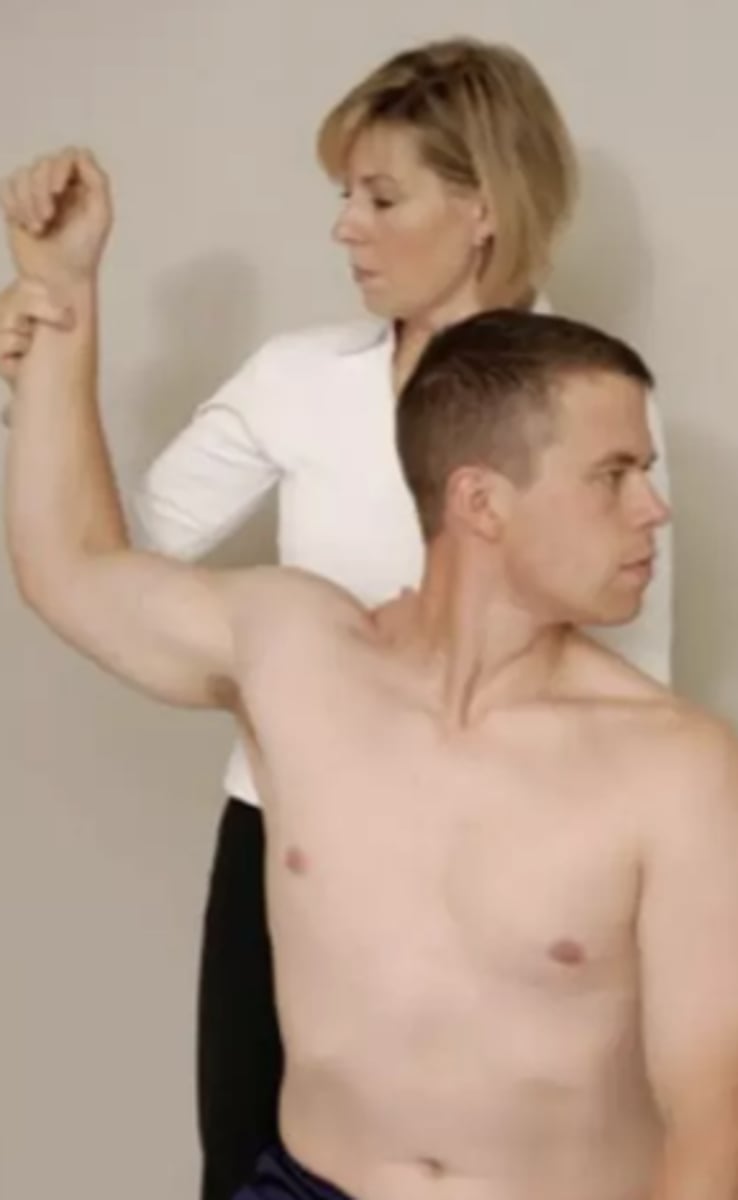
How is the Allen/Wright test performed?
Patient sits with shoulder abducted and flexed 90° with externally rotated; patient rotates neck away from the test arm while the examiner palpates the radial pulse.
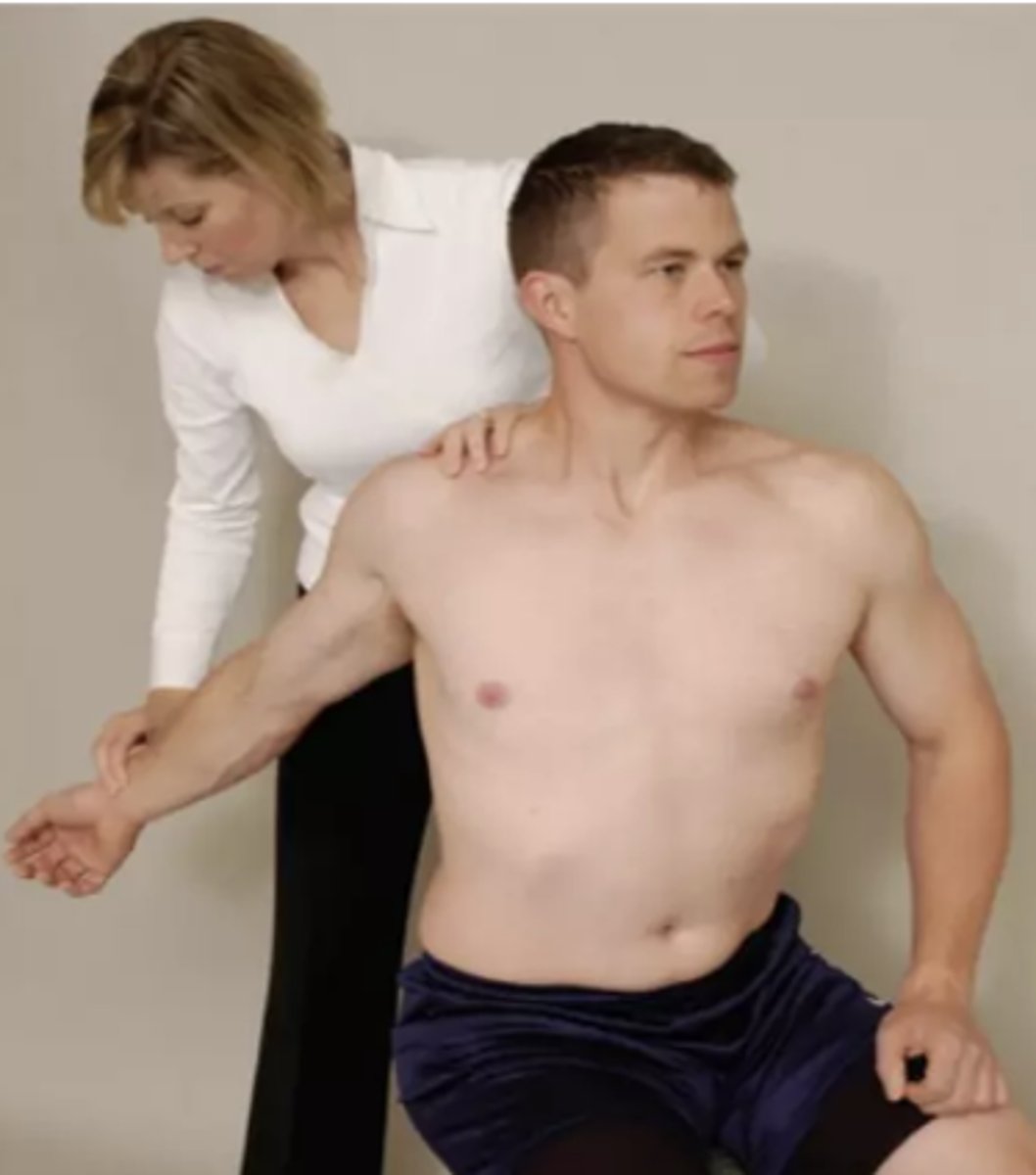
What is the purpose of the Military Brace (Costoclavicular) test?
examiner passively extends and abducts the patient's arm to 30° while the patient hyperextends their head and neck; distal radial pulse is palpated
What constitutes a positive result for the Adson, Allen/Wright, or Military Brace tests?
Diminished or absent radial pulse or reproduction of pain/paresthesias secondary to compression of at interscalene triangle
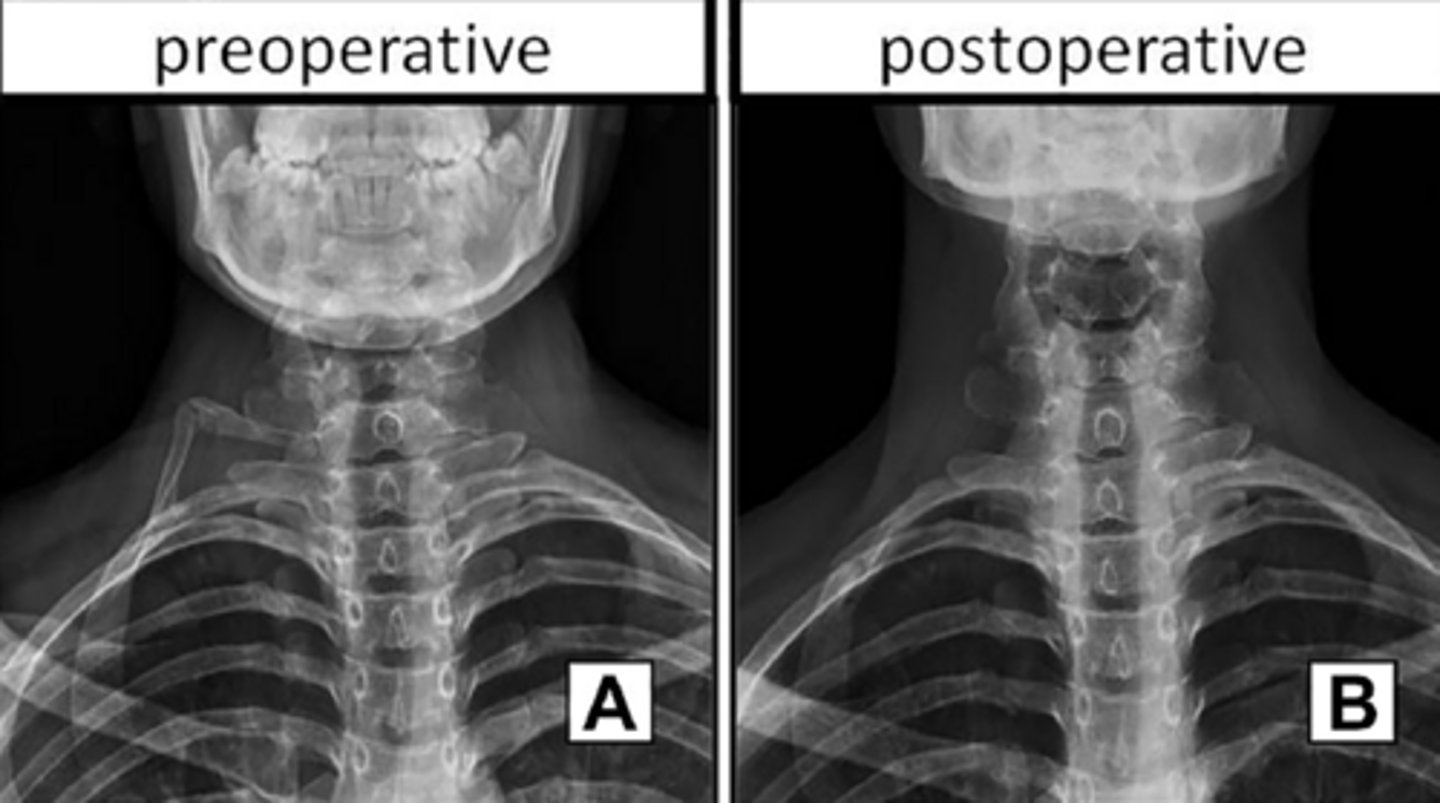
What is the first-line imaging for suspected neurogenic TOS?
Cervical and chest radiographs to identify cervical ribs, prominent C7 transverse processes, or masses.
What imaging is used to further evaluate venous and arterial TOS?
Doppler ultrasound to evaluate subclavian vein for obstruction or thrombosis
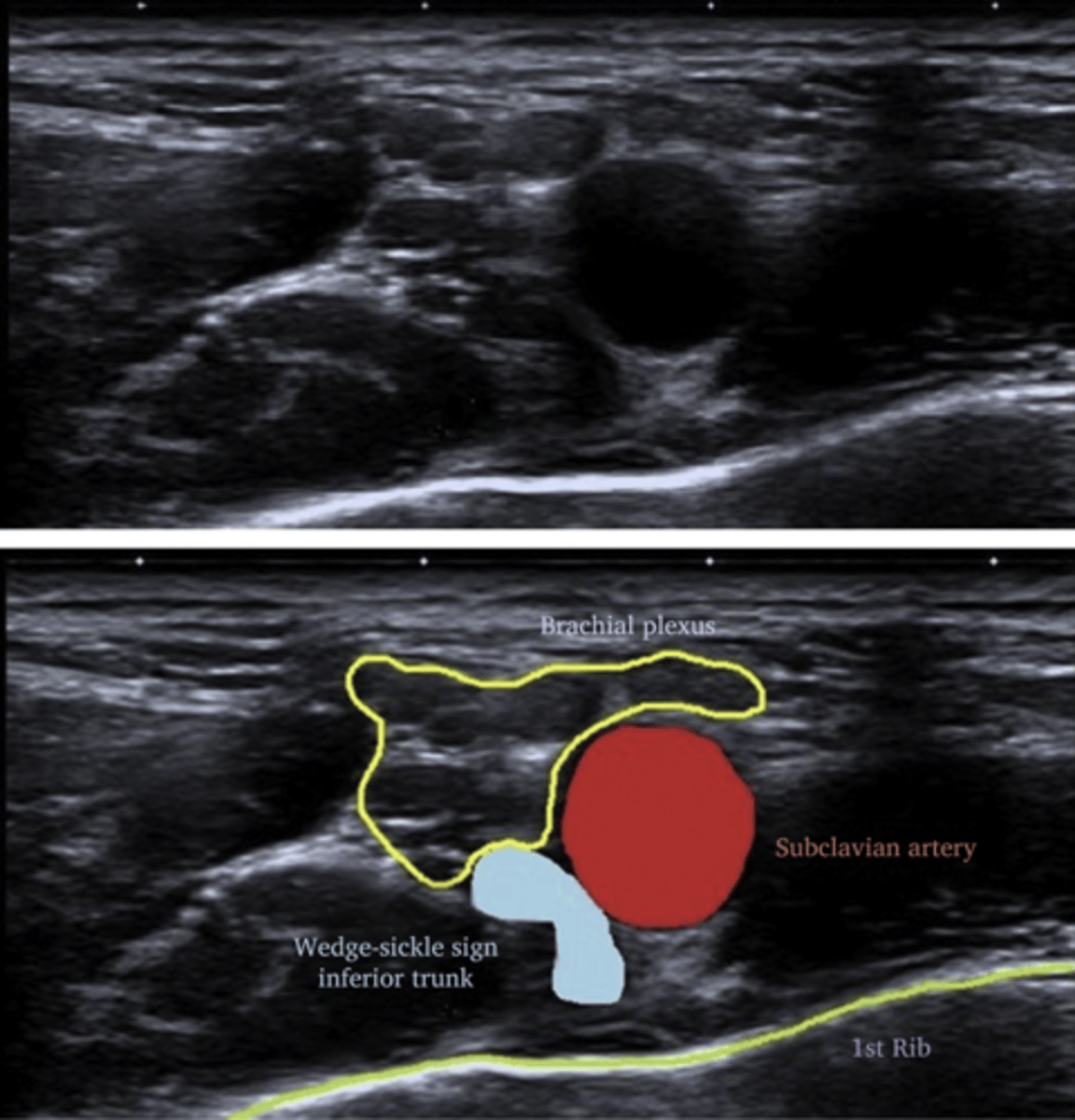
When is angiography (CT or MR) indicated in TOS?
In cases of suspected embolic disease or arterial aneurysm
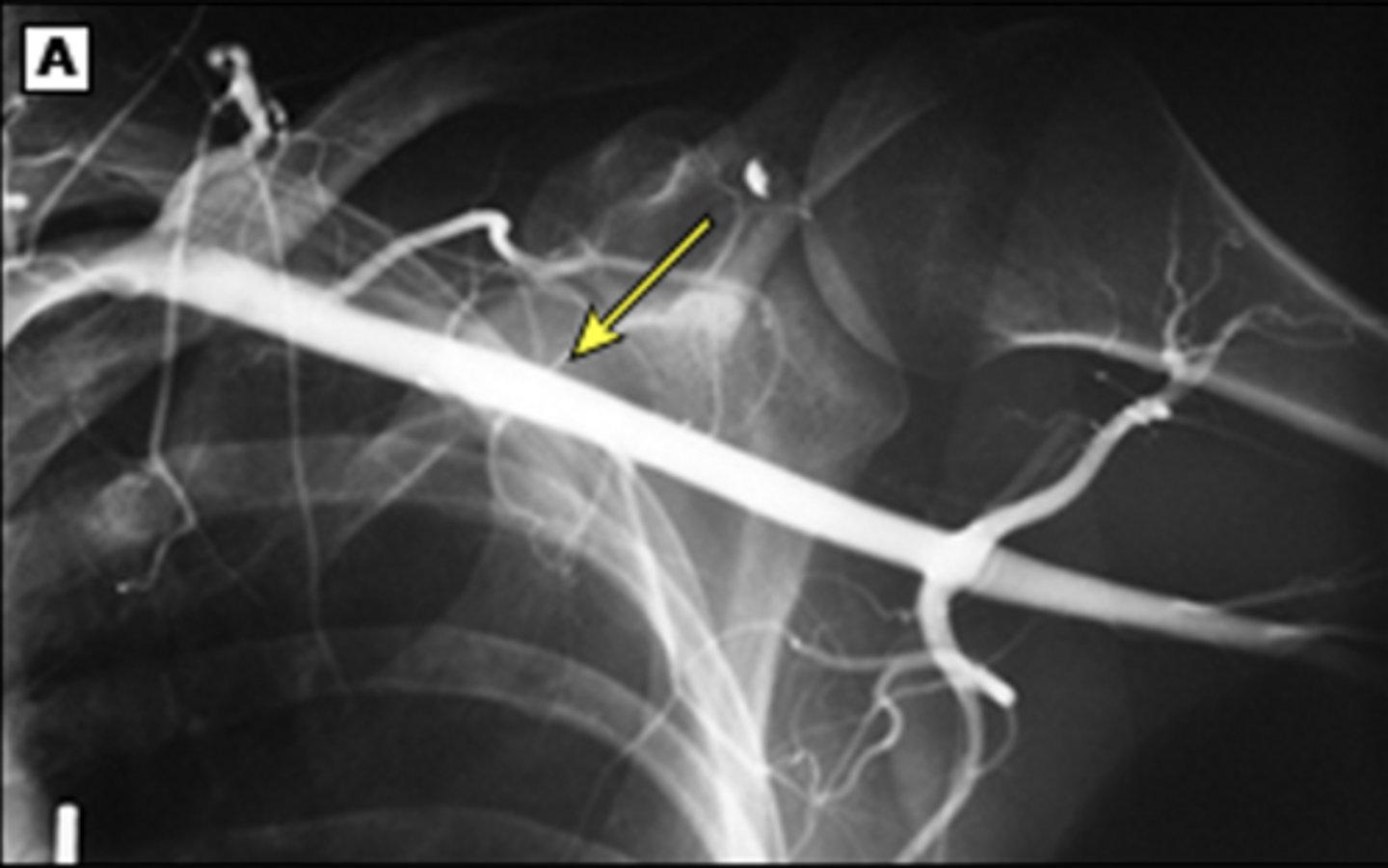
What is the role of CT/MRI imaging in TOS?
Evaluate osseous space-occupying lesions, malunited fractures of ribs or clavicle, and soft tissue anatomic anomalies
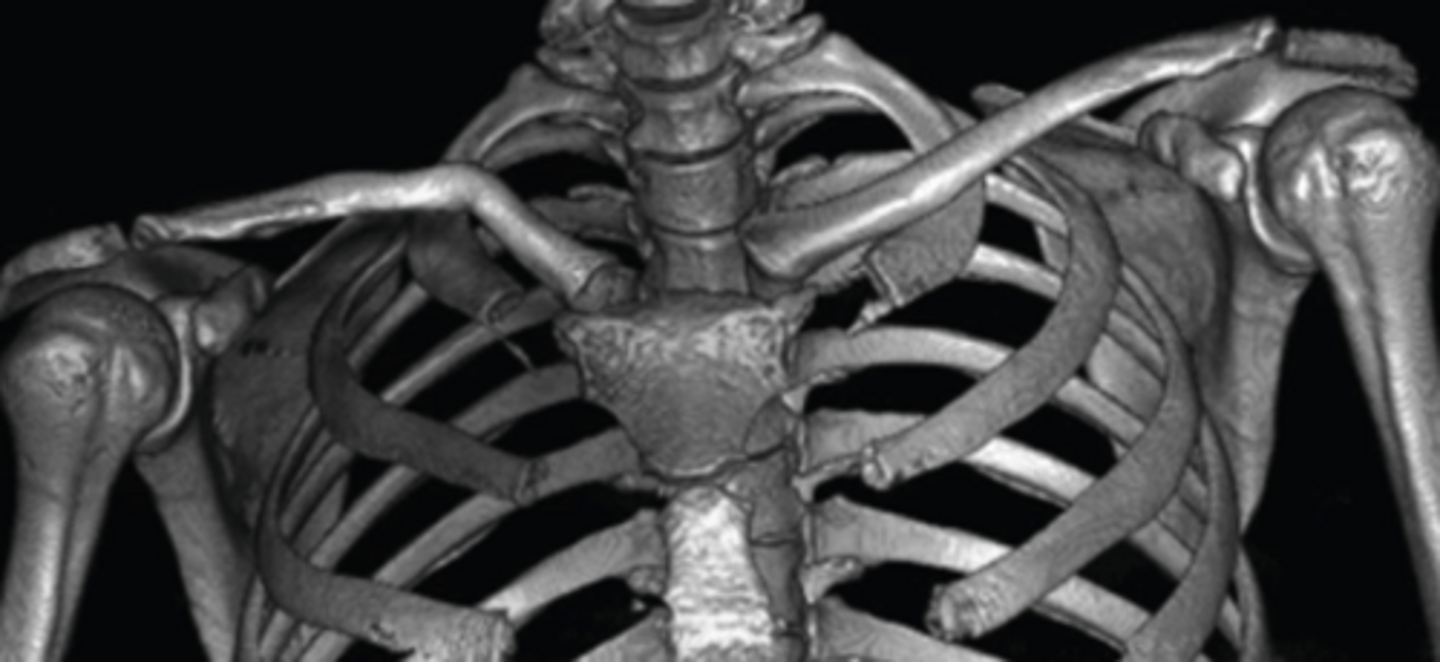
Which nerves are evaluated with nerve conduction studies in TOS?
Medial antebrachial cutaneous nerve
and Median motor nerve to the abductor pollicis brevis
What is the first-line nonoperative treatment for neurogenic TOS?
Activity modification and physical therapy (posture improvement, core strengthening, and stretching).
What medications are used for pain management in TOS?
NSAIDs, analgesics, muscle relaxers, tricyclic antidepressants
What is the indication for anterior scalene blocks?
Neurogenic TOS caused by scalene muscle contracture using US guided lidocaine or botox
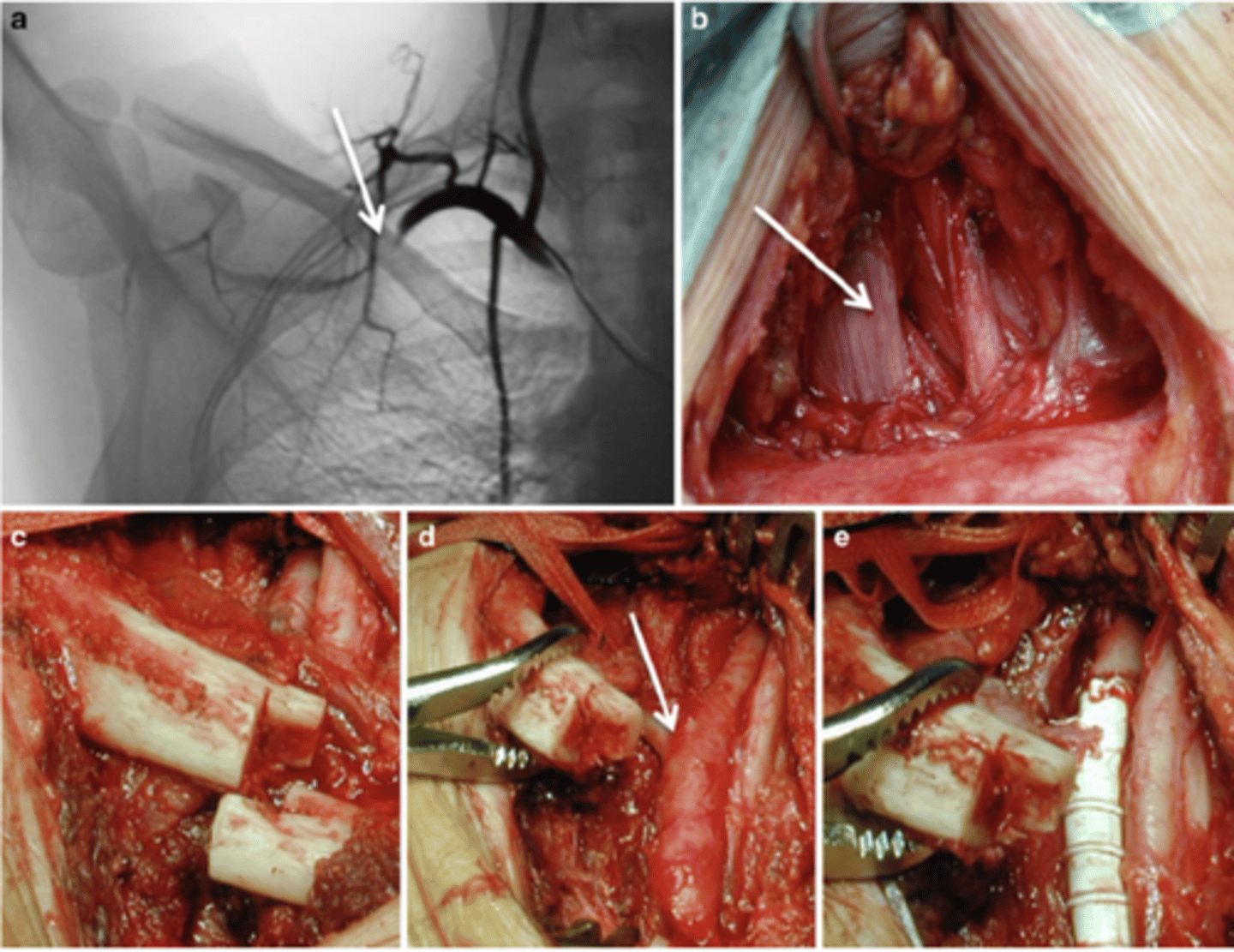
What are the indications for surgical thoracic outlet decompression?
Symptoms persisting after 6 months of conservative treatment, progressive muscle atrophy, worsening neurologic deficits, or vascular TOS.
List three common surgical procedures for TOS.
Cervical rib resection, anterior or middle scalenectomy, and neurolysis (C7, C8, or T1).
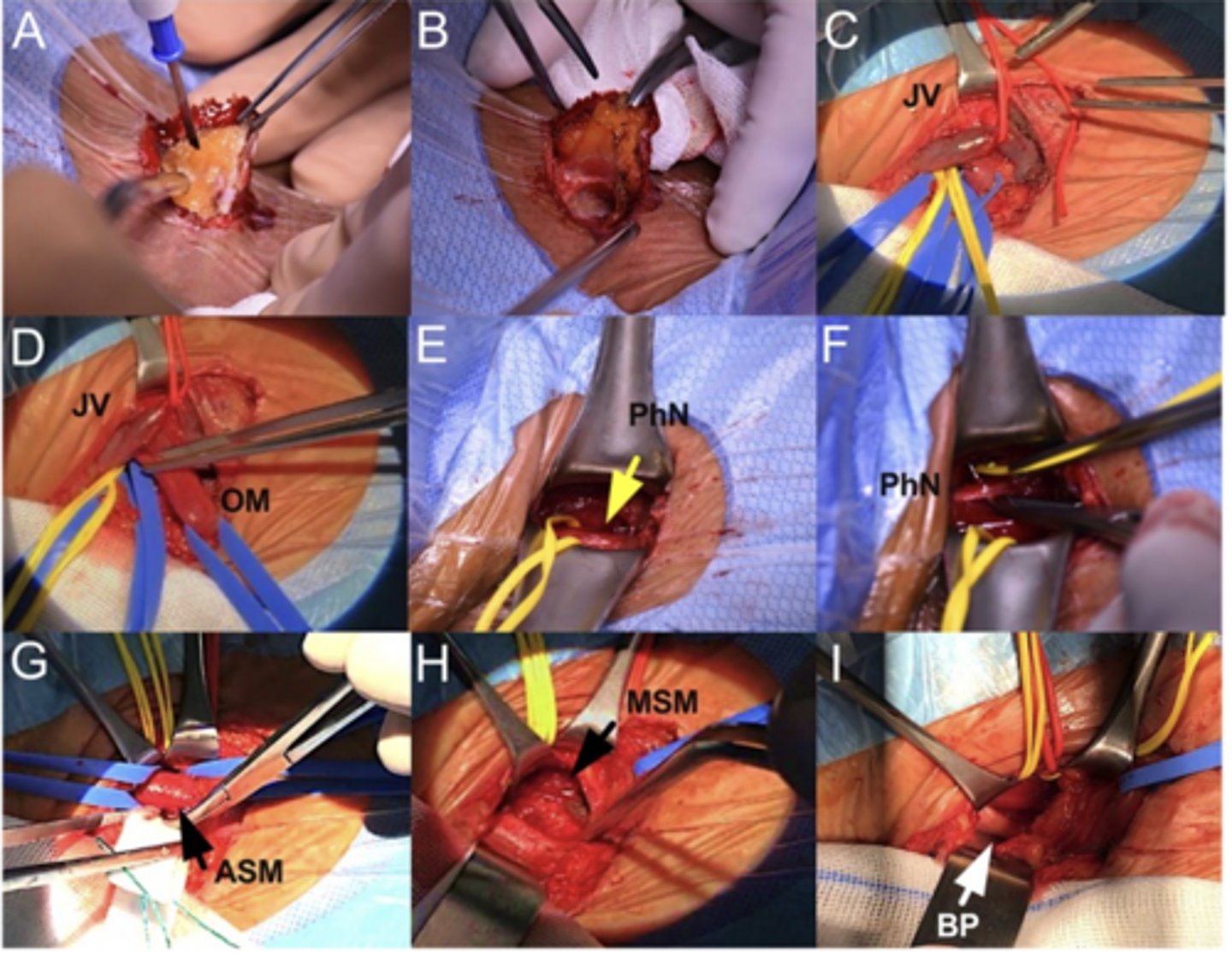
What are the indications for vascular treatment?
embolic events, stenosis with persistent pain and vascular insufficiency, subclavian aneurysm, thrombosis with ischenia
What are the primary interventions for vascular TOS with critical ischemia?
IV heparin, embolectomy, local thrombectomy, endovascular stent placement, or vascular bypass/grafting.