a level organic
 Call Kai
 Learn
Learn Practice Test
 Spaced Repetition
 Match
Match Flashcards
 Knowt Play
1/250

There's no tags or description
Looks like no tags are added yet.
Name | Mastery | Learn | Test | Matching | Spaced | Call with Kai |
|---|
No analytics yet
Send a link to your students to track their progress
251 Terms
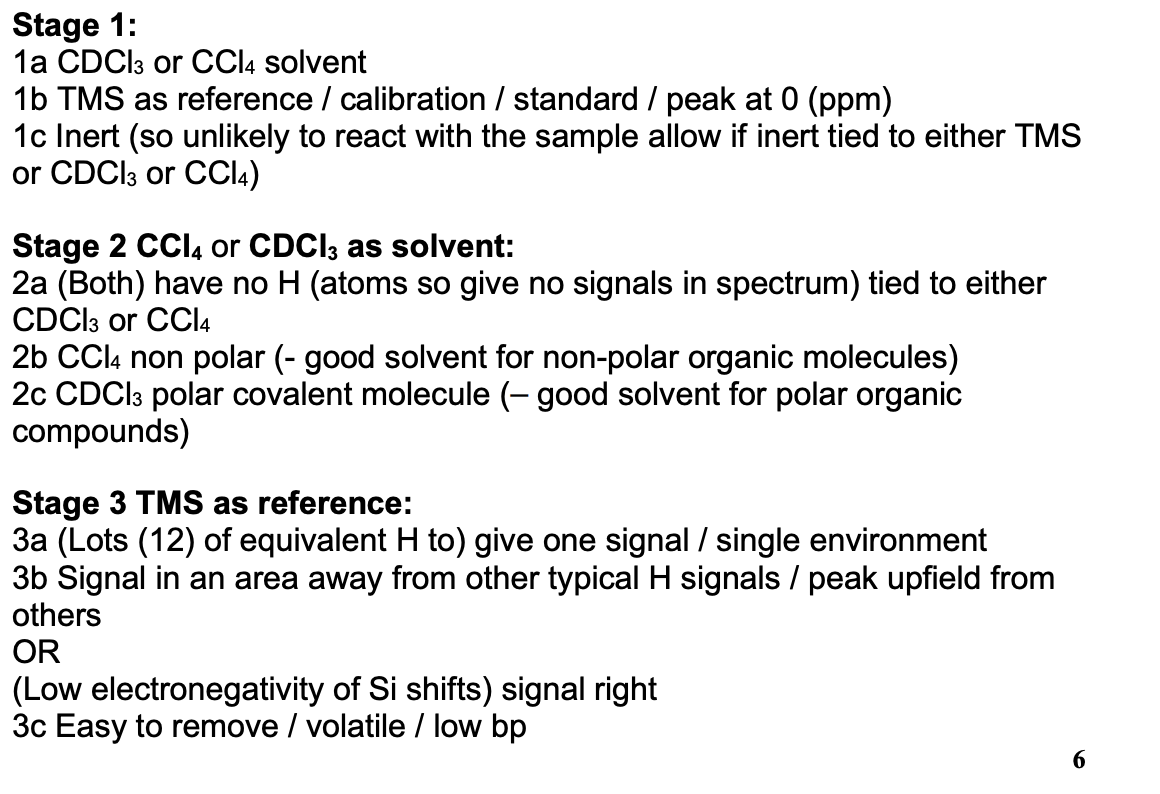
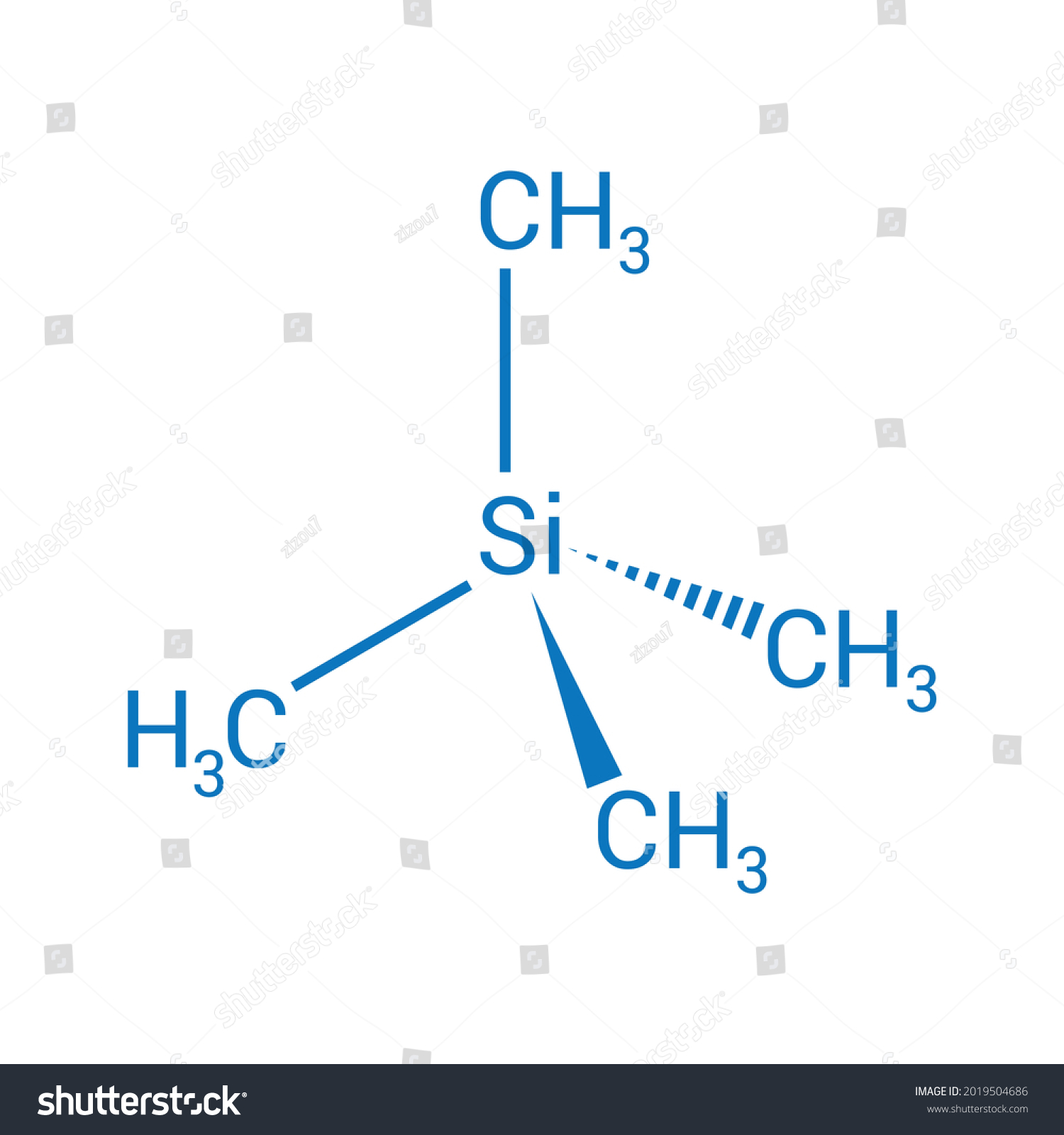
state why Si(CH3) is used in 1NMR and explain how its properties make it suitable for use in 1NMR:
Si(CH3) aka. TMS:
TMS as reference/calibration/standard/peak at 0
inert (so unlikely to react w/ the sample)
gives one signal (as has lots of equivalent Hs)
signal in an area away from other typical H signals
easy to remove/volatile/low bpt
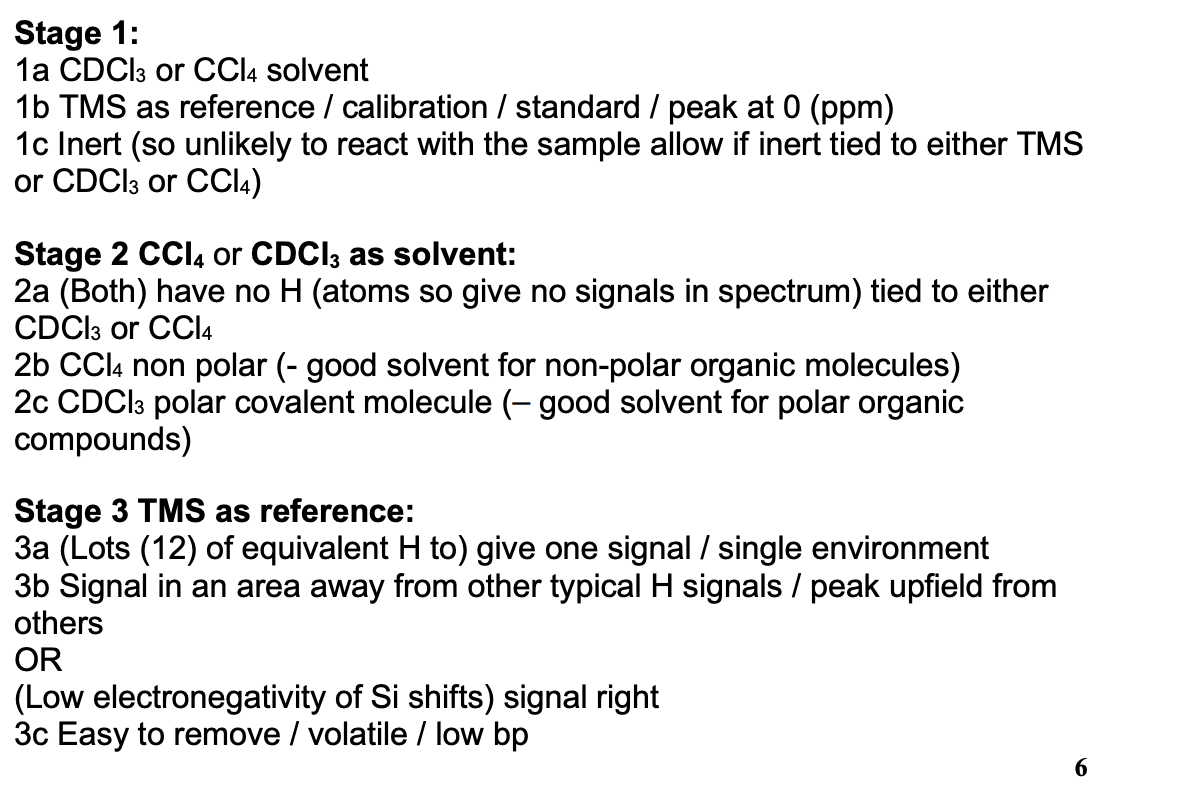
state why CDCl3 or CCl4 is used in 1NMR and explain how its properties make it useful for use in 1NMR:
CDCl3 or CCl4 solvent
both have no Hs (so give no signals in spectrum)
CCl4 non polar (so good solvent for non polar organic molecules)
CDCl3 polar covalent molecules (so good solvent for polar organic compounds)
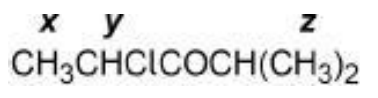
suggest why it is difficult to use Table B in the Data Booklet to predict the chemical shift for the peak given by the H atom labelled y (1)
H attached to both C-Cl and adjacent to C=O so doesn’t fit w/ data in table B
give the structure of TMS:
what does NMR stand for? what does it give info about?
NMR = nuclear magnetic resonance
gives info about the position of 13C or 1H atoms in a molecule
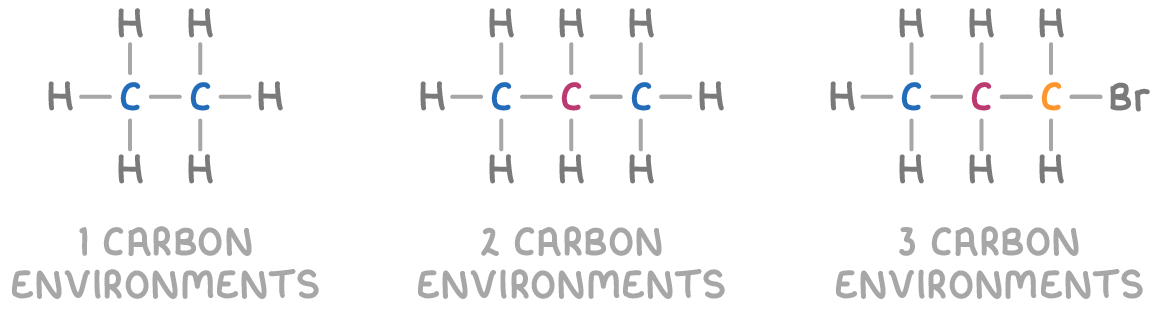
what does it mean for 1H atoms/13C atoms to be equivalent?
in the same chemical environment
what is chemical shift (δ)?
difference between TMS peak and peaks produced by substance under test
what does the vertical axis on an NMR spectrum represent?
intensity of absorption
what does the chemical shift depend on?
depends on what other atoms/groups are near the 1H/13C atom
more electronegative groups give a greater chemical shift
give the components of a proton NMR spectrum and what information they provide:
no. of peaks = no. of different 1H environments
chemical shifts = type of environment the 1H atoms are in
integration ratio = no. of no.s of H atoms on each environment
splitting = no. of H atoms on adjacent C atom
give the components of a carbon-13 NMR spectrum and what information they provide:
no. of peaks = no. of diff carbon-13 environments
chemical shifts = type of environment 13C atoms are in
what is the integration ratio?
ratio of no. of hydrogen atoms in each environment
when does splitting not ocur?
H atoms are equivalent
H atoms on O atoms
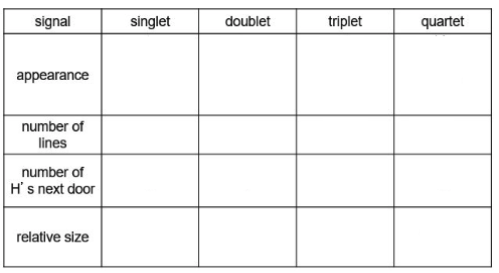
can you fill in this table?
yes :)
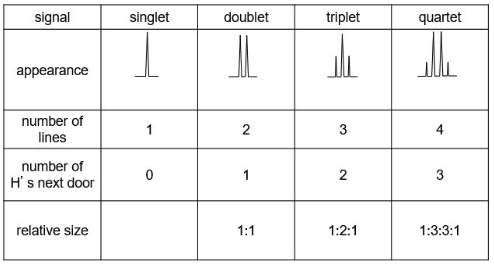
what is the eqn used to determine splitting?
n + 1 (where n = no. of H atoms on adjacent C)
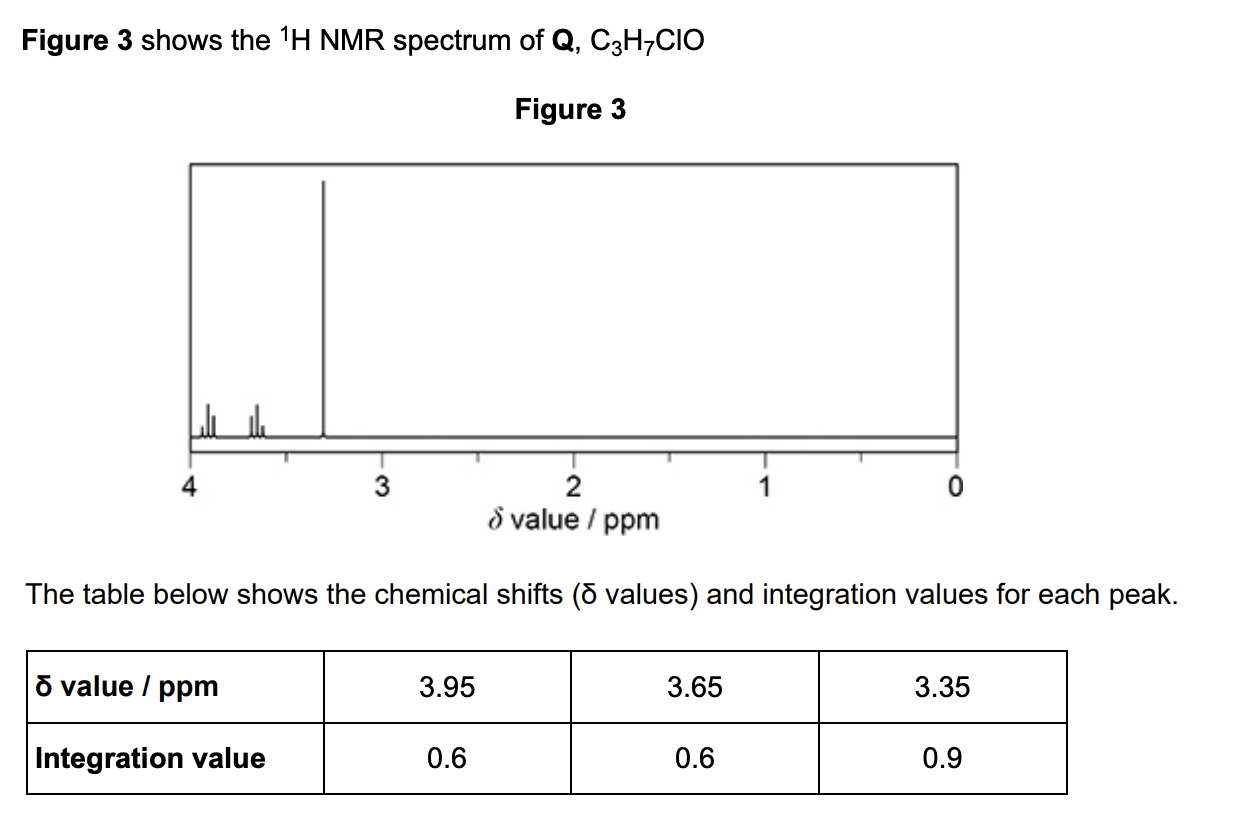
deduce the structure of Q (C3H7ClO) - explain your answer (5)
integration ratio 2:2:3
peak at 3.95:
has 2 Hs in environment, is a triplet so has 2Hs on adjacent C so must be CH2-Cl next to CH2
peak at 3.65:
has 2 Hs in environment, is a triplet so has 2 Hs on adjacent C atom so must be O-CH2 next to CH2
peak 3.35:
has 3 H atoms in its environment, is a singlet so has no H atoms on adjacent C atom so must be O-CH3
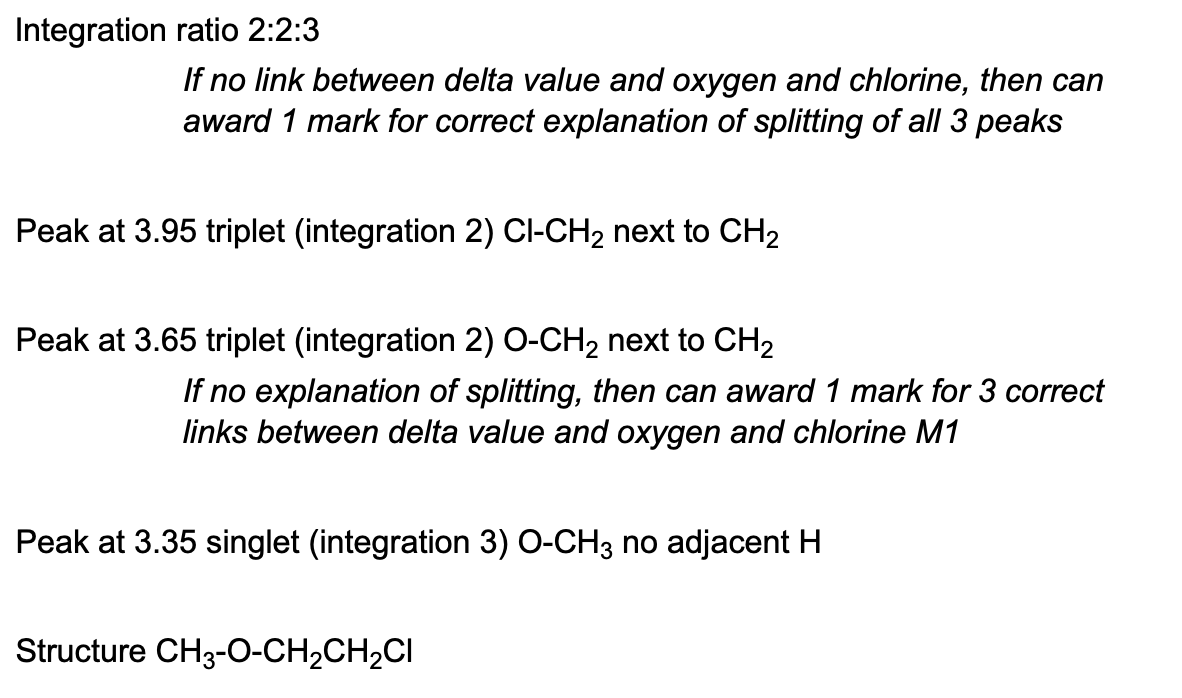
give the eqn for the partial dissociation of carboxylic acids in water:
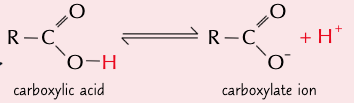
state where the PoE lies for the partial dissociation of carboxylic acids in water and explain why:
PoE lies to the left as most molecules do not dissociate
∴ making carboxylic acids weak acids
give the general word eqn for the reaction between an acid and alkali:
acid + alkali → salt + water
give the general word eqn for the reaction between an acid and a carbonate:
acid + carbonate → carbon dioxide + salt + water
give the general word eqn for the reaction between an acid and a metal:
acid + metal → salt + hydrogen
give the eqn for the reaction between ethanoic acid and sodium hydroxide - name the product:
CH3COOH + NaOH → CH3COO-Na+ + H2O
CH3COO-Na+ = sodium ethanoate (this is a salt, not an ester!)
give the eqn for the reaction between ethanoic acid and ammonia - name the product:
CH3COOH + NH3 → CH3COO-NH4+
ammonium ethanoate (this is a salt, not an ester!)
give the eqn for the reaction between ethanoic acid and sodium carbonate and name the product:
2CH3COOH + Na2CO3 → CO2 + H2O + 2CH3COO-Na+
2CH3COO-Na+ = sodium ethanoate
give the eqn for the reaction between ethanoic acid and sodium and name the product:
2CH3COOH + 2Na → H2 + 2CH3COO-Na+
2CH3COO-Na+ = sodium ethanoate
give the eqn for the reaction between ethanoic acid and magnesium and name the product:
2CH3COOH + Mg → H2 + (CH3COO-)2Mg2+
(CH3COO-)2Mg2+ = magnesium ethanoate
give the general eqn for the formation of esters and state the conditions - what is this process called?
conc H2SO4 catalyst
esterification (condensation reaction)

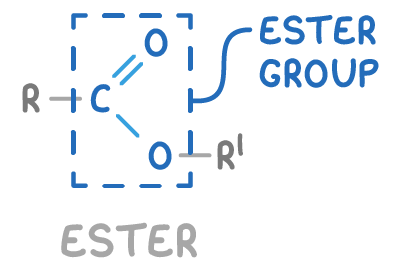
what is the ester functional group?
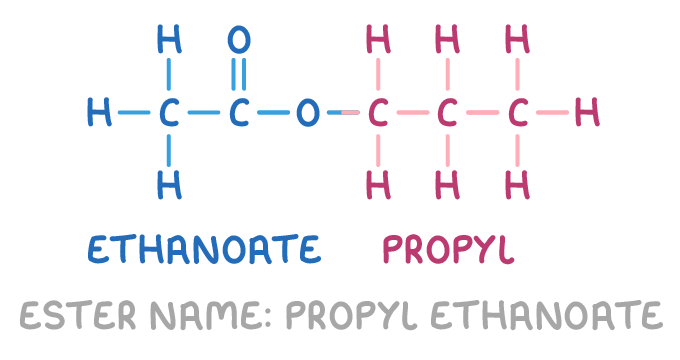
how do we name esters?
first part - from alcohol used (on RHS)
second part - from carboxylic acid used (on LHS)
give 4 uses of esters:
solvents
plasticisers
perfumes
food flavourings
give the general eqn for the acid hydrolysis of an ester - state the conditions and products:
dilute acid (typically H2SO4) catalyst
heated under reflux
products = carboxylic acid and alcohol
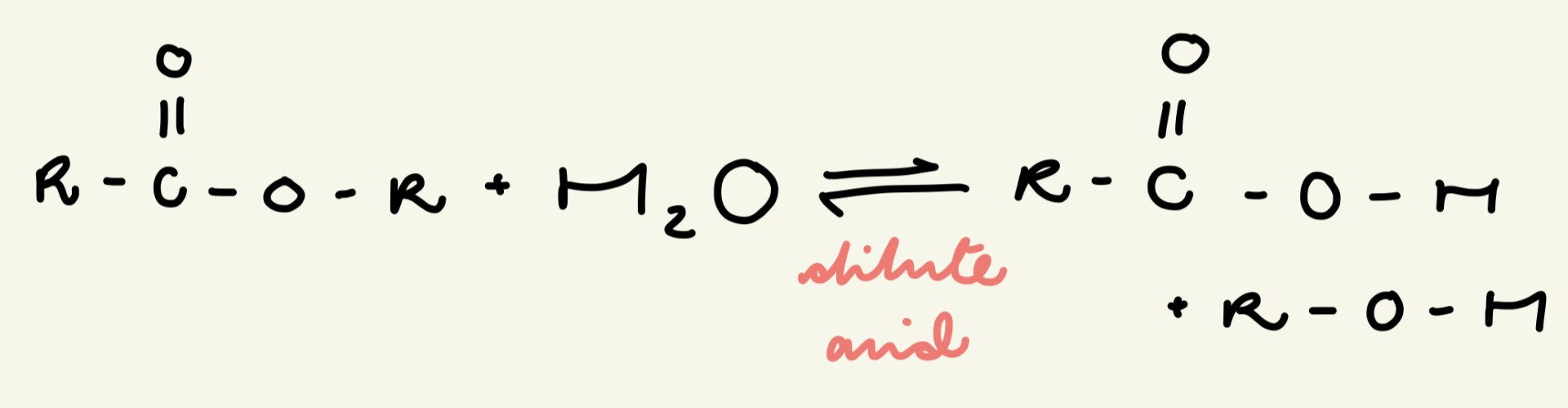
give the general eqn for the base hydrolysis of an ester - state the conditions and products:
heated under reflux
products = salt (of the carboxylic acid) and alcohol

give and justify 4 safety measures necessary when heating under reflux in the formation of esters:
use a fume cupboard - to avoid breathing in harmful/toxic/corrosive compounds
add anti-bumping granules - to ensure smooth boiling/reduce size of bubbles
use an electric heater/water bath - as compounds are flammable
wear gloves - compounds may be corrosive
why might we shake the reaction mixture with aqueous sodium carbonate after making esters? what precaution should be taken when doing this and why?
to neutralise/react with XS acid
you should remove the stopper to prevent a buildup of pressure as CO2 is produced
why may we add anhydrous magnesium sulfate when making esters?
drying agent
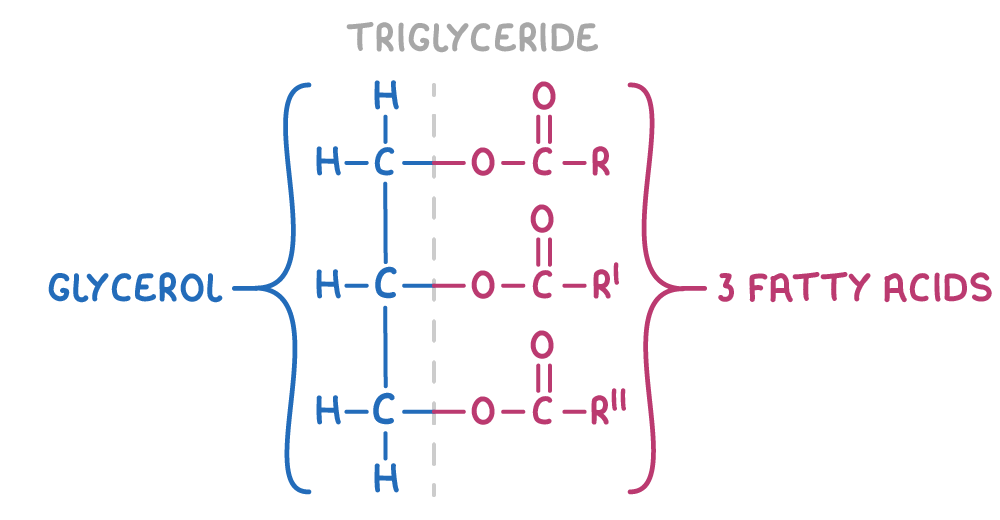
which alcohol are animal fats and vegetable oils made from in esterification?
propane-1,2,3-triol (glycerol)
give the general structure of a triglyceride (lipid):
give and explain one example where base hydrolysis may be used and give the word and symbol eqn:
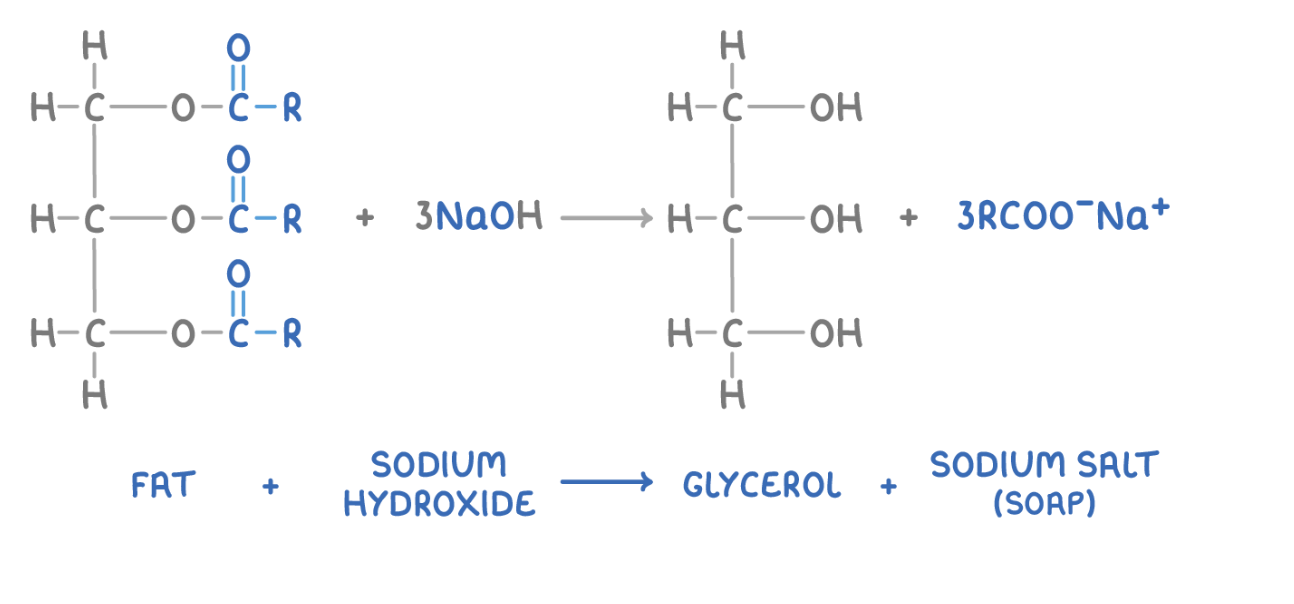
making soap (saponification) - reacting a lipid w/ a strong base forms salts of the fatty acids and glycerol
what are biodiesels? how are they made?
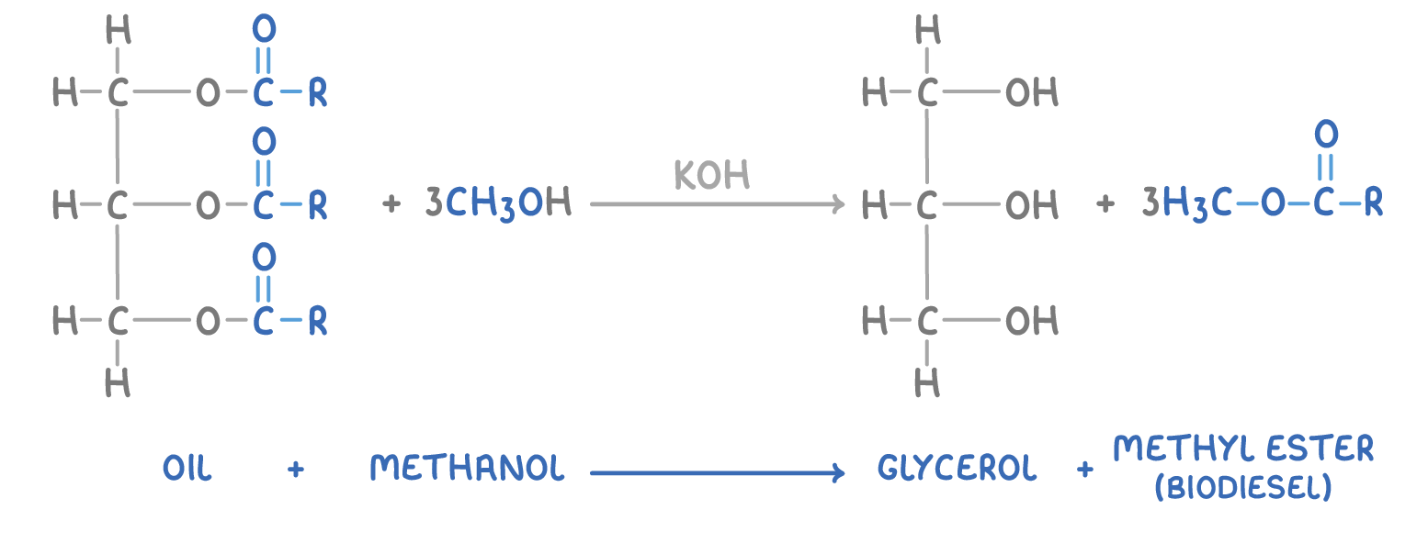
biodiesel (renewable fuel) = mixture of methyl esters of long-chain carboxylic acids
produced by reacting vegetable oils w/ methanol in the presence of a catalyst
give the word and symbol eqn for making biodiesels:
during ester hydrolysis, 2 layers form in the separating funnel - suggest why ethyl ethanoate forms the upper layer (2)
ethyl ethanoate is immiscible with/insoluble in water - if 1 mark - this point usually!
ethyl ethanoate is less dense/has a lower density (than water)
why may anhydrous calcium chloride be added when heating under reflux to make an ester?
as a drying agent
what can chromatography be used for?
to separate and identify the components in a mixture
name the 3 types of chromatography:
thin-layer chromatography (TLC)
column chromatography (CC)
gas chromatography (GC)
in chromatography, what does separation depend on?
the balance between solubility in the moving phase and retention by the stationary phase
what is thin-layer chromatography (TLC)?
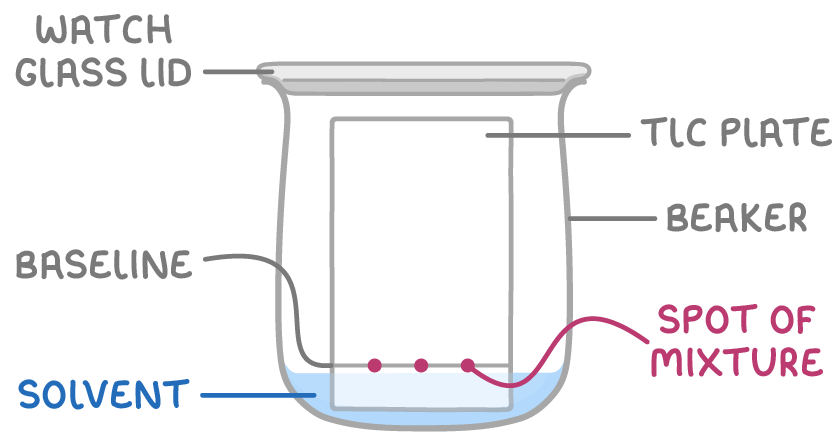
chromatography in which a plate is coated w/ a solid and a solvent moves up the plate
what is column chromatography (CC)?
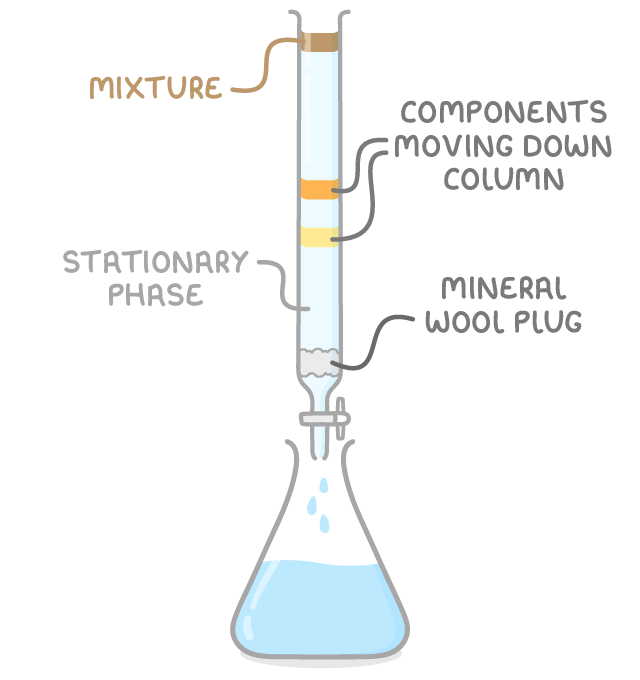
chromatography in which a column is packed w/ a solid and a solvent moves down the column
what is gas chromatography?
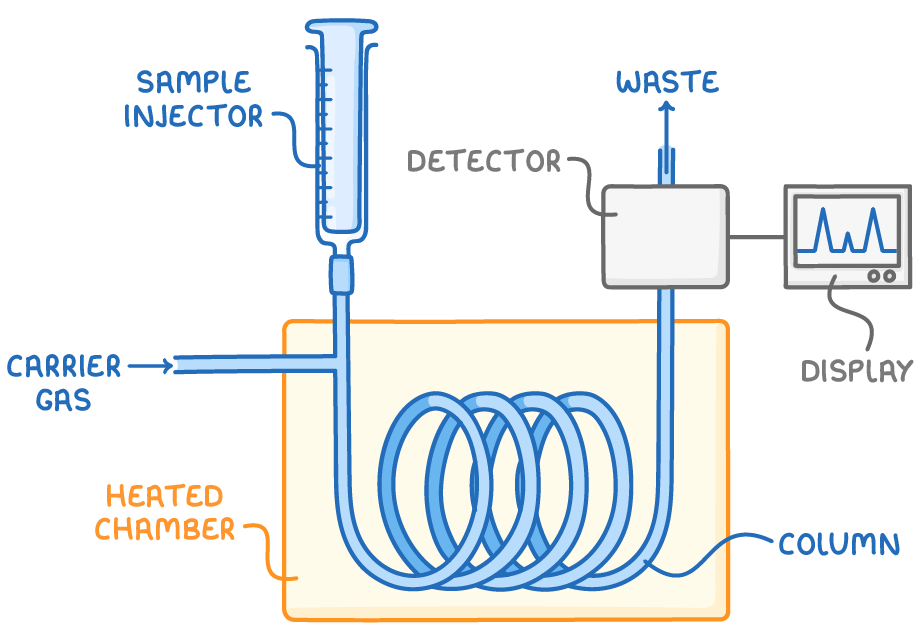
chromatography in which a column is packed w/ a solid/solid coated by a liquid and a gas is passed through the column under pressure at high temps
what is the moving/mobile phase?
carries the soluble components of the mixture
always a liquid or gas
what is the stationary phase?
the solid the mobile phase moves over
holds back components which are attracted to it
what affects the distance that each substance moves up the plate?
components that are more soluble in the mobile phase will travel further up the plate i.e. move more quickly
components that have a higher affinity for the stationary phase will travel less far up the plate i.e. move more slowly
describe the process of thin layer chromatography (TLC):
draw a line in pencil near the bottom of the TLC plate
add small drops of each mixture to be separated along the initial pencil line using a capillary tube
leave the spots to dry
place TLC plate in a beaker w/ a small amount of solvent - the level of the solvent must be below the baseline - and cover the top with a watch glass
the solvent (mobile phase) will move up the plate, separating the different substances in the mixture
leave until the solvent almost reaches the top of the plate and use a pencil to mark this as the solvent front
leave to dry
reveal using a UV lamp or using iodine/potassium permanganate
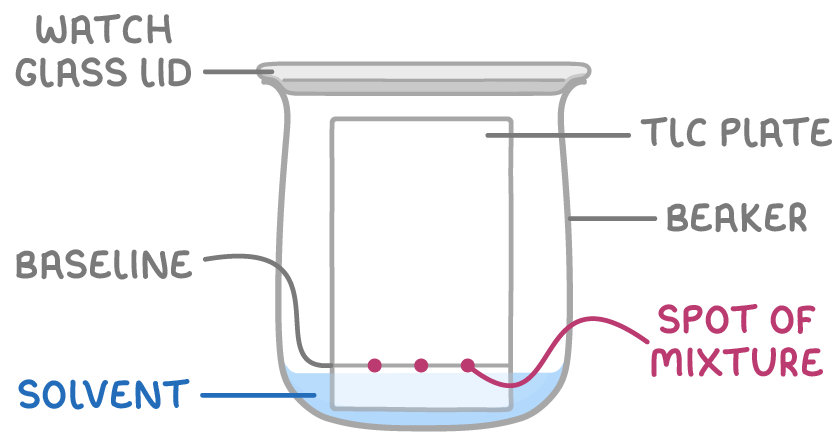
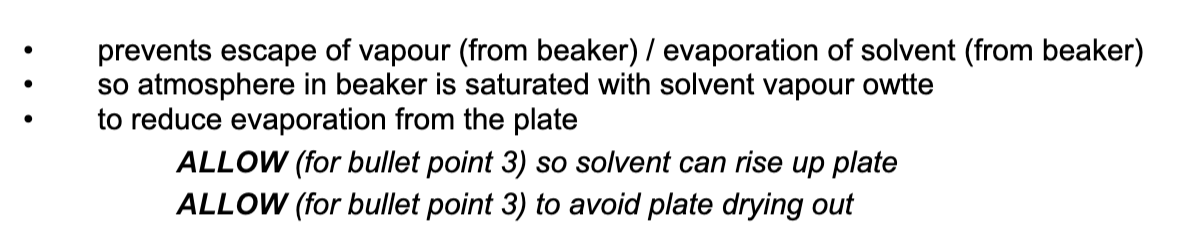
what is the purpose of the lid/watch glass in TLC?
to prevent the solvent from evaporating
so atmosphere in beaker is saturated w/ solvent vapour
give 2 methods of revealing TLC plates:
put plate under UV lamp
dip chromatogram into iodine to reveal the spots
state why components separate in chromatography:
difference in balance between solubility in the mobile phase and retention by the stationary phase

give the formula used to calculate Rf values - how can we use these values to identify the substance?
Rf = distance moved by spot/distance moved by solvent
compare Rf value to known value (same mobile/stationary phases must be used)
what is column chromatography typically used for?
purification of large quantities of organic compounds
describe the process of column chromatography (CC):
the sample to be purified is placed at the top of the column filled w/ the solid stationary phase
solvent is flushed through the column, carrying the mixture components at diff rates
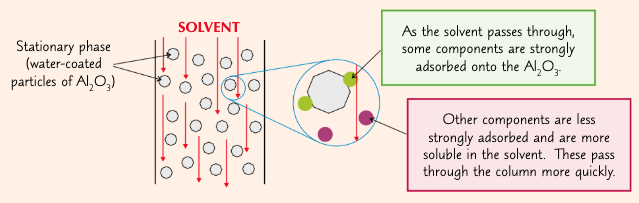
components separate based on their solubility in the solvent and their adsorption to the stationary phase (retention)
the separated components exit the column and are collected for analysis
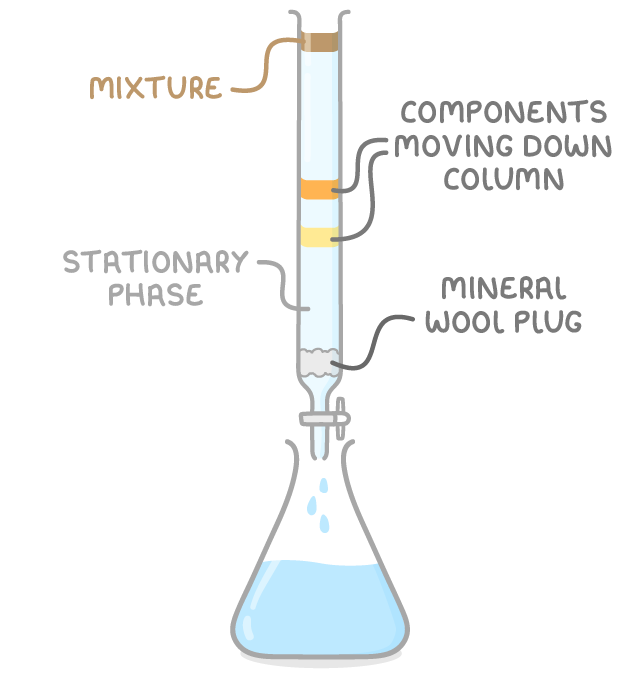
give 2 examples of stationary phases used in column chromatography:
silica
aluminium oxide
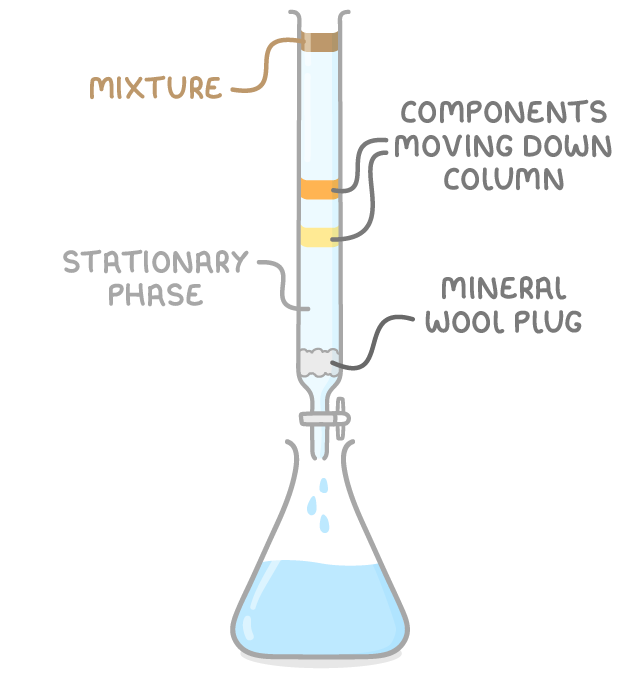
how may polarity affect retention in column chromatography?
more polar groups will be retained longer through the column i.e. they will come out later
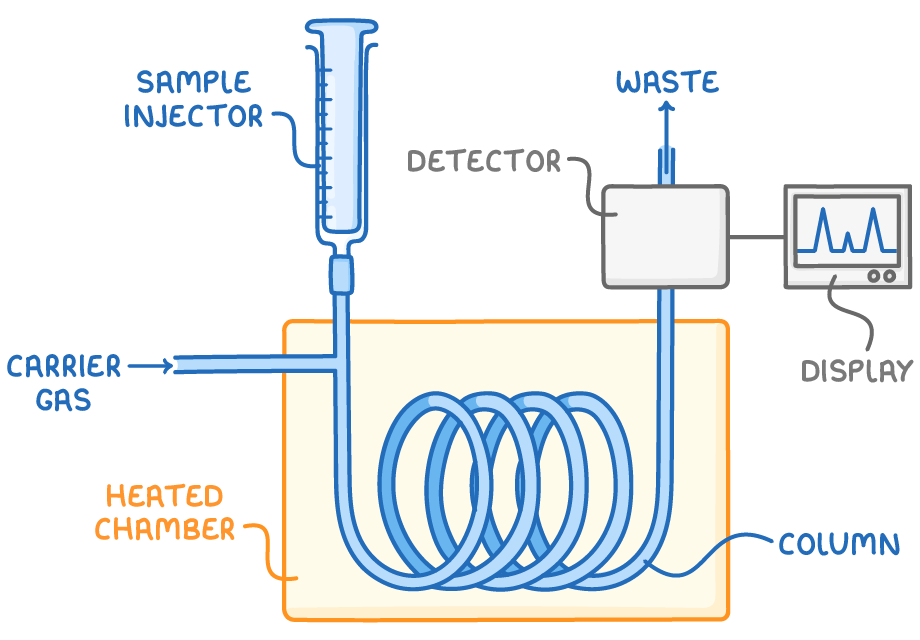
describe the process of gas chromatography (GC):
liquid sample vaporised in heated chamber
inert gas - mobile phase - transports vaporised sample through chromatographic column containing the stationary phase - powder packed inside long capillary tube by an oil - which interacts differently with each component of the sample
components separated based on how they partition between the mobile gas phase and stationary phase
as they exit the column a detector records the separation producing a chromatogram with distinct peaks for each component
components leave the column at different times - this is the retention time
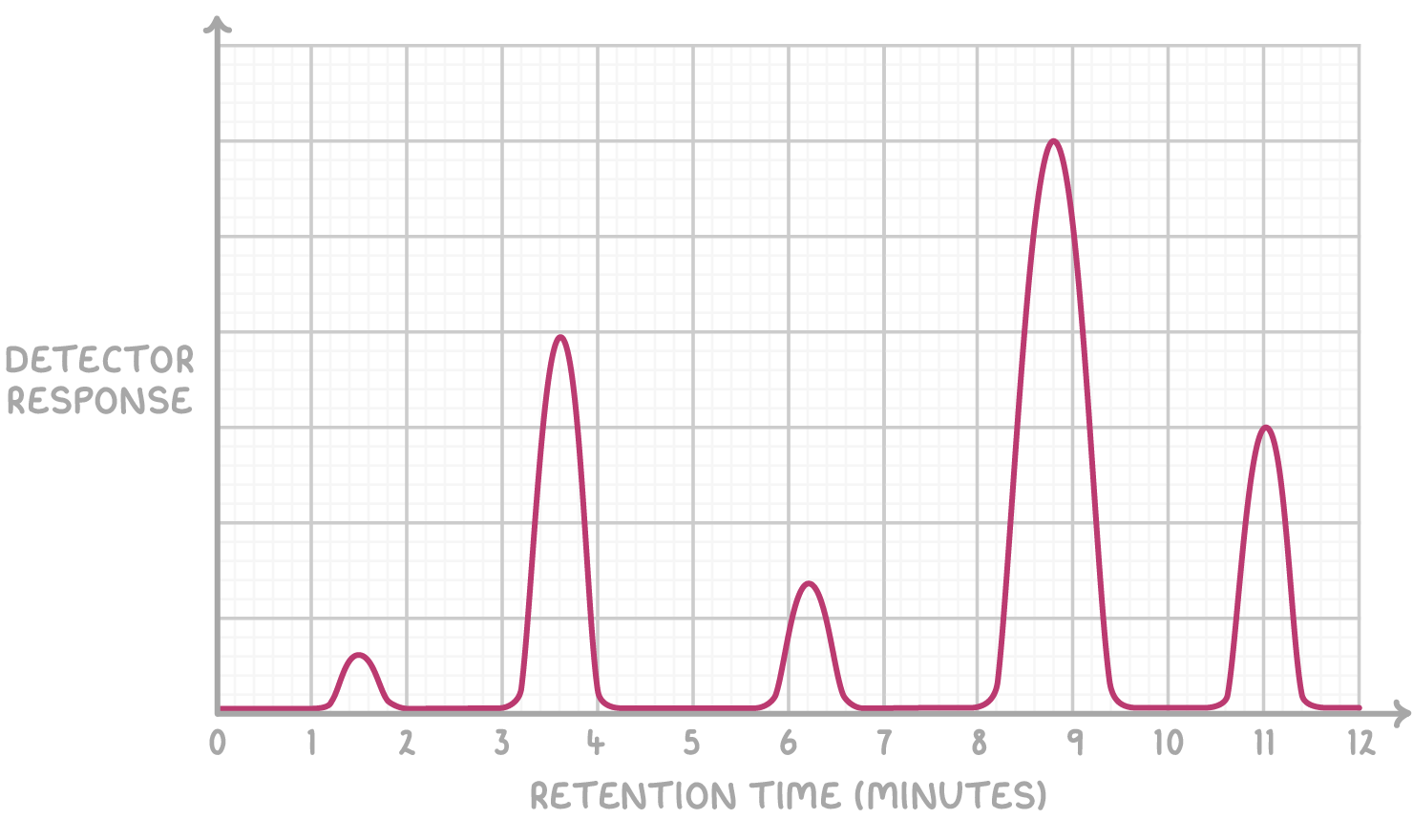
how can we use retention times to identify substances in GC?
position of each peak determined by retention time of each substance
area under the peaks = amount of each substance
compare retention times to known values (same mobile/stationary phases must be used)
(GC may be coupled w/ other spectrometers e.g. mass spec - substances separated out then mass spectrum for each is produced)
name a suitable developing agent for the separation of a polypeptide into its constituent AAs - state why the developing agent is needed:
ninhydrin
AAs are colourless/to make the AAs visible
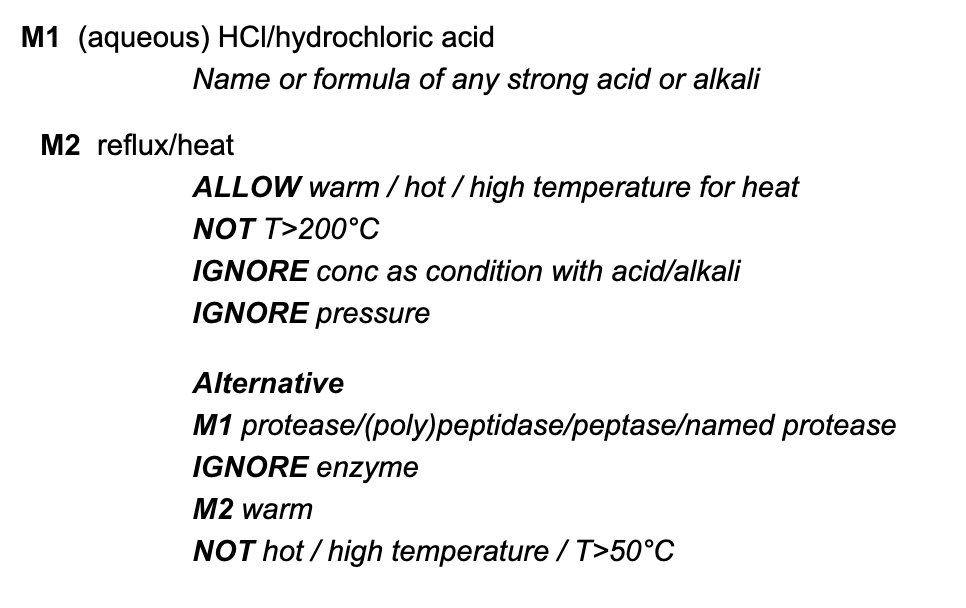
how are condensation polymers hydrolysed?
conc HCl (any strong acid/alkali) - heat
(MS for polypeptide)
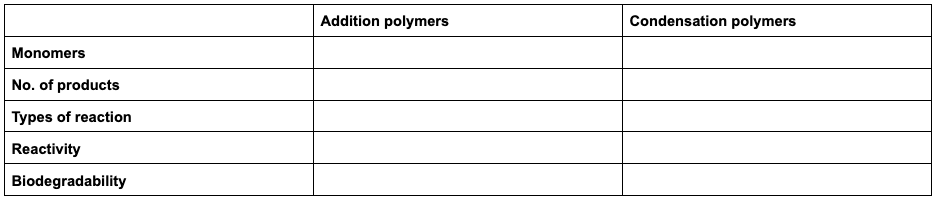
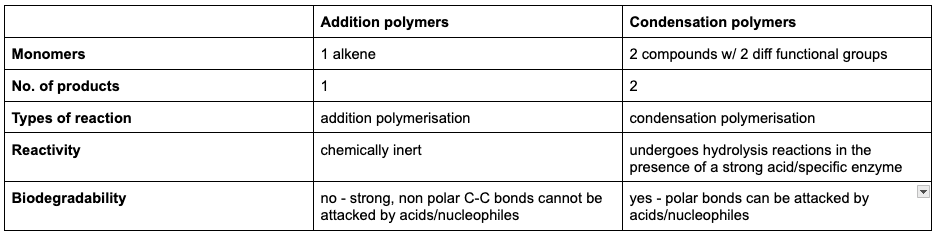
can you complete this table?
yes!
give the methods of polymer disposal:
landfill
incineration
recycling
give the benefits and drawbacks of disposing of (addition) polymers in landfill:
benefits:
useful for disposing of plastics which:
are too diff to recycle
are too diff to separate from other materials
there is not enough plastic to extract to make it economically viable
drawbacks:
decomposition of waste in landfill produces methane - greenhouse gas
risk of water contamination from waste leaching
large amounts of land needed - unsustainable and expensive
give the benefits and drawbacks of incineration as a method of polymer disposal:
benefits:
method of disposal if the plastics can’t be recycled
E from burning can be used to generate electricity
drawbacks:
can release toxic fumes so must be monitored e.g. PVC produces toxic HCl fumes
flue gas scrubbers used to neutralise toxic gases produced by firing a base at the flue gases
give the benefits and drawbacks of recycling as a form of polymer disposal:
benefits:
cheaper
less CO2 produced than incineration
reduces reliance on landfill
preserves non-renewable raw materials e.g. crude oil
drawbacks:
can be contaminated w/ other materials when being recycled
diff to recycle due to wide variety of diff plastics
diff to remake original plastic from recycled material
sorting and process recycling of plastics more expensive than incineration
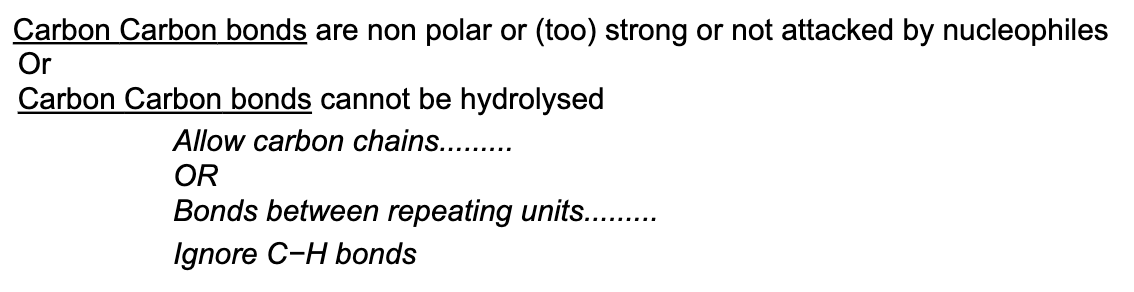
golf balls recovered from lakes and ponds can be used again even after being in water for several years - explain why these golf balls do not biodegrade (2)
(ignore the MS, say both!)
C-C bonds are non polar/strong/not attacked by nucleophiles
C-C bonds cannot be hydrolysed
what must each monomer have to make a condensation polymer?
at least 2 functional groups e.g. diols, dicarboxylic acids
give 3 examples of condensation polymers and the general word eqns for their formation:
n(dicarboxylic acid + diamine) → polyamide
n(dicarboxylic acid.+ diol) → polyester
n(amino acid) → polypeptide
give the general eqn for the formation of a polyamide - name the linkage formed:
amide linkage

give 2 examples of polyamides and their uses:
Kevlar - used to make bulletproof vests
nylon-6,6 - used to make fibres e.g. in ropes/clothing
why are condensation polymers stronger than addition polymers?
there are H bonds (as well as VDWs and DPDPs) between C=O, N-H and O-H groups and DPDPs between polarised groups in condensation polymers
only VDWs between polyalkenes as the chains contain non-polar bonds
H bonds/DPDPs are stronger than VDWs
give the eqn for making Kevlar and name the organic reactants - give 1 feature of Kevlar:
Kevlar has H bonds between polymer chains
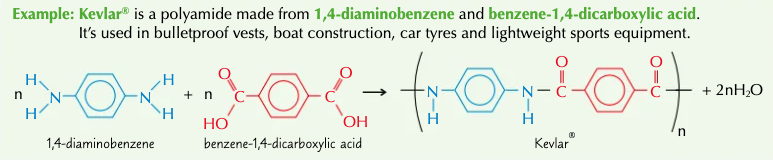
give the eqn for making nylon-6,6 and name the organic reactants:
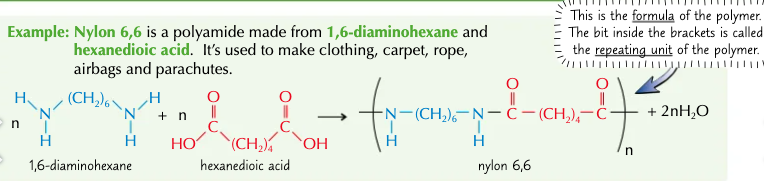
suggest an alternative way of making polyamides and give the small molecule produced:
acyl chloride + amine
small molecule = HCl
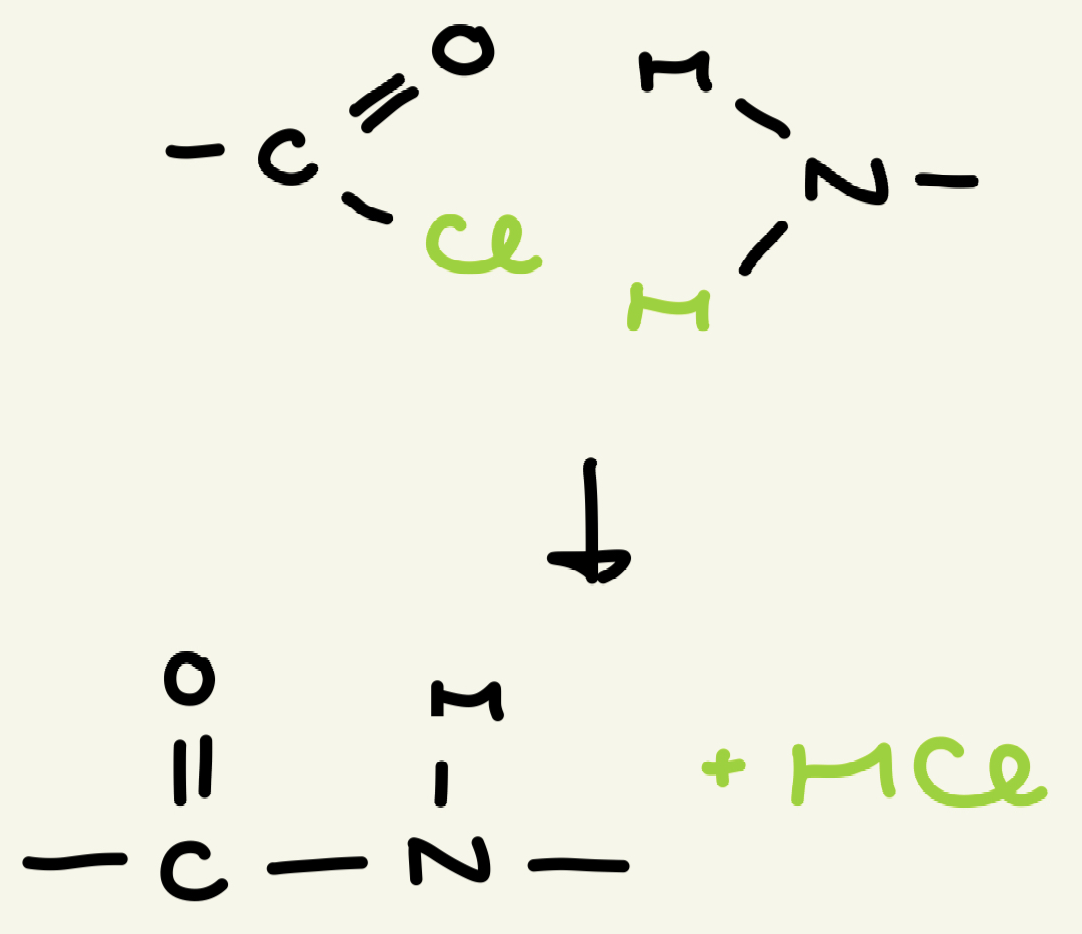
give the general eqn for the formation of a polyester and name the linkage:

give an example of a polyester, the eqn for making it and the names of the organic products:
Terylene - remember only 1 side of trailing bonds should have an O!
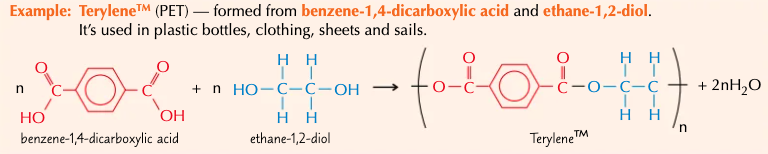
draw and name the mechanism that occurs between ethanal and acidified KCN:
nucleophilic addition
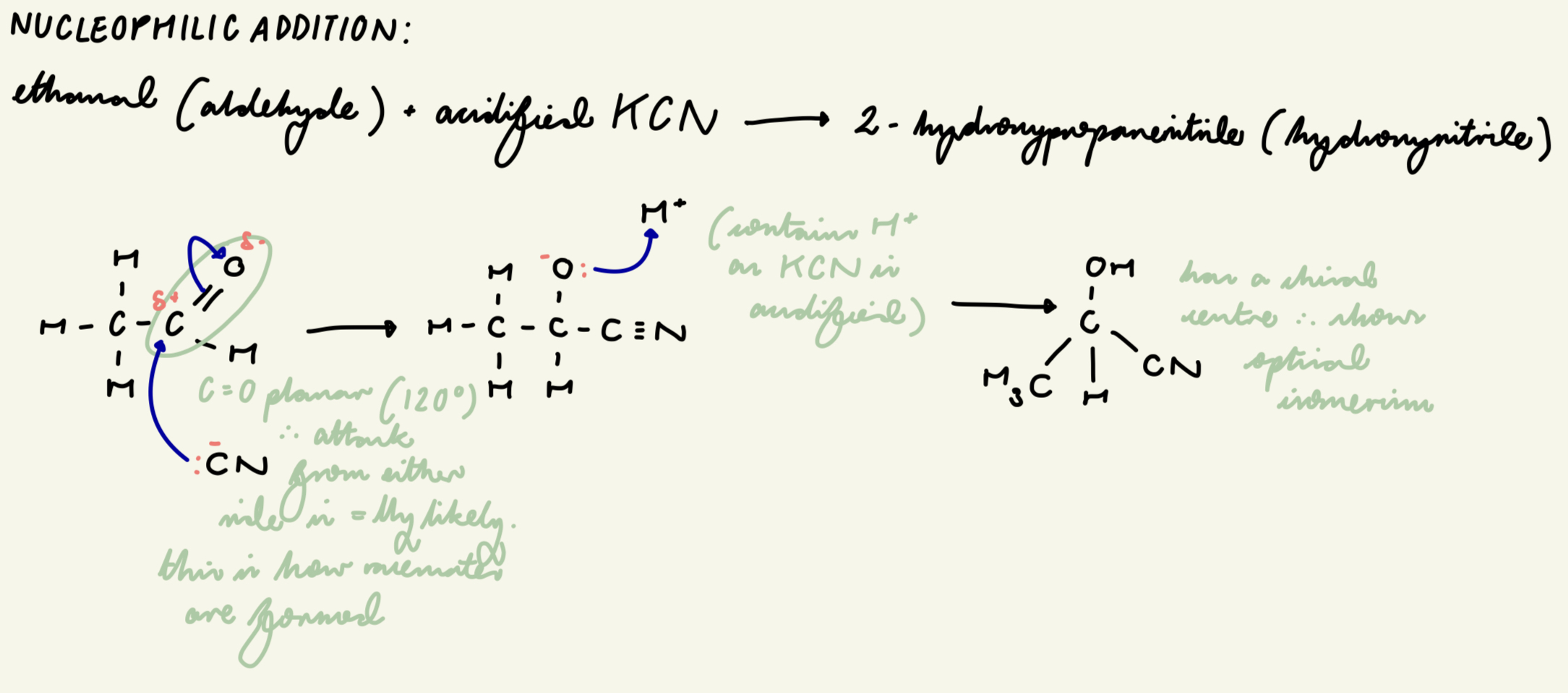
what is the product of nucleophilic addition w/ acidified KCN?
hydroxynitrile
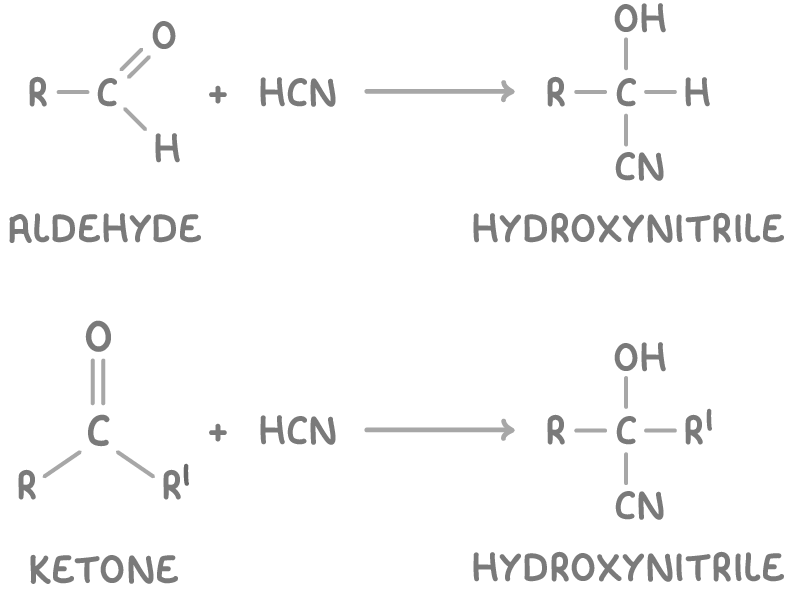
which compounds can undergo nucleophilic addition?
aldehydes and ketones
why do asymmetrical ketones form racemates during nucleophilic addition, whereas symmetrical ketones do not?
for symmetrical ketones:
attack from either side of carbonyl group is still =lly likely as carbonyl is planar
but attack from either side would produce the same product as ketone is symmetrical
so product is non-chiral and ∴ optically inactive
draw and name the mechanism that occurs between ethanal and acidified NaBH4:
nucleophilic addition
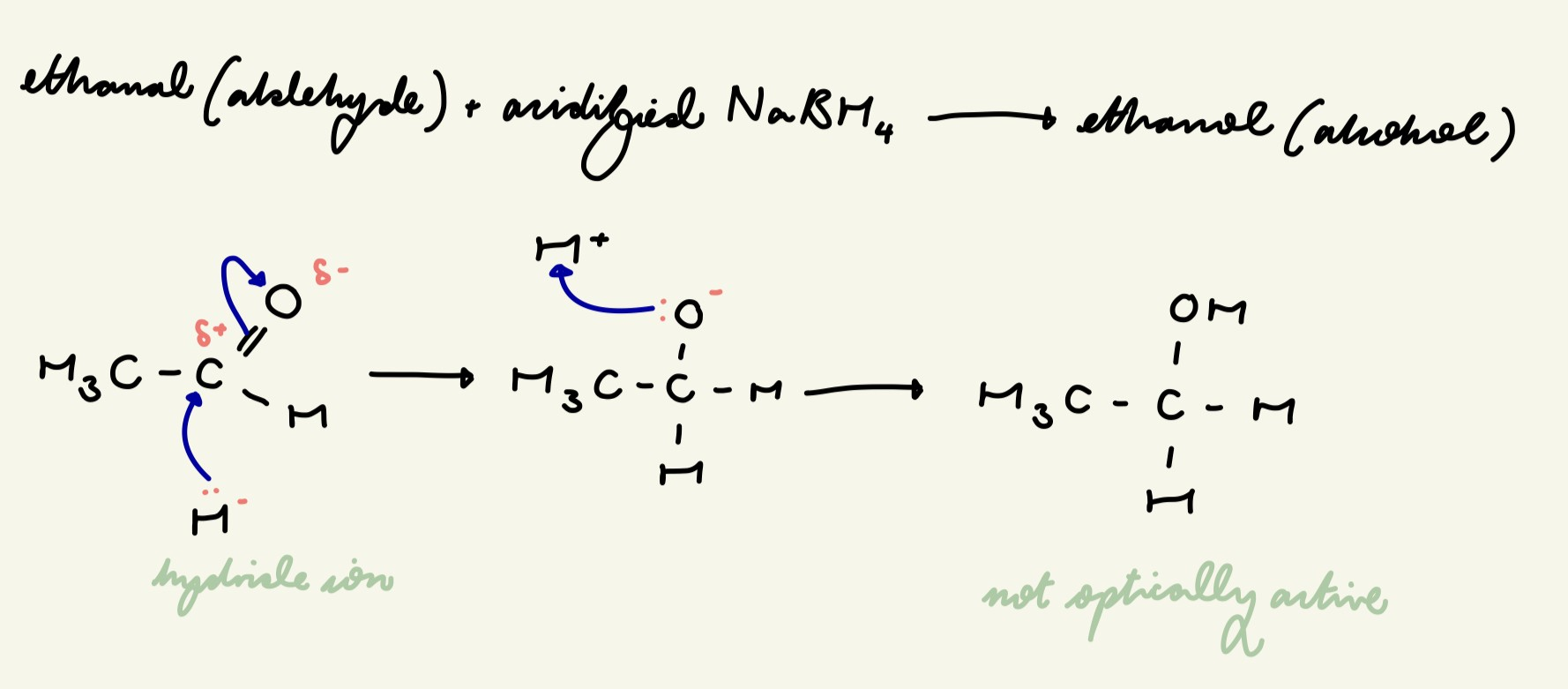
for which reactions does nucleophilic addition w/ NaBH4 occur?
reduction of aldehyde to 1o alcohol
reduction of ketone to 2o alcohol
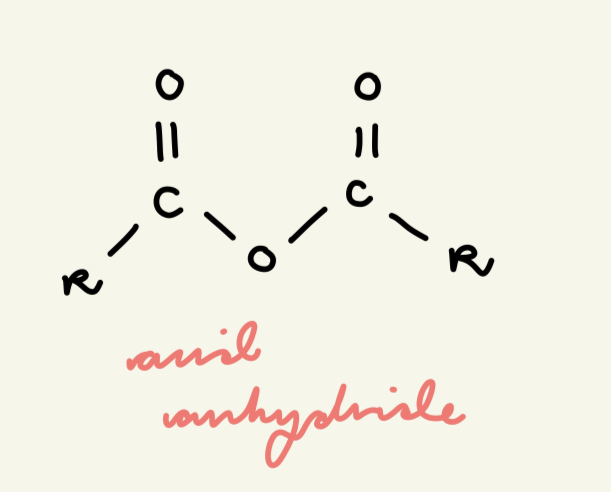
give the functional group for an acid anhydride:
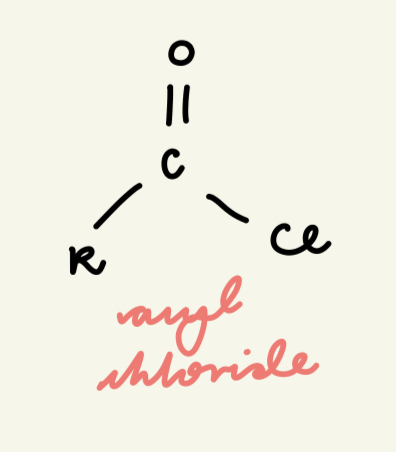
give the functional group for an acyl chloride:
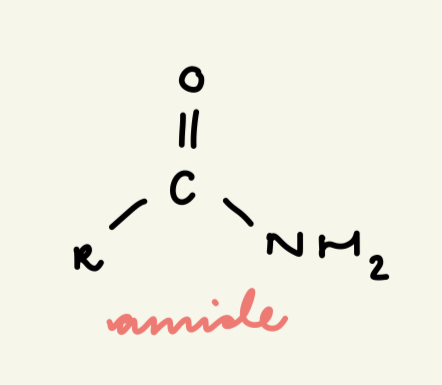
give the functional group for an amide:
what is acylation? through which mechanism does it occur?
addition of an acyl group
occurs through a nucleophilic addition-elimination reaction
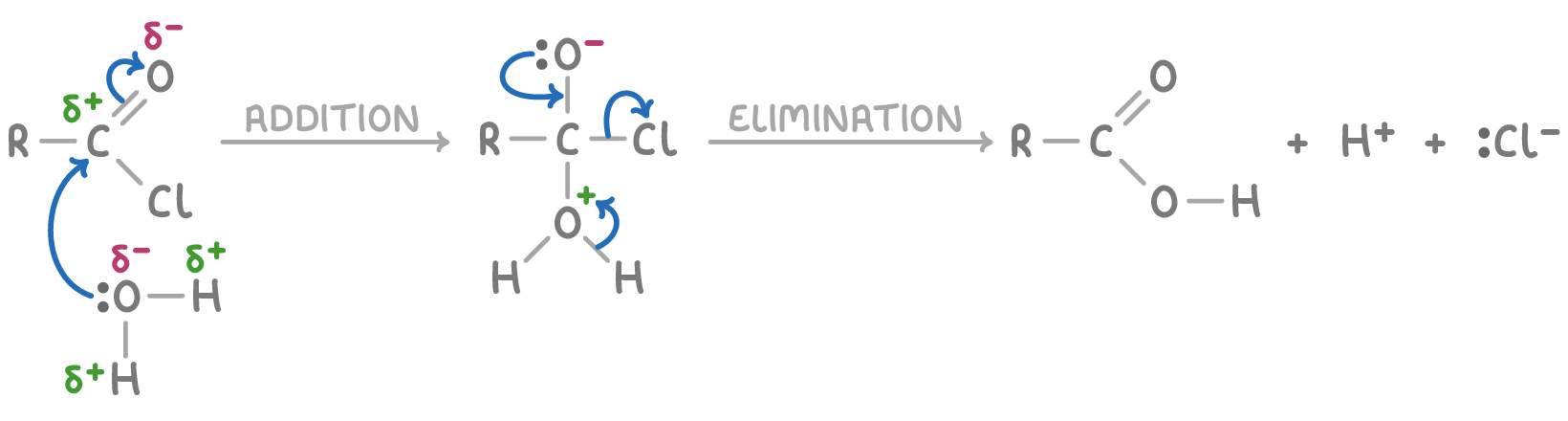
draw the nucleophilic addition-elimination reaction between ethanoyl chloride and water:
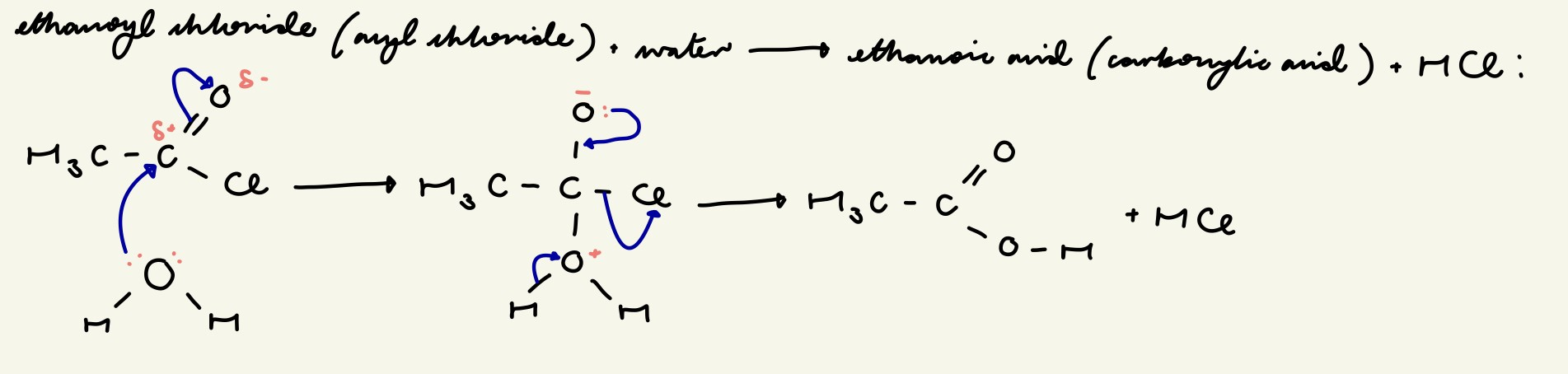
draw the nucleophilic addition-elimination reaction between ethanoyl chloride and ethanol:
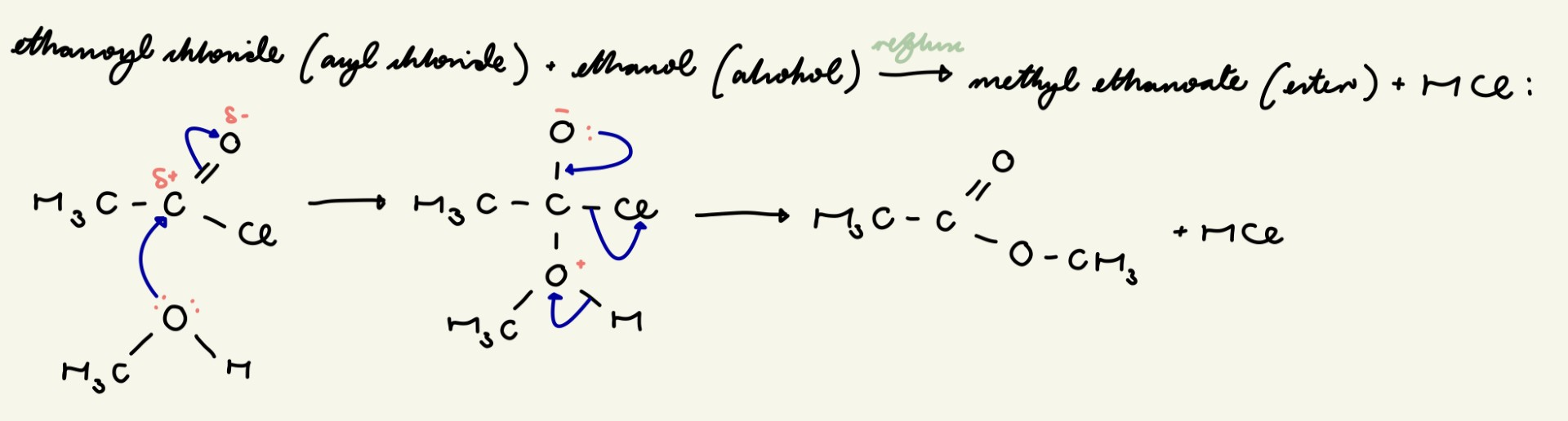
draw the nucleophilic addition-elimination reaction between ethanoyl chloride and conc ammonia:
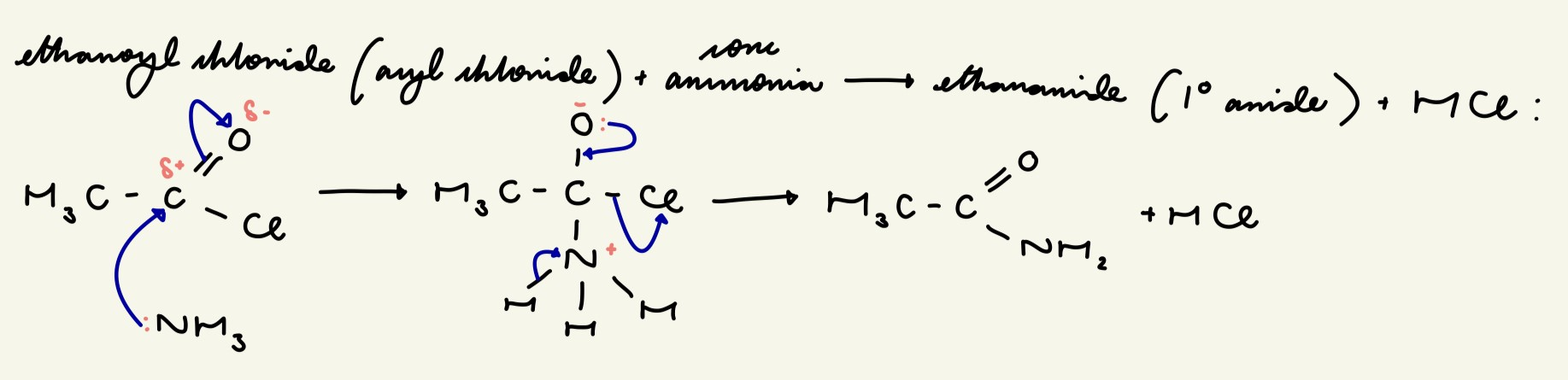
draw the nucleophilic addition-elimination reaction between ethanoyl chloride and methylamine (1o amine):
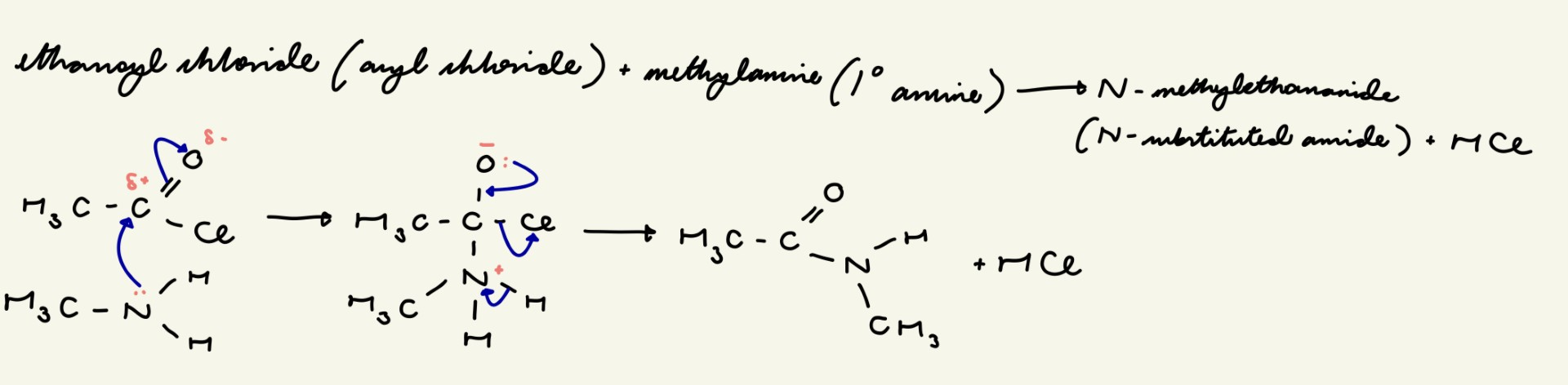
what is an N-substituted amide?
amide where one of the H atoms bonded to the N has been substituted for an alkyl/aryl group
draw the nucleophilic addition-elimination reaction between ethanoic anhydride and ammonia:
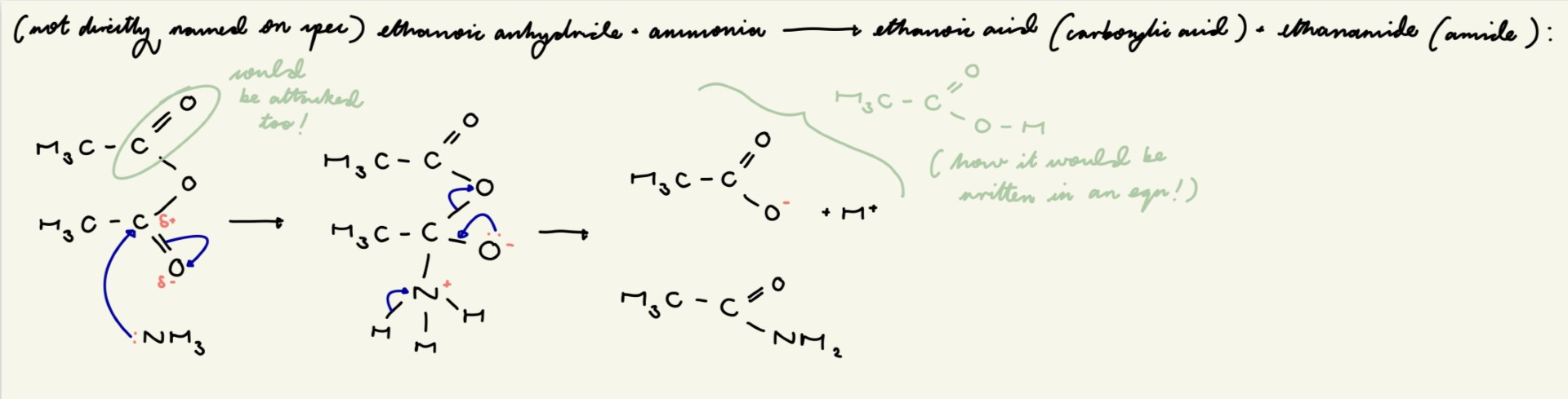

fill out the products in this table:


fill out the products in this table:

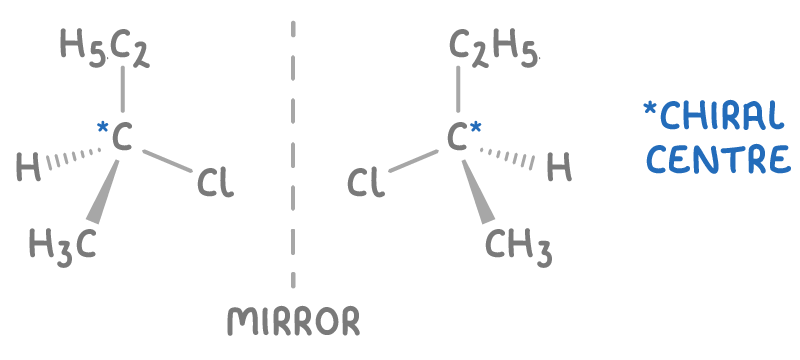
what is optical isomerism? when does it occur?
form of stereoisomerism
occurs as a result of chirality in molecules
limited to molecules w/ a single chiral centre
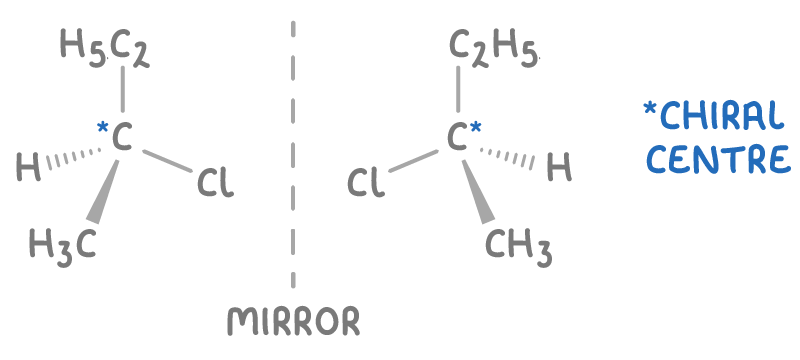
what is a chiral C?
C with 4 diff groups attached