Arch 214A- Final Review Identification Cards

5.0(2)
studied byStudied by 193 people
5.0(2)
call with kaiCall with Kai
learnLearn
examPractice Test
spaced repetitionSpaced Repetition
heart puzzleMatch
flashcardsFlashcards
GameKnowt Play
Card Sorting

1/55

encourage image

There's no tags or description

Looks like no tags are added yet.

Last updated 2:39 AM on 5/1/24
Name
Mastery
Learn
Test
Matching
Spaced
Call with Kai

No analytics yet

Send a link to your students to track their progress

56 Terms

1
New cards
<p>Identify</p>

Identify

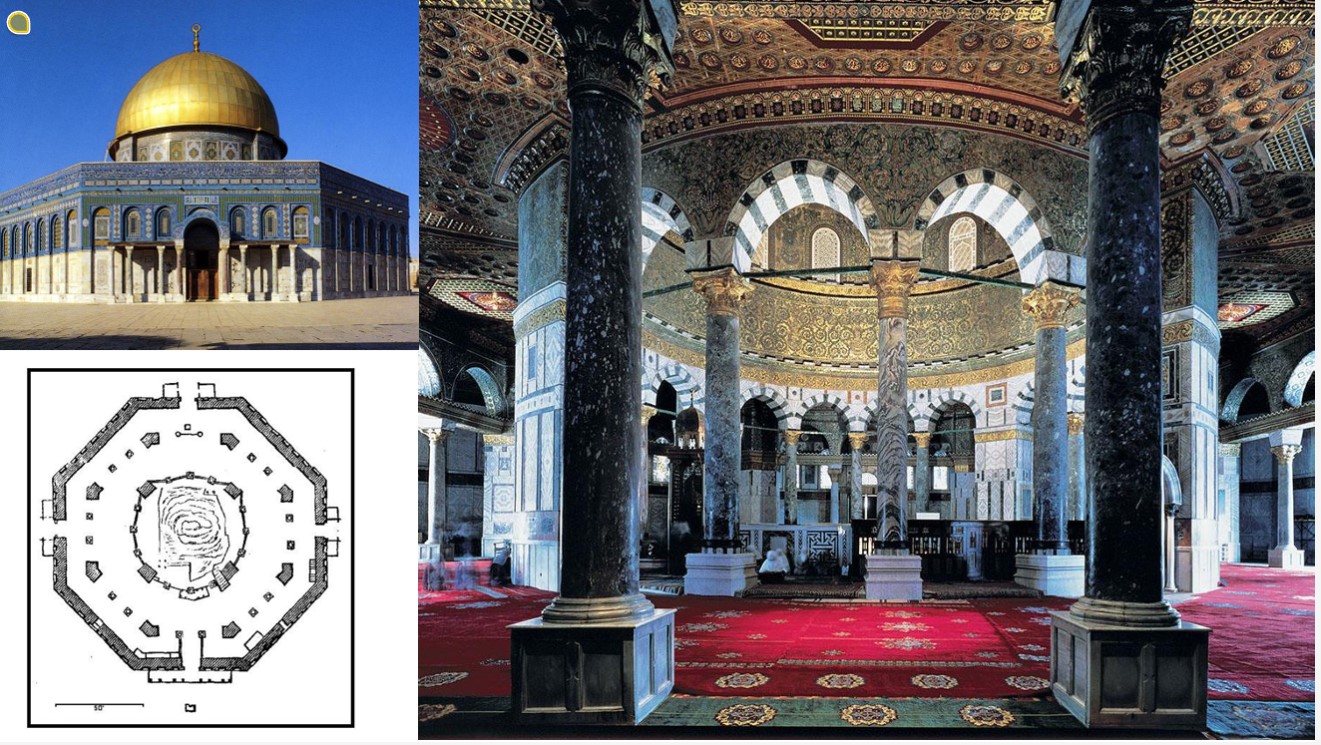
Dome of the Rock

Jerusalem

632-691 CE

2
New cards

Significance - Dome of the Rock

  • Muslim, Christian, and Jewish center geographically

    • Where Jewish Temples 1-3 were before the destruction and Abraham almost sacrificed Isaac

    • “navel of the world“

    • Where it is said Muhammad ascended to get law

  • Inspired by Byzantine and Eastern architecture

  • Scrit becomes a pattern- literally made with/ of the Qur’an, a type of circumambulation to read scripture

    • forbidden representation of people

  • emphasis of depth v flatness, ornamentation and filigree

  • Grid- 8 sides, 4 piers, 2 ambulatories
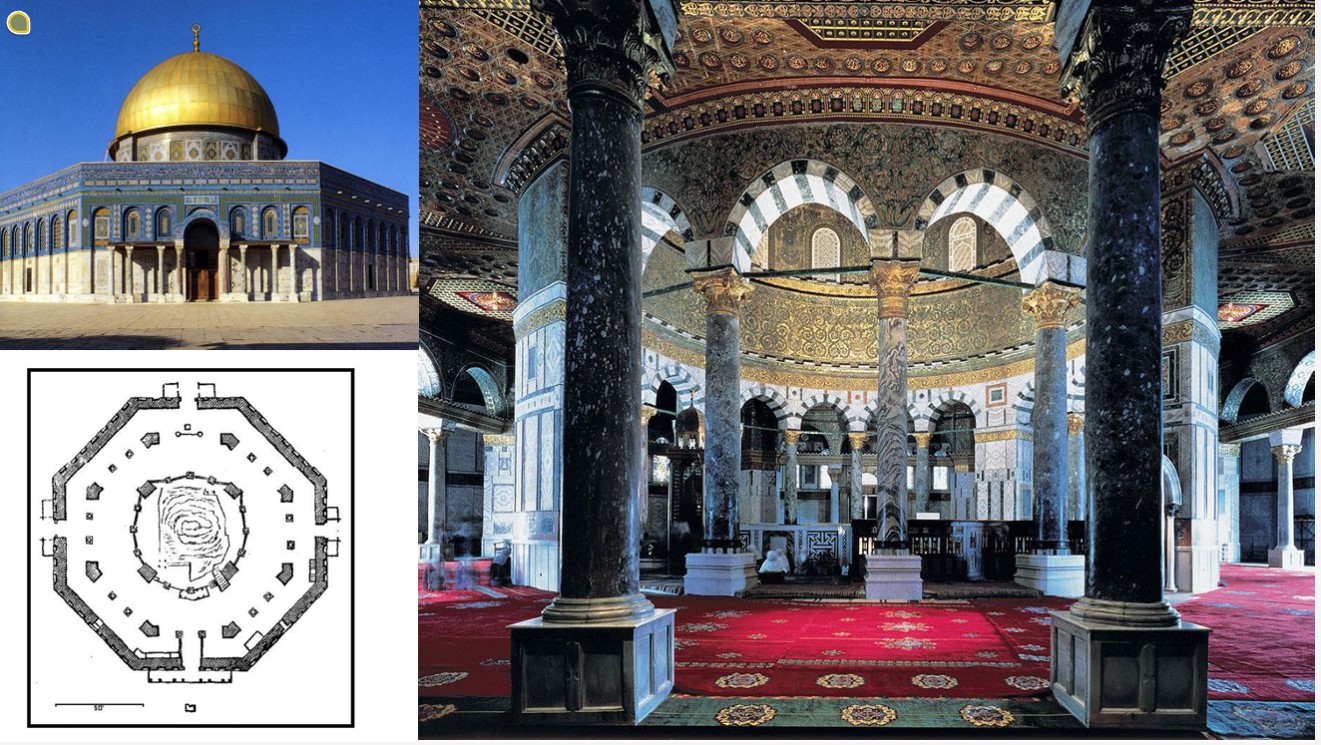
<ul><li><p>Muslim, Christian, and Jewish center geographically</p><ul><li><p>Where Jewish Temples 1-3 were before the destruction and Abraham almost sacrificed Isaac</p></li><li><p>“navel of the world“</p></li><li><p>Where it is said Muhammad ascended to get law </p></li></ul></li><li><p>Inspired by Byzantine and Eastern architecture</p></li><li><p>Scrit becomes a pattern- literally made with/ of the Qur’an, a type of circumambulation to read scripture</p><ul><li><p>forbidden representation of people</p></li></ul></li><li><p>emphasis of depth v flatness, ornamentation and filigree </p></li><li><p>Grid- 8 sides, 4 piers, 2 ambulatories </p></li></ul>
3
New cards
<p>Identify </p>

Identify

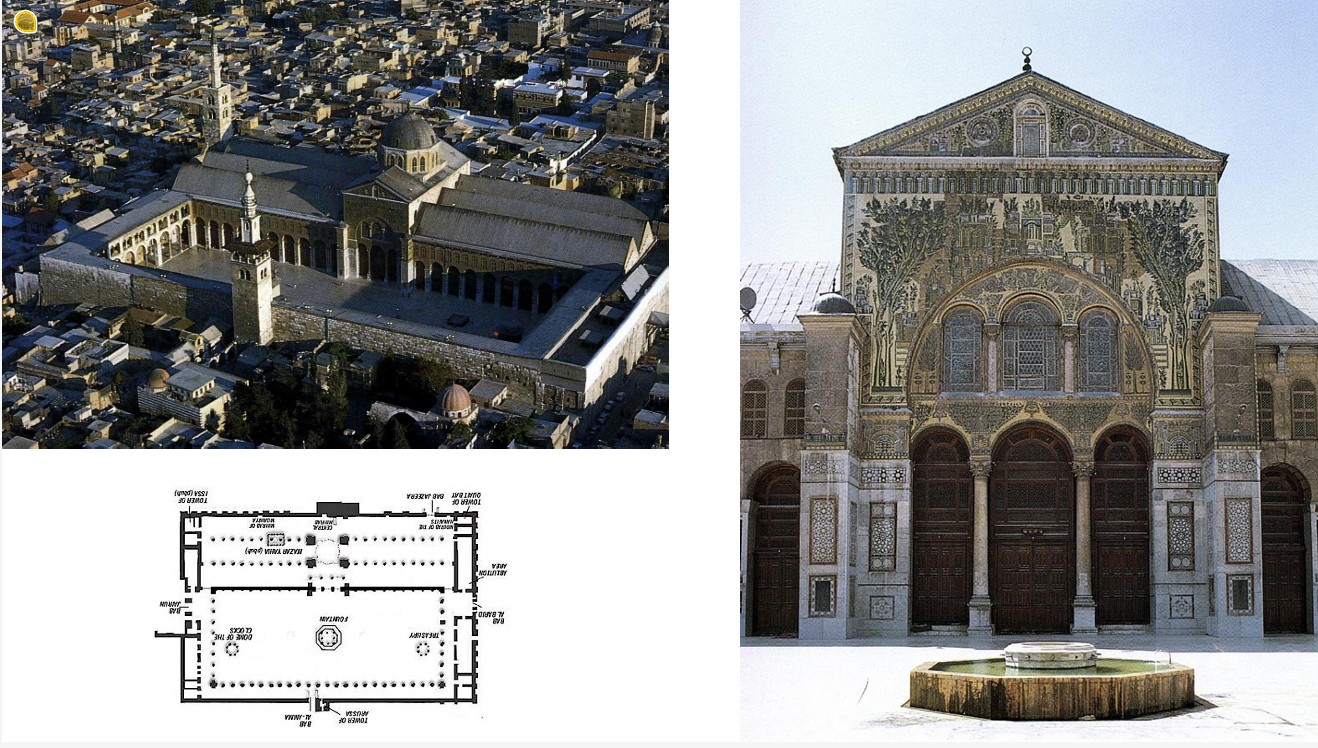
Umayyad Mosque

Damascus, Syria

706-715

by the Umayyads (precursors to the Abbasid Caliphate)

4
New cards

Significance- Umayyad Mosque

  • “school“- learning and scholarship

  • a celebration of the home of the empire inside the dome

  • similarities with the house of Muhammad

    • 4th most holy place and popular template for mosques

  • History- it was a Roman temple, then a christian church, then mosque

    • burial place of John the Baptist

  • Vegetal Mosaics

  • 3 MINARETS (towers to call to prayer)

  • emphasis on transverse axis

  • The center of the Qibla has a dome with bold names of early rulers, Allah, and Muhammad
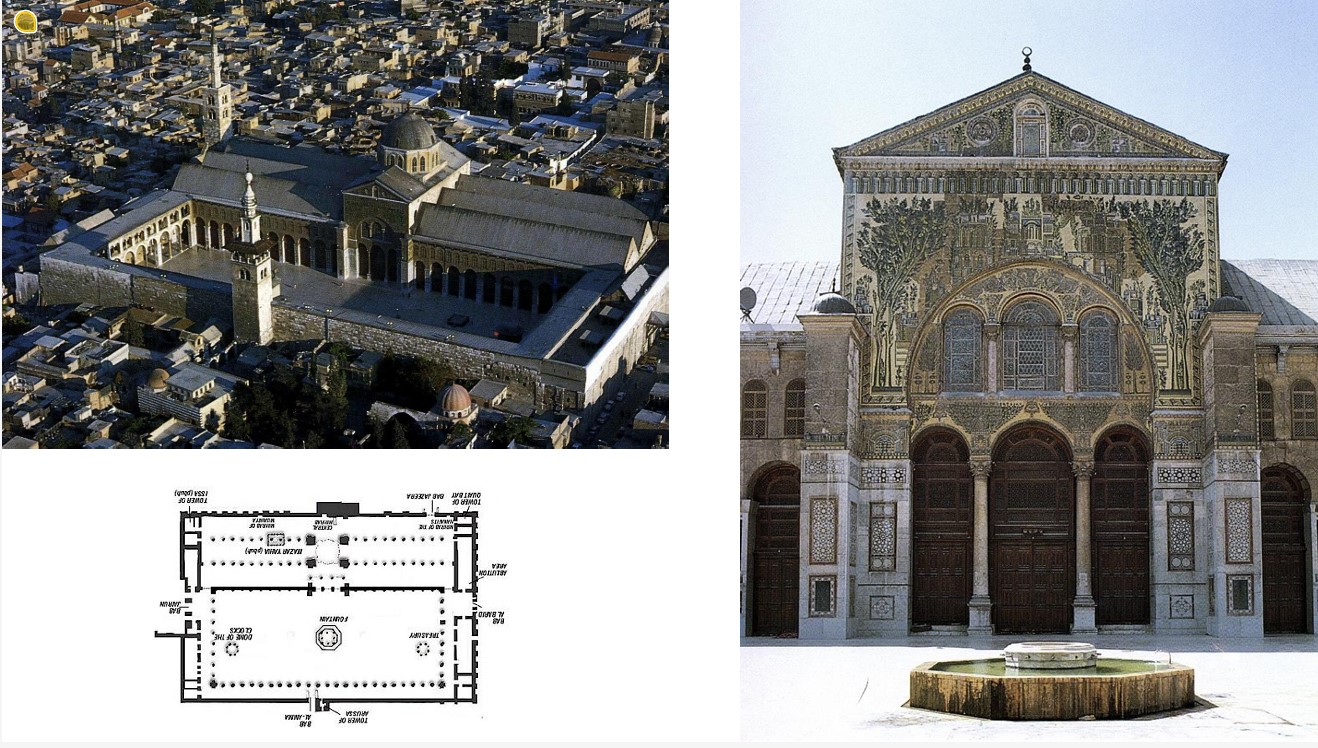
<ul><li><p>“school“- learning and scholarship </p></li><li><p>a celebration of the home of the empire inside the dome</p></li><li><p>similarities with the house of Muhammad </p><ul><li><p>4th most holy place and popular template for mosques </p></li></ul></li><li><p>History- it was a Roman temple, then a christian church, then mosque</p><ul><li><p>burial place of John the Baptist </p></li></ul></li><li><p>Vegetal Mosaics</p></li><li><p>3 MINARETS (towers to call to prayer) </p></li><li><p>emphasis on transverse axis</p></li><li><p>The center of the Qibla has a dome with bold names of early rulers, Allah, and Muhammad </p></li></ul>
5
New cards
<p>Identify</p>

Identify

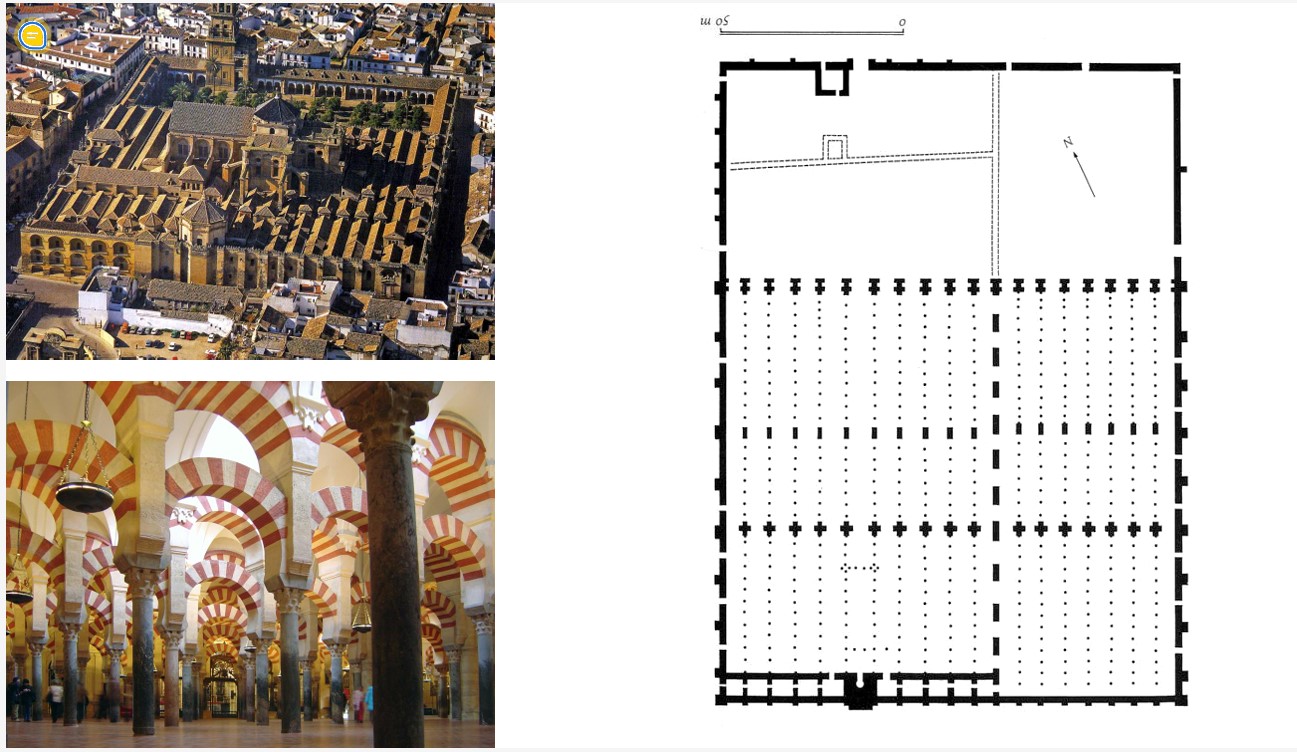
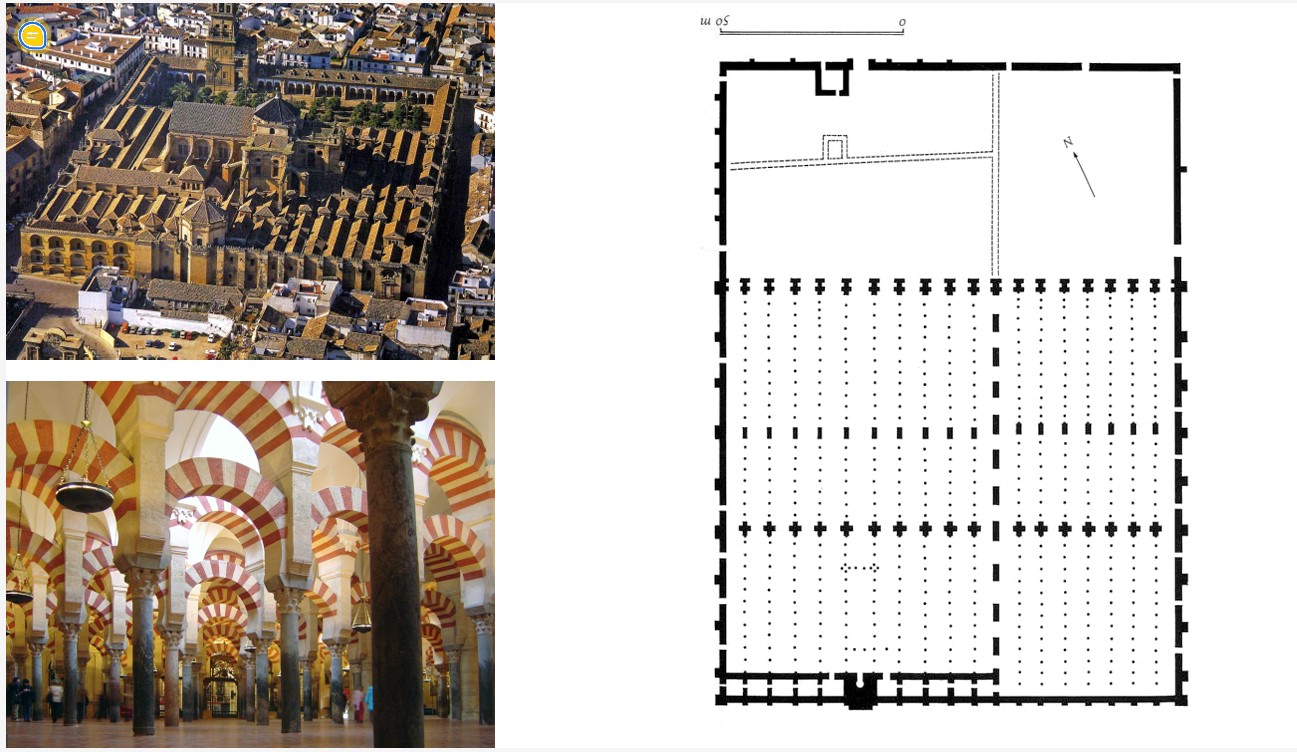
the Great Mosque

Cordoba, Spain

786

By the Umayyads, fleeing East to Spain from the Abbasids

6
New cards

Significance- The Great Mosque of Cordoba

  • hypostyle hall

    • originally built like Muhammads house, then mutated over time

    • field condition, multiplicity, hall of mirrors effect

  • Reconquest of Spain was celebrated in this space, with Horseshoe shape from Visigoth architecture - Mihrab

    • because of expansion, the mihrab faces south not Mecca

  • Dome with overlapping arches

<ul><li><p>hypostyle hall </p><ul><li><p>originally built like Muhammads house, then mutated over time </p></li><li><p>field condition, multiplicity, hall of mirrors effect </p></li></ul></li><li><p>Reconquest of Spain was celebrated in this space, with Horseshoe shape from Visigoth architecture - Mihrab </p><ul><li><p>because of expansion, the mihrab faces south not Mecca</p></li></ul></li><li><p>Dome with overlapping arches </p></li></ul>
7
New cards
<p>Identify- </p>

Identify-

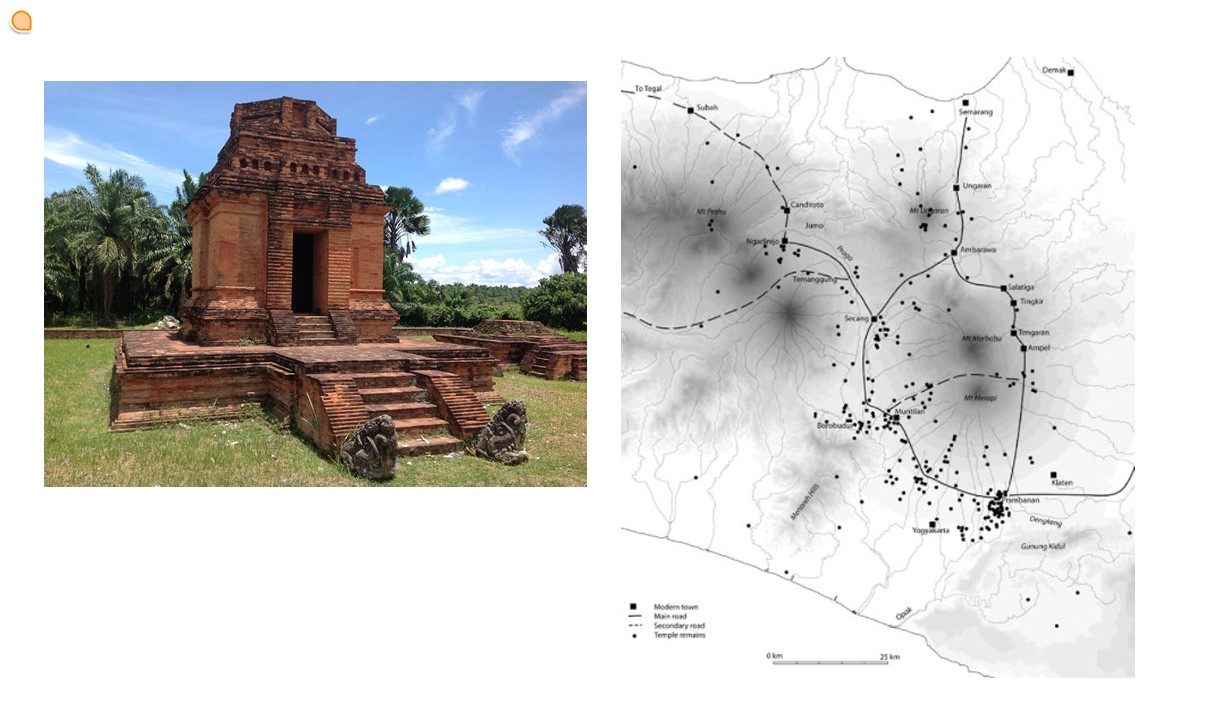
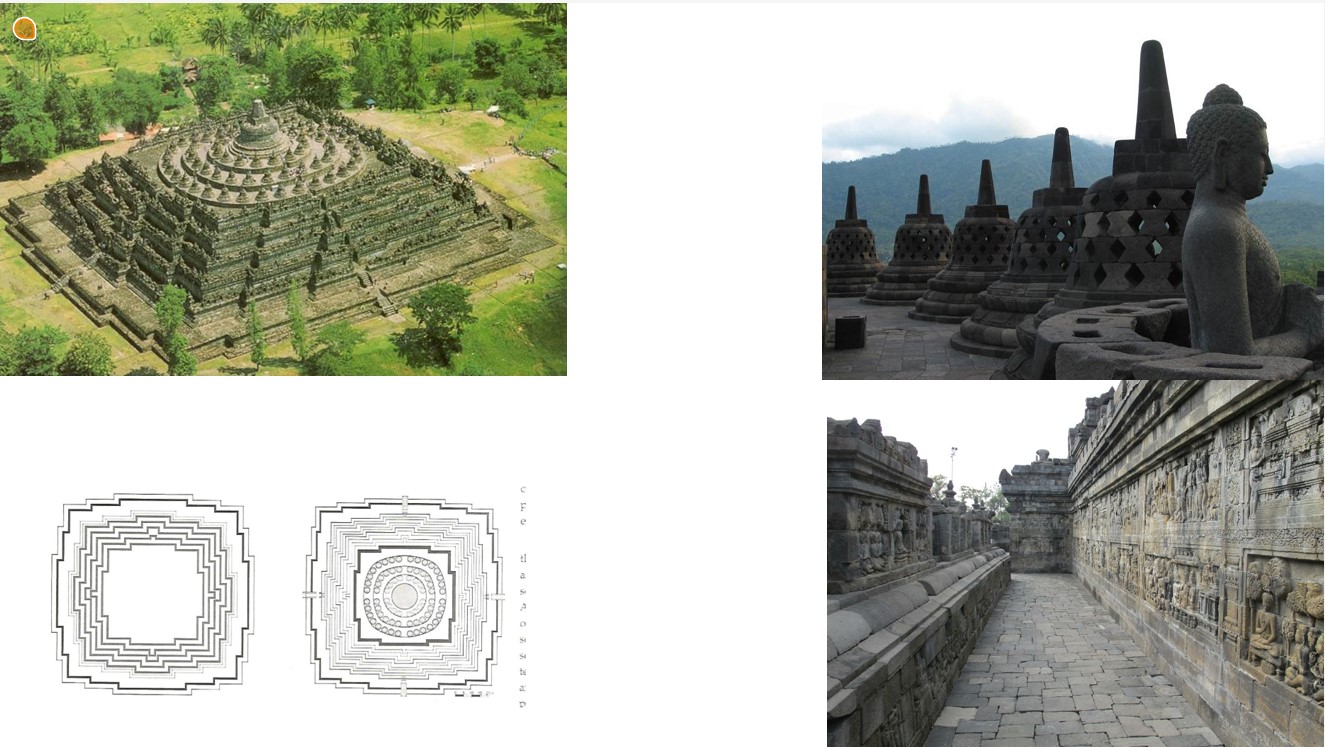
Candi Bahal II

Pulau Sumatra

11-13th Cent

8
New cards

Significance- Candi Bahal II

  • example of sacred landscape

    • free standing objects in the landscape

    • square geometries

    • articulation not in the perimeter but in the additions

  • comparable to the shore temple

    • Garbhagriha and inner sanctum evolved to just be a garbhagriha with extra walls around it
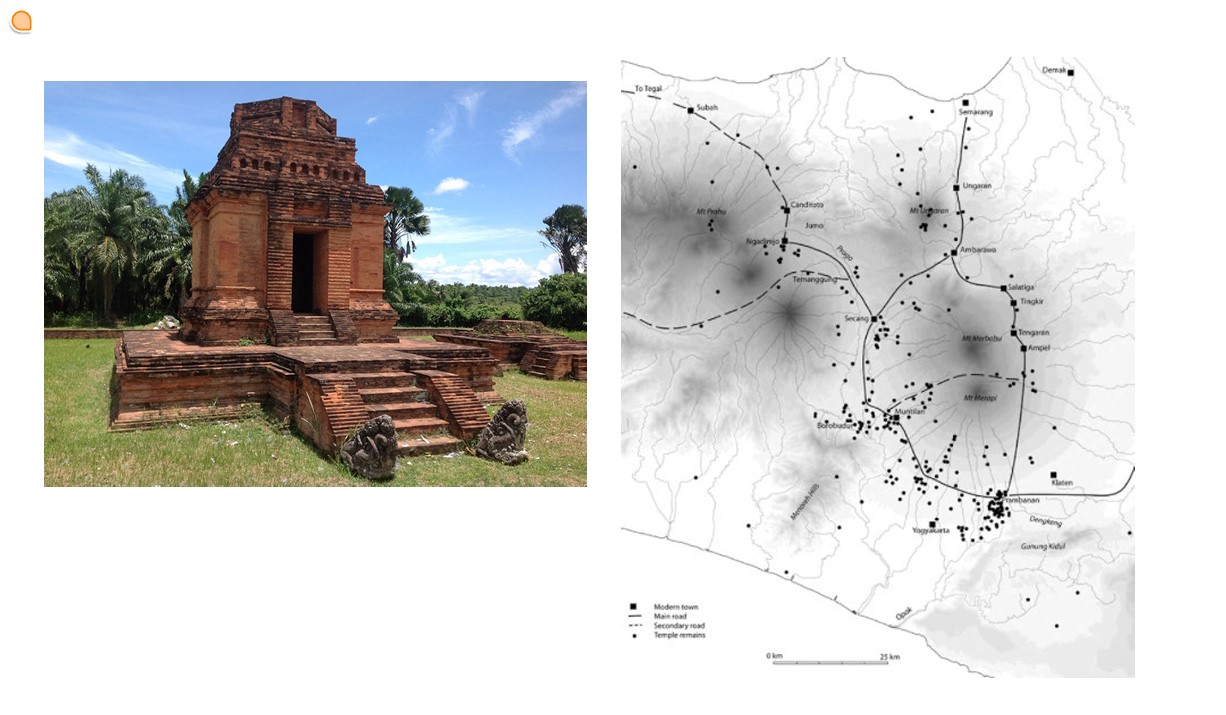
<ul><li><p>example of sacred landscape </p><ul><li><p>free standing objects in the landscape </p></li><li><p>square geometries </p></li><li><p>articulation not in the perimeter but in the additions </p></li></ul></li><li><p>comparable to the shore temple </p><ul><li><p>Garbhagriha and inner sanctum evolved to just be a garbhagriha with extra walls around it </p></li></ul></li></ul>
9
New cards
<p>Identify</p>

Identify

Borobudur

Java Island, Indonesia

800

10
New cards

Significance- Borobudur

  • mandala- like geometries

    • 6 square platforms topped by circular platforms, 72 buddhas around the top stupa and 500 inside

    • implies 3rd dimension, 4 entrances/pathways

  • Levels: World of Desire, World of Forms, and Formlessness

  • practical and meditative texts carved into the walls- knowledge

  • made their own sacred mountain, Mt. Merapi (communicate with ancestors)
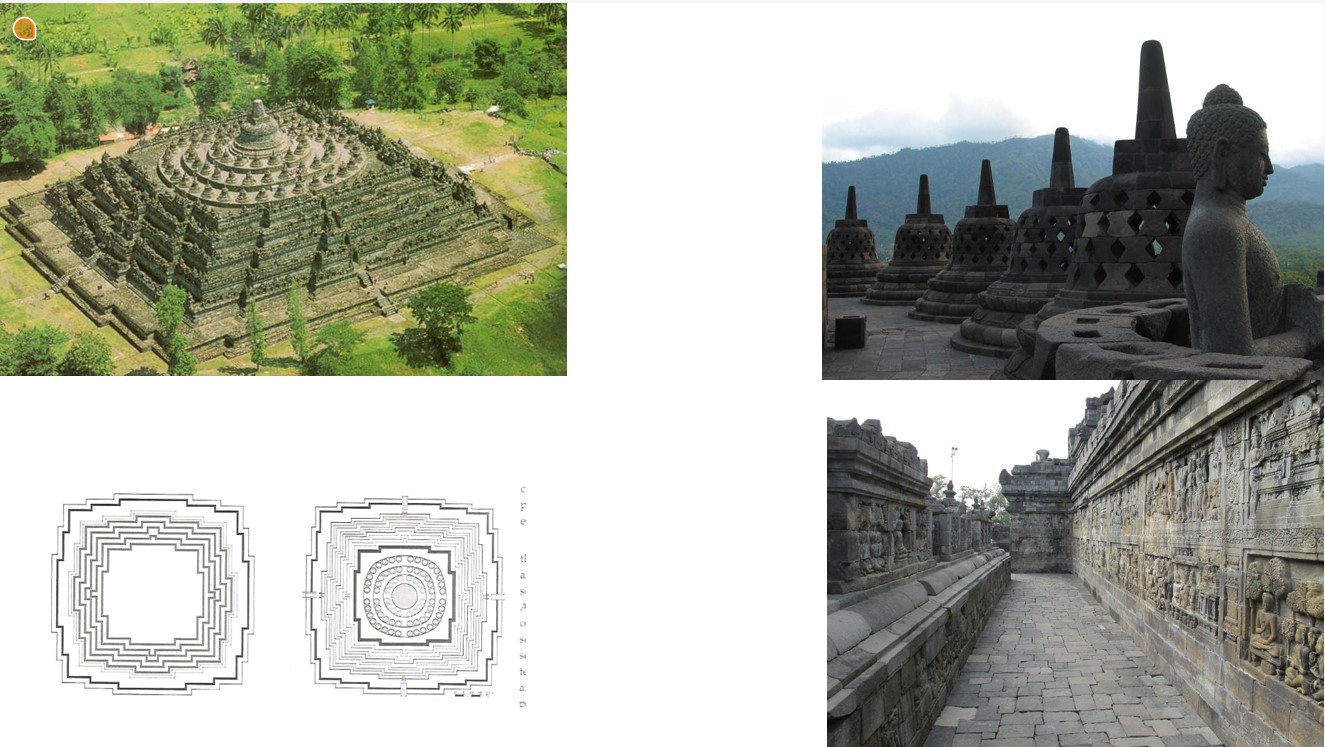
<ul><li><p>mandala- like geometries</p><ul><li><p>6 square platforms topped by circular platforms, 72 buddhas around the top stupa and 500 inside </p></li><li><p>implies 3rd dimension, 4 entrances/pathways </p></li></ul></li><li><p>Levels: World of Desire, World of Forms, and Formlessness</p></li><li><p>practical and meditative texts carved into the walls- knowledge </p></li><li><p>made their own sacred mountain, Mt. Merapi (communicate with ancestors)</p></li></ul>
11
New cards
<p>Identify-</p>

Identify-

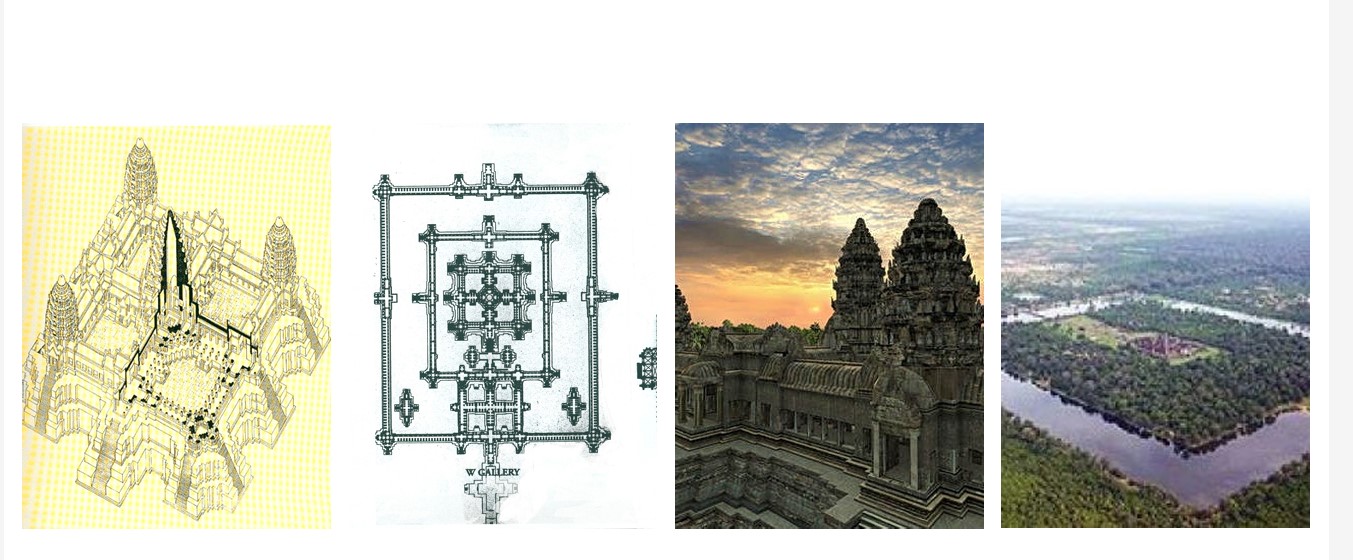
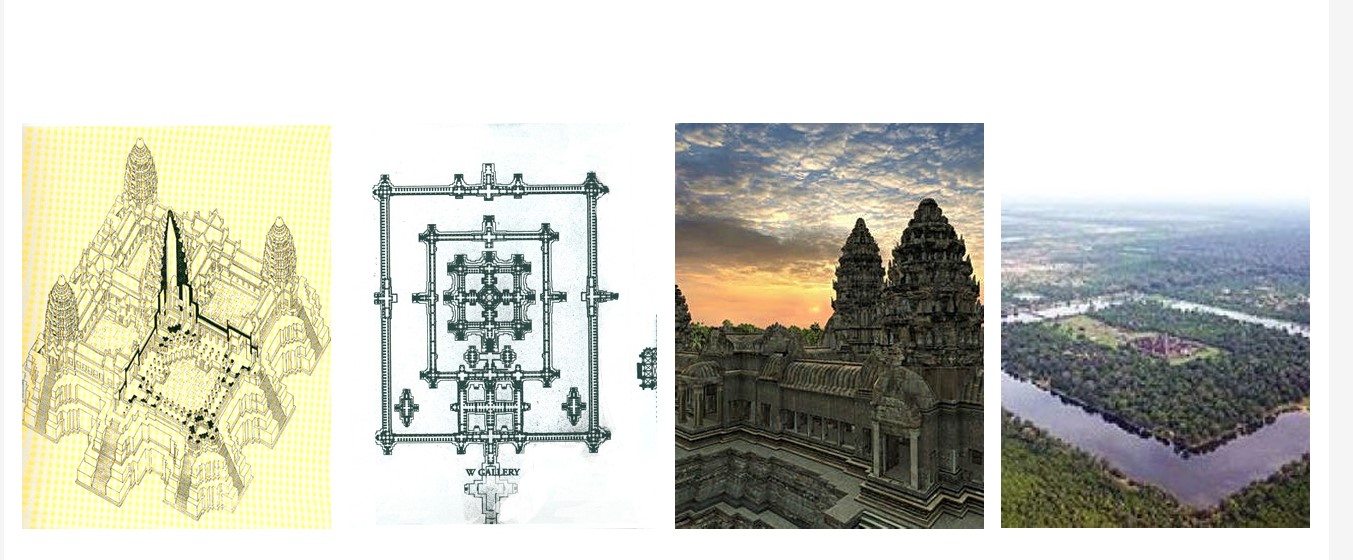
Angkor Wat (Vrah Vishnoluk)

Cambodia

1125

Suryavarman II

12
New cards

Significance- Angkor Wat

  • City of temples

    • one of the largest cities at the time

    • Rice, Holy land, forests, army, temple

    • gold plated

    • moat= primeval ocean/// structural support of moist pressurized sand

    • elephant terrace for the king, Main entrance to the West for Vishnu

  • Suryavarman II built it, and depicted himself as Vishnu

    • 100 yrs later, Hinduism—> Buddhism

  • Fractal repetition

<ul><li><p>City of temples </p><ul><li><p>one of the largest cities at the time </p></li><li><p>Rice, Holy land, forests, army, temple</p></li><li><p>gold plated</p></li><li><p>moat= primeval ocean/// structural support of moist pressurized sand </p></li><li><p>elephant terrace for the king, Main entrance to the West for Vishnu </p></li></ul></li><li><p>Suryavarman II built it, and depicted himself as Vishnu</p><ul><li><p>100 yrs later, Hinduism—&gt; Buddhism </p></li></ul></li><li><p>Fractal repetition </p></li></ul>
13
New cards
<p>Identify</p>

Identify

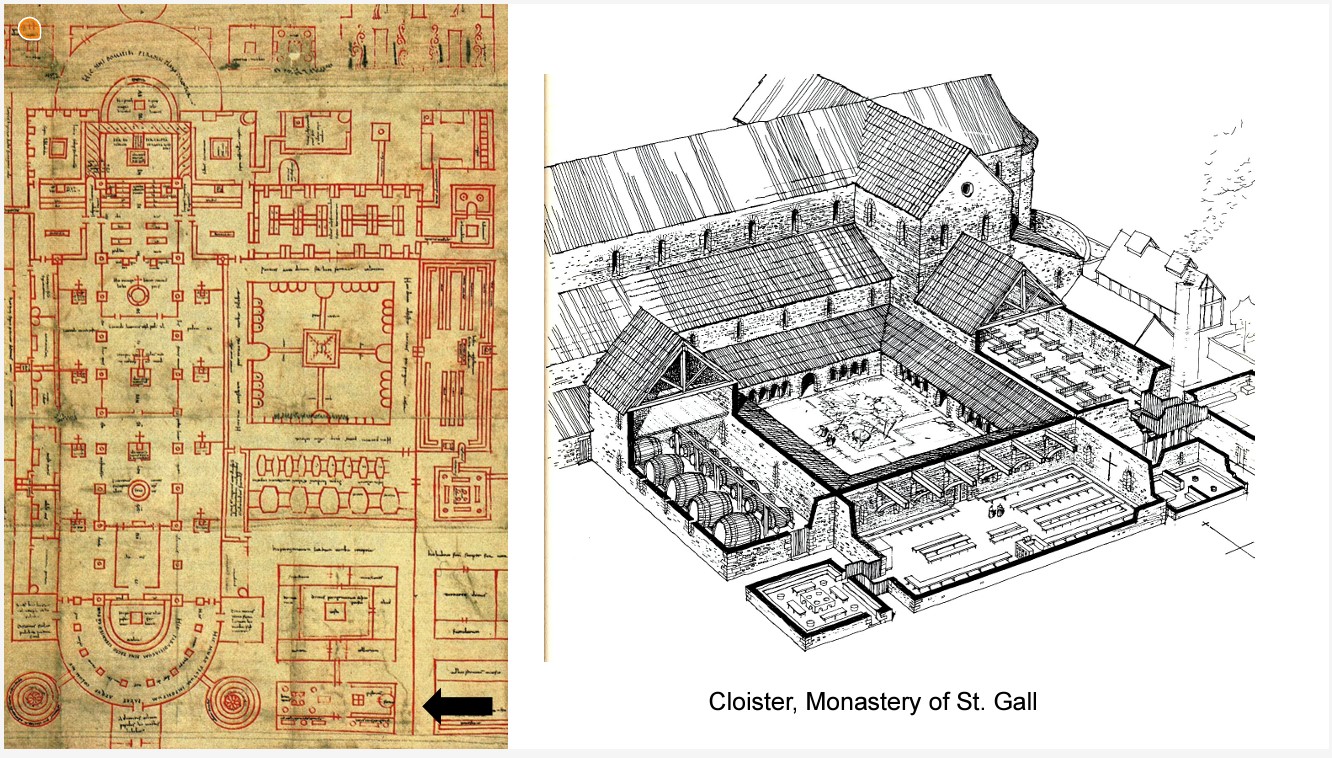
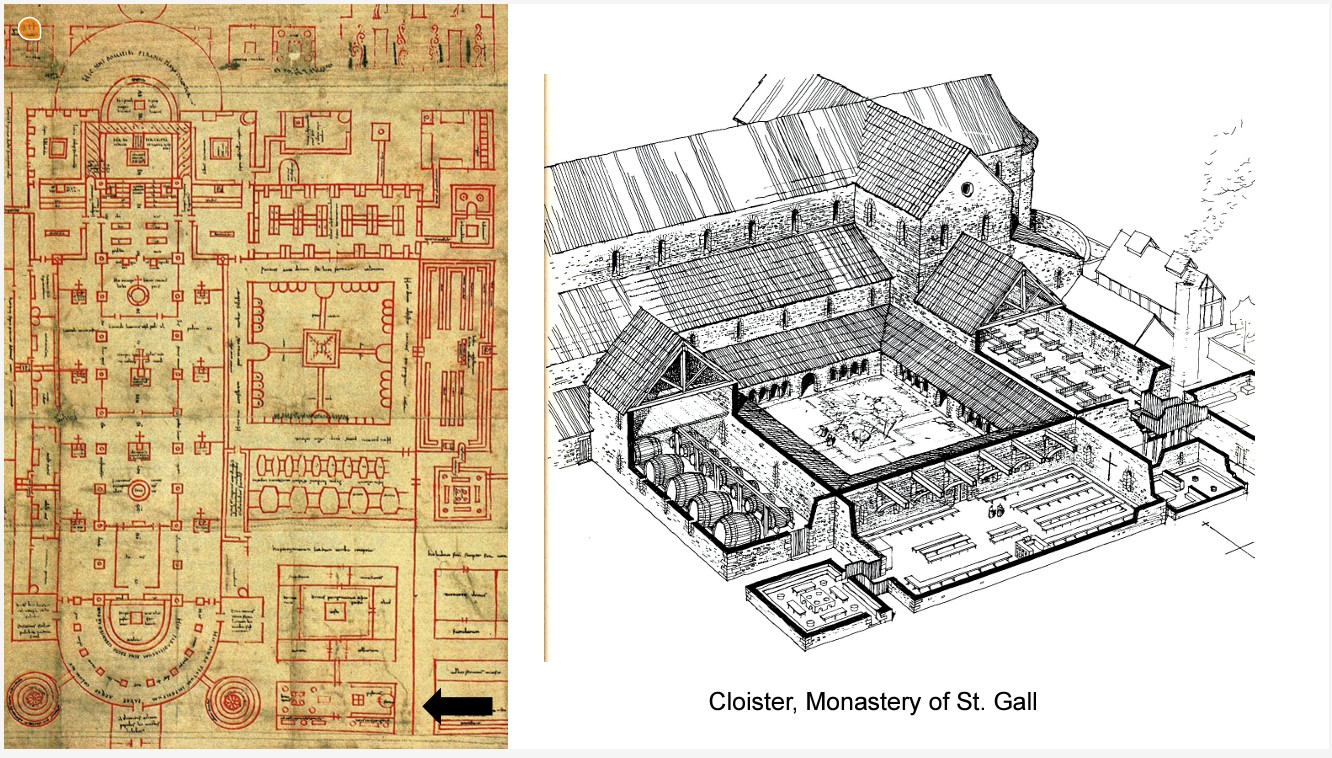
Abbot Haito

Ideal Monastery Plan by St Gall

820-830

14
New cards

significance- Abbot Haito

  • never built- just a proposed plan

  • the ideal living and study spaces for monks

  • kitchen, brewery, hospital, orchard, blacksmith, etc

    • pretty much a little city for monks

<ul><li><p>never built- just a proposed plan </p></li><li><p>the ideal living and study spaces for monks </p></li><li><p>kitchen, brewery, hospital, orchard, blacksmith, etc</p><ul><li><p>pretty much a little city for monks </p></li></ul></li></ul>
15
New cards
<p>Identify </p>

Identify

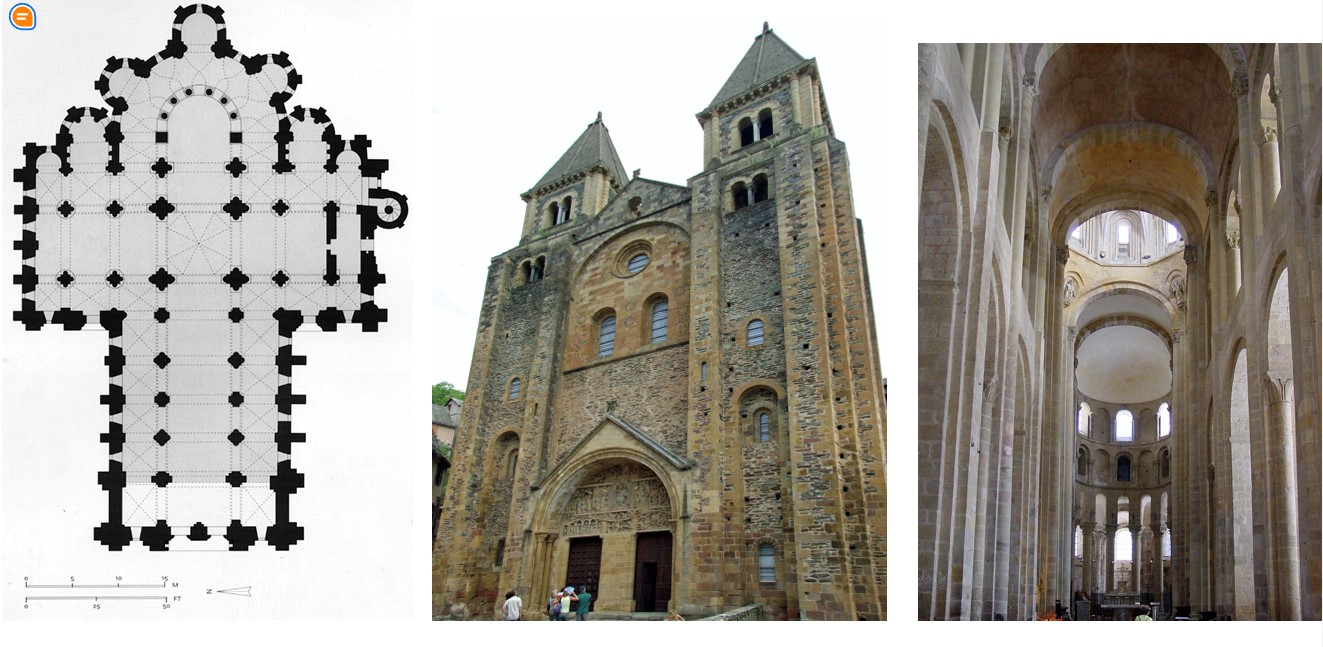
Sainte Foy

Conques, France

1050-1130 CE

—> Romanesque

16
New cards

Significance- St Foy

  • holds the stolen relic of a martyr killed for not renouncing Christianity

    • priest undercover for 10 years

    • pilgrims provided the relic with jewels and gems

  • Ribs on barrel vaults, exterior buttresses

  • TYMPANUM with heaven and hell depictions

  • intention for pilgrimage seen in the plan- isles to circle around

    • CHEVET -Head of the church (for priests, etc) radiating chapels, ambulatory, apse, choir

    • Body of the church- transept, crossing, nave, isles, porch
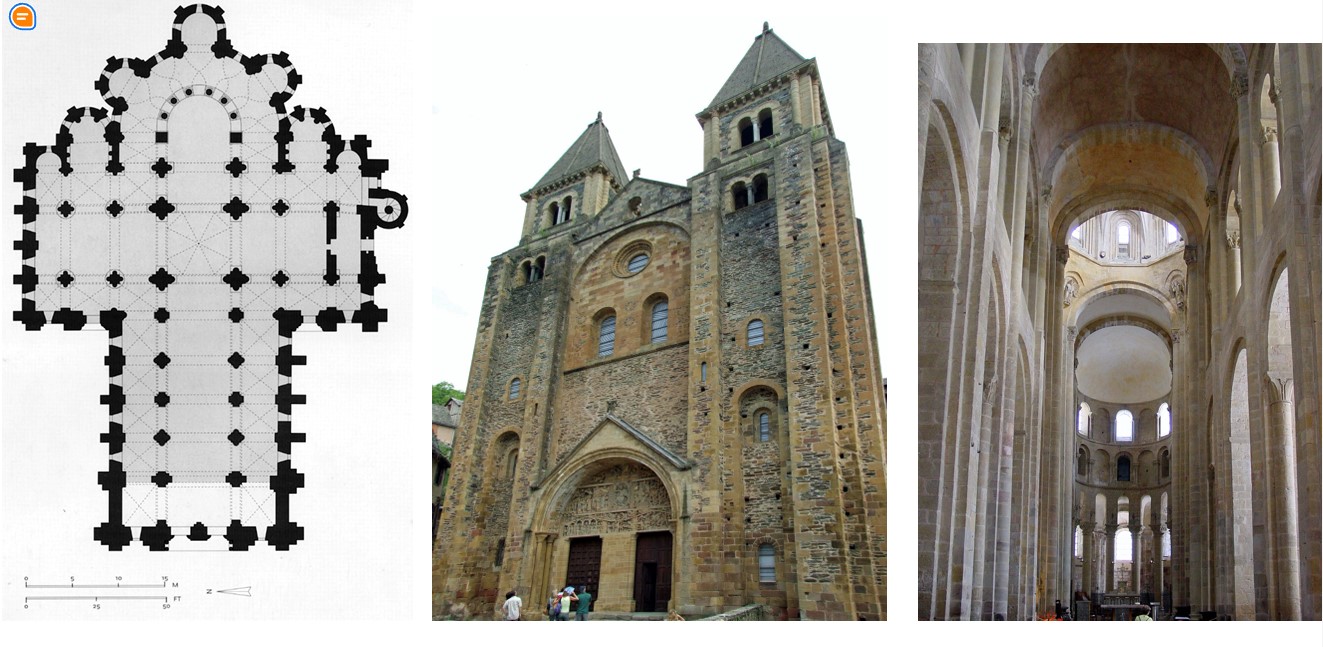
<ul><li><p>holds the stolen relic of a martyr killed for not renouncing Christianity </p><ul><li><p>priest undercover for 10 years </p></li><li><p>pilgrims provided the relic with jewels and gems </p></li></ul></li><li><p>Ribs on barrel vaults, exterior buttresses </p></li><li><p>TYMPANUM with heaven and hell depictions </p></li><li><p>intention for pilgrimage seen in the plan- isles to circle around </p><ul><li><p>CHEVET -Head of the church (for priests, etc) radiating chapels, ambulatory, apse, choir</p></li><li><p>Body of the church- transept, crossing, nave, isles, porch </p></li></ul></li></ul>
17
New cards
<p>Identify </p>

Identify

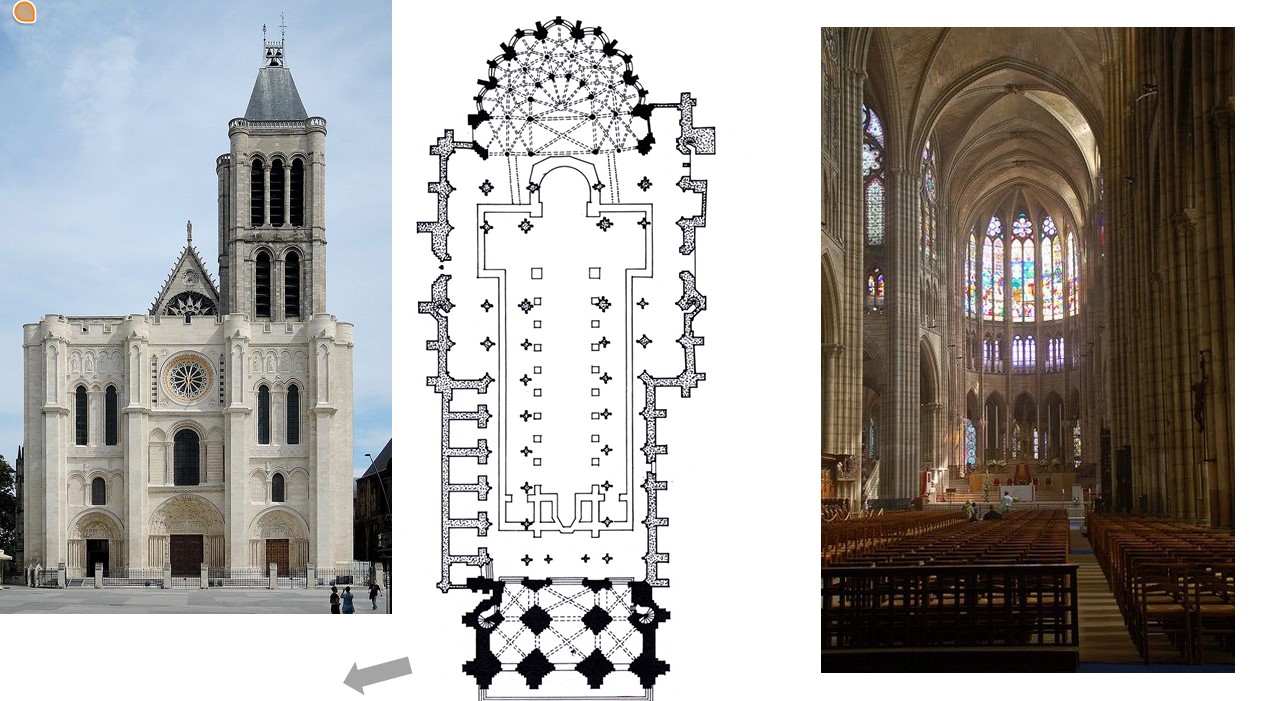
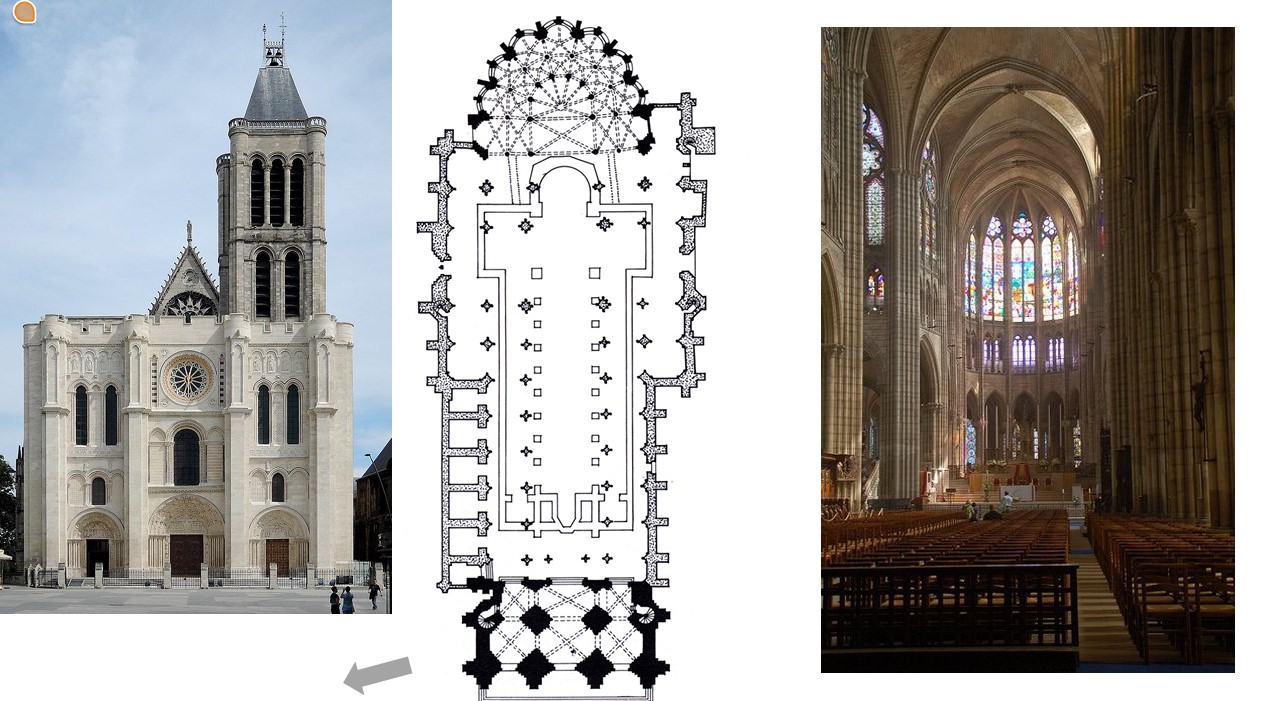
Abbey Church

St. Denis, France

1137-1144 CE

—> Gothic

18
New cards

Significance- Abbey Church

  • the first Gothic church, where kings are crowned and buried (Gothic is an assertion of French royalty against knights and lords)

    • rose window

    • pointed arches from islamic architecture

    • portals around the tympanum like the arch of Constantine

    • stained glass illumination

  • Suget added a new abbey to reflect wealth of the Kingdom

    • money from looting the holy land and Byzantine sacking and indulgences

  • Only one bell tower (there were supposed to be two)

  • TYMPANUM- kingly Jesus

<ul><li><p>the first Gothic church, where kings are crowned and buried (Gothic is an assertion of French royalty against knights and lords)</p><ul><li><p>rose window</p></li><li><p>pointed arches from islamic architecture</p></li><li><p>portals around the tympanum like the arch of Constantine</p></li><li><p>stained glass illumination</p></li></ul></li><li><p>Suget added a new abbey to reflect wealth of the Kingdom</p><ul><li><p>money from looting the holy land and Byzantine sacking and indulgences </p></li></ul></li><li><p>Only one bell tower (there were supposed to be two)</p></li><li><p>TYMPANUM- kingly Jesus </p></li></ul>
19
New cards
<p>Identify </p>

Identify

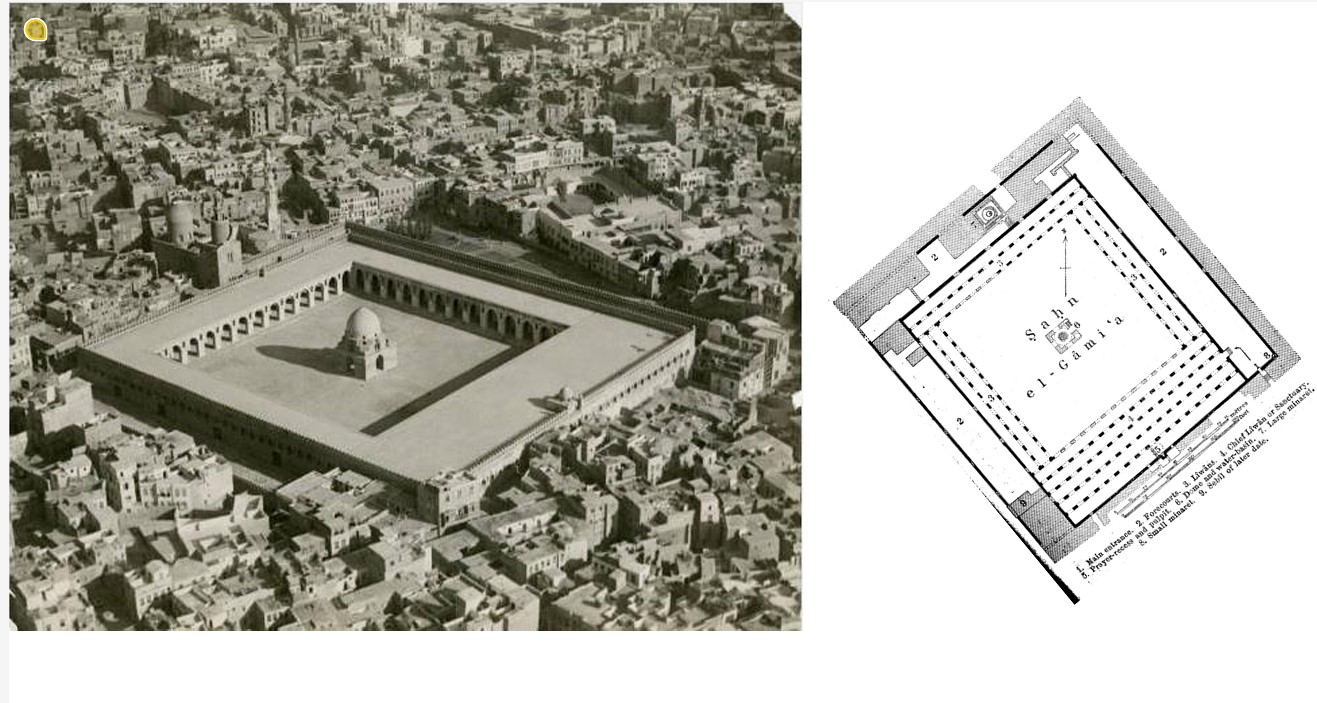
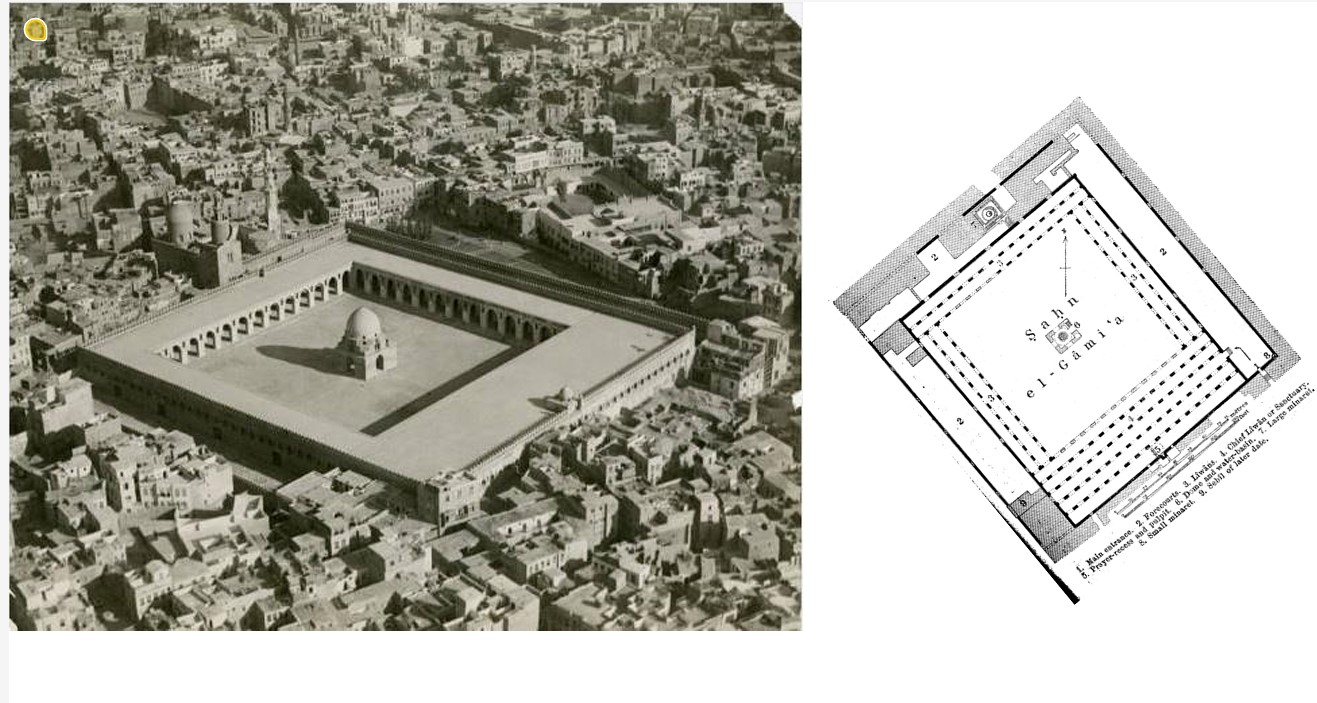
Mosque of Ibn Tulun

Fustat, Cairo

879 CE

By Abbasids

20
New cards

Significance- Mosque of Ibn Tulun

  • Spiraling clean surfaced MINARETS

  • in Abbasid style

    • clean geometry and planes

    • central fountain structure, verticality

  • engaged columns and pointed arches

  • SPANDREL open to the outside

  • INTRADOS with ornamentation

<ul><li><p>Spiraling clean surfaced MINARETS</p></li><li><p>in Abbasid style </p><ul><li><p>clean geometry and planes </p></li><li><p>central fountain structure, verticality </p></li></ul></li><li><p>engaged columns and pointed arches </p></li><li><p>SPANDREL open to the outside </p></li><li><p>INTRADOS with ornamentation </p></li></ul>
21
New cards
<p>Identify </p>

Identify

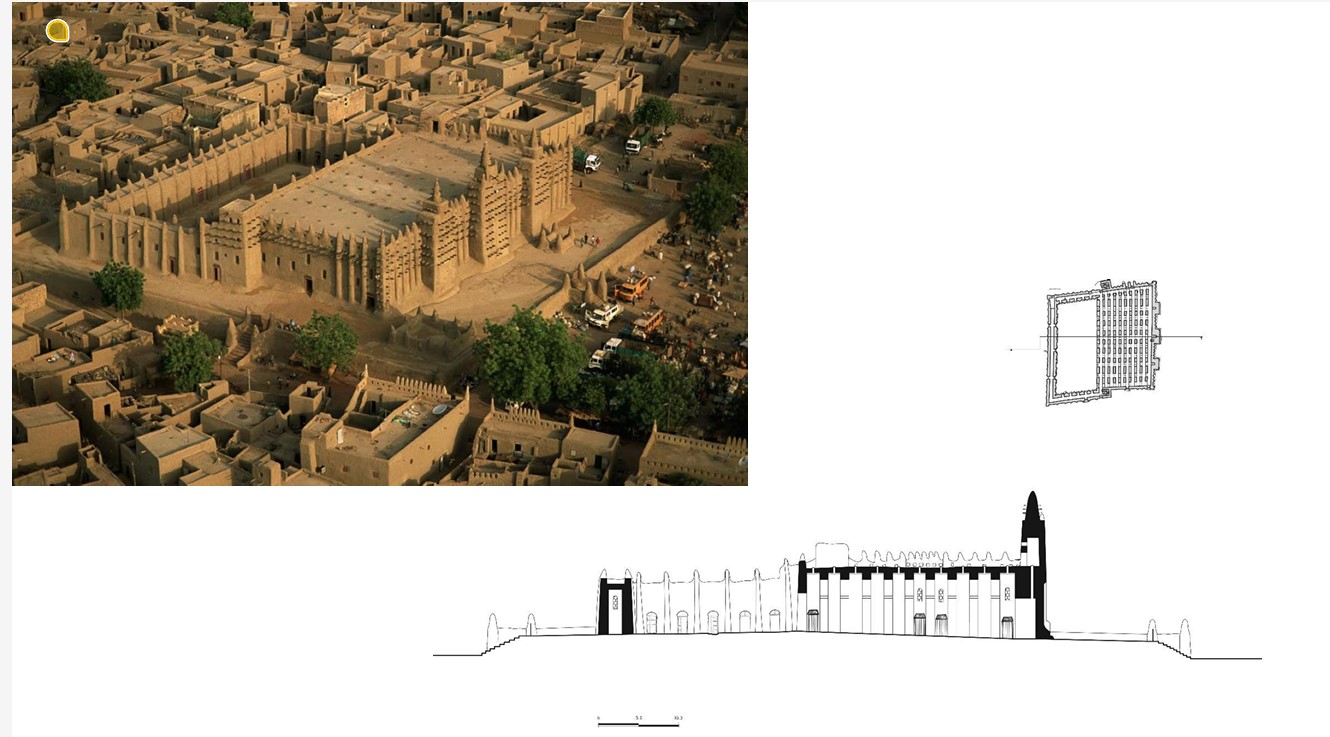
Great Mosque of Djenne

Mali

13th cent, rebuilt 1907

22
New cards

Significance- Great Mosque of Djenne

  • made of mud

  • regular grid scaffolding

  • French rebuilding under colonization as if French cathedral w formal symmetry

  • The annual festival of rebuilding and revising with mud

    • mosque is common property and should be protected locally

    • even local houses imitate the style

  • Mihrab on the outside

  • Ostrich eggs on top for fertility and sanctity
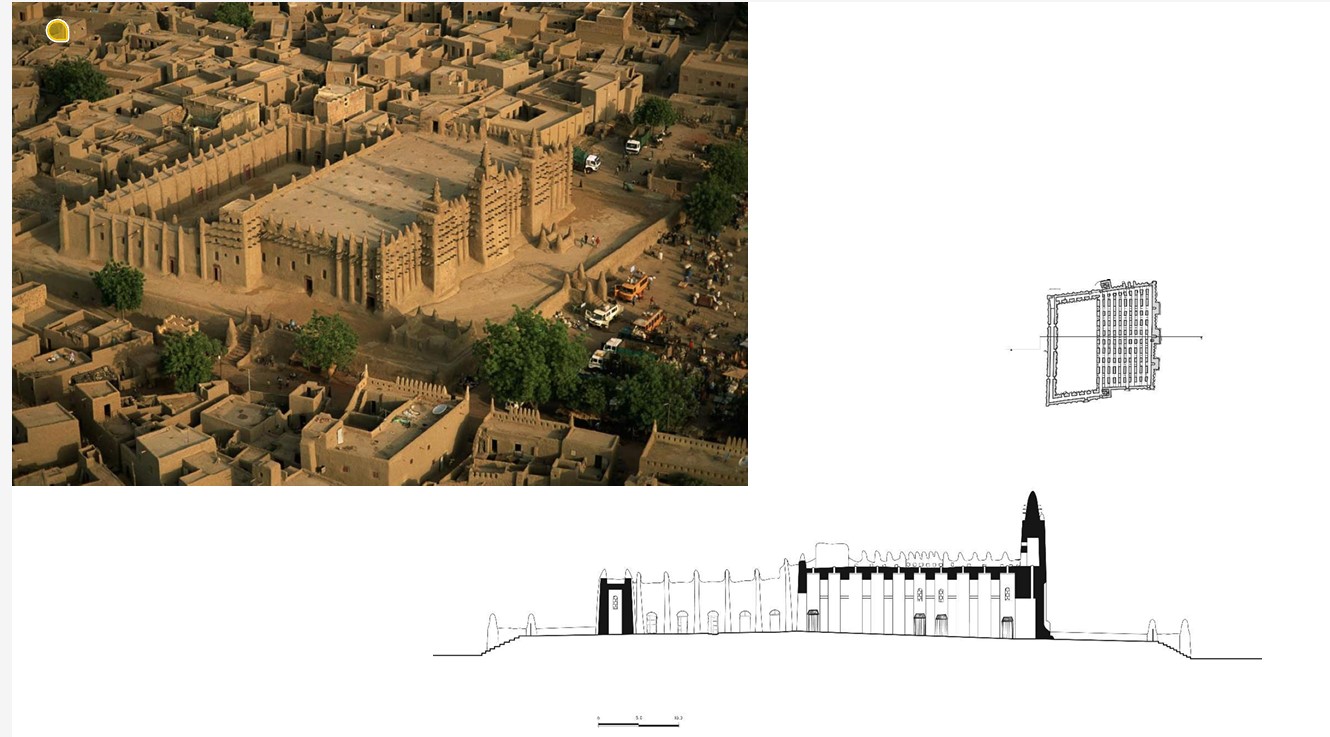
<ul><li><p>made of mud</p></li><li><p>regular grid scaffolding</p></li><li><p>French rebuilding under colonization as if French cathedral w formal symmetry</p></li><li><p>The annual festival of rebuilding and revising with mud</p><ul><li><p>mosque is common property and should be protected locally </p></li><li><p>even local houses imitate the style </p></li></ul></li><li><p>Mihrab on the outside </p></li><li><p>Ostrich eggs on top for fertility and sanctity</p></li></ul>
23
New cards
<p>Identify- </p>

Identify-

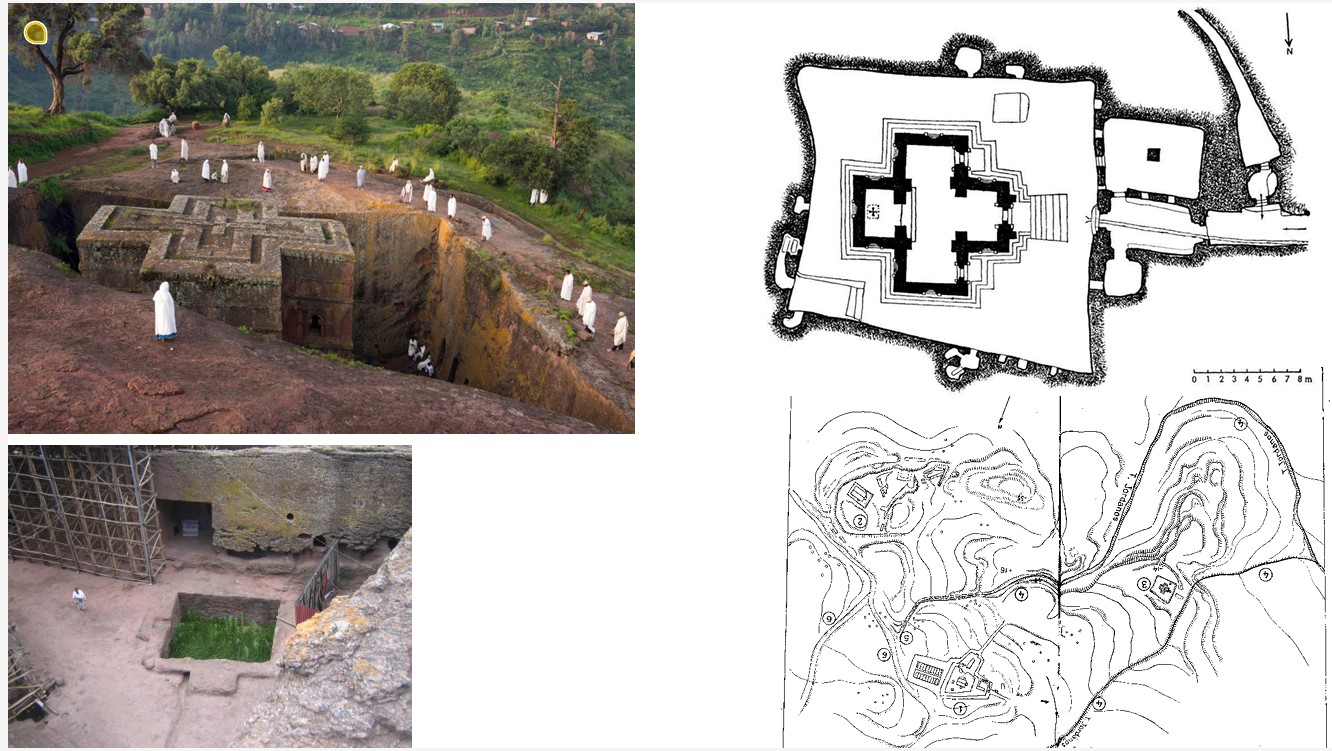
Bieta Giorgis- House of St George

Lalibela, Ethiopia

1200

24
New cards

Significance- Bieta Giorgis

  • Lalibela

    • “new Jerusalem“- reproduction of landscape and sacred sites and rivers

  • shaped like the Eastern Orthodox Coptic cross

  • house for the poor, fortress, devotion \

  • Central square with other squares on a grid

  • Interiors carved like exterior

  • Sacred springs

    • miracles, fertility, wells carved into the landscape
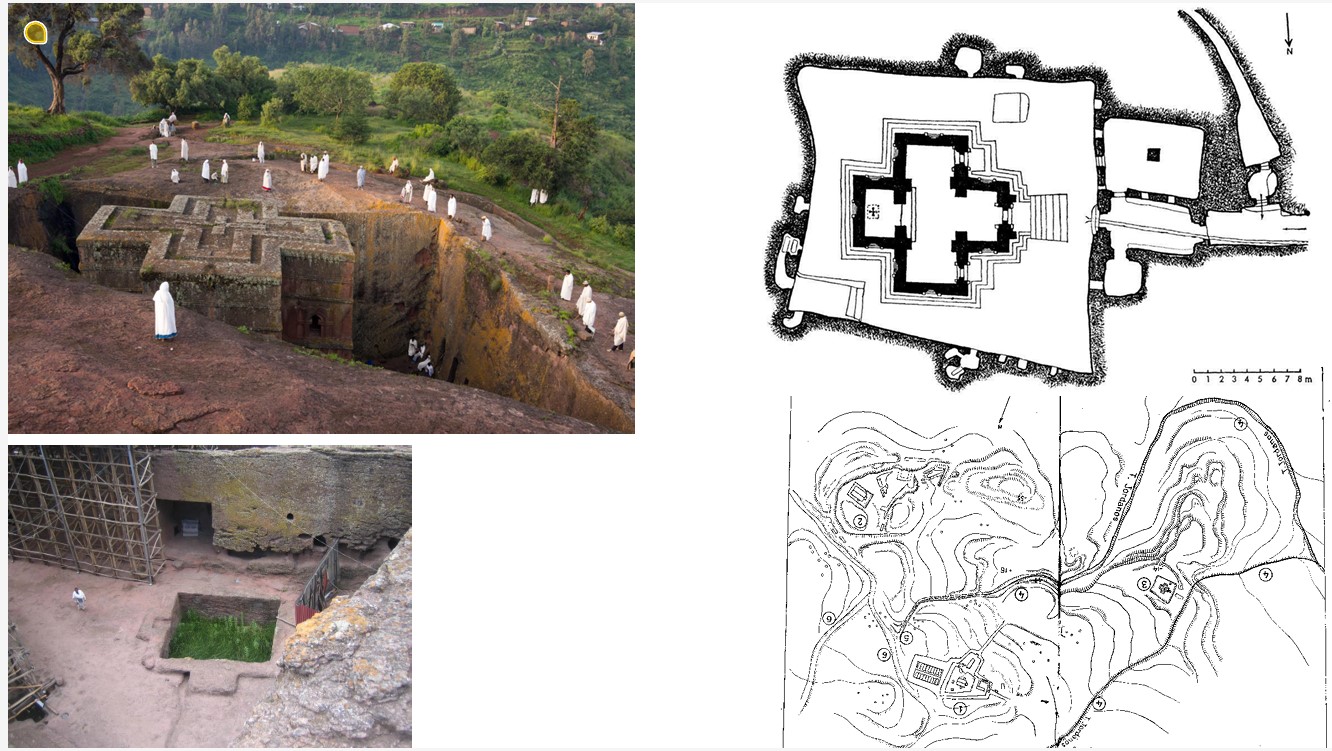
<ul><li><p>Lalibela </p><ul><li><p>“new Jerusalem“- reproduction of landscape and sacred sites and rivers </p></li></ul></li><li><p>shaped like the Eastern Orthodox Coptic cross </p></li><li><p>house for the poor, fortress, devotion \</p></li><li><p>Central square with other squares on a grid </p></li><li><p>Interiors carved like exterior </p></li><li><p>Sacred springs</p><ul><li><p>miracles, fertility, wells carved into the landscape </p></li></ul></li></ul>
25
New cards
<p>Identify- </p>

Identify-

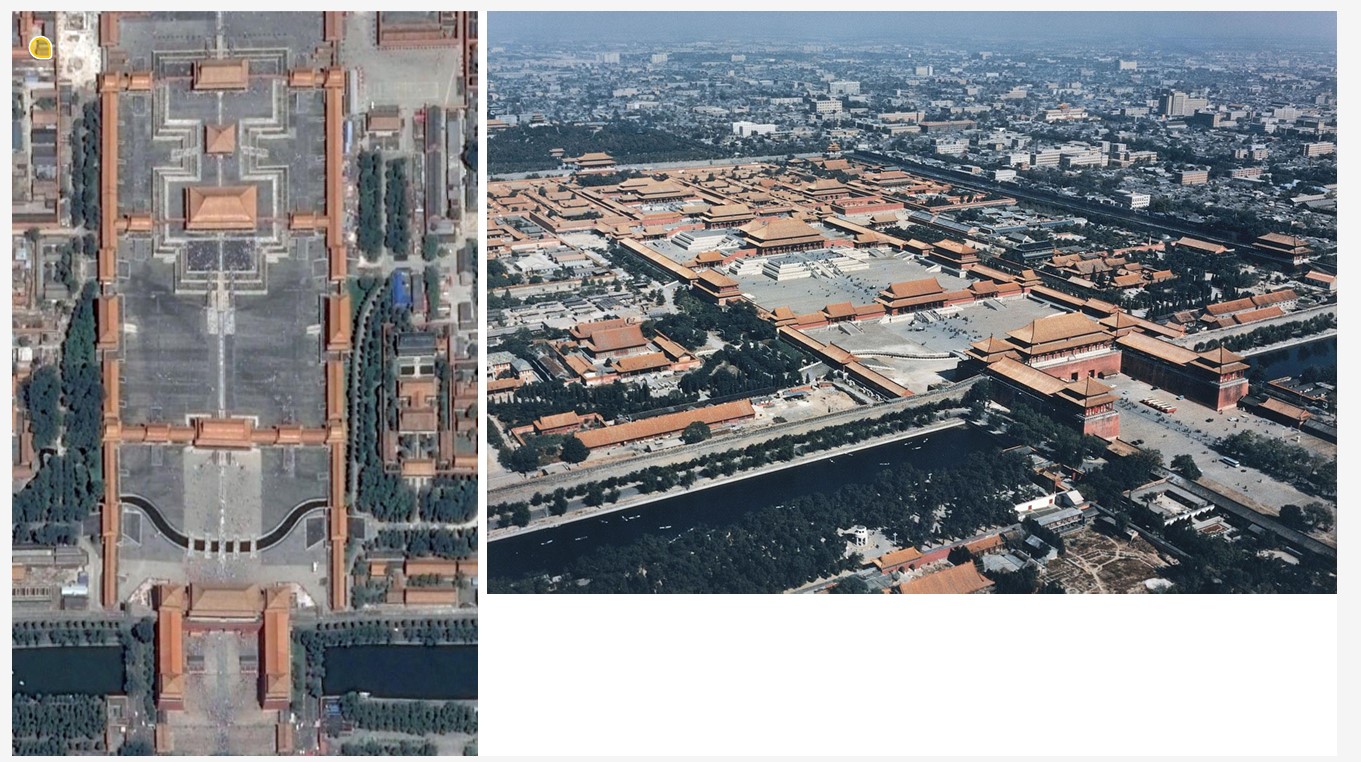
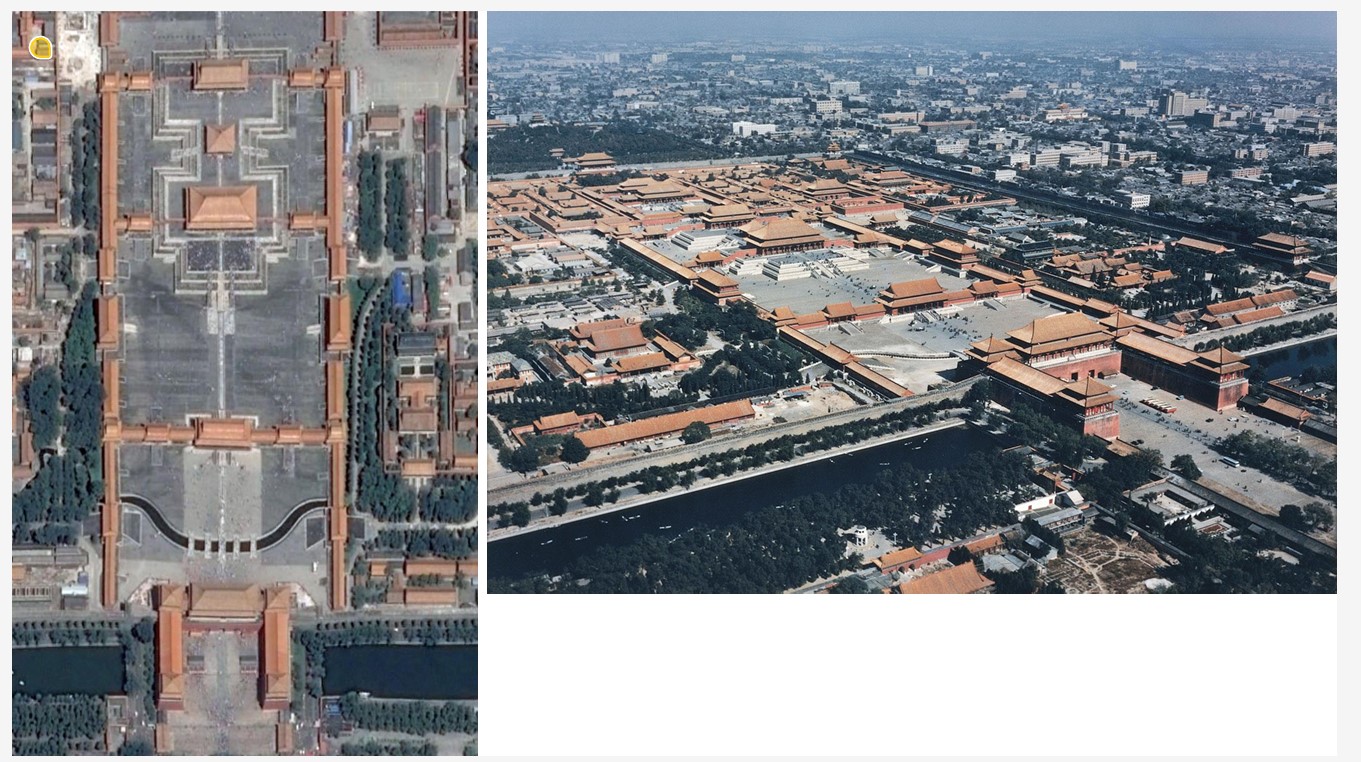
The Imperial Palace (Forbidden City)

Beijing, China

Begun 15th cent

26
New cards

Significance- The Imperial Palace/ Forbidden City

  • imperial city on the outside, forbidden city on the inside

  • expression of power to stop resistance, defensive and military but also political epicenter

  • Fung Shwei principles in the design

    • artificial hill as a testament to the labor used

    • river of golden water- 5 bridges, bow, snake

  • lots of colors and power, levels of privacy and purity and sanctity
<ul><li><p>imperial city on the outside, forbidden city on the inside </p></li><li><p>expression of power to stop resistance, defensive and military but also political epicenter </p></li><li><p>Fung Shwei principles in the design </p><ul><li><p>artificial hill as a testament to the labor used </p></li><li><p>river of golden water- 5 bridges, bow, snake </p></li></ul></li><li><p>lots of colors and power, levels of privacy and purity and sanctity </p></li></ul>
27
New cards
<p>Identify- </p>

Identify-

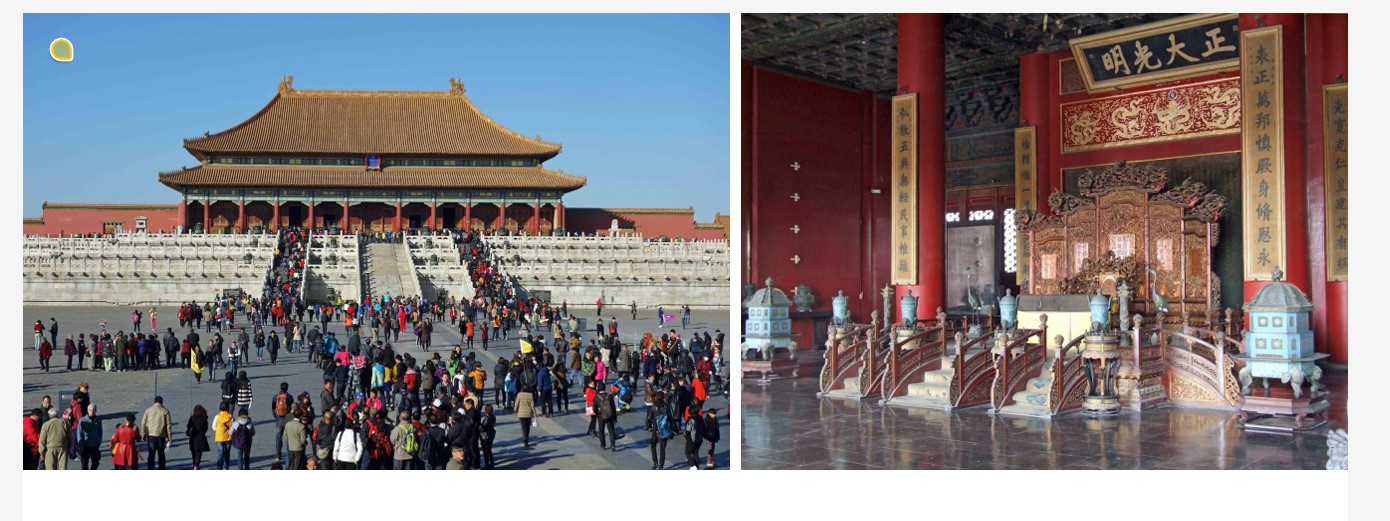
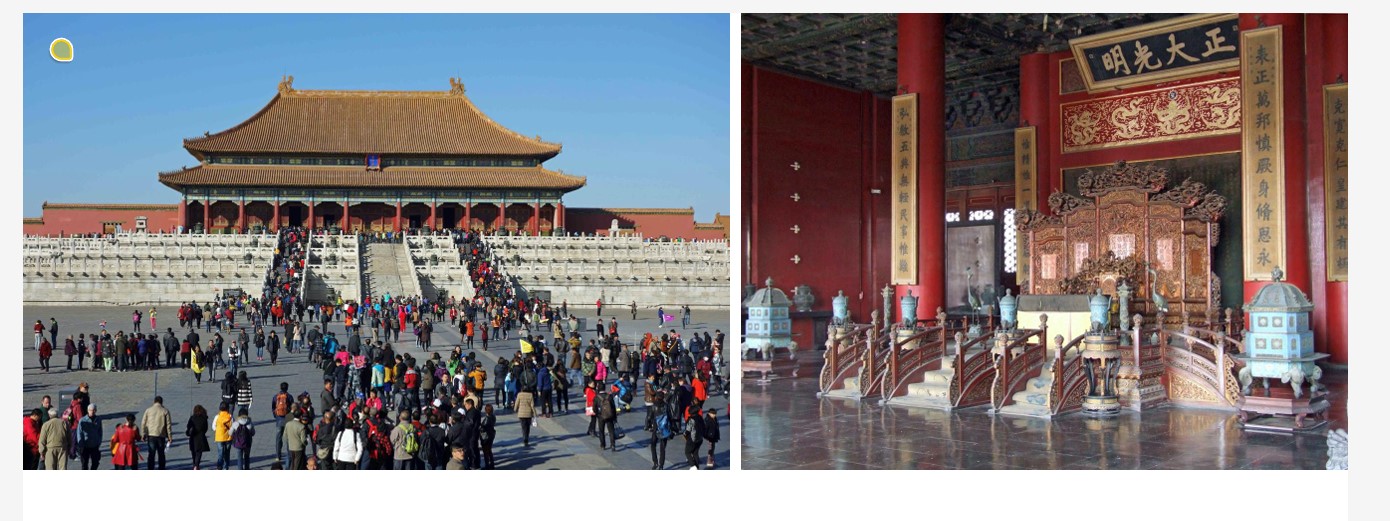
Hall of Supreme Harmony

Beijing, China- the forbidden city

1406-1420

28
New cards

Significance- Hall of Supreme Harmony

  • the most elite building complex in china, largest wooden building

  • spiritual center of the city

  • one giant marble slab staircase for the emperor to be carried over it

  • Dragon symbolism- power, beauty, cosmology

  • Highest standard two eave hop roof

  • throne room and exam congratulatory space

    • as if an extension of emperors clothing

    • power

<ul><li><p>the most elite building complex in china, largest wooden building </p></li><li><p>spiritual center of the city </p></li><li><p>one giant marble slab staircase for the emperor to be carried over it </p></li><li><p>Dragon symbolism- power, beauty, cosmology</p></li><li><p>Highest standard two eave hop roof </p></li><li><p>throne room and exam congratulatory space</p><ul><li><p>as if an extension of emperors clothing</p></li><li><p>power</p></li></ul></li></ul>
29
New cards
<p>Identify- </p>

Identify-

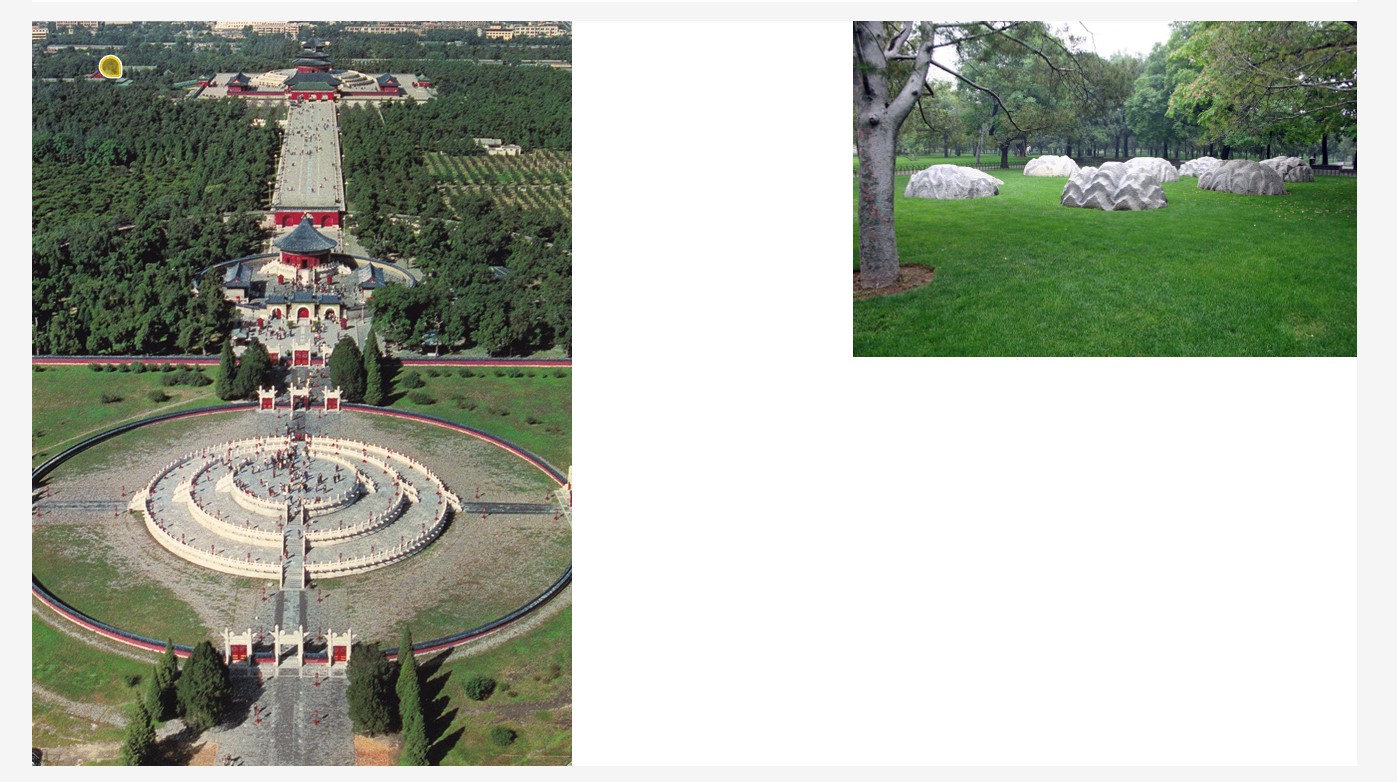
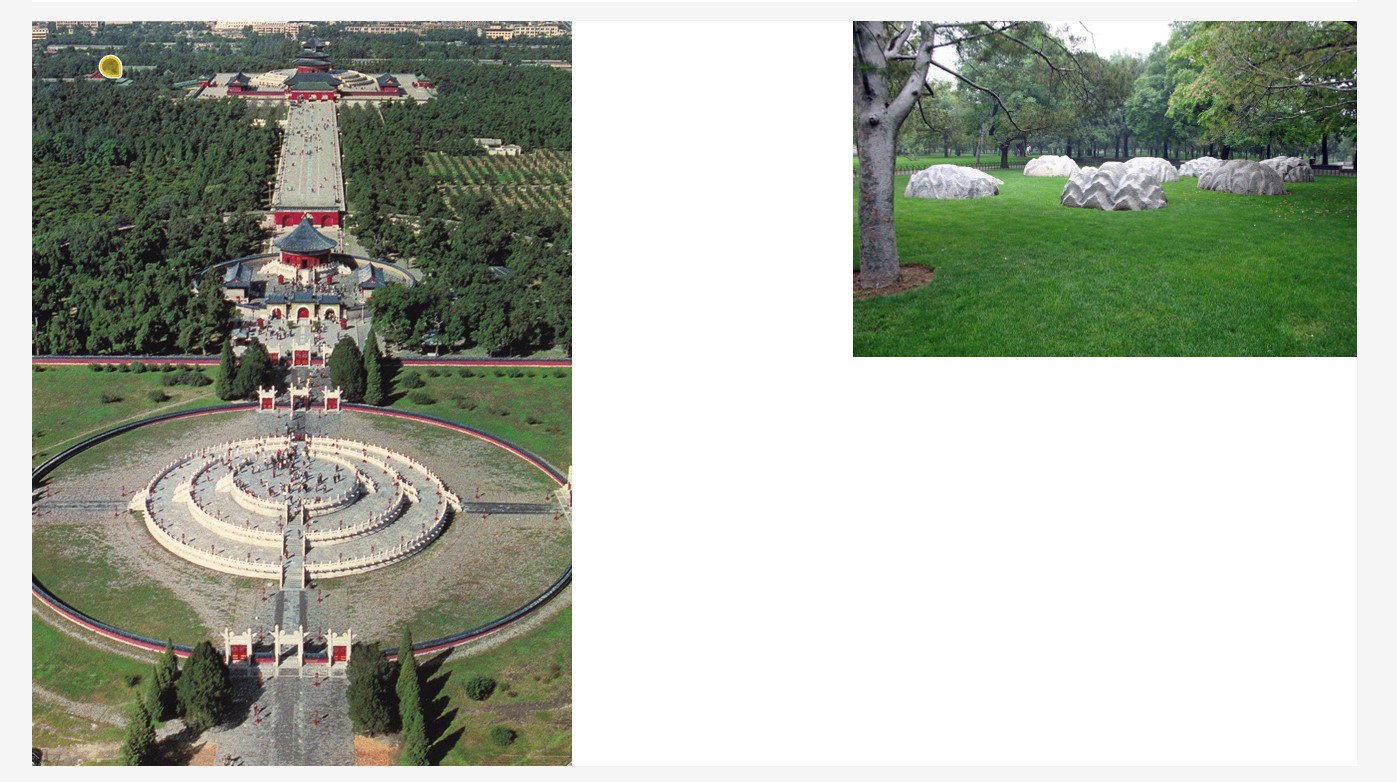
Temple of Heaven

Beijing

1406-1420

30
New cards

Significance- Temple of Heaven

  • the most sacred space in China

  • 3 main structures

  • circle symbolizing heaven for solstices and New Year

  • Stone symbolism and numerology

    • 7 peaks of Tai Shen Mountains

  • Hall of prayer for good harvests and imperial vault for the emperor to pray for good harvests
<ul><li><p>the most sacred space in China </p></li><li><p>3 main structures </p></li><li><p>circle symbolizing heaven for solstices and New Year </p></li><li><p>Stone symbolism and numerology </p><ul><li><p>7 peaks of Tai Shen Mountains </p></li></ul></li><li><p>Hall of prayer for good harvests and imperial vault for the emperor to pray for good harvests </p></li></ul>
31
New cards
<p>Identify- </p>

Identify-

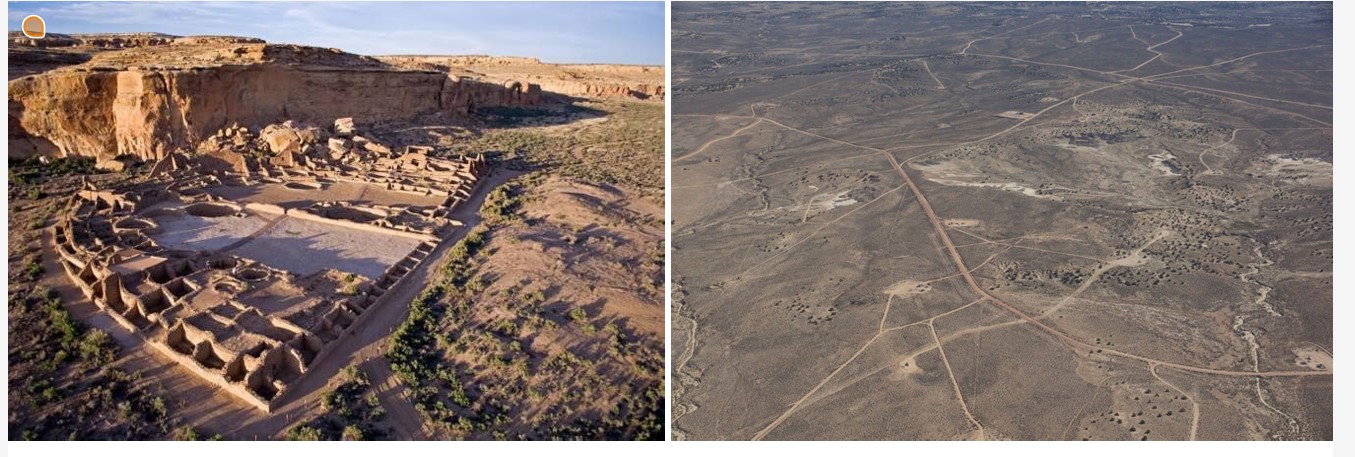
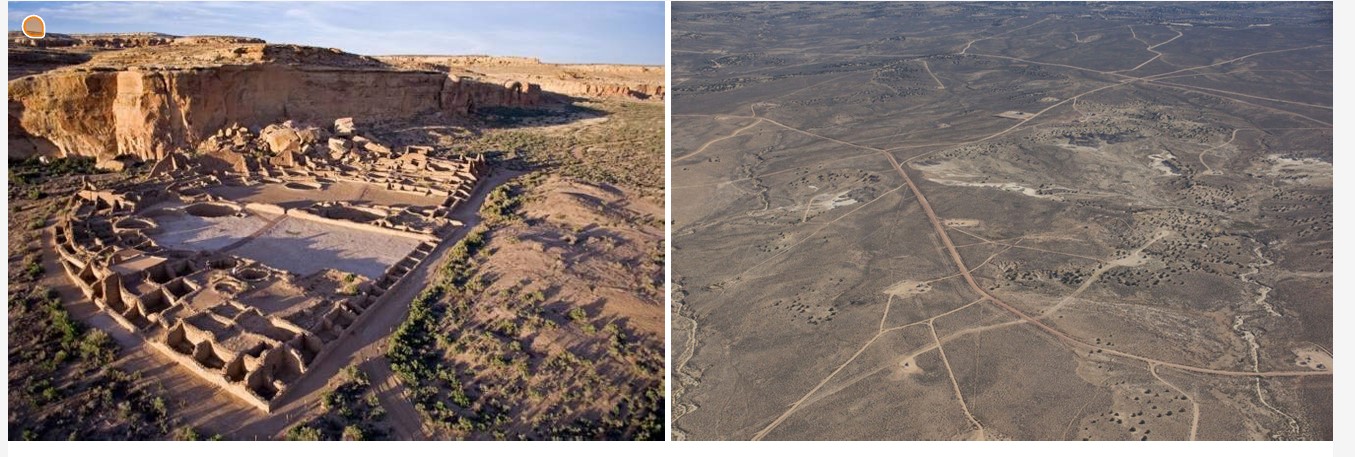
Pueblo Bonito

Chaco Canyon, New Mexico

920-1125

Anasazi Culture

32
New cards

Significance- Pueblo Bonito

  • not a town but rather a palace - a religious city? Ceremonial? room for many, food for few.

    • regularly spaced great houses to organize regional activity (roads)

    • Semicircle shape E/W direction— orientation, trade

    • centralized resources on CULTURE ROADS - unbending to topography

  • KIVA - multipurpose round spaces for meeting or rituals, symbolizing the sky, gateways to the other world NAVELS
<ul><li><p>not a town but rather a palace - a religious city? Ceremonial? room for many, food for few.</p><ul><li><p>regularly spaced great houses to organize regional activity (roads)</p></li><li><p>Semicircle shape  E/W direction— orientation, trade</p></li><li><p>centralized resources on CULTURE ROADS - unbending to topography</p></li></ul></li><li><p>KIVA - multipurpose round spaces for meeting or rituals, symbolizing the sky, gateways to the other world NAVELS</p></li></ul>
33
New cards
<p>Identify- </p>

Identify-

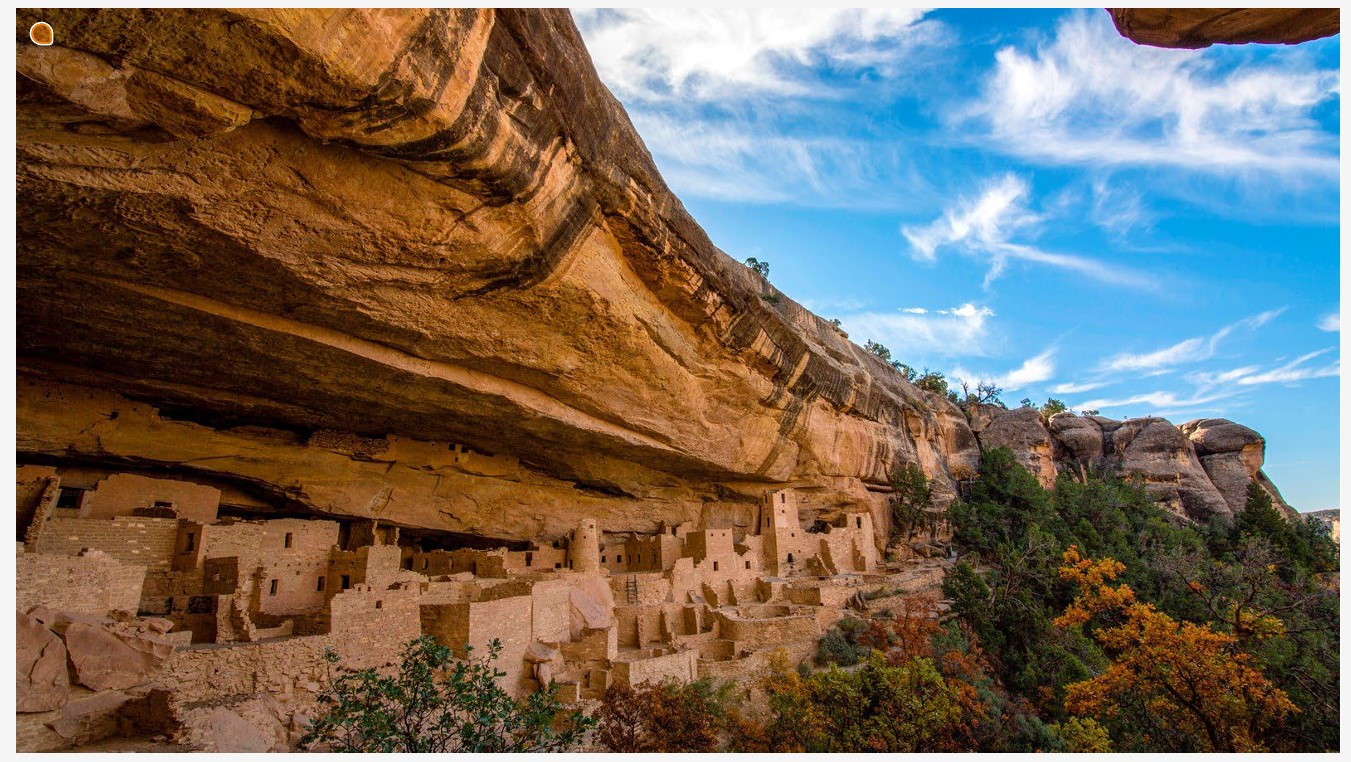
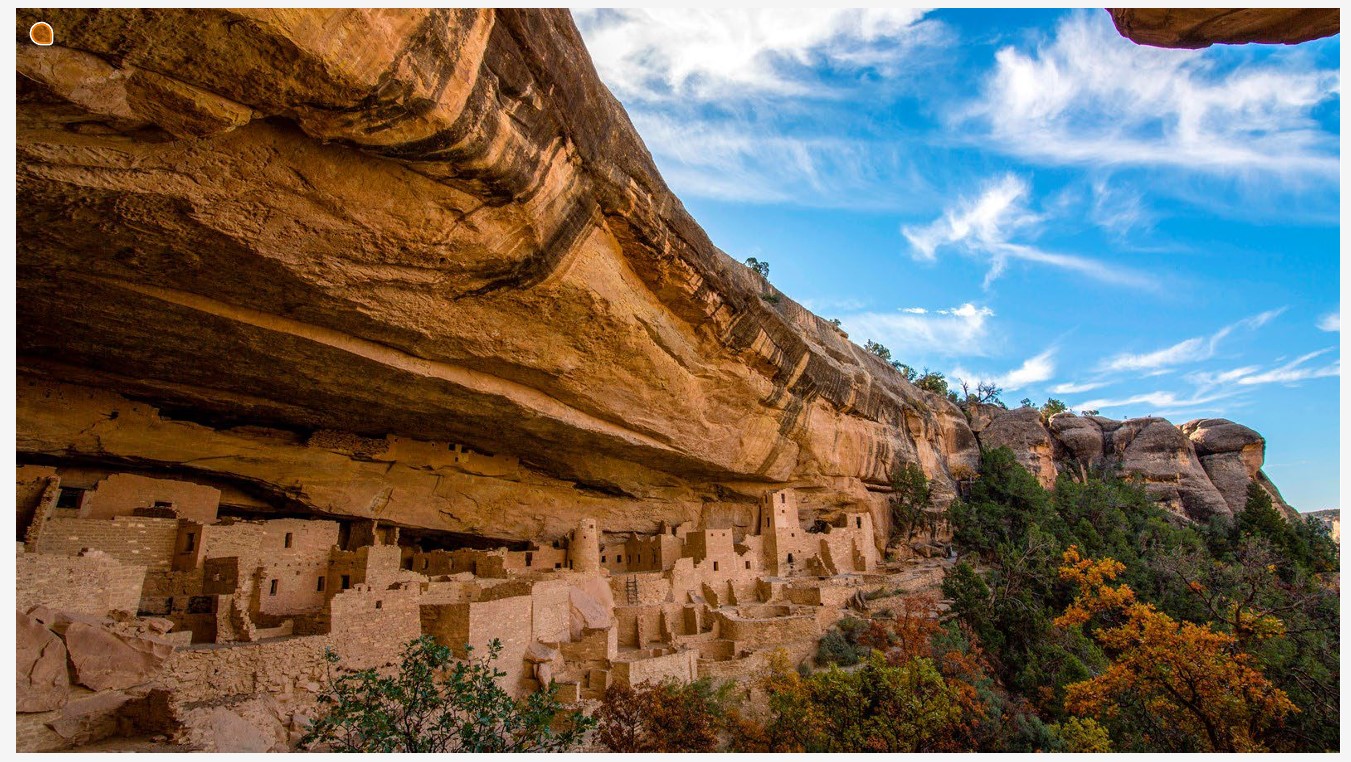
Mesa Verde

Colorado

850-1300

Anasazi Culture

34
New cards

Significance- Mesa Verde

  • many rooms built into the side of the rock

  • defensive space

  • KIVAS, one navel in each Kiva

  • Farming reliance

  • Windows all face South for sunlight and rain protection
<ul><li><p>many rooms built into the side of the rock </p></li><li><p>defensive space </p></li><li><p>KIVAS, one navel in each Kiva </p></li><li><p>Farming reliance</p></li><li><p>Windows all face South for sunlight and rain protection </p></li></ul>
35
New cards
<p>Identify- </p>

Identify-

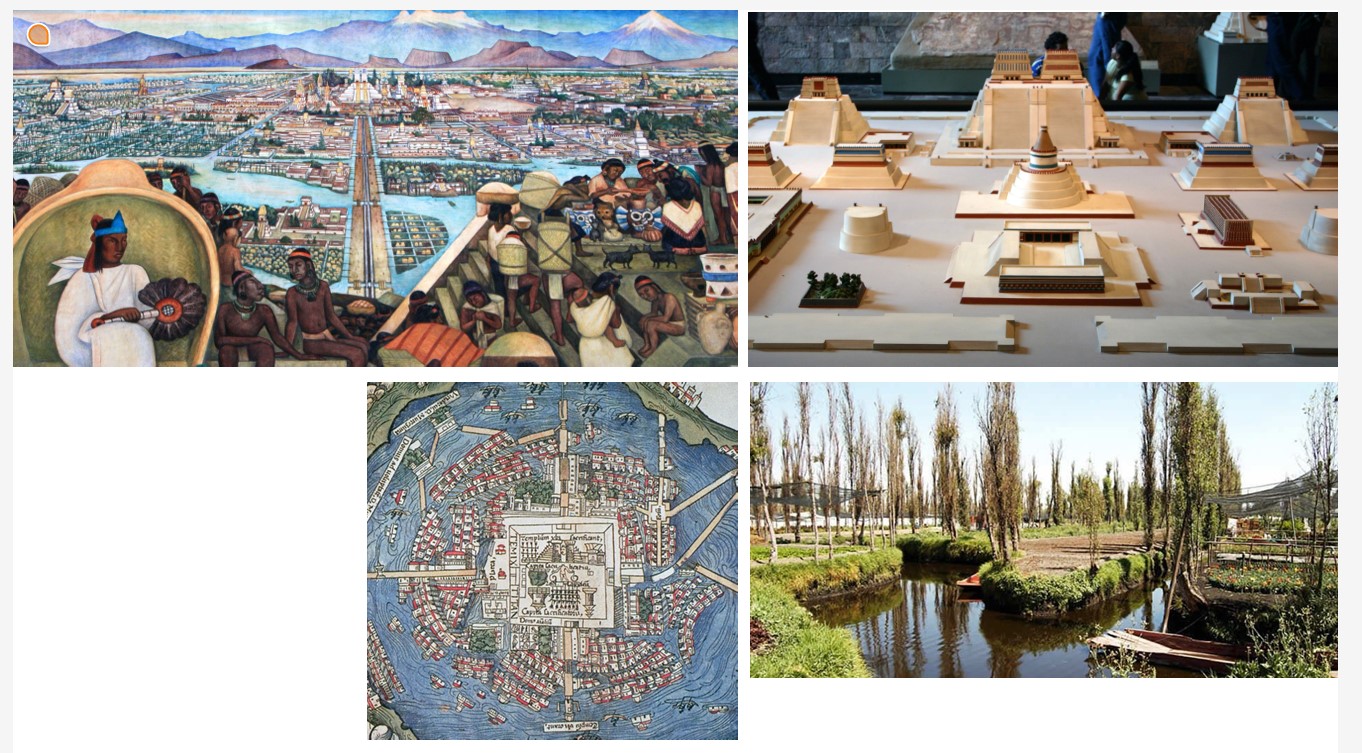
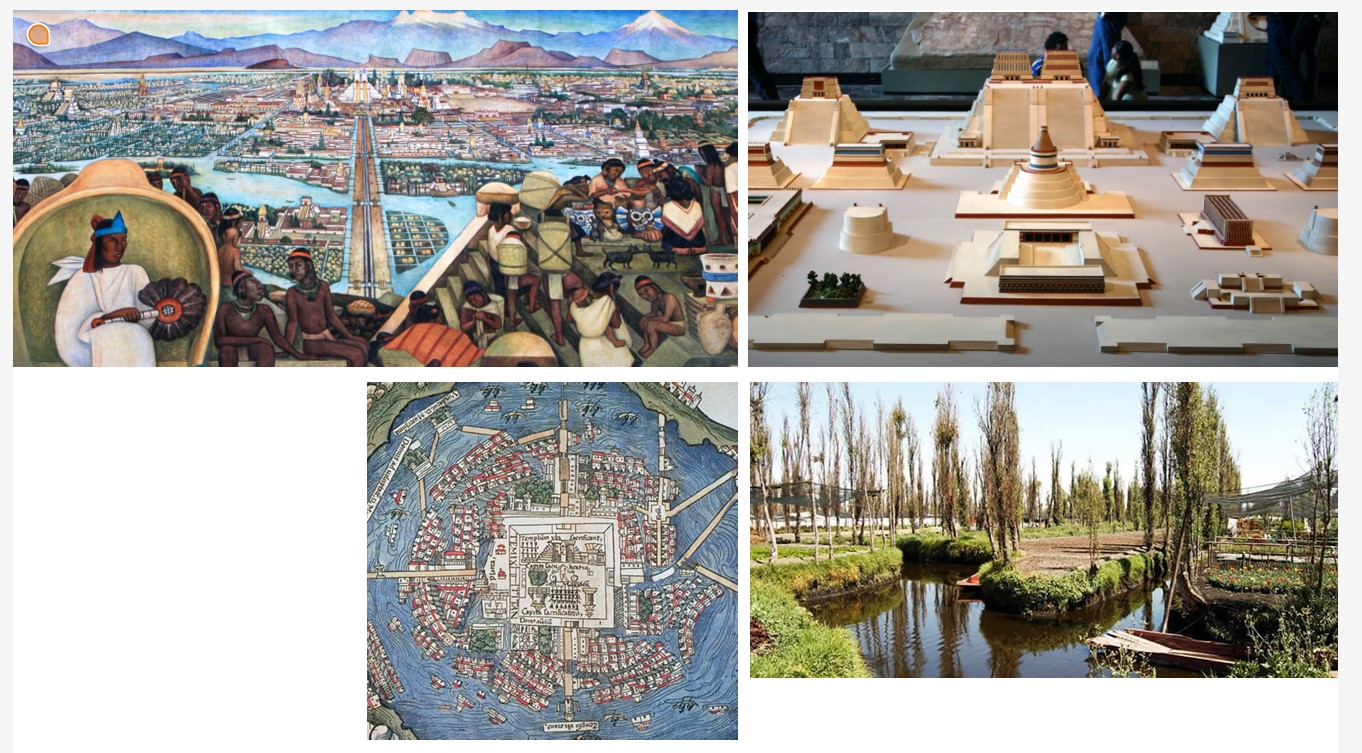
Aztec Capitol of Tenochtitlan, Templo Mayor Complex

Mexico

1325-1521

Aztecs

36
New cards

Significance- Tenochtitlan

  • For the God of War Huitzilopochtli —> skull racks and prisoners of war

  • Aztlan = ancient homeland. Tenochtitlan tried to emulate it

    • Eagle with snake on Cactus symbolism

  • Settled in 14th cent, peaked 16th cent (parallels the Forbidden city), remodeled in the 15th cent like Teotihuacan

  • Hernan Cortez

  • Diego Rivera Painting

  • Quarters for education and arts

  • CHINAPAS- lake soil for corn and food- 7 harvests a year

Templo Mayor

  • constantly rebuilt to honor war and rain god- where the eagle landed on the cactus

  • sacred precinct

    • priest houses, chapels, schools, grove of trees, throne of Montezuma

compare- Florence
<ul><li><p>For the God of War Huitzilopochtli —&gt; skull racks and prisoners of war </p></li><li><p>Aztlan = ancient homeland. Tenochtitlan tried to emulate it </p><ul><li><p>Eagle with snake on Cactus symbolism </p></li></ul></li><li><p>Settled in 14th cent, peaked 16th cent (parallels the Forbidden city), remodeled in the 15th cent like Teotihuacan </p></li><li><p>Hernan Cortez </p></li><li><p>Diego Rivera Painting</p></li><li><p>Quarters for education and arts </p></li><li><p>CHINAPAS- lake soil for corn and food- 7 harvests a year</p></li></ul><p>Templo Mayor </p><ul><li><p>constantly rebuilt to honor war and rain god- where the eagle landed on the cactus </p></li><li><p>sacred precinct </p><ul><li><p>priest houses, chapels, schools, grove of trees, throne of Montezuma </p></li><li><p></p></li></ul></li></ul><p>compare- Florence</p>
37
New cards
<p>Identify- </p>

Identify-

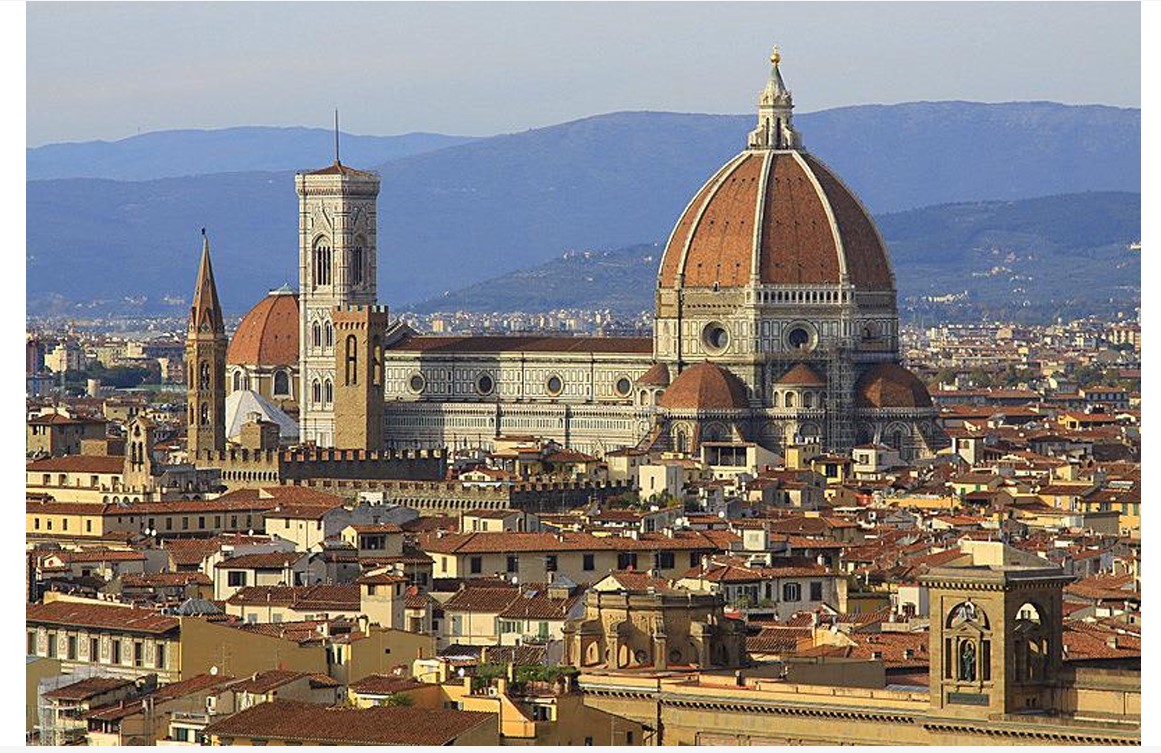
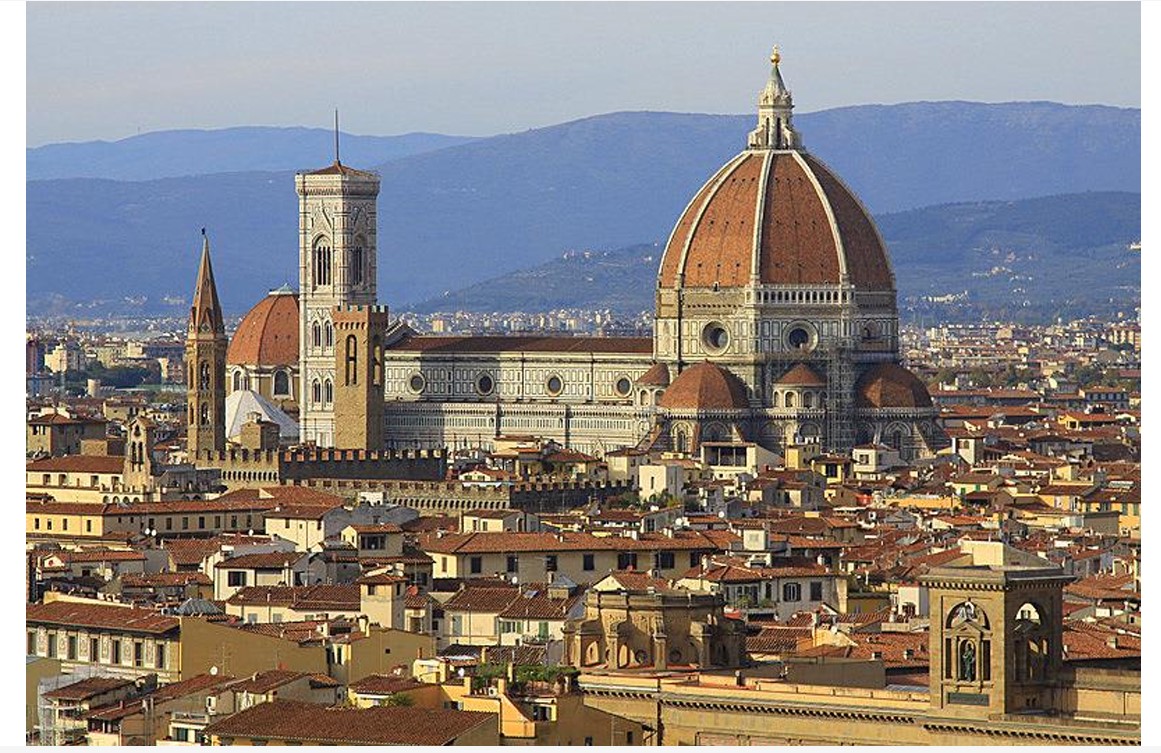
Dome of Santa Maria del Fiore

Florence

1417-1436

Filippo Brunelleschi

38
New cards

Significance-

  • Florence v Rome competition for grandeur - medieval arms race

  • 40K tons of brick

  • kickstarted the Renaissance

  • herringbone pattern, flower rope guide

  • becomes an expression of the city and its capacity to dream

  • built without wooden support beams, but the classical lost art of stonemasonry learned by the pantheon
<ul><li><p>Florence v Rome competition for grandeur - medieval arms race </p></li><li><p>40K tons of brick </p></li><li><p>kickstarted the Renaissance </p></li><li><p>herringbone pattern, flower rope guide </p></li><li><p>becomes an expression of the city and its capacity to dream </p></li><li><p>built without wooden support beams, but the classical lost art of stonemasonry learned by the pantheon</p></li><li><p></p></li></ul>
39
New cards
<p>Identify- </p>

Identify-

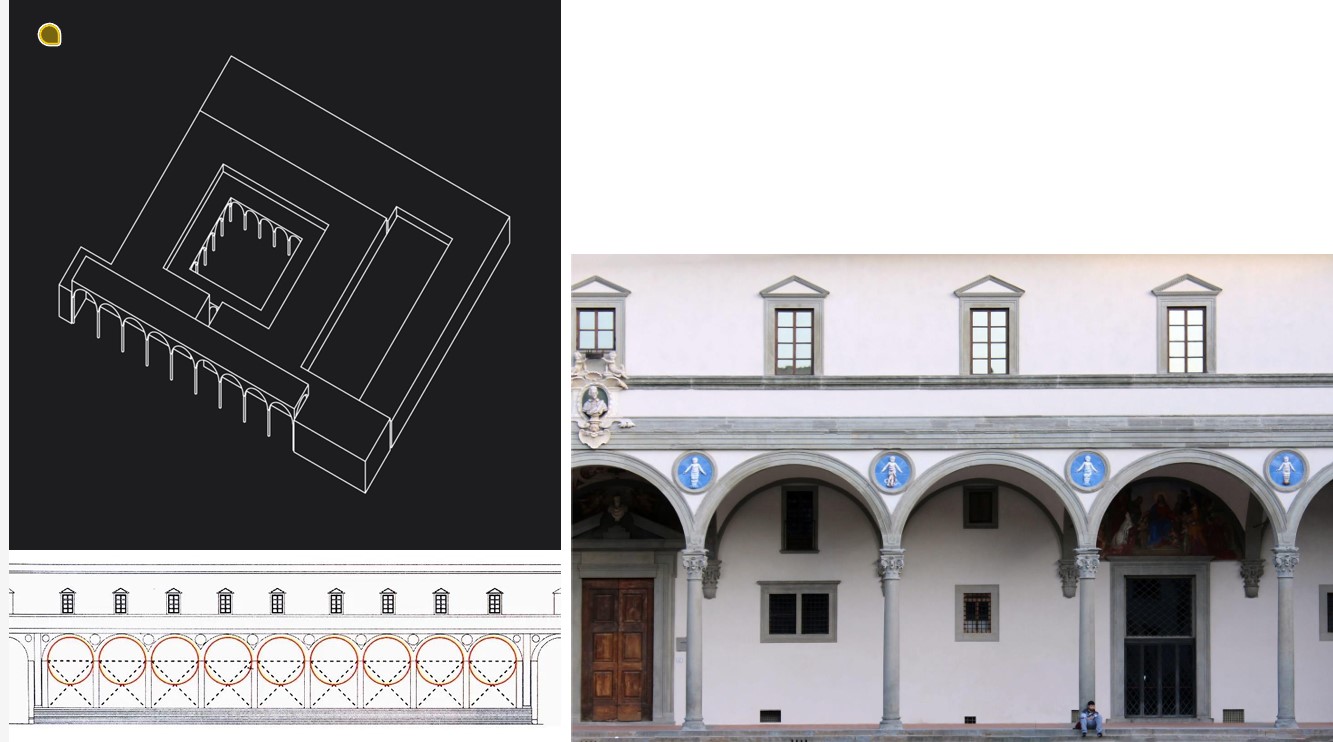
Foundling Hospital- Ospedale degli Innocenti

Florence

1419-1424

Filippo Brunelleschi

40
New cards

Significance- Foundling hospital

  • refuge for unwanted babies- to safely leave them

  • Loggia is central to the space and courtyard (outdoor corridor with covered roof) for foundling port

  • arc to line & perfected geometry

  • ornamentation of children on spandrel

—> Brunelleschi is named architect: NEW PHENOMENON
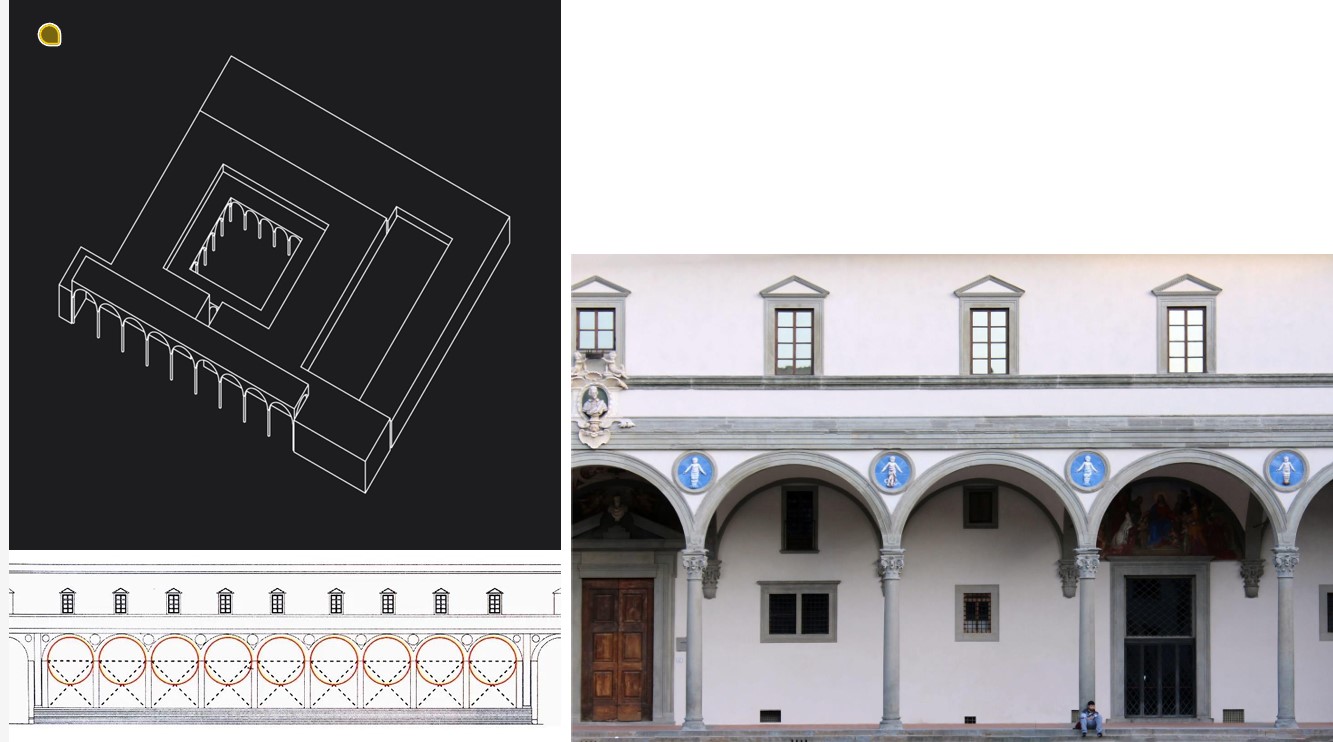
<ul><li><p>refuge for unwanted babies- to safely leave them</p></li><li><p>Loggia is central to the space and courtyard (outdoor corridor with covered roof) for foundling port </p></li><li><p>arc to line &amp; perfected geometry</p></li><li><p>ornamentation of children on spandrel </p></li></ul><p></p><p>—&gt; Brunelleschi is named architect: NEW PHENOMENON</p>
41
New cards
<p>Identify-</p>

Identify-

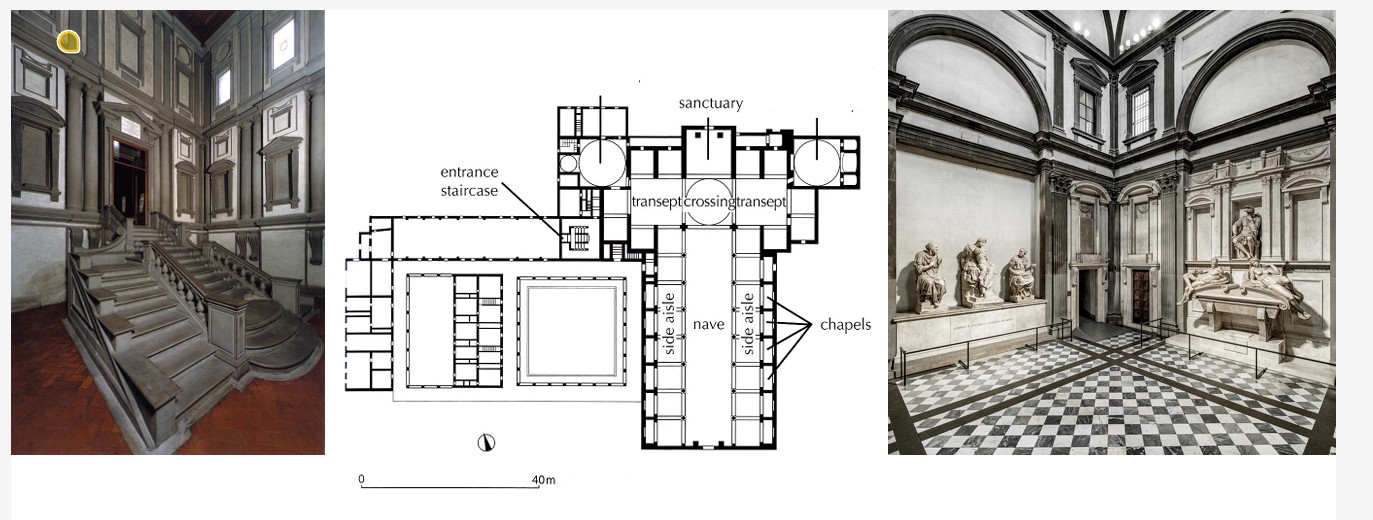
New Sacristy and Laurentian Library at the Basilica of San Lorenzo

Florence

1519-1534

Michelangelo

42
New cards

Significance-

  • large elements in small rooms (doors, stairs) like knowledge flowing out of the library into the space

  • Medicis posing as intellectuals and scholars

  • very renaissance statues

  • the scholastic meets the humanities- civic life and educated class
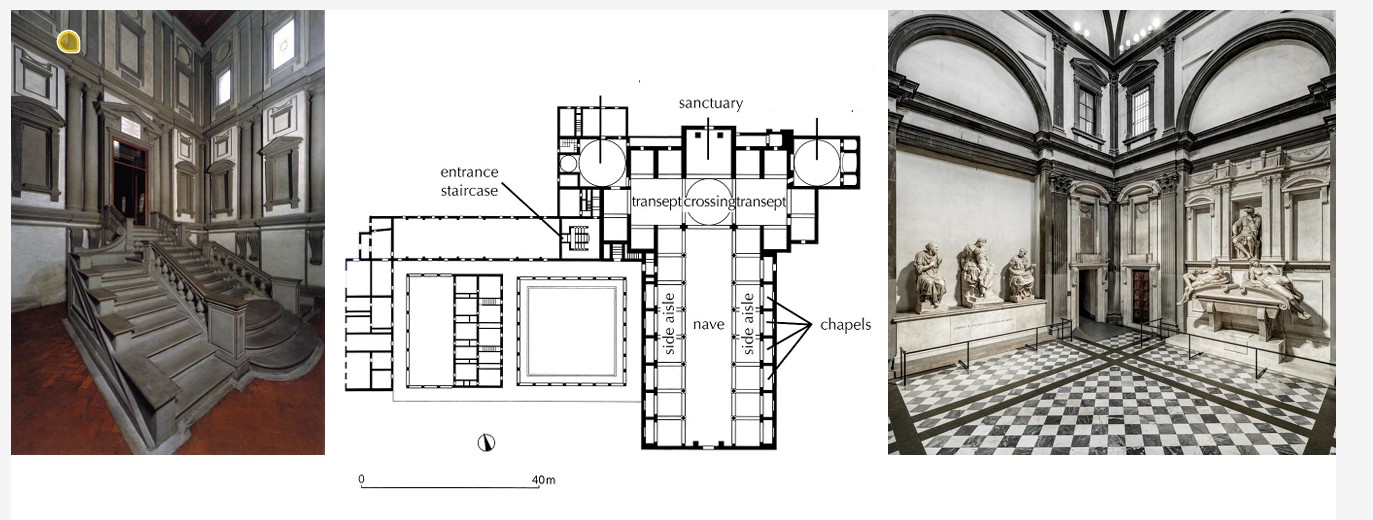
<ul><li><p>large elements in small rooms (doors, stairs) like knowledge flowing out of the library into the space </p></li><li><p>Medicis posing as intellectuals and scholars </p></li><li><p>very renaissance statues </p></li><li><p>the scholastic meets the humanities- civic life and educated class </p></li></ul>
43
New cards
<p>Identify-</p>

Identify-

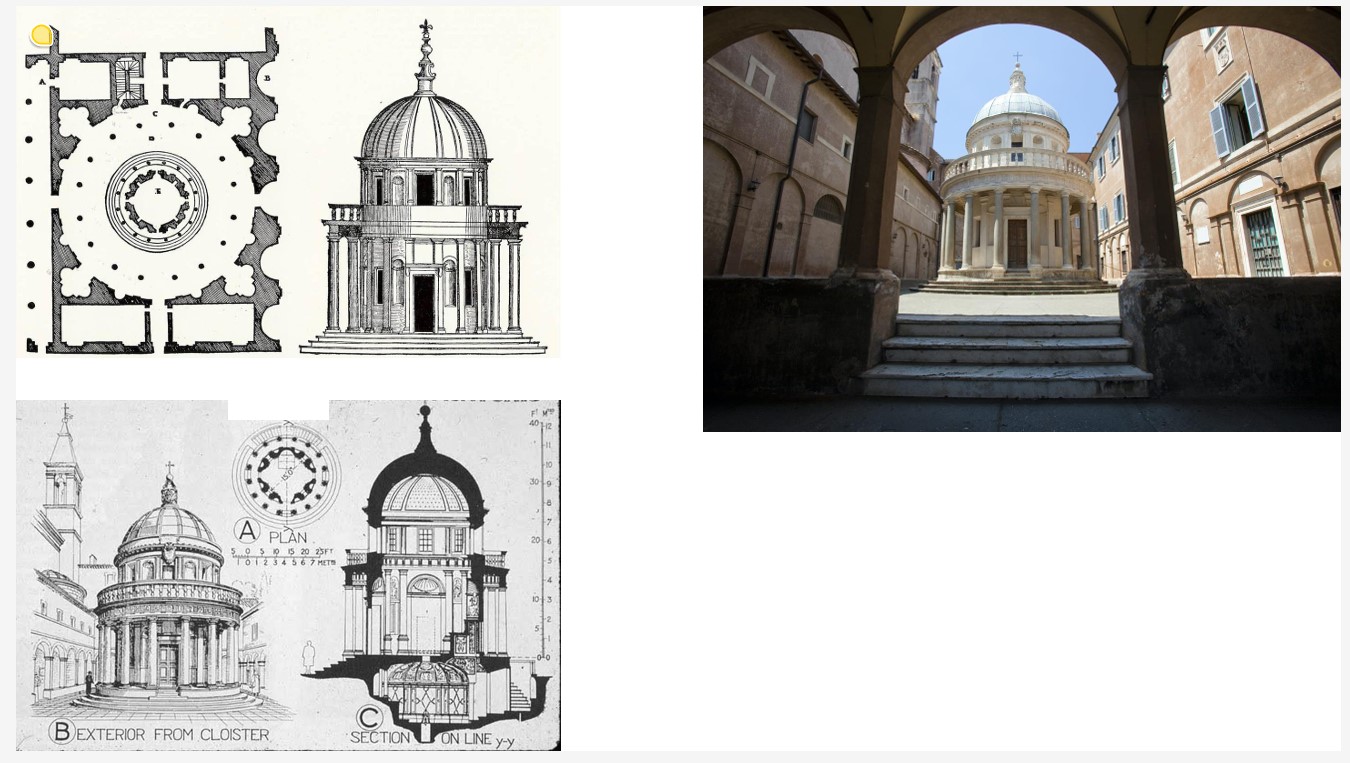
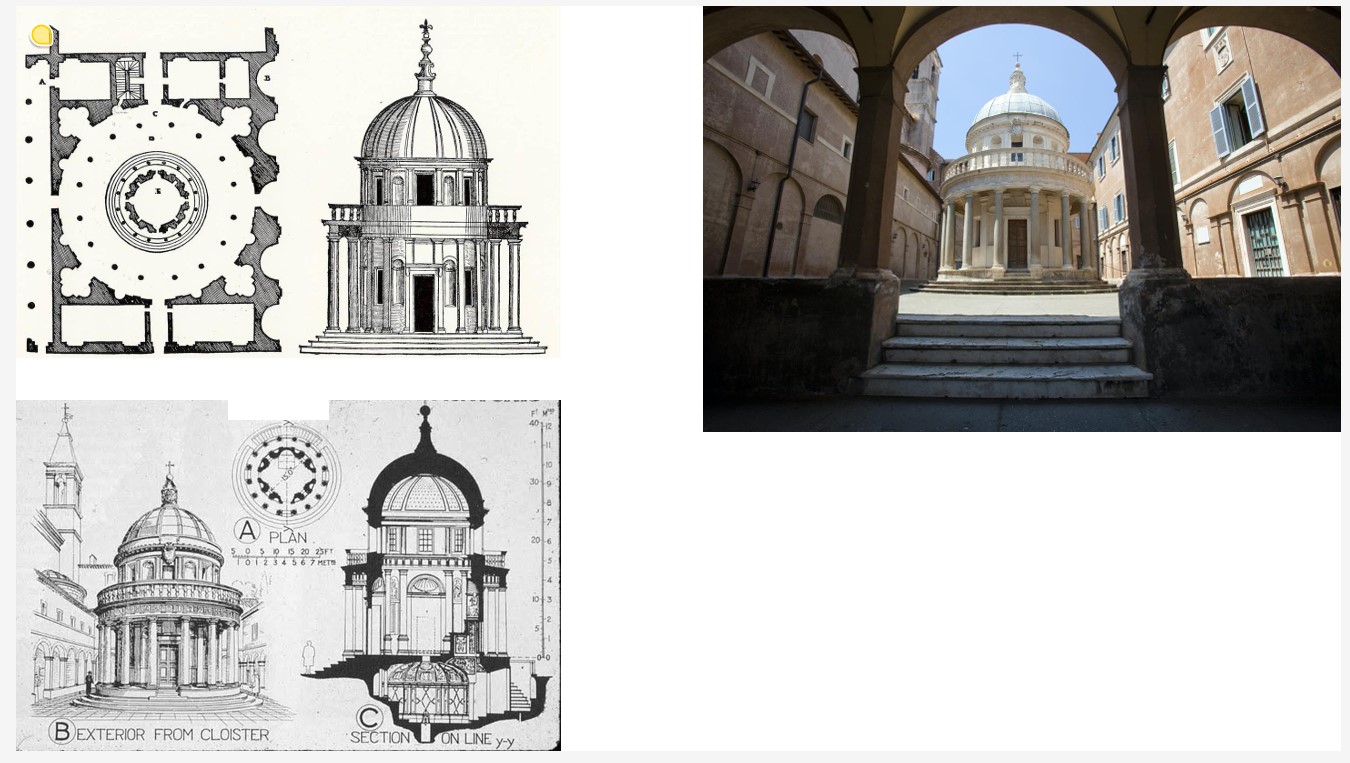
Tempietto at San Pietro

Montorio Rome

1502

Donato Bramante

44
New cards

Significance- Tempietto at San Pietro

  • on the site of St Peters crucifixion

    • Martyrium is a center of celebration

  • Paid for by Ferdinand and Isabella of Spain

  • Bramante reads Alberti, influenced by the Mausoleum of Diocletian (305)

    • underground prayer chamber, not body

<ul><li><p>on the site of St Peters crucifixion </p><ul><li><p>Martyrium is a center of celebration </p></li></ul></li><li><p>Paid for by Ferdinand and Isabella of Spain </p></li><li><p>Bramante reads Alberti, influenced by the Mausoleum of Diocletian (305)</p><ul><li><p>underground prayer chamber, not body </p></li></ul></li></ul>
45
New cards
<p>Identify-</p>

Identify-

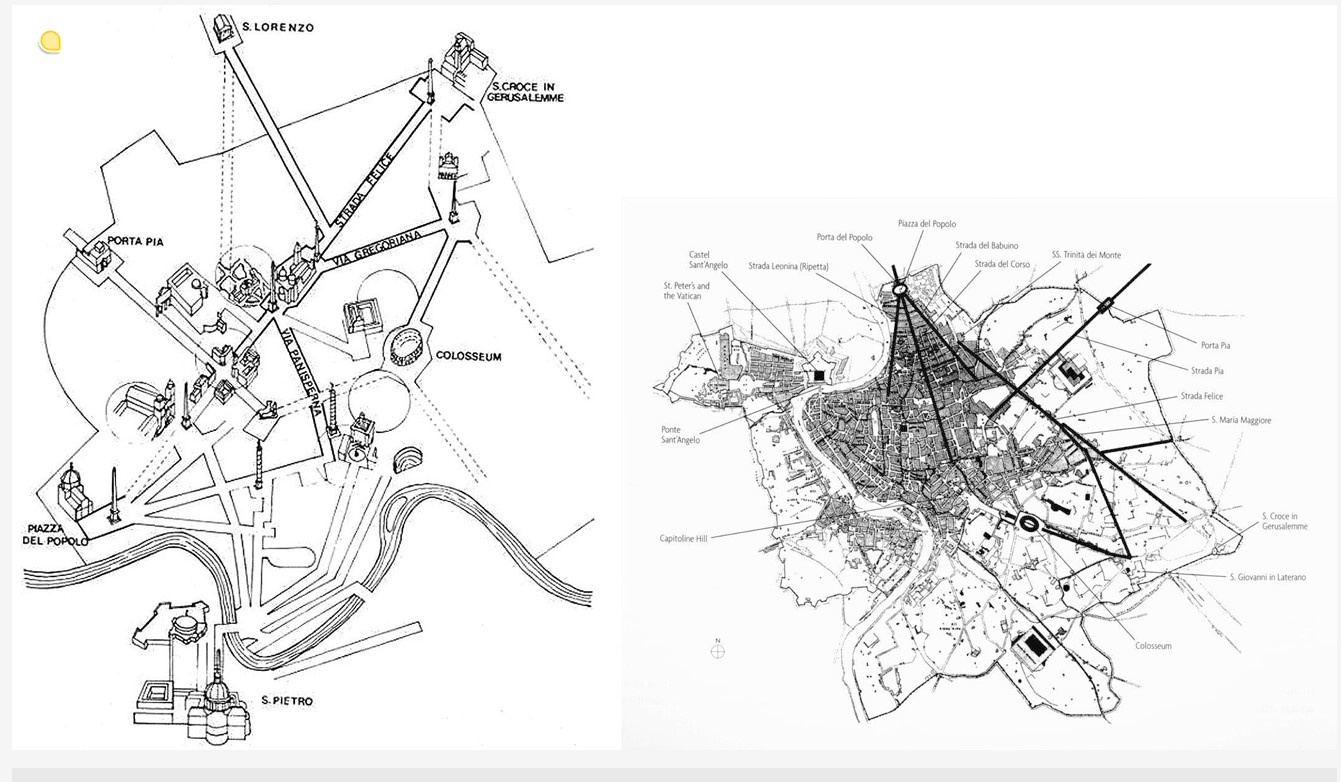
Urban Plan for Rome

late 16th cent

Pope Sixtus V

46
New cards

Significance- Urban Plan for Rome by Pope Sixtus V

  • in light of the Reformation to make Catholicism appealing again

    • Counterreformation & Council of Trent 1545-1563

      1) cultural persuasion

      2) new religious orders

      3) inquisitions

  • THE CITY IS A GARDEN

  • Deep historical views

  • transportation renewal through carriages
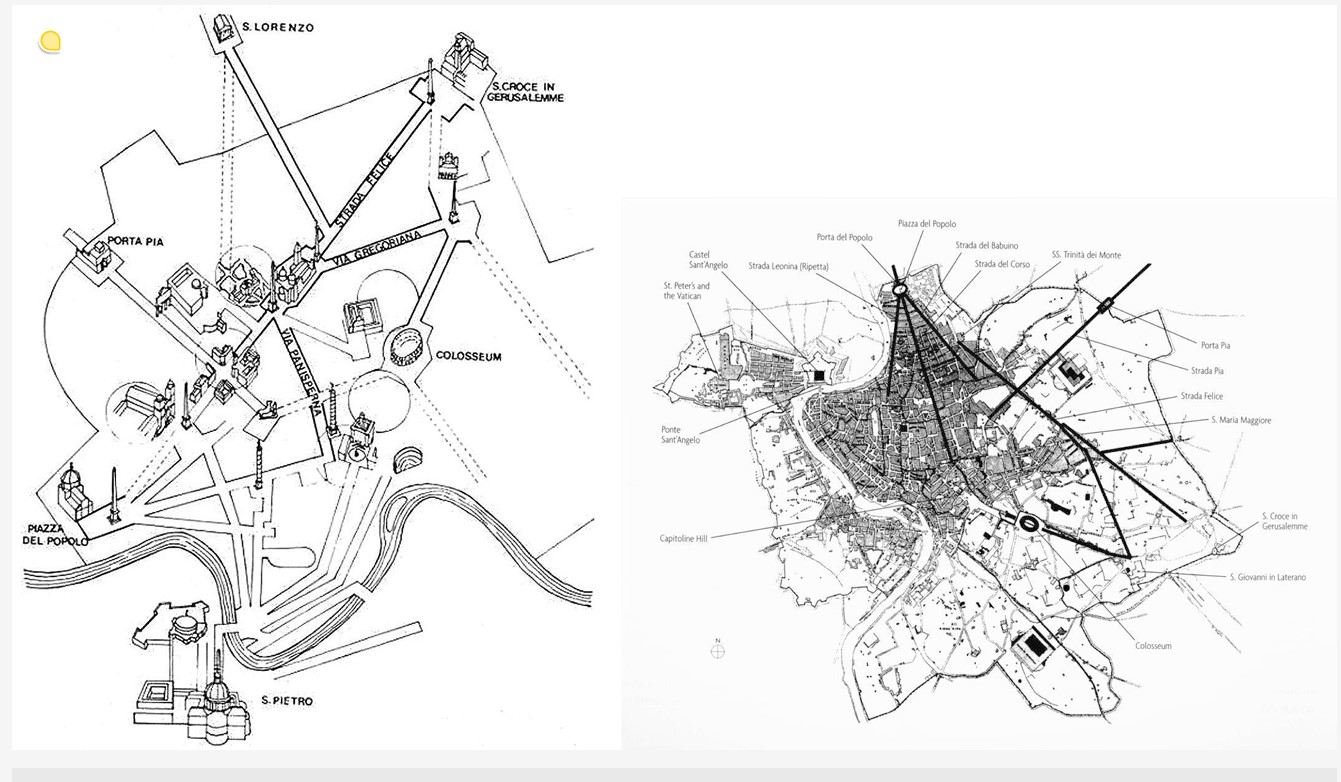
<ul><li><p>in light of the Reformation to make Catholicism appealing again</p><ul><li><p>Counterreformation &amp; Council of Trent 1545-1563</p><p>1) cultural persuasion</p><p>2) new religious orders </p><p>3) inquisitions </p></li></ul></li><li><p>THE CITY IS A GARDEN </p></li><li><p>Deep historical views </p></li><li><p>transportation renewal through carriages </p></li></ul>
47
New cards
<p>Identify-</p>

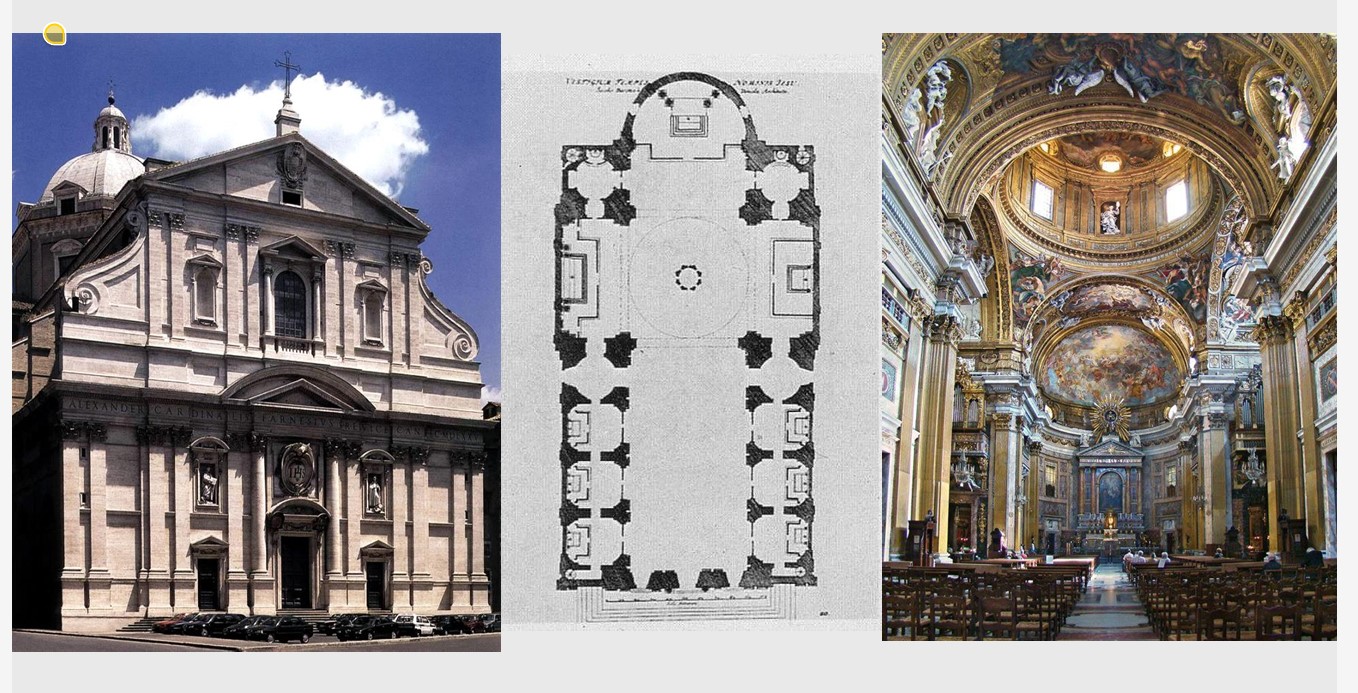
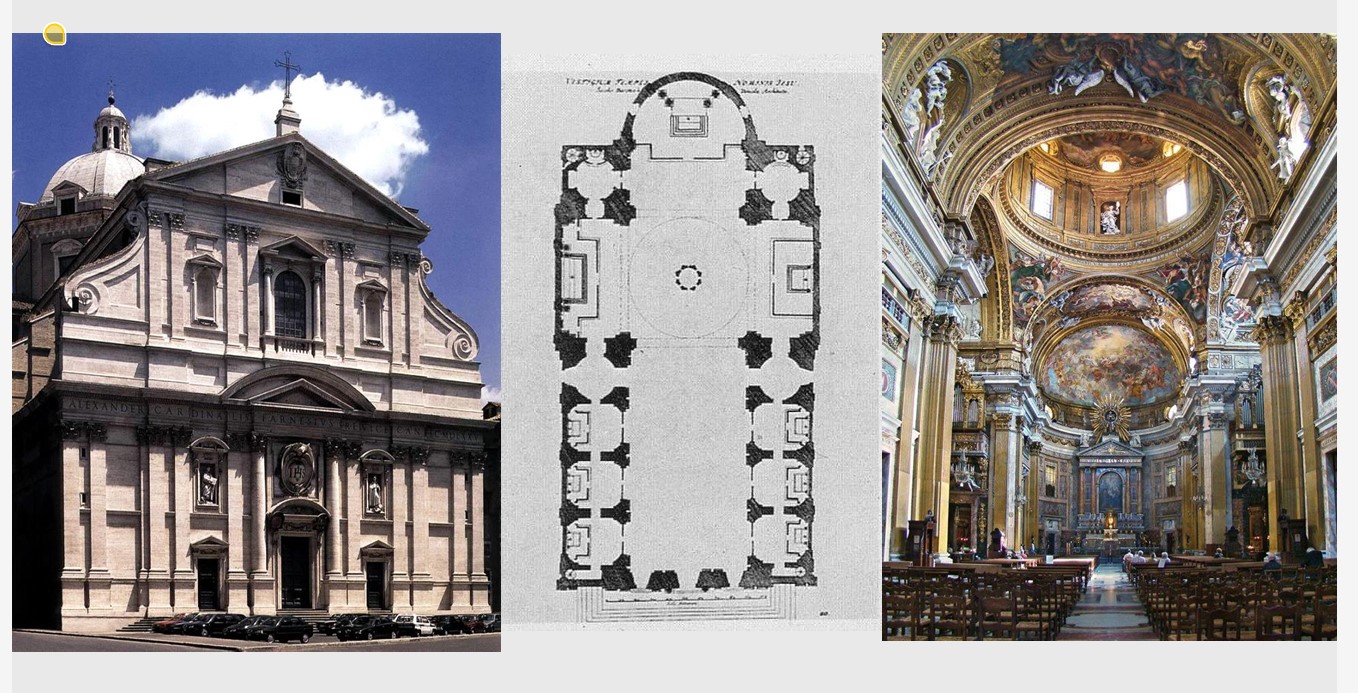
Identify-

Giacomo Barozzi da Vignola and Giacomo della Porta Il Gesu

Rome

1568-1577

—> Baroque

48
New cards

Significance- Il Gesu

  • HQ for Jesuits (roman catholic men with special duties)

  • Santa Maria Novella 100 yrs later

  • Basillica plan as a box not cross (reverting back to Roman for emphasis on the people, preaching, communion, eucharist)

    • Corinthian columns

  • “comic book” ceilings - division of the saved and the damned
<ul><li><p>HQ for Jesuits (roman catholic men with special duties)</p></li><li><p>Santa Maria Novella 100 yrs later </p></li><li><p>Basillica plan as a box not cross (reverting back to Roman for emphasis on the people, preaching, communion, eucharist)</p><ul><li><p>Corinthian columns</p></li></ul></li><li><p>“comic book” ceilings - division of the saved and the damned</p></li><li><p></p></li></ul>
49
New cards
<p>Identify-</p>

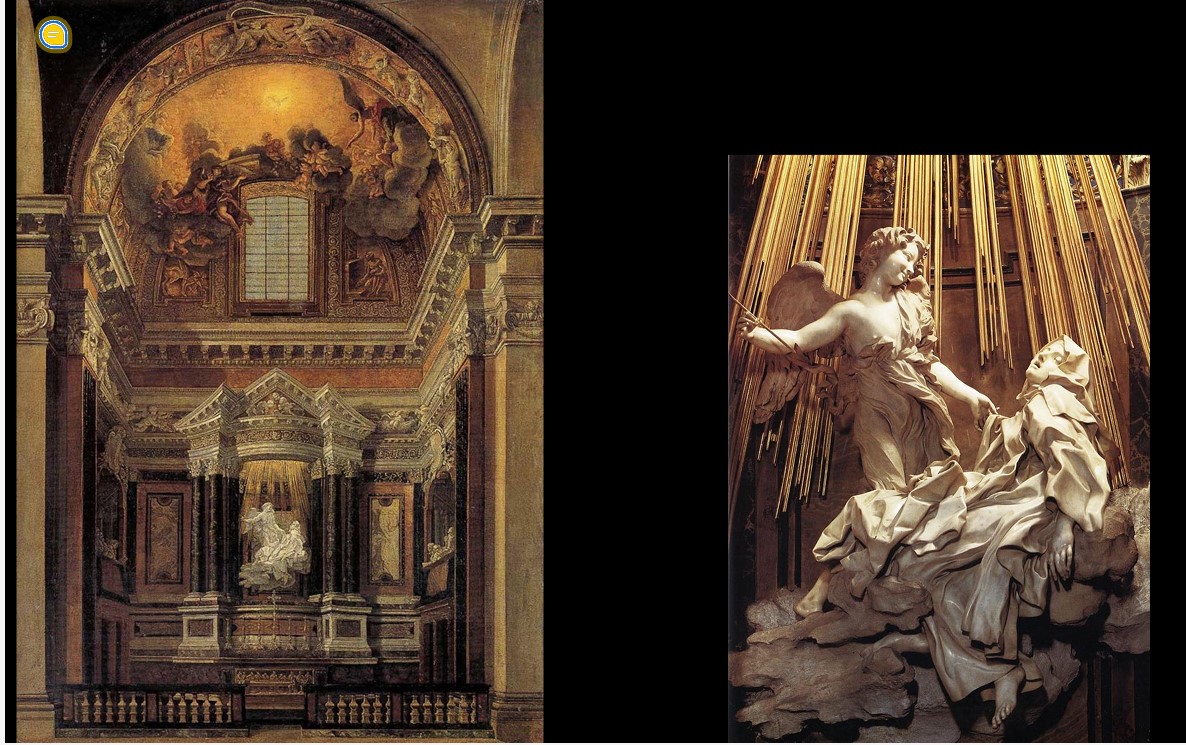
Identify-

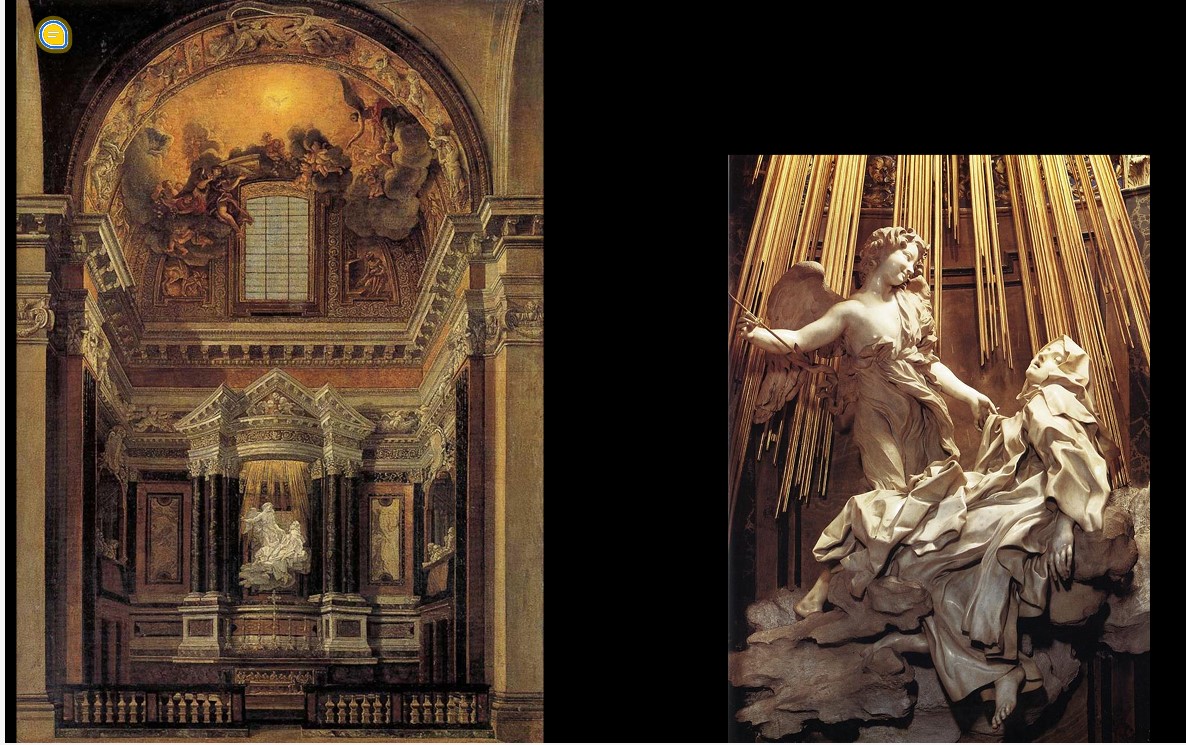
Cornaro Chapel at Santa Maria della Vittoria

Rome

1647-1652

Gian Lorenzo Bernini

50
New cards

Significance- Santa Maria della Vittoria

  • St Teresa getting a vision of angels, connection and pleasure through stabbing. moaning

  • Fake perspective in the reliefs of patrons on either end of the statue
<ul><li><p>St Teresa getting a vision of angels, connection and pleasure through stabbing. moaning </p></li><li><p>Fake perspective in the reliefs of patrons on either end of the statue </p></li></ul>
51
New cards
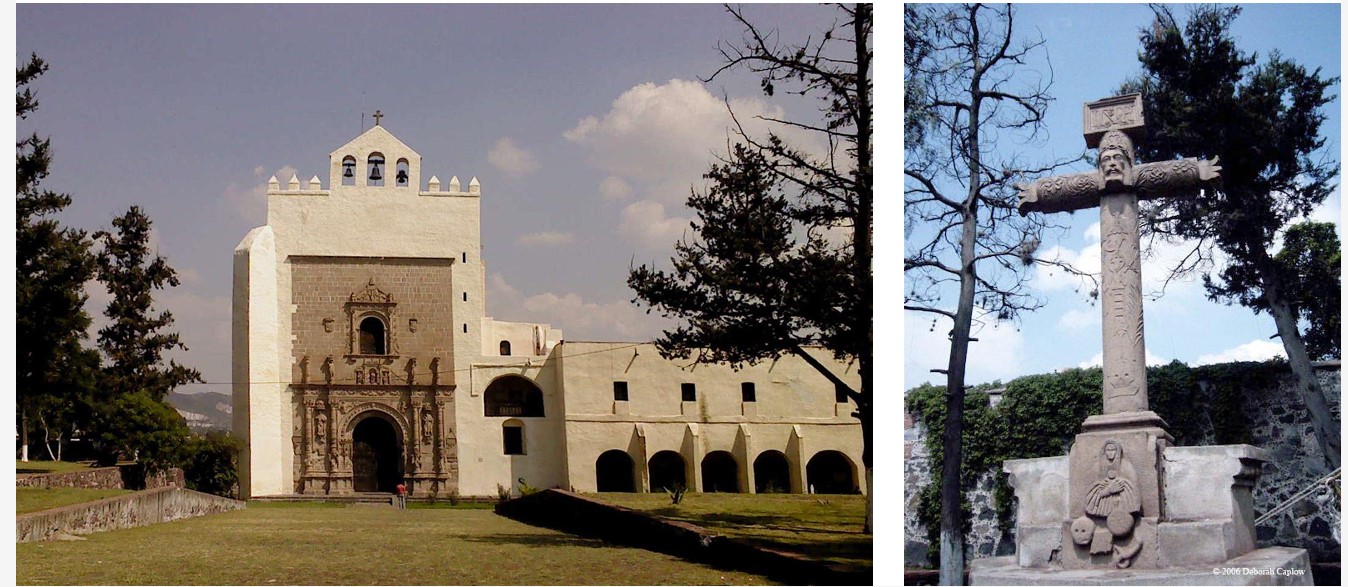
<p>Identify-</p>

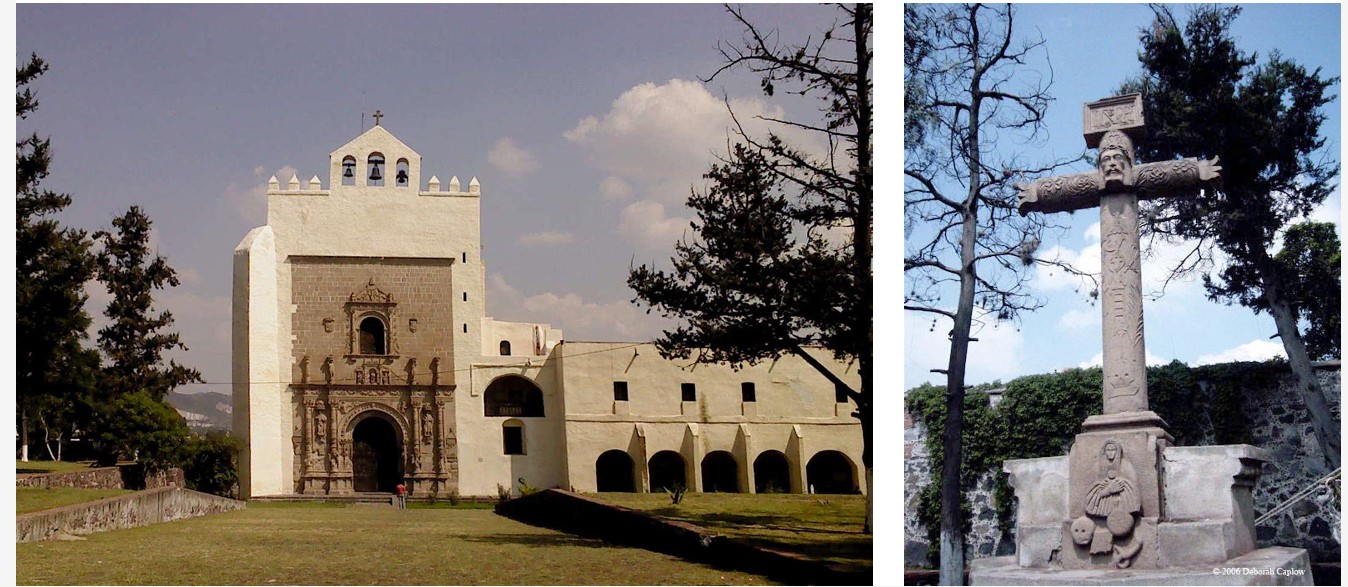
Identify-

Covenant of San Agustin

Acolman, Mexico

1520-1560

52
New cards

Significance-

  • Dominican order with their own beliefs

  • triumphal arch in front, built by Mexica builders

    • church friars incorporated Pre-Columbian open spaces

  • Atrial Cross

    • Christian and indigenous features

    • telling Christ’s story in the language of the indigenous, Jesus becomes like an Aztec tree

    • Pierced heart

<ul><li><p>Dominican order with their own beliefs </p></li><li><p>triumphal arch in front, built by Mexica builders </p><ul><li><p>church friars incorporated Pre-Columbian open spaces </p></li></ul></li><li><p>Atrial Cross </p><ul><li><p>Christian and indigenous features </p></li><li><p>telling Christ’s story in the language of the indigenous, Jesus becomes like an Aztec tree </p></li><li><p>Pierced heart </p></li></ul></li></ul>
53
New cards
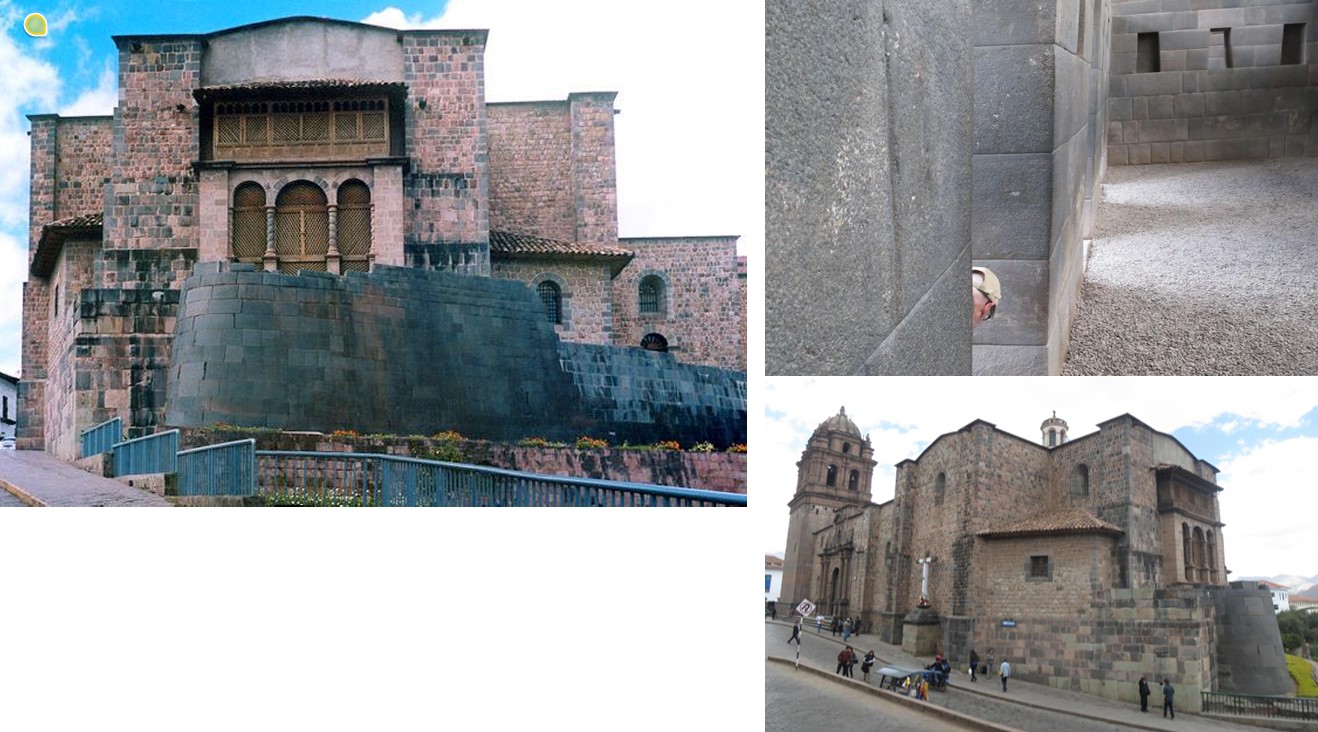
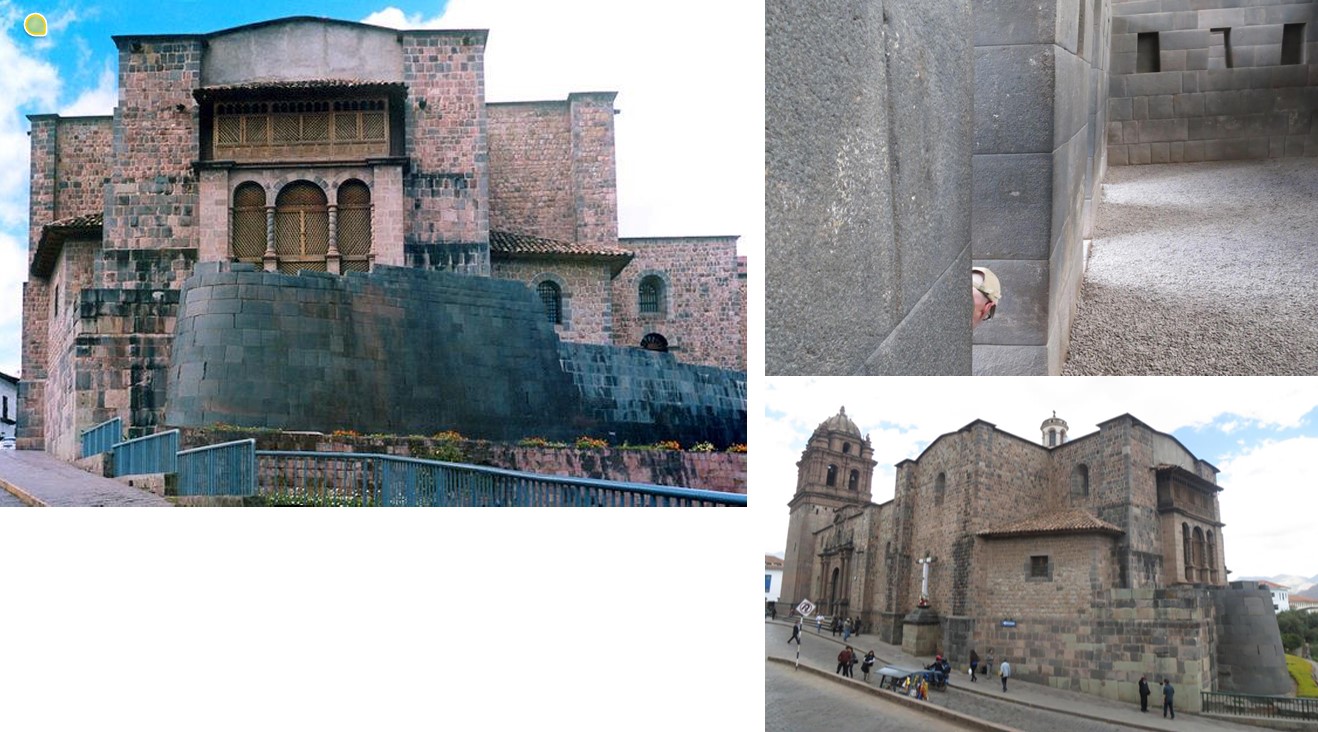
<p>Identify-</p>

Identify-

Church of Santo Domingo

Cusco, Peru

1537-1700

—> built on Incan Qorkiancha (1438)

54
New cards

Significance-

  • demolished complex, melted gold and silver, ransoming the leader and holding for ransom

    • erasing, displacing, integrating, resisting

  • using enslaved people

<ul><li><p>demolished complex, melted gold and silver, ransoming the leader and holding for ransom </p><ul><li><p>erasing, displacing, integrating, resisting</p></li></ul></li><li><p>using enslaved people </p></li></ul>
55
New cards
<p>Identify-</p>

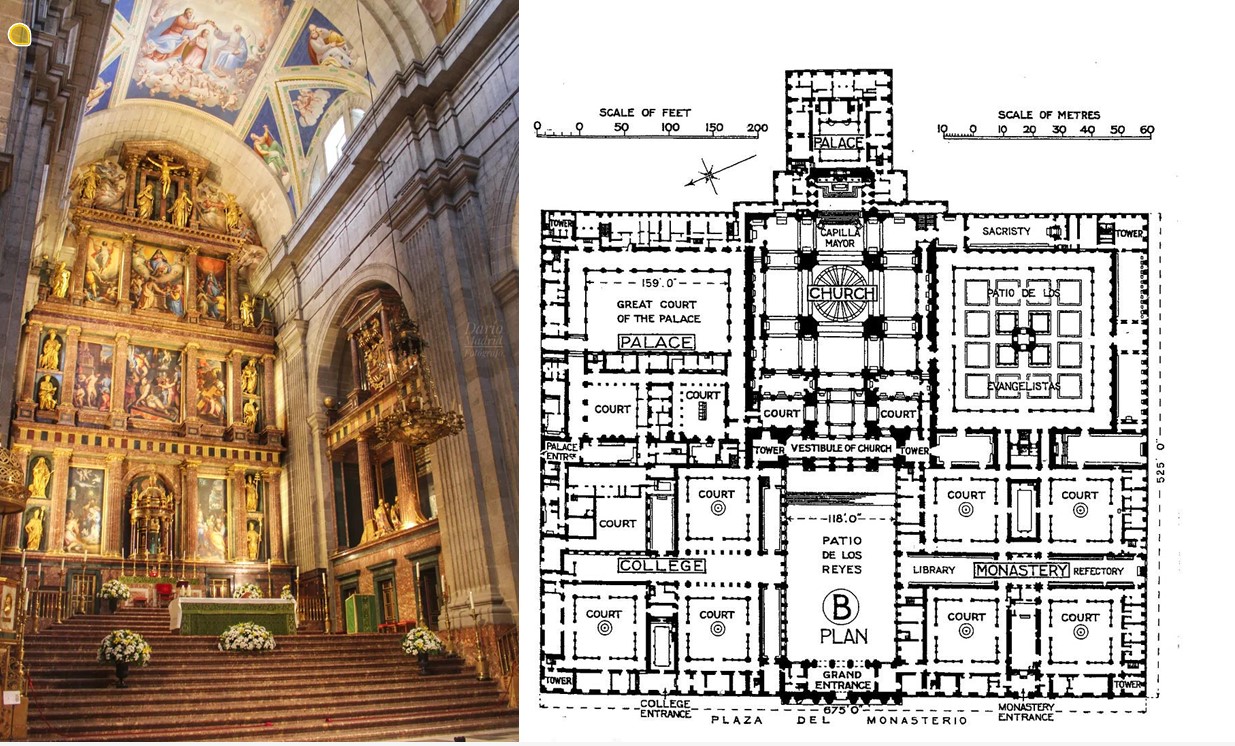
Identify-

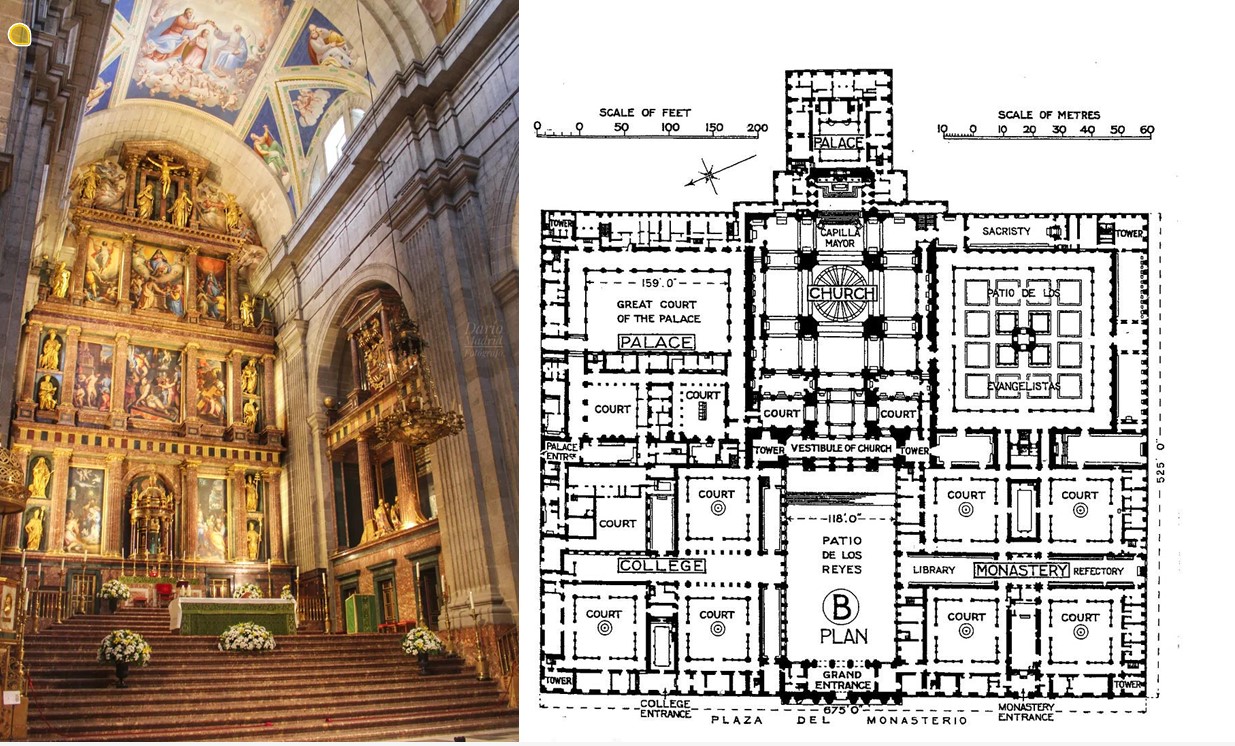
El Escorial,

Madrid, Spain

1565-1584

Juan Bautista de Toledo

56
New cards

Significance- El Escorial

  • Made for Felipe II, a defender of the catholic faith

  • made in Renaissance Gothic for glory and power

  • Retablo structures

<ul><li><p>Made for Felipe II, a defender of the catholic faith </p></li><li><p>made in Renaissance Gothic for glory and power </p></li><li><p>Retablo structures </p></li></ul>