Cost Function for Firms
 Call Kai
 Learn
Learn Practice Test
 Spaced Repetition
 Match
Match Flashcards
 Knowt Play
1/4

Earn XP
Name | Mastery | Learn | Test | Matching | Spaced | Call with Kai |
|---|
No analytics yet
Send a link to your students to track their progress
5 Terms
What does the opportunity cost of capital entail?
-The amount of income an investor could have received by investing the unit of capital elsewhere.
For a firm, what will be the costs of producing goods?
-Cost of having a premise, like a factory
-Cost of having capital goods, specifically designed for you
-Cost of all the inputs in the production process
-Cost of incentivising shareholders to continue their investments.
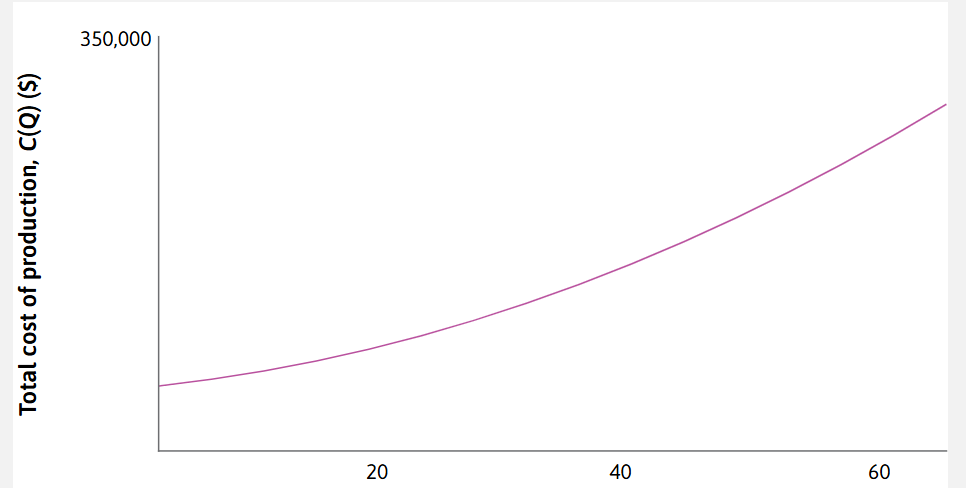
Seeing this graph, what will the firm’s average cost curve look like, generally speaking?
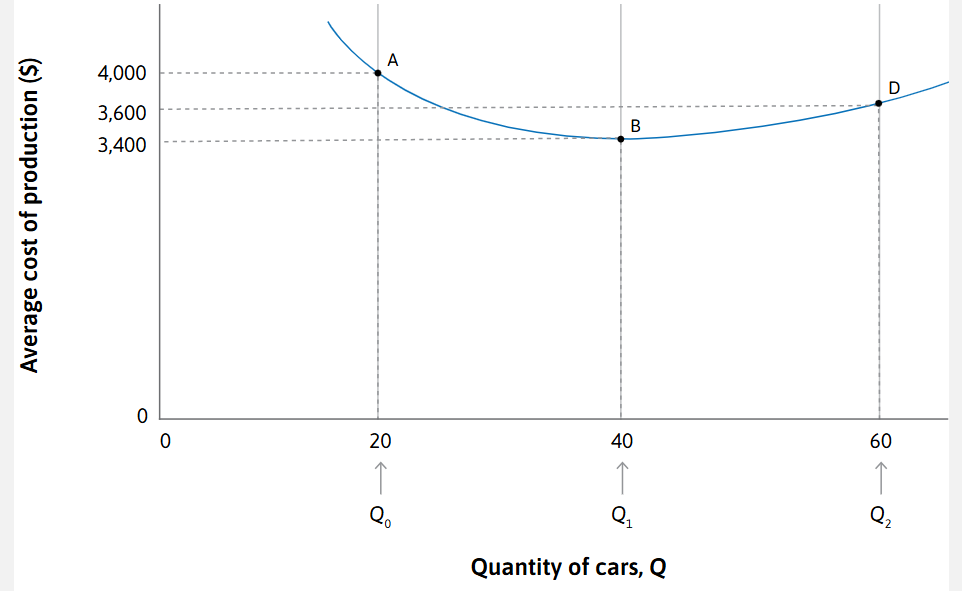
-Take calculations at 20, 40 and 60 units
-Note the shape:
-The firm experiences diminishing average costs at low levels of production, and then increasing average costs at high levels of production.
What does marginal cost entail?
-Effect on total cost of producing one additional unit of output
-Corresponds to slope of the total cost function at each point.
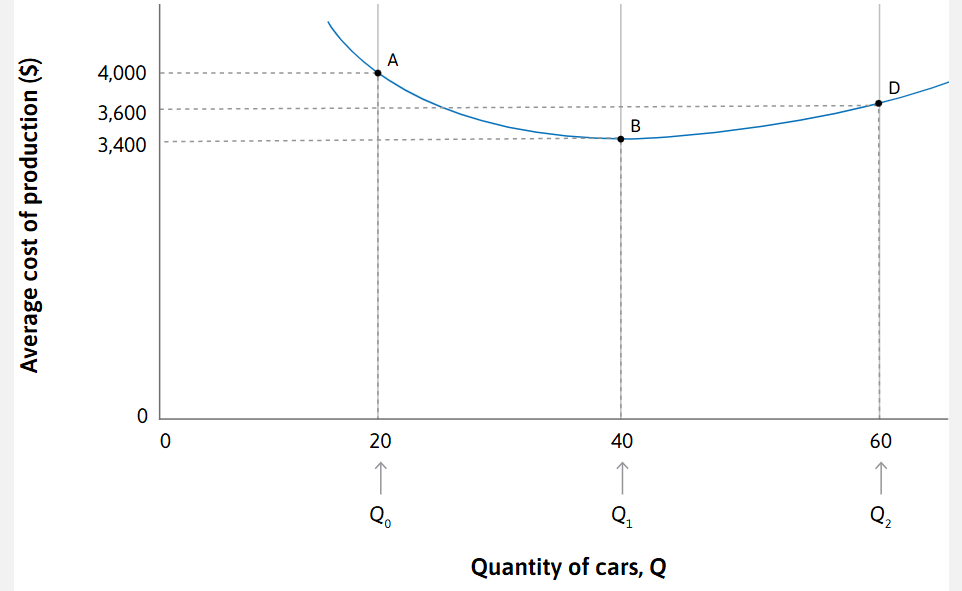
Given this, where would you plot the marginal cost?
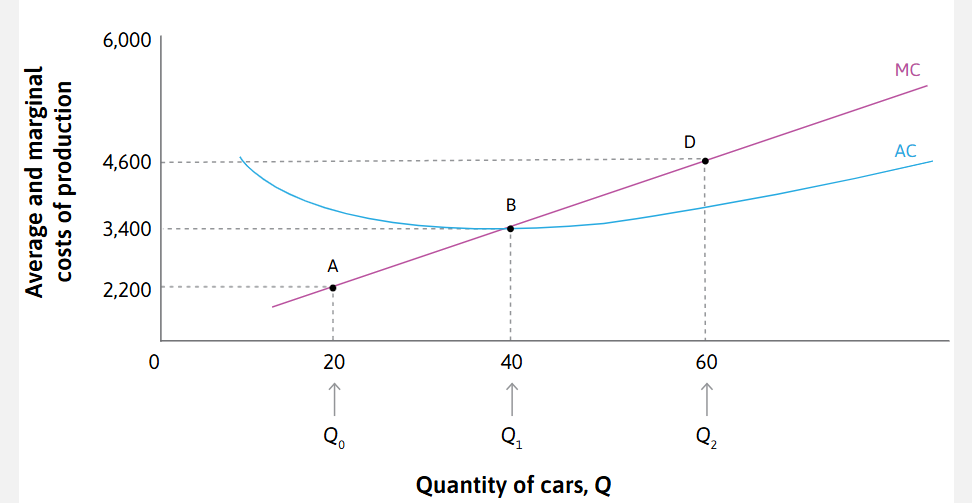
-It starts below the average cost curve, and intersects at its bottom.
-This makes sense, if the cost of each additional unit is less than the average, then the average will fall.