The Conservative Movement and U.S. Politics: 1980s‑2000s
 Call Kai
 Learn
Learn Practice Test
 Spaced Repetition
 Match
Match Flashcards
 Knowt Play
1/88

There's no tags or description
Looks like no tags are added yet.
Name | Mastery | Learn | Test | Matching | Spaced | Call with Kai |
|---|
No analytics yet
Send a link to your students to track their progress
89 Terms
What event marked the high point of the Conservative Movement?
The election of President Ronald Reagan and Vice-President George Bush in 1980.
What were some concerns regarding entitlement programs?
High costs and stories of fraud upset taxpayers.
What is the New Right?
A collection of grass-roots groups promoting single issues like abortion, ERA, busing, and school prayer.
What is affirmative action?
Special consideration for women and minorities, criticized by some as reverse discrimination.
What coalition formed by the mid-60s to support conservatism?
A coalition of business, religious, and other groups.
What was the goal of conservative think tanks like the American Enterprise Institute?
To discuss and develop policies promoting small government, family values, and patriotism.
Who was Jerry Falwell?
A leader of the Moral Majority, a group promoting traditional Christian morals.
What were Ronald Reagan's qualifications before his presidency?
He served two terms as governor of California and was a spokesperson for GE.
What economic issues did Reagan address during his campaign?
A weak economy and the Iran crisis.
What nickname was given to Ronald Reagan for his communication skills?
The Great Communicator.
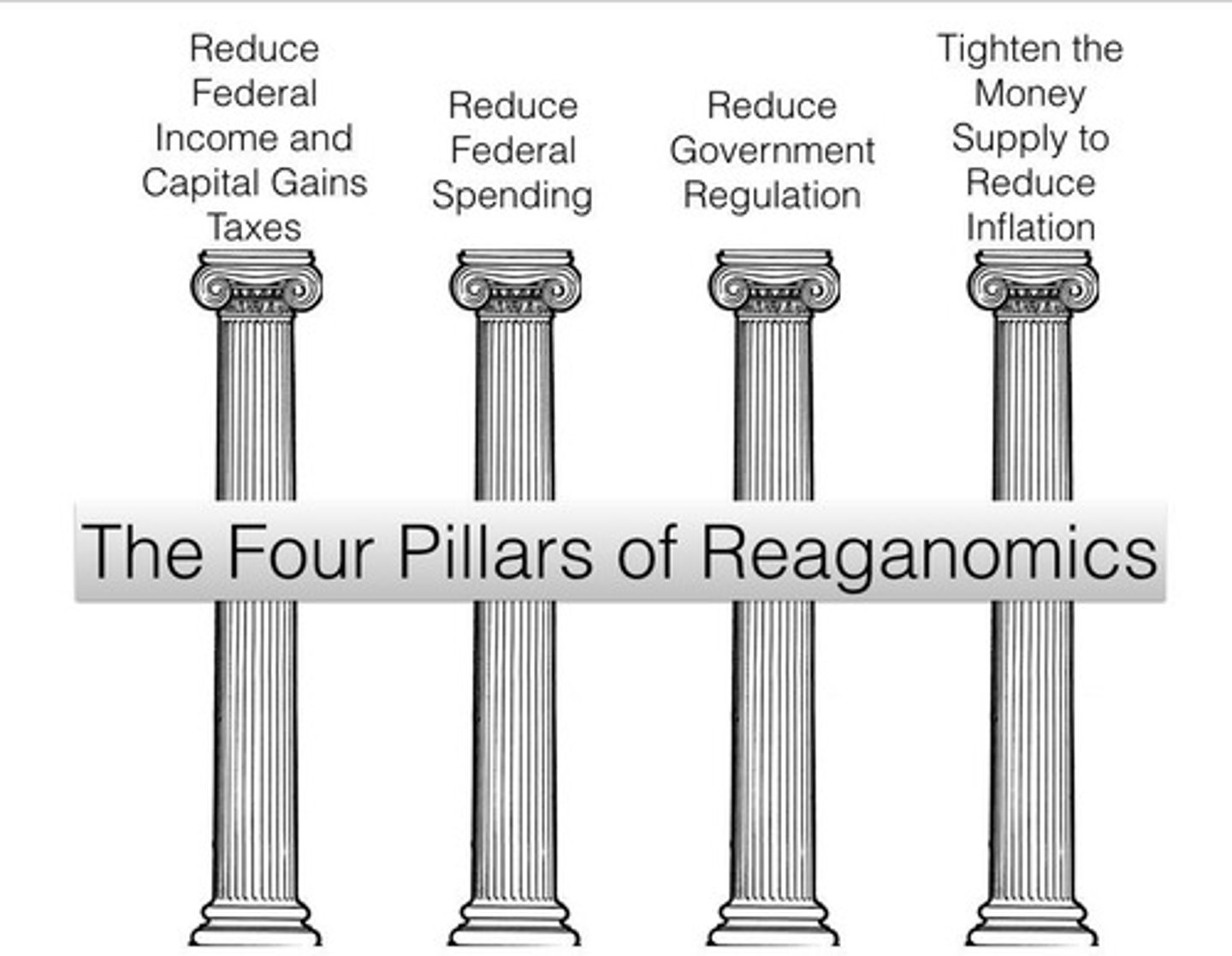
What economic strategy is associated with Reagan's presidency?
Reaganomics, which included budget cuts, tax cuts, and increased defense spending.
What was the outcome of the 1980 Presidential Election?
Reagan received 51% of the popular vote and won 44 states in the electoral race.
What was the impact of Reagan's tax cuts?
They were based on supply-side economics, aiming to increase investment and productivity.
What was the Strategic Defense Initiative?
An anti-missile defense system proposed by Reagan.

What was the national debt situation by the end of Reagan's first term?
The national debt almost doubled as spending outstripped revenues.
Who was the first woman appointed to the Supreme Court?
Sandra Day O'Connor, appointed by Reagan.
What was a significant social issue during the 1980s?
The AIDS epidemic, which raised concerns over prevention and cure.
What was the outcome of Webster v. Reproductive Health Care Services?
The Supreme Court ruled that states may place restrictions on abortion.
What was Nancy Reagan's campaign against drug use called?
'Just say no!' to drugs.
What educational initiative was proposed during the 1980s?
A focus on improving student performance in core subjects and promoting school choice.
What was the status of the Equal Rights Amendment (ERA) by 1982?
It was not ratified; only 35 states ratified it, falling short of the required 38.
What is the 'feminization of poverty'?
The phenomenon where women earn less than men, with many female heads of household living in poverty.
What was a significant outcome for African Americans in the mid-1980s?
Many cities elected African-American mayors and representatives to local and state offices.
What social issue intensified in the 1980s related to drug use?
Concerns over rising drug abuse and the debate over legalization versus treatment.
What was the economic condition of Americans during the 1988 Presidential Election?
Most Americans were economically comfortable, attributing their comfort to Reagan and Bush.
Who was the first African-American governor in the United States?
Douglas Wilder of Virginia
What significant action did Reverend Jesse Jackson take in the political arena?
He ran for the Democratic presidential nomination.
What trend was observed among middle-class blacks during this period?
They held more professional and managerial positions.
How has the Supreme Court affected affirmative action?
The Supreme Court continues to limit affirmative action.
What demographic group is the fastest growing minority in the U.S.?
Latinos
Who did President Reagan appoint as Secretary of Education?
Lauro Cavazos
What significant health position was Dr. Antonia Coello Novello appointed to by President Bush?
Surgeon General
When did bilingual education become available in the U.S.?
From 1968
What was a major consequence of Reagan's policies towards Native Americans?
Cuts to aid for health, education, and services.
What financial strategy did many Native American tribes adopt?
Opening casinos to generate additional funds.
What is notable about the Asian-American population during this period?
They are the second-fastest growing minority and are cited as a success story.
What challenges did the Gay Rights Movement face in the 1970s and 1980s?
Setbacks from conservative opposition and the AIDS crisis.
What significant change occurred in the late 1980s and 1990s regarding the Gay Rights Movement?
A new surge of activism and calls for an end to discrimination.
What marked the end of the Cold War?
The breakup of the Soviet Union in 1991.
Who was Mikhail Gorbachev?
The general secretary of the Soviet Communist Party who initiated reforms.
What policy did Gorbachev adopt to allow criticism and some freedom of the press?
Glasnost (openness).
What was the purpose of Gorbachev's perestroika?
To introduce some private enterprise and move towards democracy.
What treaty eliminated two types of weapons and allowed for inspections?
The INF Treaty (Intermediate-Range Nuclear Forces Treaty).
What happened in 1991 concerning the Soviet Union?
Fourteen republics declared independence, leading to the fall of the Soviet Union.
What was the outcome of the Berlin Wall being torn down in 1989?
The reunification of Germany in 1990.
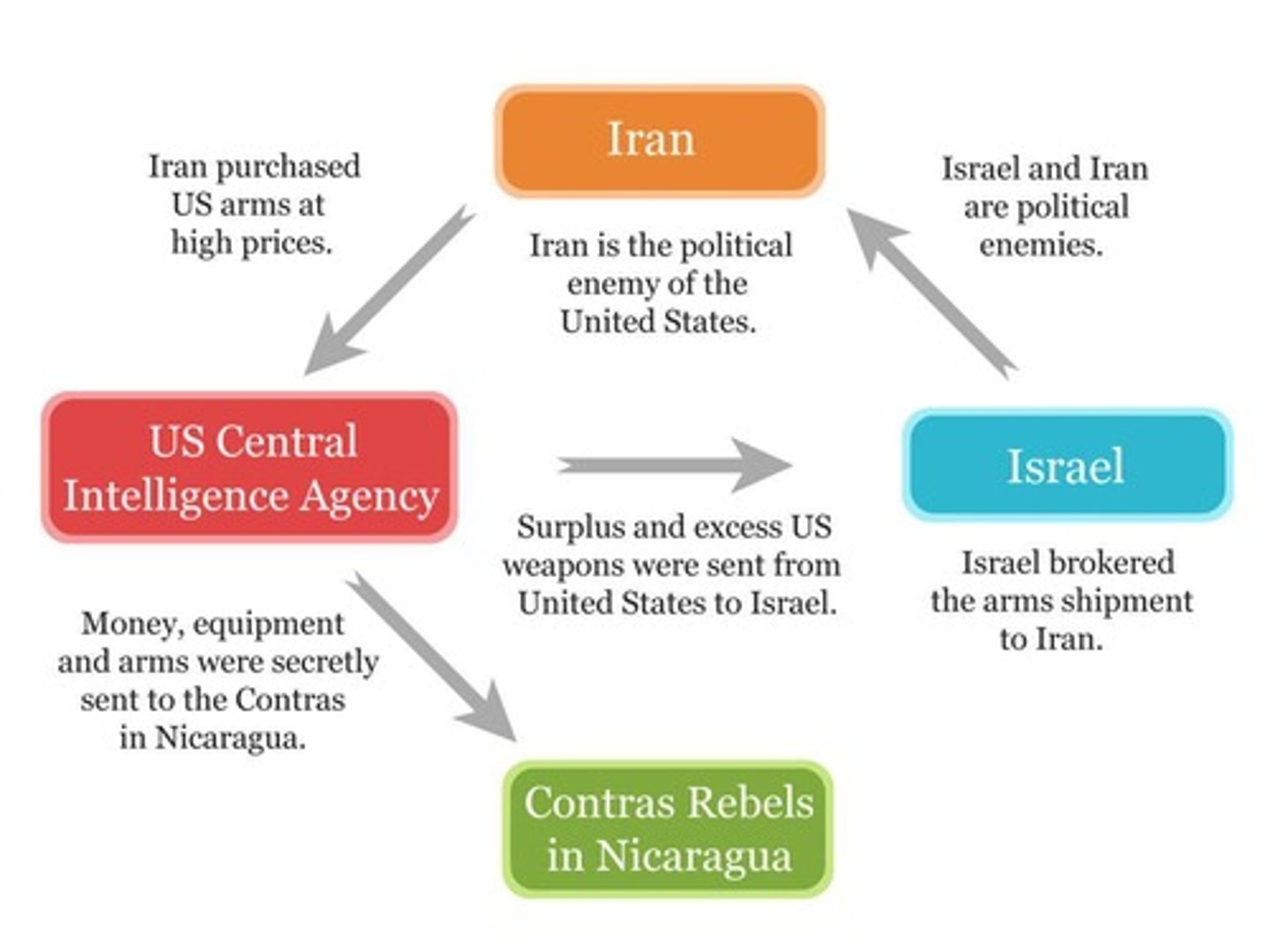
What was the Boland Amendment related to?
It prohibited U.S. assistance to the Contras in Nicaragua.
What led to the U.S. invasion of Grenada in 1983?
To replace a pro-Cuba government with a pro-U.S. government.
What was the Iran-Contra Scandal?
A political scandal involving the secret sale of arms to Iran and diversion of funds to Contras.
What was the main reason for the Persian Gulf War?
Saddam Hussein's invasion of Kuwait to take its oil.

What was the outcome of Operation Desert Storm?
Kuwait was liberated from Iraq with minimal coalition casualties.
What economic challenges did President Bush face during his term?
A rising deficit and recession from 1990 to 1992.
What was the significant outcome of the 1992 election?
William Jefferson Clinton won the presidency.
What was the focus of Clinton's health care reform plan?
To provide affordable health care, especially for the uninsured.
What was a key achievement of Clinton's administration regarding the federal budget?
The federal budget had a surplus, used to pay off national debt.
What tragic events shocked Americans in the 1990s?
The Columbine shooting, the Oklahoma City bombing, and the September 11 attacks.
What was a major foreign policy action taken by Clinton in the 1990s?
Sending troops to Haiti to oust military rulers.
What trade agreement did Clinton support for North America?
North American Free Trade Agreement (NAFTA)
What was a major concern of critics regarding NAFTA?
Loss of jobs to Mexico
What significant event occurred in Seattle in 1999?
Demonstrators protested the World Trade Organization meeting.
What was the outcome of the 1994 elections for the Republicans?
They won control of both houses of Congress.
What was the 'Contract with America'?
A list of items Republicans promised to pass if elected.
What led to the federal government shutdown in 1995-1996?
Clinton and Republicans clashed over the budget.
Who was the Republican candidate defeated by Clinton in the 1996 election?
Senator Bob Dole
What were the charges against Clinton during his impeachment?
Perjury and obstruction of justice
What was the result of Clinton's impeachment trial in January 1999?
He was acquitted by the Senate.
Who were the main candidates in the 2000 presidential election?
Al Gore (Democrat) and George W. Bush (Republican)
What was the controversy surrounding the Florida votes in the 2000 election?
Alleged voting irregularities and a manual recount request.
What was the Supreme Court's decision regarding the Florida recount?
They voted to stop the recount due to lack of uniform standards.
What major event prompted the passage of an antiterrorism bill?
The September 11 attacks.
What was the purpose of the Department of Homeland Security?
To combat terrorism.
What justification did Bush give for the war against Iraq?
Iraq had weapons of mass destruction (WMD).
What was the outcome of the U.S. invasion of Iraq in 2003?
The Iraqi regime was ousted, and Saddam Hussein was captured.
What was the No Child Left Behind Act?
Bush's education reform plan aimed at improving education standards.
What was a major consequence of the corporate accounting scandals?
A regulatory board was established over the accounting industry.
What was the result of the California recall vote?
Governor Gray Davis was ousted, and Arnold Schwarzenegger became governor.
What economic trend occurred in the U.S. during the late 20th century?
A boom in the economy due to technological advances and new trade laws.
What was a negative outcome of the economic boom from 1993-1999?
Wage inequality widened and average household income began to drop.
What sector saw the most job growth during the late 20th century?
The service sector.
What technological advancement significantly affected job efficiency?
Advances in technology that made workers more efficient.
What was the impact of NAFTA on U.S. manufacturing jobs?
Over 100,000 jobs were lost in U.S. manufacturing.
What was the role of the General Agreement on Tariffs and Trade (GATT)?
To lower trade barriers and establish the World Trade Organization.
What was the effect of the 21st-century economic slowdown?
Developing countries suffered from a drop in foreign direct investment.
What technological revolution changed communication in the 1990s?
The rise of the Internet and the information superhighway.
What was a significant legislative act regarding telecommunications?
The Telecommunications Act of 1996.
What advancements were made in biotechnology by 2000?
The human genome was almost completely sequenced.
What environmental measures were taken to reduce pollution?
Scientists sought ways to reduce dependence on fossil fuels and promote recycling.
What demographic trend was observed in the U.S. by the end of the 20th century?
The U.S. population became more diverse in ethnic background and age.
What was urban flight?
The movement of people from cities to suburbs.
What challenges did Native Americans face in the late 20th century?
Higher rates of poverty, suicide, and alcoholism compared to whites.