Semester 2
 Call Kai
 Learn
Learn Practice Test
 Spaced Repetition
 Match
Match Flashcards
 Knowt Play
1/23

There's no tags or description
Looks like no tags are added yet.
Name | Mastery | Learn | Test | Matching | Spaced | Call with Kai |
|---|
No analytics yet
Send a link to your students to track their progress
24 Terms
DIFFERENTIATION (CALCULUS) EXTENSIONS
DIFFERENTIATION (CALCULUS) EXTENSIONS
Recap: what are all the interesting features of a function? (5 old, 3 new)
Vertical axis intercept (y-intercept)
Horizontal axis intercepts/roots - use discriminant (b² - 4ac), if no roots then doesn’t go through/touch horizontal axis
Stationary points - f’(x) = 0, f’’(x) < 0 or > 0 OR = 0 for POI, f’’’(x) < 0 or > 0 upward/downward flowing
Non-stationary points - only for cubic or higher f’’(x) = 0, f’’’(x) < 0 or > 0 upward/downward flowing
Continuous - limits
Concave or convex - (2nd derivative)
Smooth or kinked
Constraints - binding or slack
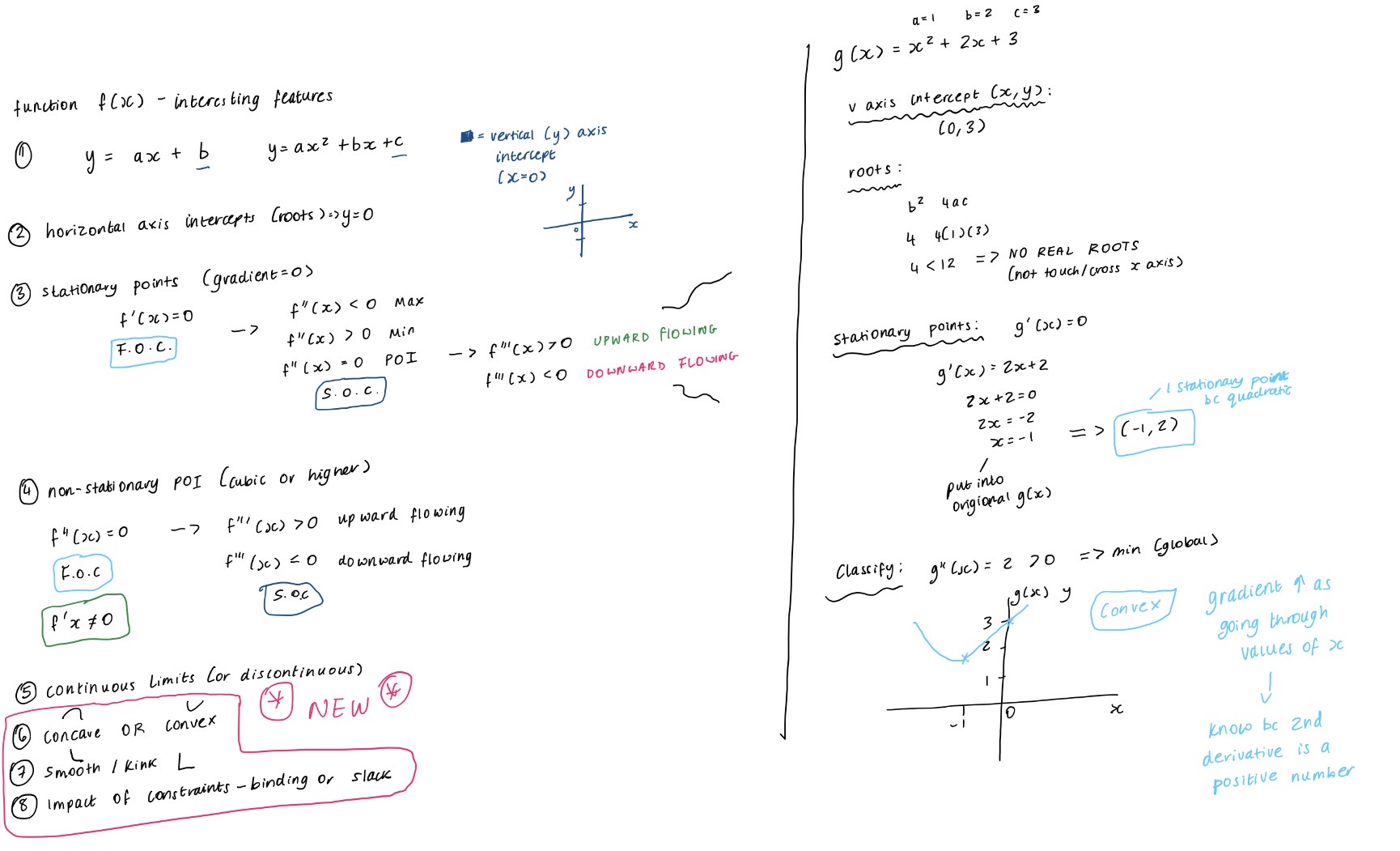
*if there’s no number at the end of the equation, e.g. y = 3x + 2x
GROWTH, DISCOUNTING AND NATURAL NUMBERS
GROWTH, DISCOUNTING AND NATURAL NUMBERS
MATRIX ALGEBRA
MATRIX ALGEBRA
In a matrix, what order do we have to read it in first to get the position of any element?
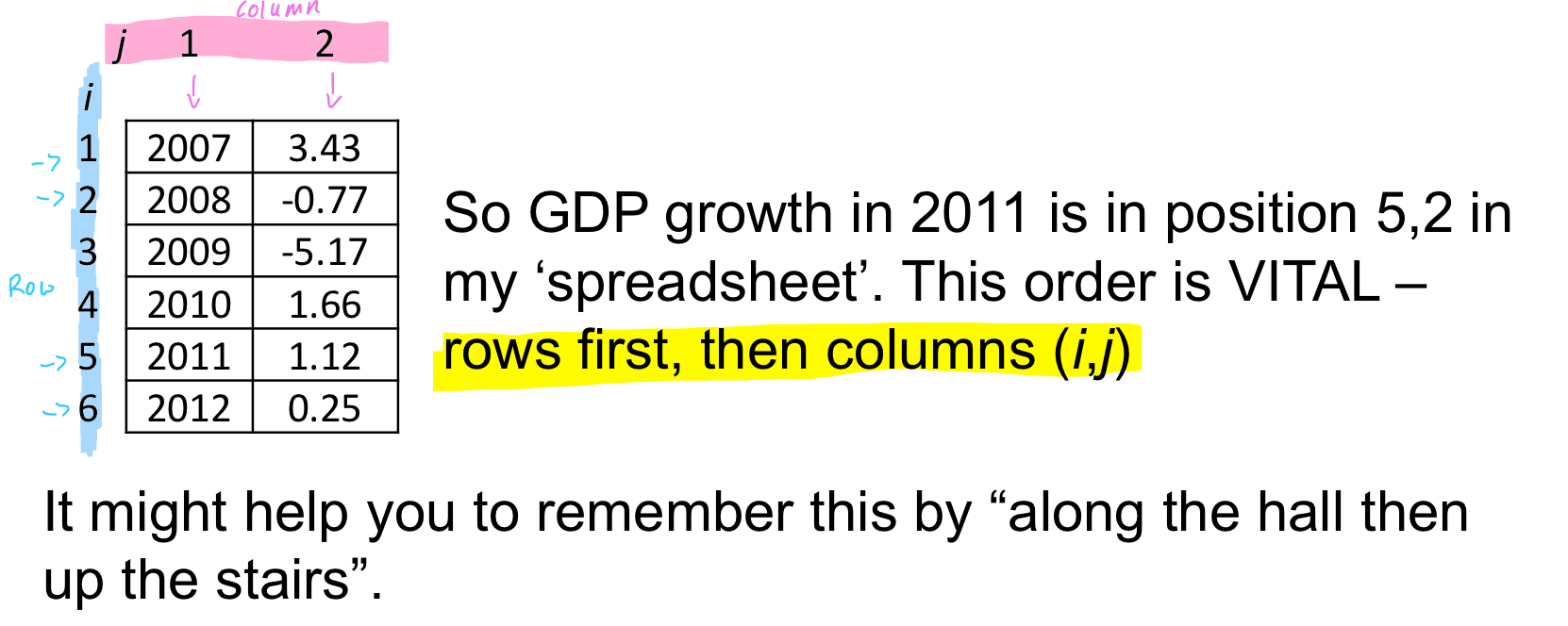
d
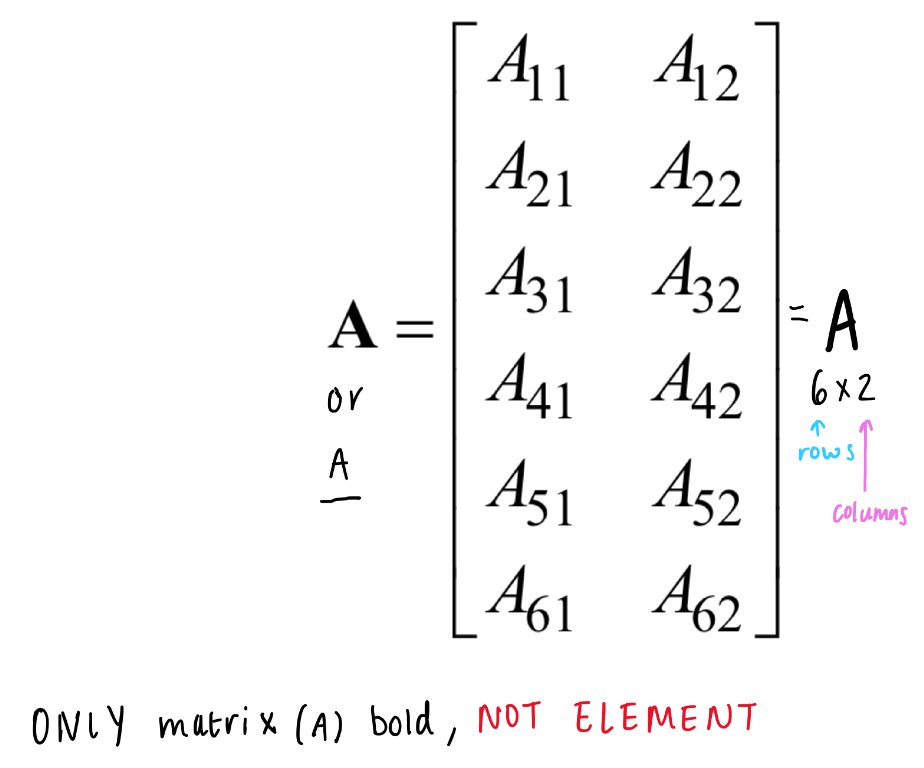
Matrix bold (collection of numbers)
Elements not bold (only one element, not a collection)
Can write elements with comma or without - e.g. A52 OR A5,2
What are the 6 different types of matrix’s?
Vector matrix - column matrix
Vector matrix - row matrix
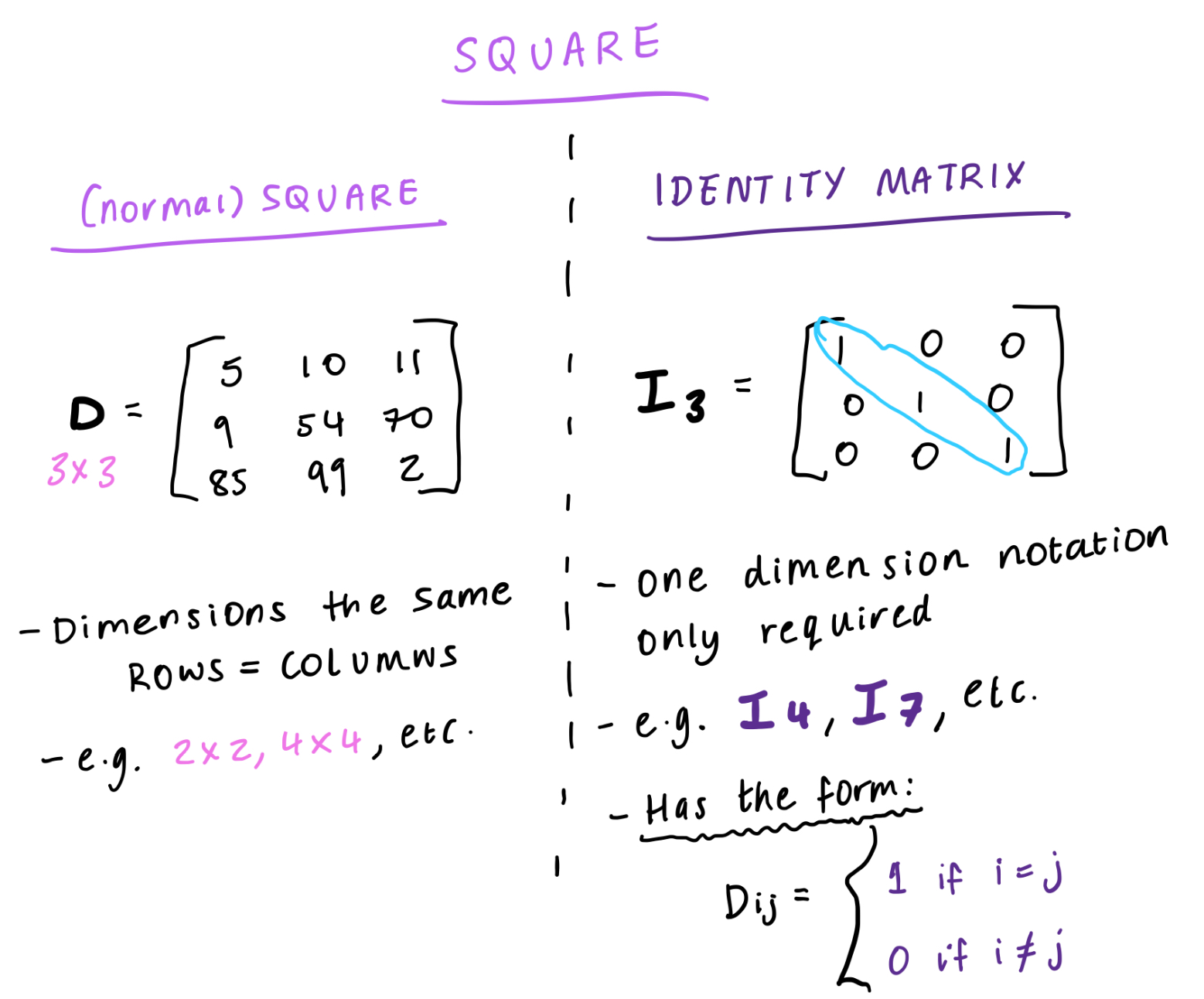
Square matrix
Square matrix - identity matrix
Null (zero) matrix
Scalar
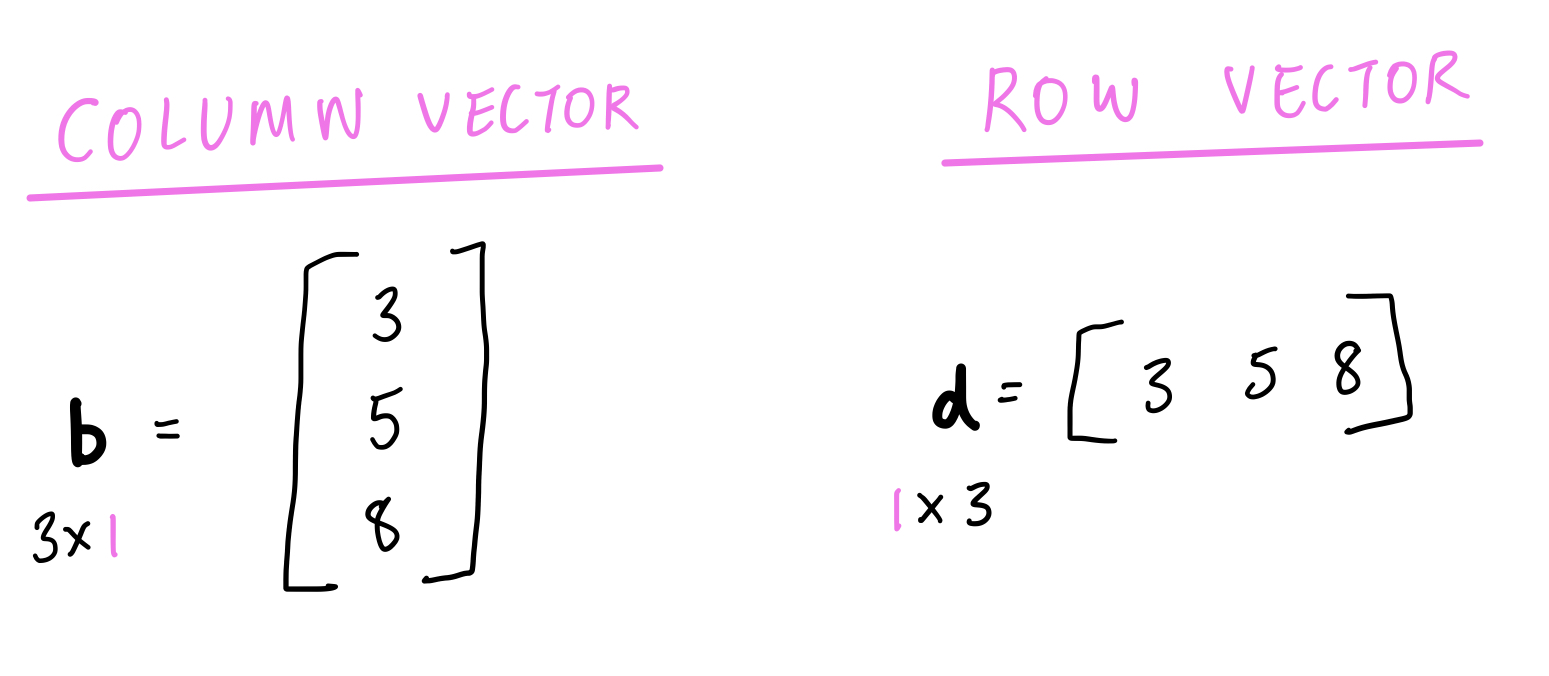
For the 2 types of vector matrix’s:
What is the special characteristic for both?
How do you denote a vector matrix?
One of the dimensions is EQUAL TO 1
A vector is denoted as a lower case bold
For the 2 types of square matrix:
Describe both and how they are different
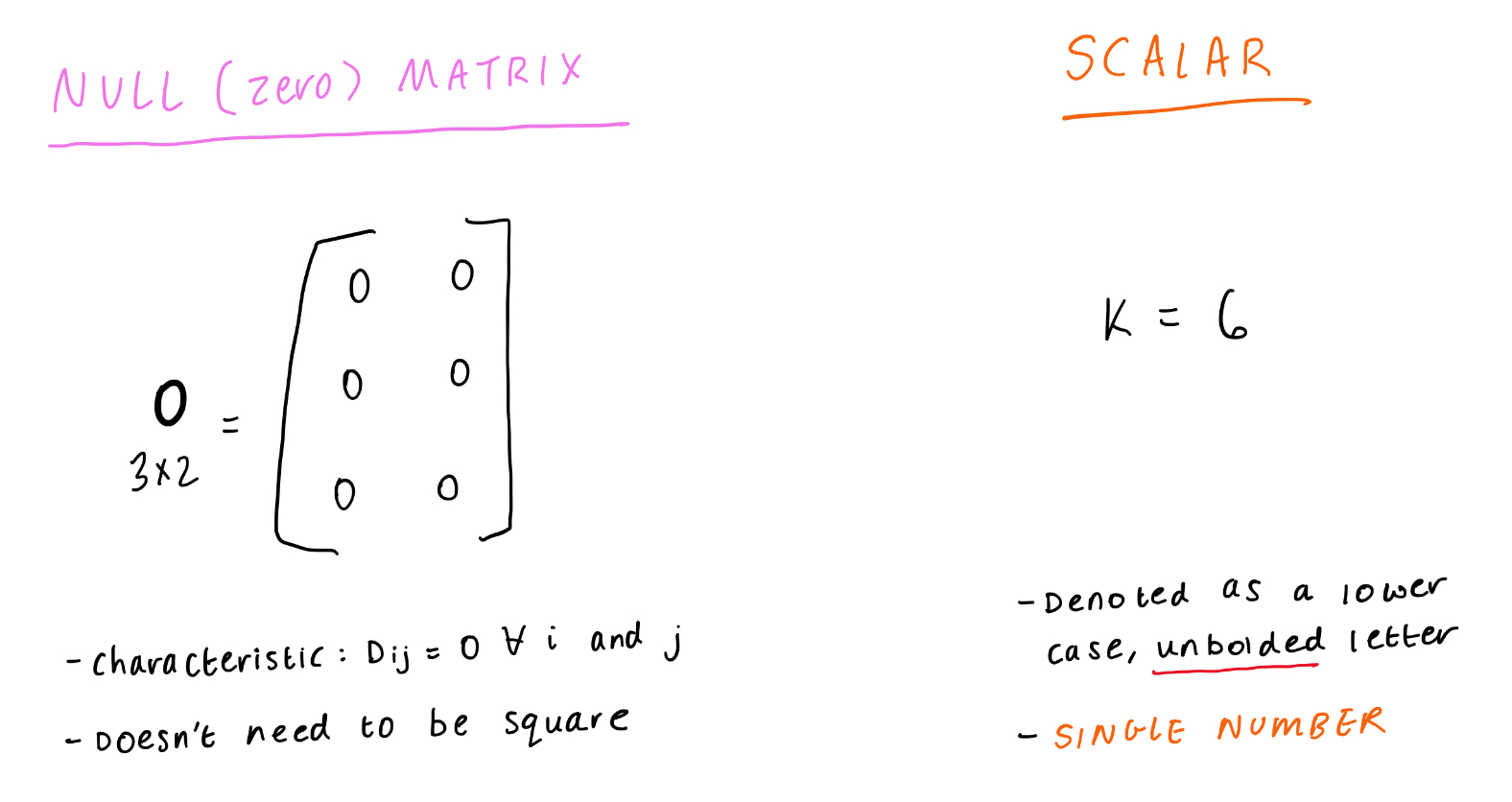
Describe a:
Null (zero) matrix
Scalar
*don’t ever really see null matrix*
Scalar = 1×1
What are the 3 different matrix operations?
Transpose (not used that often)
Addition/subtraction
Multiplication
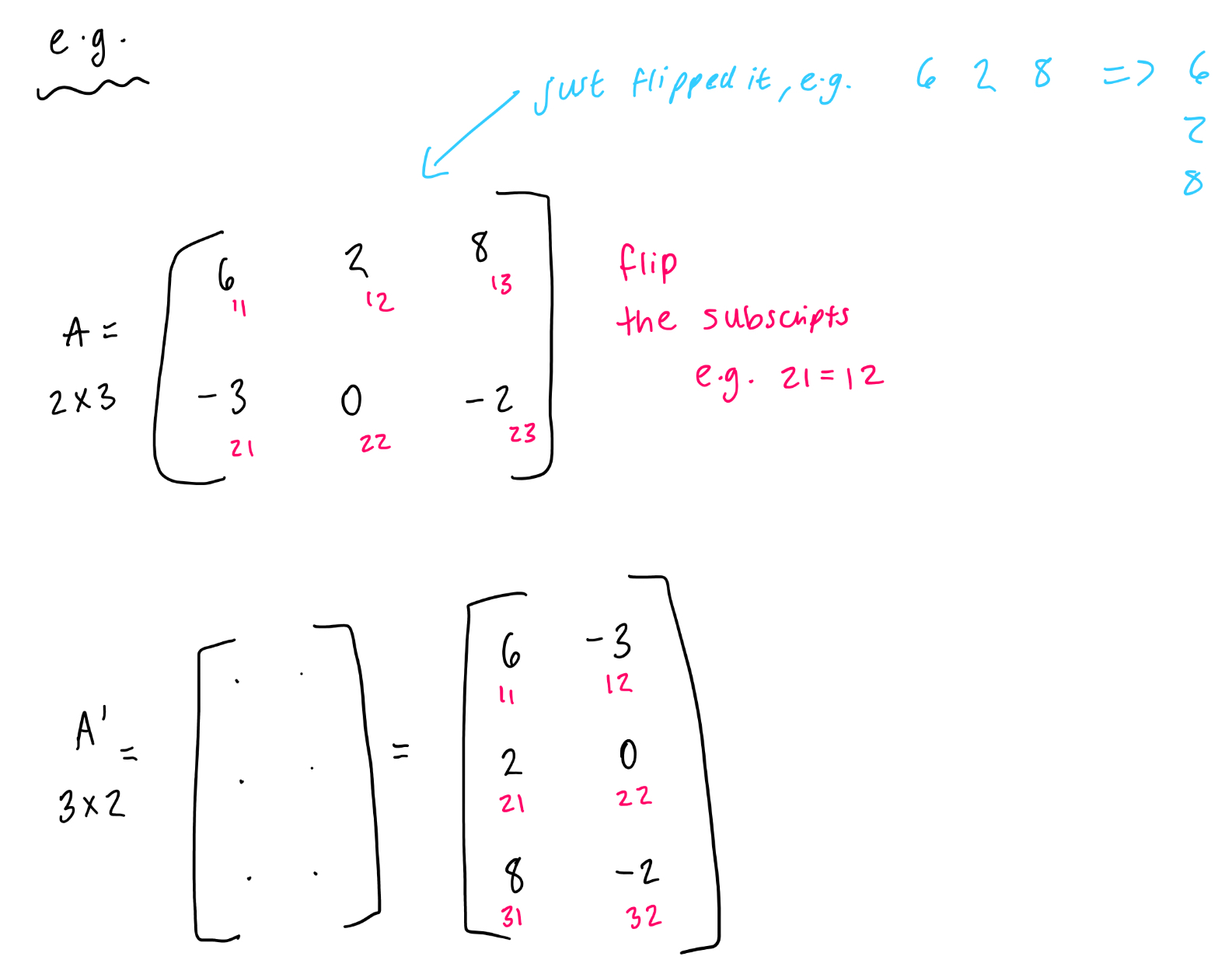
What is transpose?
“Flip things”
Denoted by a prime - e.g. A’ or b’
Exchanges the row and column position of the elements in the matrix - so A (3×2) becomes A (2×3)
E.g. position A12 = A’21
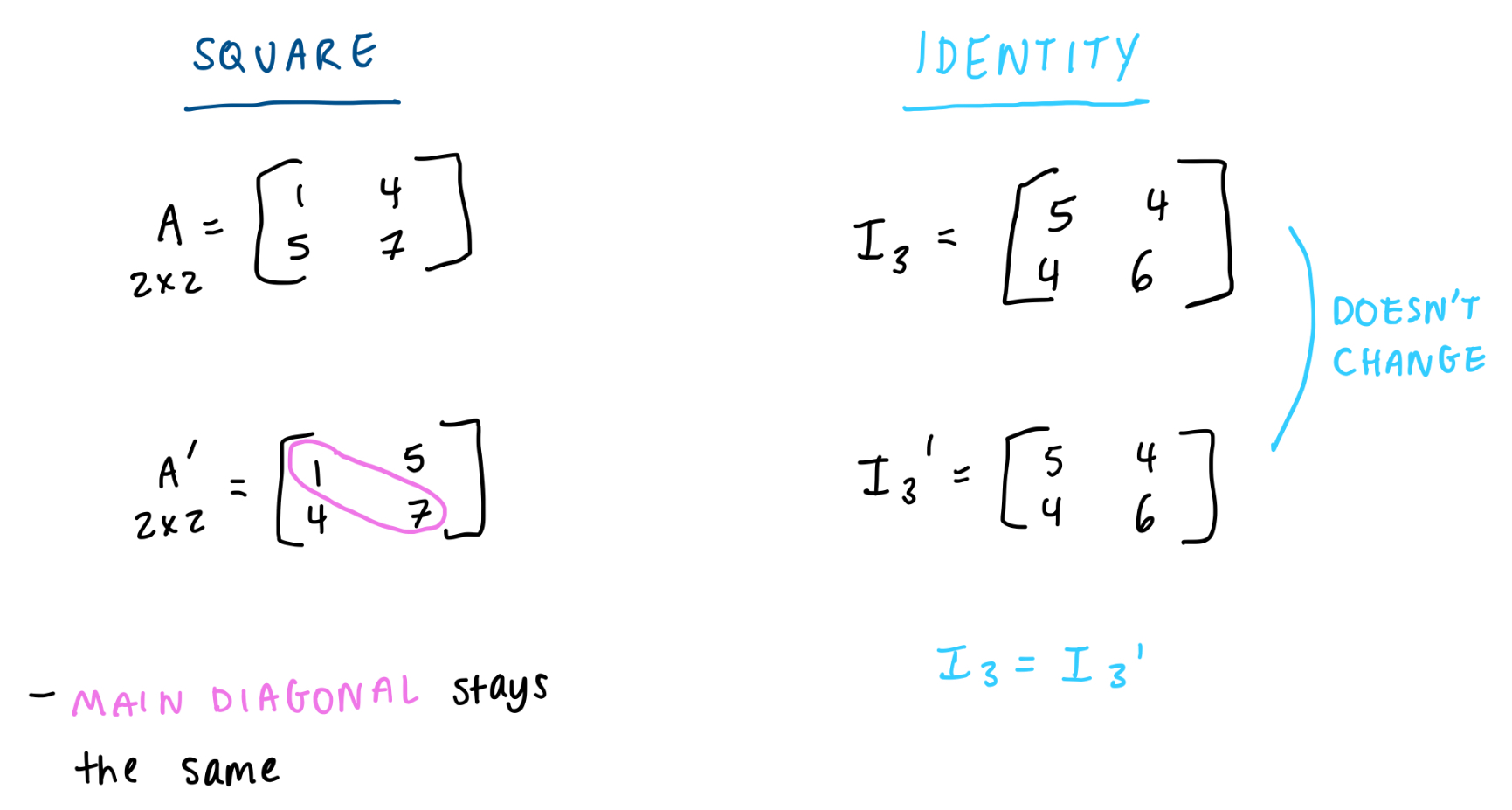
How is transpose different for:
a square matrix
a (square) identity matrix
Matrix’s where the transpose is the same (D=D’) = symmetric matrix
> ALL identity matrix are symmetric
> Has to be square to be a symmetric matrix
What are the conformability conditions for:
Addition/subtraction
Multiplication
Addition/subtraction: must be SAME DIMENSIONS
> e.g. A + B = 3×3
Multiplication: number of columns in 1st matrix = number of rows in 2nd matrix
> e.g. A = 3×2, B = 2×3 (2=2)
Are addition/subtraction & multiplication:
Commutative (swap position of numbers and still get the same answer)
Associative (grouping of numbers change and still get same answer)
Addition/subtraction:
Commutative > e.g. A + B = B + A
Associative > e.g. (A + B) + C = B (A + C)
Multiplication:
NOT commutative >
How do you add/subtract a matrix?
Elements in the same position are added/subtracted to form the resulting matrix
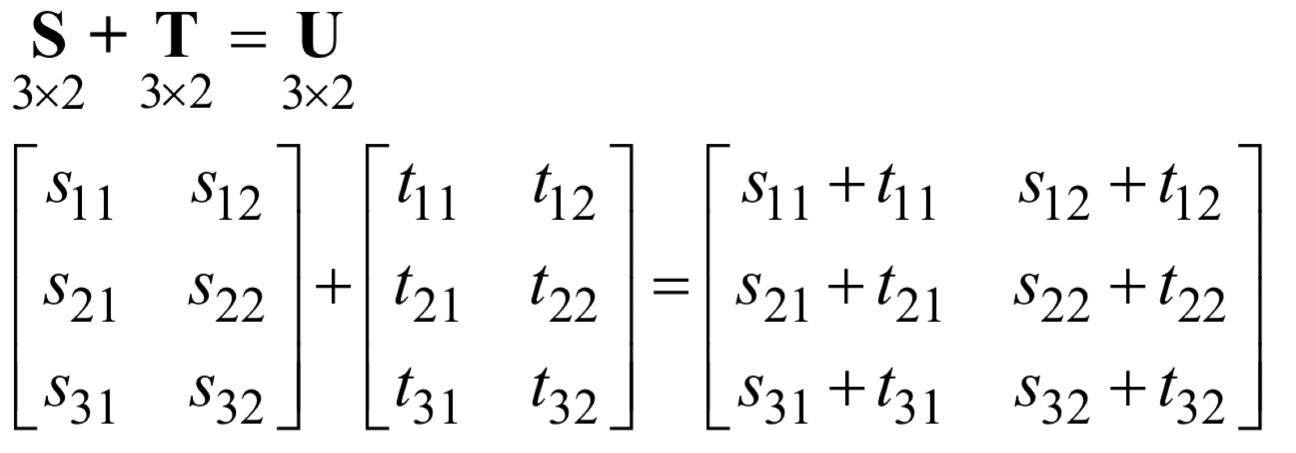
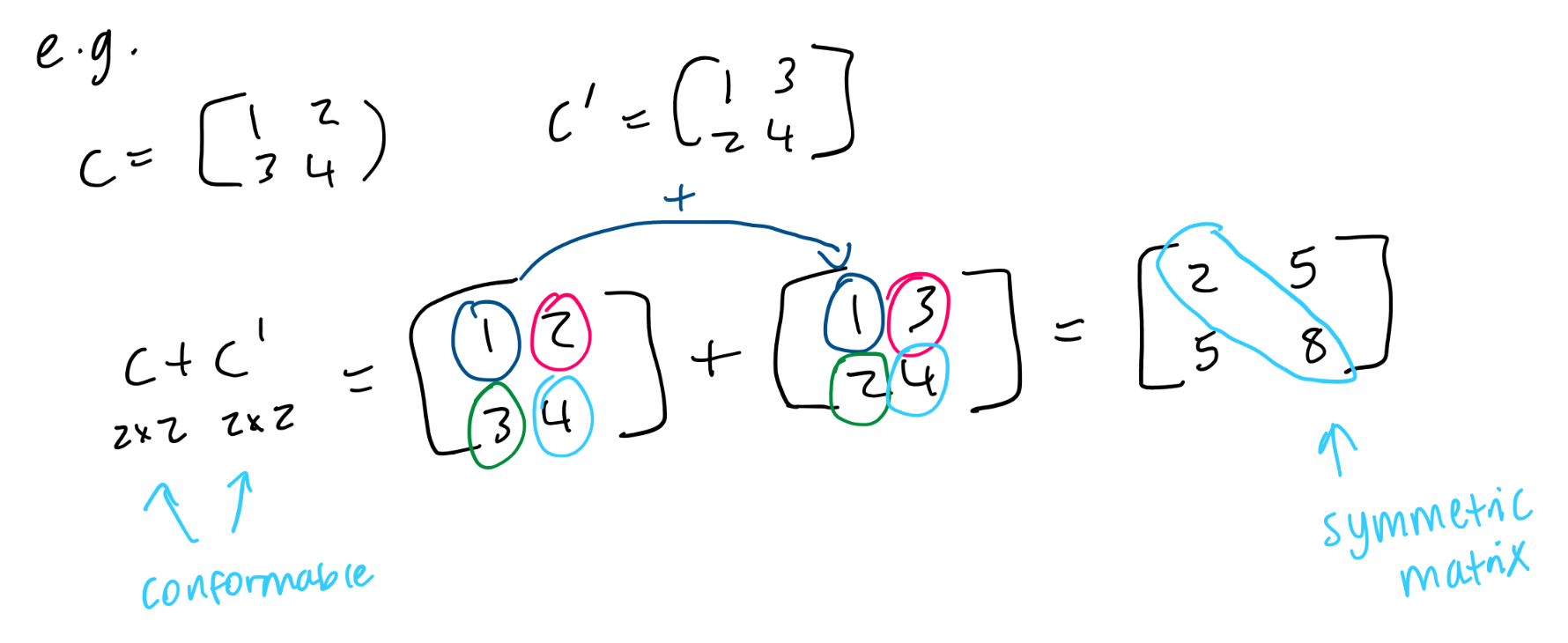
What happens when you add/subtract a square matrix and its transpose together?
Gives you a symmetric matrix
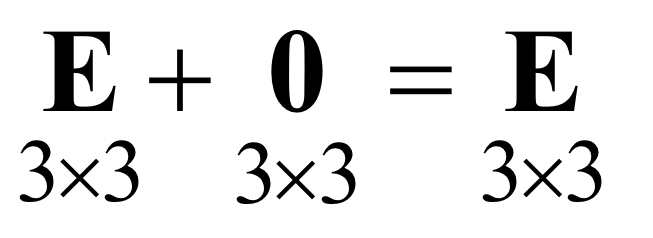
What happens if you add a matrix to a null matrix?
Leaves initial matrix unchanged (null = 0)
What are the steps to multiplying matrices:
Vectors/Square matrix
Scalars
Vectors/square:
Check for conformability - e.g. if A = 3×2 and B = 2×3 then this is conformable, if not then can’t multiply
Work out dimensions of resulting matrix - by looking at rows in 1st matrix & columns in 2nd matrix, e.g. 3×3 in this case
Draw out each position of new matrix - *optional for just makes it easier*, e.g. B11, B12, etc.
Multiply + add each position - e.g. B12 = row 1 (matrix 1) column 2 (matrix 2) > for each element multiply its corresponding element then add it up to get total of B12
Scalars:
Times everything by scalar - e.g. [ 2 3 8 ] and scalar = 2 then it would be [ 4 6 16 ]
![<p><span style="color: rgb(7, 0, 188);"><strong><u>Vectors/square:</u></strong></span></p><ol><li><p><strong>Check for conformability</strong> - e.g. if A = 3×2 and B = 2×3 then this is conformable, if not then can’t multiply</p></li><li><p><strong>Work out dimensions of resulting matrix</strong> - by looking at rows in 1st matrix & columns in <strong>2nd matrix, e.g. 3×3 in this case</strong></p></li><li><p><strong>Draw out each position of new matrix </strong>- *<em>optional for just makes it easier</em>*, e.g. B11, B12, etc.</p></li><li><p><strong>Multiply + add each position </strong>- e.g. B12 = row 1 (matrix 1) column 2 (matrix 2) > for each element multiply its corresponding element then add it up to get total of B12</p></li></ol><p></p><p><span style="color: rgb(227, 193, 0);"><strong><u>Scalars:</u></strong></span></p><ol><li><p><strong>Times everything by scalar </strong>- e.g. [ 2 3 8 ] and scalar = 2 then it would be [ 4 6 16 ]</p></li></ol><p></p>](https://knowt-user-attachments.s3.amazonaws.com/8bd28449-3549-4e7d-aaf7-cea4e3921d96.jpg)
What is a determinant?
What type of matrix can you work out its determinant for?
How is this denoted?
SINGLE NUMBER
> only for square matrix - denoted by ‘absolute value’
e.g. V 2×2 = |V|
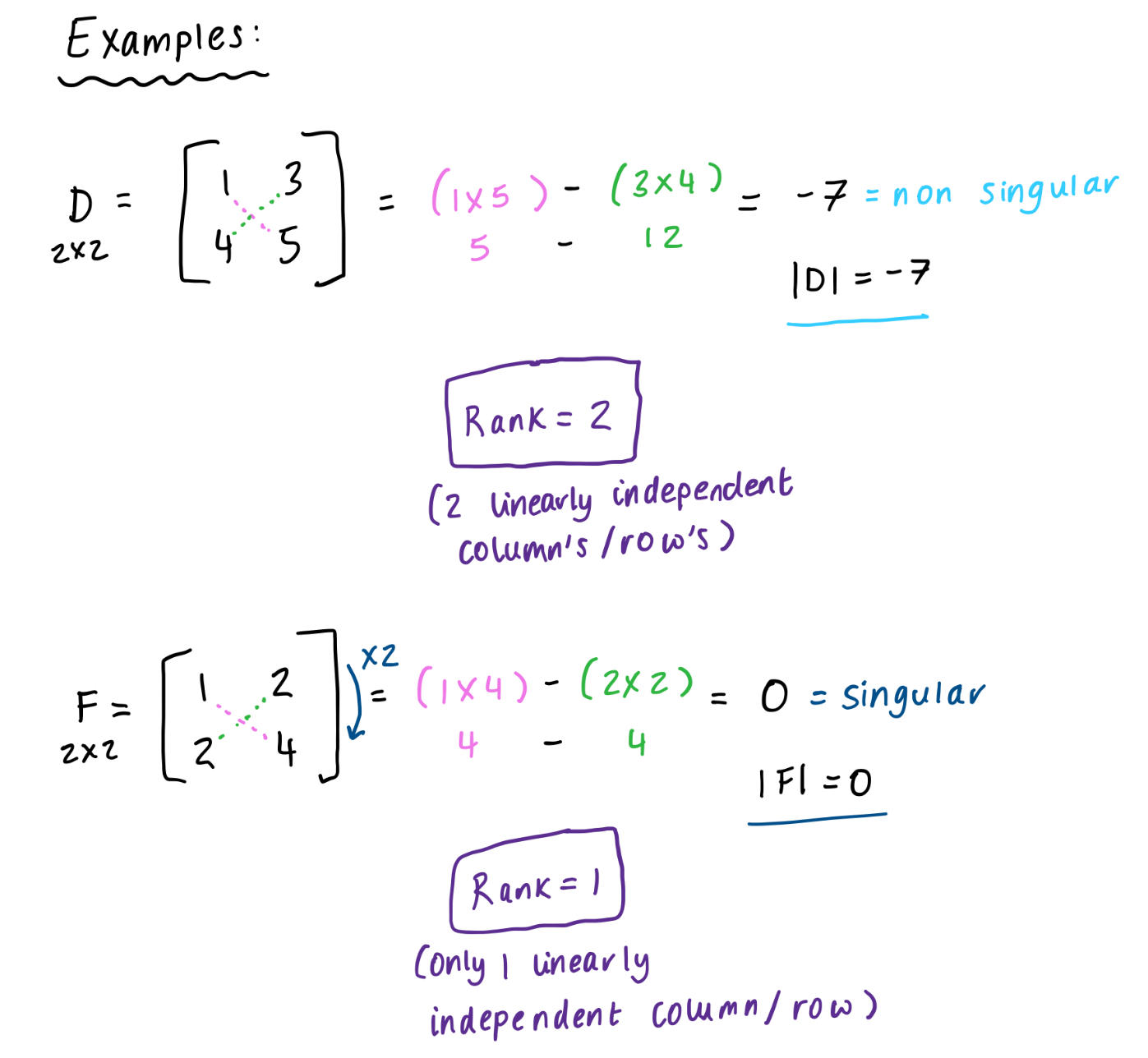
How do you work out the determinant for a (square) matrix which is a 2×2?
Subtracting diagonals - subtract product of the back diagonal elements, from the product of the forward diagonal elements, e.g. (V11xv22) - (V12-V21) = |V| *LEFT TO RIGHT*
Classify matrix - determine whether its:
Non-singular (any positive or negative number)
Singular (0) - has some linear dependency between rows and columns (collinearity)
Rank - it’s the number of linearly independent columns (or rows)
> If rank < columns then determinant = 0
> If rank = columns then determinant = non-singular
How do you work out the determinant for a (square) matrix which is a 3×3 or more?
Matrix multiplication = addition
Matrix determinant = subtraction
Matrix multiplication = addition
Matrix determinant = subtraction