11. Postpartum period - BP | Quizlet
 Call Kai
 Learn
Learn Practice Test
 Spaced Repetition
 Match
Match Flashcards
 Knowt Play
1/41

There's no tags or description
Looks like no tags are added yet.
Name | Mastery | Learn | Test | Matching | Spaced | Call with Kai |
|---|
No analytics yet
Send a link to your students to track their progress
42 Terms
What does the postpartum period in mares include
- last weeks of pregnancy
- parturition
- puerperium ending with involution of the uterus
What is the first heat altering foaling called & when does it usual occur
"Foal heat"
Occurs 9th day after birth / PP
May be used for AI but success rare is not high 30-60%
What is the success rate of AI in foal heat
30-60% not high but may be up to 80%
List postpartum disorders that require immediate assistance
1. Haemorrhage in gentle organs
(Horn usually inside close, can be inside also)
2. Uterine damage / rupture of the uterus
3. Uterine horn intussception
4. Damage to the vagina leading to prolapse of intestines /injury &/or bladder
5. Uterine prolapse
6. Prolapse of rectum
7. Retained placenta
Hemorrhage in the gentle organs
1. How does it occur
2. Mortality rate
3. Who is it most likely to affect
4. Symptoms
5. Predilection site
6. Diagnosis
7. Prognosis
Hemorrhage bc dengenerative changes of the uterine arteries, rarely bc of dystocia
50% die
Occurs in mares of all ages
Colic symptoms
Occurs in pregnant horn of uterus
Diagnosis - fresh blood in abdominal cavity
Prognosis - depending on site of rupture
- good: region of broad lig & hepatoma forms
- bad: rupture of lig & intra abdominal haemorrhage
What is the main cause of hemorrhage of the genital organs
Degeneration of the uterine arteries after parturition, rarely bc of dystocia
What percentage of mares die due to hemorrhage of the uterine arteries
50%
where does hemorrhage of the uterine arteries mainly occcur
In the pregnant horn
How is hemorrhage of the uterine arteries diagnosed?
Blood in the abdominal cavity & colic symptoms
What is the prognosis for hemorrhage of the uterine arteries
Prognosis - depending on site of rupture
- good: region of broad lig & hepatoma forms
- bad: rupture of lig & intra abdominal haemorrhage
List degrees of perineal injury
1st degree perineal laceration - not bad, small wound
2nd degree perineal laceration
3rd degree perineal laceration
Recto-vaginal fistula
Can you immediately repair perineal injury?
No have to wait, bc after parturition everything this is swollen need to wait a few weeks before surgery
How long should you wait before repairing a perineal injury due to dystocia
1 weeks, to allow swelling to go down
What is the incidence rate & breed predisposition for retained placenta
2-10.6%
Cold blooded mares most often
Friesian mares!
Also occurs in warm blooded
when is placenta considered retained
30mins ->3hrs
What risk factors can predispose a mare to retaining her placenta
1. Placentitis
2. Abortion
3. Short or pro-longed gestation
4. Uterine atony
5. Dystocia
6. Advanced age
7. Previous retained placenta
8. Frisian mares - 35%
What are the consequences of retained placenta
1. Endometritis
2. Peritonitis
3. Laminitis**
4. Endotoxemia
5. Lower fertility
Possible causes of retained placenta / foetal membranes in mares
1. Physiological: transferred or twin pregnancy
2. Histological disorders of development
3. Hormonal - oxytocin def or too high
4. Biochemical - enzymes disorders & mineral def
5. Bad environment
6. Dystocia
7. Previously retained
How to manage necrotising vaginitis
Manual removal of affected tissue
General treatment - ab, NSAIDs etc.
catheterise bladder - Lesion at urethra
Consequences of cervical damage
1. Endometritis
2. Conception issues
3 issues maintaining pregnancy
Consequences of damage to vulva during foaling
Leakage
Suction of air - pneumovagine
Promoting inflammation of uterus
What is lochia?
Vaginal discharge after delivery composed of endometrial tissue blood and lymph
What is lochia retention (lochiostasis)
Retention of normal vaginal discharge after foaling
Occurrence of lochiostasis
Accounts for 8% of pp need for medical & veterinary intervention
16% of mares pp
Older mares >14yrs & Multiparous are likely to have this
What is the consequences of lochiostasis
Reduced efficiency in mating in foal heat
Cause of endometritis puerperalis
Occurs due to retention of fluid causing irritation of the uterus
Predisposing factors to uterine infections PP / endometritis puerperalis
1. Vulvular damage
2. Perineal tear
3. Cervical trauma
4. Uterine or vaginal insertion of obstetric instruments
If you leave endometritis untreated what can it lead too
Metritis
Symptoms of endometritis puerperalis
1. Various types of vaginal discharge
2. Colic
3. Reduced appetite
4. Reduced milk production (check foal)
5. May lead to laminitis
Main consequences of advanced stage of endometritis
Laminitis
What is PBIE & aim of it
Persistent / post breeding induced metritis
Inflammation of the endometrium, a physiological reaction that occurs in endometrium of mares 48hrs after breeding
Aims to expel seminal plasma, excess sperm, microorganism & debris from uterine lumen to prepare of arrival of embryo
Mostly likely to occur when everything is close together:
PP, heat, mating, persistent breeding
When does PBIE occur
48hrs after breeding
What causes increase in likelihood of PBIE
What everything occurs close together
parturition -> heat -> mating -> persistent breeding
Overview of endometrial cytokines in mares resistant & susceptible to endometritis from before to 24hrs post breeding
0hrs - IL1B, TNF-a, IL6 - susceptible mares
2hrs - increase por inflam cytokines in both resistant & susceptible
6hrs - critical time in developing susceptibility
Resistant mares have high anti-inflam cyokine IL10, 1RN, ^
12hrs - susceptible mares increases neutrophils
Initiation resolution of inflammation
24hrs - cytokines return to base level,
In suss mares - neutrophili & up reg of pro inflam cytokines
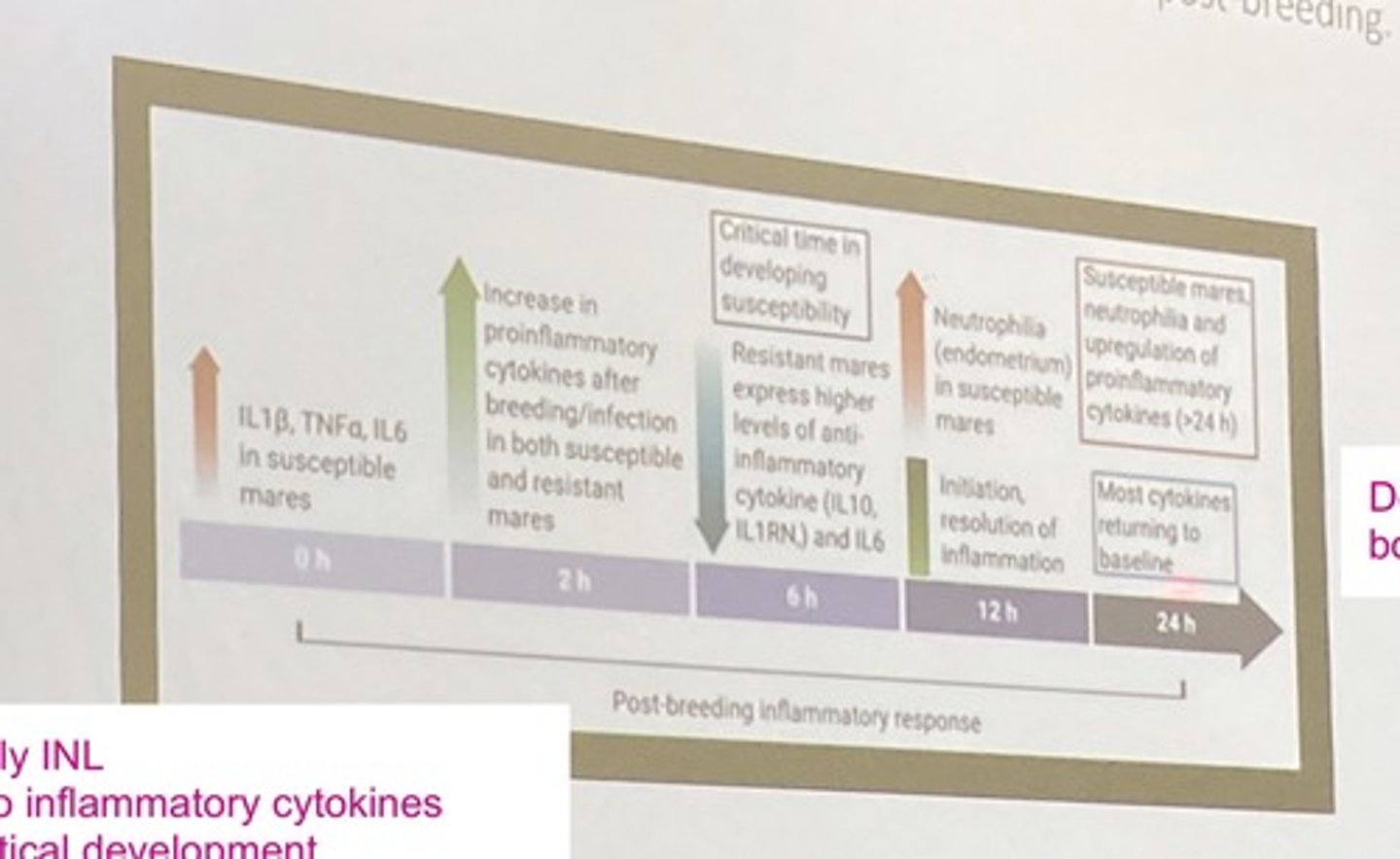
PBIE: 0hrs and 2hrs which pro inflammatory cytokines can be seen in susceptible & resistant mares
0hrs -> Susceptible - IL-1B, TNFa, IL-6, Resistant - none
2hrs -> BOTH
At what time after o sent of PBIE is the critical time for developing susceptibility
6hrs after, bc resistant mares start producing anti-inflammatory cytokines
which cytokines in resistant mares are procured 6hrs into PBIE
Anti-inflammatory cytokines - IL-10, IL1RN, IL-6
Difference in susceptible & resistant mares response to PBIE at 12hrs
Resistant - resolution of inflammation
Susceptible - neutrophilia
What occurs after 24hrs in PBIE in resistant & susceptible mares
Resistant - cytokines return to base level
Susceptible - neutrophilia & pro-inflammatory cytokines persist
What is seen in USG of PBIE
Fluid with white drops tissue or fiber cells
When does the embryo migrate from uterine tube to uterine lumen & why
Between 144-168 hrs after ovulation (6-7d) (1-2 weeks after foaling)
Bc increase progesterone, cervical tone
Side effects of prolonged PBIE
Persistent neutrophilia & excess intralumnal fluid accumuation, prolonged pro-inflammatory cytokines are all
- embryo toxic & lead to decreased fertility
- decreases the fertility of the mare