A9- Immune system and HIV ✅
 Call Kai
 Learn
Learn Practice Test
 Spaced Repetition
 Match
Match Flashcards
 Knowt Play
1/36

There's no tags or description
Looks like no tags are added yet.
Name | Mastery | Learn | Test | Matching | Spaced | Call with Kai |
|---|
No analytics yet
Send a link to your students to track their progress
37 Terms
what is an antigen?
foreign molecule / protein
stimulates an immune response leading to production of antibody
how are cells identified by the immune system?
each type of cell has specific molecules on its surface that identify it
often proteins→ have a specific tertiary structure
what types of cells and molecules can the immune system identify?
pathogens
cells from other organisms of same species (e.g. organ transplants)
abnormal body cells e.g. tumour cells or virus infected cells
toxins released by some bacteria
describe phagocytosis of pathogens (non specific immune response)
phagocyte recognises foreign antigens on pathogen /(is attracted by chemicals)
phagocyte engulfs pathogen by surrounding it will its cell membrane
pathogen contained in phagosome vesicle in cytoplasm of phagocyte
lysosome fuses with phagosome and releases hydrolytic enzymes called lysozymes
lysozymes hydrolyse pathogen
what does phagocytosis lead to…
presentation of antigens where antigens are displayed on the phagocyte cell-surface membrane
stimulating specific immune response ( cellular or humoral )
give 4 examples of antigen presenting cells
infected cells
phagocytes presenting antigens
transplanted cells
tumour cells
describe the response of T lymphocytes to a foreign antigen ( the cellular response )
T lymphocytes recognise (antigens on surface of) antigen presenting cells
Specific helper T cells with complementary receptors bind to antigen on antigen-presenting cell → activated and divides by mitosis to form clones which stimulate:
cytotoxic T cells → kill infected cells
specific B cells → humoral response
phagocytes → engulfs pathogen by phagocytosis
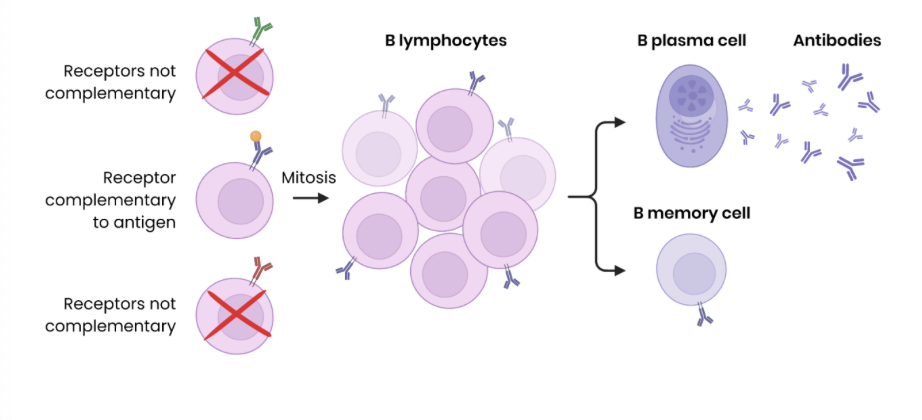
describe the response of B lymphocytes to a foreign antigen (the humoral response)
clonal selection:
specific B lymphocyte with complementary receptor binds to antigen
this is then stimulated by T helper cells ( which release cytokines )
so divides ( rapidly ) by mitosis to form clones
some differentiate into B plasma cells → secrete large amounts of monoclonal antibody
some differentiate into B memory cells → remain in blood for secondary immune response
what do B lymphocytes recognise?
free antigens eg. in blood or tissues, not just antigen presenting cells
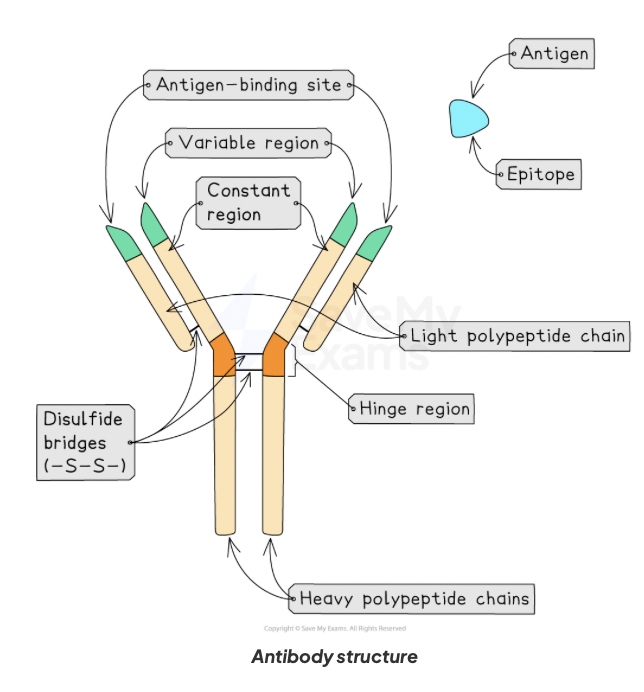
what are antibodies?
quaternary structure proteins ( 4 polypeptide chains )
secreted by B lymphocytes eg. plasma cells in response to specific antigens
bind specifically to antigens forming antigen-antibody complexes
describe the structure of an antibody
explain how antibodies lead to the destruction of pathogens
Antibodies bind to antigens on pathogens forming an antigen-antibody complex
Specific tertiary structure so binding site / variable region binds to complementary antigen
Each antibody binds to 2 pathogens at a time causing agglutination (clumping) of pathogens
Antibodies attract phagocytes
Phagocytes bind to the antibodies and phagocytose many pathogens at once
explain the difference between the primary and secondary immune response
Primary:
first exposure to antigen
antibodies produced slowly and at a lower concentration
takes time for specific B plasma cells to be stimulated to produce specific antibodies
memory cells produced
Secondary:
second exposure to antigen
antibodies produced faster and at a higher concentration
B memory cells rapidly undergo mitosis to produce many plasma cells which produce specific antibodies
what is a vaccine?
introduction of antigens → could be from attenuated pathogens
stimulating formation of memory cells
explain how vaccines provide protection to individuals against disease
specific B lymphocyte with complementary receptor binds to antigen
specific T helper cell binds to antigen presenting cell and stimulates B cell
B lymphocyte divides by mitosis to form clones
some differentiate into B plasma cells which release antibodies
some differentiate into B memory cells
on secondary exposure to antigen, B memory cells rapidly divide by mitosis to produce B plasma cells
these release antibodies faster and at a higher concentration
Explain how vaccines provide protections for populations against disease
Herd immunity - large proportion of population vaccinated, reducing spread of pathogen
→ large proportion of population immune so do not become ill from infection
→ fewer infected people to pass pathogen on / unvaccinated people less likely to come in contact with someone with disease
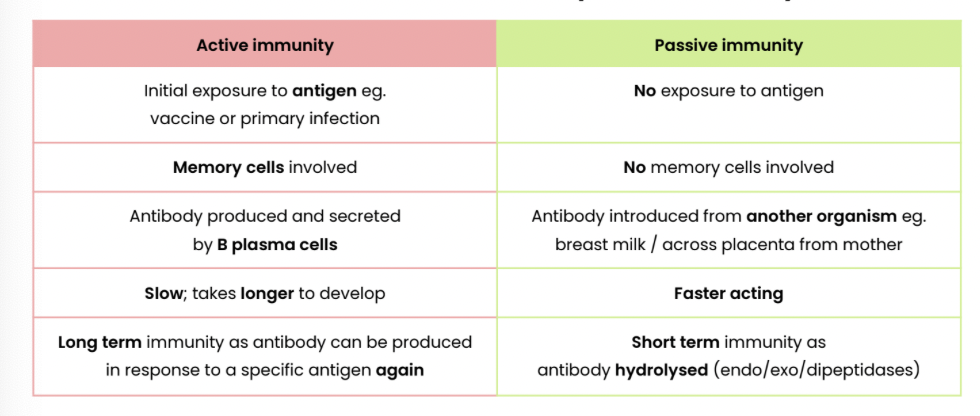
when does active immunity occur?
how can it be stimulated?
when the immune system is stimulated by an antigen to produce antibodies and memory cells
Naturally- from an infection or Artificially- from a vaccination
does active immunity create long or short term immunity and why?
long term immunity
due to memory cell formation
what is passive immunity?
when a person receives ready-made antibodies without producing them
why does passive immunity result in short term immunity?
ready-made antibodies injected
no immune response triggered
no memory cells formed
describe 5 differences between active and passive immunity
explain the effect of antigen variability on disease and disease prevention
antigens on pathogens change shape / tertiary structure due to gene mutations
so no longer immune ( from vaccine or prior infection )
B memory cell receptors cannot bind to changed antigen on secondary exposure
specific antibodies not complementary so cant bind to changed antigen
give 3 example applciations of how disease and disease prevention is affected by antigen variability
yearly new flu vaccines developed
no vaccine for HIV
can catch a cold many times
describe the structure of a HIV particle
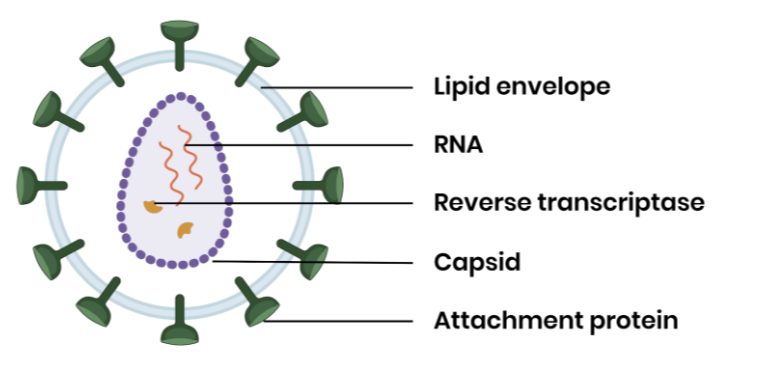
describe the replication of HIV in helper T cells
HIV attachment proteins bing to receptors on helper T cell
lipid envelope fuses with cell surface membrane, releasing capsid into cell
capsid uncoats, releasing RNA and reverse transcriptase
reverse transcriptase converts viral RNA to DNA
viral DNA is incorporated into T helper cell DNA
viral protein / capsid / enzymes are produced
DNA transcribed into HIV mRNA
HIV mRNA translated into new HIV proteins
virus particles assembled and released from cell
explain how HIV causes the symptoms of acquired immune deficiency syndrome (AIDS)
HIV infects and kills T helper cells (host cell) as it multiplies rapidly
so T helper cells can’t stimulate cytotoxic T cells, B cells and phagocytes
so B plasma cells cant’ release as many antibodies for agglutination and destruction of pathogens
immune system deteriorates → more susceptible to infections
pathogens reproduce, release toxins and damage cells
explain why antibodies are ineffective against viruses
viruses do not have metabolic processes eg don’t make proteins
viruses do not have bacterial enzymes / murrain cell wall
what is a monoclonal antibody
Antibody produced from genetically identical / cloned B lymphocytes / plasma cells
So have same tertiary structure
Explain how monoclonal antibodies can be used in medical treatments
Monoclonal antibody has a specific tertiary structure / binding site / variable region
Complementary to receptor / antigen found only on a specific cell type (eg. cancer cell)
Therapeutic drug attached to antibody
Antibody binds to specific cell, forming antigen-antibody complex, delivering drug
Some monoclonal antibodies are also designed to block antigens / receptors on cells.
Explain how monoclonal antibodies can be used in medical diagnosis
Monoclonal antibody has a specific tertiary structure / binding site / variable region
Complementary to specific receptor / antigen associated with diagnosis
Dye / stain / fluorescent marker attached to antibody
Antibody binds to receptor / antigen, forming antigen-antibody complex
Examples vary, eg. pregnancy tests
use of antibodies in ELISA test to detect antigens
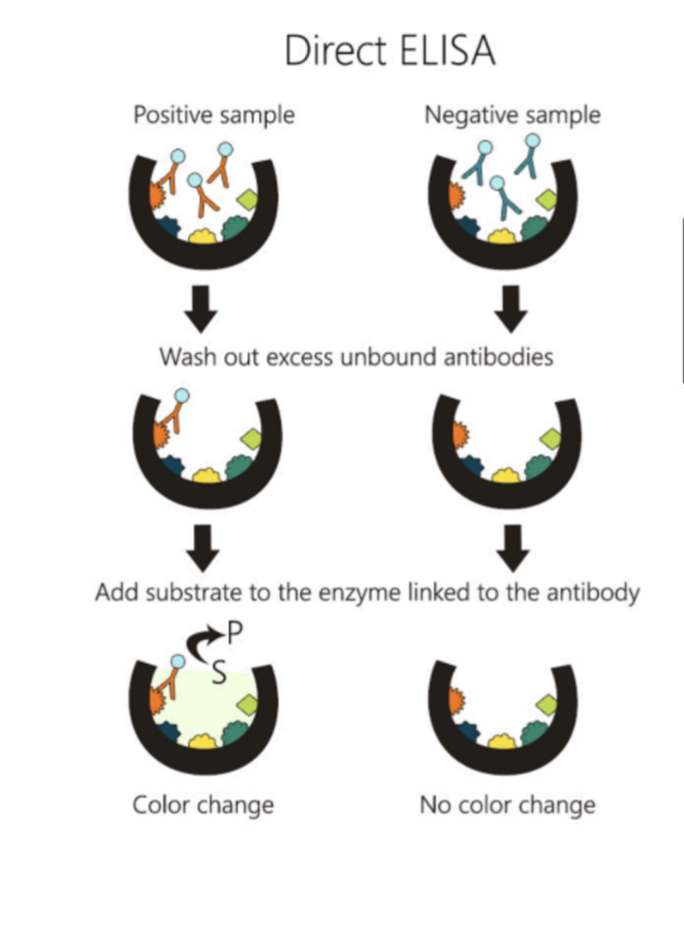
describe the method for the direct ELISA test
(uses a single antibody that is complementary for the antigen you’re testing for:)
Attach sample with potential antigens to well
add complementary monoclonal antibodies with enzymes attacked → bind to antigen of interest if present
Wash well → remove unbound antibodies (to prevent false positive)
Add substrate → if antigen present/ positive result→ enzymes converts substrate into coloured product → colour change = positive result
use of antibodies in ELISA test to detect antibodies
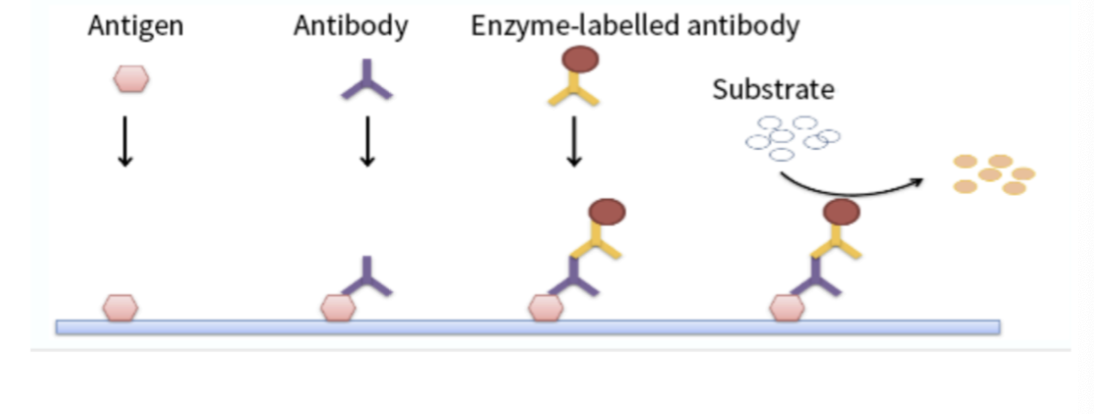
describe the method for the indirect ELISA test
(uses two different antibodies- used to detect pathogenic infection eg. HIV)
attach specific antigens to well
add sample of blood plasma with potential antibodies, if specific antibodies are present these will bind to antigens at bottom of well
wash well to remove unbound antibodies
add secondary complementary monoclonal antibodies with enzyme attached
secondary antibodies bind to primary antibody
wash well→ remove unbound antibodies
add substrate→ enzymes create products that causes a colour change (positive result)
suggest the purpose of a control well in the ELISA test ( contains now target antigen)
compare to show only enzyme causes colour change
compare to show all unbound antibodies have been washed away
suggest why failure to thoroughly wash the well can result in a false positive in the ELISA test
antibody with enzyme remains even if it hasn’t bound to antigen
so substrate converted into colour product
Suggest some general ethical issues associated with the use of vaccines and monoclonal antibodies
Pre-clinical testing on / use of animals → potential stress / harm / mistreatment
○ But animals not killed & helps produce new drugs to reduce human suffering
Clinical trials on humans → potential harm / side-effects
Vaccines → may continue high risk activities and still develop / pass on pathogen
Use of drug → potentially dangerous side effects
Suggest some points to consider when evaluating methodology relating to the use of vaccines and monoclonal antibodies
Was the sample size large enough to be representative?
Were participants diverse in terms of age, sex, ethnicity and health status?
Were placebo / control groups used for comparison
Was the duration of the study long enough to show long-term effects?
Was the trial double-blind (neither doctor / patient knew who was given drug or placebo) to reduce bias?
Suggest some points to consider when evaluating evidence and data relating to the use of vaccines and monoclonal antibodies
What side effects were observed, and how frequently did they occur?
Was a statistical test used to see if there was a significant difference between start & final results?
Was the standard deviation of final results large, showing some people did not benefit?
Did standard deviations of start & final results overlap, showing there may not be a significant difference?
What dosage was optimum? Does increasing dose increase effectiveness enough to justify extra cost?
Was the cost of production & distribution low enough?