AP Psychology - Unit 1 (Part 2)
 Call Kai
 Learn
Learn Practice Test
 Spaced Repetition
 Match
Match Flashcards
 Knowt Play
1/187

There's no tags or description
Looks like no tags are added yet.
Name | Mastery | Learn | Test | Matching | Spaced | Call with Kai |
|---|
No analytics yet
Send a link to your students to track their progress
188 Terms
Cognitive Neuroscience
the study of the brain activity linked with cognition, including language, perception, memory, and thinking
Levels of Consciousness
Conscious level
Nonconscious level
Preconscious level
Subconscious level
Unconscious level
Conscious Level
the information about yourself and your environment you are currently aware of
Nonconscious Level
bodily processes controlled by your mind that we are not usually (or ever) aware of
Preconscious Level
information about yourself or your environment that you are not currently thinking about but could be.
→ for example, if I asked you to remember your favorite toy as a child, you could bring that preconscious memory to your conscious level.
Subconscious Level
information that we are not consciously aware of, but we know must exist due to behavior
→ for example, behaviors demonstrated in the mere-exposure effect suggest that some information is accessible to our subconscious level but not our conscious level
Unconscious Level
some events and feelings are unacceptable to our conscious mind and are repressed into the unconscious mind
Altered States of Consciousness
Spontaneous State of Consciousness
Physiological State of Consciousness
Psychological State of Consciousness
Spontaneous State of Consciousness
occur naturally without any intentional effort or external chemical influence
example: dreaming
Physiological State of Consciousness
triggered by biological or "physical" changes in the body’s chemistry
example: hallucinations
Psychological State of Consciousness
induced by mental techniques or social influence.
example: hypnosis
Dual Processing
the concept that the brain processes information consciously and coconsciously
→ example: when seeing a bird, you’ll be consciously aware of which type of bird it is but unconsciously be taking in information about its color, size, movement, etc.
Parallel Processing
the ability to simultaneously process multiple pieces of information or stimuli at the same time
Sequential Processing
the processing of one aspect of a problem at a time; it is used for processing new information or solving difficult problems
Blindsight
the ability to respond to visual information without consciously seeing it; it explains how blind people can sense objects in their environment
Circadian Rhythm
our biological clock that regulates our mood, temperature, and arousal through a 24-hour cycle
Describe the changes the circadian rhythm causes to our body during a 24-hour period
As morning approaches, our body temperatures rise and we begin to wake up. Our temperature and arousal peak around midday, then start to dip as we approach dusk
Why do most people prefer to sleep in colder temperatures?
Because our circadian rhythm causes our temperatures to decrease at night, colder temperatures help with that process, signaling it’s time to sleep and thus promoting faster and deeper sleep.
Other Biological Rhythms
90-minute sleep cycle
28-day menstrual cycle
annual hibernation/migration
mating seasons
Sleep
A state of marked by relatively low levels of physical activity and reduced sensory awareness that is distinct from periods of rest that occur during wakefulness.
a periodic, natural loss of consciousness
Why do we sleep?
Protection
Recuperation
Restore/rebuild memory
Feeds creative thinking
Growth
Restoration Theory
Sleep:
helps restore, repair & supports growth (muscles & brain tissues)
restores (reenergize) hormones, neurotransmitters, & energy
helps restore & builds our memories
helps the brain "flush out" metabolic waste (toxins) that built up during the day.
most of these functions of sleep occur during REM sleep
sleep-deprived individuals struggle physically and cognitively
Memory Consolidation Theory
the idea that sleep plays a crucial role in the process of converting short-term memories into long-term memories by strengthening neural connections
Energy Conservation Theory
based on the evolutionary perspective
The primary function of sleep is to minimize energy consumption when the body is at rest, allowing the body to redirect some energy towards restorative processes, such as tissue repair, immune function, and memory consolidation
during sleep, the body and body enter a state of reduced energy expenditure in order to conserve resources and maintain optimal functioning
during sleep, the body’s metabolic rate decreases, leading to a reduction in energy consumption and heat production
Wakefulness
Characterized by high levels of sensory awareness, thought, and behavior
Sleep Cycle
90-120 min. cycle
consists of four stages
Each stage involves different brainwaves pattern, physiological changes & psychological phenomena
Stages of Sleep
NREM Stage 1 (NREM-1)
NREM Stage 2 (NREM-2)
NREM Stage 3 (NREM-3)
NREM-2
REM
NREM Sleep (stage 1-3)
stands for: non-rapid eye movement
Decreases in length as night sleep progresses
Vague, partial images and stories
Night terrors (NREM 3) & Sleepwalking and talking (NREM 3)
Essential part of sleep for the body
Sleep Onset
process of transitioning from wakefulness into sleep
a person might experience mild hallucinations during this stage
hypnagogic sensations can be experienced in late sleep onset
NREM-1
light sleep, easily woken
EEG shows theta waves with high-frequency and low-amplitude
can experience hallucinations and hypnagogic sensations
Hypnagogic Sensations
bizarre experiences such as jerking with a sensation of falling
NREM-2
fully asleep, but still light sleep (but deeper than NREM-1)
EEG shows theta waves with sleep spindles and K-complexes
theta waves are a bit slower (low frequency) and higher in amplitude compared to NREM-1
Sleep Spindles
random short bursts of rapid brain waves
K-complexes
random tall bursts of activity
NREM-3
deep sleep
also called delta sleep (or deep or slow-wave sleep)
EEG shows delta waves (lowest frequency and highest amplitude)
a person in NREM-3 is hard to wake up and is very disoriented and groggy if awakened
slower wave (lower frequency) → deeper sleep → less aware a person is of environment
Purpose of NREM-3
very important in:
releasing growth hormones in children
fortifying immunity
restoration of resources used while we are awake and active
How does increasing exercise affect our sleep and why?
Increasing exercise will increase the amount of time we spend in NREM sleep in order to replenish the resources used.
Predict what would happen to a person deprived of delta sleep
they would be more susceptible to illness and will feel physically tired
REM
stands for: rapid eye movement
also known as paradoxical sleep since brain waves appear as active and intense as they do when we are awake but the body is paralyzed
a period of intense activity, in which eyes dart back and forth and many of our muscles may twitch repeatedly
dreams (especially vivid dreams) are more likely to occur in this sleep stage
becomes longer & more frequent as night progresses
EEG shows beta waves
What affects how much time a person spends in REM sleep?
Age: as we age, the amount of time spent in REM sleep decreases
Stress: more stress → longer periods of REM sleep
REM Deprivation: leads to REM Rebound
REM Rebound
the tendency for REM sleep-deprived individuals to experience more and longer periods of REM sleep the next time they are allowed to sleep normally
What does Sleep Lab research?
muscle tone
oxygen level
heart rate
brain wave
temperature
What affects our sleeping?
Age: as we age, our total need for sleep decreases
Genetics
Environment
Exposure to light
Brain:
Pineal gland: adjust melatonin levels
Reticular Formation: monitors sleep and wake cycle
Suprachiasmatic Nucleus (SCN)
Suprachiasmatic Nucleus
a pair of cell clusters in the hypothalamus that control circadian rhythm
What happens to our sleep as we get closer to morning (or whenever we naturally wake up)?
we spend more time in NREM stages 1 and 2 and in REM sleep and less in NREM stage 3
Effects of Sleep Deprivation
diminished attentional focus on memory consolidation
gain weight
get sick
be irritable and/or depressed
feel old
increases risk of high bp
increased ghrelin and decreased leptin
reduced muscle strength and slower reaction time and motor learning
increased production of fat cells & greater risk of obesity
increased inflammation in joints and arthritis
suppression of immune cell production and increased risk of viral infections
Sleep Disorders
Insomnia
Narcolepsy
Sleep Apnea
REM Sleep Behavior Disorder
Night Terrors
Somnambulism
Insomnia
persistent problems falling or staying
Causes of Insomnia
stress
irregular sleep schedule
pain/illness
diet/medication
Insomnia Treatment
reduce intake of caffeine or other stimulants
exercising at appropriate times (not right before bedtime) during the day
maintaining a consistent sleep pattern
stress management
sleeping pills
but only with caution as they disturb sleep patterns during the night and can prevent truly restful sleep
Narcolepsy
a sleep disorder, characterized by uncontrollable sleep attacks
sleep episodes are often associated with cataplexy
symptoms include:
cataplexy
falling in REM sleep at unpredictable times throughout the day
Cataplexy
a temporary, sudden loss of muscle tone or muscle weakness
Sleep Apnea
a sleep disorder characterized by temporary cessations of breathing during sleep and repeated momentary awakenings to gasp for air
robs the person of deep sleep and causes tiredness and possible interference with attention and memory
Types of Sleep Apnea
obstructive
central
complex
Risk Factors of Sleep Apnea
Weight
Smoking
Gender
Age
Thick neck
Narrow airway
nasal obstruction
Possible Treatments for Sleep Apnea
lose weight
surgery
CPAP machine
Obstructive Sleep Apnea
throat muscles relax & press down on windpipe causing inability to breathe
Central Sleep Apnea
brain doesn’t send proper signals to muscles controlling our breathing, causing breathing to stop
Complex Sleep Apnea
treatment-emergent
occurs when both obstruction (as well as) miscommunication between brain & spinal cord & the muscles that allow you to breathe
REM Sleep Behavior Disorder
a rare sleep disorder in which the person is not immobilized during REM sleep, physically “acting out” their dream
Night Terrors
a sleep disorder characterized by high arousal and an appearance of being terrified
unlike nightmares, night terrors occur during NREM-3 sleep and are not remembered
usually affect young children
Somnambulism
sleepwalking
occur more commonly in children
occur during the first few hours of the night in NREM-3
Dreams
sequences of images, emotions, and thoughts passing through a sleeping person’s mind.
Although dreams can occur at any stage of sleep, they are most vivid during REM sleep.
Lucid Dreams
dreams in which we are aware dreaming and can control the storyline of the dream
Activation-Synthesis Theory
Developed by Allan Hobson and Robert McCarley.
dreams are the brain’s interpretations of what is happening physiologically during REM sleep
as we are in REM sleep, the limbic system becomes active and randomly fires. Our cerebral cortex tries to interpret random electrical activity we have while sleeping by weaving them into stories
explains why some dreams make no sense
weakness: the individual’s brain is weaving the stories, which still tells us something about the dreamer
Information-Processing Theory
The brain processes the events and the stress of the day and consolidate our memories during REM dreams
The function of REM may be to integrate the information processed during the day into our memories
Weakness: why do we dream about things we have not experienced?
According to the Information-Processing Theory, how does stress during the day affect our dreams?
Stress during the day will increase the number and intensity of dreams
According to the information processing theory, how does babies’ sleep differ from that of adults?
Babies may need more REM sleep than adults because they process so much new information every day
Physiological Function Theory of Dreams
Dreams provide the sleeping brain with periodic stimulation to develop and preserve neural pathways
Weakness: this theory doesn’t explain why we experience meaningful sleep
According to the Physiological Function Theory of Dreams, why do kids need more sleep?
Neural networks of newborns are quickly developing; therefore, they need more sleep
Cognitive Theory of Dreams
Dreams are the expression of a person's thoughts
A dream is conceived as a pictorial representation of the dreamer's conceptions, usually about himself, other people, the world, impulses, prohibitions, penalties, and conflicts
They reveal the structure of how we envision our lives
Weakness: does not address the neuroscience of dreams
Wish-Fulfillment Theory
suggested by Sigmund Freud
Dreams are simply ways we play out all of the things we want to do subconsciously (hidden wishes) that may be otherwise unacceptable or that we can’t consciously face.
Dreams consist of manifest & latent content
Weakness:
lacks any scientific support
dreams may be interpreted in many different ways
Manifest Content
actual content of the dream
Latent Content
hidden or symbolic meaning of the dream
Sleep Paralysis
a feeling of being conscious but unable to move
occurs when a person passes between stages of wakefulness and sleep.
During these transitions, you may be unable to move or speak for a few seconds up to a few minutes.
Sensation
the process by which our sensory receptors and nervous system receive and represent stimulus energies from our environment
Perception
the process of organizing and interpreting sensory information, enabling us to recognize meaningful objects and events.
Bottom-up Processing
analysis that begins with the sensory receptors and works up to the brain’s integration of sensory information (sensation first)
Top-down Processing
information processing guided by higher-level mental processes, as when we construct perceptions drawing on our experiences and expectations (experience first)
Transduction
process of converting one form of energy to another
→ in sensation, it is the converting of sensory stimulation into neural impulses
Psychophysics
studies the relationships between the physical characteristics of stimuli and our psychological experience of them
Signal Detection Theory
Detection of a stimulus not only relies on the strength of the stimulus, but also our psychological state - our experience, expectations, motivation, alertness, etc.
predicts how and when we detect the presence of a faint stimulus amid background stimulation, thus assuming there is no single absolute threshold and that detection depends on the person.
Subliminal Stimuli
Stimuli you cannot consciously detect 50% of the time and are below your absolute threshold
Priming
a phenomenon in which exposure to one stimulus influences how a person responds to a subsequent, related stimulus.
Perceptual Set
a mental predisposition to perceive one thing and not another
Absolute Threshold
the minimum amount of stimulus energy needed to detect a particular stimulus 50% of the time
studied by Gustav Fechner
Difference Thresholds
minimum difference between two stimuli required for detection 50% of the time
Weber’s Law
to be perceived as different, two stimuli must differ by a constant percentage rather than a constant amount
Sensory Adaptation
diminished sensitivity as a consequence of constant stimulation or exposure
Sensory receptors become less responsive to a constant, unchanging stimulus. Receptors stop firing as frequently
Sensory Habituation
Reduced perception or response to a repeated, but not necessarily constant, stimulus.
our perception of sensations is partially due to how focused we are on them
brain learns to ignore the stimulus
What does the light’s wavelength determine?
the hue (color)
What does the light’s amplitude determine?
the intensity (the amount of energy the wave contains) or brightness
→ higher amplitude = more contained energy = brighter/more intense color
Types of Lights Waves with Wavelengths Longer than Visible Light
Infrared Waves
Microwaves
Radio Waves
Types of Lights Waves with Wavelengths Shorter than Visible Light
Ultraviolet Waves
X-rays
Color Hues from Shortest Wavelengths to Longest
red
orange
yellow
green
blue
indigo
violet
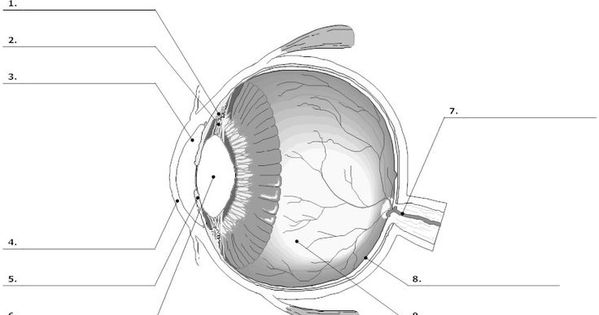
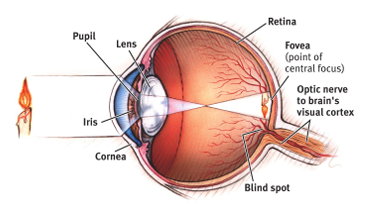
Vision Process
Light is reflected off objects and gathered by the eye
Light enters the cornea and then the pupil
Light is focused by the lens on the retina
Light activates the neurons in the retina
Photoreceptors are activated by light
If enough rods and cones fire, bipolar cells become activates
If enough bipolar cells fire, ganglion cells fire
The visual cortex of the brain receives impulses from the cells of the retina, and the impulses activate feature detectors
Cornea
the eye’s clear, protective layer that also plays an important role in focusing the light