(L2) IMED2002 - How is Blood Made?
 Call Kai
 Learn
Learn Practice Test
 Spaced Repetition
 Match
Match Flashcards
 Knowt Play
1/28

There's no tags or description
Looks like no tags are added yet.
Name | Mastery | Learn | Test | Matching | Spaced | Call with Kai |
|---|
No analytics yet
Send a link to your students to track their progress
29 Terms
How is blood made
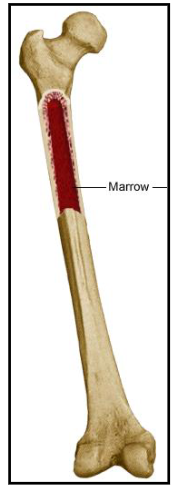
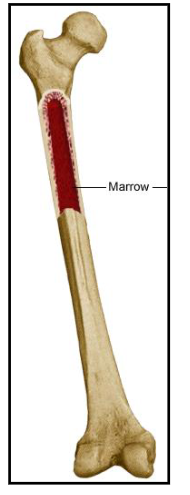
- Haemopoiesis: the process of blood cell production in the bone marrow (BM)
- Pluripotent haemopoietic stem cells (HSCs) are the most primitive cell in the BM
- HSCs differentiate to form all blood cells
- Haemopoiesis of HSC is influenced by cell hormones (cytokines)
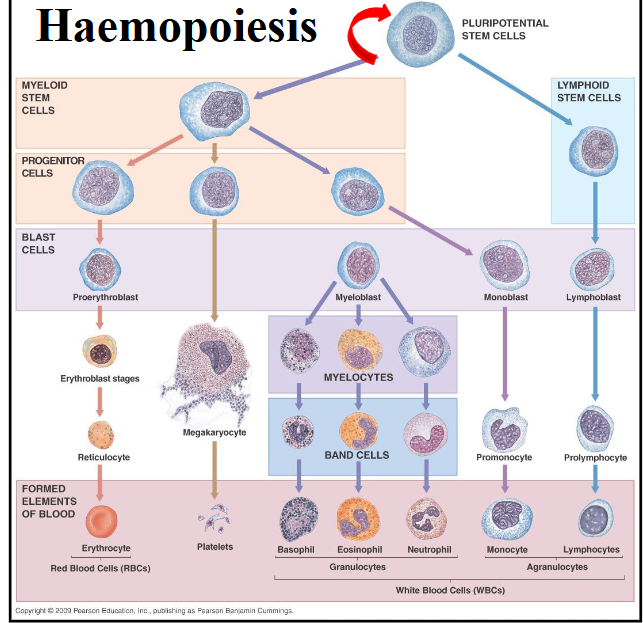
Haemopoiesis Diagram
DIAGRAM ON SLIDE 6
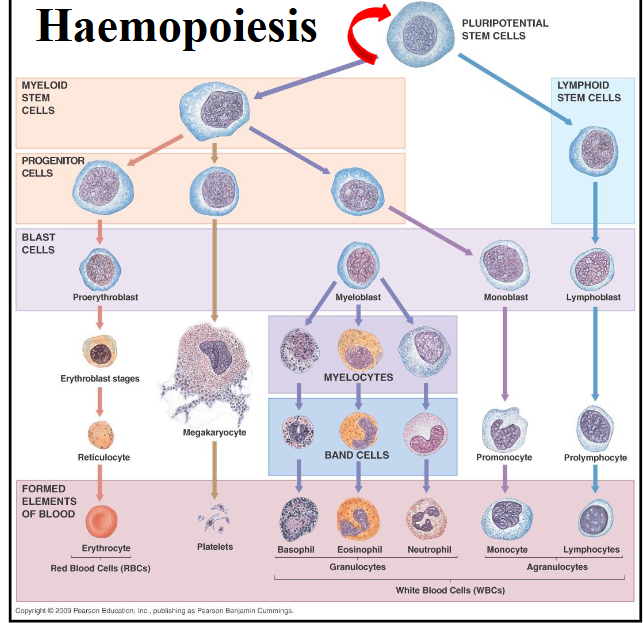
Haemopoietic Stem Cells (HSC)
- most primitive cells in the vone marrow
HSC divide and differentiate:
- self-renewal: capacity to replicate itself
- Pluripotent: ability to differentiate along all cell lines and make all types of blood cells
.
- one of progeny committed to a lineage; matures and differentiates, ie. becomes a committed precursor cell
- CD34 positive cells
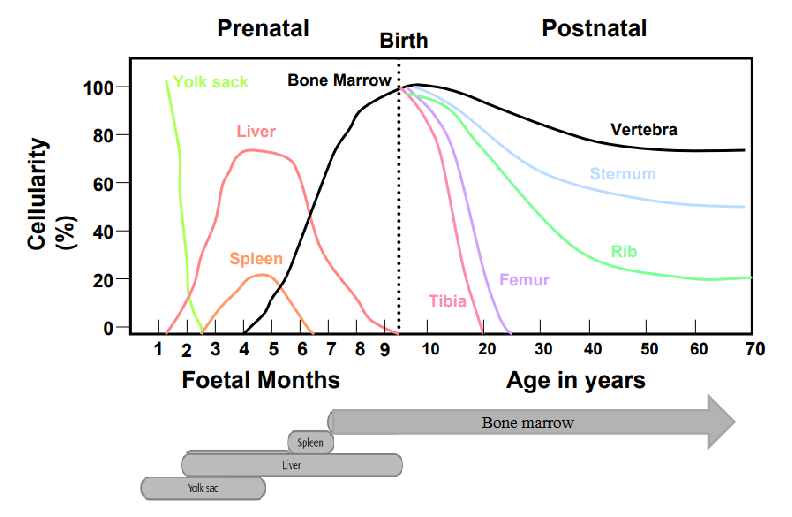
Sites of Haemopoiesis
- in foetal months its mostly liver
- as you get older its more in the bone marrow
.
- so it starts off in the yolk sac, then liver then spleen then bone marrow throughout life of person
The Bone Marrow
- the "blood factory": where blood is made
- Within the hard bony cavity
- Most rapidly replicating organ in the body
- Stem cells (HSC): replicate and differentiate
- Requires: growth factors (cytokines, regulators), metals, vitamins, stroma (blood vessels, fat, bone)
- Bone marrow failure: unable to make blood cells
.
- stroma is an environment where cells can grow
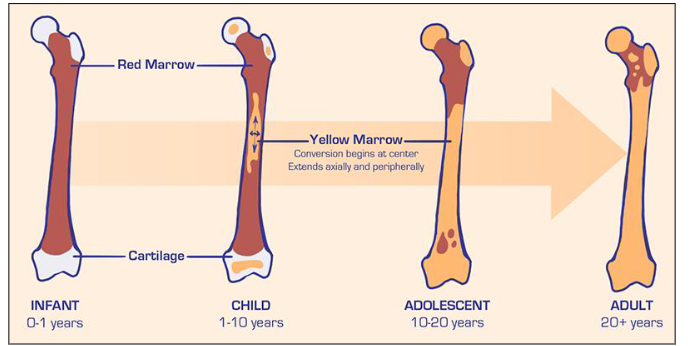
Sites of Bone Marrow Activity
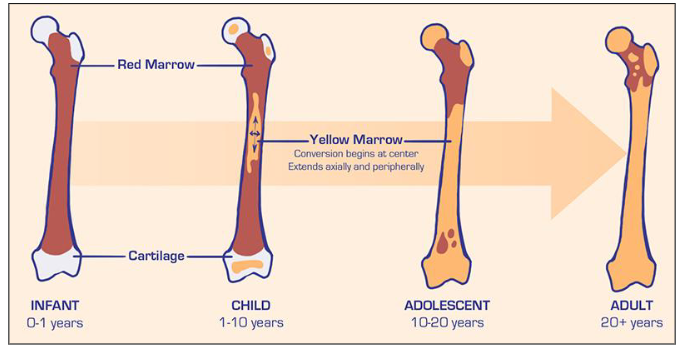
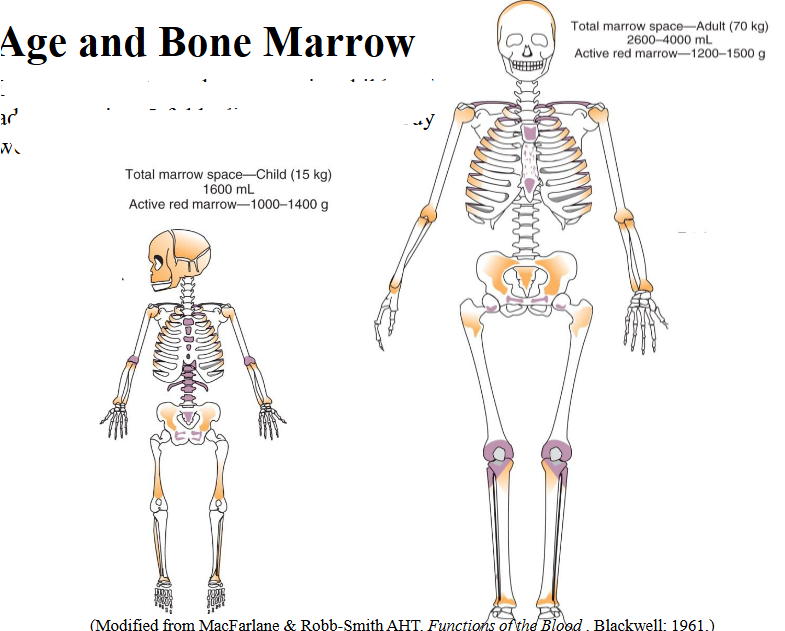
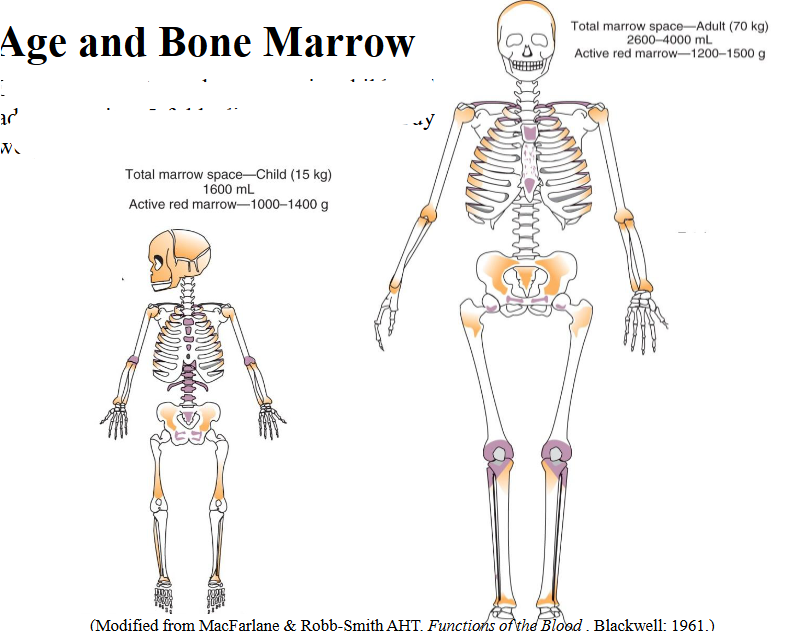
- Red marrow: sites of active haemopoiesis; changes to inactive (fat/yellow) with age
- Yellow Marrow: contains mainly fat; long bones; can revert to active with increased demand
Age and Bone Marrow
- Similar amount red marrow in child and adult despite 5-fold disrepancy in body weight
Cytokines (Growth Factors)
- haemopoiesis is regulated by growth factors
.
Cytokines = cell hormones:
- control differentiation of haemopoietic stem cells
- control number of cells produced in bone marrow
- can affect the function of a cell
.
Different types of cytokines/growth factors:
- Some act on primitive cells only
- Some act on later cells
- Some are committed to a particular cell lineage
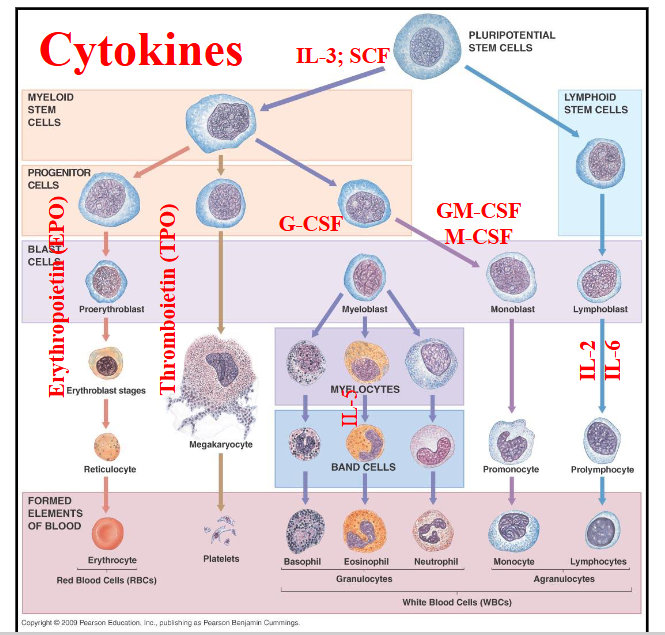
Cytokines labelled on diagram
- dont need to know all (but should know these)
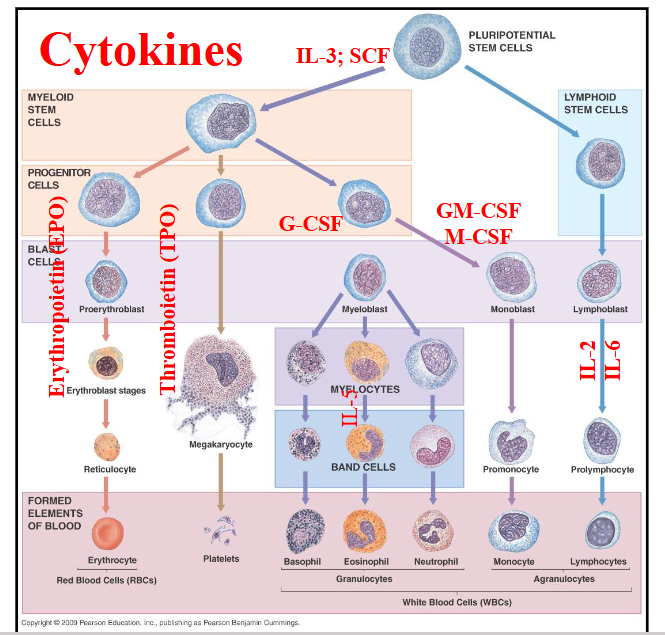
Examples of Cytokines
- some cytokines have broad specificity: act on pluripotent stem cells (e.g IL3, GM-CSF)
- cytokines bind to a cell receptor and the signal is transmitted to the cell nucleus
.
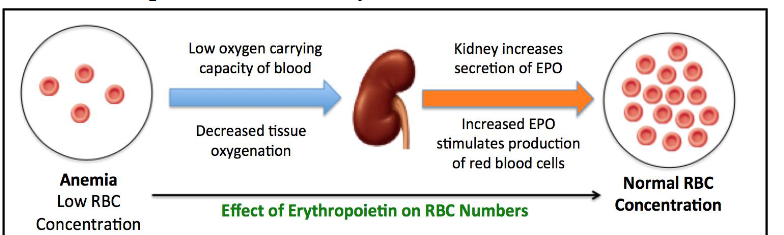
ERYTHROPOIETIN (EPO):
- EPO made in kidney, reduced in renal failure
- EPO increases red blood cell production
- e.g haemorrhage results in increased EPO
.
G-CSF, GM-CSF: control leucocyte production
DIAGRAM ON SLIDE 17
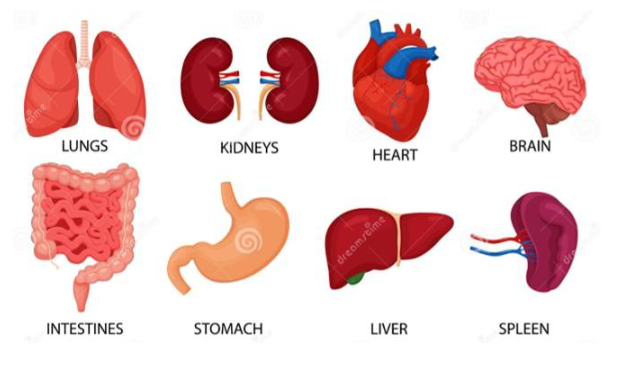
Organs producing Erythropoietin
- Produced in kidneys in adults
- produced in liver in fetus
G-CSF controls production of
neutrophils
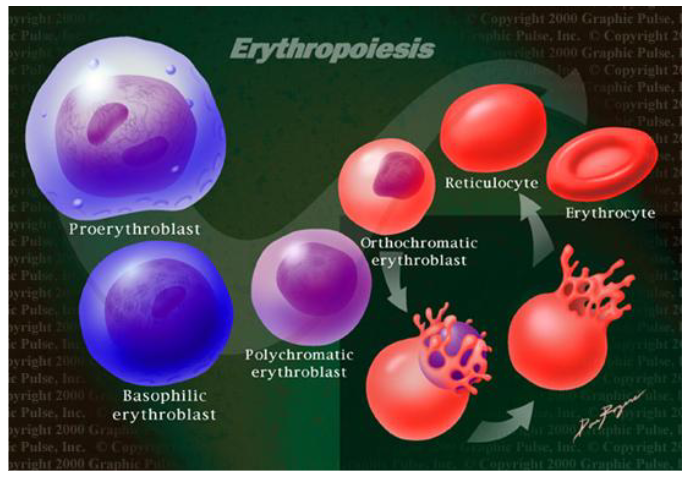
Erythropoiesis DIAGRAM
- red blood cells made in red bone marrow
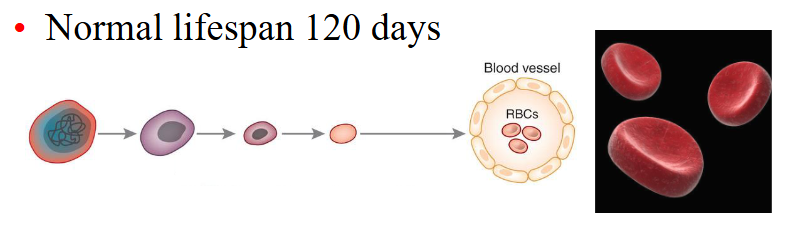
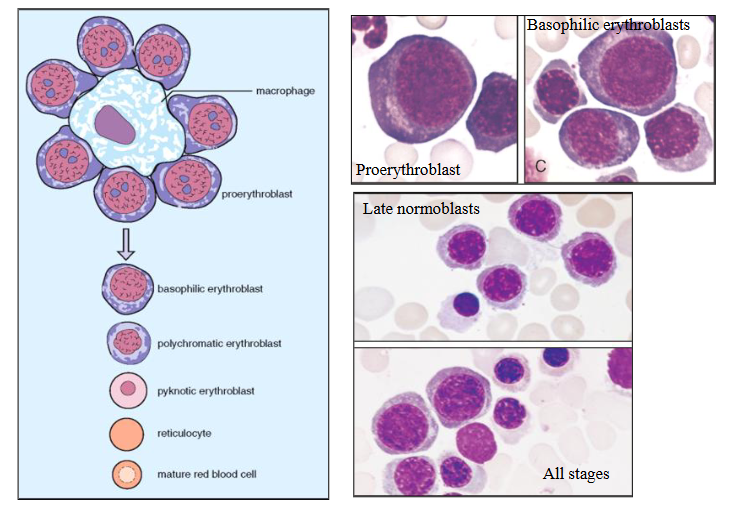
- starts as proerythroblast, into a smaller cell called basophillic erythroblast (basophillia means blue in cytoplasm)
- then it becomes smaller and becomes polychromatic erythroblast (poly means many, chromatic means colour, because its many colours (loses blue))
- shrinks more and nucleuc becomes smaller and darker (called orthochromatic erythroblast) - ortho means same. chroma is colour - so its the same colour as a red blood cell
- nucleus is then extruded and we end up with reticulocyte and erythrocyte
-
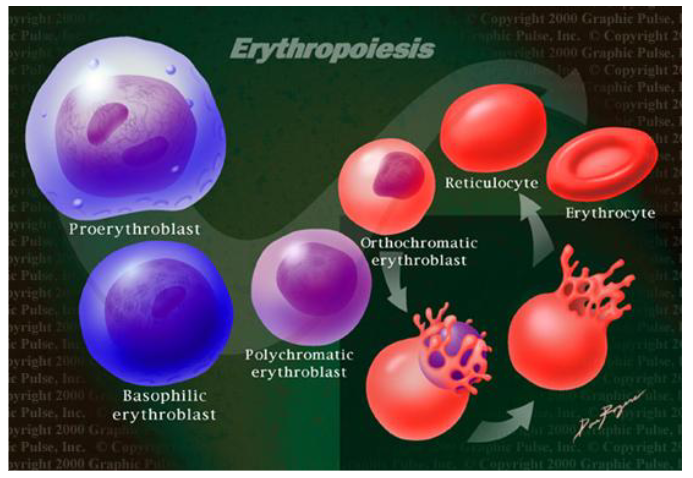
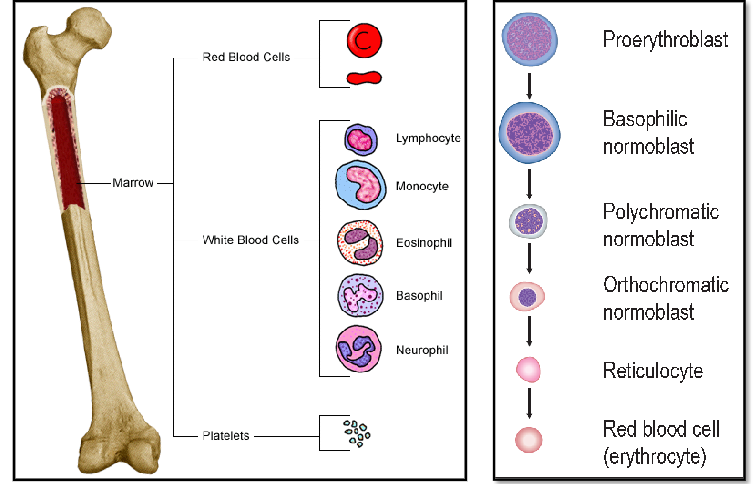
Erythropoiesis DIAGRAM Labelled
DIAGRAM ON SLIDE 21
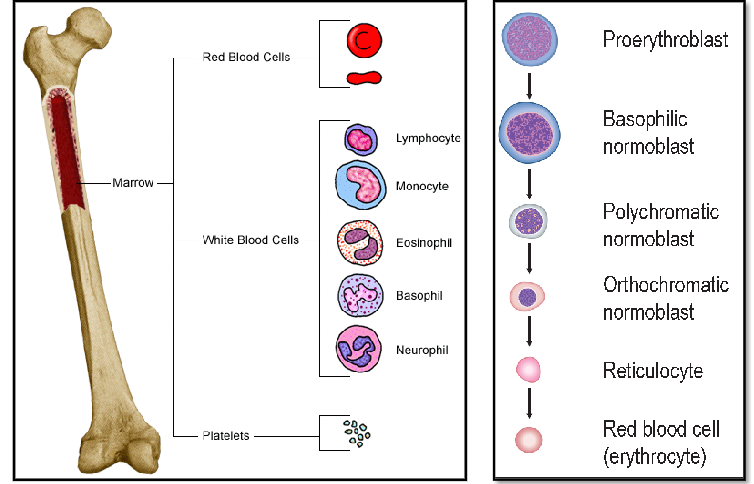
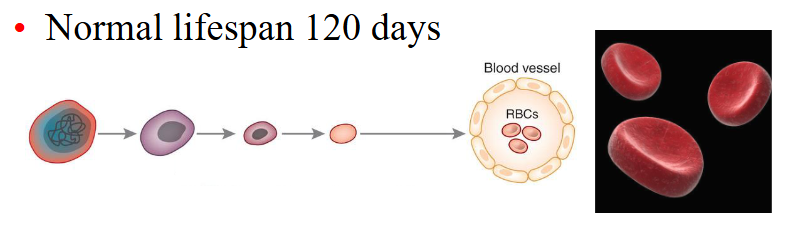
Red Blood Cells (Erythrocytes)
- Generated in bone marrow (erythropoiesis)
- Small flexible cells of biconcave disc shape
- Red cell membrane: lipid and proteins
- Carry haemoglobin (Hb) to tissues
- Require iron, folate, vitamin B12, EPO
- Normal lifespan 120 days
Requirements for Erythropoiesis
- functioning bone marrow
- Erythropoietin: regulates red blood cell production (90% produced in kidney)
.
OTHER REQUIREMENTS:
- metals (iron, cobalt); Vitamins (B12, folate, thiamine)
- amino acids; other cytokines (SCF; IL3)
Stages of Development (Erythropoiesis)
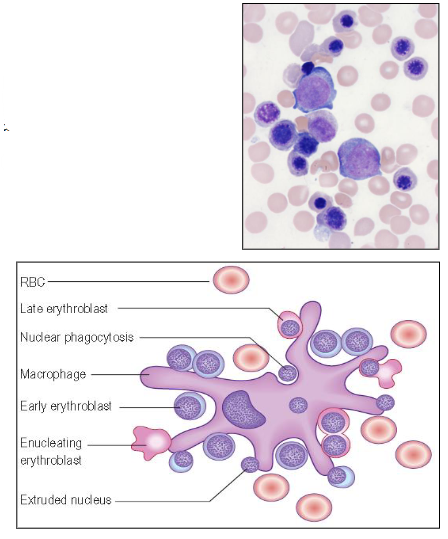
- Large early cells (erythroblast)
- Cells get smaller as they mature
- Nucleus: chromatin condensation
- Haemoglobin in cytoplasm
- Nucleus extruded
.
- Islands near macrophages
- Mature red blood cells: Erythrocyte, Anuclear biconcave disc, flexible cell membrane
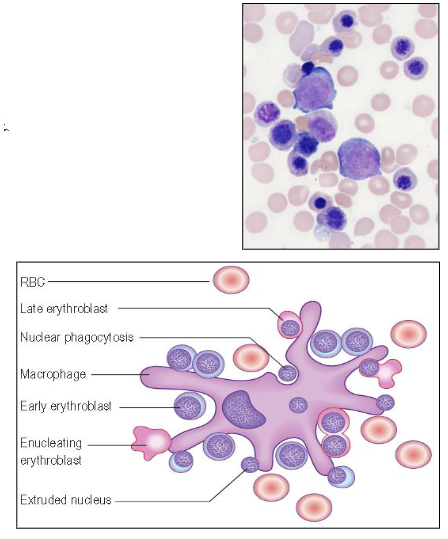
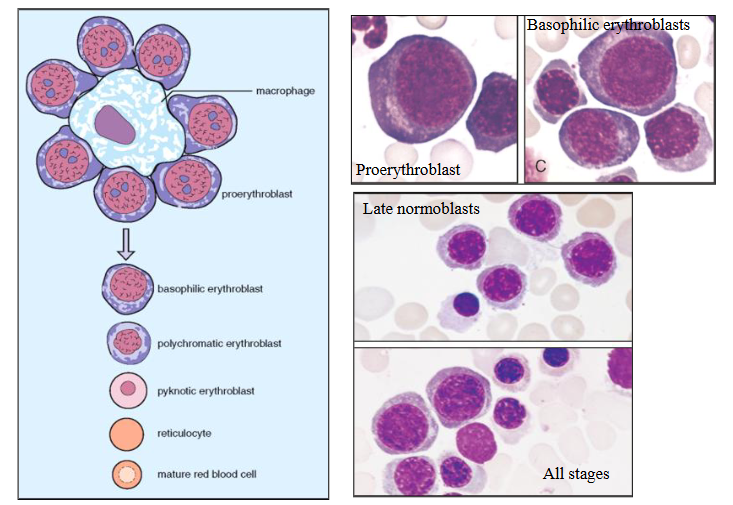
Erythropoiesis Stages of Development DIAGRAM
- one proerythroblast will make between 16 and 64 red blood cells
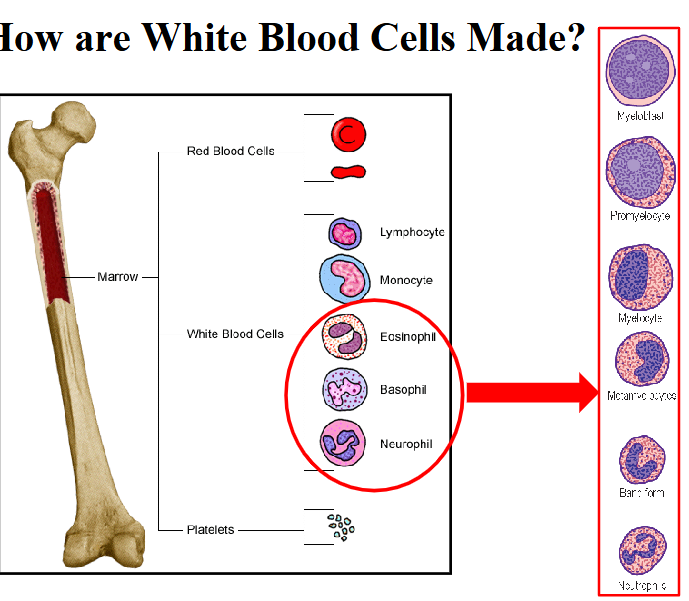
White Blood Cell Production Intro DIAGRAM
DIAGRAM ON SLIDE 28
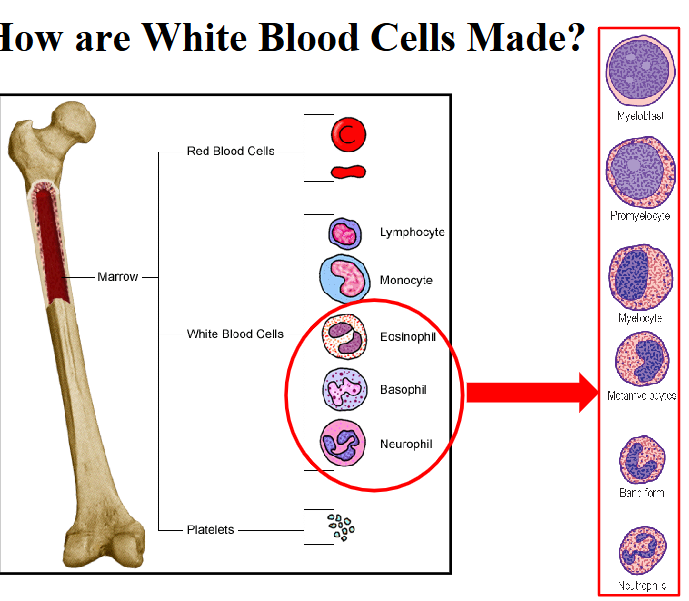
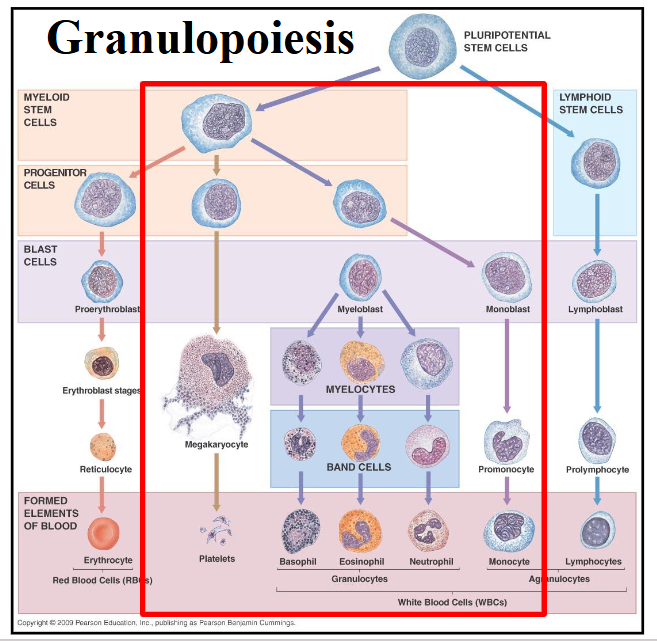
Granulopoiesis DIAGRAM
DIAGRAM ON SLIDE 29
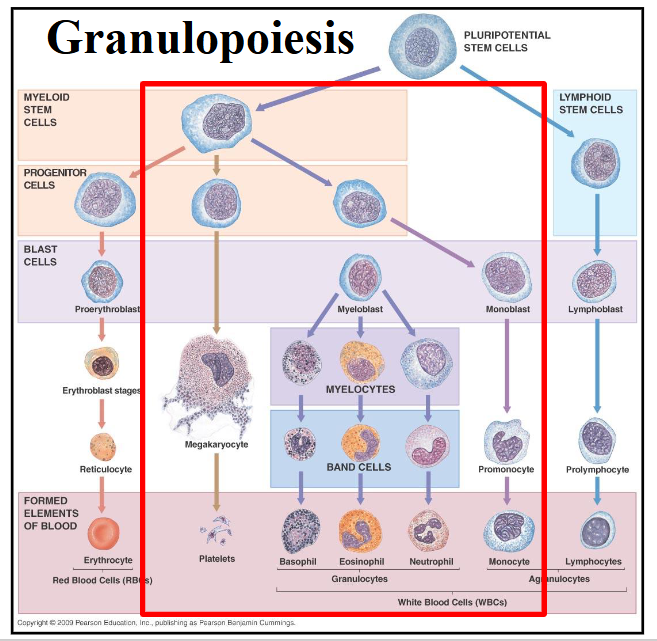
Granulopoiesis
- HSC undergoes orderly sequence of maturation in response to cytokines (e.g G-CSF)
- nuclear maturation and cytoplasmic granulation
- process takes 5-7 days
- Lifespan only 2.5-12 hours
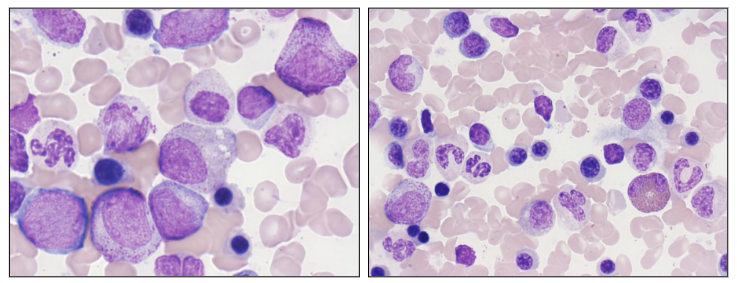
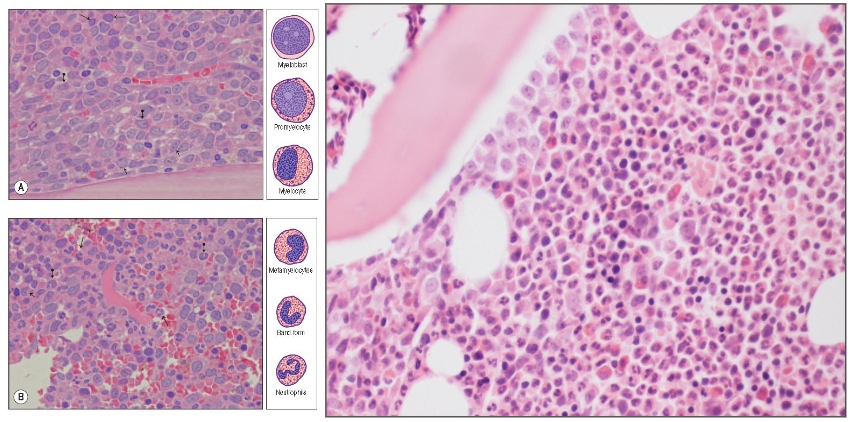
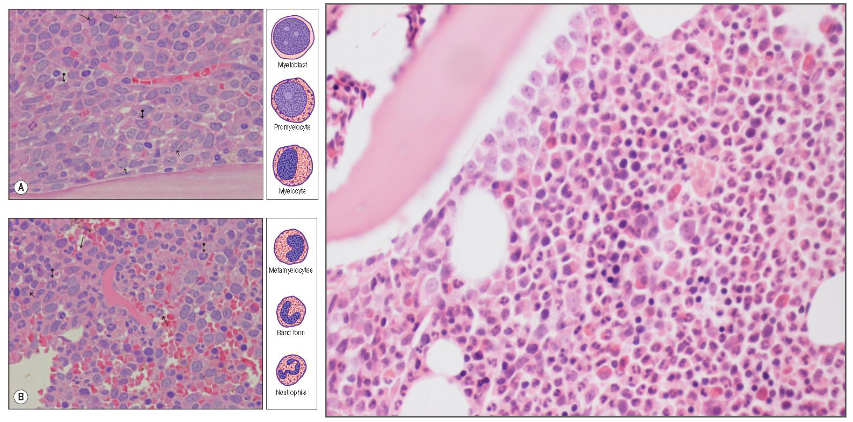
Granulopoiesis diagram
- made in bone marrow adjacent to fine shards of bone called trabecular bone
- most monocytes dont have granules
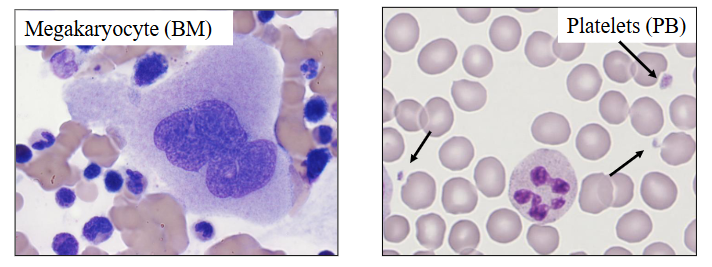
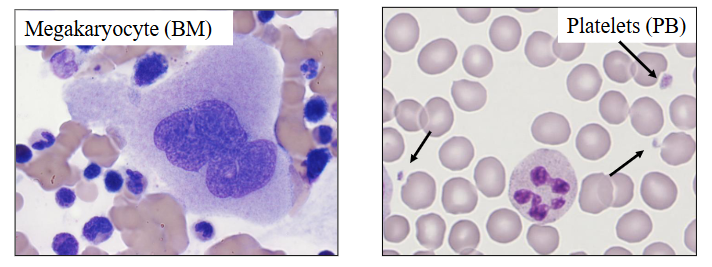
How are Platelets made
- platelets are small cells in the blood
- involved in blood clotting
- megakaryocytes in BM are precursor of platelets
- fragments of cytoplasm of megakaryocytes are shed to make platelets
- platelet lifespan = 7-10 days
the process of neutrophil production is called
Granulopoiesis
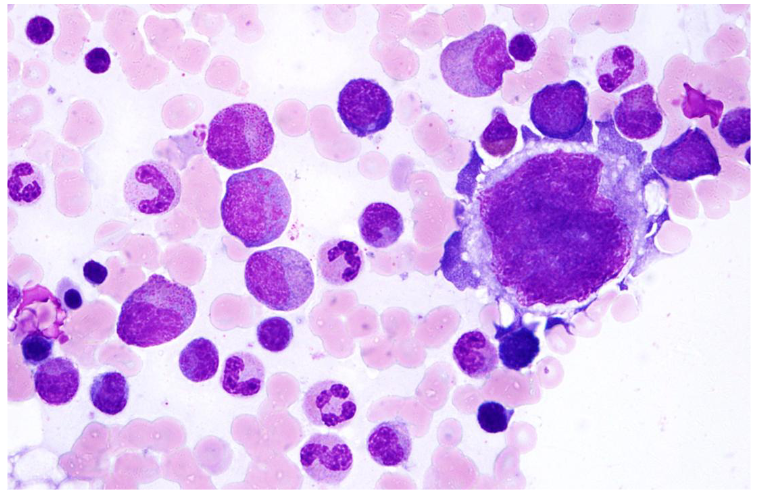
Platelet Progenitor Cell diagram
- called megakaryocytes
- its the big cell on the right (can see that some parts of cytoplasm are coming off - thats how platlets are formed)
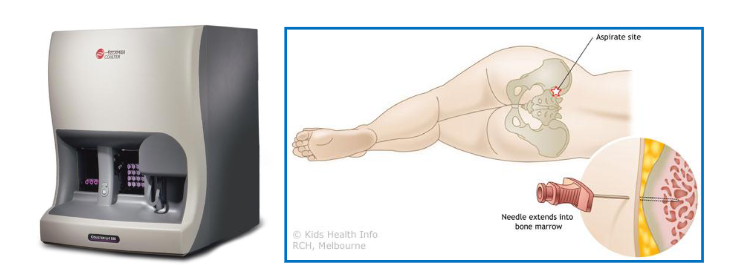
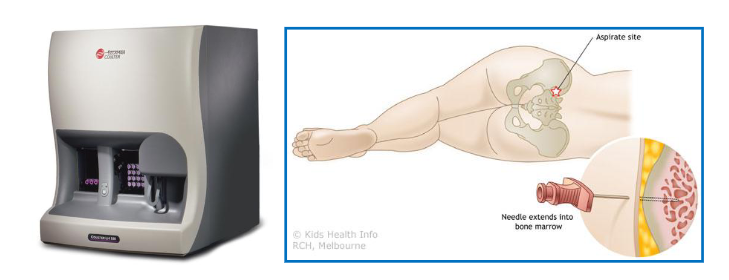
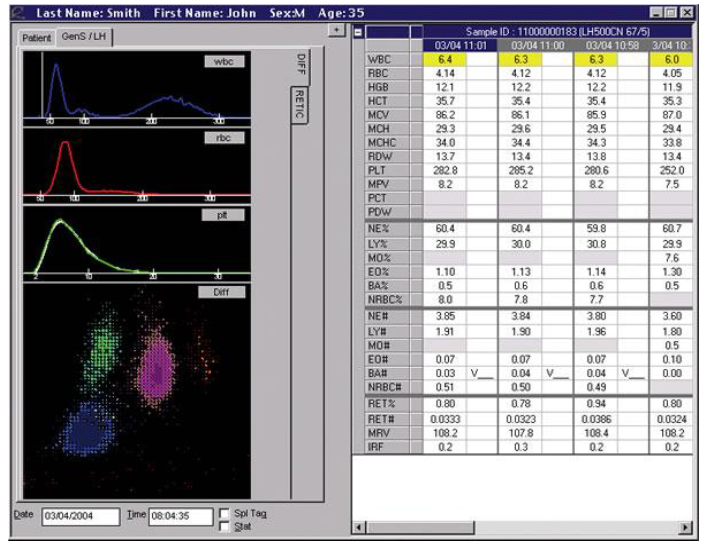
How we Assess Haemopoiesis
- Blood count: Hb, reticulocyte count, WBC, platelets
- Bone marrow examination: How many cells are present? Are the cells in the right place? Which cells are present? Do the cells look normal?
.
- some cytokines can be measured (e.g EPO)
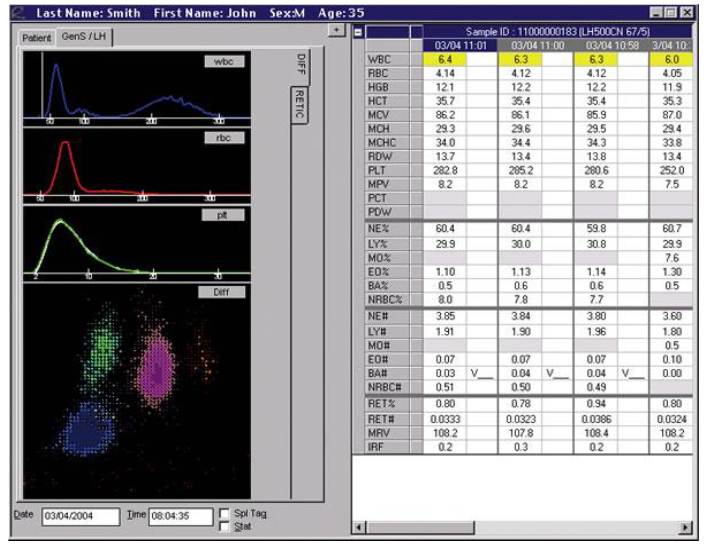
The blood count diagram
DIAGRAM ON SLIDE 36
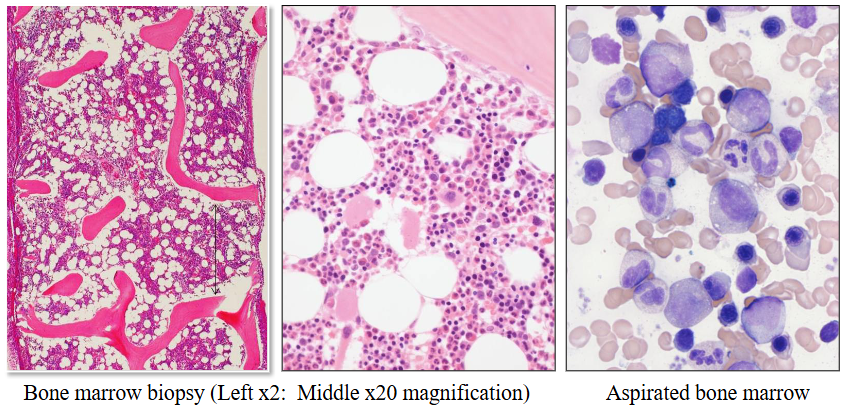
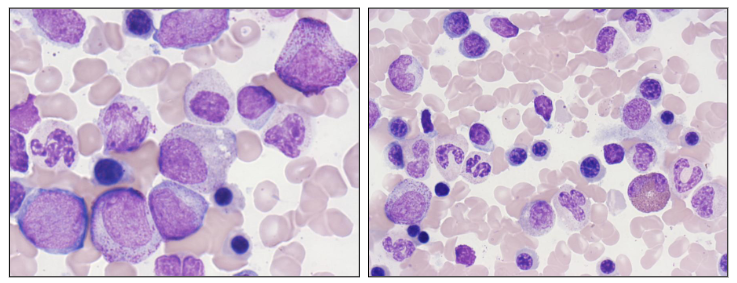
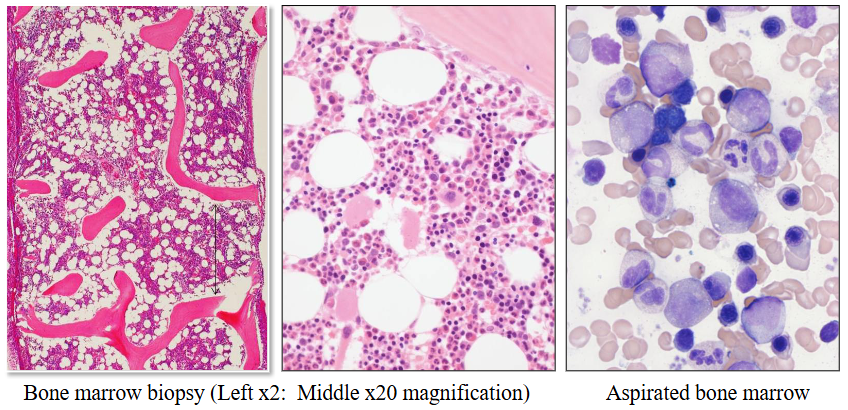
What does Bone Marrow look like under the microscope
DIAGRAM ON SLIDE 37
Summary
DIAGRAM ON SLIDE 38