Animal Health - ectoparasites
 Call Kai
 Learn
Learn Practice Test
 Spaced Repetition
 Match
Match Flashcards
 Knowt Play
1/103

Earn XP
Description and Tags
:(
Name | Mastery | Learn | Test | Matching | Spaced | Call with Kai |
|---|
No analytics yet
Send a link to your students to track their progress
104 Terms
ectoparasite
an org that spends part or all of its life on the outside of the host animal
either:
damage host directly
act as carriers of other pathogens
5 types of ectoparasites
athropods:
insects: flies, fleas, lice
arachnids: mites, ticks
Insects
head
thorax
abdomen
arachnid
cephalothorax
abdomen
Arachnids
mites
ticks
arachnids - mites and ticks
two body parts
four pairs of legs
no antennae
mouthparts - chelicerae (paired cutters) and palps (paired sensory organs)
Mites (mange)
infest a wide variety of animals and birds (inc man)
small <0.5mm
some are v host specific, others not
transmission is mainly via direct contact
prolonged period of time in contact w host skin
most required a microscope to be seen and identified
basic lifestyle - mites
egg
larvae
nymph
adult
common UK mange mites
chorioptes (tail head mange)
posoroptes (sheep scab)
sarcoptes
demodex
chorioptes
tail head mange
cattle
sheep
horses
goats
rabbits
psoroptes
sheep scab
sheep
goats
occasionally cattle
sarcoptes
pigs
cattle
goats
dogs
cats
foxed
humans
three diff forms of mites
under the top skin layer in skin burrows
on the skin surface
inside hair follicles
cause intense itching predisposing areas to to 2ndary infection + allergic reactions
sheep scab - psoroptes ovis
the entire life cycle take place on the host
eggs -adult about 10 days - pops can build very quickly = heavy infestations
psoroptes ovis sheep scab - when
during spring/summer - mites are quiescent
found in ears, groin, axilla
as fleece thickens for winter the mite becomes active and spreads over the fleeced area
sheep scab - psoroptes ovis - cause
non burrowing, feed on tissue fluids
can cause skin damage (on skin surface)
intense irritation + loss of condition
cannot replicate away from sheep
lives for max 2-3 weeks when not on sheep
mite faeces act as allergens
psoroptes ovis - signs of it
thick dry scabs
fleece may become detached
most prevalent in winter but can occur at any time
sheep should be treated on welfare grounds
psoroptes ovis - sheep scab - control
dipping
pour on/spray on formulations + injections
easier to apply, less traumatic to sheep
possibly not as effective
resistance to some pour ons and injectables
sarcoptic mange - sarcoptes scabiei
affects all mammals
burrowing mite - lives under surface of skin in burrows
most commonly found neck, face, back
most severe type of mange
lifecycle of sarcoptic mange
fertilised female burrows into upper layer of epidermis
feeds on resultant diseased tissue
eggs laid within burrow hatch in 3-5 days
larvae which hatch burrow into ‘moulting pockets’ - develop through nymph stage to adults
adult male emerges + seeks out females
mating takes place + female seeks out new burrow to lay eggs
lifecycle takes 17-21 days
sarcoptic mange of dogs
predilection sites:
ears, muzzle, face and albows
extremely intense itching, scaling and crusting followed by alopecia
very contagious - spreads between dogs, foxes, other animals inc humans
can be very bad - euthanasia
diagnosis of sarcoptic mange
groups of animals often affected
intense itching, rubbing and scratching - ears - Pedal-Pinna reflex
skin scrape by vet
treatment of sarcoptic mange
acaricidal spot-on treatments
weekly bathing with acaricidal preparation
all dogs kept together must be treated
demodectic mange - caused by demodex canis
lives in hair follicles - cigar shape
common form of mange in dogs:
immunosuppression
young dogs under 12 months
two forms of demodectic mange
mild
severe (generalised)
mild demodectic mange
localised to head (eyelids, corners of mouth etc)
patches of hair loss
slight itching
severe (generalised) demodectic mange
widespread hair loss over body
intense itching
secondary infection
pus filled pimples
demodectic mange treatment
mild cases may clear up within a month
severe cases must be supervised by vet as drugs are highly toxic
in severe cases treatment may be prolonged and unsuccessful
ear mites - otodectes cynotis
psoroptidida mite
lives on skin surface
most common mange of dogs + cats also foxes ferrets
lives in inner ear + feeds on ear debris
causes head shaking, ear scratching, aural heamatomas
ear mites - otodectes cynotis - caused by
pruritus caused by irritation + saliva of the mites - secondary bacterial infection
cats - can get infection on tail from sleeping curled up
otodectes cynotic - ear mites treatment
ear drops to kill mites
horse mites - chorioptic mange - chorioptes equi
host specific surface mite w an entire lifecycle carried out on the host. transmission by direct + indirect contact
typically affect feathered distal limbs of heavy horses and cobs more common in winter
sings, diagnosis + treatment of chorioptic mange
signs: foot stamping + self trauma
diagnosis: skin scrapings (collected from fresh lesions on clipped legs)
treatment: as for lice (permethrin) + topical ivermectin + fipronil (unlicensed)
equine mites - dermanyssus gallinae
small red mites - usually found on chickens
may infest horses in contact w poultry
equine mites - psoroptic mange - psoroptes equi and psoroptes communis
un-common + not found in the UK
surface mites commonly found around the mane and tail
diagnosis: skin scrapes
ticks
two families:
ixodidae (hard ticks)
argasidae (soft ticks)
important vectors for:
protozoa
bacteria
viruses
ixodidae
hard ticks
argasidae
soft ticks
tick lifecycle
female lays eggs
larvae - feeds on small mammals
nymph - feeds on small + medium
ticks - life + host
most of life spent in the environments
on host - live on surface + feed on blood
hard ticks insert their mouth parts into the skin + anchor themselves at the point by secreting a ‘cement’
ticks - clinical effects
blood loss + weight loss in heavy infestations
transmission of various pathogenic microbes
what is the predominant tick in the uk
ixodes ricinus (sheep tick) which can transmit:
babesia divergens (red water in cattle)
ehrlicha phagocytophilia (tick borne fever in sheep)
louping ill (sheep) virus
lyme disease (dogs, humans) - bacteria
ixodes ricinus distribution UK
when the tick is active/on host:
northern uk - spring
southern uk - spring + autumn (temp dependent)
control of ixodes ricinus
dips, spot ons
environmental control - ixodes prefers scrubby habitat → pasture improvement
ixodes ricinus - 3 host parasite
temporary parasite:
usually 2-3 yrs to complete lifecycle but can take between 1-6
only 26-28 days feeding in total
peal periods:
march - june
aug - nov
ixodes ricinus - survival
dependent on ticks requirement for water
must have relative humidity greater than 90%
common in wet areas
insects
lies
fleas
flies
lice
mallophaga - chewing lice
anoplura - sucking louse
mallophaga
chewing lice
anoplura
sucking louse
lice species in Uk - sheep
bovicola ovis
bovicola bovis
cattle louse
linognathus vituli
long nosed cattle louse
haematopinus eurysternus
short nosed louse
solenoptes capillatus
little blue cattle louse
pig louse species UK
haematopinus suis
equine biting louse
damalinia equi
equine sucking louse
haematopinus asini
lice lifecycle
adult lice lay eggs (nits) close to the hair root
eggs hatch on host
3 nymph stages
egg - egg = 2-3 weeks
lice in poultry
common chicken louse
lice - impacts
blood feeders (sucking) → heavy infestations can cause anaemia
both types cause skin irritation + pruitis → behavioural change
lice - control
thorough treatment of all animals w insecticidal dips, spots on or endectocides
removal from infested areas for a week allow lice to die off
prevention thru approp nutrition, stocking densities + stress management
lice in dogs
uncommon
generally affect vulnerable animals
environment - dirty + overcrowded
trichodectes canis
dog chewing louse
linognathus setosus
dog sucking louse
Fleas
dogs
cats
poultry
humans
suck blood - anaemia
flea allergic dermatitis
fleas - animals to humans
bartonella henselea - cause of cat scratch disease in humans
mycoplasma haemofelis - cause of feline infectious anaemia - affects red blood cells
feline leukaemia virus
symptoms of fleas
scratching
itching
self trauma
hair loss
flea dirt
commonly affected areas of fleas
back
ventral abdomen
inner thighs
most of life spent in environment - need to kill those on host + in enviro
cat flea lifecycle
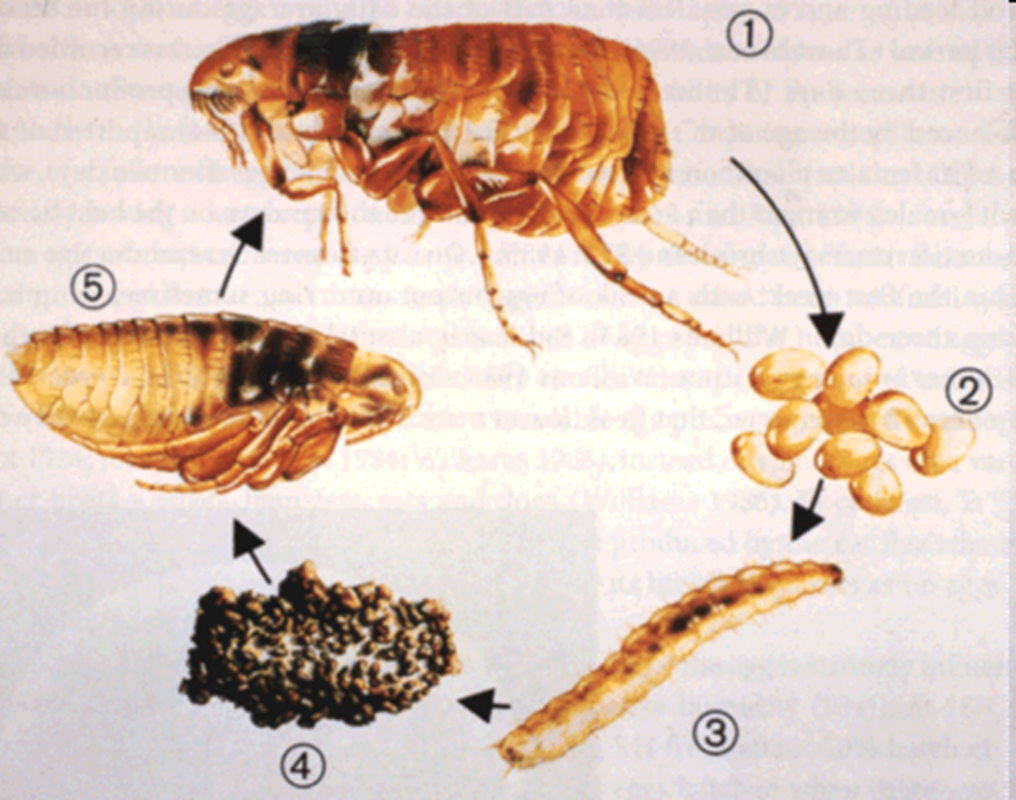
flies
biting flies + midges e.g. horseflies - tabanus spp
stomoxys spp
stable fly
culicoides spp
midges (bluetongue)
musca spp
house flies + face flies
disease transmitters
hydrotea spp
head fly - sheep
haematobia spp
horn fly - sheep + cattle
lucilia sericata
blow flies
hypoderma spp
warble flies
fleas - clinical effects
irritation - may lead to self trauma
behavioural change
disease transmission
fly strike
warbles
fly life cycle
eggs - 8-24hrs
larvae - 4-7 days
pupa - 10-20 days
adult
blowflies - calliphoridae
myiasis = infestation of a living animal w larvae of dipteran flies
blowfly strike
eggs laid on host
larvae hatch + feed on host skin
sheep + rabbits
2 major species of blowflies in england
lucilia cuprina/sericata - greenbottles
calliphora erythrocephla - bluebottles
blowfly lifecycle
up to 3,000 eggs laid
12 hours eggs hatch
moult 3 times in 3-10 days
maggots drop to ground and pupate
adult emerge and mate
female lays eggs
blowfly strike - primary
lay eggs on wool
larvae hatch, crawl down wool + lacerate skin
blowfly strike - secondary
attracted by odour
lay eggs on or around rotting flesh
blowfly strike - symptoms
areas usually affected - breech and tail
body + poll also
2dary bacterial infections of damaged skin
dull, depressed, off food, isolation, damp foul smell
enzymes released by larvae are toxic
can result in death
blowfly - treatment + control
clip wool around area, remove larvae manually if possible + treatment w a suitable insecticide
antibiotics ± fluid therapy for septicaemia
control:
using pour on products or by dipping before risk period
control infections e.g. foot rot, PGE
crutch out dirty sheep
flies impacting horses
culicoides spp (midges)
tabanus spp (horse flies)
stormoxys calcitrans (stable fly)
adult females are the problem - bit the animal to feed on blood
act as vectors for disease such as African Horse Sickness
may cause a hypersensitivity reaction in sensitised horses, known as ‘sweet itch’
control of flies in horses
fly rugs
fly masks
topical preparations
diet (?)
breeze
kept away from natural water sources
gastrophilus spp
3 main species:
gastrophilus intestinals (most common)
gastrophilus nasalis
gastrophilus haemorrhoidalis
bot flies
gastrophilus spp info
adults lay sticky yellow eggs on horses legs
these are licked during grooming + larvae ingested
larvae attach to the stomach lining + may survive for 10-12 months when passed in faeces
pupate + adult flies emerge
hyopderma bovis
warble fly
notifiable disease - only in Scotland
exotic to uk - risk from imported cattle
compulsory treatment
warble fly lifecycle
eggs laid on the hair of legs + ventrum
larvae penetrate hair follicles + migrate to oesophagus or spinal canal
moving to the skin of the back in early spring where they develop as warbles, before dropping to the ground to pupate
hide damage
carcass damage
Keds
melophagus ovinus
wingless flies
spend entire life on the sheep
a nearly fully developed larva is laid in fleece - develops into a pupa + and then adult fly
adult lives for several months
Keds - causes
feed on blood → heavy infestations can lead to anaemia
mostly cause behavioural change, leading to fleece + skin damage
damage to skin may attract to blowflies
shearing + dipping easily treats them