L19 - Liver Infections II
 Call Kai
 Learn
Learn Practice Test
 Spaced Repetition
 Match
Match Flashcards
 Knowt Play
1/25

There's no tags or description
Looks like no tags are added yet.
Name | Mastery | Learn | Test | Matching | Spaced | Call with Kai |
|---|
No analytics yet
Send a link to your students to track their progress
26 Terms
What organism is associated with infectious necrotic hepatitis (black disease)?
Clostridium novyi type B
What species does Clostridium novyi target?
Sheep and cattle
Sometimes pigs and horses
Is Clostridium novyi always fatal?
Almost always in sheep and cattle
What age groups are typically affected by Clostridium novyi?
Sheep 2-4 years old, lambs rarely
There is an epidemiological associate between Clostridium novyi and what? Why?
Liver flukes → both in soil where black disease is found
What type of pastures predispose sheep to Clostridium novyi?
Marshy/heavily watered ground → increases development of flukes
Where are Clostridium novyi spores typically found?
Soil and liver
What causes the clinical disease associated with Clostridium novyi?
Necrotic process in liver (caused by liver flukes) → creates anaerobic conditions → triggers Clostridium novyi to proliferate → produces lethal amounts of toxins
How is Clostridium novyi transmitted?
Fecal-oral
Cadavers
Movement of contaminated sheep between farms
Flooding of contaminated soil → more liver flukes
Pathogenesis of Clostridium novyi
Spores are ingested and carried to liver
Migrating liver fluke causes tissue destruction → anaerobic conditions → pathogen proliferates
Produces alpha-toxin → local liver necrosis and damage to vascular system
Symptoms of Clostridium novyi
Sheep → rapid decline (die overnight with no signs)
Cattle → slow decline (1-2 days)
Sheep isolate themselves/lag behind
Shallow and rapid respiration
Sternal recumbency
Fever then subnormal temperature
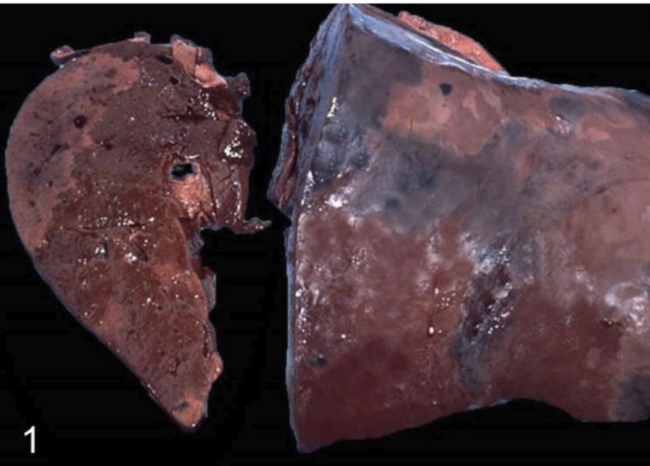
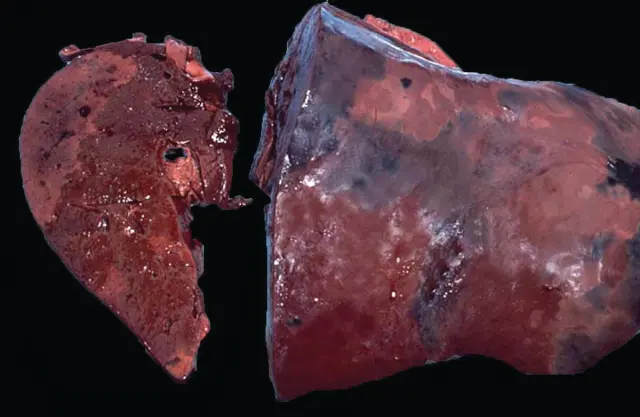
How do Clostridium novyi lesions appear?
Liver is swollen, gray-brown, yellow areas of necrosis surrounded by bright red hyperemia
Engorgement of SC vessels and edema
Dark appears of inside the skin → “black disease”
How is Clostridium novyi treated?
No effective treatment in sheep
Horses and Cattle: Penicillin, but case fatality is high
How is Clostridium novyi controlled?
Vaccination → highly effective
Control of liver fluke
Burn carcasses
What pathogen causes Bacillary Hemoglobinuria (Red Water Dz)?
Clostridium haemolyticum
Where is Clostridium haemolyticum found?
Soil and Liver
What species does Clostridium haemolyticum typically target?
Cattle, sometimes sheep and pigs
What type of pastures does Clostridium haemolyticum typically found in?
Poorly drained pastures/wet
How is Clostridium haemolyticum spread?
Flooding, natural drainage or carrier animals
Ingestion
Pathogenesis of Clostridium haemolyticum
Spores of Clostridium haemolyticum ingested and carried to liver
Migrating liver fluke causes tissue destruction → anaerobic conditions made → causes pathogen to proliferate
C. haemolyticum produces beta-toxin → hemolysis, necrosis of hepatocytes and damage to capillary endothelium
Focal heaptic necrosis, hemoglobinuria, loss of vascular fluid
Symptoms of Clostridium haemolyticum
Acute → cattle can be found dead overnight with no signs
Complete cessation of rumination, feeding, lactation and defecation → GIT stops doing everythinggg
Abdominal pain, grunting
Edema of brisket → common
Urine is dark red
SC edema and SC hemorrhages
Is Clostridium haemolyticum always fatal?
Up to 95% mortality in untreated animals
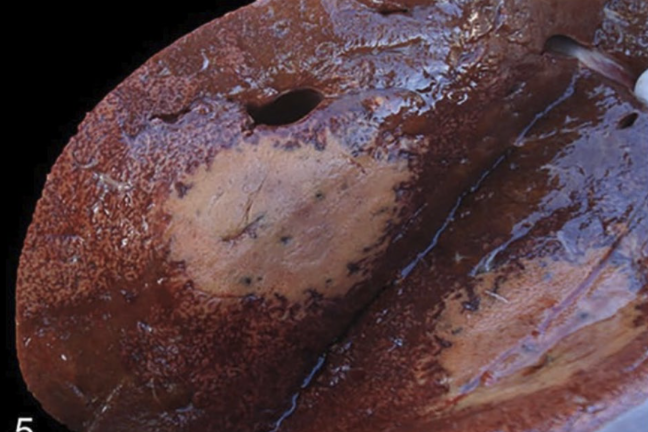
What characterizes Clostridium haemolyticum lesions?
Focal necrosis of liver
Lesion is pale, surrounded by zone of hyperemia
What kind of pathogen is Clostridium haemolyticum?
Gram +
Large rods
Anaerobic
How is Clostridium haemolyticum treated?
HIGH dose of ABX: Penicillin and tetracyclines
Antitoxin serum
Supportive Tx (blood transfusions, fluids, electrolytes)
Guarded prognosis
How is Clostridium haemolyticum controlled?
Vaccine
Destroy carcasses