Physiology - Exam 1
 Call Kai
 Learn
Learn Practice Test
 Spaced Repetition
 Match
Match Flashcards
 Knowt Play
1/291

There's no tags or description
Looks like no tags are added yet.
Name | Mastery | Learn | Test | Matching | Spaced | Call with Kai |
|---|
No analytics yet
Send a link to your students to track their progress
292 Terms
which of the following is/are true regarding lipid-soluble signaling molecules (e.g. steroid hormones)?
a. typically bind to receptors in the nucleus of the cell
b. function in the regulation of gene expression
c. transported through the blood stream bound to a protein carrier
d. both (a) and (c)
e. all of the above
e. all of the above
this protein facilitates vesicle formation during receptor-mediated endocytosis by promoting an inward folding of the cell membrane
a. clathrin
b. phosphodiesterase
c. phospholipase
d. guanyl cyclase
e. oxytocin
a. clathrin
the intracellular fluid (i.e. cytoplasm) makes up what percentage of our total body water?
a. 10%
b. 33%
c. 50%
d. 66%
e. 90%
d. 66%
what is the approximate number of Na+ in the intracellular fluid of cells?
a. 0.0001 mM
b. 10 mM
c. 50 mM
d. 80 mM
e. 140 mM
b. 10 mM
tylenol (acetaminophen) reduces fever and pain - but has little to no inflammatory action - by blocking this enzyme(s) thereby reducing the formation of prostaglandins and thromboxanes
a. phosphodiesterase-5 (PDE-5)
b. phospholipase A2
c. cyclooxygenase-2 (COX-2)
d. protein kinase A and C (PK-A and -C)
e. cyclooxygenase-1 and 2 (COX-1 and -2)
c. cyclooxygenase-2 (COX-2)
which of the following are true regarding positive and negative feedback?
a. positive feedback increases deviation from the homeostatic setpoint
b. positive feedback results in the establishment of a new/different homeostatic setpoint
c. positive and negative feedback both rely upon afferent and efferent pathways
d. both A and C
e. all of the above
d. both A and C
Nitric oxide activates this effector protein in smooth muscle cells, leading to smooth muscle relaxation and the vasodilation of blood vessels
a. guanyl cyclase
b. lipooxygenase
c. phospholipase C
d. adenyl cyclase
e. CFTR
a. guanyl cyclase
this physiologist coined the term 'homeostasis' and realized that all reflex pathways requires sensors, an integrating center, and effectors
a. George Bartholemeuw
b. Walter cannon
c. Knut Schmidt-Nielson
d. Claude Bernard
e. Mike Elnitsky
b. Walter cannon
Histamine is released from mast cells in the integument following a mosquito bite. Histamine functions as a/an ____________, by affecting cells and blood vessels in the local area following the bite.
a. autocrine agent
b. hormone
c. paracrine agent
d. second messenger
e. effector protein
c. paracrine agent
a rare genetic mutation was found in the gene coding for phospholipase C rendering it inactive. Which of the following would not occur?
a. formation of second messengers
b. GTP binding to G-protein
c. release of Ca++ from endoplasmic reticulum
d. first messenger binding
e. neither (a) nor (c) would occur
e. neither (a) nor (c) would occur
Relative to mammalian cells, how would you describe the tonicity of a solution of 225 mOsm calcium chloride (calcium chloride is not membrane permeable); when placed into the solution the mammalian cells increased in size/volume
a. isotonic
b. hyposmotic
c. hyperosmotic
d. isosmotic
e. hypotonic
e. hypotonic
this condition is caused by the flux of Cl-; via the CFTR, and water into the lumen of the small intestine by activation of the adenyl cyclase pathway
a. cholera
b. botulism
c. cystic fibrosis
d. conotoxin poisoning
e. ion channelopathy
a. cholera
these pathways convey sensory information toward the integrating center (i.e., brain) in a homeostatic system
afferent pathway
this subunit of G proteins dissociates upon activation and subsequently activate an effector protein
alpha
these cells of the pancreas produce the hormone glucagon and are critical in the homeostatic control of blood glucose
alpha cells
the adenyl cyclase signaling pathways is terminated when this enzyme degrades the second messenger cAMP to AMP; this enzyme also degrades cGMP to GMP
phosphodiesterase
this term describes an in-balance of charge movement across the cell membrane through a pump or transporter such as occurs with the Na/K-ATPase
electrogenic
conotoxin acts as a/an ____________, by binding to the acetylcholine receptor on the surface of muscle cells but does not induce contractions (blocks response)
antagonist
provide an example of a solute that is likely to be moved across the membrane via endo-/exocytosis
proteins
this term is used to describe molecules with hydrophilic and hydrophobic domains, for example phospholipids
amphipathic
what is the approximate concentration of Cl- in the intracellular fluids of the body (be sure to include units)
Cl- = 7 mM
these chemical signals are produced by endocrine glands and released into the vasculature (blood stream) to reach their target
hormones
NSAIDs
ibuprofen and aspirin
block both COX-1 and COX-2 making them good fever reducers and anti-inflammatory drugs, but they can cause GI bleeding.
Claude Bernard
The father of physiology, created the concept of homeostasis, but called it "milieu interieur"
G protein
proteins that couple with membrane receptors and upon binding of a signal can dissociate to activate an effector protein.
osmolarity vs. tonicity
osmolarity - concentrations of ALL solutes and compares it to standard 300 mOsm in mammalian cells
tonicity - considers intracellular concentration to extracellular, focusing on where water will move (into cell or out)
Nitric oxide
a signal molecule that is produced in endothelial cells that activates the guanyl cyclase pathway in smooth muscle cells and causes vasodilation
Eiocosanoids
arachadonic acid splits into lipoxygenase and cycloxygenase
lipoxygenase = leukotrienes which mediate allergies/immune response
cycloxygenase = prostaglandins and thromboxanes which mediate pain, inflammation, and fever
Primary vs. secondary active transport
Primary active transport - requires ATP to transport molecules against the concentration gradient
secondary active transport - no additional ATP, uses the already open pathway to cross (syn/antiport)
agonists vs. antagonists
agonists - mimics the effects of an endogenous substance
antagonists - blocks typical effects by binding/blocking receptors
membrane fluidity
ease with which molecules can cross the membrane can be very fluid with more unsaturated bonds and rigid/viscous with saturated bonds
second messengers
intracellular signals that get activated by an effector protein that was induced by a first messenger that may not cross the phospholipid membrane.
Includes DAG, IP3, and cAMP
explain the 3 categories of mutations to the cystic fibrosis transmembrane conductance regulator (CFTR), as identified in the A Breath of Fresh Air article, in patients with cystic fibrosis
Blocked CTFR - the protein channel has gating problems; makes up 4% of cases
-first ever treatment w/ kalydeco
Truncated CTFR - mutation leads to incomplete protein synthesis and is stopped too early, resulting in mutated CTFR; makes up 10% of cases. No treatment.
Misfolded CTFR - most common type w/ 86%, mutation causes a misshapen protein that is not inserted in the membrane, but is still functional
explain the pathway of activation and how cholera bacteria (Vibrio cholerae) cause the characteristic watery stool and severe risk of dehydration
1. prolonged activation of adenyl cyclase due to cholera toxin
2. causes production of cAMP which uses protein kinase A to phosphorylate proteins
3. CTFR is opened in response to phosphorylation of proteins
4. chloride ions move through the open CFTR channel at a high rate
5. this chloride moved into the colon where the imbalance causes excessive water in the colon and therefore severe persistent diarrhea and dehydration
what is physiology?
the study of how organisms work using a metric to measure success
makeup of body fluid
Extracellular fluid: 33%
- 7% plasma
- 26% interstitial fluid
Intracellular fluid: 67%
Claude Bernard
Came up with the idea of homeostasis as "milieu interieur"
Was the first to recognize the idea of homeostasis
Water Cannon
First to actually coin the term homeostasis
said all homeostatic mechanisms must have these 3 components:
-sensors (receptors)
-integration center (brain or spinal cord)
-effectors (muscles, glands, organs)
Afferent pathway
carries signals to the brain to say "hey something is wrong!"
ex: tells the brain blood glucose is high
Efferent pathway
carry signals from the brain to the effector organ with instructions to mitigate the issue
ex: tells the pancreas to secrete insulin when blood glucose rises
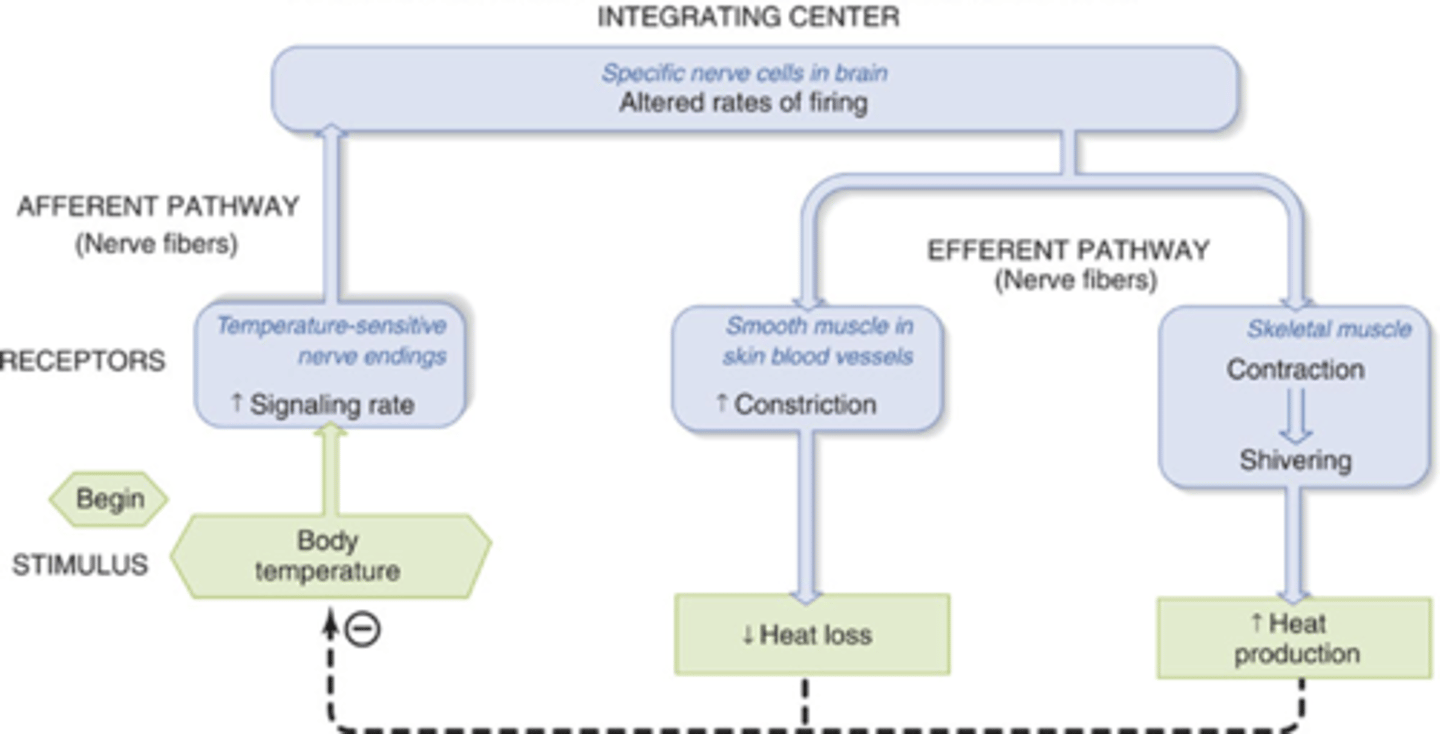
Negative feedback
Most common form
-occurs when something takes the body away from homeostasis
-nerves send afferent signals to the brain
-brain interprets a solution
-brain sends efferent signals to organs to return the body to normal
examples of negative feedback
-body temp control
-blood glucose levels (dynamic consistency)
Positive feedback
Uncommon
-stimulus occurs taking body away from homeostasis
-signal is sent to brain
-brain sends efferent signals to increase the response, furthering away from homeostasis
-stops when stimulus is removed from environment
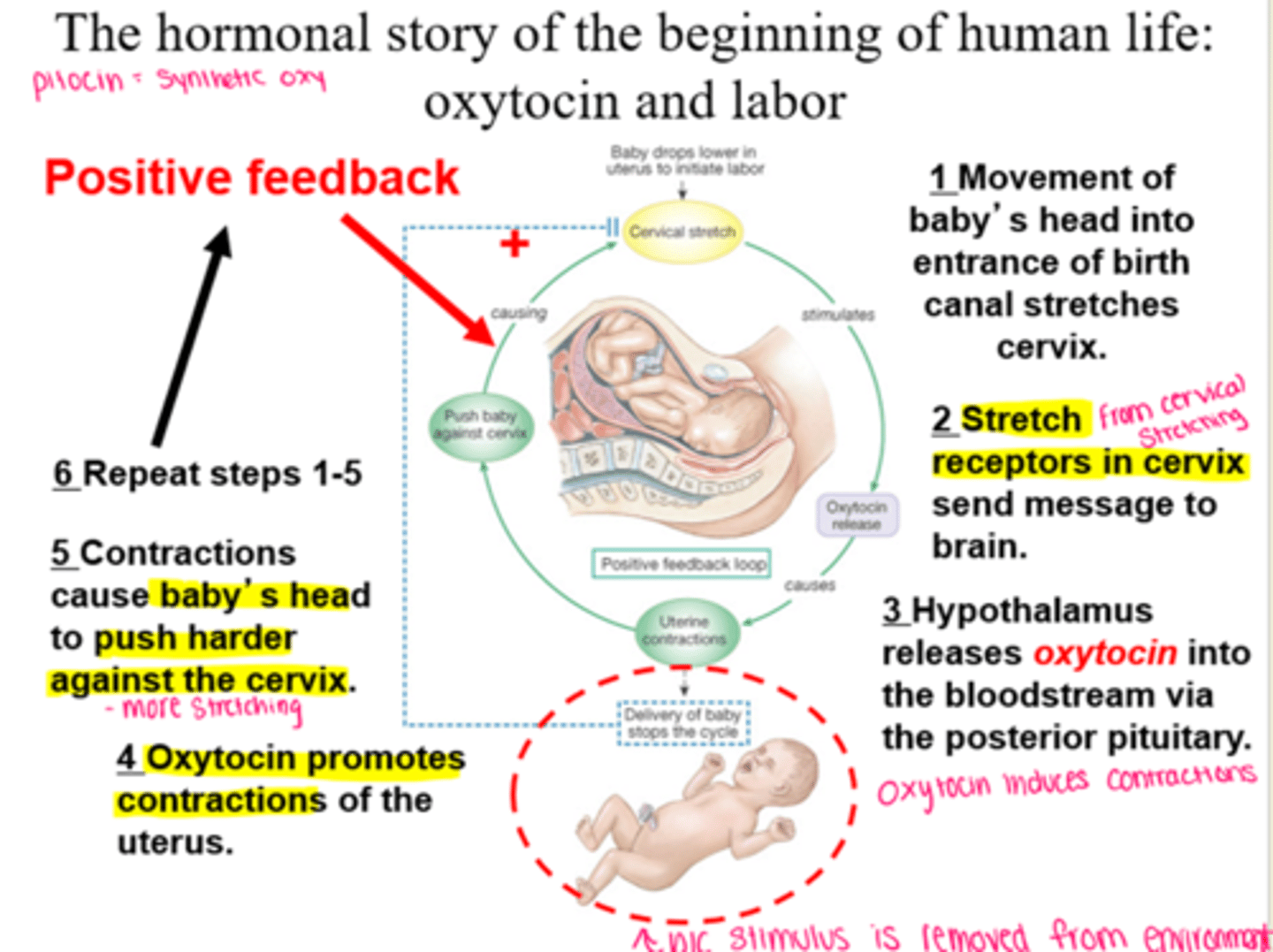
example of positive feedback
childbirth
fluid mosaic model
cell membrane structure
-fluid: cell wall is not rigid, it has motion and its composition is always changing based on types of lipids, amount of protein, etc.
-mosaic: cell wall is composed of many different molecule types; it is heterogenous
Phospholipid composition
-Polar heads that are hydrophilic, so they're outside
-Nonpolar tails that are hydrophobic; they face in
This makes molecules amphipathic because they have polar and nonpolar ends
saturated fatty acids
no double bonds, so they're straight and are tightly packed in.
make viscous fluid due to lack of water movement
unsaturated fatty acids
have double bonds in their tails, making them bent so they make looser membranes
more fluid, make thinner fluids due to easier water transfer
membrane fluidity
a measure of how well phospholipids can move in a membrane. Unsaturated fatty acids move more than those with saturated fatty acids.
unsaturated - fluid
saturated - viscous
Homeoviscous adaptation
maintenance of a relatively constant membrane fluidity. This occurs because cell membranes work best with consistency
consistency can be changed with saturation or environmental temperature (warm = fluid, cold = viscous)
Relationship between membrane fluidity and homeoviscous adaptation
membrane fluidity is how much a membrane moves and homeoviscous adapation is maintenance of that fluidity level
Integral proteins
embedded into lipid bilayer of the cell membrane
Peripheral proteins
freely adhere to one side of the cell membrane surface
integral protein function
transport
signaling
enzymatic activity
peripheral protein function
regulatory and structural
can anchor the cell membrane to filaments of the cytoskeleton
role of cholesterol in cell membranes
helps with homeoviscous adaptation/maintain membrane fluidity with temperature changes
slows down membrane movement in warm temperatures and speeds it up in cooler temperatures
Diffusion
passive movement of a solute down its concentration gradient
-no energy required
-small, lipid soluble solutes like oxygen, CO2, steroids like estrogen
-stops movement at equilibrium
what factors influence rate of diffusion
-membrane resistance
-concentration gradient (larger = faster movement, smaller = slower movement)
-lipid solubility
-membrane surface area (more surface area = quicker diffusion)
-composition of lipid bilayer
-molecular size (larger molecules diffuse slower)
Facilitated diffusion
-No energy required, moves with the concentration but requires solute binding to pass through
-The solute acts as a ligand, no additional compound is required (ex: glucose binds the protein, conformation occurs, glucose enters the cell)
Difference between diffusion and facilitated diffusion
Facilitated diffusion requires a binding protein to open a channel
Facilitated diffusion has a threshold due to limitation of number of proteins whereas diffusion has no threshold
Active transport
-goes against concentration gradient but requires ATP use
-solute must actually bind with protein to move through
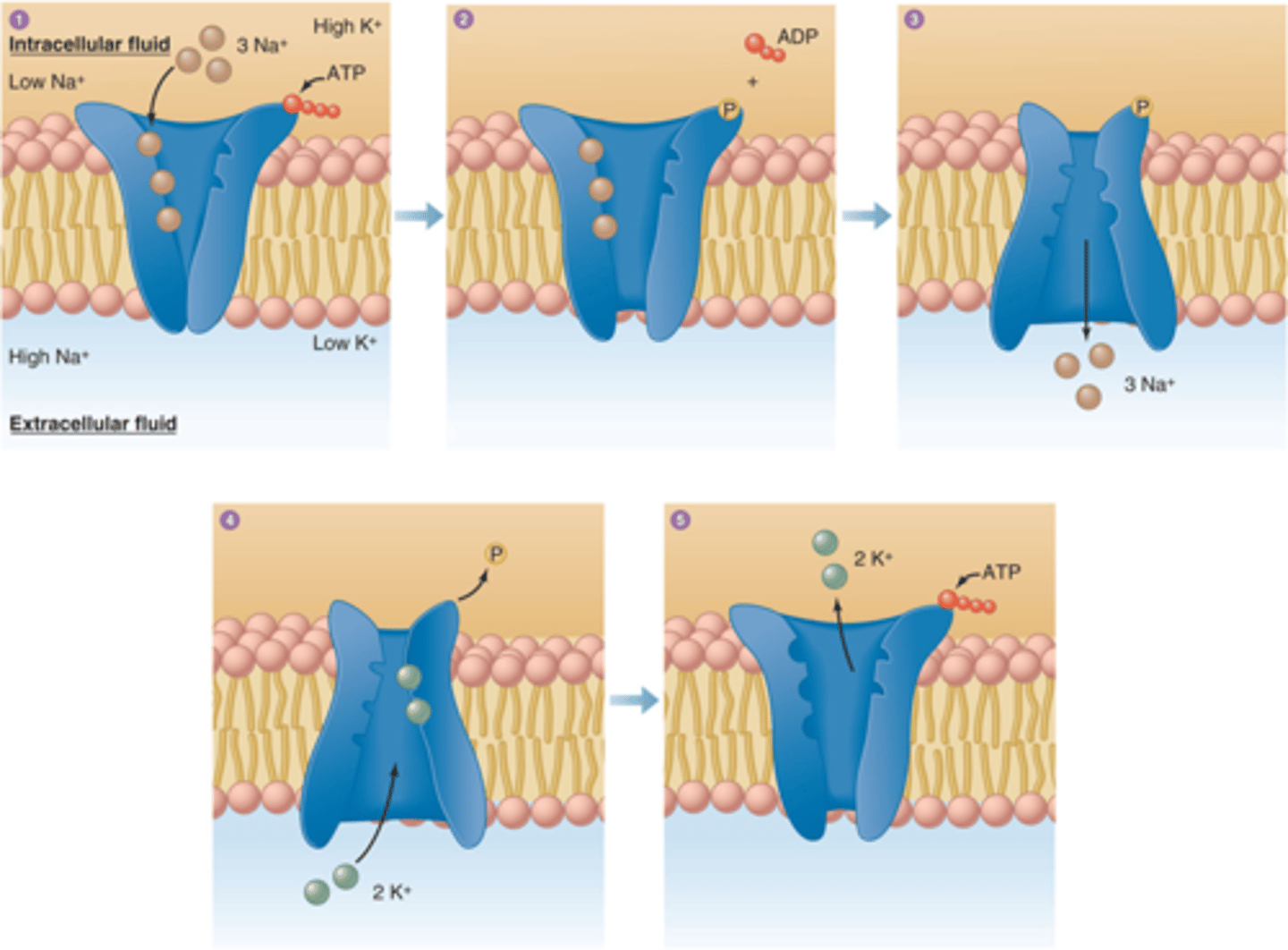
active transport example
-sodium potassium pump takes 3 sodium using ATP from inside to outside the cell where concentration is already high
-2 potassium come from outside the cell to inside the cell where concentration is already higher
-these both bind to open the protein to move through
secondary active transport
-against the concentration gradient, but no direct ATP use
-a solute moving with the gradient binds to open the channel
-the secondary ion hitches a ride across the membrane while the channel is open
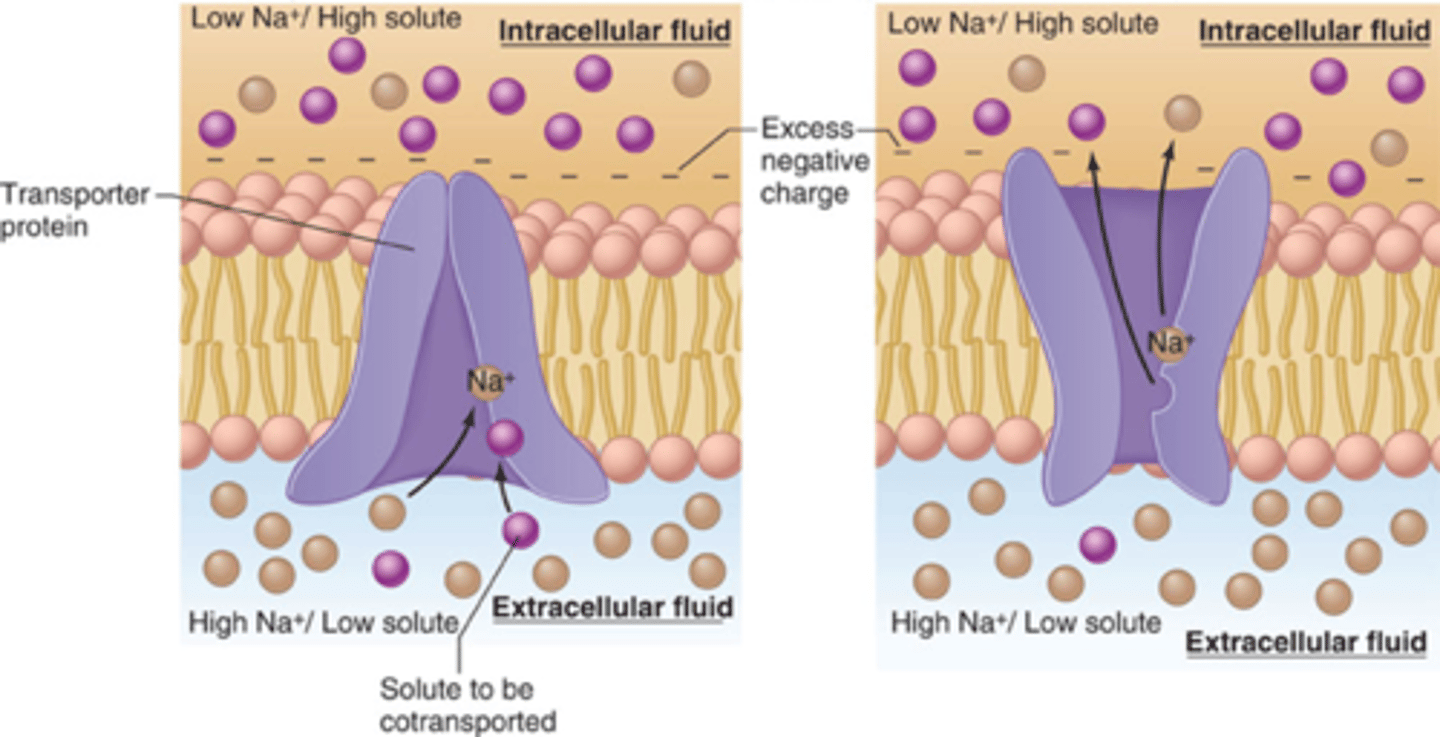
cotransport
part of secondary active transport
ion and second solute go in same direction
countertransport
part of secondary active transport
ion and second solute move in opposite directions
Diffusion via ion channels - NO CLASSIFICATION
-Passive transport, but ions move through an open channel
-a tunnel where ions can move with their gradient
-can be ligand-gated: ligand must bind for the ion to move through. ion and ligand are 2 different things
example of a ligand gated channel
binding acetylcholine opens sodium channels in neurons and muscle cells to allow sodium to enter
use of endo and exocytosis
is like phagocytosis
one goes in one comes out
is used for large molecule movement (like protein)
endocytosis
-membrane folds in forming a pocket around the molecule
-it is pinched off with the molecule incide to make intracellular, membrane-bound vesicles
-required a ligand to first bind to molecule receptor
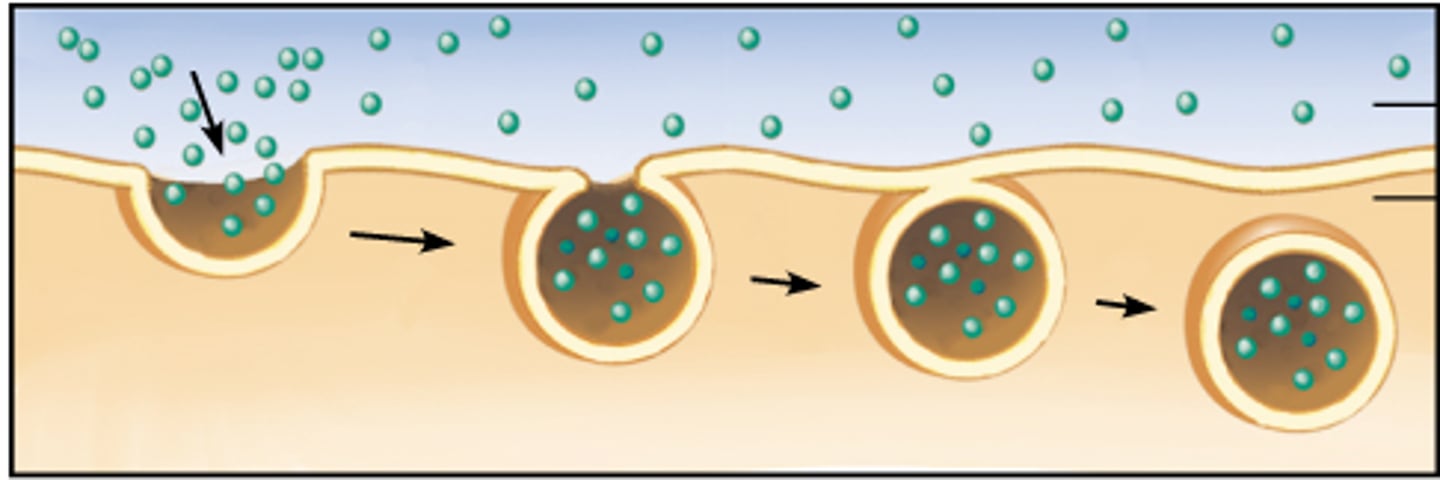
exocytosis
intracellular vesicles around a molecule fuse with the membrane to release contents into the extracellular space
ligands are sent to lysosomes or golgi for processing
then expelled from cell
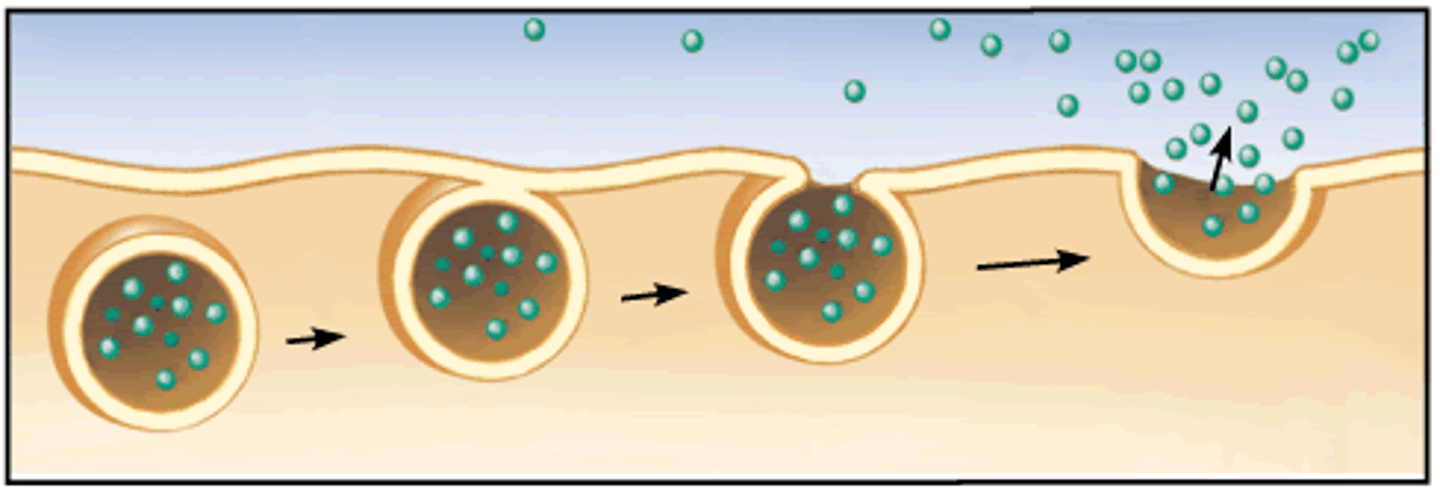
antagonists
ligands that bind and block the effect of an endogenous compound
agonists
ligands that bind and mimic the effect of an endogenous compound
electrogenic pump
generated an electrical separation of charge across a cell membrane
Na/K-ATPase
pump moves 3 sodium ions out (3 positives outside) and 2 potassium ions inside (2 positives inside)
this is known as an electrogenic pump
extracellular Na
140 mM
intracellular Na
12
extracellular K
5
intracellular K
150
extracellular Ca2+
1
intracellular Ca2+
0.0001
extracellular Cl-
100
intracellular Cl-
7
extracellular HCO3-
24
intracellular HCO3-
10
extracellular glucose
5.6
intracellular glucose
1
osmolarity
total concentration of solutes in a solution
normal intracellular osm
300 mOsm
hypoosmotic
<300
isosmotic
300
hyperosmotic
>300
tonicity
describes the effect a solution has on cell volume
where does the water go?
hypertonic
cell shrinkage
isotonic
no cell change
hypotonic
cell expands
Non-penetrating solutes tonicity and osmolarity
are the same
hyperosmotic = hypertonic
Penetrating solutes
must think about what happens when cell is dropped into solution
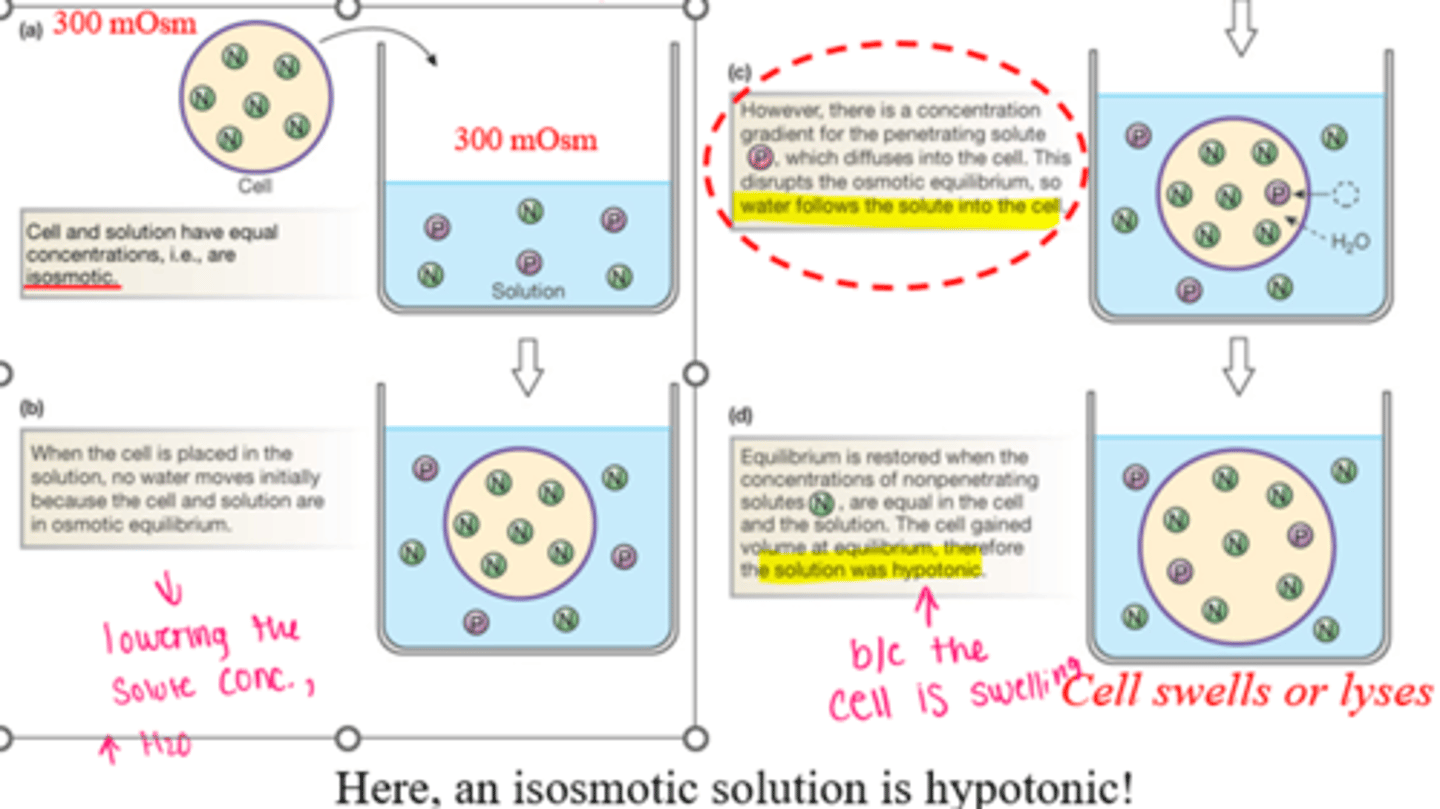
what does CFTR stand for
cystic fibrosis transmembrane conductance regulator
purpose of CFTR
code for the protein that is chloride channels in cell walls
about 1600 different mutations in CFTR can cause CF
What happens in CF
chloride channel is blocked, truncated, or misfolded which means chloride and water can't get through
makes mucous very thick and is difficult to breathe, bacteria get trapped increasing infection, and normal oxygenation of blood is prevented