Hallucinogens
 Call Kai
 Learn
Learn Practice Test
 Spaced Repetition
 Match
Match Flashcards
 Knowt Play
1/64

There's no tags or description
Looks like no tags are added yet.
Name | Mastery | Learn | Test | Matching | Spaced | Call with Kai |
|---|
No analytics yet
Send a link to your students to track their progress
65 Terms
What are psychoactive plants? what classes of drugs do they contain?
Contain compounds that affect the mind or alter the state of consciousness
Includes: stimulants, hallucinogens, analgesic, sedatives, hypnotics and narcotics
What are the effects of hallucinogenic plants?
They all distort the perception of reality
Experience the dream world
Altered idea of time, space, sound, touch, smell taste and color
Affects cognition and mood
Can rarely cause confusion, memory loss, or disorientation
What is a hallucinogen?
any agent that causes alterations in perception, cognition and mood as it primarily psychobiological actions in the presence of otherwise clear sensorium
What is the entomology of psychedelic?
from Greek meaning “Mind expanding” or “Mind manifesting”
What is psychotomimetics?
‘Induced psychotic states’
Compared to schizophrenia; but schizophrenia has much different brain activity
What are the traditional uses of hallucinogenic plants?
Used worldwide by indigenous peoples for magic, medicinal and religious purposes
Gifts from the gods; or even the gods themselves
Mediate between the man and the supernatural; used by specific individuals or all members of a society
Who synthesized LSD? when?
Albert Hofmann in 1949
What is the difference in use of hallucinogens in the 60s vs 70s?
The 1960s were a psychedelic period; with widespread recreational uses of these drugs
While in the 1970s they were classified as as controlled substances
How many are estimated to use Hallucinogens in modern day America? (200&)
~14% (over the age of 12) at least once
~1-1.5% in the last month
What is a psychoplastogen? examples?
Small molecules that produce rapid and sustained structural and functional neural plasticity.
Considered therapeutics for depression, addiction and PTSD
Examples: Ketamine, MDMA, Scopolamine, LSD and Psilocin
What is the clinical uses of MDMA, Psilocybin, LSD and Ibogaine?
MDMA: In conjunction with psychotherapy for PTSD, Anxiety and Eating disorders
Psilocybin: For treatment of a variety of disorders including anxiety and depression.
LSD: For cluster headaches and anxiety
Ibogaine: For addiction
What are the three main categories of plant hallucinogenic compounds?
Monoamine (adrenergic) targets and pathways: Indole & Catechol hallucinogens
Amino acid targets and pathways
Cholinergic targets and pathways : Anticholinergic hallucinogens:
What are the characteristics of indole and catechol hallucinogens (monamines) ?
Target serotonin related pathways
Vivid sensory effects; changing colours and patterns
Perception is altered while maintaining contact with the real world; User can remember their experience
Low toxicity; user will not overdose
What is the ecology of ergot?
It is a parasitic fungi found on grains like rye and wheat during wet season. Spores are deposited by insects and grow hyphae into the ovary of grains to obtain nutrients.
What is ergotism?
Cattle and humans who eat infected grains get ergotism, symptoms include: gangrene, nervous spasms, psychotic delusions and convulsions
What is the early history of ergot?
In the Assyrian cuniform tablet from 600 BC
Mentions a noxious pustule in the ear of grain
But symptoms are not reported until 1676
Romans
Refer to it as Ignis sacer “holy fire”; Burning sensations are reported in extremities; these symptoms are retributing for sins
→ There was a European epidemic in 944 A.D with ~ 40,000 deaths
Associated with the Salem Witch Trials and the French Revolution
What are the chemicals in ergot?
A collective group of chemicals called ergoline;
Ergoline, Lysergic acid, Ergotamine and Ergine
What is the MOA of ergoline?
They show both antagonistic and agonist effects on serotonin, dopamine and adrenergic receptors
But how? → This is unknown
What are some of the modern medicine uses of ergot?
Uterine contractions: used by european midwifes
To reduce postpartum hemorrhage
To treat migrates
To reduce prolactin levels resulting from pituitary tumors
To treat senility and Alzheimer's dementia
What is the precursor to Lysergic acid?
Tryptophan
What is the chemical name of LSD?
d-lysergic acid diethylamide
What does dosing of LSD look like?
Small doses intensify perception
Large doses cause hallucination (last 6-12 hours)
T/F LSD is not addictive?
True
Rapid and complete tolerance develops for behavioural effects after 4-7 days, and last for 3 days; also crosstolerance to other monoamine hallucinogens
Not addictive and doesn’t produce withdrawals
Massive overdose is required for lethal effects
What is the MOA of LSD?
Regulate serotonin pathways; binds multiple serotonin receptor subtypes (5HT receptors) with both agonist and antagonist effects
Tolerance is due to the downregulation of certain serotonin receptors
What neurotransmitter does this resemble?
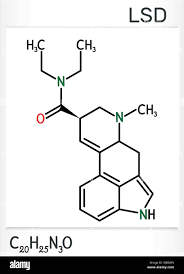
Serotonin;
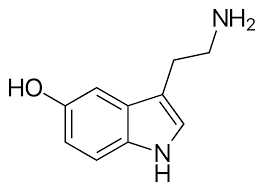
What are the effects of LSD?
Profound perceptual distortions and hallucinations
Distorted awareness of sensations and altered sense of self
Even mundane sensations and vivid and intense
This is variable from person to person
What is a ‘Bad trip’?
A panic episode brought on by dislike of drugs effects and fear that the experience will not end
→ Can result in flashbacks: hallucinogen persisting perception disorder
How are morning glories used for their lysergic acid content? historically vs a modern context?
Aztecs used these for divination purposes: priests eat seeds and interpret their visions to guide their flowers
Modern use by indigenous mexicans; they are ground into flour, soaked filtered and drunk
What are magic mushrooms called by aztecs?
Teonanacatl
Gods flesh
Who is Richard Evans Shultes?
The first botanist to record rituals and beliefs surrounding the magic mushroom
In 1941 he writes his Harvard doctoral thesis on this subject
What is the chemistry of Psilocybin (psilocin)?
Structurally similar to serotonin
Similar effects to lysergic acid and LSD (1% potency)
Who is Timothy Leary?
A Harvard professor who in the 1960s was the first to investigate the effects of eating magic mushrooms
What is a major precursor to psilocin?
L-tryptophan
What are the effects of Psilocybin?
30 minutes after ingestion = dizziness, weakness and twitching
30-60 minutes after ingestion = visual effects seen; colours, patterns and dreaminess, sense of euphoria develops
180 minutes after ingestion = normalcy returns
What does a ‘Bad Trip’ on Psilocybin look like?
Distortion of familiar objects
Distorted forms can appear threatening; people can appear as demons, facial distortions
What are the Catechol hallucinogens?
Mescaline & Myristicin
Similar effect in both groups although the compound structures differ
What does Peyote look like?
A small spineless cactus
Greenish top
Parsnip or carrot-like root
Endemic from southern Texas to central Mexico
Has >56 alkaloids
What is a catechole group?
A phenol with two OH groups attached to it
What active compound does peyote contain?
Mescaline
How long do the effects of mescaline last? symptoms?
6-10 hours
Dilation of pupils
Increase in pulse rate and blood pressure
Elevation of body temperature
What is the chemical structure of catechol hallucinogenic structures?
Resemble catecholamine: norepinephrine, dopamine
Effects mirror mechanisms of indole hallucinations via serotonin actions
Pharmacological activity is similar to LSD (0.2% potency of LSD)
What are the historical uses of peyote?
Samples found in caves date to 8000 years ago
Used by the Aztecs; predating Spanish conquest; and they tried to eradicate its use; it was eaten during religious ceremonies by priests and their congregation
Used in Texas in 1760; as it spread through regional indigenous tribes by 1880
The Native American Church ; founded in 1918, groups practised ceremonial peyote use
How is peyote prepared?
Entire plant is psychoactive; but only the above ground portion is edible
The crown is sliced into small disks
It can be eaten green or made into tea for drinking.
It is dried then eaten; Dried mescal button remains psychoactive indefinitely
How is nutmeg used medicinally?
Used as a hallucinogen in Old world
In Asia it is often added to tobacco and chewed of snuffed
Aphrodisiac powers in Yemen
What is mace?
The fleshy covering around the nutmeg seed
Contains a different active ingredient with similar effects
Different flavours
What is the active compound in nutmeg? what are the effects?
Myristicin
Hallucinogen effect
Similar to peyote; both in visual and imagined effects; colour kaleidoscopes, trance, out of body experience and flying
How is nutmeg prepared as a hallucinogen?
Mix 1-3 tbs in water; serve hot
The toxic compounds can result in hangover
What is the amino acid hallucinogen?
Amanita species = Ibotenic acid, Muscimol (most active)
What is the ecology of Amanita?
Amanita Species
50-60 species of Amanita
Widespread in the temperate regions of the northern hemisphere (NA and Asia)
Grows well under fir and birch trees; common on damp autumn days
What is the historic use of Amanita species worldwide?
-May be the oldest and most widely used hallucinogenic drug
India:
Around 3500 years ago it was used by the Soma cults of the Indus Valley; Soma is a hallucinogenic plant thought to be god, it is mentioned 120 times in the Rig Veda
Northeastern Asia and Siberia:
Observation of intoxicated reindeer
A Swedish prisoner in Siberia in 1730 reported its use by his captors (used by shamans)
North America:
Utilized by indigenous Ojibwa in Michigan
What is the MOA of ibotenic acid?
Activates glutamate receptors
(Glutamate is an endogenous excitatory neurotransmitter which binds to receptors that act as ion channels or that are G-protein coupled.)
Ion channels release Na+ or Ca2+ into the post-synaptic neurons leading to an excitatory response
what is the MOA of muscimol?
GABA receptor agonist
GABA is derived from glutamate but is an inhibitory neurotransmitter.
Muscimol activates GABA receptors that are chloride channels
What are the symptoms of muscimol?
Produces a state of confusion, disorientation and sensory disturbances
Fatigue, sedation and sleep
Cognitive ability is diminished
What is the importance of muscarine?
In 1869 Schmiedeberg showed that musarine could elicit excitation of the vagus nerve in frogs
This observation stimulated a search for endogenous neurotransmitter substances with this effect
This lead to the discovery of acetylcholine and its action on endogenous receptors
What are the effects of Fly agaric?
Ingestion of 1-4 mushrooms for effects
Onset of action is 15 minutes - 1 hour
Effects
Derangement of senses, then manic behaviour
Delirium and altered perception of size
Desire for exaggerated physical activity
Visual and acoustic hallucinations
General inhibition of motor function
After 12 hours, deep sleep
What is the Anti-cholingeric hallucinogen?
Scopolamine from the Corkwood tree, Henbane and Poisonous nightshade
What is the historical medicinal use of Scopolamine?
Used clinically by 1910 ; as a pre-anesthetic medication, motion sickness
In WW1 it was used for American GIs to combat seasickness
A German doctor; Gauss in the 20th century prescribes it for a ‘twilight sleep’ of women giving birth
Used as a tranquilizer in alcohol and drug withdrawal treatment
Can be used in combination with morphine as a ‘truth serum’
What are the modern medicinal uses of Scopolamine?
Post operative Nausea
Motion sickness
GI spasms
To aid in GI radiology and endoscopy
IBS
Eye inflammation
What is the MOA of scopolamine?
Muscarinic receptor agonist
Hallucinogenic at higher doses
Has variou CNS effects …
What are the CNS effects of scopolamine?
→ As dosage increases a behavioural pattern emerges
Delirium
Mental confusion
Loss of attention
Loss of short term memory
Death
Hallucinations and out of body sensations occur at the time of drowsiness and memory loss
→ Physostigmine has been used as an antidote
What is the ecology of the corkwood tree?
Native to Australia, Queensland and north and central New South Wales
Leaves have concentrations of atropine and scopolamine
Aborigines submerged the branches of the tree into eel populated pools, the eels then became lethargic and easy prey
There is not enough of this plant to meet scopolamine demand
What is the demand for scopalamine?
→ 10x higher commercial demand for scopolamine than hyoscyamine and atropine combined
… But plants produce less scopolamine than other alkaloids
How do we meet demand for medicinal plant compounds?
Cultivation
Cell culturing approaches; callus and hairy root culture
Genetic engineering approaches (must understand the biology of secondary metabolite application)
What does the biosynthesis of scopolamine look like?
Begins with ornithine
Derived from hygrine
What are 2 other plants used for their production of scopolamine? their drawbacks/ benefits?
Henbane
High levels of H6H enzyme
Active H6H gene; transcribed at high rate = >H6H RNA
But it is difficult to grow … unsuitable for cultivation
Poisonous nightshade
Hyoscyamine producer
Lower amount of H6H enzyme
But it is easy to grow … suitable for cultivation