Passive Care Exam 2
 Call Kai
 Learn
Learn Practice Test
 Spaced Repetition
 Match
Match Flashcards
 Knowt Play
1/58

There's no tags or description
Looks like no tags are added yet.
Name | Mastery | Learn | Test | Matching | Spaced | Call with Kai |
|---|
No analytics yet
Send a link to your students to track their progress
59 Terms
What is ultrasound?
acoustical energy that uses sound waves at high frequencies
Higher frequency ultrasound absorbed more rapidly and therefore is used on _ skin
superficial (3.3 mHz)→ ankle, elbow, wrist
Lower frequency ultrasound absorbed slower and is used on _ skin
Deep→1mHz→ quadricep or paraspinals
Acoustic energy uses _ to penetrate the skin
heat
Crystal used in ultrasound is _mm thick (very thin and fragile)
2-3mm
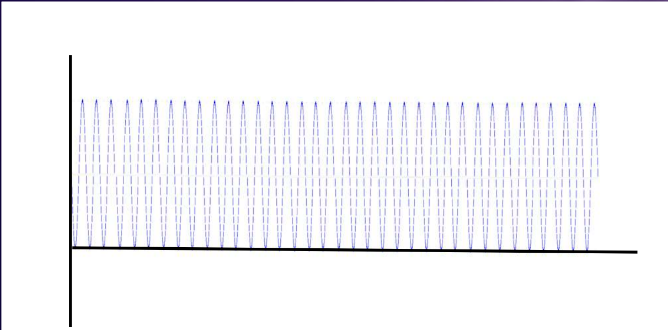
What type of ultrasound is this?
continuous
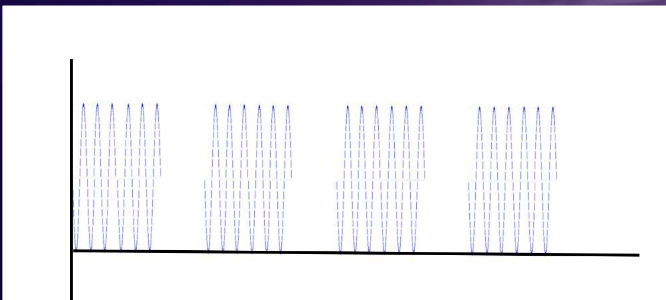
What type of ultrasound is this?
Pulsed ultrasound
Ultrasound has alternating current that passes through the crystal, this is called _
Reverse Piezoelectric effect (indirect)→ produces high frequency sound waves that result in ultrasound
High pressure wave causes tissue to compress and expand which results in friction and leads to _
heat
What is continuous ultrasound?
100% duty cycle
heat tissues
bone, tendon, ligament, joint, dense so most absorbed
skin and fat are least absorbed
What is an example of continuous ultrasound use?
chronic muscle spasm
What is pulsed ultrasound?
50% and 20% duty cycle
mechanical effect
NO HEAT
What is an example of pulsed ultrasound being used?
Acute ankle sprain
What are the treatment areas for ultrasound?
Near field/ fresnel zone→ MAIN TX effect
Far field/fraunnofer zone (deeper) increased circulation
What is intensity/amplitude of ultrasound?
Spatial peak intensity→ peak intensity or maximum intensity (watts per cm2 )
How do you calculate average intensity?
Isp x duty cycle
What is effective radiating area?
area of sound head that produces energy (size of crystal)
always smaller than size of ultrasound head
What is beam nonuniformity ratio?
variability of beam, ratio of peak intensity/average intensity
Ideal 1:1→2:1- 8:1 is acceptable
lower BNR, the more uniform the intensity
decreased hot spots, comfort/safety
underwater (indirect)
What is conducting media?
air is a poor conductor of ultrasound
gel and gel pads preferred
keep sound head flat against skin (90 degree angle of sound waves)
What is direct vs indirect ultrasound?
Direct→ head in direct contact with patient
Indirect→ uses medium between head and patient
What is the distance for underwater ultrasound?
0.5-3.0 cm
What are the parameters of ultrasound treatment?
amplitude of sound waves→ amount of sound energy being emitted by sound head (watts)
dosage is based on amount of energy in a square centimeter
more watts= more heating not greater penetration
Frequency→ typically 1-3 mHz
Duty cycle→ can be interrupted or continuous
Frequency affects _ at which the greatest amount ultrasound energy is absorbed
DEPTH
What is reflection vs refraction?
Reflection→ reversal of direction of propagation of the ultra sound wave
Refraction→ change of ultrasound wave from straight path when passing obliquely from one medium to another
What benefits can occur at 1 degree celsius?
increased metabolic activity (heating/repair/proliferation) NOT ACUTE!
What are the benefits of 2-3 degrees celsius?
decreased muscle spasm
increased blood flow (repair/proliferation/remodeling) NOT ACUTE
What are the benefits of 4 degrees Celsius?
increased elasticity of collagen (scar tissue)
Which modality is best for muscle spasms?
Russian, biphasic, ultrasound
What is tissue cooling?
Temporary
superficial cools faster than deep
What are the non-thermal effects of ultrasound? TQ
affect tissue healing and later cellular activity via
Nano motion or acoustical streaming
Stable cavitation
What is acoustic streaming?
movement of fluids along cell membranes due to mechanical pressure exerted by sound waves
increases cell membrane permeability
What is stable cavitation?
rhythmic expansion and contraction of bubbles during repeated pressure changes over many acoustic cycles
facilitates fluid movement and membrane transport
What are the contraindications of ultrasound?
Malignancy
Hemorrhage
Ischemia
Thrombus
infection
gonads
eye
pelvic, abdominal, and lumbar areas of pregnant women
spinal cord after laminectomy
plastic and cemented implants
near or over electronic implants
unknown etiology
What are the risks for ultrasound?
bony prominences
epiphyseal plate
For ultrasound intensity, do not exceed _
8.0 W/cm2
What is treatment time for ultrasound?
5-8 min
NO more than 15 min
Why does ultrasound emitter need to be moving during entire treatment?
prevents burns
What is phonphoresis?
sonophoresis
sound energy to drive medication into tissue
What is a combination therapy?
Ultrasound
Electrical stimulation
used for trigger points, epicondylitis, superficial pain areas, decrease adhesions
What is low intensity pulsed US?
LIPUS
stimulation of fracture healing
What is diathermy?
high frequency electromagnetic energy
short wave frequency
What is the more common form of diathermy?
pulsed short wave diatherm
Operator of diathermy must remain _ ft from device
3-6 ft
What are the thermal effects of diathermy?
Dipole rotation
Ionic oscillation
Kinetic energy of rotation
cause friction and heat
What are the physiologic effects of diathermy?
Pain relief
wound management
joint contractures
What are the two types of electrodes and effect for diathermy?
Capacitor electrodes produce electrical field
Induction electrodes produce magnetic field
What is the capacitive technique?
tissues placed in electric field
greatest absorption in tissues with low water content/fat
areas of low subcutaneous fat
knee, foot, hand, shoulder
plates/pads
What is the inductive technique?
tissues placed in magnetic field
deeper, more fat/obese
muscle, tendon, joint
patients with more subcutaneous fat
drum, cables, garment
What are the indications for diathermy?
OA
Neck/back pain
Ankle pain
Dermal wounds
MSK injuries
What are the contraindications for diathermy?
Loss of sensation
electronic implants
surgically implanted metal
metal in contact with skin
COPPER IUDS
cancer
pregnant
hemorrhagic areas
ischemic
testes
eyes
open growth plates
What are the risks for diathermy?
pregnant operators need to be 3 ft from device
other patients 10 ft from device
What needs to be done before diathermy treatment?
test cold/warm sensation
2-3 cm lay of towels for spacing
NO JEWLERY
What are the 4 laws of diathermy?
Arndt-Schultz law
Grotthuss-Draper law
Inverse square law
Cosine law
What is the arnold-schultz law?
Dose vs response→ small dose stimulate, high dose inhibit
What is the grotthuss-draper law?
“common sense law”
absorption vs therapeutic effect→ absorption is critical for treatment effect
What is the inverse square law?
Dose vs divergence
distance between bulb and skin
10 cm to 20 cm= 2x distance
inverse of 2= ½
square of ½ = ¼
therefore ¼ as much heat with 2x perpendicular distance
What is cosine law?
lambert’s law
decreased energy if angle is increased
decreased with change from perpendicular
T/F Continuous short wave diathermy is more common than PSWD
false→ PSWD is MC