CH 19: Dental Lamina & Enamel Organ: Stages and Developmental Disturbances in Tooth Formation
 Call Kai
 Learn
Learn Practice Test
 Spaced Repetition
 Match
Match Flashcards
 Knowt Play
1/54

There's no tags or description
Looks like no tags are added yet.
Name | Mastery | Learn | Test | Matching | Spaced | Call with Kai |
|---|
No analytics yet
Send a link to your students to track their progress
55 Terms
enamel organ
cap or bell-shaped part of tooth germ that produces enamel
outer enamel epithelium (OEE)
Outer cuboidal cells of enamel organ; serves as protective barrier for enamel organ
dental papilla
small area of condensed cells arising from mesenchyme and located next to IEE
What is the function of the dental sac?
To surround the enamel organ and contribute to the formation of supporting structures like cementum and periodontal ligament.
What is the dental lamina?
A thickened oral epithelium that begins forming in the sixth embryonic week.
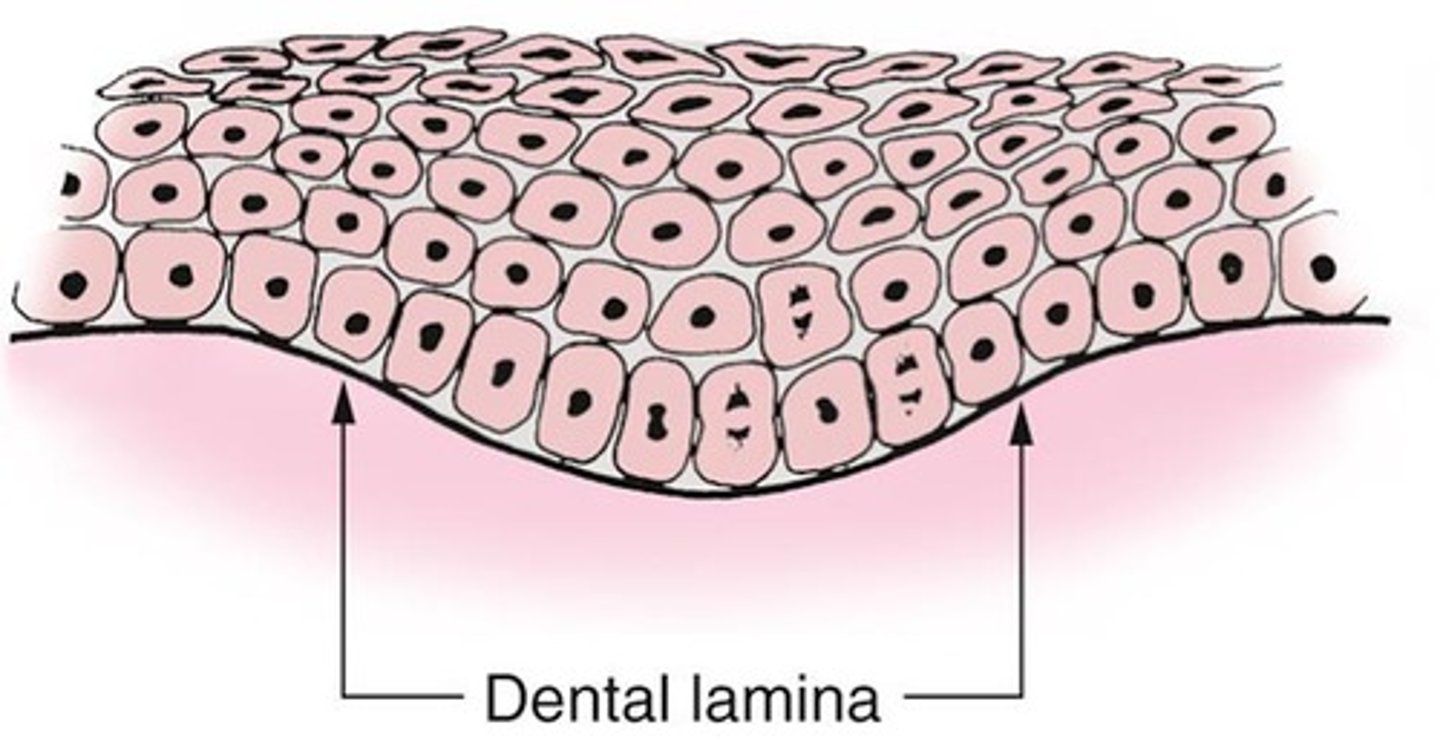
When is the dental lamina first seen?
In the sixth embryonic week.
How does the dental lamina form?
Thickening of oral epithelium, which then grows downward into the underlying connective tissue without showing a visible ridge in the oral cavity.
What does the dental lamina form?
The enamel of future teeth. (U-shaped)
what is seen during the 8th week of the embryonic period?
continued thickening that spreads posteriorly in 10 areas of maxillary arch and 10 areas of mandibular arch.
what do the 20 localized thickening correspond to?
future position of primary dentition and will form the enamel of future teeth
ectodermal dysplasia
syndrome involving abnormal development of one or more ectodermal structures including sweat, salivary glands, sebaceous glands, skin, hair, and tooth enamel
What are the stages of enamel organ development?
Bud stage, cap stage, and bell stage.
What occurs during the bud stage of enamel organ development?
Initial budding from the dental lamina, forming blobs of cells projecting into connective tissue.
where do the cells in the middle of the bud come from?
outer (superficial) layers of oral epithelium
where do the cells in the periphery (outside) of the bud come from?
the deep (basal) layers of the oral epithelium
how can you tell when the bud stage transitions to the cap stage?
when the buds start becoming slightly concave
What is microdontia?
A condition where teeth are abnormally small, often hereditary.
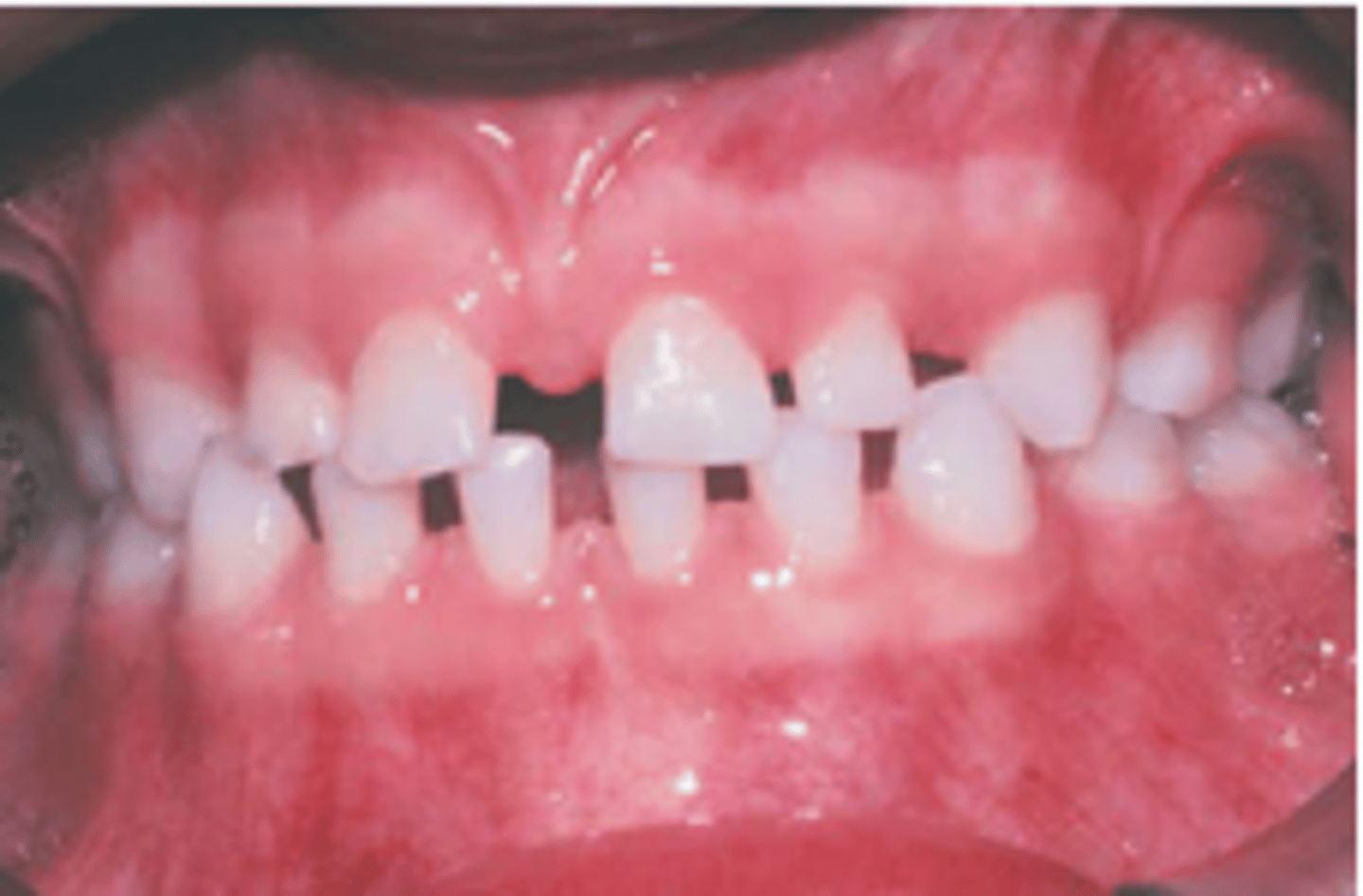
What is macrodontia?
A condition where teeth are abnormally large, often linked to pituitary gland dysfunction.
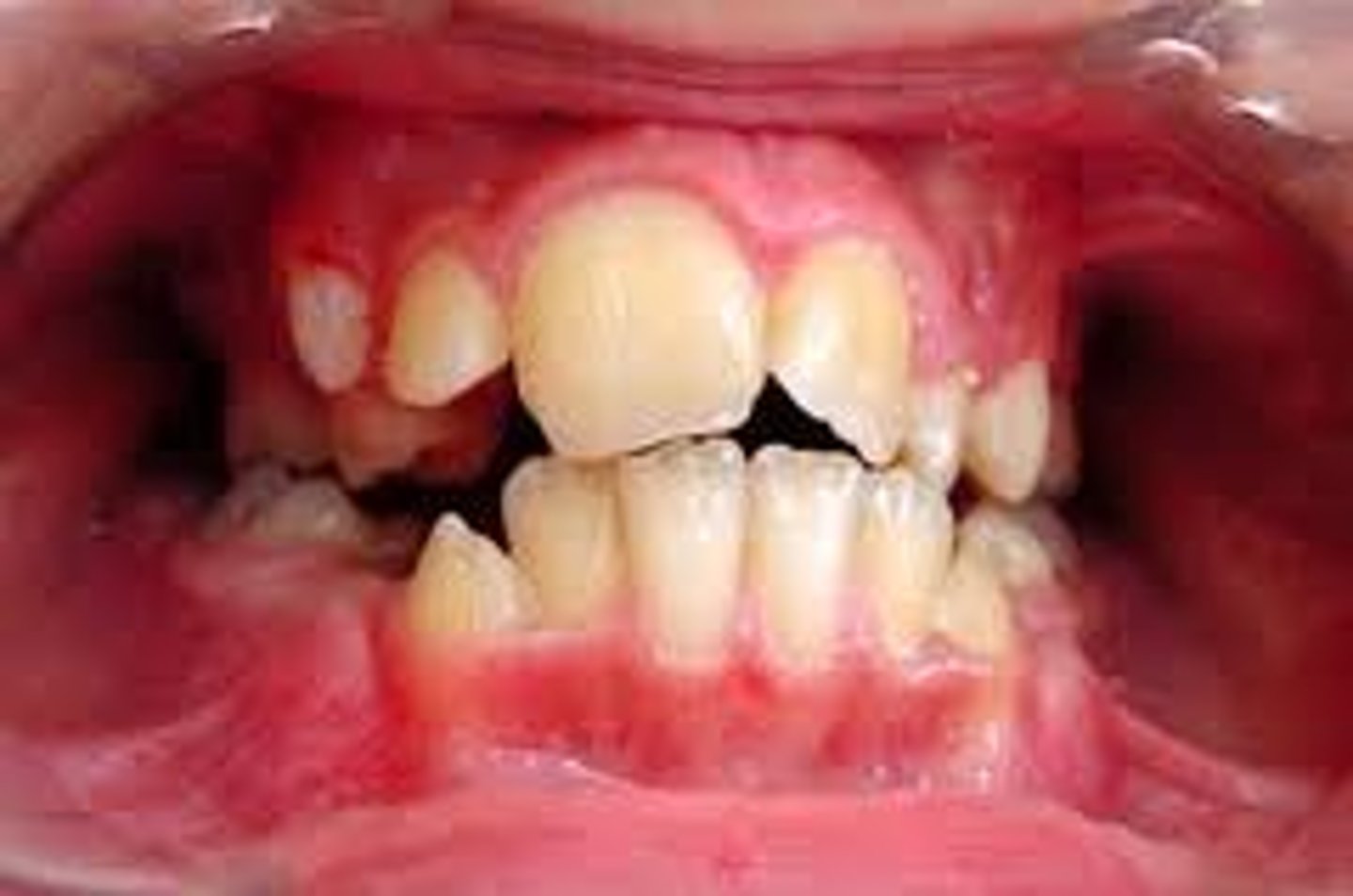
What are the three components of the enamel organ during the cap stage?
Outer enamel epithelium (OEE), inner enamel epithelium (IEE), and stellate reticulum.
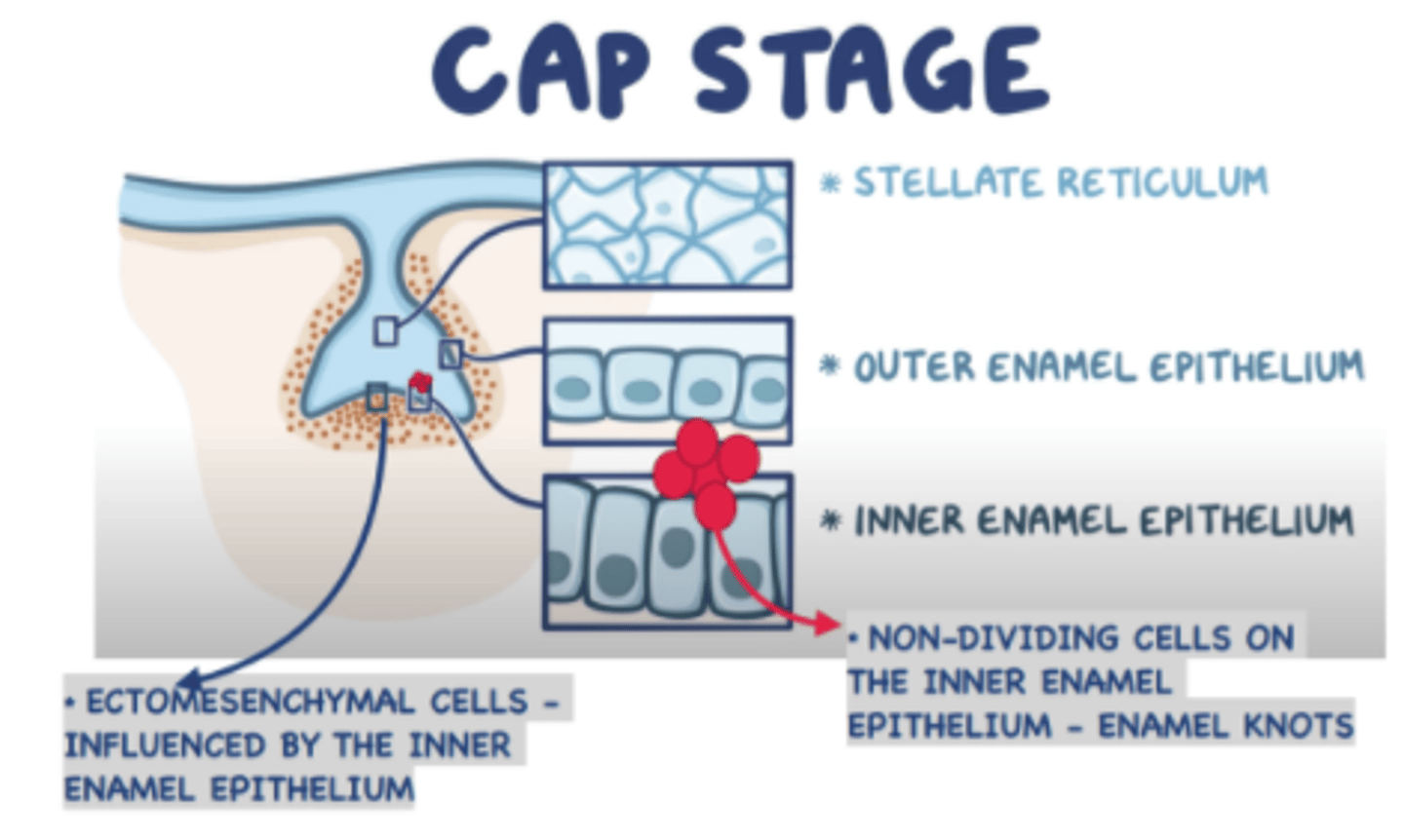
Inner enamel epithelium (IEE)
outline the concavity in the deepest part of the cap stage, continuous with OEE and also come from the basal layer of oral epithelium
stellate reticulum
Star-shaped cell layer between outer and inner enamel epithelium of enamel organ; originate from superficial layers (outside) of oral epithelium.
What kind of cells are stellate reticulum cells
ectodermal cells
how can you tell when the cap stage transitions to the bell stage
as the concavity of the cap grows more pronounced
bell stage
the stage where cell specialization or histodifferentiation takes place- where the stratum intermedium appears
stratum intermedium
more inner compressed layer of flat to cuboidal cells; supports the production of enamel matrix
2 processes that occur during bell stage
- future outline of the crown is determined in the way in which cell layers expand as the enamel grows
-changes in various cells (IEE), and they lead to the production of enamel
Function of OEE
Protective barrier for enamel organs, will play a role in attatching gingiva to the tooth
function of IEE cells
elongate and change internally to become AMELOBLASTS
they are responsible for enamel formation
Ameloblasts
Cells that form enamel
function of stellate reticulum
•cushioned protection for IEE cells
Plays role in nourishing stratum intermedium
Allows vascular fluids to move between cells
function of stratum intermedium
Help and provide nourishment for IEE cells, also producers of protein and may receive and provide products for ameloblasts
What is the function of the dental papilla?
To form dentin and pulp.
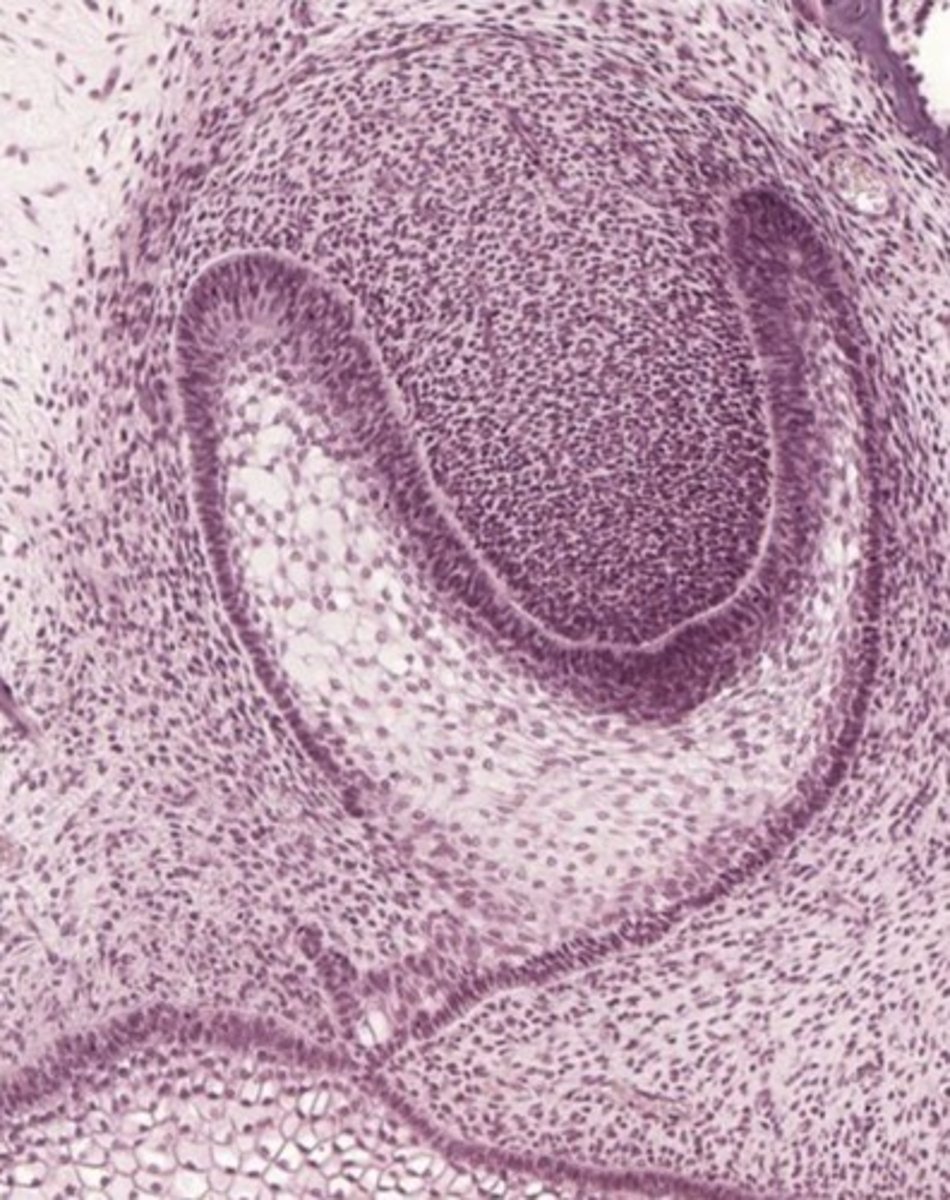
What does the dental sac give rise to?
Cementum, periodontal ligament, and some alveolar bone.
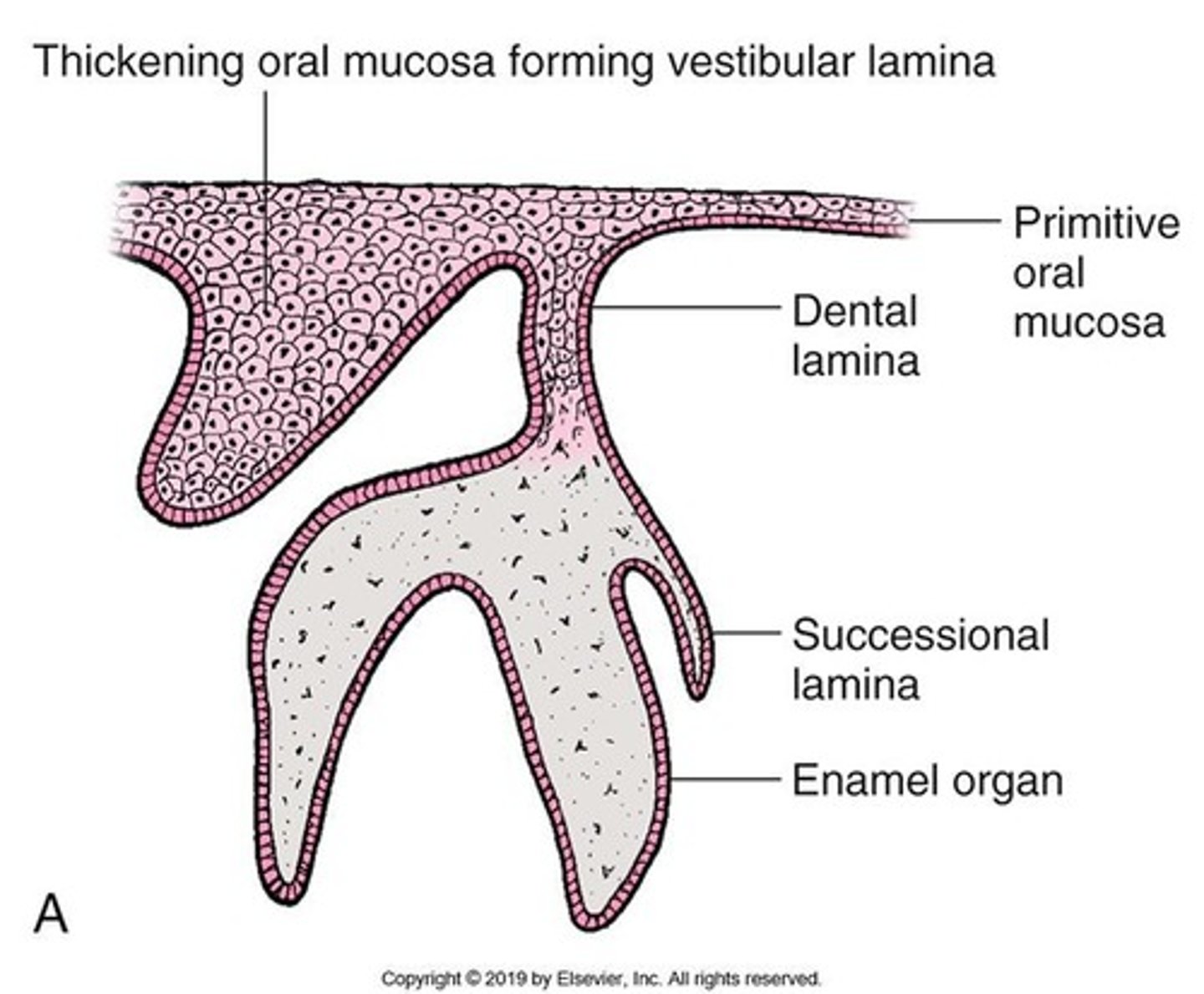
What is the successional lamina?
An extension of the dental lamina that gives rise to permanent tooth buds. develops an extension to the lingual side of each tooth.
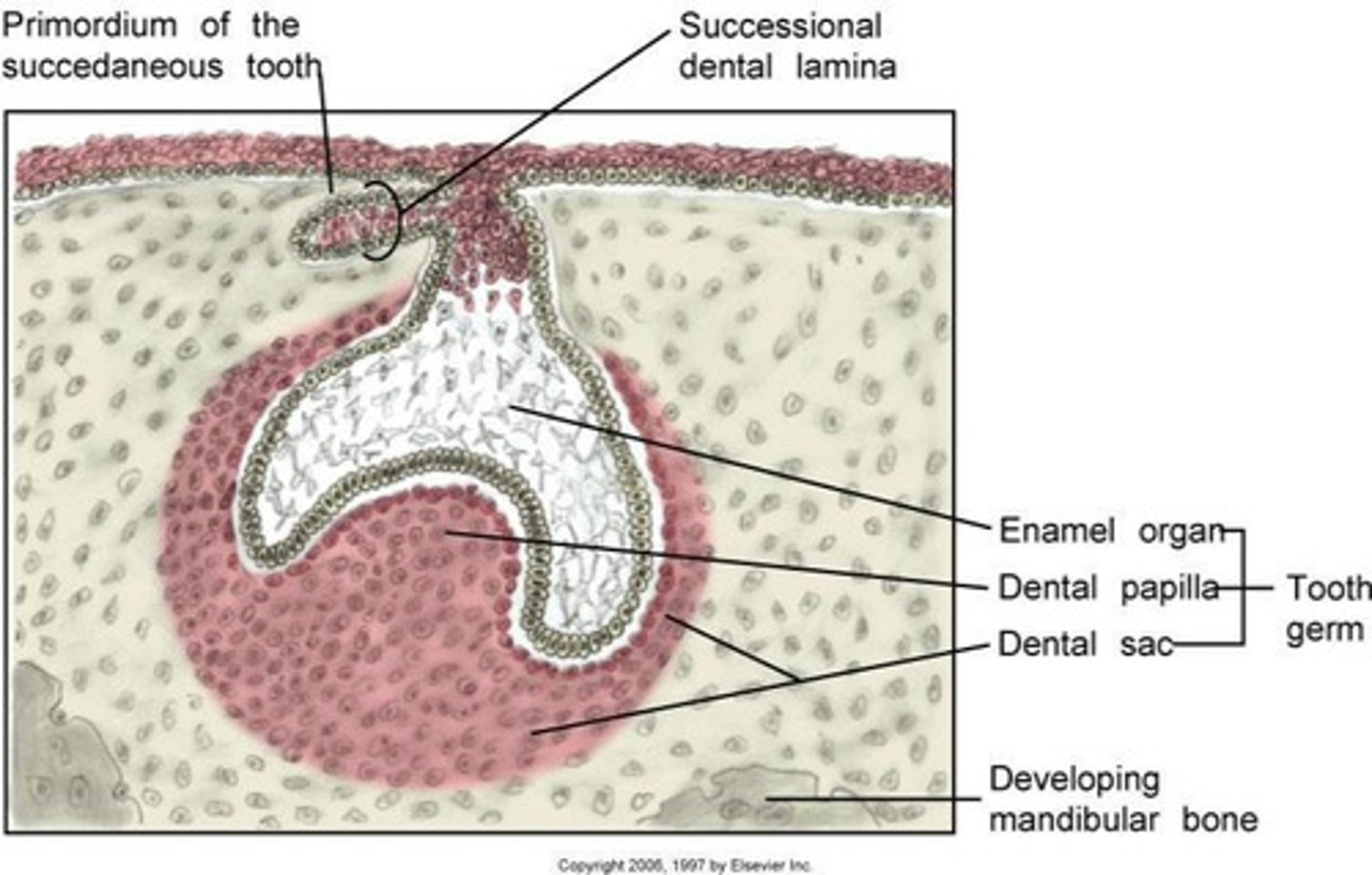
successional lamina
goes thorugh bud, cap, and bell stages, forms permanent incisiors, canines, and premolars
how do permanent molars develop
budding off of the posterior extension of dental lamina
which teeth develop slower?
permanent develops slower than primary teeth
What is the vestibular lamina?
A thickening of oral epithelium that forms the mucobuccal or mucolabial fold.
What happens during the cap stage of tooth development?
Unequal growth of the tooth bud forms a cap shape or enamel organ.
what does the dental papilla form
dentin and pulp
what gives rise to the dentoenamel junction?
the basement membrane between the dental papilla and enamel organ
when does the original laminar attachment begin to break down
as each tooth reaches the bell stage, first anteriorly then spreads posteriorly
lateral lamina
connects developing primary tooth to parent lamina
vestibular lamina
-thickening of oral epithelium in a facial or buccal direction from the dental lamina.
-becomes the mucobuccal fold in the future vestibule.
Clefting in the vestibular lamina
this cleft forms a groove that becomes the area of the muccobuccal/mucolabial fold in the future vestibule
dental sac
composed of several rows of flattened cellls, surround that dental papilla not in contact with IEE and part of the enamel organ
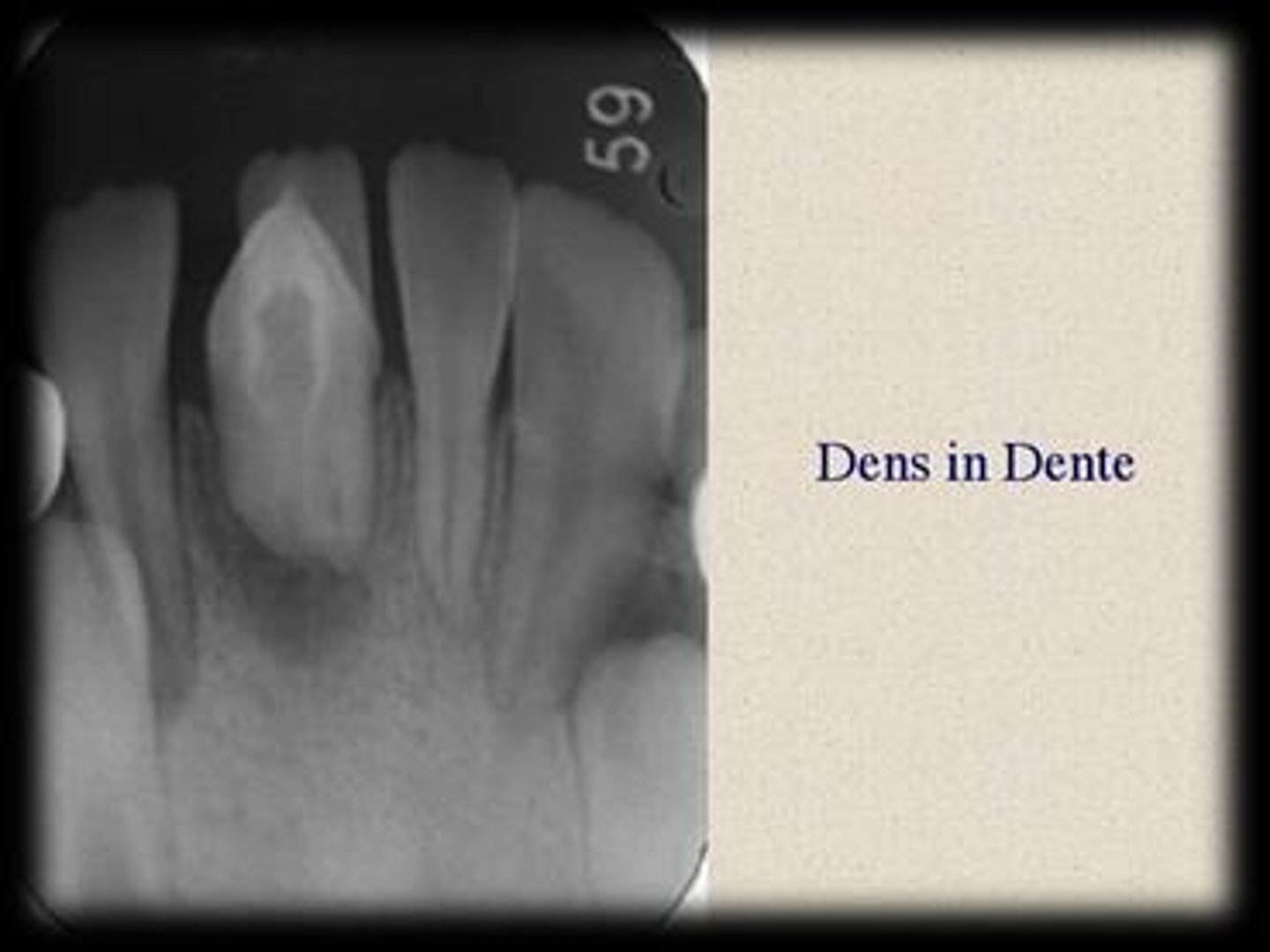
What is dens in dente?
A condition where the enamel organ invaginates into the dental papilla, commonly affecting permanent maxillary lateral incisors.
What is gemination?
A developmental disturbance where a tooth germ tries to divide, resulting in one large tooth.
What is fusion in tooth development?
The merging of two adjacent tooth germs, resulting in one fewer tooth.
What is an enamel pearl?
A sphere of enamel on the root surface, occurring during the apposition and maturation stage.
What is the bell stage of enamel organ development?
The stage where a fourth layer of epithelium appears, determining the future outline of the tooth crown.
What are the developmental disturbances during the bud stage?
Macrodontia, microdontia, fusion, and gemination.
What is the relationship between the dental lamina and primary teeth?
The dental lamina thickens at 20 sites corresponding to the positions of future primary teeth.
What is the primary physiological process during the cap stage?
Morphogenesis.
Still learning (4)
You've started learning these terms. Keep it up!