Pearson's R, T-Tests, ANOVA: Key Concepts for Psychology Research
 Call Kai
 Learn
Learn Practice Test
 Spaced Repetition
 Match
Match Flashcards
 Knowt Play
1/40

There's no tags or description
Looks like no tags are added yet.
Name | Mastery | Learn | Test | Matching | Spaced | Call with Kai |
|---|
No analytics yet
Send a link to your students to track their progress
41 Terms
What is Pearson's r?
A measure of the strength and direction of the association between two interval/ratio level variables.
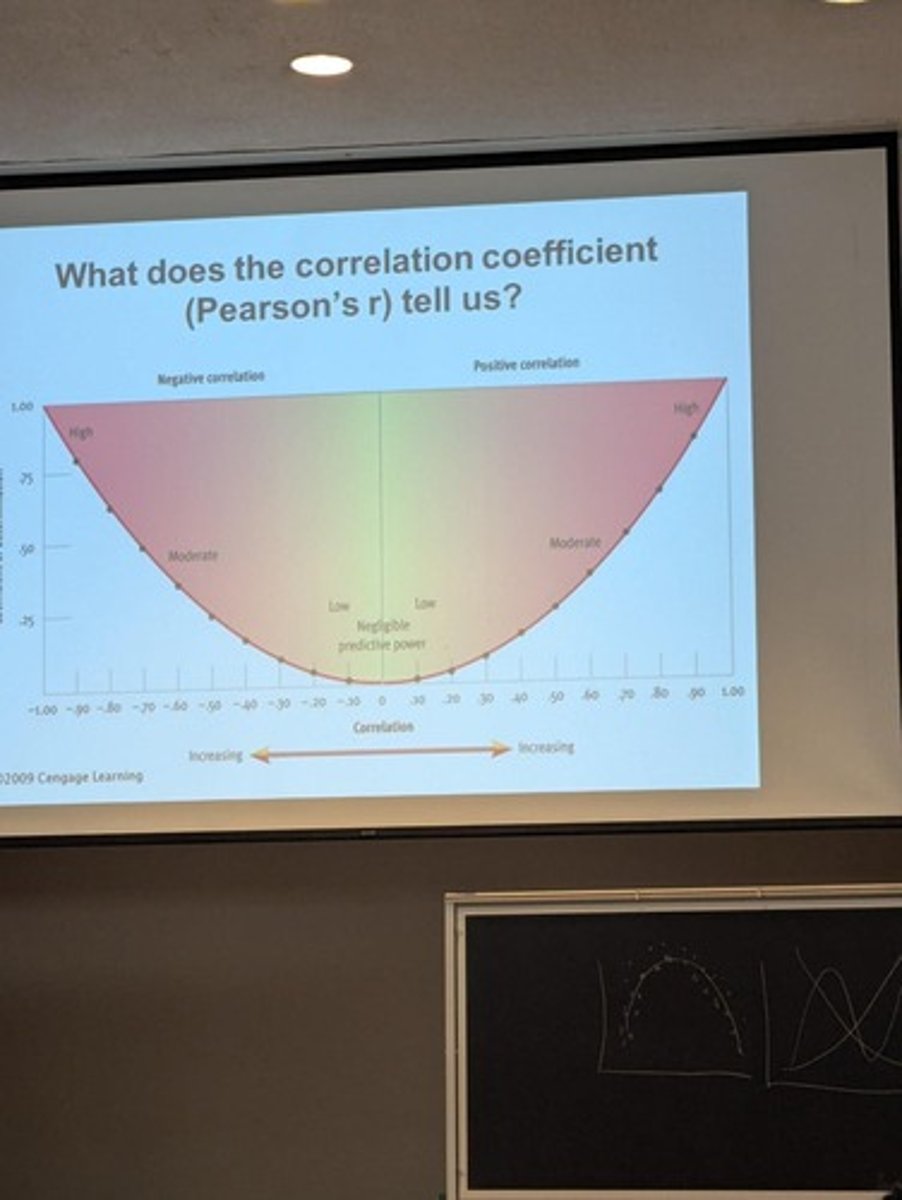
What type of relationship must be anticipated for Pearson's r?
A linear relationship, determined based on a scatterplot.
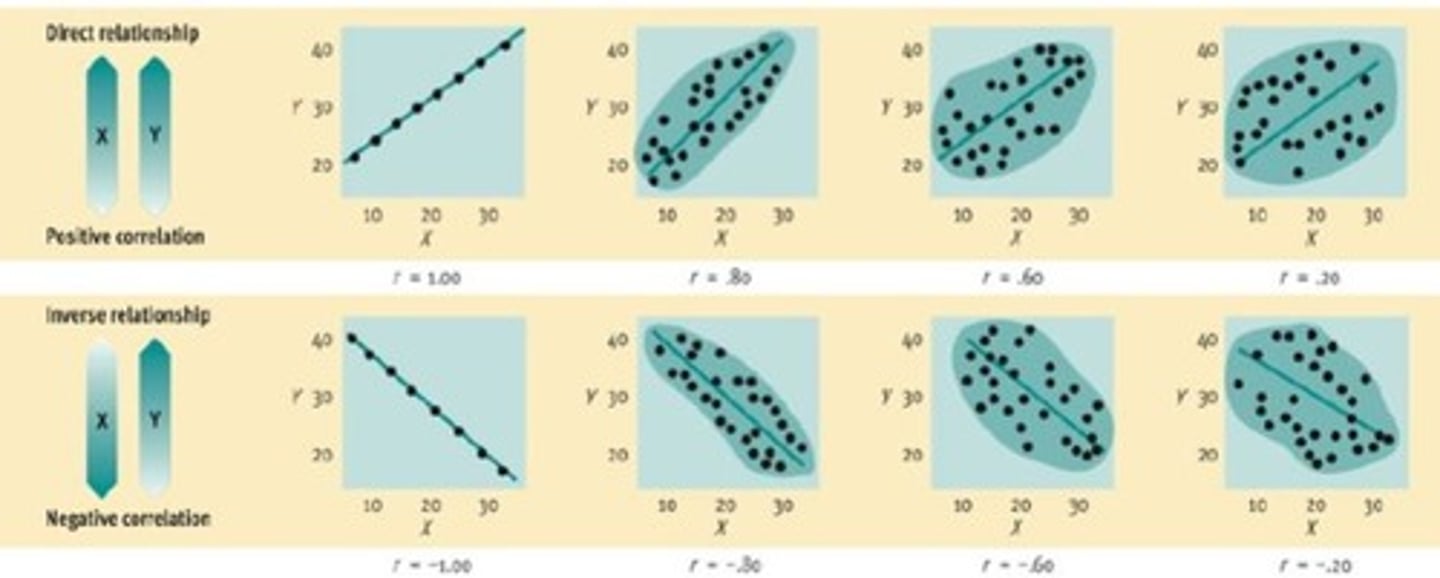
What does homoscedasticity assume?
The relationship between x and y is consistent across the entire range of values.
What is the effect of a restricted range of values on correlation results?
It can affect the correlation results, as seen in examples like SAT scores at different universities.
How do outliers affect Pearson's r?
Outliers can exert undue influence on the correlation, and their definition must be determined beforehand.
What is the coefficient of determination (R squared)?
It indicates how much variability of y is predicted by x, ranging from 0 to 1.
What does a perfect linear variable indicate?
All data points are perfectly aligned on the line.
What is a curvilinear relationship?
A relationship that forms a curve and is not traditionally linear.
What is the null hypothesis for Pearson's r?
R(pop) = 0, indicating no relationship between the variables.
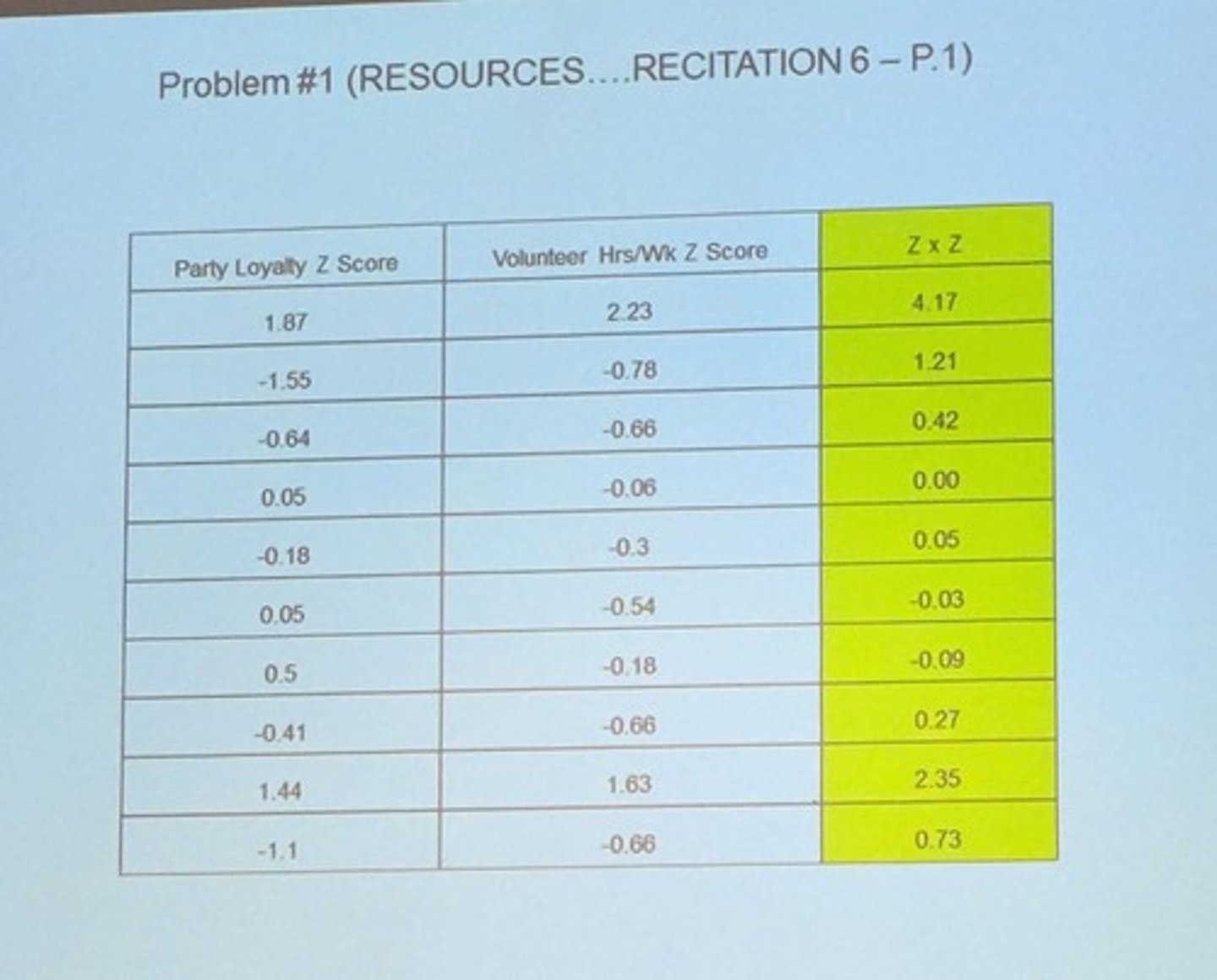
What is the significance of the z-scores in calculating Pearson's r?
Z-scores are provided to simplify the calculation of Pearson's r.
What does a negative Loyalty Z-score indicate?
It suggests a negative correlation with volunteer hours.
How is Pearson's r calculated using Z-scores?
Add the Z*Z scores and divide by the number of values.
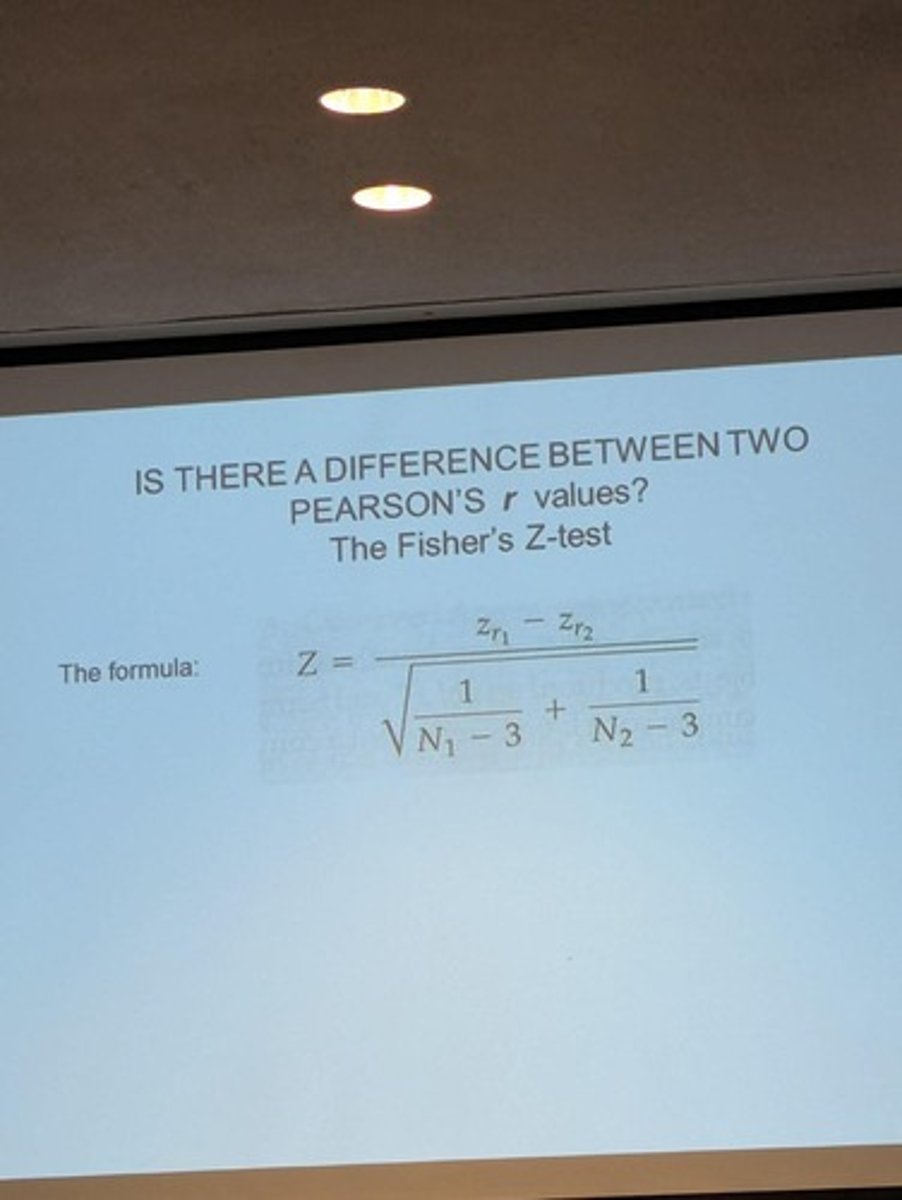
What is the Fisher's Z-Test used for?
To determine if there is a significant difference between two different r-values.
What does a paired sample t-test analyze?
It compares two different samples involving the same individuals before and after a change.
What does it mean if r is statistically significant in a paired sample t-test?
It indicates that the mean difference is statistically significant.
What is the purpose of the paired sample t-test?
To determine if the mean difference between two samples is statistically significant.
What factors can affect the results of a paired sample t-test?
Fatigue, boredom, and exhaustion from repeated tasks can degrade the study results.
What are the steps to perform a paired sample t-test?
1. Find Pearson's R and compare it against the df. 2. Plug in values to find t. 3. Compare t to the df in Table B.
What does Cohen's d measure?
It measures the effect size of the difference between two means.
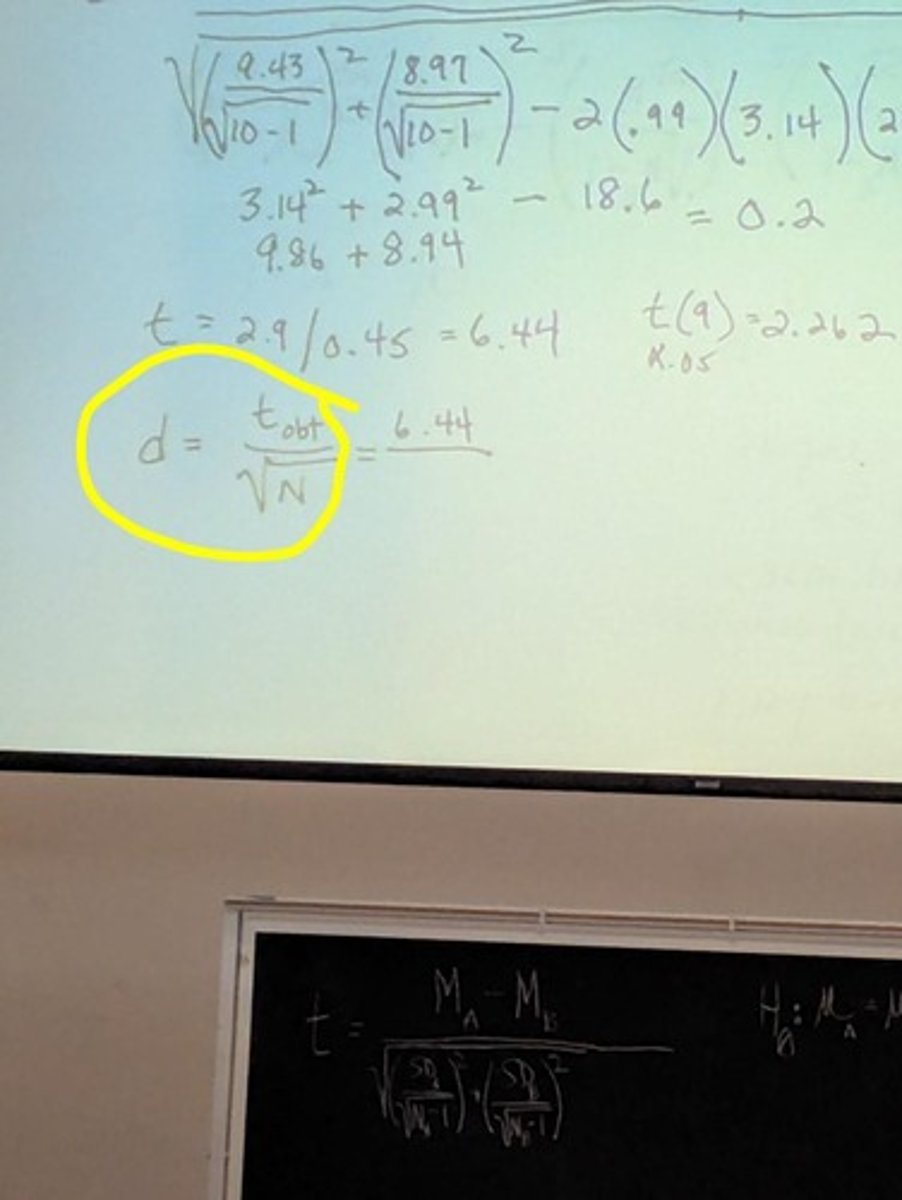
What is the primary purpose of a paired samples t-test?
To determine if the mean difference between before and after scores is due to sampling error.
How does a paired samples t-test differ from an independent samples t-test?
A paired samples t-test measures the same participants before and after a treatment, while an independent samples t-test compares different participants.
Why is it typically easier to reject the null hypothesis in a paired samples t-test?
Because the denominator tends to be smaller, resulting in a larger overall t-value.
What does the null hypothesis state in the context of ANOVA?
Any differences between variables are due to sampling error and not actual correlation.
What is the formula for degrees of freedom between in ANOVA?
The number of levels (N) minus 1.
How do you calculate degrees of freedom within in ANOVA?
The total number of observations minus the number of levels.
What is the significance of Tukey's HSD in ANOVA?
It is used to determine which specific groups are different from each other after rejecting the null hypothesis.
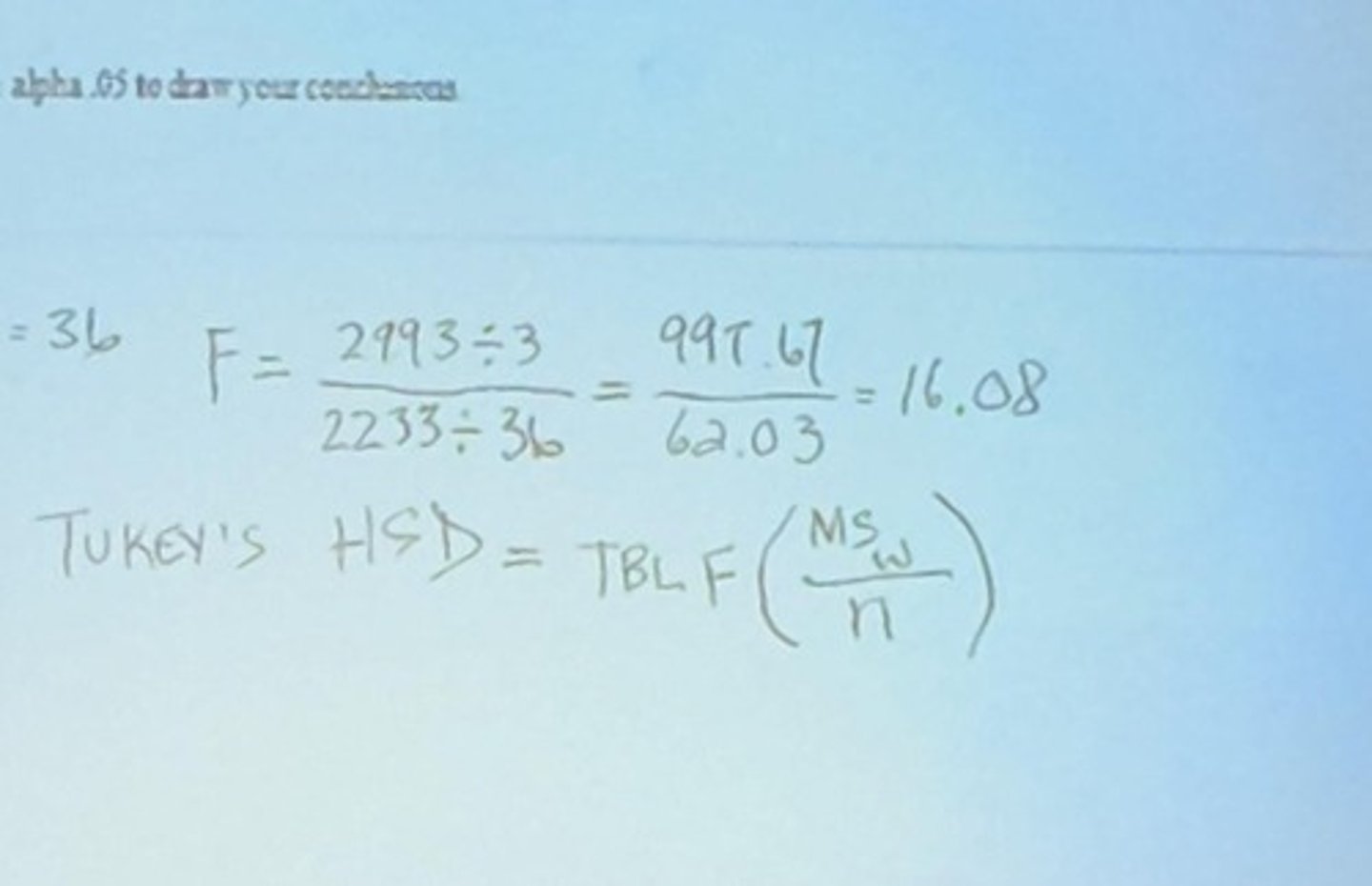
What does SS between represent in ANOVA?
The squared variability between groups and the differences among the means.
What does SS within represent in ANOVA?
The squared variability within groups, accounting for all factors except the independent variable.
What is a 2-Way ANOVA used for?
To analyze the effect of two independent variables on a dependent variable and their interaction.
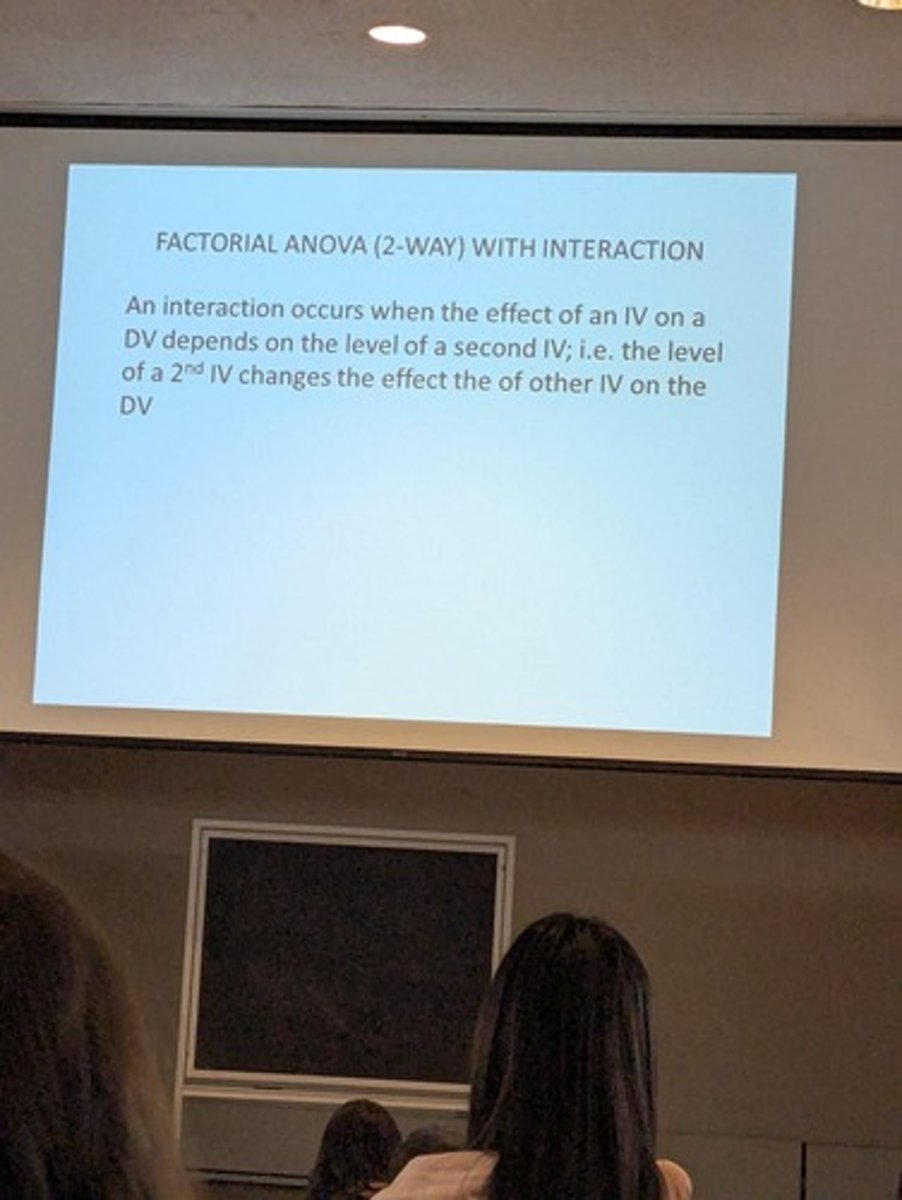
What is the difference between interaction and effect in a 2-Way ANOVA?
Independent variables affect the dependent variable but interact with each other.
What is a crossover interaction?
An interaction where means are the same on each peak, indicating that changes depend on the independent variables.
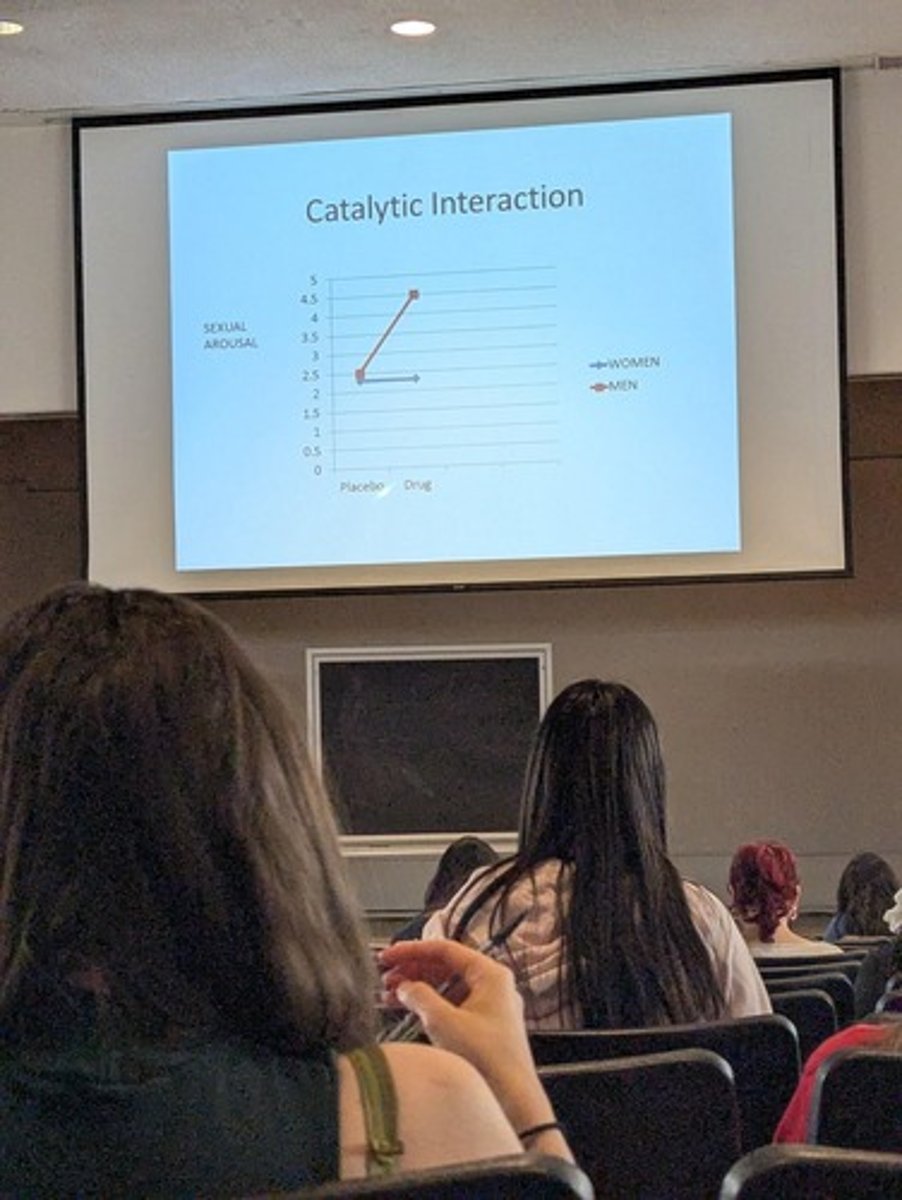
What is a catalytic interaction?
An interaction that shows an effect only for one group, such as increasing arousal for men but not for women.
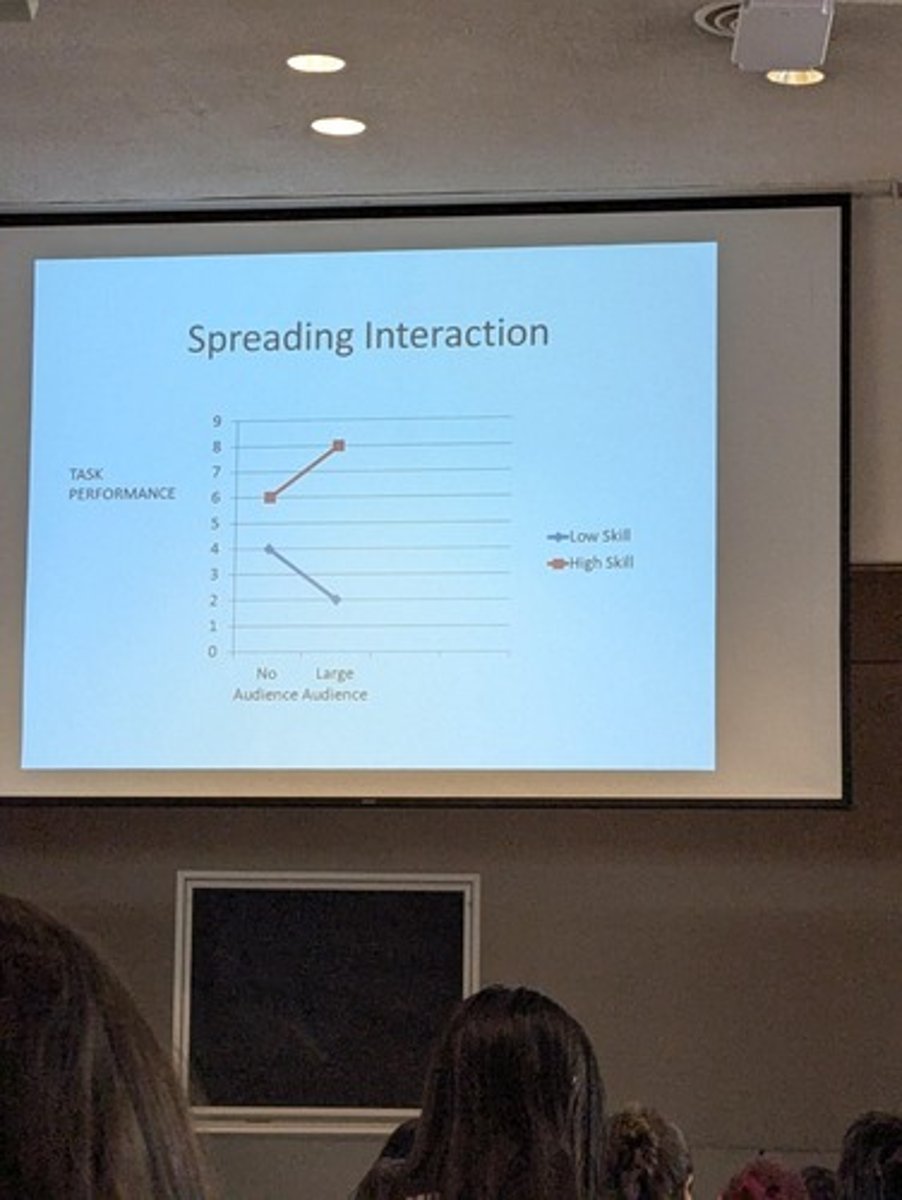
What is a spreading interaction?
An interaction where the effect of performance on behavior depends on pre-existing skills.
What is the importance of absolute value when rejecting the null hypothesis?
Absolute value matters because it indicates the magnitude of the effect, regardless of direction.
What is the role of the signal and noise in ANOVA?
The signal represents the effect of the independent variable (IV), while noise represents all other variability.
What does little n represent in statistical equations?
The number of participants in each level, not in each cell.
Why might testing the same participants in a paired samples test be problematic?
Participants may become aware of the methods used, compromising the study's blind nature.
What is the relationship between the grand mean and individual variables in ANOVA?
ANOVA involves subtracting the grand mean from individual variables to find the squares within.
What is the significance of the F statistic in ANOVA?
The F statistic helps determine whether the variance between group means is significantly greater than the variance within groups.
What is the purpose of conducting additional tests after ANOVA?
To confirm which specific variables differ in variability after rejecting the null hypothesis.
What does it mean if a variable's mean difference is not statistically significant?
It indicates that the observed differences may be due to sampling error rather than a true effect.