MKTG 3310 Exam 2 Wolter
 Call Kai
 Learn
Learn Practice Test
 Spaced Repetition
 Match
Match Flashcards
 Knowt Play
1/110

There's no tags or description
Looks like no tags are added yet.
Name | Mastery | Learn | Test | Matching | Spaced | Call with Kai | Chat |
|---|
No analytics yet
Send a link to your students to track their progress
111 Terms
What are the stages of the General Model of Customer Experience?
1. Need recognition
2. Information search
3. Evaluation of alternatives
4. Purchase decision
5. Post-purchase behavior
Need Recognition
Perceiving a need
Information Search
gathering details about opinions
Evaluation of alternatives
Considering options based on criteria
Purchase decision
Deciding whom, where, when, and how to buy
Post-purchase behavior
Satisfaction or cognitive dissonance
What are the three factors that cause a breakdown between intention and purchase?
1. Attitudes of other (Social factors)
2. Situational factors (Context)
3. Determination (Individual factors)
What is involvement?
"A person's perceived relevance of the object based on inherent needs, values, and interests." Zaichkowsky, J. L.
How does involvement relate to thinking and judgments?
Involvement influences how much thought and time a person puts into a purchase, which affects the person's susceptibility to marketing
How does involvement relate to celebrity endorsers?
Only for limited problem solving buyers; extensive decision-makers need real product value over endorsements.
What is complex and habitual buying behavior?
Routine buyers respond to brand loyalty and convenience. Limited problem-solvers are swayed by social proof, reviews. Extensive problem-solvers require detailed comparisons and strong persuasive messaging.
What is an attitude?
"a person's consistently favorable or unfavorable evaluations, feelings, and tendencies toward an object or idea"
How stable is an attitude and how easy is it to change?
No, they are sticky - resistant to change. However, multiple influencing events can shift attitudes over time.
Once an attitude is stable, what causes it to change?
Convince consumers their existing attitude is irrelevant. Introduce new, credible information.
Influences of Buyer behavior
Maslow tried to create an idea of what motivates us. We attend to lower needs first. If I am hungry then I have substance, then I move onto security, to feel safe, then complex (social needs) like do I belong, then Esteem Needs do I feel like I have self-worth, Self-actualization have I become who I need to be. From a marketing standpoint we can use any of these needs.
What are the levels of Maslow's Hierarchy?
1. Self actualization of needs
2. Esteem Needs
3. Social Needs
4. Safety Needs
5. Physiological needs
1. Self actualization of needs
Self-Development and realization
2. Esteem Needs
Self-esteem, recognition, status
3. Social Needs
sense of belonging, love
4. Safety Needs
personal security, employment, resources, health, property
5. Physiological needs
food, water, warmth, rest
What are the two ideas related to Maslow's Hierarchy?
1) Unfilled lower-order needs are more important than unfilled higher-order needs.
2) Filled higher-order needs overtake filled lower-order needs in importance and even unfilled lower-order needs.
Can the levels of MH be used by any product?
Yes! Marketers can position any product to fir into different needs (e.g. luxury water targeting status rather than just hydration)
What would marketing campaigns and ads look like that targeted each of the levels?
Physiological - Emphasize necessity
Safety - Highlight security
Social - Feature group settings
Esteem - Showcase exclusivity
Self-actualization - Inspire growth
What are the forms of selective perception?
Selective attention
Selective distortion
Selective retention
Selective attention
How we pay attention
Selective distortion
How we interpret
Selective retention
How we remember
How do the selective perception forms relate to marketing phenomenon?
Consumers may ignore or misinterpret ads that don't align with their views. Marketers must break through biases using relevance and credibility.
What is self-concept?
Who you think you are. What would you say? My name, my age, where I am from, interests, morals. Now think If someone is describing you. They might talk about characteristics and physical traits.
What are roles?
the behaviors, obligations, and privileges attached to a status ex: CEO, mother, owner
What is the difference in defining oneself as roles vs traits?
Roles - Social Identity (e.g. mother, CEO)
Traits - Personal characteristics (e.g. confident, adventurous)
What is the actual and ideal self-concept? What makes it so that either self-concept can be used?
Selling real things- self concept. Dove sells Real bodies platform. Planet fitness shows how they have real people working out.
What are reference groups? Why do the gentlemen in the shown video look alike?
Social groups that influence purchasing decisions through shared interests and behaviors.
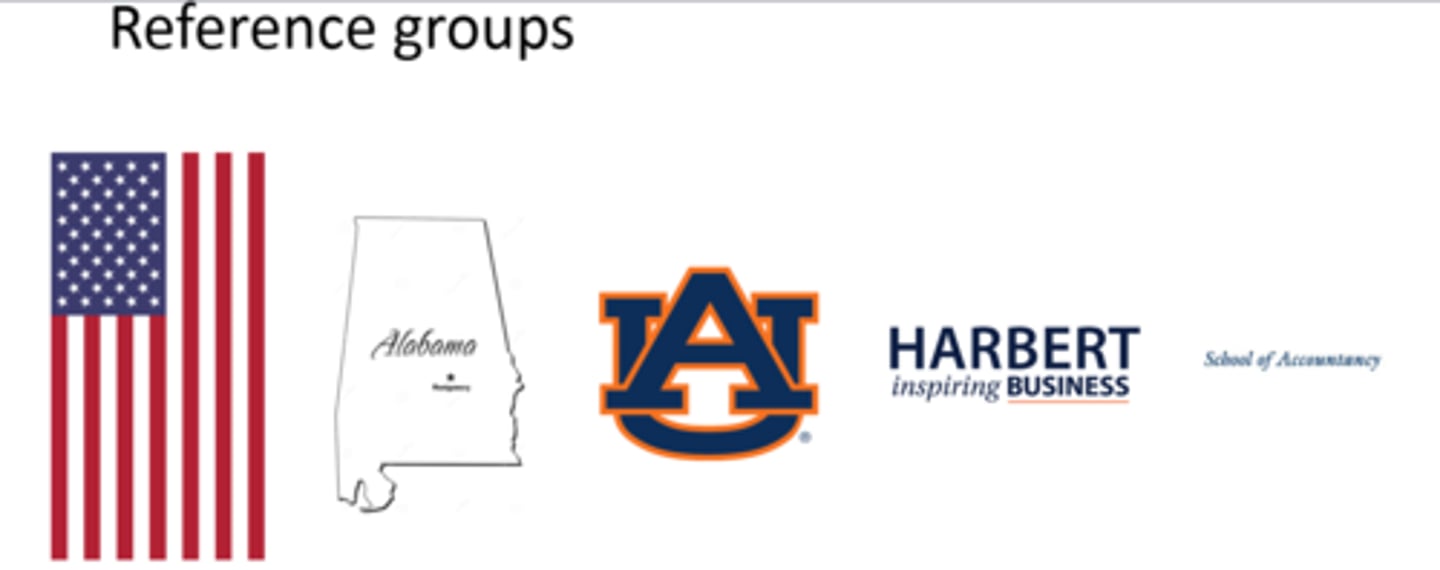
What does the sequence of reference groups on slide 63 represent?
Going from broad to more specific
What are the factors that determine whether any one reference group is likely to influence customer behavior?
1. Salience - Relevance to the buyer
2. Importance - Level of influence the group holds
3. Motivation - Does the buyer want to belong or standout?
4. Threat - Is the group under attack or at risk?
Is consumer purchasing typically rational or irrational? What supports our answer?
Consumers believe they act rationally, but emotions, biases, and marketing tactics often make purchasing irrational. Even expensive purchases have emotional components (e.g. status, brand attachment)
What approximate percentage of behavior is rational or habitual?
Rational: 20%
Habitual: 40-50%
How does this idea link back to Bjorn's statement about electric cars?
Buying gas-powered cars is mostly habitual since that is the norm vs electric cars being newer.
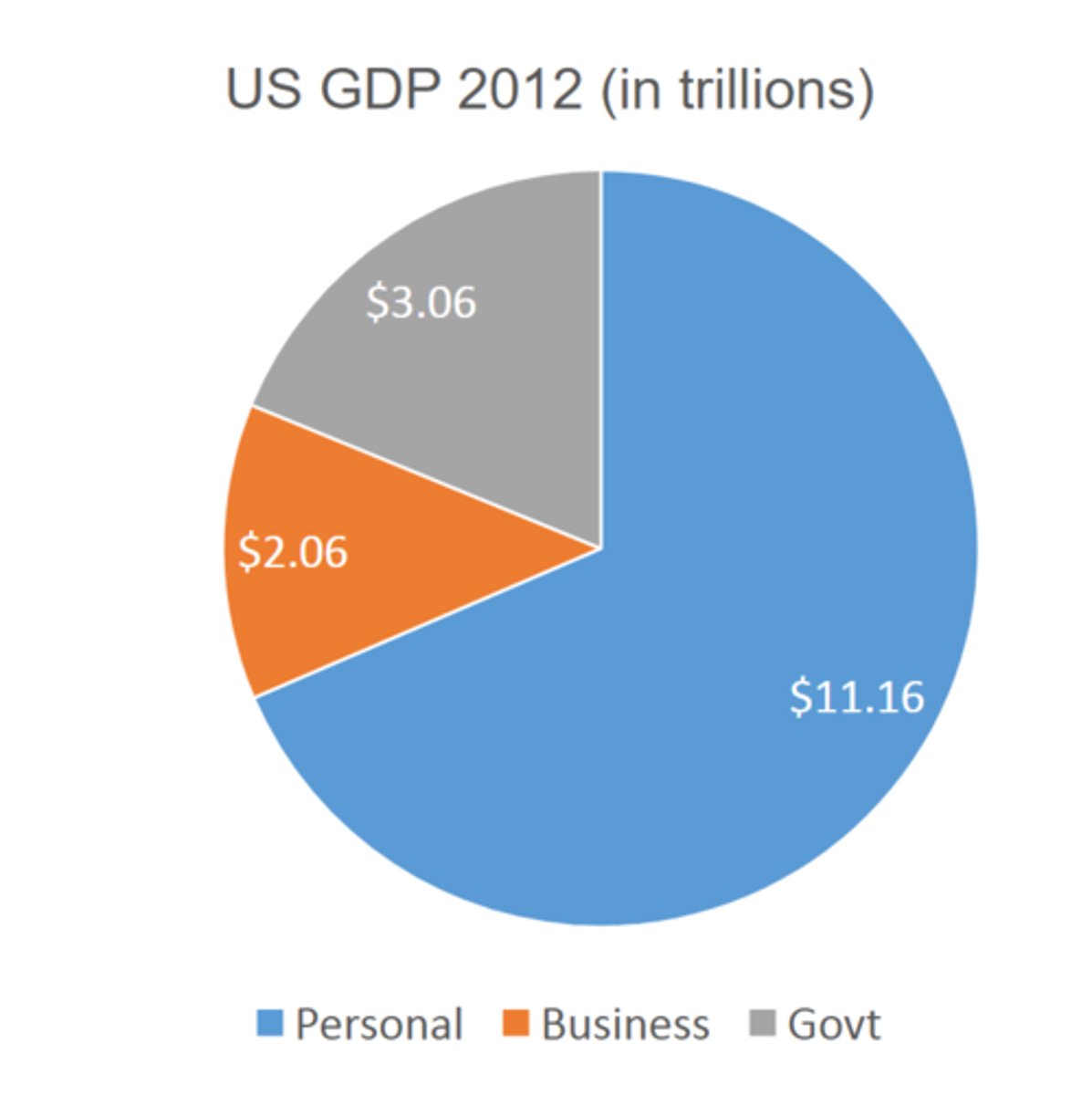
Which market is bigger in terms of dollars?
Personal
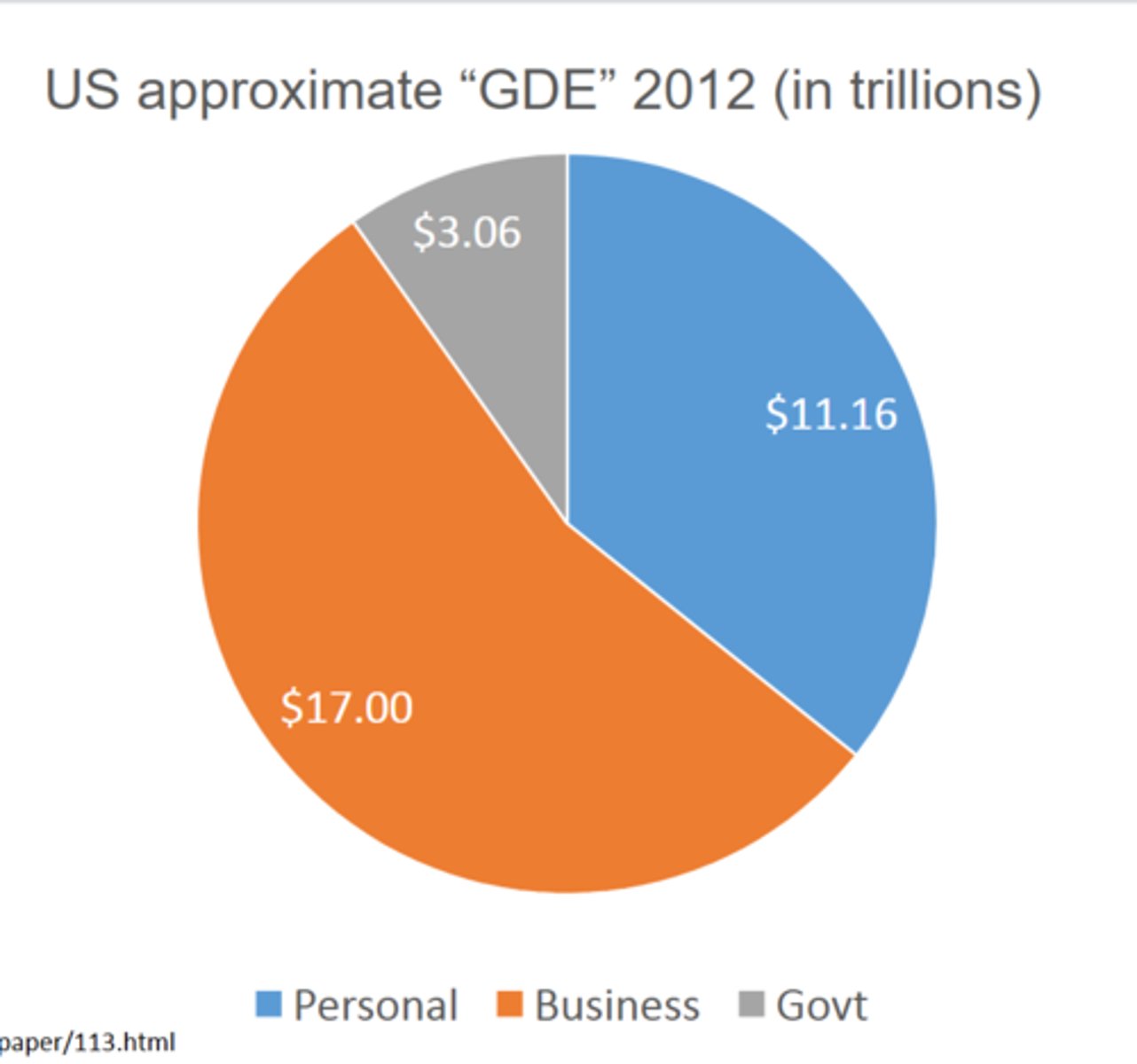
Which market is bigger in terms of buyers?
Business
What is derived demand?
"Business demand that ultimately comes from the demand from the demand of consumers."
What does the book mean when it says business buyers and sellers tend to more dependent on each other (compared to consumer buyers and sellers)?
In business markets, buyers and sellers are more dependent on each other because purchases involve large sums, customization, and long-term support, meaning both sides' success is closely tied together. Unlike consumer markets, where transactions are often one-time and low-risk, B2B relationships require ongoing collaboration and partnership.
When does consumer buying start to look like business buying?
when the purchases are expensive, as consumers seek advice, take their time, focus on service agreements, and prize relational aspects of the purchase process
Is organizational purchasing different than consumer purchasing?
Organizational purchases typically are larger, more formalized, involve more people, are more relational, emphasize service more, and are more complex overall. Organizational - buying printer paper (buy in bulk)
What is the buying center?
the group that makes a purchase decision for a business
What are the roles in the buying center?
Deciders
Users
Influencers - not necessarily in the company, someone that influences sales, trying to figure out where that influence is coming from
Gatekeepers (gatekeepers are important trying to make a sale in the beginning to get through them)
What is the relationship between people and roles? In other words, can a person inhabit more than one role and can a role be represented by more than one person?
Yes (for example, a purchasing agent might both gather information and make the final decision for a routine purchase). Likewise, a single role can be filled by multiple people (such as several surgeons all acting as users who influence which surgical gowns a hospital buys).
What is the difference between a straight rebuy, a modified rebuy, and a new task?
Varying involvement from low to high
What is systems selling?
(or solutions selling) is when a buyer purchases a complete packaged solution from a single seller rather than buying separate components from different suppliers
Is organizational buying purely rational? What makes it rational? Why isn't it rational at all times?
The formalization of the organizational buying process and the use of groups (e.g., buying center) tries to make organizational buying more rational and value-based. However, all of the influences that foster irrational consumer purchases can be present in a group. Some unique group pressures (e.g., group think) can make organizational purchases irrational.
What is an institutional market?
consists of organizations such as schools, hospitals, nursing homes, and prisons that provide goods and services to people in their care. These markets are characterized by: Diverse Objectives, Large Scale, Budget Constraints, Specialized Needs
What is a government market?
governmental units - federal, state, and local - that purchase or rent goods and services for carrying out the main functions of government
Who is the world's largest buyer?
The U.S. government
Why do many companies that sell to government not do much marketing?
Total government spending is determined by elected officials rather than by any marketing effort to develop this market. Government buying has emphasized price, making suppliers invest their effort in technology to bring costs down.
What is the counter to this example (i.e., government focused companies that do marketing)?
Boeing, Goodyear, and Raytheon. Lockheed Martin, sell primarily to government buyers. Lockheed Martin receives more than two-thirds of its more than $65 billion in annual sales from the U.S. government as either a prime contractor or a subcontractor
Whether B2B or B2C, I believe passionately that good marketing essentials are the same. We all are emotional beings looking for relevance, context and connection."
-Beth Comstock (GE vice-chair up to 2017)
"Every one of our brands is targeted"
- Proctor and Gamble
What is segmentation?
The process of dividing a market into distinct groups with similar needs or characteristics.
What are the two things that are stressed and should result?
Two things are stressed:
• Meaningful groups
• Customized marketing mix
Two things should result:
• Better value propositions
• Increased likelihood of customer response
What are the criteria used to assess segments? Be able to name all of the criteria and characteristics of the criteria
1. Differentiable - Are they different and will they respond?
2. Measurable - Can you readily get data about them?
3. Substantial - Is the segment worth it?
4. Accessible - Can you get your message to them?
5. Actionable - Can you make it happen?
could you identify the criteria in an example problem ala Bumblebee?
The segment(younger demographic) was identified, but it was not substantial enough or responsive, leading to a lower turnout compared to Aquaman and Spiderverse
What are geographic and demographic variables?
Geographic- everything involving geo
Demographics- everything about you
Examples of geographic and demographic variables
1. Geographic - Country, city, climate, population density.
2. Demographic - Age, gender, income, occupation, family life stage.
Which variables are generally the easiest to use and collect?
Geographic and demographic are very accessible
What is a problem with demographic & geographic variables?
They do not always predict behavior accurately.
What is variability and how does this effect segmentation?
Variability refers to differences within a segment. If a segment is highly variable, it may not be effective.
What variables is Dude Wipe seemingly suing for its segmentation scheme?
demographics
Is the gender-based segmentation scheme necessary for Dude Wipes's success?
- Don't think bc the stats show that women buys these...Market goes beyond men.
What are psychographic and behavioral variables?
1. Psychological - your thoughts/ person
2. Behavioral - your behavior
examples of psychographic and behavioral variables?
1. Psychological - Lifestyle, interests, values, personality.
2. Behavioral - Purchase behavior, user status, benefits sought.
Which variables are generally the hardest to use and collect?
PSYCHOGRAPHICS. And they don't predict behavior well
What is a problem with psychographic variables?
They are difficult to measure and may not always be consistent.
If there is a problem with psychographic variables, can they be used? How?
Yes, they can be combined with behavioral data for better segmentation.
Which is the best predictor of future behavior?
Past behavior, unless a major change occurs.
What is Pareto Principle?
80/20. 80% of your results come from 20% of your inputs. 80% of your revenue from 20% of your customers. EX: Winn Dixie did loyalty cards to get data. They discovered people who bought the most groceries were moms
What is share of wallet?
The percentage of a customer's spending within a category that goes to a particular brand.
What is user status?
Whether someone is a new, regular, or former customer
What us Usage rate?
the quantity consumed or patronage during a specific period
If you want to create segments that will be inclined to purchase more, what must you segment on(i.e. what did the Miller Lite case study tell us?)
Behavioral variables - as seen in the Miller Lite case study SEX SELLS
What is differentiation?
involves actually differentiating the firm's market offering to create superior customer value.
What is positioning?
The place the product occupies in consumers' minds relative
When you think of my brand, I want a specific association to come to your mind
What are the two "key ideas" of positioning?
1. You can only own one position
2. A position can only be owned by one brand
ex. Yeti, Nintendo, Sony
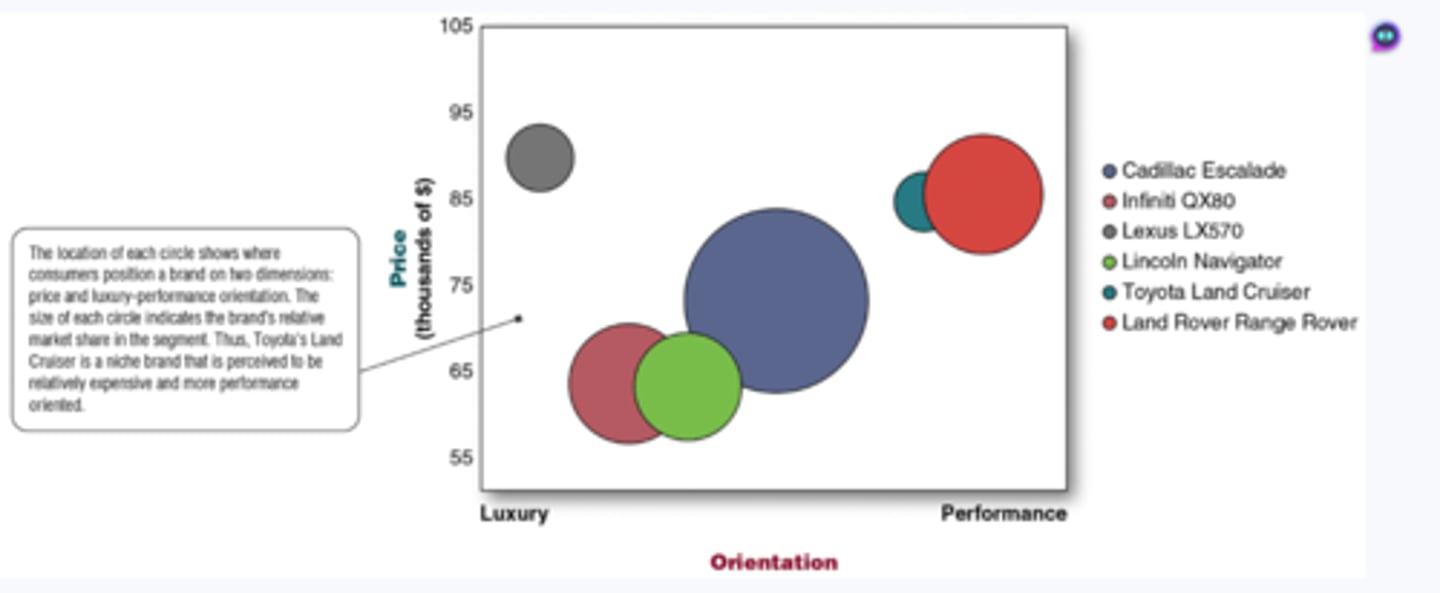
What are perceptual positioning maps?
A visual representation of how customers perceive different brands/products in a market.
What are the 7 criteria for differentiation? (.we used the same categories for understanding competitive advantage)
IMPORTANT. The difference delivers a highly valued benefit to target buyers.
DISTINCTIVE. Competitors do not offer the difference, or the company can offer it in a more distinctive way.
SUPERIOR. The difference is superior to other ways that customers might obtain the same benefit.
COMMUNICABLE. The difference is communicable and visible to buyers.
PREEMPTIVE. Competitors cannot easily copy the difference.
AFFORDABLE. Buyers can afford to pay for the difference.
PROFITABLE. The company can introduce the difference profitably.
What is a value proposition?
the full positioning of a brand - the full mix of benefits on which it is positioned
What are the potential value propositions?
Price vs Benefits ex. More for less
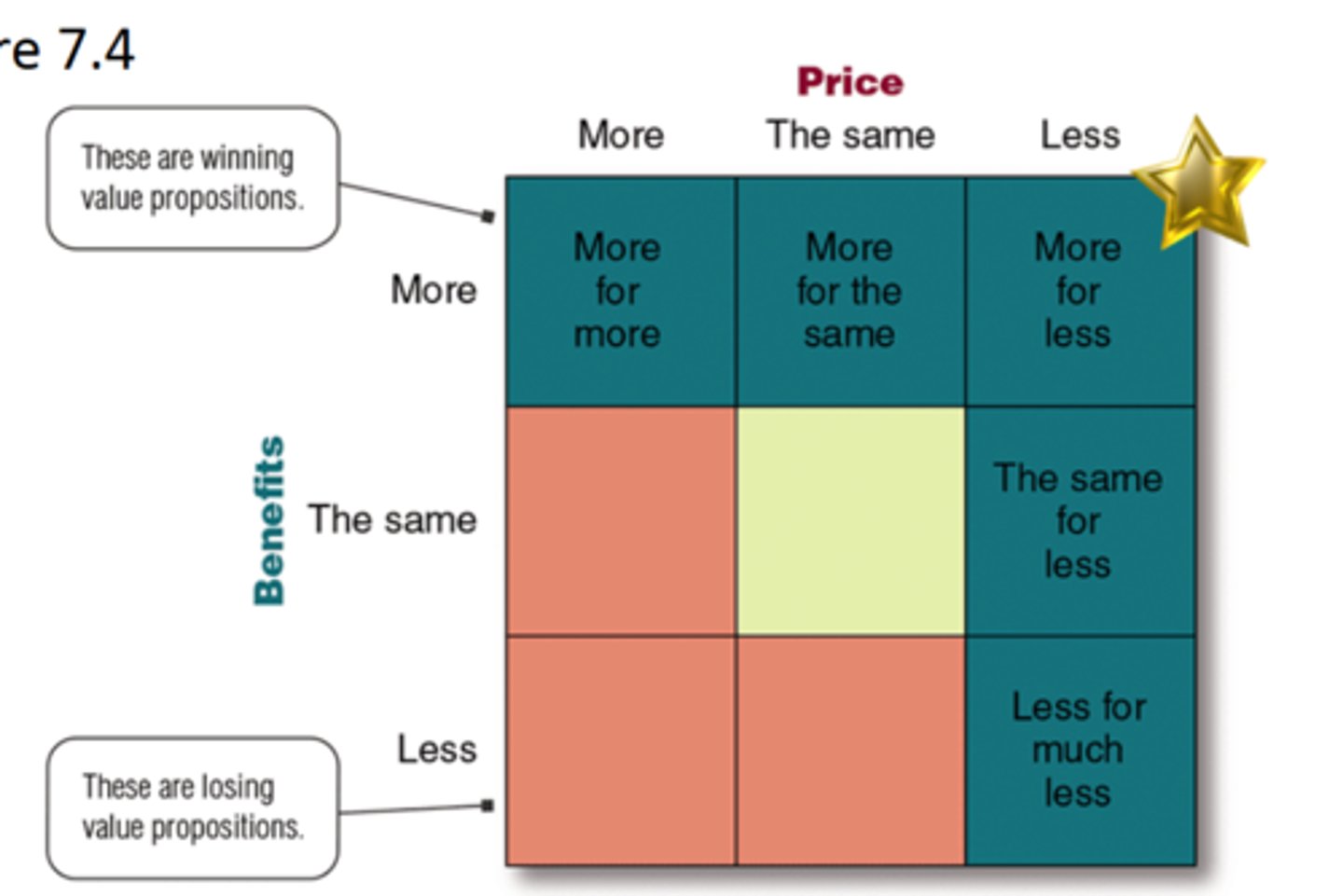
Competitive advantage
an advantage over competitors gained by offering greater customer value, either by having lower prices or providing more benefits that justify higher prices
What is targeting and a target market?
Market segmentation reveals the firm's market segment opportunities. The firm then has to evaluate the various segments and decide how many and which segments it can serve best
A set of buyers who share common needs for characteristics that a company decides to serve
What is mass(or undifferentiated) marketing?
a market coverage strategy in which a firm decides to ignore market segment differences and go after the whole market with one offer
What is differentiated(segmented) marketing?
a market-coverage strategy in which a firm decides to target several market segments and designs separate offers for each
What is concentrated(niche) marketing?
A market-coverage strategy in which a firm goes after a large share of one or a few segments or niches
Which form of targeting is best for company's with limited resources?
Concentrated marketing
Which form of targeting is best for companies with uniform products?
Mass marketing
Which form of targeting is best for companies in mature markets?
Differentiated
“The aim of marketing is to know and understand the customer so well the product or service fits him and sells itself.”
– Peter Drucker
What are the steps in the segmentation process?
1. Define the broad market
2. Narrow the market
3. Select segmentation categories
4. Choose variables within each category
5. Identify groups based on variables
6. Develop profiles for the segments.
What is the shortened version of segmentation steps?
1. Define your market
2. Pick relevant variables
3. Create and profile the segments
"I notice increasing reluctance on the part of marketing executives to use judgment; they are coming to rely toomuch on research, and they use it as a drunkard uses a lamp post for support, rather than for illumination."
- David Ogilvy, founder of Ogilvy & Mather
What is the goal of most marketing research?
To uncover unique and actionable market insights.