FULL ESS Flaschards
 Call Kai
 Learn
Learn Practice Test
 Spaced Repetition
 Match
Match Flashcards
 Knowt Play
1/94

Earn XP
Description and Tags
UPDATED
Name | Mastery | Learn | Test | Matching | Spaced | Call with Kai |
|---|
No analytics yet
Send a link to your students to track their progress
95 Terms
3 Negative Effects that Ocean acidification has on the environment:
Biodiversity decreases
Food webs destabilize
Reef ecosystems collapse
Biome definition + 3 biggest influences on the distribution of terrestrial biomes around world?
A biome is a group of ecosystems that share similar climatic conditions, regardless of their geographic location.
Precipitation, temperature, and insolation
Zonation? + why does it occur?
Zonation refers to the gradual change in species composition along an environmental gradient.
Zonation occurs due to changes in altitude or elevation; lower zones are often drier - while higher zones receive more precipitation, increasing moisture and decreasing temperature.
Succession
Succession is the gradual process of change in ecosystems, where one community replaces another due to shifts in biotic and abiotic conditions.
Transitioning from simple, pioneer communities to a stable, complex climax community
Primary productivity
Primary productivity is the rate of production of biomass using an external energy source and inorganic sources of carbon and other elements.
Gross primary productivity
Gross Primary Productivity (GPP) refers to the total amount of energy captured by producers (typically plants and algae) through photosynthesis.
Net primary productivity (NPP)
Rate at which plants produce net useful chemical energy (biomass).
It is the gain in energy or biomass per unit area per unit time remaining after allowing for respiratory losses (R).
The amount of carbon that is captured by plants through photosynthesis and is available for growth and reproduction after subtracting the energy used by the plants for cellular respiration.
Primary productivity in water systems
Primary productivity refers to the rate at which phytoplankton and aquatic plants convert sunlight and nutrients into organic matter through photosynthesis.
Primary vs secondary succession
Primary succession occurs in barren areas devoid of soil (e.g., lava flows, retreating glaciers), taking thousands of years, with lichens as pioneers.
Secondary succession happens in disturbed, pre-existing ecosystems where soil remains (e.g., forest fires, hurricanes), allowing faster recovery—often within 50–200 years—driven by residual seeds and nutrients.
Pioneer species
Pioneer species are the first hardy organisms (fe. lichens, mosses, and bacteria) to colonize bare, barren, or disturbed environments.
These organisms grow rapidly, tolerate harsh conditions, and reproduce quickly
Climax community
A climax community is the final, stable community in succession, in equilibrium with its environment and characterized by high biodiversity, complex food webs, and efficient nutrient cycling.
3 Levels of Biodiversity
Habitat diversity: (gives more places for species to live, species diversity gives the ecosystem backup roles, and genetic diversity helps populations survive stress like disease)
Species diversity: (can give an ecosystem backup roles. like if one species gets hit hard, another species might still do a similar job in the food web, so the whole system doesn’t crash as easily)
Genetic diversity: (a plant species where some individuals are more drought-tolerant than others. if a dry season hits, the ones with those genes survive and keep the population going)
Natural selection
Natural selection is the process by which populations evolve over generations due to genetic variation, competition, and differential survival and reproduction.
Direct and Indirect Threats
Direct:
Poaching (illegal hunting and capturing of wildlife - many species almost extinct - trafficking worth billions annually)
Fe: Arabian Oryx (saved through reintroduction after being poached to extinction in the wild
Fe: Western Black Rhino (extinct due to poaching for horns)
Illegal pet trade (trading exotic animals - threatens ongoing species conservation efforts - undermines International Endangered Species protection - disrupts natural population dynamics)
Overharvesting
Indirect:
Pollution
Climate change
Habitat loss
Invasive alien species
3 types of Habitat Loss with ex’s
Habitat degradation, habitat fragmentation, habitat destruction
Habitat loss → land clearing, draining wetlands
Habitat fragmentation → breaking one large habitat into isolated patches
Habitat degradation → pollution, invasive species, altered water supply
Invasive alien species
Displace native species population
Compete for limited resources
Introduce new diseases and parasites
Alter existing ecosystem dynamics
Fe: North American Red Claw Crayfish in Australia and UK
Climate Change - Benefits and Disadvantages (4+ 4-)
--
Alters temperature and precipitation patterns
Disrupts species migration and breeding cycles
Increases frequency of extreme weather events
Threatens species unable to adapt quickly
++:
Longer growing seasons: In some colder regions, warmer temperatures allow for more crop growth.
New agricultural areas: Places that were once too cold (like parts of Canada or Russia) may become suitable for farming.
Less energy use for heating: Warmer winters can reduce heating costs in colder countries.
Arctic shipping routes: Melting ice may open new trade routes in the Arctic
4 Human Impacts on Ecosystems + 4 Methods to Reduce Human Activity Impacts
Deforestation (drastically reduces biodiversity)
Overharvesting (direct removal of specific organisms - fe. overfishing)
Invasive alien species (introducing non-native species)
Global warming (increases GHG emissions from fossil fuel burning and reduction of forests)
Methods:
Cessation of livestock grazing and logging, natural reforestation, control of invasive species, minimal human intervention
IUCN Red List
The International Union for Conservation of Nature Red List of Threatened Species, also known as the IUCN Red List
Composed of both government and non-governmental organization (NGO) members
Determine the conservation status of a species thru:
Population size (small size is easier to wipe out)
… search up
Government perspectives
Prioritize national economic interests
Focus on large-scale policy implementation
Non-governmental organizations
Emphasize ecosystem preservation
Ex: WFF focuses on specific species habitat protection
Impacts on Biodiversity (fe. low biodiversity causes…):
Causes habitat destruction
Triggers population collapse
Disrupts ecosystem services
May create ecological tipping points
Ex: Amazon Deforestation + Ocean Plastic Pollution + Grand Banks Cod Fishing
5 arguments for species and habitat preservation can be based on:
Aesthetic, ecological, economic, ethical, and social justifications
Ecological reasons may be related to ecosystem services (pollination - insects help crop reduction fe. European honeybees)
Economic arguments for preservation often involve valuation of ecotourism, of the genetic resource and commercial considerations of the natural capital
Ethical arguments are very diverse and can include reference to the intrinsic or instrumental value of the species
Intrinsic value = inherent worth of species or organisms, independent of its usefulness to humans (snow leopards
Social argument might highlight importance of goods and services for the well-being of humans
Ecosystem goods = tangible resources harvested or extracted from nature that contribute to human welfare
In situ and ex-situ conservation
Habitat-based conservation tends to involve in situ strategies, and species-based conservation tends to involve ex situ strategies
In situ refers to protecting species in their own habitat, for example, wildlife and national parks. Ex situ, however, refers to protecting the species in a different habitat, not their own, such as a zoo or an aquarium.
In situ keeps the species in the environment it evolved in, so it can keep normal behaviors, breeding, and interactions with other species. Ex-situ is more of a backup when the wild population is in serious danger.
Ex-situ ex. is California Condor captive breeding
Fe: Cites (convention on international trade in endangered species)
Keystone and Flagship Species
Keystone species are ecological pillars that define an ecosystem's structure, with their removal causing drastic ecosystem changes.
Flagship species are charismatic animals used as marketing ambassadors to secure funding and public support for conservation.
Both are key conservation strategies but serve different roles: one (keystone) is functional, the other (flagship) is emotional
When designing a Protected Area (fe. Edge effect, wildlife corridors, buffer zones)
Large is preferable to small because more habitats and species are included and populations are bigger, ideal for large mammals. There is less edge effect.
One large is preferable to several small because populations are bigger. There is less edge effect.
Corridors are preferable to not connected, facilitates migration
Round is better than any other shape because there is less edge effect. Poaching is reduced
Close better than isolated; easier to disperse among patches, allows easier recolonization in case local parch loses all individuals
Clumped better than in a row, shorter distance to other reserves.
Solar radiation + gravity + hydrological system + inputs/outputs
Solar radiation is what drives evaporation
Gravity is what pulls water back down and moves it downhill as precipitation, runoff, and flow
Hydrological system distributes freshwater thru evaporation, precipitation, condensation, run-off, and transpiration
Inputs:
Precipitation
Run-off
Outputs:
Evaporation
Transpiration
Pros/Cons of Dams and Reservoirs
Pros
Create reliable water storage for agriculture, drinking, and flood control
Year-round water availability in seasonal rainfall areas
Cons:
High costs and maintenance?
Disrupts aquatic systems and block fish reproduction?
Include one local and one global example of aquatic flora and fauna consumed by humans?
Flora: Nori seaweed is a macrophyte (flora) widely consumed in Asia
Fauna: Wild and farmed salmon is consumed by ppl all over the world
If Mangrove Ecosystems were to be destroyed… (in Tazania fe.)
Sea level rise flooding mangroves
Lost nursery habitat for fish
Changing precipitation alters salinity patterns
Decreased coastal protection from storms
Storm Protection
Sustainable Fishing + MSY Definition for Fishing
MSY can’t exceed the natural income (reproduction) of fish stocks
Consider yield (how much is caught) vs. fishing effort (low→high). Typically, harvesting at the MSY requires much lower fishing rates than occurs in many fisheries.
Maximum sustainable yield for fishing
The highest possible annual catch that can be harvested indefinitely without depleting a fish population.
Maximum sustainable yield (MSY)
The largest amount of biomass that can be harvested from an ecosystem without depleting its resources, ensuring long-term sustainability.
Marine protected areas (MPAs)
Designated regions of the ocean where human activities, such as fishing and resource extraction, are restricted or prohibited to conserve marine ecosystems and biodiversity.
Point source and non-point source + Industrial effluent + Solid waste
Search up
Bioaccumulation
Bioaccumulation refers to the process by which the concentration of non-biodegradable pollutants increases in an organism over time.
Biomagnification
Biomagnification refers to the process by which the concentration of non-biodegradable pollutants increases as you move up trophic levels in a food chain or food web.
Eutrophication Process
Nutrients (nitrates/phosphates) enter water from fertilizers, sewage and detergents
Exessive nutrients cause algal/phytoplankton bloom
Algae eventually die and decompose
Decomposition consumed dissolved oxygen (increases BOD)
High BOD (biochemical oxygen demand) creates hypoxic or anoxic (low oxygen) conditions
Fish and other aquatic consumers die due to lack of oxygen
Replace + Reduce + Restore Pollutants (3 Tiers)
Replace: replace current soluble fertilizers with soil conditioners (fe. manure/compost) or replace high-nitrate/phosphate detergents with low-nitrate/phosphate detergents
Reduce: reduce pollutants entering ecosystems by maintaining riparian buffer zones along rivers and streams to capture and slow agricultural runoff
Restore: reintroduce fish and plant species after cleanup
Biochemical Oxygen Demand (BOD)
A key water quality parameter that measures the amount of dissolved oxygen required by microorganisms to break down organic material in water
Decomposition + Inputs/Outputs/… of soil
Search up
Erosion + Leaching + Weathering
Erosion is the removal of soil particles by wind or water.
Leaching is the downward movement of dissolved minerals and nutrients through the soil.
Weathering is the process of breaking down rocks and minerals into smaller particles, forming the inorganic component of soil.
Farm System Outputs & Inputs (+ organic/inorganic inputs) + Intensive/extensive Farming Definitions
Output: arable farm, pastoral, mixed farming systems
Input: intensive versus extensive farming methods
Water: irrigated versus rain-fed agriculture systems
Inorganic inputs: synthetic commercial fertilizers, herbicides, and pesticides
Organic inputs: compost, manure, biological pest control
Intensive farming:
High inputs of capital, labor, and chemicals on small land areas to maximize yield per hectare
Extensive farming:
Large land areas with minimal inputs, such as labor and fertilizers, relying more on natural factors like soil fertility and climate to produce lower yields per hectare.
Sustainable Agricultural Techniques
Fallowing, crop rotation, and cover crops replenish soil nutrients cyclically
Greenhouse Effect + Positive effect example
The process through which heat is trapped near Earth's surface by substances known as 'greenhouse gases’.
The CO2 released from the burning of fossil fuels is accumulating as an insulating blanket around the Earth, trapping more of the Sun's heat in our atmosphere.
Positive feedback: polar albedo
Tricellular Model of Atmospheric Circulation
Explains the global movement of air and how it influences temperature, precipitation, and the distribution of biomes.
Albedo
Albedo refers to how much solar energy is reflected by the Earth's surface.
Greenhouse effect + enhanced greenhouse effect
Greenhouse effect is a natural warming process where greenhouse gases absorb and re-emit infrared radiation, preventing heat from escaping into space.
The enhanced greenhouse effect refers to additional warming caused by increased concentrations of greenhouse gases from human activities.
Causes rising temperatures, altered percipitations, and maybe sea level rise also?
Socioeconomic Consequences of Climate Change? + 2 types of climate action:
Socio-economic: infrastructure damage from extreme weather events + food security threatened by agricultural disruptions + water scarcity affecting agriculture + heat stress inc health risks + coastal flooding displacing communities
Mitigation: slow, prevent, or minimize climate change
Adaptation: deal w consequences of changing climate patterns
Mitigation strategies (slow down or prevent…) to Reduce Climate Change Effects
Decarbonization
Energy efficiency strategies to reduce fossil fuel demand
Afforestation (removing CO2 from atmopshere - Carbon capture and storage (CCS)
Geoengineering proposals include solar radiation and CO2 removal
National adaptation programmes of action (NAPAs)
Carbon sequestration
The process of capturing atmospheric carbon dioxide (CO₂) and storing it in solid or liquid form.
Carbon sink
Any natural or artificial system that absorbs more carbon than it releases, thus removing CO₂ from the atmosphere.
Environmental Consequences of ODS
Phytoplankton productivity declines
Disrupts the Southern Ocean food web, which affects penguins
Damages plant leaf tissues, reducing agricultural yields
Springtime drop affects migratory birds
Ozone-depleting gases/substances (ODS - aka halogens): gases that harm the ozone layer
Type’s of ODS: CFCs (chlorofluorocarbons), HCFCs, halons, methyl bromide, NOx
Montreal Protocol (1987)
Most successful international environmental treaty; phases out ozone-depleting substances (ODS)
Demonstrated effective global cooperation
Carbon Sequestration
The process of capturing atmospheric carbon dioxide (CO₂) and storing it in solid or liquid form.
Renewable natural capital
A resource that regenerates naturally over time and provides ongoing benefits.
Natural capital
The total stock of natural resources (both renewable and non-renewable) that provide ecosystem services benefiting humans and the environment.
Intrinsic value + aesthetic value
Intrinsic value refers to the worth of something independent of its usefulness to humans.
Aesthetic value (scenic beauty attracting tourism)
A renewable and non-renewable energy source
Renewable energy source:
Solar power
Non-Renewable energy source:
Natural gas
Energy use per person …
Consider: Education, income, gender inequality, lifespan, access to healthcare
3 types of Solid Waste:
Domestic waste
Industrial Waste
Agricultural waste
Search up for more info…
Preventative strategies to alter human behavior
Tier 1 Behavior Change:
Pollution Management or controlling the release of pollutants
Tier 2 Reduce Pollutants
Tier 3 Restore Ecosystems
Incineration and waste to energy + Recycling and composting
Search up
Circular economy
An economic model that decouples (separates) economic growth from resource consumption by keeping materials, products, and resources in use for as long as possible.
Crude birth rate (CBR)
Measures live births per year
Only reflects natural population increase internal input
Expressed per 1,000 ppl per year
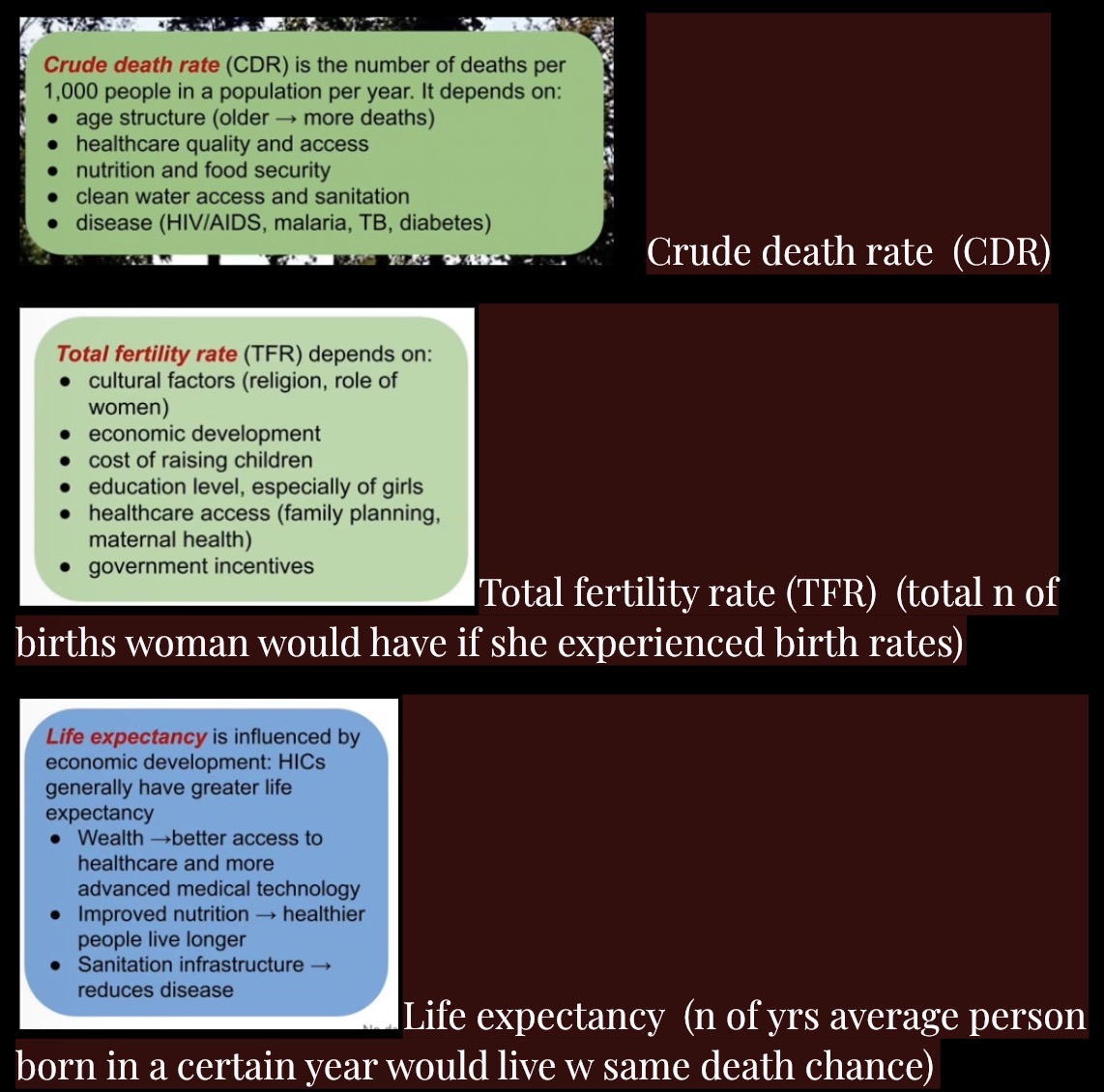
Crude death rate (CDR) + Total fertility rate (TFR) + Life expectancy
Search up
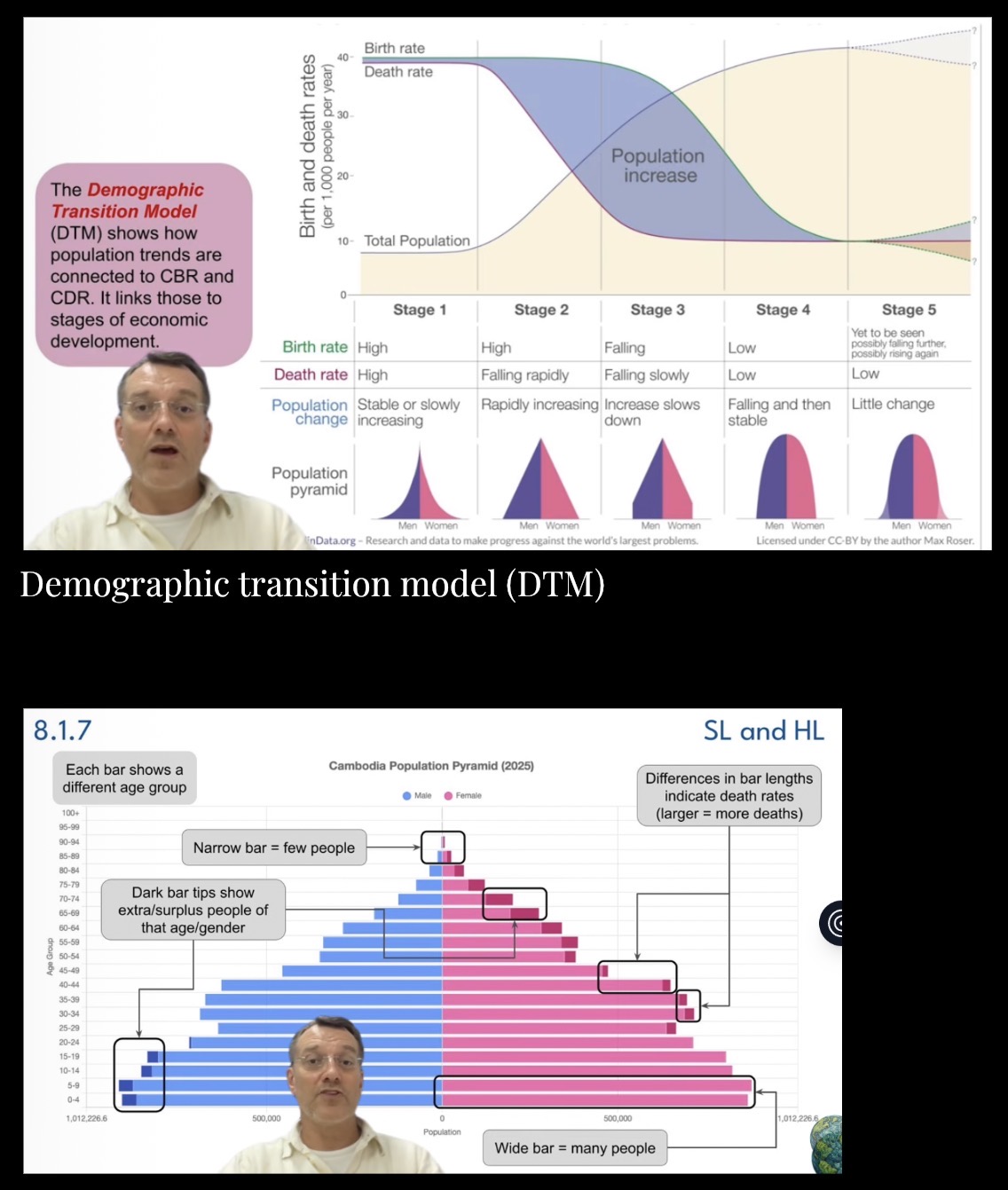
Demographic transition model (DTM)
Search up
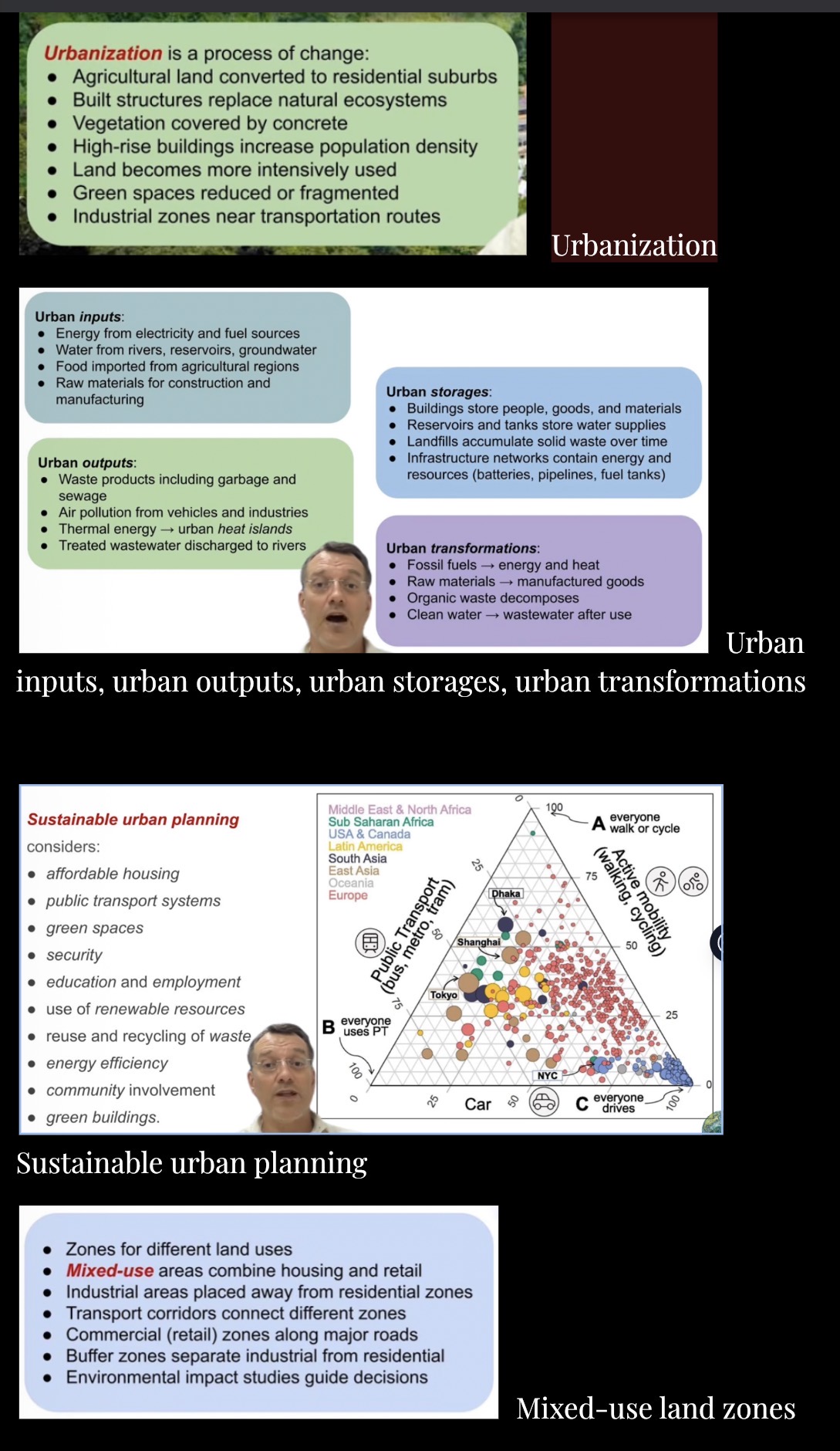
Urban inputs, urban outputs, urban storages, urban transformations + Sustainable urban planning + Mixed-use land zones
Search up
Primary Pollutants + from where?
Sulfure dioxide (SO2) from combustion
Nitrogen oxides (NOx) from vehicle exhaust
Carbon monoxide (CO) from incomplete fuel burning
They Come from:
Transportation
Stationary source fuel combubsition
Industrial processes
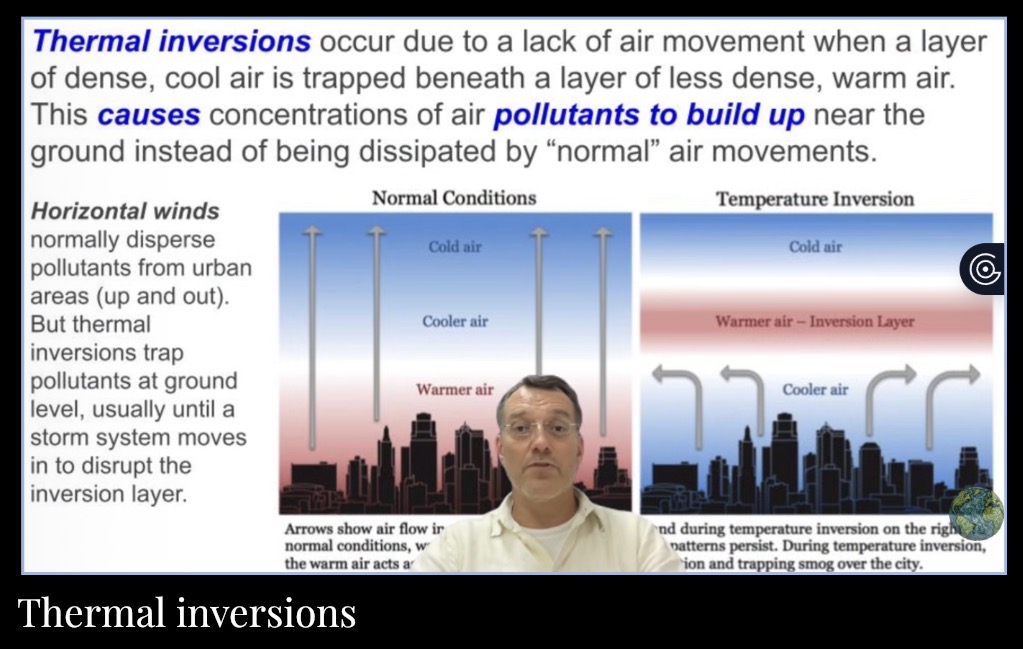
Photochemical smog
Photochemical smog is a type of air pollution that forms when primary pollutants, such as nitrogen oxides (NOx) and volatile organic compounds (VOCs), undergo chemical reactions in the presence of sunlight, resulting in the creation of harmful secondary pollutants like peroxyacyl nitrates (PANs) and tropospheric ozone.
Frequency and severity of smog in an area depend on:
Climate
Population density
Fossil fuel use
Local topography
Air quality index:
Standardized tool that measures levels of diff components of urban air pollution.
Thermal inversions
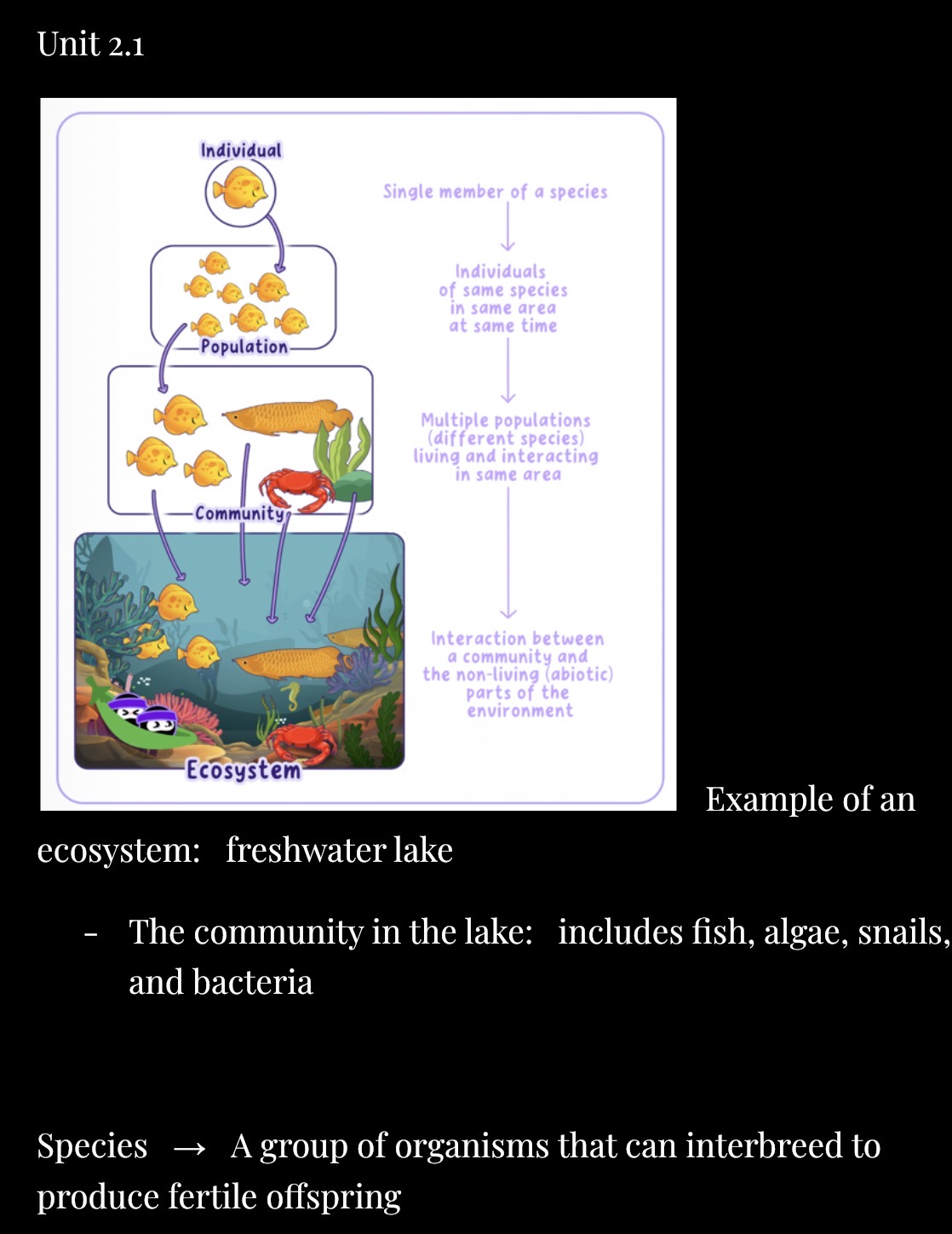
Species, population, community, and ecosystem definitions
Abiotic and biotic factors
Abiotic factors
The non-living physical and chemical elements, such as temperature, sunlight, and soil composition.
Often density-independent (impact regardless of density)
Fe: Harsh winter can affect a population, whether it is small or large + temperature, water, light, oxygen, soil
Biotic factors
The living biological components of an ecosystem, such as plants, animals, and microorganisms, as well as their interactions. (fe. Bacteria, fungi, algae)
Often density-dependent (stronger impact at higher density)
Fe: Competition for food + predation, disease, food availability
Niche and ecological nice + Fundamental and realized niche
Niche
Describes species role in its environment, incl how it interacts with biotic (living) and abiotic (non-living) factors
Includes the “job”: resource use, tolerance limits, and interactions (biotic + abiotic)
Habitat is where an organism lives; niche is how it survives and interacts in that place
Ecological niche
The unique set of abiotic and biotic conditions and resources that a species requires to survive, grow, and reproduce → What a species needs and does
Fundamental niche
Fundamental niche is the full range of conditions & resources a species could use without limiting biotic interactions
Realized niche
Realized niche is the actual conditions in which a species exists due to competition, predation, & environmental constraints
Intraspecific vs. interspecific competition
Intraspecific competition occurs within the same species (often for mates or territory). Interspecific competition occurs between different species (often for food or habitat space).
Carrying capacity (K) + exponential and logistic growth
Carrying capacity is the maximum number of individuals of a species that an environment can sustainably support over time. This depends on:
Biotic resources (food supply, predators, competitors, disease)
Abiotic conditions (water, temperature, light, space, soil, oxygen)
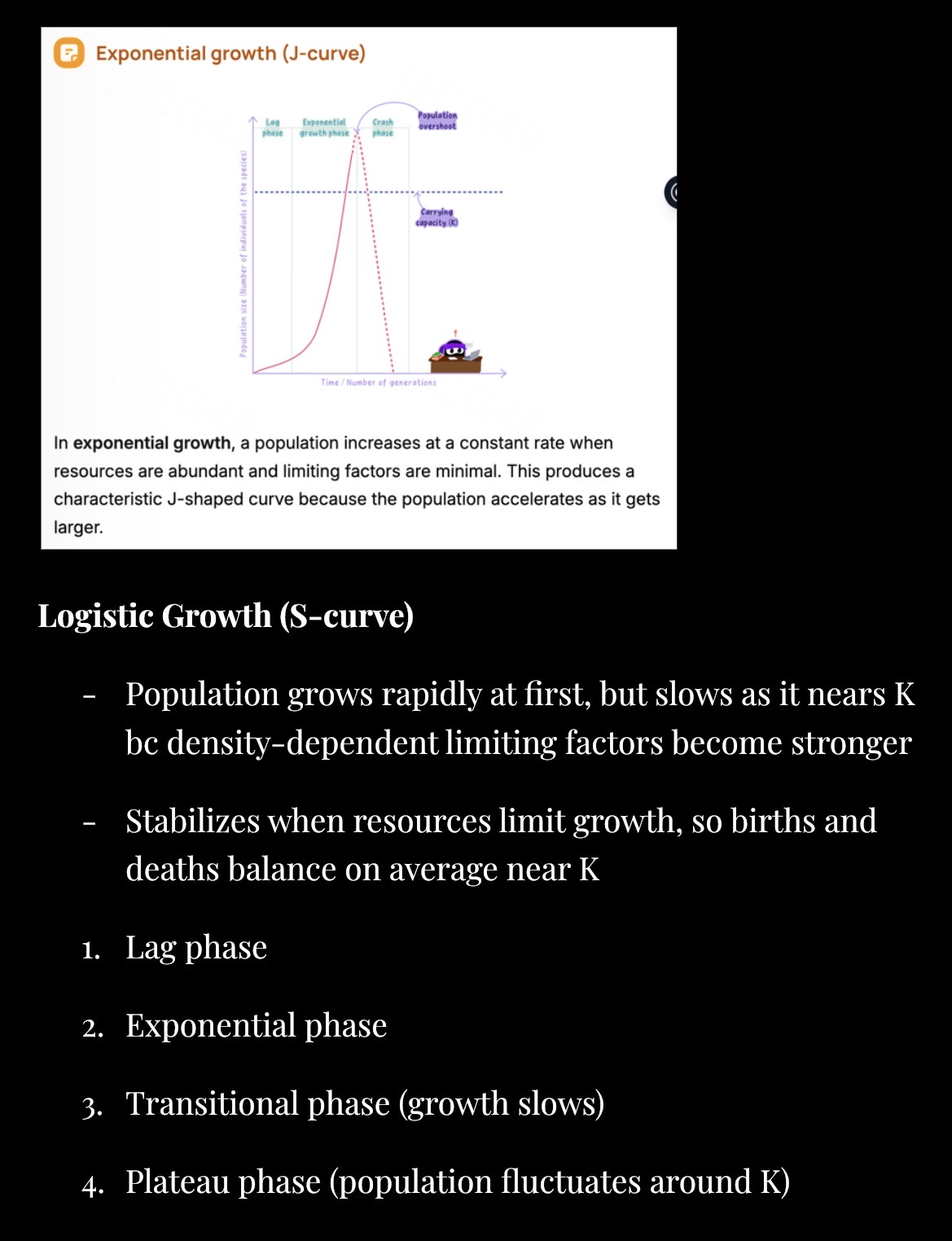
Exponential Growth: rapid increase when resources are abundant and limiting factors are weak
Logistic Growth: growth slows as resources become limiting, and the population levels off near K
Human Carrying Capacity
Like all other populations, humans also have limiting factors but have temporarily eliminated most of them and are living beyond the limits of sustainability
It isn’t easy to measure human carrying capacity bc of a few reasons :
We use a far greater range of resources than other species
We substitute resources when the og’s run out, as we develop in technology
Our predators ( fe: sabre-toothed tigers ) have largely been eliminated
We import resources
Human carrying capacity is the maximum number of people Earth can support indefinitely, given current technology and lifestyle choices. Hard to estimate due too…
Technology changes (medicine, agriculture, energy systems)
Resource substitution (switching materials and fuels)
Unequal consumption (high consumption lowers carrying capacity)
Global trade (resources move across ecosystems
Ecological footprint and Ecological overshoot
Ecological footprint
Measuring the area of land/water required to support a population's resource consumption and waste absorption
A higher footprint per person usually means a lower carrying capacity
Ecological overshoot
Using resources faster than Earth can generate them
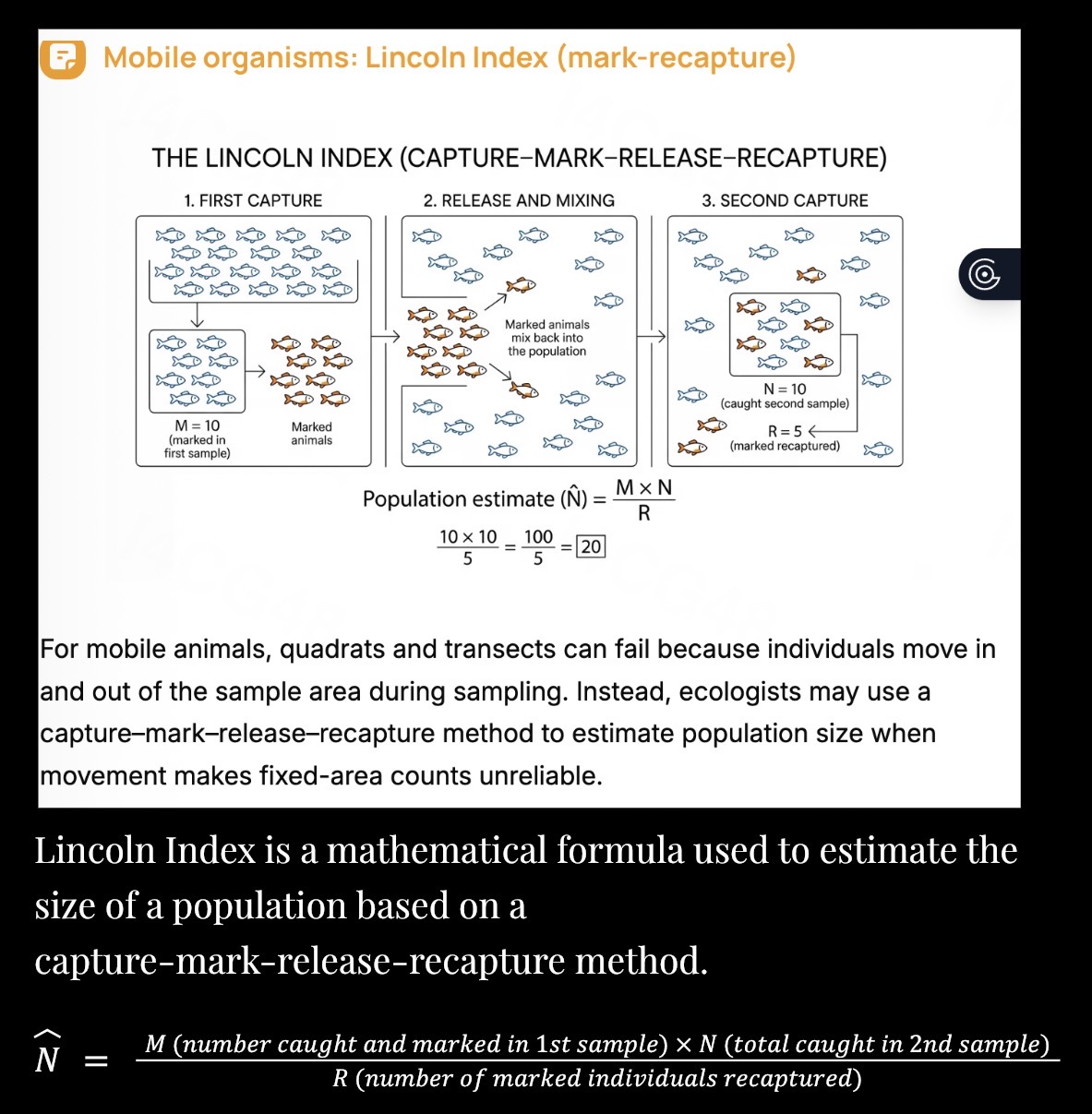
Lincoln Index
Exponential and logistic growth
Open System
Systems that exchange both energy and matter with their surroundings.
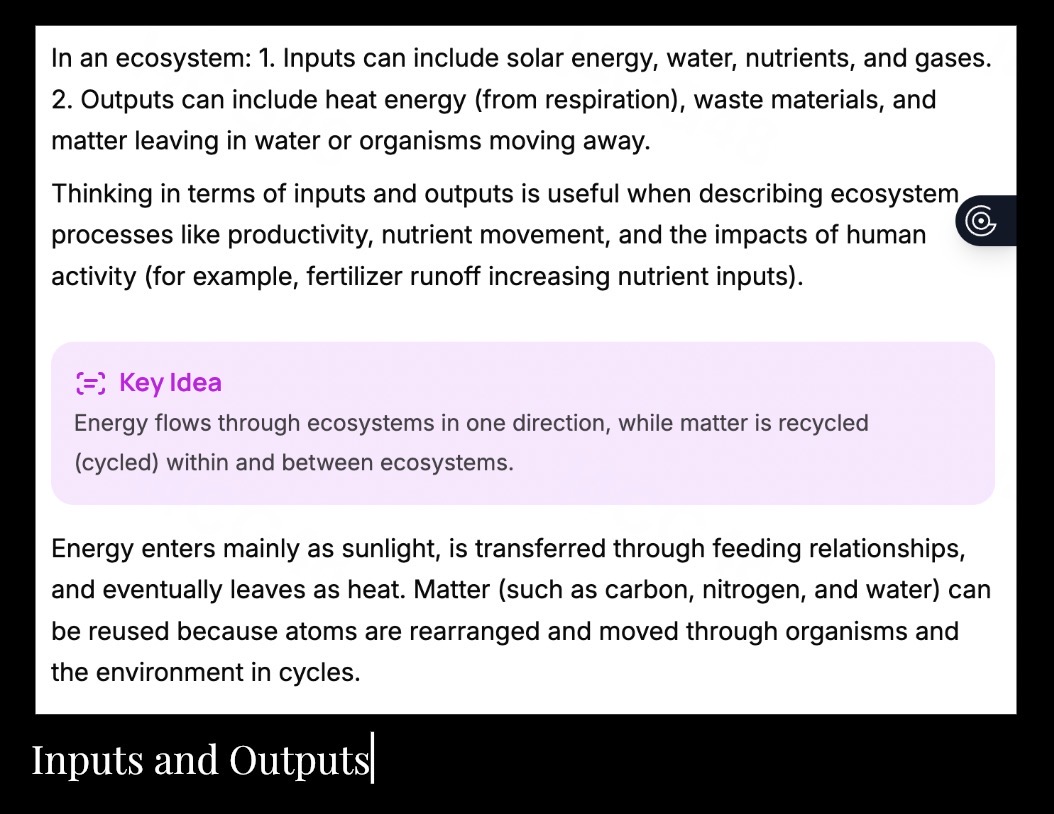
Inputs and Outputs in an Ecosystem
Producers, consumers, and decomposers
Producers
Producers, also known as autotrophs, are organisms that can produce their own food using photosynthesis (or chemosynthesis in some cases).
Consumer
Consumers are organisms that obtain energy by feeding on other organisms.
Decomposers
Decomposers, such as fungi and bacteria, are organisms that break down organic matter into simpler substances.
Trophic Level
A trophic level is the feeding position of an organism within a food chain or web, based on how it obtains its energy and nutrients.
Strategies to Reverse Loss of Biosphere Integrity
1. Habitat Protection and Restoration
Preserve existing ecosystems such as forests, wetlands, coral reefs, and grasslands.
Restore degraded ecosystems through reforestation, wetland rehabilitation, and soil recovery.
Create ecological corridors to connect fragmented habitats and allow species migration.
2. Species Conservation
Protect endangered species through captive breeding, reintroduction, and anti-poaching measures.
Maintain genetic diversity to enhance species’ adaptability to environmental change.
3. Sustainable Resource Management
Adopt sustainable agriculture and forestry (e.g., agroforestry, selective logging).
Limit overfishing and hunting to prevent species decline.
Manage water use to maintain wetland and freshwater ecosystems.
4. Legislation and Protected Areas
Expand protected areas and enforce biodiversity laws
Convention on Biological Diversity (CBD)
CITES (Convention on International Trade in Endangered Species)
UN Sustainable Development Goals (SDG 14 & 15)
Implement international agreements that prioritize ecosystem-based management.
5. Reducing Pollution and Climate Change
Transition to renewable energy and low-impact technologies.
Reduce pesticide and plastic use that harm ecosystems.
Curb greenhouse gas emissions to prevent temperature and ocean chemistry shifts.
6. Community Involvement and Education
Engage local communities in conservation and sustainable livelihoods.
Promote education about biodiversity’s importance to climate, economy, and well-being.
First and Second Law of Thermodynamics
First Law of Thermodynamics
Energy cannot be created or destroyed, only transformed from one form to another.
Second law of thermodynamics
In any energy transformation, some of the energy is lost as heat and becomes less available to do useful work.
2 Key Processes that move energy and matter through ecosystems
Photosynthesis (captures light energy and stores it as chemical energy in glucose, which can become biomass)
Cellular respiration (releases stored chemical energy to power life processes, which some energy transferred as heat)
Non-Biodegradable Pollutant:
Substance that can’t be broken down by natural biological process (like microbial decomposition), so it stays in the environment for a long time
These pollutants are dangerous bc they can stay chemically stalbe for decades and can be toxic even at low concentrations (but doesn’t autoamatically mean “always toxic” - key risk is persistence)
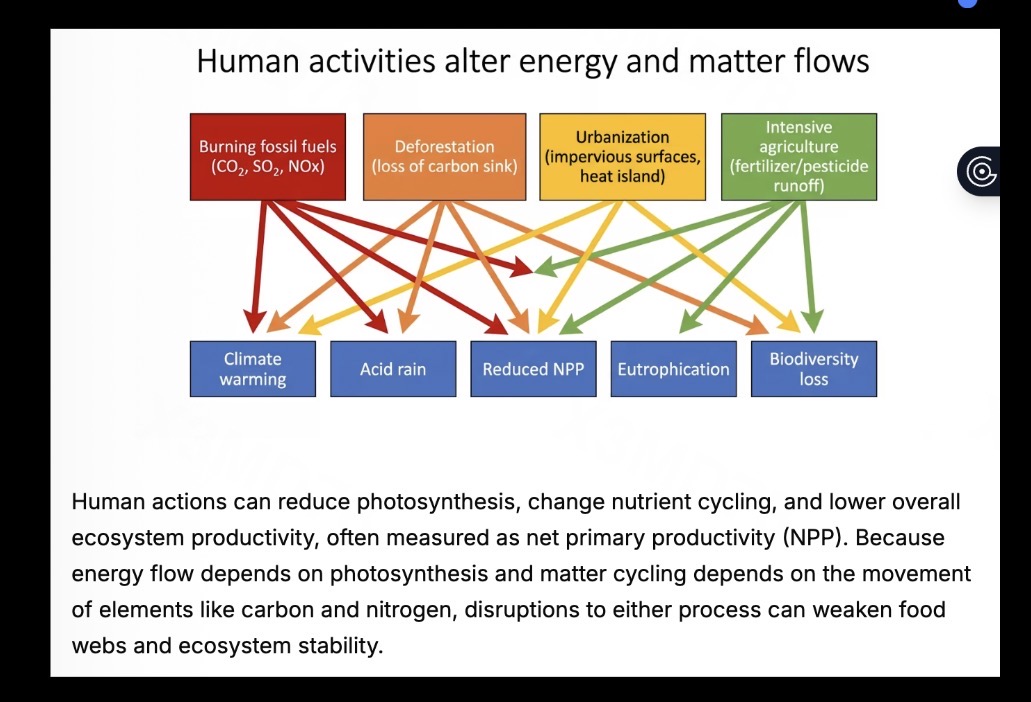
Human Activities Altering Energy and Matter Flows
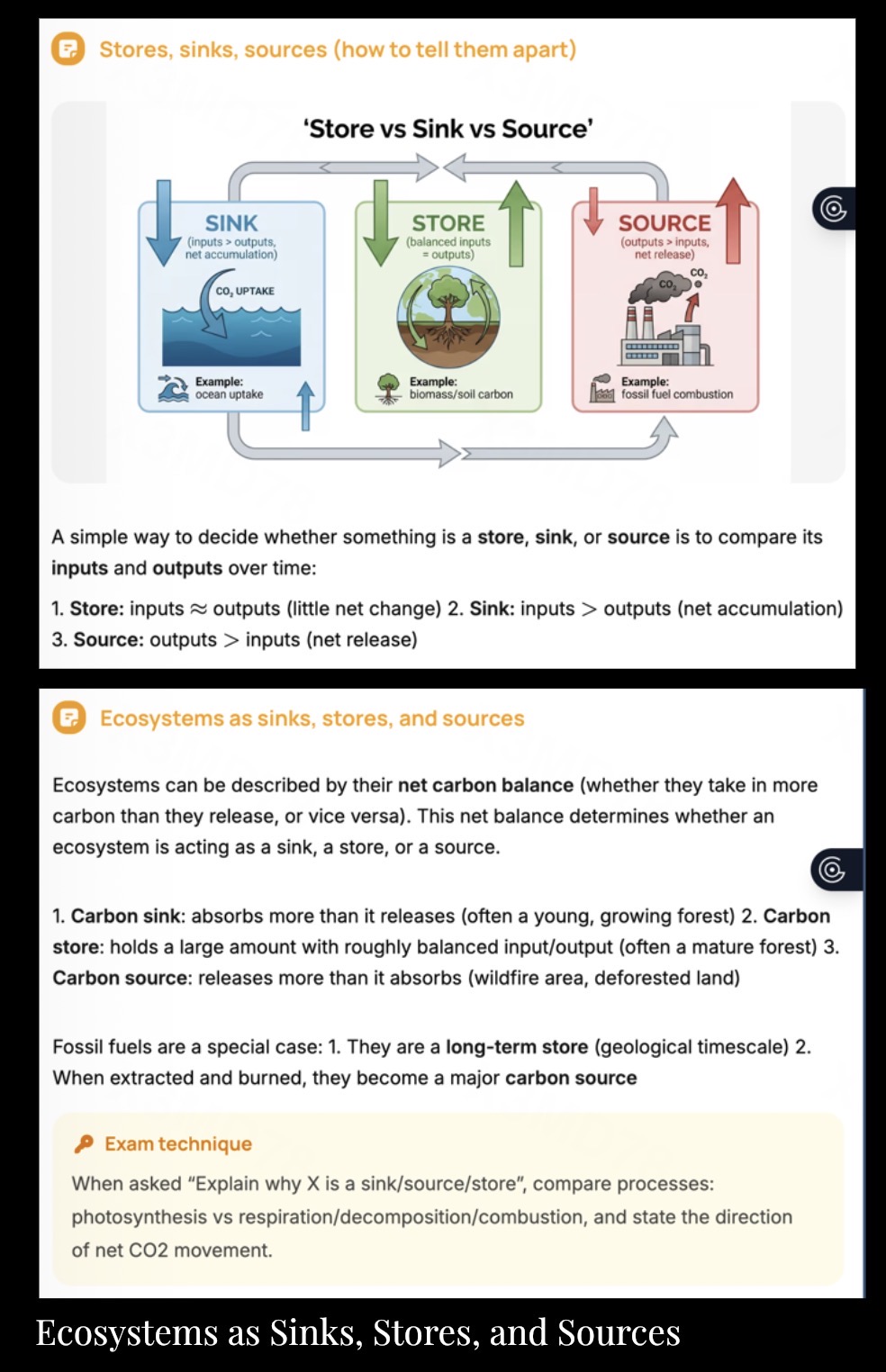
Stores, sinks, sources
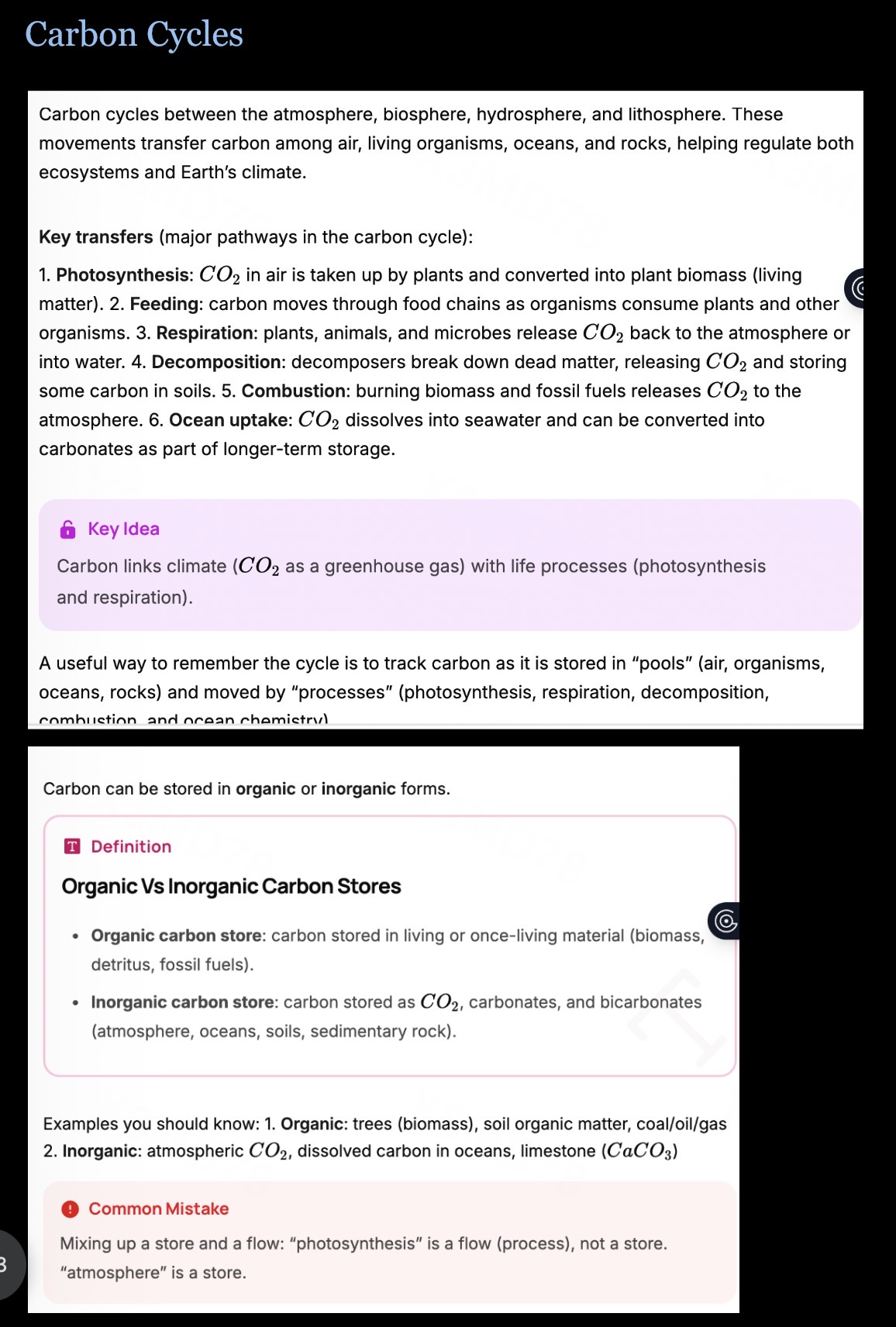
Carbon cycles and organic va. Inorganic carbon stores
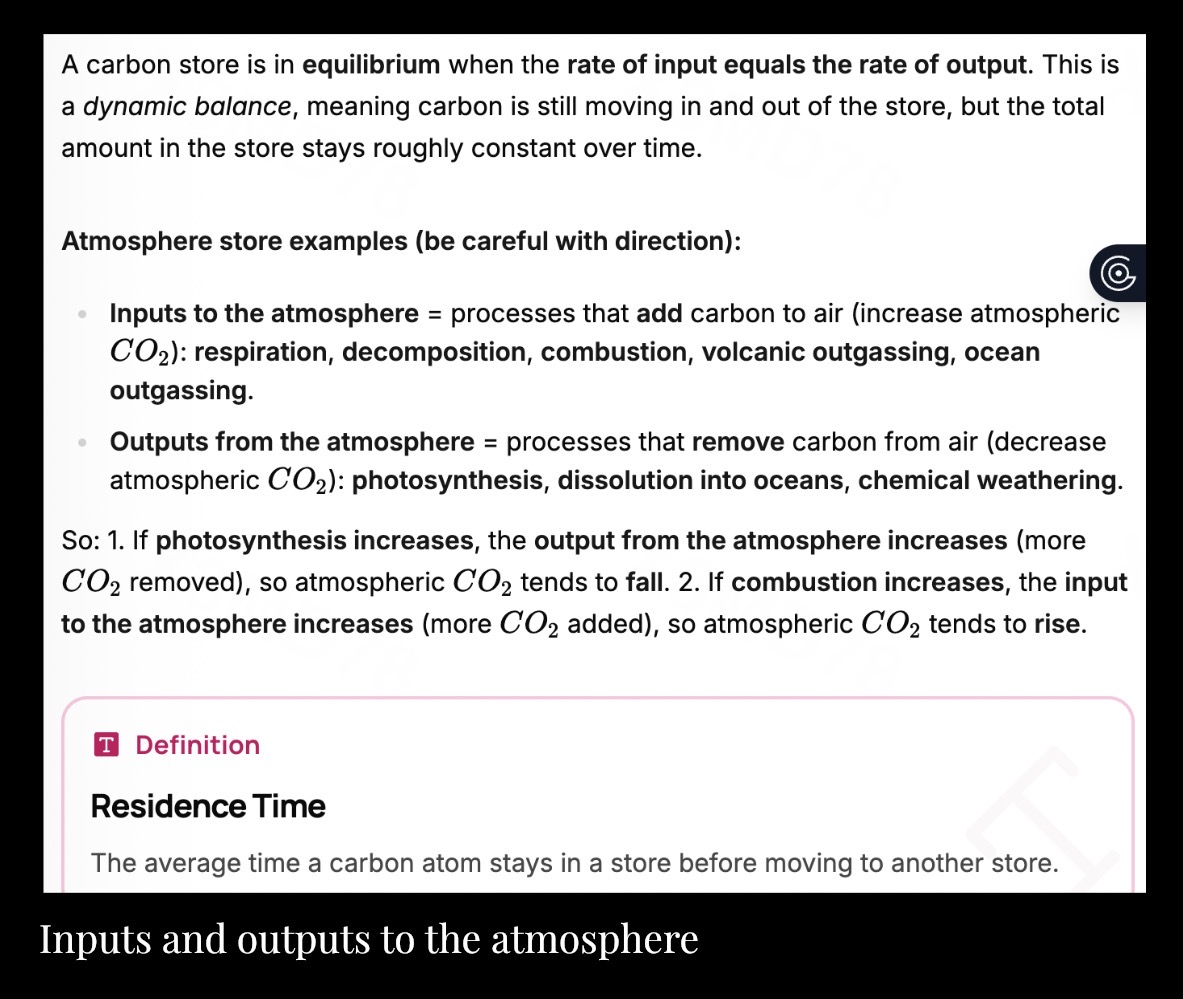
Inputs and outputs to the atmosphere
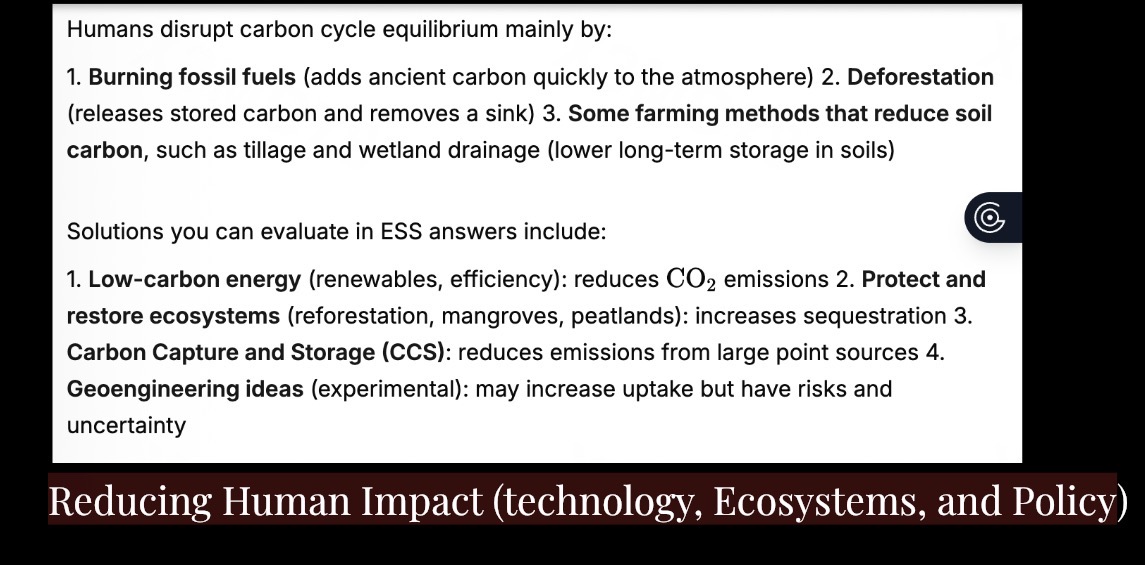
Human disruptions to carbon cycle equilibrium and the solutions
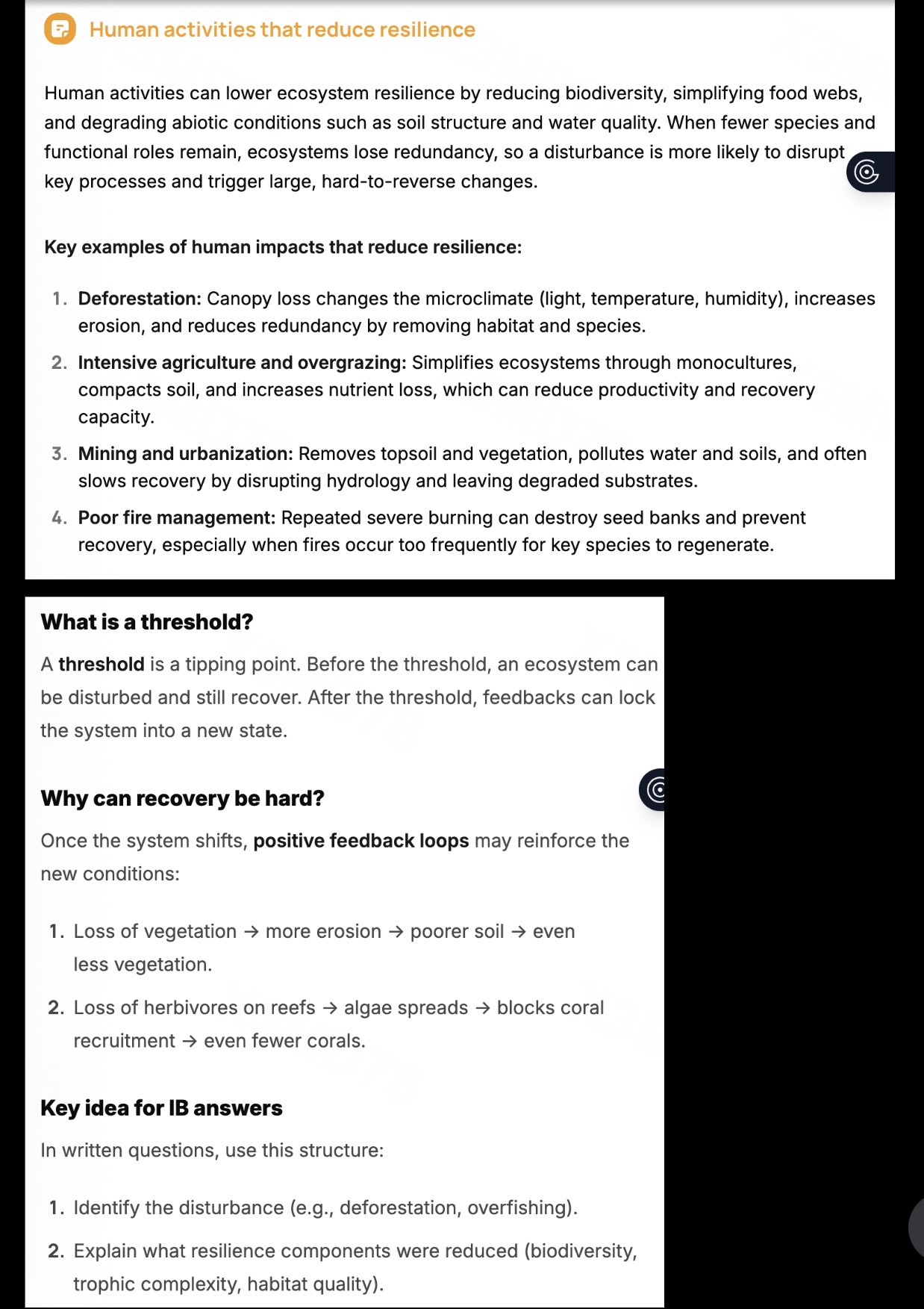
Human activity that reduce resilience + threshold
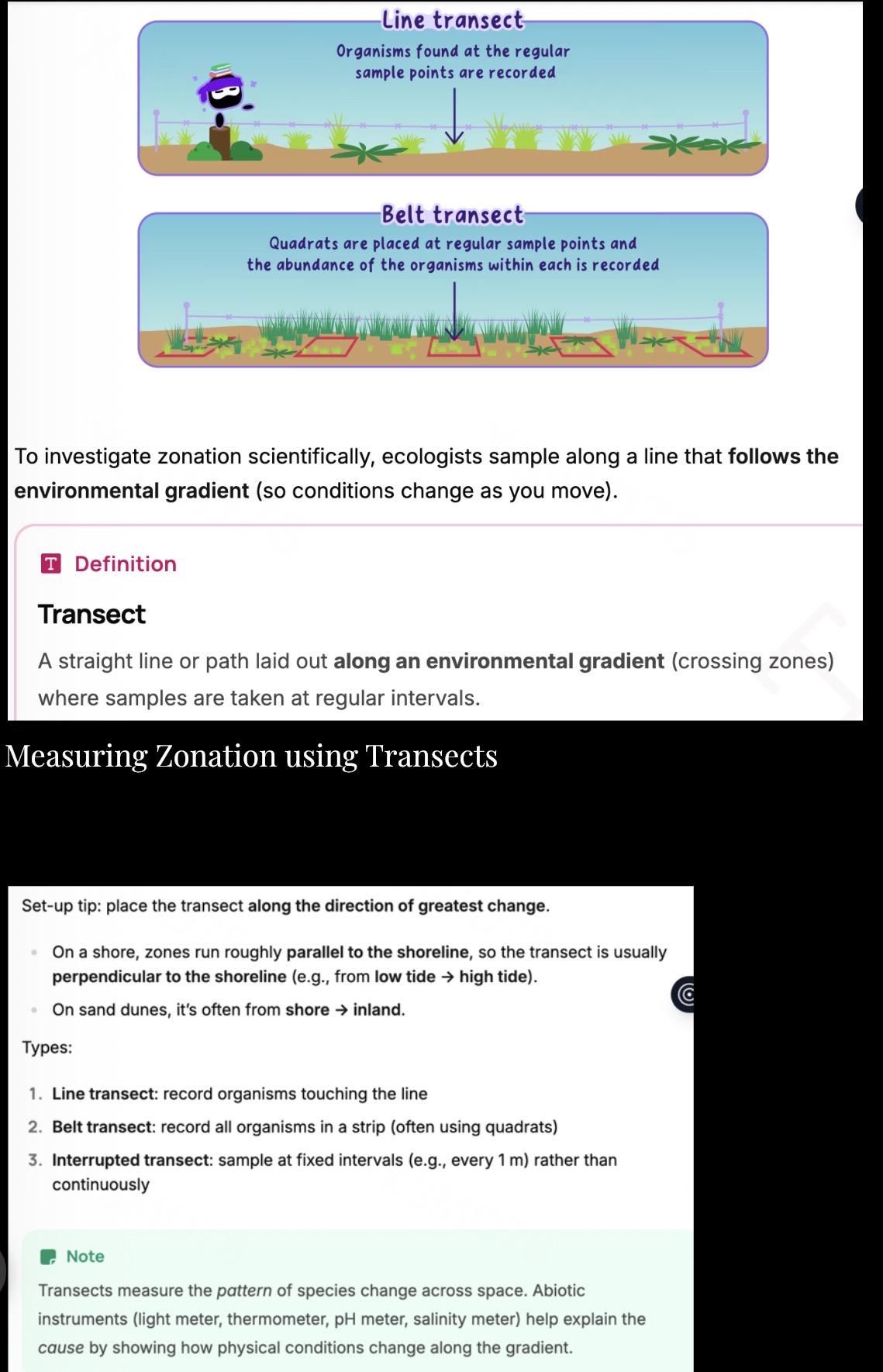
Transect (line vs belt)