Chapter 16 - Urinary System
 Call Kai
 Learn
Learn Practice Test
 Spaced Repetition
 Match
Match Flashcards
 Knowt Play
1/25

There's no tags or description
Looks like no tags are added yet.
Name | Mastery | Learn | Test | Matching | Spaced | Call with Kai |
|---|
No analytics yet
Send a link to your students to track their progress
26 Terms
Components of the urinary system
Kidneys
Ureters
Urinary bladder
Urethra
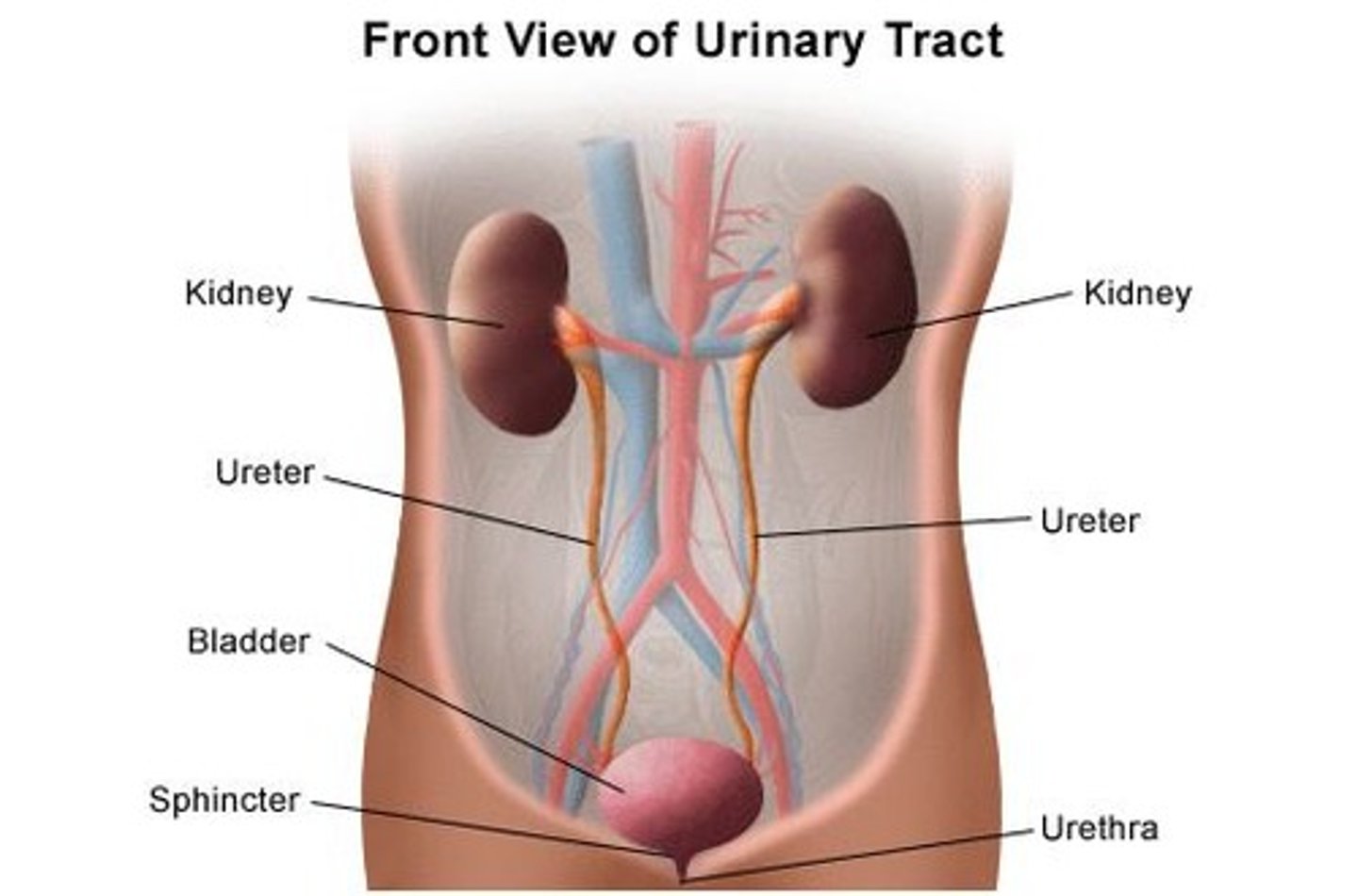
Functions of the kidney
Filters blood to remove wastes
Regulates water, electrolytes, and pH
Helps control blood pressure
Produces hormones like erythropoietin (RBC production)
Excretion
The process of removing waste products from the body
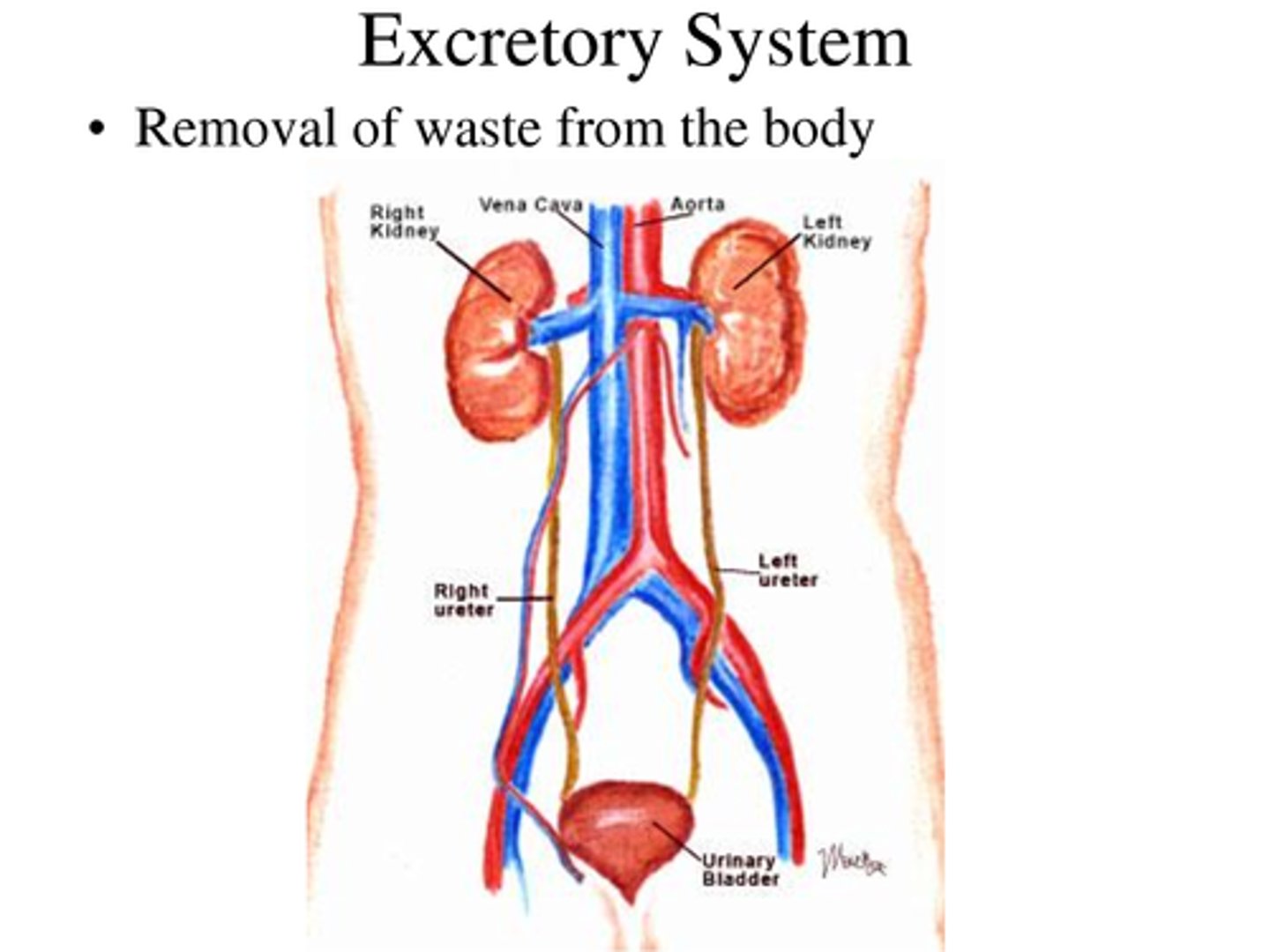
Metabolic waste
Waste produced by normal chemical reactions in cells
nitrogenous waste
Waste containing nitrogen, mainly from protein metabolism
Examples: urea, uric acid, creatinine
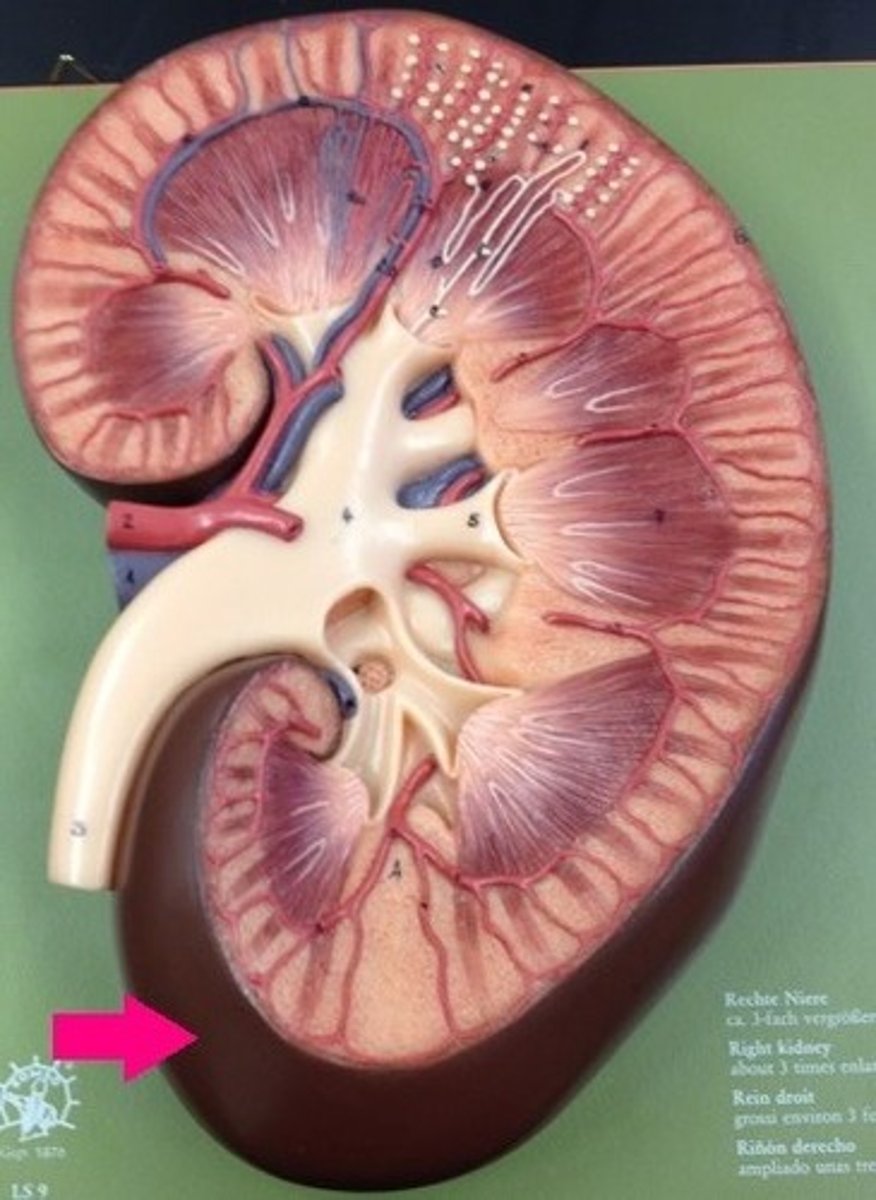
Renal (fibrous) capsule (function and characteristics)
Function:
Protects the kidney and maintains its shape
Characteristics:
Tough, dense connective tissue
Thin but strong outer covering
renal cortex (function and characteristics)
Function:
Site of blood filtration
Characteristics:
Outer region of the kidney
Contains glomeruli and renal corpuscles
Darker appearance
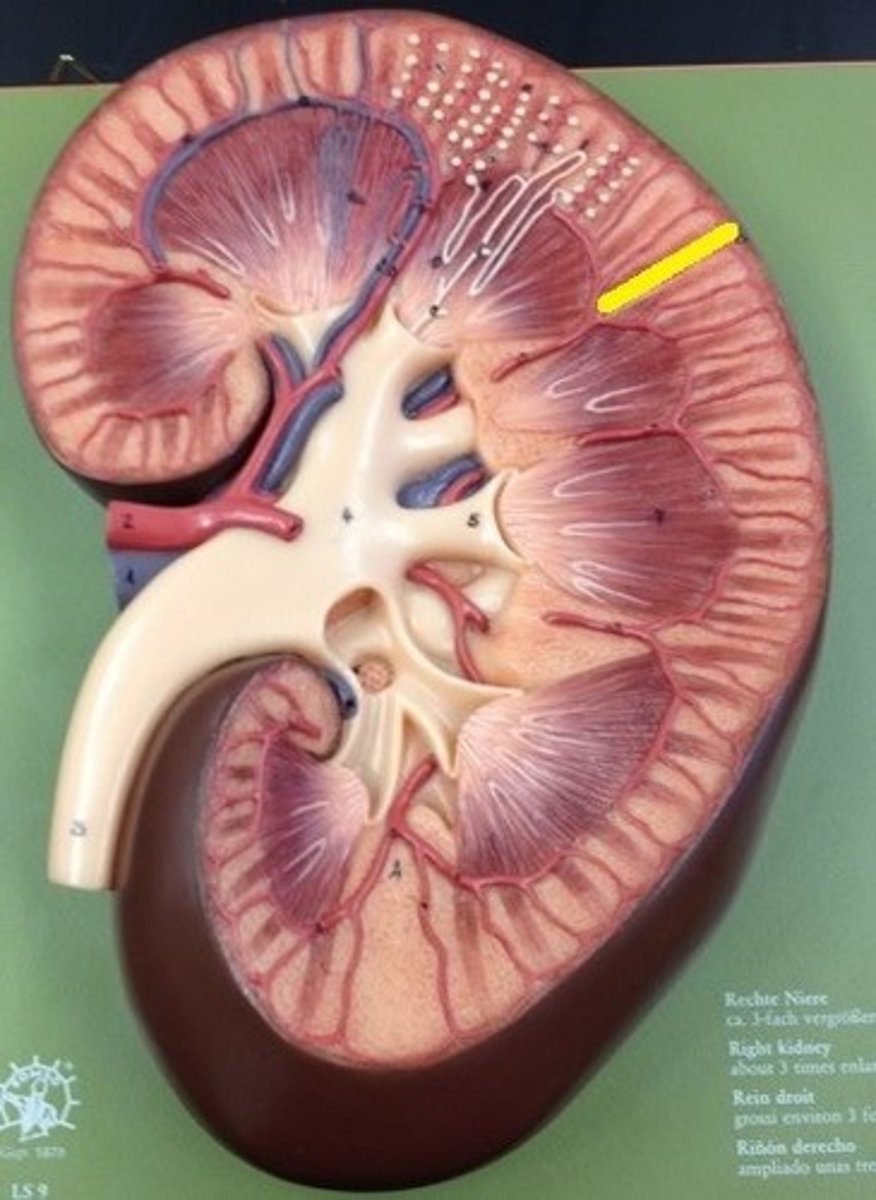
renal medulla (function and characteristics)
Function:
Concentrates urine
Characteristics:
Inner region of the kidney
Contains renal pyramids
Lighter, striated appearance
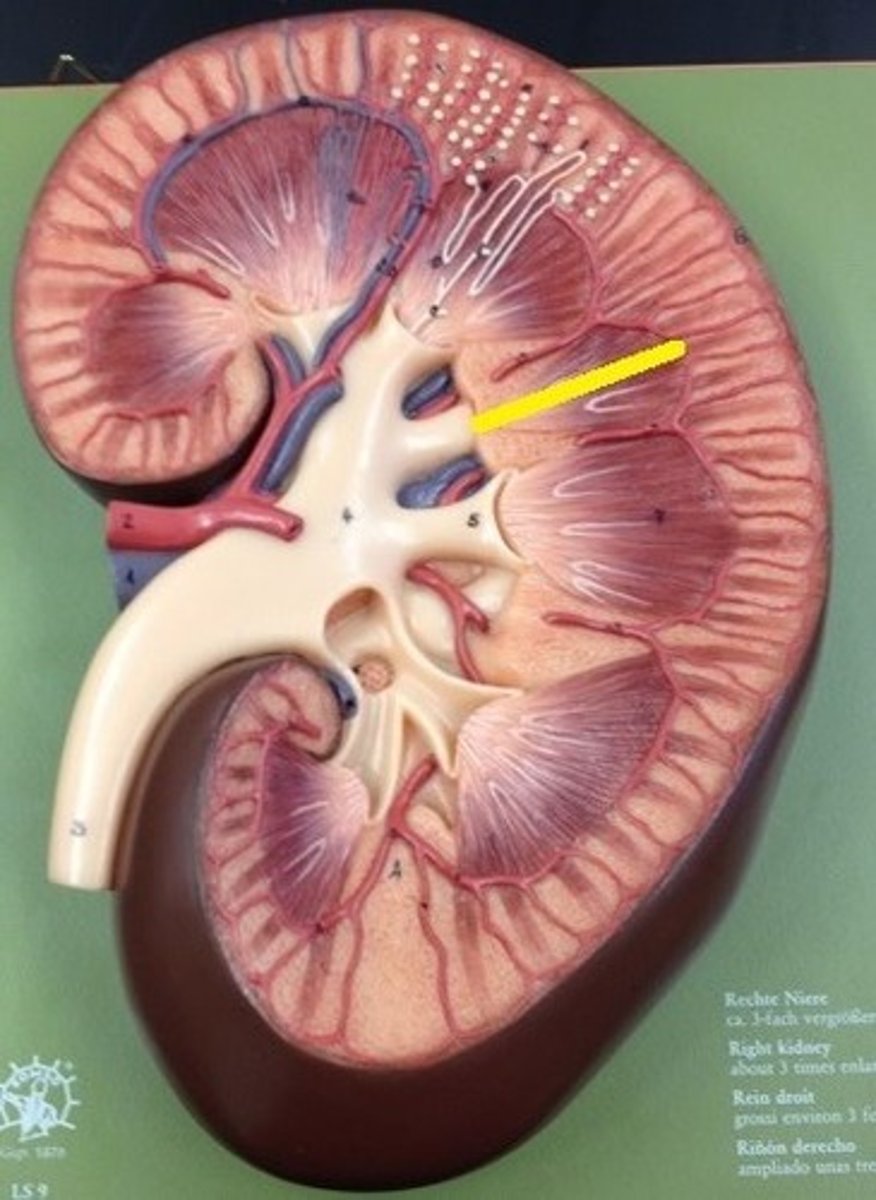
renal sinus (function and characteristics)
Function:
Space that collects urine before it enters the ureter
Characteristics:
Hollow cavity inside the kidney
Contains renal pelvis, calyces, blood vessels, nerves
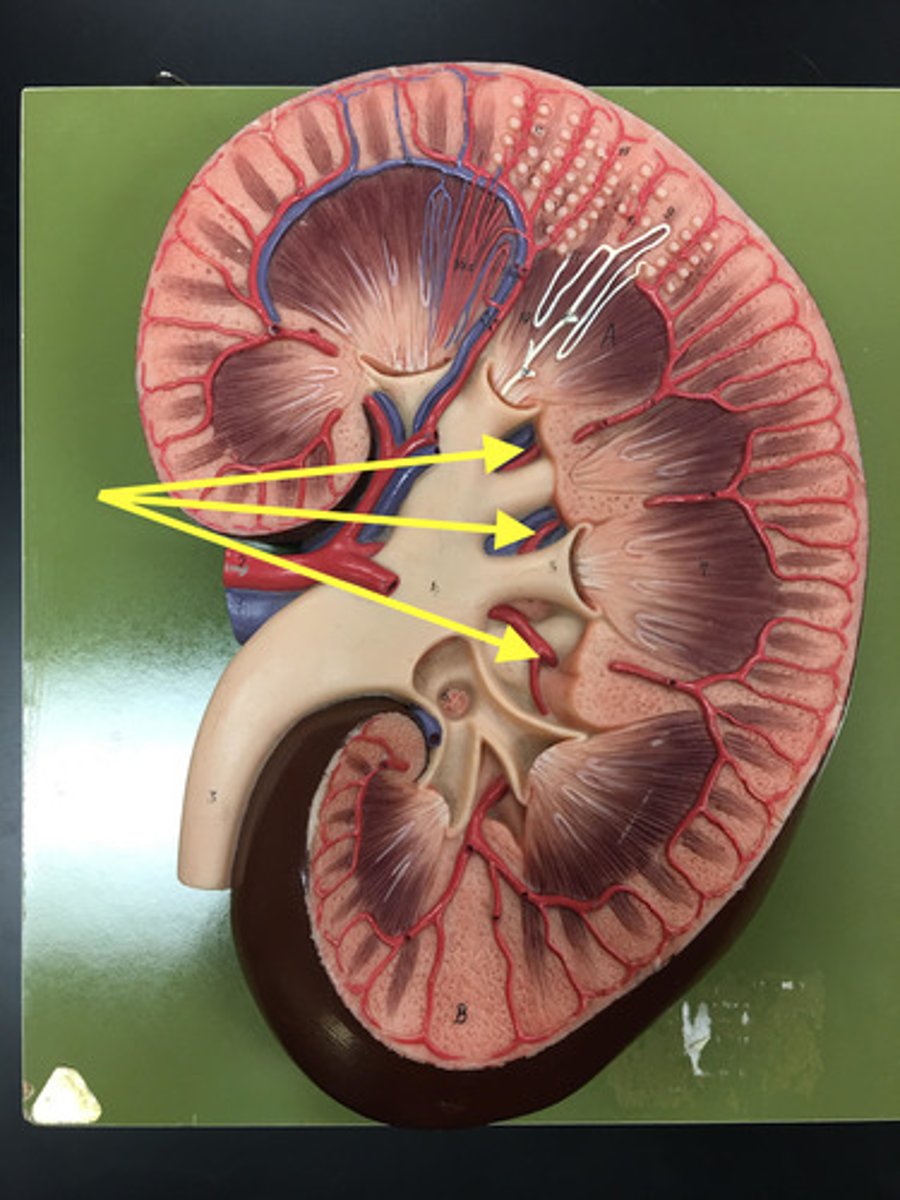
renal pyramid (function and characteristics)
Function:
Transports urine to the calyces
Characteristics:
Cone-shaped structures in the medulla
Composed of collecting ducts and loops of Henle
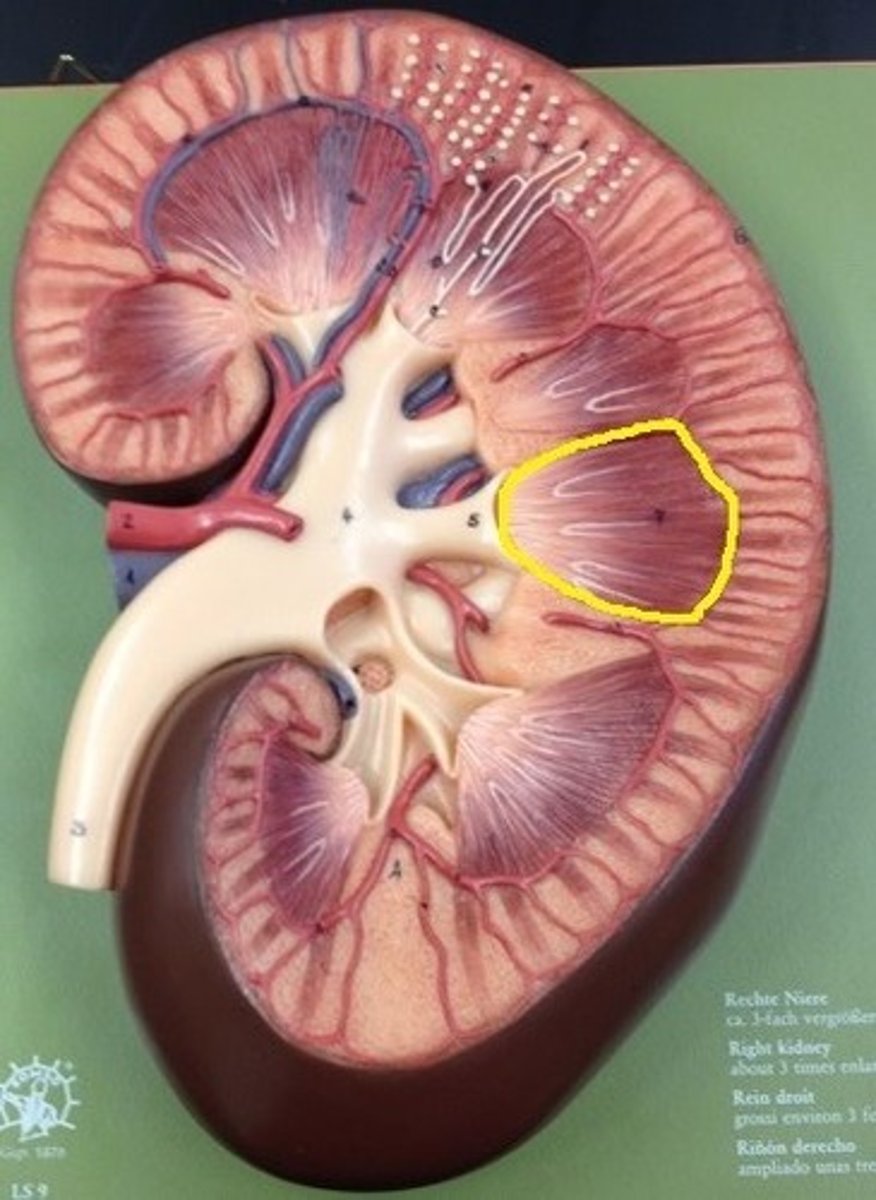
renal calyx minor and major (function and characteristics)
Function:
Collect urine and move it toward the renal pelvis
Characteristics:
Minor calyx receives urine from one pyramid
Major calyx receives urine from several minor calyces
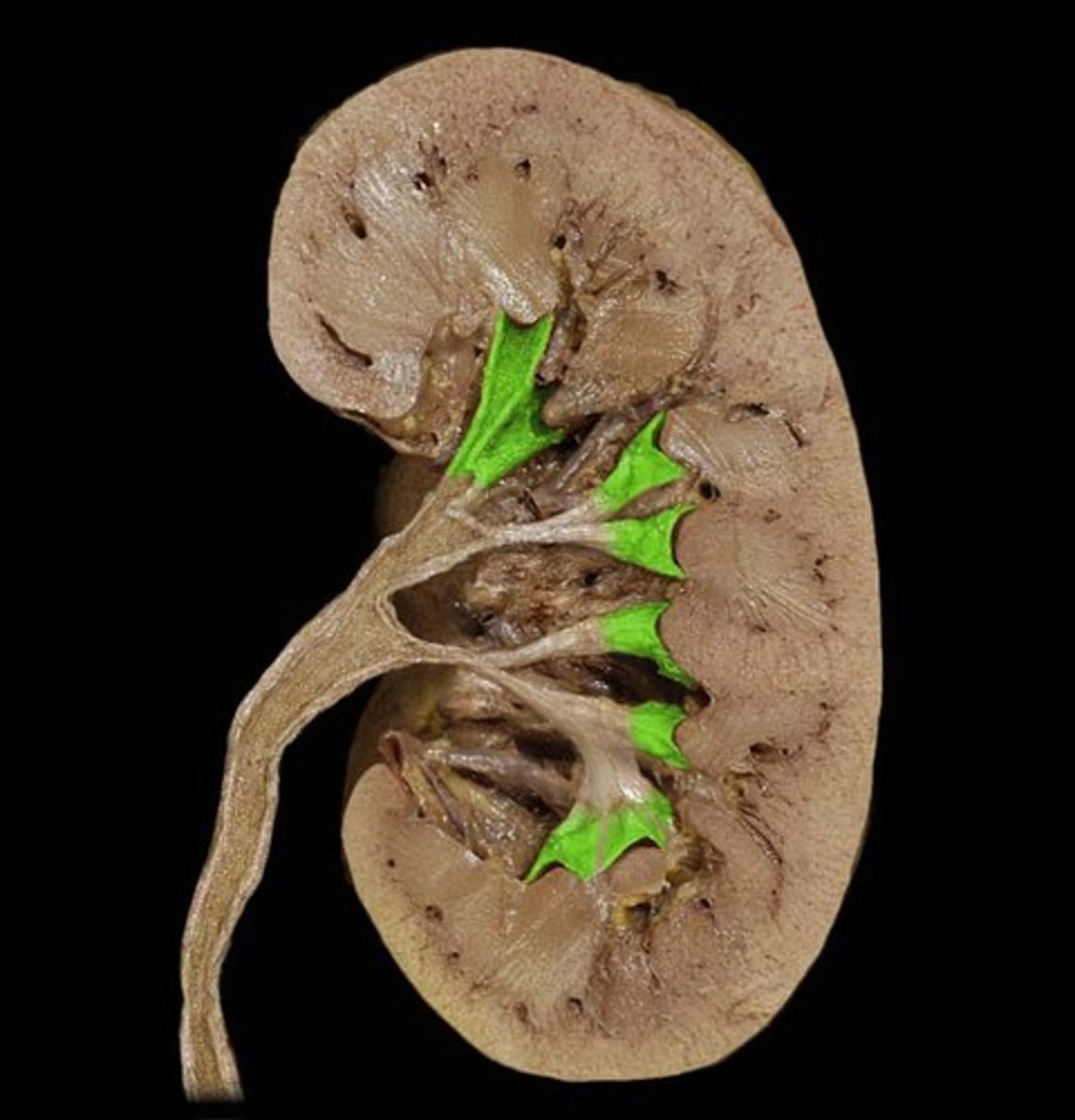
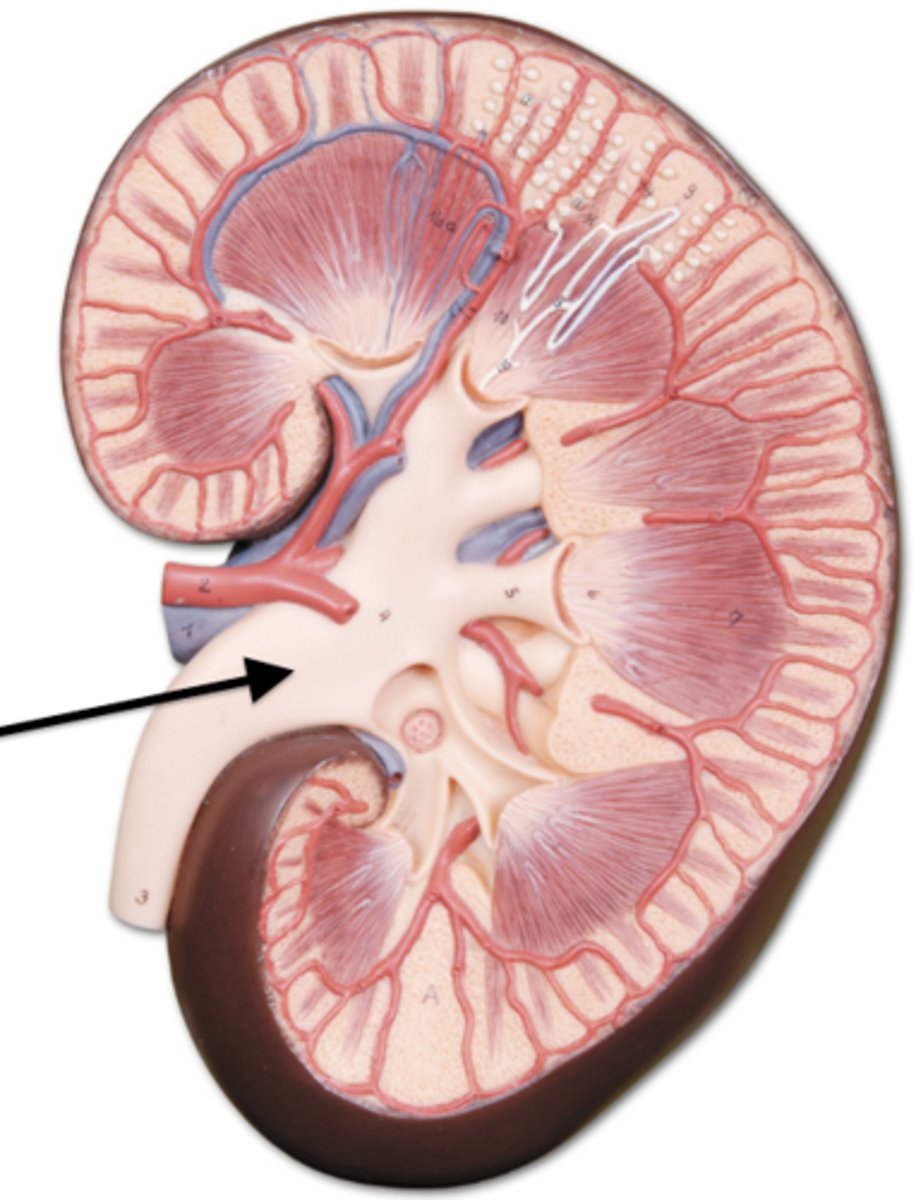
renal pelvis (function and characteristics)
Function:
Funnels urine into the ureter
Characteristics:
Funnel-shaped
Located in the renal sinus
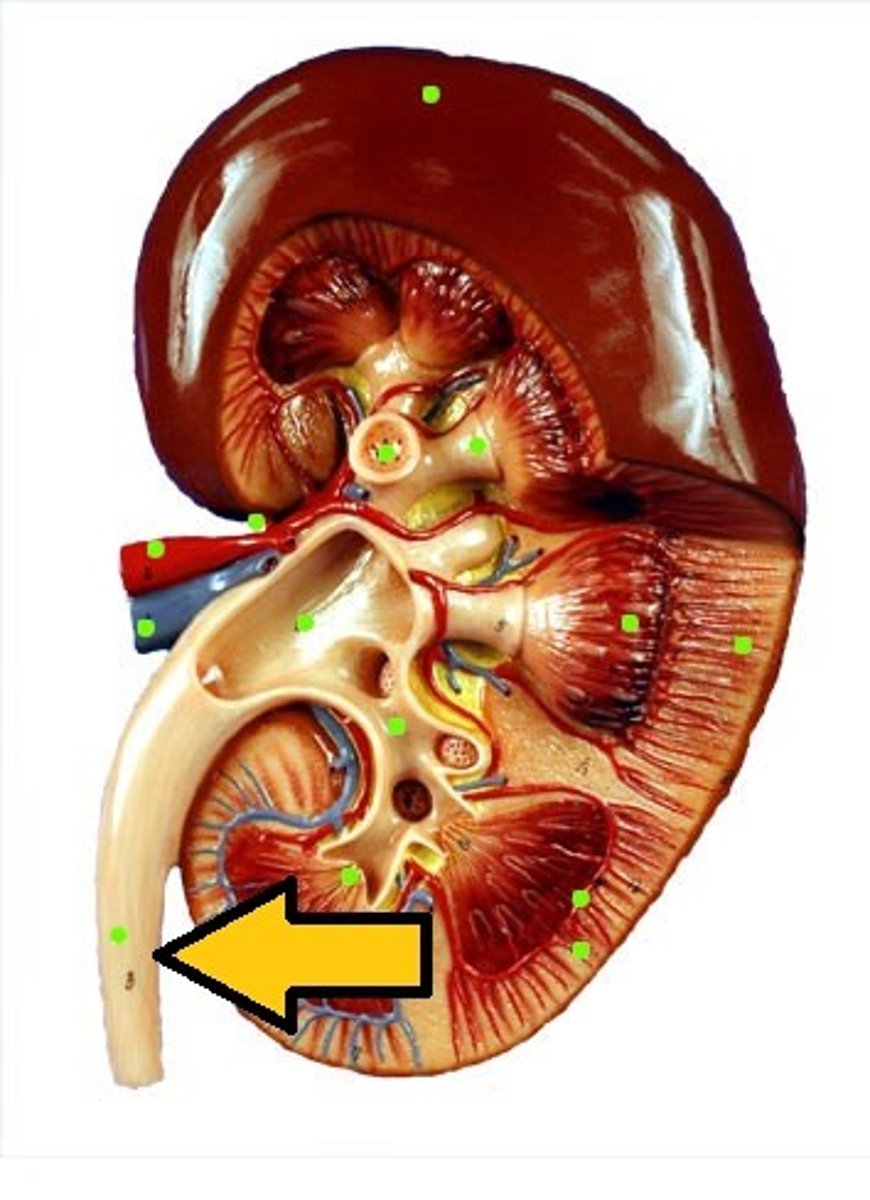
ureter (function and characteristics)
Function:
Transports urine from kidney to bladder
Characteristics:
Muscular tube
Uses peristalsis
About 25–30 cm long
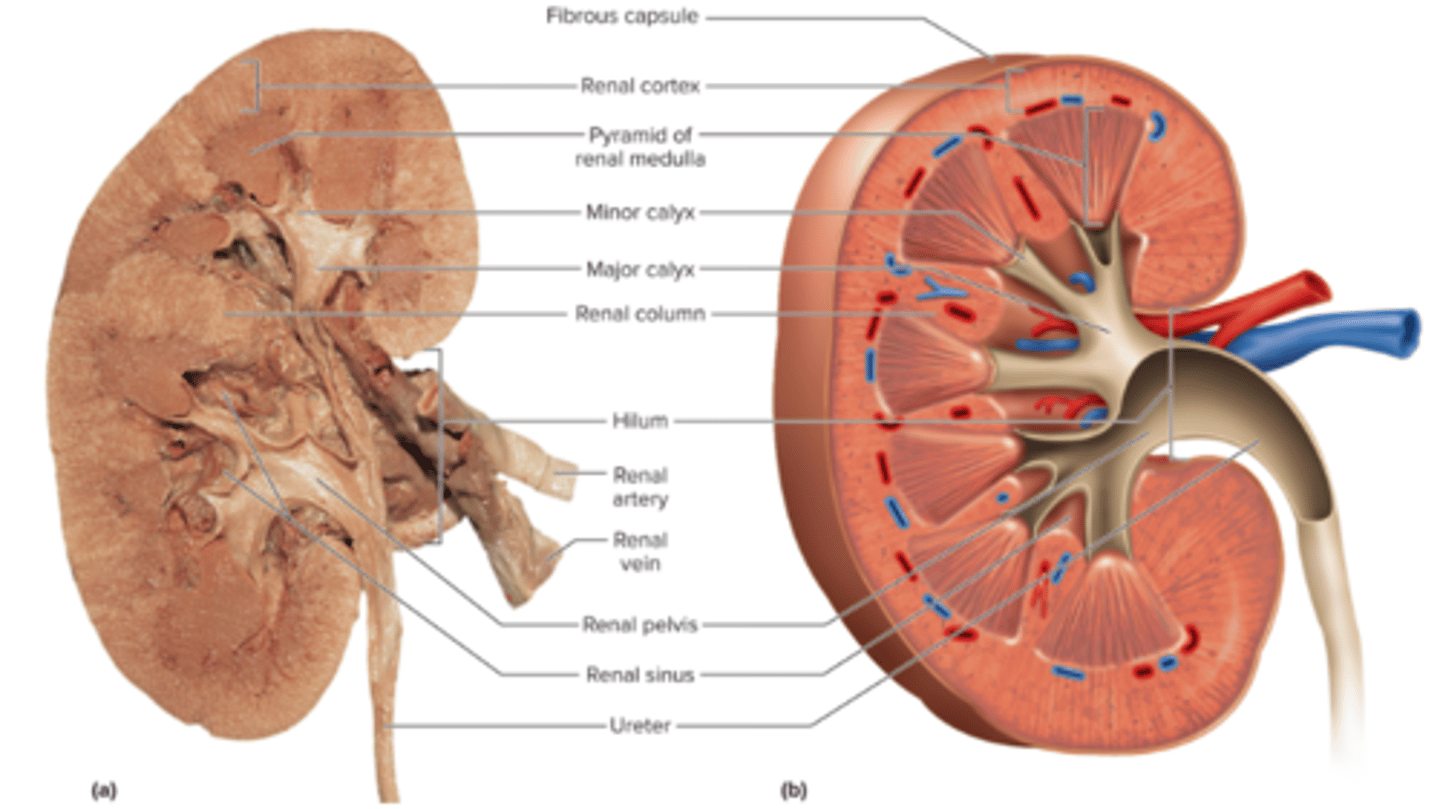
labeled kidney
Renal capsule
Renal cortex
Renal medulla
Renal pyramids
Minor calyx
Major calyx
Renal pelvis
Ureter
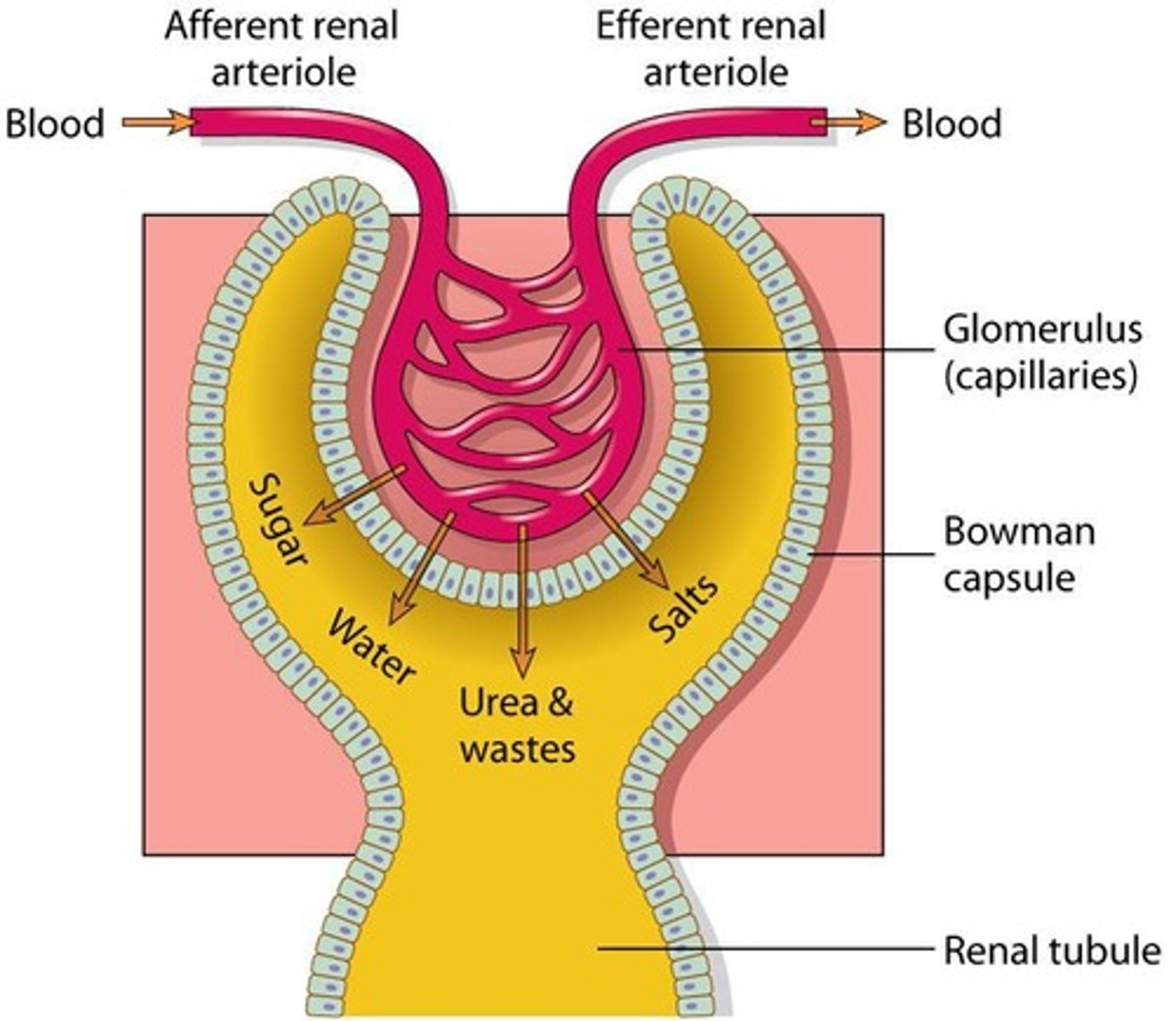
labeled nephron
Afferent arteriole
Glomerulus
Bowman's capsule
Proximal convoluted tubule
Loop of Henle
Distal convoluted tubule
Collecting duct
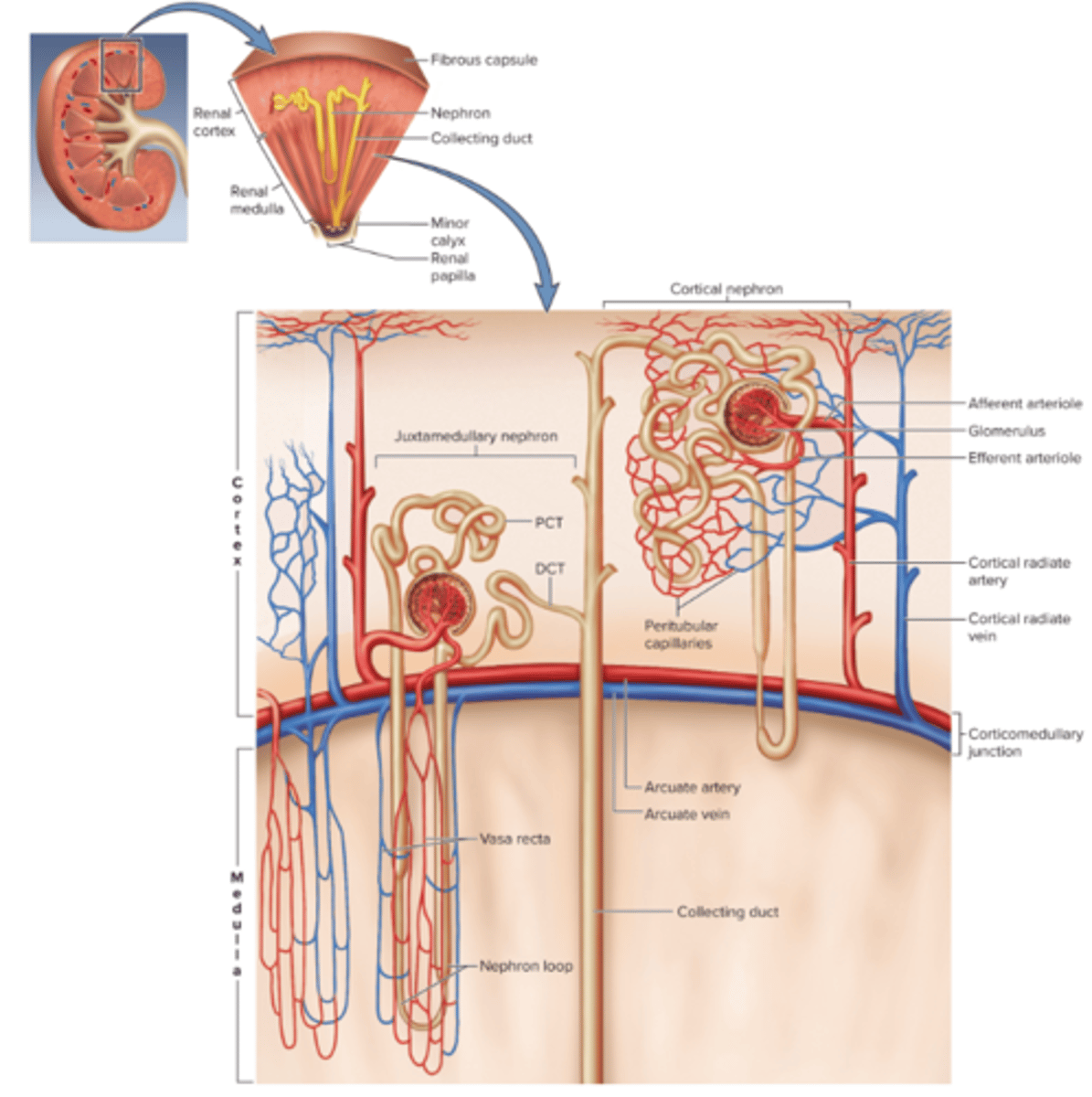
function of a nephron
Filters blood
Reabsorbs needed substances
Secretes additional wastes
Produces urine
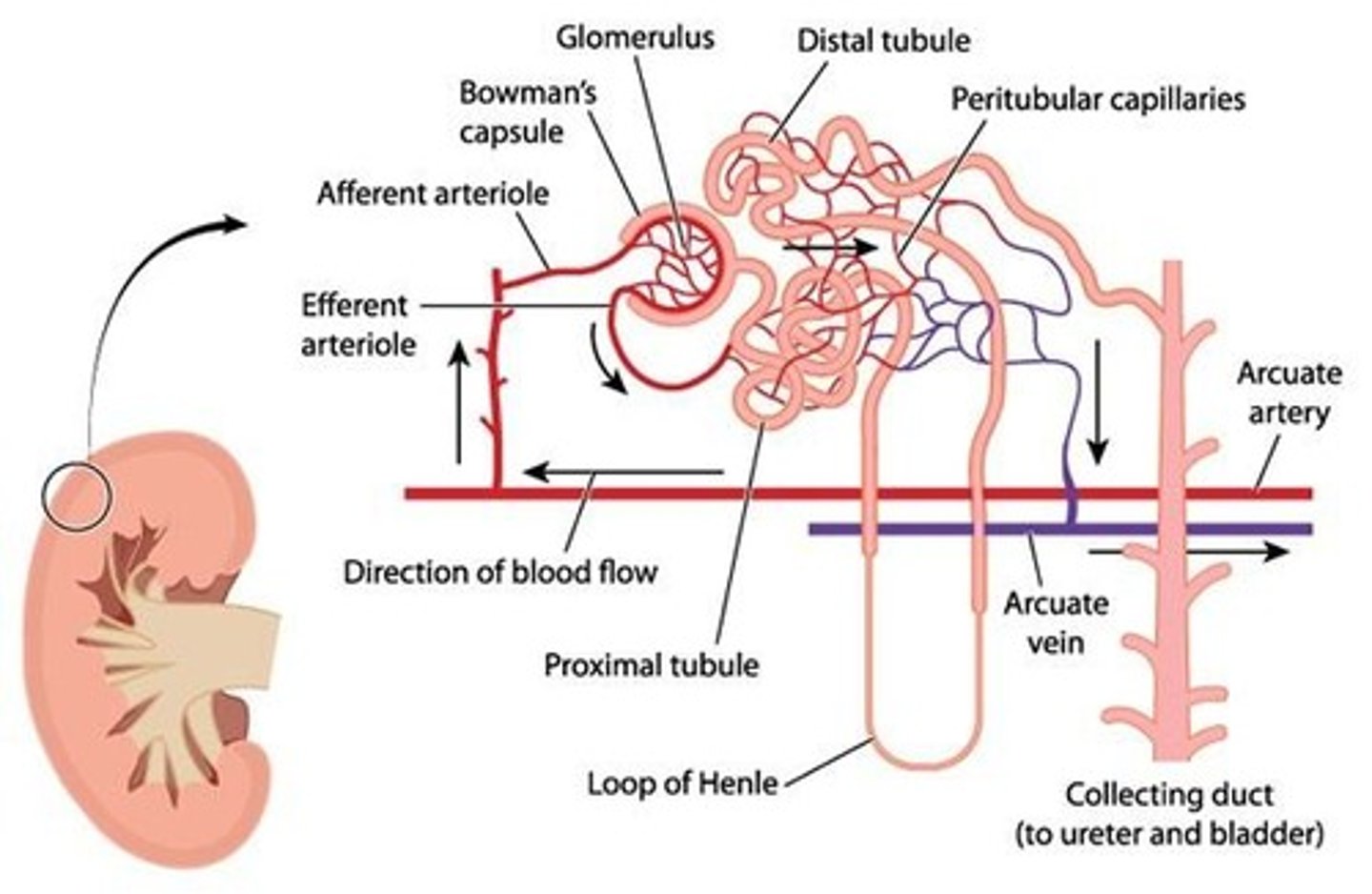
Follow the flow of fluids (filtrate) through the nephron
afferent arteriole
glomerulus
glomerular capsule
proximal convoluted tubule
nephron loop (loop of henle)
distal convoluted tubule
collecting duct
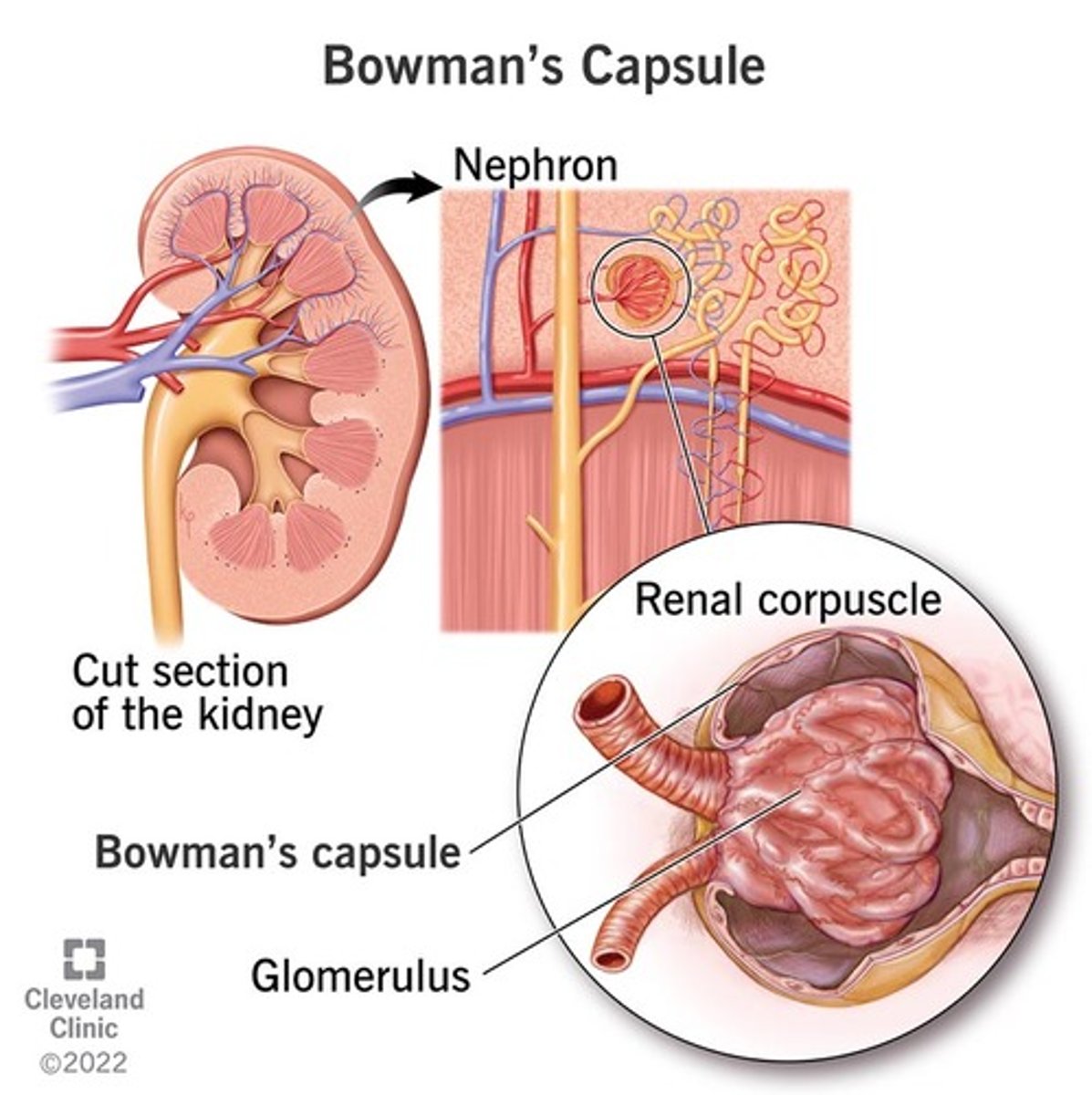
2 components of the renal corpuscle
Glomerulus
Bowman's (glomerular) capsule
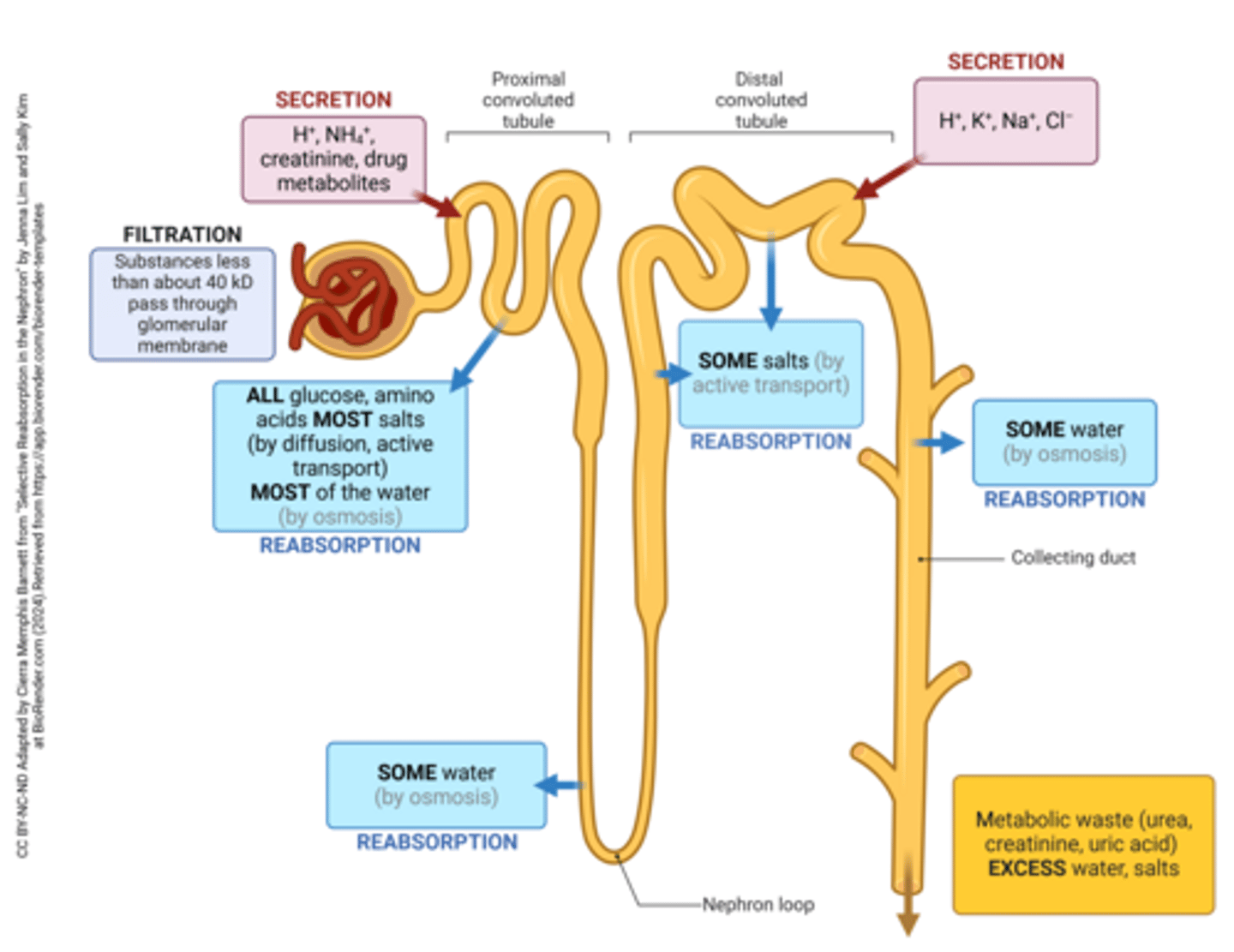
how much filtrate is produced and reabsorbed in a day (male/female)
About 180 liters of filtrate produced daily
About 178-179 liters reabsorbed
Around 1-2 liters excreted as urine
Similar amounts for males and females
Ureters (function and location)
Carry urine from kidneys to bladder
Located retroperitoneally, behind the abdominal cavity
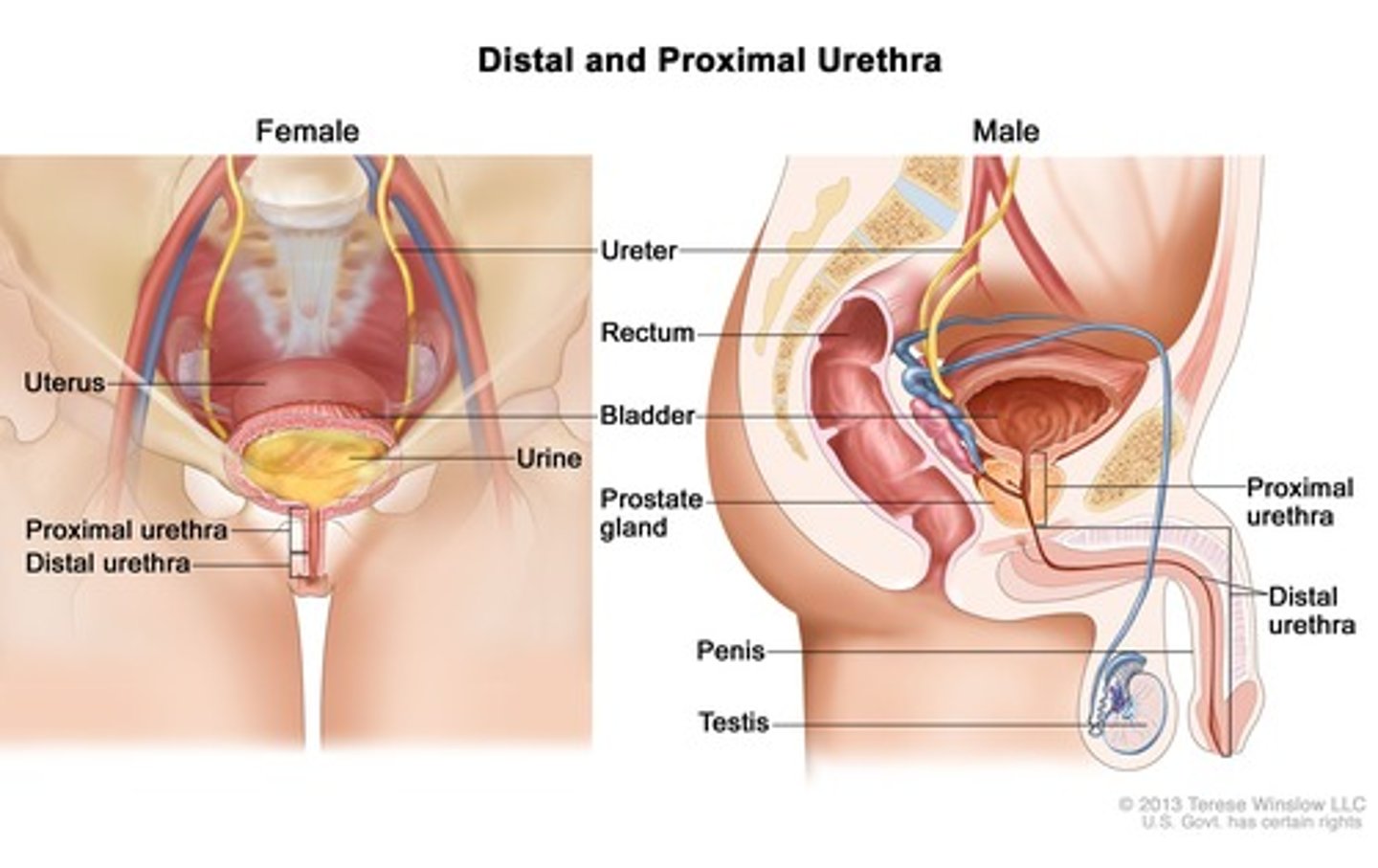
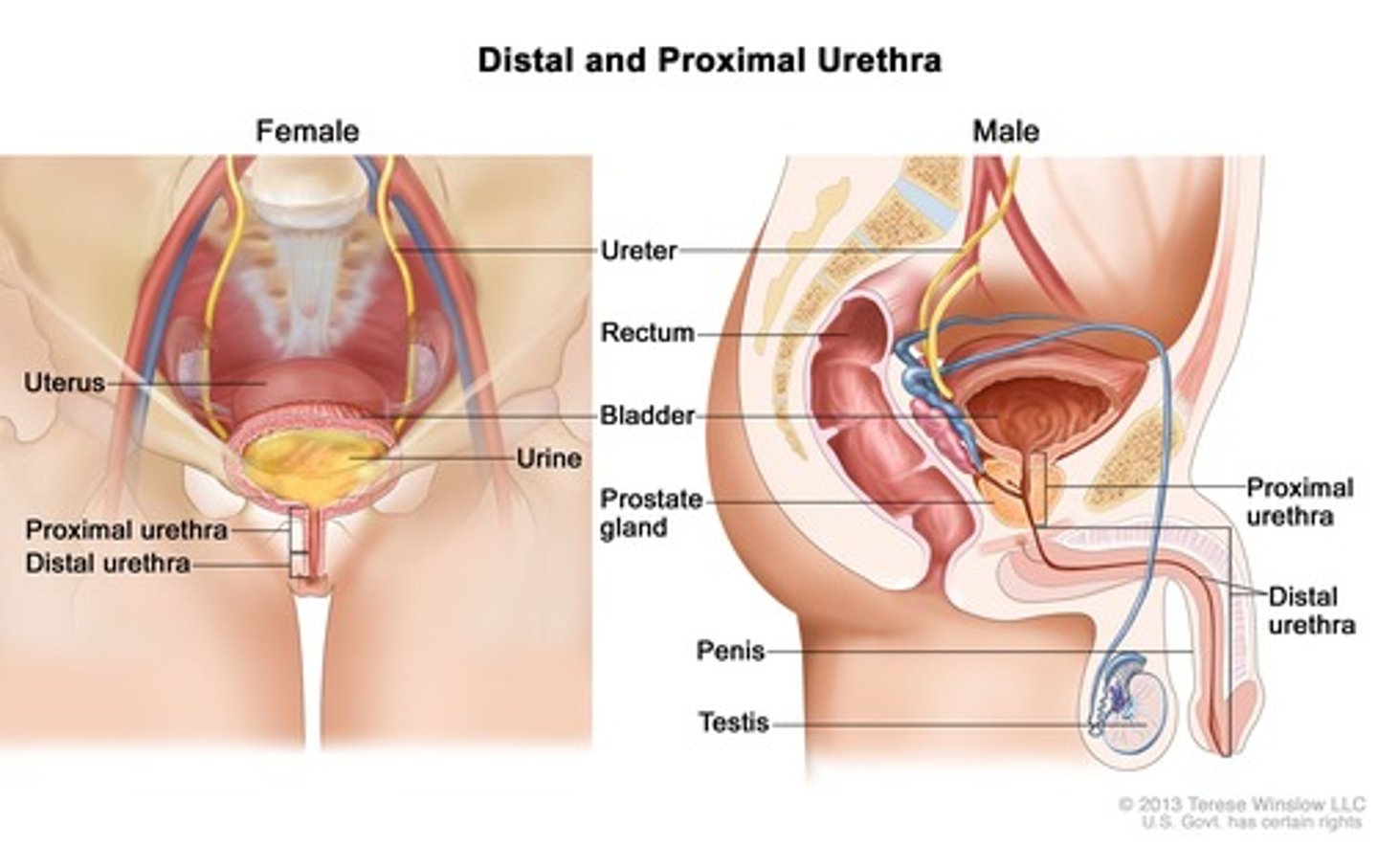
Urinary bladder (function and location)
Stores urine temporarily
Located in the pelvic cavity
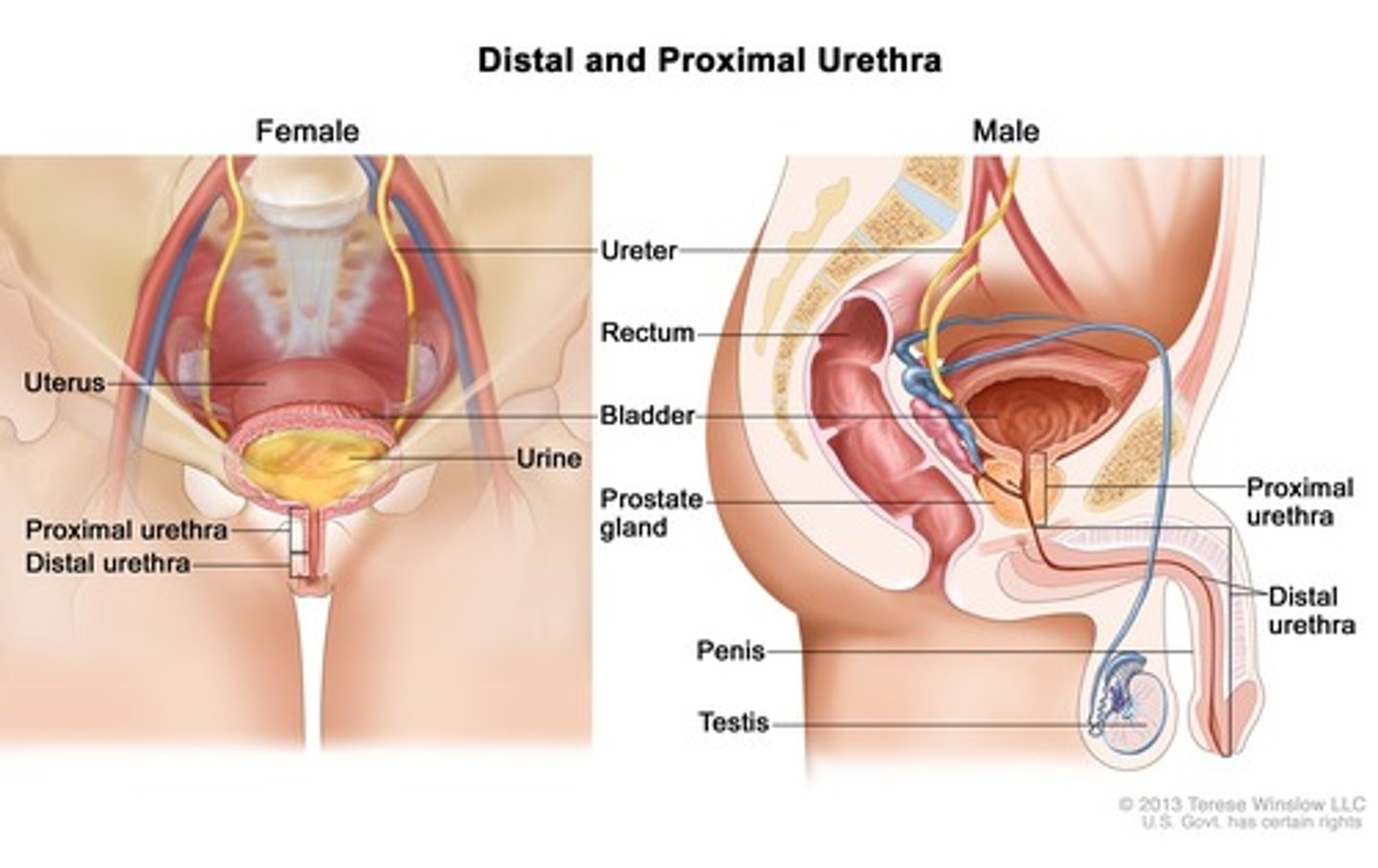
urethra (function and location)
Carries urine from bladder to outside the body
Shorter in females, longer in males
Located inferior to the bladder
scientific name for urination
micturition
What is normally found in healthy urine
Water
Urea
Uric acid
Creatinine
Electrolytes (Na⁺, K⁺, Cl⁻)
what should NOT be found in healthy urine
Glucose
Proteins
Blood cells
Bacteria
Ketones
color, pH, and odor of normal urine
Color: Pale yellow to amber
pH: Around 6 (slightly acidic)
Odor: Mild, slightly ammonia-like