Quiz 5 RBC Disorders, Upper GI, Lower GI

0.0(0)
Studied by 0 people
call kaiCall Kai
learnLearn
examPractice Test
spaced repetitionSpaced Repetition
heart puzzleMatch
flashcardsFlashcards
GameKnowt Play
Card Sorting

1/174

flashcard set

Earn XP

Description and Tags

N220 Pathophysiology Spring 26 Week 9, 10, 11

Last updated 1:46 AM on 4/14/26
Name
Mastery
Learn
Test
Matching
Spaced
Call with Kai

No analytics yet

Send a link to your students to track their progress

175 Terms

1
New cards

What is the purpose of a Complete Blood Count (CBC)?

Use the values to assess and identify any abnormalities

  • Blood Cells Quantity (RBCs, WBCs, PLTs)

  • Oxygen Carrying Capacity

  • RBC Morphology

  • Blood Disorders

2
New cards

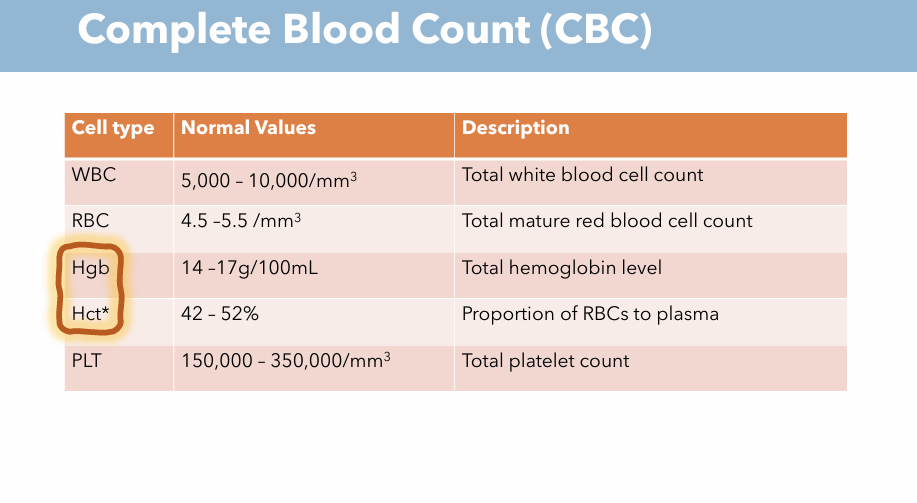
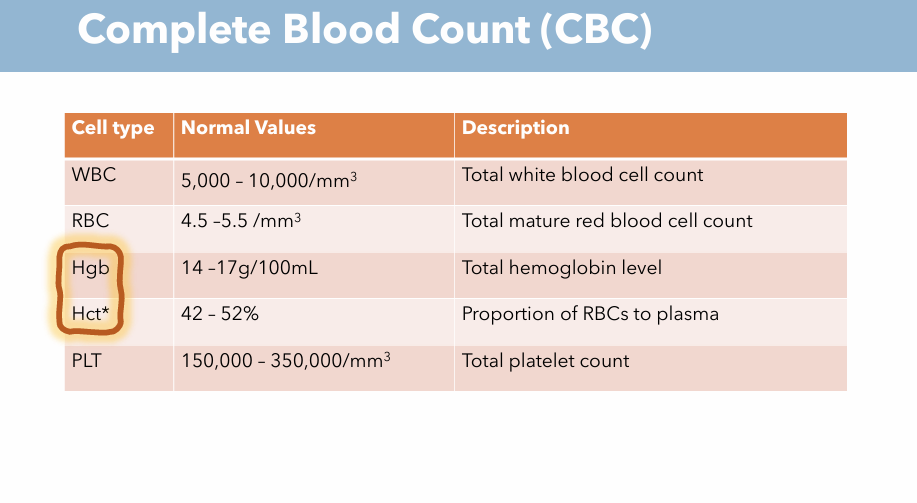
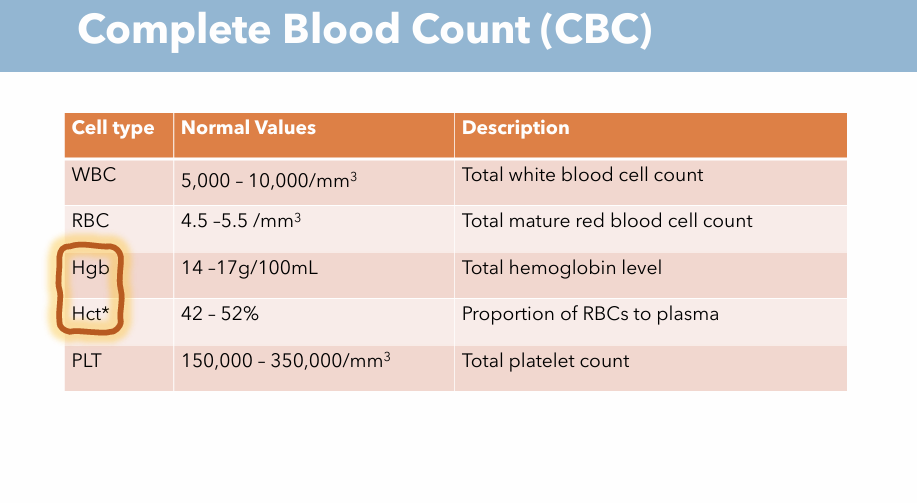
What are the 4 main values of CBC? What are normal values of each one?

  • WBC (white blood cells

  • RBC (red blood cells)

  • Hgb (hemoglobin)

  • Hct (hematocrit)

<ul><li><p>WBC (white blood cells</p></li><li><p>RBC (red blood cells)</p></li><li><p>Hgb (hemoglobin)</p></li><li><p>Hct (hematocrit)</p></li></ul><p></p>
3
New cards

What are the 4 main values of CBC? Description & What are normal values of each one? (WBC)

Description: Total white blood cell count

Normal Value: 5,000 - 10,000 / mm³
<p>Description: <strong>Total white blood cell count</strong></p><p>Normal Value: <strong>5,000 - 10,000 / mm³ </strong></p><p></p>
4
New cards

What are the 4 main values of CBC? Description & What are normal values of each one? (RBC)

Description: Total Mature Red Blood Cell Count

Normal Value: 4.5 - 5.5 / mm³
<p>Description: <strong>Total Mature Red Blood Cell Count</strong></p><p>Normal Value<strong>: 4.5 - 5.5 / mm³ </strong></p>
5
New cards

What are the 4 main values of CBC? Description & What are normal values of each one? (Hgb)

Description: Total hemoglobin level

Normal value: 14-17 g/100 mL
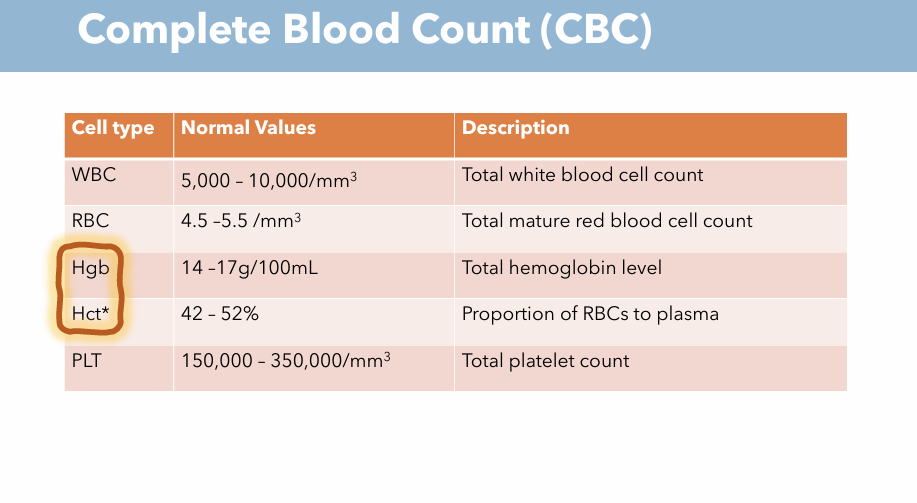
<p>Description: <strong>Total hemoglobin level</strong></p><p>Normal value: <strong>14-17 g/100 mL</strong></p>
6
New cards

What are the 4 main values of CBC? Description & What are normal values of each one? (Hct) What is abnormal Hct?

Description: Proportion of RBCs to plasma

Normal value: 42 - 52%

Anemia: Depressed hematocrit %

Polycythemia: Elevated hematocrit %
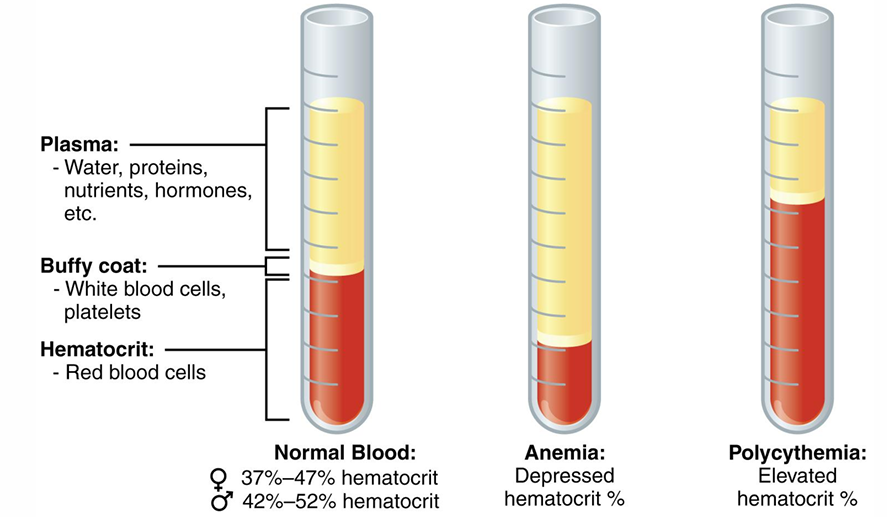
<p>Description: <strong>Proportion of RBCs to plasma</strong></p><p>Normal value: <strong>42 - 52%</strong></p><p>Anemia: <strong>Depressed hematocrit %</strong></p><p>Polycythemia: <strong>Elevated hematocrit %</strong></p>
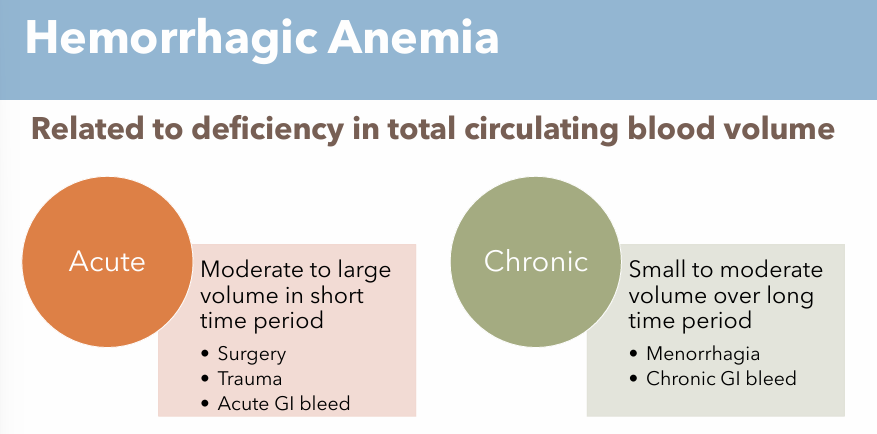
7
New cards

Explain Erythropoiesis & how red blood cells (RBCs) are monitored?

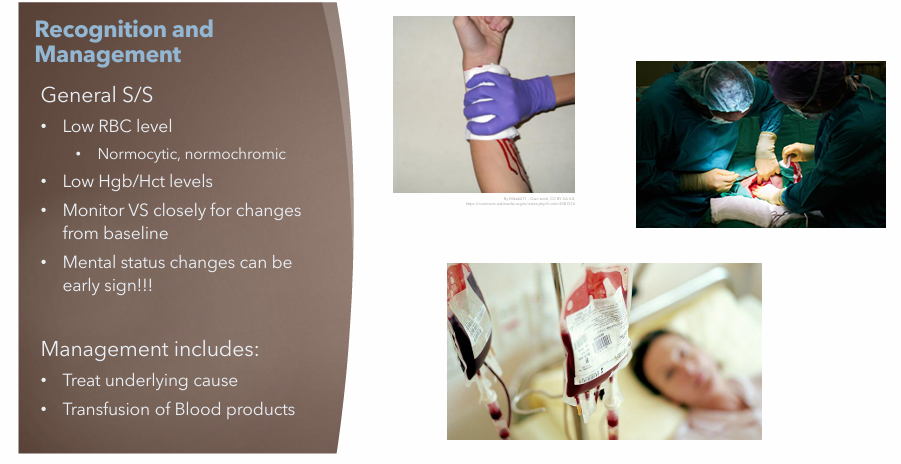
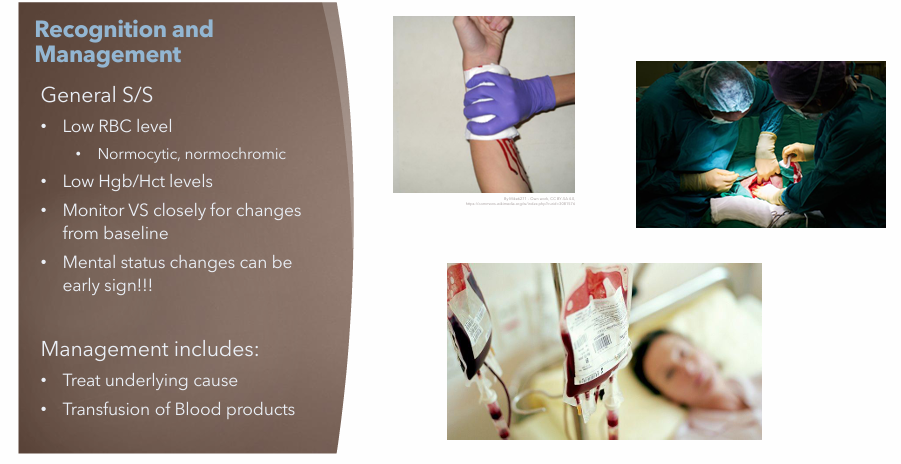
Process which produces red blood cells (erythrocytes) and monitored by the Complete Blood Count (CBC)
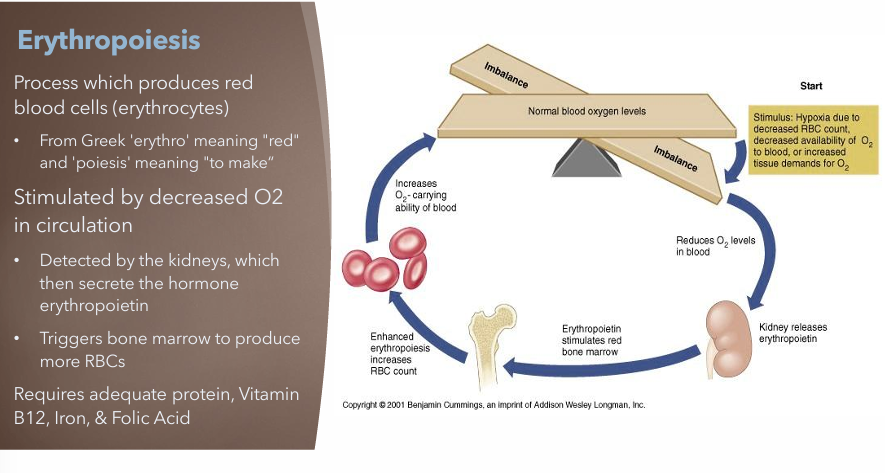
<p>Process which produces red blood cells (erythrocytes) and monitored by the Complete Blood Count (CBC)</p>
8
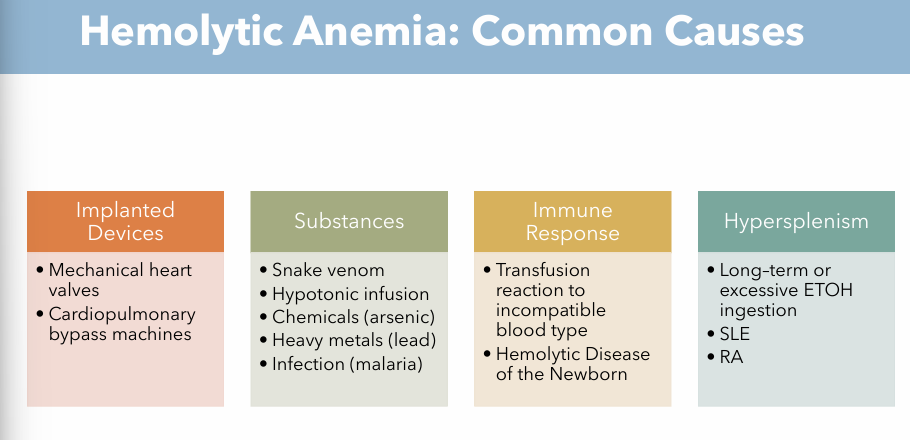
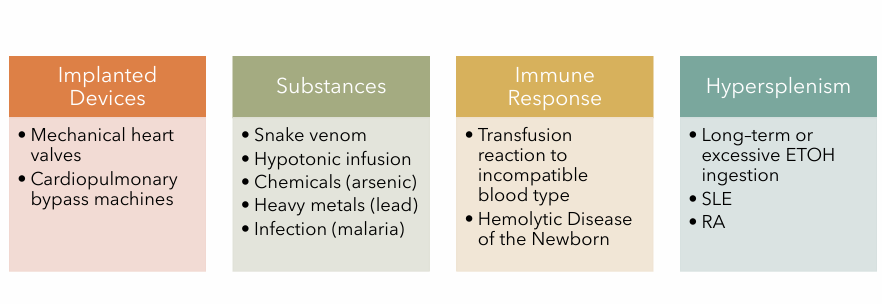
New cards

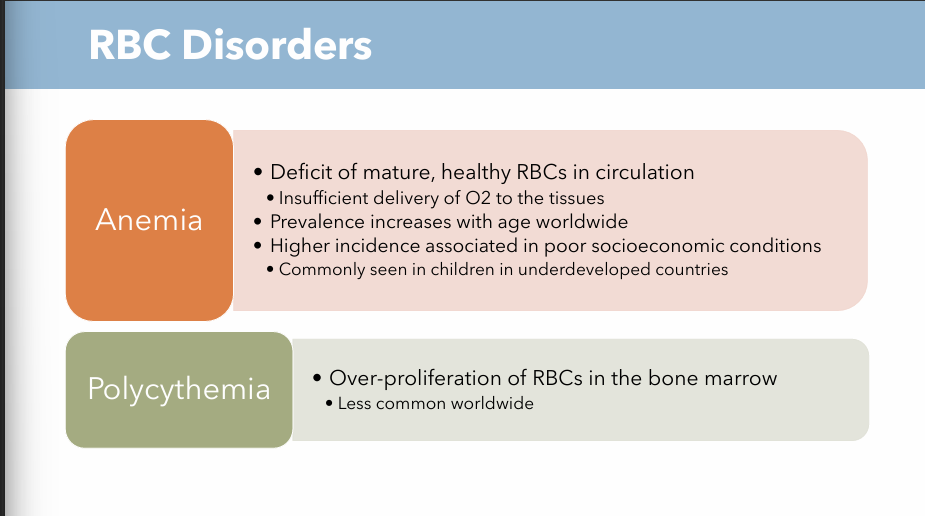
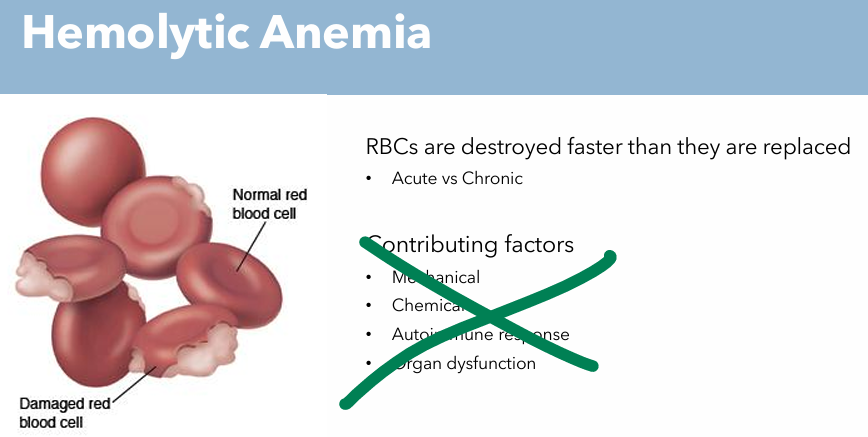
Define Anemia and how does it affect the tissues?

  • Deficit of mature, healthy RBCs in circulation

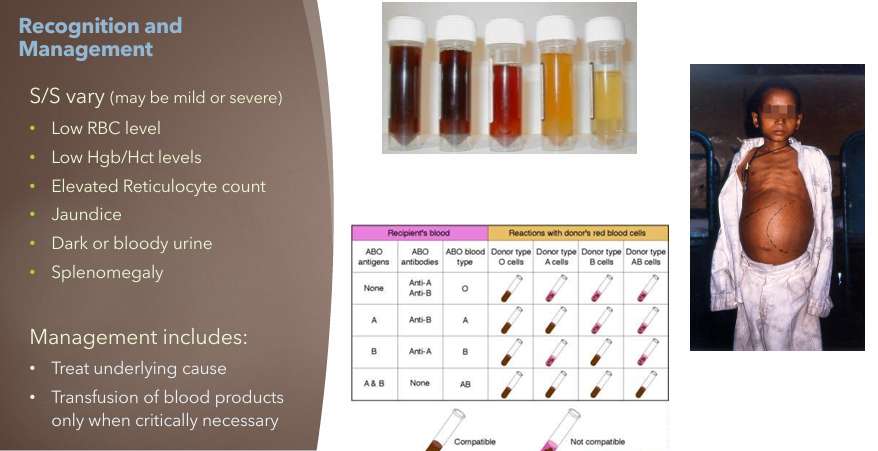
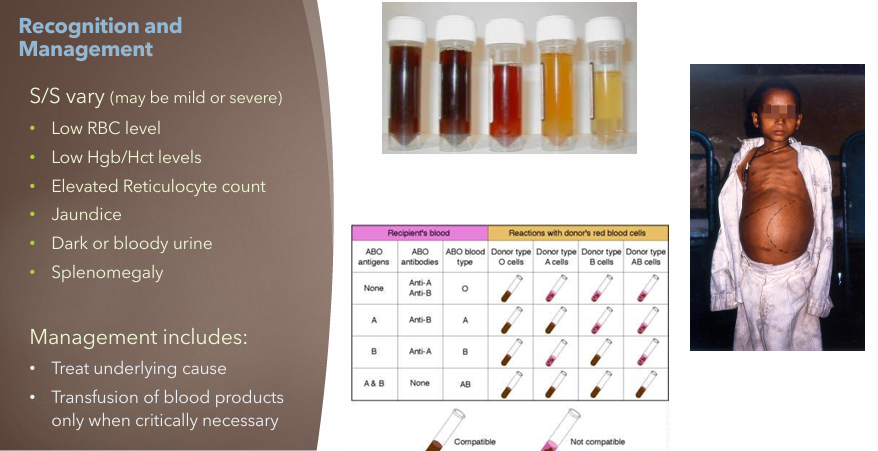
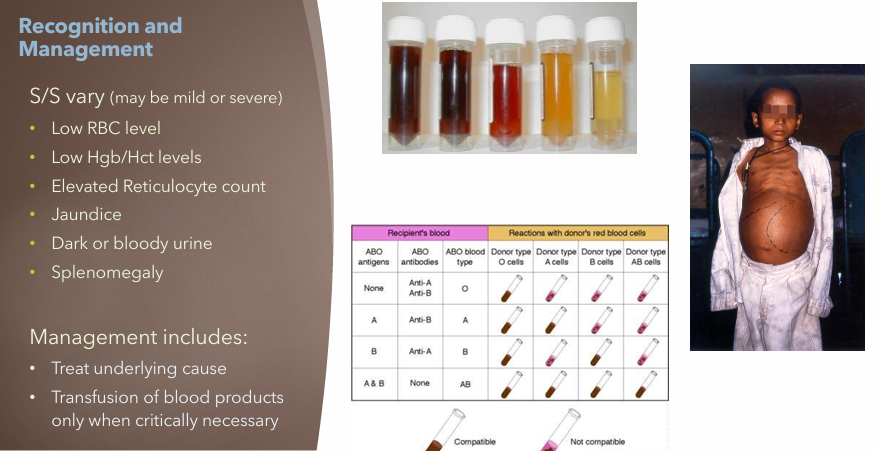
  • Insufficient delivery of O2 to the tissues
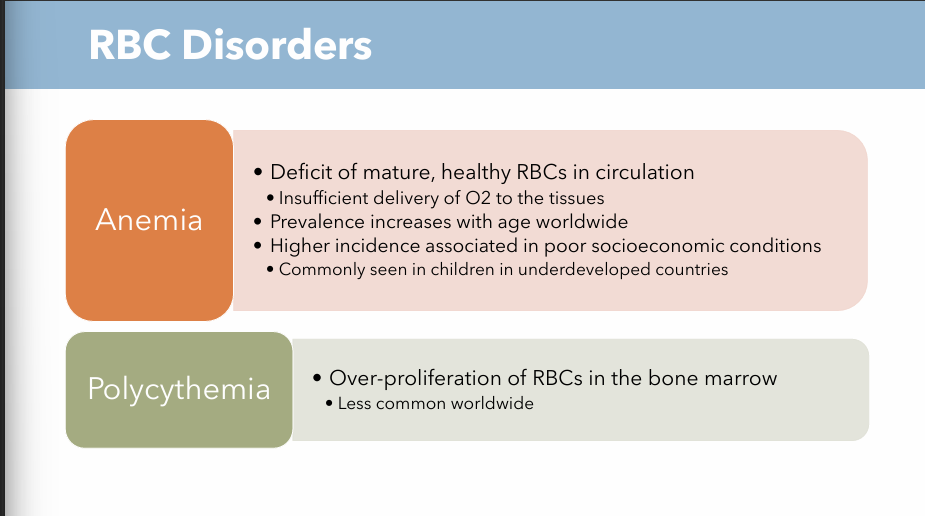
<ul><li><p>Deficit of mature, healthy RBCs in circulation</p></li><li><p>Insufficient delivery of O2 to the tissues</p></li></ul><p></p>
9
New cards

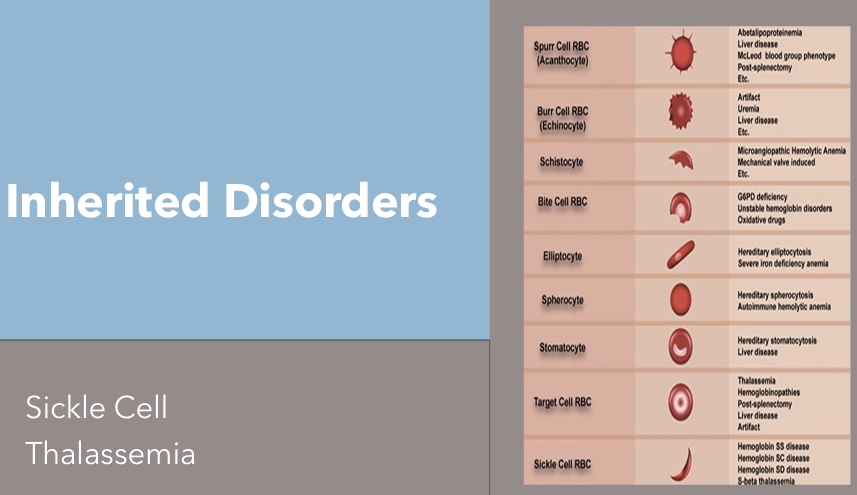
Define Polycythemia

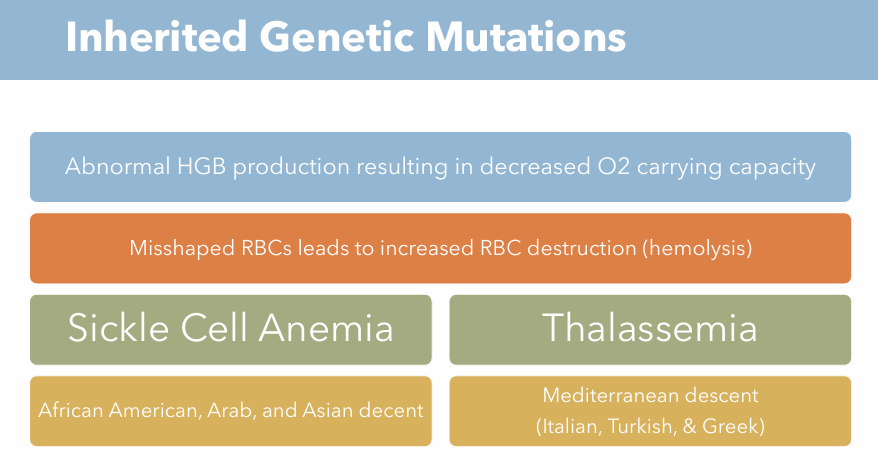
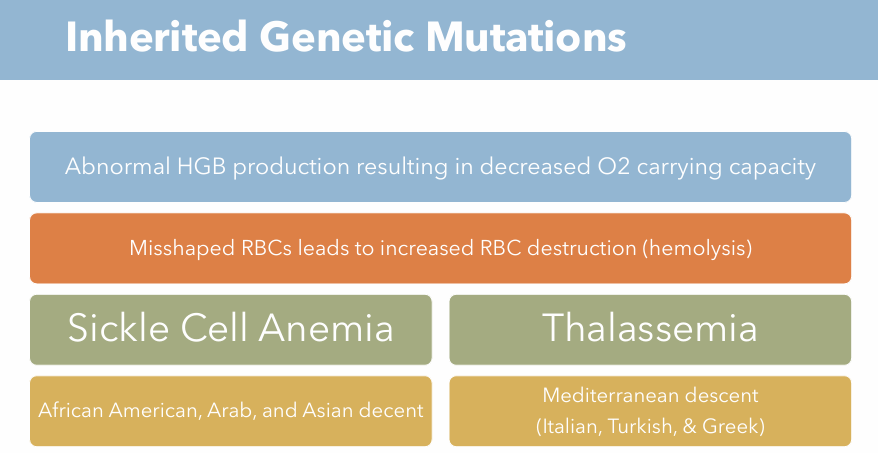
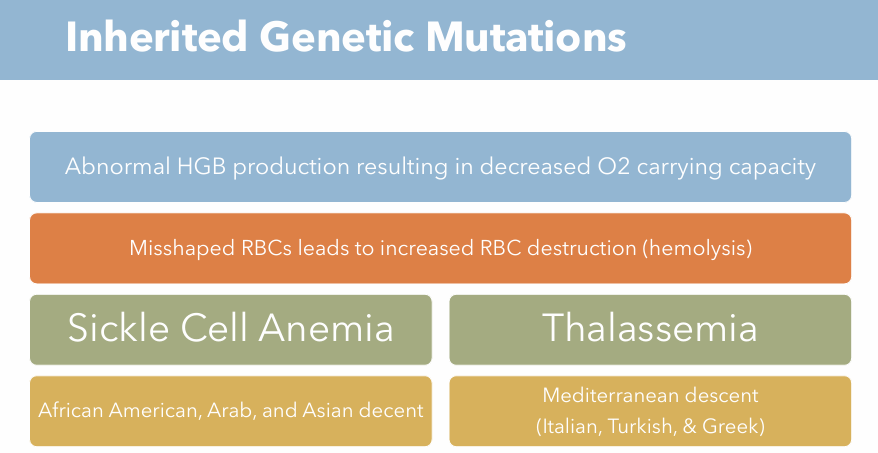
Over-proliferation of RBCs in the bone marrow
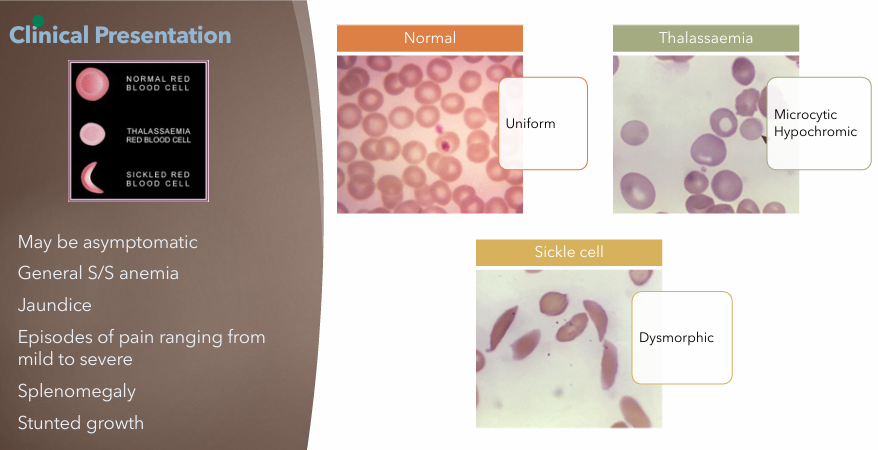
<p>Over-proliferation of RBCs in the bone marrow</p><p></p>
10
New cards

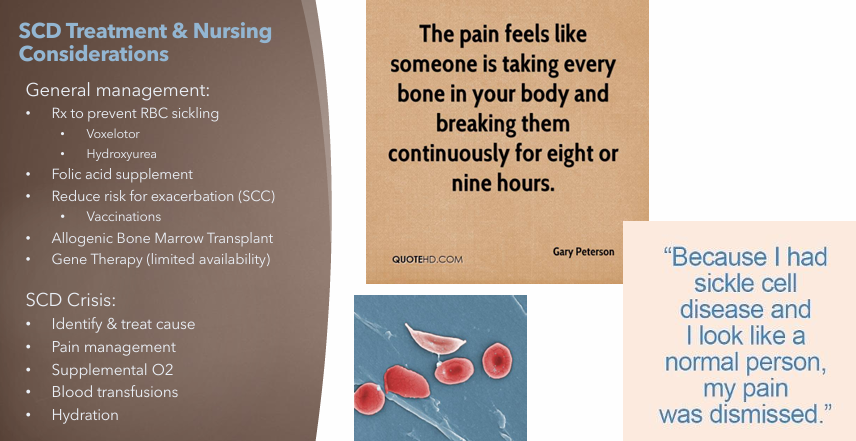
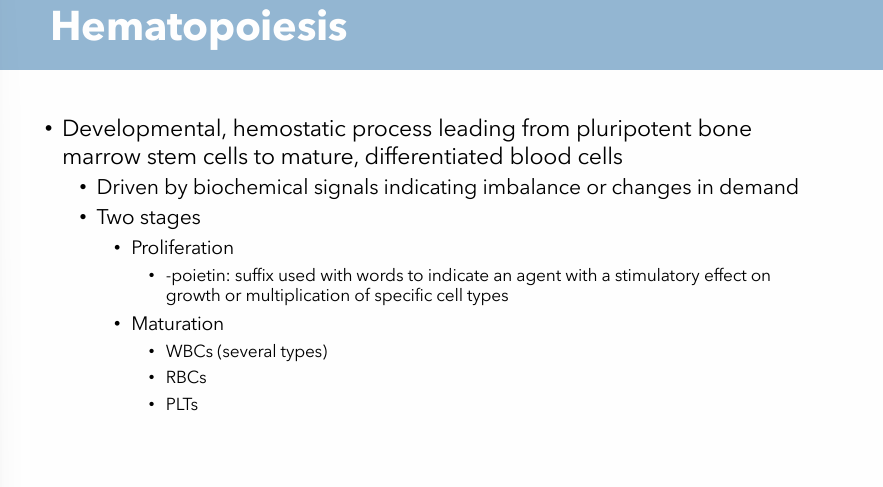
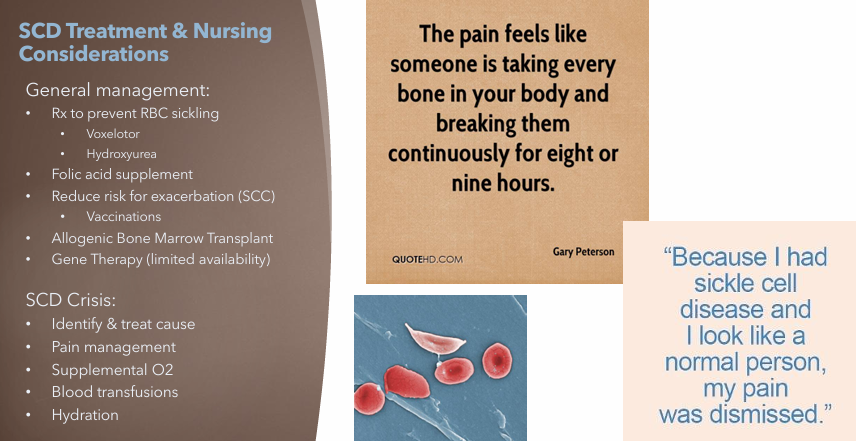
What is hematopoiesis? What are the two stages?

  • Hemostatic process

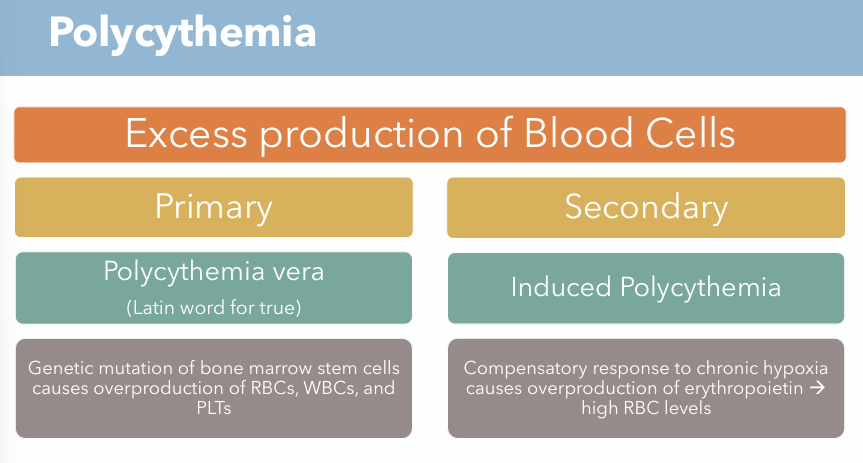
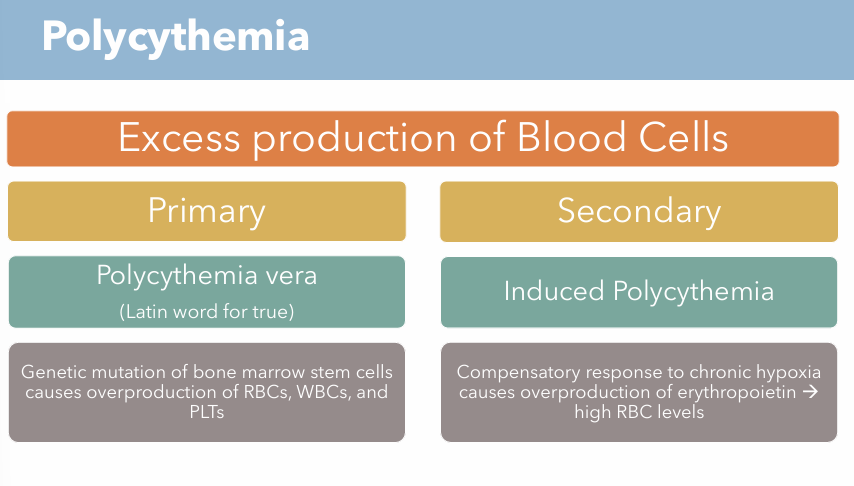
  • Bone marrow stem cells → Differentiate blood cells

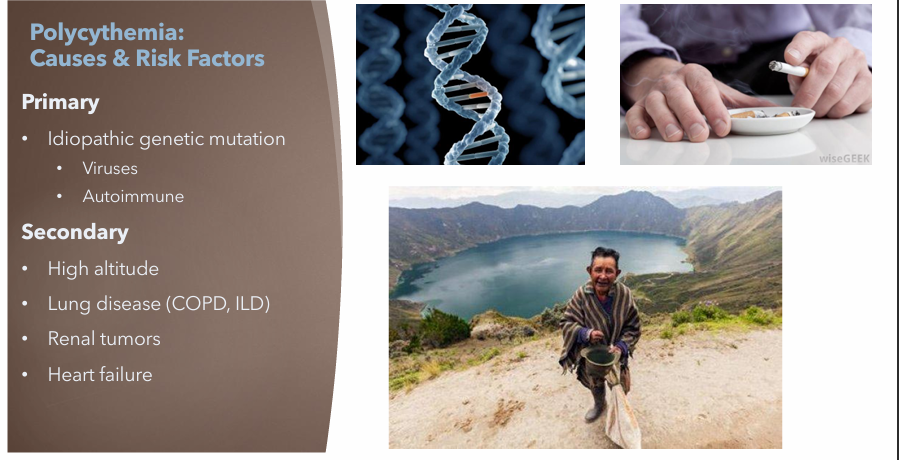
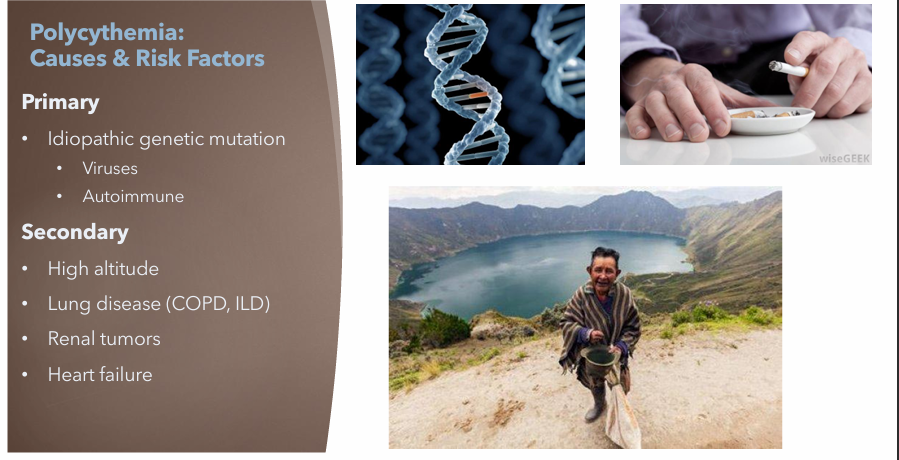
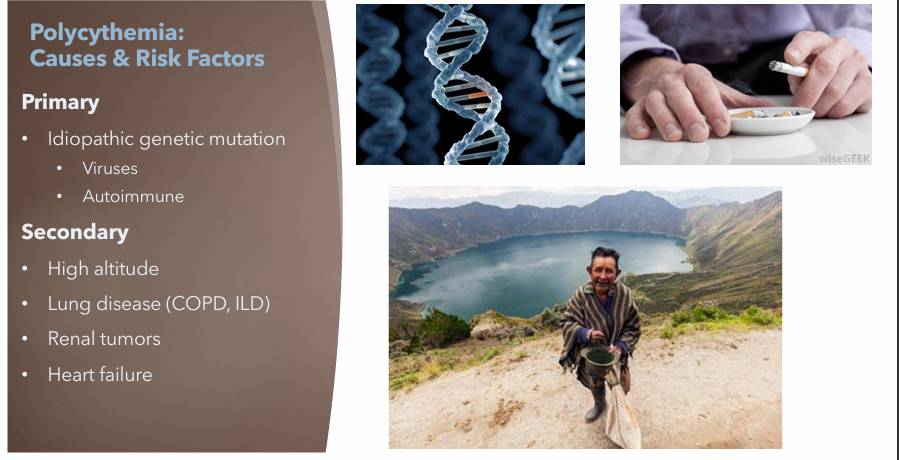
  • Two stages: Proliferation & Maturation

    • Proliferation: “-poietin” → suffix for growth or multiplication of specific cell types

    • Maturation: Bone marrow stem cells mature to WBCs, RBCs, PLTs
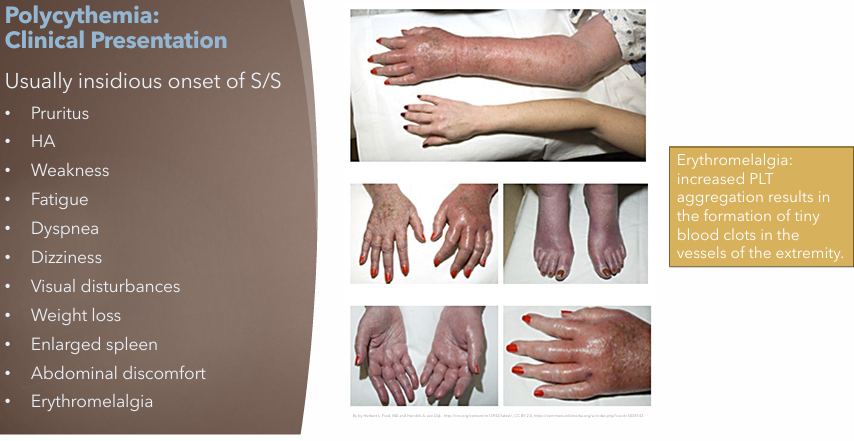
<ul><li><p>Hemostatic process</p></li><li><p>Bone marrow stem cells → Differentiate blood cells</p></li><li><p>Two stages: Proliferation &amp; Maturation</p><ul><li><p>Proliferation: “-poietin” → suffix for growth or multiplication of specific cell types</p></li><li><p>Maturation: Bone marrow stem cells mature to WBCs, RBCs, PLTs</p></li></ul></li></ul><p></p>
11
New cards

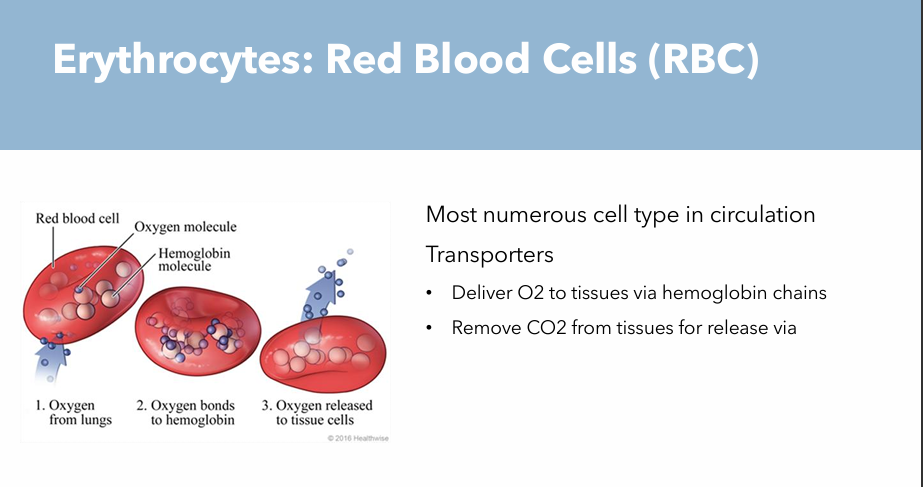
What is purpose of RBCs

Most numerous cell type in circulation: Transporters

  • Deliver O2 to tissues via hemoglobin chains

  • Remove CO2 from tissues for release via lungs
<p>Most numerous cell type in circulation: <strong>Transporters</strong></p><ul><li><p><strong>Deliver O2</strong> to tissues via hemoglobin chains</p></li><li><p><strong>Remove CO2 </strong>from tissues for release via lungs</p></li></ul><p></p>
12
New cards

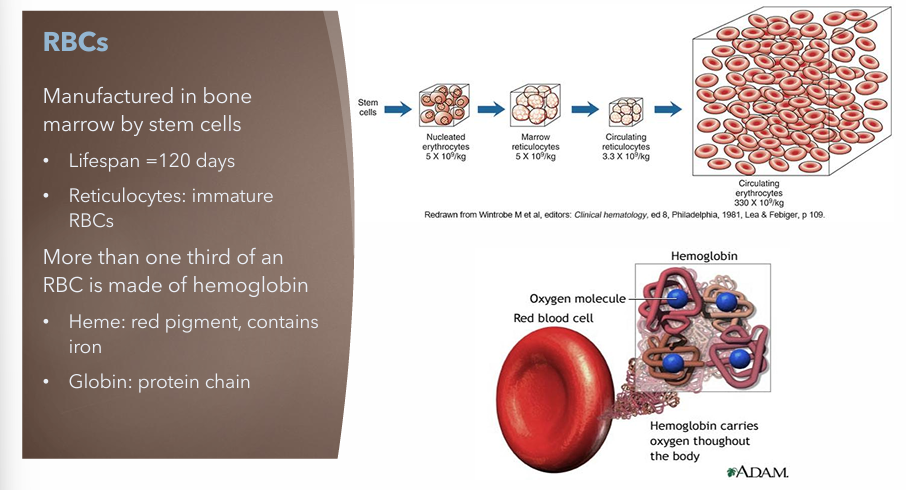
Where are RBCs made, lifespan, and what’s it made of

Manufactured in bone marrow by stem cells

  • Lifespan = 120 days

  • Reticulocytes: Immature RBCs

More than one third of an RBC is made of hemoglobin

  • Heme: red pigment, contains iron

  • Globin: protein chain

<p>Manufactured in bone marrow by stem cells</p><ul><li><p>Lifespan = 120 days</p></li><li><p>Reticulocytes: Immature RBCs</p></li></ul><p>More than one third of an RBC is made of hemoglobin</p><ul><li><p>Heme: red pigment, contains iron</p></li><li><p>Globin: protein chain</p></li></ul><p></p>
13
New cards

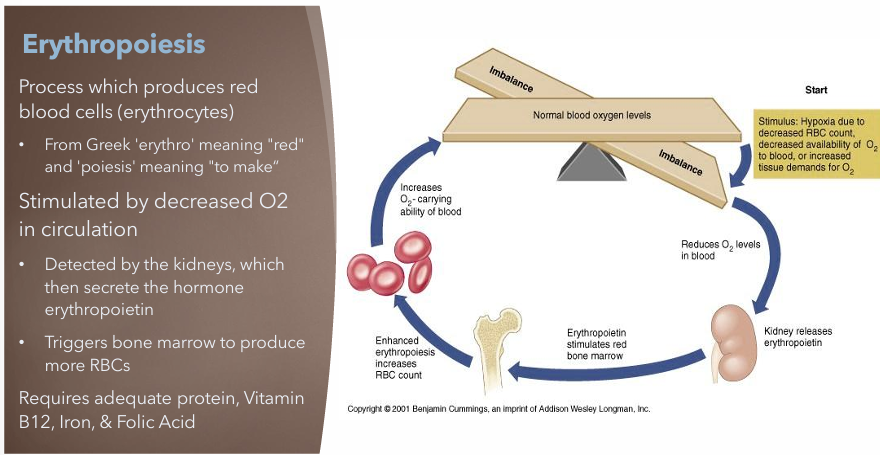
What is Erythropoiesis? What is it stimulated by? What adequate nutrition does it need?

Process which produces red blood cells (erythrocytes)

Stimulated by decreased O2 in circulation

  • Detected by the kidneys which then secrete the hormone erythropoietin

  • Triggers bone marrow to produce more RBCs

Requires adequate

  • Protein

  • Vitamin B12

  • Iron

  • Folic Acid

<p>Process which produces red blood cells (erythrocytes)</p><p>Stimulated by decreased O2 in circulation</p><ul><li><p><strong>Detected by the kidneys which then secrete the hormone erythropoietin</strong></p></li><li><p><strong>Triggers bone marrow to produce more RBCs</strong></p></li></ul><p>Requires adequate</p><ul><li><p><strong>Protein</strong></p></li><li><p><strong>Vitamin B12</strong></p></li><li><p><strong>Iron</strong></p></li><li><p><strong>Folic Acid</strong></p></li></ul><p></p>
14
New cards

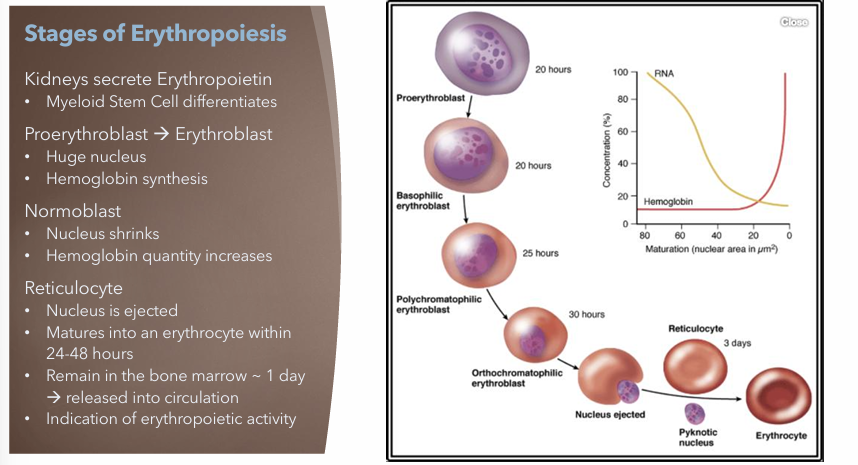
What are stages of Erythropoiesis?

  1. Kidneys secrete Erythropoietin

    1. Bone marrow stem cell → myeloid stem cell

  2. Proerythroblast → Erythroblast

    1. Huge nucleus

    2. Hemoglobin synthesis begins this phase

  3. Normoblast

    1. Nucleus shrinks

    2. Hemoglobin quantity increases

  4. Reticulocyte

    1. Nucleus ejected

    2. Erythrocyte within 24 - 48 hours

    3. Remain in bone marrow ~ 1 day → released into circulation

    4. Reticulocytes are indication of erythropoietic activity
<ol><li><p><strong>Kidneys secrete Erythropoietin</strong></p><ol><li><p>Bone marrow stem cell → myeloid stem cell</p></li></ol></li><li><p><strong>Proerythroblast → Erythroblast</strong></p><ol><li><p>Huge nucleus</p></li><li><p>Hemoglobin synthesis begins this phase</p></li></ol></li><li><p><strong>Normoblast</strong></p><ol><li><p>Nucleus shrinks</p></li><li><p>Hemoglobin quantity increases</p></li></ol></li><li><p><strong>Reticulocyte</strong></p><ol><li><p>Nucleus ejected</p></li><li><p>Erythrocyte within 24 - 48 hours</p></li><li><p>Remain in bone marrow ~ 1 day → released into circulation</p></li><li><p>Reticulocytes are indication of erythropoietic activity</p></li></ol></li></ol><p></p>
15
New cards

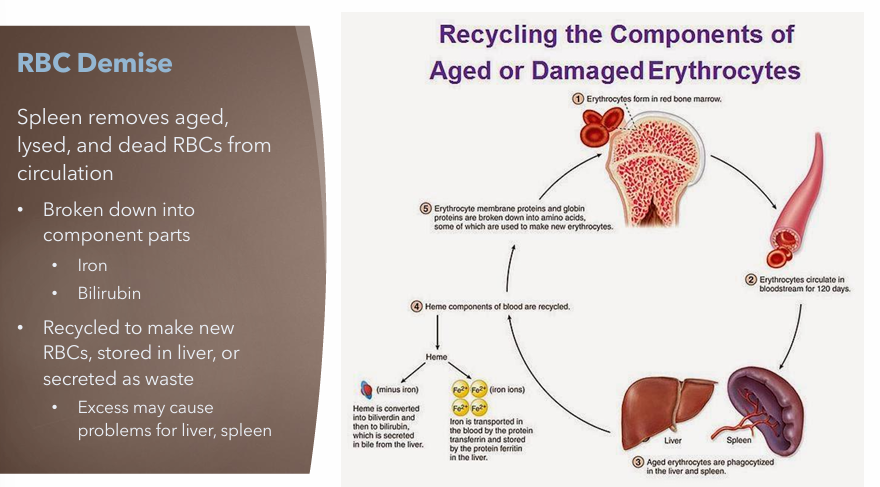
What organ recycles aged, lysed and dead RBCs? What is it broken down into? Where is it stored?

  • Spleen

  • Broken down into component parts

    • Iron

    • Bilirubin

  • Recycled to make new RBCs, stored in liver or secreted as waste

    • May cause problems for liver, spleen

<ul><li><p>Spleen</p></li><li><p>Broken down into component parts</p><ul><li><p>Iron</p></li><li><p>Bilirubin </p></li></ul></li><li><p>Recycled to make new RBCs, stored in liver or secreted as waste</p><ul><li><p>May cause problems for liver, spleen </p></li></ul></li></ul><p></p>
16
New cards

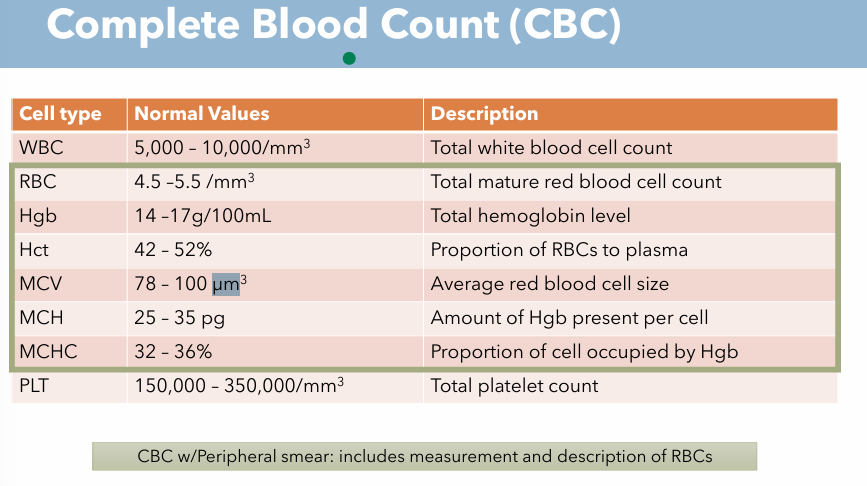
Complete Blood Count; Description & Normal Value for MCV

Description: Average red blood cell size

Normal Value: 78 - 100 µm³
<p>Description: <strong>Average red blood cell size</strong></p><p>Normal Value: <strong>78 - 100 µm³</strong></p>
17
New cards

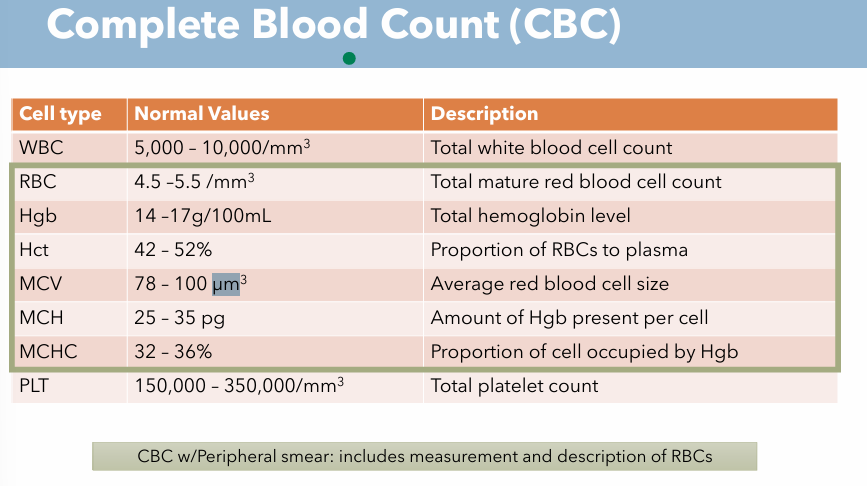
Complete Blood Count; Description & Normal Value for MCH

Description: Amount of Hgb present per cell

Normal value: 25 - 35 pg
<p>Description: <strong>Amount of Hgb present per cell</strong></p><p>Normal value: <strong>25 - 35 pg</strong></p>
18
New cards

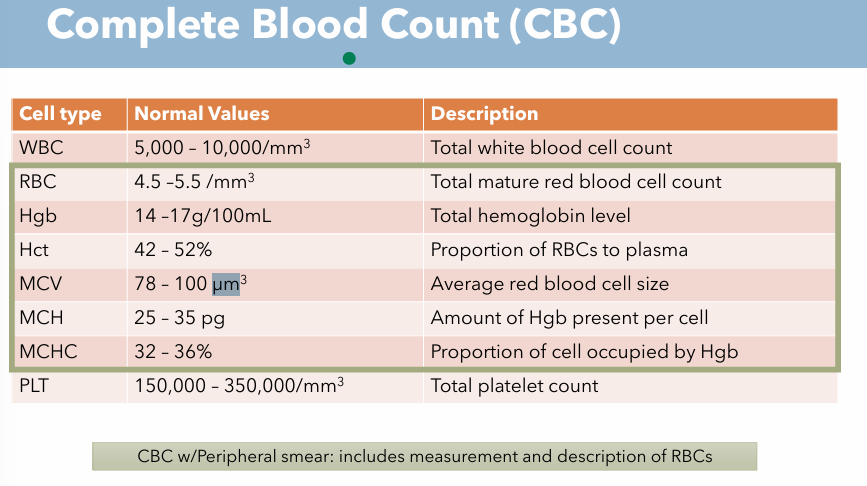
Complete Blood Count; Description & Normal Value for MCHC

Description: Proportion of cell occupied by Hgb

Normal value: 32 - 36 %
<p>Description: <strong>Proportion of cell occupied by Hgb</strong></p><p>Normal value: <strong>32 - 36 %</strong></p>
19
New cards

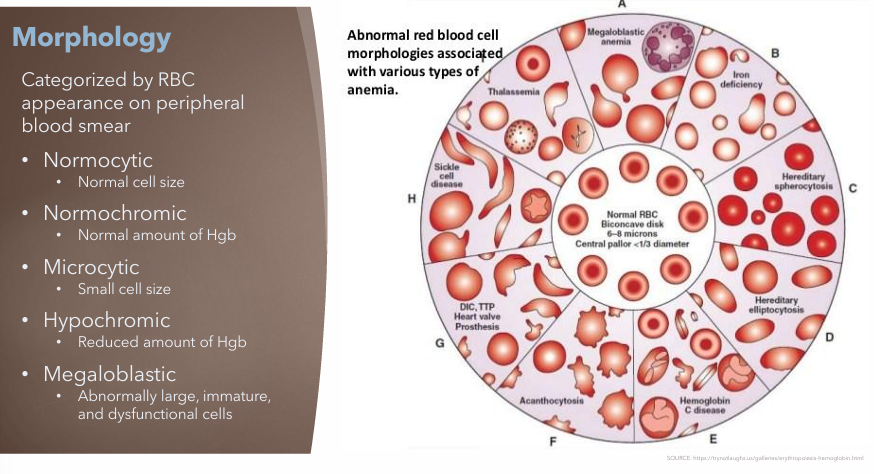
What is RBC morphology? What are the different categories?

Categorized RBC based on appearance on peripheral blood smear

  • Normocytic

  • Normochromic

  • Microcytic

  • Hypochromic

  • Megaloblastic

<p>Categorized RBC based on appearance on peripheral blood smear</p><ul><li><p><strong>Normocytic</strong></p></li><li><p><strong>Normochromic</strong></p></li><li><p><strong>Microcytic</strong></p></li><li><p><strong>Hypochromic</strong></p></li><li><p><strong>Megaloblastic</strong></p></li></ul><p></p>
20
New cards

Normocytic

Normal cell size

21
New cards

Normochromic

Normal amount of Hgb

22
New cards

Microcytic

Small cell size

23
New cards

Hypochromic

Reduced amount of Hgb

24
New cards

Megaloblastic

Abnormally large, immature and dysfunctional cells

25
New cards

What is Folic Acid (Folate) necessary for?

Necessary for RBC production

26
New cards

What is Vit B12 necessary for?

Necessary for RBC production

27
New cards

What is Iron needed for?

Needed for Hgb production

28
New cards

Review Question: Red blood cells differ from other cell types in the body because they

A. Contain cytoplasmic protein

B. Have no cytoplasmic organelles

C. Have a longer life span

D. Contain glycolytic enzymes

B. Have no cytoplasmic organelles

29
New cards

The primary source of erythropoietin is the

A. Bone marrow

B. Kidney

C. Lung

D. Liver

B. Kidney

30
New cards

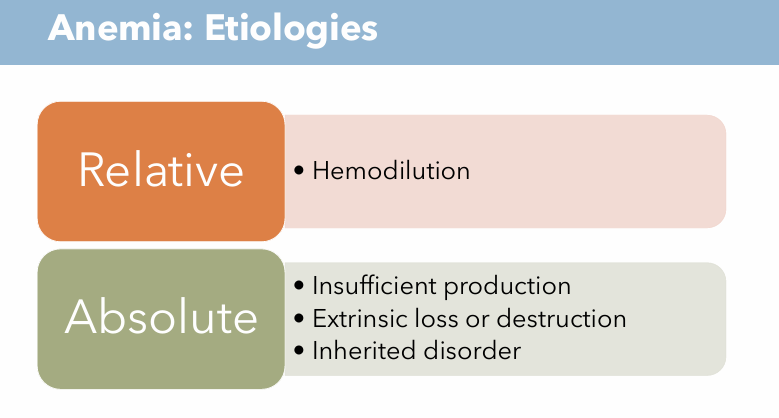
What are the Anemia Etiologies?

Relative Anemia

  • Hemodilution

    • concentration of RBCs low because plasma has increased, RBC count is normal, the plasma is just too much that it dilutes

Absolute Anemia

  • Insufficient production

    • bone marrow cannot produce enough RBCs to meet needs

  • Extrinsic loss of destruction

    • Trauma or surgery; bleeding out; RBCs destroyed faster than produced

  • Inherited disorder

    • Genetic mutation; abnormal hemoglobin or misshapen cells
<p><strong>Relative Anemia</strong></p><ul><li><p><mark data-color="purple" style="background-color: purple; color: inherit;">Hemodilution </mark></p><ul><li><p>concentration of RBCs low because plasma has increased, RBC count is normal, the plasma is just too much that it dilutes</p></li></ul></li></ul><p><strong>Absolute Anemia</strong></p><ul><li><p><mark data-color="purple" style="background-color: purple; color: inherit;">Insufficient production </mark></p><ul><li><p>bone marrow cannot produce enough RBCs to meet needs</p></li></ul></li><li><p><mark data-color="purple" style="background-color: purple; color: inherit;">Extrinsic loss of destruction</mark></p><ul><li><p>Trauma or surgery; bleeding out; RBCs destroyed faster than produced</p></li></ul></li><li><p><mark data-color="purple" style="background-color: purple; color: inherit;">Inherited disorder</mark></p><ul><li><p>Genetic mutation; abnormal hemoglobin or misshapen cells</p></li></ul></li></ul><p></p>
31
New cards

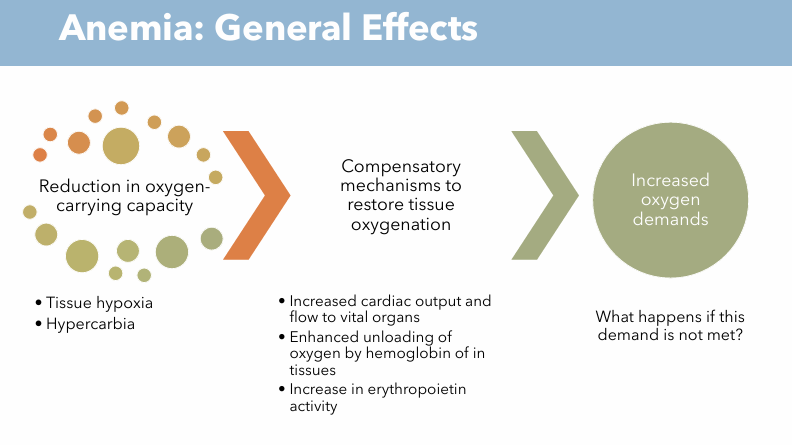
General effects (Clinical Implications) of Anemia

  • Reduction in oxygen carrying capacity

    • Tissue hypoxia (tissues don’t get enough oxygen)

    • Hypercarbia (elevated CO2 levels)

  • Compensatory mechanisms to restore tissue oxygenation

    • Increased cardiac output and flow to vital organs

    • Enhanced unloading of oxygen by hemoglobin in tissues

    • Increase in erythropoietin activity

  • Increased Oxygen demands

<ul><li><p><strong>Reduction in oxygen carrying capacity</strong></p><ul><li><p>Tissue hypoxia (tissues don’t get enough oxygen)</p></li><li><p>Hypercarbia (elevated CO2 levels)</p></li></ul></li><li><p><strong>Compensatory mechanisms to restore tissue oxygenation</strong></p><ul><li><p>Increased cardiac output and flow to vital organs</p></li><li><p>Enhanced unloading of oxygen by hemoglobin in tissues</p></li><li><p>Increase in erythropoietin activity</p></li></ul></li><li><p><strong>Increased Oxygen demands</strong></p></li></ul><p></p>
32
New cards

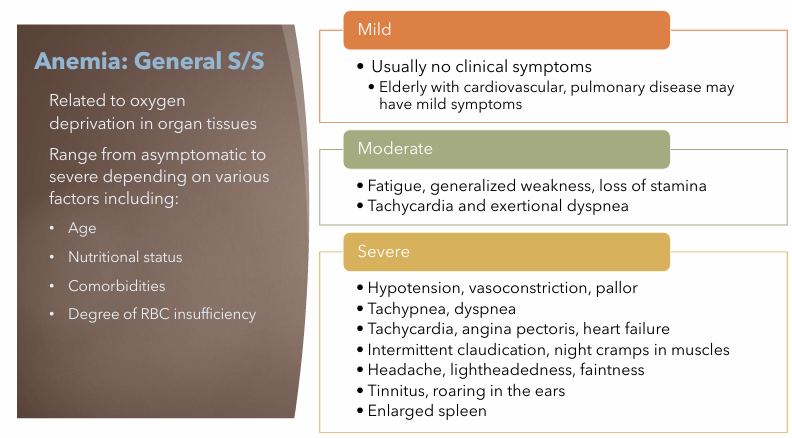
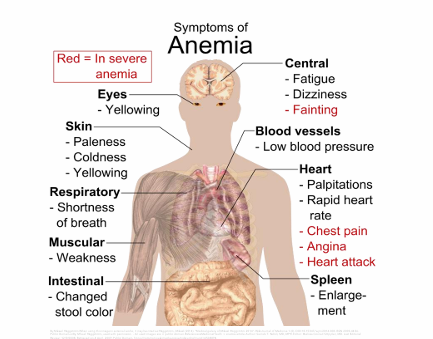
Anemia General S/S; Mild, Moderate, Severe

Mild

  • Usually no clinical symptoms

Moderate

  • Fatigue, generalized weakness, loss of stamina

  • Tachycardia and exertional dyspnea

Severe

  • Hypotension, vasoconstriction, pallor

  • Tachypnea, dyspnea

  • Tachycardia, angina pectoris, heart failure

  • Intermittent claudication, night cramps in muscles

  • Headache, lightheadedness, faintness

  • Tinnitus, roaring in the ears

  • Enlarged spleen

<p><strong>Mild</strong></p><ul><li><p>Usually no clinical symptoms</p></li></ul><p><strong>Moderate</strong></p><ul><li><p>Fatigue, generalized weakness, loss of stamina</p></li><li><p>Tachycardia and exertional dyspnea</p></li></ul><p><strong>Severe</strong></p><ul><li><p>Hypotension, vasoconstriction, pallor</p></li><li><p>Tachypnea, dyspnea</p></li><li><p>Tachycardia, angina pectoris, heart failure</p></li><li><p>Intermittent claudication, night cramps in muscles</p></li><li><p>Headache, lightheadedness, faintness</p></li><li><p>Tinnitus, roaring in the ears</p></li><li><p>Enlarged spleen</p></li></ul><p></p>
33
New cards

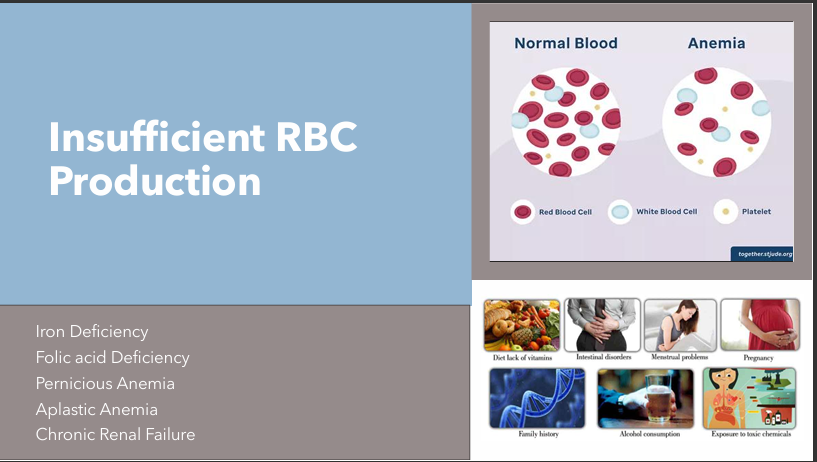
What CONDITIONS cause Insufficient RBC production?

  • Iron Deficiency Anemia

  • Folic acid Deficiency

  • Pernicious Anemia

  • Aplastic Anemia

  • Chronic Reneal Failure

<ul><li><p>Iron Deficiency Anemia</p></li><li><p>Folic acid Deficiency</p></li><li><p>Pernicious Anemia</p></li><li><p>Aplastic Anemia</p></li><li><p>Chronic Reneal Failure</p></li></ul><p></p>
34
New cards

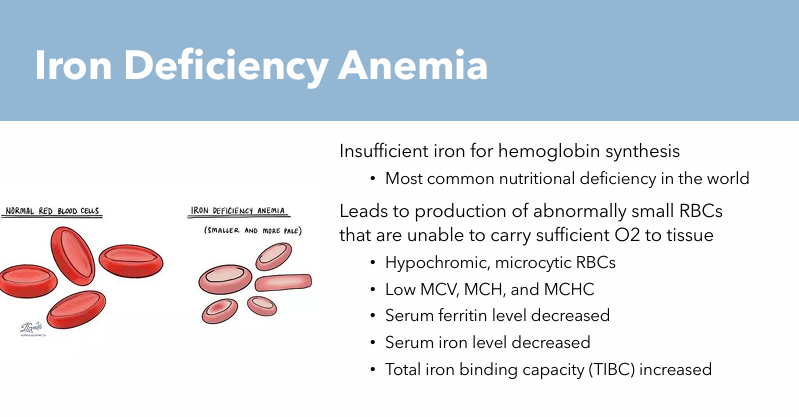
Iron Deficiency Anemia: Etiology

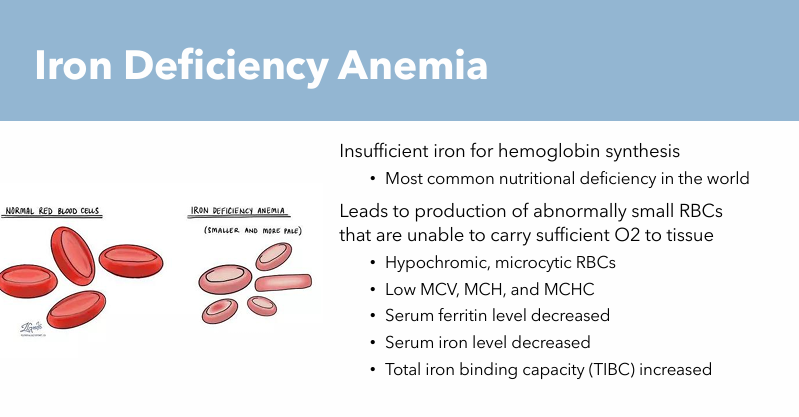
Insufficient iron for hemoglobin synthesis

  • Abnormally small RBCs unable to carry sufficient O2 to tissues
<p>Insufficient iron for hemoglobin synthesis</p><ul><li><p>Abnormally small RBCs unable to carry sufficient O2 to tissues</p></li></ul><p></p>
35
New cards

Iron Deficiency Anemia: Pathogenesis

Leads to production of abnormally small RBCs that are unable to carry sufficient O2 to tissue

  • Hypochromic RBCs

  • Microcytic RBCs

<p>Leads to production of abnormally small RBCs that are unable to carry sufficient O2 to tissue</p><ul><li><p>Hypochromic RBCs</p></li><li><p>Microcytic RBCs</p></li></ul><p></p>
36
New cards

Iron Deficiency Anemia: Risk Factors

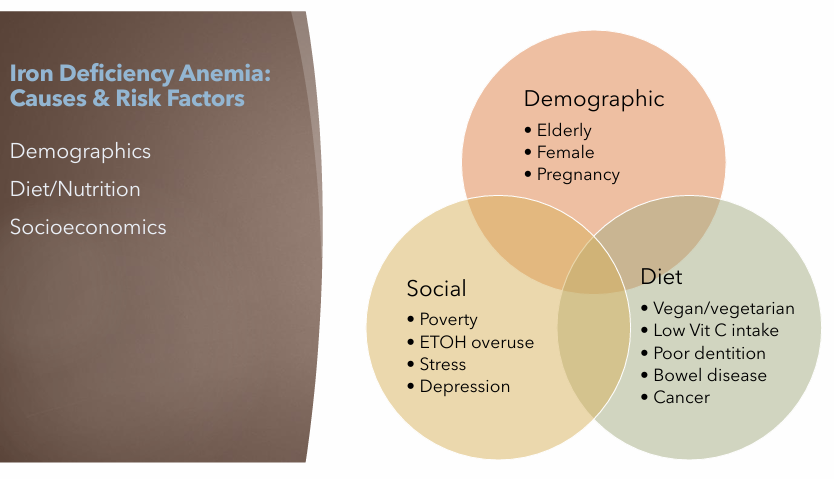
Demographic

  • Elderly

  • Female

  • Pregnancy

Diet

  • Vegan/vegetarian

  • Low Vit C

  • Poor dentition

  • Bowel disease

  • Cancer

Social

  • Poverty

  • ETOH overuse (Alcohol overuse)

  • Stress

  • Depression

<p><strong>Demographic</strong></p><ul><li><p>Elderly</p></li><li><p>Female</p></li><li><p>Pregnancy</p></li></ul><p><strong>Diet</strong></p><ul><li><p>Vegan/vegetarian</p></li><li><p>Low Vit C</p></li><li><p>Poor dentition</p></li><li><p>Bowel disease</p></li><li><p>Cancer</p></li></ul><p><strong>Social</strong></p><ul><li><p>Poverty</p></li><li><p>ETOH overuse (Alcohol overuse)</p></li><li><p>Stress</p></li><li><p>Depression</p></li></ul><p></p>
37
New cards

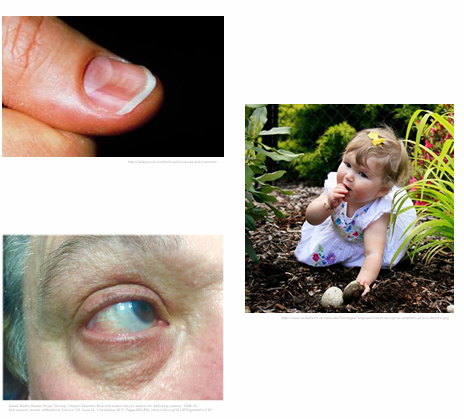
Iron Deficiency Anemia: Clinical Manifestations

  • General S/S of Anemia (gradual onset)

  • PICA (craving nonfood substances)

    • Dirt, clay, ice, laundry starch, cardboard, hair

  • Koilonychias (spoon shaped nails)

  • Blue sclerae (white part of eye appears blue)
<ul><li><p>General S/S of Anemia (gradual onset)</p></li><li><p>PICA (craving nonfood substances)</p><ul><li><p>Dirt, clay, ice, laundry starch, cardboard, hair</p></li></ul></li><li><p>Koilonychias (spoon shaped nails)</p></li><li><p>Blue sclerae (white part of eye appears blue)</p></li></ul><p></p>
38
New cards

Iron Deficiency Anemia: Treatments

Treat underlying cause

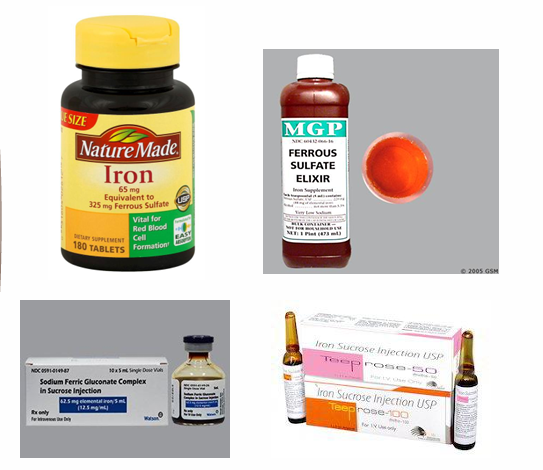
  • Iron (Fe) replacement

    • Iron supplement tablets

    • Ferrous Sulfate elixir

    • Iron Sucrose Injection

Foods that ENHANCE Iron absorption

  • Citrus fruits

  • Tomatoes

  • Chili peppers

Foods that IMPAIR iron Absorption

  • Tea

  • Cereal (if it contains phytates)

<p>Treat underlying cause</p><ul><li><p>Iron (Fe) replacement</p><ul><li><p>Iron supplement tablets</p></li><li><p>Ferrous Sulfate elixir</p></li><li><p>Iron Sucrose Injection</p></li></ul></li></ul><p>Foods that ENHANCE Iron absorption</p><ul><li><p>Citrus fruits</p></li><li><p>Tomatoes</p></li><li><p>Chili peppers</p></li></ul><p>Foods that IMPAIR iron Absorption</p><ul><li><p>Tea</p></li><li><p>Cereal (if it contains phytates)</p></li></ul><p></p>
39
New cards

Iron Deficiency Anemia: Nursing Considerations

Monitor for Fe replacement side effects

  • Nausea

  • Black stools

  • Teeth staining

  • Pain upon injection and can cause Orthostatic hypotension (IV forms)

Beware of Iron Toxicity

40
New cards

Folic Acid Deficiency Anemia: Etiology

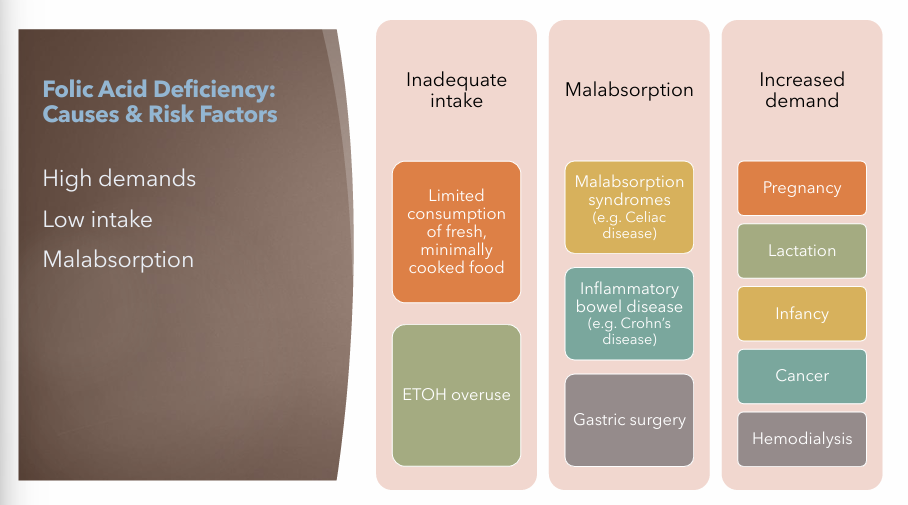
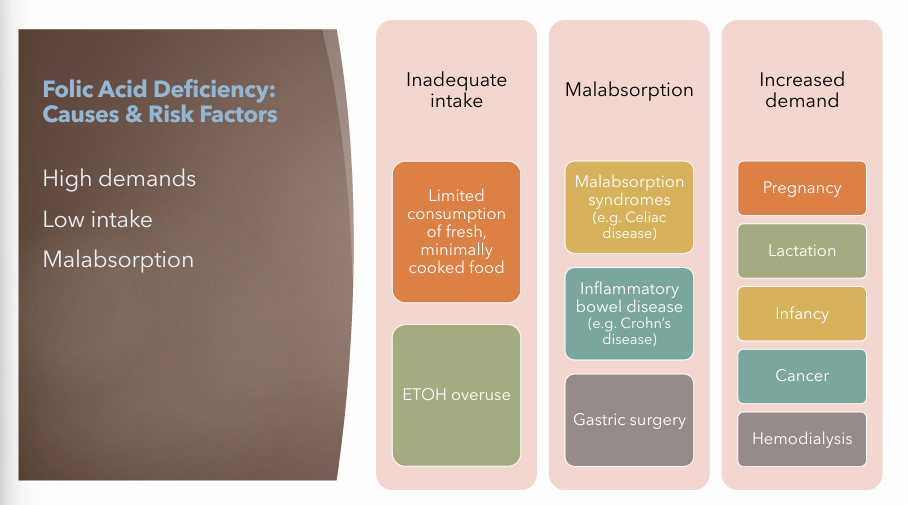
  • Inadequate Intake

    • Limited consumption of fresh, minimally cooked food

    • ETOH (alcohol) overuse

  • Malabsorption

    • Malabsorption syndrome (E.g. Celiac Disease)

    • Inflammatory bowel disease (E.g. Crohn’s Disease)

    • Gastric Surgery

  • Increased Demand

    • Pregnancy

    • Lactation

    • Infancy

    • Cancer

    • Hemodialysis

<ul><li><p><strong>Inadequate Intake</strong></p><ul><li><p>Limited consumption of fresh, minimally cooked food</p></li><li><p>ETOH (alcohol) overuse</p></li></ul></li><li><p><strong>Malabsorption</strong></p><ul><li><p>Malabsorption syndrome (E.g. Celiac Disease)</p></li><li><p>Inflammatory bowel disease (E.g. Crohn’s Disease)</p></li><li><p>Gastric Surgery</p></li></ul></li><li><p><strong>Increased Demand</strong></p><ul><li><p>Pregnancy</p></li><li><p>Lactation</p></li><li><p>Infancy</p></li><li><p>Cancer</p></li><li><p>Hemodialysis</p></li></ul></li></ul><p></p>
41
New cards

Folic Acid Deficiency Anemia: Pathogenesis

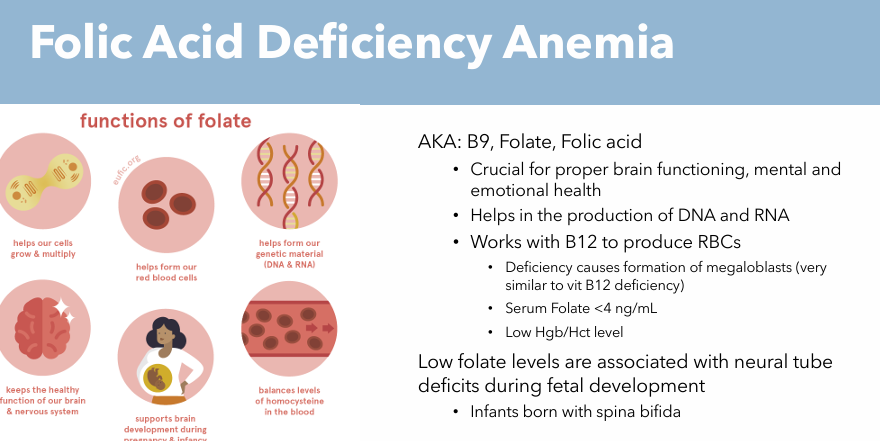
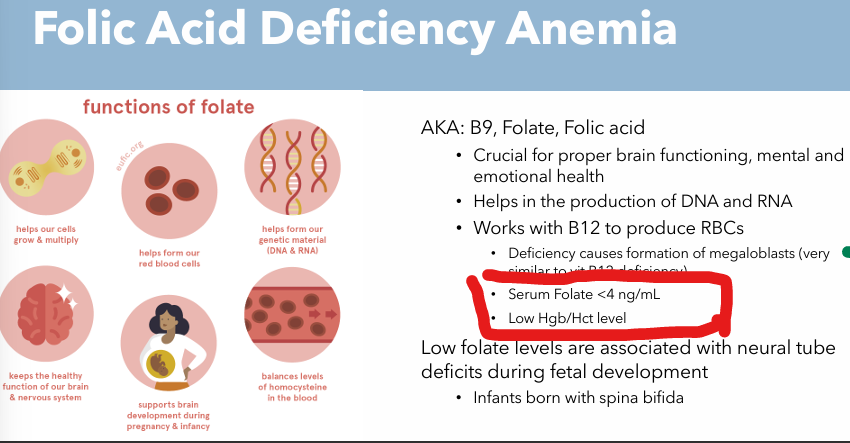
Deficiency causes formation of megaloblasts

  • Very similar to Vit B12 deficiency

<p>Deficiency causes formation of megaloblasts</p><ul><li><p>Very similar to Vit B12 deficiency</p></li></ul><p></p>
42
New cards

Folic Acid Deficiency Anemia: Risk Factors

  • Inadequate Intake

    • Limited consumption of fresh, minimally cooked food

    • ETOH (alcohol) overuse

  • Malabsorption

    • Malabsorption syndrome (E.g. Celiac Disease)

    • Inflammatory bowel disease (E.g. Crohn’s Disease)

    • Gastric Surgery

  • Increased Demand

    • Pregnancy

    • Lactation

    • Infancy

    • Cancer

    • Hemodialysis

<ul><li><p><strong>Inadequate Intake</strong></p><ul><li><p>Limited consumption of fresh, minimally cooked food</p></li><li><p>ETOH (alcohol) overuse</p></li></ul></li><li><p><strong>Malabsorption</strong></p><ul><li><p>Malabsorption syndrome (E.g. Celiac Disease)</p></li><li><p>Inflammatory bowel disease (E.g. Crohn’s Disease)</p></li><li><p>Gastric Surgery</p></li></ul></li><li><p><strong>Increased Demand</strong></p><ul><li><p>Pregnancy</p></li><li><p>Lactation</p></li><li><p>Infancy</p></li><li><p>Cancer</p></li><li><p>Hemodialysis</p></li></ul></li></ul><p></p>
43
New cards

Folic Acid Deficiency Anemia: Clinical Manifestations

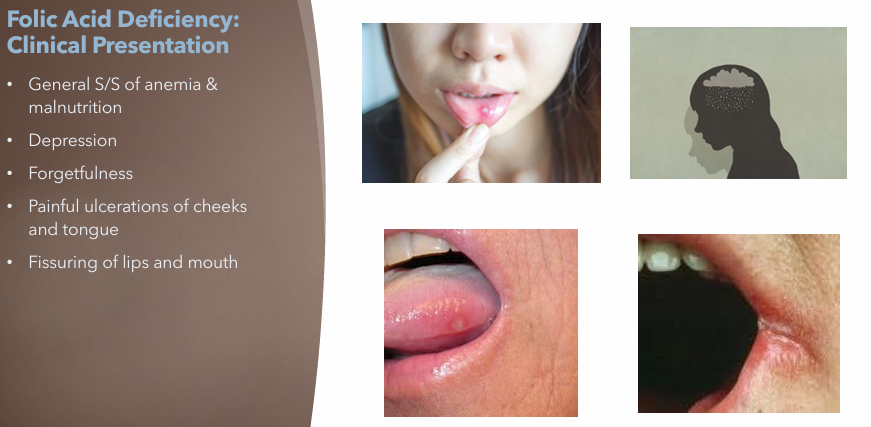
  • General S/S of Anemia

  • Malnutrition

  • Depression

  • Forgetfulness

  • Painful ulcerations of cheeks and tongue

  • Fissuring of lips and mouth

<ul><li><p>General S/S of Anemia</p></li><li><p>Malnutrition</p></li><li><p>Depression</p></li><li><p>Forgetfulness</p></li><li><p>Painful ulcerations of cheeks and tongue</p></li><li><p>Fissuring of lips and mouth</p></li></ul><p></p>
44
New cards

Folic Acid Deficiency Anemia: Treatments

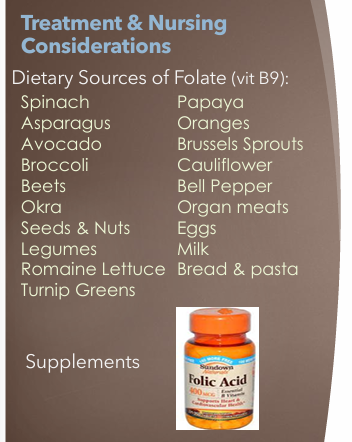
  • Folic Acid Supplements

  • Dietary Sources of Folate (Vit B9)

    • Spinach

    • Asparagus

    • Avocado

    • Broccoli

    • Eggs

    • Milk

    • Bread & Pasta

    • Etc….

<ul><li><p>Folic Acid Supplements</p></li><li><p>Dietary Sources of Folate (Vit B9)</p><ul><li><p>Spinach</p></li><li><p>Asparagus</p></li><li><p>Avocado</p></li><li><p>Broccoli</p></li><li><p>Eggs</p></li><li><p>Milk</p></li><li><p>Bread &amp; Pasta</p></li><li><p>Etc….</p></li></ul></li></ul><p></p>
45
New cards

Folic Acid Deficiency Anemia: Nursing Considerations

  • Associate low folate with neural tube deficits (spina bifida) in infants

46
New cards

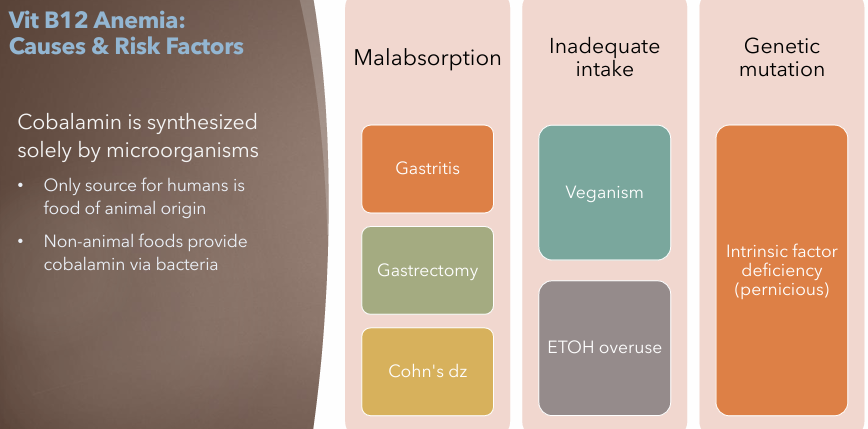
Vitamin B12 Anemia: Etiology

  • Inadequate intake

  • Malabsorption

  • Genetic Mutation

    • Intrinsic factor deficiency (pernicious)
<ul><li><p>Inadequate intake</p></li><li><p>Malabsorption</p></li><li><p>Genetic Mutation</p><ul><li><p>Intrinsic factor deficiency (pernicious)</p></li></ul></li></ul><p></p>
47
New cards

Vitamin B12 Anemia: Pathogenesis

  • Disruption in DNA synthesis of blast cells;

  • RBCs cannot be properly synthesized → Megaloblastic RBCs

    • Poor oxygen carrying capacity

48
New cards

Vitamin B12 Anemia: Risk Factors

Malabsorption

  • Gastritis

  • Gastrectomy

  • Crohn’s Disease

Inadequate Intake

  • Veganism

  • ETOH overuse

Genetic Mutation

  • Intrinsic factor deficiency (pernicious)

49
New cards

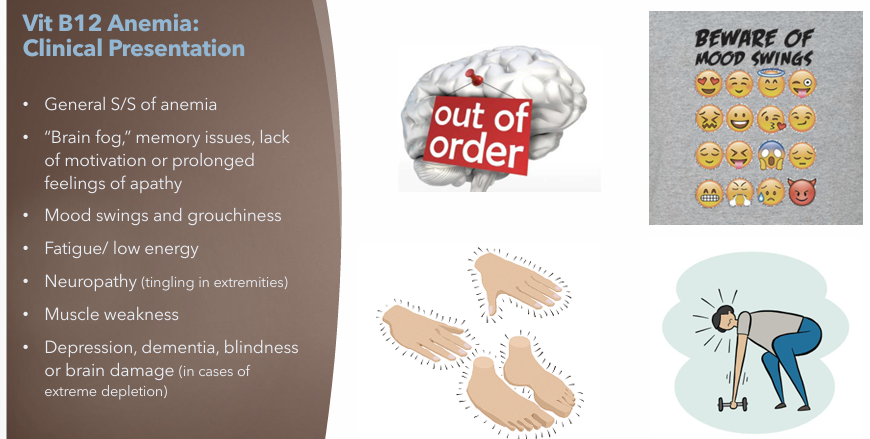
Vitamin B12 Anemia: Clinical Manifestations

  • General S/S of Anemia

  • Brain fog memory issues, lack of motivation or prolonged feelings of apathy

  • Mood swings and grouchiness

  • Fatigue, low energy

  • Neuropathy (tingling in extremities)

  • Muscle weakness

  • Depression, dementia, blindness, or brain damage
<ul><li><p>General S/S of Anemia</p></li><li><p>Brain fog memory issues, lack of motivation or prolonged feelings of apathy</p></li><li><p>Mood swings and grouchiness</p></li><li><p>Fatigue, low energy</p></li><li><p>Neuropathy (tingling in extremities)</p></li><li><p>Muscle weakness</p></li><li><p>Depression, dementia, blindness, or brain damage</p></li></ul><p></p>
50
New cards

Vitamin B12 Anemia: Treatments

  • Treat underlying cause

    • B12 Supplements or B12 Rich diet

  • Cyanocobalamin (Vitamin B12)

    • Usually administered via IM injection

    • Also available in PO and intranasal spray
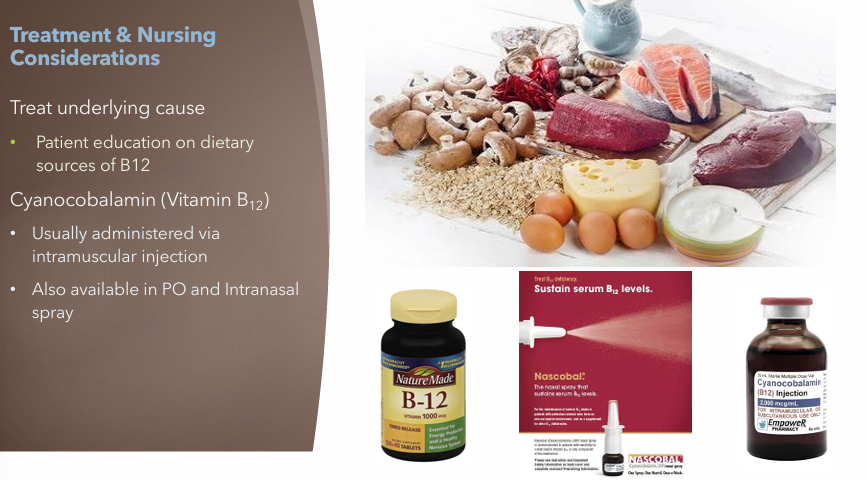
<ul><li><p>Treat underlying cause</p><ul><li><p>B12 Supplements or B12 Rich diet</p></li></ul></li><li><p>Cyanocobalamin (Vitamin B12)</p><ul><li><p>Usually administered via IM injection</p></li><li><p>Also available in PO and intranasal spray</p></li></ul></li></ul><p></p>
51
New cards

Vitamin B12 Anemia: Nursing Considerations

  • Patient education on dietary sources of B12

52
New cards

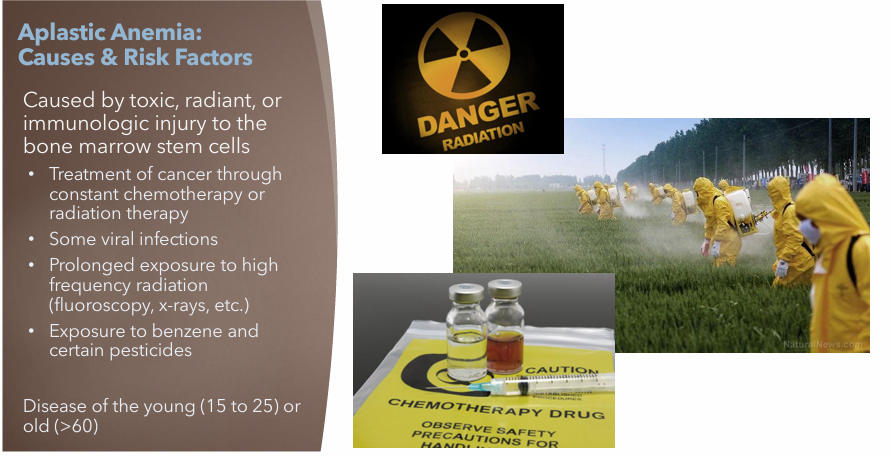
Aplastic Anemia: Etiology

Caused by toxic, radiant or immunologic injury to the bone marrow stem cells

  • Diagnosed via bone marrow biopsy

    • 10-15% of severe aplastic anemia cases evolve into myelodysplastic syndrome and leukemia
<p>Caused by toxic, radiant or immunologic injury to the bone marrow stem cells</p><ul><li><p>Diagnosed via bone marrow biopsy </p><ul><li><p>10-15% of severe aplastic anemia cases evolve into myelodysplastic syndrome and leukemia</p></li></ul></li></ul><p></p>
53
New cards

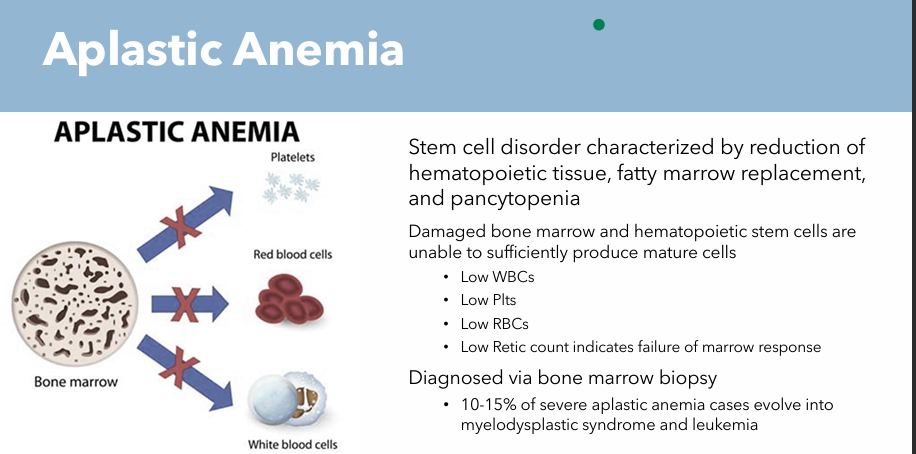
Aplastic Anemia: Pathogenesis

Stem cell disorder characterized by reduction of hematopoietic tissue, fatty marrow replacement and pancytopenia

  • Damaged bone marrow and hematopoietic stem cells are unable to sufficiently produce mature cells

    • Low WBCs

    • Low Plts

    • Low RBCs

    • Low Retic count (indicates failure of bone marrow response)
<p>Stem cell disorder characterized by reduction of hematopoietic tissue, fatty marrow replacement and pancytopenia</p><ul><li><p>Damaged bone marrow and hematopoietic stem cells are unable to sufficiently produce mature cells</p><ul><li><p>Low WBCs</p></li><li><p>Low Plts</p></li><li><p>Low RBCs</p></li><li><p>Low Retic count (indicates failure of bone marrow response)</p></li></ul></li></ul><p></p>
54
New cards

Aplastic Anemia: Clinical Manifestations

Onset of S/S may be abrupt or insidious

  • General S/S of anemia due to low RBCs

  • Additional S/S include those to low Plts (bleeding)

  • May also include S/S due to low WBCs

<p>Onset of S/S may be abrupt or insidious</p><ul><li><p>General S/S of anemia due to low RBCs</p></li><li><p>Additional S/S include those to low Plts (bleeding)</p></li><li><p>May also include S/S due to low WBCs</p></li></ul><p></p>
55
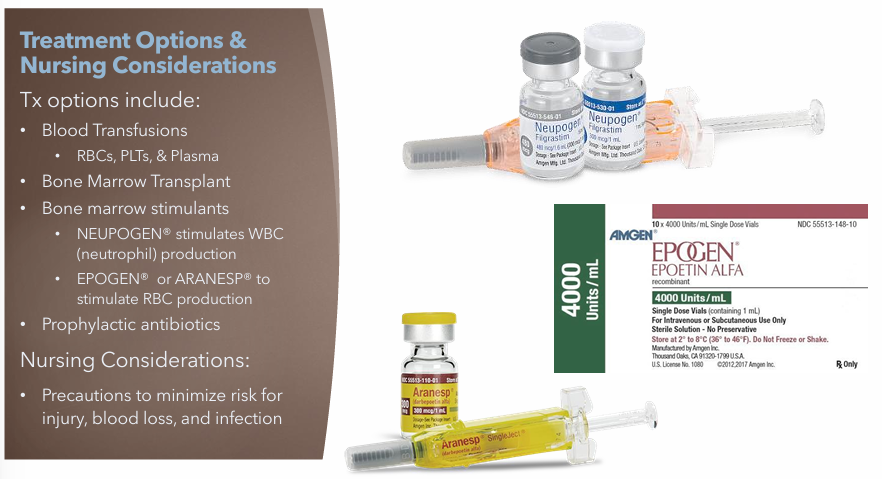
New cards

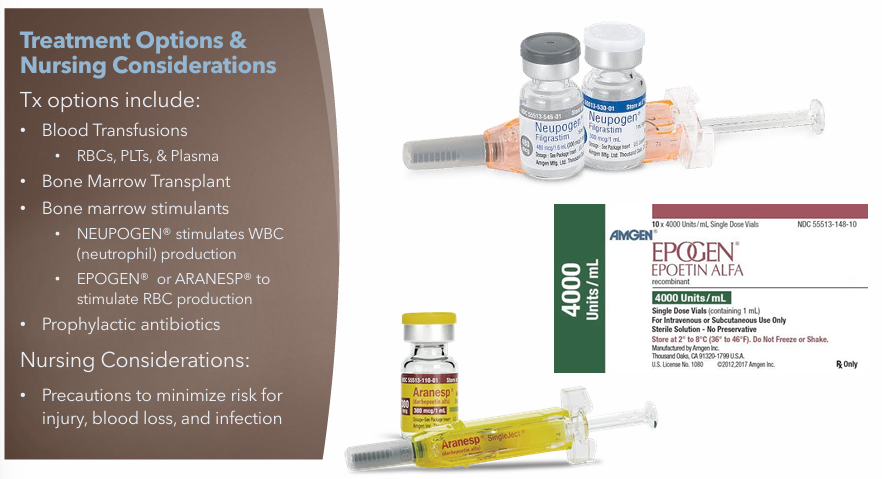
Aplastic Anemia: Treatments

  • Blood Transfusions

    • RBCs, PLTs, Plasma

  • Bone Marrow Transplants

  • Bone Marrow Stimulants

    • NEUPOGEN (Stimulates WBC production)

    • EPOGEN or ARANESP (Stimulates RBC production)

  • Prophylactic antibiotics

<ul><li><p>Blood Transfusions</p><ul><li><p>RBCs, PLTs, Plasma</p></li></ul></li><li><p>Bone Marrow Transplants</p></li><li><p>Bone Marrow Stimulants</p><ul><li><p>NEUPOGEN (Stimulates WBC production)</p></li><li><p>EPOGEN or ARANESP (Stimulates RBC production)</p></li></ul></li><li><p>Prophylactic antibiotics</p></li></ul><p></p>
56
New cards

Aplastic Anemia: Nursing Considerations

Precautions to minimize risk for injury, blood loss, and infection
<p>Precautions to minimize risk for injury, blood loss, and infection</p>
57
New cards

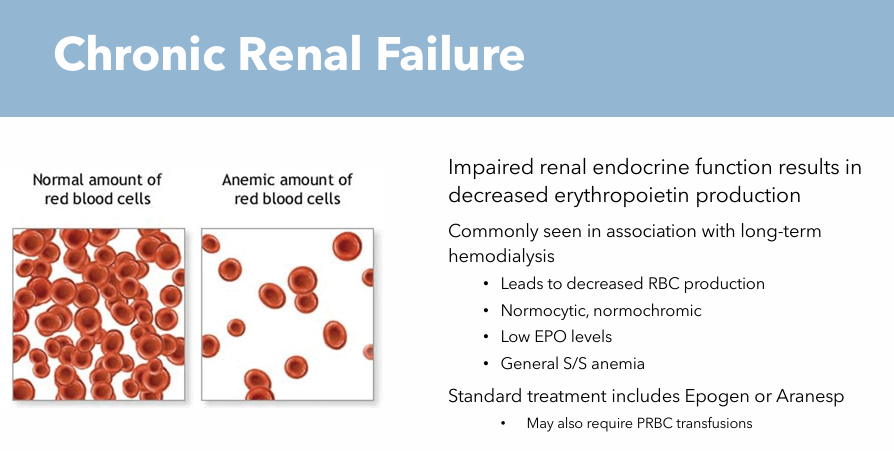
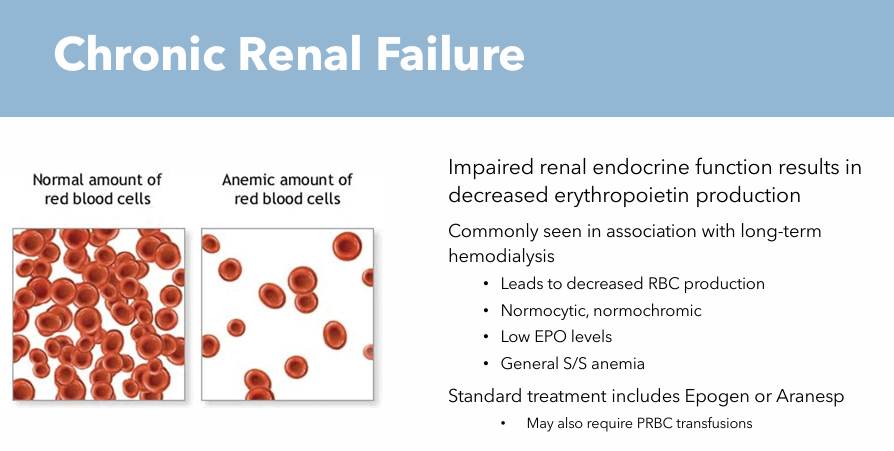
Chronic Renal Failure: Etiology

Impaired renal endocrine function
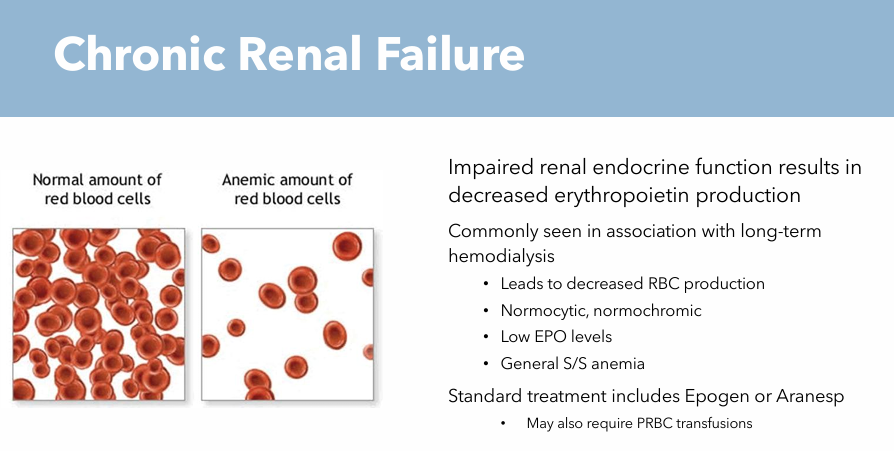
<p>Impaired renal endocrine function</p>
58
New cards

Chronic Renal Failure: Pathogenesis

Decreased erythropoietin production leads to decreased RBC production
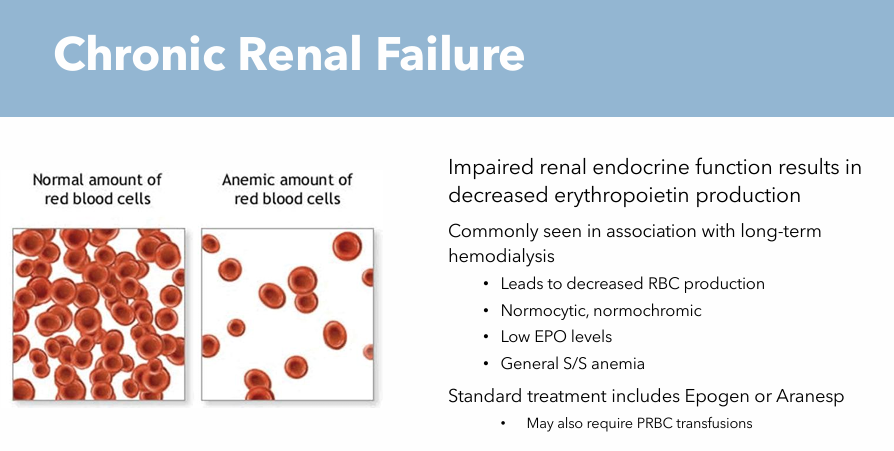
<p>Decreased erythropoietin production leads to decreased RBC production</p>
59
New cards

Chronic Renal Failure: Risk Factors

Long term hemodialysis
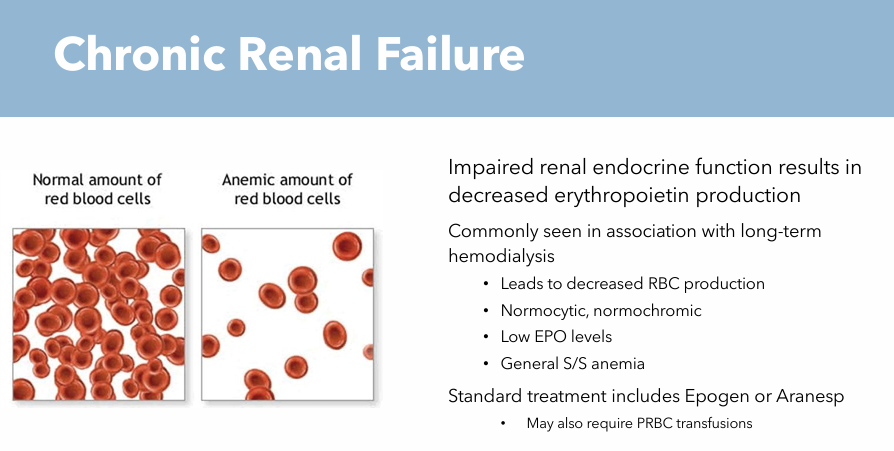
<p>Long term hemodialysis</p>
60
New cards

Chronic Renal Failure: Clinical Manifestations

  • General S/S of anemia

  • Normocytic

  • Normochromic cells

<ul><li><p>General S/S of anemia</p></li><li><p>Normocytic</p></li><li><p>Normochromic cells</p></li></ul><p></p>
61
New cards

Chronic Renal Failure: Treatments

  • Epogen

  • Aranesp

  • May also require PRBC transfusions

<ul><li><p>Epogen</p></li><li><p>Aranesp</p></li><li><p>May also require PRBC transfusions</p></li></ul><p></p>
62
New cards

Chronic Renal Failure: Nursing Considerations

Monitor and assess for signs of Renal Failure when long-term hemodialysis

63
New cards

Blood Work: Signs of Iron Deficiency Anemia

  • Hypochromic, Microcytic RBCs

  • Low MCV, MCH, and MCHC

  • Serum ferritin level decreased

  • Serum Iron level decreased

  • Total Iron binding capacity (TIBC) increased
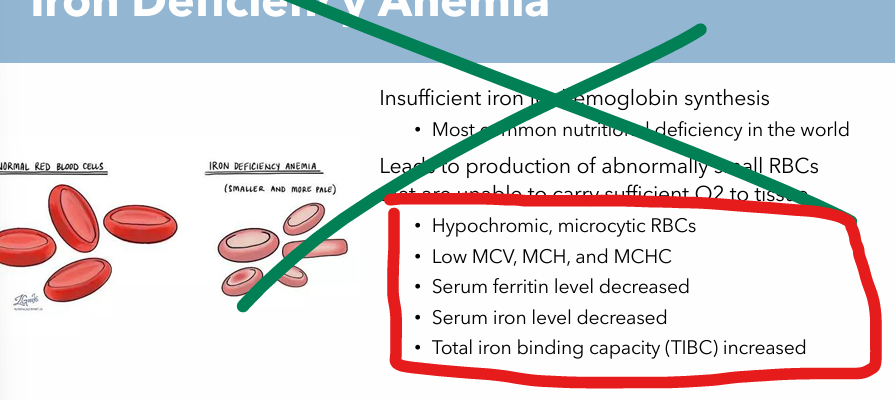
<ul><li><p>Hypochromic, Microcytic RBCs</p></li><li><p>Low MCV, MCH, and MCHC</p></li><li><p>Serum ferritin level decreased</p></li><li><p>Serum Iron level decreased</p></li><li><p>Total Iron binding capacity (TIBC) increased</p></li></ul><p></p>
64
New cards

Blood work: Sign of Vitamin B12 Anemia

  • Megaloblastic (enlarged, oval shaped)

  • Serum B12 decreased

  • Serum Folate decreased

65
New cards

Blood Work: Signs of Folic Acid Deficiency Anemia

  • Serum Folate <4 ng/mL

  • Low Hgb/Hct level

<ul><li><p>Serum Folate &lt;4 ng/mL</p></li><li><p>Low Hgb/Hct level</p></li></ul><p></p>
66
New cards

Blood Work: Signs of Aplastic Anemia

  • Low WBCs

  • Low Plts

  • Low RBCs

  • Low Retic count indicates failure of marrow response

67
New cards

Blood work: Sign of Chronic Renal Failure

  • Leads to decreased RBC production

  • Normocytic, Normochromic

  • Low EPO levels

  • General S/S Anemia

68
New cards

Extrinsic RBC loss/destruction conditions

  • Hemorrhagic Anemia

  • Hemolytic Anemia

69
New cards

Hemorrhagic Anemia Etiology (Acute & Chronic)

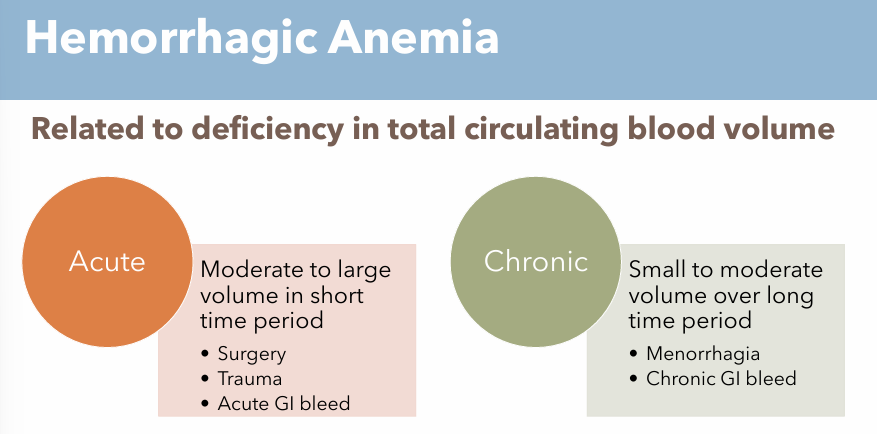
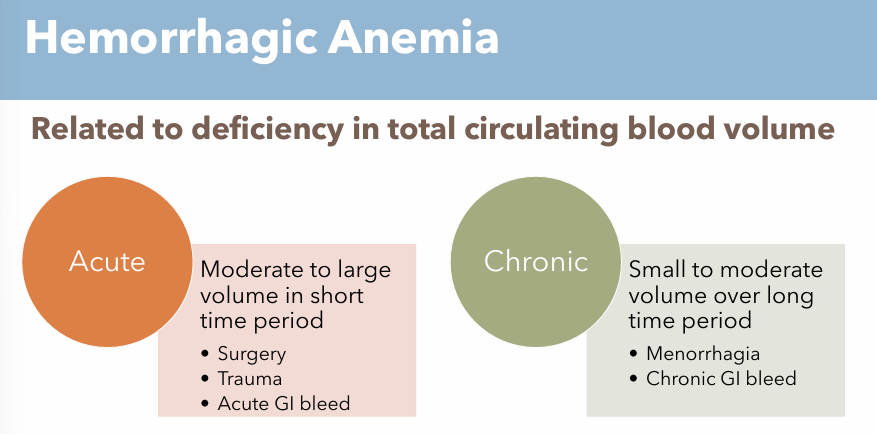
Acute

  • Moderate to large volume of total circulating blood loss in short time period

    • Surgery

    • Trauma

    • Acute GI bleed

Chronic

  • Small to moderate volume of total circulating blood loss over long time period

    • Menorrhagia

    • Chronic GI bleed

<p>Acute</p><ul><li><p><strong>Moderate to large volume of total circulating blood loss in short time period</strong></p><ul><li><p>Surgery</p></li><li><p>Trauma</p></li><li><p>Acute GI bleed</p></li></ul></li></ul><p>Chronic</p><ul><li><p><strong>Small to moderate volume of total circulating blood loss over long time period</strong></p><ul><li><p>Menorrhagia</p></li><li><p>Chronic GI bleed</p></li></ul></li></ul><p></p>
70
New cards

Hemorrhagic Anemia Pathogenesis (Acute & Chronic)

Deficiency in total circulating blood volume Acute or Chronic
<p>Deficiency in total circulating blood volume Acute or Chronic</p>
71
New cards

Hemorrhagic Anemia Risk Factors (Acute & Chronic)

Acute

  • Surgery

  • Trauma

  • Acute GI bleed

Chronic

  • Menorrhagia

  • Chronic GI bleed

<p></p><p>Acute</p><ul><li><p><strong>Surgery</strong></p></li><li><p><strong>Trauma</strong></p></li><li><p><strong>Acute GI bleed</strong></p></li></ul><p>Chronic</p><ul><li><p><strong>Menorrhagia</strong></p></li><li><p><strong>Chronic GI bleed</strong></p></li></ul><p></p>
72
New cards

Hemorrhagic Anemia Clinical Manifestations (Acute & Chronic)

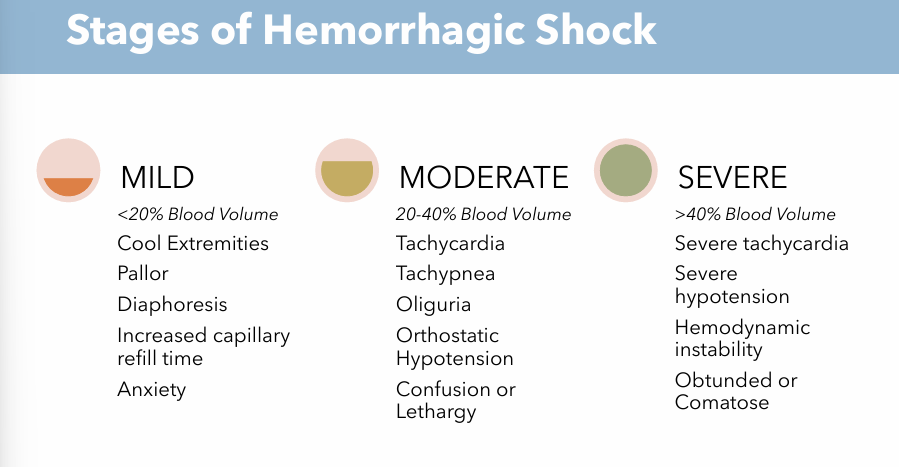
Stages of Hemorrhagic Shock

Mild: (<20% Blood Volume Loss)

  • Cool Extremities

  • Pallor

  • Diaphoresis

  • Increased capillary refill time

  • Anxiety

Moderate: (20-40% Blood Volume Loss)

  • Tachycardia

  • Tachypnea

  • Oliguria

  • Orthostatic Hypotension

  • Confusion or Lethargy

Severe: (>40% Blood Volume Loss)

  • Severe tachycardia

  • Severe hypotension

  • Hemodynamic instability

  • Obtunded or Comatose

<p>Stages of Hemorrhagic Shock</p><p><strong>Mild: (&lt;20% Blood Volume Loss)</strong></p><ul><li><p>Cool Extremities</p></li><li><p>Pallor</p></li><li><p>Diaphoresis</p></li><li><p>Increased capillary refill time</p></li><li><p>Anxiety</p></li></ul><p><strong>Moderate: (20-40% Blood Volume Loss)</strong></p><ul><li><p>Tachycardia</p></li><li><p>Tachypnea</p></li><li><p>Oliguria</p></li><li><p>Orthostatic Hypotension</p></li><li><p>Confusion or Lethargy</p></li></ul><p><strong>Severe: (&gt;40% Blood Volume Loss)</strong></p><ul><li><p>Severe tachycardia</p></li><li><p>Severe hypotension</p></li><li><p>Hemodynamic instability</p></li><li><p>Obtunded or Comatose</p></li></ul><p></p>
73
New cards

Hemorrhagic Anemia Treatments (Acute & Chronic)

  • Treat underlying cause

  • Transfusion of blood products

<ul><li><p>Treat underlying cause</p></li><li><p>Transfusion of blood products</p></li></ul><p></p>
74
New cards

Hemorrhagic Anemia Nursing Considerations (Acute & Chronic)

  • Monitor Closely for changes from baseline

  • Mental status changes can be early sign

  • Correlation between palpable pulses and systolic BP
<ul><li><p>Monitor Closely for changes from baseline</p></li><li><p><strong>Mental status changes can be early sign</strong></p></li><li><p>Correlation between palpable pulses and systolic BP</p></li></ul><p></p>
75
New cards

Hemolytic Anemia Etiology

Implanted Devices (Mechanical)

  • Mechanical heart valves

  • Cardiopulmonary bypass machines

Immune Response (Autoimmune response)

  • Transfusion reaction to incompatible blood type

  • Hemolytic disease of the Newborn

Hypersplenism (Organ Dysfunction)

  • Long term or excessive ETOH ingestion

  • SLE

  • RA

Substances (Chemical)

  • Snake venom

  • Hypotonic infusion

  • Chemicals (arsenic)

  • Heavy metals (lead)

  • Infection (malaria)

<p><strong>Implanted Devices (Mechanical)</strong></p><ul><li><p>Mechanical heart valves</p></li><li><p>Cardiopulmonary bypass machines</p></li></ul><p><strong>Immune Response (Autoimmune response)</strong></p><ul><li><p>Transfusion reaction to incompatible blood type</p></li><li><p>Hemolytic disease of the Newborn</p></li></ul><p><strong>Hypersplenism (Organ Dysfunction)</strong></p><ul><li><p>Long term or excessive ETOH ingestion</p></li><li><p>SLE</p></li><li><p>RA</p></li></ul><p><strong>Substances (Chemical)</strong></p><ul><li><p>Snake venom</p></li><li><p>Hypotonic infusion</p></li><li><p>Chemicals (arsenic)</p></li><li><p>Heavy metals (lead)</p></li><li><p>Infection (malaria)</p></li></ul><p></p>
76
New cards

Hemolytic Anemia Pathogenesis

RBCs are destroyed faster than they are replaced
<p>RBCs are destroyed faster than they are replaced</p>
77
New cards

Hemolytic Anemia Risk Factors

Malaria infection

Transfusion reactions

Hypersplenism (SLE, RA)

Mechanical Heart Valves

Cardiopulmonary bypass machines
<p>Malaria infection</p><p>Transfusion reactions</p><p>Hypersplenism (SLE, RA)</p><p>Mechanical Heart Valves</p><p>Cardiopulmonary bypass machines</p>
78
New cards

Hemolytic Anemia Clinical Manifestations

S/S vary mild or severe

  • Dark or bloody urine

  • Jaundice

  • Splenomegaly

<p>S/S vary mild or severe</p><ul><li><p>Dark or bloody urine</p></li><li><p>Jaundice</p></li><li><p>Splenomegaly</p></li></ul><p></p>
79
New cards

Hemolytic Anemia Treatment

  • Treat underlying cause

  • Transfusion of blood products only when critically necessary
<ul><li><p>Treat underlying cause</p></li><li><p>Transfusion of blood products only when critically necessary</p></li></ul><p></p>
80
New cards

Blood Work: Signs of Hemorrhagic Anemia

  • Low RBC level

  • Normocytic, Normochromic

  • Low Hgb/Hct levels

<ul><li><p>Low RBC level</p></li><li><p>Normocytic, Normochromic</p></li><li><p>Low Hgb/Hct levels</p></li></ul><p></p>
81
New cards

Blood work: Signs of Hemolytic Anemia

  • Low RBC level

  • Low Hgb/Hct levels

  • Elevated Reticulocyte count

82
New cards

What are the inherited blood anemia disorders?

Sickle Cell Anemia

Thalassemia
<p>Sickle Cell Anemia</p><p>Thalassemia </p>
83
New cards

Sickle Cell Anemia: Etiology

Inherited genetic mutation

  • African American, Arab, Asian descent

<p>Inherited genetic mutation</p><ul><li><p>African American, Arab, Asian descent</p></li></ul><p></p>
84
New cards

Sickle Cell Anemia: Pathogenesis

Abnormal HGB (hemoglobin) production resulting in decreased O2 carrying capacity

Misshaped RBCs leading to increased RBC hemolysis (destruction)

  • Dysmorphic

<p>Abnormal HGB (hemoglobin) production resulting in decreased O2 carrying capacity</p><p>Misshaped RBCs leading to increased RBC hemolysis (destruction)</p><ul><li><p>Dysmorphic</p></li></ul><p></p>
85
New cards

Sickle Cell Anemia: Risk Factors

  • Genetics, family hx

  • Ancestry

<ul><li><p>Genetics, family hx</p></li><li><p>Ancestry</p></li></ul><p></p>
86
New cards

Sickle Cell Anemia: Clinical Manifestations

  • May be asymptomatic

  • General S/S anemia

  • Jaundice

  • Pain episodes (mild to severe)

  • Splenomegaly

  • Stunted growth

<ul><li><p>May be asymptomatic</p></li><li><p>General S/S anemia</p></li><li><p>Jaundice</p></li><li><p>Pain episodes (mild to severe)</p></li><li><p>Splenomegaly</p></li><li><p>Stunted growth</p></li></ul><p></p>
87
New cards

Sickle Cell Anemia: Treatment

Rx to prevent RBC sickling

  • Voxelotor

  • Hydroxyurea

Folic Acid Supplement

Reduce Risk for exacerbation (SCC)

  • Vaccinations

Allogenic Bone Marrow Transplant

Gene Therapy (limited availability)
<p>Rx to prevent RBC sickling</p><ul><li><p>Voxelotor</p></li><li><p>Hydroxyurea</p></li></ul><p>Folic Acid Supplement</p><p>Reduce Risk for exacerbation (SCC)</p><ul><li><p>Vaccinations</p></li></ul><p>Allogenic Bone Marrow Transplant</p><p>Gene Therapy (limited availability)</p><p></p>
88
New cards

Sickle Cell Anemia: Nursing Consideration

SCD Crisis Management

  • Identify and treat cause

  • Pain management

  • Supplemental O2

  • Blood transfusions

  • Hydration

<p>SCD Crisis Management</p><ul><li><p>Identify and treat cause</p></li><li><p>Pain management</p></li><li><p>Supplemental O2</p></li><li><p>Blood transfusions</p></li><li><p>Hydration</p></li></ul><p></p>
89
New cards

What is polycythemia? What are the two types of conditions?

Excess production of blood cells

  • Polycythemia vera (Primary)

  • Induced Polycythemia (Secondary)

<p>Excess production of blood cells</p><ul><li><p>Polycythemia vera (Primary)</p></li><li><p>Induced Polycythemia (Secondary)</p></li></ul><p></p>
90
New cards

Polycythemia Vera: Etiology

Idiopathic genetic mutation
<p>Idiopathic genetic mutation</p>
91
New cards

Polycythemia Vera: Pathogenesis

Genetic mutation of bone marrow stem cells causes overproduction of RBCs, WBCs, and PLTs
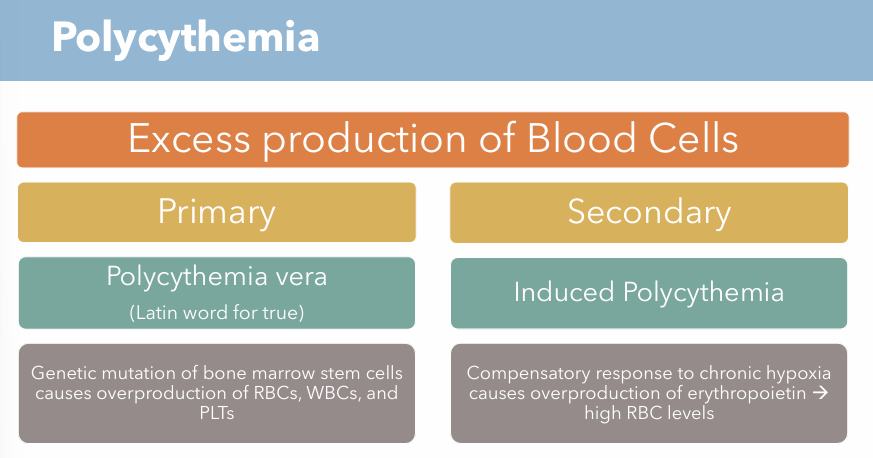
<p>Genetic mutation of bone marrow stem cells causes overproduction of RBCs, WBCs, and PLTs</p>
92
New cards

Polycythemia Vera: Risk Factors

  • Viruses

  • Autoimmune

<ul><li><p>Viruses</p></li><li><p>Autoimmune</p></li></ul><p></p>
93
New cards

Polycythemia Vera: Clinical Manifestations

Usually insidious onset of S/S

  • Pruritus

  • HA

  • Weakness

  • Fatigue

  • Dyspnea

  • Dizziness

  • Visual disturbances

  • Weight loss

  • Enlarged spleen

  • Abdominal discomfort

  • Erythromelalgia

    • Increased PLT aggregation → tiny blood clots in extremities vessels
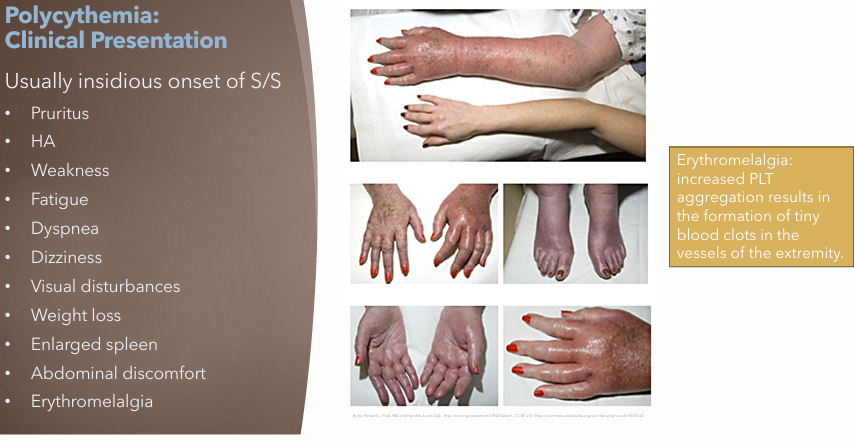
<p>Usually insidious onset of S/S</p><ul><li><p>Pruritus</p></li><li><p>HA</p></li><li><p>Weakness</p></li><li><p>Fatigue</p></li><li><p>Dyspnea</p></li><li><p>Dizziness</p></li><li><p>Visual disturbances</p></li><li><p>Weight loss</p></li><li><p>Enlarged spleen</p></li><li><p>Abdominal discomfort</p></li><li><p>Erythromelalgia</p><ul><li><p>Increased PLT aggregation → tiny blood clots in extremities vessels</p></li></ul></li></ul><p></p>
94
New cards

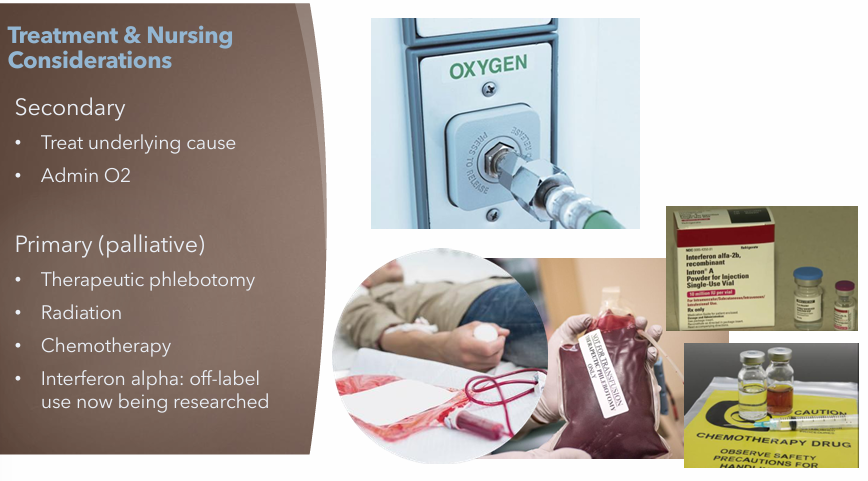
Polycythemia Vera: Treatment & Nursing Considerations

  • Therapeutic phlebotomy

  • Radiation

  • Chemotherapy

  • Interferon alpha: off label use now being researched
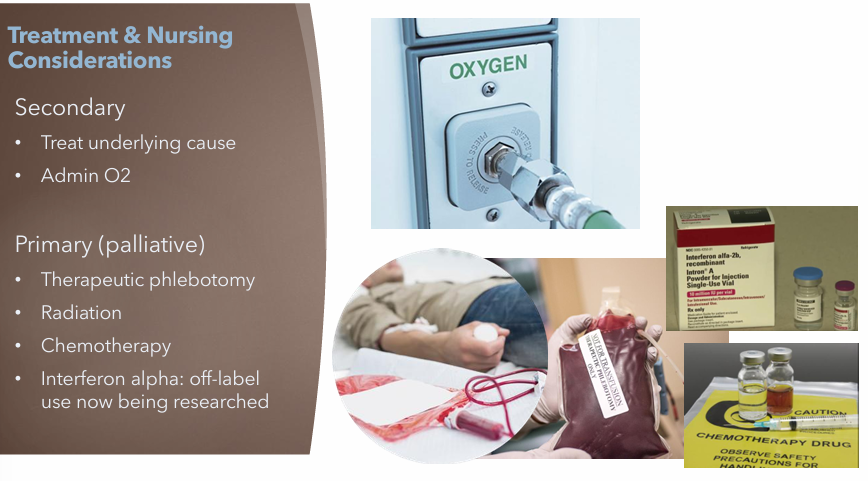
<ul><li><p>Therapeutic phlebotomy</p></li><li><p>Radiation</p></li><li><p>Chemotherapy</p></li><li><p>Interferon alpha: off label use now being researched</p></li></ul><p></p>
95
New cards

Secondary Polycythemia: Etiology

Chronic hypoxia
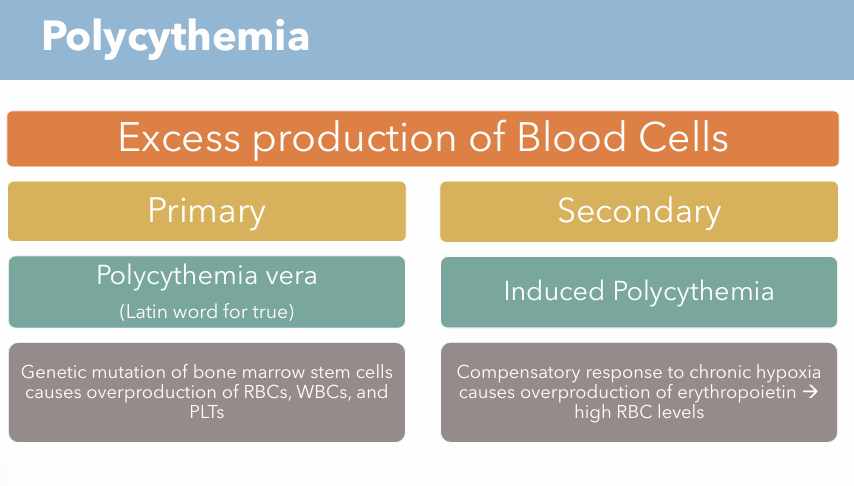
<p>Chronic hypoxia</p>
96
New cards

Secondary Polycythemia: Pathogenesis

Compensatory response to chronic hypoxia causes overproduction of erythropoietin → high RBC levels
<p>Compensatory response to chronic hypoxia causes overproduction of erythropoietin → high RBC levels</p>
97
New cards

Secondary Polycythemia: Risk Factors

  • High altitude

  • Lung Disease (COPD, ILD)

  • Renal tumors

  • Heart failure

<ul><li><p>High altitude</p></li><li><p>Lung Disease (COPD, ILD)</p></li><li><p>Renal tumors</p></li><li><p>Heart failure</p></li></ul><p></p>
98
New cards

Secondary Polycythemia: Clinical Manifestations

Usually insidious onset of S/S

  • Pruritus

  • HA

  • Weakness

  • Fatigue

  • Dyspnea

  • Dizziness

  • Visual disturbances

  • Weight loss

  • Enlarged spleen

  • Abdominal discomfort

  • Erythromelalgia

    • Increased PLT aggregation → tiny blood clots in extremities vessels
<p>Usually insidious onset of S/S</p><ul><li><p>Pruritus</p></li><li><p>HA</p></li><li><p>Weakness</p></li><li><p>Fatigue</p></li><li><p>Dyspnea</p></li><li><p>Dizziness</p></li><li><p>Visual disturbances</p></li><li><p>Weight loss</p></li><li><p>Enlarged spleen</p></li><li><p>Abdominal discomfort</p></li><li><p>Erythromelalgia</p><ul><li><p>Increased PLT aggregation → tiny blood clots in extremities vessels</p></li></ul></li></ul><p></p>
99
New cards

Secondary Polycythemia: Treatment & Nursing Considerations

  • Treat underlying cause

  • Admin O2

<ul><li><p>Treat underlying cause</p></li><li><p>Admin O2</p></li></ul><p></p>
100
New cards

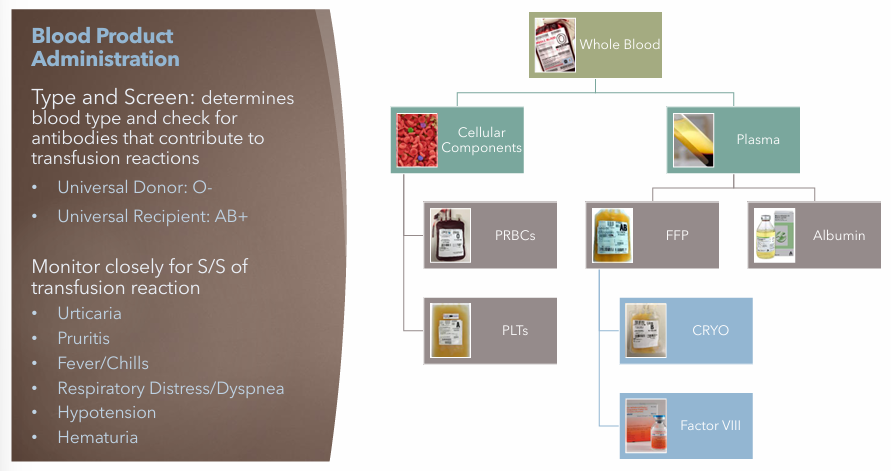
Blood Product Administration S/S

Monitor closely for S/S of transfusion reaction

  • Urticaria

  • Pruritis

  • Fever/Chills

  • Respiratory Disease/Dyspnea

  • Hypotension

  • Hematuria

<p>Monitor closely for S/S of transfusion reaction</p><ul><li><p>Urticaria</p></li><li><p>Pruritis</p></li><li><p>Fever/Chills</p></li><li><p>Respiratory Disease/Dyspnea</p></li><li><p>Hypotension</p></li><li><p>Hematuria</p></li></ul><p></p>