Marketing Principles Quiz #3
 Call Kai
 Learn
Learn Practice Test
 Spaced Repetition
 Match
Match Flashcards
 Knowt Play
1/42

There's no tags or description
Looks like no tags are added yet.
Name | Mastery | Learn | Test | Matching | Spaced | Call with Kai |
|---|
No analytics yet
Send a link to your students to track their progress
43 Terms
Product Life Cycle
The product life cycle explains how products go through four distinct stages from ‘birth’ to ‘death’- going through introduction, growth, maturity and decline
It is a useful way to explain how the market’s response to the product and marketing activities changes over the life of a product
Your marketing strategies will evolve as your product goes through the life cycle
PLC Stages
Introduction
Growth
Maturity
Decline
Introduction
Get first-time users to use the product
Product- Offer a single product
Price- Either high to recover R&D costs or low price to attract large number of buyers)
Place- Selective distribution
Promotion- Build awareness, inform and induce trial & adoption
Growth
Encourage brand loyalty
Product- Offer product variations, models to increase market share
Price- Possibly price to penetrate (drop price)- due to increasing competition, particularly if initially charged higher prices.
Place- Build expand distribution of product
Promotion- heavy advertising to counter competition…reminding consumers of your brand and benefits, encouraging loyalty (& continue to educate consumers)
Maturity
Attract new users
Product- Improvements and modifications; new features or new varieties (reposition for new segments or introduce new features)
Price- Price to maintain market share
Place- Build even more intensive distribution (availability is crucial in a competitive market)
Promotion- Stress brand benefits to encourage switching/reminder advertising
Decline
Profitability and keeping or discontinuing product
Product- Phase out weak brands/lines; fewer variations or discontinue product altogether if unprofitable or draining resources and preventing new product development
Price- reduce price if product can remain profitable
Place- Phase out unprofitable outlets
Promotion- Reduce to minimal level, if at all to reduce costs; used just to maintain profitability
Brand Names
The brand name is probably the most recognizable and most used form of branding
Brand names can position a product by conveying a certain image or personality
Brand names can also position a product by describing how the product works or benefits provided
Trademark
A trademark is the legal term for a brand name, a brand mark (specific visual characteristics of the brand; e.g. colors, logo, visuals) or trade character.)
Legally registered by the government and obtain protection for exclusive use in a particular country
Characteristics of Successful Brands
Excel at delivering benefits consumers truly desire
Stay relevant
Pricing strategy based on consumers’ perception of value
Brand is positioned properly
Consistent
Managers understand what brand means to consumers
Brand is supported and sustained long term
Brand Equity
The value of a brand to an organization
How much more a consumer is willing to pay to buy your branded product vs. a generic/unbranded product of the same category
Brand equity means a brand enjoys customer loyalty because consumers believe it is superior to the competition
Brand equity is derived from consumers’ positive feelings and connection to a brand; brand must be distinctive in ways relevant to the consumer
Brand equity gives firms a competitive advantage through
Allowing them to set higher prices than the competition with higher profit margins
Gaining a larger share of the market
Allows for brand extensions
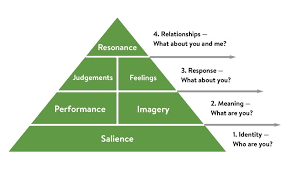
The Brand Equity Pyramid
According to K.L. Keller’s model, building a strong brand involves 4 steps (multiple building blocks):
Establishing proper brand identity- establishing brand awareness
Creating brand meaning through strong + unique + positive brand associations- i.e. establish an image they will associate with the brand/ what brand represents in their minds
Eliciting positive brand responses – how consumers respond to the brand
Forging an active relationship with consumers- intense loyalty
Brand Meaning
The beliefs and associations consumers have about a brand
Brand Management
Managing meaning
Individual Brand
Branding strategy using a unique/separate brand for each product item
can do a good job of clearly communicating the attributes and benefits the consumer can expect from the particular product (e.g. Surf, Gu, Pringles)
Think Unilever- using an individual brand strategy allows them to market all the brands they own to different consumer bases, with different images, price points etc.
Family Brands
A brand that a group of individual products or individual brands share
Leverage the strength of an established brand and its brand equity to introduce new products
Family/umbrella branding is useful since the attributes, credibility and meanings associated with the established brand can be transferred to the new product. E.g. Samsung, Kraft
Note- Must ensure same quality & reliability in order to prevent any damage to the family brand and its various products
Sub-brand
Creating a secondary brand within the main brand that can help differentiate a product line to a desired target group
Think of it as a hybrid between family brand and individual brand strategies
National/Manufacturer Brand
Brands that a products’ manufacturer owns and sells (Lays, BMW, Heinz)
Private Label/Store Brand
Also Own-Brand
Brands that a certain retailer or distributor owns and sells (Trader Joe’s, M&S, Kylie) – manufactured for a company as opposed to manufacturing product themselves
Retailers (particularly big ones) have control over which brands they stock and sell. They make more profit selling their own label products than stocking manufacturer or national brands
They have an advantage of creating unique products which will not be stocked elsewhere .They control shelf space/position, price. Also result in exclusive products which cannot be bought from competitors
Generic Brands
No Branding!
Suitable for price-sensitive consumers.
Uses plain white packaging and black text which simply name the product sold- e.g. ‘Paracetamol’.
Barely account for much of consumer spending
Liscensing
Where one company sells to another company the right to use a legally protected brand name for a specific purpose and for a specific period of time. (e.g. trademark, or patent, manufacturing know-how)
Provides instant recognition of the new product, generates interest and can instantly position a product to target market which already has high brand awareness and connections to the licensed brand. Can involve names of celebrities or characters
Licensing is a good partnership for both companies involved
Co-Branding
When two brands from two separate companies work together to make a new product
Advantages include merging the strengths of 2 different brands & cost sharing
Allows companies to expand into new product categories they may not have been able to access on their own.
Involves carefully coordinating their marketing efforts
Can include ingredient branding- where branded material becomes a component part in another branded product
usually no exclusivity
benefits include host brand feeding off quality and reliability and equity of ingredient brand; also ingredient brand boosts sales
A key ingredient is supplied to a manufacturer to use – adds value to final product
Packaging
The covering or container for the product
It’s function:
To protect the product from damage
To store, handle and load/ transport the product
To promote the product
To identify and differentiate the product
To create a competitive advantage
Packaging plays a central role in communicating the brand personality
Uses colors, shapes, images and design details to communicate the brand itself and help identify the product
Provides information about the product- variety, ingredients, size, use of product, warnings and directions for use
Communicates Universal Product Code (UPC)
Issues to consider:
Industry standards + competition
Functionality (protection, re-usability, shelf space, kitchen cupboard dimensions)
Ethical Issues (green, consumer health, product protection)
Shape and graphics (consumer insights, branding + creativity to attract consumers)
Labelling
Cannot provide misleading information
No false statements
Consumer protection (packaging, description of product and ingredients, warnings, allergies, expiry/use by dates, weight, calorie content, storage instructions, directions for use, country of origin, disposal)
Purpose of Marketing Communication
Promotion is the coordination of marketing communication efforts to influence attitudes and behaviour.
All elements of the 4Ps, however, are used to communicate with customers.
It performs one or more of the following:
To inform consumers about new goods and services and where they can purchase them
To remind consumers to continue using a certain product
To persuade consumers to choose one product over others
To build relationships with consumers
IMC
Integrated Marketing Communications
A promotional communications strategy should coordinate diverse forms of marketing to deliver a consistent message
Strategic process that marketers use to plan, develop, execute and evaluate coordinated, measurable, persuasive brand communication programs over time to targeted audiences
Since customers come into contact with the brand prior to, during and after purchase, these various touch points are seen in their totality as a single company speaking to them in various places and in different ways
In order for companies to be successful, they must selectively use some or all of these touch points to deliver a consistent message to their customers in a multichannel promotional strategy
A multichannel promotional strategy will combine traditional marketing communications (advertising, sales promotions, PR, direct marketing) with social media or other online buzz creating activities
This is very different from past approaches to marcomms strategies where messages across different platforms were not coordinated.
The Communications Model
Promotional strategies and marketing communications can only succeed if consumers can understand what the marketers are trying to say to them...
The communications process involves a message being sent out through a medium by a sender to a receiver who hears and understands this message
Messages are designed to capture the receiver’s attention and relate to their needs
The Message
This is the actual content of the physically perceivable communication (physical form of the idea) going from the sender to the receiver.
Can be an advert, sales promotion, an event, Instagram post etc.
Needs to include all the information necessary to fulfil its purpose of persuading, informing, reminding or building a relationship.
Goal is to craft a message so it connects to the audience
The Medium
No matter how the message is encoded, it must be transmitted via a medium.
A medium is a communications vehicle used to reach members of a target audience.
For best results, there must be a fit between the product and medium’s characteristics.
Also must ensure target market is exposed to medium
Decoding by the Receiver
The receiver is the person or organisation which intercepts and interprets a message
Messages are interpreted by the receiver based on their own unique experiences
Decoding is the process by which the message is assigned meaning- or translated into an idea in the mind of the receiver
Communication is only effective when the receiver and sender have a mutual frame of reference
Noise
Anything which interferes with effective communication
Noise can occur at any stage in the communications model and can even block messages
Noise can occur when:
The sender uses incoherent language (encoding stage)
The receiver is distracted by their surroundings
There are many other marketing messages sent out at the same time trying to capture audiences’ attention
Marketers try to minimize the impact of noise by placing ads in places where they are less likely to be exposed to distractions or competition
Feedback
The reaction to the message that can help marketers gauge the effectiveness of their message so they can fine tune it
Can get feedback via market research
Marketing Communication Strategy and the Promotional Mix
Promotion is central to most of an organization’s activities. All actions taken by an organization shape how the public and consumers view it, therefore all touch points act as a means of communication…
Promotion can be broken down into several elements which make up the ‘promotional mix’. This includes:
Advertising
Sales Promotions (BOGOF)
Personal Selling (salespeople/assistants)
Public Relations (product review article in a newspaper, events/ activities to create a positive image)
Direct Marketing (direct mail, telemarketing etc.)
Issues to consider:
More than just one of these elements are used by organizations, need to ensure they are utilized effectively
Must be in tune with all the other elements of the 4Ps; think of ‘product’, ‘price’ and ‘place’, they need to be combined correctly with the promotional mix in order to give an accurate representation of the company and ensure it is positioned correctly in people’s minds
IMC Characteristics
IMC creates a single unified voice- no conflicting messages, can use different tactics to communicate with different segments, but its one unified brand image and message
IMC seeks to develop relationships with customers (thinking along the lines of share of customer, not just market share- communicating directly with high value customers)
IMC involves 2 way communication (feedback from customers and amending communication tactics and delivery)
IMC focuses on stakeholders, not just consumers (since they also impact customers’ opinions and actions)
IMC generates a continuous stream of communication information provided in the right amount and at regular time intervals for certain periods of time)
IMC measures results based upon actual feedback (metrics are crucial)
Developing an IMC Plan/Promotional Planning
Identify Target Audience
Establish Communication objectives: Move consumers through the Hierarchy of Effects
Determine and Allocate the Marketing Communications Budget
Determining Total Marcomm Budget (top-down vs. bottom-up)
Deciding whether to use a push or pull strategy
Allocating Budget to Specific Promotional Mix
Designing the Promotional Mix
Evaluating the effectiveness of the communications programmes
Top-Down Management Techniques
Management determines how much to allocate to promotional activities and this amount is divided amongst various activities such as PR, advertising, sales promotions
Percentage of sales: budget is based on last years’ sales or estimates of this years’ sales- also based on industry averages; problem: implies sales cause promotional activities as opposed to sales being the result of promotional activities.
Competitive parity: budget is based on competition- matching competitions’ spending; problem: can lead to firms losing sight of their own objectives and can lead to only maintaining market share rather than growth.
Top down issues: ends up being focused less on company objectives and more on industry activities or performance/sales related
Bottom-Up Managing Techniques
Management identifies promotional goals and allocating money accordingly
Objective task method: defining goals (e.g. 20 % brand awareness in target market, or 10% increase in sales ) and determining strategies to achieve them
Push Strategy
Pushing product (convincing partners) through wholesalers, agents, retailers [distribution channel] to entice customers to select product → using personal selling and trade sales promotions, trade advertising e.g. exhibits at trade-shows
Pull Strategy
Counts on consumer demand for the product to convince retailers to stock the product→ media advertising to consumers and consumer sales promotions
AIDA Model
get ATTENTION
hold INTEREST
create DESIRE
produce ACTION
Advertising
The non-personal communication of information, usually paid for and usually persuasive in nature, about products (goods and services), or ideas by identified sponsors through the various media
Institutional Advertising
Promotes the activities, personality or points of view of a company
Public Service Announcements: messages in the public interest, run by the media at no charge, that seek to change attitudes and behaviour toward a social issue.
Advocacy Advertising: seeks to influence public opinion on a specific issue in the interest of the public or a specific group. (also because company may have a stake in the outcome).
Corporate Advertising: Promoting the company as a whole rather than focusing on their individual product
Ad Specialists Hired by Agencies
Account Management (executive or manager)- develops campaign strategy for client, supervises daily activities, primary liaison between agency and client and ensures employees are executing strategy correctly
Creative Services- artists who generate the ideas behind the advert- they craft messages which fit the marketing objectives set; include creative director, art director, copywriter.
Research and Marketing Services- collect and analyse data to ensure campaign strategy is sensible; collect data and responses to initial ideas and provide information on target market
Media Planning- determine the media vehicles most suitable/ effective for campaign; determine where, when and how often ad will appear
Developing the Advertising Campaign
Understand Target Audience
Establish Message Objectives and Budget
Design the Advert
Pre-test What Ad will Say
Choose the Media type(s) and Media Schedule