primary + secondary response
 Call Kai
 Learn
Learn Practice Test
 Spaced Repetition
 Match
Match Flashcards
 Knowt Play
1/5

There's no tags or description
Looks like no tags are added yet.
Name | Mastery | Learn | Test | Matching | Spaced | Call with Kai |
|---|
No analytics yet
Send a link to your students to track their progress
6 Terms
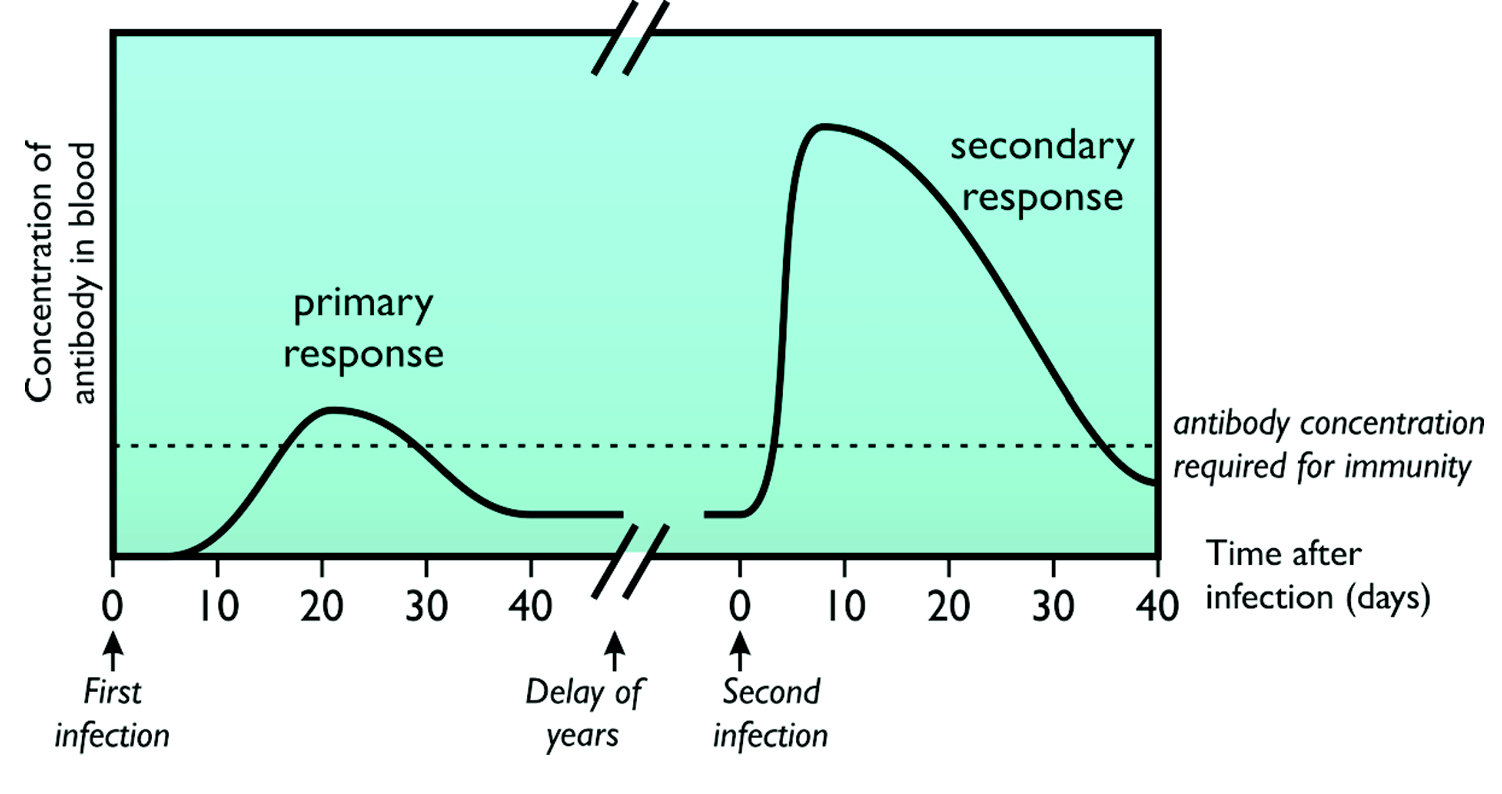
describe the the shape of this graph
primary response
The first time a new antigen is encountered there are only a few lymphocyte cells of each kind (<100) for the antigen to encounter, so it can take several days for clonal selection to take place and the clone army to be assembled. This is why there is a delay before antibodies are produced . There tends to also be a small clonal army. Hence the small hump.
if were infected with the same pathogen with the same antigen then again we undergo the secondary immune response. This time we dont need to go through T and B cell selection and as we have memory cells. As there is also a larger population of T and B cells ( in the form of memory cells ) these means that the clonal expansion is faster. This means that the repones is much faster and stronger
does the patient suffer symptoms in the primary response
yes as the response is slow and weak.
what are factors causing the symptoms
symptoms of the disease are shown, partly due to toxins and cell death due to the pathogen, and partly due to the immune response itself (e.g. fever, inflammation).
does the patient suffer symptoms in the secondary response
no the response is strong and fast and the pathogen is destroyed before we even have symptoms
some other pathogens develop new strains every few years do we have immunity for these
no as they have different antigens
These pathogens with many different strains show what
antigenic variation