bio chap 19
 Call Kai
 Learn
Learn Practice Test
 Spaced Repetition
 Match
Match Flashcards
 Knowt Play
1/165

There's no tags or description
Looks like no tags are added yet.
Name | Mastery | Learn | Test | Matching | Spaced | Call with Kai |
|---|
No analytics yet
Send a link to your students to track their progress
166 Terms
Habitat
the type of physical surroundings that a species inhabits
widely separated populations of the same species generally inhabit the same __
can support multiple species
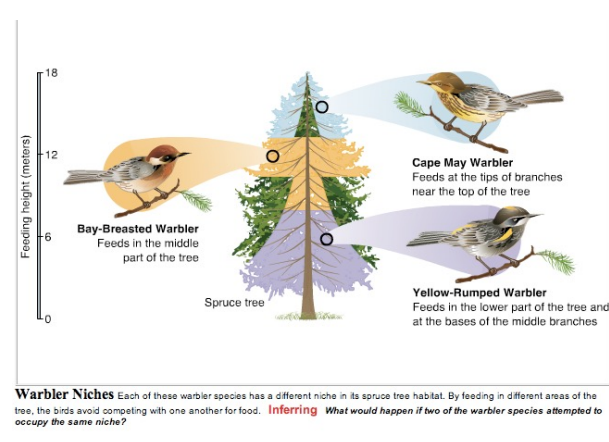
Ecological niche
the functional role and "lifestyle" of a species within an ecosystem, defining how it survives, reproduces, and interacts with biotic (living) and abiotic (non-living) factors.
an organisms specialization, includes habitat, feeding habits, & other behaviors
specific to one species
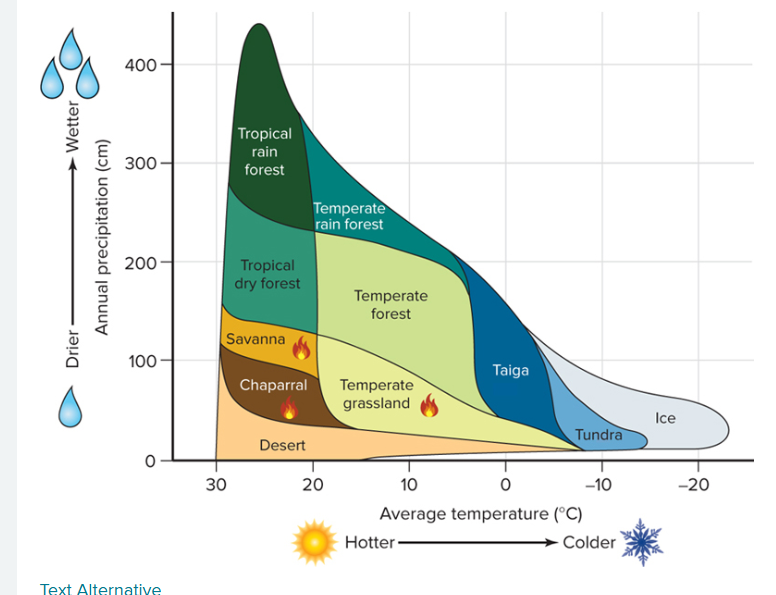
Biome
a very large ecosystem characterized by a particular climate, vegetation, & group of species
influenced by: precipitation & temperature
u can predict what kind of biological communities are likely to develop in an area knowing this
ex. desert
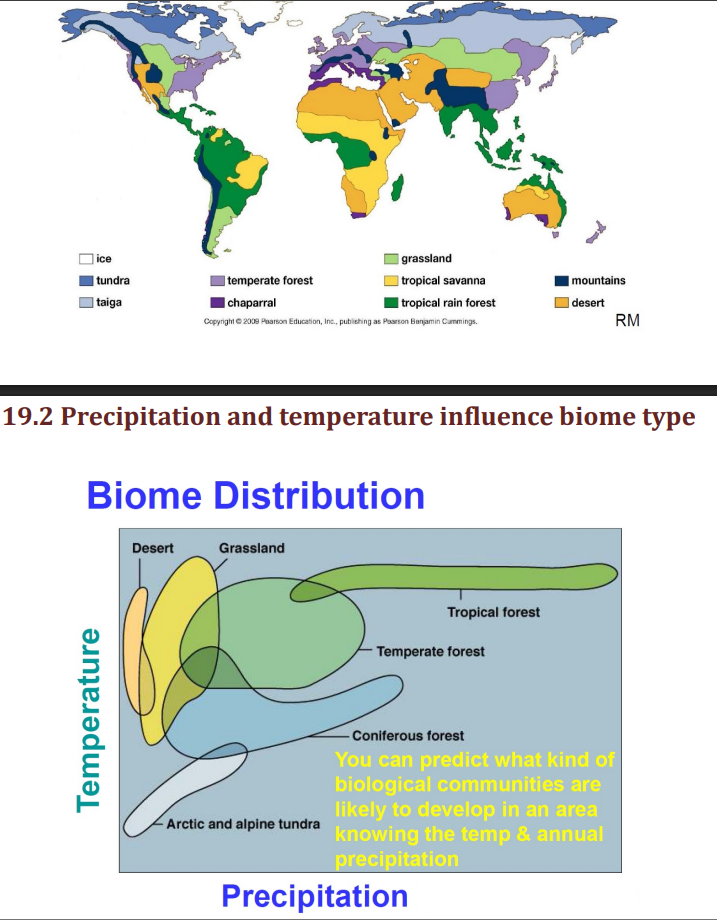
Climate
refers to the long-term patterns of weather in a particular region
biome: determined by local __
temp & precipitation
weather
local & short term
earths __ determined by
axial tilt: 23.5
latitude
atmospheric circulation
prevailing winds
precipitation
ocean currents
local topography (mountains, hills, valleys, rivers)
ex.
las vegas is a desert __ (36N)
latitude & atmospheric circulation
rain shadow effect of mountain ranges between us & ocean
Prevailing winds
a surface wind that blows predominantly from a particular direction.
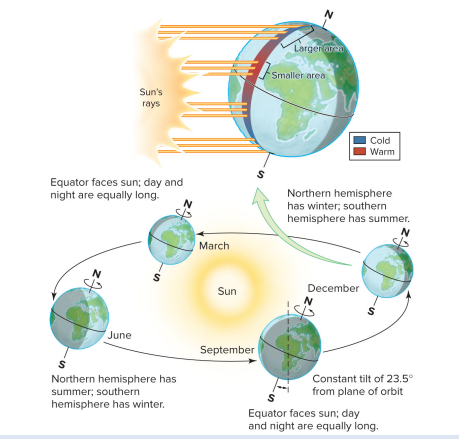
What is the Earths North-South axis tilited number (with respect to earths orbital plane)
23.5˚
Axial tilt
causes the seasons
if it was 0 there would be none
variations in the intensity of sunlight an area receives
insolation: amount of sunlight per square foot an area receives (intensity of sunlight)
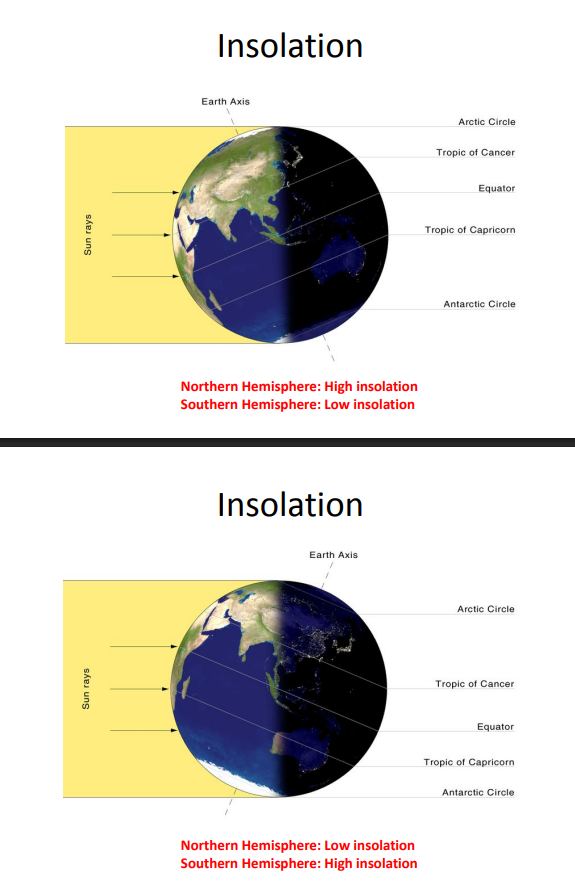
Insolation
amount of sunlight per square foot an area receives (intensity of sunlight)
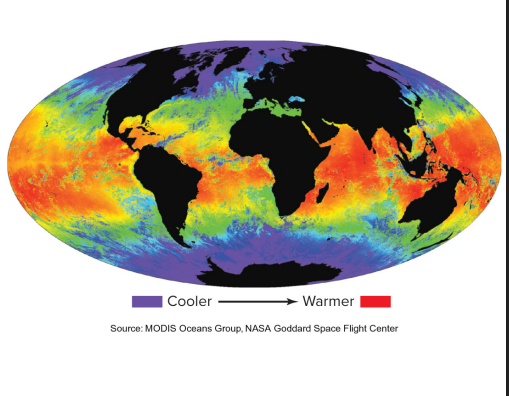
Latitude
distance from the equator
as move away from equator = climates become cooler
helps determine climate
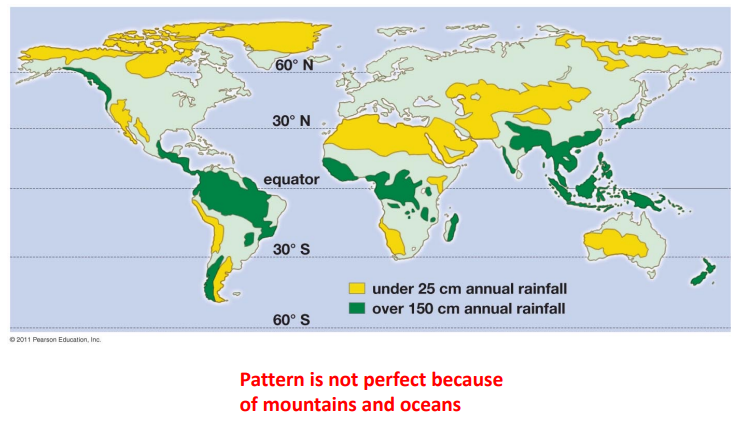
Equatorial regions
low latitude
higher insolation
warmest
Polar latitudes
high latitude
lowest insolation
coldest
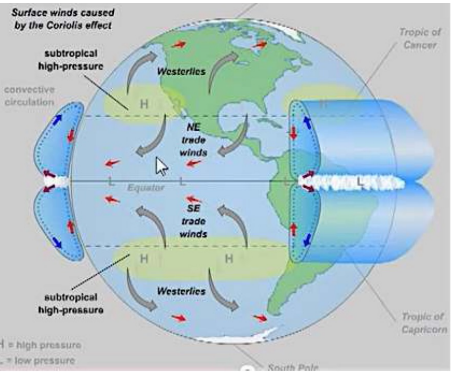
Atmospheric circulation
refers to the vertical & north-south motion of air (prevailing winds)
coriolis effect: air moves east-west as a result of earths rotation
tropics (trade winds)
middle latitudes (westerlies): flow west to east
impact climate based on arrival over ocean or land
ocean based (moisture)
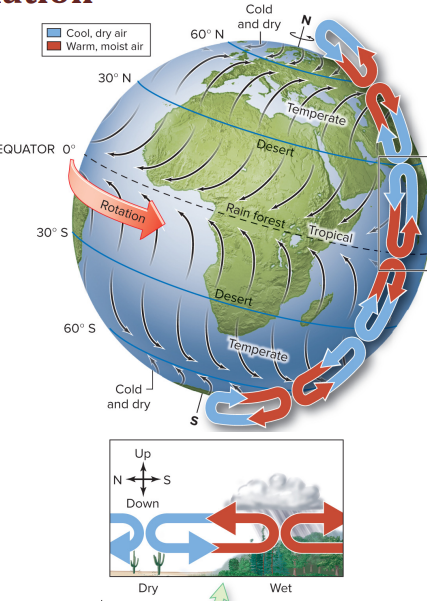
How atmospheric circulation works
warm air rises over cold
can hold more moisture
large quantities of warm moist air rise from oceans at tropical latitudes
will cool as it rises
moisture lost as precipitation
reason why tropical areas are so wet
cool air then moves north, away from equator
30 N latitude & 30 S latitude
air descends & is warmed
air is warm & dry to absorb moisture from the environment
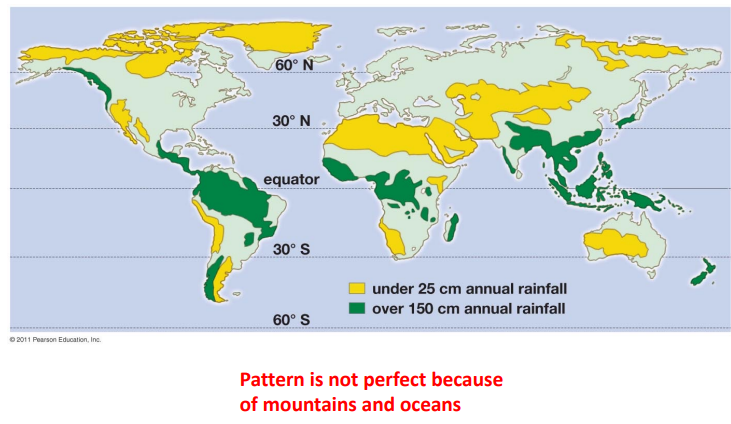
result = desert climates
some of air that descended at 30 N moves north, absorbing moisture as it goes
air rises again, release its moisture as precipitation around 60 N
same thing happens in southern hemisphere
* pattern is not perfect bc of mountains & oceans
Why are tropical areas so wet
intense solar radiation at the equator, which causes massive amounts of water to evaporate from oceans and land, forming, rising, and condensing into frequent, heavy rainstorms
Weather
day to day state of the atmosphere at a place & time
short term
Coriolis effect
the apparent curving of the path of objects (like air or water) moving long distances over Earth’s surface, caused by the planet's rotation
a phenomenon where the Earth's rotation causes moving objects (like air currents, planes, or ocean currents) to travel in a curve rather than a straight line
bc the Earth spins faster at the equator than at the poles, objects moving long distances appear to deflect to the right in the Northern Hemisphere and to the left in the Southern Hemisphere.
air moves east-west as a result of earths rotation
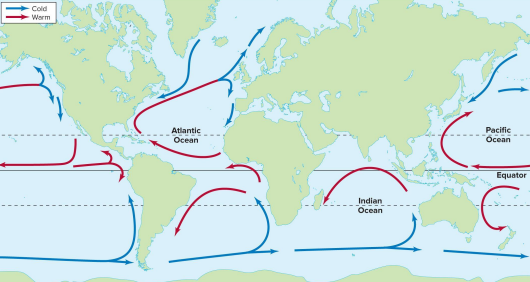
Ocean currents
have an important effect on local climate
warm currents = warmer local climate
cold currents = colder local climate
Windward
refers to the side facing the wind (upwind), experiencing colder, wetter, and stormier conditions
Leeward
situated on or toward the side sheltered from the wind
enjoying warmer, drier, and calmer weather
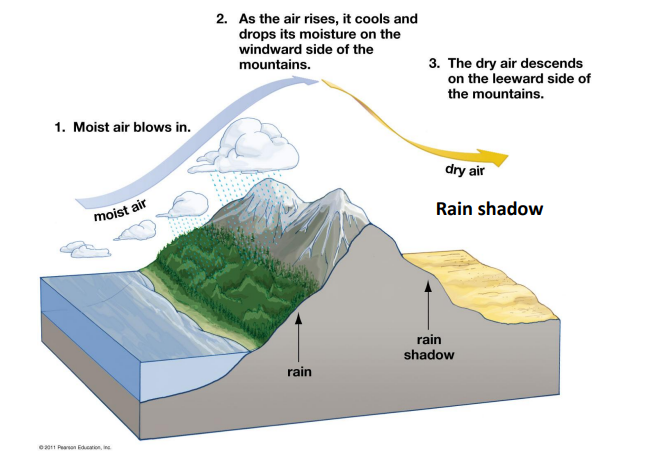
Topography
the study and mapping of the land surface's physical features, including elevation, slopes, and shapes like mountains, valleys, and rivers
rain shadow
local __ dramatically impact local climate
1. moist air blows in
2. as the air rises, it cools & drops its moisture on the windward side of the mountains
the dry air descends on the leeward side of the mountains
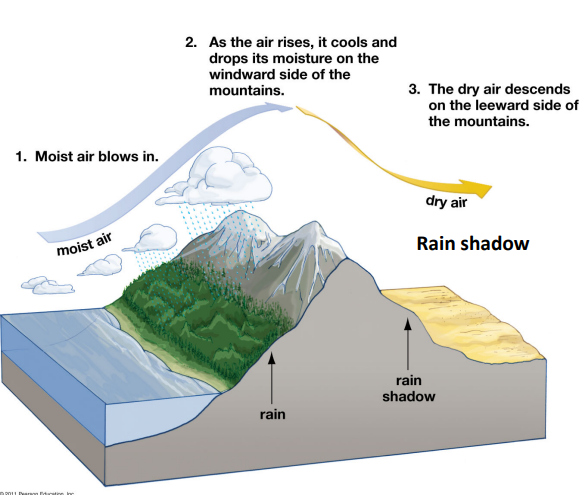
Rain shadow
a dry region on the leeward (downwind) side of a mountain range that experiences significantly reduced rainfall compared to the windward side
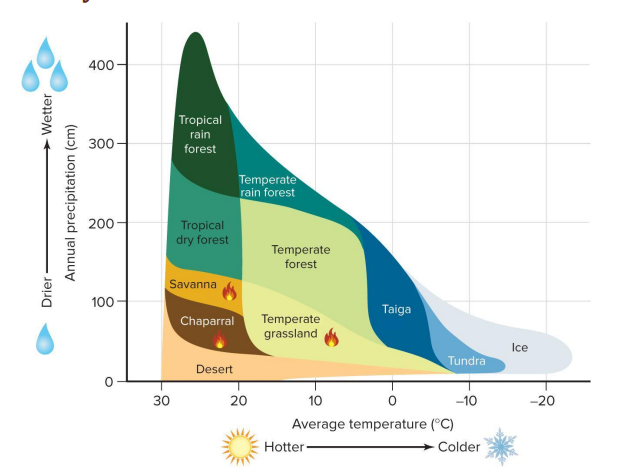
Vegetation
determined by the local climate
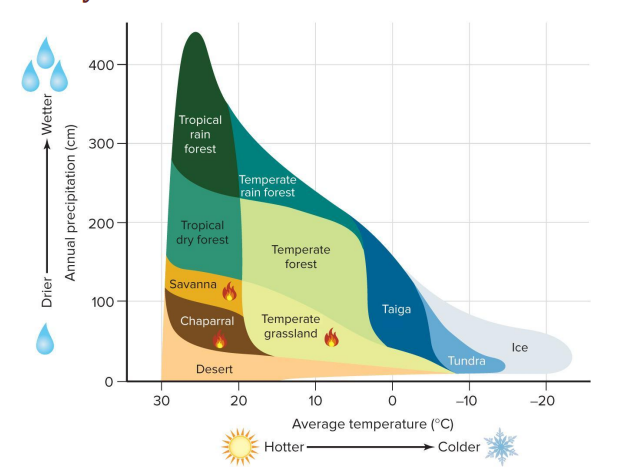
Mountains
contain a variety of biomes, depending on the altitude
Polar ice cap biomes
forms at the poles, are the coldest & among the driest of earths biomes
no month has an avg temp above freezing
no vegetation
all life found near ocean
food resource
polar bear eats seal
seal & penguins eat fish
worm & crustaceans apart of food web
primary producers: phytoplankton
inhabited by whales, seals, birds
inland areas largely lifeless
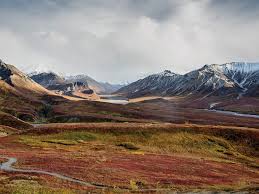
Tundra biomes
gives way to ice caps
“treeless plain” biomes
at least one month with an avg temp above freezing
very cold, long winters
dry
permafrost: deep ground frozen year round
prevents tree growth
very marshy/swampy
water has nowhere to go
plant life: mosses, lichen, grass, shrubs, mosses
large herbivores: moose, reindeer
carnivores: artic fox
avg temp: below 0 C
annual precipitation: 50 cm
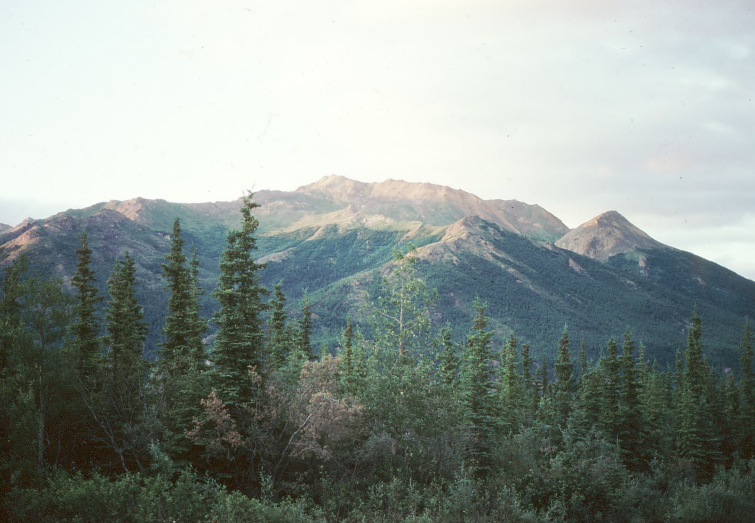
Taiga (boreal forest) biomes
found south of tundra biomes (gives way to tundra)
extremely long dry cold winters
short, cool summers
little/moderate rainfall
a few species of conifers/ coniferous trees dominate
juniper, spruce, fir, pine
animals: beavers, lynxes, hares, reindeer, wolves, bears,
caribou, reindeer, lynx, spruce, firs, pines, migratory birds
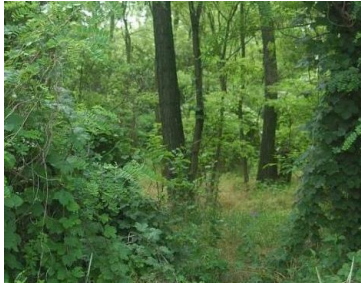
Temperate deciduous forest biomes
found in mid-latitude south of taiga (gives way to taiga)
cold winters
warm/hot summers
lots of rainfall
mostly deciduous trees
oak & maple trees that shed their leaves seasonally
have been largely destroyed
support large variety of animal life
deer, squirrels, snakes, birds, foxes
avg temp: 10 C
annual precipitation: 100 - 200 cm
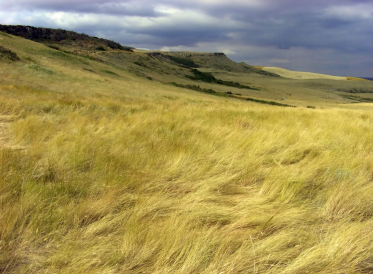
Temperate grassland biomes
found in mid-latitude inland areas
hot summers, cold winters
less rainfall than temperate forests
transition to desert climate
ecological dominants
grasses
today = mostly farmland
fertile soils support expanse of wind-pollinated grrasses that are home to unique herbivores, such as prairie dogs & chickens
bisons used to live here
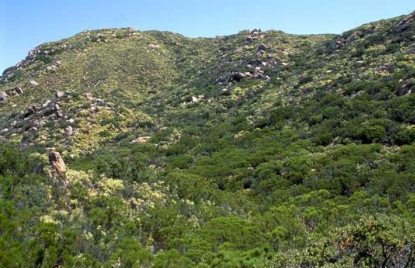
Chaparral biomes (mediterranean shrubland)
occur on coasts
mid-latitude west coasts have unique type of climate
mediterranean
hot rainless summer
cool wet winters
dense evergreen shrubs, few trees
transitions to desert climate away from coast
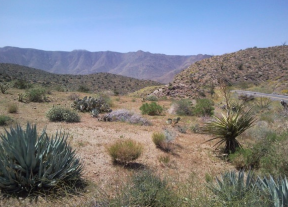
Desert biomes
charaterized by very little rainfall & variable temperature
mid-low latitudes (45 N or S to 15N or S)
not hot all of the time
nortthern deserts have very cold winters
summer is hot
support a large variety of organisms
vegetation evolved to conserve water / are adapted to dry conditions
animal life: hares, coyotes, snakes, birds, lizards
avg temp: 0 C - 30 C
annual precipitation: 0-100 cm
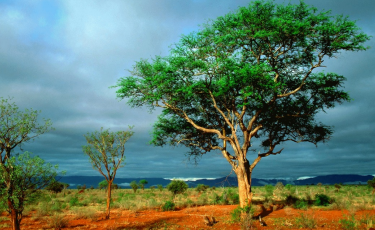
Tropical savanna biomes
found in tropical areas (low latitudes)
distinct wet & dry seasons
hot year round
grassland with sparse / scattered trees
very muddy & green in wet season
bone dry in dry season
large variety of animal life: elephants, zebras, giraffes, etc
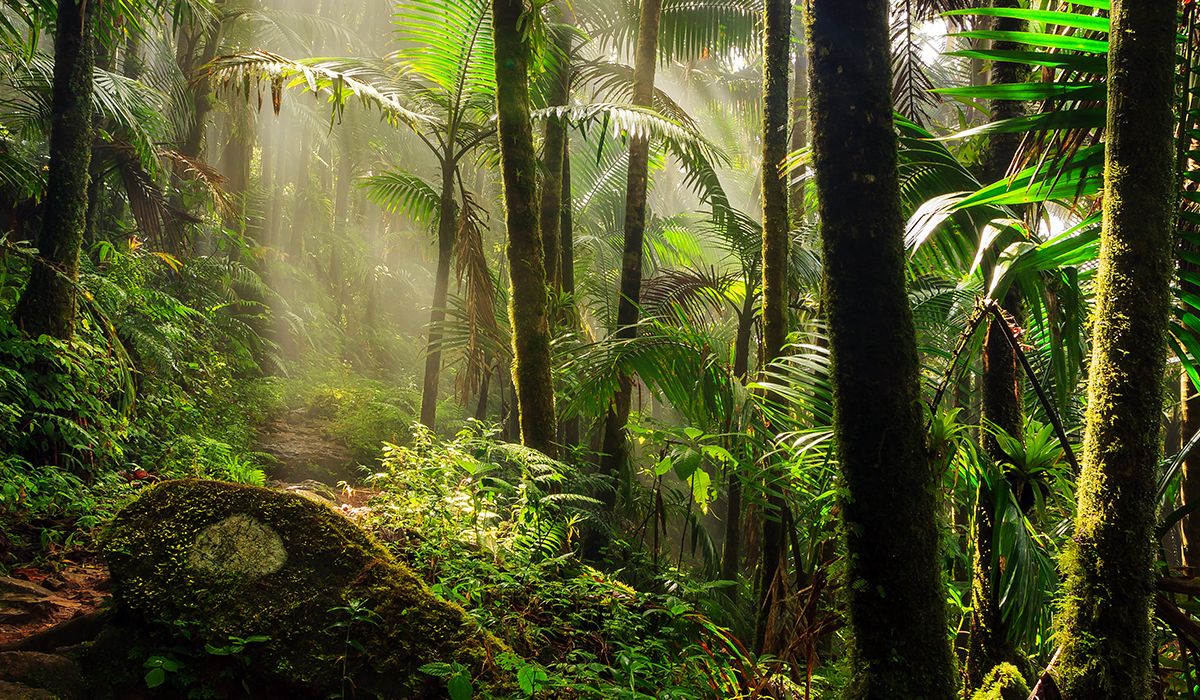
Tropical rainforests
found near the equator
hot & wet climate year round (no real “seasons”)
dense, permanent evergreen forest
most abundant, productive & biodiverse biome on earth
diverse plant species include large trees
avg temp: 25 C
annual precipitation: 350 cm
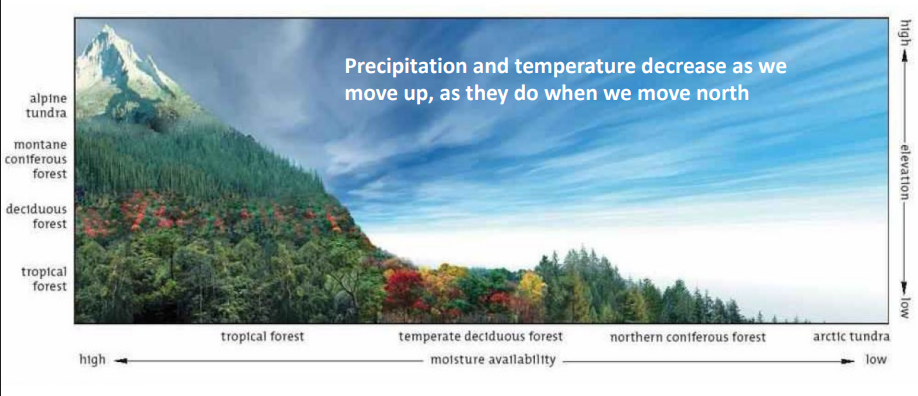
Mountainous areas
exhibit a wide variety of biomes
precipitation & temp decrease as we move up, as they do when we move north
as altitude increases, it is as if we moved towards the poles
% of salltwater (in oceans)
97%
% of freshwater
3%
% of water in ice caps & glaciers (freshwater)
2.06%
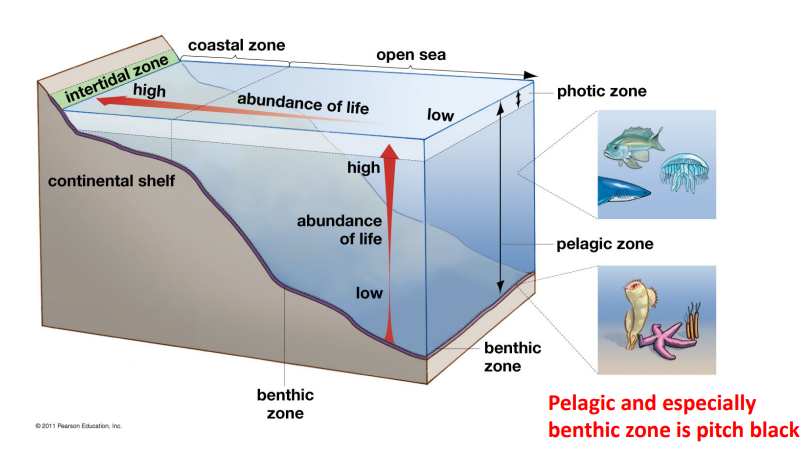
Marine biomes
vary based on depth & distance from land
depth (P.P.B)
Photic zone (surface)
Pelagic zone (deep water)
pitch black
Benthic zone (ocean bottom)
pitch black
distance from land (I.C.O)
Intertidal zone (very productive)
Coastal zone (less productive)
Open sea (least productive)
photosynthesis decreases as move away from land & go deeper
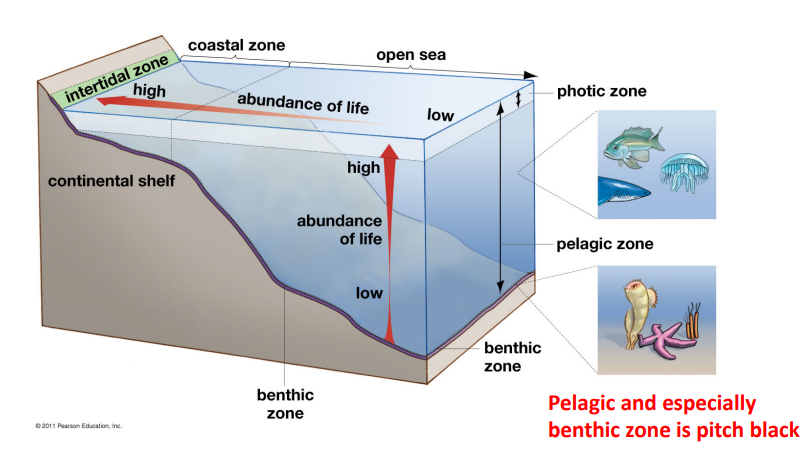
Photic zone (ocean depths)
surface
where photosynthesis is possible
sufficient light
phytoplankton are dominant producers here
rooted plants thrive ere
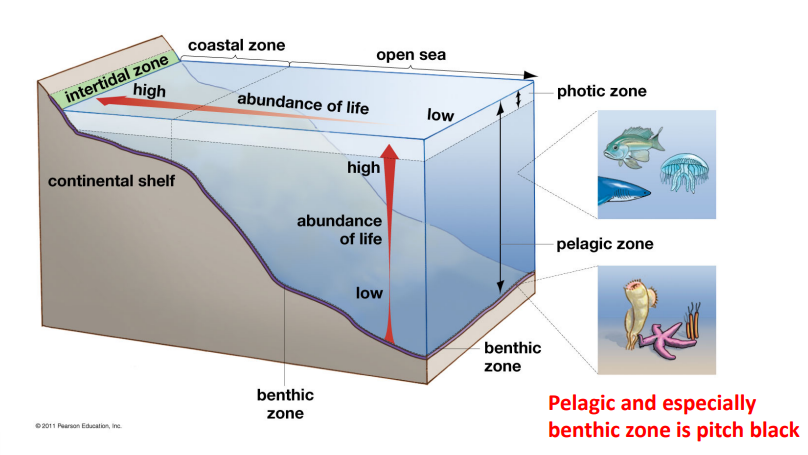
Pelagic zone (ocean depths)
deep waters
pitch black
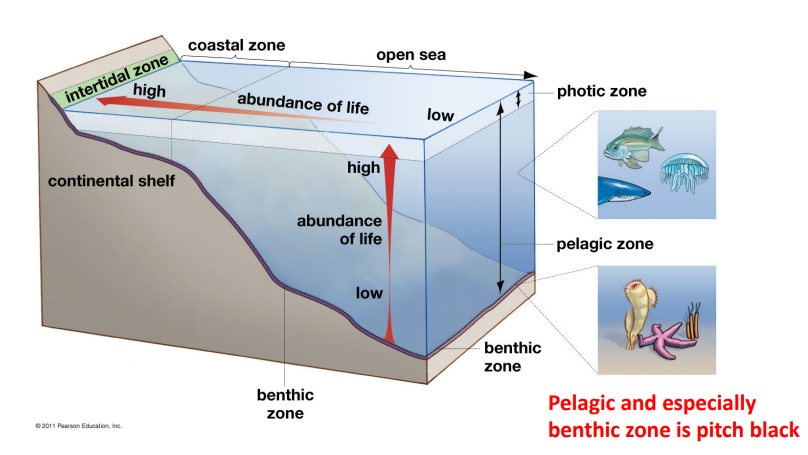
Benthic zone (ocean depths)
ocean bottom
esp pitch black
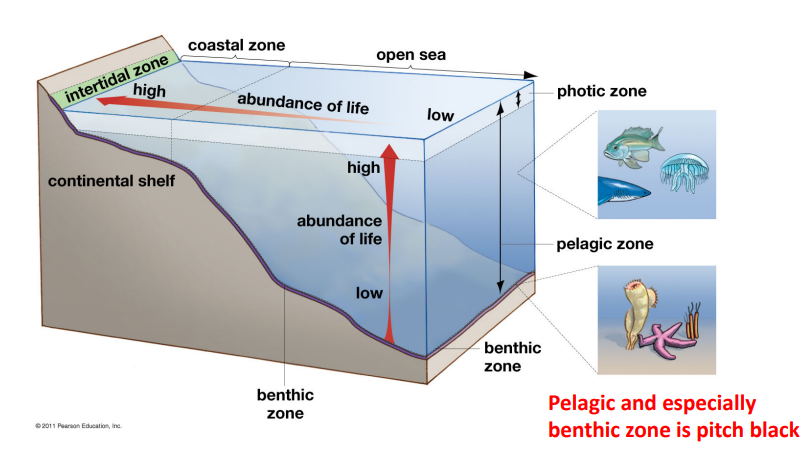
Intertidal zone (distance from land)
where land & ocean meet
frequently exposed to air and submerged by water.
very productive
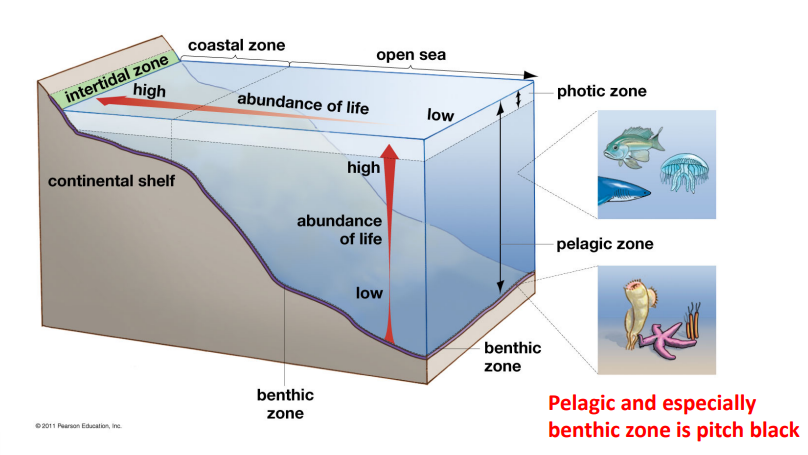
Coastal zone (distance from land)
the interface between the land and water
less productive
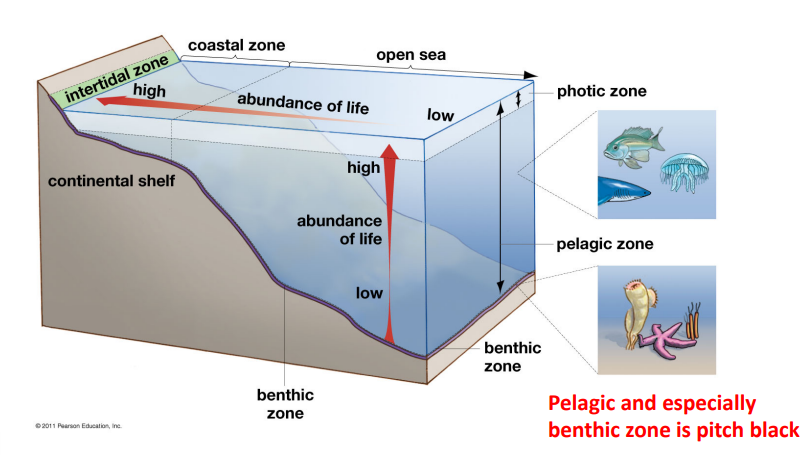
Open sea (distance from land)
least productive
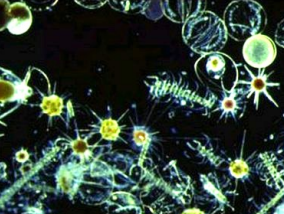
Phytoplankton
main primary producers of marine biomes
microscopic photosynthetic organisms that drift in water
photosynthesizers
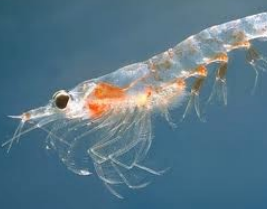
Zooplankton (krill)
tiny animals (consumers) that feed on phytoplankton
are a main nutrient source for many species of fish & whales
Fresh water biomes
lakes
ponds
rivers
estuaries
wetlands
ground water
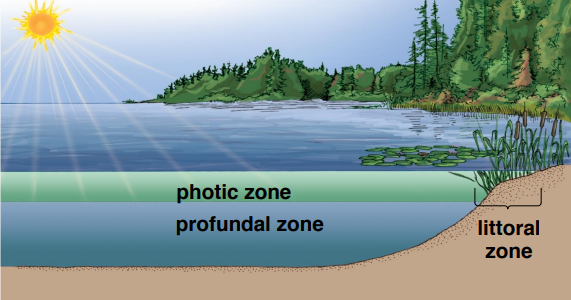
Lakes
have a littoral zone, photic zone, & profundal zone
littoral zone: near shore where rooted plants can grow
photic zone: where photosynthesis is possible
undergo succession as they age
young __ contain few nutrients to support phytoplankton
as nutrients gradually accumulate, algae tint the water green
a continuous influx of sediments from the land eventually transforms the _ into a wetland
Littoral zone
near shore where rooted plants can grow
a broader term encompassing the intertidal area plus the immediately adjacent, perpetually submerged shallow water
Profundal zone
the deep, cold, and dark bottom-water area of a lake or pond located below the limit of effective light penetration
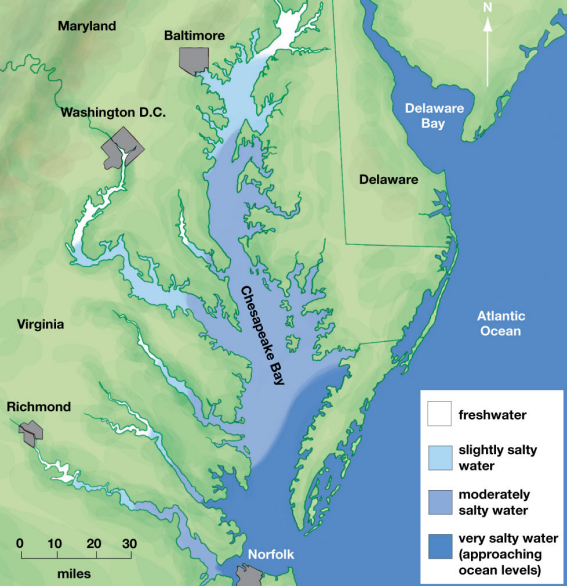
Estuaries
highly productive area where where freshwater from rivers meets salt water (river empties into an ocean)
dynamic, partially enclosed coastal bodies of water where freshwater rivers or streams meet and mix with the salty ocean
life is adapted to fluctuating salinity
salinity increases as approach ocean
tides & river flow stir up soil
release nutrients
lots of plants & algae
extremely productive area
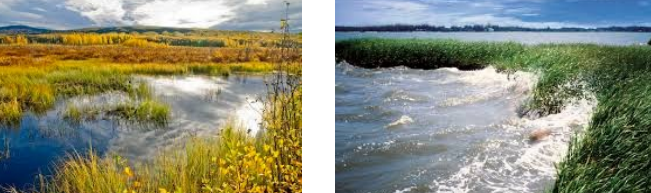
Wetlands
shallow areas where water is trapped either permanently or seasonally
distinct vegetation types
could be saltwater, brackish, or freshwater
found on every type of biome except ice cap
ex. swamps, bogs, marshes, mangrove
Biosphere
the zone where life on earth exists
covers the entire surface of the earth
extends 1.8 thousand miles below earths surface
extends 5.2 thousand miles in altitude
extends all the way to ocean bottom (~7 miles deep)
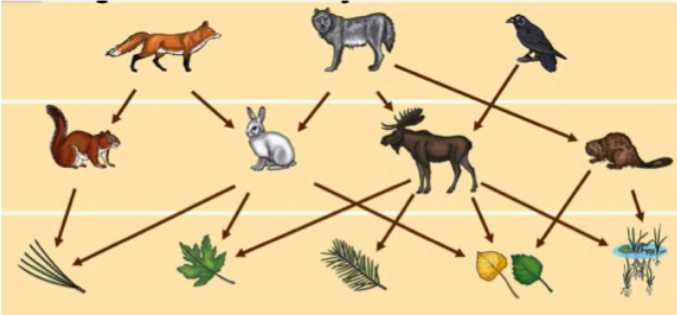
Community
the collection of the populations of all species within a specified area
interacting populations of several species
Biomass
the total quantity or weight of organisms in a given area or volume
the amount of living matter
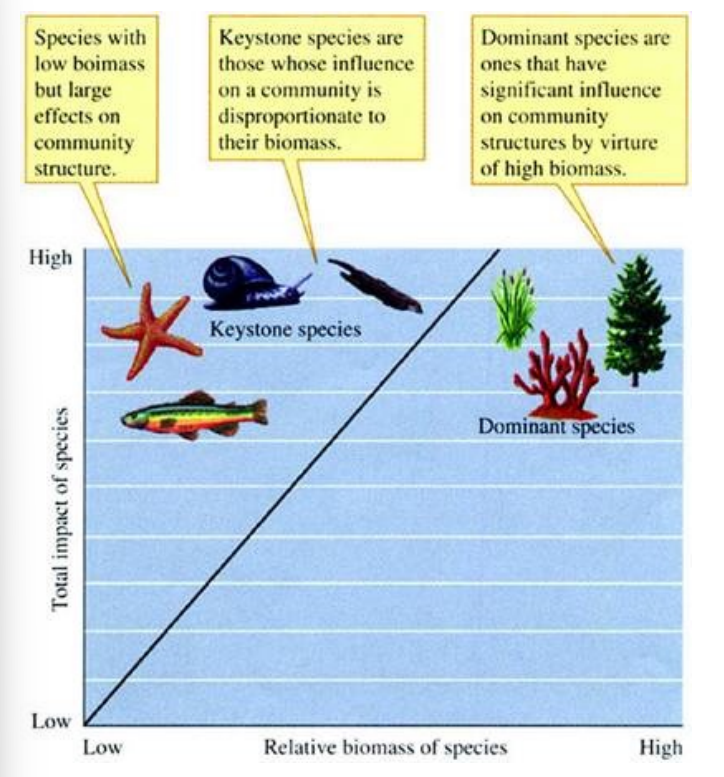
Ecological dominants
the few species that numerically dominate many communties
usually plants
high biomass
species that exert a major controlling influence on an ecosystem's community structure, functioning, and biomass due to their high abundance, large size, or high productivity
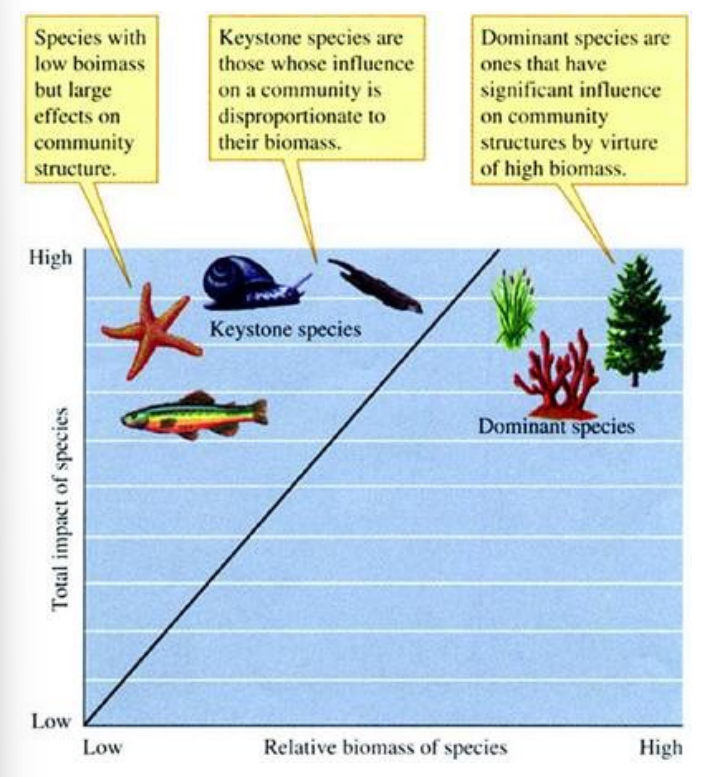
Keystone species
are not numerous or ecologically dominant, but if removed, drastically affect community diversity
low biomass
unique role in the community
make up a small portion of the community
those whose influence on a community is disproportionate to their biomass
many are apex predators
ex. sea otters, gray wolves, beavers, African elephants, and bees
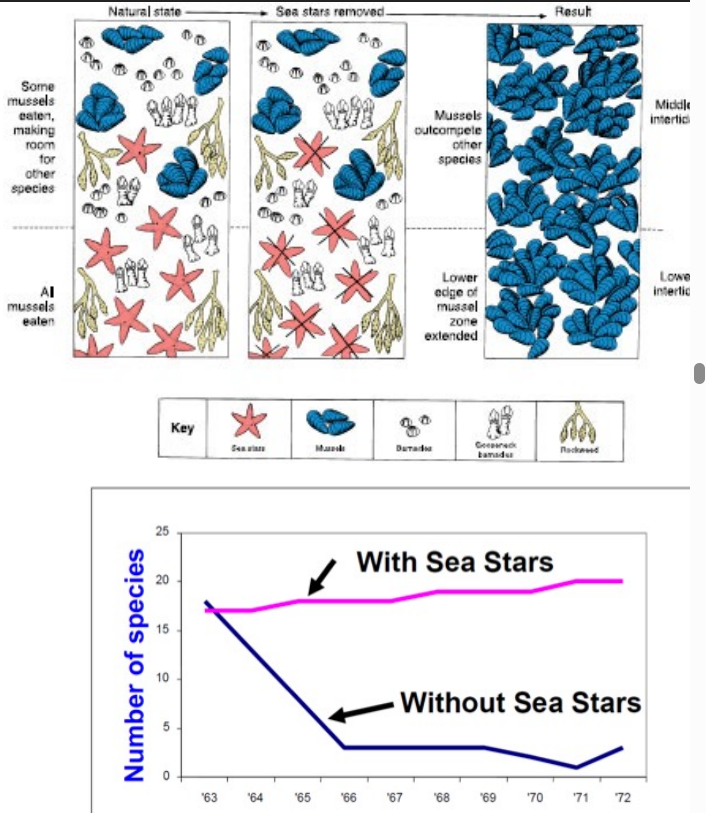
Apex predators
top predator
top of food chain
a species that preys on others but none prey on it
ex. sea stars, wolves, lions, sharks, humans, tigers
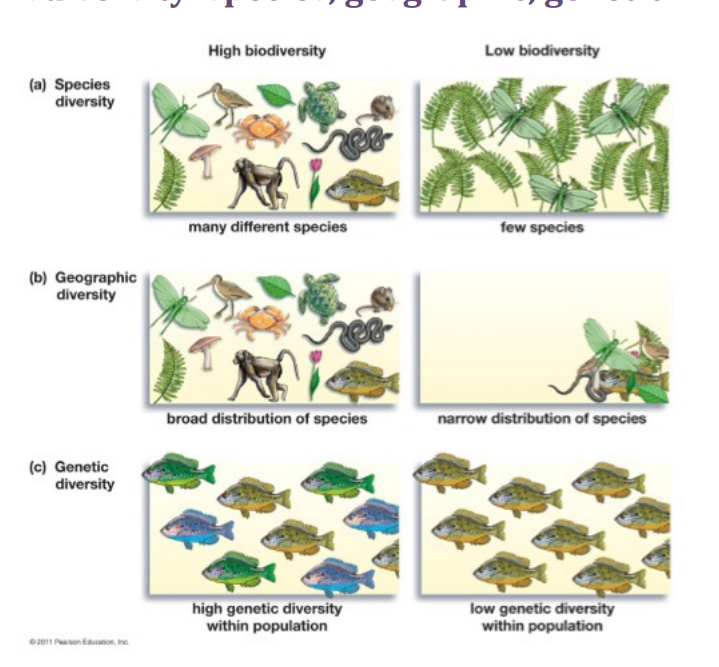
Biodiversity
species, geographic, genetic
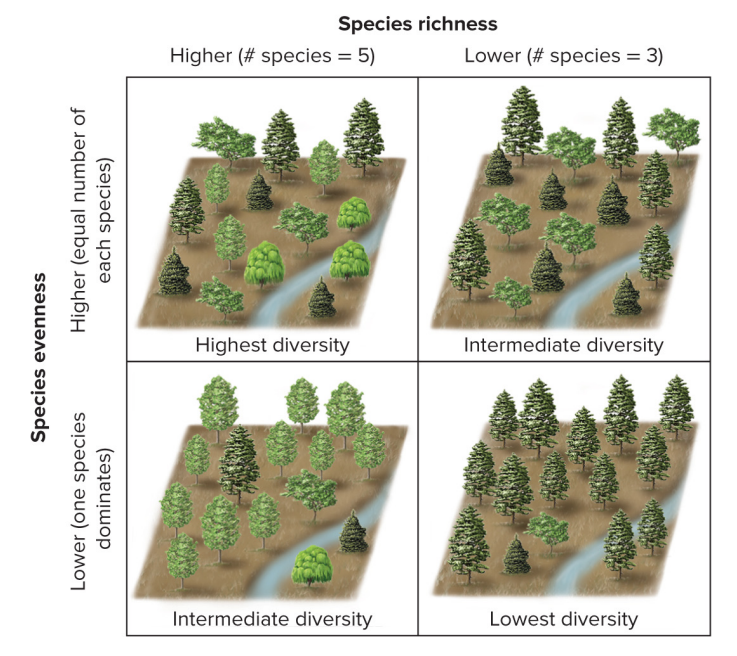
diversity of a community depends on…
species richness (the total # of different species present in a community)
species evenness (equal # of each species)
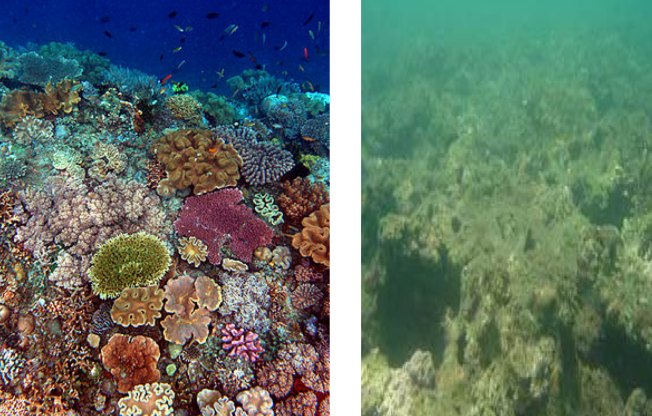
Species richness
measure of biodiversity
the total # of different species in a community
ex. the 15 diff fish species in a lake
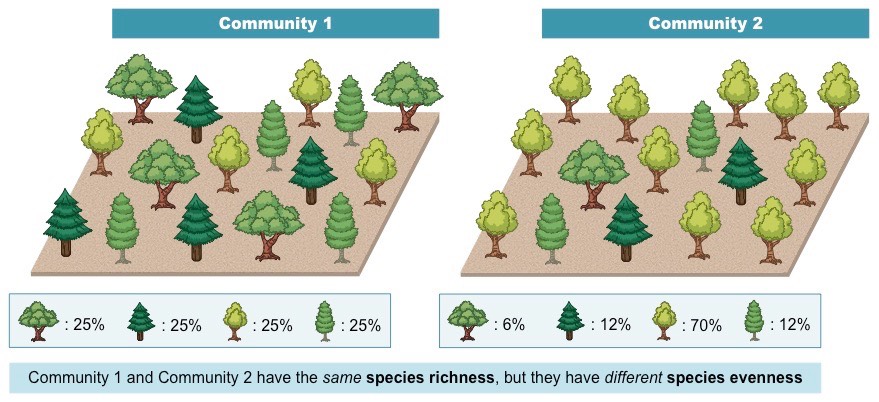
Species evenness
measure of biodiversity
equal # of each species
measures the relative abundance (equality) of individuals among those species
calculates the proportion of individuals of each species
the proportion of the community that each species occupies
measures how similar the abundances (population sizes) of those species are
Species diversity
many different species (high biodiversity)
few species (low biodiversity)
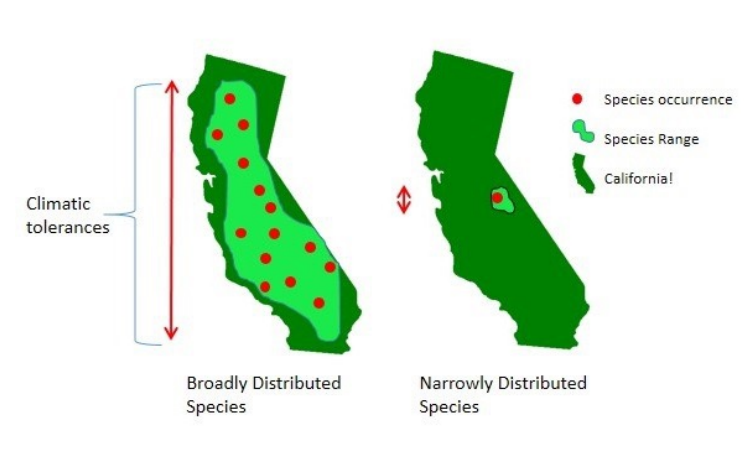
Geographic diversity
broad distribution of species (high biodiversity)
narrow distribution of species (low biodiversity)
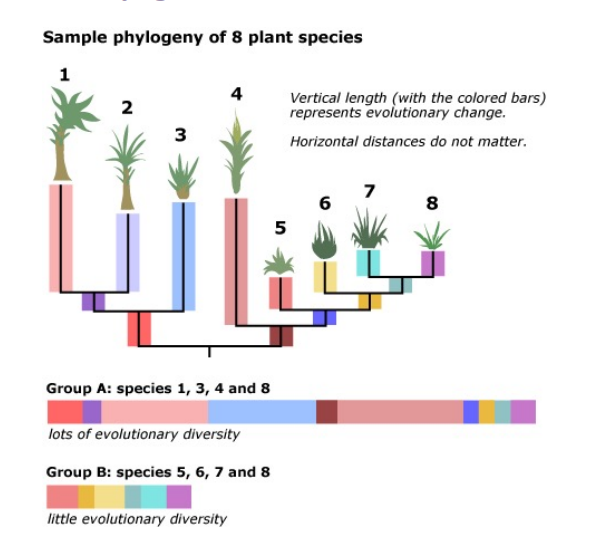
Genetic diversity
high genetic diversity within population (high biodiversity)
low genetic diversity within population (low biodiversity)
Invasive species
outside species that enters & rapidly takes over a community (selective advantage)
often introduced by human intervention
ex. rabbits in australia, zebra mussels in the great lakes, boa constrictor in florida
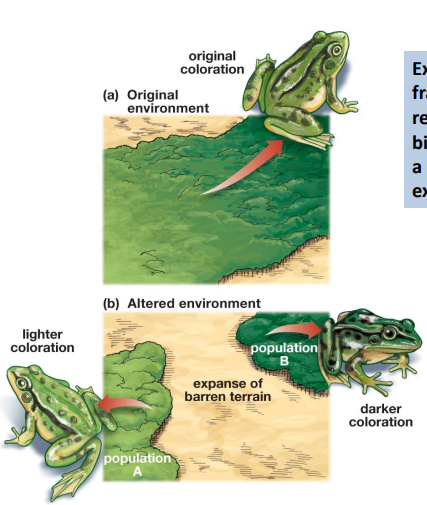
Habitat fragmentaition
the breaking up of an organisms habitat into smaller, separate habitats
reduces, isolates, and degrades species’ ranges
excessive __ __ can result in a loss of biodiversity + is a major cause of extinction + reduces genetic diversity
can lead to allopatric speciation
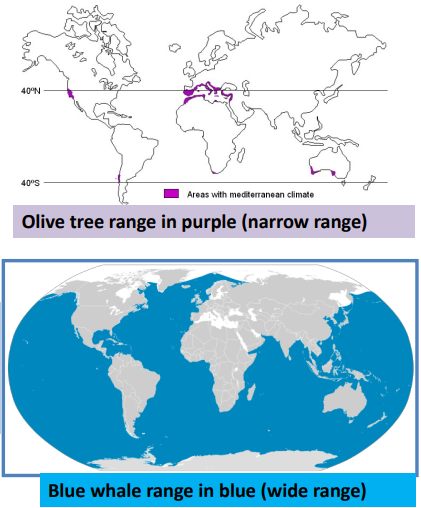
The range of a species
the entire geographical area in which it can be found
has nothing to do with population size
migratory species have a summer __ & winter __
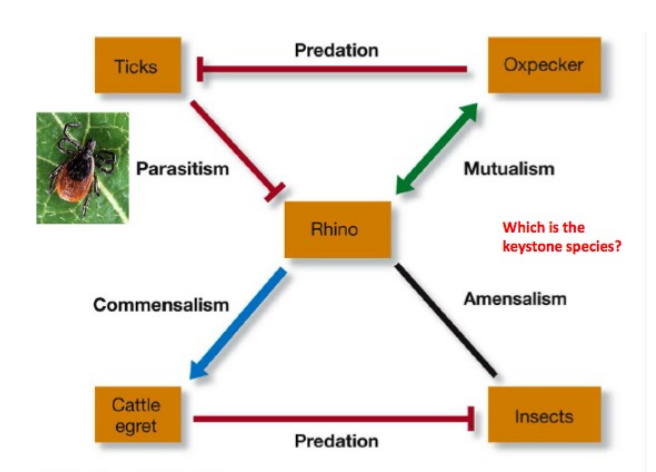
Species intedractions
competition (-/-)
predatory (+/-)
parasitism (+/-)
mutualism (+/+)
commensalism (+ / na)
amensalism (- / na)
neutralism (na / na)
na = neutral
Competition (species interaction)
biological interaction where organisms or species vie for limited resources such as food, water, light, or territory in a shared environmen
reduces the fitness of species that vie for limited resources in a shared habitat
effect on species X: negative
effect on species Y: negative
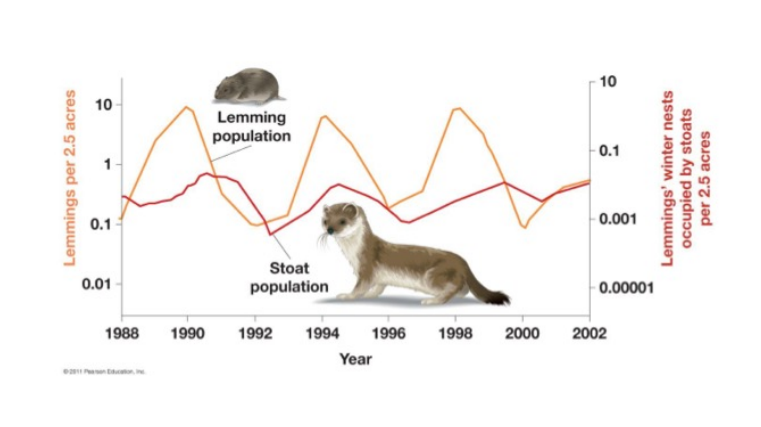
Predatory (species interaction)
biological interaction where one organism (the predator) kills and consumes another living organism (the prey)
effect on species X: positive
effect on species Y: negative
Parasitism (species interaction)
a close, long-term symbiotic relationship between two different species where one member increases its fitness at the expense of a living host
one organism (the parasite) benefits by obtaining nutrients and shelter at the expense of another (the host)
one species uses another to its advantage & harms it in the process
ex. lamprey on fish
ex. wasp eggs on hornworm
effect on species X: positive
effect on species Y: negative
Mutualism (species interaction)
an ecological interaction between two or more species where all involved participants experience a net benefit
type of symbiosis that improves the fitness of both partners
ex. bees pollinating flowers
effect on species X: positive
effect on species Y: positive
Commensalism (species interaction)
a type of symbiotic interaction between two species where one member increases its fitness without affecting the other member
organism (the commensal) benefits—obtaining food, shelter, or transport—while the other (the host) is neither helped nor harmed.
ex. One organism hitches a ride on another
effect on species X: positive
effect on species Y: neutral
Amensalism (species interaction)
one species causes harm or inhibition to another organism without receiving any costs or benefits itself
ex. accidental trampling of small plants by large animals
ex. grass trampled by cows
effect on species X: neutral
effect on species Y: negative
Neutralism (species interaction)
an ecological interaction in which two species coexist in the same habitat but do not affect each other's survival, growth, or reproduction
effect on species X: neutral
effect on species Y: neutral
Interspecific competition
the rivalry between individuals of different species for shared, limited resources—such as food, water, light, or space—in an ecosystem.
competitive exclusion
resource partitioning
Competitive exclusion / Gause's Law
2 species competing for the exact same limiting resources cannot stably coexist
2 species cannot indefinitely occupy exactly the same niche
the species with even a slight advantage will dominate, leading to the weaker competitor's local extinction or evolutionary shift to a different niche
Resource partitioning
the division of limited resources by species to avoid competition in an ecological niche, enabling similar species to coexist
by specializing in different food sources, habitats, or active times, species reduce direct competition for the same resources
competition between multiple species with similar niches restricts each species to a subset of available resources
helps maintain biodiversity
Evolutionary arms race
a pattern of coevolution where two or more species reciprocally affect each other's evolution through continuous, escalating adaptations and counter-adaptations
prey/host evolves a mechanism for evading/ fending off predator/ parasite
Biological Mimicry
a species developed the ability to look like another either for defensive or offensive purposes
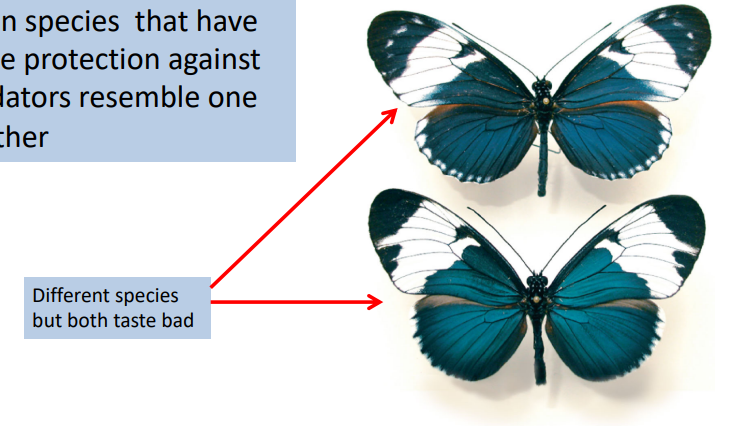
Mullerian mimicry
a natural defense mechanism where two or more harmful, poisonous, or unpalatable species evolve to share similar warning colors or patterns
occurs when species that have some protection against predators resemble one another
all species in __ __ are actually dangerous or distasteful.
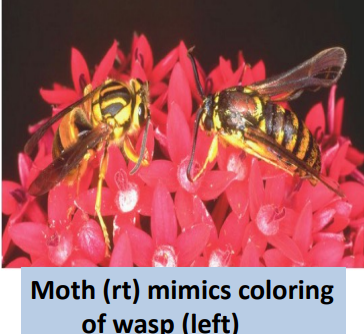
Batesian mimicry
a form of, often, imperfect protective resemblance where a harmless species (the mimic) evolves to imitate the warning signals—such as bright, aposematic coloration—of a dangerous or noxious species (the model) to avoid predation
relies on predators mistakenly avoiding the safe mimic due to prior negative experiences with the harmful model
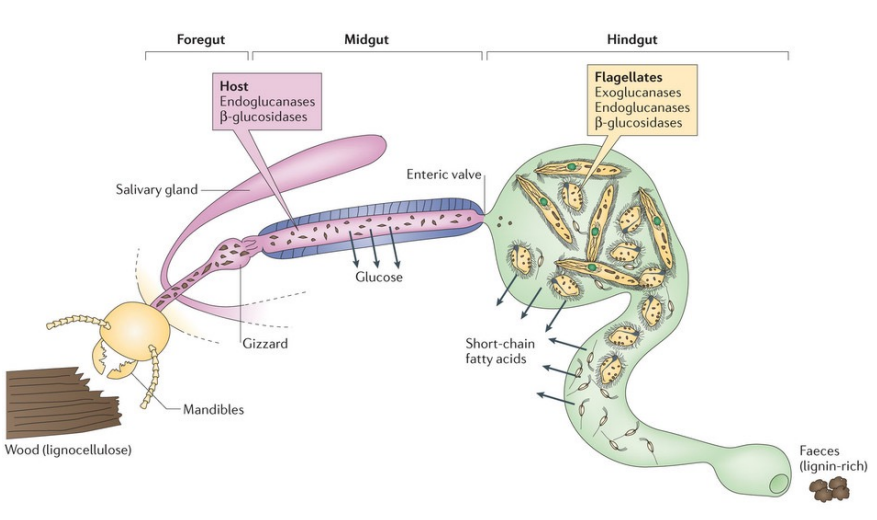
Endosymbiont
a mutualistic relationship when one organism lives entirely within the other
Coevolution
2 or more species evolving together as a result of their interaction
interaction between species is so strong that genetic changes in one population select for genetic changes in the other
reciprocal selective pressure in which a genetic change in one species selects for subsequent change in another species and vice versa
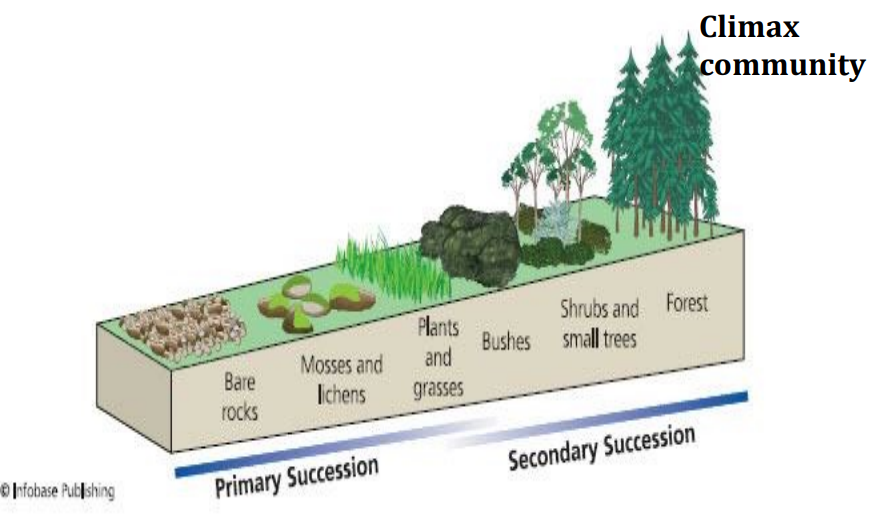
Ecological succession
the gradual, predictable process by which the species composition of a biological community changes over time, often following a disturbance
It describes how ecosystems shift from simple to complex structures
typically advancing from pioneer species to a stable, mature climax community (but true long term stability is rare)
Stage 1: Nudation/Bare Site: Succession begins with a disturbance—like a volcanic eruption (primary) or fire (secondary)—that creates a bare area with little to no life.
Stage 2: Pioneer/Invasion Stage: Hardened "pioneer species" (lichens, mosses, algae) arrive, colonize the area, and begin breaking down rock to form soil.
Stage 3: Intermediate/Competition Stage: As soil develops and nutrients increase, grasses, herbs, shrubs, and small trees establish. These plants compete for resources (light, water, nutrients), increasing biodiversity.
Stage 4: Climax/Stabilization Stage: The final stage, where a stable, diverse, and self-sustaining community (e.g., a mature forest) dominate
Primary succession
the process of ecological succession that occurs in an area where no living organisms are present
series of changes in a community’s species composition in an area previously devoid of life
pioneer organisms: photosynthetic, r-selected
over time: increase biomass, trend, toward k-selected
general trend toward greater biodiversity
competitive exclusion
Competitve exclusion
the inevitable elimination from a habitat of one of two different species with identical needs for resources.
two species can't have exactly the same niche in a habitat and stably coexist.
Pioneer organisms
the first species to colonize an area devoid of life
allows soil to develop, paving the way for additional organisms to thrive
photosynthetic, r-selected
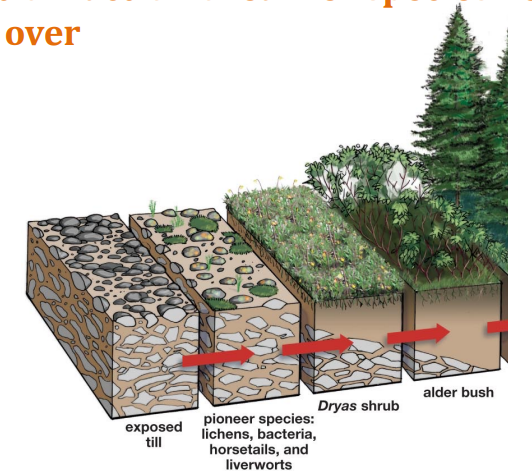
Facilitation
action of earlier species help later species take over
plants need nitrogen
dryas shrubs “fix” nitrogen (bacteria are key)
when dryas die/decompose, increase nitrogen levels
nitrogen rich soil: alder bushes
have acidic leaves
accumulation of acidic leaves on ground = decrease soil pH
replace alder bushes with spruce
moss grows at water line = forest floor watery
blocks spruce from absorbing necessary nitrogen
climax community: watery bog with moss as ecological dominant
Alder bushes
nitrogen rich soil
have acidic leaves
accumulation of acidic leaves on ground = decrease soil pH
replace __ __ with spruce
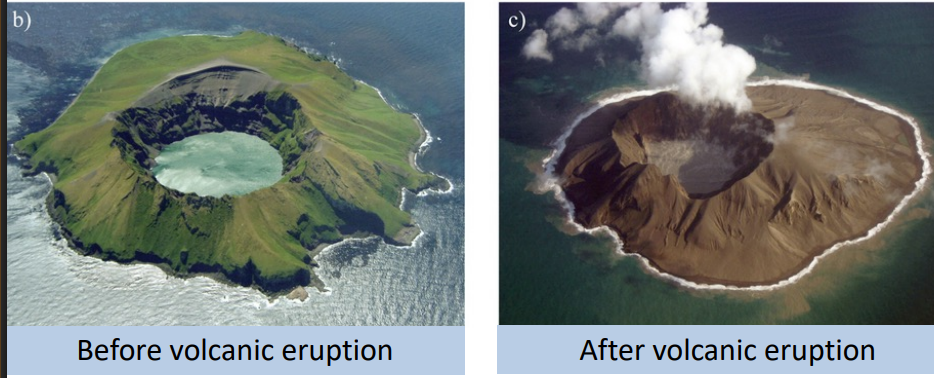
Biological legacy
what is left behind from previous conditions following major ecological disturbance
living organisms, organic debris, and environmental patterns that survive a disturbance (like a fire, storm, or harvesting) to influence ecosystem recovery
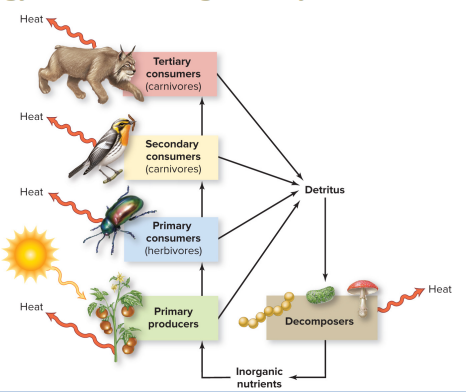
Trophic levels
the hierarchical position of organisms within a food chain or web based on their primary energy source
depends on the # of steps between it & the ultimate source of energy in the ecosystem
energy flows from one __ __ to another
only a fraction of energy (~10%) is passed on
the rest is lost to the surroundings as heat
amount of available energy decreases as we move up __ __
a lot of organic matter inedible to organisms at next level
thats why large animals are rarer than small animals
many organisms occupy more than one tropic level
ex. blue heron, humans
1st (base): primary producers
2nd: primary consumers (herbivores)
3rd: secondary consumers
4th: tertiary consumer
Herbivores
consume plants & algae
Carnivores
consume animals
Scavengers
animals that feed on large dead and decaying organic matter
ex. vultures
Omnivores
consume plants & animals
Detritivores
consume detritus (fungi & bacteria)
Detritus
remains of smaller dead organisms or cast-off material from living organisms
deces & dead organic matter
ingest, digest, and excrete dead material
Decomposers
special detritivore, feed on detritus (waste & dead organic matter), breaks it down into inorganic components, which are recycled through the ecosystem
chemically break down material externally through enzyme secretion
+ use oxygen to break down organic matter, which can deplete available oxygen in the surrounding environment
converts the nitrogen in dead organisms back to ammonium
finish the decomposition to return nutrients to the soil for producers
release carbon from once-living material
Primary producers
photosynthetic organisms / autotrophs
convert energy from sun into chemical energy stored as complex carbohydrates
form the base of a food web by extracting energy & nutrients from nonliving sources
autotrophs
produce organic molecues by acquiring carbon from inorganic sources
ex. on land: plants
ex. in water: phytoplankton
Primary consumers
herbivores
organisms that get their energy by consuming primary producers