Ireland: Military History and Notable Events
 Call Kai
 Learn
Learn Practice Test
 Spaced Repetition
 Match
Match Flashcards
 Knowt Play
1/17

There's no tags or description
Looks like no tags are added yet.
Name | Mastery | Learn | Test | Matching | Spaced | Call with Kai | Chat |
|---|
No analytics yet
Send a link to your students to track their progress
18 Terms
Bruce Campaign (All Facts)
Edward the Bruce was sent to the County Antrim to challenge Anglo-Norman rule in Ireland
1579 - 1583 - Second Desmond Rebellion (All Facts)
Rebellion of the county of Munster in Ireland against English and Protestant domination and potential Spanish incursion
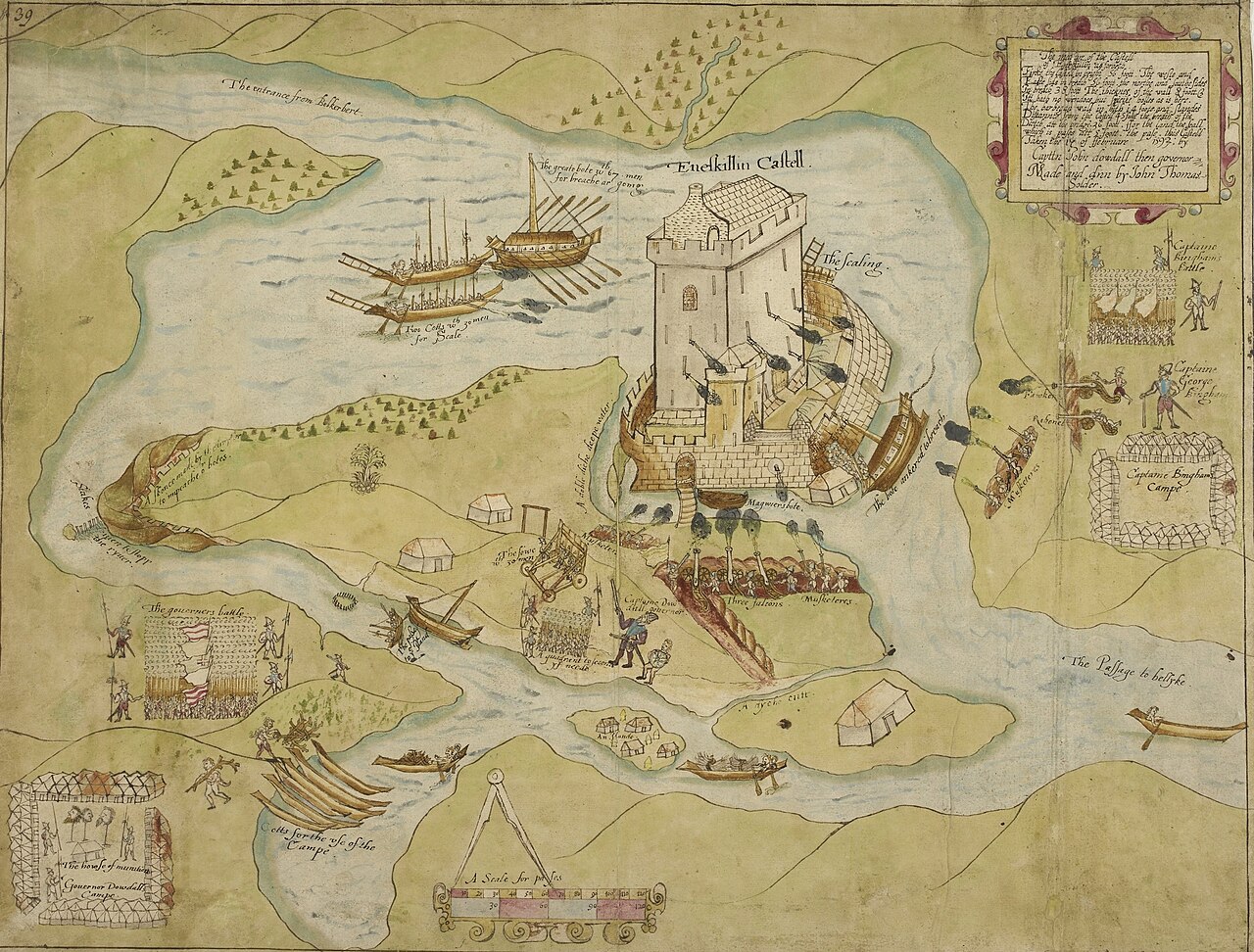
1593 - 1603 - Nine Years’ War (All Facts)
War which began when Hugh O’Neill and Ireland rebelled against Queen Elizabeth and England for advancing into Ireland during the Anglo-Spanish War
War which began due to Hugh O’Neill and the Irish being angered by
The introduction of English Protestantism into Catholic Ireland
The immigration into Ulster of anti-Catholic Scottish Calvinists
War in which Hugh O’Neill and the Irish
Captured Enniskillen and Monaghan Castles in England
Appealed to Philip II of Spain for help
War in which the English
Blocked Hugh O’Neill’s request to Spain and fought him and his forces to a stalemate
War during which the English opened and founded schools like Trinity College in the hope that education will pacify the Irish
1598 - Battle of the Yellow Ford (All Facts)
Battle in which Hugh O’Neill and Hugh O’Donnell and their Irish forces defeated the English forces during the Nine Years’ War
Battle in which the Irish finally scored a decisive victory after years of skirmishes and truces between them and the English soldiers
Battle which took place on the namesake on the Callan River near Armagh in Ulster in Ireland
Battle before which the English planned a threefold attack on the Irish rebels from Sligo to Westmeath until all three were repulsed and a truce was arranged
Battle during which
Hugh O’Neill and Hugh O’Donnell led a small garrison on the Blackwater River against the English and set out from Newry with a relief force of 4K troops
Hugh O’Neill’s men, armed with muskets, sniped at the English flanks until the English force became too scattered for the leading regiment to be given effective support and was broken up and cut to pieces by the Irish cavalry
A rout was avoided, but only 1,500 of the 4K men reached back to the safety of Armagh
Battle which enraged Queen Elizabeth of England
1607 - Flight of the Earls (All Facts)
Incident in which both Hugh O’Neill and Rory O’Donnell of Ireland, both Catholic; sought refuge away from England and Ireland in Europe, but in which every place in which they sought refuge refused them including France, Spanish Netherlands, Switzerland, and Italy; before finally finding refuge in Rome; where they were received at its gates by seven cardinals and which the Pope there placed a palace at their disposal
Incident in which they were considered traitors back in Ireland and their lands which King James of England initially restored to them after they had left Ireland due to feudal disputes that arose were seized for settlement by English and Scottish Protestants after they had undertaken the namesake action
1600s - 1610s - Plantation(s) of Ulster (All Facts)
Organized colonization of the namesake Irish province on confiscated Irish land by English and Scottish during the reign of King James of England and Scotland
The prior flight of the Earls of Tyrone and Tyrconnell into Rome paved the way for this systematic colonization of the namesake lands by Protestants, in which half a million acres were thrown opened and estates of up to 3,000 acres were granted to English and Scottish immigrants, who had to undertake to build defensible houses
Native Irish who remained loyal to the English during the latest rebellion were also eligible for similar grants
This systematic colonization process was legalized by a Parliament that had assembled within the namesake and the City of London’s livery companies had formed an Irish Society to raise capital for the exploitation of timber and fisheries in Ireland’s County Derry while a new city was to be built called Londonderry
Process by which London Companies undertook to accept only English and Scots as tenants, with thousands of Irish remaining on their holdings which were not removed from them and also outbid most of their English and Scottish counterparts when it came to paying rent
1639 - 1653 - Wars of the Three Kingdoms (All Facts)
Series of conflicts between England, Scotland, and Ireland including
The English Civil War (the First Civil War and Second Civil War and Third Civil War)
The Bishops’ War (the First Bishops’ War and the Second Bishops’ War)
The Irish Confederate Wars and 1641 Rebellion
Oliver Cromwell and England’s conquest of Ireland
1641 - 1653 - Irish Confederate Wars (All Facts)
Series of wars in Ireland against England and Scotland in which the rebels who provoked them wanted
an end to anti-Catholic discrimination
to increase Irish self-governance
to drive out the English and Scottish Protestant settlers / colonizers in Ulster
to prevent an invasion by anti-Catholic English Roundheads (Parliamentarians / Puritans) and Scottish Covenanters; both of whom were defying King Charles of England
Series of wars in Ireland against England Scotland in which the rebels claimed loyalty to King Charles of England, however, King Charles rebuffed their claim
Series of wars that ended when Oliver Cromwell of England crushed the Irish rebels and confiscated their lands to pay back his soldiers
1641 - Irish Rebellion of 1641 (All Facts)
Rebellion which began the Irish Confederate Wars against Parliament in England
Rebellion in which Irish rebels massacred 10K+ English colonists in and drove the rest out of Ulster
Rebellion in which Irish rebels seized the opportunity to rebel given that England was on the brink of Civil War
Rebellion in which Irish rebels demanded
freedom of conscience
government by Catholic officials
restitution of property seized by England on religious grounds
Rebellion in which a rebel Parliament known as the Catholic Confederacy was founded and met in Kilkenny
Rebellion in which rebels affirmed their loyalty to King Charles, preferring him over the militant Protestant Parliament in London
Rebellion in which rebels were aided by France which provided them arms and money to try to weaken England

1649 - Drogheda Massacre (All Facts)
Massacre of 1,500 people including English Cavaliers (Royalists), Catholic Priests, and civilians in Ireland
Massacre organized by Oliver Cromwell
He called for the city to surrender to avoid “an effusion of blood” but his call was rejected
Two costly assaults were necessary before his Ironsides cavalry broke through and, enraged, he ordered all the enemy to be put to the sword
The spectre of Drogheda’s date was such that other terrified garrisons could hardly wait to surrender and avoid Cromwell’s “righteous judgement of God”
He did this to strike terror into the hearts of the Irish in order that they would fear him, so he could confiscate their land and pay his soldiers following the English Civil War
1649 - 1653 - Conquest of Ireland (All Facts)
Military operation conducted by Oliver Cromwell to provide (confiscated) land to pay off all of his soldiers after the English Civil War
1689 - 1691 - Williamite War in Ireland (All Facts)
1689 - Siege of Derry (All Facts)
Battle in which King William III of England his forces defeated King James II and his Irish-French forces in the namesake city of Ireland after 15 weeks
Battle after which the Protestants of the namesake city affirmed their allegiance to King William III and Queen Mary II of England
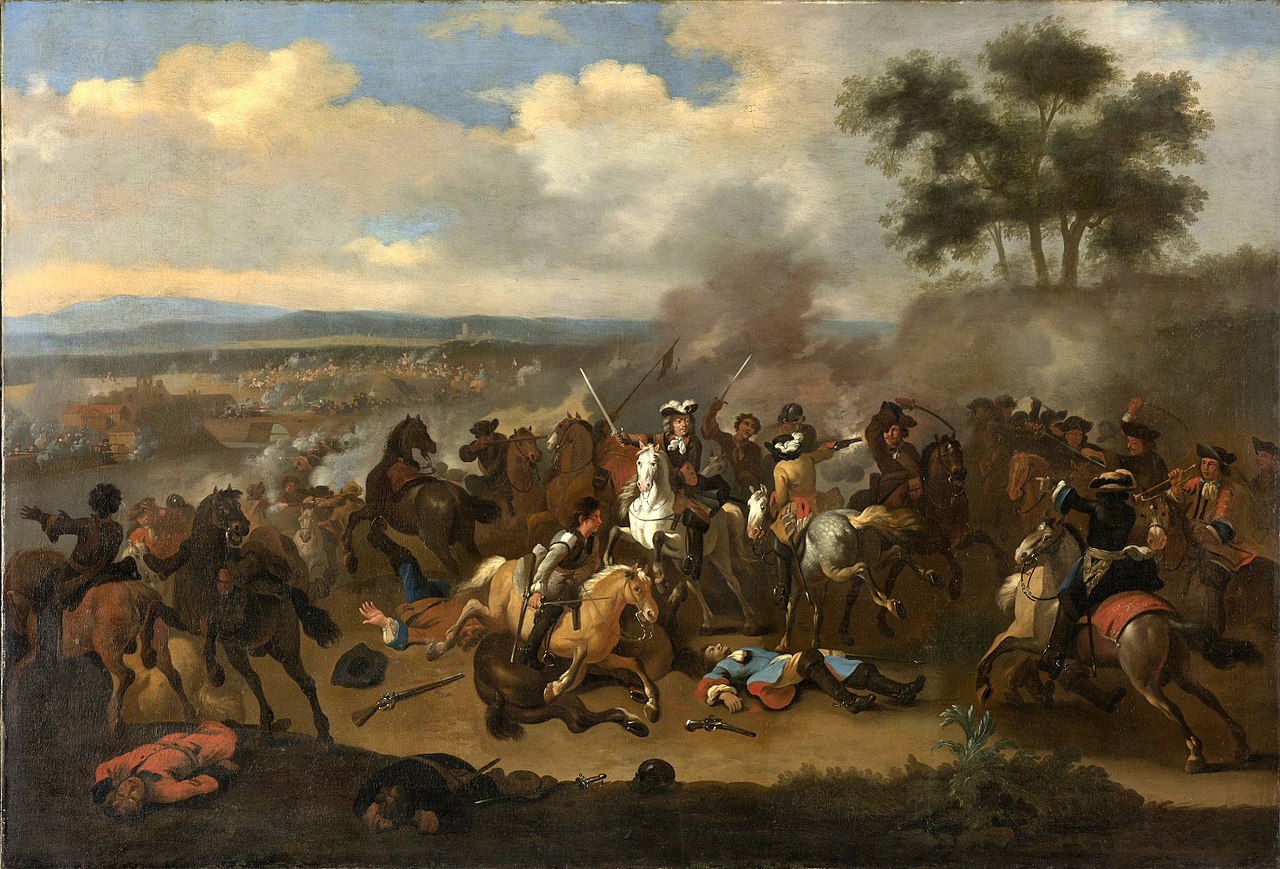
1690 - Battle of the Boyne (All Facts)
Battle in which King William III of England and his Grand Alliance forces defeated King James II and his English, Scottish, French, and Irish Jacobite forces during the Williamite War in Ireland during the Nine Years’ War
Battle in which, when King William III and his forces arrived, King James II and his forces were well dug in on rising ground behind the namesake river, the only defensive barrier between Belfast and Dublin
Battle in which King William III threw in his forces at the beginning, but kept the untried English regiments in reserve and attacked with his German, Danish, Dutch, Finnish, and French Huguenot forces instead
By the time hand-to-hand combat struggles developed, the English were brought in and the Jacobites were broken and lost 1,600 men that were either killed, wounded, or imprisoned while King William III barely lost a third of that amount

1690 - Siege of Cork (All Facts)
Battle in which John Churchill and his forces defeated James II and his forces and captured the namesake city and 5K Jacobites during the Williamite War in Ireland during the Nine Years’ War

1691 - Battle of Aughrim (All Facts)
Battle in which King William III defeated King James II and his Irish and French Jacobite forces during the Williamite War in Ireland during the Nine Years’ War
1691 - Siege of Limerick (All Facts)
Battle in which the namesake headquarters of the Jacobites in Ireland surrendered to King William III’s forces after successfully resisting them twice in two prior sieges
1691 - Treaty of Limerick (All Facts)
Treaty signed between England and Ireland that ended the Williamite War in Ireland during the Nine Years’ War
Treaty which granted a measure of religious toleration to Catholics
Treaty in which Jacobite soldiers and civilians that remained in Ireland were granted security of life and property