Biology Lab Practical 2
 Call Kai
 Learn
Learn Practice Test
 Spaced Repetition
 Match
Match Flashcards
 Knowt Play
1/135

Earn XP
Description and Tags
need a 4 piece honey bbq chickne basket oh lord
Name | Mastery | Learn | Test | Matching | Spaced | Call with Kai | Chat |
|---|
No analytics yet
Send a link to your students to track their progress
136 Terms
Sporophyte
A multicellular diploid (2n) generation
Gametophyte
A multicellular haploid (n) generation
Nonvascular seedless plant phyla:
Mosses - Bryophyta
Liverworts - Hepatophyta
Hornworts - Anthocerophyta
Vascular seedless plant phyla:
Club mosses - Lycophyta
Ferns, horsetails, and whisk ferns - Monilophyta
Vascular naked seed plant (gymnosperm) phyla:
Conifers - Coniferophyta
Cycads - Cydadophyta
Ginkos - Ginkophyta
Gnetophytes - Gnetophyta
Vascular seed plants with fruits and flower (angiosperm) are phylum __ and include __
Anthophyta; monocots and eudicots
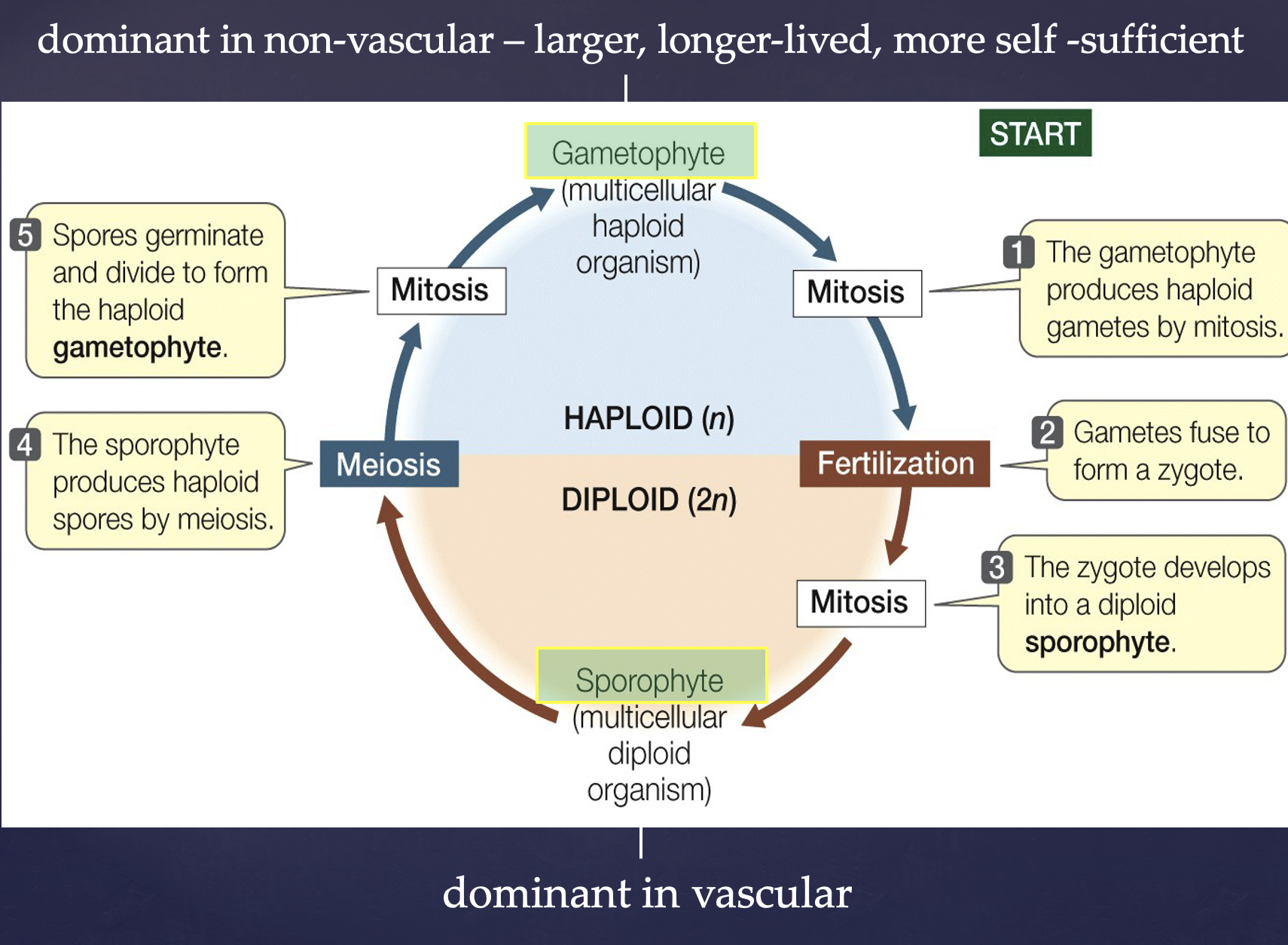
Non-vascular and some vascular seedless plant cycle
Meiosis produces spores within a sporangium located on the mature sporophyte plant. Spores germinate and develop into gametophytes. The gametophytes produce gametes in organs called archegonia (egg) and antheridia (sperm). Sperm and egg unite to form a zygote via fertilization. This develops into a mature sporophyte plant.
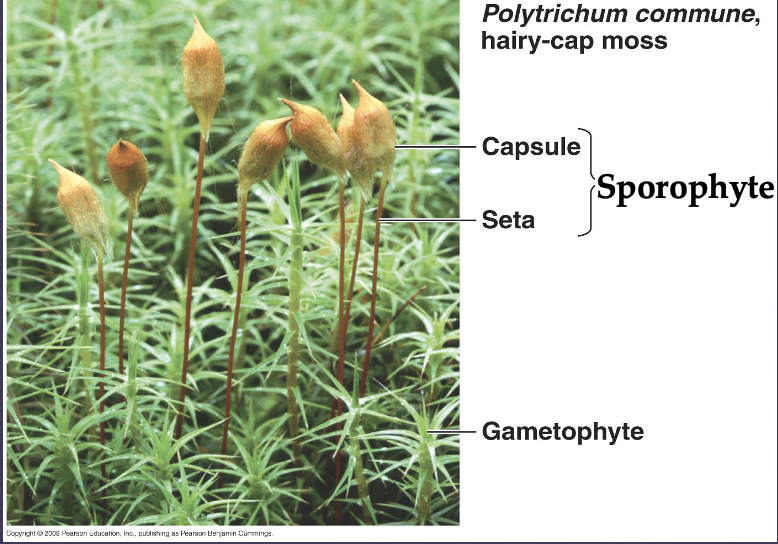
Polytrichum
Moss specimen. The brown and green is the haploid gametophyte. The antenna-things are diploid sporophyte.
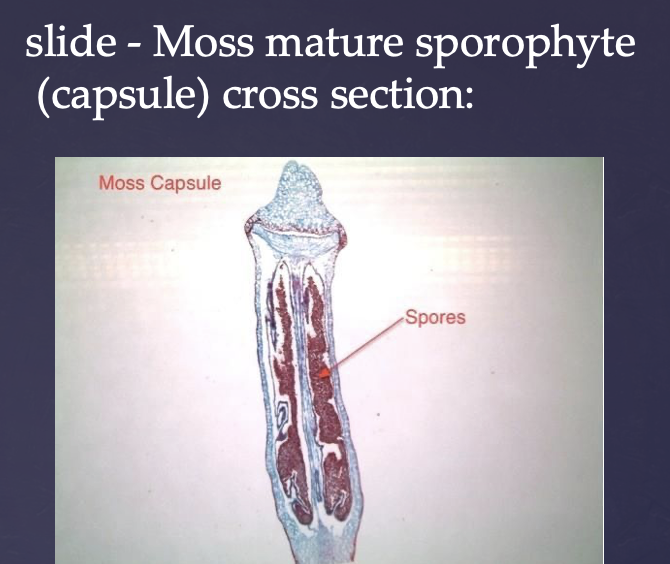
Mnium
Mature moss specimen. The spores are ALWAYS haploid
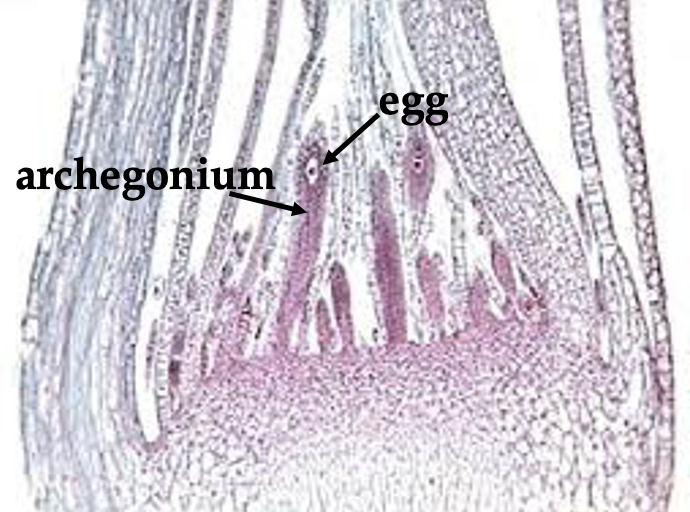
Archegonia
Part of the moss life cycle. This is a mature gametophyte and comes from the female gametophyte, making it haploid.
Antheridia
Part of the moss life cycle. This is a mature gametophyte and comes from the male gametophyte, making it haploid.
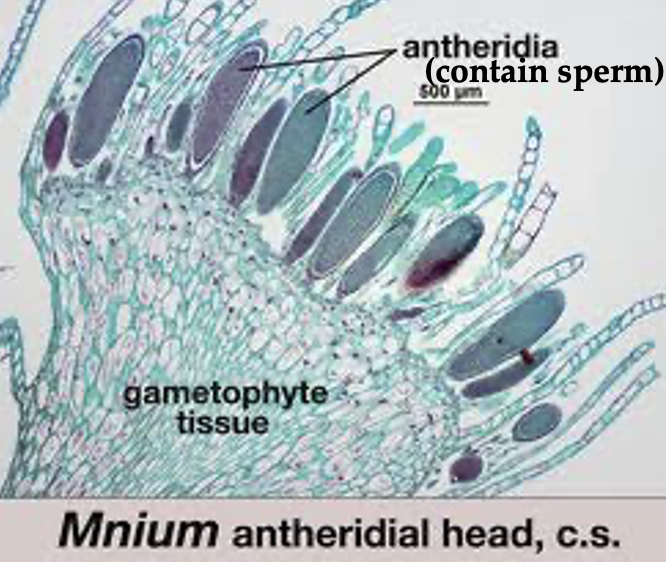
Moss life cycle
Heterosporous. Water required for sperm to transport egg.
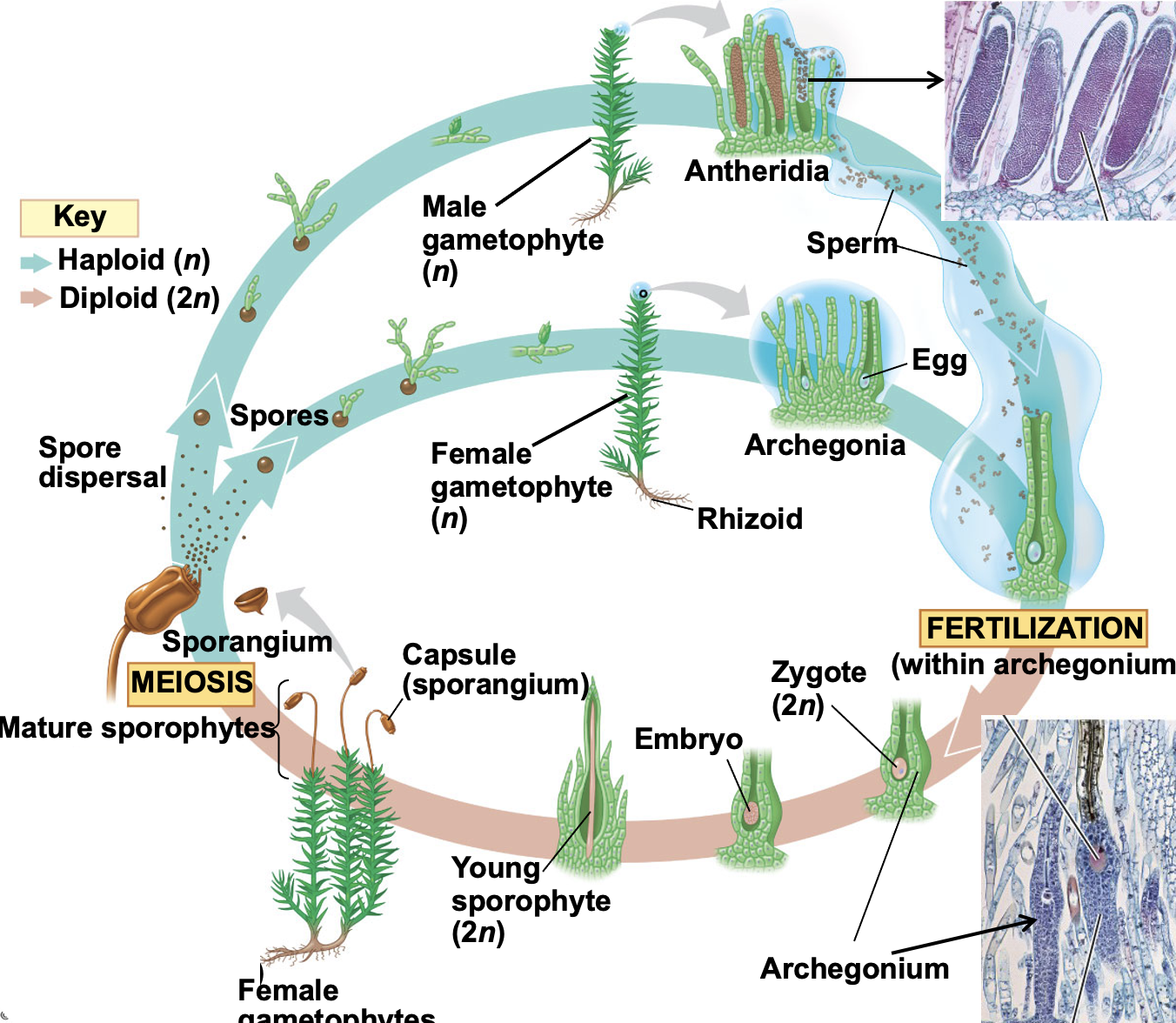
Marchantia
A type of liverwort. The macroscopic view looks like a bunch of boogers with brown noodles. The spores are haploid and the sporophyte is diploid.
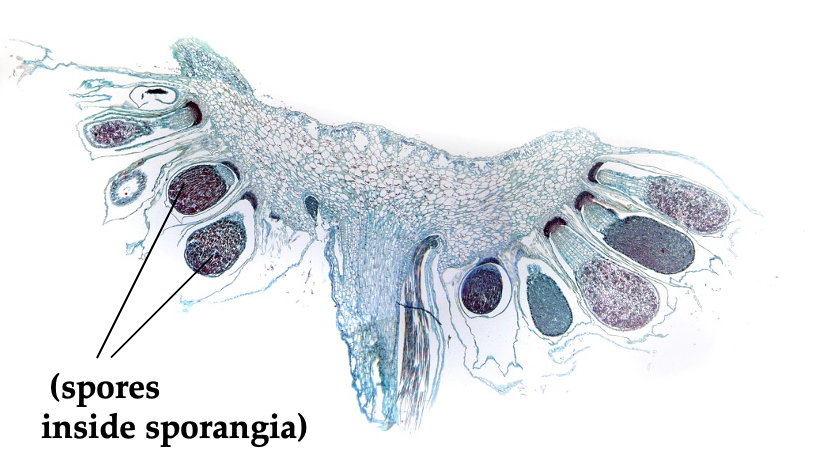
Anthoceros
A type of hornwort. The haploid spores are stores inside the diploid capsules.
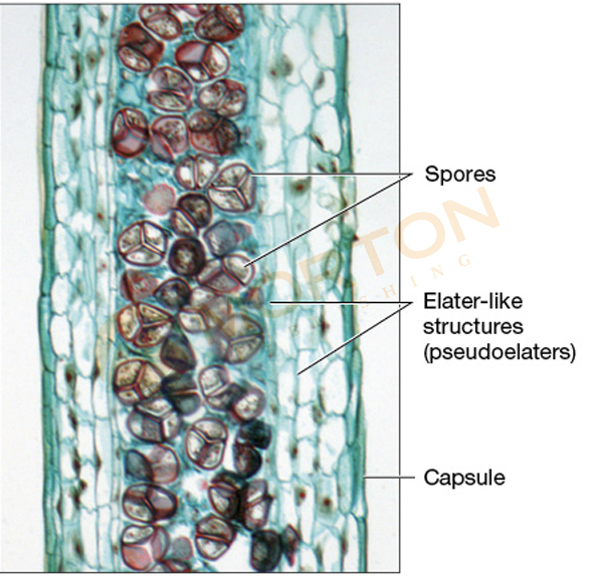
Vascular seedless plants
Some species in this group and all seed plants exhibit heterospory
Microsporangium produces microspores through meiosis
Megasporangium produces megaspores through meiosis
These products develop into individual mature gametophytes that produce gametes (sperm or egg) which unite to form a zygote via fertilization
Zygote turns into mature plant
Fern (vascular seedless plant) cycle
Note that this is homospory
Water is required for sperm transport to the egg
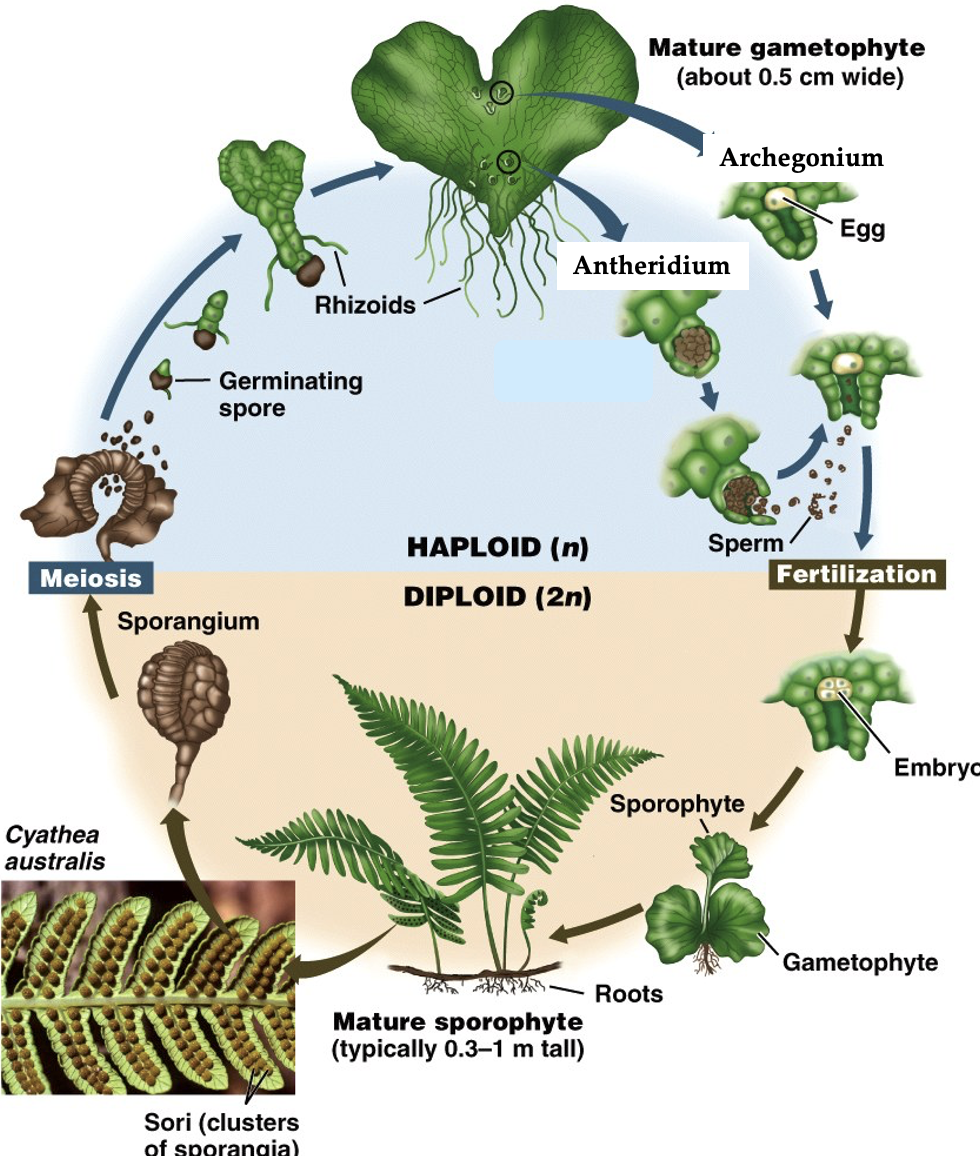
Selaginella
A type of club moss, which is a vascular seedless plant
This is known as the ‘resurrection fern,’ since it comes back alive after given water
This is a heterosporic species
Note Microspore and Megaspore
Spores are always haploid
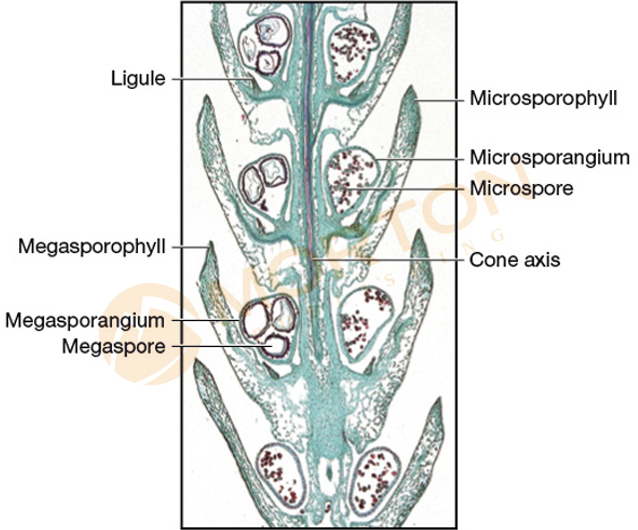
Equisetum
A type of horsetail, which is a vascular seedless plant
The pieces are internodes, the connectors are nodes, and the top is the strobilus
The hanging parts are sporangium and the dots inside are spores
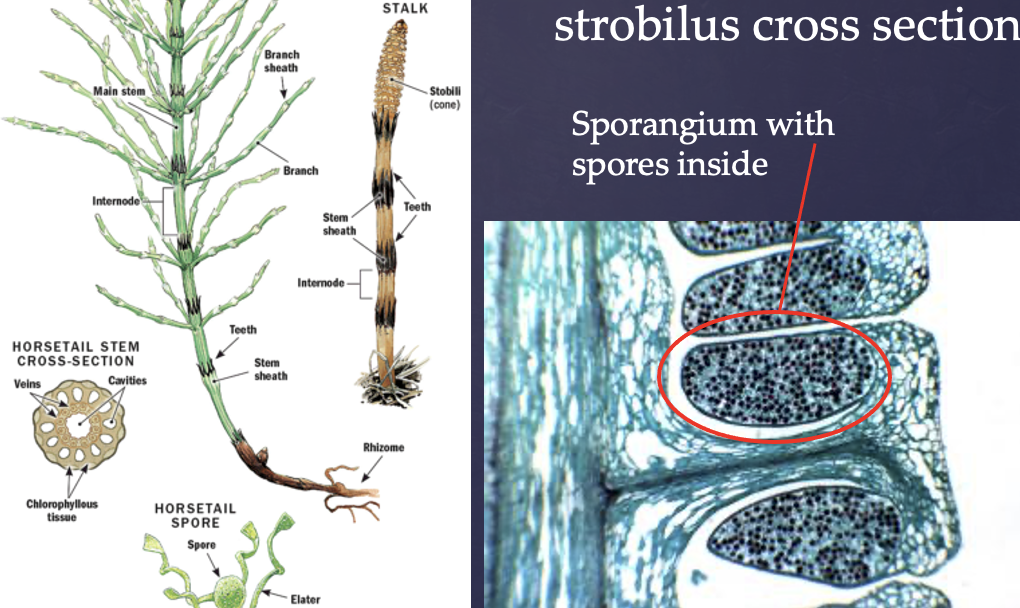
Ferns
A type of vascular seedless plant
Starts as a curly brown thing(?) called a frond
Made of leaves called blades, a stem called rhizome, and roots
Has sori on blades
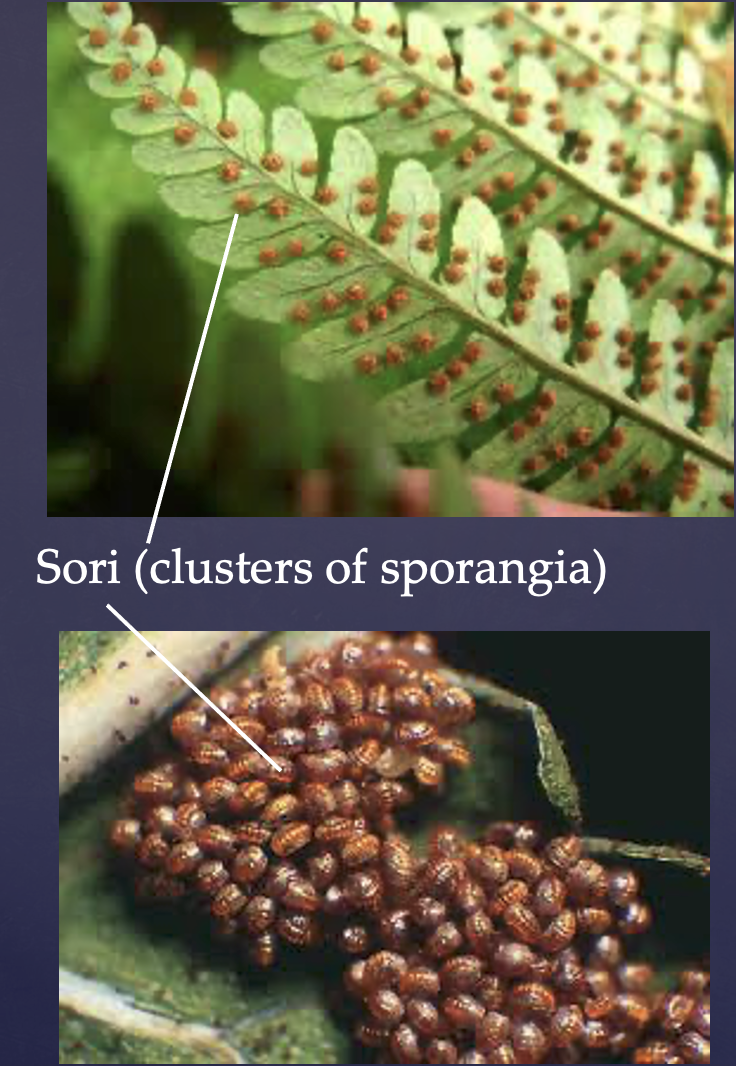
Individual sporangia
Groups of these make Sori
Located on fern leaves
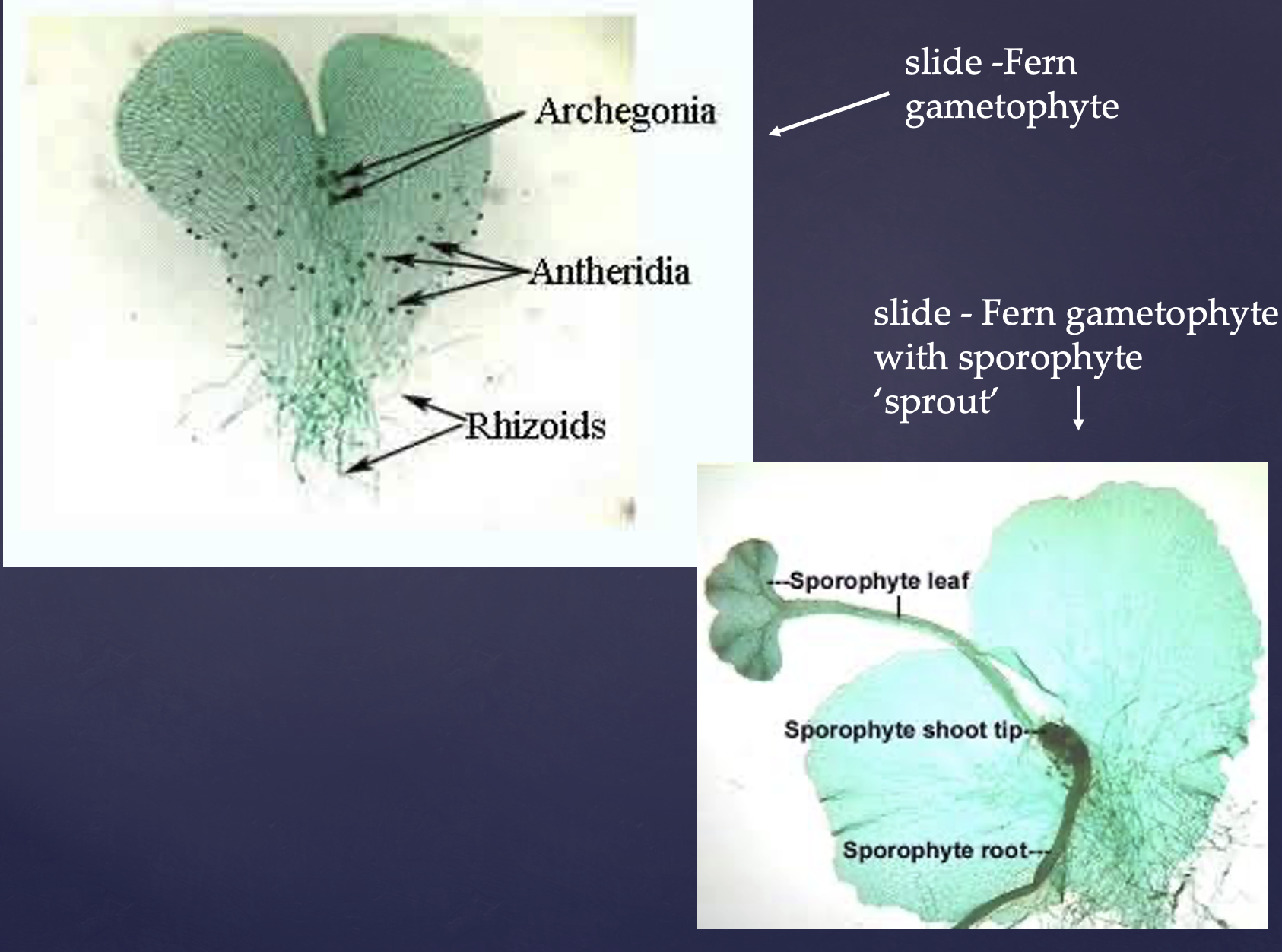
Fern Gametophyte
Most important parts are the Archegonia, Antheridia, Rhizoids, and Sporophyte (‘sprout’)
The gametophyte is haploid
The sporophyte is diploid
Keep the fern life cycle in mind, the arc. and anth. show up in the middle of the gametophyte stage and the sprout shows up near the beginning of the sporophyte stage
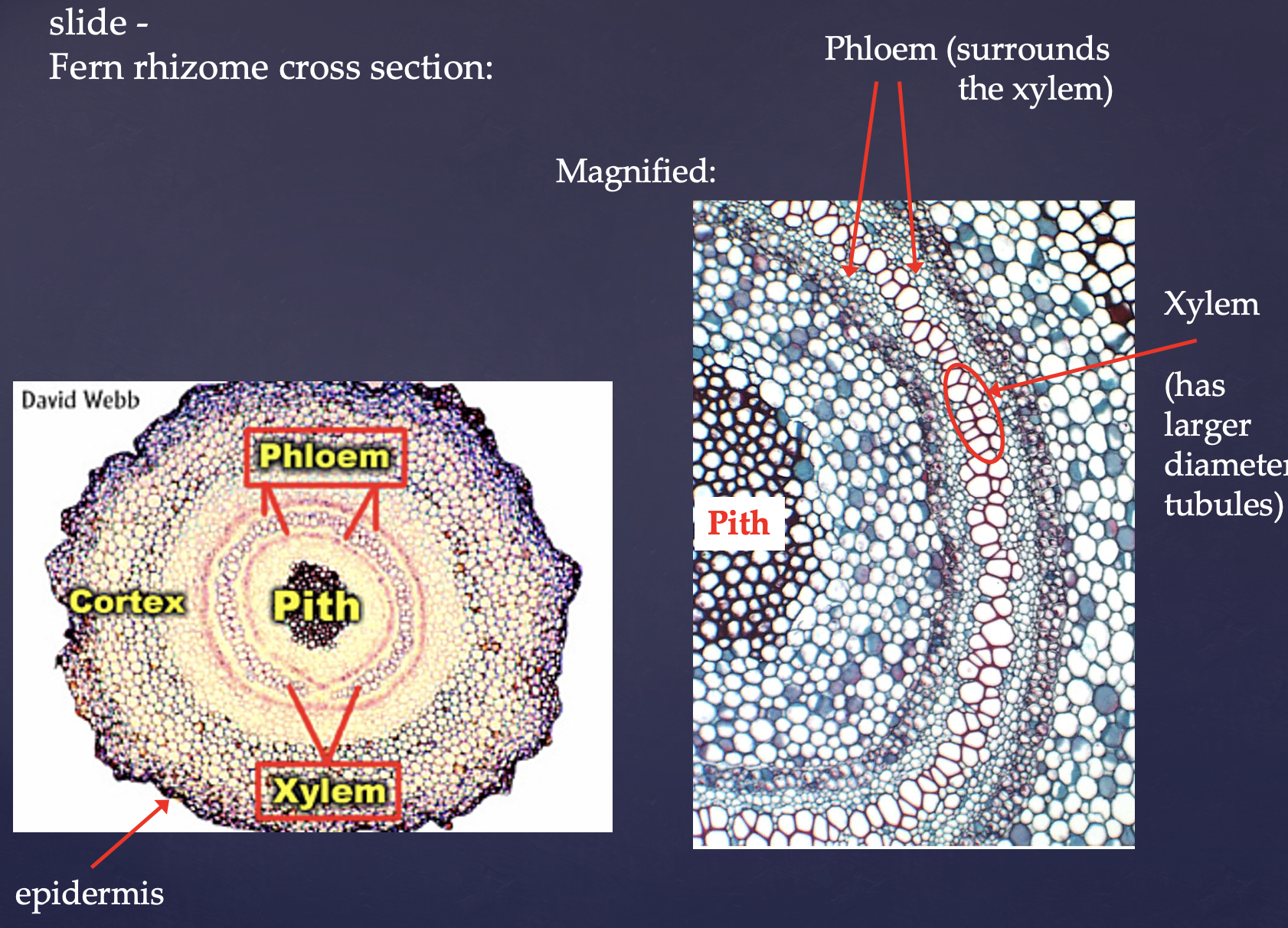
Fern Rhizome
Most important parts are the xylem, phloem and epidermis
Plant life cycle
Multicellular diploid and haploid stages
Gametes produced by mitosis (n → n)
Spores produced by meiosis (2n → n)
Homosporogy
One type of sporangia in the sporophyte generation
One type of spore type in gametophyte generation
Single plant fertilizing itself
Heterospory
Two distinct sporangia types in sporophyte generation
Two distinct spore types in gametophyte generation
Increased outcrossing (genetic variety from two different plants combining genetics)
Xylem
In vascular plants, this transports water and minerals, and provides structural support via lignen
One-way flow, from roots upward
Phloem
In vascular plants, this transports products of photosynthesis (carbs, fats, proteins)
Two-way flow
Commonalities of seed plants
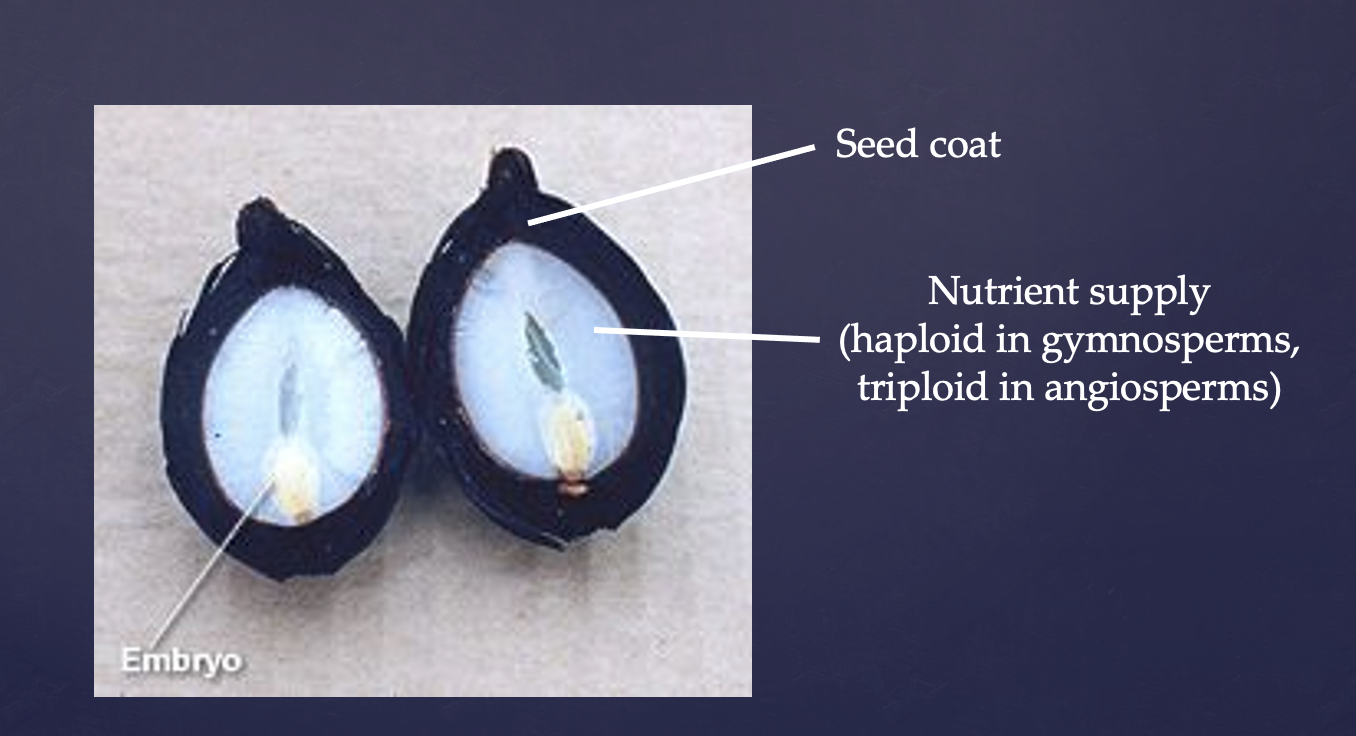
A seed consisting of embryo and nutrients surrounded by a protective coat
Sporophyte generation is dominant - reduced gametophytes
Heterospory - production of two spore types
Ovules - structure that develops into a seed following fertilization
Pollen - structure that develops from a microspore into a male gametophyte
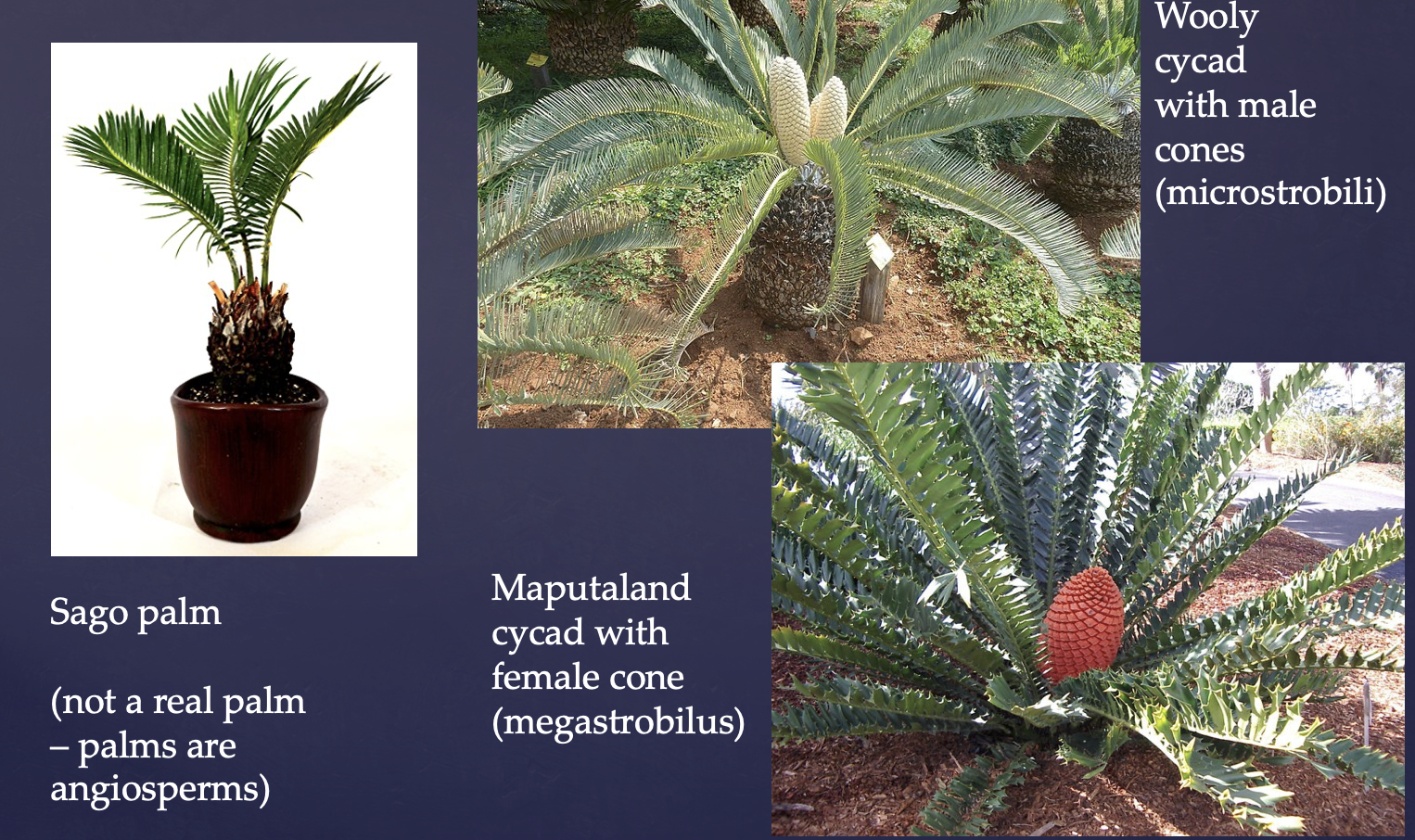
Cycadophyta
One of the four phyla of gymnosperm
In lab, we observed the sago palm (mario-pineapple-looking thing)
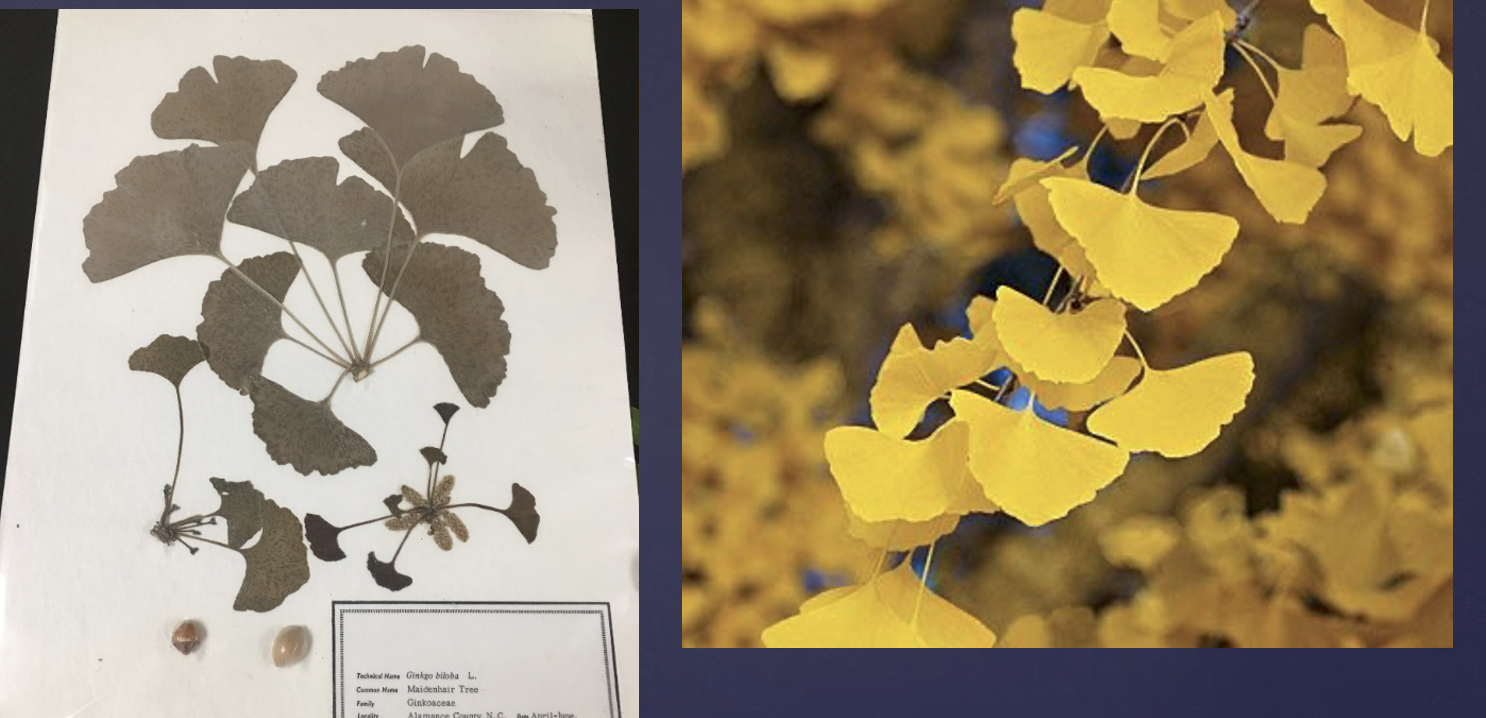
Ginkophyta
One of the four phyla of gymnosperm
In lab, we observed the maidenhair tree (fans)
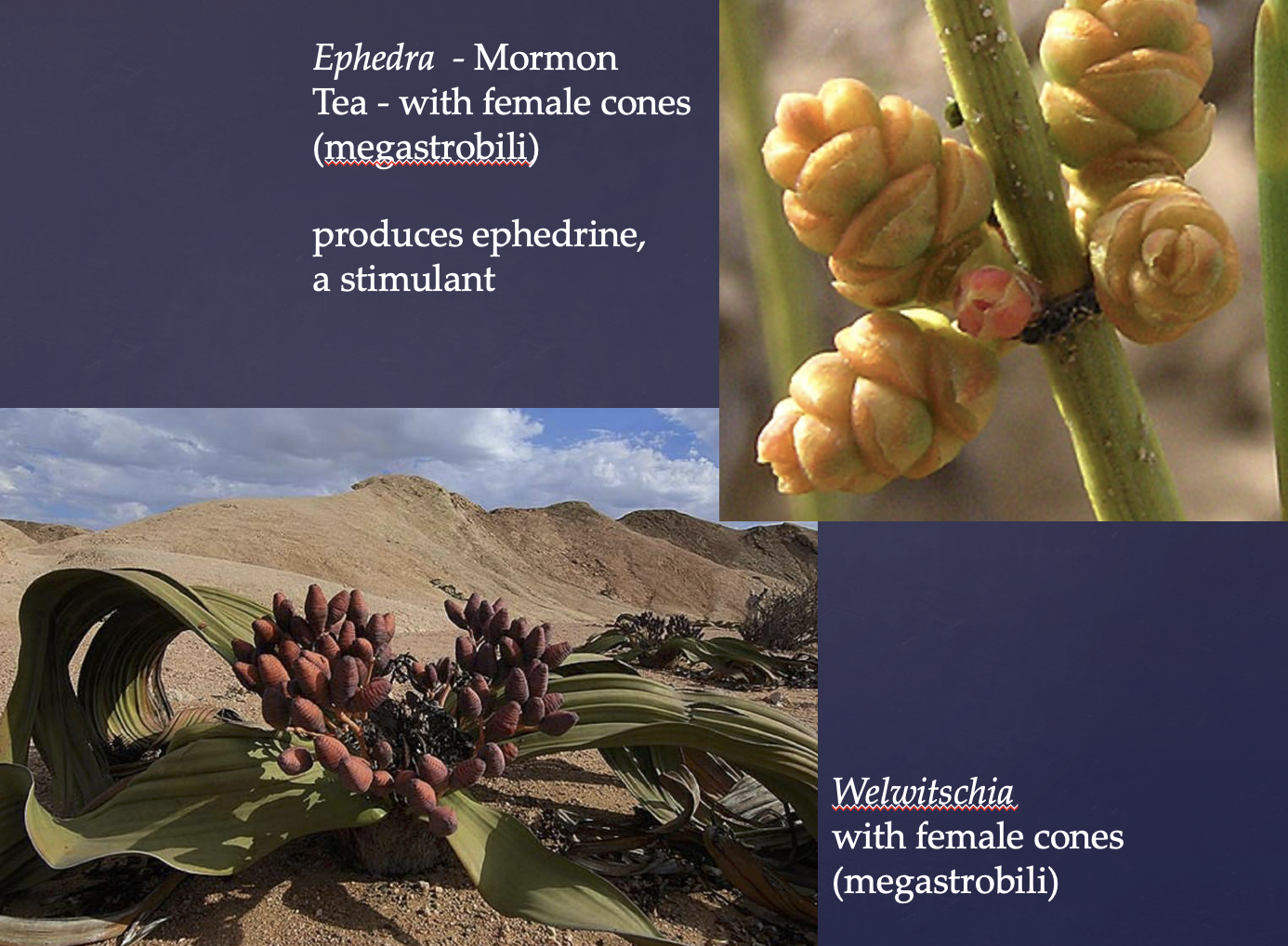
Gnetophyta
One of the four phyla of gymnosperm
In lab, we observed the Welwitschia and Mormon Tea (big leave with pines in desert)
The Mormon Tea is also called Ephedra, which produces ephedrine
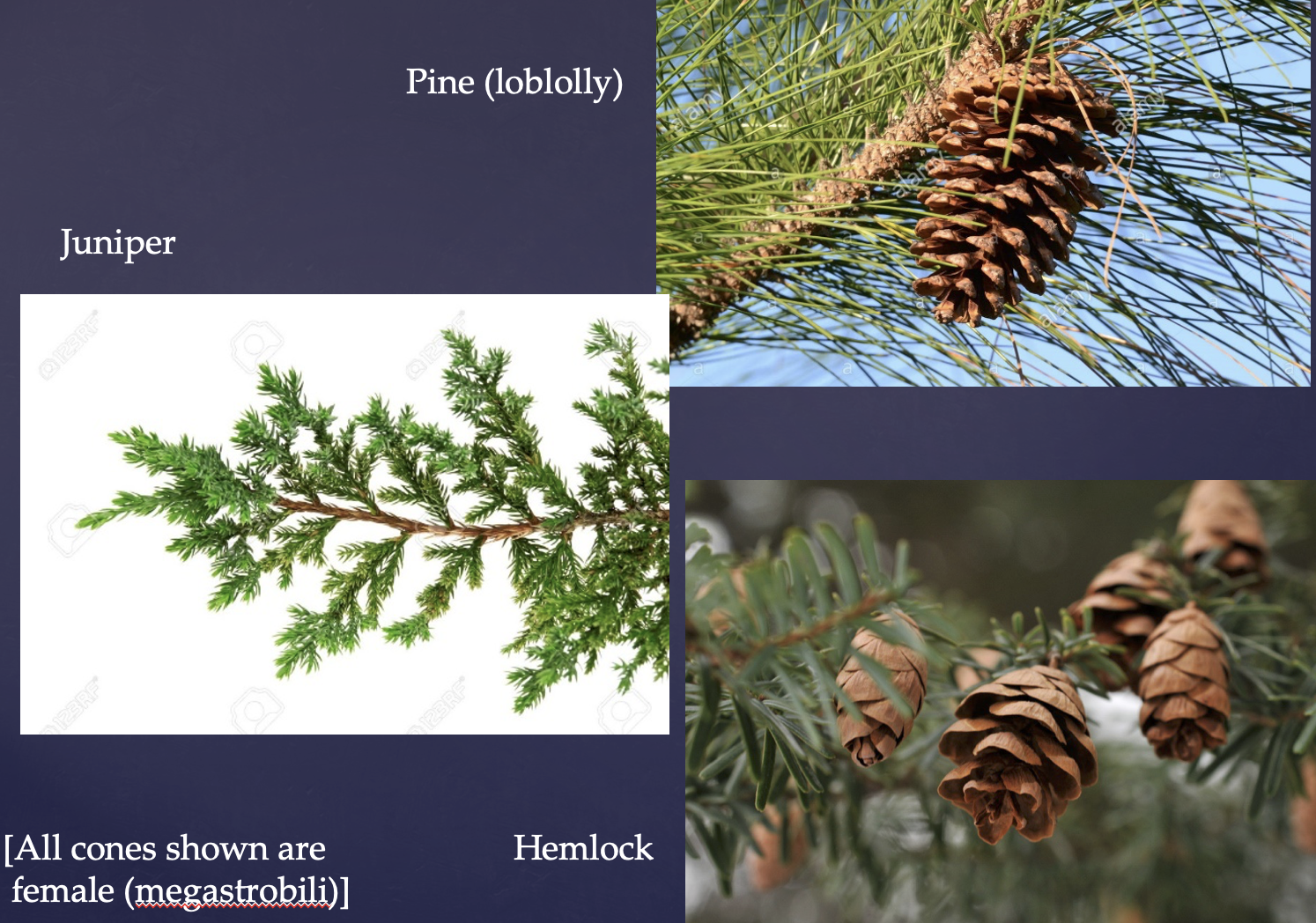
Coniferophyta
One of the four phyla of gymnosperm
Includes pine, juniper, hemlock, cedar cypress, redwood
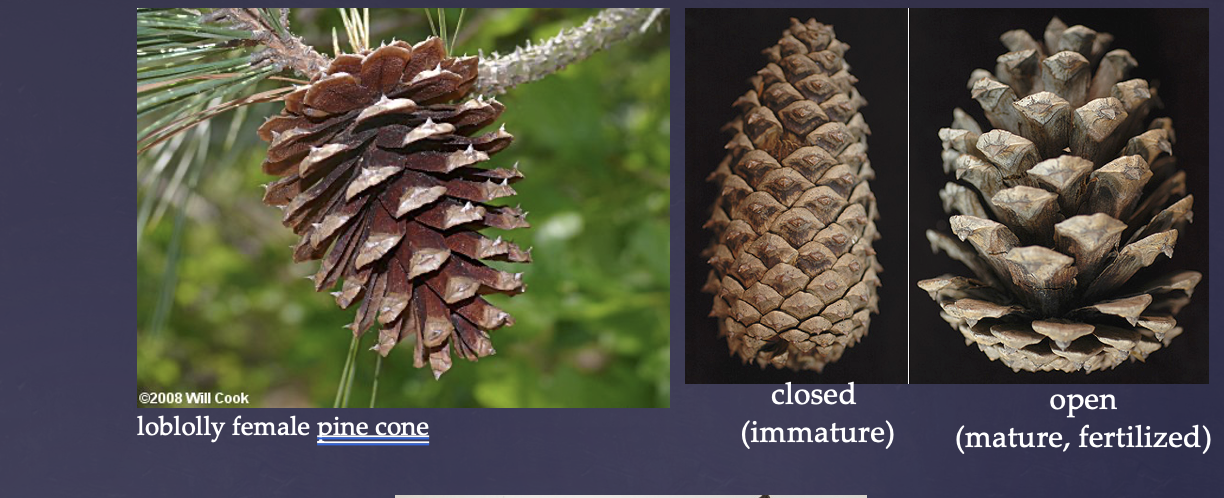
Pine Female Megastrobili
The much bigger of the two cone reproductive structures
Female, ovulate cones
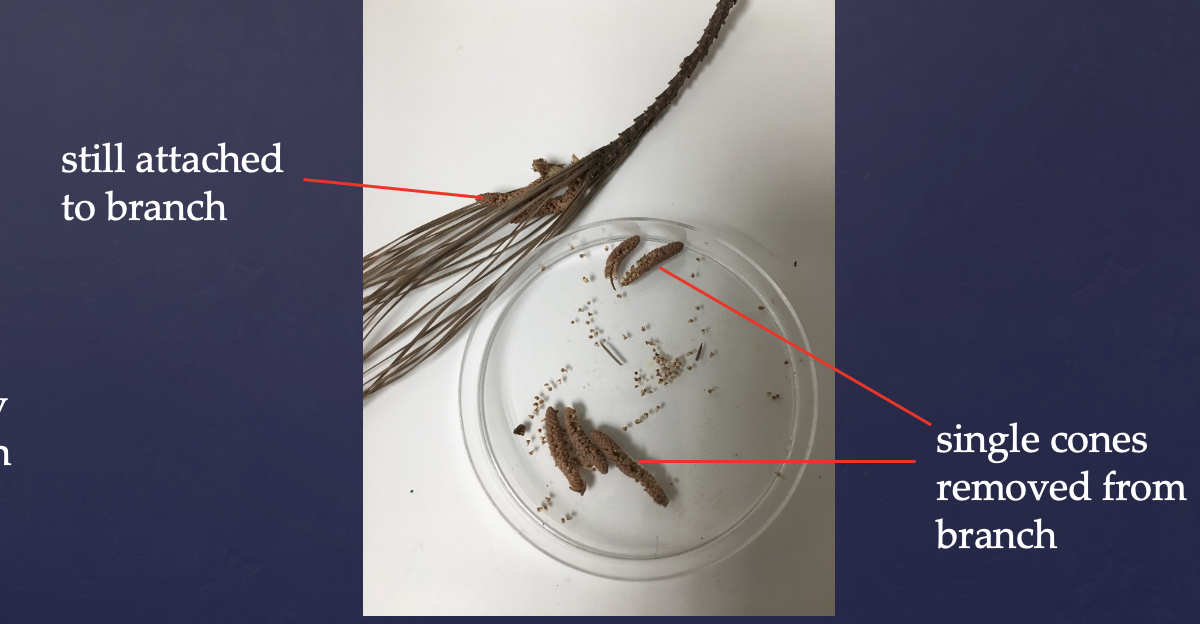
Pine Male Microstrobili
The much smaller of the two cone reproductive structures
Male, staminate cones
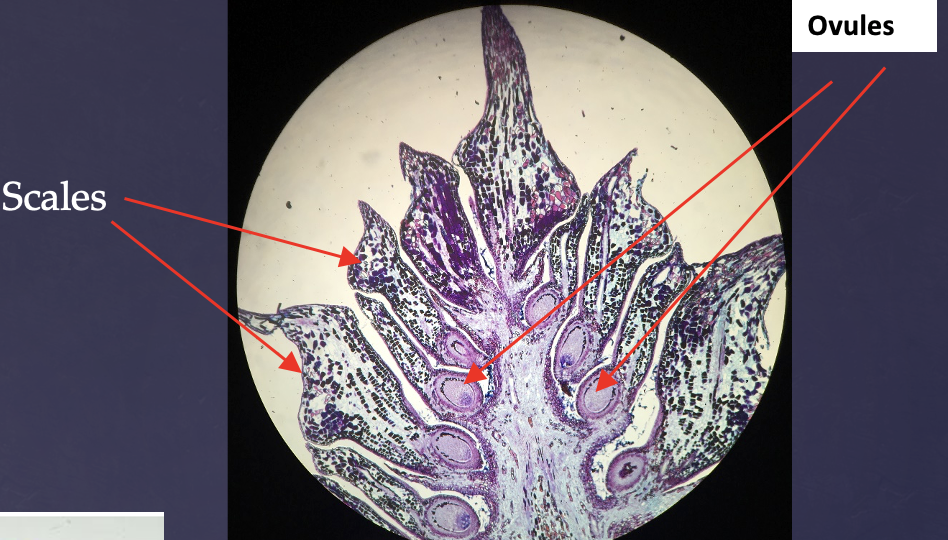
Megastrobilus Microscopy
The pointy parts are the scales and the pink sacs are the ovules
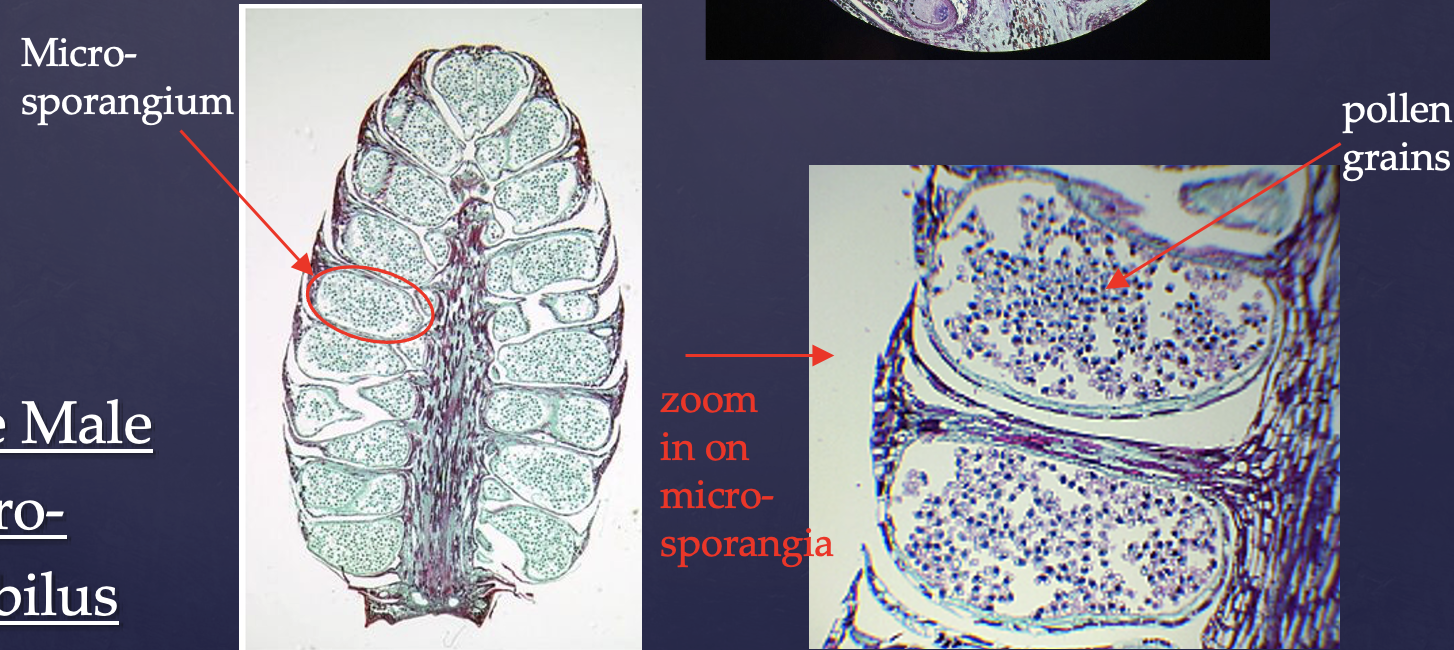
Microstrobilus Microscopy
The large blue sacs are microsporangium and they hold pollen grains
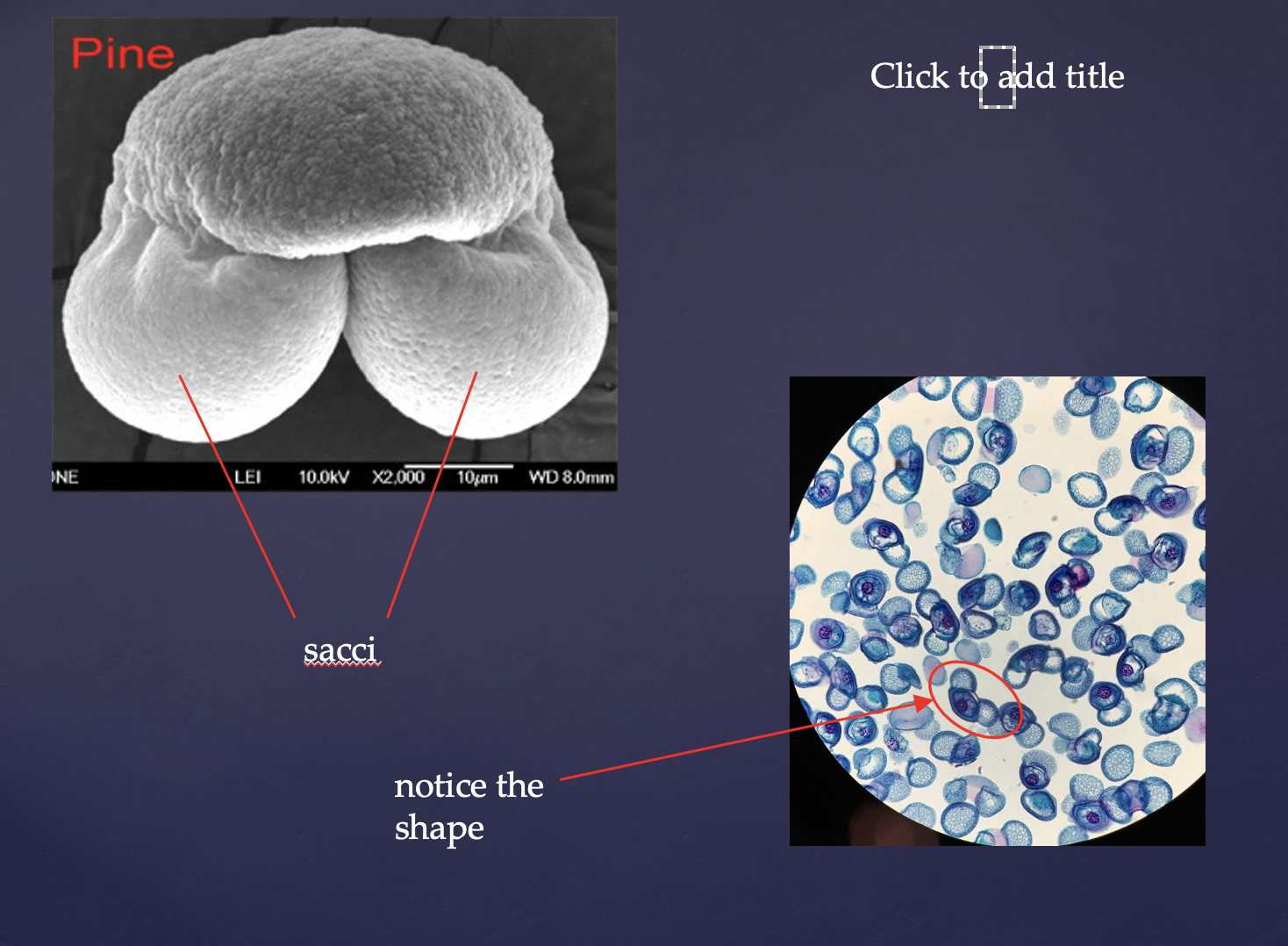
Pine Pollen Grains
Contain gametophyte (pollen tube) and haploid sperm
Note sacci, which helps the wind carry pollen
Monocot
One of the two main classes of angiosperms
Has one cotyledon
Parallel leaf veins
Floral organs usually in multiples of 3
ex. corn, wheat, pineapple
Eudicot
One of the two main classes of angiosperms
Has two cotyledons
Net-pattern leaf veins
Floral organs usually in multiples of 4-5
ex. blueberry, strawberry, potato
Cotyledon
The first embryonic leaves to emerge from a germinating seed
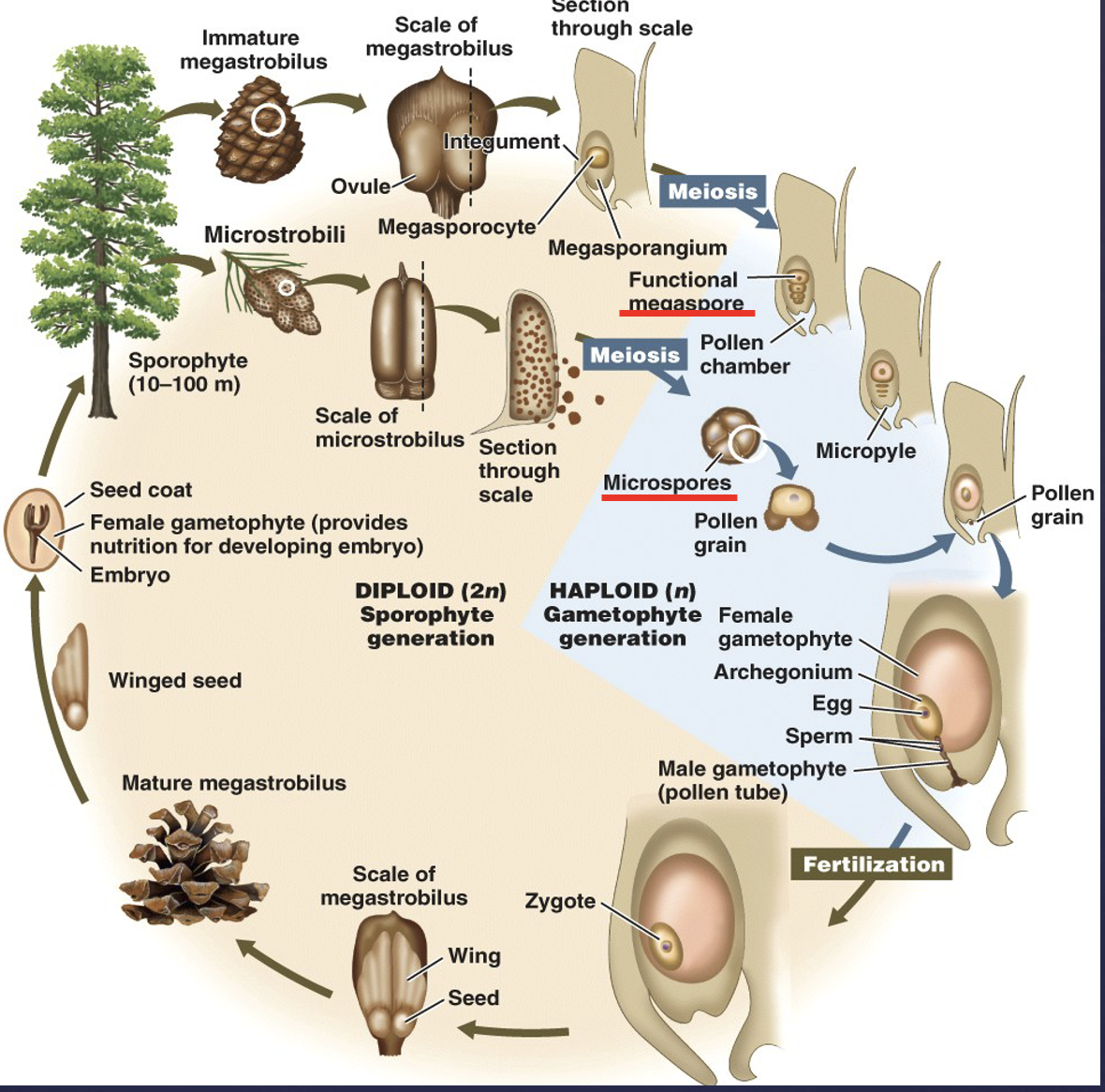
Gymosperm Life Cycle
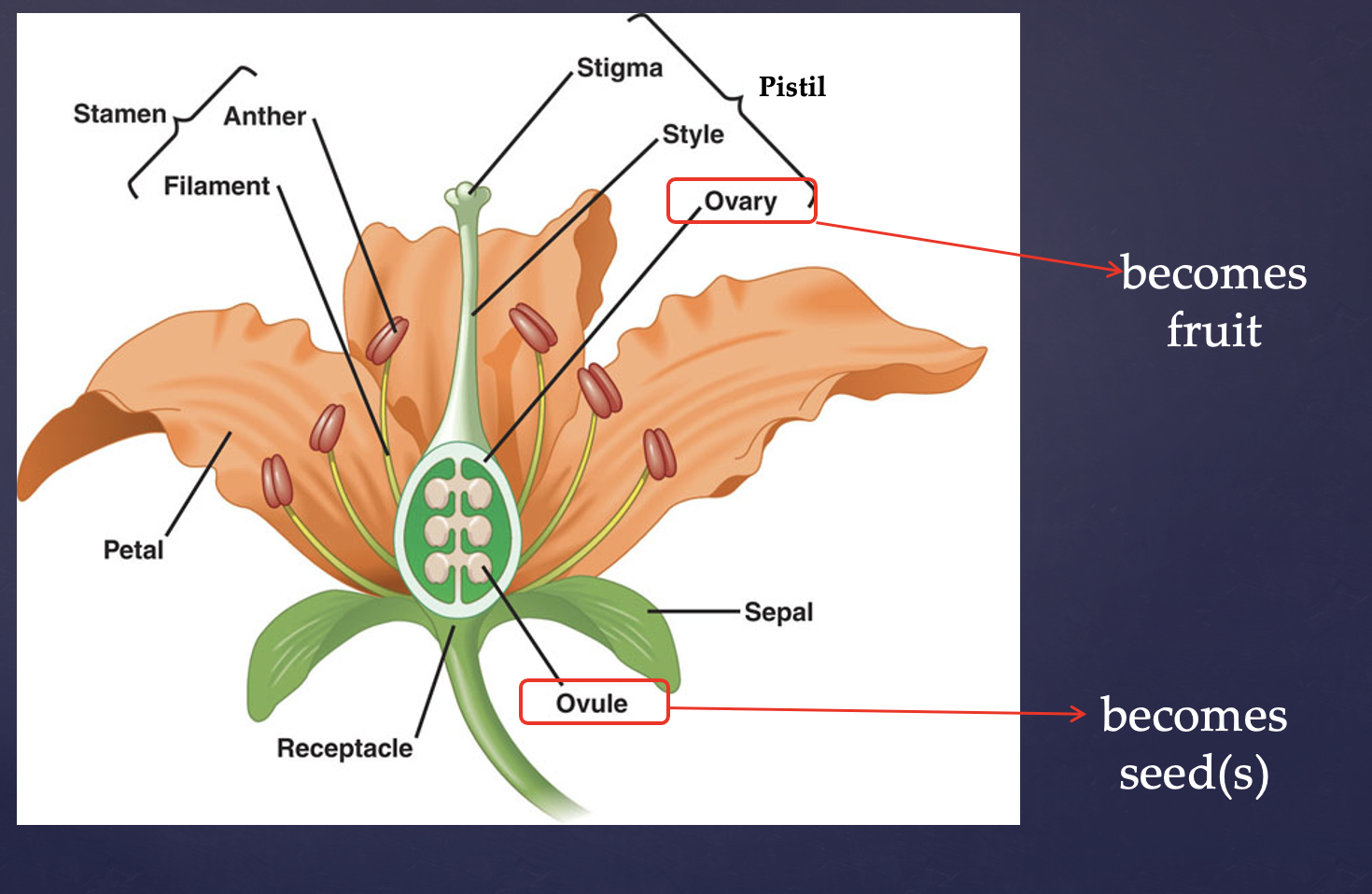
Angiosperm Anatomy
Most important parts are:
Stamen (male organ) - Anther (produces/releases pollen), Filament
Pistil (female organ) - Stigma (catches/holds/hydrates pollen), Style (path for pollen tubes), Ovary (becomes fruit)
*note that this is monocot because the veins are parallel
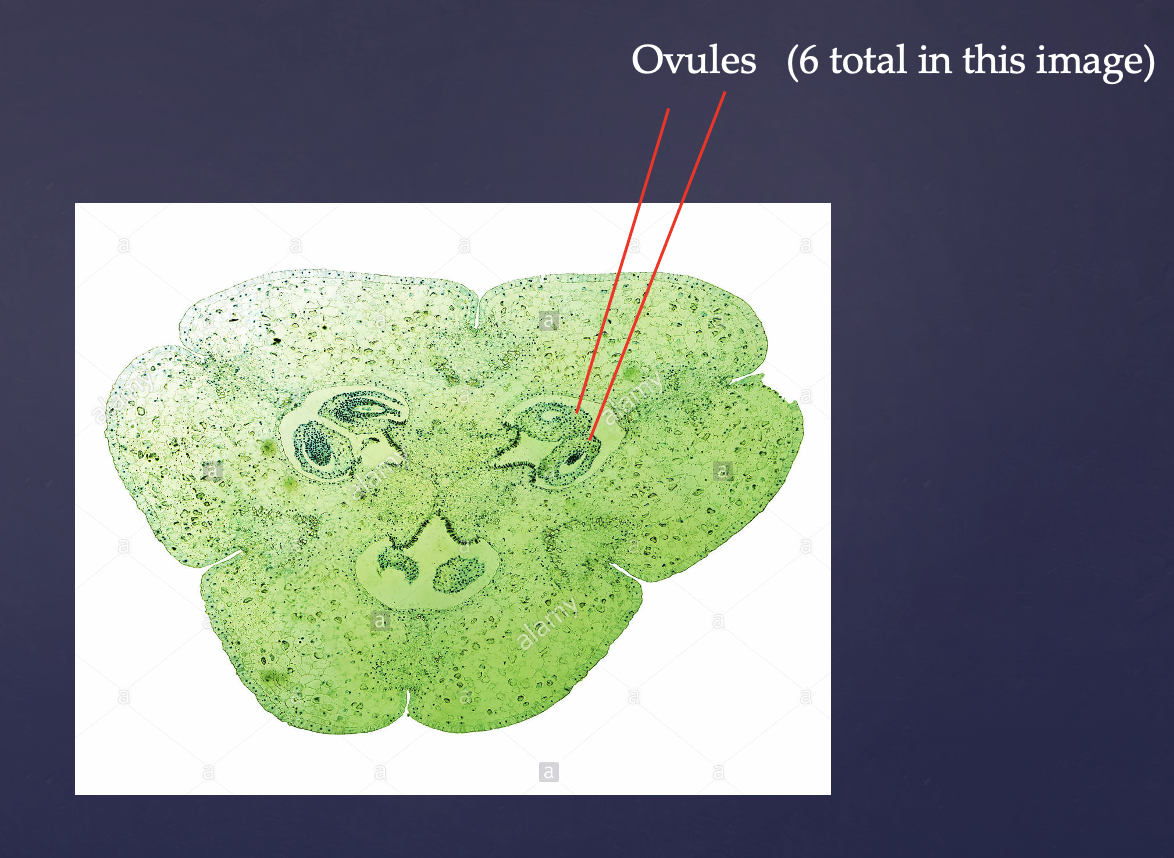
Lily Ovary Cross Section
Note that fruits come from the fertilized (ripened) ovary and seeds come from the ovules (inside the ovary)
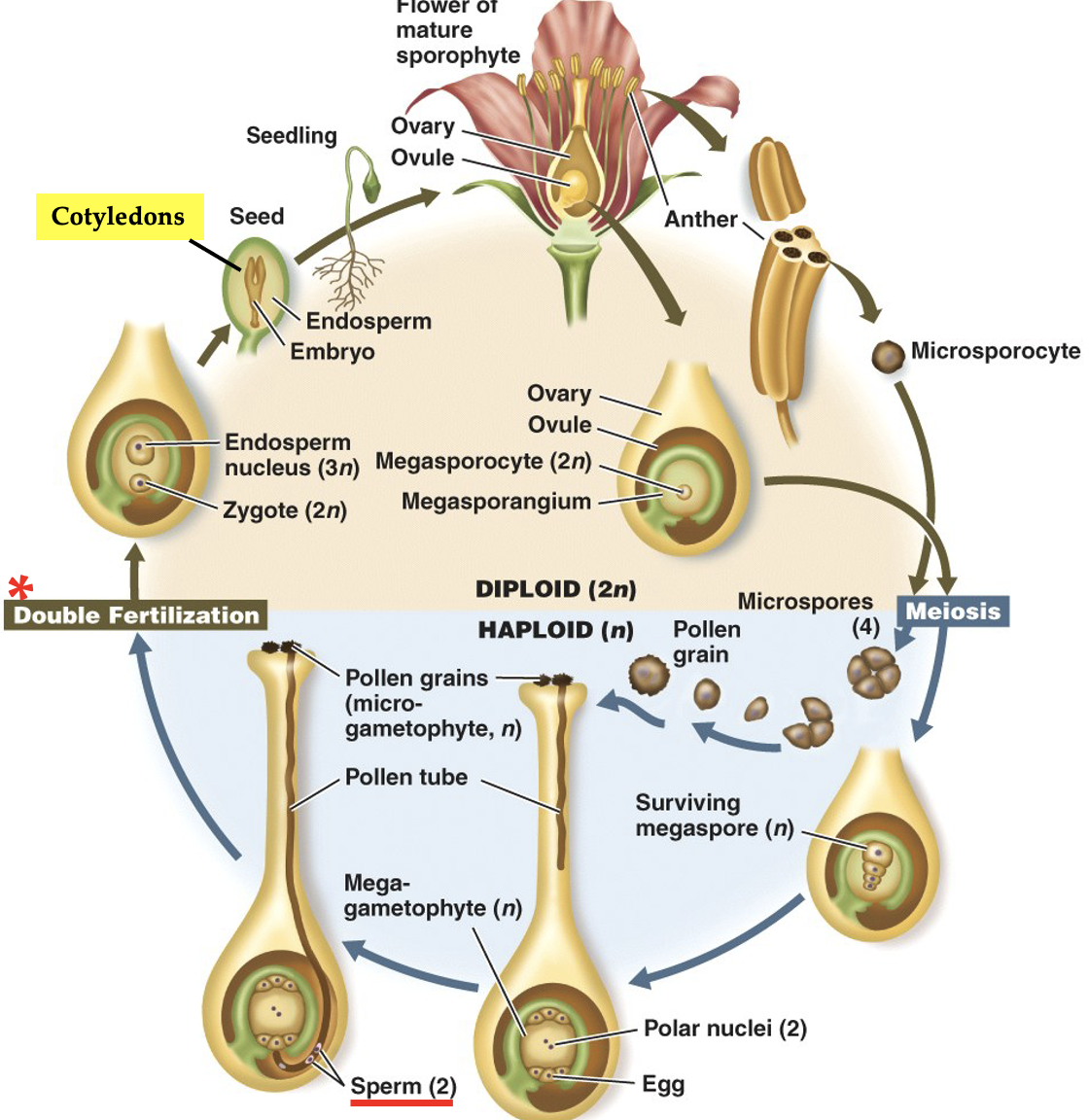
Angiosperm Life Cycle
Note that double fertilization results in diploid zygote and triploid endosperm
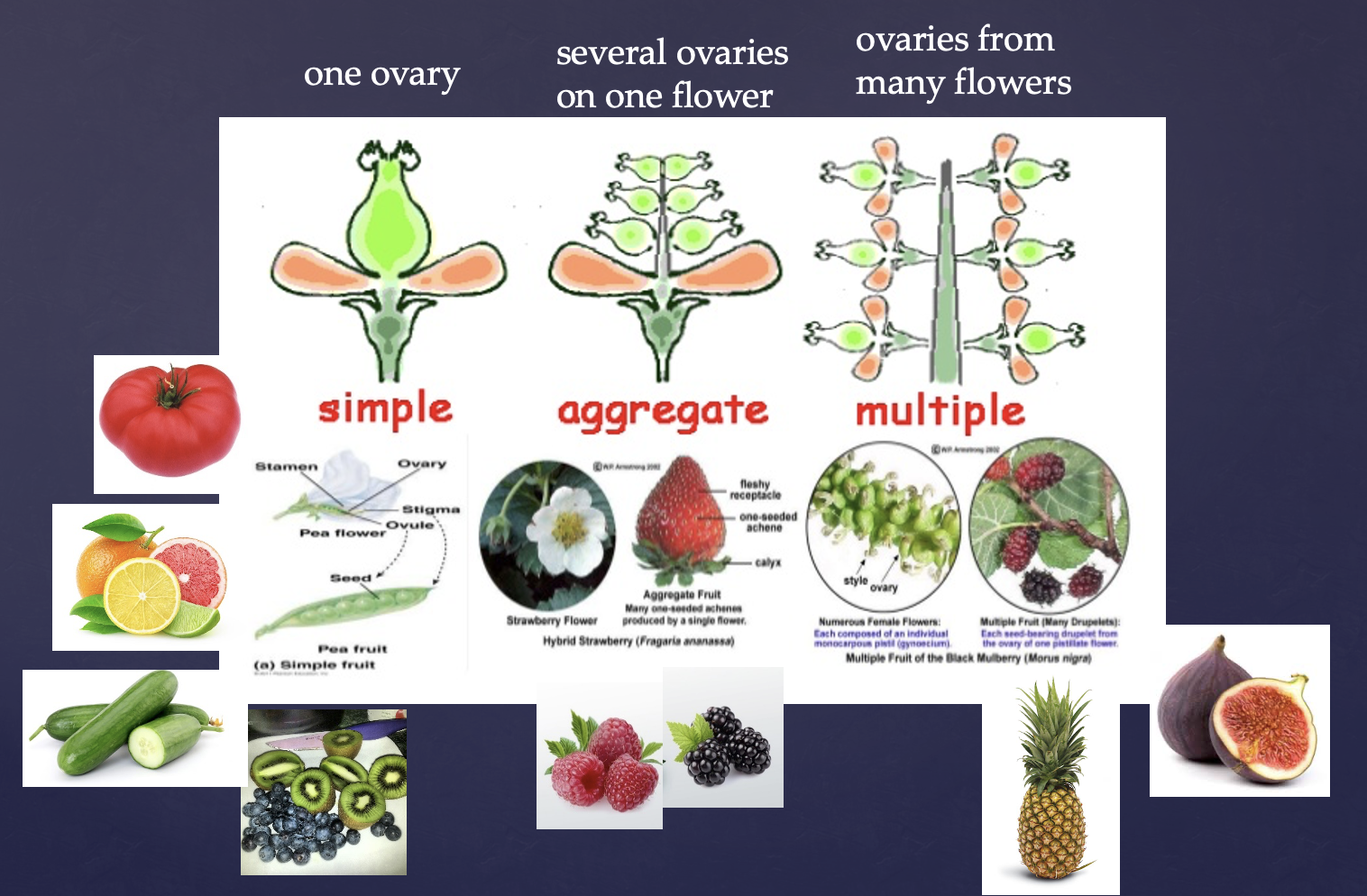
Simple Fruit
Formed from one ovary
One of the three types of fruit forming methods
ex. tomato, cucumber, blueberry, orange
Aggregate Fruit
Formed from several ovaries in a single flower
One of the three types of fruit forming methods
ex. strawberry, blackberry, rasberry
Multiple Fruit
Formed from ovaries of many flowers
One of the three types of fruit forming methods
ex. pineapple
Fruits
Developed from fertilized (ripened) ovary
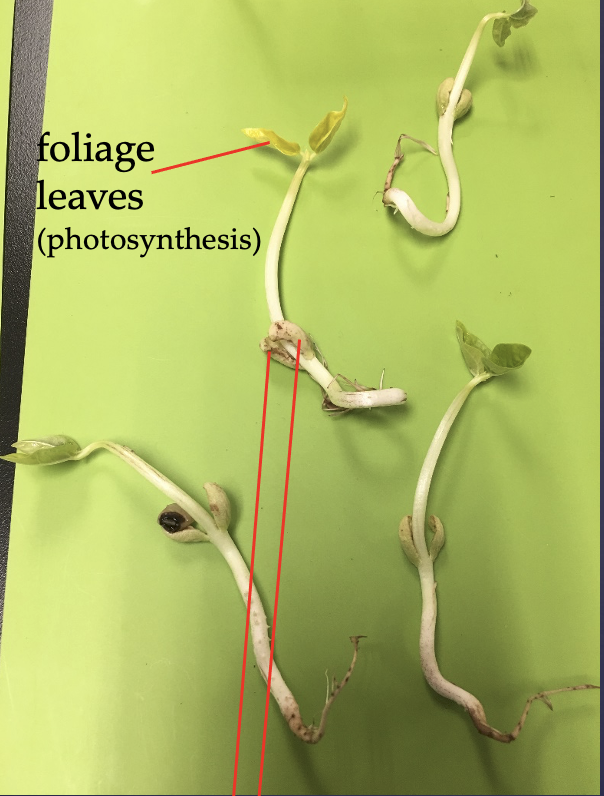
Eudicot Example
Has two cotyledons (black-eyed peas)
The bottom arrows are pointing to the cotyledons (embryonic leaves), which are a food source for the embryo
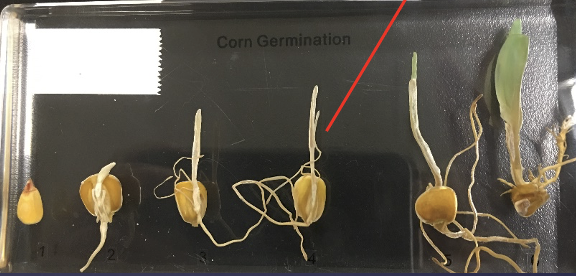
Monocot Example
Has one cotyledon (corn)
The arrow is pointing to the cotyledon (embryonic leaf), which is a food source for the embryo
Fungi
Eukaryotic heterotrophs that digest complex food substrates via absorptive heterotrophy. The characteristic structure of most these is a mass of filaments called a mycelium. One of these thread like filaments is called a hypha. In some of these, the hyphae are not divided and contain many nuclei (coenocytic), in others the hyphae are divided by septa and form a chain of cells. In both, the cell membrane is covered by a cell wall composed of chitin.
Fungus Life Cycle
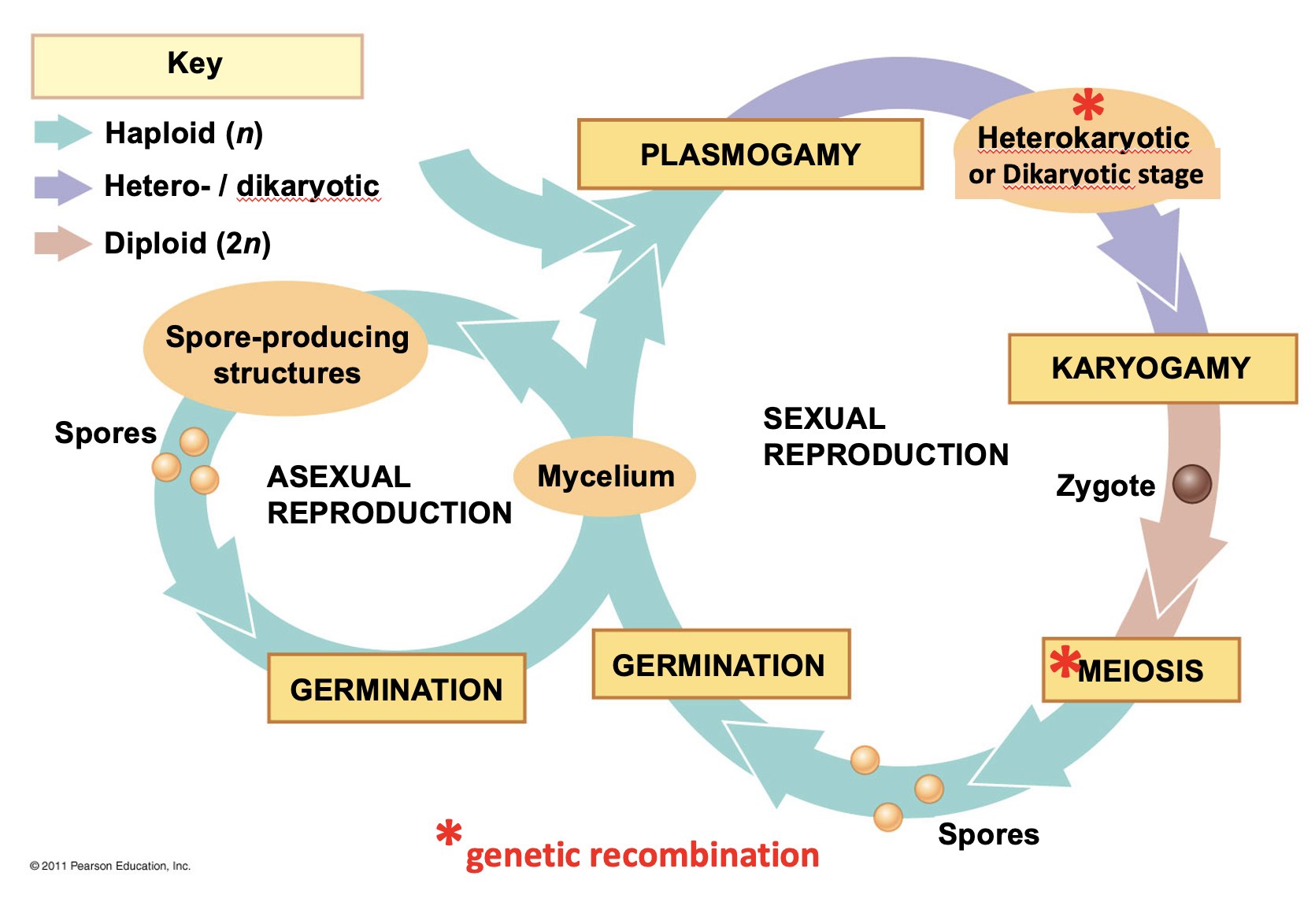
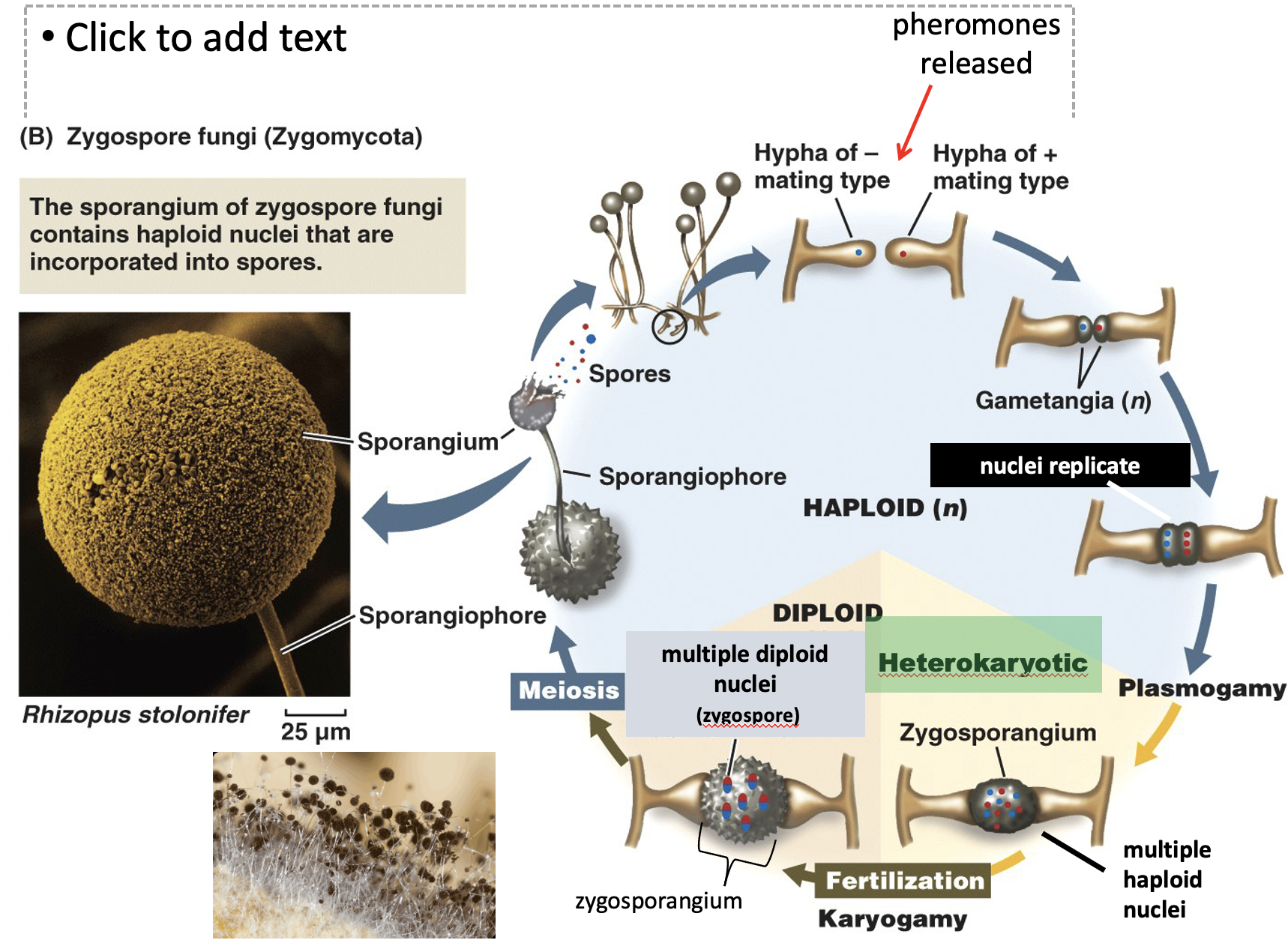
Zygomycota Life Cycle
Chromosome # of zygosporangium after plasmogamy - Heterokaryotic (n+n), multiple haploid nuclei
Chromosome # of zygosporangium after karyogamy - Diploid
Chromosome # of the spores after meiosis - Haploid
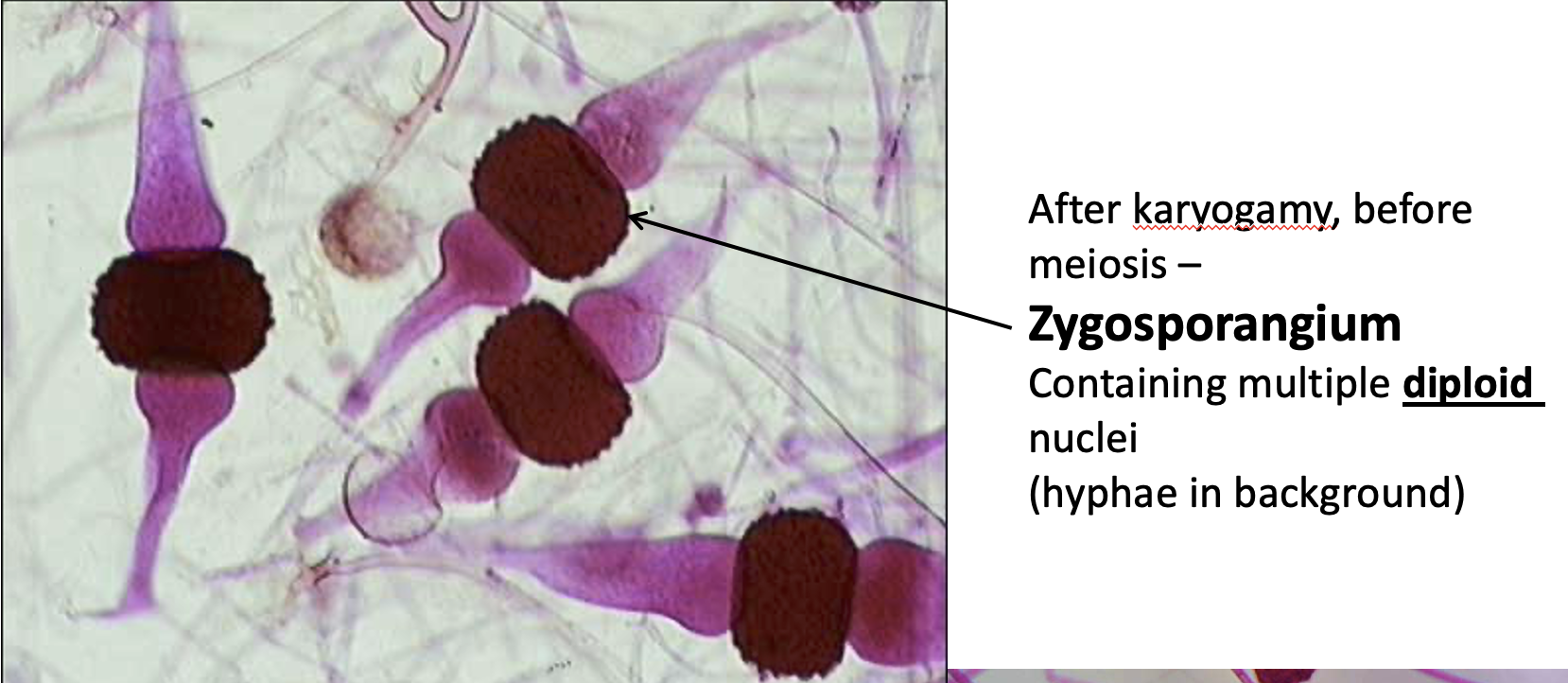
Rhizopus after Karyogamy
This is the zygosporangia after karyogamy in zygomycota
Contains multiple diploid nuclei
The hyphae is in the background
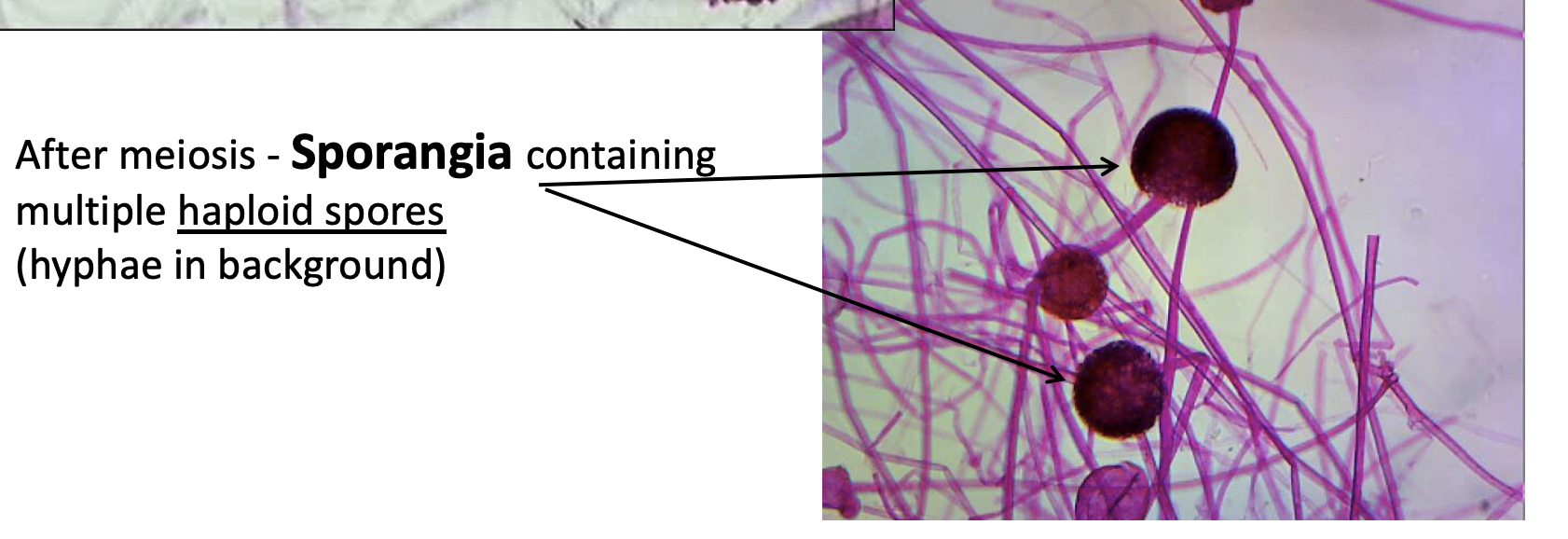
Rhizopus after Meiosis
This is the sporangia after meiosis in zygomycota
Contains multiple haploid spores
The hyphae is in the background
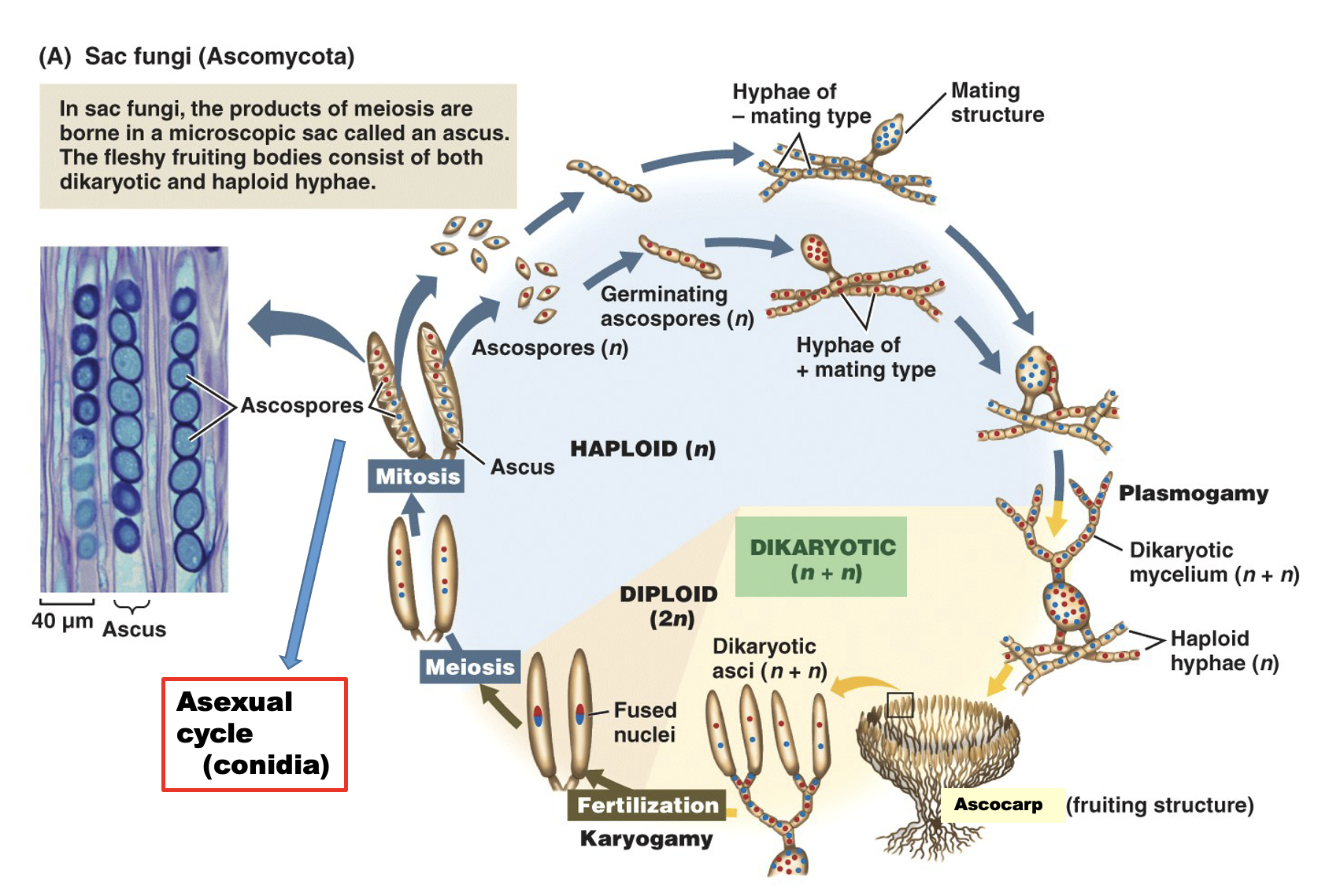
Ascomycota Life Cycle
Important terms are Ascocarp (fruiting structure), Ascus (singular)/Asci (plural)
The chromosome # of the asci after plasmogamy is dikaryotic (n+n), two haploid nuclei
The chromosome # of the asci after karyogamy is a single diploid nucleus
The chromosome # of the ascospores after meiosis is a single haploid nucleus
There are 8 ascospores per ascus after mitosis
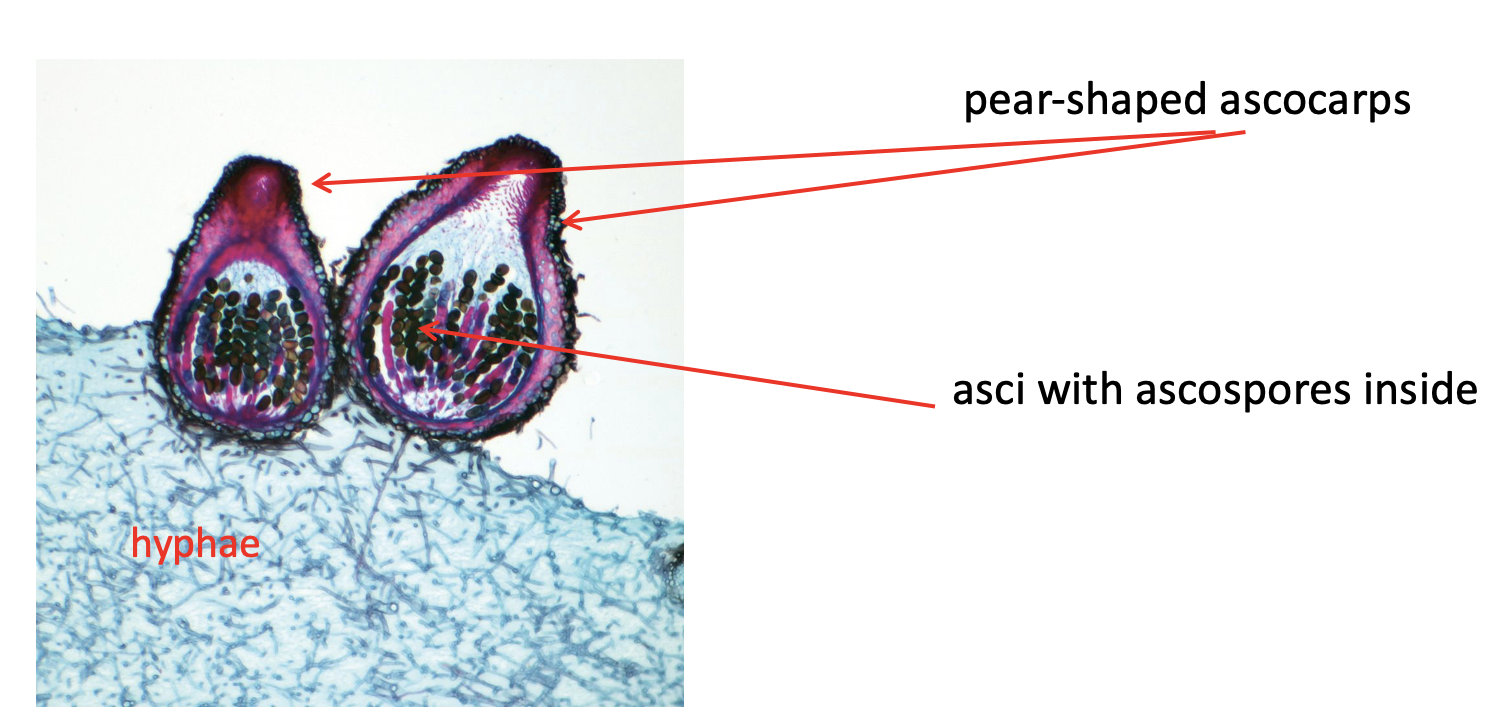
Sordaria
A type of ascomycota
The pear shaped things are ascocorp
Inside the ascocarp are ascospores
These sit on top of the blue squiggles, the hyphae
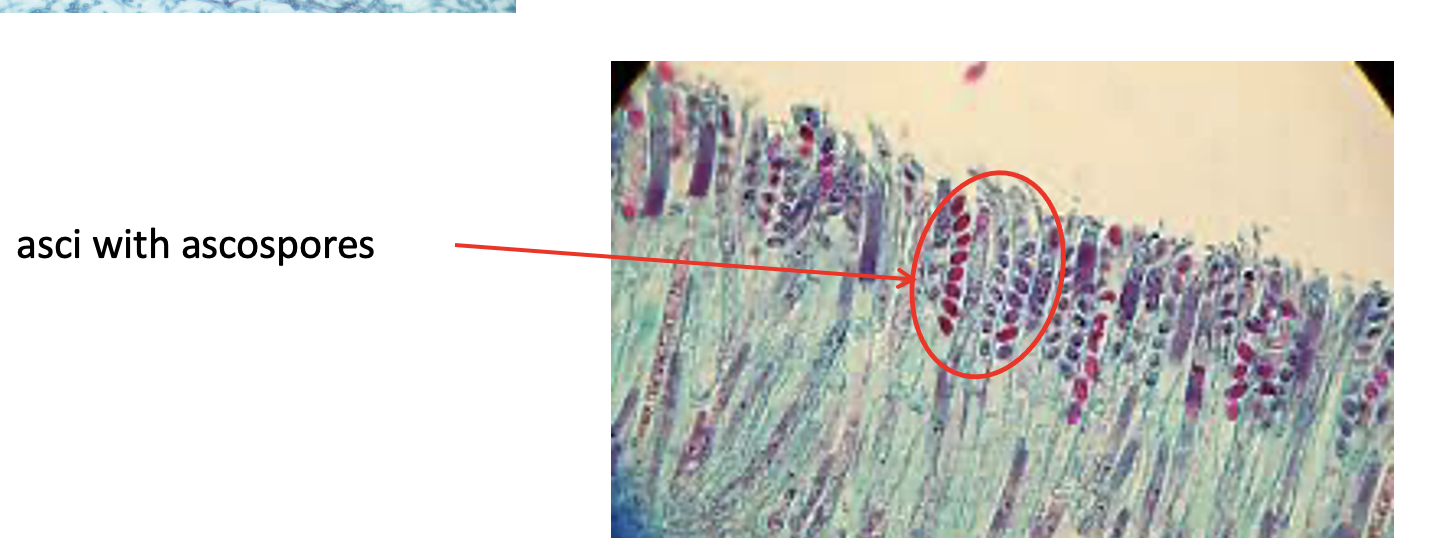
Peziza
A type of ascomycota
Also called “cup fungus”
The large blue cylinders are ascus and filled with the pink ascospores
Penicillium
A type of ascomycota
The hand structures are conidophores, and the small dots on the ends are conidia, which are asexually reproduced
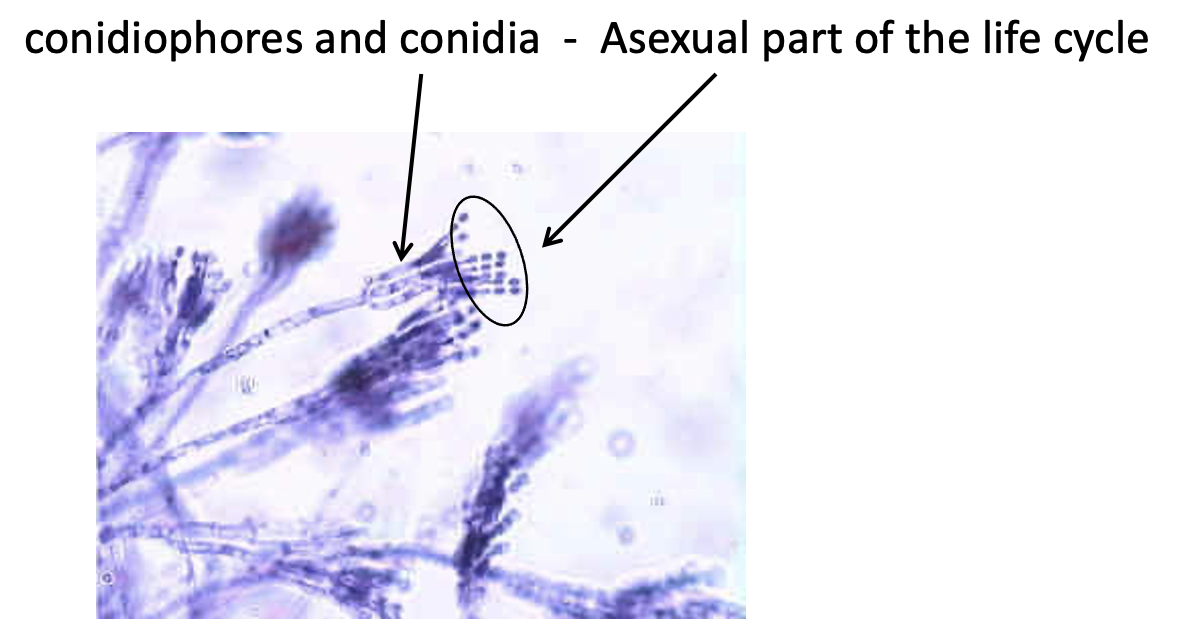
Conidia
Made in the ascomycota cycle asexually
They are produced via mitosis in the asexual part of the ascomycota life cycle. This insures that the chromosome number in each spore stays haploid. This is essentially cloning, AKA no genetic diversity. This is done when the organism is having trouble finding a complimentary mating type (chud)
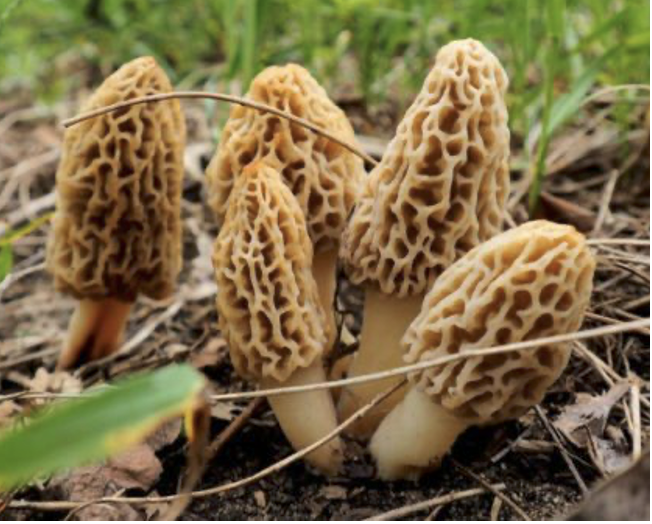
Morels
These belong to the ascomycota phylum
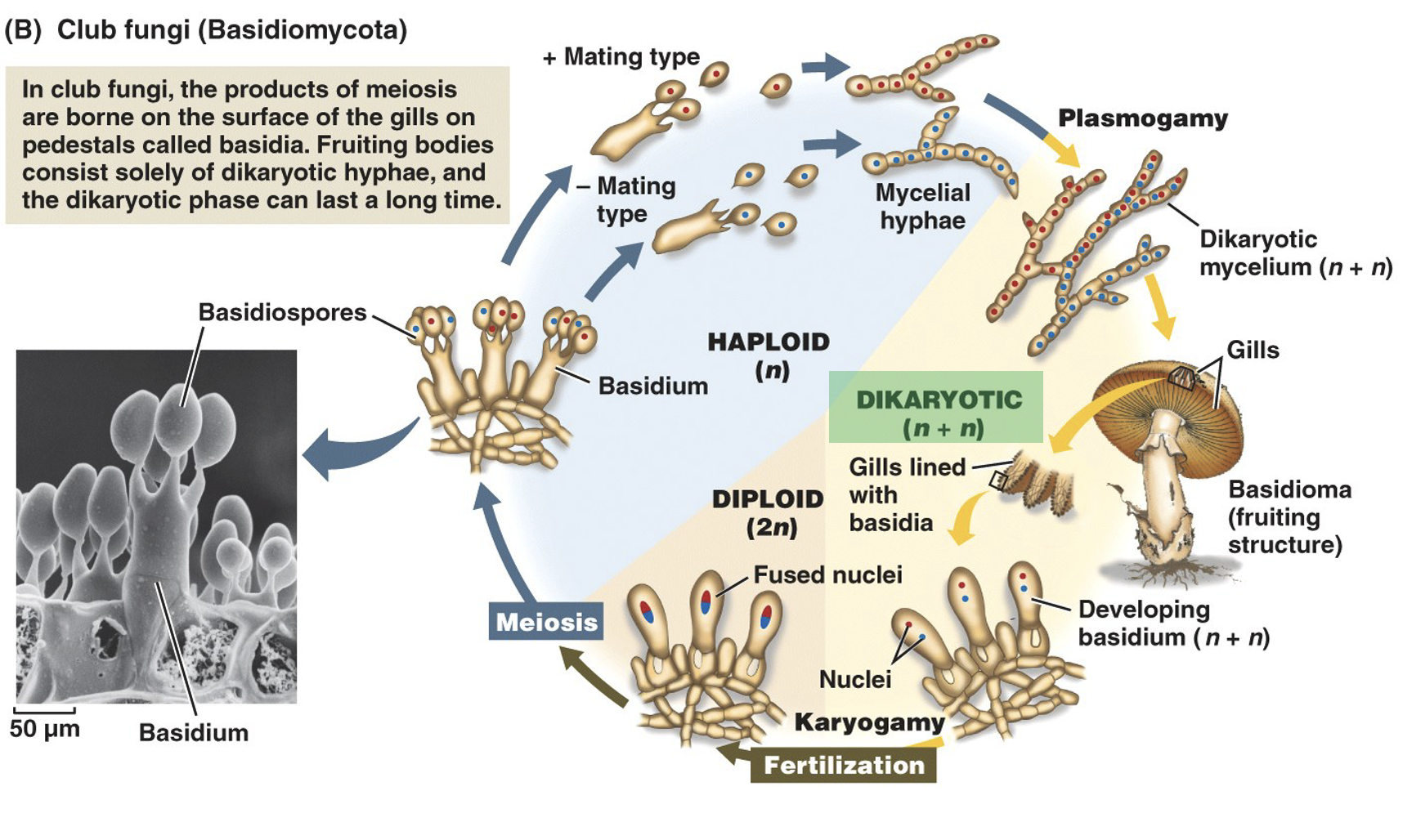
Basidiomycota Life Cycle
Important terms are basidioma (fruiting structure), basidium (hold basidiospores), and basidiospores (grow on basidium)
The chromosome # of basidium after plasmogamy are dikaryotic (n+n); two haploid nuclei
The chromosome # of basidium after karygamy are single diploid (2n) nucleus
The chromosome # of basidiospores after meiosis are single haploid (n) nucleus
There are 4 basidiospores per basidium after meiosis
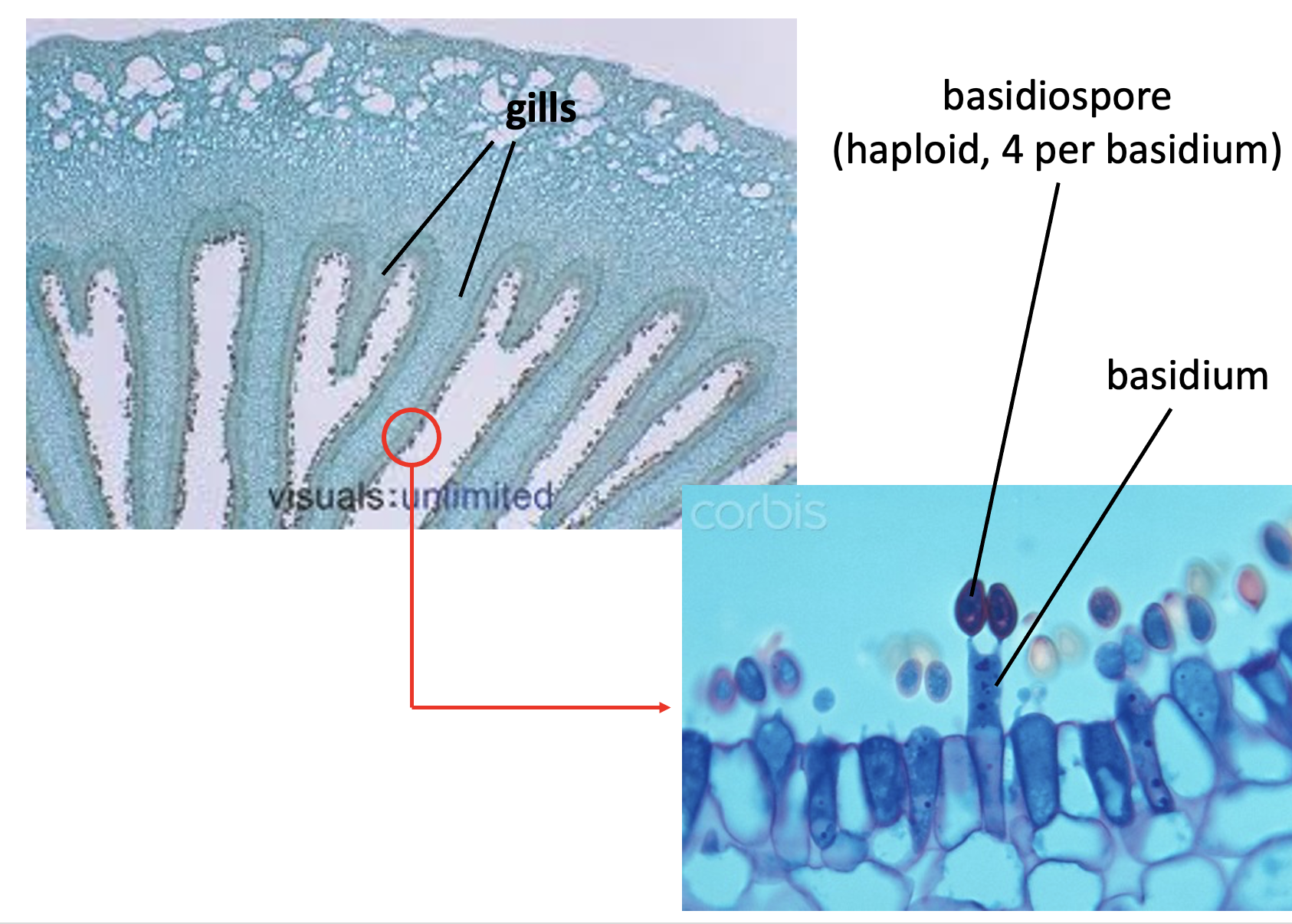
Coprinus
A type of basidiomycota
The farther picture is a cross section of basidiocarp (fruiting structure)
The closer picture shows the basidium which each hold 4 haploid basidiospores
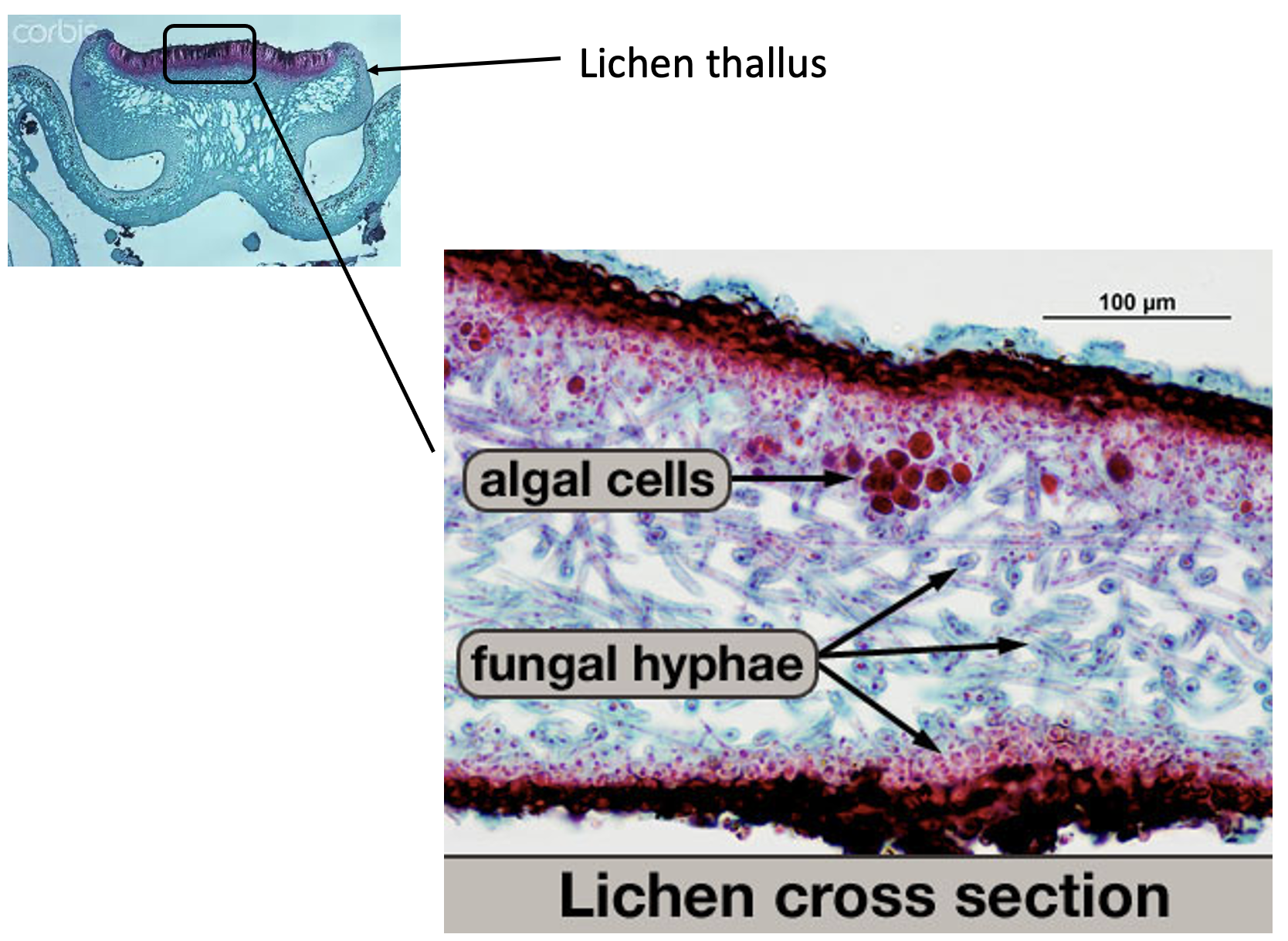
Lichen
A mutualistic symbiotic relationship between a photosynthetic microorganism (phycobiont) and a fungal hyphae (mycobiont)
These are associations of fungus and photosynthetic microbe. This microbe provides organic compounds via photosynthesis, the fungus provides minerals/water
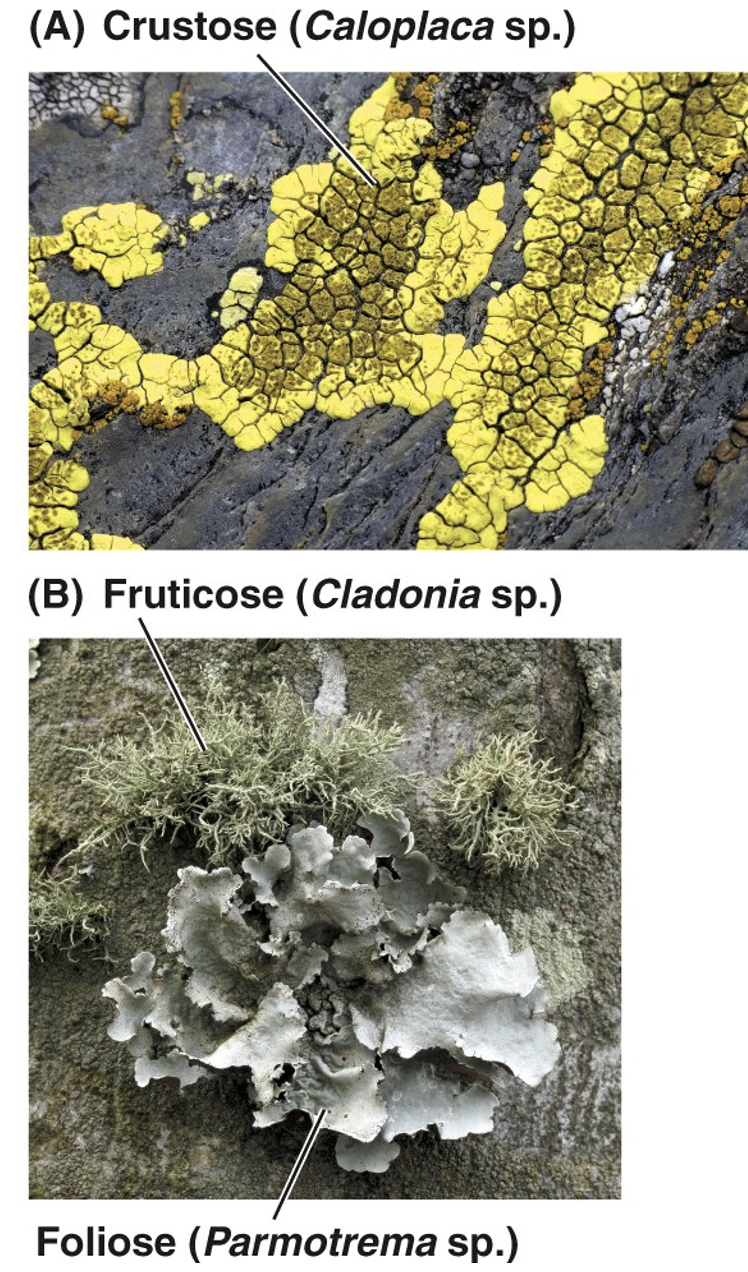
Morphologies of Lichen
Crustose - encrusting
Foliose - leaf-like, no branching
Fruticose - shrubbery-like, extensive branching
Lichen Thallus
The fungus (mycobiont) is the blue squiggles inside; this receives organic compounds
The algae (phychobiont) is the pink walls; this receives minerals/water
Mycorrhizae
A mutualistic symbiotic association between a plant root and fungal hyphae. The plants provide organic compounds and the fungus increases the uptake of water and nutrients. Some may supply growth hormone, microbe resistance, and drought/temp tolerance to the plant, as well as communication between plants in a shaded area.
There are two types: entomycorrhizae and endomycorrhizae
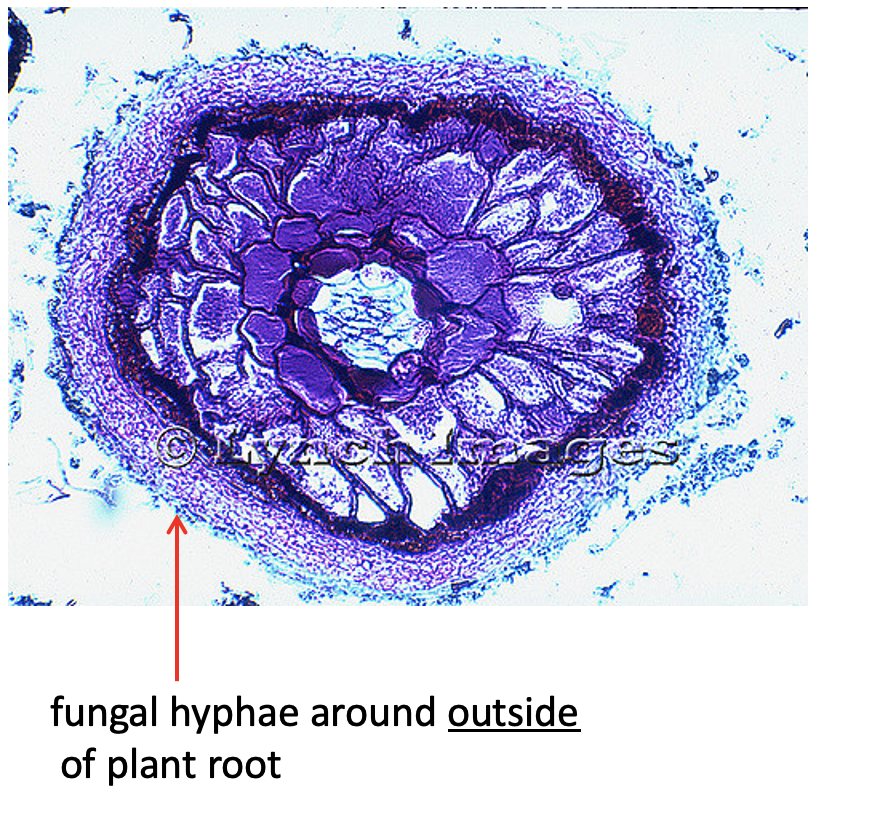
Ectomycorrhizae
Hyphae wraps around plant roots without penetrating them. Most the fungal partners are basidiomycetes or ascomycetes. Some of these have economic importance, such as truffles.
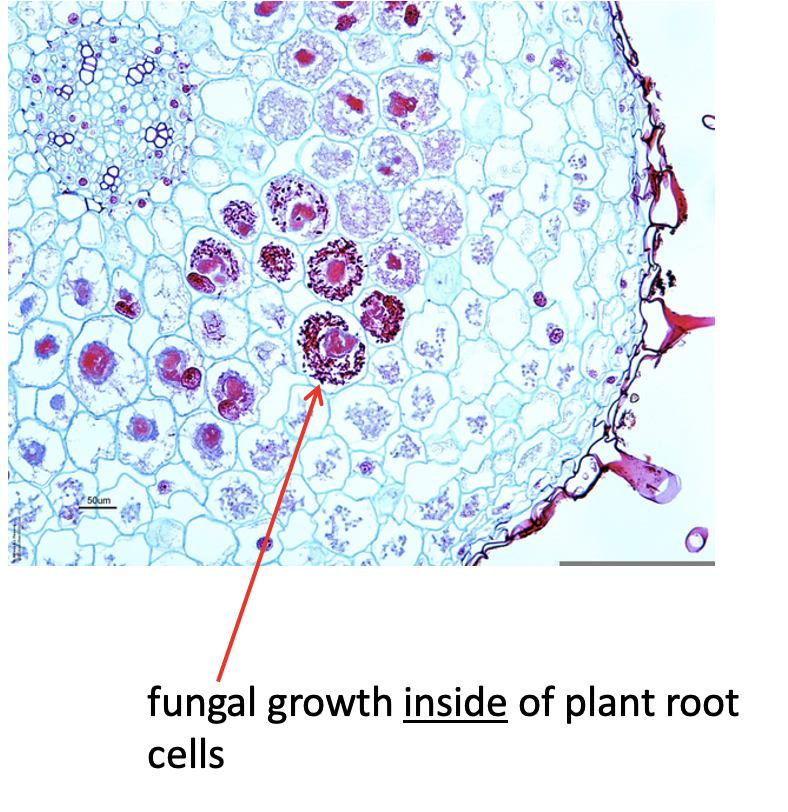
Endomycorrhizae
This penetrates into the plant root’s cells
Basidiomycota examples
COME BACK
Bryophyta
Also known as Mosses
Nonvascular and seedless
Includes Polytrichum, Mnium, Archegonia, Antheridia
Hepatophyta
Also known as Liverworts
Nonvascular and seedless
Includes Marchantia
Anthocerophyta
Also known as Hornworts
Nonvascular and seedless
Includes Anthoceros
Lycophyta
Also known as Club Mosses
Vascular and seedless
Includes Selaginella
Monilophyta
Also known as Ferns, Horsetails, and Whisk Ferns
Vascular and seedless
Includes Equisetum (HT),
Ferns - Sori made of sporangia, gametophyte (antheridia, archegonia, rhizomes, sporophyte/sprout)
Blastula
The hollow ball of cells formed early in embryonic development in Animalia
Collagen
The most abundant protein in animal cells that assists with communication between the outside and inside of the cell and attaching them to other cells
Porifera
Name means “pore/opening” “bearing”; AKA sponges
Asymmetrical, sessile filter feeders
Specimens we observed include wool sponges
Has no true tissues
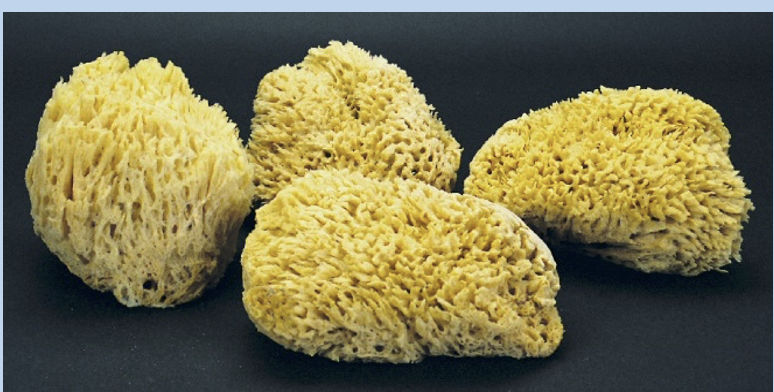
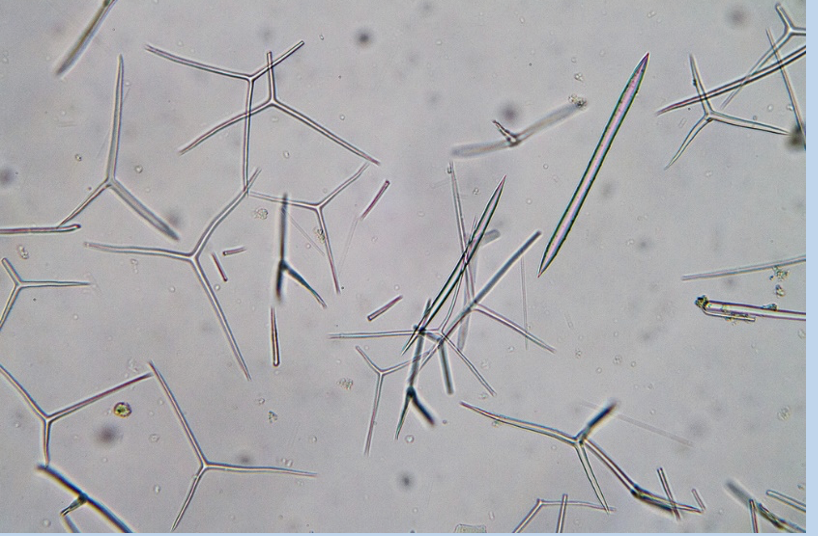
Spicules
The internal support structures found in Porifera (sponges), function as an endoskeleton
Cnidaria
Name means “nettle/scratch” “-related to”
Aquatic animals with two germ layers (dipoblastic), have radial symmetry, and unique stinging cells called cnidocytes used for defense and prey capture
They have two body plans, medusa and polyp
Specimens we observed include obelia, hydra, and coral
*note that live coral secretes an exoskeleton while sponges have an endoskeleton
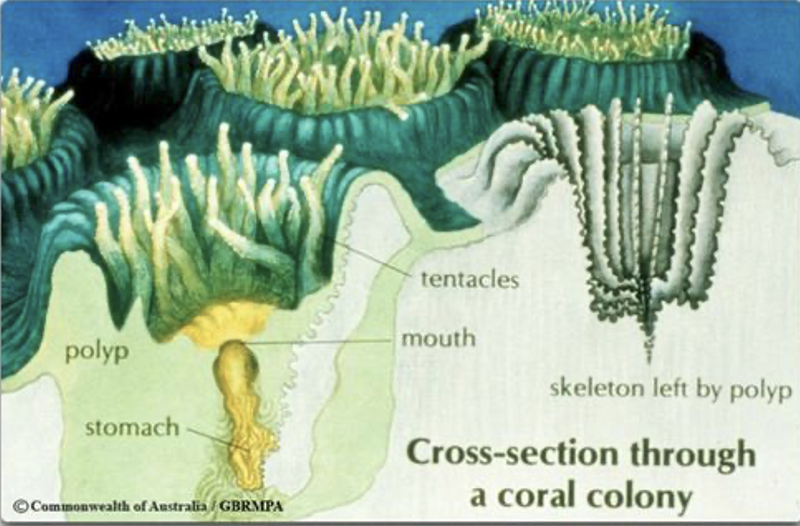
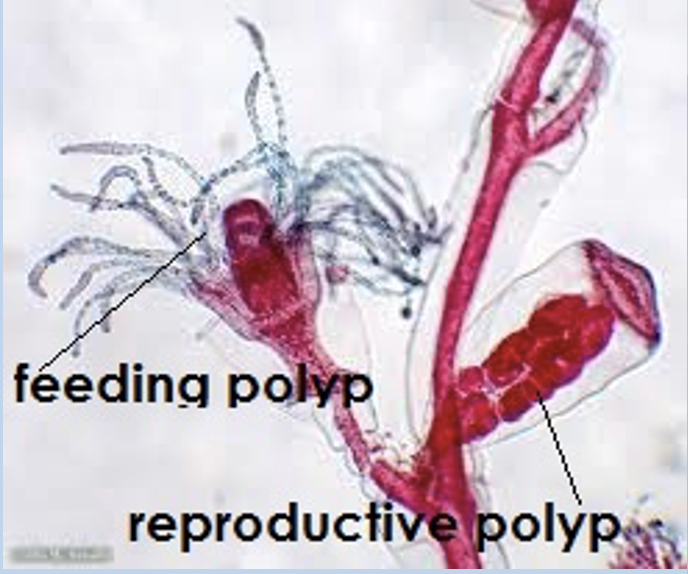
Polyp colony
One of the two body forms of Obelia (part of Cnidaria)
Polyp phases are sessile, and a colony of these resembles a tree. The colony has feeding and reproductive polyp. The feeding polyp is the wavy bristles on top and feeds (duh). The reproductive polyp gives rise to the medusa phase of the organism
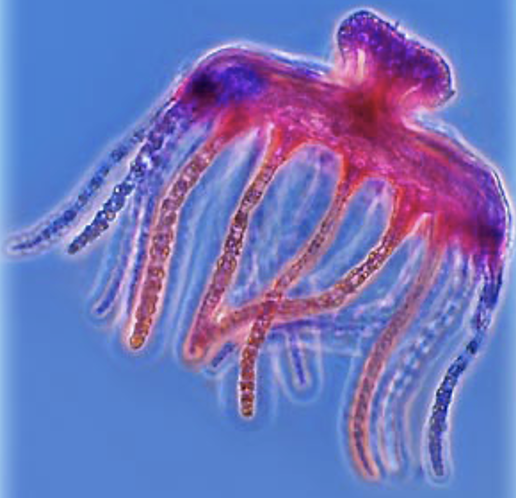
Medusa form
One of the two body forms of Obelia (part of Cnidaria)
These are motile and have a dome-like structure with tentacles. They are born from reproductive polyp, float away, and later undergo sexual reproduction to produce new polyps
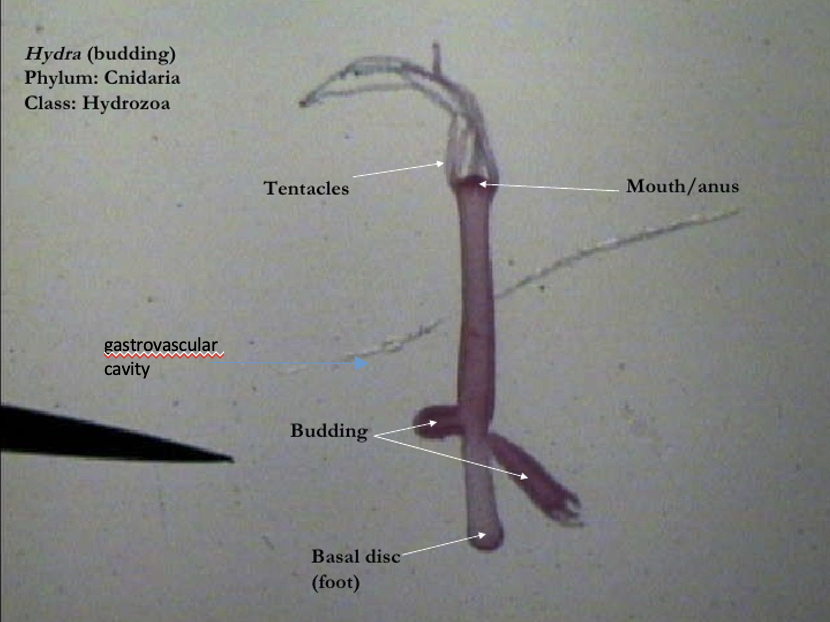
Polyp budding
The asexual reproduction process of a Hydra (a type of Cnidaria) polyp
Note that this is not a colony like Obelia!! This is an individual!!! But they’re both polyps!! OKAY!!!
Platyhelminthes
Name means “flat” “worm”
These are flattened dorsoventrally and are acoelomates with three germ layers (tripoblastic) with tissues arranged into organ systems
These were the first to exhibit bilateral symmetry and are protostomes
These rely on diffusion across their thin ‘skin’ (cuticles) for nutrients, gas, and waste transport
Specimens we observed include planarian, fluke, and tapeworm
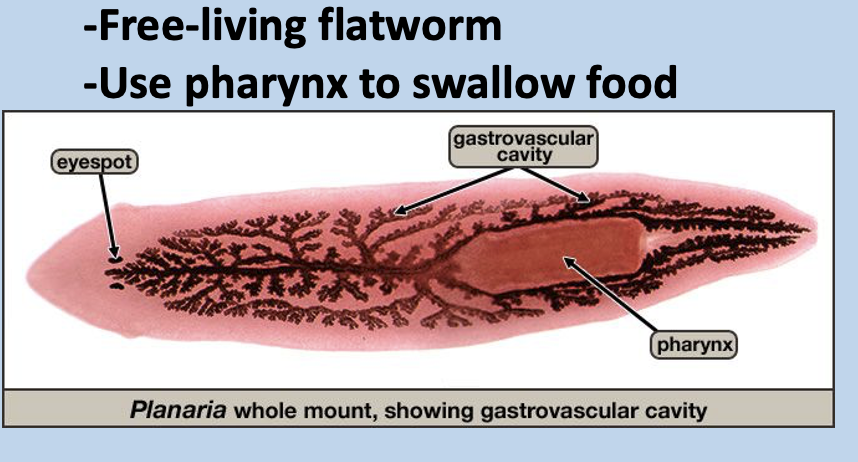
Planarian
A part of the platyhelminthes phylum
These are free-living and eat by swallowing food through mouth and pharynx (tube like thing)
*Pay close attention to shape compared to other flatworms: Pink stain, dark branching gastrovascular cavity, arrow-shaped head with eyespots (ganglia; sense light/dark/shadow)
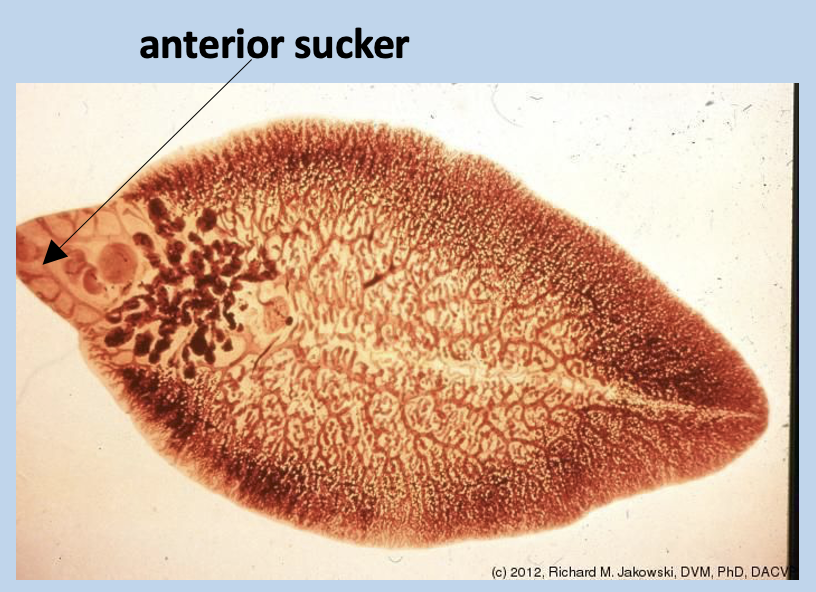
Fluke
A part of the platyhelminthes phylum
These are parasitic and choose mammals as hosts, living in their intestines and absorbing pre-digested nutrients
*Pay close attention to shape compared to other flatworms: flat, leaf-shaped body, has anterior sucker
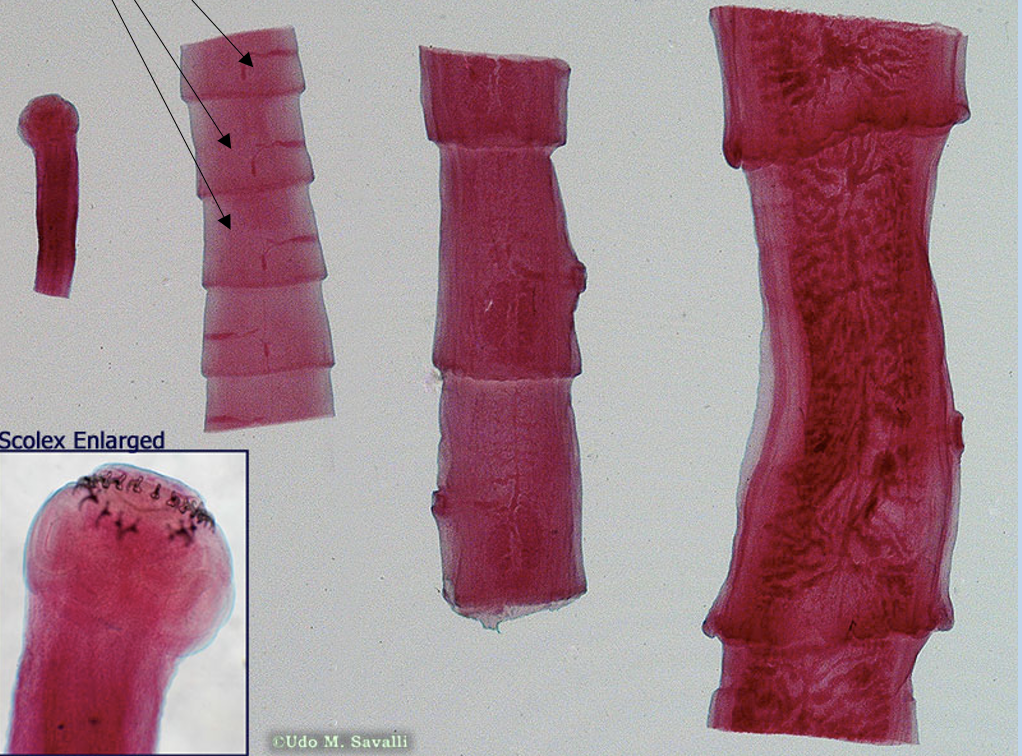
Tapeworm
A part of the platyhelminthes phylum
These are parasitic and choose vertebates as hosts, living in their intestines and absorbing pre-digested nutrients
*Pay close attention to shape compared to other flatworms: pink stain, distinct proglottid segments (what arrows are pointing to, these are hermaphroditic/containing both sperm and egg, and break off once fertilized to become new worms), scolex with spiked opening
Syndermata
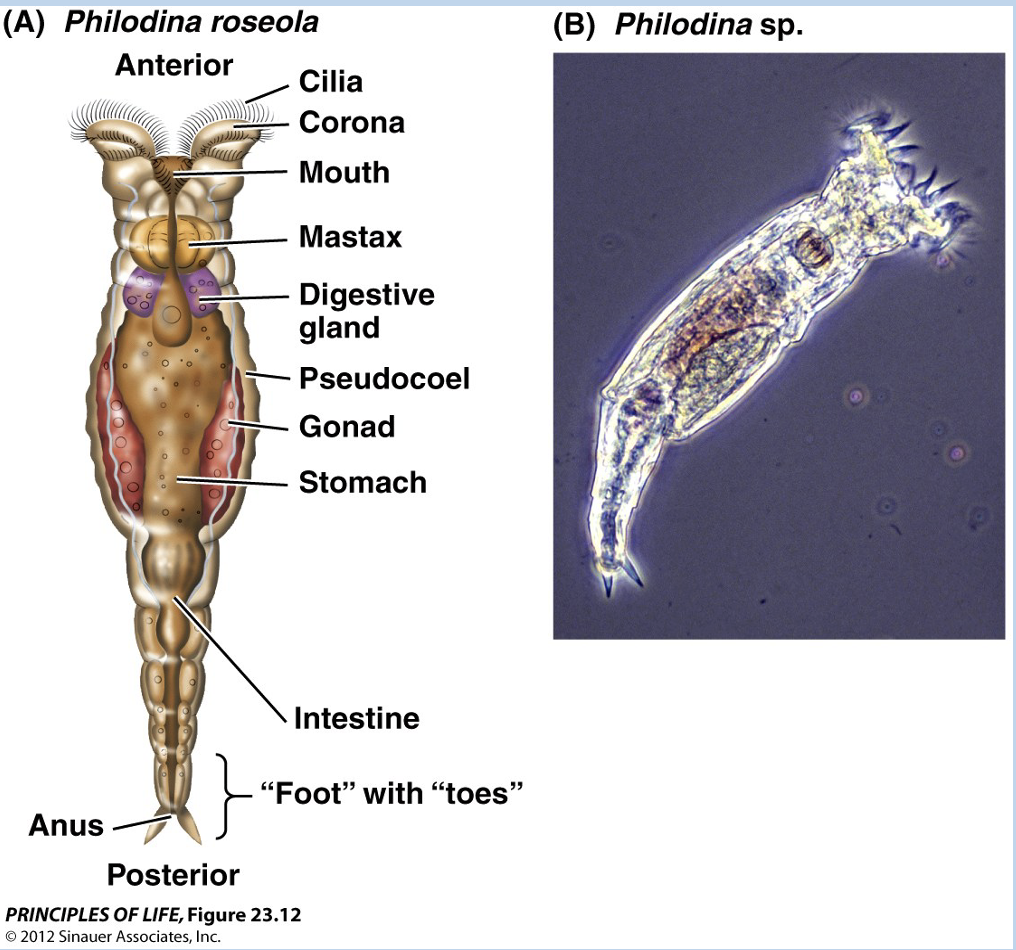
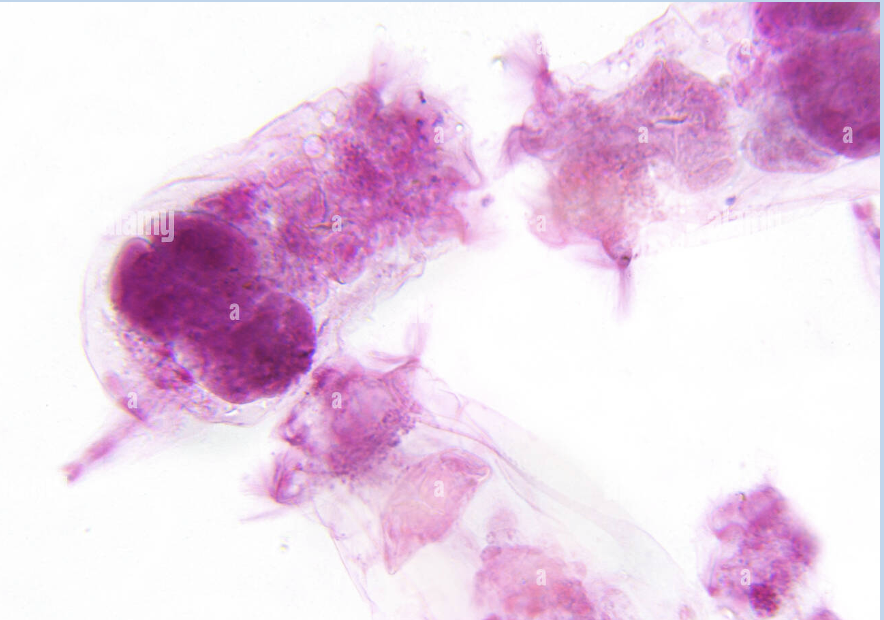
Name means “confluent” “skin”; AKA rotifers (what we observed in lab)
These are tripoblastic, pseudocoelomate, bilateral, and protostome
These have organ systems including an alimentary canal, they are found in fresh water, marine systems, and soil
Important body structures: corona (wheels in food), mastax (food crusher), stomach
One class of female rotifers reproduce via pathenogenesis (no fert.)
Parthenogenesis
The process that occurs in a certain class of all-female rotifers (part of syndermata phylum), where an egg develops into an offspring without fertilization
Advantages: no need to find a mate for reproducting
Disadvantages: No genetic outcrossing, no genetic variety
Mollusca
Name means “soft”
These are ceolomates, tripoblastic, bilateral, protostomes
They have soft, unsegmented bodies that can be divided into a mantle, visceral mass, and foot
Most of these are marine, but there are some terrestrial and freshwater forms
Specimen we observed include bivalves, gastropods, and cephalopods
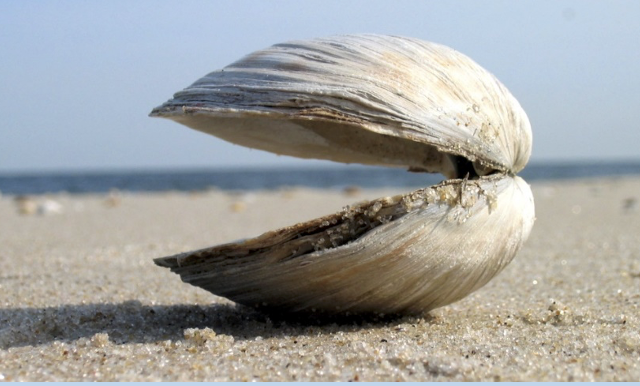
Bivalves
Part of the mollusca phylum
Includes clams
Uses siphons to filter feed with gills
Primarily feed with their gills and their 2 shells provide protection
Gastropods
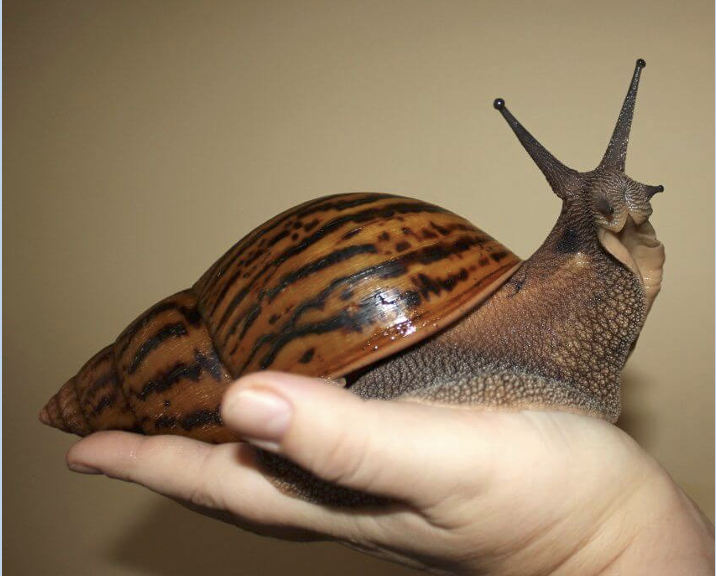
Part of the mollusca phylum, name means “stomach” “foot”
Includes snails
Terrestrial species have lungs
Primarily feed with their radula, and have 1 shell that provides protection
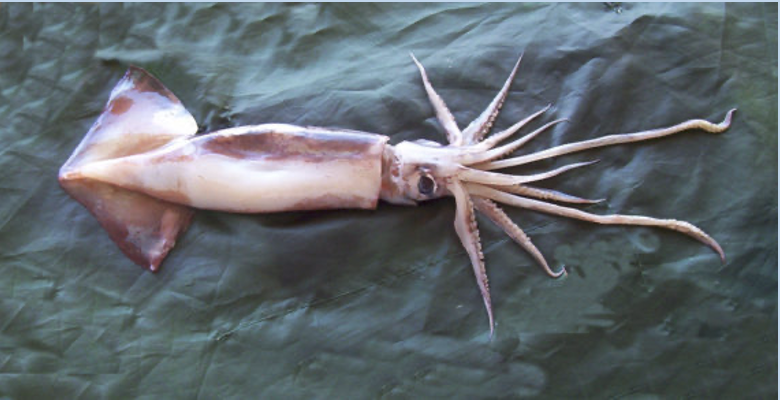
Cephalopods
Part of the mollusca phylum, name means “head” “foot”
Includes squid and octopus
Foot modified into tentacles, uses siphons for jet propulsion
Primarily feed with their beaks, and have a mantle as protective structure
Annelida
Name means “ring”; AKA segmented worms
These are coelomate, tripoblastic, bilateral, protostome
Specimen we observed include earthworms, clamworms (Nereis), and leeches
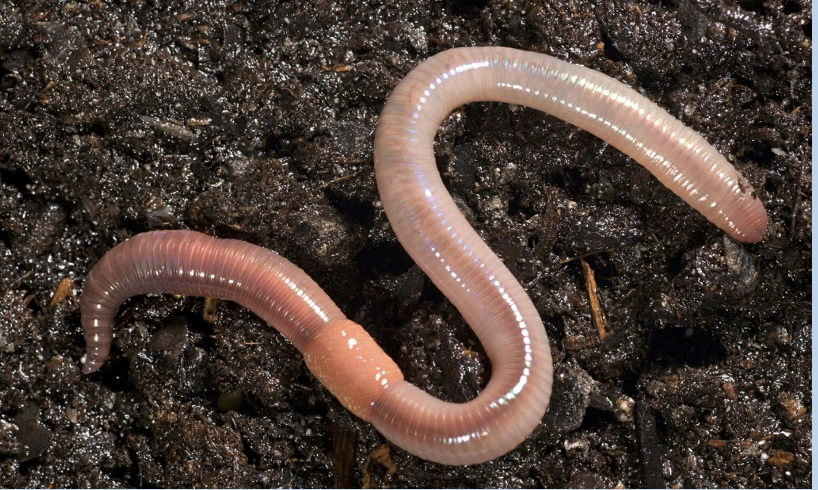
Earthworm
Part of the annelida phylum
Free living
Wet appearance, corrugated surface, light pink/brown color
Cross section shows coelom, U-shaped intestine, and 2 sets of muscles for locomotion
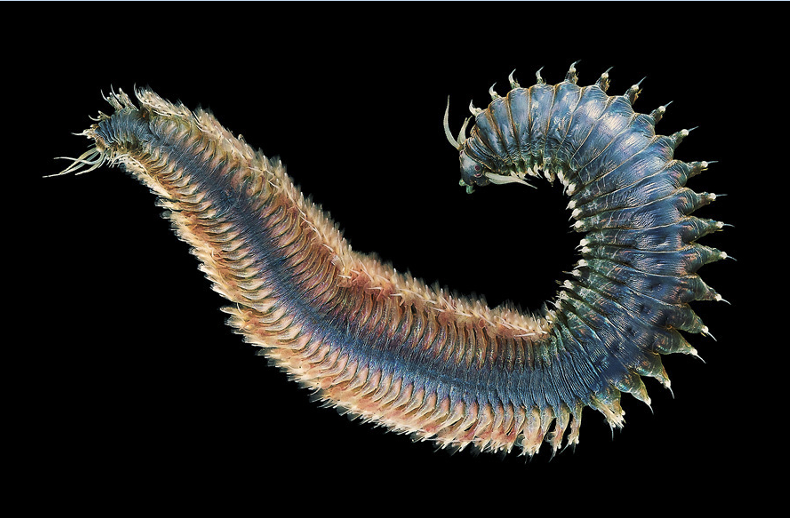
Clamworm
Part of the annelida phylum; AKA Nereis
Free living
Segments have bristles that look feather-like, light blue color
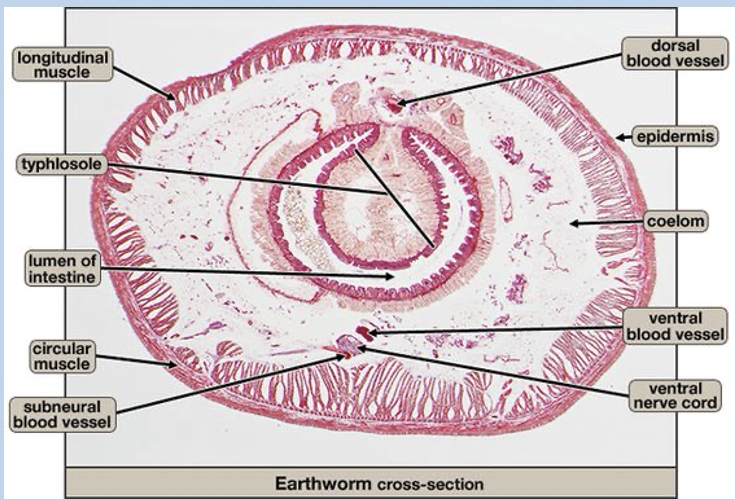
Earthworm Cross Section
This cross section shows coelom, U-shaped intestine, and 2 sets of muscles for locomotion
Important parts are the circular muscles, longitudinal muscles, and coelom
Leeches
Part of oligochaetes, which is in the annelida phylum
These are parasitic and feed primarily on vertebrates
To make sure hosts don’t sense their presence, they release an anesthetic in their saliva, and to avoid blood clots while feeding, they release a blood thinner/anticoagulant
Posterior sucker is larger and more cup-shaped than anterior, cross-section shows testes are punctuate dots
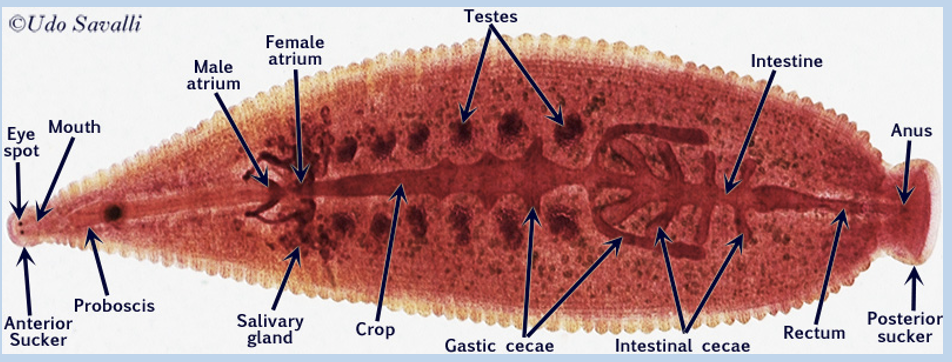
Annelid vs Tapeworm Segments
Annelid’s segments are integrated, meaning they work in concert and are connected by blood vessels, digestive tract, and nerve cord
Tapeworms proglottids are independent of each other. They are basically reproductive units. A single proglottid can break off and develop into another organism
Ecdysozoans
A group of protostome animals that includes 2 primary phyla:
Nematodes
Arthropods
These are covered by a cuticle or exoskeleton which is shed during growth
These are all coelomate and most are bilaterally symmetrical