Mechanisms of Heat Regulation in Ectotherms and Endotherms
 Call Kai
 Learn
Learn Practice Test
 Spaced Repetition
 Match
Match Flashcards
 Knowt Play
1/51

There's no tags or description
Looks like no tags are added yet.
Name | Mastery | Learn | Test | Matching | Spaced | Call with Kai |
|---|
No analytics yet
Send a link to your students to track their progress
52 Terms
What is the primary mechanism ectotherms use to regulate body temperature?
Behavioral mechanisms
What is the primary mechanism endotherms use to regulate body temperature?
Physiological mechanisms
Define Critical Thermal Maximum (CTmax) in ectotherms.
The temperature at which an ectotherm loses the ability to function properly due to heat stress.
What happens to a Galapagos marine iguana's heart rate when it basks in the sun?
It increases (tachycardia) to facilitate heat transfer.
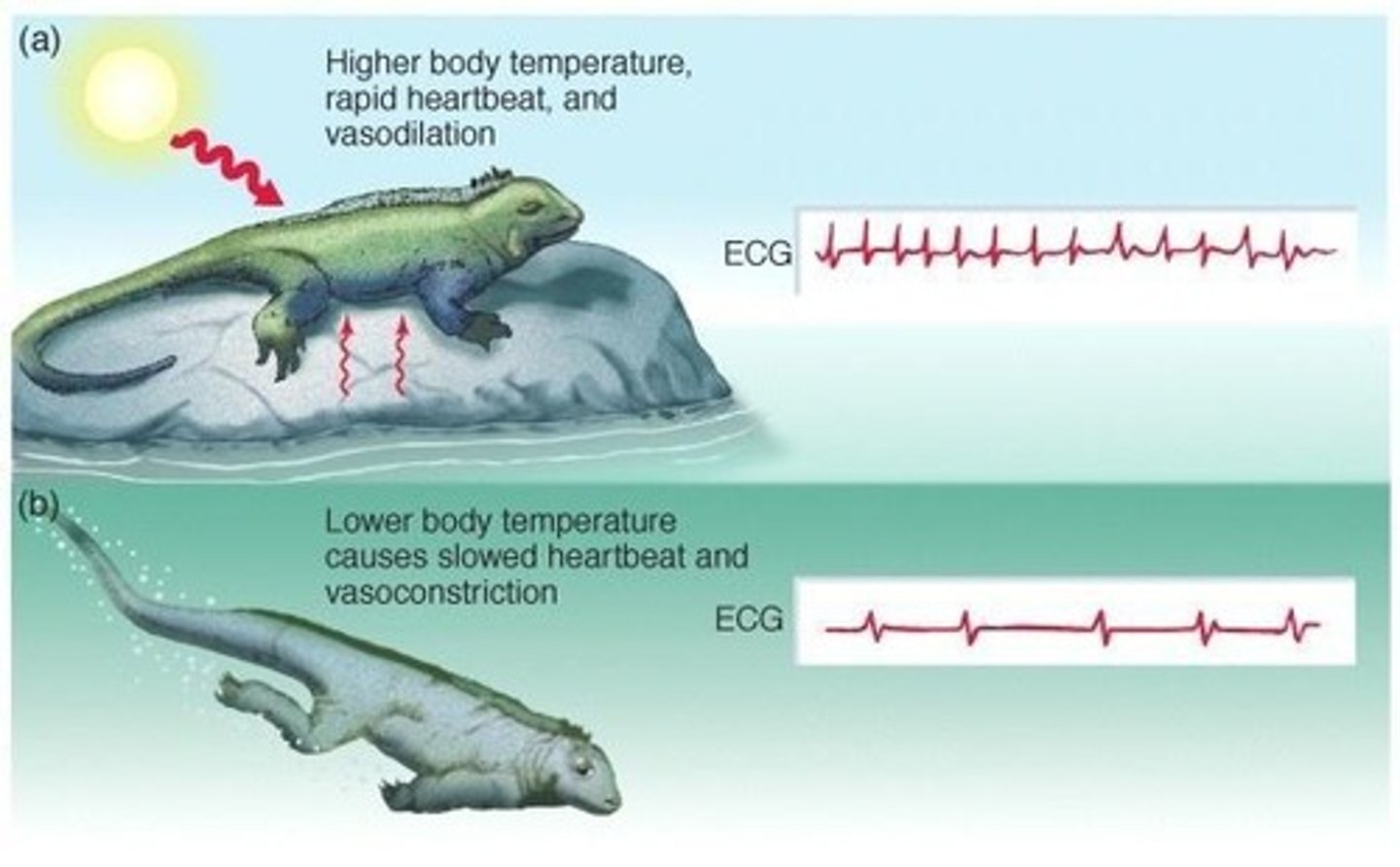
How does a Galapagos marine iguana reduce heat loss while diving in cool water?
It reduces heart rate (bradycardia) and constricts blood flow to the periphery (vasoconstriction).
Why is maintaining homeothermy energetically expensive?
ATP synthesis is not 100% efficient, and endothermic membranes are 'leakier,' requiring more active ion pumping.
How does the mitochondrial membrane volume of endotherms compare to ectotherms?
Endotherms have 2-3 times greater mitochondrial membrane volume.
How does the Basal Metabolic Rate (BMR) of a bird or mammal compare to an equivalent-sized ectotherm?
It is 5-20 times greater.
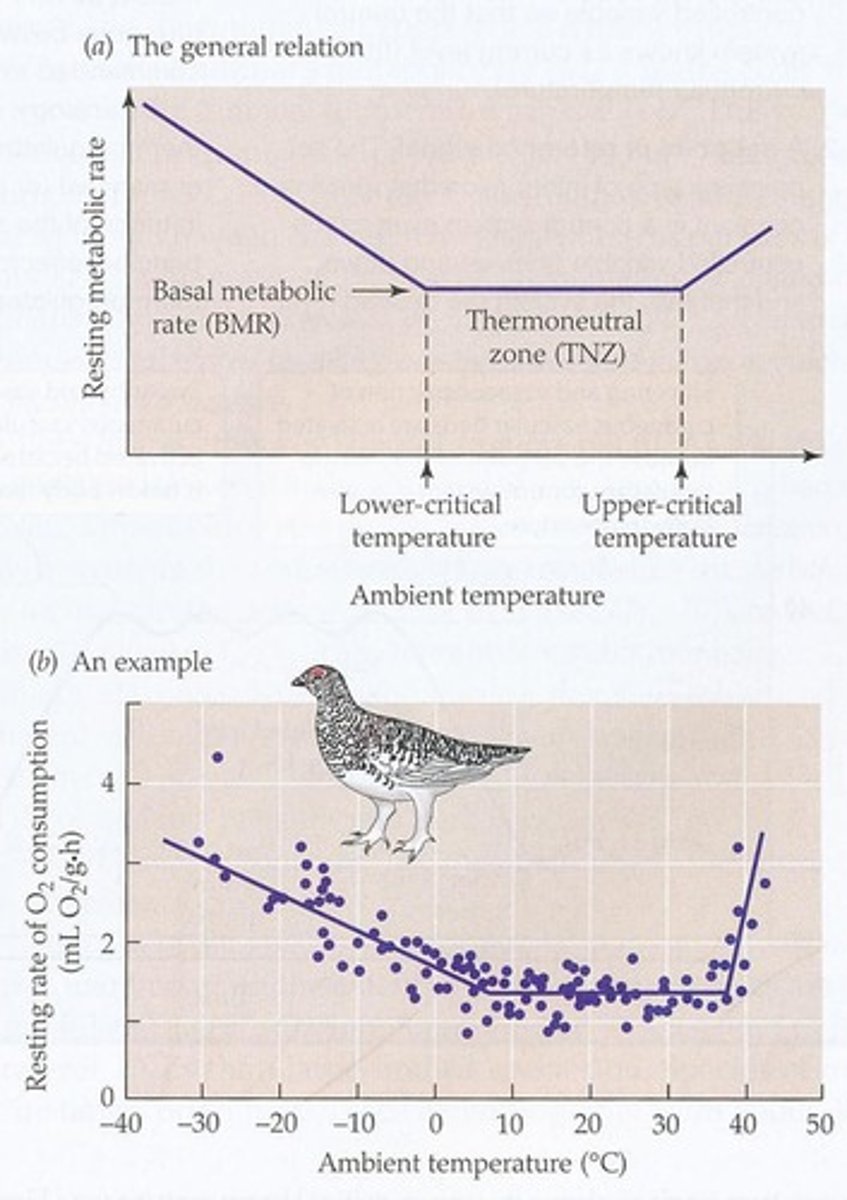
What is the Upper Critical Temperature (UCT) in endotherms?
The highest ambient temperature at which normal body temperature can be maintained without increasing metabolic rate.
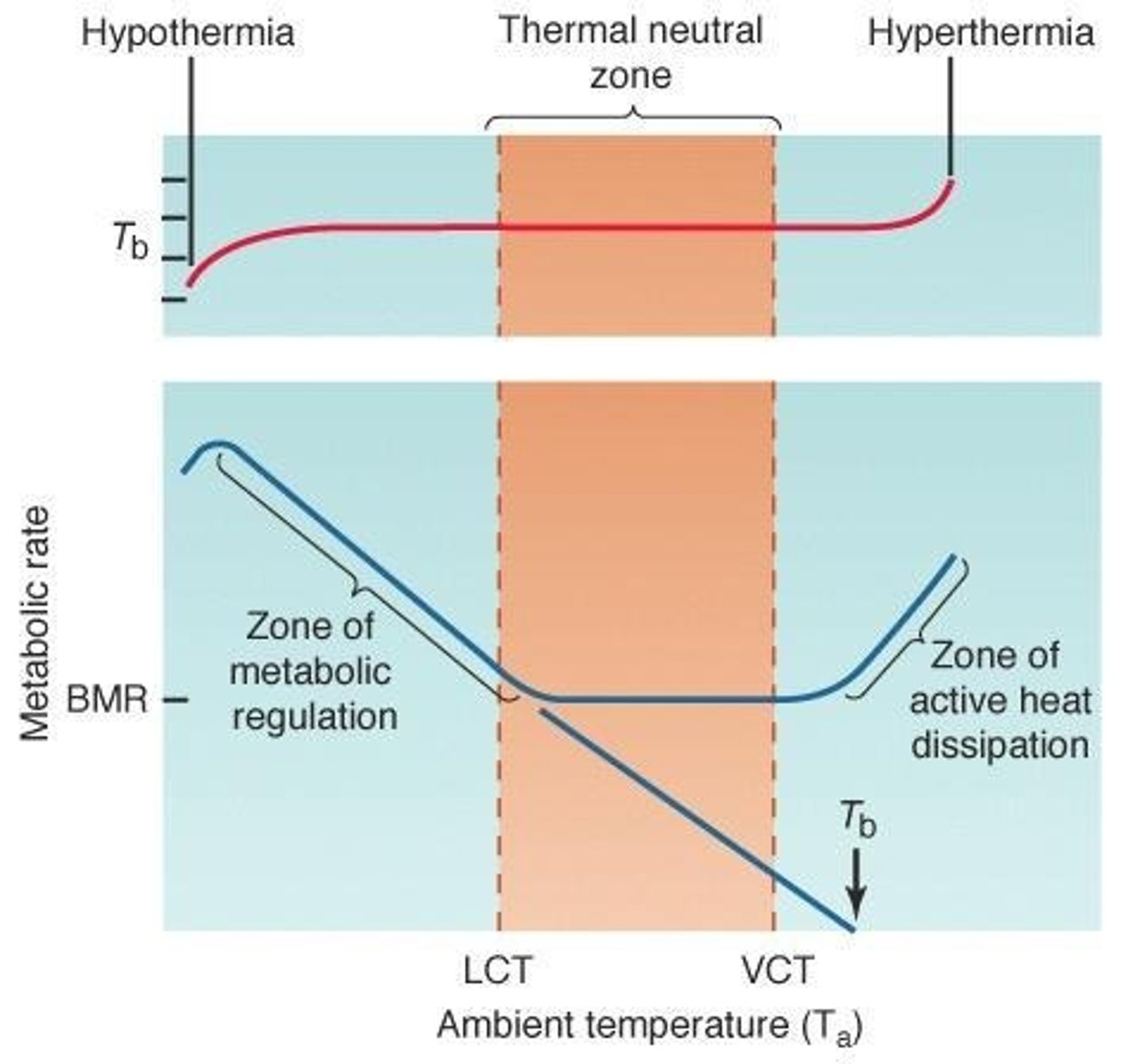
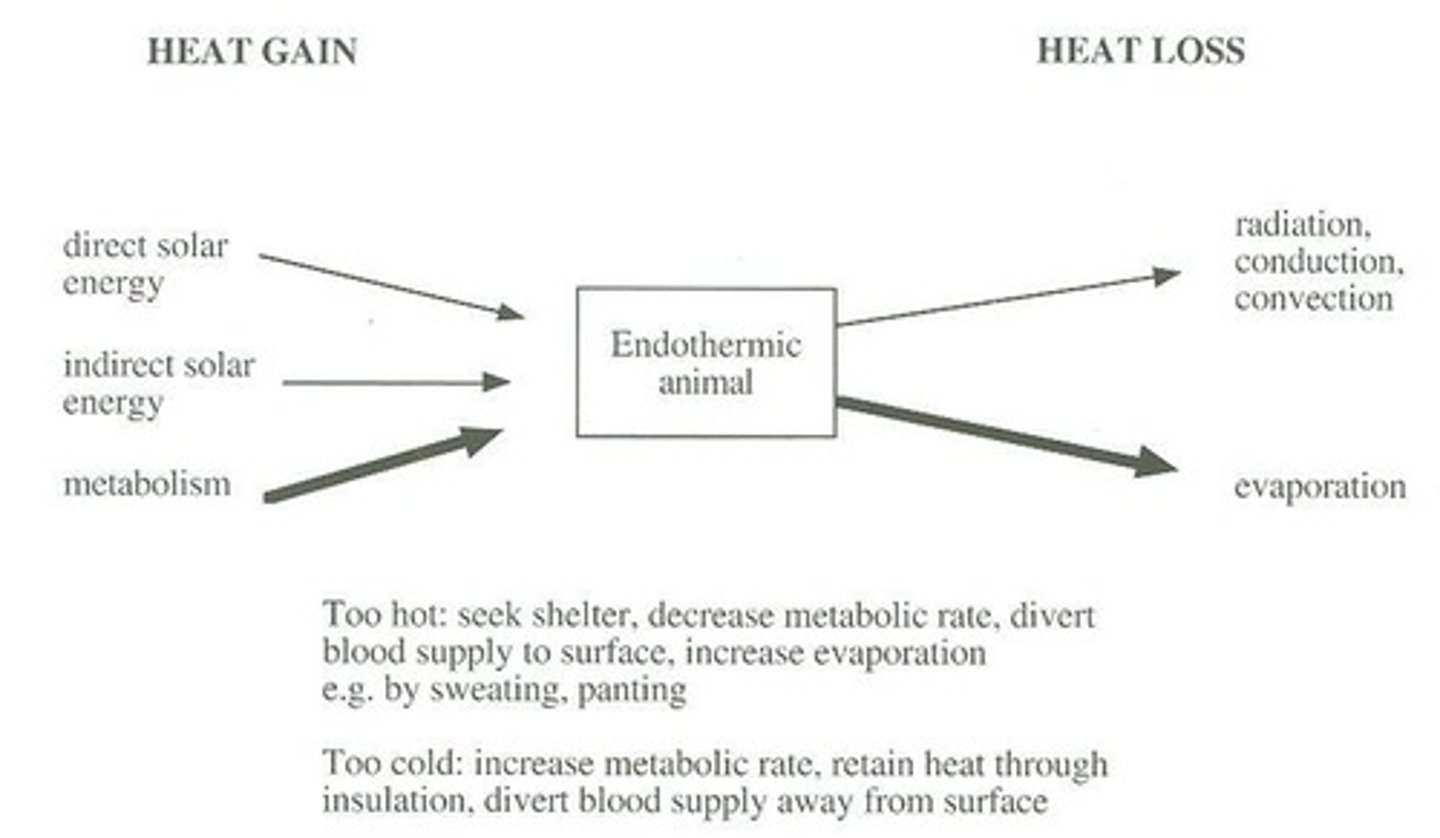
What must an endotherm do if the ambient temperature exceeds the UCT?
Use heat-dissipating mechanisms like sweating or panting.
What is the Lower Critical Temperature (LCT) in endotherms?
The lowest ambient temperature at which an endotherm can maintain normal body temperature using only its BMR.
What happens to an endotherm's metabolic rate when the ambient temperature falls below the LCT?
It must increase metabolic heat production.
Define the Zone of Metabolic Regulation (ZMR).
The range of ambient temperatures where an animal maintains constant body temperature by linearly adjusting metabolic heat production.
What is the Thermal Neutral Zone (TNZ)?
The range of ambient temperatures where an endotherm maintains body temperature without elevating its metabolic rate.
Name three metabolically inexpensive strategies endotherms use within the TNZ.
Vasomotor responses, insulation adjustments, and postural changes.
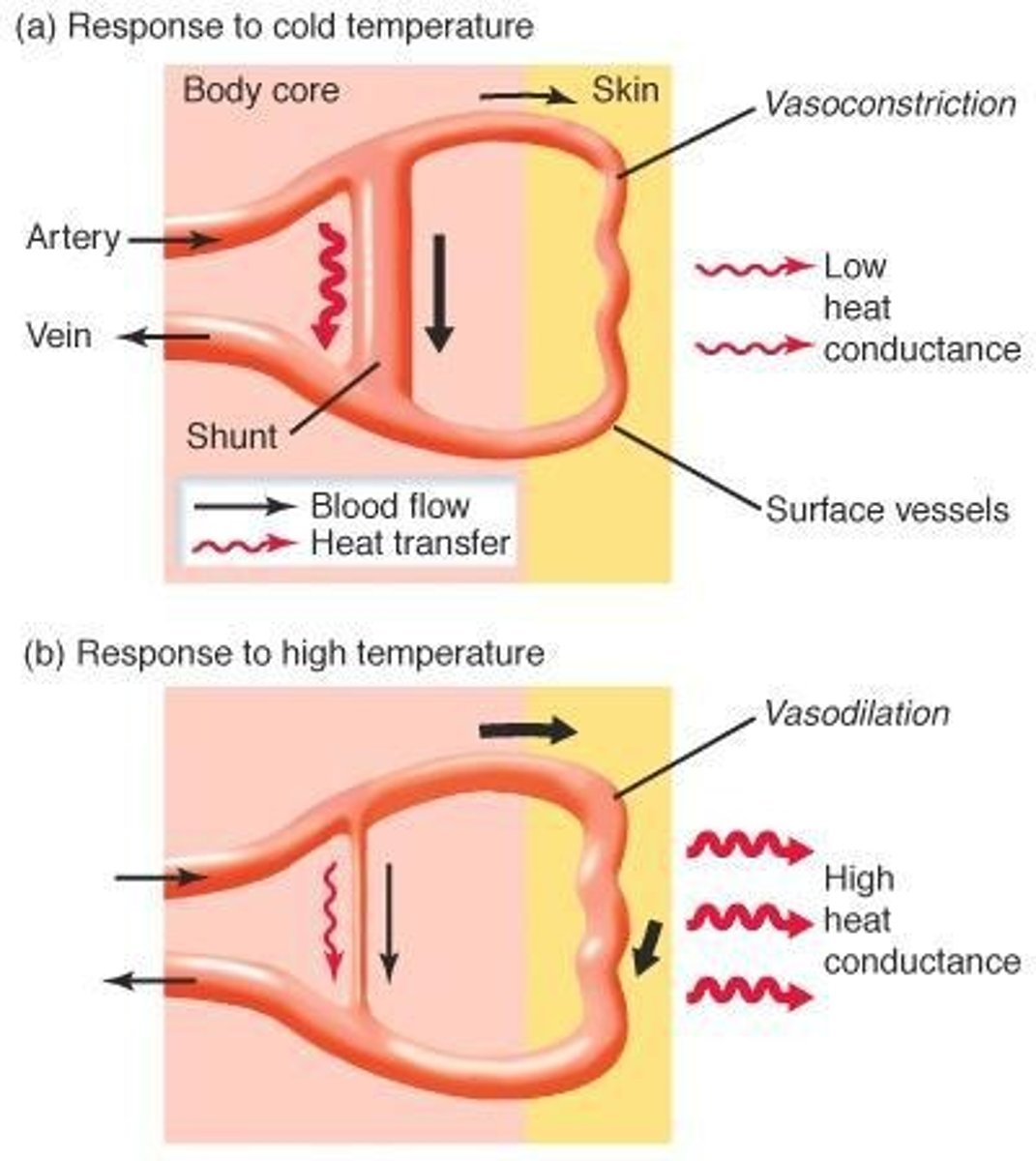
What is the function of vasomotor responses in thermoregulation?
Selective vasoconstriction or vasodilation of blood vessels to the periphery to alter heat loss.
What is piloerection?
The raising of feathers or hair by pilomotor muscles to increase the thickness of the insulating layer.
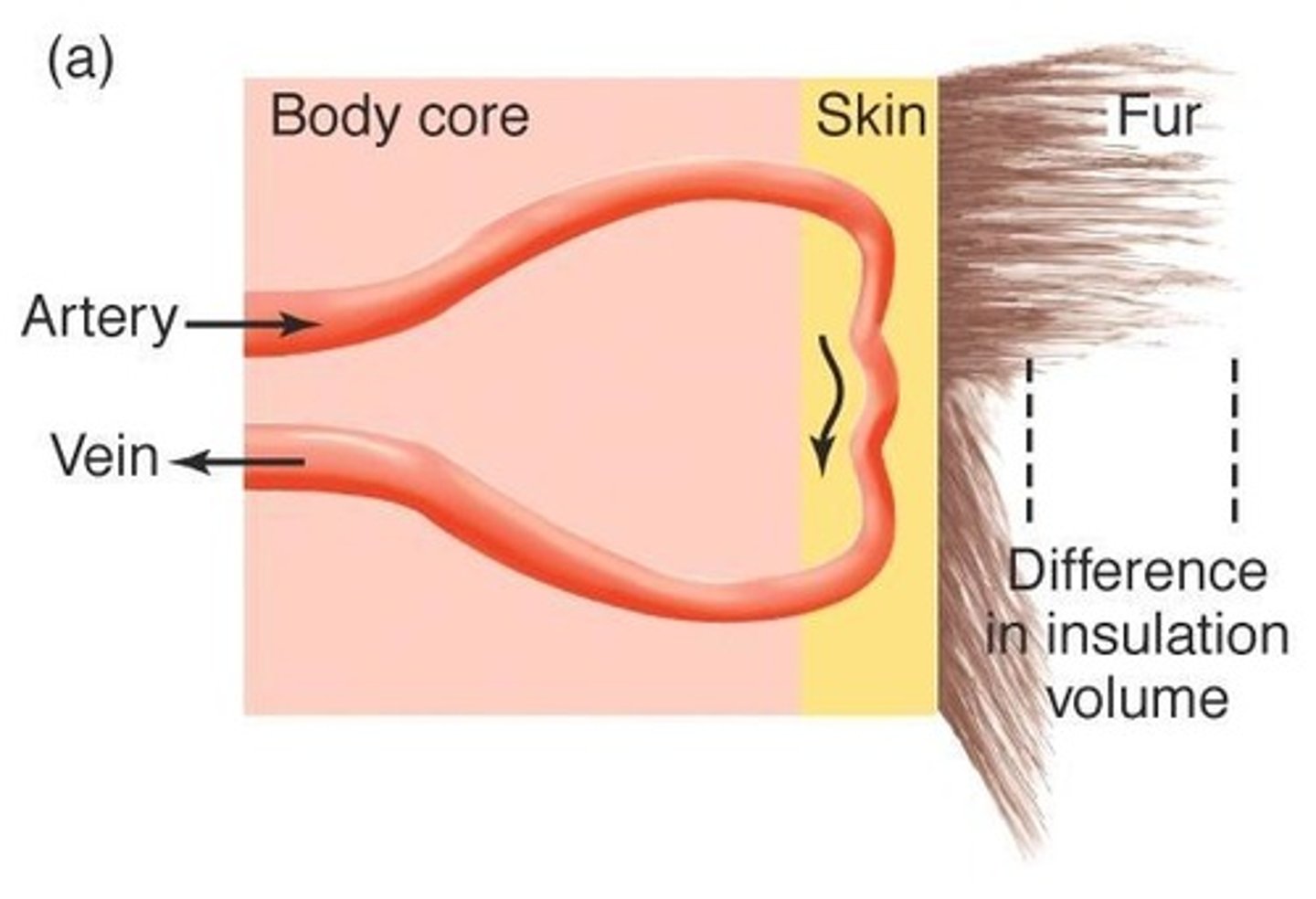
How does fur thickness relate to insulation?
There is a direct relationship between fur thickness and the amount of insulation provided.
Why is blubber considered more easily regulated than fur for insulation?
Blubber has lower thermal conductivity than skin and can be regulated through blood flow.
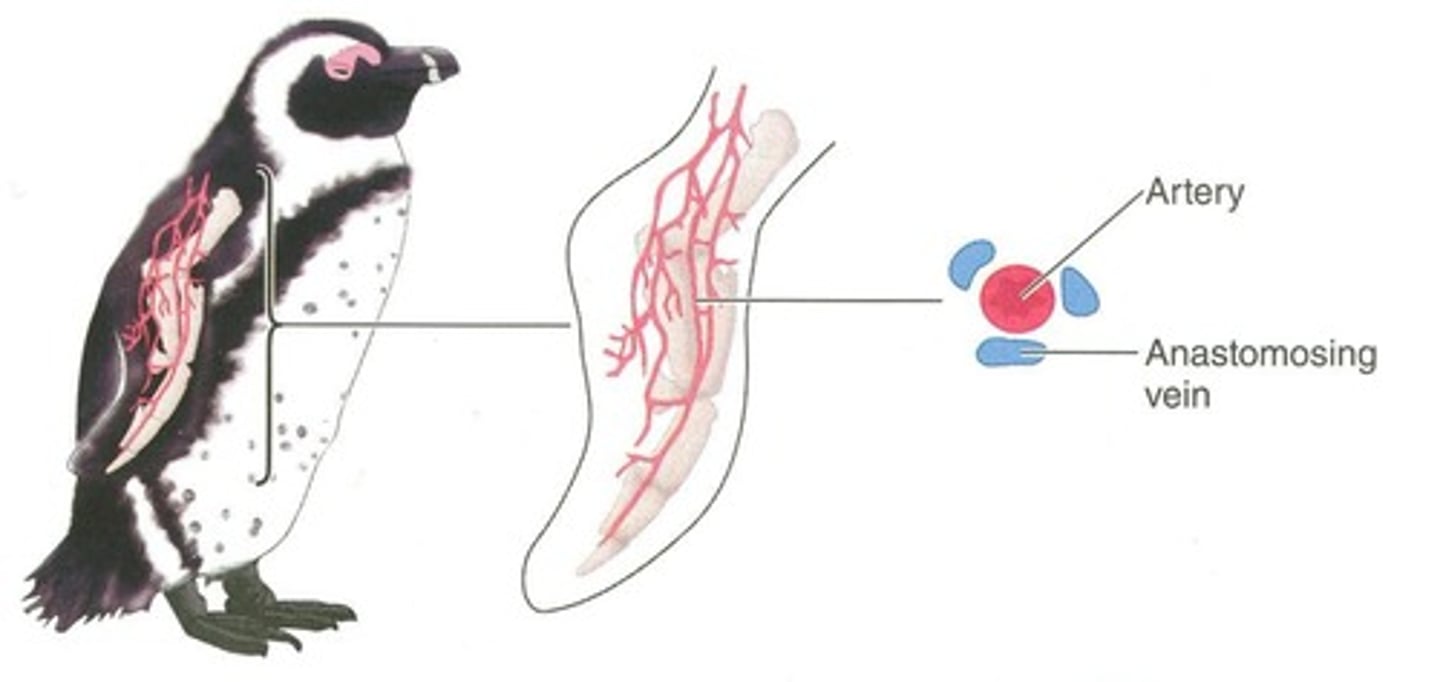
What is regional heterothermy?
The use of countercurrent heat exchange to maintain different temperatures in different parts of the body.
What is the consequence of ambient temperature rising above the zone of active heat dissipation?
Possible hyperthermia.
What is the consequence of ambient temperature falling below the ZMR?
Possible hypothermia.
Why do endotherms have higher Na+/K+ ATPase activity than ectotherms?
To maintain ion gradients across 'leakier' cell membranes.
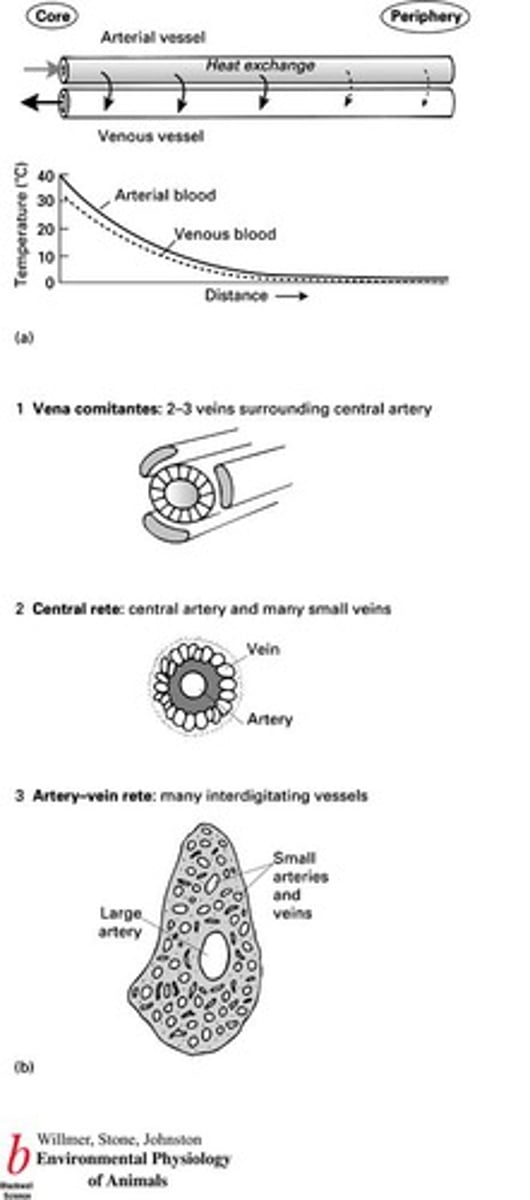
What is the primary function of the 'central rete' in dolphin flippers?
It acts as a countercurrent heat exchange system to prevent heat loss by transferring heat from outgoing arterial blood to incoming venous blood.
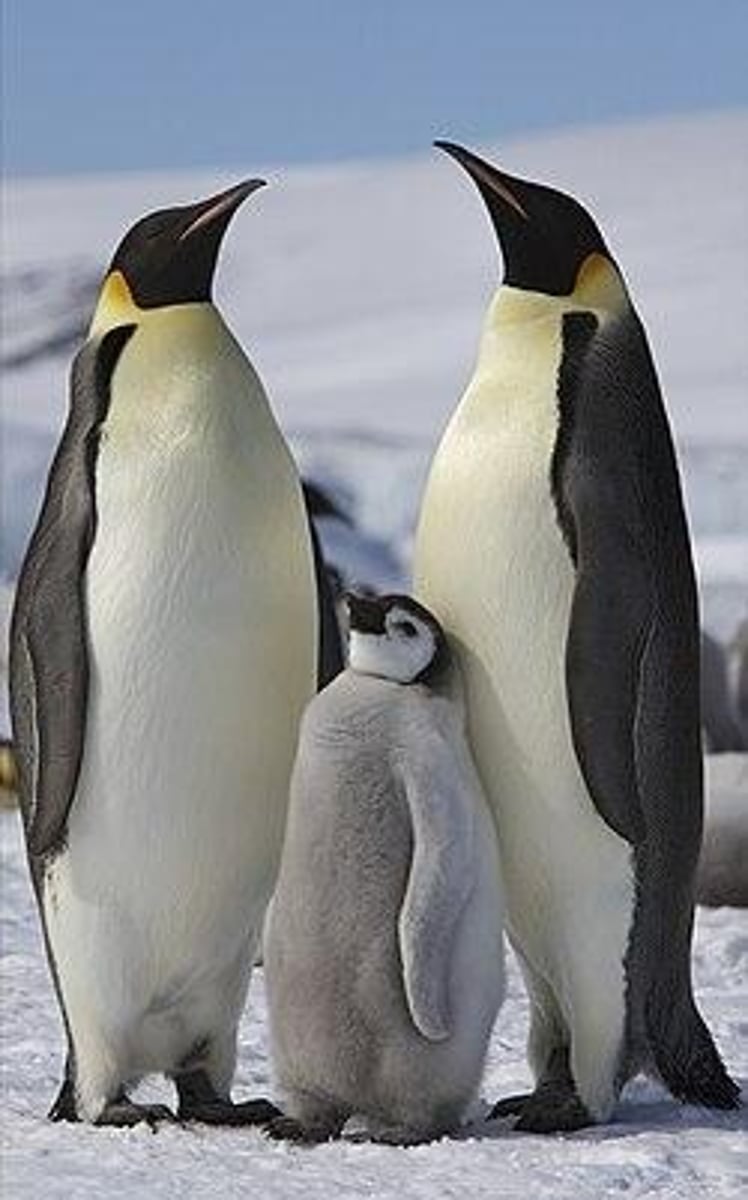
What are two examples of postural changes used by endotherms for temperature regulation?
Changing body orientation relative to the sun or shade and huddling.
What are the two major strategies for heat production in endotherms in cold environments?
Shivering thermogenesis and non-shivering thermogenesis.
How does shivering thermogenesis generate heat?
Through involuntary isometric contractions of antagonistic skeletal muscles that consume ATP without generating physical work.
What is the primary role of uncoupling protein 1 (UCP-1) in brown adipose tissue?
It acts as a proton channel that allows protons to bypass ATP synthase, dissipating the energy of lipid oxidation as heat.
Which hormone is primarily responsible for the rapid activation of brown adipose tissue?
Norepinephrine.
What is the main difference between white adipose tissue (WAT) and brown adipose tissue (BAT) regarding vascularization?
BAT is highly vascularized, whereas WAT is not.
What are the two main branches of the autonomic nervous system?
The sympathetic nervous system and the parasympathetic nervous system.
What is 'beige' or 'brite' fat?
A third type of adipose tissue found within WAT deposits that expresses UCP1 and is thermogenic.
How does cold exposure affect the metabolic activity of brown adipose tissue?
It increases blood flow, glucose uptake, and the expression of UCP1 and TRPV2 channels to produce more heat.
What is the role of the hormone irisin in temperature regulation?
It is synthesized in muscle during exercise and induces thermogenesis and the 'browning' of white fat.
What is the function of fibroblast growth factor 21 (FGF-21) in brown fat?
It is produced by BAT during cold exposure to induce thermogenic activity and promote the browning of white fat.
What is limited heterothermy as a strategy for heat tolerance?
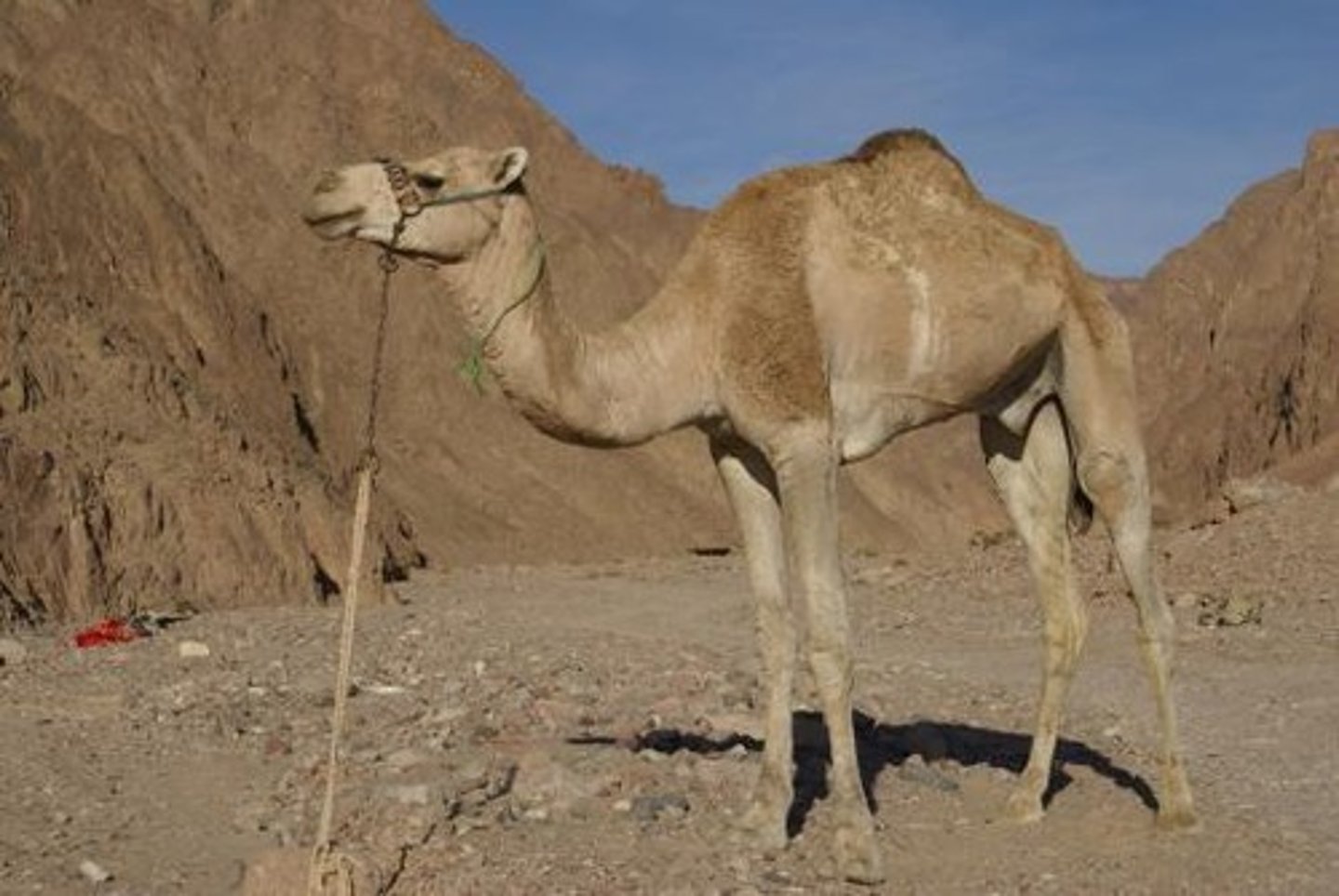
Allowing the body temperature to rise during the day and dissipate heat at night, as seen in camels.
What is the latent heat of evaporation of water?
Approximately 2.43 kJ of heat per gram at 37 degrees Celsius.
How does gular fluttering help birds regulate temperature?
The bird rapidly vibrates the floor of the mouth cavity to increase evaporative cooling.
What are 'heat windows' in desert animals?
Body surfaces, such as rabbit ears, that permit heat loss via radiation, convection, or conduction.
What is the function of the carotid rete in desert-adapted animals?
It is a countercurrent exchange system that cools arterial blood destined for the brain using cool venous blood from nasal passages.
Why is sweating more efficient than panting for humans?
Sweating cools the entire body, does not interfere with breathing, and allows for sustained activity.
What is a potential negative side effect of prolonged panting?
Rapid loss of CO2 can lead to alkalosis.
What is the role of the beta-3 adrenergic receptor in BAT?
It binds norepinephrine to trigger triglyceride oxidation and subsequent heat production.
What transcription factor promotes brown fat differentiation?
ZIC1 (zinc finger of the cerebellum protein).
How does thyroid hormone (TH) influence brown fat?
It upregulates UCP1 expression and beta-3 adrenergic receptors.
What is the primary energy source for non-shivering thermogenesis in BAT?
Triglycerides oxidized into free fatty acids.
What is the function of TRPV2 channels in BAT?
They are Ca2+ channels that, when activated, increase UCP1 expression to generate more heat.
What is the difference in energy balance between 50g of WAT and 50g of BAT?
50g of WAT stores 300 kcal, while 50g of BAT can burn 300 kcal per day.
What is the primary difference between classical brown fat and beige fat?
They have different developmental origins.
What is the effect of a TRPV2 gene knock-out in mice?
It results in obesity.
What is the role of saliva spreading in rodents?
It is a method of evaporative cooling, though relatively inefficient compared to other methods.
What is the primary purpose of the 'vena comitans' in countercurrent systems?
It serves as the venous pathway that carries cool blood back to the core, facilitating heat exchange with the warm artery.