ID Exam 3: O' Donnel Retroviruses
 Call Kai
 Learn
Learn Practice Test
 Spaced Repetition
 Match
Match Flashcards
 Knowt Play
1/84

There's no tags or description
Looks like no tags are added yet.
Name | Mastery | Learn | Test | Matching | Spaced | Call with Kai | Chat |
|---|
No analytics yet
Send a link to your students to track their progress
85 Terms
enveloped
Retroviruses
-large family of ___, RNA viruses
Lentivirus
Retroviruses
-includes ____ genus
incubation
Retroviruses
-"Lenti" is latin for slow; refers to long ___ period
HIV
Retroviruses
-Lentivirus genus includes ____
backward, RNA
Retroviruses
-"retro" means "going ___"
-genome is made out of single-stranded viral ___
RNA, DNA
Retroviruses
-human cells go DNA → mRNA → protein
-retroviruses go from ss___ → ds___ (via reverse transcription).
CD4 T, macrophages
HIV
-10 billion new particles made per day during active infection
-infects cells of the immune system; specifically ___ ___ cells and ____
helper
Remember CD4 T cells = ___ T cells; these are the cells that get depleted and lead to immunosuppression in HIV
opportunistic
HIV
-death results from ___ infections (pt is so immunosuppressed that mild bugs/viruses will kill them)
gp160
HIV Structure
-envelope protein is first made as ___
gp120, gp41
HIV Structure
-envelope is first made as gp160 and then cleaved into ___ and ___
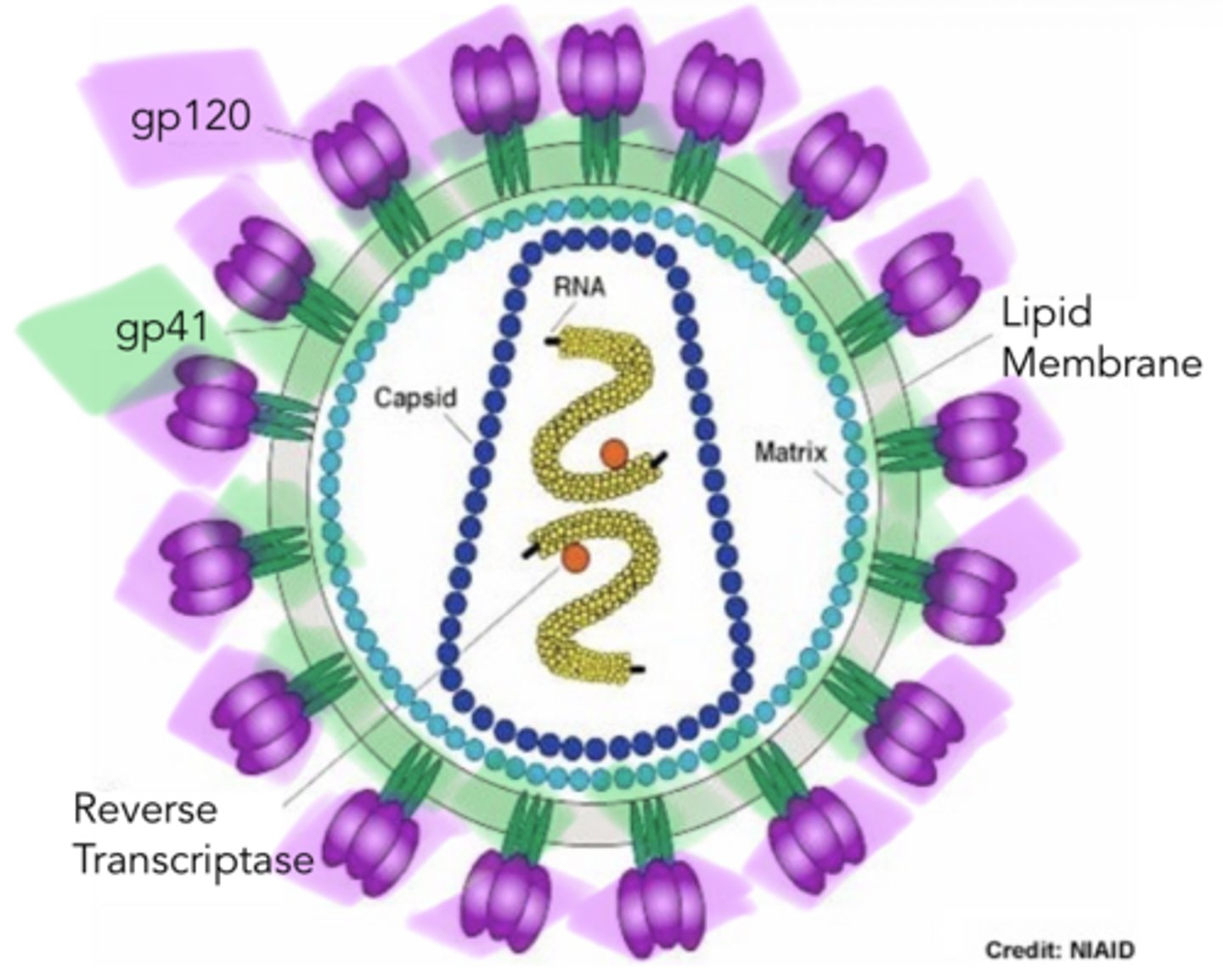
glycoproteins
HIV Structure
-"gp" = ____
vaccination
HIV Structure
-envelope is made of glycoproteins; meaning it is covered in sugars
-this is a problem for ___, because there is so much variation in the sugars
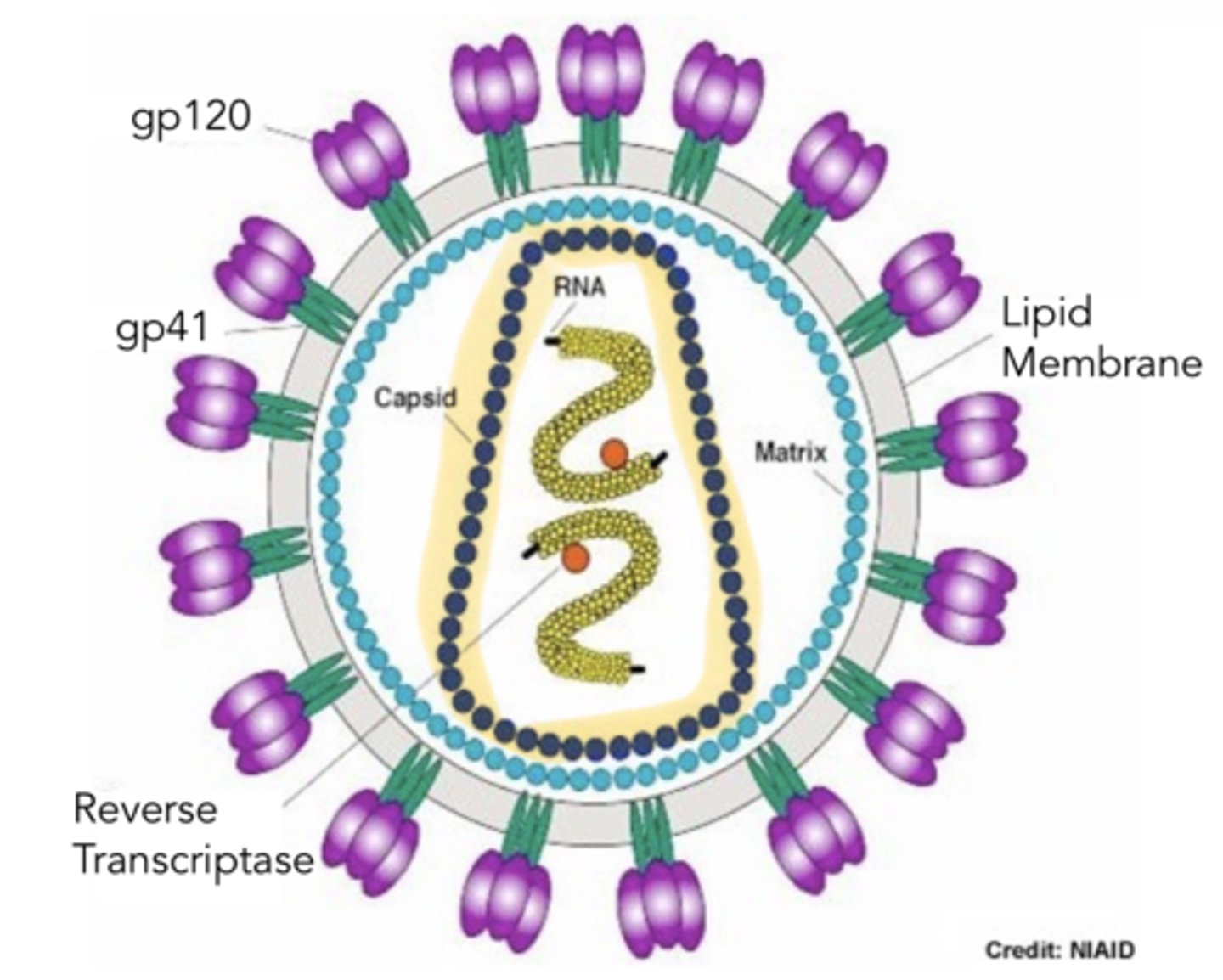
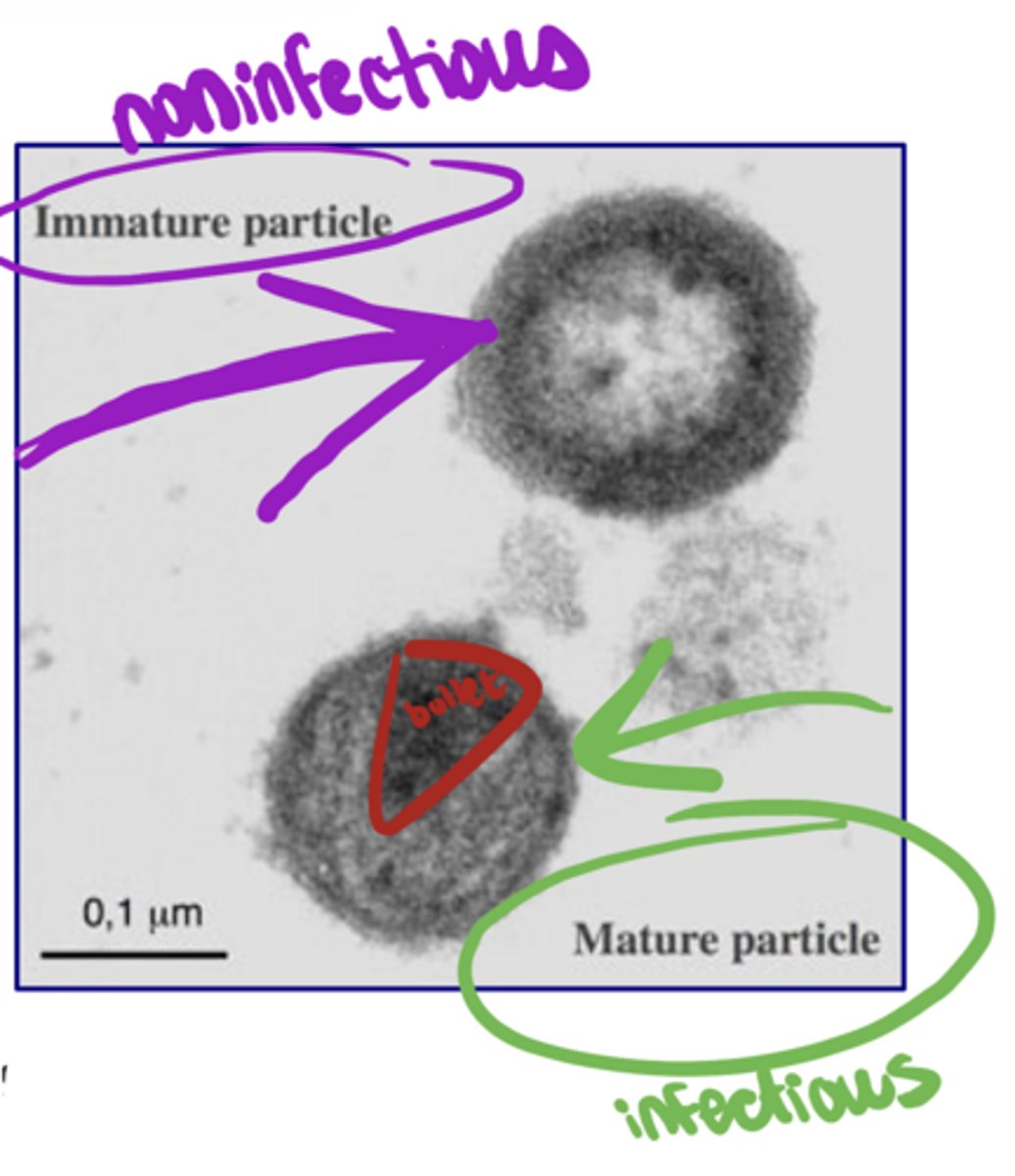
capsid, mature
HIV Structure
-bullet-shaped ___ (bullet shape indicated it is a __ particle)
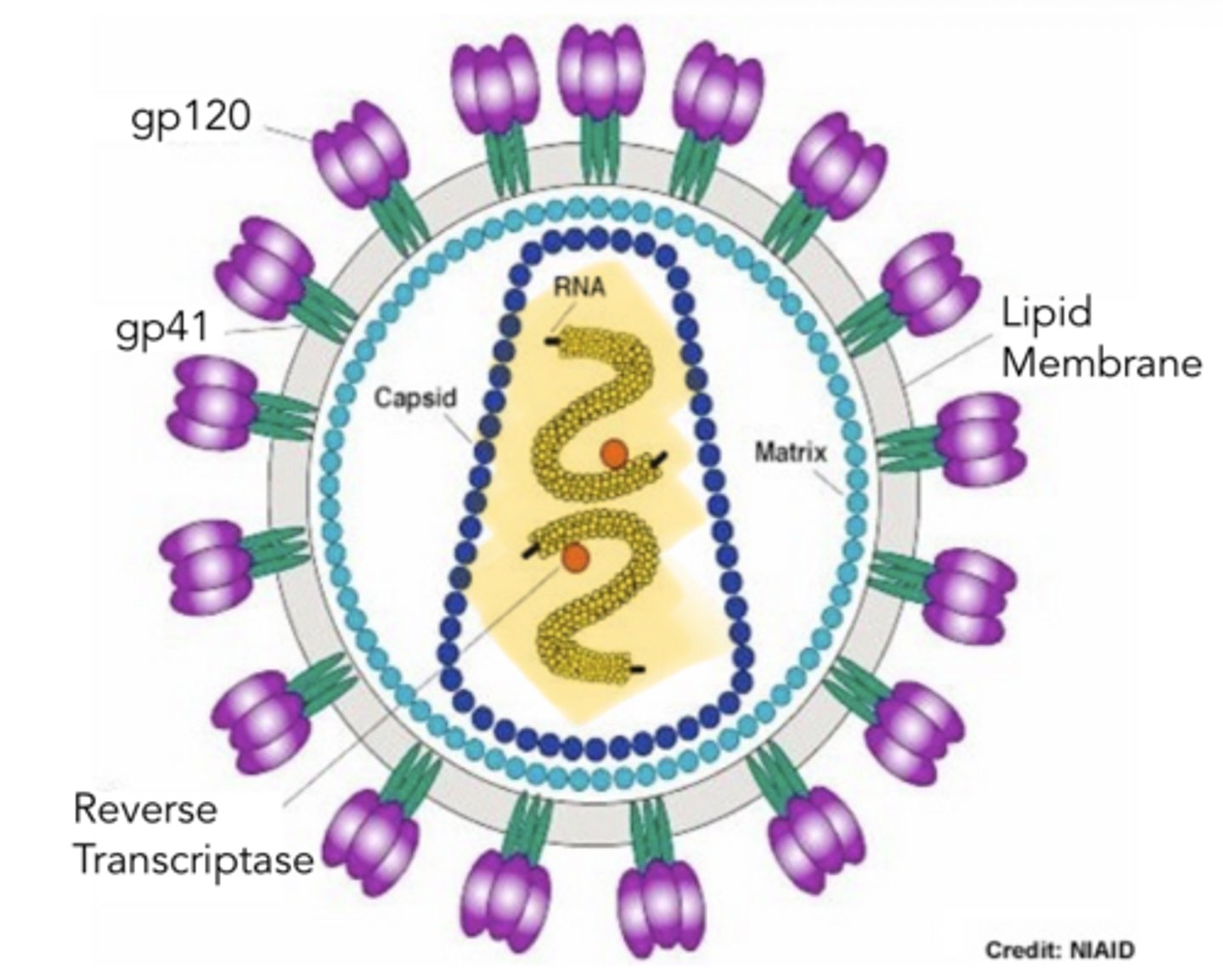
2, reverse transcriptase
HIV Structure
-genome contains __ single strands of RNA that ___ ___ is already attached too (meaning replication cycle can start asap once in cell)
gp41, gp120
HIV Life Cycle-the players
-2 viral proteins: ___ and ___
CD4, CCR5/CXCR4
HIV Life Cycle-the players
-2 host cell proteins: ___ and ___/___
helper T, macrophages
CD4 is only found on ___ __ cells or ___
coreceptors
CCR5 and CXCR4 are ___
gp120, gp41
HIV Entry- 2 steps
1) Attachment (mediated by ____)
2) Fusion (mediated by _____)
CD4, conformational
HIV Entry- Attachment
a) gp120 binds to ___ on the host cell first, which causes a ___ change in gp120
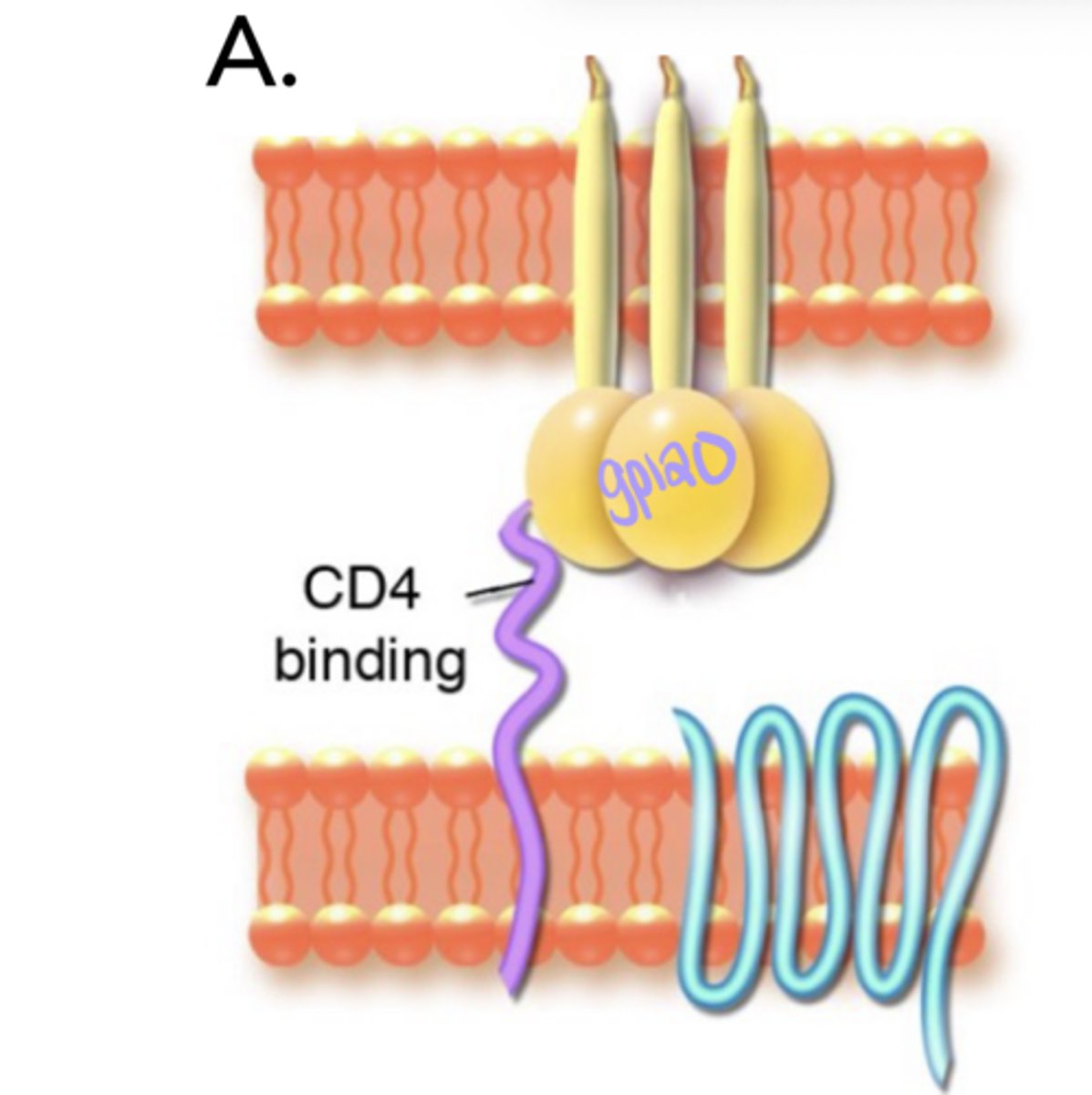
coreceptor
HIV Entry- Attachment
b) After gp120 undergoes a conformational change, it binds to the ___ (CCR5 or CXCR4)
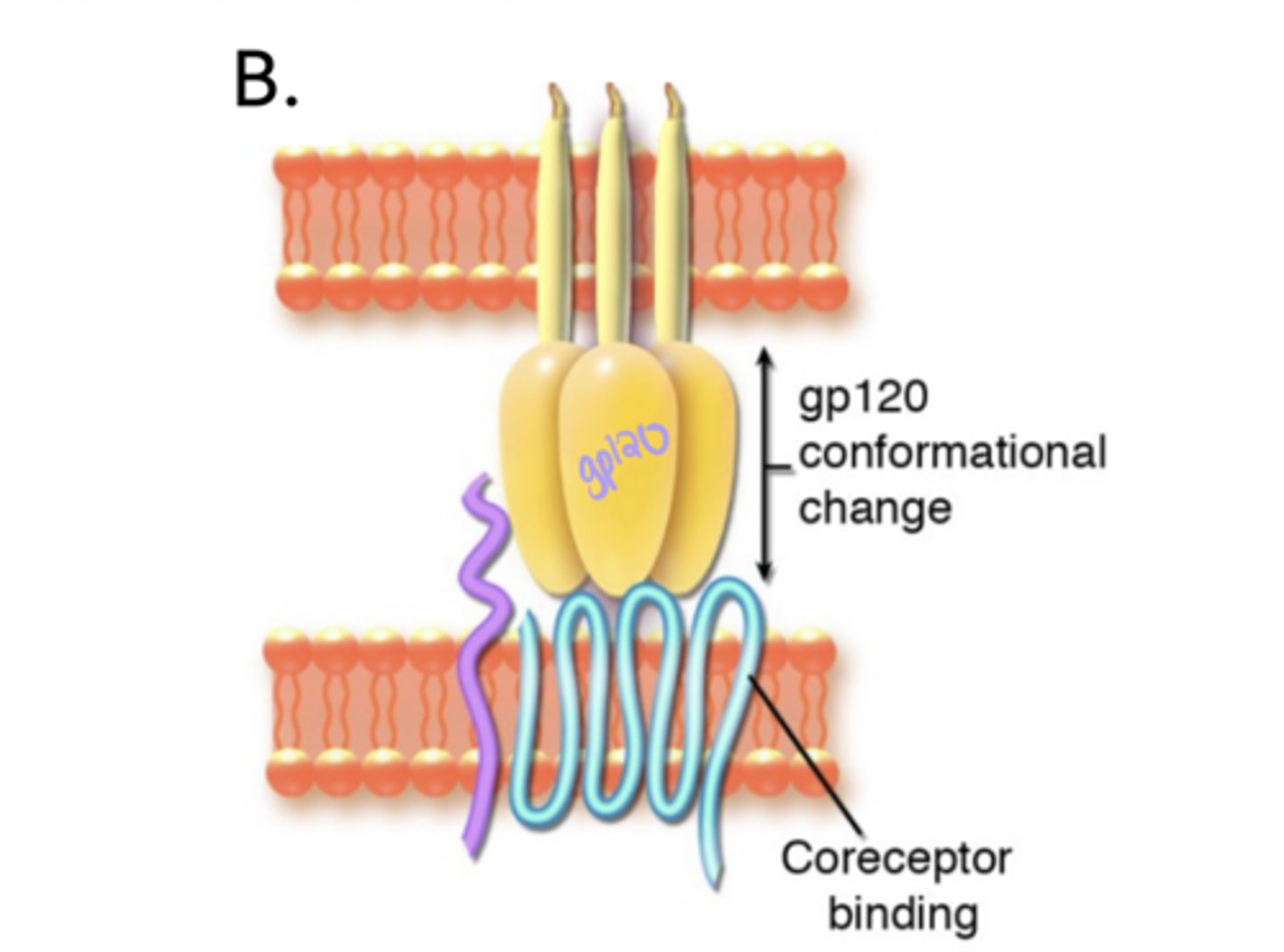
gp41
HIV Entry- Fusion
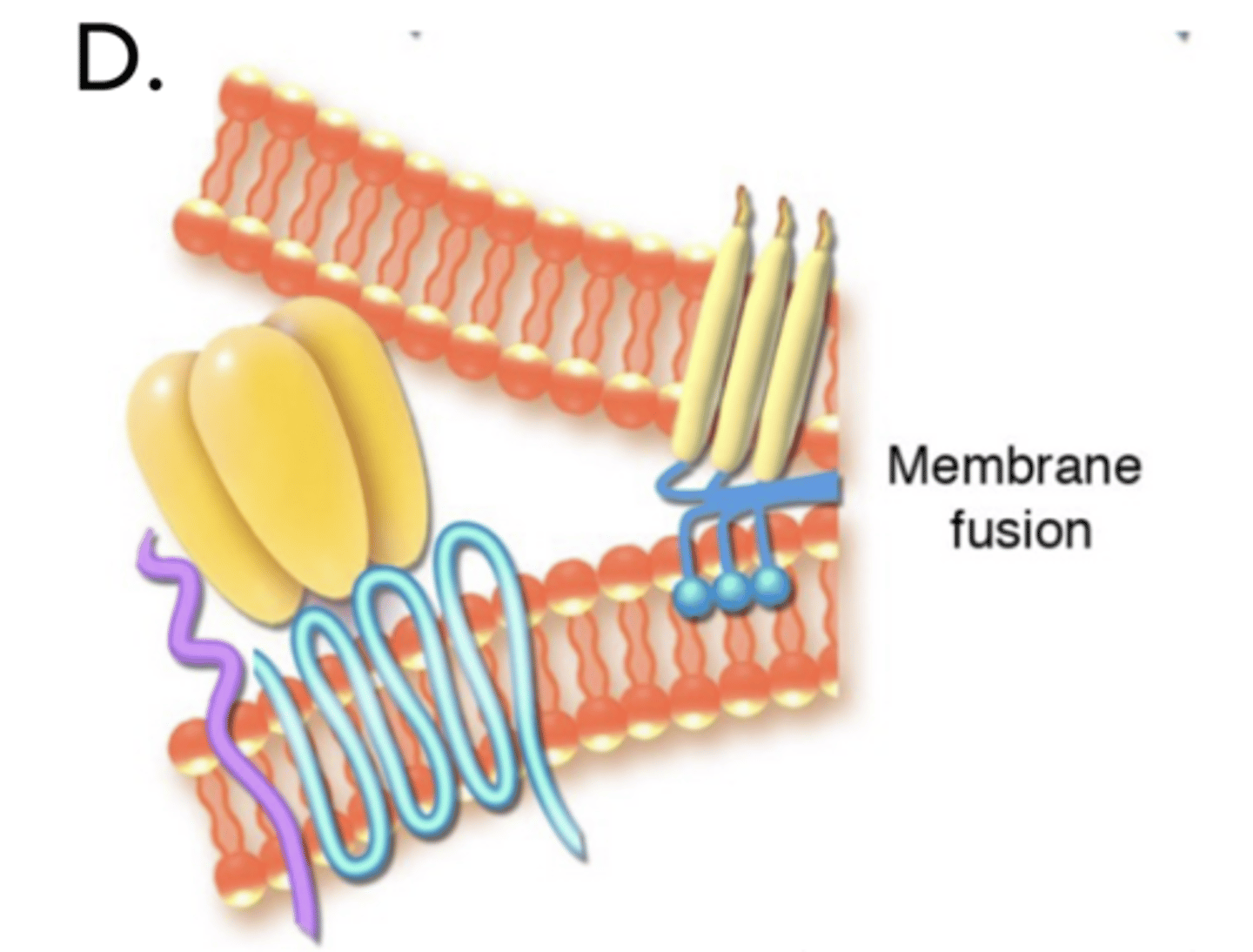
c) ___ stretches out and inserts itself into the host cell membrane
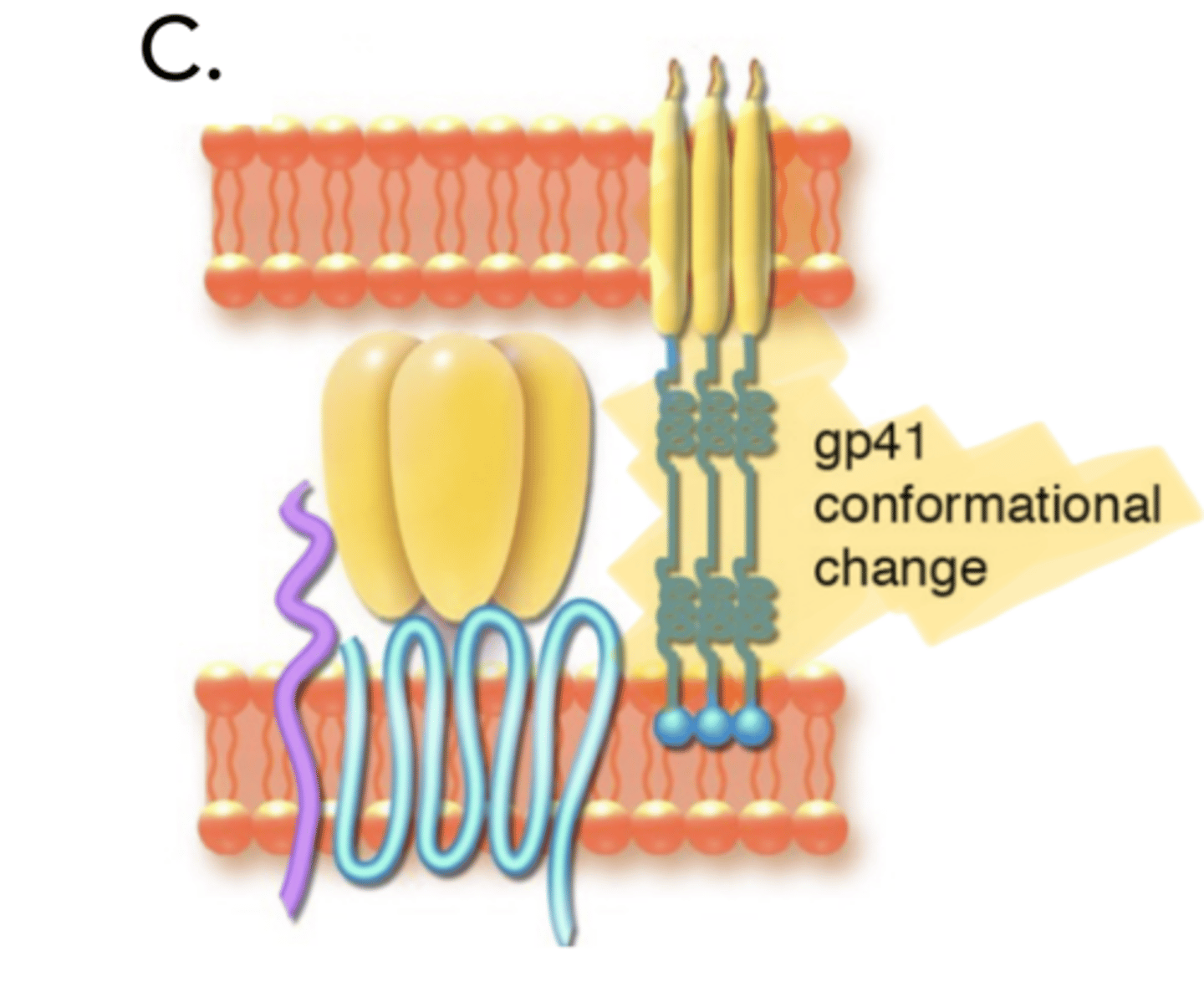
shut
HIV Entry- Fusion
d) gp41 "snaps ___" and causes fusion between the viral envelope and the host cell
co-receptor
HIV variants are named for their preferred __-____ (the virus uses CCR5 or CXCR4)
R5
HIV variants
___ variant: uses CCR5 to enter cells
X4
HIV variants
___ variant: uses CXCR4 to enter cells
transmitted
R5 Variant
-this variant is the type that is ___ between people
progression
R5 Variant
-CCR5 expression influences efficiency of transmission and disease ___ (this variant progresses more quickly)
deleted
R5 Variant
-about 15% of Caucasions have CCR5Δ32 mutation, which means 32 amino acids have been ___
prevents, slows
R5 Variant
-when patients with CCR5Δ32 mutation catch HIV, this ___ or ___ progression to AIDS
late
X4 Variant
-appears __ in infection or not at all
Maraviroc
Drugs that Inhibit HIV Entry-Attachment Step
1. ____ inhibits CCR5
Rukobia
Drugs that Inhibit HIV Entry-Attachment Step
2. ____ binds to gp120 and blocks CD4 binding
Trogarzo
Drugs that Inhibit HIV Entry-Attachment Step
3. ____ is a mAb that binds to CD4 and prevents gp120 from attaching
Fuzeon
Drugs that Inhibit HIV Entry-Fusion Step
4. ____ is a small peptide that binds to gp41 and blocks it from snapping shut and fusing membranes together
overlap
HIV genome
-tiny (less than 10,000 base pairs of RNA), so genes ____ to conserve space in the genome (via using different reading frames)
gag, pol, env
HIV genome
-3 main genes = ___, ___, ___ (each encode for multiple proteins)
reverse transcriptase
Retrovirus Replication involves ___ ___ (RT)
DNA, RNAseH
Retrovirus Replication: 2 Roles of RT
1. converts ssRNA → ds___
2. has _____ activity
degrade RNA
What is the function of RNAseH domain?
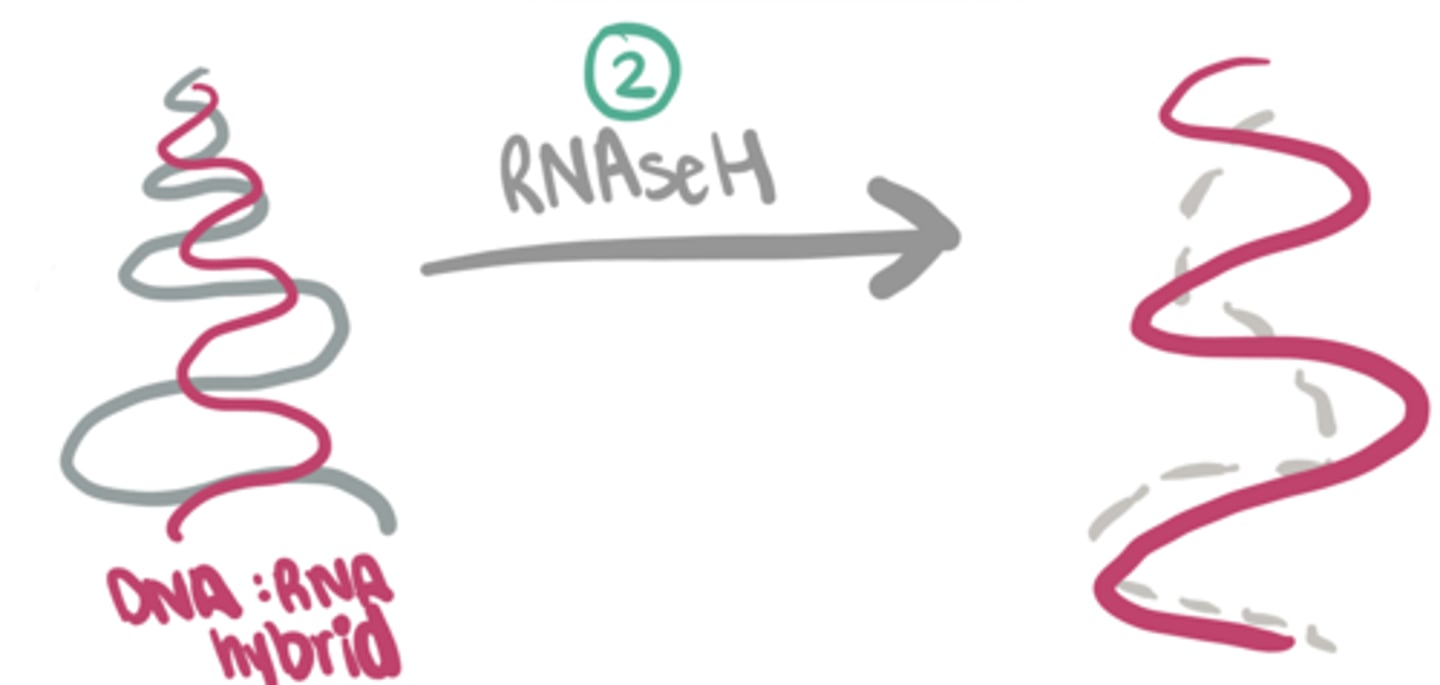
DNA
Retrovirus Replication:
1. RT makes a complimentary ___ strand using the ssRNA genome as a template
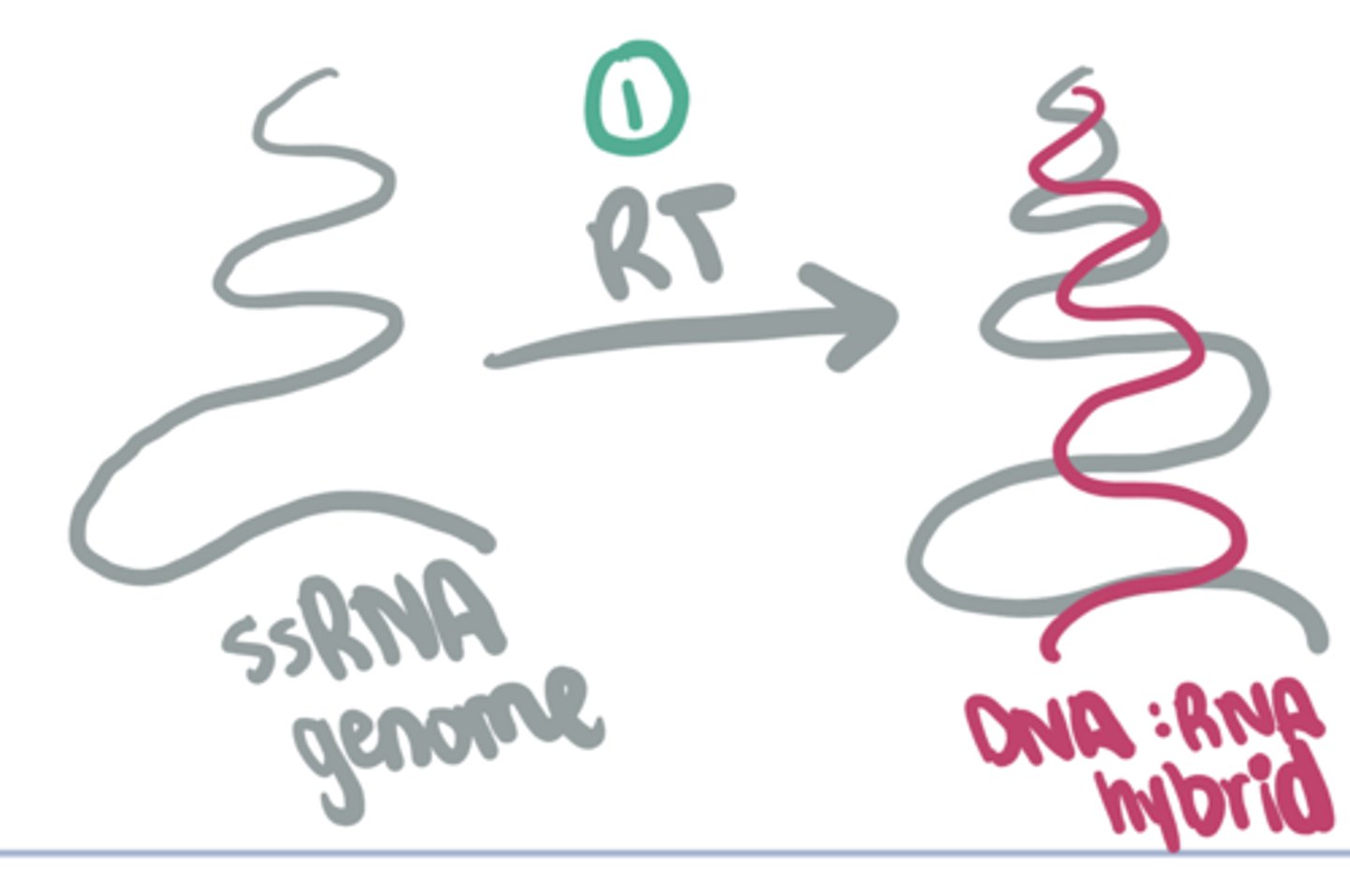
degrades
Retrovirus Replication:
2. RNAseH ____ the original ssRNA
ds
Retrovirus Replication:
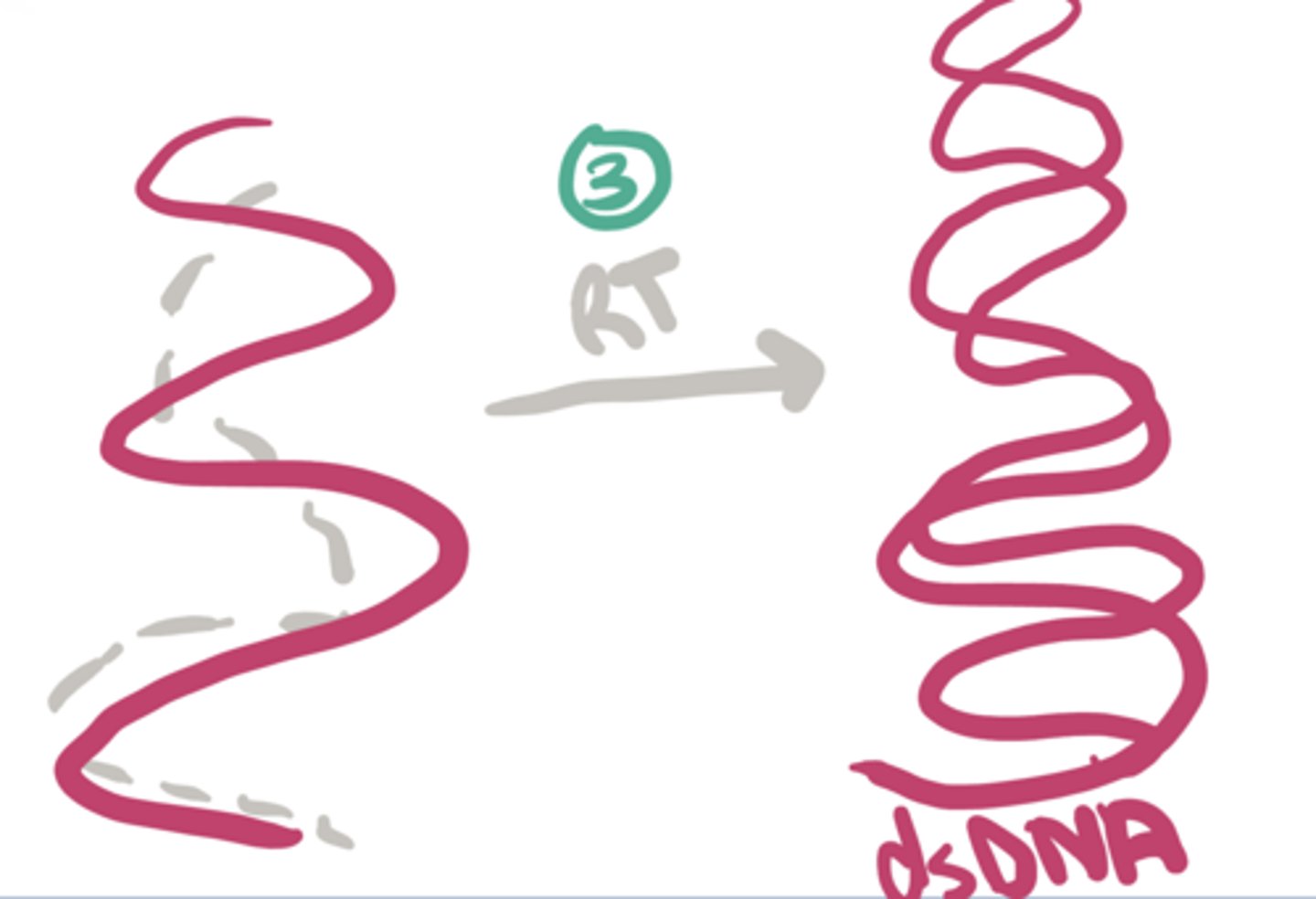
3. RT makes a complimentary strand of DNA to convert ssDNA → __DNA
integrase
Purpose of the virus converting its RNA into dsDNA = then ____ can insert it into the host cell genome.
lifelong
Once HIV integrates its DNA into the host genome (via integrase), it becomes part of the host cell’s DNA and the body cannot eliminate it, which is why HIV is ____.
latency
HIV Replication
-___ can last up to 10 years (or longer if therapy is successful) inside infected CD4+ T Cells
stimulus
HIV Replication
-An immune ___ often activates the infected T cell, which can trigger latent HIV to resume replication, produce new virions, and eventually destroy the host T cell
reverse transcriptase
HIV Replication: Population Polymorphisms
-HIV introduces a new mutation every 2000-10000 nucleotides (this is due to ___ ___, which is very error prone)
1
HIV Replication: Population Polymorphisms
-since HIV is only 9749 nucleotides long, EVERY new virus has at least __ mutation
swarm
HIV Replication: Population Polymorphisms
-in theory, every single possible mutation appears once per day during an active infection
-therefore, the person is infected with a "___" of different HIV virions
drug, vaccination
HIV Replication: Population Polymorphisms
-the HIV virus mutating so often makes it a challenge for __ treatment and __
gp120
HIV Replication: Population Polymorphisms
-most variable protein = ___
conserved
HIV Replication: Population Polymorphisms
-the portions of gp120 that are necessary for its function because they bind CD4 = the "____" portions
-we do not see a lot of variation in this portion
interchanged
HIV Replication: Population Polymorphisms
-the conserved portions of gp120 are covered in sugars, which can be ____
neutralizing
HIV Replication: Population Polymorphisms
-due to the variations in the sugars of gp120 (attachment protein), it is difficult to make broadly ___ antibodies against HIV (ie antibody that prevents attachment)
vaccine
HIV Replication: Population Polymorphisms
-variations in gp120 are a problem for ____ (bc most strategies involve making antibodies against attachment protein)
budding, protease
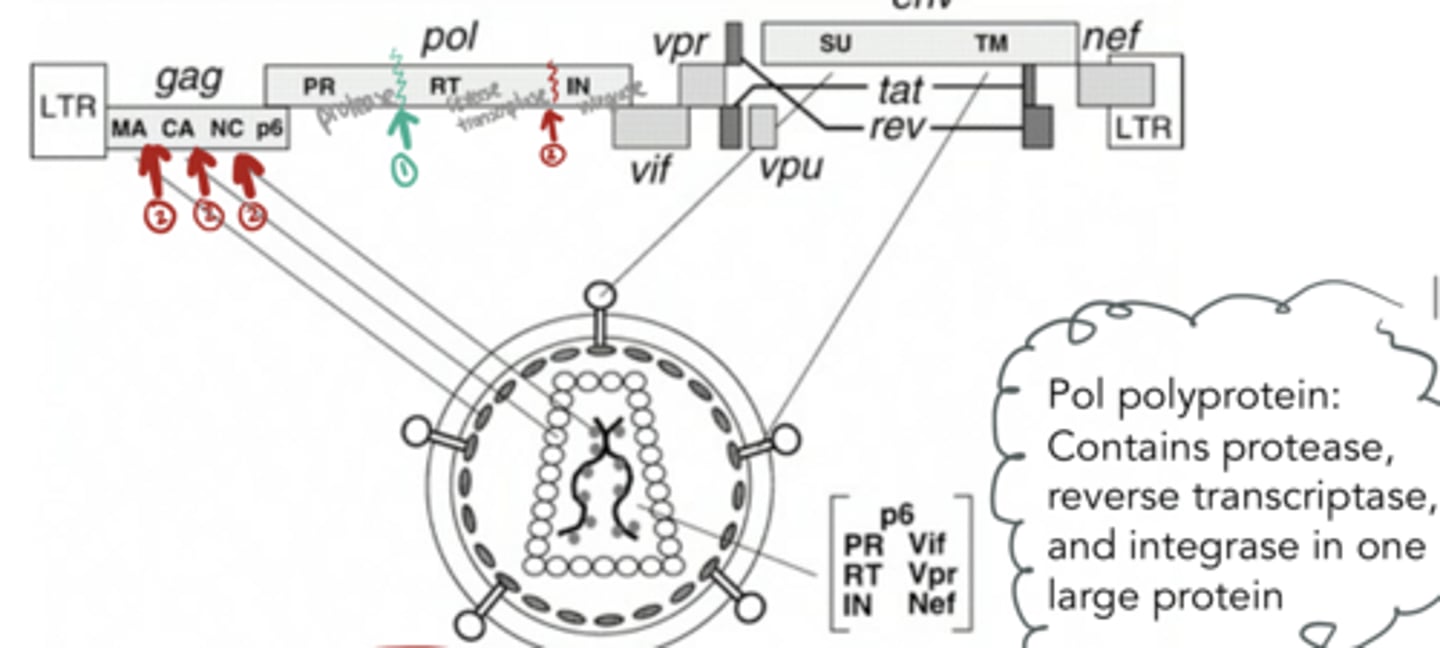
HIV maturation
-occurs after ___
-dependent on viral ___, which cleaves polyproteins into individual proteins so they can refold into their proper conformations and become functional.
infectious
HIV maturation-Protease
-this step is required to make an ___ viral particle
itself
HIV maturation-Protease
-first, protease cuts ___ out and then cleaves other proteins out into individual proteins
capsid
HIV maturation-Capsid Assembly
-after protease cleaves the viral polyprotein, the viral ___ assembles
bullet
HIV maturation-Protease
-in mature HIV particle, capsid will be in shape of __
p24
HIV maturation-Capsid Assembly
-protein that makes up capsid is ___, which spontaneously self-assembles into hexamers, and then into the bullet-shaped capsid
gp120, gp41, RT, integrase, protease, capsid
In summary, there are 6 proteins we can inhibit to treat HIV:
-proteins involved in viral entry (___ and ___)
-proteins involved in viral replication (__ and __)
-proteins involved in maturation/assembly (___ and ___)
sexual
HIV can be transmitted via:
-___ contact
-sharing needles
-during pregnancy, birth, breastfeeding
blood, semen
For HIV to be transmitted, it has to stay in a body fluid:
-___
-___
-vaginal fluids
-breast milk
-rectal fluids
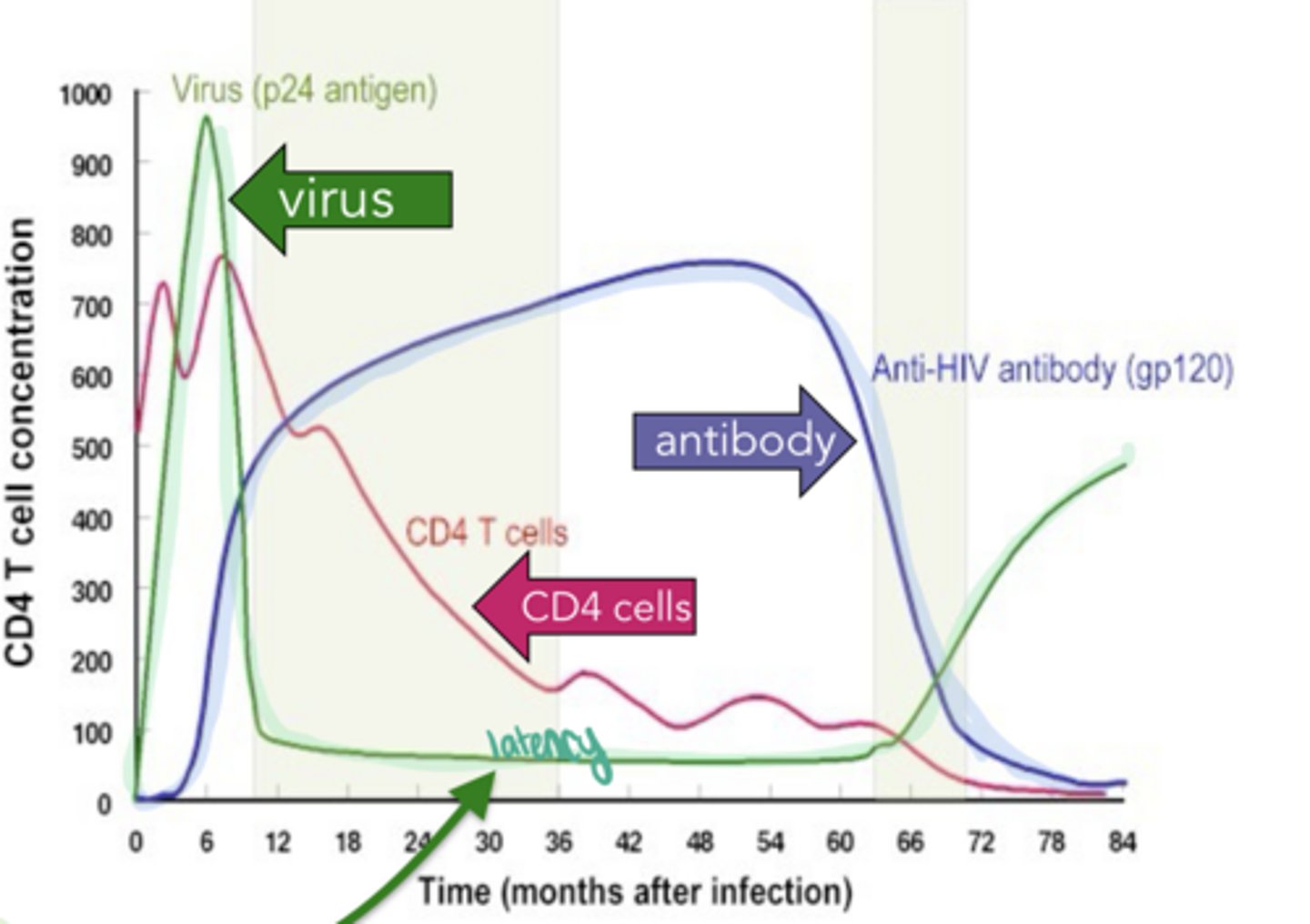
latency
Course of HIV Infection
-after acute infection, anti-HIV antibodies will form and push the virus into ___ for up to 10 years
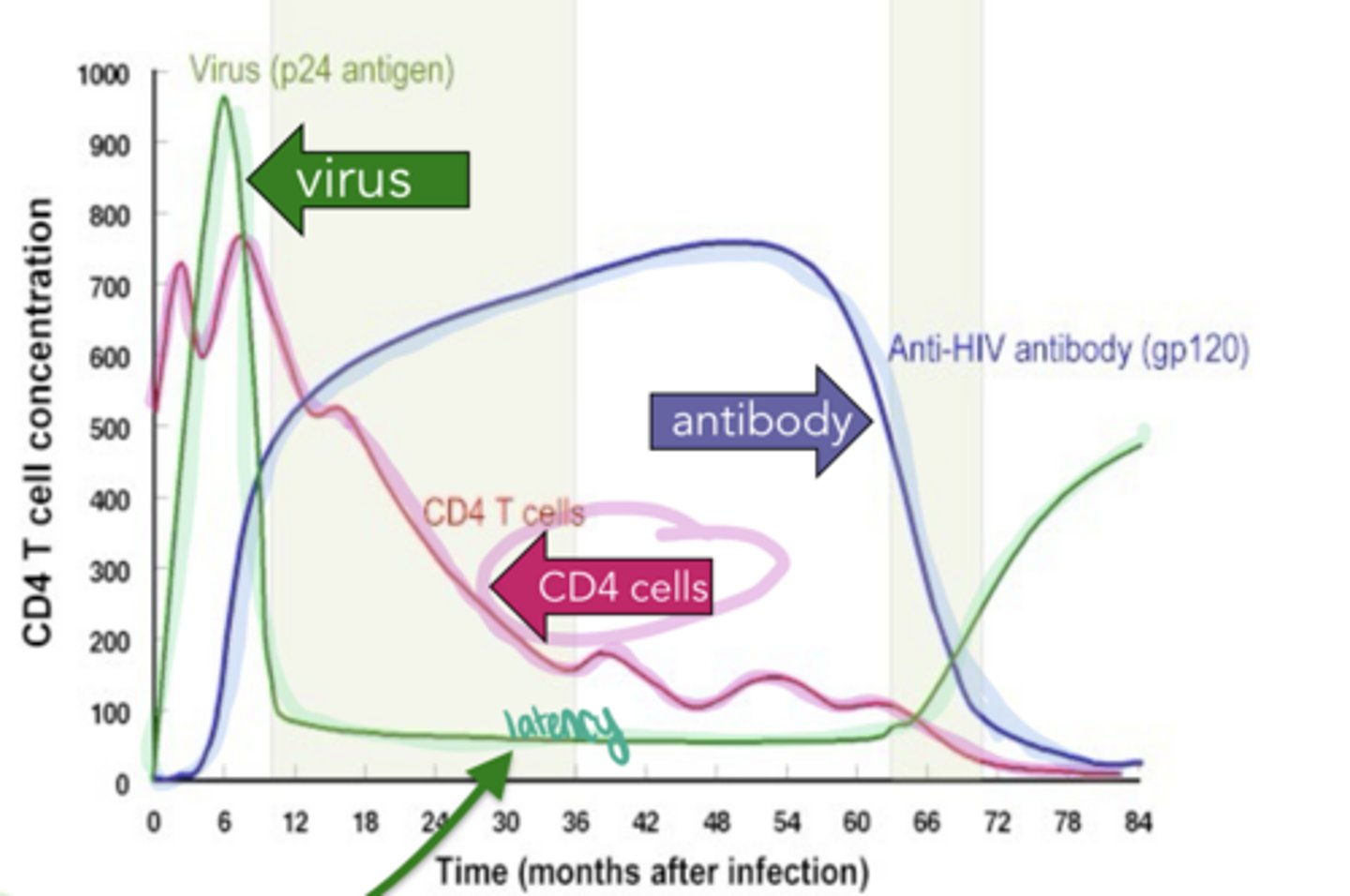
low
Course of HIV Infection
-eventually, CD4 T levels will become so ___ that they cannot hold the virus back anymore
-the virus reemerges and starts replicating aggressively
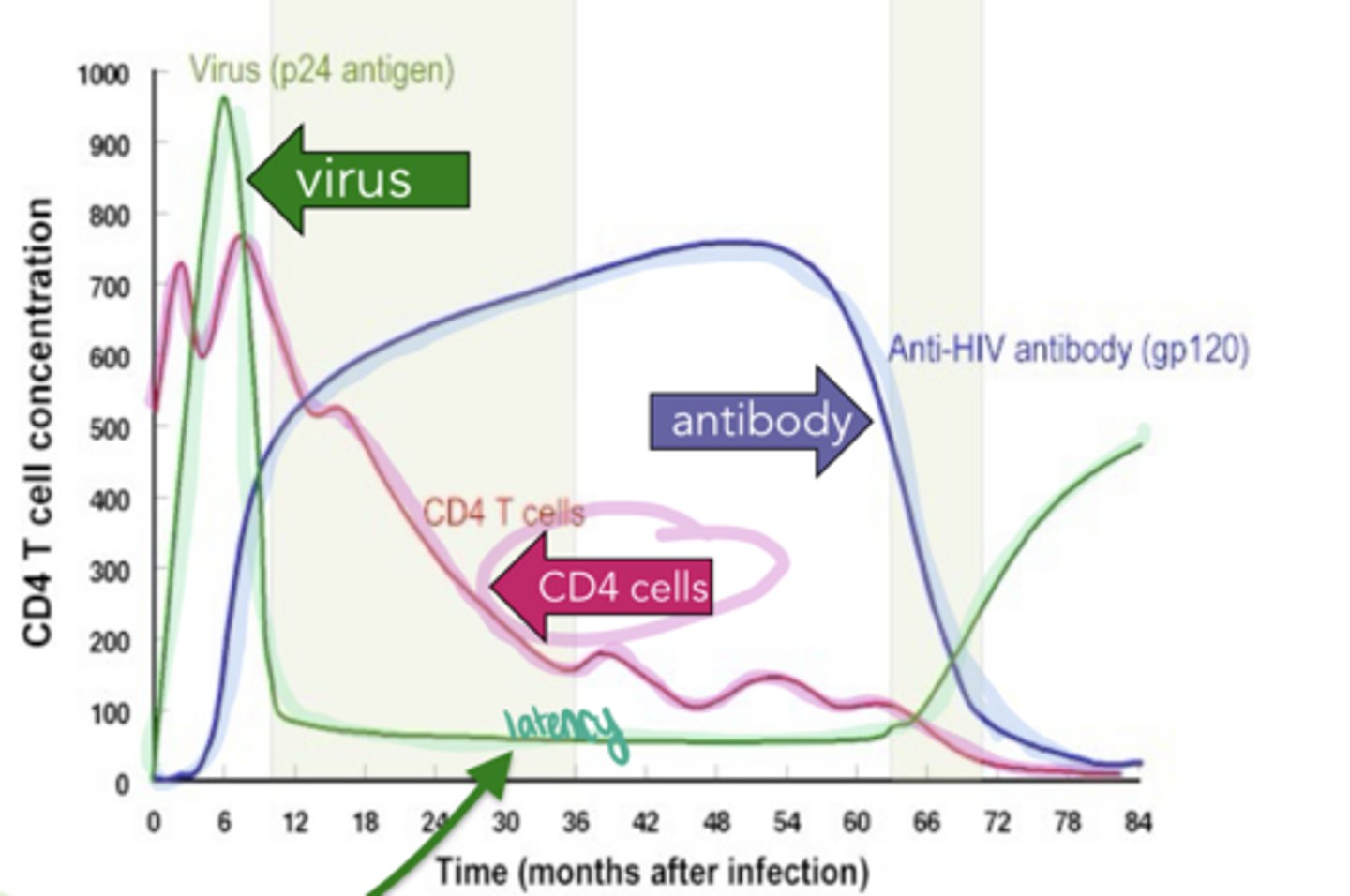
antibody
Course of HIV Infection
-once you lose CD4 T cells, you will eventually lose B cell function too, which is why ____ production decreases dramatically
immunosuppression
Course of HIV Infection
-Key Point: Loss of CD4 T Cells leads to ___
viral load
Goal of Therapy = suppress ___ ___ (bc low level virus = higher life expectancy)
80
Normal Function of CD4 T cells
-when CD4 T cells are activated against a virus, most die after activation, but some remain as memory T cells (which can live up to __ years)
memory
CD4 T cells in HIV Infection
-when CD4 T cells are infected, some are killed by virus/by CD8 T cells, but some will become chronically infected ___ CD4 T cells with the integrated virus (so virus can live in body for up to 80 years)
HIV
AIDS (acquired immunodeficiency syndrome) is ALWAYS caused by ___
200, immunosuppression
AIDS Diagnosis
1. CD4 T-cell count <__ cells/mm3 of blood
OR
2. presence of 1 out of 26 conditions associated with ___
AIDS defining
26 conditions associated with immunosuppression are considered "____ ____" illnesses and include HIV dementia, Kaposi's sarcoma, thrush, TB, etc
epidemic
HIV Spread in US
-___ levels
HAART
HIV Prevalence in US
-progression to AIDS and death rate has slowed due to anti-retroviral therapies (____ = highly active anti-retroviral therapy)
increasing
HIV Prevalence in US
-prevalence is ____ (bc fewer people are dying)
neurological
HIV Prevalence in US
-fewer people are dying from HIV, which is good, but there are problems with long-term effects of drug therapy
-therapy is not effective at slowing down development of ____ complications (due to HIV infected macrophages in brain)
PrEP
HIV Prevention
-you should give anti-retrovirals to at-risk patients before they become HIV positive
-Pre-exposure prophylaxis (____)
truvada, descovy
HIV Prevention
-PrEP includes ___ and ___
early
HIV Prevention
-anti-retroviral therapy should be started ___ in HIV+ patients early to reduce risk of spread to uninfected partners
PEP
HIV Prevention
-Post-exposure prophylaxis (___) is for after a single exposure to HIV
72
HIV Prevention
-PEP must be started within ___ hours
-PEP is 28 day regimen; cocktail of 3 different anti-retroviral therapies