Limits & Continuity
 Call Kai
 Learn
Learn Practice Test
 Spaced Repetition
 Match
Match Flashcards
 Knowt Play
1/9

There's no tags or description
Looks like no tags are added yet.
Name | Mastery | Learn | Test | Matching | Spaced | Call with Kai |
|---|
No analytics yet
Send a link to your students to track their progress
10 Terms
![<p><strong>composite function</strong>: find f[g(x)] and g[f(x)]</p>](https://assets.knowt.com/user-attachments/66a34cce-0d04-45a1-9289-7fd24b8c4155.png)
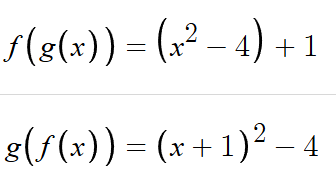
composite function: find f[g(x)] and g[f(x)]
for every X in the outer function, plug in the entire inner function.
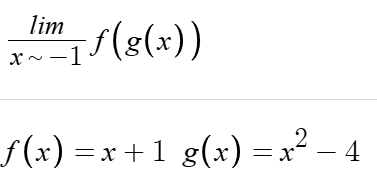
limit of composite function by finding the composite
find the composite function
take the limit of the composite function
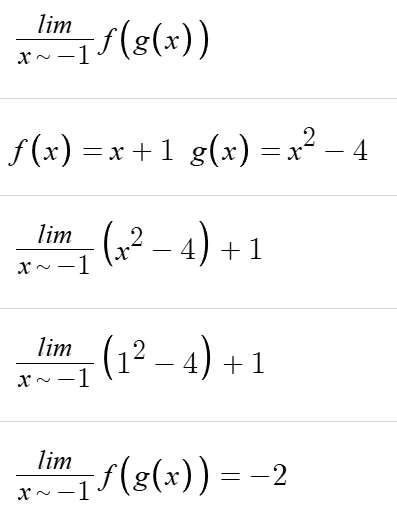
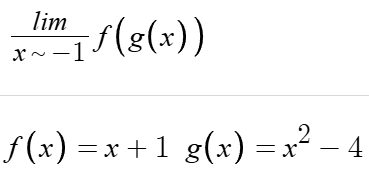
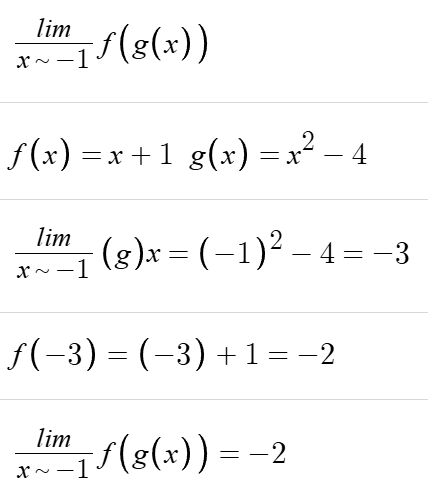
limit of composite function by finding the inner composite and plugging it into the outer function.
find the limit of the inner function
plug the value of the limit into the outer function
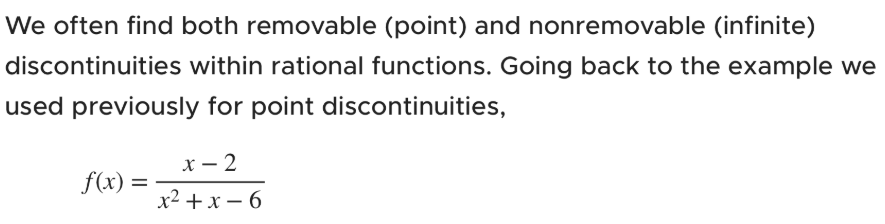
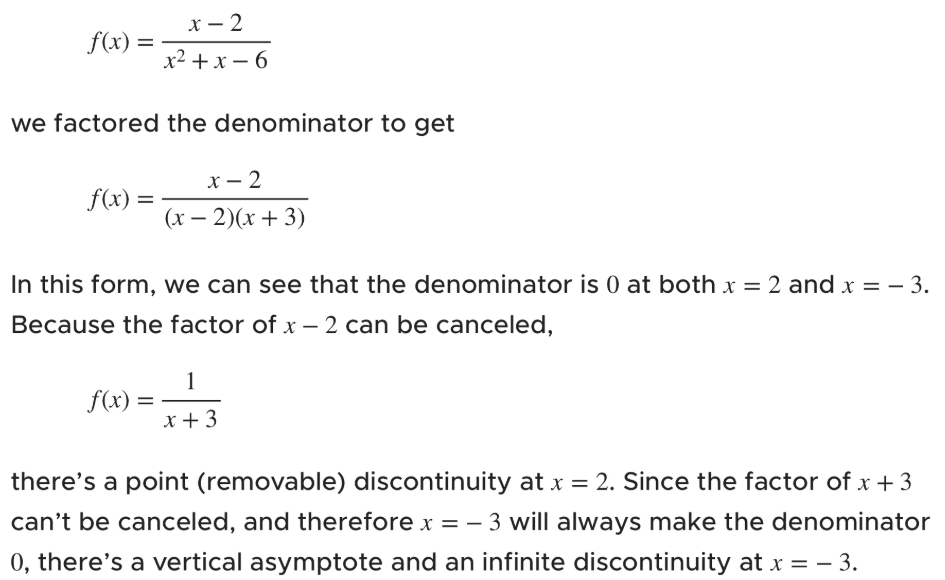
finding removeable (point) and nonremovable (infinite) discontinuities on rational functions.
if any x-values can be factored out of the rational function, a removeable point discontinuity exists (negative value of the factor)
any x-values that cannot be factored out and make the function divided by 0 are nonremovable discontinuities: on a graph this is a vertical asymptote
define the any removeable point discontinuities by a piecewise function
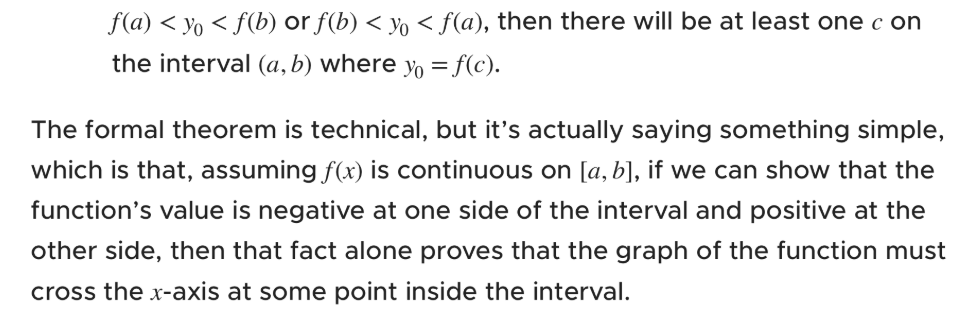
intermediate value theorem
if a function is continuous on a closed interval of x-values [a, b] and takes y values f(a)=A and f(b)=B, then it also takes every y value between A and B at least once the interval [a, b].
if A is negative and B is positive, then there exists at least point c in the interval [a, b] such that y value f(c) = 0.
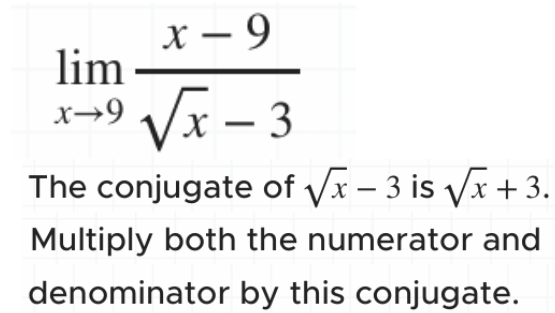
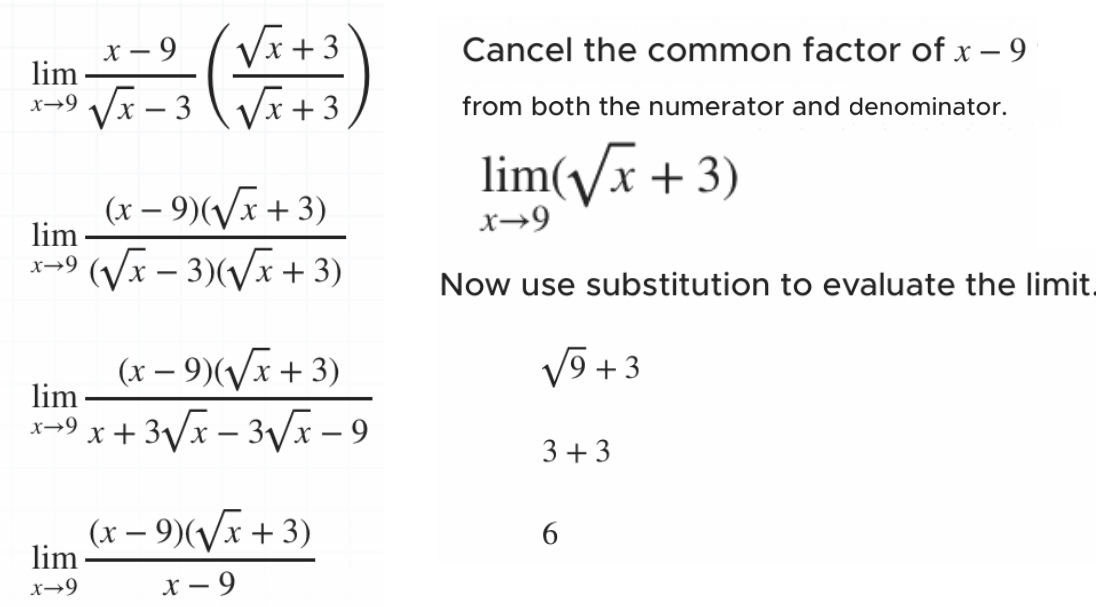
conjugate method to solve limits
multiple the num and denom by the conjugate of the complex two-term portion (either n or d)
solve the remaining function by canceling factors in the numerator and denominator.
substitue solutions into the equation to find the limit.
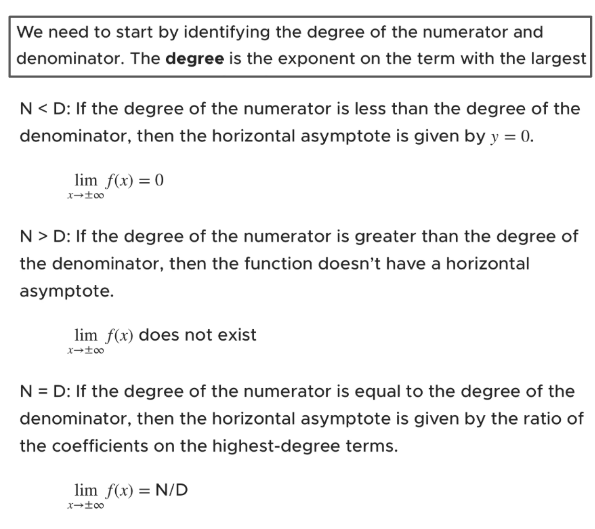
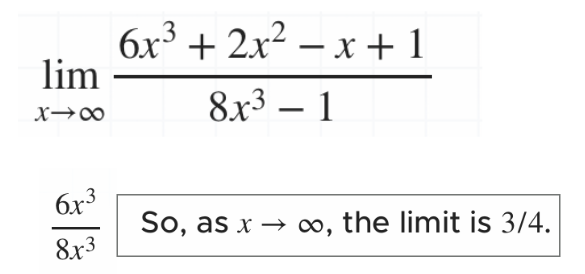
rules for finding horizontal asymptotes
degree N < D: y=o
degree N > D: HA does not exist
degree N = D: HA given by ratio of coefficients on highest degree (N/D)
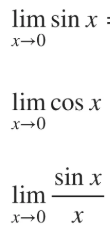
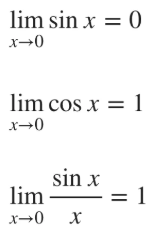
trigonometric limit values
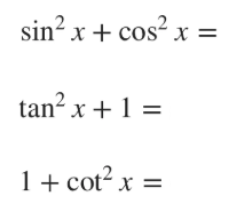
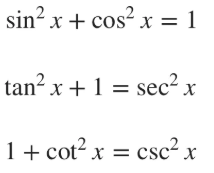
trigonometric Pythagorean theories
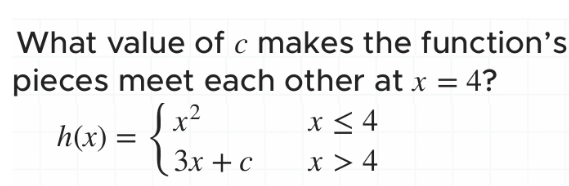
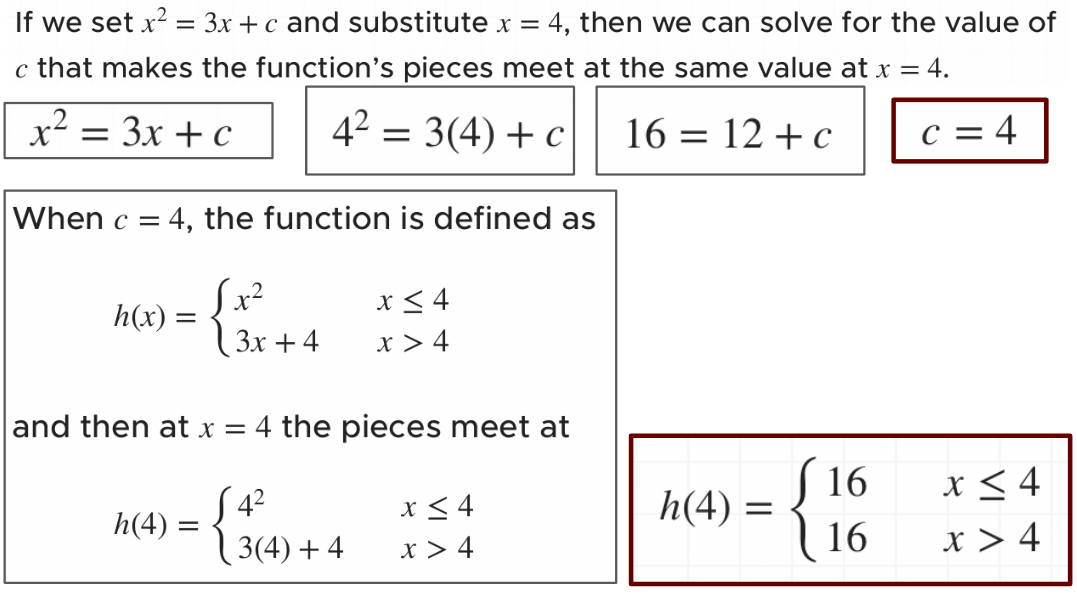
finding a value to make a function continuous
set the two piecewise functions equal to eachother
substitue any x values with the break point
solve the equation for the remaining variable
ensure the LH and RH limits are equal by plugging the break point into the two piecewise functions with the constant variable now defined to create a general limit.