A-Level Economics Theme 1 Flashcards
 Call Kai
 Learn
Learn Practice Test
 Spaced Repetition
 Match
Match Flashcards
 Knowt Play
1/241

There's no tags or description
Looks like no tags are added yet.
Name | Mastery | Learn | Test | Matching | Spaced | Call with Kai |
|---|
No analytics yet
Send a link to your students to track their progress
242 Terms
ceteris paribus
Holding all other things constant to isolate the effects of a variable
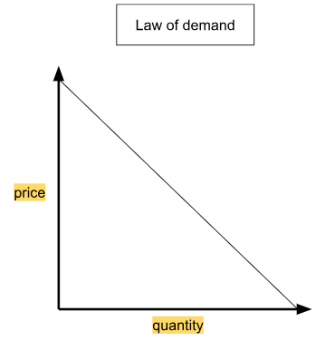
law of demand
When the price of goods/services decreases, the quantity demanded increases and vice versa
marginal utility
The addition satisfaction / benefit the consumer gains after consuming one more unit of a good
Reason economists consider multiple variables when deciding something
So be able to analyse multiple parts of a market at the same time without leaving any parts of it out
behavioural economics
The impact of psychological, social, and emotional factors on economic decisions
normative statement
A statement based on opinion or emotion
positive statement
A provable, factual statement about the world
Fairness
where the society value equality (redistribute income)
opportunity cost
The cost of not choosing the next best alternative
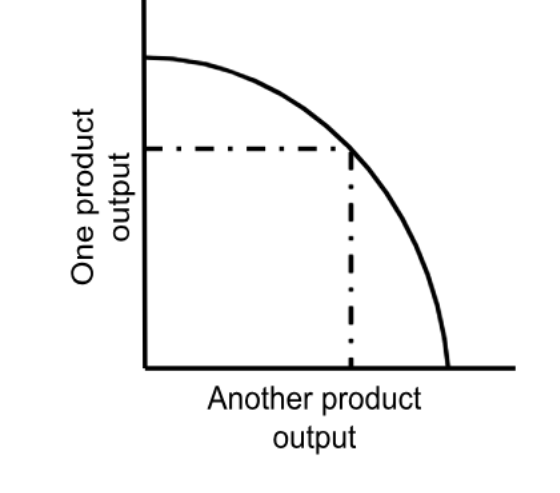
Production probability frontier (PPF)
a graph that illustrates the maximum output of goods/services that the economy can produce, based on the available resources and technology
points inside the PPF
inefficient
reasons for PPF shift
Due to availability of resources, advancements in technology or improvements in productivity
factors causing PPF to shift outwards
An increase in natural resources
Technological advancements
Human capital development (better education/skill in workers)
Investment in capital (e.g. infrastructure, machine technology)
Better management of factor input
Increase in stock of capital and labour supply
factors causing PPF to shift inwards
Financial decrease in the consumer or producer
Lost interest in product
Price increase in necessary resources
opportunity cost from PPF equation
PPF = Output of factor gained / Output of factor lost
gradient of the PPF
Steep PPF - sacrificing a lot of one product for only a little extra of another product
assumptions of the PPF
Fixed resources
A given level of technology
Full resource utilisation
PPF graph
division of labour
When the production process is broken down into many separate tasks
advantages of division of labour
Workers become more skilled and proficient in the task and efficiency increases
Decrease in costs due to increase in quantities
disadvantages of division of labour
Risk of repetitive strain injury
Reduced job satisfaction
Lack of variety in mass produced goods
Workers take less pride in work - quality suffers
worker turnover
When workers leave jobs and get replaced
functions of money
Storage of value
Medium of exchange
Unit of account
Standard of deferred payment
characteristics of money
Hard to counterfeit
Durable and portable
Divisible
Accepted
Valuable
digital money
Money solely in electronic or digital form
forms of digital money
Digital wallet
Cryptocurrencies
Central Bank digital currencies
Prepaid cards
reasons for the growth of digital money
Convenience
Globalisation
Security
Covid-19 pandemic
free market economy
Prices are determined by supply and demand from sellers and buyers
advantages of a free market
Efficient use of resources
Wide variety of goods
Flexibility in price and outputs
disadvantages of a free market
Inequality in wealth
Missing markets
Externalities
command economy
An economy controlled by the government
Advantages of command economies
Equity goals
Stability
Large projects
Disadvantages of command economies
Inefficiency
Lack of incentives
Bureaucracy and corruption
mixed economy
A combination of markets with state intervention in policies
role of the state in a mixed economy
Public goods provision
Managing externalities
Social welfare
Regulation
Stabilisation
Rational decision making
One (economic agents, consumers and firms) chooses in a consistent and goal-oriented way
Utility
satisfaction or happiness of a consumer from buying/consuming goods and services
Consumer aims to maximise utility
assumes that when faced with a limited income (budget), a consumer will pick the bundle of goods that gives the highest possible utility
Firms aim to maximise profits
Assumes firm will produce quantity where it makes the largest possible difference between revenue and cost
Marginal revenue
extra revenue from selling one more unit
Marginal cost
extra cost of producing one more unit
Marginal utility
the additional satisfaction or happiness of a consumer buying an extra unit of a good or service
Marginal utility formula
Total utility = marginal utility / profit
Consumer equilibrium assumptions
based on assumption that the income of a consumer is constant and that he spends his entire income on purchasing two goods whose prices are given
Budget line
graphical representation of various combinations of two goods that a consumer can afford at specified prices of the products at particular income level
MC-MR graph MC<MR
each additional unit produced, revenue will be higher than the cost so that you will generate more
MC-MR graph MC>MR
each additional unit produced, the cost will be higher than revenue so that you will create less
Movement along the demand curve
determined by the change in price of the good itself
Shift of the demand curve
when something other than the price changes
Right - more demand at every price
Left - less demand at every price
Conditions of demand curve shift
Income of consumers can change
Income of consumer on demand curve shift
If average income rises - more people can afford the good or service, therefore the demand curve shifts right
If the average income falls (recession) - people cut back on luxuries or treats, therefore demand shifts left
Prices of related goods on demand curve shift
Substitutes (alternatives) - if prices of alternative goods or services become cheaper, therefore demand shifts left
Complements (bundles) - if price of complementary goods decrease, people buy more of the complementary goods and also the good or service, therefore demand shifts right
Diminishing marginal utility
Every extra unit gives less pleasure than the one before
Point of safety (MR-MC graph)
marginal utility reaches the x-axis, after that point it is dissatisfaction for the consumer
Elasticity of demand
measure the quantity demand of a good or service changes when something else changes (the rate at which demand changes)
Price elasticity of demand (PED) formula
PED = % change in quantity demanded / % change in price
= ΔD (%) / ΔP (%)
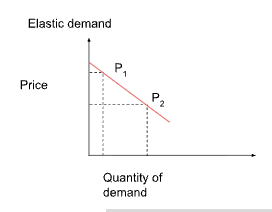
Elastic demand on PED graph
PED > 1 - quantity changes more than price changes
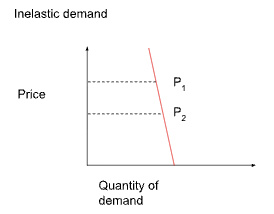
inelastic demand on PED graph
PED < 1 - quantity changes less than the price changes
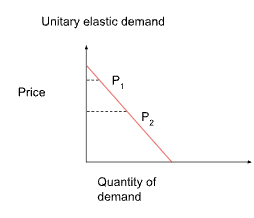
unitary inelastic on PED graph
PED = 1 - quantity and price change at the same rate
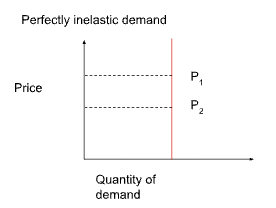
perfectly inelastic on PED graph
PED = 0 - quantity does not change at all when price changes
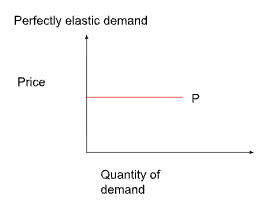
Perfectly elastic on PED graph
PED = ∞ - consumers will only buy at one price and none at any other price
Income elasticity of demand (YED)
how much quantity demanded changes when consumers disposable incomes changes
Income elasticity of demand (YED) formula
YED = % change in quantity demanded / % change in disposable income
= ΔQ demanded (%) / ΔIncome (%)
income elastic on YED graph
YED > 1 - demand rises faster than income (luxury goods)
income inelastic on YED graph
0 < YED < 1 - demand rises but slower than income (Normal necessities)
zero on YED graph
YED < 0 - demand falls when income rises (Inferior goods)
Cross elasticity of demand (XED)
how much a quantity demanded of Good A changes when the price of good B changes
Cross elasticity of demand formula
XED = (%) change in quantity of Good A / (%) change in price of Good B
= ΔQgood 1 (%)/ ΔPgood 2 (%)
XED positive on XED graph
XED > 0 - goods move in the same direction - substitute goods
XED negative on XED graph
XED < 0 - goods move in opposite directions - complementary goods
XED zero on XED graph
XED = 0 - no relationship - unrelated goods
Elastic demand
when change in quantity demanded is relatively larger than price change
Conditions for elastic demand
Many substitutes available
Relatively flat demand curve
Elasticity coefficient is greater than 1
Inelastic demand
when change in quantity demanded is relatively smaller than price change
Conditions for inelastic demand
Few or no substitutes available
Relatively steep demand curve
Elasticity coefficient is less than 1
Factors that make demand more or less elastic:
availability of substitutes
Proportion of income
Time period
Luxury vs necessity
Brand loyalty and habit
Reasons firms and governments intervene
Indirect taxes
Subsidies
Real income changes
Price changes of related goods
Price elasticity and total revenue relationship
Total revenue = Price x Quantity sold
TR = PxQ
Effect of price cut when demand is elastic
increases quantity enough that TR rises
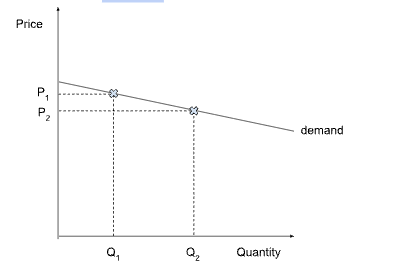
Effect of price cut when demand is inelastic
price cut makes TR fall (you lose more per unit than you gain in extra sales)
Supply
how much of a good or service producers are willing and able to sell at different prices
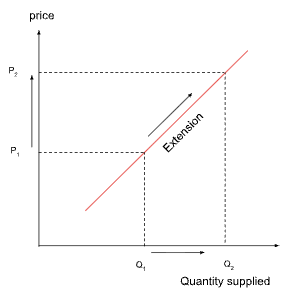
Movement along the supply curve
If market price of the product changes, producers adjust the quantity they supply and you slide up or down the same curve.
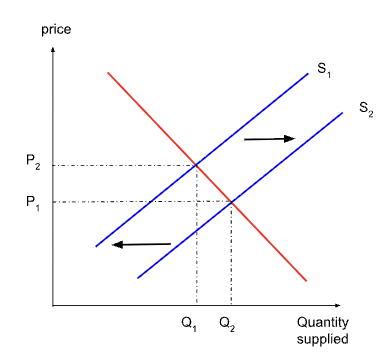
Shifts of the the supply curve
Sometimes a factor other than the products own price changes, like production costs or technology, and the entire supply curve moves from left or right
Rightwards shift (S1 → S2) - producers are willing to supply more at every price
Leftwards shift (S2 → S1) - producers less at every price
Key factors for shift in supply
Increase or decrease Input costs
New Technologies
Taxes and subsidies
Number of suppliers
Expectations about future prices
Natural factors and weather
Law of supply
the price of a good or service increases, the quantity supplied will also increase, and vice versa
Price elasticity of supply (PES)
measures the quantity a firm is willing and able to sell changes when price changes.
Price elasticity of supply (PES) formula
PES = %change in quantity supplied / % change in price
PES =∆Q / ∆P
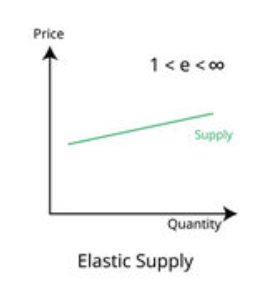
supply relatively elastic on PES graph
PES > 1 - suppliers can increase output more proportionally when price rises
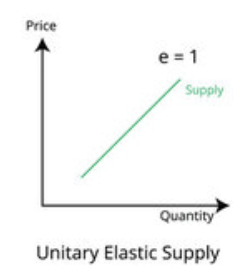
supply unitary elastic on PES graph
PES = 1 - output changes exactly in line with the price
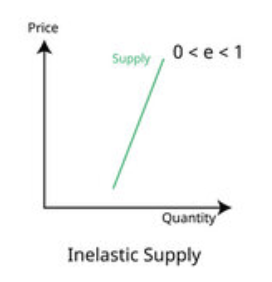
Supply relatively inelastic on PES graph
0 < PES < 1 - the output changes less than price
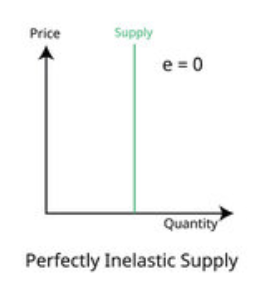
Perfectly inelastic supply on PES graph
PES = 0 - quantity stays the same no matter the price
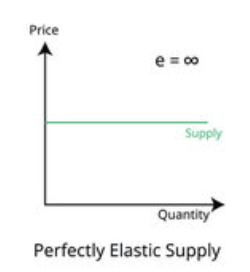
Perfectly elastic supply on PES graph
PES = ∞ - a tiny increase leads to an infinite jump in quantity supplied
a theoretical construct but it might approximate a scenario where producers can switch instantly and there is a more favourable product in a different market.
Key factors that influence Price elasticity of supply (PES)
Time period
Spare capacity
Mobility of factors
Stock levels
Production speed
Short run (short term) response to PES
At least one factor of production is fixed (eg. capital such as factories and machinery)
Firms can only vary raw materials or labour
Supply curve steeper
Long run (long term) response to PES
All factors are variable - firms can build new factories, adopt new technology or exit the industry
Supply curve flatter
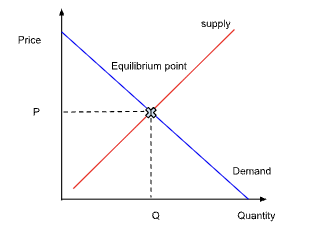
Market equilibrium
a situation in which the quantity of a good or service supplied by producers equals the quantity demanded by the consumers
State where forces of supply and demand are in balance, leading to stability in prices and quantities exchanged in the market
Where the Supply curve intersects (how much suppliers are willing to supply at different prices) with the demand curve (how much consumers are willing to buy at different prices)
The point at which these two curves intersect is known as the equilibrium point and it signifies the price and quantity at which the market clears
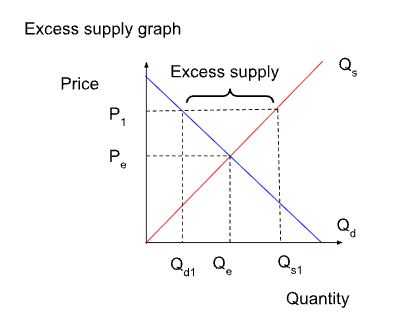
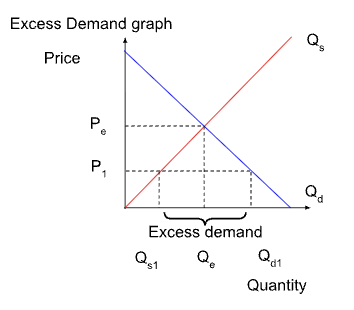
Disequilibrium
prices where demand and supply are out of balance
Causes a surplus in supply or surplus in demand (or deficit)
Excess supply graph
Excess demand graph
Outward shift in the demand-supply graph
expansion in supply
Outward shift in demand
Increased willingness and ability to buy
Market can now sustain a higher price
This higher prices is an incentive for firms to expand production
Supply responses if there is spare capacity (i.e. s[are factor resources)