Tudor Essay Plans A Levels
 Call Kai
 Learn
Learn Practice Test
 Spaced Repetition
 Match
Match Flashcards
 Knowt Play
1/50

There's no tags or description
Looks like no tags are added yet.
Name | Mastery | Learn | Test | Matching | Spaced | Call with Kai |
|---|
No analytics yet
Send a link to your students to track their progress
51 Terms
To what extent was the Catholic Church in need of reform by 1509?
Henry's relationship with the Church
Church made it easier for Henry VII to gain control as it could direct the wills of the population
Wasn't very religious - limited the significance of the church as the monarch did not fully believe in it
Church was diluting power
Sola scriptura - Christians should only listen to the Bible - does this affect the credibility and influence of the monarch
Appointed more bishops who were lawyers - had to serve Church and state
Tax on church courts - attack of the Church's legal system
Positives of the church
Guilds and fraternities provided the schooling and education
Church owned 1/3 of all land so were a healthy organization
Integral to society as they dictated 'holy days' etc
Erastian church so the state did have control and could monitor it
Poor and travellers looked after by monasteries - influential during daily life
King had power to choose bishops - example of centralisation of power
Praemunire - Pope had no jurisdiction over England
Criticisms of the church
Anti-clericalism - simony, nepotism and pluralism
Priests had mistresses and gambled - they were not proper religious figures and not reliable - also didn't study adequately
Owned 1/3 of all land so were too powerful with too much influence
Immense and maybe too significant political power - Henry wanted control of England and the power of the Church
Church courts were too lenient which took away from the strict influence Henry VII was trying to exert
Hunne case - criticism as Church had organised murders of those who disagree with the church
Monasticism past its peak - outdated and buildings not looked after - link to dissolution of monasteries (1536-1540)
Lollards - heretics inspired by John Wycliffe - clear opposition to the church
To what extent was the Catholic Church in need of reform by 1509 (diluted)
Weaknesses of the Church
Anticlericalism - corruption in the Church such as nepotism, simony, pluralism
Opposition to the Church - Lollards
Owned 1/3 of all land so were too powerful for the King who was very control focused
Priests got drunk so were not adequately following their job/doctrine
Hunne case - murdered for criticising the Church - shows fundamental and structural weaknesses
Church courts were corrupt - key weakness to the Church as its law keeping credibility was destroyed
Strength of the Church
Erastian system - state did have control so could place regulation
Healthy organisation - huge land owner - too much?
King had the power to choose the bishops so could centralise power
Praemunire - Pope had no jurisdiction over England
Guilds and fraternities provided education
Henry VII's relationship with the Church
Who had the authority, Henry or the Church - Sola Scriptura said that Christians should only listen to the Bible - this was negative as Henry VII wanted to consolidate his power and be a legitimate ruler and the Church's influence was limiting this so it needed reform during H8's reign
Henry wasn't very religious so the Church wasn't too important to him - didn't necessarily matter to Henry if it was reformed or not
Church was diluting Henry VII's power - needed reform
Tax on Church courts - attack on the Church's corrupt legal system - Henry did not like the fact that the Church had a corrupt legal system so
Chapter 8 Notes
Henry VIII decided to end the conciliar form of government in 1514 due to:
Unhappy with the reluctance of some of H7's old ministers to support urge to invade France
Wanted to assert his undoubted control
Surrounded himself with like-minded young courtiers
Impressed by Wolsey
Wolsey aimed to consolidate his own power so it is debatable that he tried to rule for H8
Court of Chancery used as well as the Court of Star Chamber
Cromwell's Policies
Achieved the Break from Rome - 1534
Annulment of H8 and COA marriage - 1533
Act in restraint of appeals - no appeals could be made to the Pope - established the King's leadership
Act of Succession - 1534 - void marriage of Henry and COA and Henry's new marriage had to be accepted
Act of Supremacy - 1534 - declared H8 as the Supreme Head of the Church
Treason act - 1534 - treason could be committed by word
Henry VIII actions as King destroyed Henry VII's legacy
Foreign relations - destroyed
Economy - destroyed
Government and nobility - improved relations with nobility as Henry VIII appointed many of his friends into his court and had a more free and fun attitude which improved relations - Also, extinguishing of the Council Learned in Law in 1509 and execution of Empson and Dudley was positively taken
Maintained the conciliar form of Government until the rise of Wolsey in 1514 - also kept the same advisors as Henry VIII such as Foxe and maintained government practice - less involved but legacy was certainly not ruined
Elizabethan government had more weaknesses than strengths in the years 1558-1603. Assess the validity of this view.
Structure weakness
Number of ministers such as the Earl of Leicester died in quick succession and the failure to find immediate replacements resulted in a council consisting of only 11 members at one point - William Cecil was also not allowed to retire as his powers dwindled as the promotion of his son Robert caused significant outrage - refusal to let Cecil retire resulted in a key minister who was unable/struggling to carry out his administrative duties - Lord Burghley was unable to retire which was a limitation to the structure of the government
Structure strengths
There was no single minister who had control of the patronage, the balance of families and loyalties in the council created a largely equal council but also meant that people are less likely to and had less opportunity to factionalise, and that is also favoured by Elizabeth use of divide and rule which Encourage jealousies to prevent factions - trusted small 'inner ring' of like-minded Protestants which provided a strong solid foundation for Elizabeth's government structure
Government policy
Government made some clear strong policies despite parliament only being called 13 times - 438 acts passed - religious act of supremacy and uniformity in 1559 - government was in charge of instructing JPs who increased in number and were an effective measure of local government
Local government was successful - successful poor laws in 1597 and 1601 - strong government
Elizabeth Foreign Policy - successful or not?
Trade
Failure - Spanish blocked the world trade with England and 80% of English expats were Spanish - Spanish occupation of the Netherlands limited trade in ports such as Antwerp - Elizabeth attempted to assimilate the Dutch and Spanish with the pacification of Ghent In 1572, hoping for peace and as a result less restrictions on trade. The Spanish were not inclined to the deal, and when England tried to call their bluff the policy fell apart
Religious
1570 excommunication by the Pope caused for increased catholic threat in England
Protestant sea beggars were massacred by the Spanish - failure
Cost of £100,000 for involvement in the Netherlands supporting protestants such as Portugese pretender Don Antonio and the protestant Union of Arras against the Union of Utrecht and the Duke of Parma - ultimately a failure as his 1/10 of a million pounds could have been spent on improving the domestic situation
400,000 florins stolen by Francis Drake etc which were intended to pay the wages of Spanish-sided mercenaries - morale slashed of the Catholic threat
Ridolfi and Babington Plot was a thwarted catholic threat
Security
1588 - win in Spanish Armada
Is it fair to describe English government in the years 1540-1562 as 'consistently weak'?
Edward - inconsistently erratic
Somerset delegated responsibility from the regency council - despite the erratic military coup from Northumberland it was clear that the regency council was a smooth idea
Arrested Southampton - erratic and shows lack of control
Aggressive FP towards Scotland - Battle of Pinkie - 1547
Battle of Firth of Forth - successful raids of Scotland but unsustainable as garrisons being set up were ridiculously expensive
Inflation rose - weak economic policies - debasement of coinage did not help this
Prayer Book rebellion and Kett's rebellion in 1549 were ineffectively shut down - show opposition and weak dealing with opposition
Constant debasement of coinage - stopped by Northumberland after he did it once --> erratic policy
Military coup by Northumberland to take control - erratic
£133,333 for sale of Boulougne - stable - stopped a financial sap
Failure of the Devyse in 1553
Mary
Loss of Calais - significant symbolic loss for England - 7th January 1558
Married a foreigner - 1554 - strong idea as the alliance with Spain was sought after - negative social impacts as the public hated the idea of a foreigner being King - lead to Wyatt's rebellion in 1554
Murdering of heretics - 287 - nothing for her policy just made her unpopular
Foxe's book of Martyrs 1563 - highlight the brutality and the limited success of Mary's government
Elizabeth
Strong 'inner ring' of Protestants
Appointment of Cecil - effective leader
Religious settlement in 1559 - Supreme governor of the Church
Aimed to appease protestants and Catholics through a sort of 'Middle Way' in terms of religion - successful governing to some extent
Elizabeth also kept parliament guessing and didn't allow any one minister to develop too much power - strong government policy
Did not resort to debasement during this period - stable strong government policy - however, did resort to it at one point during reign which shows lack of continuity of strength so is a relevant point
Ineffective poor relief policies up to 1562 - 1597 and 1601 poor law acts were much more effective
Henry VIII FP
Peace of Cambrai signed in 1529 which consolidated the relationship between the HRE and France and left Henry VIII's England an isolated power
Break with Rome achieved by 1534 - key successful FP aim as Henry wanted separation from the Catholic Church for ideological and financial reasons - Court of First Fruits and Tenths used to distribute finances previously aimed for Rome and Henry VII wanted an annulment of his marriage
Field of Cloth of Gold 1520 - expensive ostentatious display
Bankrupt by 1514 - poor FP as money sapped due to an over obsession with being a warrior in France - however, small victories such as the Battle of the Spurs in 1513
Battle of Flodden - 1513 - success in Scotland but failure to capitalise and seize the throne - not a negative but definitely a failure to make a huge success
Treaty of London in 1518 - established general European peace - success for peace but it was not what Henry wanted - he was backed into a corner by the Treaty of Cambrai in 1517
1527 - sack of Rome - pope prisoner of the HRE - Henry is trying to communicate with the Pope and divorce CoA who is tied up with the HRE - no chance of success
1539 - Anti-English crusade attempted
Henry VIII succession
Aimed to find male heir - unsuccessful immediately but eventually the birth of Edward causes a success
1533 - annulment of Marriage between Henry and CoA - success as it allowed Henry to seek a new wife to have a male heir with
Erratic succession policy but ultimately Henry was succeeded by a male heir so he was triumphant
Many succession acts in years such as 1544, 1536 etc which contradicted each other unstable
English society in the reign of Henry VIII was characterised more by disorder than order. Assess the validity of this view.
Disorder
Harvest failure
Pilgrimage of Grace - 1526 - largest rebellion - religious motives such as dissolution of monasteries as Robert Aske was a huge supporter of the monasteries
Debasement of coinage
Religious change - break from Rome (1534) and dissolution of the monasteries (1536-1540)
Amicable grant (1525) - not taken well and 10,000 marchers in response - Wolsey blamed - still unsuccessful
Order
Successful thwarting of rebellions such as the Pilgrimage of Grace - 1536
Strengthened use of JPs - increased numbers of these local governors which consolidated order in society
Union of Wales in 1536 - removed Welsh border
Act of liberties and franchises - 1536 - stopped Durham being a (sort-of) independently ran state
Council of the North established as a permanent body - good for order as there was a track records of rebellions in the North of England such as the Pilgrimage of Grace in 1536
Response to disorder
Pilgrimage of Grace had a mixture of motives - clear disorder in Henry VIII society - Mary reinstated into the succession with an act of succession - compromise but a necessary one to achieve ORDER which is key element of question
Council of the North reinvigorated - such a strong organisation that North saw less rebellions during 1540s
Response to disorder characterises whether reign was classed as orderly or disorderly - doesn't matter how much disorder there is to a certain extent as long as it is dealt with with just as much order
Henry VIII was shook by the Pilgrimage of Grace - had to compromise to limit threat but there was minimal disorder due to help by Duke of Norfolk etc
Repeated debasement of the coinage across the reign - short term economic boom but long term
Henry VII and Henry VIII economy
H7 weaknesses
Miser King - stingy and English economy naturally smaller than that of European counterparts
Council Learned in Law introduction in 1495 allowed for a weapon to use highly unpopular bonds and recognisances system
Use of Star Chamber for acts of attainder - significant because of the rebellions that surfaced as a result of these - 1489 Yorkshire rebellion - 1497 Cornish rebellion - 1490s saw uprisings - strong financially but a weak economy due to the negative social impacts
H8 weaknesses
Bankrupt by 1514 after being left £300,000
Failure to raise the amicable grant in 1525
FOCOG in 1520 was a crazy financial decision
Expensive battles in France and Scotland with only small gains such as Tournai
Lack of movement to capitalise on exploration prospects
Strengths
90% of English trade was cloth and wool was successful in battling against the Hanseatic league
Treaty of Etaples in 1492 - reinstated French pension - regular annual payment from France
Henry VIII: government
- Crown and parliament
- Domestic Policy
- Royal supremacy
- Ministers
Government style - more hands off but wants to be updated regularly - did not dictate policy - parliament functions were to pass taxes and pass laws - e.g refusal to pass taxes to raise money for a war with France which lead to the calling for the Amicable Grant in 1525
Conciliar - government by councils - short time under H8 as Wolsey had a single powerful position - made papal legate in 1518
Removed Empson and Dudley and got them executed in 1510
1514-29 Wolsey
1529-32 conciliar
1532-40 Cromwell
1540-47 conciliar
Privy chamber - full of young courtiers
Court of chancery - used for civil disputes between nobility
Court of star chamber - spearheaded by the King's council - used by Wolsey to settle personal disputes and aid poor
Divided into 3 layers - Legislative, Executive and Judiciary courts
Fall of Wolsey - failure to settle the King's Great Matter - kicked out in 1529
Act of Supremacy - 1534 - break from Rome
Act of restrain of appeals - CoA couldn't appeal to the Pope
First and Second suppression acts - 1536 and 1541 - confiscation and sale of Church lands - sale of land to nobles
Elton - links between parliament and King combined for an effective and stable system
Cromwell died 28th July 1540 - executed for treason due to a horrific marriage choice - marriage of Henry and Anne of Cleaves
Duke of Norfolk is waiting with his niece Catherine Howard
1540-47 return to conciliar system - one final attempt at the invasion of France in 1554
clear factions during the latter stages of Henrician government Seymour's vs Norfolk
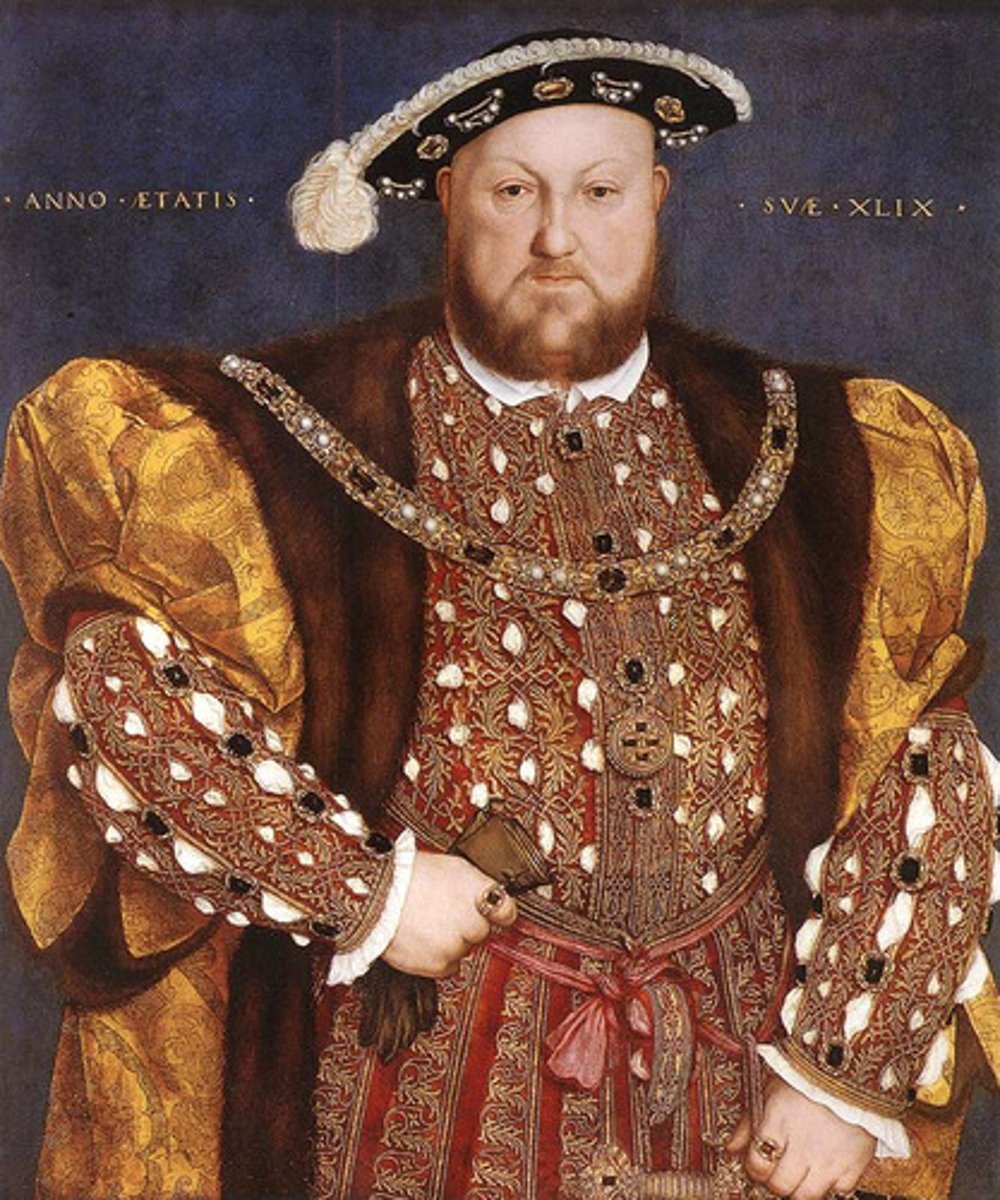
To what extent was the English church different in 1553 in comparison to 1532?
Doctrine
H8
Break from Rome - 1534 - was a significant movement away from the papacy so therefore a clear new protestant influence on the Church
10 articles - 1536 - more protestant - change
BUT 6 articles - 1539 - reinstated Catholicism
Confused legislation was change but meant the change from starting point of 1532 was not too significant
Edward
100% Protestant doctrine established by the 1552 act of uniformity and the publishing of the second common book of prayer
42 articles of religion - 1553 - radical movement towards Protestantism
Doctrine was now significantly more protestant
Societal impact
Both reigns faced rebellion as a result of changes made to the Church - 1536 Pilgrimage of Grace saw 9000 rebels march against the Crown as a result of a movement away from Catholicism
Dissolution of the monasteries - 1536-40 - huge social impact as healthcare and education lost for some
1549 - Prayer Book Rebellion/ Western Rebellion - rebellion in response to the changing religious state of England and the changing from the Latin to the English prayer book - however, Edward was more cautious at times with changes so the scope of the affect on society was more limited
1547 - dissolution of chantries and attack on guilds and fraternities - huge social impact - key social negative change in comparison to 1532
Royal injunctions - 1537 - by Henry were more radical protestant change and were consolidated by Edward
Decline in church attendance - less people left money to the Church
More vagrancy - less aid from the church - social influence of the Church had declined and the Church had become less of an educator due to the attack on guilds and fraternities - less of a societal impact
Corruption and issues with the Church
Henry VIII's church was rife with nepotism, simony and pluralism which are examples of key corruption within the Church
He also sold monastic lands to followers - corrupt - sold land to Sir Anthony Browne who was a courtier - giving land to friends for better prices is corruption
Changed who was allowed to read the Bible
Act of advancement of true religion - 1543 - said only upper-class could read the Bible - clear corruption
Edward - still issues as there were religious motives for Western and Kett's rebellions in 1549 - some level of corruption as the Church was still upsetting people but it was less obvious and prevalent in comparison to the rule of Henry VIII
Mary religious changes
Killed 287 heretics - shown in the 1563 Foxe's book of martyrs
Mary shown to even kill children - a religious change not exactly taken well and saw little popular support
Aim to re-catholicise England with the returning Cardinal Pole
1554 - restoration of Heresy laws
1553 - First statue of repeal - repealed religious legislation of Edward VI's reign
1555 - second statue of repeal - repealed anti-papal legislation from Henry VIII's reign
1556 - burning of Archbishop Cramner
1555 - first heretic burnings
Political elite had no intention of surrendering the cheap monastic land that they had acquired - previous corruption in the Church was hindering Mary
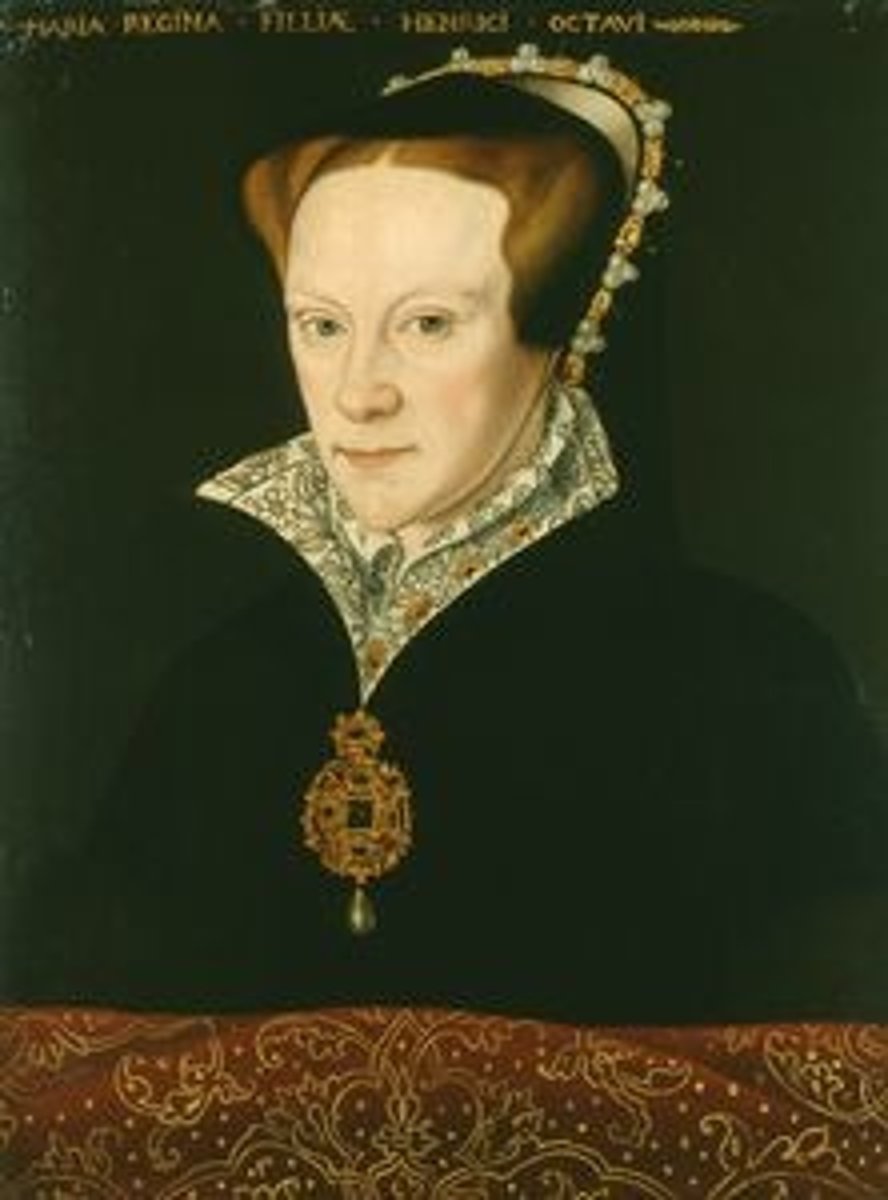
Mary economic changes and social changes
1555 and 1556 harvest failures- not a change but a poor economic situation during her reign
Inflation increased due to increased demand brought about by the increase in population
Debased the coinage - poor financial decision - social impact of contributing to increased inflation
New Book of Rates in 1558 - raised customs revenue
1554 - Wyatt's rebellion a result of the Spanish marriage with Philip II - a foreigner had essentially become monarch of England and people in Maidstone - protestant stronghold - were not happy
1558 - Mary lost Calais - huge social implications
Henry VIII - did ministers rule for him essay
Wolsey - 1518-29
Became papal legate in 1518
Tasked with the King's Great Matter and failed
Used court of chancery to help the poor - Wolsey's personal objective not H8 objective
Wolsey organised Amicable Grant (angered those in the South East) of 1526 - he was also blamed for the backlash of this attempted raising of money - shows that Henry used Wolsey as a puppet and that he was not in control
Wolsey aimed to expel Henry's younger courtiers to grasp a firmer hold on power
Crowmwell - 1534-40
Dissolution of the monasteries - 1536-40
Used parliament to pass legislation - Henry never saw this
Union of Wales - 1536 - removed the Welsh border
Court of First Fruit and Tenths - 1540
Break from Rome - 1534
Still a puppet for Henry's aims
Monarch
Drove foreign policy - wars with France
Conciliar government period - good - allows Henry to become more experienced
Conciliar was good as it allowed government to do boring administrative things - also provided a useful stop-gap between councillors
Spirals out of control - Reformers and Conservatives - Seymour vs Howard - monarch out of the equation
Extract Q practice and tips
Tips
Challenge opinions - positive and negative convincingness
Finish with a mini judgment for each extract
NO NEED for an overall conclusion comparing the 3 extracts
3 miniature essays
Rebellions and Plots
Revolt of the Northern Earls - 1569
Wyatt's rebellion - 1554
Western rebellion - 1549
Kett's rebellion - 1549
Yorkshire rebellion - 1489
Cornish rebellion - 1497
Babington plot - 1586
Ridolfi Plot - 1571
Throckmorton plot - 1583
Parry plot - 1585
Pilgrimage of Grace - 1526
Tyrone's rebellion - 1596-1603 - Robert Devereux (Earl of Essex) sent over but he failed
Northern Rebellion - 1569-70
Viscount Lovell and the Staffords - 1486
Lambert Simnel - pretender as Earl of Warwick - 1487
Elizabethan Foreign Policy - successful or not?
Spain
Spanish Armada victory in 1588
Limitations - luck played a key part - torrid storms provided the English ships an advantage as they used cannon-ball tactics instead of face-to-face Spanish approach of boarding ships
Sir Francis Drake boarded Spanish ships and took 400,000 florins due to be paid to Spanish mercenaries - lowered motivation of Spanish troops - success for Elizabeth's foreign policy but wasn't a success by Elizabeth directly
Rejected the hand of Phillip II of Spain
Scotland + France - Auld alliance
Returned to Scotland in 1568 which caused a huge foreign policy aim for Elizabeth
Relative/claimant and rival to the throne on the border in a foreign country
Needed to execute the threat - she did in 1587 after the Babington plot
BUT this came after Throckmorton Plot (1583), Parry plot (1585), Ridolfi Plot (1571)
1570 excommunication from the Pope - allowed for increased traction for Catholic threat from Scotland as papal bull had been placed on the head of Elizabeth
Treaty of Cateau-Cambresis - 1559 - agreement with France over the restoration of Calais after 8 years if Britain stay out of conflict
Spanish-Netherlands
Expulsion of the Spanish protestant sea beggars in 1572 was an excellent foreign policy move as Elizabeth knew that it would annoy the leaders of the Spanish-Netherlands
Successfully aggravated Catholic rivals - success or not?
Hesitation to support protestants and the Portuguese pretender Don Antonio - limited as she feared making mistakes
1585 - Treaty of Nonsuch - support for protestants
Elizabeth sent William Cecil to Spanish shores but he was a failure there - lack of significant action against the Catholic alliance formed by the Treaty of Joinville and the Duke of Parma
Treaty of Joinville - 1584
Union of Utrecht - Catholic
Union of Arras - Protestant
Henry VII foreign policy aims
Dynastic Recognition
Treaty of Etaples - 1492 - reinstating of the French pension - lead men into battle against France
Treaty of Redon - 1489 - recognised as a European power who defended allies - defence of Brittany - lost ally with HRE which was negative
23 November 1499 - execution of Perkin Warbeck - domestic issue but FP as he was crowned as King of England in Ireland
Securing Trade
1496 - Intercursus magnus - ending of the trade embargo between Burgundy and England
Intercursus Malus - 1506 - beneficial trade deal with Burgundy - success for Henry
National Security
Marriage of Catherine of Aragon and Arthur - positive initially - agreed with the Treaty of Medina del Campo in 1489
Death of Prince Arthur in 1502 - negative
Marriage of Margaret (daughter) and James IV of Scotland
The challenge to the English throne by Catholicism was never as strong as Elizabeth I and her ministers believed.
Not perceived to be significant - purposefully aggravated
Expulsion of Sea Beggars in 1572 - purposefully angered and got one up on Spanish Netherlands
Francis Drake invaded Spanish ships and stole 400,000 florins which ruined the morale of the Spanish Catholics - never a real threat
Would've done more to appease Catholics if she was truly threatened
Groups such as Separatists and
Threat was apparent but controlled
In the religious settlement Elizabeth made many compromises to appease Catholics and Protestants such as being entitled supreme governor rather than supreme head as her father had been - middle way to appease Catholics - they were a threat as they had to be appeased
39 articles in 1563 had some elements of Catholic doctrine
Ridolfi and Throckmorton plots in 1571 and 1583 had Catholic motives but were thwarted - they aimed to put MQS as monarch
Strong threat as believed - foreign relations particularly
1570 excommunication of Elizabeth by the Pope - papal bull placed on her head - right to kill her granted by the Pope - clear threat
Babington Plot - clear threat as after the plot in 1586 MQS was executed in 1587 - response to threat was effective but it stirred enough trouble
Can divide into Spain, Religious groups, Domestic issues
Elizabeth religion
Vestiarian Controversy - emergence of issues between Elizabeth and Puritans - people decided that they could not obey the dress code set down by Elizabeth in her Act of Uniformity
Archbishop John Whitgift issued 3 articles which intended to destroy Presbytarians
Penal laws against Catholics - 1571 act made papal bulls treasonable - acts also fined recusants £20 for not attending Church
Catholic priests executed in 1581 and 1582
1585 Act against Jesuits - Jesuits illegal so spreading of Catholic faith limited
1559 - religious settlement - aimed to find a middle way between Protestantism and Catholicism - Elizabeth wanted to appease Catholics
Elizabethan government
1601 Golden Speech
1597 and 1601 poor laws - helped deserving poor and reduced inequality within England
Structure of the government (the fact that not one minister ever got significant authority) allowed there to be limited factional rivalry
Weaknesses in government during the latter stages when Elizabeth's parliament saw many deaths in quick succession which left her with only 11 council members
Refused to let William Cecil retire during the 1590s whilst his abilities dwindled
Appointed Robert Cecil - unpopular move
Parliament was always asking Elizabeth when she would marry and have children to which she always refused to answer - only called around 10 times
438 acts passed - most importantly 1559 acts of supremacy and uniformity, 1597 and 1601 poor laws and penal laws against Catholics
Penal laws against Catholics - 1571 act made papal bulls treasonable - acts also fined recusants £20 for not attending Church
Concept of a mid-Tudor crisis?
Rests on the concept of the relative insignificance of the reigns of Edward and Mary - they are deemed as unproductive, uncreative and strife ridden - they are so small and insignificant in terms of changes and length of reign in comparison to the periods where Henry VIII and Elizabeth I ruled - however, it can be argued that, whilst there was definitely a continuation of problems from the 1930s, there were many successes during this supposed 'mid-Tudor crisis.'
The performance of the English economy remained weak throughout the reigns of the first two Tudors.
Weaknesses of Henry VII economy
Initially weaker starting point in comparison to the economies of European competitors
Financial positives of the Council Learned in Law established in 1495 but they were extremely unpopular and were rebelled against - Lovell and the Staffords and Lambert Simnel rebellions
Rebellions as a result of taxes - 1489 Yorkshire rebellion and 1497 Cornish rebellion
Economy was fundamentally weak as social positivity was sacrificed to try and raise money and call taxes
Lord Burghaveny was fined for retaining despite friendship with Henry VII - could be argued to raise money or to maintain control
Henry VIII economy weaknesses
Bankrupt by 1514 - naïve financial outlook and overzealous foreign policy - had wasted the £300,000 his father had left him
Not financially strong enough to capitalise on the free Scottish throne after victory at the Battle of Flodden in 1513
Tried to carry out Amicable Grant in 1526 as he needed to bypass parliament to raise funds - unsuccessful attempt and lead to fall of Wolsey and Pilgrimage of Grace where he had to make succession compromises to stop the rebellion
Field of Cloth of Gold - 1520 - ostentatious display of wealth to foreign rivals which was a disastrous idea and it simply cost so much
Rising inflation and poverty during Henry VIII's reign
Initially weak but remained weak due to the abuse Henry VIII did to his finances
Debasement of the coinage - horrific idea - good short term but long term negative implications
Harvest failures and failure to capitalise on potential economic growth from exploration into the New World - Spain and Portugal benefited from this
Strong elements
Cloth trade expansion under Henry VII - 90% of all trade out of England - also progressed financially as aimed to use British ships for transport instead of those from Burgundy
Break from Rome in 1532 had financial positives as the Court of First Fruits and Tenths was used to redistribute finances which were previously sent to the Pope
Dissolution of monasteries (1536-40) - these marked financial gains for the Crown
Henry VII successful collection of extraordinary revenue - crown lands - inheritance laws - bonds and recognisances - acts of attainder - switch away from the exchequer system towards the chamber finance system - Crown land revenue £12k to £42k -
To what extent did the plots and rebellions faced by the Crown during the reign of Elizabeth pose a real threat to the stability of the Elizabethan state?
Problems in Ireland - Tyrone's rebellions (1594-1603)
Looked like Tyrone may establish an independent and Catholic Ireland who could look to Spain for aid - could have been disastrous
Elizabeth sent the Earl of Essex to attempt to diffuse situation in 1599 but the impact was significantly negative - he disobeyed the Queen and was relieved of his duties in 1600 - shows clear weakness and threat to Elizabethan government
Elizabeth wanted Ireland to have to go through a process which made them more English - and found it hard to impose Protestantism on a largely Catholic population
Northern rebellion - 1569-70 - revolt of the Northern Earls
Lead by the Earls of Northumberland and Westmoreland - talks of alliance with Mary Queen of Scots who returned to England in 1568 - could have been serious negatives - rebellion was hopelessly disorganised so failed - poor leadership and lack of foreign support - scope of rebellion was so limited - not really a significant threat to the crown - however, if the rebellion was successful then a huge threat to the Elizabethan state was possible
Was a threat due the sheer amount of time the parliament had spent on this issue
Council of the North reinstated in 1572 under the control of the Earl of Huntingdon
Northern issues such as Scotland were a threat as the North was always a threat as long as it remained a separate state
MQS Plots - Babington, Throckmorton, Parry, Ridolfi
1586, 1583, 1585 and 1571
Ridolfi (1571) - involved conspiracy for MQS to marry Duke of Norfolk and to overthrow Elizabeth - caused execution of Duke of Norfolk
Throckmorton Plot (1583) - wanted a foreign landing in England and then the overthrowing of Elizabeth
Parry (1585) - execution plan - sincere threat despite unsuccessful execution - resulted in acts being passed to ensure Queen's safety
Babington (1586) - MQS directly involved in plan to assassinate - this plan as well as others could have been huge threats if not for Walsingham - allowed Burghley to secure the execution of MQS - 1587
The people of northern England, Cornwall, and Wales had little reason to be grateful for the rule of Henry VII and Henry VIII
Northern England - least to be thankful for
1489 Yorkshire rebellion was a response to unfair taxation from Henry VII as he was trying to raise northern money for southern problems - didn't actually have to pay the tax
Certain degree of freedom - however, act of resuming liberties in 1536 restricted freedoms but didn't exterminate them
Durham was considered a Palatinate - thankful for maintenance of some freedoms
1/6 of harvest were considered poor, 75% of the population were living solely of agrarian income - hence this county was heavily impacted by the enclosure laws and had socio-economic grievances with the king
Cornwall - largely left alone which is a positive
Construction of Pendennis Castle (1539-1545) was a positive as it acted as a naval base so was therefore very secure
Cornish rebellion - 1497 - was in response to taxes being raised for northern issues - unfair taxes so not an element to be thankful for
However, they were left alone to some extent so didn't have to pay a tax
Wales -
Union of Wales in 1536 split Wales into shires under control of Henry VIII
Welsh representative in the House of Commons
25 JPs were put into Wales to establish law and order
Brought into the same legal framework
Welsh identity removed but so much safer as they have the protection of the English legal system
Elizabeth foreign policy towards Spain was always weak and unconvincing
Weak and unconvincing
The alliance with the Dutch Protestants in 1585 resulting in the Treaty of Nonesuch, resulted in Elizabeth sending troops under the Earl of Leicester to assist Dutch fighters in the Netherlands. This support was very badly organised and are regularly paid, which resulted in the alienation of the Dutch and the ultimate unsuccessful in this office alliance. Philip start to exploit the deterioration of relations between the two countries which resulted in the Spanish armada in 1580, therefore One of the greatest threats to Elizabethan security was as a result of her own mistakes. The Catholicism of Philip and Spain, And the 1570 excommunication of England from Rome, resulted in relations between the two countries being weak - Refusal to marry Philip of Spain - Spain was a profoundly more stable country, and therefore Elizabeth tended to be cautious in her foreign policy towards them. This is also arguably influenced by the failure of her support of the French Huguenot's in 1564, as she allowed her potentially strong foreign policy to become weak due to fear of mistakes.
Sent Earl of Leicester to Spain - unsuccessful
Effective and Stable
Expulsion of Spanish Sea Beggars in 1572 - provoked Spain which can be argued to be a positive and show strengths of the foreign policy
Spanish Armada defeated in 1588
Pacification of Ghent - 1576 - alliance against Catholic Spain - strong foreign policy
Elizabeth supported the Portuguese pretender Don Antonio In 1580, although she was cynical about him and his claim, she saw him as a useful weapon against the Spanish and a potential method of weakening the stability of Spanish government.
Effective but lucky - not down to Elizabeth
Sir Francis Drake hijacked a ship carrying 400,000 florins which were intended to pay Spanish troops - they were not paid and were left unmotivated
Weather played into Elizabeth's hands - fighting was in her favour - English cannon-ball style instead of Spanish style of boarding ships
It was by chance that this element was effective - not Elizabethan foreign policy
'Henry VIII might have made himself Supreme Head of the Church of England, but he did little else to change the Church.'
Doctrine change
1536 - ten articles - went back on these increasingly Protestant changes with the 6 articles in 1539 which were more tame
Published a new prayer book to open it up to more people - it showed God handing Henry the book inside it - he was the next in line after God
1543 - act of advancement of true religion - goes back on change as he restricted who could read the Bible
Act in restraint of appeals (1533) - H8 subjects were unable to appeal to the Pope - undermining the Pope
Act of dispensation (1534) - stopped payments to Rome
Act of Supremacy was an act which showed how Henry VIII now had more influence than the Church
King had power to veto Church laws
Changes to doctrine such as number of sacraments in order to assert his unique influence on the Church
1539 - first edition of the Great Bible
Structure
H8 was now the Supreme Head of the Church
Dissolution of monasteries (1536-1540) - first those who made less than £100 annually
Monastic lands is ruin
Lands sold to friends of Henry VIII such as Sir Anthony Browne for reasonable prices
Corruption within the structure of the church was present as there were elements of nepotism, simony, pluralism
Six new dioceses put in place in order to improve administration
Stopped paying the Pope - Court of First Fruits and Tenths used to redistribute finances
Act of succession (1534) - children from Catherine's marriage were now bastardised and the ones with Boleyn were legitimised = became treasonable to deny this - he was changing the succession of England which has religious origins
Marriage to priests banned - ensured that they actually did their jobs
Practice
1538 - pilgrimages and veneration of images were condemned
Clergy who upheld these practices were made to publicly recant them
Royal injunctions in 1536 and 1538 made drastic changes to traditional worship
Henry also limited who could physically read the Bible which can be put under practice - 1543 - Act of Advancement of True Religion - limited who could practice
Attack on traditional religious practice - much more than just becoming Head of the Church - things were changing
Can split into -
Doctrine, Structure, Practice
To what extent was Henry VIII himself responsible for the failures of English foreign policy during his reign?
Wasteful with finances
Bankrupt by 1514 - £300,000 wasted by Henry VIII
He failed to capitalise on the freedom of the Scottish throne in 1514 as he could not afford to capitalise on his victory at the Battle of Flodden
Field of Cloth of Gold - 1520 - wasteful show of wealth/affection between France (who could afford it) and England - cost was £15,000
Was so financially weak that he had to explore an alliance with France in 1518 instead of battling them
Out of his control
England were simply just a smaller power - Peace of Cambrai in 1529 pitted France and HRE against England - can't really do anything about this agreement - this was previously the Treaty of Cambrai in 1517 - peace between France and HRE - Henry was evidently being teamed up against and therefore the failure of his foreign policy was out of his control - Auld alliance was another example of a pre-made agreement which was out of his control Pope under control of HRE so Break from Rome couldn't be achieved until 1534 and annulment of marriage with CoA not until 1532 - delay but not a total failure
1527 - Sack of Rome - Pope a prisoner of HRE so Henry can't get divorce due to HRE and CoA links
Over obsession with France
Henry's foreign policy ultimately failed due to an objective he set out for it at the beginning of his reign
He would relentlessly aim to fight France and, despite victories such as the Battle of the Spurs and land gains such as Tournai, no significant progress was made.
Peace with France had to be made
1532 - defensive alliance made between England and France - contradicts a KEY FP AIM - achieved peace but this was not one of his aims - however, it was successful securing of FP
1518 - Treaty of London - general peace - failure early on of the key foreign policy objective of ruling France
Is it true to say that by 1603 England was economically and socially more diverse than it had been at the beginning of Elizabeth's reign in 1558
Trade
Overreliance on cloth trade - affected by inflation - harsh decline of cloth trade in 1550s saw a negative impact on trade - country is less diverse as the economics of the cloth trade are helping less people - however other trading areas took the reigns
Trade increased = more diversity
Shipbuilding aided trade - more benefits to the British economy so therefore more social and economic diversity - cut out the 'middle man' who had previously transported the goods
Long-term search for diversified markets as cloth was struggling - failing plan
East India Company set up in 1600 - diversified trade as it traded with Asia but was less successful than the Dutch East Indian Company
Eastland Company - 1579 - Baltic trade
Exploration and Agriculture
Attempt by Walter Raleigh to colonise Virginia - attempt for more diversity but a total disaster
Prosperity in land and urban conditions
Landowners' incomes increased
Setting up of worldwide trade has links to exploration as Britain's contacts are becoming more diverse and the spread of British agricultural produce has increased
Landowners were reaping the benefits of the land they gained during the reigns of H8 and Edward - debate to whether this made the country more socially and economically diverse
Domestic
Population growth
Poverty same if not worse
Growth of universities schools and literacy levels
Poor laws - 1597 and 1601 - poor rates had to be collected by parishes - less poor people as it became a local responsibility to help the poor - the deserving poor not the vagrant poor so inequality was still there - vagrants were branded and treated harshly
Growth of some town and cities but the rapid focus on London limits how diverse the country is by 1603 in comparison to the start of Elizabeth's reign where the country was simply not as diverse
Male literacy rates rose by 20%
Religious opposition to Elizabeth
Presbyterians - published two pamphlets - first one attacked the Book of Common Prayer and called for the abolition of Bishops - the second one described a Presbyterian style Church government
Pamphlet war between Whitgift and a Cambridge scholar
Clergy were made to accept Whitgift's three articles
Separatists - most extreme form of puritanism - against Elizabeth's position as Supreme Governor of the Church of England - motion was destroyed as leaders were exiled and even executed - wanted separation from the Church of England
Puritanism - conservative traditional catholic - died out as there was a lack of support at court since the deaths of Leicester, Mildmay and Walsingham - 1559 book of common prayer was accepted by all
Vestiarian controversy - crisis as several leading Clergymen decided they could not follow the religious clothing rules set out in the Act of Uniformity in 1559 - they were removed from their post - shows the Queens desire to enforce her religious settlement
During the reign of Henry VII how far did regional divisions contribute to social discontent and outbreak of rebellion?
Regional issues
-Cornish rebellion 1497 - didn't care about Scottish border - they felt it was not their problem-Yorkist opposition - Viscount Lovell 1486 tried to rise against Henry
Yorkshire rebellion - 1489 - as a result of attempt to raise finances for war with France
Pretenders
Warbeck - could overthrow Henry with sufficient support - some Yorkists still didn't want Henry on the throne-Simnel - Yorkists thought he could replace Henry but invasion of mercenaries in England failed
Warbeck was also crowned King of England whilst in Ireland - sufficient threat
Lambert Simnel pretended to be Earl of Warwick but Henry had him captured
Perkin Warbeck pretended to be Richard, Duke of York
Warbeck contributed to rebellion but has limited effect as he didn't cause the Cornish rebellion in 1497, he just tried to capitalise on it
Economic issues
Acts of attainder
Bonds and recognisances - both were not met with popular reactions - Council learned in law established in 1495
Unpopularity amongst nobles - retaining banned - harsh fining of Lord Burghaveny
Rebellions into more detail
Wyatt's rebellion - 1554 - from a protestant stronghold in Maidstone - Sir Thomas Wyatt + 3000 men - religious motives, Xenophobic motives as Mary had married a foreigner, decline in cloth trade a motive too - economic factor
Revolt of the Northern Earls - 1569-70 - Earls of Northumberland and Westmoreland - political and religious motives - they had been replaced and they no longer governed the North - not a real threat as there was terrible organisation
1549 - Prayer Book/ Western Rebellion - rebellion in the response of the Edwardian prayer book - rebels wanted to reverse the religious changes - moderate change in 1549 in comparison to the Book of Common Prayer in 1552 which was more radical and organised by Thomas Cramner
Kett's rebellion - 1549 - East Anglia - political motives such as maladministration and local government officials - government initial shutdown was embarrassing by Earl of Northampton - Somerset was forced to send a huge army involving foreign mercenaries under the command of the Earl of Warwick
Edwardian religion
Forty-Two articles were issued by Archbishop Cramner in June 1553 - defined the essentials of the faith of the Church of England
Two new prayer books - 1549 and 1552 - more radical movement towards Protestantism
Practice
Ban on popish vestments - obvious protestant change
Restriction on use of church music
Removal of conservative ceremonies
Overall a clamping down on catholic practices which are seen as possibly ostentatious
Doctrine
New prayer books
Denunciation of images - support of iconoclasm which is the breaking of images
Structure
Injunctions - 1547 - attacked catholic features - under structure more as the grandeur of Catholic stained glass etc was attacked
1547 - dissolution of chantries and attack on guilds and fraternities - money raised - attack of Catholic structures
Henry VII's reforms to government were limited both in scope and success
JPs
Forms of local government - successful as they were loyal to the King not nobles in the local area - were not paid a wage as it was an honour to be a JP - limited scope and success as the Cornish rebellion of 1497 saw a march to Blackheath unopposed - JPs couldn't have been that successful
Council Learned in Law
Established in 1495 - Empson and Dudley - bonds and recognisances and acts of attainder - unpopular which can affect the scope of success but they achieved great financial and loyalty benefits - execution of E + D in 1509 was a cause for great celebration - shows how unsuccessful they were
Extraordinary revenue claiming
Crown lands income went from £12,000 to £42,000 annually - due to the effectiveness of the Chamber finance system - 1492 Treaty of Etaples raised finances for the government - government was excellent with financial administration - over £400,000 of extraordinary revenue was great financially but came at a price of social discontent - movement towards the chamber finance system
Protection from threat
Isolated himself in the King's court throughout a lot of the day - successful but earned him a quiet and miserly reputation - success limited as legacy was not of a great King - got the Yorkist Early of Surrey to rule the North of England for him in 1489 after he released him from prison - excellent success - great scope too as it shows his widespread influence across England
Henry VII: society
- Nobility/gentry
Henry consolidated power as he was reluctant to create new titles for peerage
Issue of retaining (bastard feudalism) with the peerage was dealt with adequately - made an example of Lord Burgavenny - fined £70,000 in 1506
Acts passed in 1487 and 1504 against retaining
- Churchmen/commoners
John Morton and Richard Fox - two main clergymen during Henry VII power
- Regional division
Tees-Exe line splits the country into two key agricultural regions - 3/4 of the country lived under the line
Country was divided into smaller areas - North and South etc as there were Yorkist areas - also there were social discontent from the raising of taxes in order to pay for other areas in the country such as the 1489 Yorkist rebellion and the 1497 Cornish rebellion - Justice was also continuously monitored on a local county level as well as JPs being local law enforcers - North vs South divide since there was perceived savagery vs snobbery
How significant was the position of agriculture in the English economy in the years 1485-1509?
Agriculture - price of cloth and wool continued to rise throughout his reign
90% of the population lived off the land which was used for agriculture hence it is important
1490s - decline of prices of grain and farming products - agriculture less important but wages rose so it was key for the employability of the nation
Financial reforms - Council Learned in Law established in 1495 - bonds and recognisances and fines for retaining were key for finances - give example such as Lord Burgavenny
£400,000 in extraordinary revenue - crown land revenue went up from £12,000 to £42,000 due to the switch to the chamber finance system from the Exchequer - tried to impose more taxation - negatives of this - financial benefits of the Treaty of Etaples
Trade - Cloth made up for 90% of English exports - KEY - Navigation acts of 1485 and 1489 encourages English shipping - Intercursus Magnus of 1496 encourages trade between England and Burgundy as it ended trade embargos between the country - Intercursus Malus of 1506 also was an improved trade deal so was going to be beneficial for the UK trade - English shipping made trade more important as the increased English ships was good as it cut out the Hanseatic league monopoly - limit of importance of trade in the English economy
Henry VIII: economy
- Agriculture
- Industry
- Inflation
- Trade
Trade - volume of trade and increased during the reign of Henry VIII - exports of hides and tin increased - countered by the increased importation of wine - trade was still mostly in foreign hands until the 1550s where cloth trade was controlled by English merchants - Tin in Cornwall grew and became a prized export
Exploration - no real advances on the work of John Cabot
Prosperity and depression - population growth - excess demand causes prices to rise - not economically good
Debasement of coinage - short term boom long term inflation
Poverty increased - 1/2 of Coventry recorded to have no personal wealth
Enclosure attempted to be limited - hard to actually put a finger on the scale and scope of the enclosure problem
To what extent did English government respond effectively to the domestic problems which it faced in the years 1529-1553
Succession
Failure of the Devyse in 1553 - aim to put Lady Jane Grey in charge to cement the influence of Northumberland - she was on the throne for 9 days
Act of succession 1534 made Mary not an heir but was made to go against it after the Pilgrimage of Grace so
Rebellions and economy
POG, Western Rebellion and Kett's rebellion - rebellion due to economic factors
Somerset's commissions gave false hope - bad dealing with problems
Inflationary pressures - debasement of coinage was a bad idea as it raised issues
Aging population
Resentment of taxes - negative but successful streamlining of financial policy was an effective decision
Religious
Transition away from Catholicism was the huge problem - Edward was successful as the 42 articles made a totally protestant doctrine
Annulment of marriage with COA in 1532 and Break from Rome in 1534
Made the Bible more available and then less available - contradictory - what was the actual issue?
King's great matter was ultimately achieved
Mary Foreign Policy Key Areas
Loss of Calais in 1558
Marriage to a foreigner - Philip II -
Essentially at war with her leader - the Pope - failure of foreign policy as she was aiming to restore papal supremacy - found herself effectively at war with the papacy
Also, unsuccessful marriage with Philip II where no heir was found
Wyatt's rebellion - 1554 - triggered by religious and xenophobic reasons - hated that the King was Spanish - protestant stronghold of Maidstone
Elizabethan government 1563-1603
Royal court
Privy and Presence chamber - weakness of privy chamber as it was a less effectively used private space as men no longer could access this area to converse with the monarch - WEAKNESS
Ministers role
Decision making roles in the Privy Council who were consulted with regularly - importance should not be overestimated however
Role of privy council - administer crown finances, enforce religious settlement and act of uniformity in 1559, pass laws, administer the realm
Cohesive decision making - STRENGTH
Weaknesses of council - death of Earl of Leicester in 1558 and other deaths left the council with only 11 members by 1597
Replacements were never the best-informed appointments - tended to be sons of former councillors such as Robert Cecil which was met with great uproar
Refusal to allow Lord Burghley to retire as his powers and abilities dwindled showed a weakness in government
Faction rivalry
Earl of Essex vs Robert Cecil - weakness in government - later in the reign there were fierce clashes between Robert Cecil which all eventually resulted in the Essex rebellion of 1601 - weakness of Elizabeth government is the rivalries limiting what goes on in government
Poor relations that had blighted the end of her reign were concluded with the Golden Speech in 1601 - strong end to government with emotional speech in 1601
Elizabethan religion - Catholic threats to the throne
Spain and the Pope - 1570 excommunication of Elizabeth the Pope - Papal Bull put on Elizabeth's head which meant that anyone could kill the Queen and be respected - Jesuits and the missionary movement were also a threat from abroad to the Elizabeth as they came from abroad and were hidden and aimed to convert people to Catholicism - threat to the stability of the Elizabethan religious establishment - Spanish Armada - victory in 1588 so less of a significant threat than it was perceived to be
MQS and all of her plots - return to England in 1567 - significant threat as there were plots such as Throckmorton and Ridolfi and Babington and Parry which aimed to put her on the throne instead of Elizabeth - a close threat as Scotland was on the border of England - threat neutralised when MQS was executed in 1587 after the Babington plot was thwarted - she had made direct contact with Babington who was planning to execute Elizabeth
Northern rebellion - rebellion by the Duke of Northumberland and Westmoreland due to religious reasons - support and encouragement from Philip II of Spain so was definitely a catholic threat which could have accelerated - however, the organisation was so poor at this rebellion that it never materialised and became a big enough of a threat
Other religious bodies domestically - not catholic but a threat to her religion
Emergence of Puritanism - group who considered the settlement to be incomplete - threat to the stability of Elizabethan rule as these groups posed a threat to the religious settlement of 1559
Vestiarian controversy - 1560s - it was decided by some key church figures that they were not to accept the changed made to the clerical dress by the Act of Uniformity in 1559 and the royal injunctions - 37 London clergymen refused to accept the change and refused to accept the Advertisements by Archbishop Parker in 1566 so were refused - threat to the authority of the settlement but not a huge violent issue in comparison to the others such as assassination attempts
Presbyterians - pamphlet war between Presbytarian Thomas Cartwright and John Whitgift - response was Whitgifts three articles making clergy have to accept the religious settlement and the royal supremacy
Across Elizabeth's reign the different movements died out and Elizabethan Religious Settlement was established - real threat but not a significant violent one as they only wanted a change in the religious settlement
Puritan supporters at court died which limited its influence/threat
Henry VII consolidation of his power
Personal strengths
Married a Yorkist - Elizabeth of York
Dated reign to before the Battle of Bosworth - 21 August 1485
Coronation ahead of marriage - fast coronation allowed him to consolidate power
However, the help of Lord William Stanley was significant as his influence in the Battle of Bosworth was crucial
Regional control - use of 18 JPs helped to consolidate power - they were loyal the the crown not the nobility - also released a Yorkist from prison to control the Council of the North - big success
However, the 18 JPs were not that amazing since they allowed a march to Blackheath near London unopposed - also are there limitations of allowing a Yorkist out of prison - effective but risky and not good for consolidation of power?
Financial methods and privy council - i.e the use of the Council Learned set up in 1490 - more than half of the nobles were clamped down with bonds and recognisances and Acts of Attainder - also acts against retaining or bastard feudalism were effective such as the fines of around £80,000 to Lord Burgavenny - Empson and Dudley were effective for consolidation of power but they can also be argued to not have been as they were very unpopular and a quote from a historian says that the best thing they could have done was die
Anglo-Spanish relations in the 1560s
Deteriorated in the 60s - John Hawkins tried to break the monopoly which lead to a blockade where only two of his ships escaped
Elizabeth came under pressure to aid the oppressed protestants in the Spanish-Netherlands and Elizabeth's FP success was limited due to her reluctance to act in this case
Philip II of Spain also encouraged the Northern rebellion in 1569-70 and the Ridolfi Plot in 1571 - domestic threat from Scotland and the North
Elizabeth and the Spanish-Netherlands
1572 - expulsion of Spanish Protestant sea beggars who were forced to land in the Spanish Netherlands - pissed off Spain and resulted in negative FP - debate whether it was intentional and therefore not a weak and unconvincing policy
1576 - pacification of Ghent - convincing policy and union against Spanish intervention in the Netherlands
Support for the protestant pretender Don Antonio was limited in scope and success - Union of Arras - Treaty of Nonsuch in 1485 - Troops sent to Netherlands under the control of Earl of Leicester - unsuccessful as there were conflicts with the Dutch troops
Tyrone's Rebellion and how significant its threat was
1594-1603 - Rose up in Ulster and was a threat due to its sheer length and also the fact that the Spanish were attempting to get involved - Earl of Essex was also sent over as Elizabeth was panicking and he ignored the Queen and was relieved of his duties in 1600 - Tyrone was going to establish an independent Catholic Ireland and then call for Spain for help - could have been disastrous for Elizabeth - Lord Mountjoy put down the rebellion with a peace treaty - the fact that it wasn't put down violently shows how powerful Tyrone was - Tyrone was also a cautious fighter so he posed a great threat - he only liked ambushes and liked to spread his troops around garrisons
Kett's Rebellion: Causes
mostly enclosures but other socioeconomic reasons such as decline in the textile industry and rent prices rising - rebellion due to social and economic issues - Somerset made promises about enclosure which he did not fulfil
Somerset and Northumberland relations with foreign powers
Somerset
Battle of Pinkie - 1547 - great victory but expensive and the garrisons were too expensive to maintain so he had to shut them down - lost the Battle of Firth of Forth and was defeated by the French and Scottish - Mary of Scotland was able to be taken by the France to marry Dauphin so Somerset couldn't secure the marriage of Edward and Mary - failure - expensive and unsuccessful FP
Northumberland
Sale of Boulogne to the French for £133,333 - draining asset
DON was key to reducing foreign policy expenditure
Wars against Scotland and France were ended and they were not perceived to be embarrassing losses as he made financial gains