MCAT Kaplan Physics and Math Chapter 1: Kinematics and Dynamics
 Call Kai
 Learn
Learn Practice Test
 Spaced Repetition
 Match
Match Flashcards
 Knowt Play
1/62

There's no tags or description
Looks like no tags are added yet.
Name | Mastery | Learn | Test | Matching | Spaced | Call with Kai |
|---|
No analytics yet
Send a link to your students to track their progress
63 Terms
metric system
System of units that can be in MKS (meters kilogram seconds) or CGS (cm, grams, seconds). MKS system is know as SI units.
SI units
Base units include:
length: m
mass: kg
time: s
current: A
Amount: mol
Temp: K
Luminous intensity: cd (candela)
Derived Units for SI units
Force: N (kg x m/s^2)
work and energy: J (kg x m^2/s^2)
Power: W (kg x m^2/s^3)
Derived Units for CGS
Force: dyne (g*cm/s^2)
work and energy: erg (g*cm^2/s^2)
Power: erg/s
nm
1x10^-9 m
Angstroms
10^-10 m
electron volts
-alternate unit for work/energy
-energy gained by an electron accelerating through 1V potential difference
-1eV = 1.6E-19 J
Vectors
quantities that have both a magnitude and a direction
Scalars
quantities, such as temperature or distance, that are just numbers without any direction
resultant vector
the vector sum of 2 or more vectors or the vector resulting from a cross product (ex: V is a _____ of V=AxB)
Tip to tail method
a method for finding a resultant vector in vector addition, in which the tail of one vector is drawn from the tip of another vector
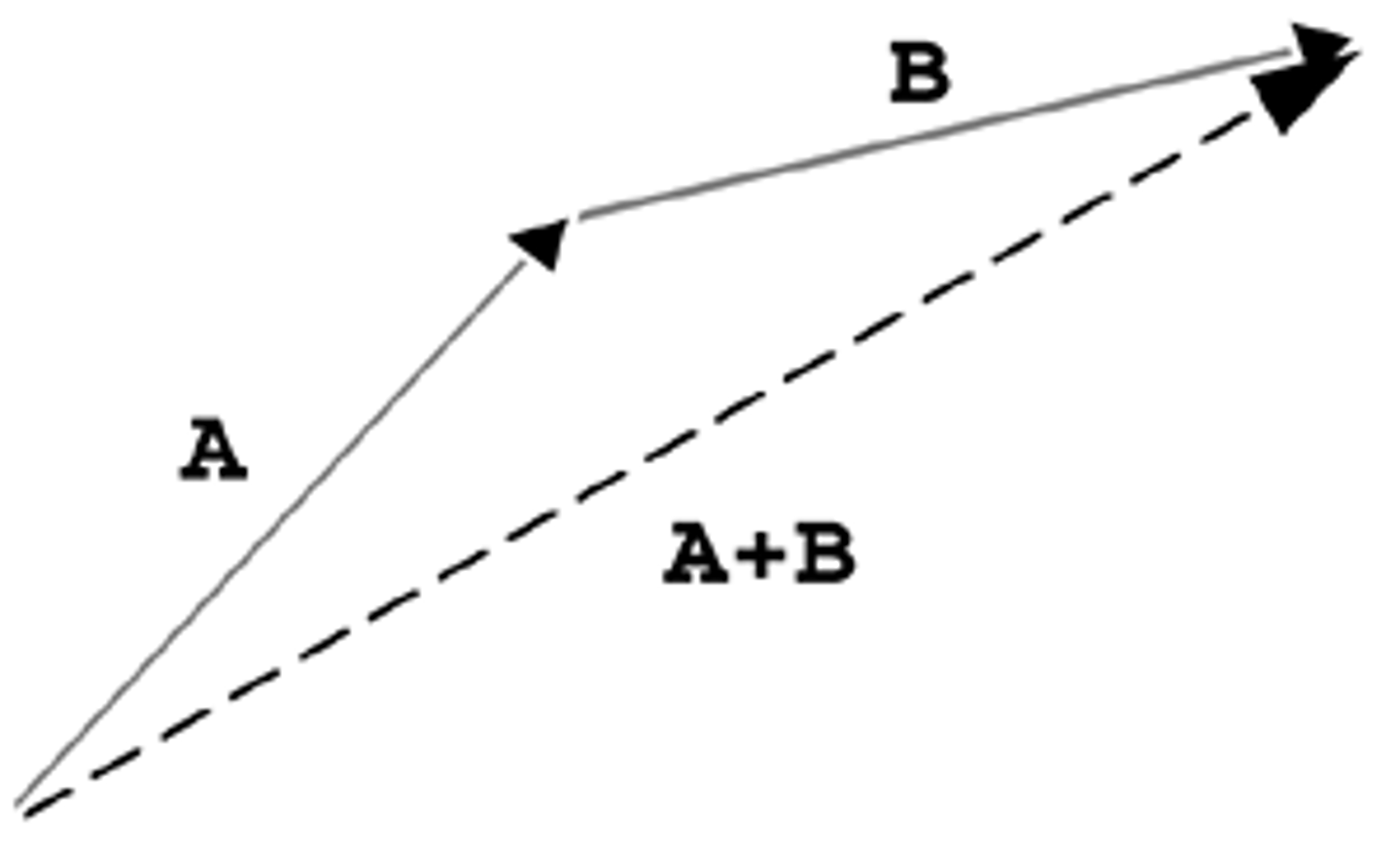
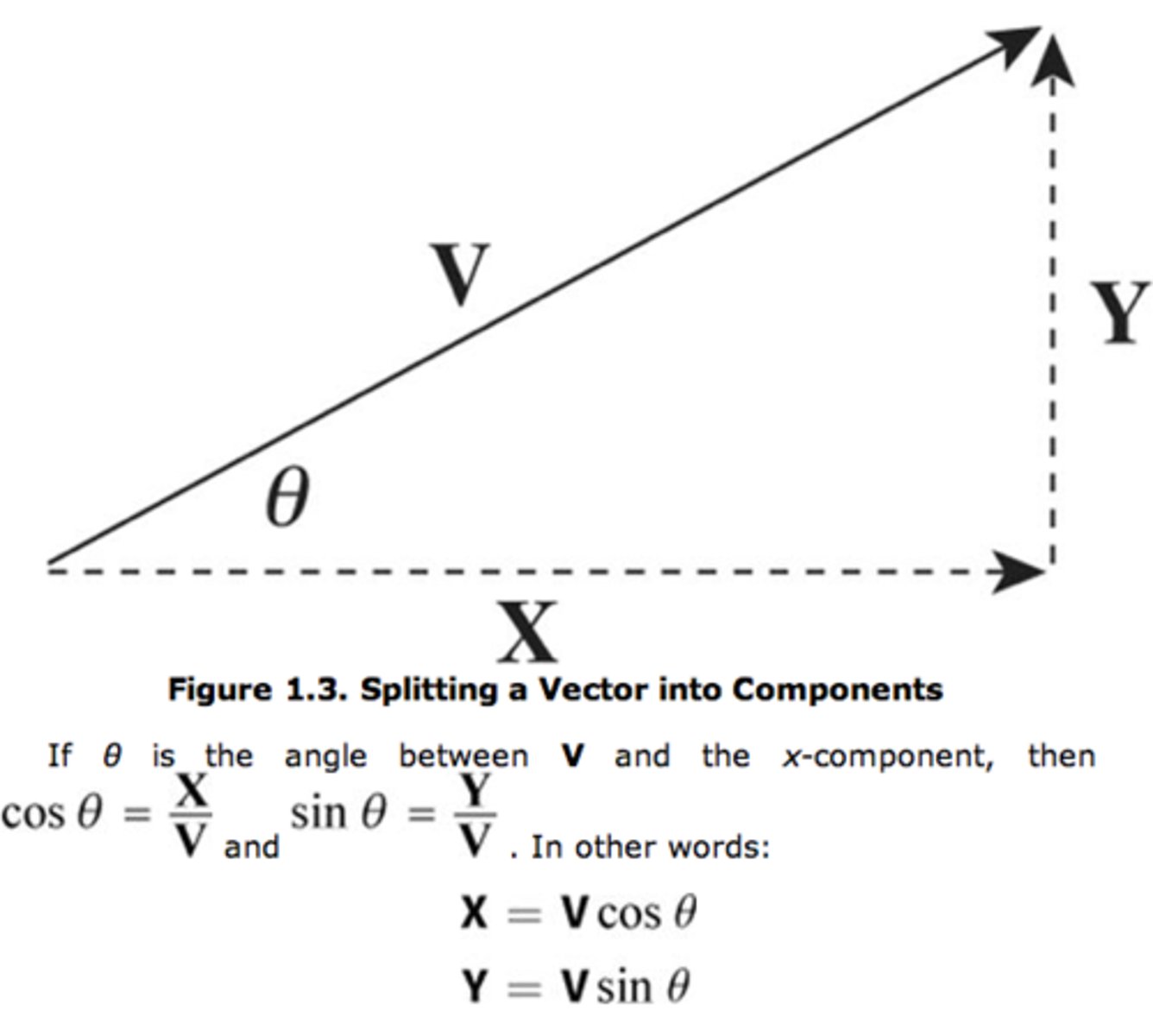
components of vectors
vectors can be split into _________ using the rules shown in the image. __________ can be added directly into components of resultant
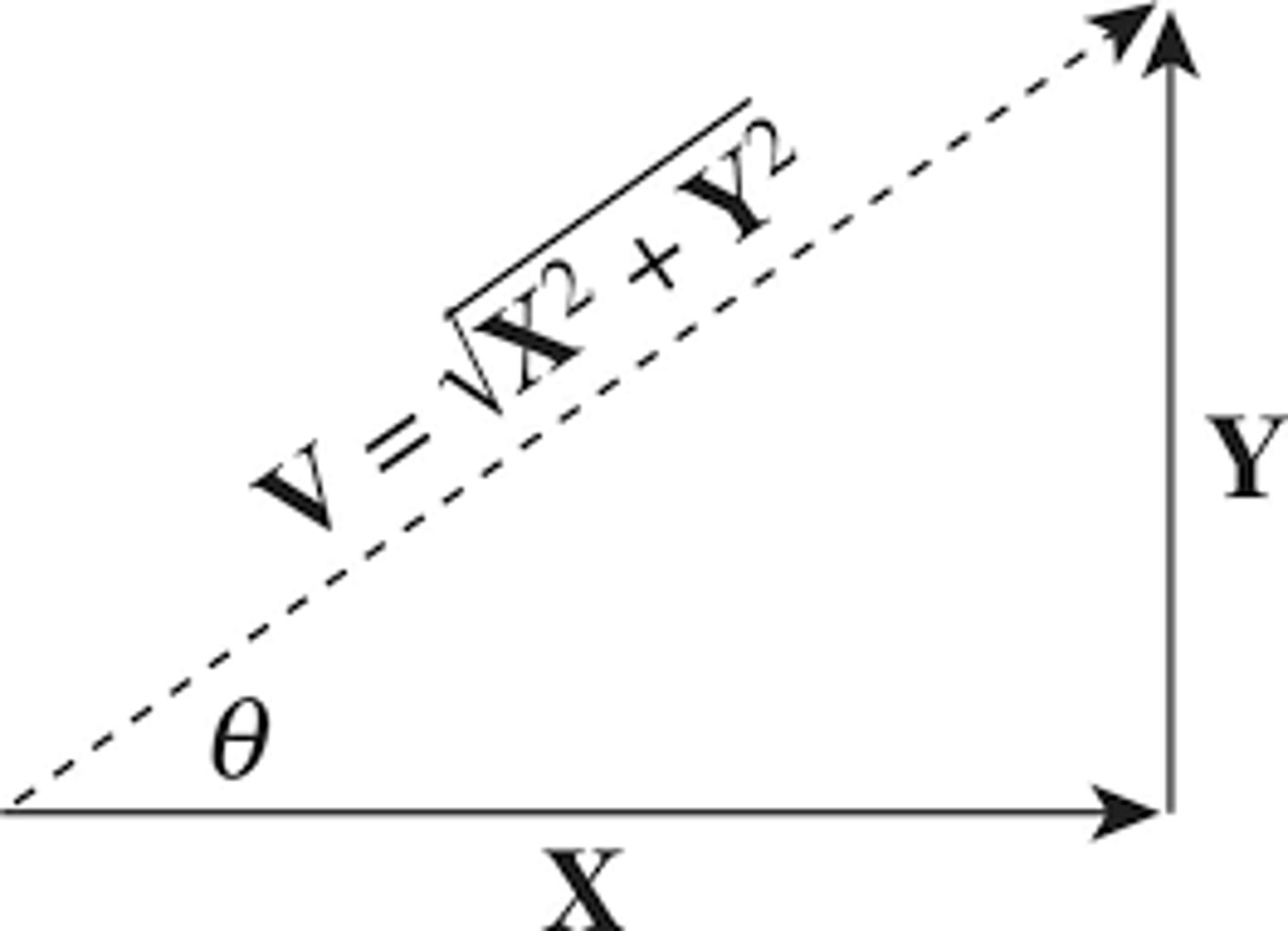
Pythagorean Theorem for vectors
By summing up the squares of vector components and taking the square root, one can get the magnitude of the vector itself.
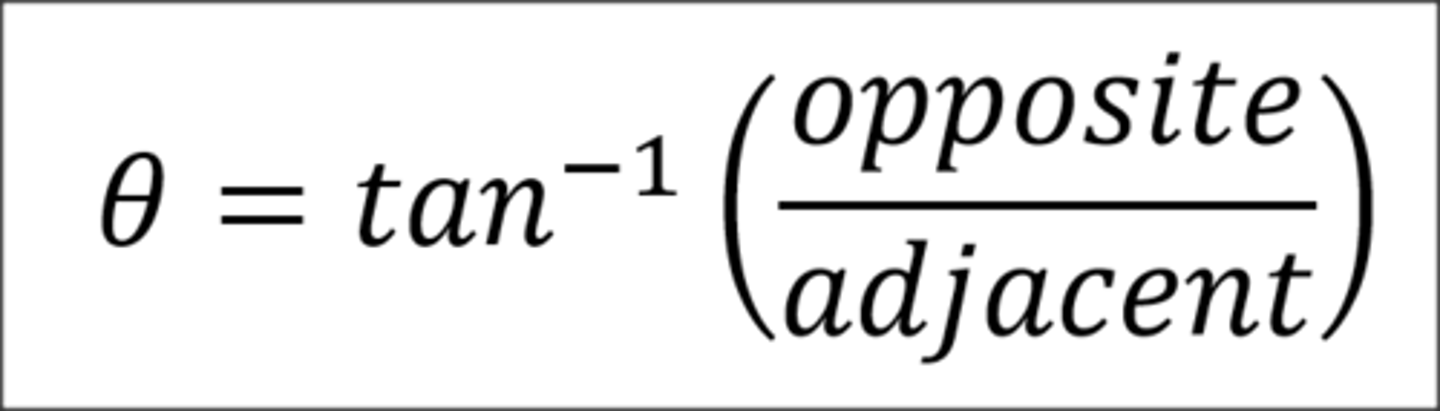
Finding the angle of resultant vector.
vector subtraction
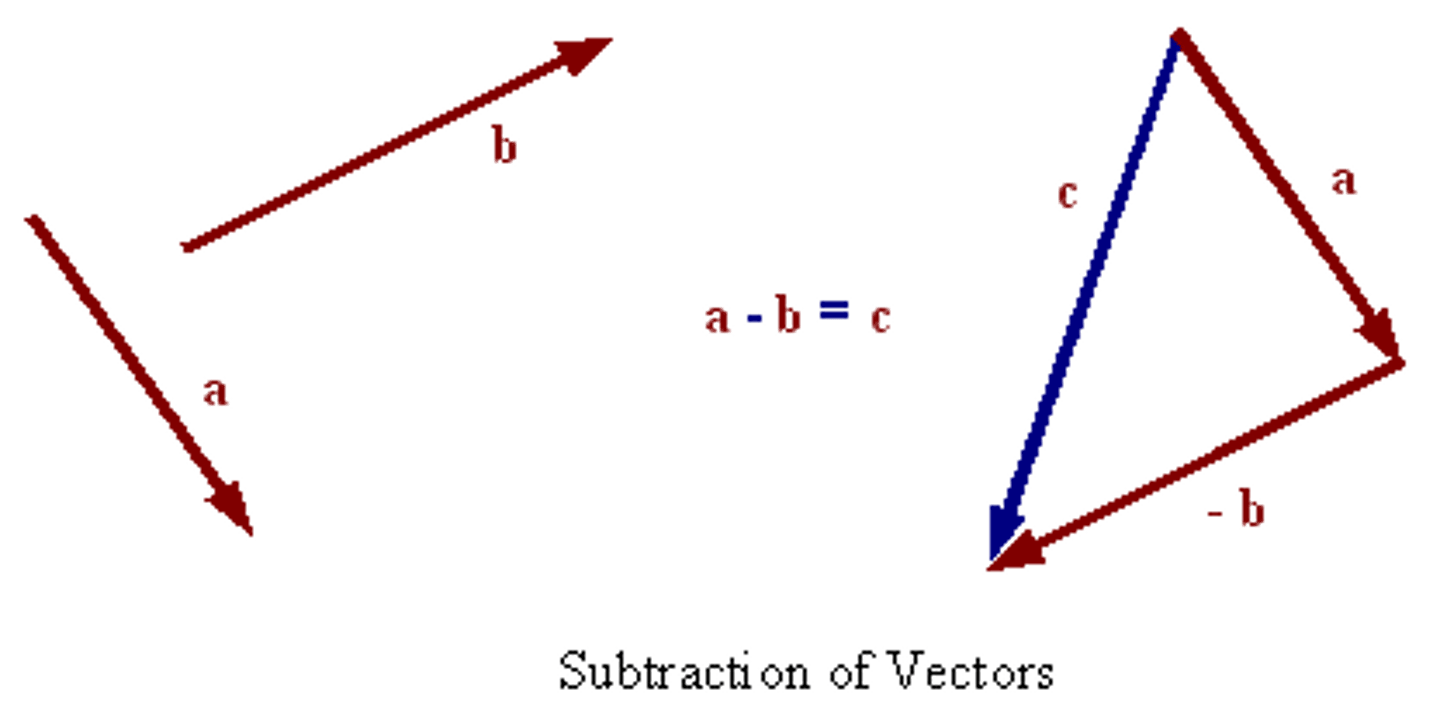
To subtract two vector graphically, reverse direction of subtracted vector then do vector addition. May be performed on components of vectors first.
Multiplying Vectors by Scalars
When ________, the vector magnitude is scaled by scalar, the resultant vector direction will be parallel to original vector if scalar is positive and antiparallel to the original if scalar is negative. Note that units multiply as well.
dot product
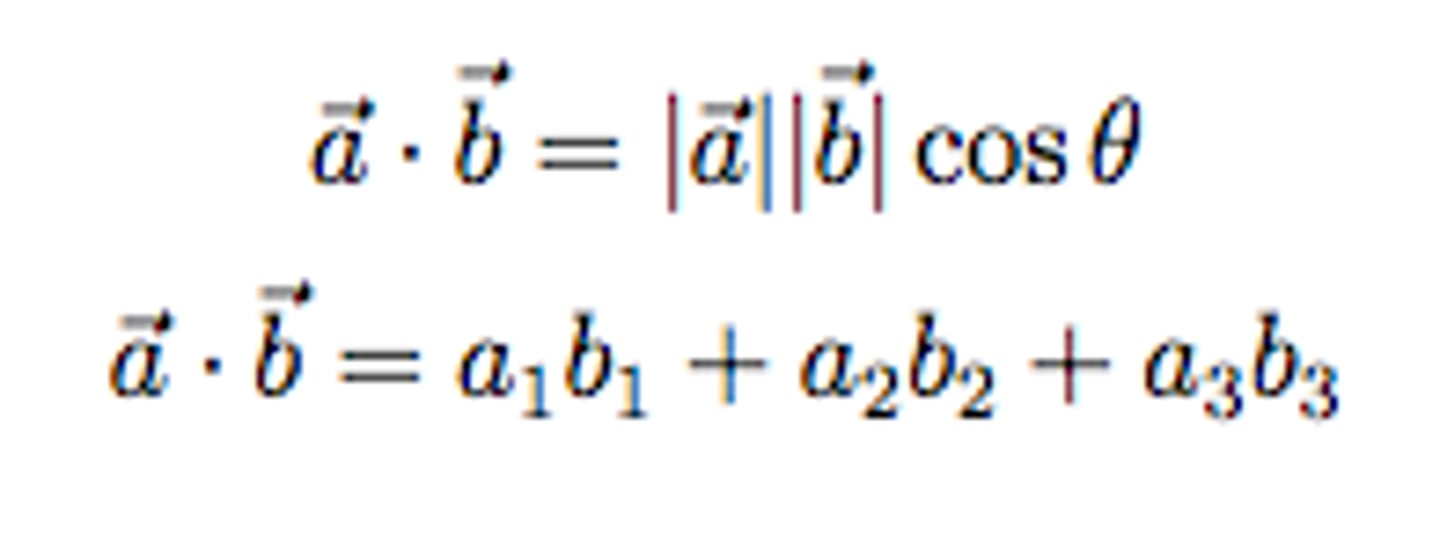
When vector multiplied with another vector yields a scalar quantity
formula is |a| x |b| x cos(angle)
cross products
multiplication of two vectors to give a third vector with magnitude and direction. Direction determined by right-hand rule. Resultant will always be perpendicular to both vectors. Note that units multiply as well.

displacement (x)
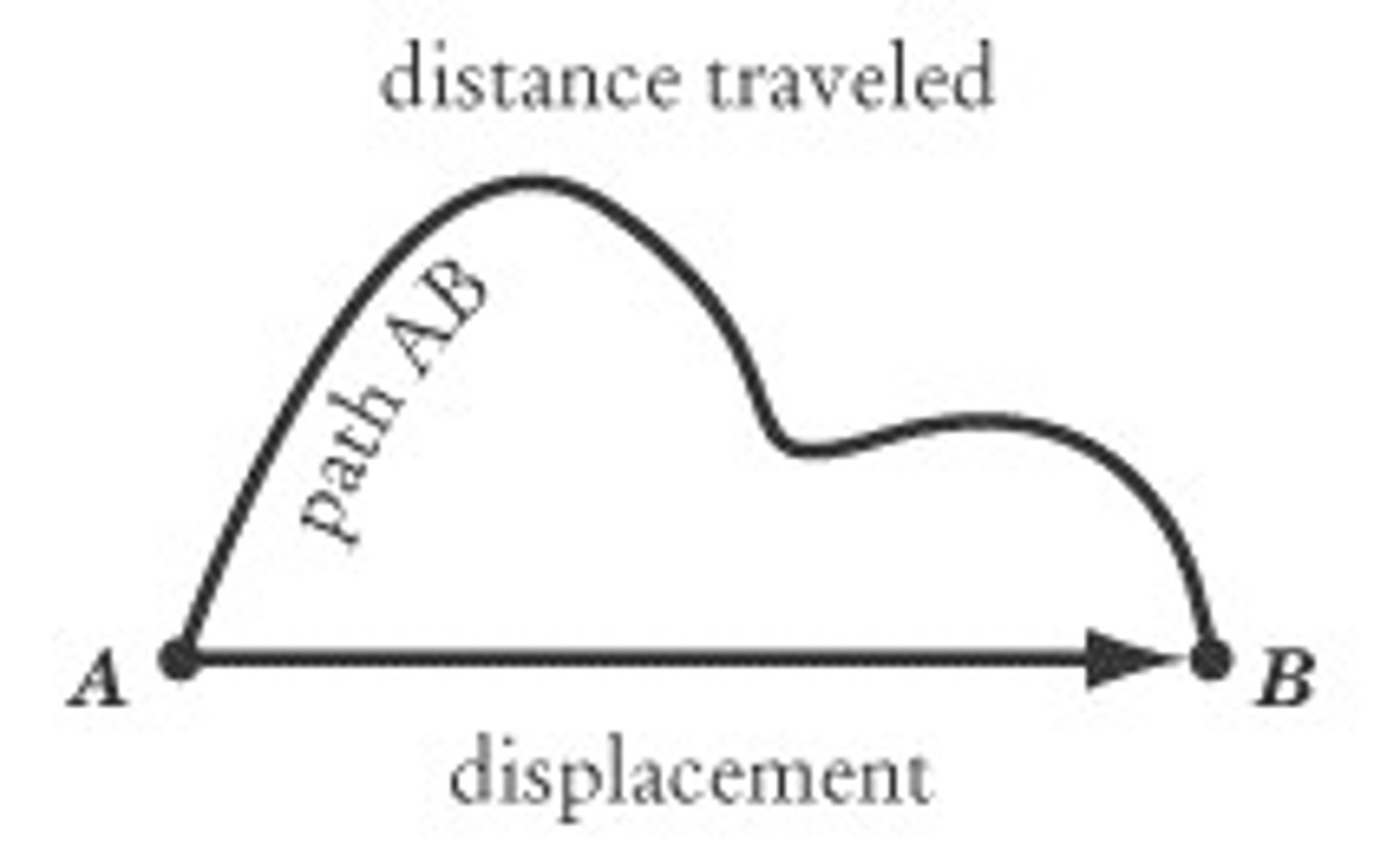
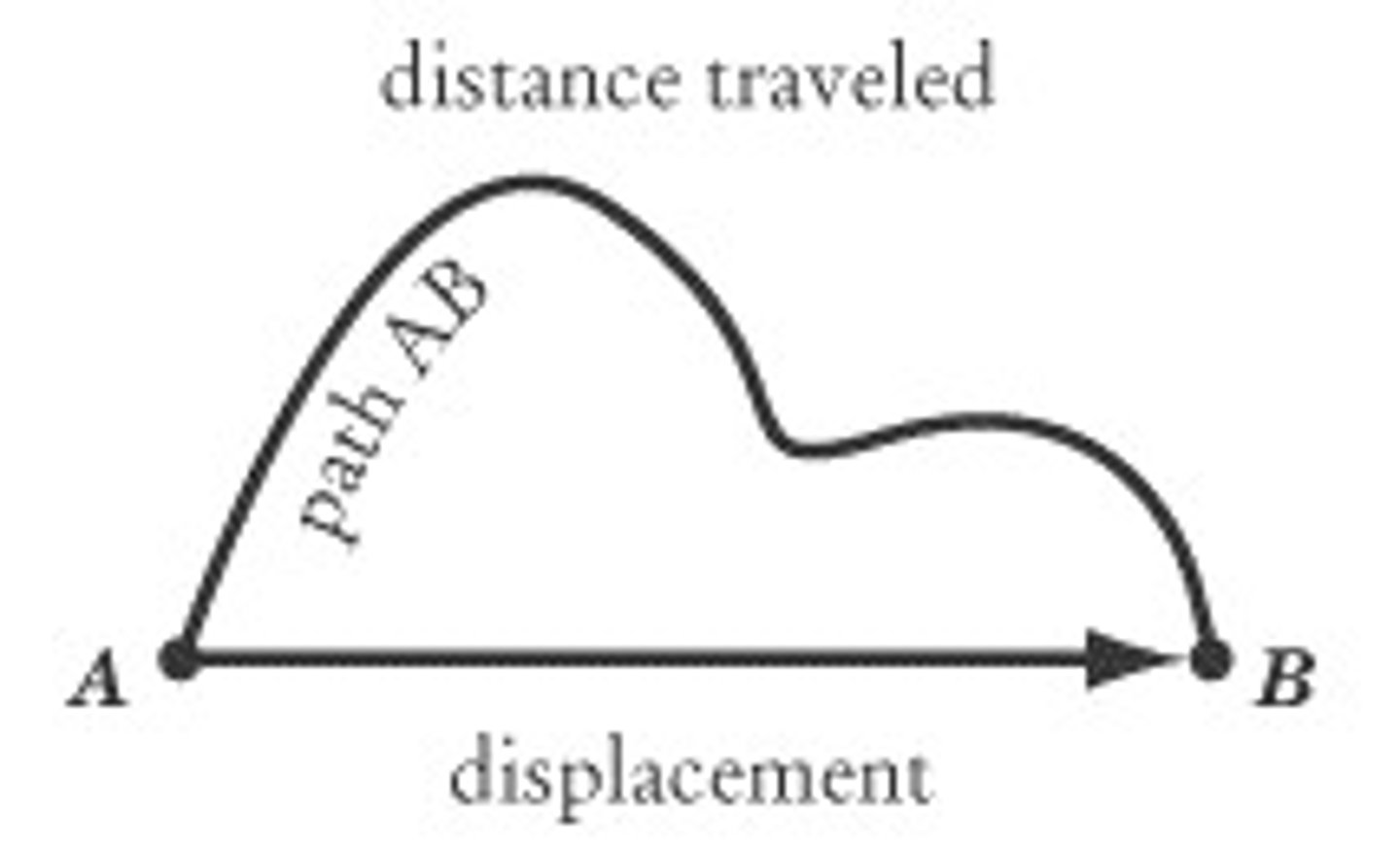
Distance and direction of an object's change in position from the starting point. Vector quantity. Does not take into account path traveled
distance traveled
The length of a path between two points. Scalar quantity.
velocity (v)
vector quantity with magnitude measured as rate of change of displacement in a given unit of time. m/s. Direction of velocity is same as direction of displacement
speed (v)
The distance an object travels per unit of time. A scalar quantity
instantaneous speed
equal to the magnitude of instantaneous velocity
instantaneous velocity
the velocity of an object at some instant or at a specific point in the object's path
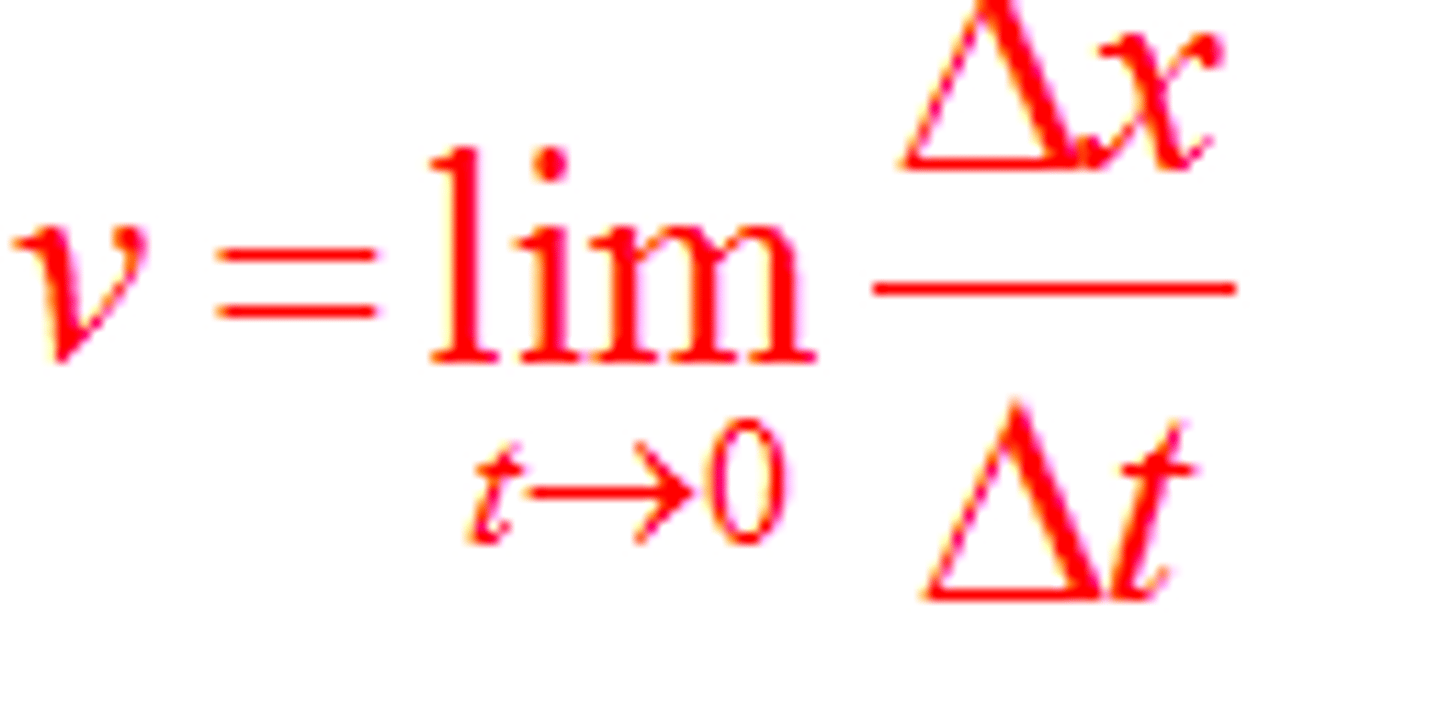
average speed
total distance traveled divided by total time. Accounts for path traveled, unlike average velocity.
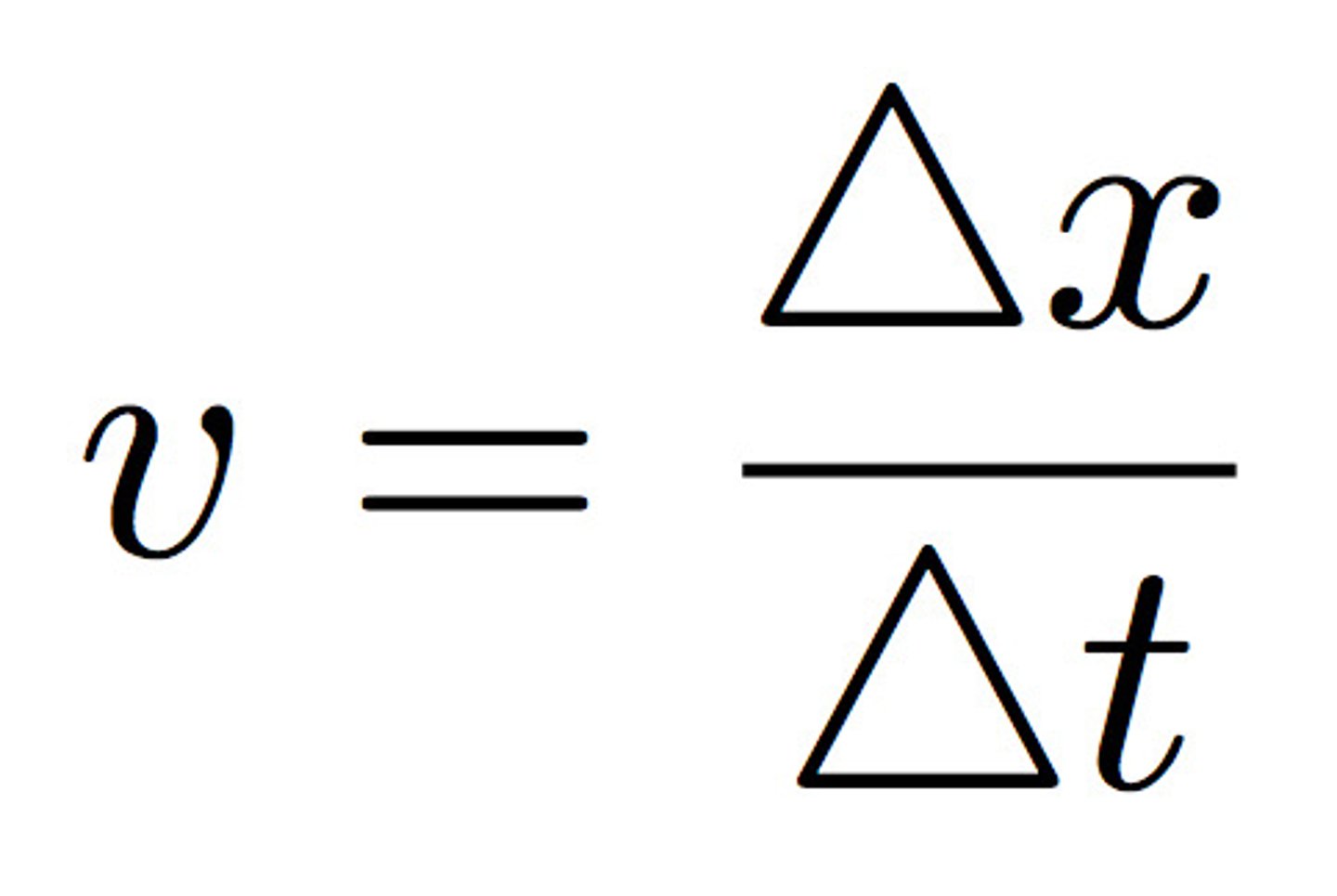
average velocity
the total displacement divided by the time interval during which the displacement occurred. Does not account for path traveled.
force (N)
vector quantity experienced as pushing or pulling on objects
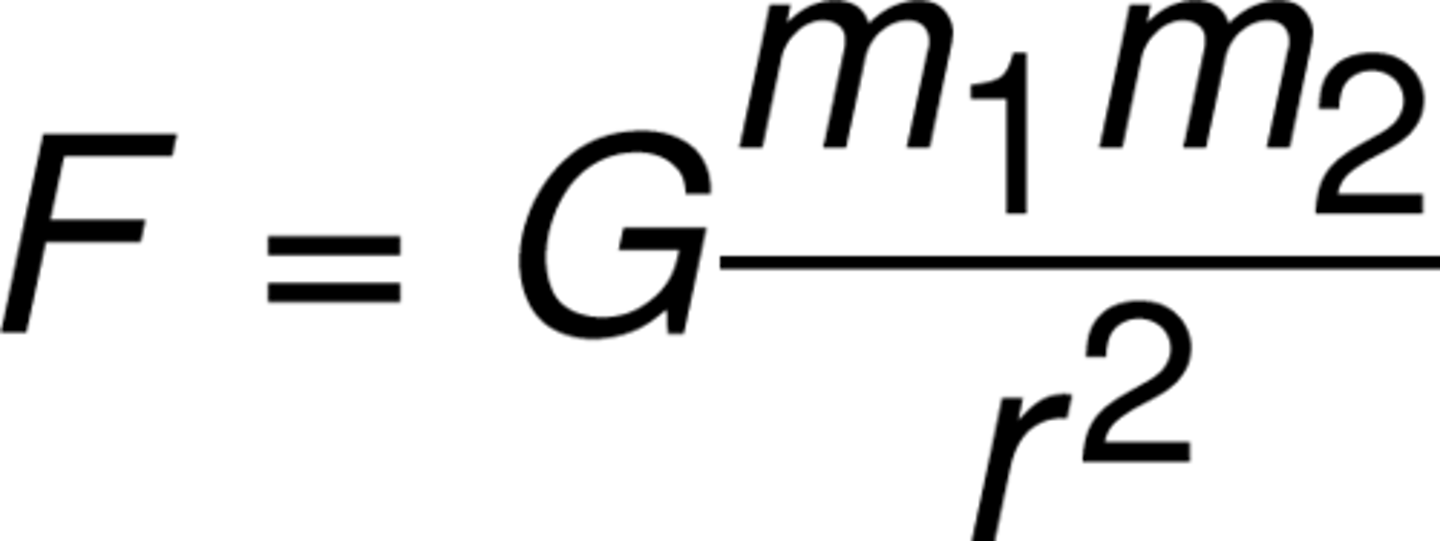
gravity
A force of attraction between objects that is due to their masses. G is universal gravitational constant (6.67 x10^-11 N*m^2/kg^2)
Friction
A force that opposes motion between two surfaces that are in contact
static friction (f_s)
friction that exists between stationary object and the surface upon which it rests
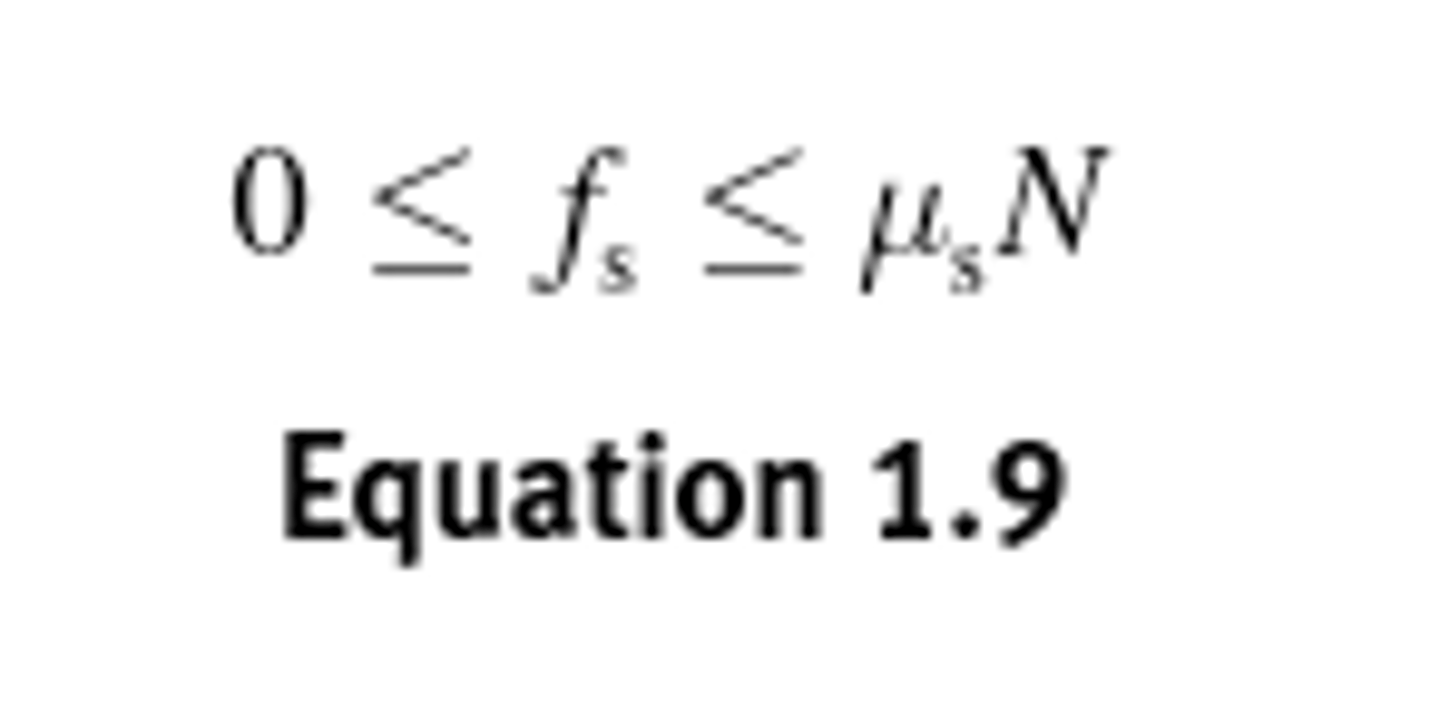
static friction inequality
Shown in image. mu_s is coefficient of static friction (unitless and dependent on two materials in contact), N is normal force.
Value of static friction equal to that of force applied. At static friction of 0, no force is applied. If force applied is greater than mu_s*N, then object begins to move.
kinetic friction (f_k)
friction between a sliding object and the surface over which it slides. (note that a wheel moving does not involve kinetic friction)
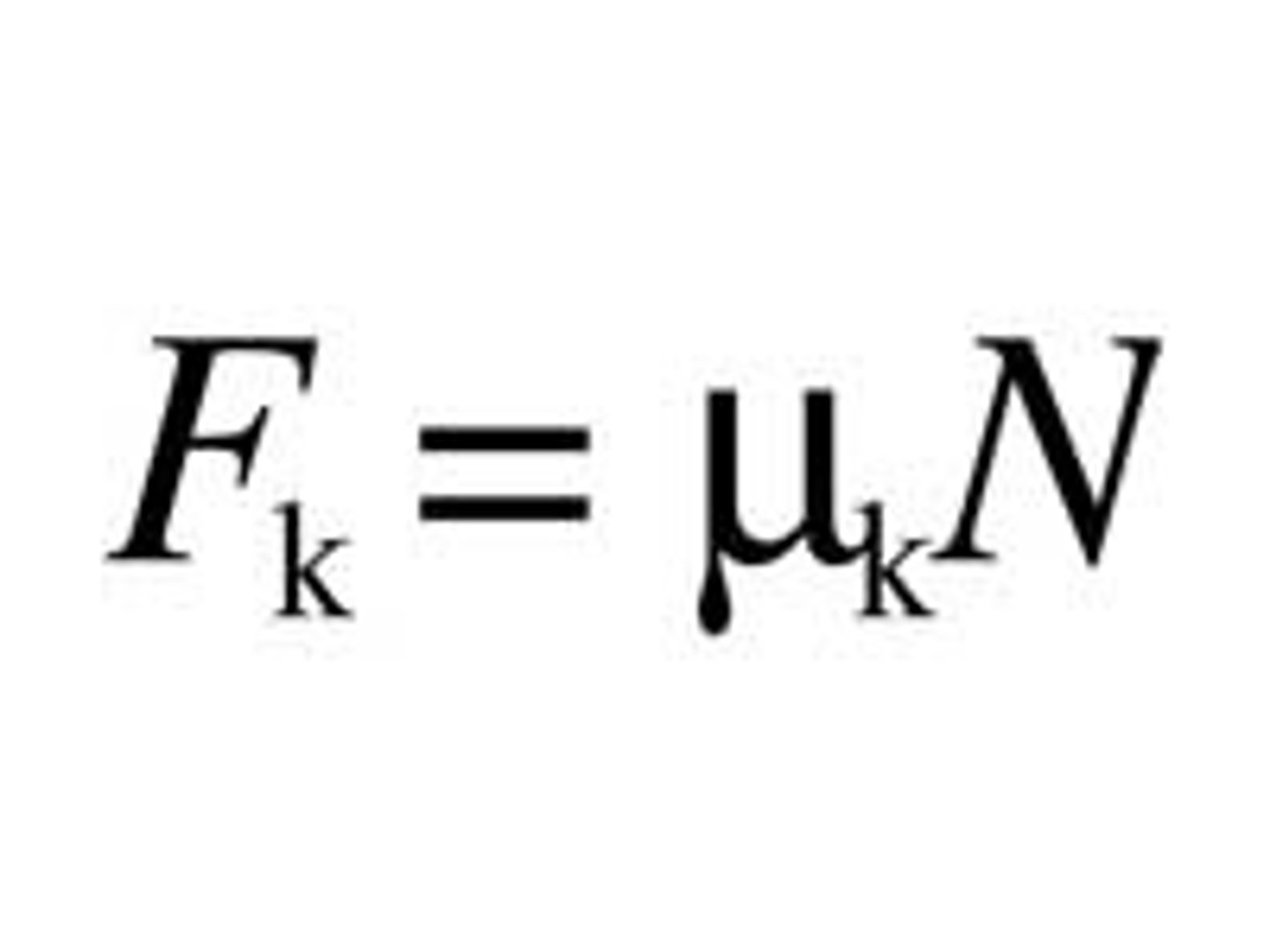
kinetic friction equation
f(k)= u(k)N
where f(k)=kinetic friction
u(k)=coefficient of kinetic friction
N= magnitude of the normal force
Has constant value, does not depend on surface area in contact or velocity of sliding object. Kinetic friction coefficient is always smaller than the static friction coefficient, showing that it is easier to keep object moving than to start it moving.
mass (m)
Measure of a body's inertia. Scalar, does not depend on gravity
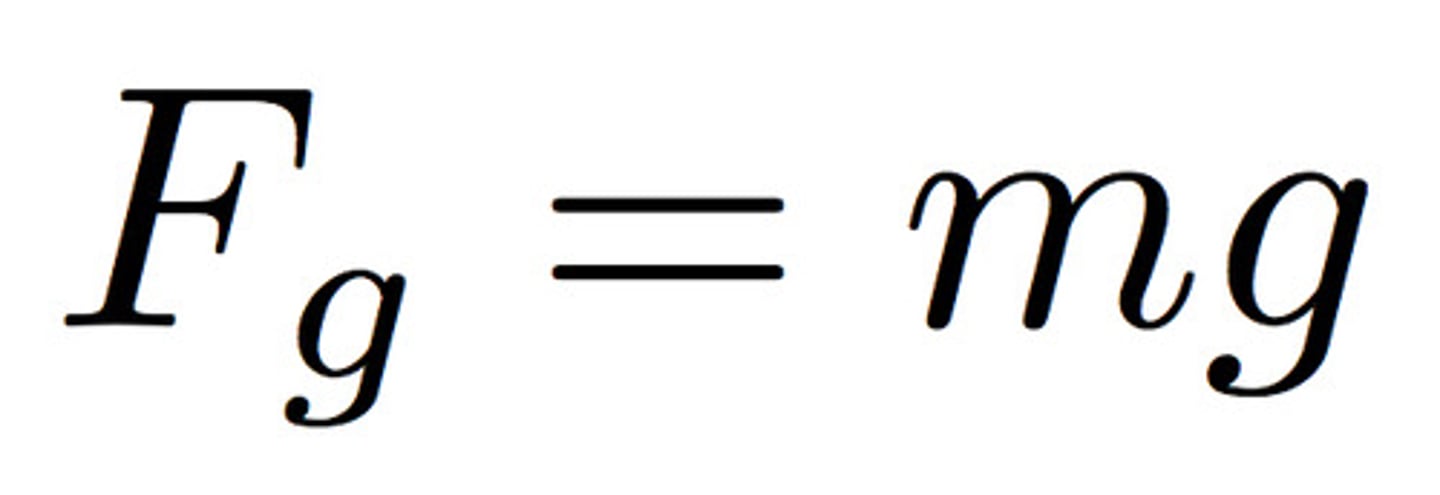
weight (F_g)
Measure of gravitational force on an object. F=mg. Unit of N
weight-mass equation
g is approx 10 m/s^2
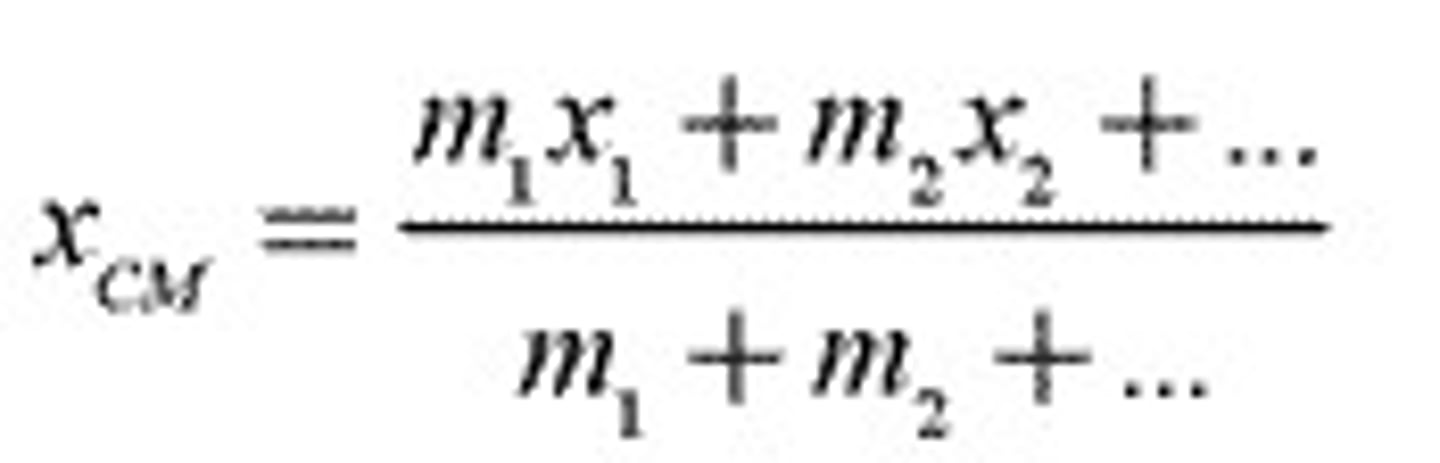
center of mass
the point in an object that moves as if all the object's mass were concentrated at that point. Geometric center of an object that is symmetrical in shape and uniform in density. Can be calculated with equation shown, but not required to know this for the MCAT
Acceleration
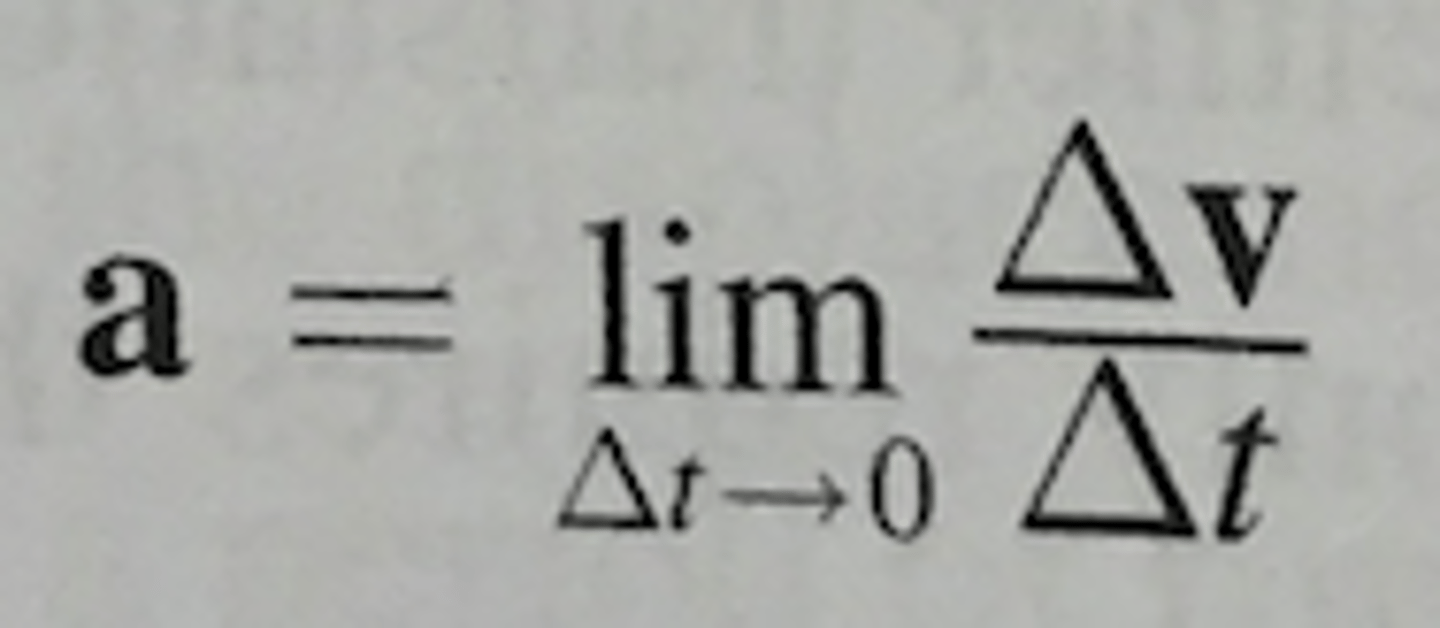
rate of change of velocity
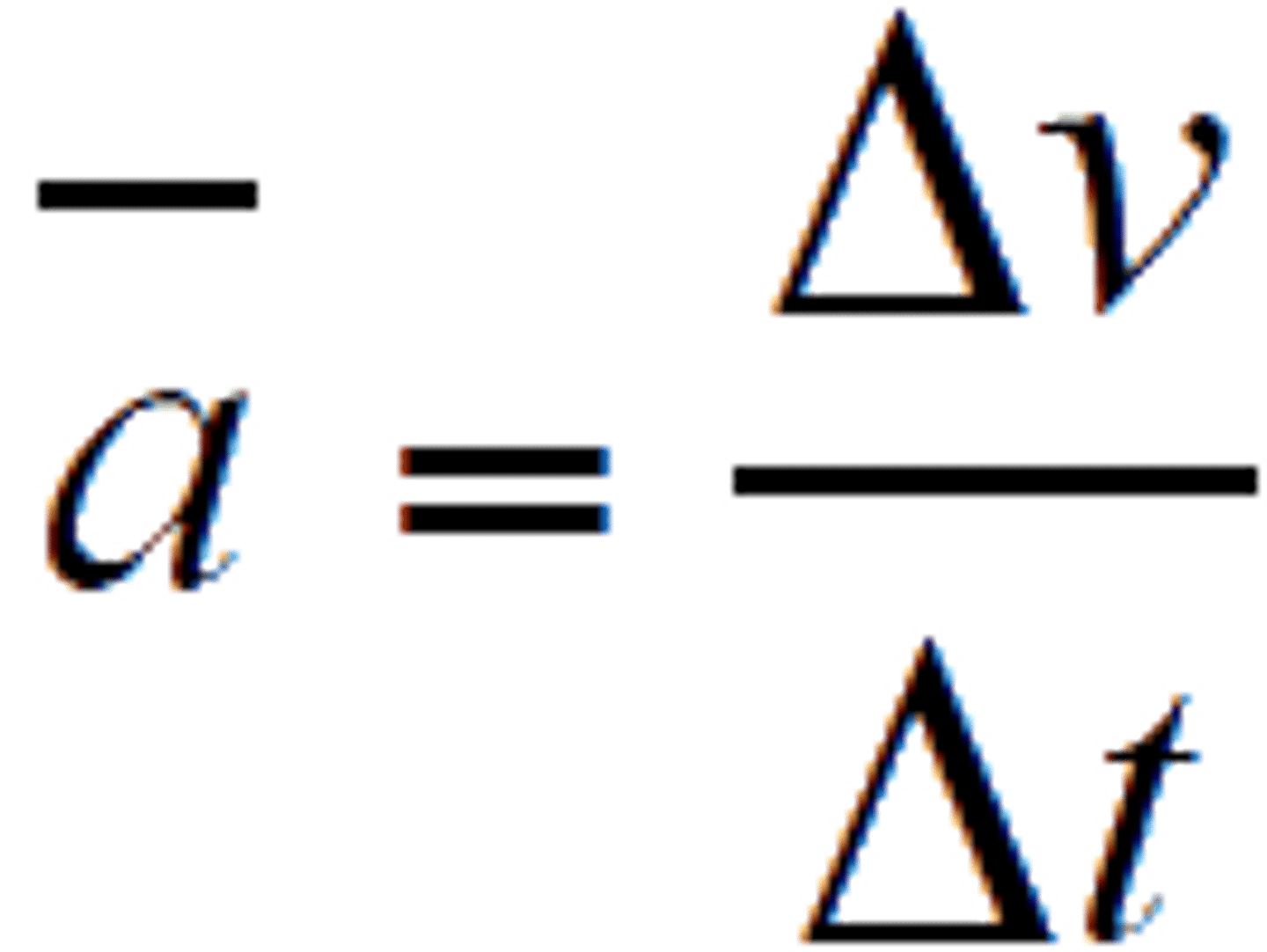
average acceleration
the change in velocity during some measurable time interval divided by that time interval
instantaneous acceleration
On a graph of v vs. t, slope of tangent line at a given t.
Newton's First Law
An object at rest stays at rest and an object in motion stays in motion with the same speed and in the same direction unless acted upon by an unbalanced force. Also called law of inertia.
Newton's Second Law
An object's acceleration depends on its mass and on the net force acting on it.

Newton's Third Law
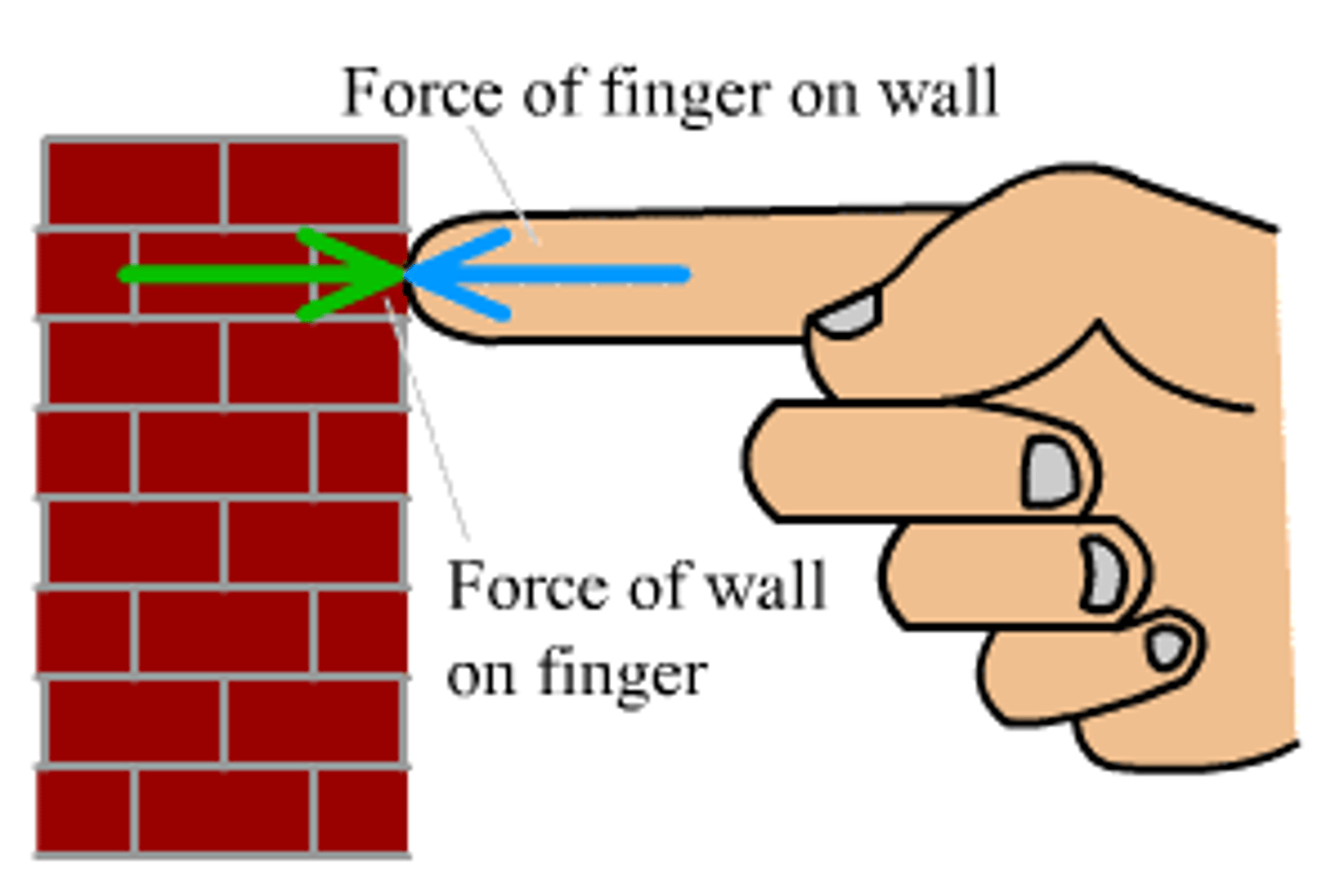
For every action there is an equal and opposite reaction
linear motion
When the object's velocity and acceleration are along the line of motion, so the pathway of the moving object continues along a straight line
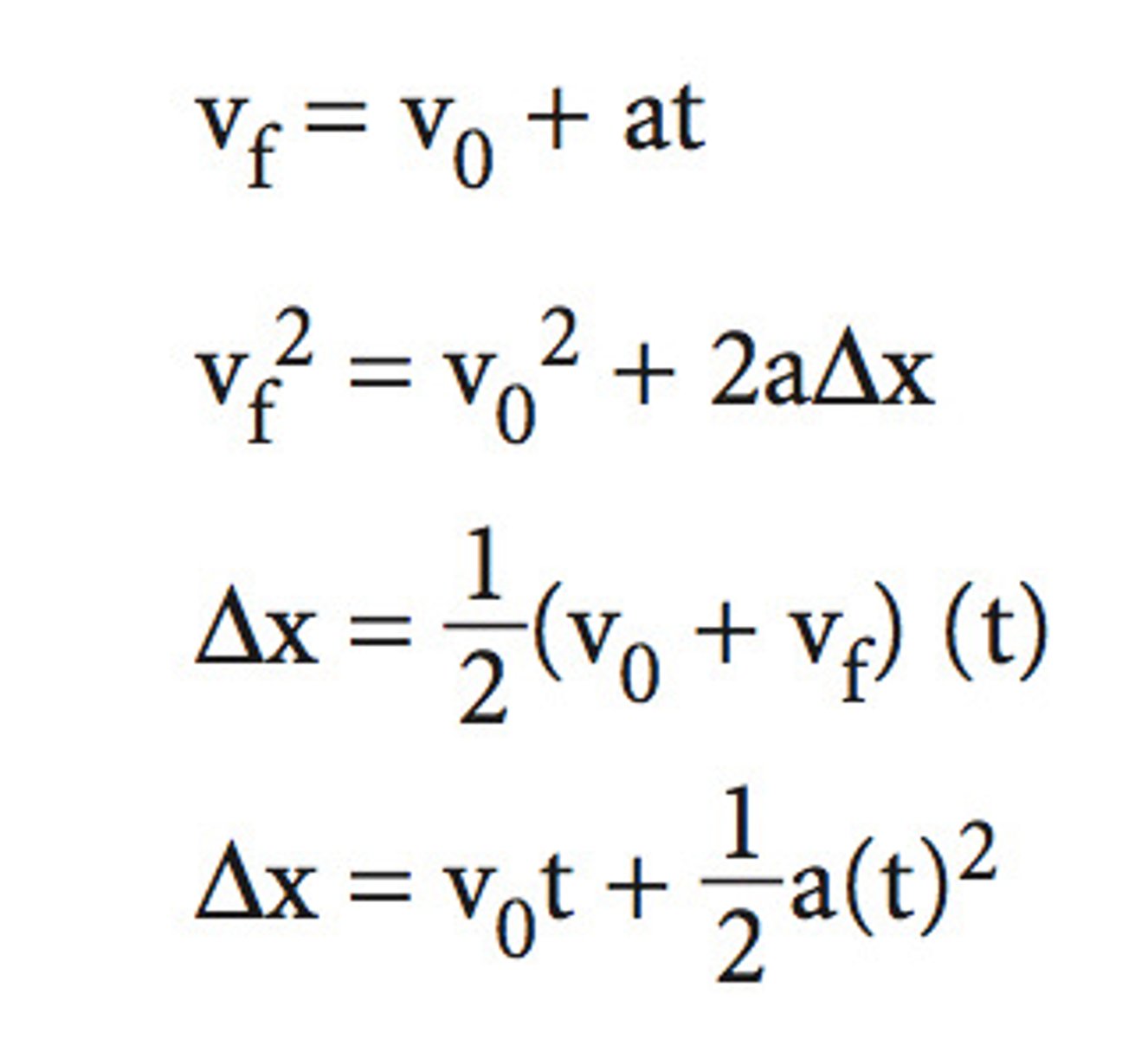
kinematics equations
free fall
the motion of a falling object when the only force acting on it is gravity (i.e. no air resistance)
air resistance
Fluid friction acting on an object moving through the air. Value increases with speed of the object
drag force
a force that opposes the motion of an object through a fluid
terminal velocity
the constant velocity of a falling object when the force of air resistance is equal in magnitude and opposite in direction to the force of gravity
projectile motion
the curved path that an object follows when thrown, launched, or otherwise projected near the surface of Earth. v_x usually remains constant
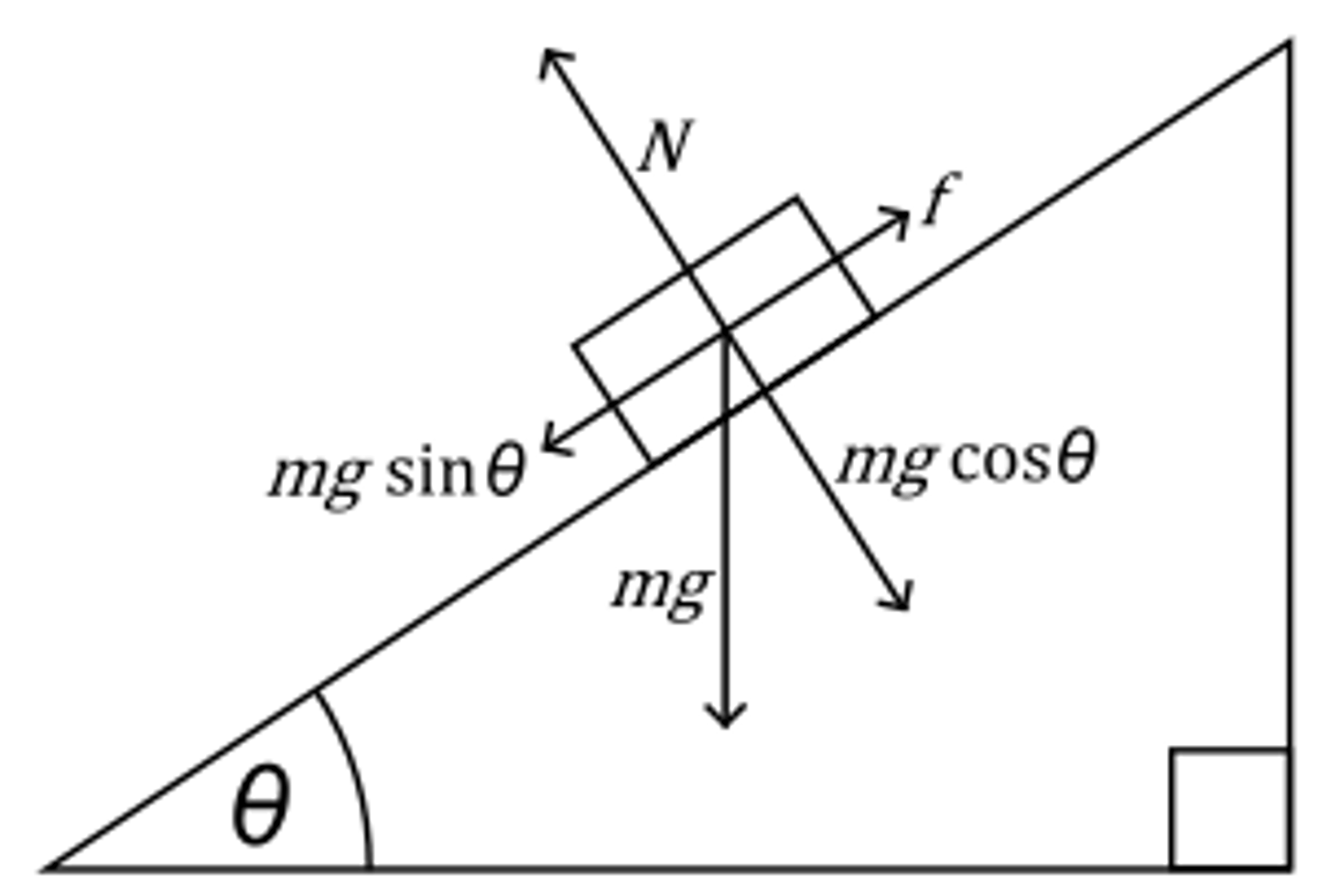
inclined plane
a slanted surface along which a force moves an object to a different elevation
split gravity into Fg_parallel to plane=mgsin(theta), Fg_ perpendicular to plane=mgcos(theta)
circular motion
occurs when forces cause an object to move in a circular pathway
uniform circular motion
the movement of an object at a constant speed around a circle with a fixed radius. Velocity vector always tangent to path, centripetal force points radially inward. Centripetal force generate centripetal acceleration. Tangential force is always zero because speed does not change
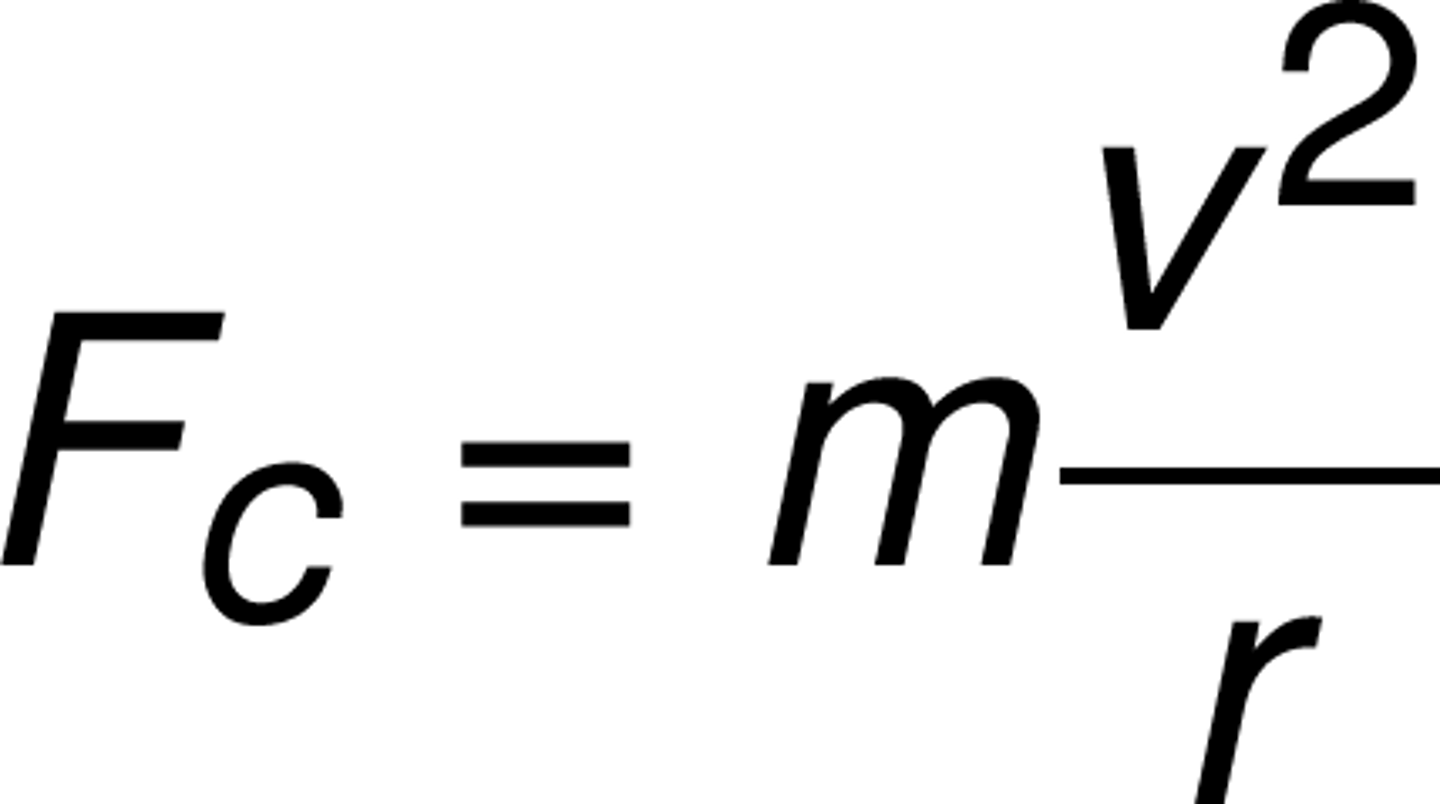
Centripetal force is F_c=m x V^2/r
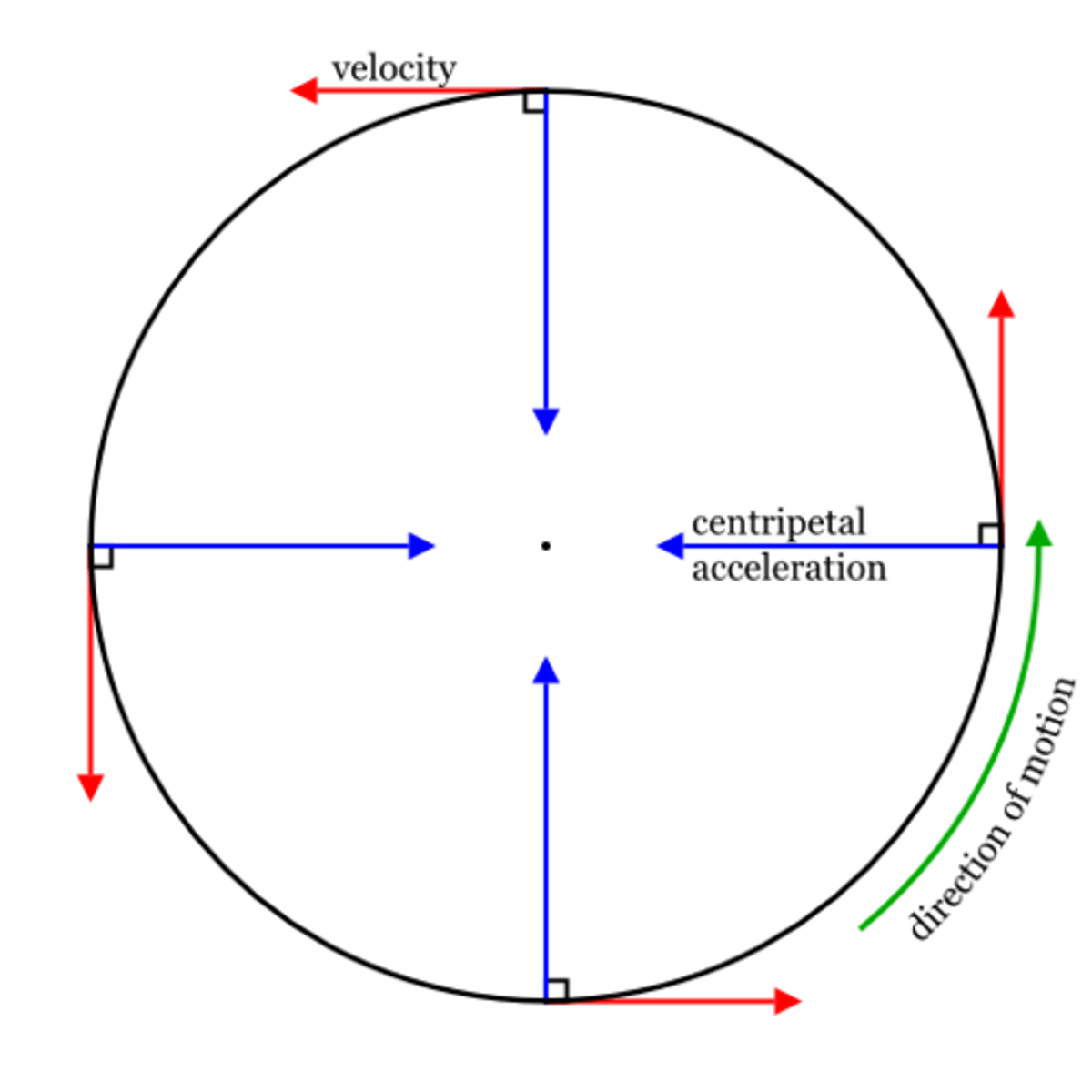
centripetal force in uniform circular motion
r is the radius of circular path, v is velocity, m is mass
dynamics
the study of forces and torques
free body diagram
a diagram showing all the forces acting on an object
translational motion
objects moving without rotating
Translational Equilibrium
net force acting on a body is zero, also known as first condition of equilibrium. Object will have a constant speed and acceleration.
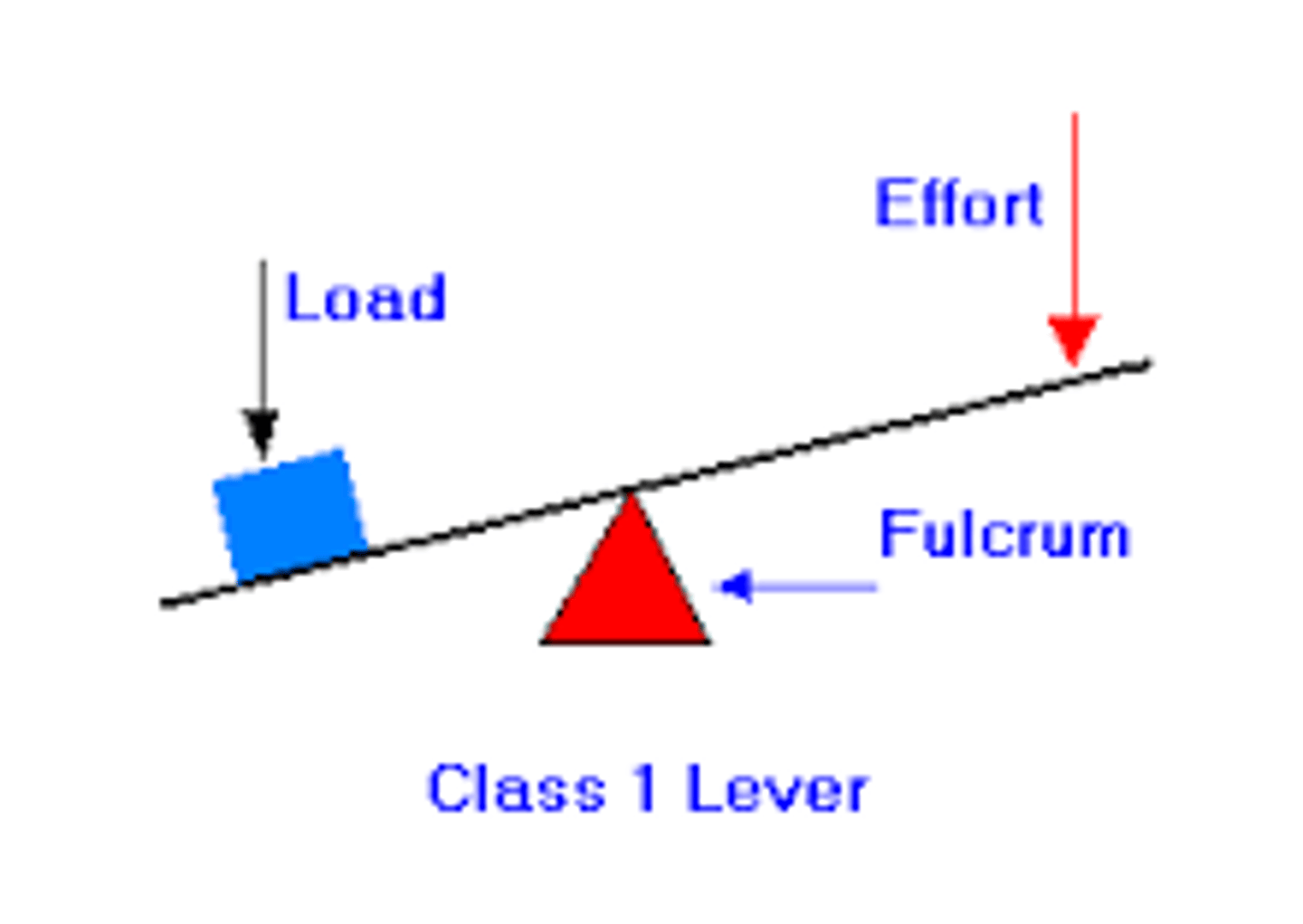
fulcrum
the pivot point of a lever
Torque (moment of force)
turning effect produced by a force
Torque is cross product of F and moment arm.
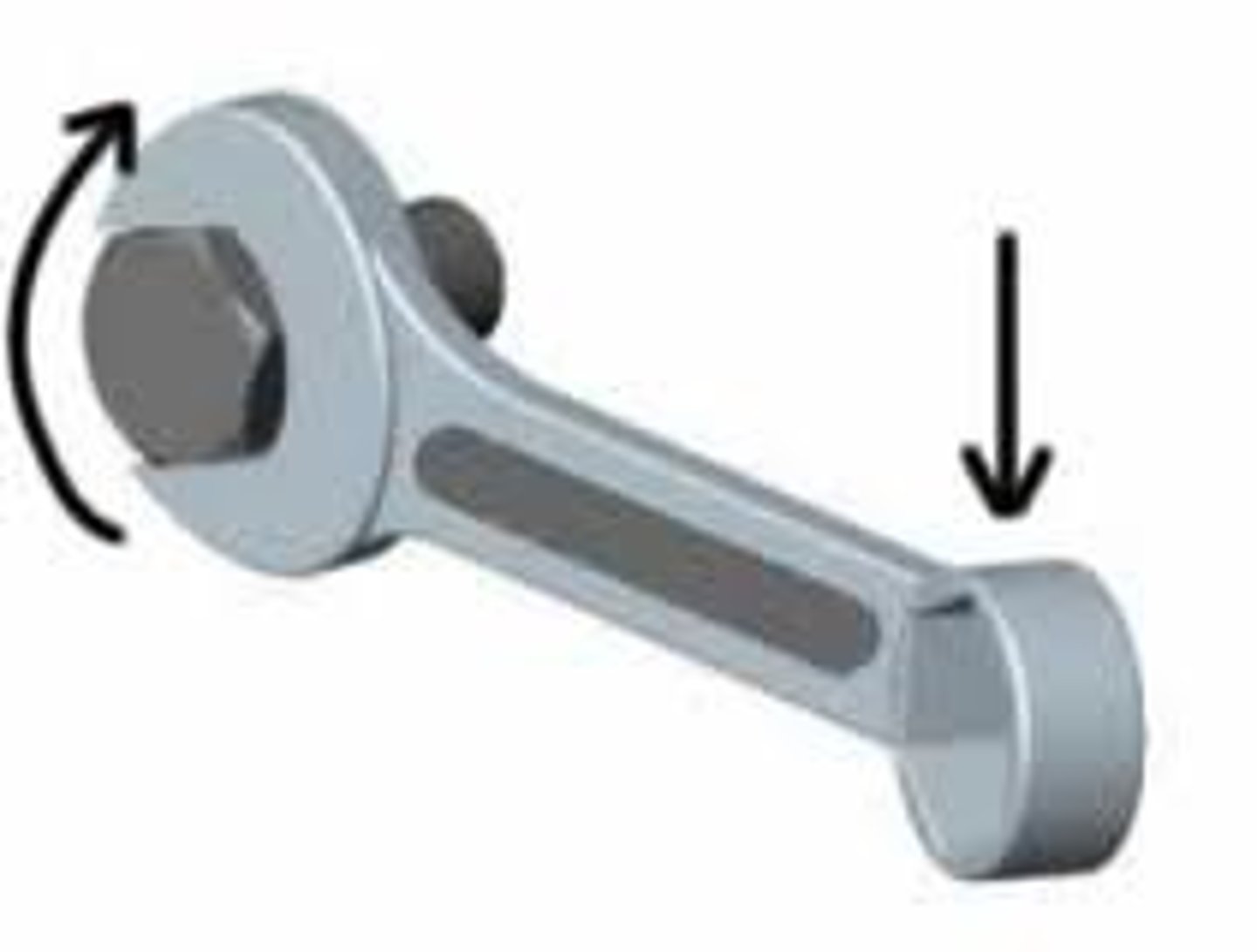
lever arm
distance between the applied force and the fulcrum
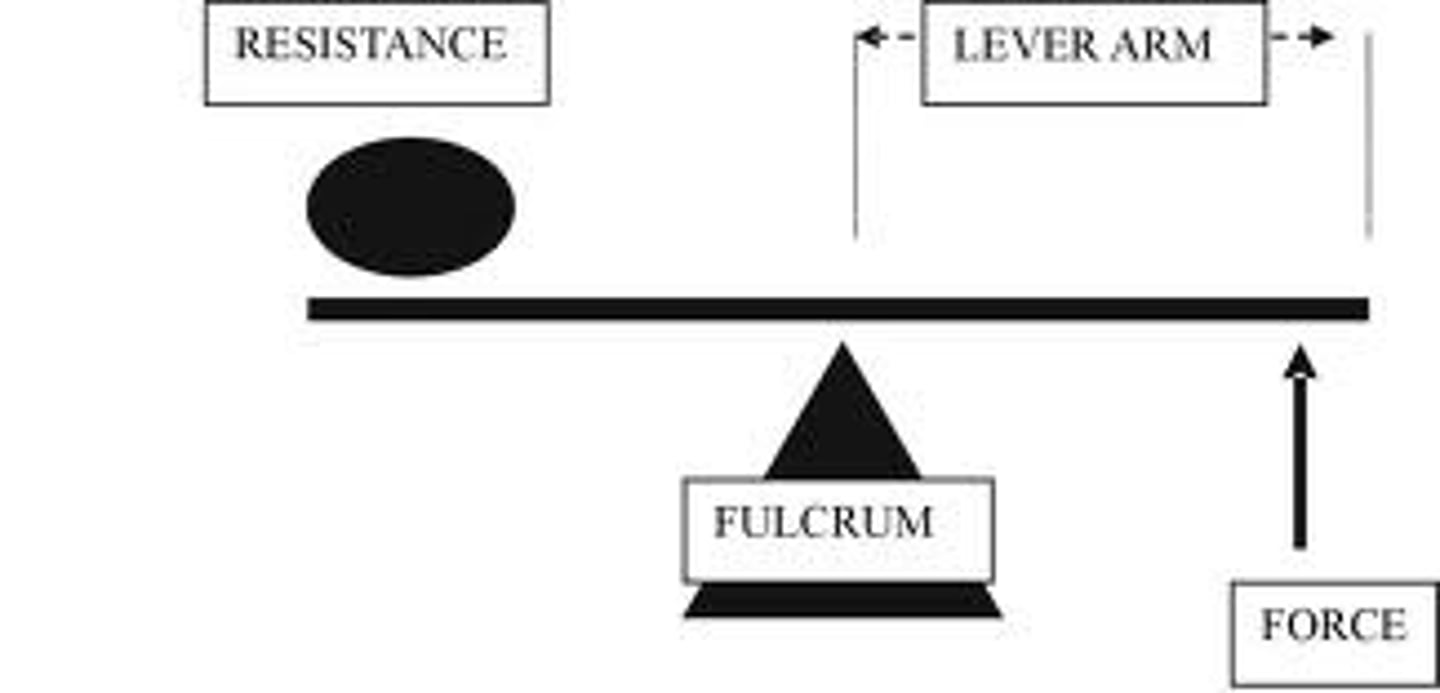
Torque equation
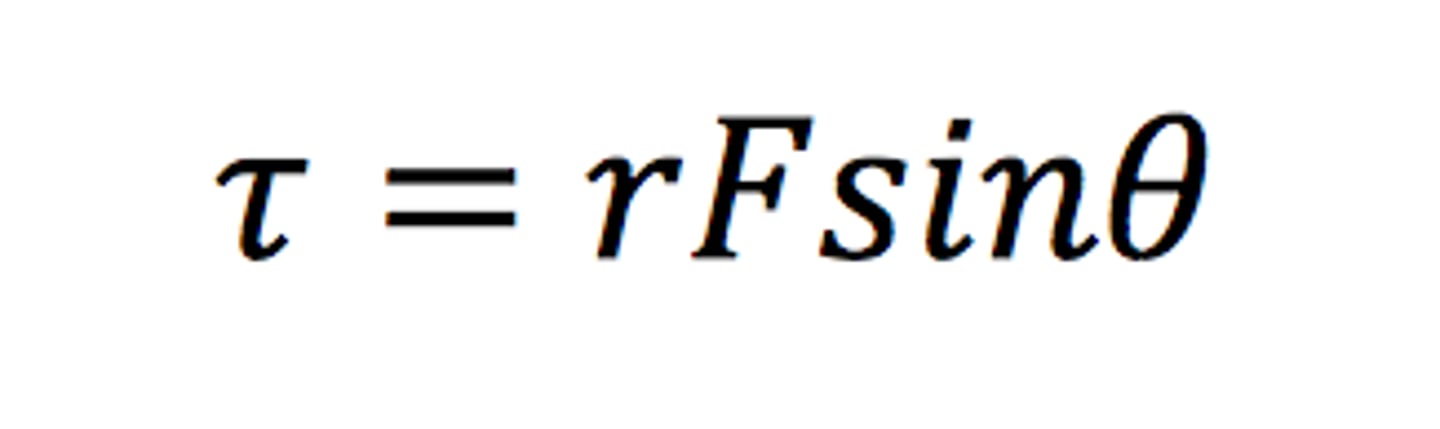
Torque is the cross product of force and moment arm (tau= r x F)
F is magnitude of fore, r is the length of the lever arm, theta is angle between the lever arm and the force vectors
rotational equilibrium
occurs when an object's net torque is zero. On MCAT, means object is not rotating