Modern Biology Chapter 47: Animal Nutrition
 Call Kai
 Learn
Learn Practice Test
 Spaced Repetition
 Match
Match Flashcards
 Knowt Play
1/200

There's no tags or description
Looks like no tags are added yet.
Name | Mastery | Learn | Test | Matching | Spaced | Call with Kai |
|---|
No analytics yet
Send a link to your students to track their progress
201 Terms
All organisms require sources of matter and energy for?
Metabolism
Homeostasis
Growth
Reproduction
For animals, meeting these nutritional requirements involves?
Feeding, the uptake of food from surrounding
Animal nutrition includes the processes by which food is?
Ingested, digested, and absorbed into body cells and fluids
Ingestion is the feeding method used to?
Take food into digested cavity
Digestion is the splitting of?
Carbohydrates, proteins, lipids and nucleic acids in foods into chemical subunits for absorption
(Modes of Digestion: Herbivores, Carnivores, and Omnivores)
Absorption is food being?
Brought into cells of organisms via subunits
What do animals need organism molecules for?
As a source of energy, and building block for complex biological molecules
Energy requirments are described in terms of calories being a?
Calorie = amount of energy required to rase temp of 1g of pure water by 1 C
Kilocalorie = [1 kcal= 4.2 kilojoules] equals 1,000 calories
Carbohydrates contain about? (List the kcal per gram thingies)
4.2 kcal per gram
Fats contain about?
9.5 kcal per gram
Proteins contain about?
4.1 kcal per gram
Nutrition Facts diagram
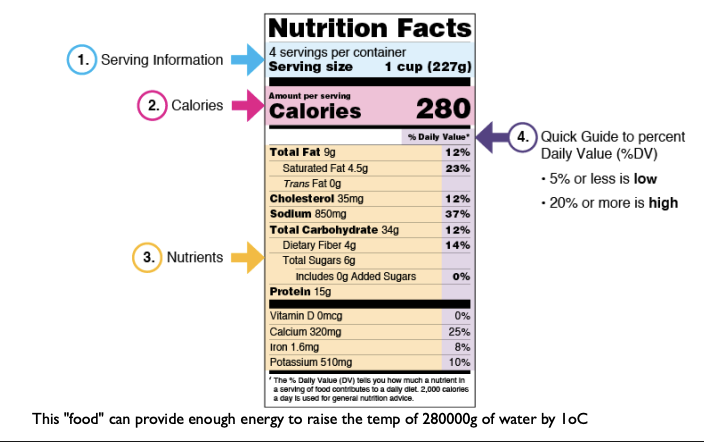
The Committee on Food and Nutrtion of the National Research Council was established in _____ to advise?
1940
Advise on nutrition problems in connection with national defense
Animals who suffer from undernutrition will have what kind of intake?
Intake of organic fuels is unadequate, or whose assimilation of such fuels is abnormal
Undernutrition is a form of __________, a condition resulting from an ______ ______
Malnutrition
Improper Diet
Overnutrition is the condition caused by?
Excessive intake of specific nutrients (another type of malnutrition)
An animal suffering from undernutrition is? In which they are taking in?
Starving for one or more nurtirents - taking in fewer calories than needed for daily activities
Animals with chronic undernutrition lose weight because?
They have to use energy-providing molecues’s of their own bodies as fuels
Mammals will use (What First), then ______
Stored fats and Glycogen first
Then Proteins
The use of proteins as fuels leads to?
Muscle wastage, and in the long term, organ and brain damage - leading to death
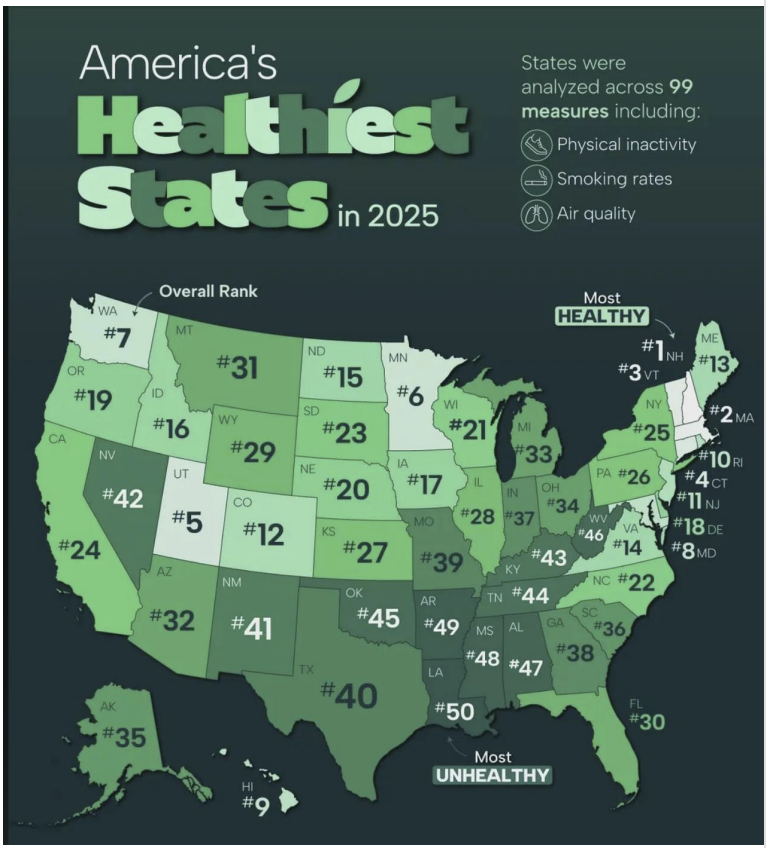
America’s Healthiest State Diagram
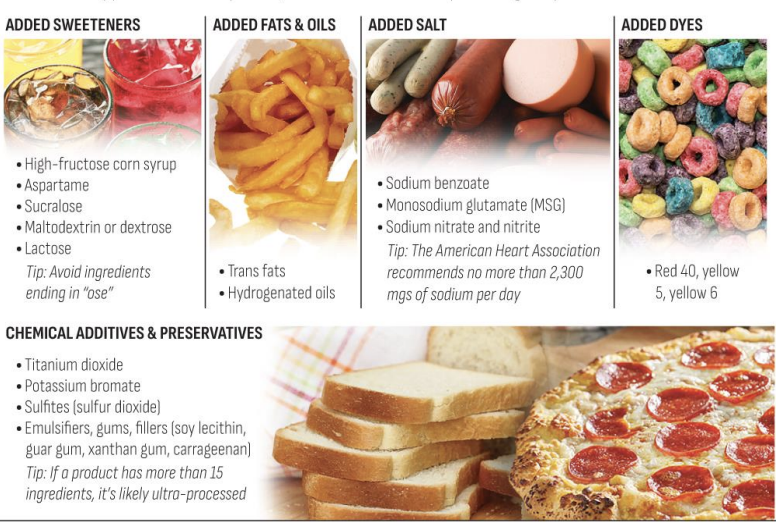
Ultra-Processed signs diagram
An essential nutrient is a nutrient required for ________ _____ ______, that either _____________________ or _____________________, and therefore must be provided by the?
Normal body function
Cannot be made by the body
Cannot be made in amounts adequate for good health
Provided by the diet
Organic molecules will serve as the building blocks for?
Carbohydrates
Lipids
Proteins
Nucleic Acid
Animals synthesize many organic molecules - however, they cannot?
Make certain molecules which must be obtained in the diet
Non-synthesizable molecules are called?
Essential Nutrients
The human digestive system provides fuel molecules and a wide range of nutrients, including the?
Molecular building blocks of carbohydrates, lipids, proteins, and nucleic acids
What are examples of Essential Nutrients?
Amino Acids
Vitamins
Essential Minerals
Essential Fatty Acids
What are the 9 essential Amino Acids?
Phenyalanine
Valine
Threonine
Tryptophan
Isoleucine
Methionine
Leucine
Lysine
Hustidine
What are the sources of the Amino Acids?
Meat, Eggs, Fish, Cheese, Milk
What is a Deficiency of Amino Acids?
Ineffective Protein Synthesis
Vitamins are organic moleculues required in?
Small quantities that the animal cannot synthesize itself
Many vitamins are? (Hint: Their are 2, where the second is a sentece)
Coenzymes
nonprotein organic subunits that assist in enzymatic catalysts
Human require how many vitamins?
13
Many enzymes will act as?
Co-enzymes in biochemical reactions
What’s a fun fact about vitamins?
Most people are able to get enough through normal and varied diet
Supplements are usually necessary for what group of people?
Strict Vegetarians
Newborns
The elderly
When taking certain medications
What are the two classes of vitamins? (Hint: State what they are, and some etc)
Water-soluble vitamins, not stored , with excess secreted in urine
Fat-soluble vitamins, stored in adipose tissue
Human’s can synthesize Vitamin D in skin through?, lastly one is a Vitamin human’s cannot make
Exposure to ultraviolet light in skin
Humans cannot make Vitamin K
What are all of the Fat-Soluble Vitamins?
A,D,E,K
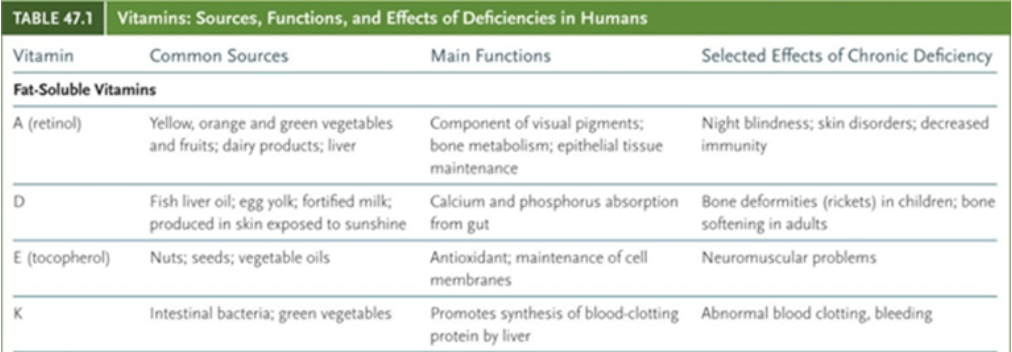
What are the Water-Souble Vitamins?
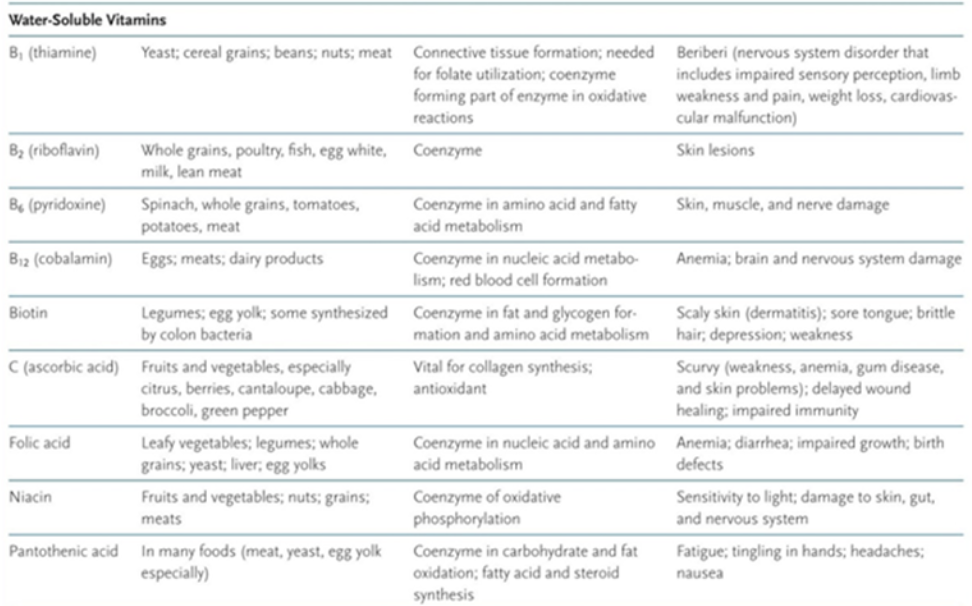
Thiamine (B1)
Riboflavin (B2)
Pyridoxine (B6)
Cobalamin (B12)
Biotin
C (Ascorbic acid)
Folic Acid
Niacin
Pantothenic Acid
Many minerals are essential in the Human Diet, being? (Hint: Their are 2)
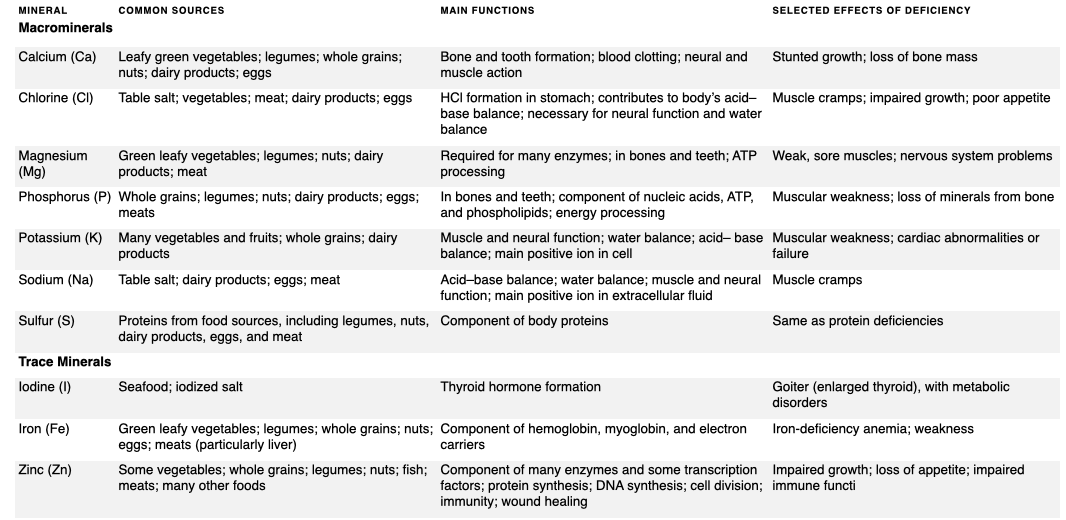
Macrominerals, are required in large amounts
Trace Minerals, are required in small amounts
All minerals are ingested as?
Compounds or as ions in solution
Facts about Minerals (Hint: Their are two)
Overdoses of some minerals can cause various problems
They are required inorganic elements such as Calcium, Iron, and Magnesium
Minerals Diagram
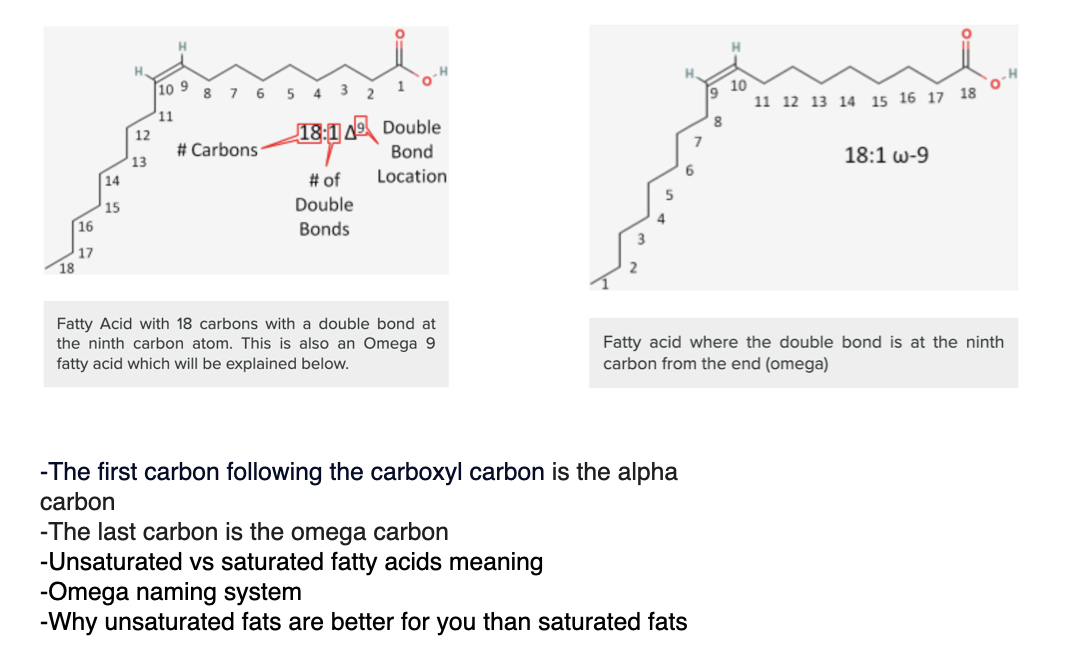
Two fatty acids are essential in the human diet being the?
Linoleic Acid
Linolenic Acid
Both of those fatty acids are required for the synthesis of?
Phospholipids
The main function of Phospholipids will be to?
Form parts of biological membranes and certain hormones
Almost, all food contain these fatty acids, but what will occur if someone was deficient in Linoleic and Linolenic?
They would be at serious risk for developing coronary heart disease
Slide 20 diagram image of Carbon
Feeding Methods
Fluid feeders are animals that?
Ingest liquids that contain organic molecules in solution
Suspension Feeders are animals that?
Ingest small organisms that are suspended in water
Deposit feeders are animals that?
Ingest particles of organic matter from solid material they live in
Bulk feeders are animals that?
Consume sizeable food items whole or in large chunks
Digestive processes break food moleculues into?
Molecular subunits that can be absorbed into body fluids and cells
Breakdown occurs by ______ ______ in which chemical bonds are broken by the addition of _ and _
Enzymatic hydrolysis
H and OH
What are each Enzymatic Hydrolysis? (Hint: Their are 4)
Amylases hydrolyze starches
Lipases hydrolyze fats and lipids
Proteases hydrolyze proteins
Nucleases hydrolyze nucleic acids
What process do sponges and cnidarians use to break down food?
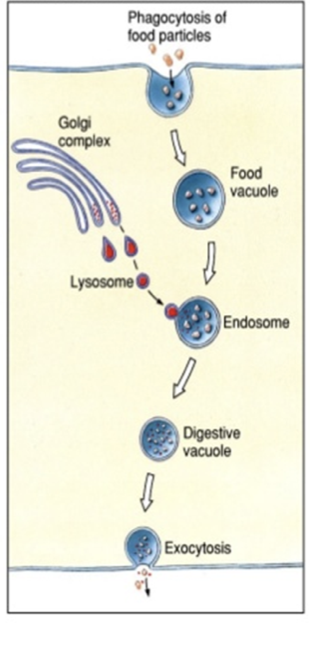
Intracellular Digestion
Cells take in food particles by what process for Intracellular?
Endocytosis
An endocytic vesicle containing food particles will fuse with?
A lyosome containing hydrolytic enzyme
Undigested materials remaning in the vesicle will be releasd to the?
Outside of the cell by exocytosis
Intracellular digestion diagram
Flatworms and cnidarians have a saclike digestive system which will contain a?
Single opening (a mouth), serving both as entrance for food, and exit for undigested material
These saclike animals will lack a?
Separate vascular system
Water taken into the gastrovascular cavity will do what?
Circulate nutrients and other materials through various tissue layers
Digestion will begin in the?, and is completed?
Gastrovascular Cavity
Intracellulary
Most invertebrates and all vertebrates will have a?, this will cause digestive contents to move?
Tubular digestive tract system with two openings
Move in one direction from mouth to anus
The inside of the digestive tube known as the lumen will be?
Functionally external to all body tissues (outside of the body)
Most invertebrates and all vertebrates will digest food primarily by?
Extracellular digestion - outside body cells, in a pouch or tube enclosed within the body
Extracellular digestion will greatly expand the range of?
Available food sources, and allows animals to eat large batches of food
In extracellular digestion, they have specialized compartments that wlll do what?
Prevent the animal from digesting its own body tissue
Molecular subunits produced by ________ pass from what to what?
Hydrolysis
Vesicle
Cytosol
What are the 5 steps in Digestion?
1: Mechanical Processing
2: Secretion of enzymes and other digestive aids
3: Enzymatic hydrolysis
4: Absorption
5: Elimination
During Mechanical Processing what occurs?
Chewing, grinding, and tearing food chunks into smaller pieces increases their mobility and the surface area exposed to digestive enzymes
During secretion of enzymes and other digestive aids what occurs?
Release of enzymes and other substances that aid the process of digestion, such as acids, emulsifiers, and lubricating mucus, into the tube
During enzymatic hydrolysis, what will occur?
Food molecules are broken down through enzyme-catalyzed reactions into absorbable molecular subunits
During absorption what will occur?
The molecular subunits are absorbed from the digestive contents into body fluids and cells
During elimination what will occur?
Undigested materials are expelled through the anus
Slides 28-30 go over images of other animals, confirm with others if to make a slide (they are pretty important), LOOK OVER THEM
The mammalian digestive system is a series of specialized digestive regions under the control of the? (Hint: There are 8 organs, 1 of them is two systems)
Nervous and Endocrine System
Mouth
Pharynx
Esophagus
Stomach
Small and Large Intestine
Rectum
Anus
Accesory organs for digestion will include the?
Salivary glands
Exocrine pancreas
Liver
Gallbladder
What are the four major layers of the gut
Mucosa
Submucosa
Muscularis
Serosa
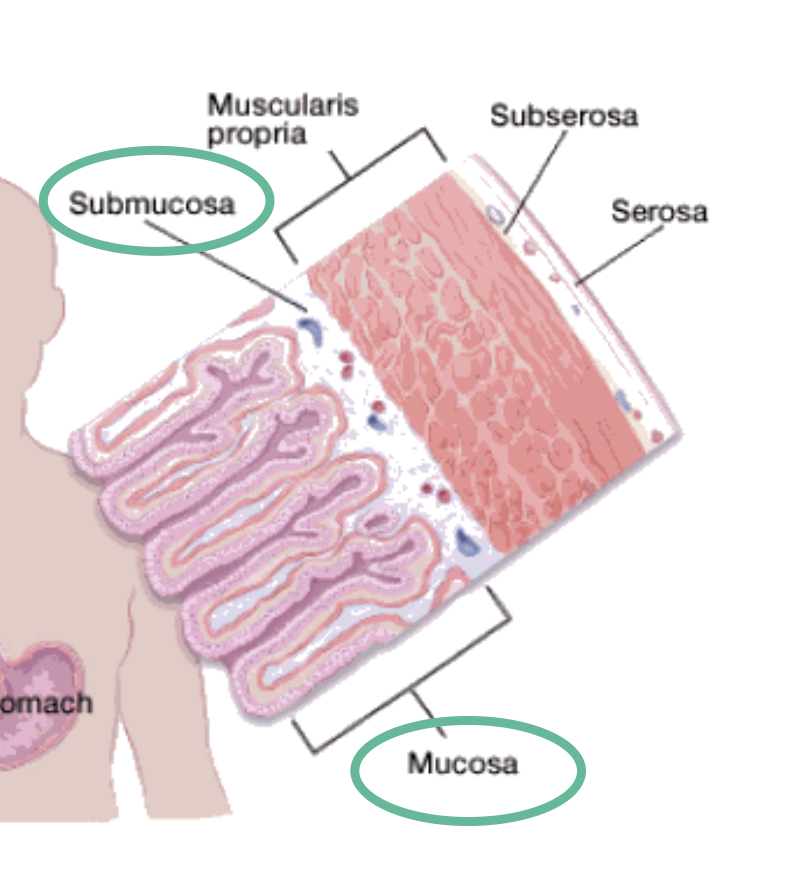
Mucosa lines the?, and it contains?
Inside of the gut
Containing epithelial and glandular cells
In the mucosa the epithelial will absorb?, and seal off the?
Absorb digested nutrients
Seal off the digestive contents from body fluids
The glandular cells will secrete ______, which will do what? (Hint: It has three things it will secrete)
Enzymes
Lubricating mucus
Substances that adjust the pH
The submucosa is a thick layer of?
Connective tissue containing neuron networks, blood, and lymph vessels
The neuron networks of the Submucosa will?
Provide local control of digestive activity, and carry signals between gut and CNS
The lymph vessels in the Submucosa will?
Carry absorbed lipids to other parts of the body
The Muscularis is formed by?
Two smooth muscle layers, being the Circular and Longitudinal
Contractions of the ________ _______ and relaxation of the _______ _______ will do what?
Circular Muscles, and Longitudinal muscles
Lengthen the gut, and vice versa
The Muscularis will also produce Peristalsis, what is that?
A wave of contraction of the muscularis which push food foward
The Serosa is the Outermost layer consisting of?
Connective tissues
The connective tissue will secrete a slippery liquid that?
Lubricates the areas between the digestive organs and other organs
Along much of the length of the digestive system, the Serosa is continuous with the mesentery. What is the mesentery?
A tissue that suspends the digestive system from the inner wall of the abdominal cavity
Layers of the gut wall
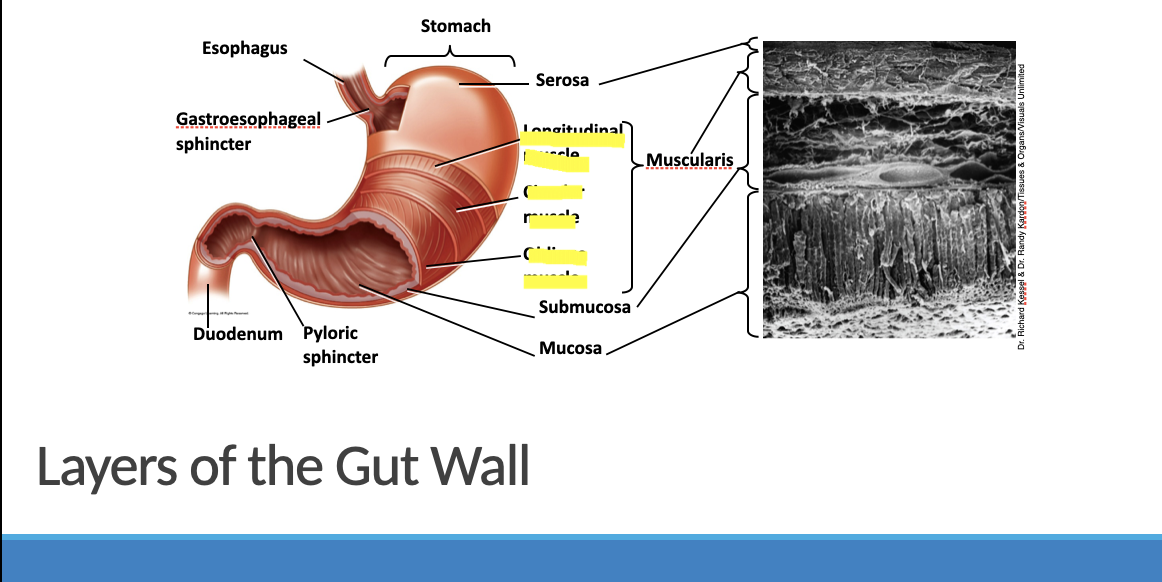
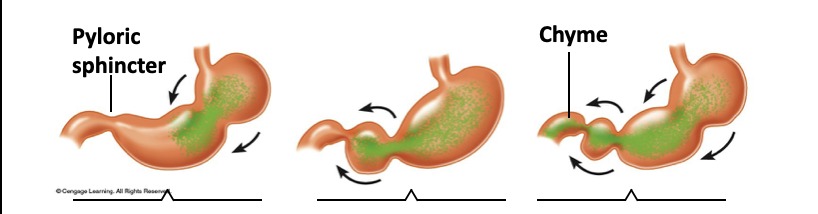
What is occuring in Peristalsis?
1⃣ Circular muscle contraction (the squeezing phase)
The circular layer of the muscularis contracts in a wave.
This narrows the lumen and pushes the stomach contents forward.
It’s the classic “squeeze” part of peristalsis.
2⃣ Longitudinal muscle contraction (the shortening phase)
The longitudinal layer contracts right after.
This shortens the stomach segment.
Shortening + squeezing = stronger forward propulsion.
3⃣ Chyme enters the small intestine
The coordinated wave pushes partially digested food (chyme) toward the pyloric sphincter.
The sphincter opens briefly.
Chyme moves into the duodenum.
The Digestive System
In the Moth, teeth will do what?
Cut, tear, and crush food items into smaller pieces during mastication
The food mass forms a
Bolus, a ball of chewed or liquid food, in preparation for swallowing