Probability in Geometry
 Call Kai
 Learn
Learn Practice Test
 Spaced Repetition
 Match
Match Flashcards
 Knowt Play
1/12

There's no tags or description
Looks like no tags are added yet.
Name | Mastery | Learn | Test | Matching | Spaced | Call with Kai |
|---|
No analytics yet
Send a link to your students to track their progress
13 Terms
Theoretical Probability
number of favorable outcomes/number of possible outcomes
Sample Space
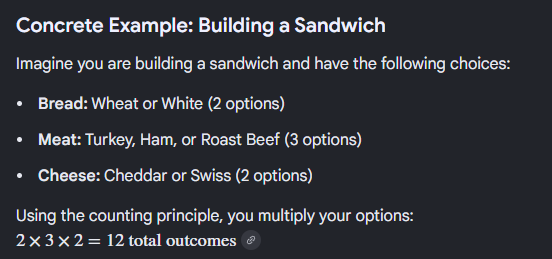
List of all possible outcomes for an experiment. Use fundamental counting principle to find.
Fundamental Counting Principle
Used to find the number of events in the sample space for multiple-part events. Multiply the number of possible outcomes for each part together.
Independent Events
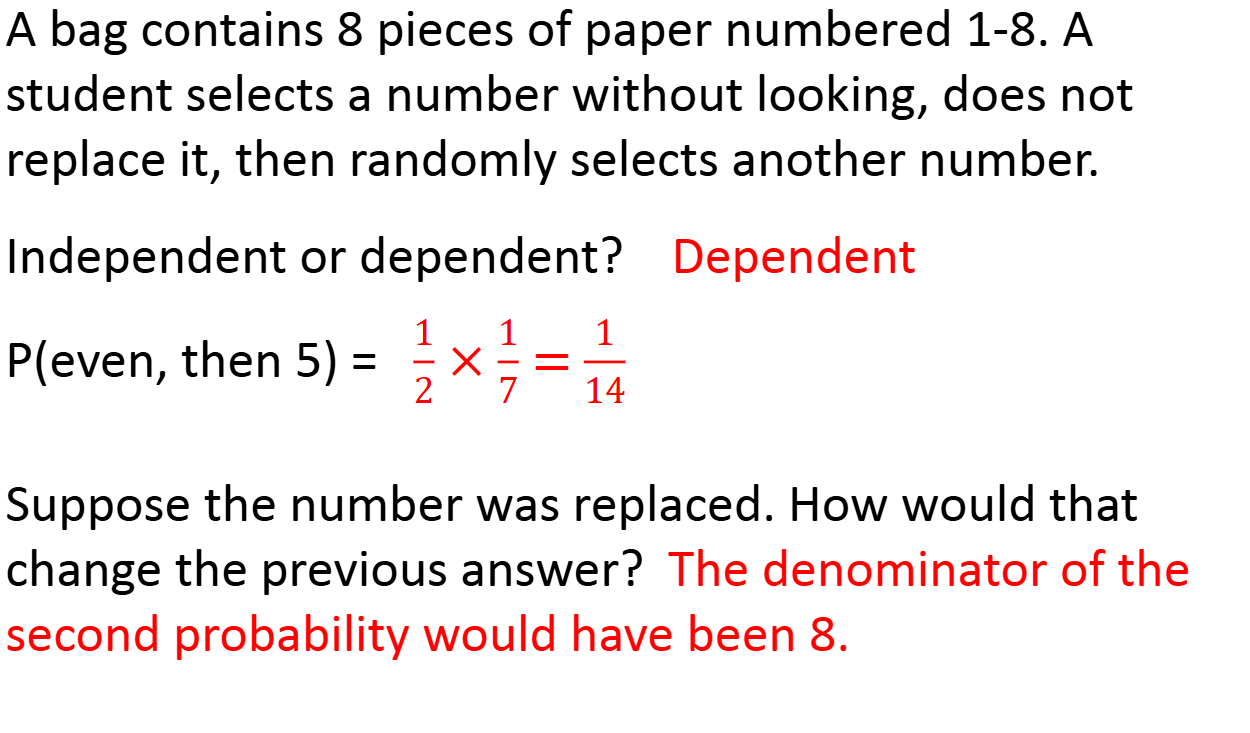
The outcome of one event does not affect the probability of the next event.
Dependent Events
The outcome of one event affects the probability of the next event.
Probability of Independent/Dependent Events
Multiply the probability of each event. (Coin flip and rolling even on a die would be (1/2)×(1/2)).
complement
Complement of an event is basically the opposite of the event being considered. (if event is heads on a coin, complement is tails
Notation of Complement
read as "A bar," capital A with line over it.
Experimental Probability
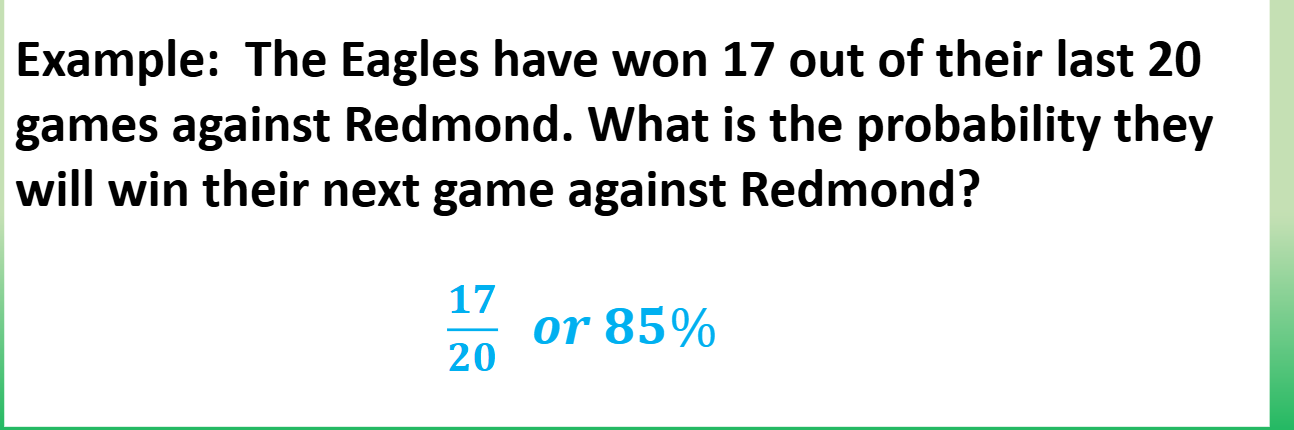
When we can’t compute a theoretical probability for an event, we can gather data and base the probability on what has happened in the past.
Disjoint/Mutually Exclusive Events
Events that have no common outcomes. In other words, both events cannot happen at the same time.
Overlapping Events
Events that have at least one common outcome. In other words, both events can happen at the same time.
How to find P(A or B) in a disjoint event.
P(A or B) = P(A) + P(B)
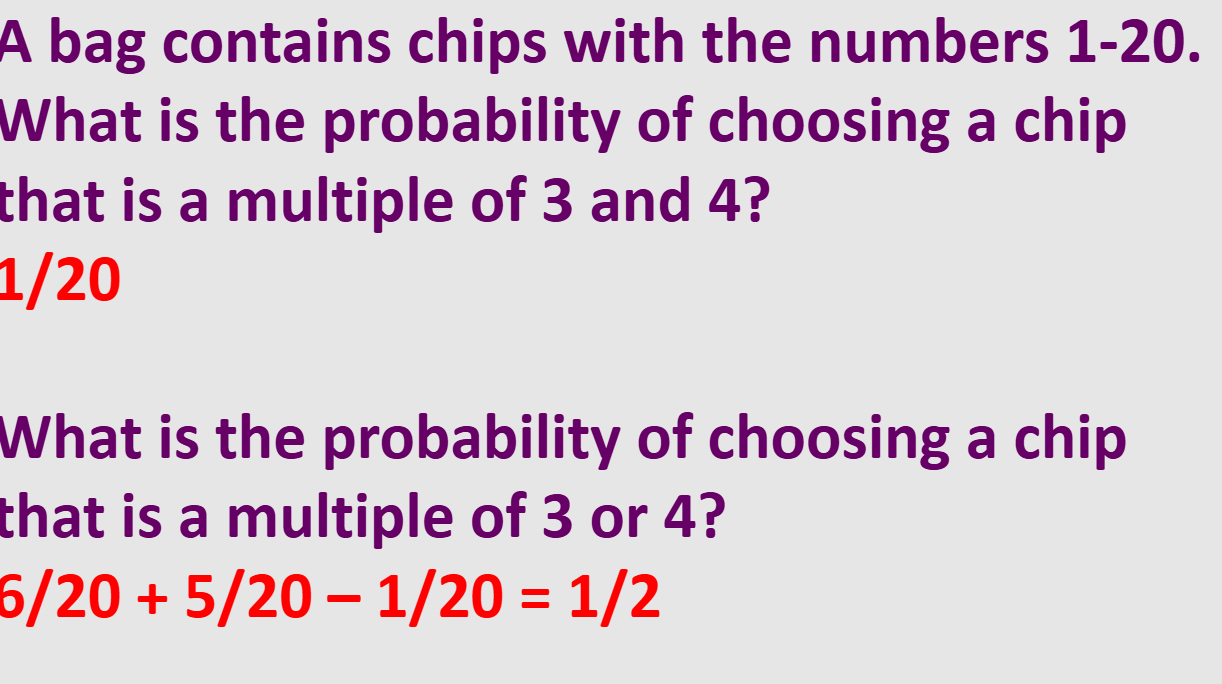
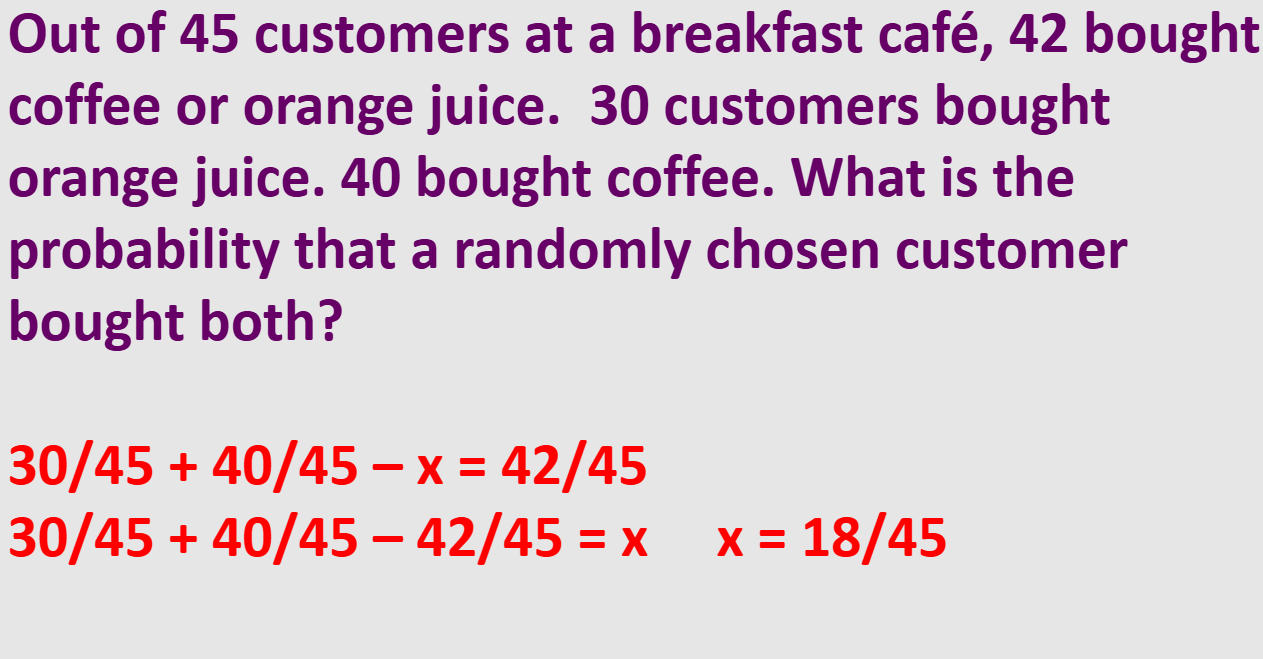
How to find P(A or B) in an overlapping event.
P(A or B) = P(A) + P(B) – P(A and B)