Development of Multicellular Organisms
 Call Kai
 Learn
Learn Practice Test
 Spaced Repetition
 Match
Match Flashcards
 Knowt Play
1/26

There's no tags or description
Looks like no tags are added yet.
Name | Mastery | Learn | Test | Matching | Spaced | Call with Kai |
|---|
No analytics yet
Send a link to your students to track their progress
27 Terms
what are germ cells
-precursors to eggs and sperm
process of formation of germ cells
-primordial germ cells (PGCs) are first identifiable in proximal epiblast, before gastrulation
what do PGC’s release
-Blimp1
-nanog
what does Blimp1 do and what is it
-transcriptional repressor
-distinguishes them from surrounding somatic cells
-allows cell to remain on germline track
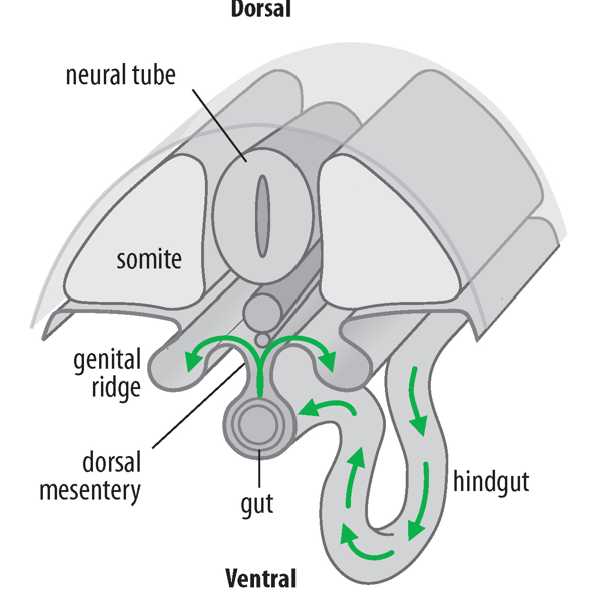
-during gastrulation they migrate to posterior end of embryo
-enter hindgut endoderm
-migrate dorsally to genital ridges which are future gonads
what is nanog and what does it do
-transcription factor
-helps to prevent premature differentiation
-during long migration to gonads
why do PGCs migrate rather than forming gonads directly
-exclude signalling that patterns body plan
-migration acts as selection filter, only healthiest cells survive to colonise gonads
how is PGC migration guided
-chemical signals from surrounding environment
how does meiosis ensure gametes have the correct genetic material
-involves 2 sequential divisions but only 1 round of DNA rep
how do germ cells undergo meiosis
-before meiosis I; chromosomes rep (each sister chromosomes become 2 sister chromatids)
-during prophase I, homologous chromosomes pair up into structures called bivalents
-crossing over occurs here; DNA segments physically exchanges between homologs
-generates chromosomes with new combination of alleles; inc genetic diversity
-meiosis I separates homologs
-each daughter cells has 1 copy of each chromosome
-meiosis II separates sister chromatids like normal mitosis
what is the process of oogenesis
-in females PGC’s multiply by mitosis during migration and after entering ovary
-once meiosis begins they become primary oocytes
-immediately arrest in prophase I during embryonic dev
-meiosis I completed at ovulation in adult
-meiosis II completed upon fertilisation
-division is asymmetric; one division prod a large cell with most cyto and a tiny polar body
why is division asymmetrical
-so only 1 functional egg is produced per meiosis
-polar body is discarded
what is the process of spermatogenesis
-in males
-PGCs enter embryonic testis and arrest G1
-after birth they proliferate by mitosis; forming spermatogonia
-they give rise to spermatocytes at sexual maturity
-prod 4 equal spermatids per meiosis
-differentiate into mature sperm
-continuous throughout adult life
what is a spermatogonia
-self renewing stem cell population
what is fertilisation
-fusion of egg and sperm; initiates development
what is it important only 1 sperm enter egg
-too many chromosomes resulting in abnormal development
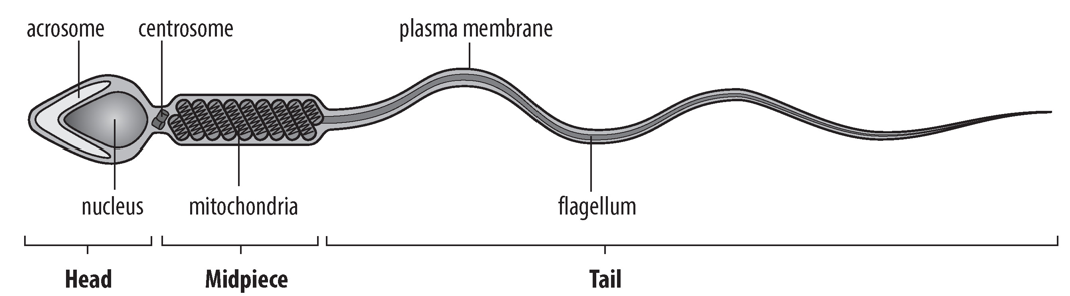
what is the function of acrosome
-contains enzymes to digest protective coat aroung egg
what is the function of plasma membrane in sperm
-proteins bind to egg and facilitate entry
what happens to sperm cell after it has been deposited in mammalian female repro tract
-undergoes capacitation
what is capacitation
-facilitates fertilisation
-membrane remodelling and removal of certain inhibitory factors
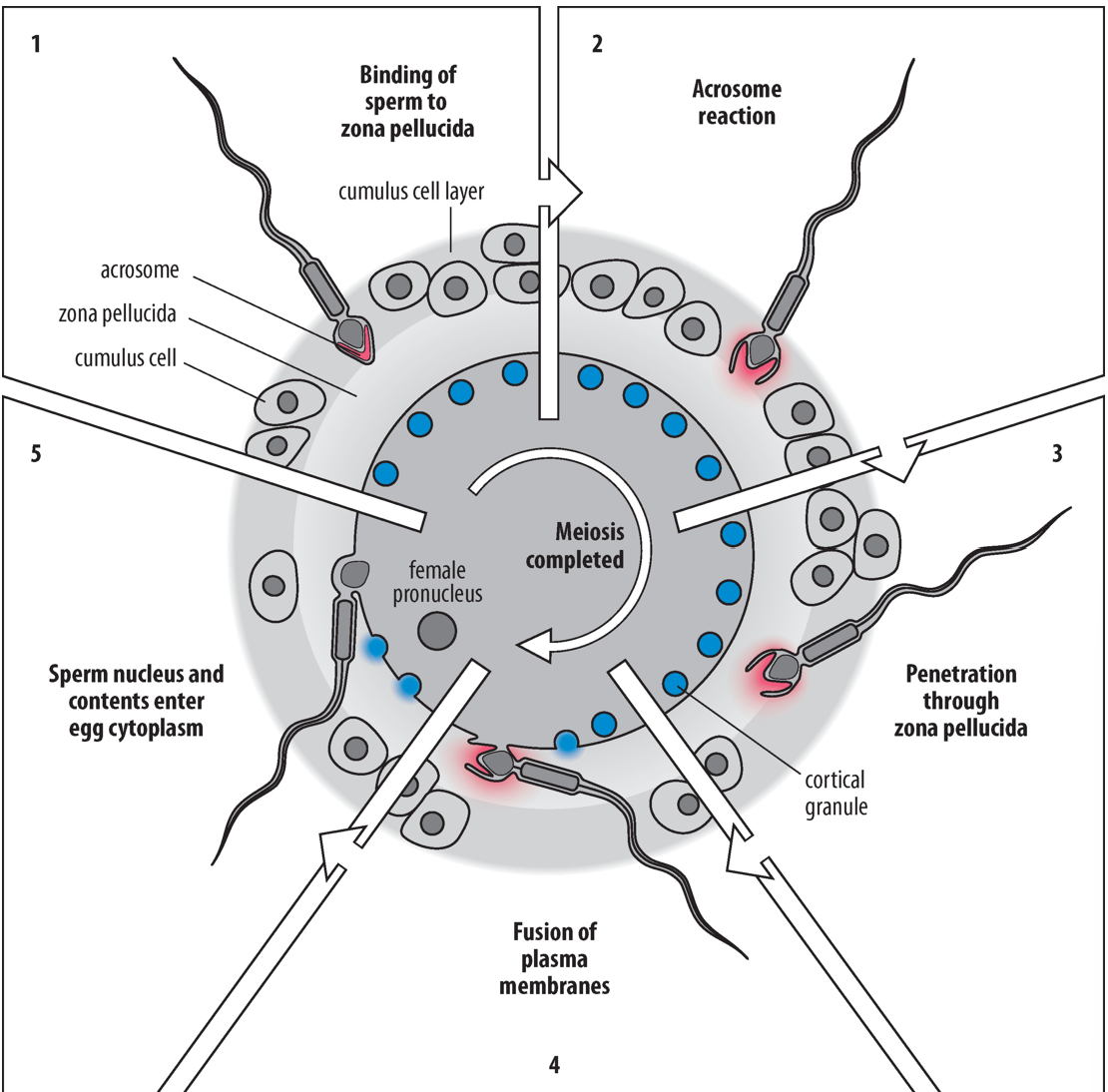
what is the process of fertilisation of mammalian egg
-sperm penetrates stick layer of hyaluronic acid and somatic follicle cells
-sperm binds to zona pellucida
-penetrates zona pellucida
-plasma membrane of sperm fuses with egg plasma membrane
-sperm nucleus enters egg cyto
what is zona pellucida
-layer of fibrous glycoproteins via acrosomal reaction
why does fertilising sperm trigger Ca wave
-ca needed for fusion of cortical granules with cell membrane
what does the high conc of Ca cause
-causes cortical granule to fuse with egg membrane
-contents of cortical granule release into space between cell membrane and vitelline envelope
-enzymes from cortical granules harden vitelline envelope
-release sperm bound to it
what is parthenogenesis
-dev of embryo form unfertilised egg cell