9: Collaborative Study
 Call Kai
 Learn
Learn Practice Test
 Spaced Repetition
 Match
Match Flashcards
 Knowt Play
1/36

There's no tags or description
Looks like no tags are added yet.
Name | Mastery | Learn | Test | Matching | Spaced | Call with Kai |
|---|
No analytics yet
Send a link to your students to track their progress
37 Terms
Ovary (can see follicle - unique structure in the ovary)
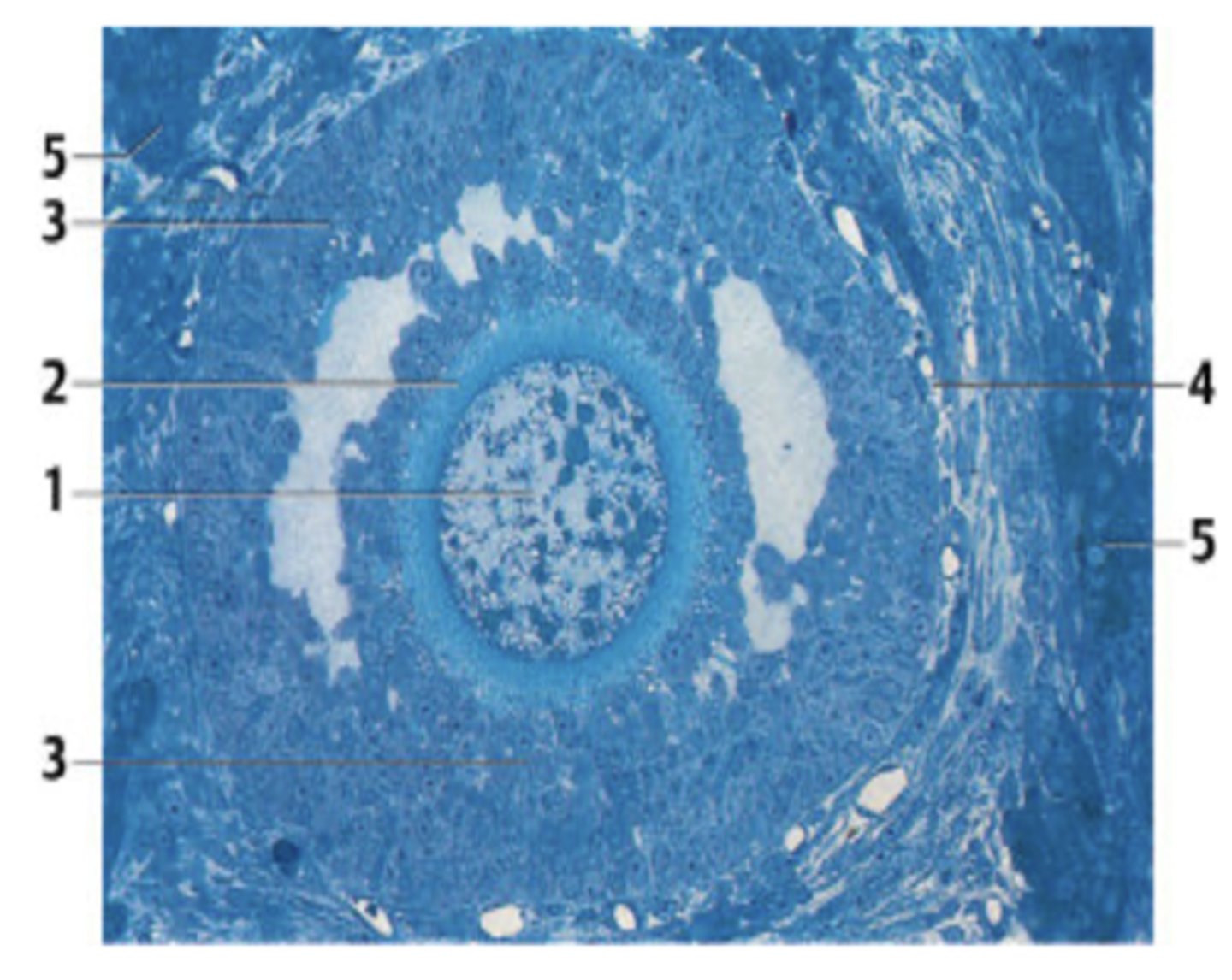
A 42-year-old woman presents with vague lower abdominal pain. She has regular menstrual periods with a 28-day cycle. Laboratory exams are significant for an elevated serum CA 125. Transvaginal ultrasonography reveals a right adnexal mass. She is diagnosed with cancer and subsequently treated with surgical resection of the organ from which the figure has been obtained.
Which organ in this case has cancer?
C. Secondary follicle /antral follicle
What is the structure in the section?
A. Primordial follicle
B. Primary follicle
C. Secondary follicle /antral follicle
D. Mature follicle/ Graafian follicle
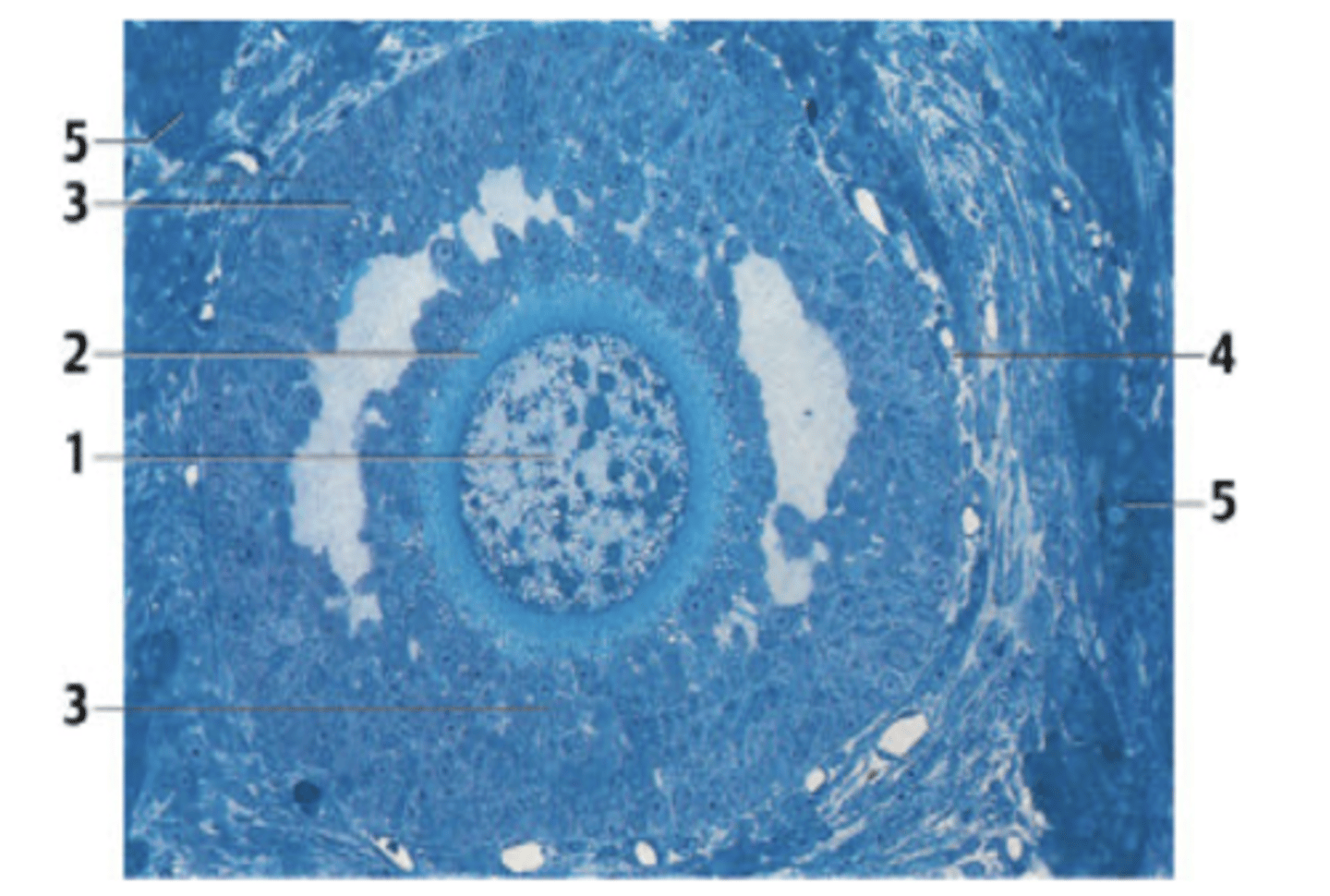
Follicular cells
What cells are highlighted in this region?
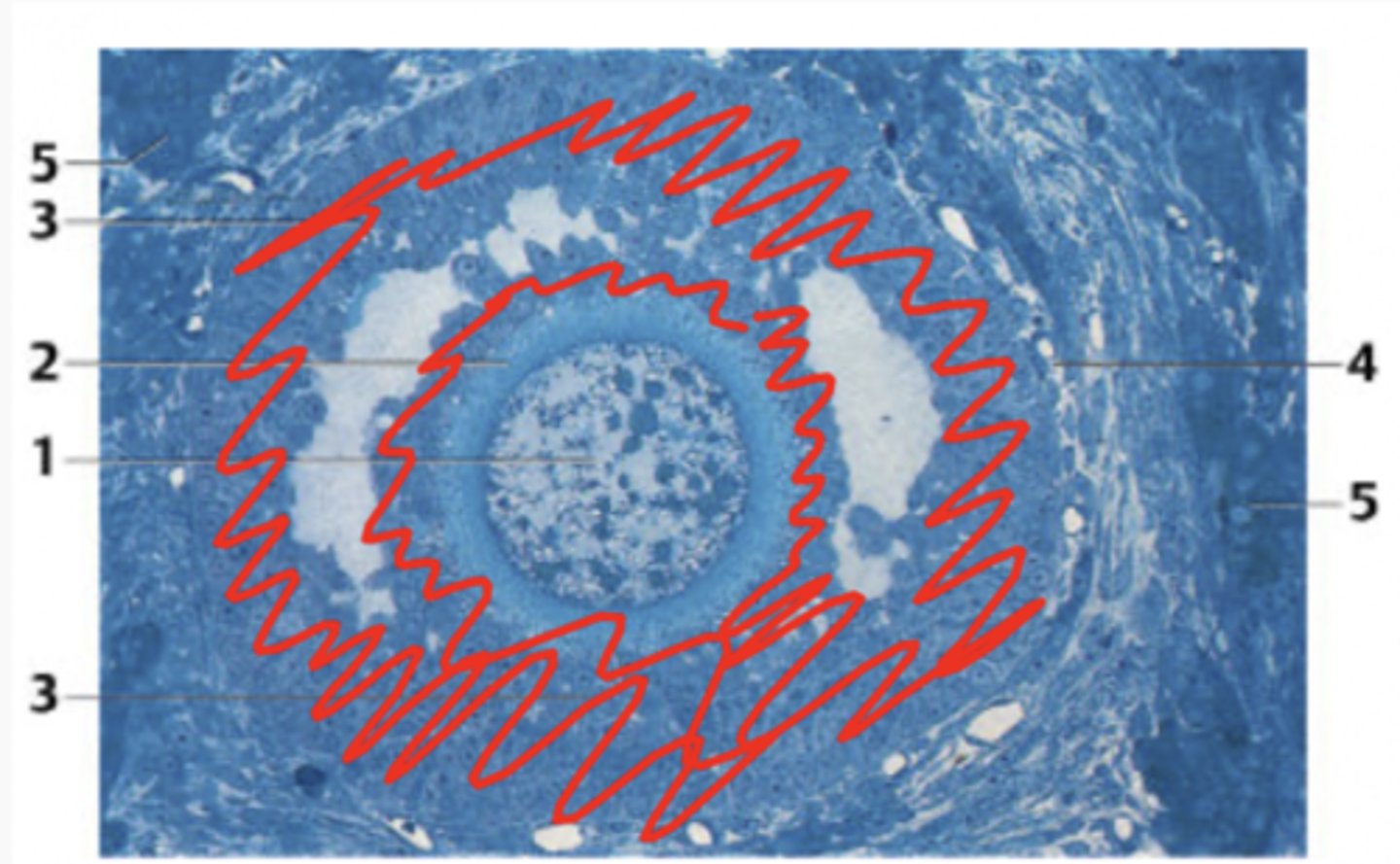
Primary oocyte
What is the structure indicated by number 1?
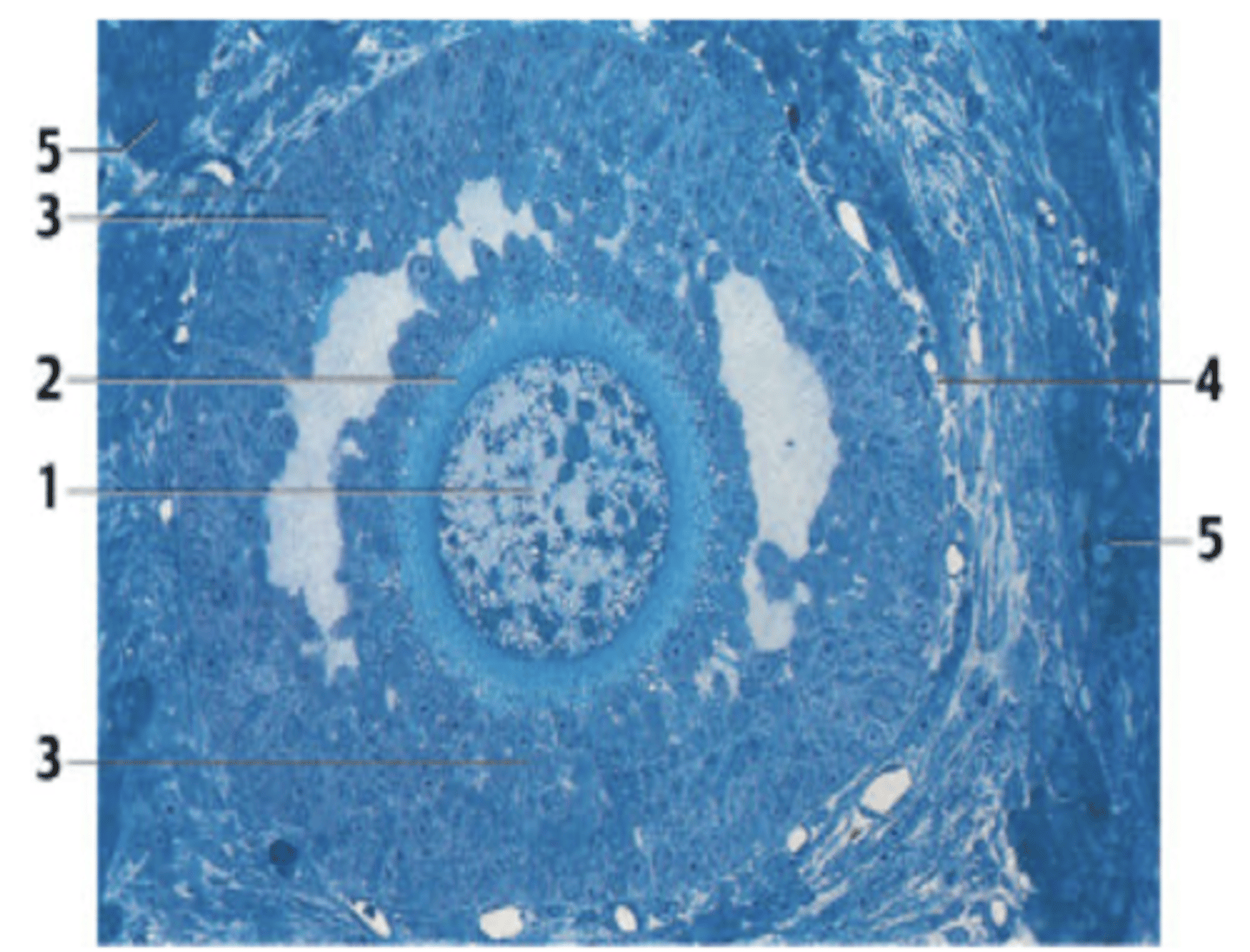
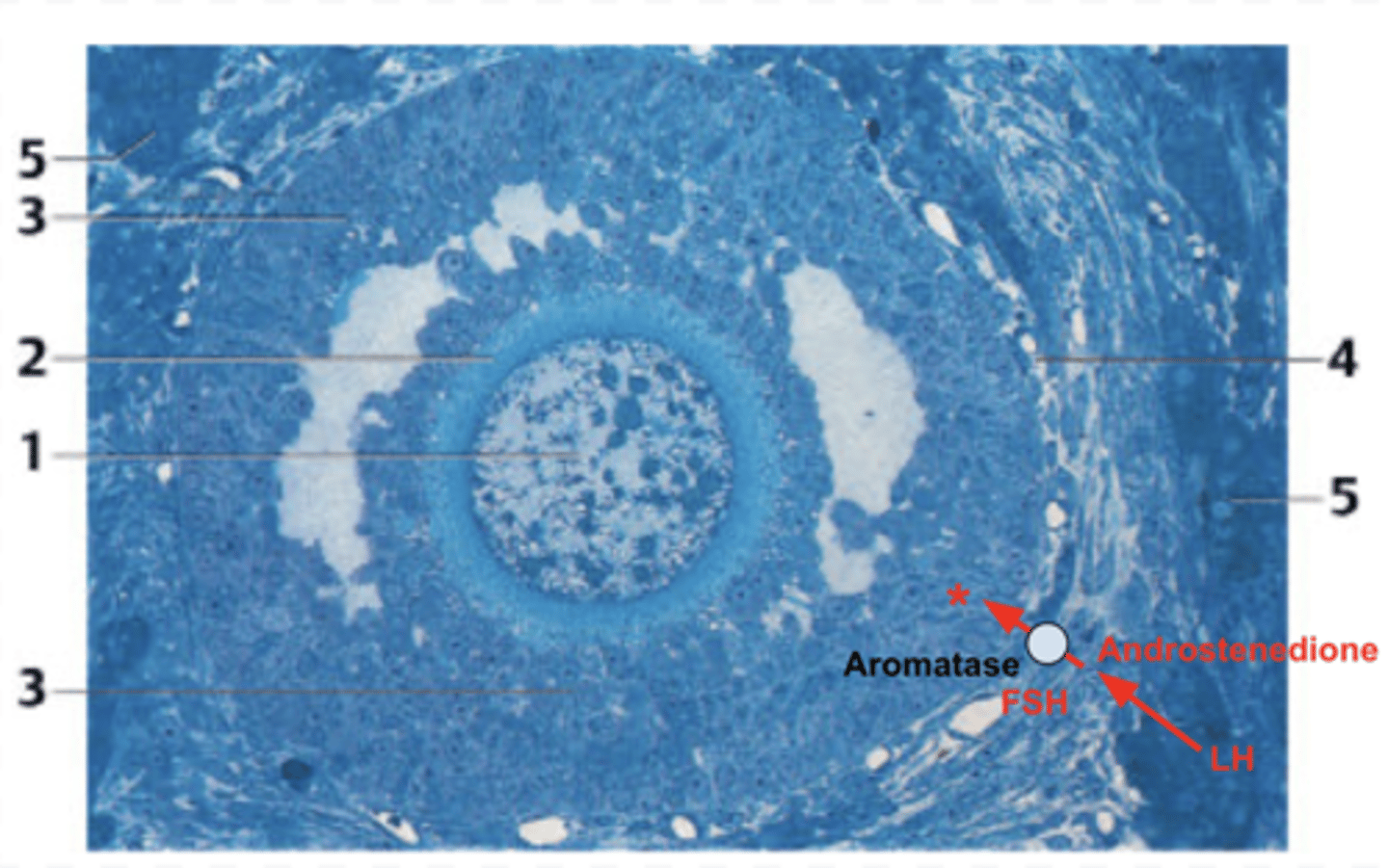
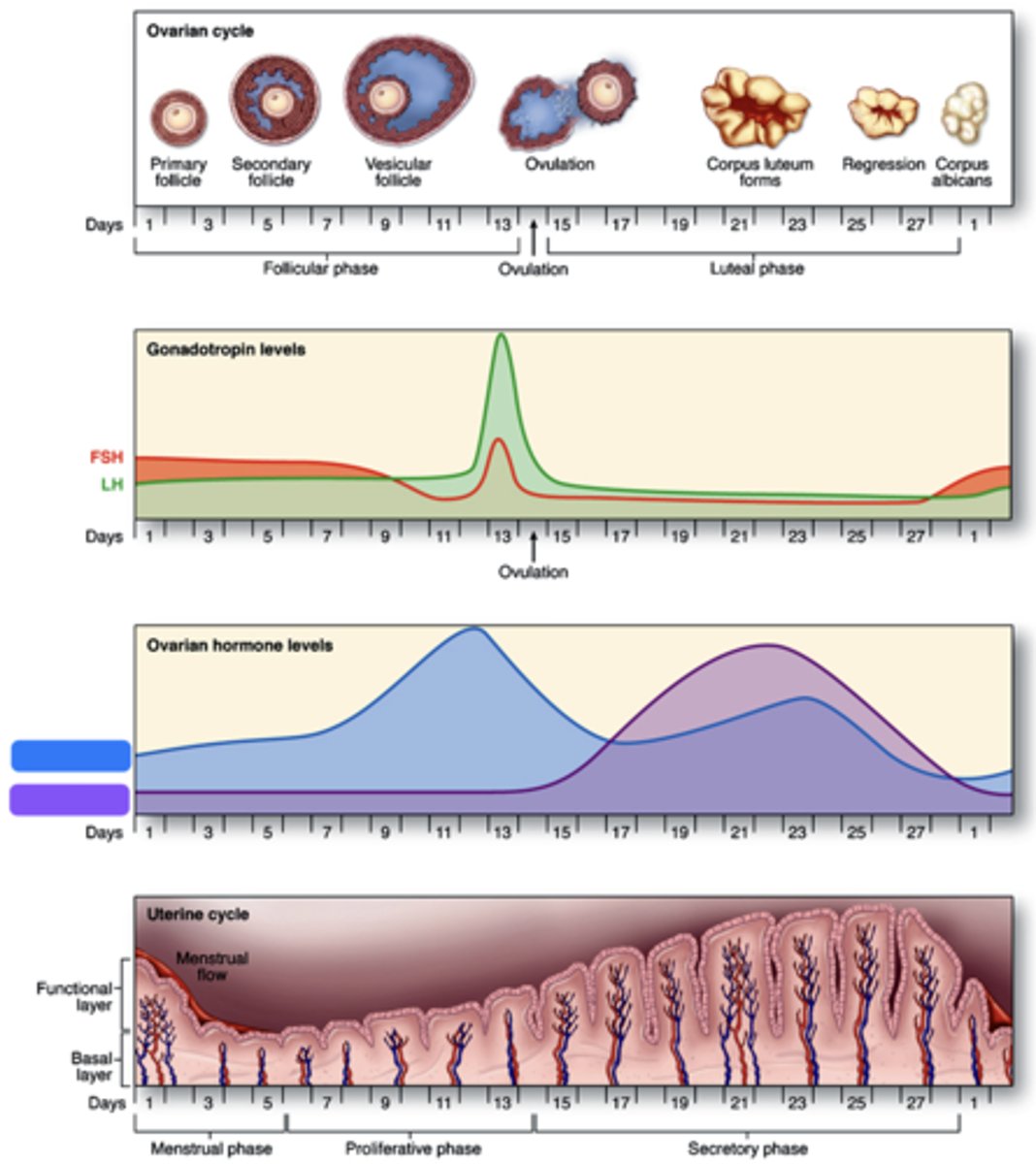
Estrogen
What is secreted at the *?
(I tried my best on this image - sorry it is not perfect😂)
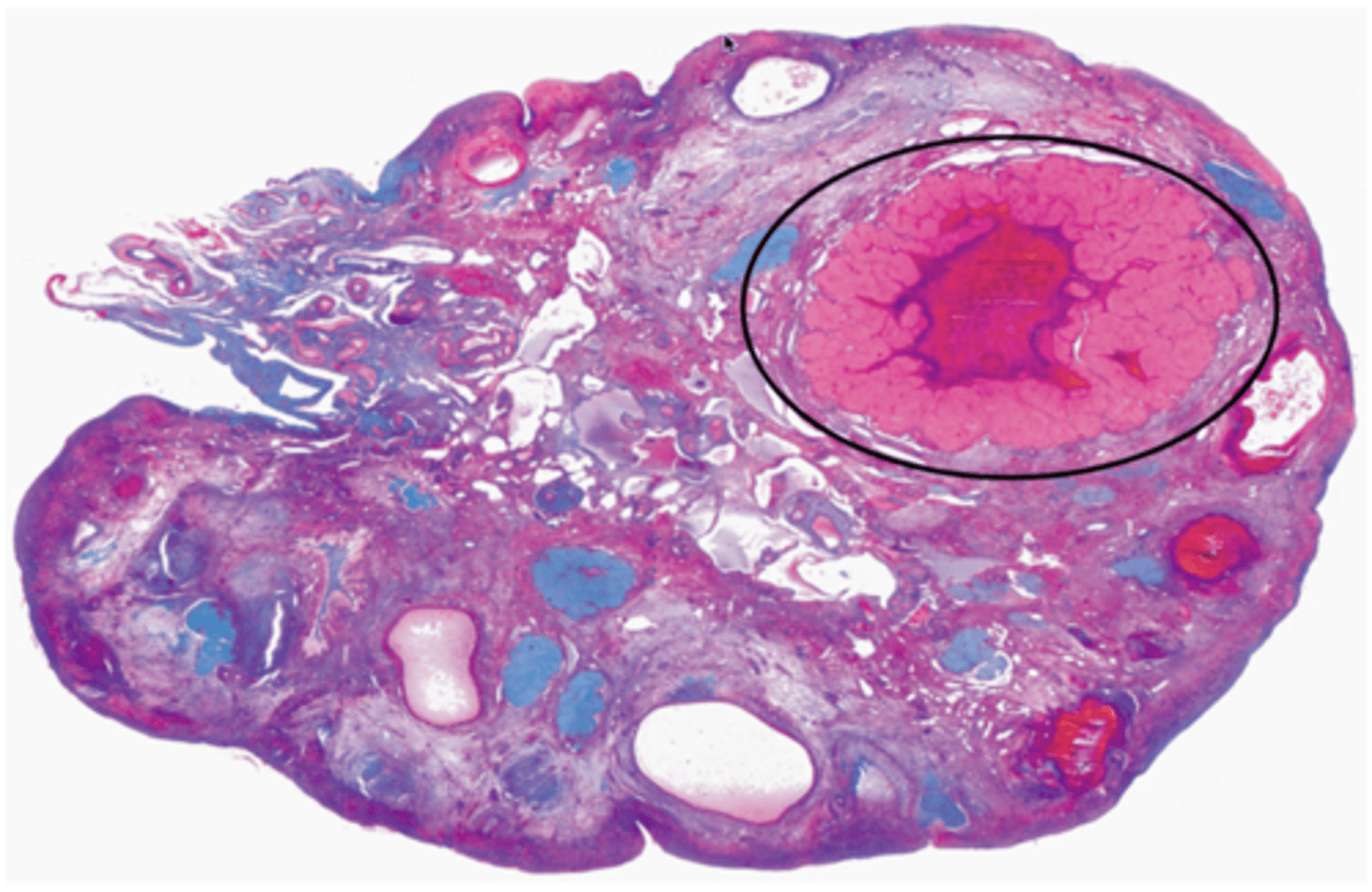
Corpus luteum
This follicle will continue to grow into a mature/Graafian follicle, then ovulation will occur with the stimulation of an LH surge. After ovulation, the labeled structure appears in the ovary. What is the name of the labeled structure?
Estrogen
What hormone is shown in blue?
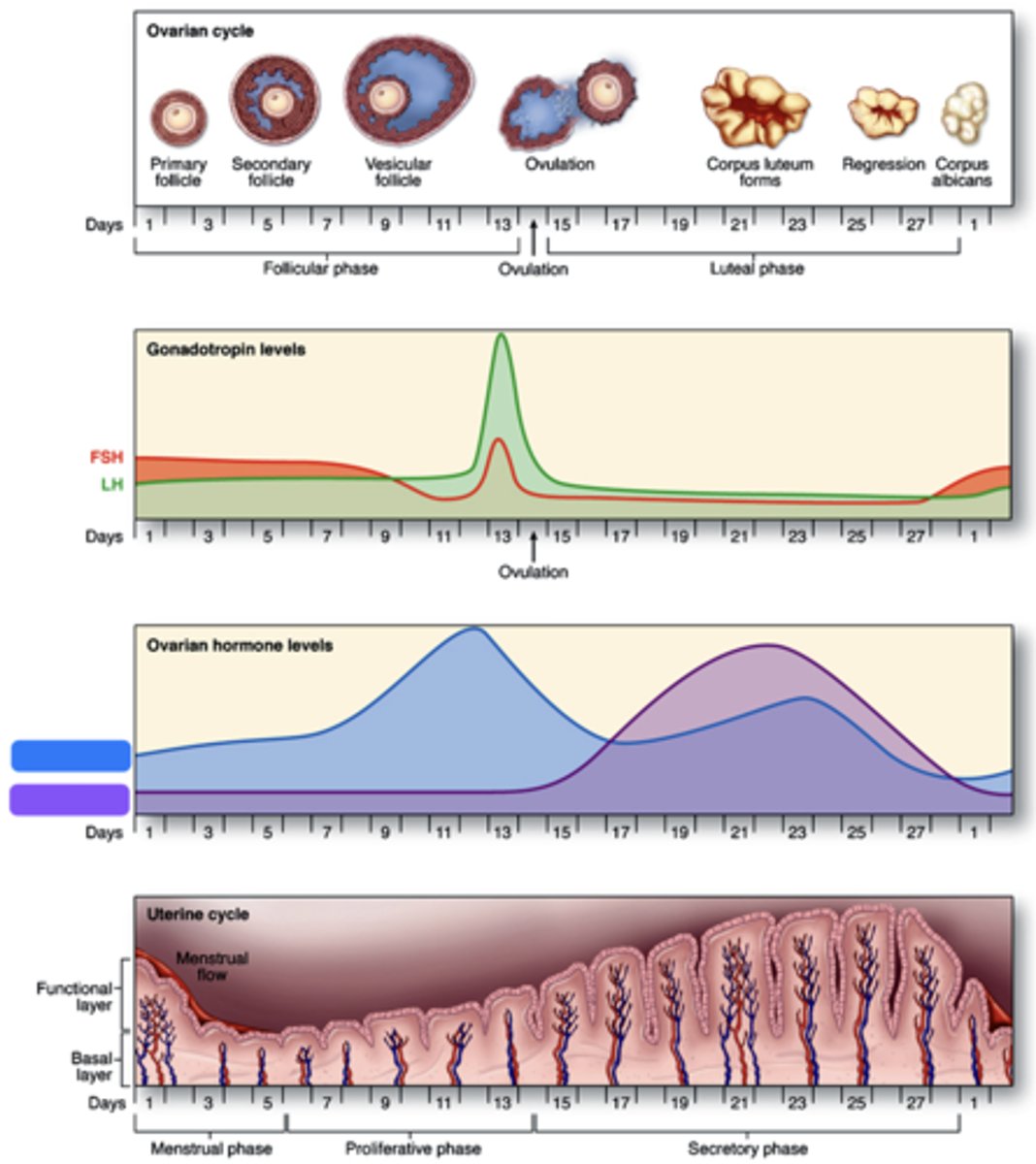
Progesterone
What hormone is shown in purple?
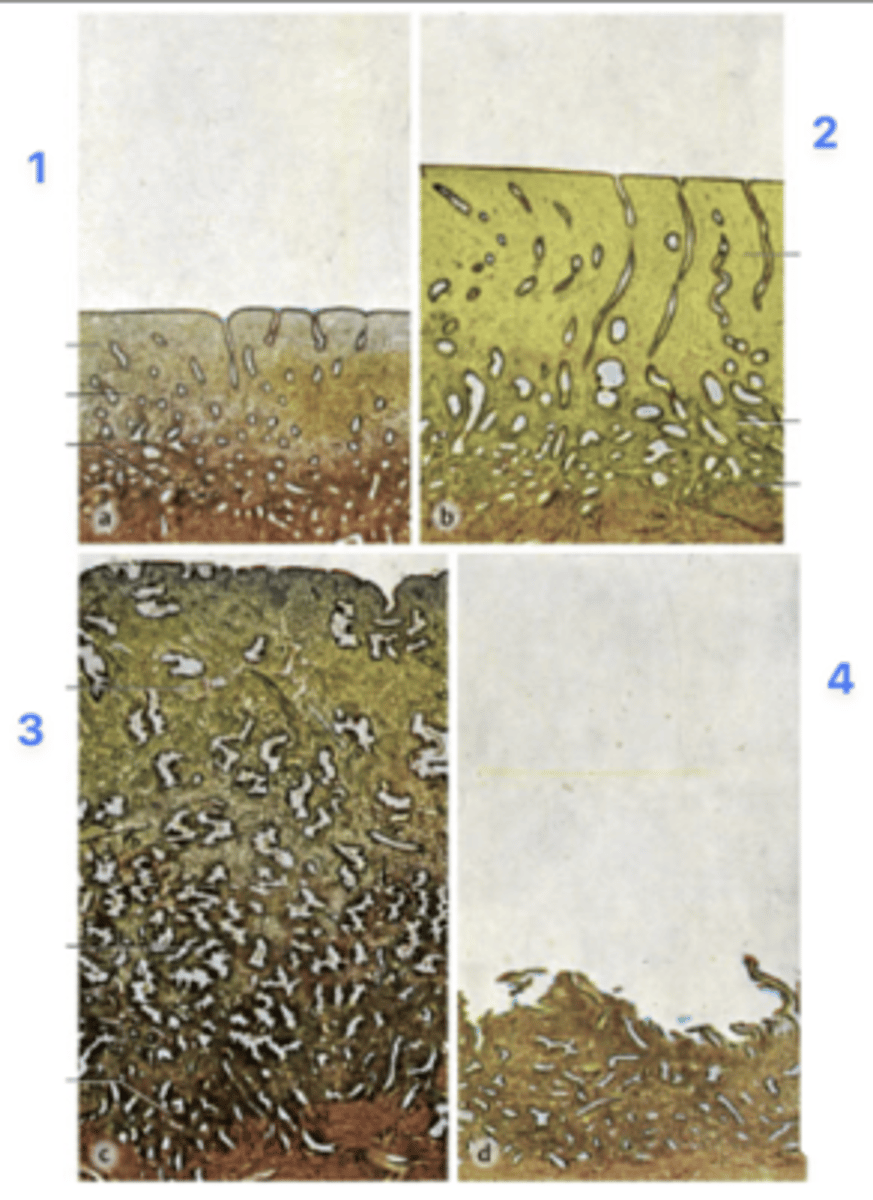
Post-menstrual phase
A 39-year-old woman presents with infertility. She has regular menstrual periods with a 28-day cycle, and she bleeds heavily for the first 3 days. Her physician explains that she will need a thorough examination of hormonal levels and endometrial features spanning through the entire menstrual cycle. Endometrial biopsies (all micrographs with same magnification) obtained from her through the cycle are seen in the figure.
Which phase is at 1?
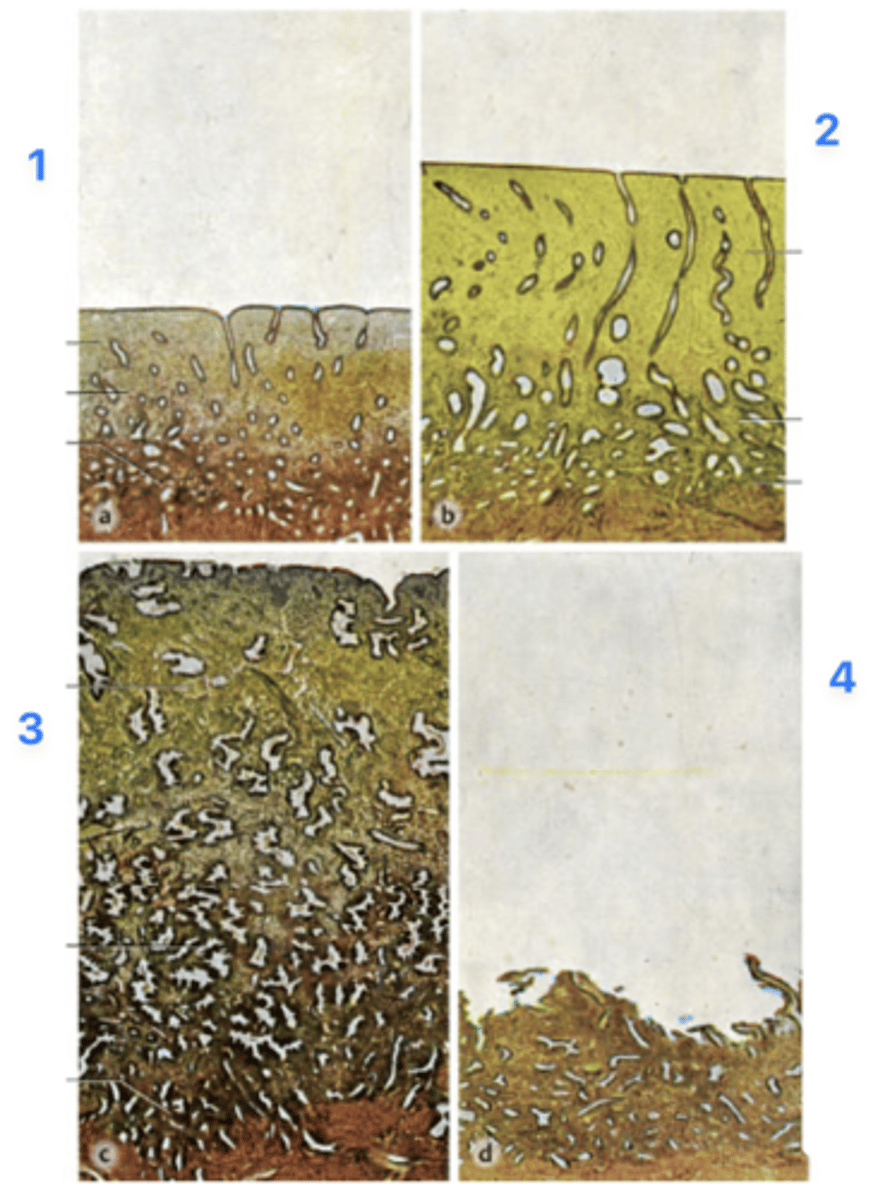
Proliferative phase
A 39-year-old woman presents with infertility. She has regular menstrual periods with a 28-day cycle, and she bleeds heavily for the first 3 days. Her physician explains that she will need a thorough examination of hormonal levels and endometrial features spanning through the entire menstrual cycle. Endometrial biopsies (all micrographs with same magnification) obtained from her through the cycle are seen in the figure.
Which phase is at 2?
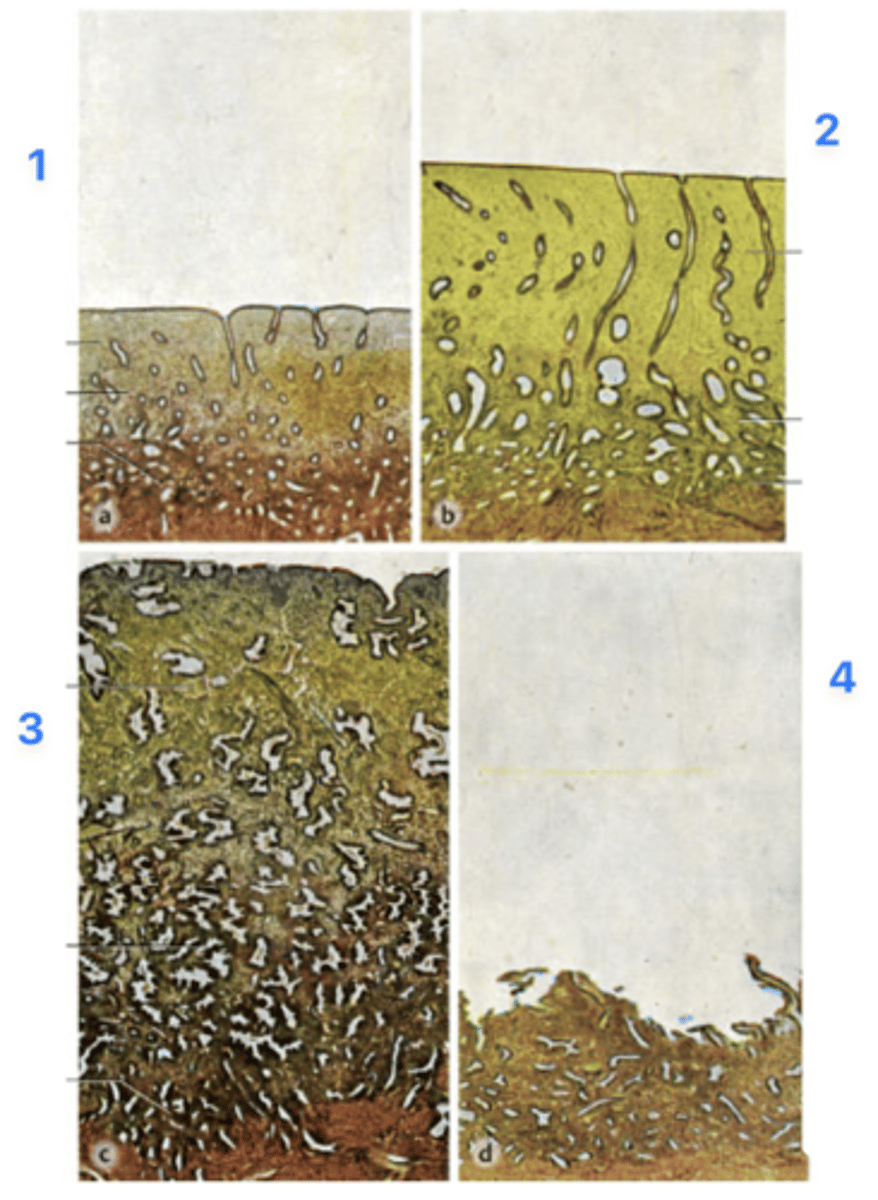
Secretory phase
A 39-year-old woman presents with infertility. She has regular menstrual periods with a 28-day cycle, and she bleeds heavily for the first 3 days. Her physician explains that she will need a thorough examination of hormonal levels and endometrial features spanning through the entire menstrual cycle. Endometrial biopsies (all micrographs with same magnification) obtained from her through the cycle are seen in the figure.
Which phase is at 3?
Menstrual phase
A 39-year-old woman presents with infertility. She has regular menstrual periods with a 28-day cycle, and she bleeds heavily for the first 3 days. Her physician explains that she will need a thorough examination of hormonal levels and endometrial features spanning through the entire menstrual cycle. Endometrial biopsies (all micrographs with same magnification) obtained from her through the cycle are seen in the figure.
Which phase is at 4?
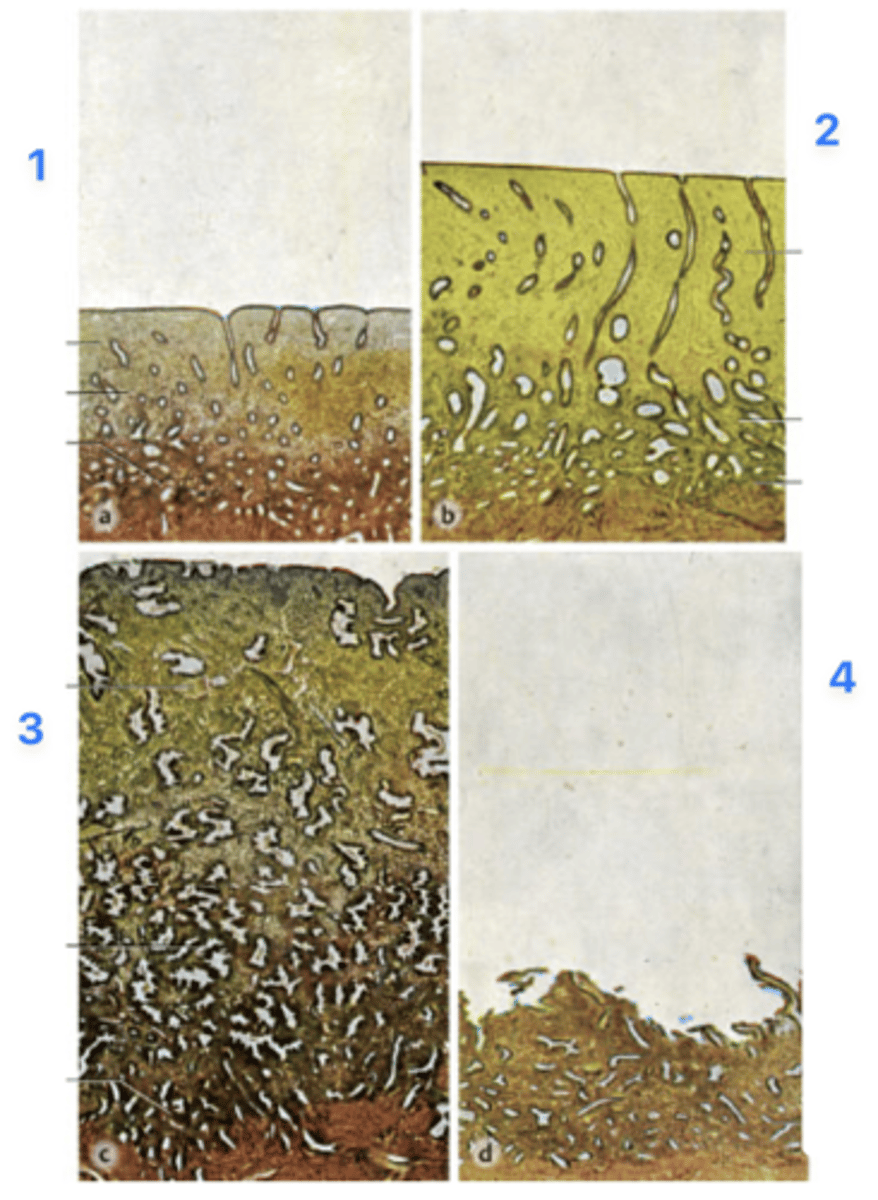
A. Estrogen
Levels of which of the following hormones in her circulation is expected to be highest while panel 1 and 2 were obtained?
A. Estrogen
B. Progesterone
C. FSH
D. LH
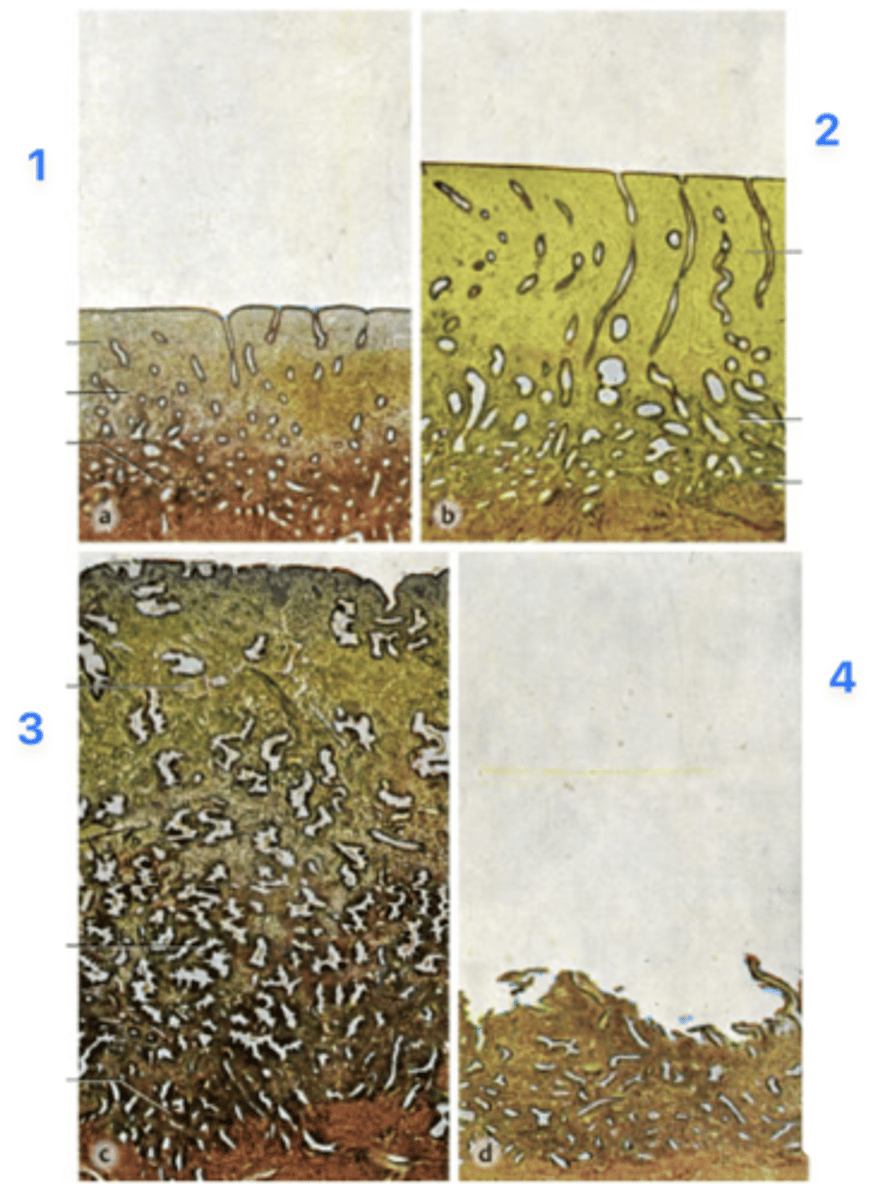
B. Progesterone
Levels of which of the following hormones in her circulation is expected to be highest when panel 3 was obtained?
A. Estrogen
B. Progesterone
C. FSH
D. LH
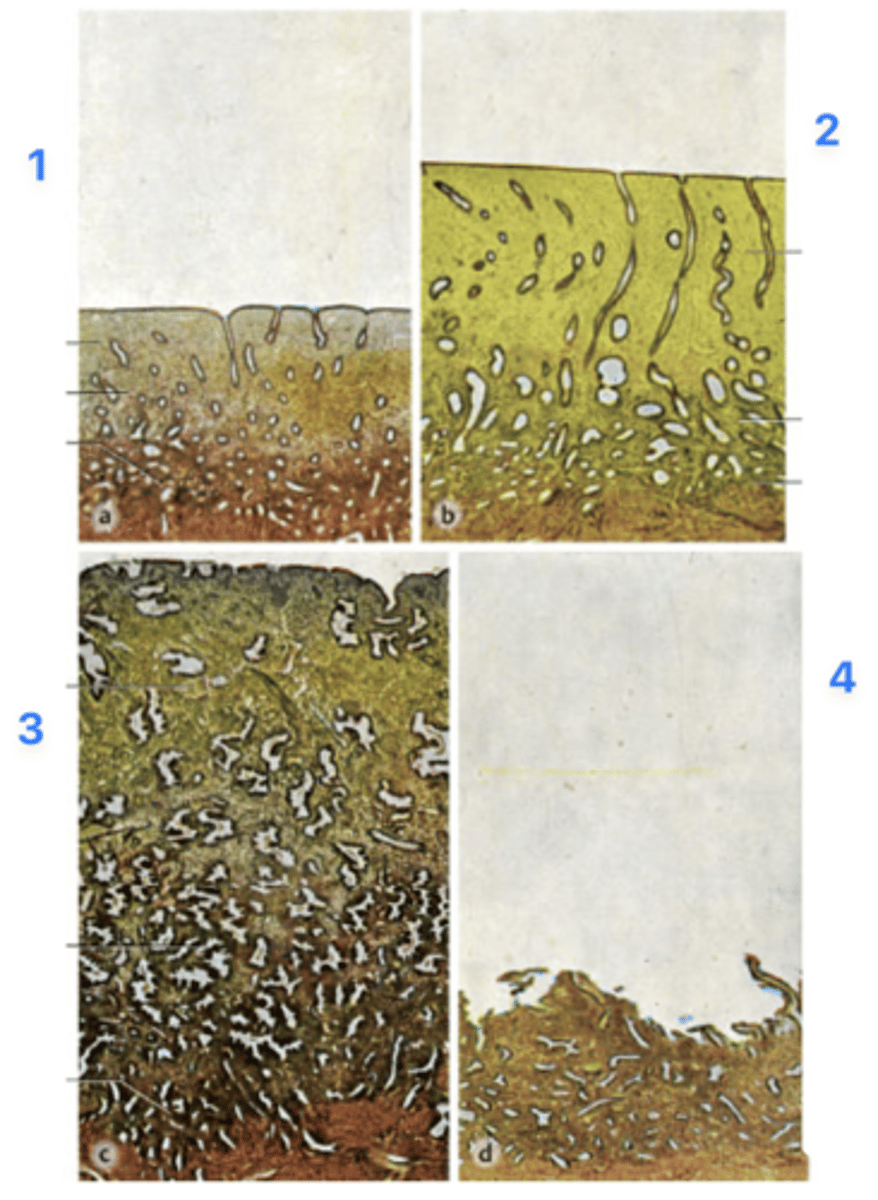
A. Ampulla of the uterine tube
A 19-year-old woman presents with a 24-hour history of intense abdominal pain. She states that she has missed two menstrual periods. Imaging studies reveal an ectopic pregnancy. Which of the following is the most likely anatomic site of embryo implantation in this patient?
A. Ampulla of the uterine tube
B. Cervical canal
C. Internal os of the uterine cervix
D. Mesothelium of the ovary
D. Rectouterine pouch (of Douglas)
Oxytocin stimulates milk ejection into ducts (myoepithelial contraction in glands and ducts)
Describe the functions of oxytocin that we learned in our course.
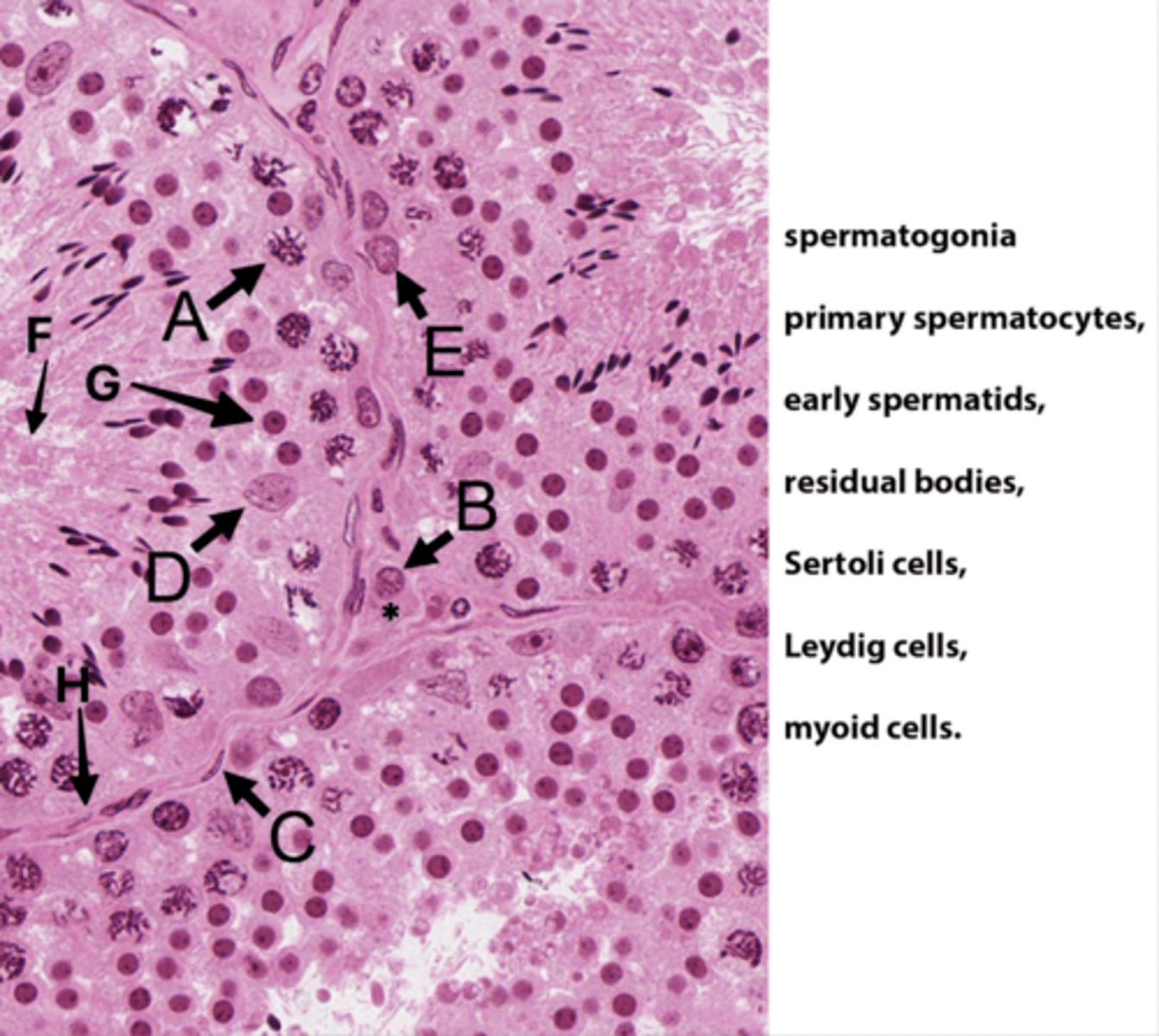
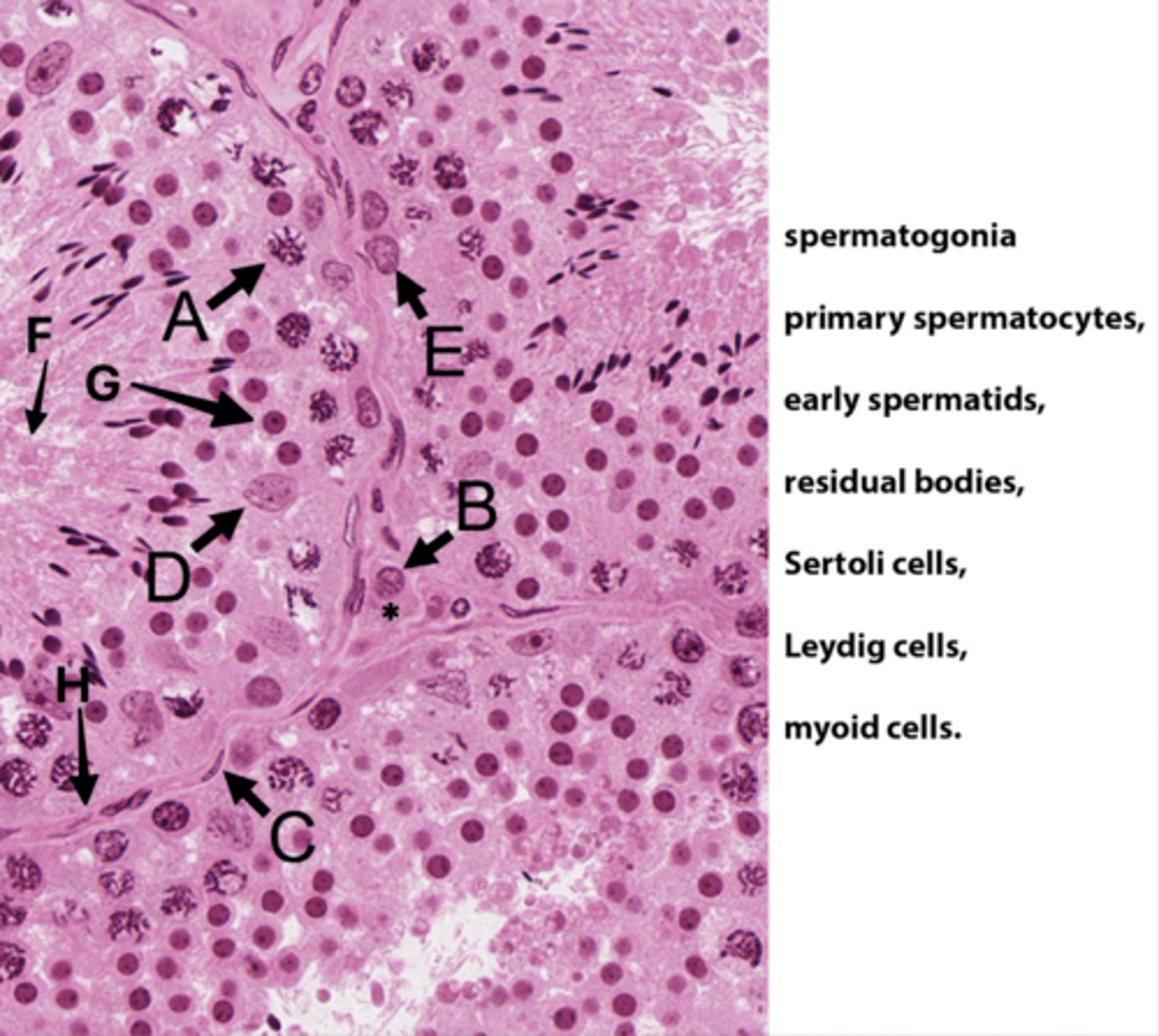
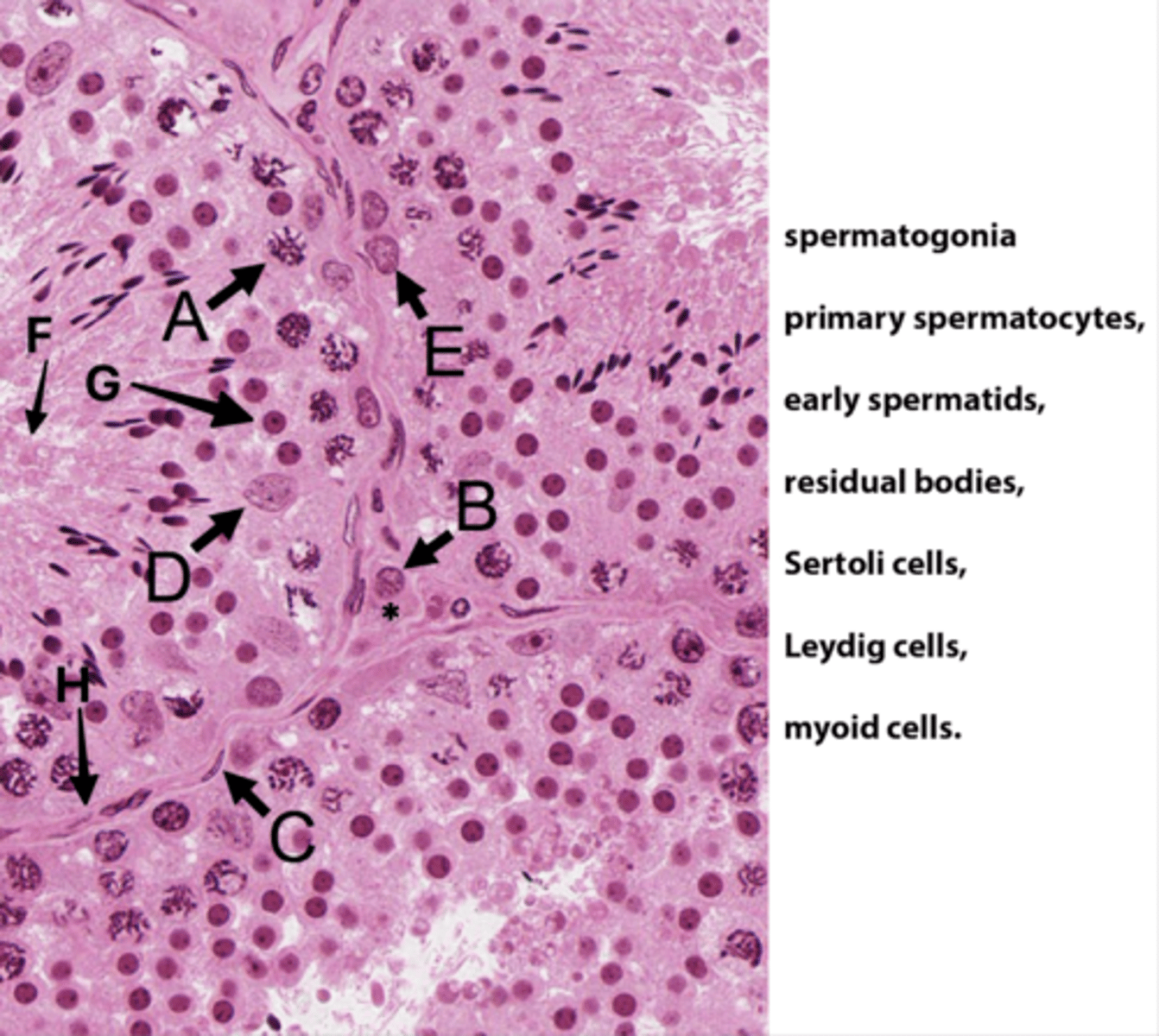
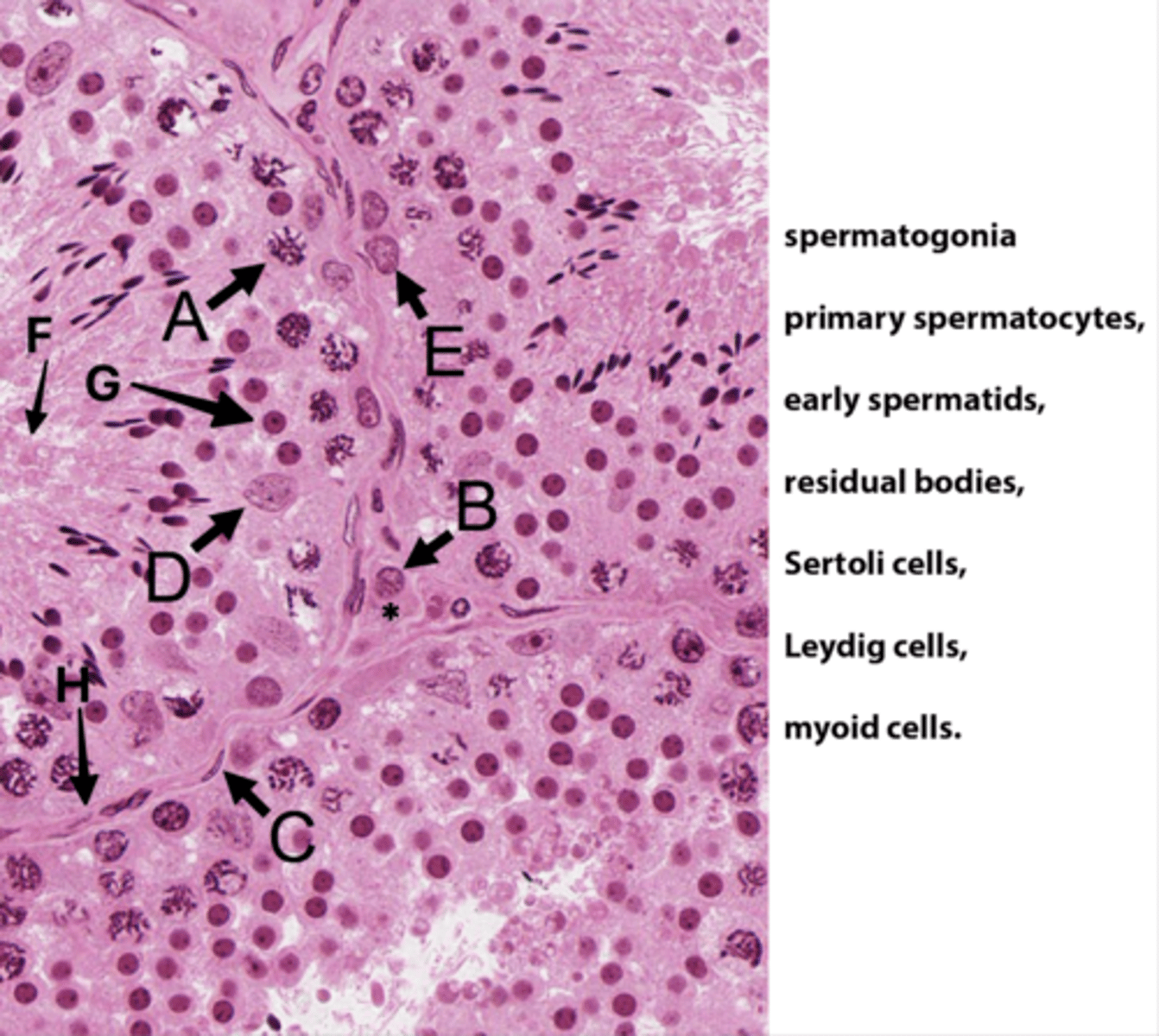
Primary spermatocytes
(Meiosis - worm-like DNA)
ID A:
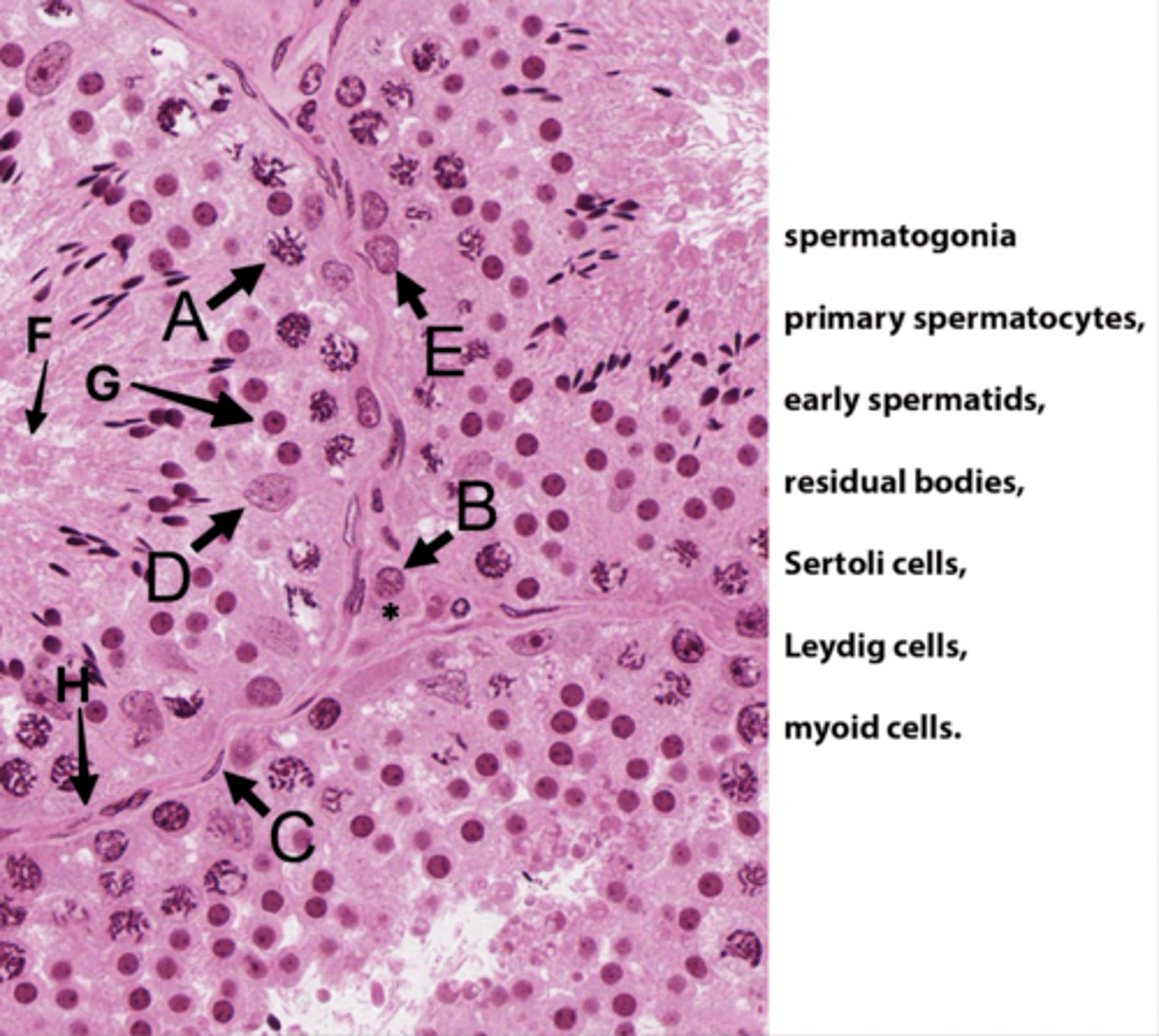
Leydig cells
(Pink plasma around nucleus - sometimes lipid droplets)
ID B:
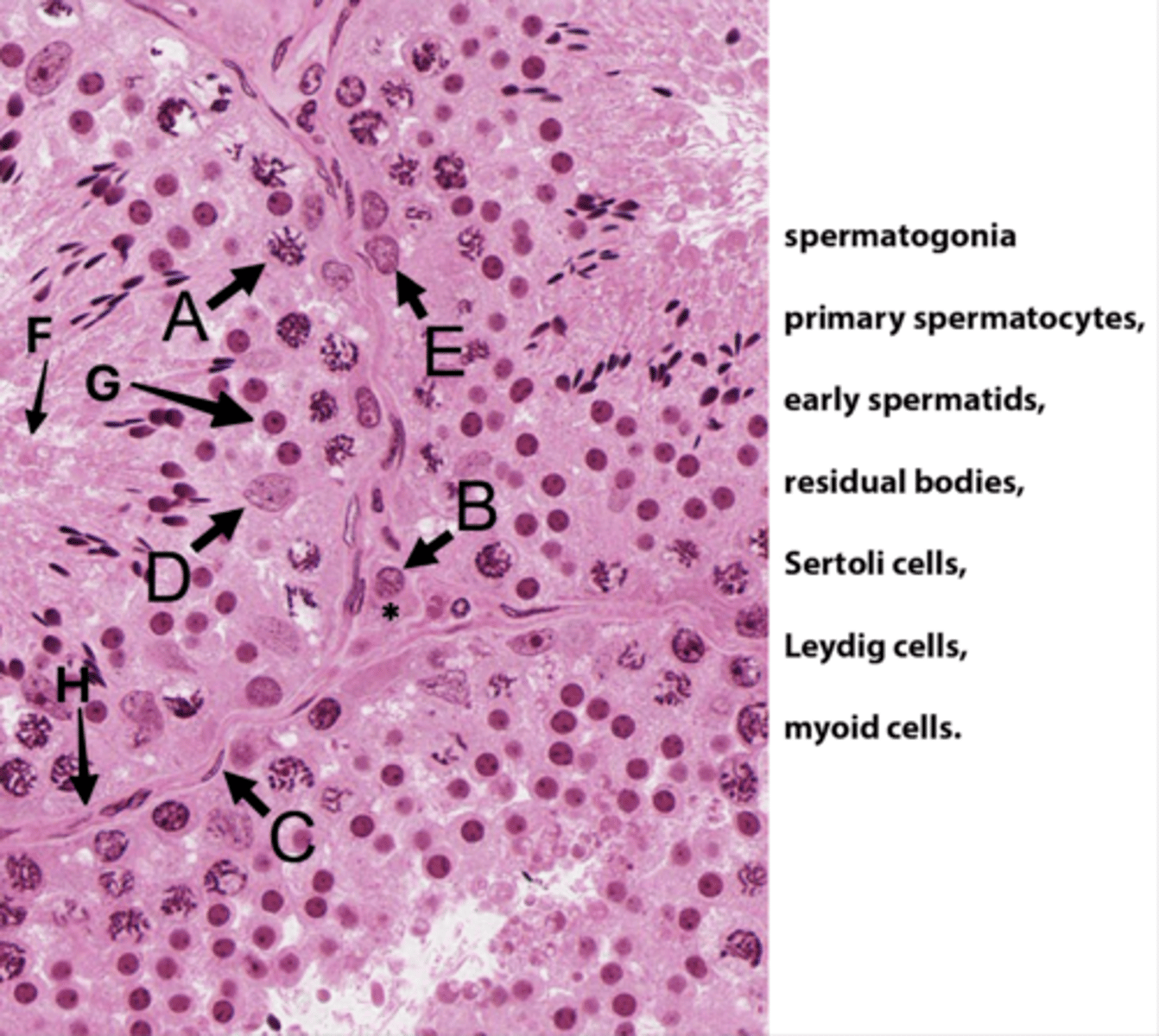
Myoid cells
(Elongated in BM)
ID C:
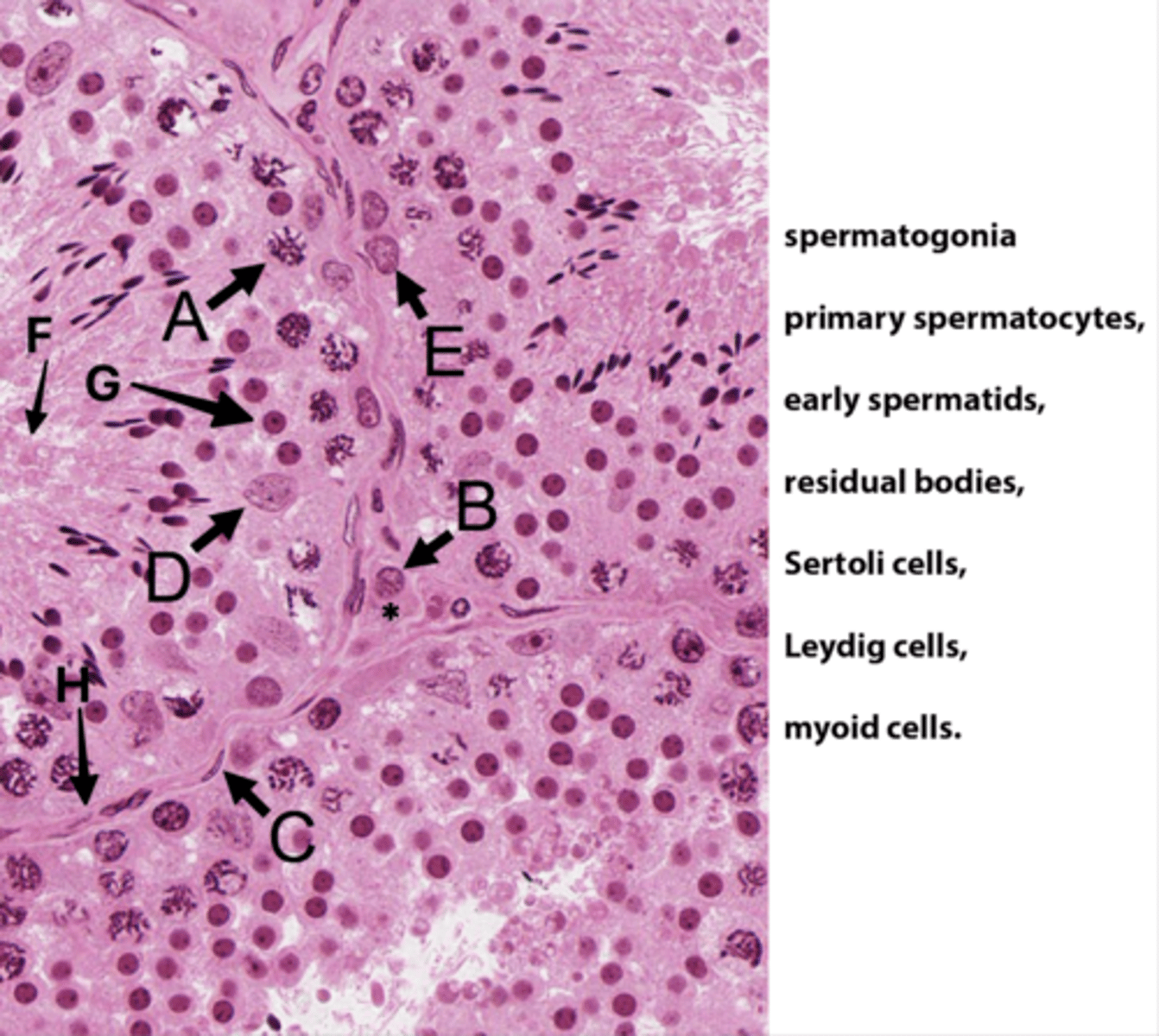
Sertoli cells
(Potato shaped)
ID D:
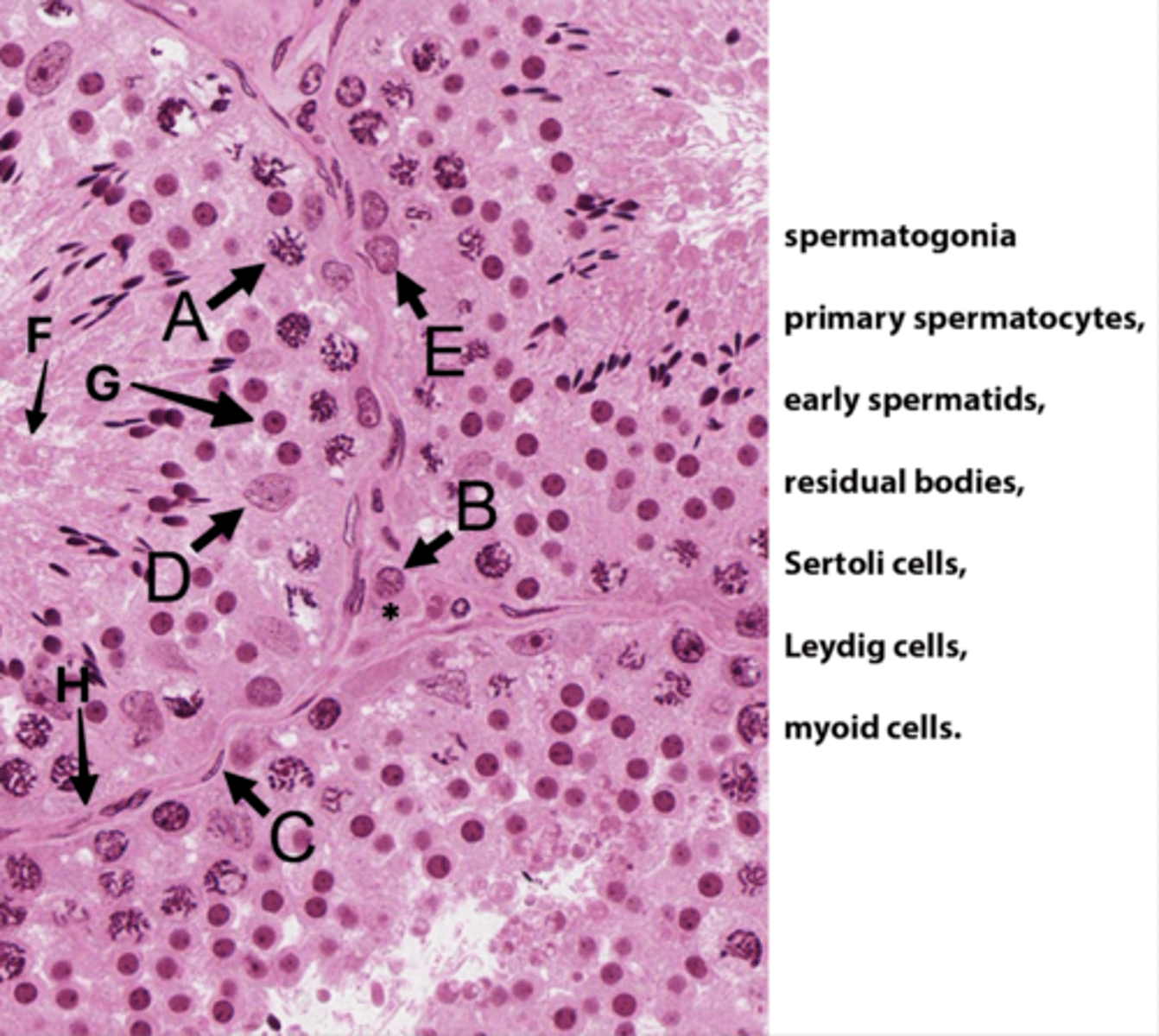
Spermatogonia
(Uses mitosis)
ID E:
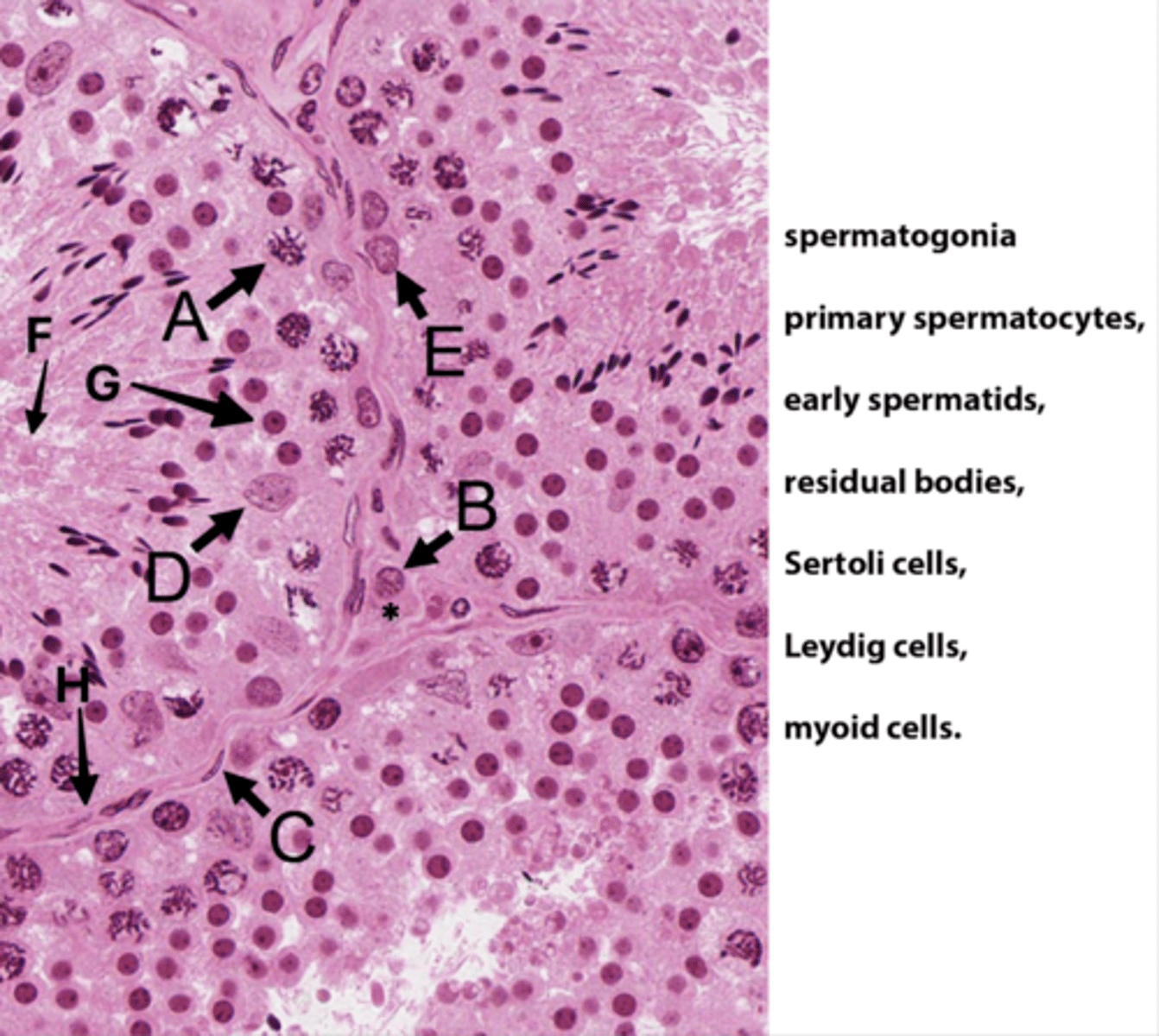
Residual bodies
(No DNA here)
ID F:
Early spermatids
ID G:
Basement membrane
ID H:
Interstital tissue
What is the area with the * ?
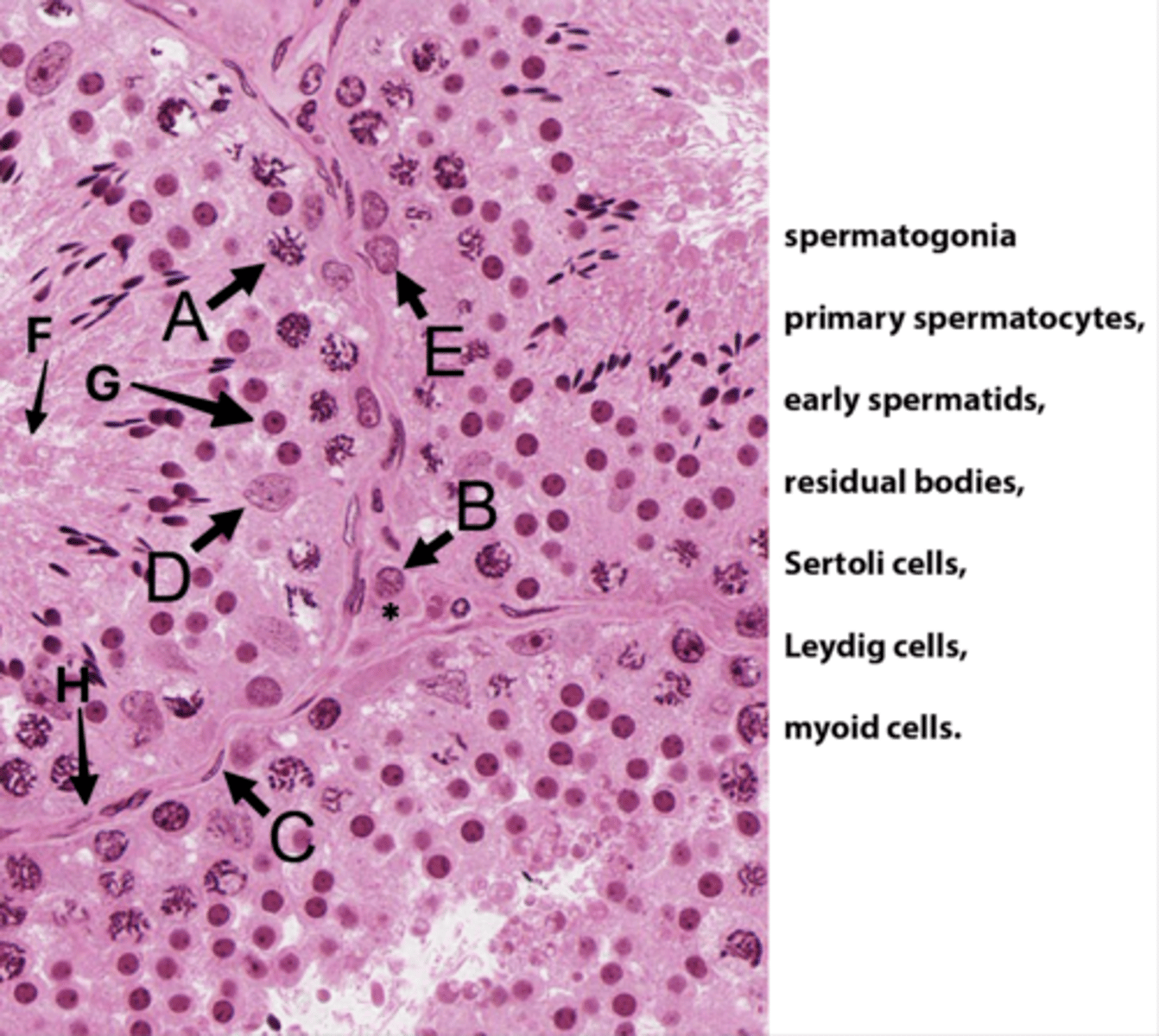
D (Sertoli cells)
Which letter indicates the cells that produce androgen binding protein/SHBG?
Sertoli cells
The seminiferous epithelium is divided into basal and adluminal compartments as a result of tight junctions between which testicular cells?
Oval (type A) to round (type B) spermatogonia
What kind of spermatogenic cells is in basal compartments?
- Primary spermatocyte
- Secondary spermatocyte
- Spermatids
What kinds of spermatogenic cells is in adluminal compartments?
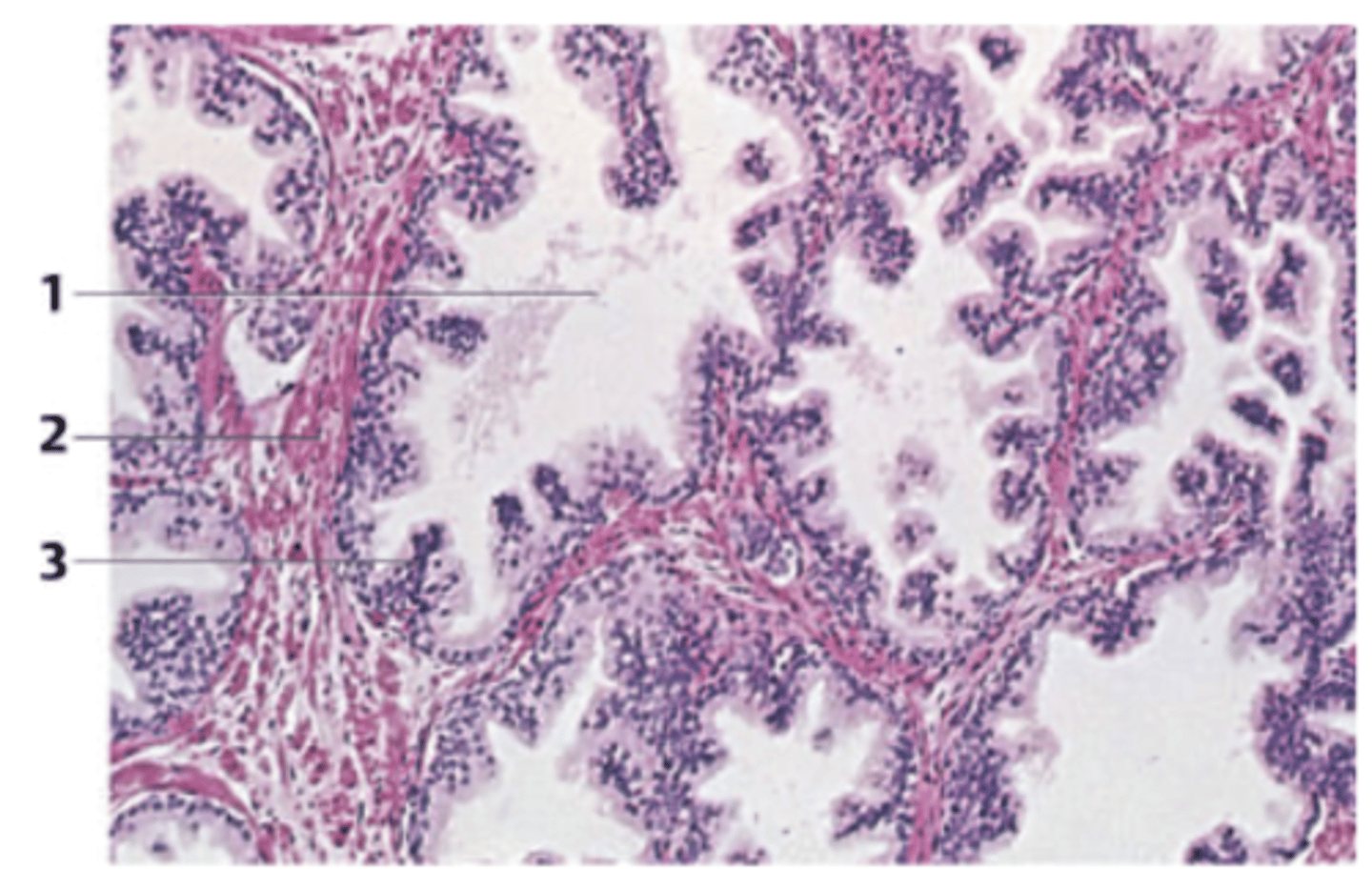
Prostate
A 62-year-old man presents with urinary hesitancy, weak stream, and incomplete emptying. The organ responsible for the symptoms in the patient was surgically removed via a transurethral approach. A biopsy from the specimen is seen in the figure.
What organ does this biopsy come from?
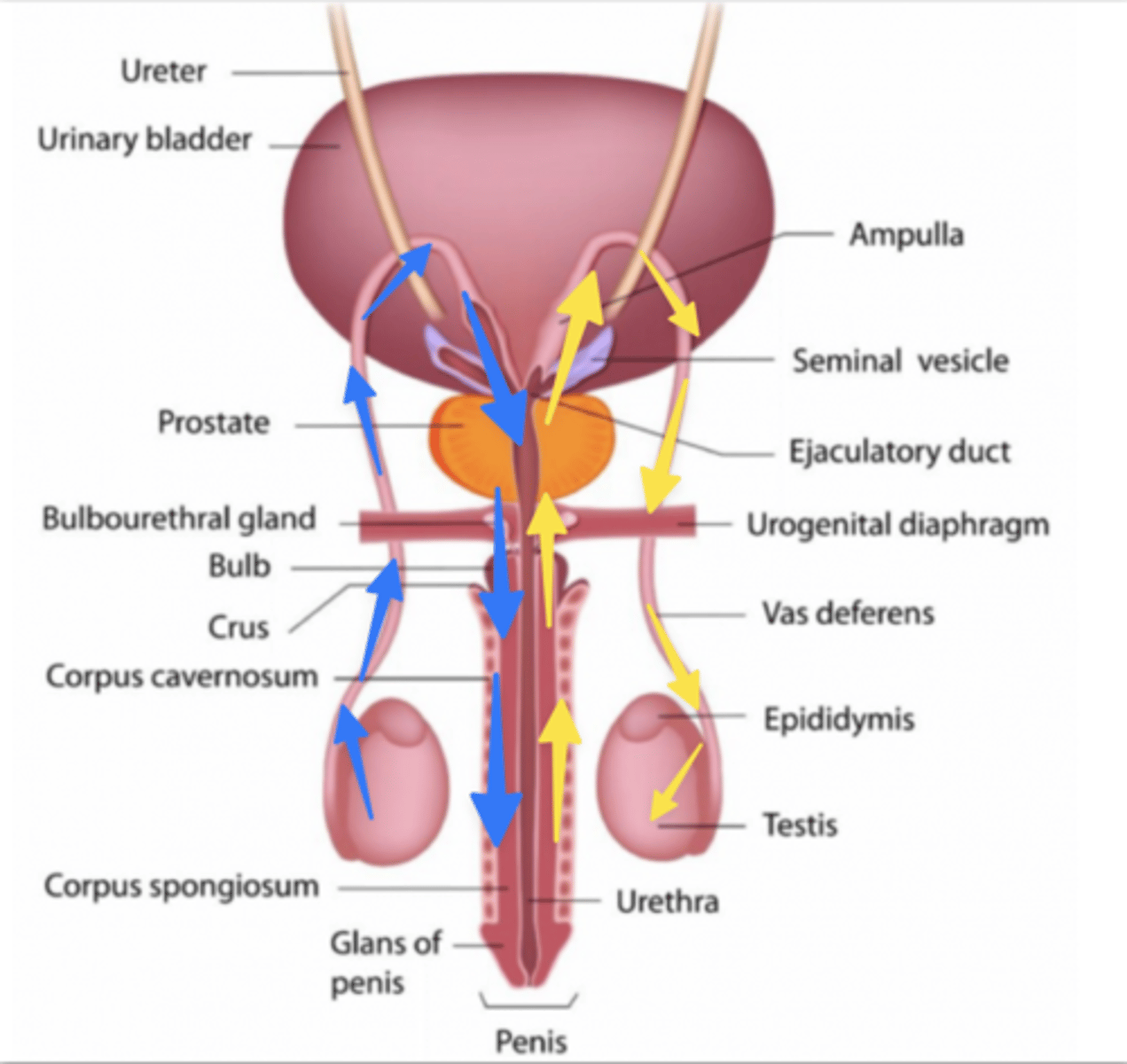
Blue
Which colored arrows show the correct pathway for sperm transport?
Flavin by seminal vesicles
In the World War I, semen was used as invisible ink, because there is a substance showing fluorescence under the UV light. What is this substance? Which gland is it secreted?
Alkaline fluid rich in:
- Fructose
- Prostaglandins
- Coagulating substances (seminogelins, fibronectin)
- Flavins
- Ascorbic acid
- Inositol
In the World War I, semen was used as invisible ink, because there is a substance showing fluorescence under the UV light. This is flavin by seminal vesicles. What other products are secreted by seminal vesicles?
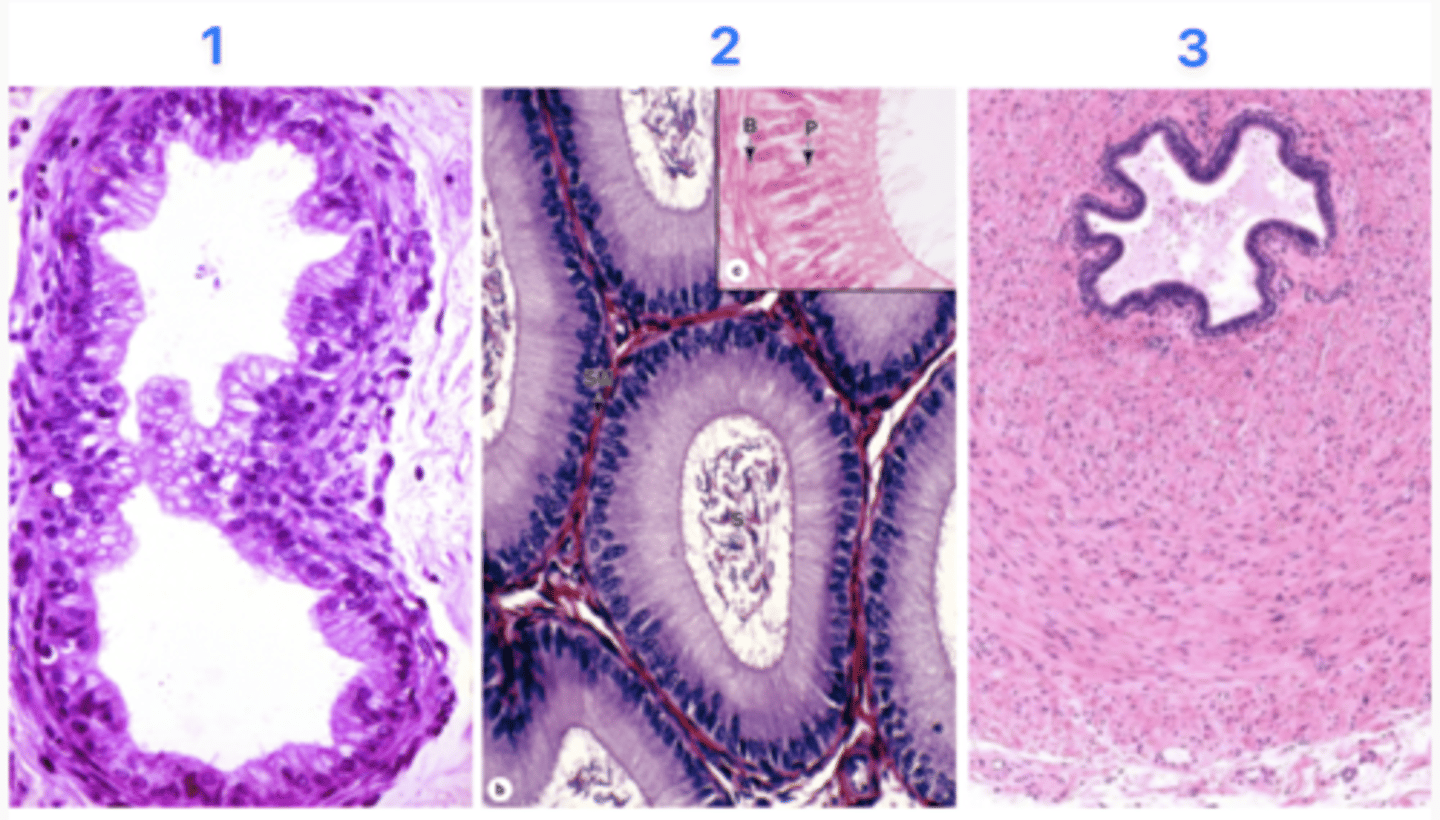
Efferent ductule
What part of the excurrent duct is at #1?
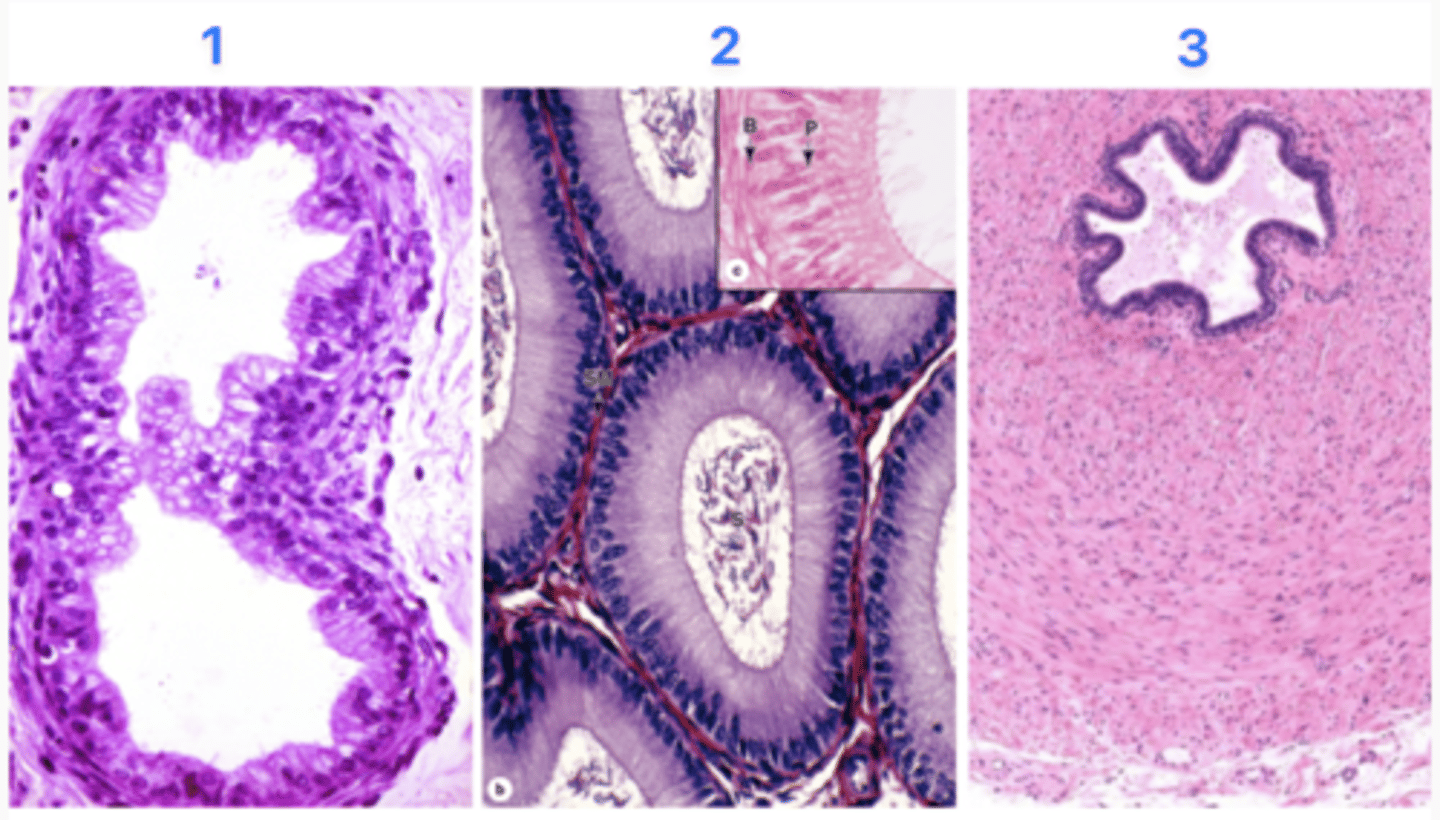
Epididymal duct
What part of the excurrent duct is at #2?
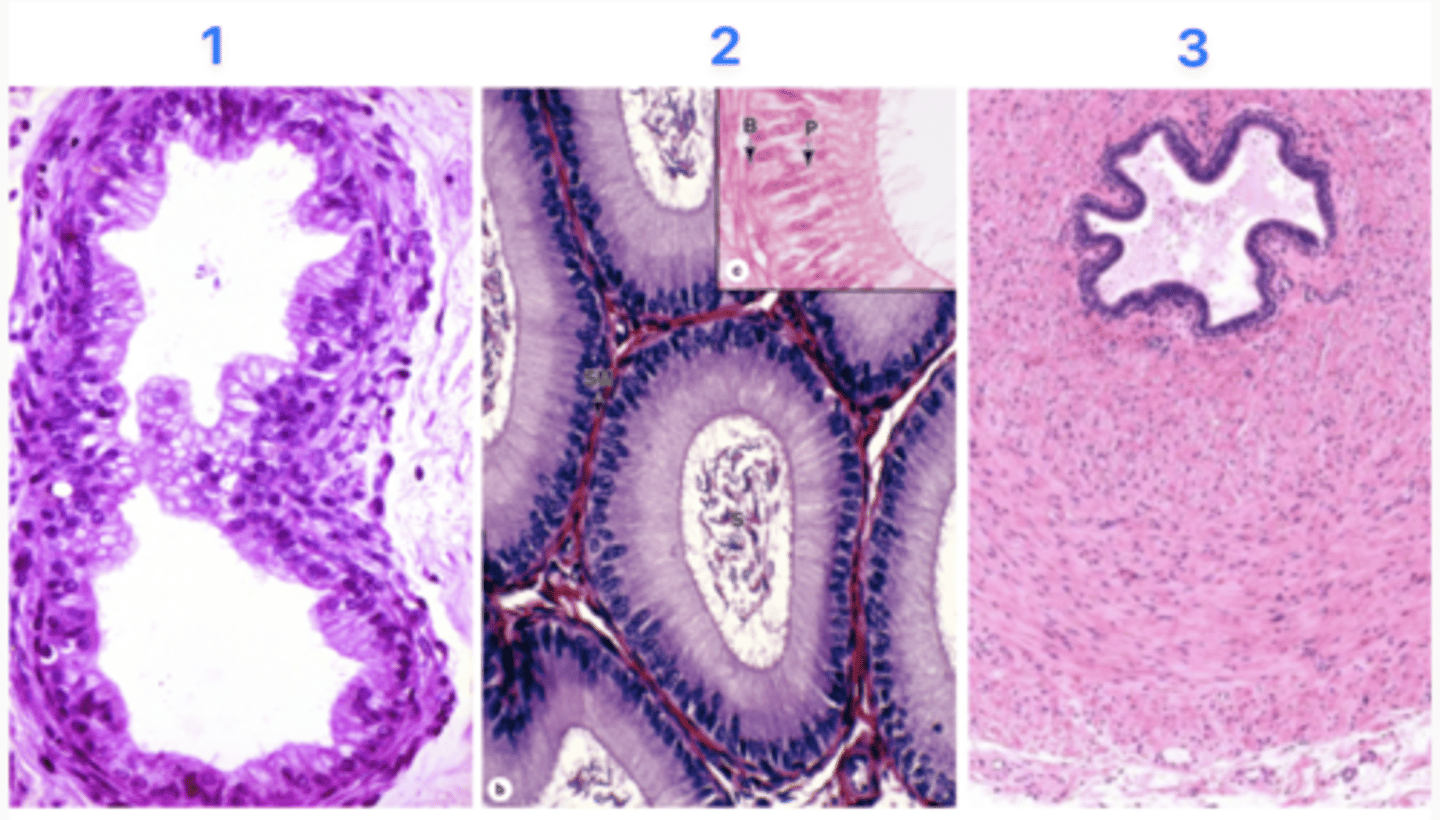
Vas deferens
What part of the excurrent duct is at #3?
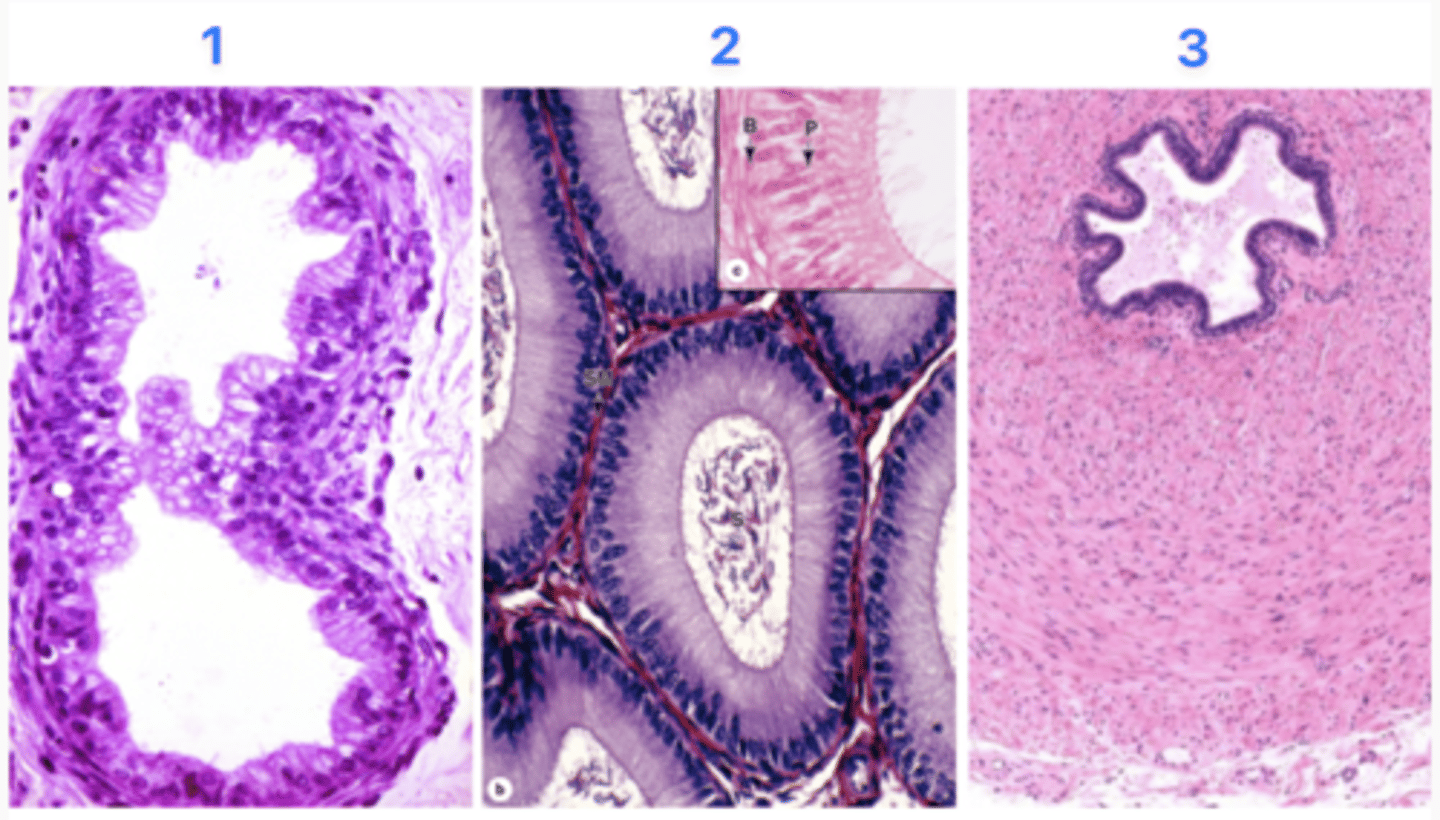
2 - Epididymal duct
Which site does sperm maturation (moving forward) occur in?