Lecture 2 - Behavioural Genetics 2
 Call Kai
 Learn
Learn Practice Test
 Spaced Repetition
 Match
Match Flashcards
 Knowt Play
1/31

There's no tags or description
Looks like no tags are added yet.
Name | Mastery | Learn | Test | Matching | Spaced | Call with Kai |
|---|
No analytics yet
Send a link to your students to track their progress
32 Terms
genotype
-particular form of specific gene that a person has
phenotype
-physical expression of a gene
-observable characteristics of an organism
allele
-two or more alternative versions of the same gene
heterozygous
-having two different alleles for the same gene within one individual
homozygous
-having two same alleles for the same gene within one individual
mendel
-studied traits without knowing structure of DNA
-inferred by looking at presentation of traits
dichotomous traits → only show in one form or another and never in common
inheritance pattern - mendel
-pea pods can be green or yellow
-some green and yellow pea pods
-bred them together
-next generation were all green
-second generation green pea pods and bred them together again
-third generation had a ration of 3 green pea pods for every 1 yellow pea pod
explaining mendel’s inheritance pattern
-green pea pods had two GG and yellow pea pods had two yy
-pea pod inherited a letter from each pea pod parent
-big G for green pea pod and little y for yellow pea pod -> so second generation is Gy
-big G means will be green no matter what you have, small y is recessive and so doesn’t produce any colour if combined with big G
-second generation bred → pea pod can inherit big G and small y, one pea pod will get two small y from parents and end up yellow
-> ratio of 3:1
punit square
-two biological parents in headers
-put alleles in square
-fill it in and it calculates the ratio
G | y | |
G | GG | Gy |
y | Gy | yy |
serotonin transporter gene (5-HTT)
-removes excess serotonin from synaptic cleft by transporting it back into presynaptic cleft
-is a protein so is made by a gene
-comes in long form (l) and short form (s)
-short form causes greater risk of depression
short and long forms (serotonin transporter gene)
-not dominant or recessive
-effects are additive → more long alleles mean more long 5-HTT and more short alleles mean more short 5-HTT
chromosomes
-24 pairs of chromosomes
-live in the nucleus of the cell
-made of DNA
-two forms of every gene on chromosomes
-so two alleles for additive effects and dominance effects
DNA
-deoxyribose nucleic acid
-helical structure
-made of nucleotides in pairs
nucleotides (DNA)
adenine (A)
cytosine (C)
thymine (T)
guanine (G)
-A always paired with T
-C always paired with G
DNA replication
-DNA can unwind
-spare bases in the cell join up their pairs
-allows it to make complimentary strands of DNA and replicate itself
-allows new cells to grow
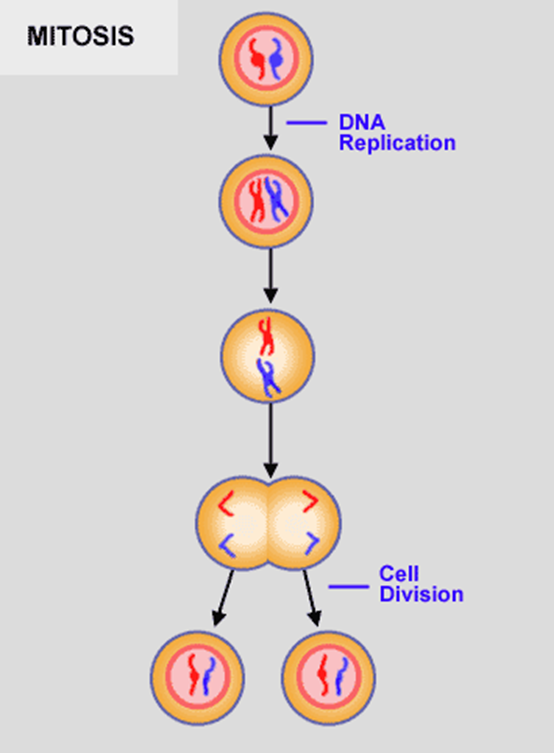
mitosis (DNA replication)
-replicate DNA and grow new cell
-skin cells
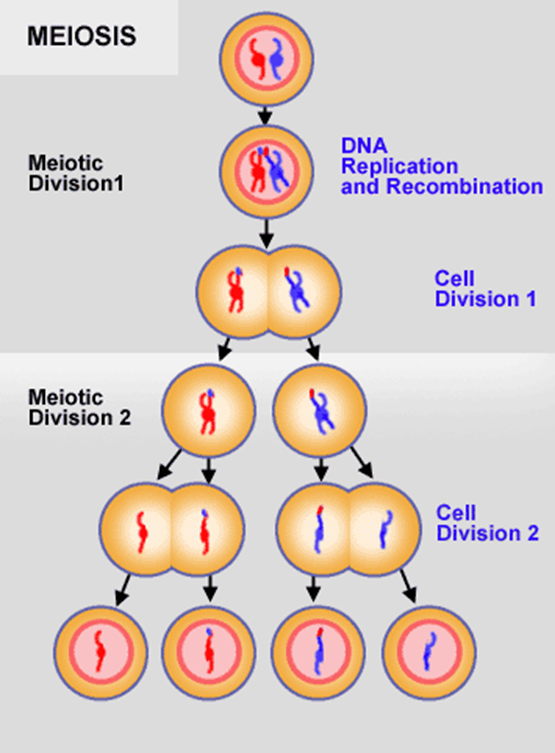
meiosis (DNA replication)
-replication and recombination
-through a series of cell divisions end up with cells that have just one of each chromosome pair
-gametes, sperms and eggs
making proteins (DNA)
-DNA unwinds and as it does it replicates
-rather than making a complimentary strand of DNA it makes messenger RNA
-RNA similar to DNA but has one different base pair → has U (eurosil) instead of T
transcription
-DNA unwinds
-get complementary stand of mRNA
-on the chromosome on the DNA are particular genes which are particular segments of our DNA
-have the coding to make proteins
-promotor region is just before the gene -> when this is activated the gene transcribes into mRNA
-single stranded mRNA in nucleus floats out into cytoplasm of the cell
translation
-after transcription
-ribosome moves mRNA along
-transfer RNA is dragged as the ribosome goes along the mRNA
-tRNA has got three bases on its bump
-code for protein works in triplets, three bases on each piece of tRNA and the ribosome goes along the mRNA
-tRNA got triplet code and it has amino acid on its head, as it moves along it joins them together -> forming strands of amino acid
-amino acid is primary structure of protein
-mRNA picks out tRNA that has particular amino acid on them to form particular amino acid chain that gives you a specific protein
tryptophan hydroxylase gene
-enzyme that makes serotonin
-gene determines how much serotonin you have
-take tryptophan from diet and then rate limiting enzyme tryptophan hydroxylase turns that into 5-HTP
-5-HTP gets turned into 5HT (serotonin)
mutant form (tryptophan hydroxylase)
-in vitro or mice models
-cells with this gene make 80% less serotonin than cells with more common gene
Zhang (tryptophan hydroxylase)
-87 depressed patients → 9 patients had mutant form
-219 control patients → 3 people had mutant form → had history of anxiety, alcoholism, family history of mental health problems
-not many people with it in each group so doesn’t explain every case of depression, many depressed people don’t have mutant form
-3 times as many people in the depression group have it
endophenotype
-phenotype that’s underlying a complex trait
Weinberger - method (gene for serotonin transporter)
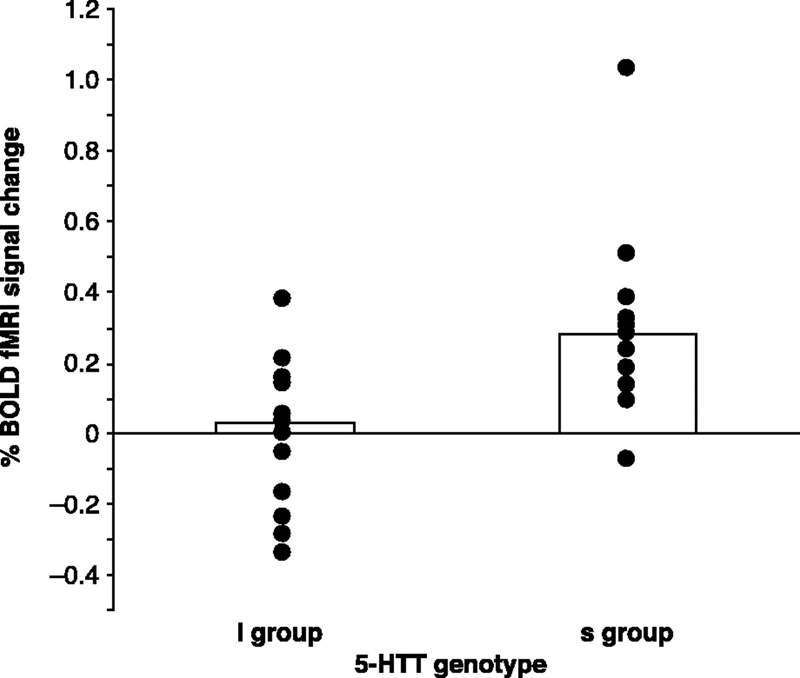
-fMRI
-no patients had diagnosis of depression
-people with different forms of 5-HTT gene → short (s) or long (l)
-asked to judge angry and afraid faces
-this activates amygdala → deals with emotions and memory
Weinberger - results (gene for serotonin transporter)
-those with two short forms have bigger response in amygdala compared to those with two longer forms of the gene
-may be endophenotype -> risk factor for depression as responding more to negative emotions
-but many people have short genes and not depression so need to look at role of the environment
Brown (role of environment in depression)
-80-90% women diagnosed with depression had experienced stressful life events in past year
-only 32% of controls experienced severe stress
diathesis-stress model
-risk factor genes for depression + experiencing environmental stress leads to depression
-risk factor genes + no environmental stress so don’t get depressed
-won’t get depression without risk factor genes
caspi - method (diathesis-stress model)
-measured stressful events
-split into groups based on forms of serotonin transporter gene
-measured depressive symptoms
caspi - result (diathesis-stress model)
-no difference in number of stressful life vents between genetic groups → shows those with short gene do not overreport experiences
-found number of stressful life events was non-significant
-genotype was non-significant
-but interaction between genes and environment was highly significant
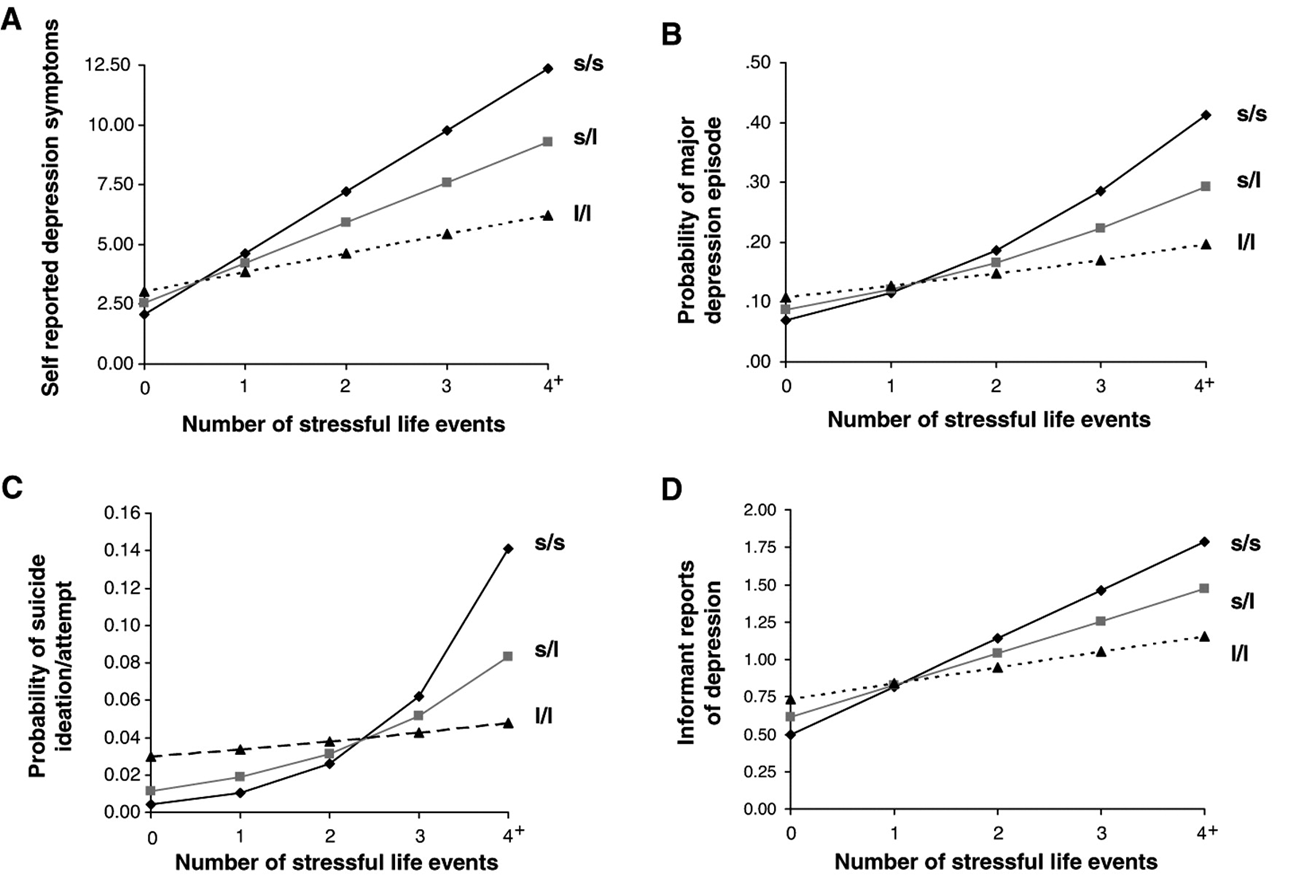
caspi - interaction graphs (diathesis-stress model)
-number of stressful life events across x axis
-different genotypes depicted by lines
-s/s on average more depressive symptoms with more stressful life events compared to s/l in the middle and l/l the lowest
-s/s self-report of depressive symptoms largely increases as number of stressful life events increase compared to other groups
caspi - conclusions (diathesis-stress model)
-more short forms you have the more likely you are to be depressed
-but only when combined with stressful life events
-demonstrates gene-environment interaction