PUBH final Actual questions and answers with 100% accuracy(VERIFIED BY PROFESSOR)
 Call Kai
 Learn
Learn Practice Test
 Spaced Repetition
 Match
Match Flashcards
1/121

There's no tags or description
Looks like no tags are added yet.
Name | Mastery | Learn | Test | Matching | Spaced | Call with Kai |
|---|
No analytics yet
Send a link to your students to track their progress
122 Terms
What makes us healthy - access to healthy care %
10%
What we spend on being healthy - medical services %
88%
What is the number 1 thing that makes us healthy
Healthy behaviors
Healthcare System cost per person
$14,570, increased 7.5% from 2022
Healthcare system cost is < or > than other industrialized nations
>
Healthcare system is geared toward ____ and lesser so ____
treatment and lesser so prevention
Competing goals with healthcare system
1. Access
2. Cost
3. Quality
When comparing United States and comparable country average, the US
Spends more on healthcare and lives shorter
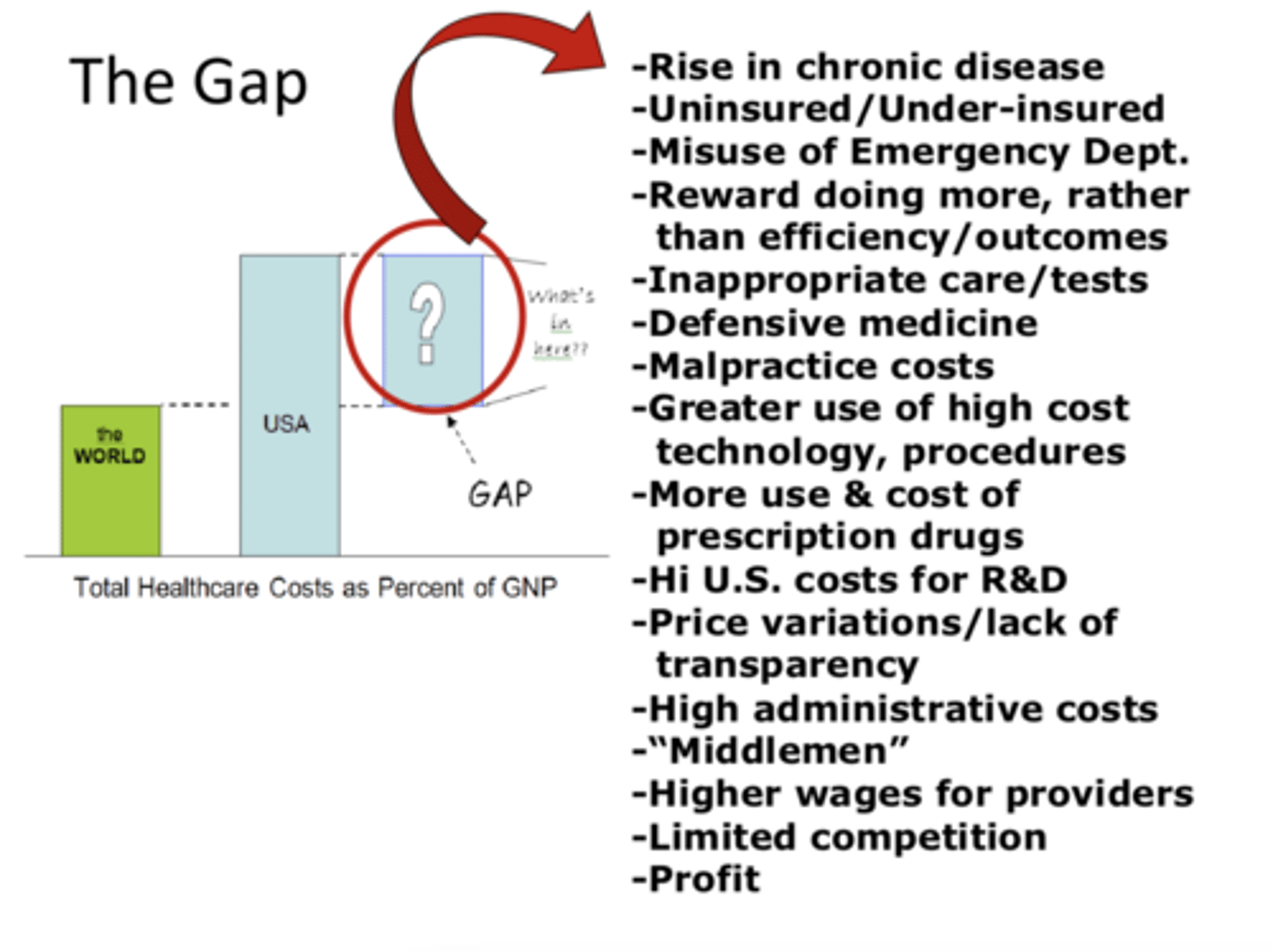
Factors in the healthcare cost gap
- Prescription cost/use
- High-cost technology and procedures
- Rise in chronic disease
etc
US spends more money on healthcare but
Is not healthier !!! (life expectancy at birth)
% of nonelderly US population uninsured and no access to health care
8%
Characteristics of the nonelderly uninsured
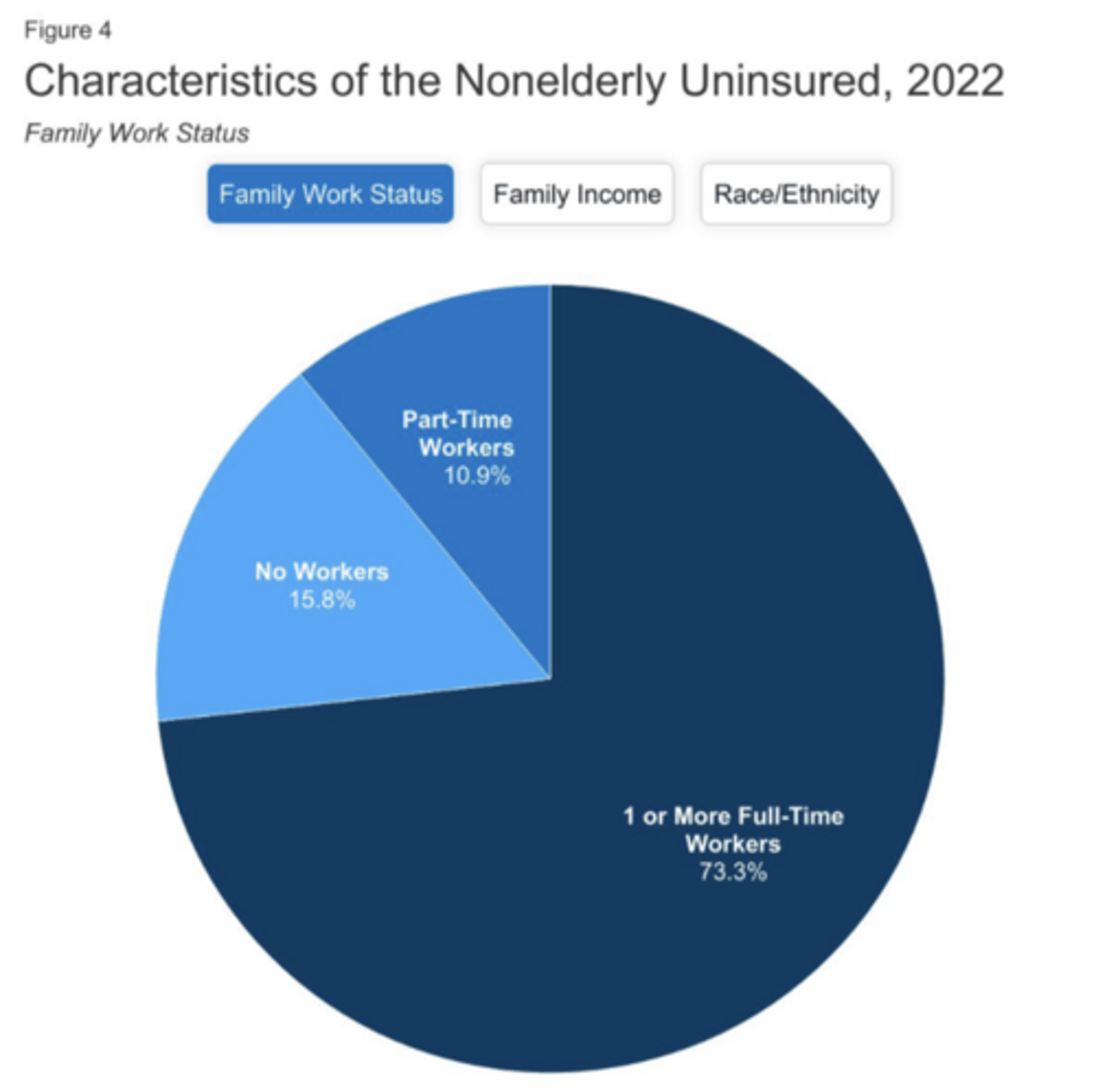
Reasons for being uninsured among uninsured non elderly adults
1. Coverage not affordable 64.2%
2. Not eligible for coverage
3. Do not need or want
4. Signing up was too difficult or confusing
5. Cannot find a plant that meets needs
6. Lost job 4.5%
How much of US spending is spent on Public Health activities
2-5%
$4.9 Trillion from 3 main sources for healthcare services
1. Health Insurance
2. Out of pocket
3. Other (investments, third party payers)
Balanced Budget Act of 1997
Created Children's Health Insurance Program
Children's Health Insurance Program (CHIP)
Provides low-cost health insurance to children in families who earn too much to qualify for Medicaid
Who funds CHIP
Funded and run jointly by federal and state governments.
Medicaid meets the needs of the population it serves
- Low-Income Families
- Individuals with Disabilities
- Elderly Individuals
Amount of people enrolled in US Medicaid
81,696,742 people
Medicaid Covers 1 in _
1 in 6 adults
2 in 5 children
1 in 3 people with disabilities
Medicare covers
People who are 65 or over
People with certain disabilities
People with end-stage renal disease
Medicare Part A
Hospital Insurance
Medicare Part B
Supplementary Medical Insurance
Medicare Part D
Prescription drug coverage
Medicare Part C
Medicare Advantage plan offered by private companies
Who is covered by medicare
63.9 million Americans
Patient Protection and Affordable Care Act 2010
Improving quality and lowering health care costs
New consumer protections
Access to healthcare
Prior to ACA
46.5 million without insurance
In 2016 (insurance coverage)
26.7 million without insurance
January 2018 (insurance coverage)
Repeal of in the Individual Mandate
In 2023 (insurance coverage)
26 million without insurance)
* Escape Fire Themes
Paying more, getting less
Treating the whole person
Preventing disease
Overmedication
Overtreatment
An entrenched system
Reimbursement
Issues that make the health system a public health concern
Escape Fire Themes
* Why the US Healthcare system costs so much compared to the rest of the world (gap)
* Characteristics of the non-elderly uninsured population
More prominent in the south
Most full-time workers
The main reason for uninsurance is that coverage is not affordable
* The approximate level and components of national expenditures for all health activities
4.6 Trillion dollars
1. Health Insurance (73%)
2. Out-of-pocket (10%)
3. Other (16%)
* Role of Medicaid and Medicare
Medicaid: Provides health coverage for low-income individuals and families (need-based)
Medicare: Provides health coverage for people 65+ and some with disabilities (age/disability-based)
* PPACA expanded access to healthcare (Patient Protection and Affordable Care Act) "3 Legged Stool"
Insurance market reforms - insurers must cover people with pre-existing conditions
Individual mandate - most people must have insurance (or penalty, originally)
Subsidies/Medicaid expansion - financial help to make insurance affordable
Simple idea: All 3 are needed to keep the system balanced and prevent costs from rising too much.
Insurance market reforms
Insurers must cover people with pre-existing conditions
Individual mandate
Most people must have insurance (or penalty, originally)
Subsidies/Medicaid expansion
Financial help to make insurance affordable
* PPACA coverage gap
A situation where a person earns too much to qualify for Medicaid but too little to receive Affordable Care Act (ACA) subsidies, leaving them without affordable health insurance options, especially in states that did not expand Medicaid.
Types of disease
Infectious and non-infectious
Infectious disease
Disease caused by different classes of pathogenic organisms (germs)
Infectious disease producing germ/agent such as
Virus or bacteria
Non-infectious disease
Any disease not caused by a pathogen
Examples of non-infectious disease
Asthma
CVD
Obesity
Why should we care about Infectious diseases
A leading cause of death worldwide, particularly in low-income countries, especially in young children
Amount of deaths associated with respiratory diseases from seasonal influenza
650K
Amount of deaths from diahhreal disease
1.2 million (390K were among children under 5)
Although we have eliminated many indectious diseases, some still are a major public health problem, for example
Pnemonia
Influenza
HIV
STI/STDS
TB
Zoonotic
Diseases caused by infectious agents that can be transmitted between animals and humans
Antimicrobial resistance
Bacteria evolve to be resistant to antibiotics
Emerging infectious diseases
New diseases and diseases increasing in incidence
One Health:
"Achieving optimal health outcomes recognizing the interconnection between people, animals, plants, and their shared environment"
WHO priority diseases
"Diseases that pose the greatest public health risk due to their epidemic potential and/or there is no or insufficient countermeasures."
There is an urgent need for accelerated research and development for :
COVID-19
Crimean-Congo
Ebola
Lassa fever
MERS-CoV and SARS
Nipah and henipaviral diseases
Rift Valley fever
Zika
Disease X
Communicable diseases
An infectious disease that may be passed from individual to individual
Communicable diseases vs infectious diseases
Not all infectious diseases are communicable (ex. Lyme, tetanus, infected cut)
Communicable disease is an infectious disease that is easily spread
Contagious disease
A very communicable disease
An infectious disease that very rapidly spreads from person to person
Types of agents
Bacteria
Viruses
Fungi
Protozoa
Helminths
Bacteria
One-cell microorganisms
Multiply quickly
May release chemicals which can make you sick
Examples of bacterial infections
TB
Tetanus
Cholera
Whooping cough
Viruses
Capsules that contain genetic material and use your own cells to multiply
Example of viral infections
Flu
HIV
Fungi
Primitive vegetables
Mushrooms, mold, yeasts
Examples of fungal infections
Histoplasmosis
Athlete's foot
Helminths
Parasitic worms that cause disease and illness
Examples of helminth infections
Tapeworm
Pinworm
Roundworm
Hosts (Reservoirs)
Non-vector and Vector
Non-vector hosts
Humans
Other vertebrates
Birds, bats
Vector hosts
Asymptomatic carriers of pathogens
Mosquitoes
Ticks, flies
Routes of transmission
Mouth and nose
Eyes
Skin
Genitals and urinary tract
Digestive tract
Direct routes of transmission
Skin-skin
Mucous-mucous
Across placenta
Through breast milk
Sneeze-cough/aerosolized
Indirect routes of transmission
Food-bourne
Waterbourne
Vector-borne
Air-borne/Aerosolized
Aerosolized direct routes of transmission
Person to person
Influenza
TB
Aerosolized indirect routes of transmission
Person to object
Chickenpox
Colds
Water-borne indirect routes of transmission
Cholera
Direct across the placenta routes of transmission
Rubella
HIV
Direct mucous-mucous routes of transmission
STIs
Environmental factors of disease
Land use
Infrastructure
Changes in food production and handling (antibiotics in animal farming)
Increased use of immunosuppresives/antibiotics
Global air travel
Ownership of exotic pets/interaction with animals
Natural disasters
Infrastructure environmental factors of disease
Air filtration
Screens on windows
Access to clean water
Epi Triad
Agent, host, environment
Agents of Epi Triad
Infectivity
Pathogenicity
Virulence
Immunogenicity
Antigenic stability
Survivial
Environment of Epi Triad
Weather
Housing
Geography
Occupational setting
Air/water quality
Food
Host of Epi Triad
Age
Sex
Genotype
Behavior
Nutritional status
Health status
Why can some diseases be eradicated and not others
Type of reservoir
Ability to live outside of humans
Carrier state (host shows symptoms)
Disease produces long-term immunity
Vaccine available to produce long-term immunity
Herd immunity achievable
Ease of disease to change
Control measures
Water treatment
Vector control
Rodent reduction
Barrier Protection
Isolation, quarantine
Immunizations
Introduces antibodies (injection, nasal) to stimulate immune system to produce own antibodies
Vaccine benefits
Herd immunity: the concept of protecting a community against certain diseases by having a high% of the community's population immunized
Personal Protective Equipment (PPE)
Gloves
Masks
Gowns (hospital settings)
Eye protection
Boots (agricultural settings)
Avoid touching nose, mouth, eyes, and surfaces (cross contamination)
Framework question one
Define the public health issue and why
Framework question two
What are the factors involved in this problem
Framework question three
What controversial or ethical concerns may be involved
Biological Plausibility
There's a reasonable scientific reason something could happen in the body.
Consistency
The same result is seen again and again in different studies and groups of people.
Dose-response
The more you are exposed to something, the bigger the effect or risk.
Amount of exposure x duration time
Strength
The relative risk for persons with the factor/condition is greatly increased compared to those without
"A smoker has more than 10x the chance of developing lung cancer than a non smoker"