6.11 - Hydrogen Fuel Cell
 Call Kai
 Learn
Learn Practice Test
 Spaced Repetition
 Match
Match Flashcards
1/10

There's no tags or description
Looks like no tags are added yet.
Name | Mastery | Learn | Test | Matching | Spaced | Call with Kai |
|---|
No analytics yet
Send a link to your students to track their progress
11 Terms
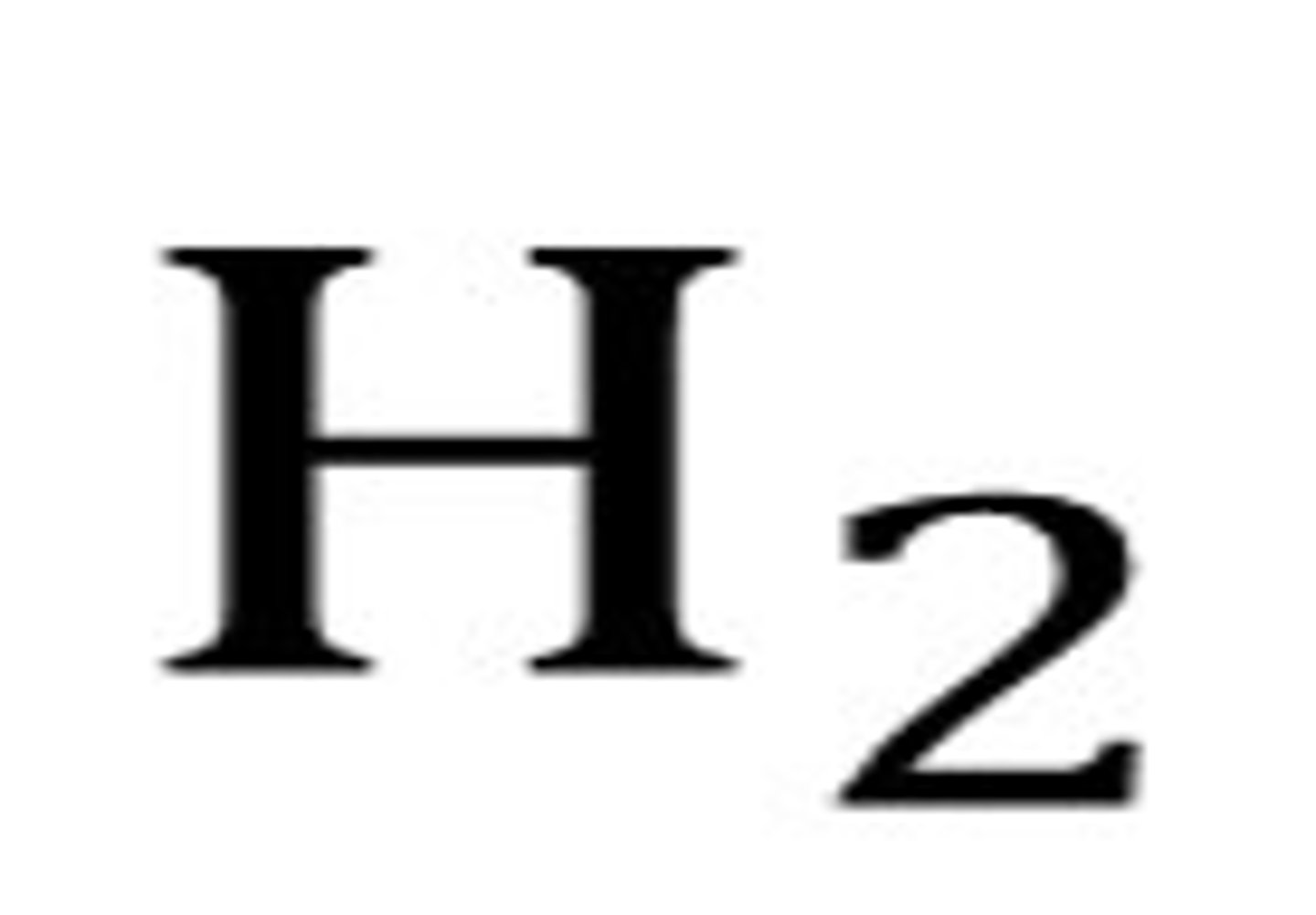
Hydrogen gas
H2 gas, not naturally found in nature; must be produced using energy-intensive processes
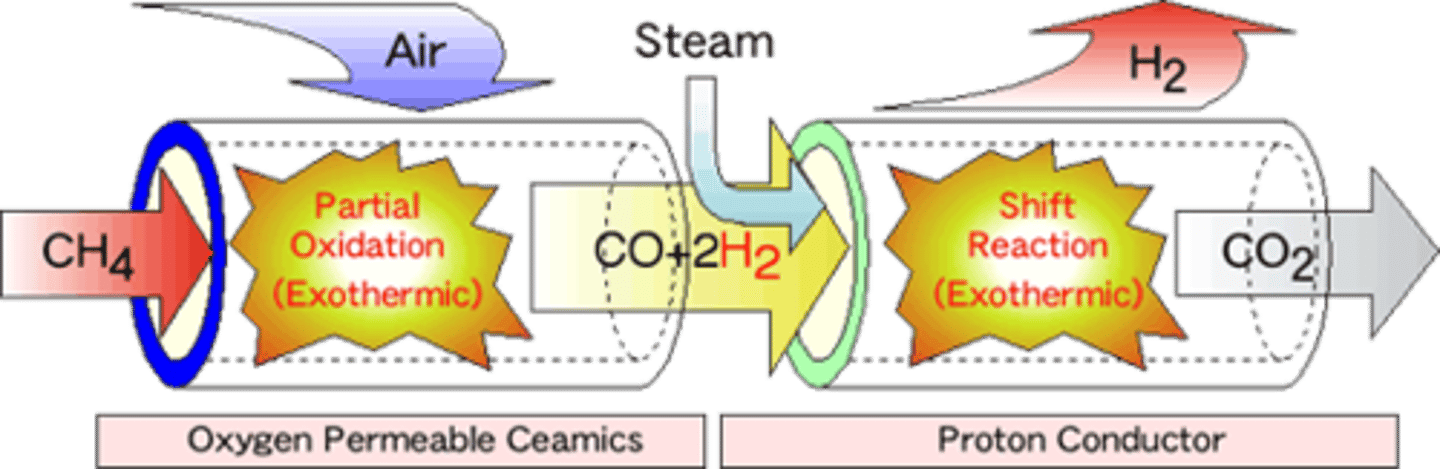
Natural gas steam reforming
Most widely used (95%) method of producing hydrogen gas. Involves combusting natural gas (CH4) and using steam to separate the Hydrogen (H2) gas. Produces CO2 & relies on FF.
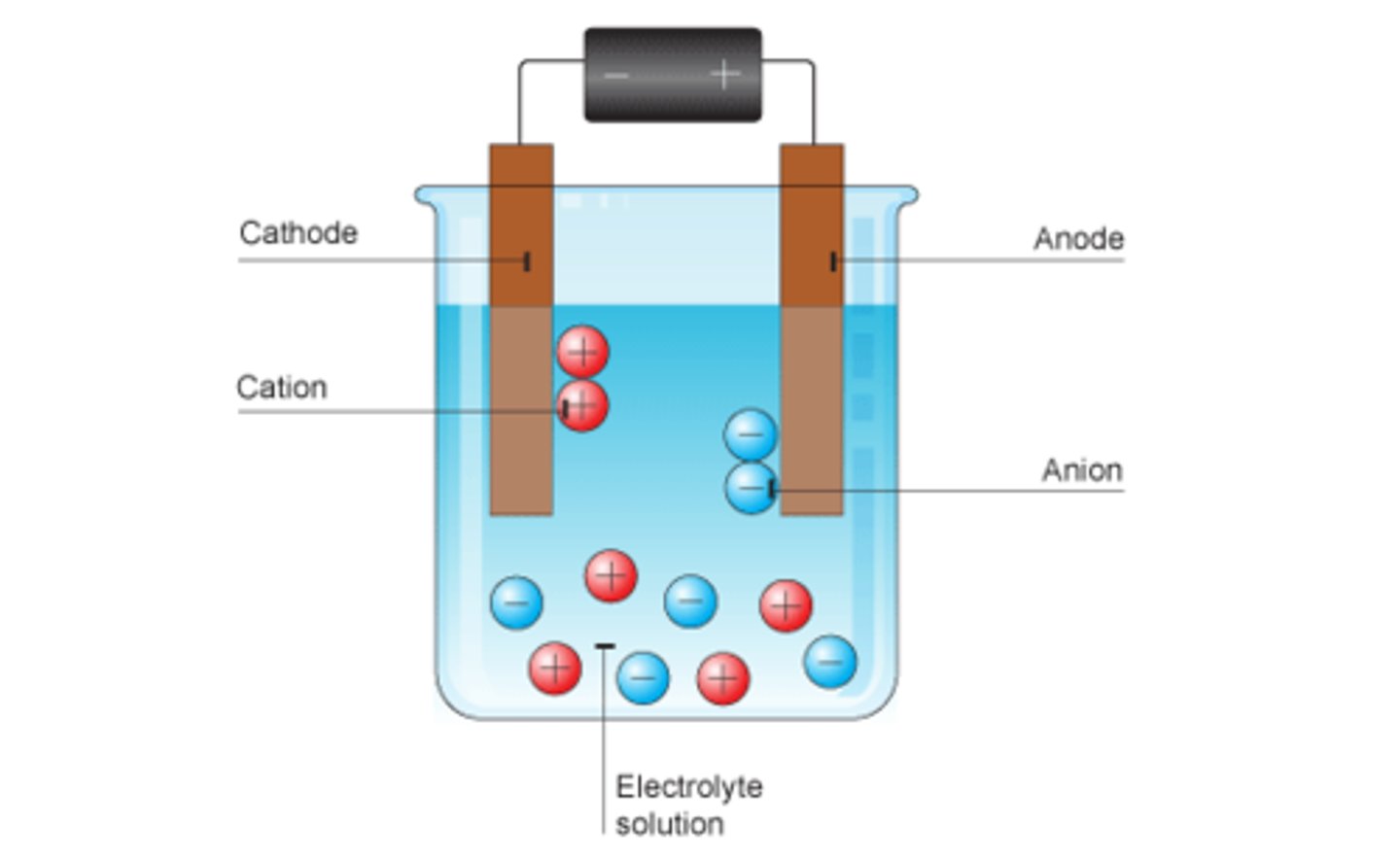
Electrolysis of water
Less commonly used method of producing hydrogen gas. Involves applying an electrical current to water, separating it into hydrogen and oxygen gases.
energy carrier
something that can move and deliver energy in a convenient, usable form to users. Hydrogen gas is a convenient energy carrier for storing electricity.
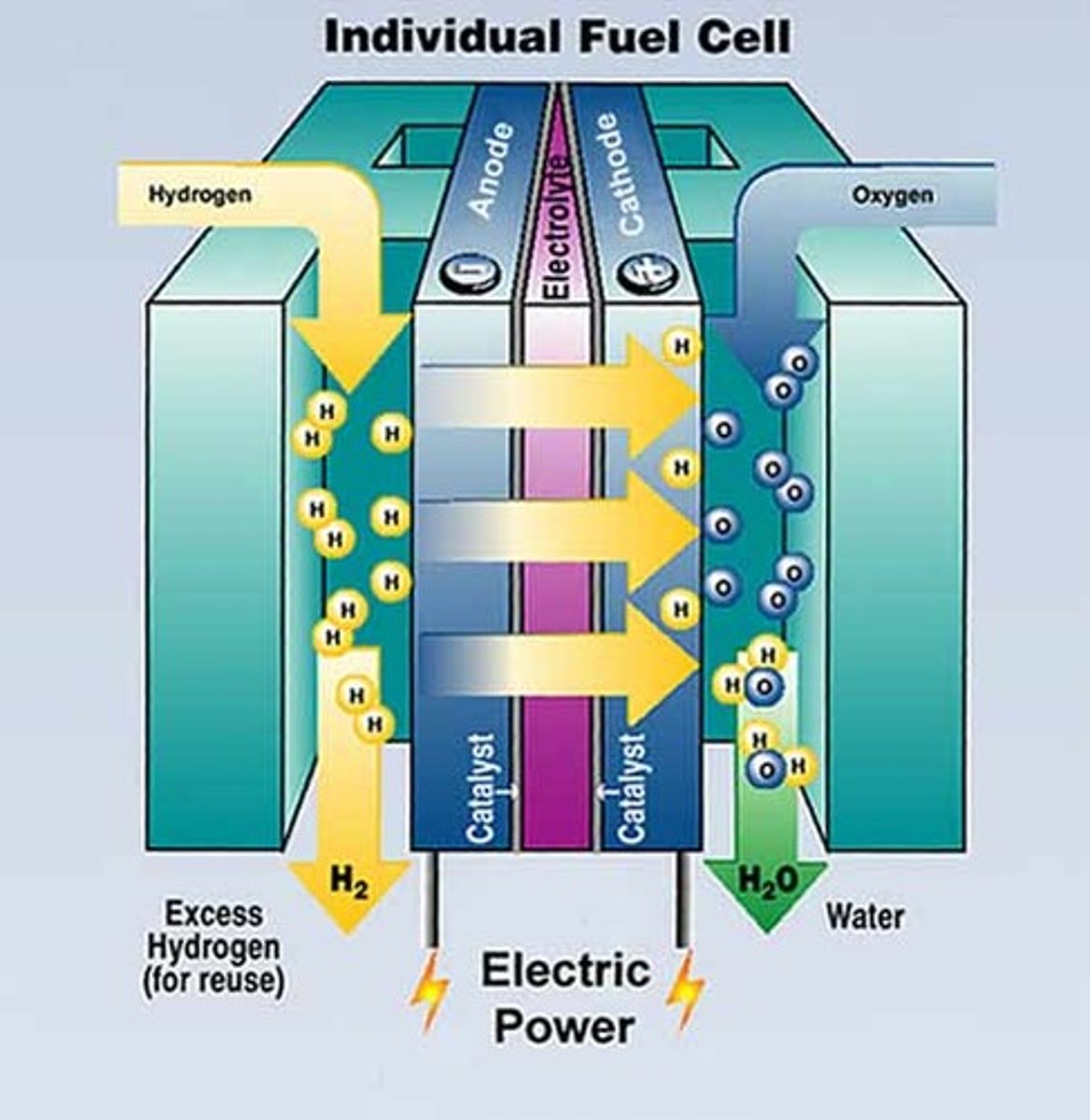
hydrogen fuel cell
a fuel cell that generates electricity from a reaction between hydrogen gas and oxygen. H protons and electrons are separated by a membrane that only allows the protons through. Electrons are forced to take an alternate route, generating a flow of charged particles (electrical current).
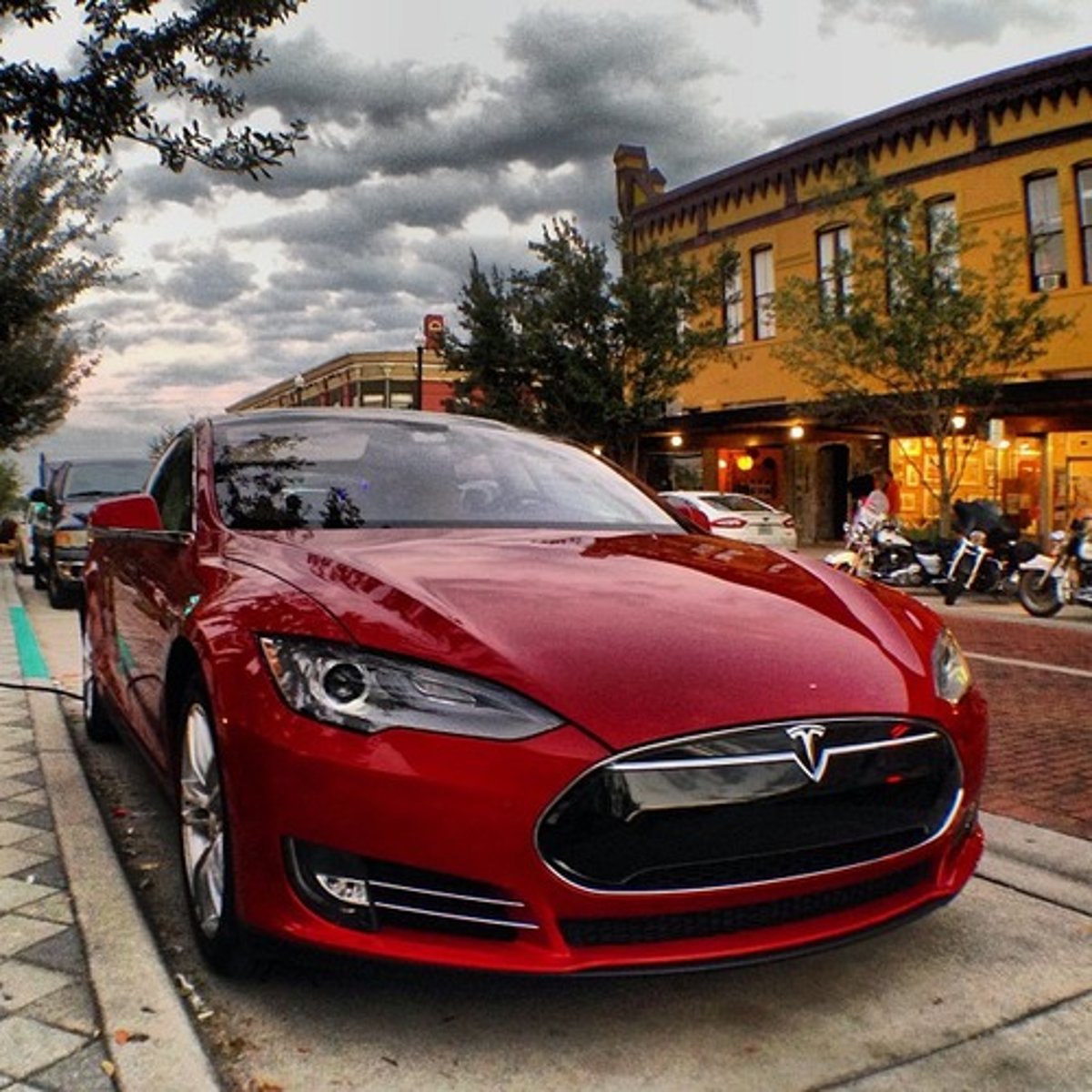
Electric motor
a device that converts electrical energy into mechanical energy (turning axle) which is converted into kinetic energy (moving car), particularly for use in an electric vehicle.
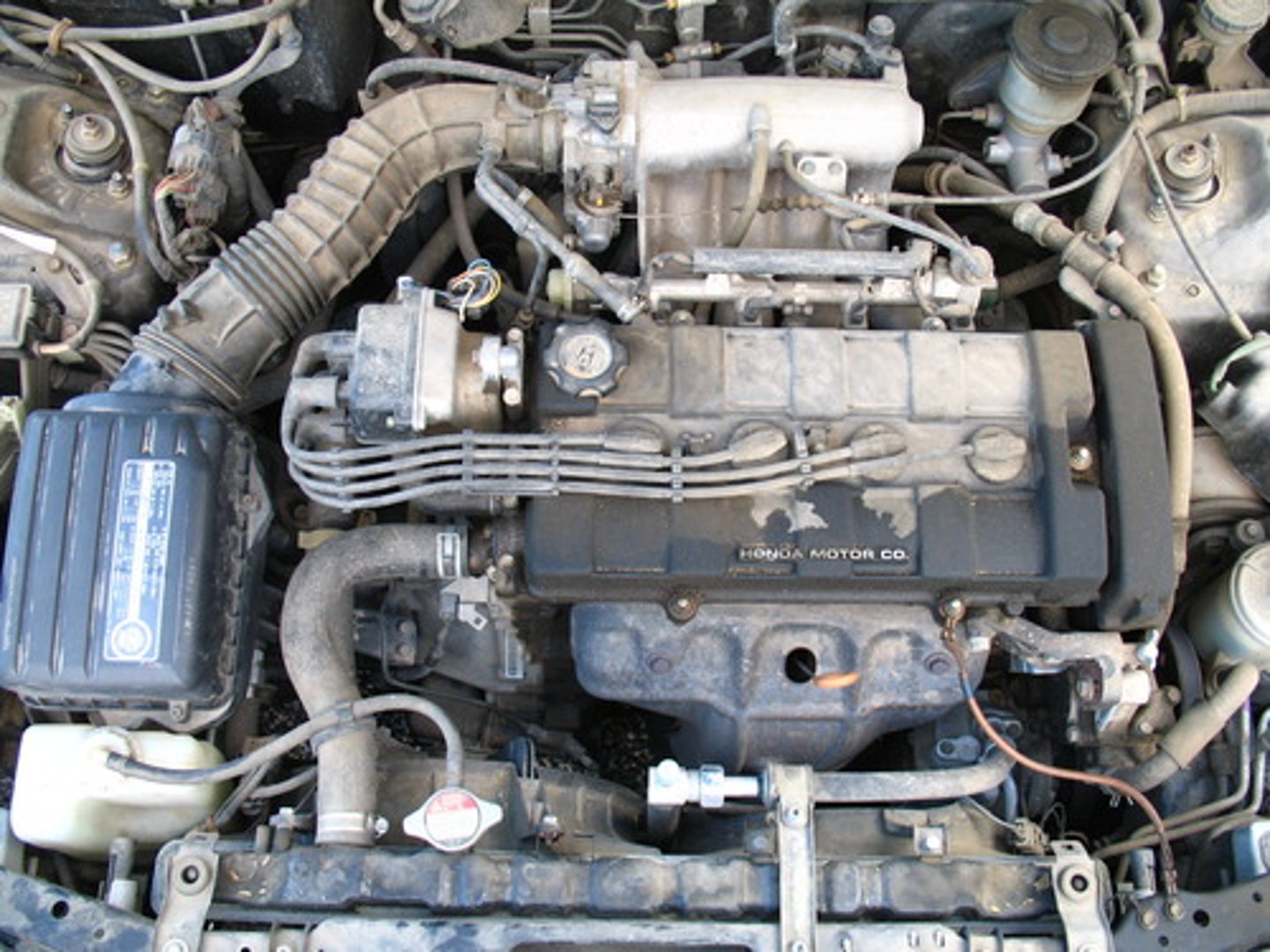
internal combustion engine
heat engine that burns fuel (gasoline, ethanol, diesel) inside the engine in chambers or cylinders. Potential energy in the fuel is converted to mechanical energy (turning of axle) which is converted to kinetic energy (moving car).
H fuel cell efficiency
80% efficient (potential energy of H gas to electrical energy)
Internal combustion engine efficiency
20% efficient (potential energy of hydrocarbon fuel to mechanical energy of axle to kinetic energy of moving car)
Electric motor efficiency
60% efficient (electrical energy to mechanical energy of axle to kinetic energy of moving car)
FF Power Plant efficiency
35-50% efficient (chemical/potential energy in FF to heat/steam to mechanical energy/turbine to electrical energy/generator) coal is the least efficient, NG the most efficient