Bio Final
 Call Kai
 Learn
Learn Practice Test
 Spaced Repetition
 Match
Match Flashcards
 Knowt Play
1/89

There's no tags or description
Looks like no tags are added yet.
Name | Mastery | Learn | Test | Matching | Spaced | Call with Kai |
|---|
No analytics yet
Send a link to your students to track their progress
90 Terms
Characteristics of all living organisms
1. Cellular organization
2. Ordered complexity
3. Sensitivity to environment
4. Growth, development, and reproduction
5. Energy utilization
6. Homeostasis
7. Evolutionary adaptation
Reductionism (in vitro)
To break a complex process down to its simpler parts
Systems biology (in vivo)
Focus on emergent properties that can’t be understood by looking at simpler parts
Ionic bond
Attraction of oppositely charged ions
Covalent bond
When atoms share 2 or more valence electrons
Nonpolar Covalent
Equal sharing of electrons
Polar Covalent
Unequal sharing of electrons
Properties of Water
High specific heat
High heat of vaporization
Solid is less dense than liquid
Good solvent
Dehydration synthesis
Formation of large molecules by the removal of water
Hydrolysis
Breakdown of large molecules by the addition of water
Lipids
They are insoluble in water
Fats, oils, waxes, terpenes, steroids, and even some vitamins
Saturated Fatty Acids
No double bonds between carbon atoms
Higher melting point
In animals
Unsaturated Fatty Acids
One or more double bonds
Lower melting point
In plants
Phospholipid Structure
Glycerol, Two fatty acids (nonpolar “tails”), A phosphate group (polar “head”)
Form all biological membranes
Cell Theory
1. All organisms are composed of cells
2. Cells are the smallest living things
3. Cells arise only from pre-existing cells
Basic Structural Similarities of Prokaryotes and Eukaryotes
1. Nucleoid or nucleus where DNA is located
2. Cytoplasm
3. Ribosomes
4. Plasma membrane
Prokaryotic Cells
Lacks membrane-bound organelles
Cell wall outside of the plasma membrane
Capsule (Gelatinous layer which aids in attachment and protection)
Bacterial Cell Walls
Peptidoglycan forms a rigid network.
• Maintains shape.
• Withstands hypotonic environments
Gram positive bacteria
Thick, complex network of peptidoglycan
Gram negative bacteria
Thin layer of peptidoglycan.
Resistant to many antibiotics
Bacteria Pili
Found in gram-negative bacteria.
Aid in attachment and conjugation.
Endomembrane System
Series of membranes throughout the cytoplasm
Divides the cell into compartments where different cellular functions occur
One of the fundamental distinctions between eukaryotes and prokaryotes
Golgi Apparatus
Flattened stacks of interconnected membranes (Golgi bodies)
Functions in packaging and distribution of molecules
Has cis and trans faces
Vesicles transport molecules to destination
Vacuoles
Membrane-bound structures typically found in plants
Storage, waste disposal, and structural support
Endosymbiosis Theory
Eukaryotic cells evolved by a symbiosis between two free-living cells
Prokaryote engulfed by and became part of another cell
Mitochondria and chloroplasts have similarities to prokaryotic cells
Evidence to support endosymbiosis theory
Organelles with their own DNA (i.e. mitochondrial DNA)
Double membrane
Have the own ribsomes
Microfilaments (actin filaments)
Two protein chains loosely twined together
Movements like contraction, crawling, and “pinching”
Microtubules
Largest of the cytoskeletal elements.
Dimers of α- and β-tubulin subunits.
Facilitate the movement of cells and materials within the cell.
Intermediate filaments
Between the size of actin filaments and microtubules.
Very stable – usually not broken down.
Centrosomes
Microtubule-organizing center
Animal cells
Adhesive junctions
Mechanically attaches cytoskeletons of neighboring cells or cells to the ECM (include adherens junctions, desmosomes, hemidesmosomes).
Septate, or tight, junctions
Connect the plasma membranes of adjacent cells in a sheet – no leakage.
Communicating junctions
Chemical or electrical signal passes directly from one cell to an adjacent one (gap junction, plasmodesmata)
Plasmodesmata
In plant cells
Specialized openings in their cell walls.
Cytoplasm of adjoining cells are connected.
Function similar to gap junctions in animal cells.
Channel Proteins
Allow the passage of ions through nonpolar interior of plasma membrane.
Gated channels – open or close in response to stimulus (chemical or electrical).
Carrier Proteins
Can help transport both ions and other solutes, such as some sugars and amino acids
Movement is via diffusion, requires a concentration difference across the membrane
Must bind to the molecule they transport
Peptide Bonds
Bond formed between the amino end and carboxyl end of two adjacent amino acids.
Motifs
Common elements of secondary structure seen in many polypeptides
Useful in determining the function of unknown proteins
Domains
Functional units within a larger structure
First Law of Thermodynamics
Energy cannot be created or destroyed
Energy can only change from one form to another
Total amount of energy in the universe remains constant
During each conversion, some energy is lost as heat
Second Law of Thermodynamics
Entropy (disorder; more accurately number of possible states) is continuously increasing
Feedback Inhibition
End-product of pathway increases in concentration as it is synthesized
More product increases probability that it binds to an allosteric site on an enzyme in the pathway and causes it to change so it cannot bind normal substrates
Shuts down pathway so raw materials and energy are not wasted
Final electron receptor in Aerobic Respiration
Oxygen
Final electron receptor in Fermentation
Organic Molecule
Substrate-level phosphorylation
Transfer phosphate group directly to ADP
Occurs during glycolysis
Oxidative phosphorylation
ATP synthase uses energy from a proton gradient
Oxidation of Glucose Stages
1. Glycolysis
2. Pyruvate oxidation
3. Citric acid cycle
4. Electron transport chain & chemiosmosis
Glycolysis
In cytoplasm
Converts 1 glucose (6 carbons) to 2 pyruvate (3 carbons)
Net production of 2 ATP molecules by substrate-level phosphorylation
2 NADH produced by the reduction of NAD+
When oxygen is present, pyruvate…
…is oxidized to acetyl coenzyme A (acetyl-CoA) which enters the citric acid cycle
Without oxygen, pyruvate…
…is reduced in order to oxidize NADH back to NAD+
Products of Pyruvate Oxidation
1 CO2
1 NADH
2 carbons from pyruvate attached to coenzyme A
Citric Acid Cycle
Oxidizes the acetyl group from pyruvate
1. Acetyl-CoA + oxaloacetate → citrate
2. Citrate rearrangement and decarboxylation
3. Regeneration of oxaloacetate
Citric Acid Cycle Yield
2CO2, 3 NADH, 1 FADH2, 1 ATP, regenerates oxalate
Electron Transport Chain
Electrons from NADH and FADH2 are transferred to complexes of the ETC
Chemiosmosis
Accumulation of protons in the intermembrane space drives protons into the matrix via diffusion
Uses energy of gradient to make ATP from ATP + Pi
Light-Dependent Reactions
1. Primary photo event
2. Charge separation
3. Electron transport
4. Chemiosmosis
Photosystem II and Photosystem I
Carry out a noncyclic transfer of electrons that is used to generate both ATP and NADPH
Photosystem I
Produces NADPH
Photosystem II
Oxidizes water to replace the electrons transferred to photosystem I
Calvin Cycle
In chloroplast stroma
Use inorganic carbon (CO2) to build organic molecules (glucose)
Three Phases of Calvin Cycle
Carbon fixation, reduction, regeneration of RuBP
Photorespiration
Oxidation of RuBP by the addition of O2.
Favored when stomata are closed in hot conditions.
Closed stomata create low-CO2 and high-O2
Used in CAM
Carboxylation
Addition of CO2 to RuBP
Autocrine
Respond to its own ligand
Juxtacrine Signaling
Direct contact
Paracrine signaling
Nearby cells
Endocrine signaling
Long distance
Cell-Surface Receptors
Chemically gated ion channels, Enzymatic receptors, G protein-coupled receptor
Chemically gated ion channels
Channel-linked receptors that open to let a specific ion pass in response to a ligand
Enzymatic receptors
Receptor is an enzyme that is activated by the ligand
G protein-coupled receptor
G-protein (bound to GTP) assists in transmitting the signal fromreceptor to enzyme (effector)
Steroid Hormone Receptors
Hormone (ligand)-binding domain, DNA-binding domain, Transactivation domain that interacts with coactivators to affect level of gene transcription
Receptor tyrosine kinases (RTK)
Influence cell cycle, cell migration, cell metabolism, and cell proliferation
Membrane receptor
A single transmembrane domain, Extracellular ligand-binding domain, Intracellular kinase domain
The Ras Proteins
Small GTP-binding protein (G protein)
Link between the RTK and the MAP kinase cascade
Active when bound to GTP, inactive when bound to GDP
Cohesin Proteins
Hold chromosomes together
Sister chromatids in 1 chromosome
2
G1 (gap phase 1)
Primary growth phase, longest phas
S (synthesis)
Replication of DNA, centrioles
G2 (gap phase 2)
Organelles replicate, microtubules organize
Kinetochore
Attachment site for microtubules
Cyclins
Proteins that are produced in synchrony with the cell cycle
Work with cyclin-dependent kinases (cdks) to regulate cell cycle checkpoints
Cyclin-Dependent Kinases (Cdks)
Enzymes that phosphorylate proteins
Primary mechanism of cell cycle control
Synapsis (UNIQUE TO MEIOSIS)
In Prophase 1
Homologous chromosomes become closely associated
Includes formation of synaptonemal complexes
Chiasmata
Site of crossing over
Nondisjunction
Failure of chromosomes to move to opposite poles during either meiotic division
Aneuploid gametes
Gametes with missing or extra chromosomes
Law of Segregation
Two alleles for a gene segregate during gamete formation (one from each parent) and are rejoined at random during fertilization
Phenotypic plasticity
Different phenotypes from same genotype due to environmental conditions
Genomic Imprinting
Phenotype depends on parental origin of allele
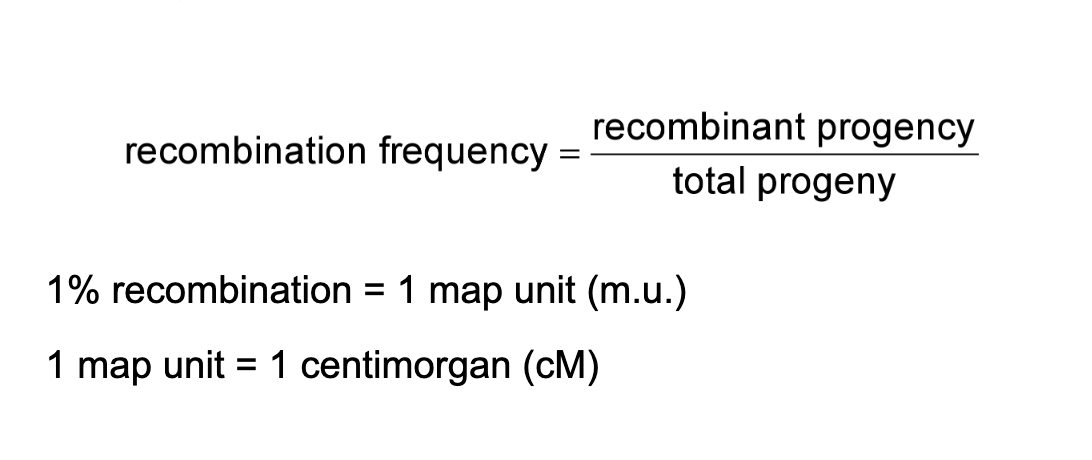
Recombination