Genetics Test Paletzki 3-11-25
 Call Kai
 Learn
Learn Practice Test
 Spaced Repetition
 Match
Match Flashcards
 Knowt Play
1/61

There's no tags or description
Looks like no tags are added yet.
Name | Mastery | Learn | Test | Matching | Spaced | Call with Kai |
|---|
No analytics yet
Send a link to your students to track their progress
62 Terms
genetics
the science that studies how characteristics get passed from parent to offspring
DNA
the molecule that stores genetic information, deoxyribonucleic acid
DNA is composed of
a string of nucleotides
nucleotides are made up of 3 parts
a 5-carbon sugar called deoxyribose, a phosphate group, and a nitrogen base
What does DNA look like?
the shape looks like a twisted ladder, and the sides of the ladder are composed of alternating deoxyribose sugar and phosphate groups, commonly called the “sugar phosphate backbone” the rungs of the ladder are made of nitrogen bases
Edwin Chargaff
determined that the amounts of adenine and thymine were equal and the amounts of cytosine and guanine were equal (in part due to chargaff, we now know that all organisms use the same genetic code)
Adenine =
thymine for DNA, uracil for RNA
cytosine =
guanine
rosalind franklin
used crystallography x-rays to show that 2 DNA strands were twisted
francis crick and james watson
used franklin’s picture to make the first correct model of the double helix
we call the 2 DNA strands
complementary
gene
a segment of DNA that codes for a protein, causing genetic characteristics or traits
because DNA contains the code for creating traits it must…
be accurately transferred from parents to offspring, and with cells constantly growing and dividing it must be accomplished without breaking the DNA strands
how is DNA protected
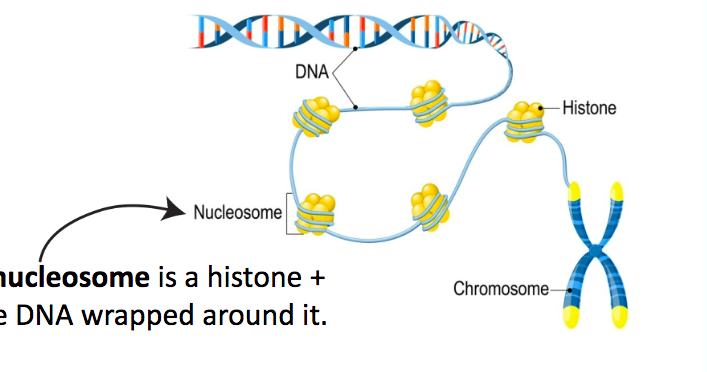
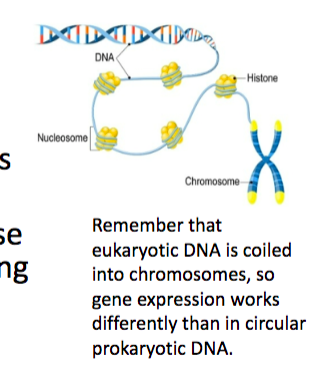
it is tightly coiled around proteins called histones and condensed into chromosomes
nucleosome
a histone + the DNA wrapped around it
DNA replication
duplicates genetic information prior to cellular division
helicase
an enzyme that “unzips” the two strands of DNA
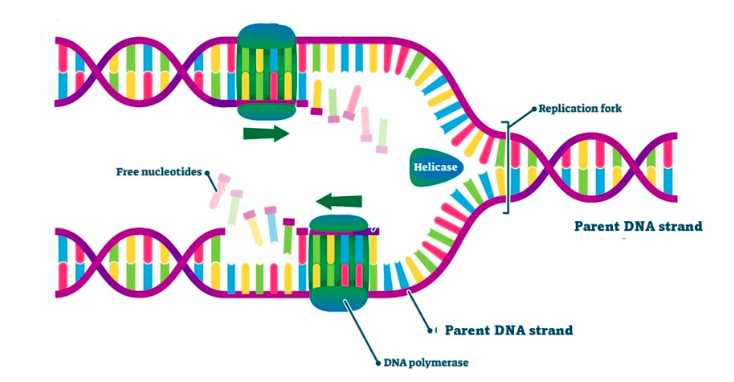
DNA polymerase
an enzyme that brings nucleotides to match one of the strands (known as the parent strand)
the new DNA strand in replication is known as the
daughter strand
the new sequence (will/won’t) match the old sequence because of
WILL, because of strict base pairing rules
semi-conservative
only half of each parent strand remains in the new DNA molecule
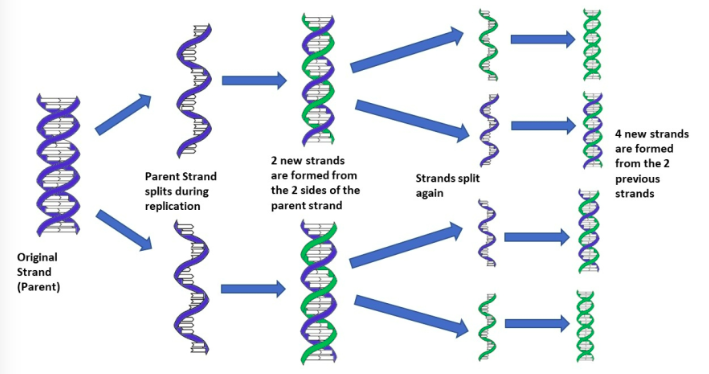
role of enzymes overall in replication
separating the two strands and using one side as the blueprint to make a complementary strand
RNA
the other type of nucleic acid found in cells, required to make proteins from the DNA double helix
ways RNA differs from DNA
single-stranded, ribose sugars, uracil instead of thymine
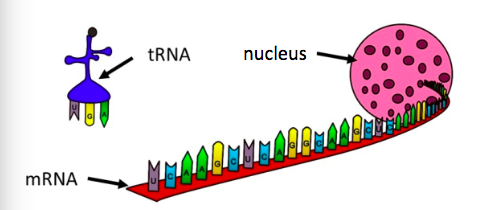
what does mRNA stand for
Messenger RNA
what does rRNA stand for
Ribosomal RNA
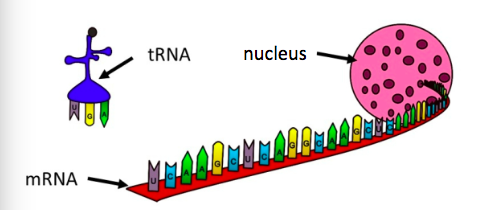
tRNA
transfer RNA
amino acids
building blocks of proteins
DNA remains__ in the cell’s __ except during cell division
trapped, nucleus
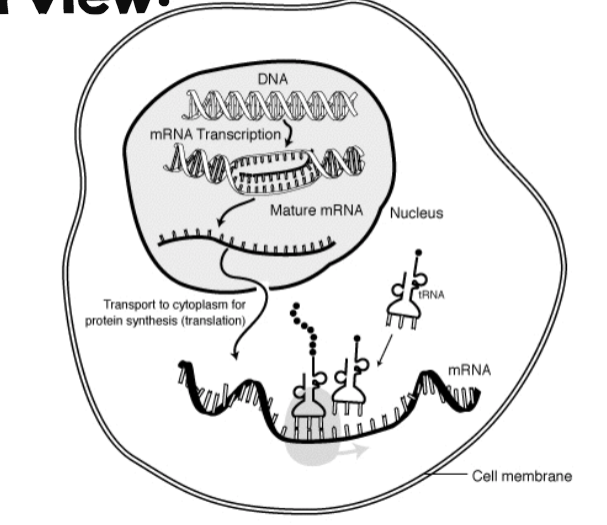
role of mRNA
make a copy of the DNA sequence so the message can leave the nucleus without endangering the original genetic blueprint
transcription
the process of making an mRNA copy from a DNA template in called transcription
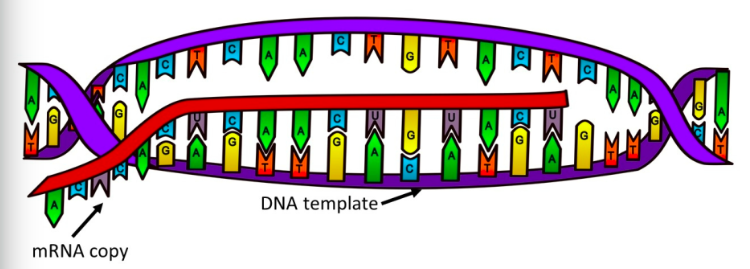
what happens during transcription
an enzyme called RNA polymerase unwinds a small section of the DNA strand, then uses one side of the double helix as a template to make an mRNA copy
how does RNA copy specific genes
by finding promoter sequences at the beginning of each gene
what portion of the mRNA is used
not all of the newly created mRNA is required to code for a protein, some mRNA is spliced out because it is unnecessary for that gene
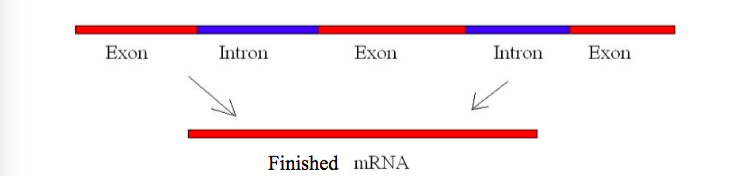
mRNA carries the genetic message from the__ in the___ to the ___
DNA, nucleus, cytoplasm
the cytoplasm contains
ribosomes, which use the mRNA to make proteins
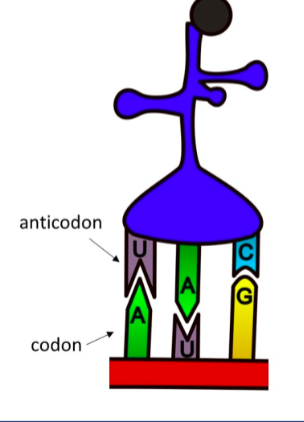
codon
3 bases
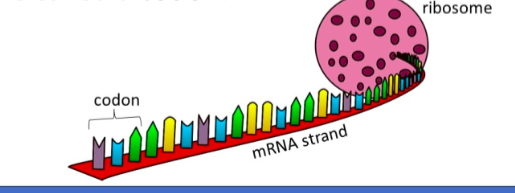
role of tRNA
molecules like matchmakers, they match a codon to an amino acid
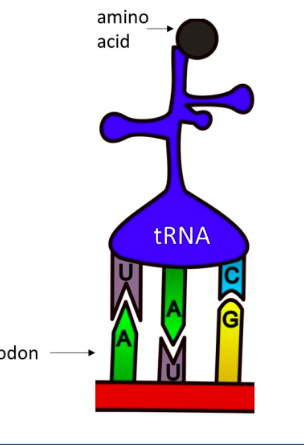
the codon is recognized by
an anticodon on the tRNA molecule, in this way, the cell accurately brings in exactly the amino acids that are coded for the DNA sequence
stop codons
signify the end of an mRNA sequence for one gene, UAA, UAG, and UGA
AUG
a start codon that signifies the start of the next gene, and if found in the middle of a sequence it codes for the amino acid methionine
translation
an mRNA message is turned into an amino acid chain
translation occurs in the
ribosomes of the cell
role of ribosomes in translation
the ribosome attaches at the start codon and continues to move down the mRNA, bringing in tRNA molecules to create an amino acid chain until it reaches a stop codon
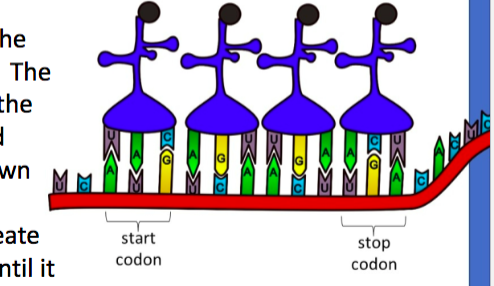
role of amino acids in translation
as tRNA molecules bring in amino acids to match with the mRNA codons, their amino acids bond together creating a long string
amino acids are bonded with
peptide bonds, so the resulting chain is called a polypeptide chain, and the chain will ultimately fold into a protein to be used by the cell
gene regulation
rather than producing unnecessary proteins, cells control which genes are used
how do prokaryotes regulate gene expressions
bacteria like e.coli can turn transcription on or off with a group of genes called an operon
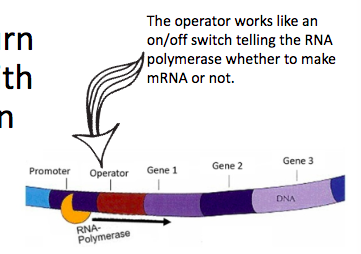
how do eukaryotes regulate gene expression
in eukaryotes, the RNA polymerase does not bind directly to the promoter, it is assisted by a set of specialized proteins known as transcription factors
transcription factors
can cause certain genes to relax, allowing transcription. they can also cause the DNA to coil very tightly, blocking the RNA polymerase
mutation
when DNA is not copied correctly
DNA mutations come in two forms:
point mutations + frameshift mutations
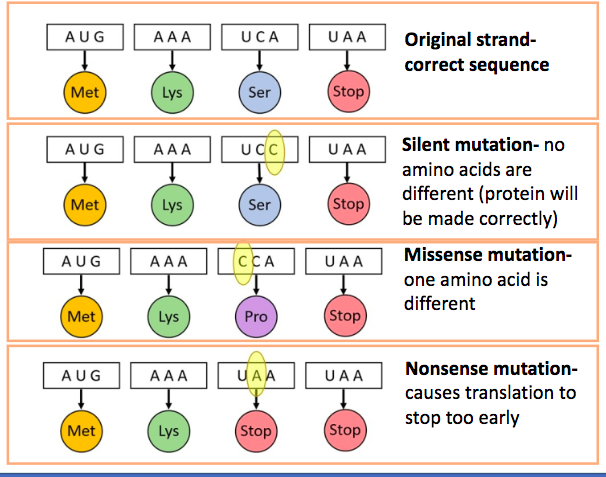
point mutation
caused by a mistake in base pairing for one nucleotide
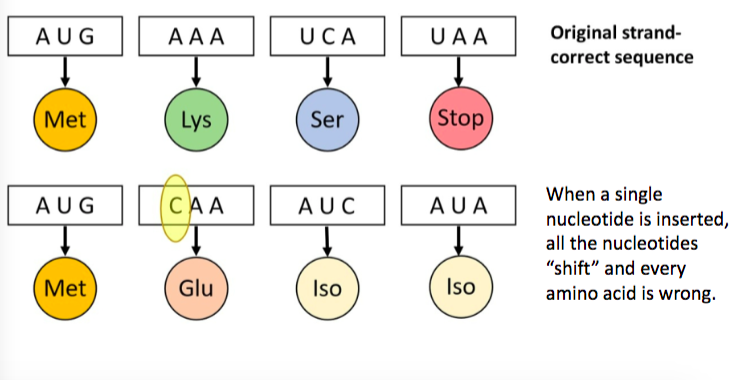
frameshift mutation
a nucleotide is inserted or deleted causing the whole polypeptide chain to be disrupted
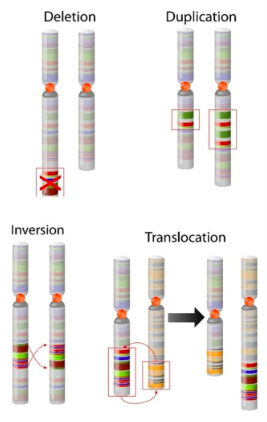
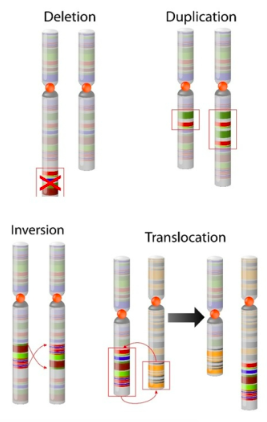
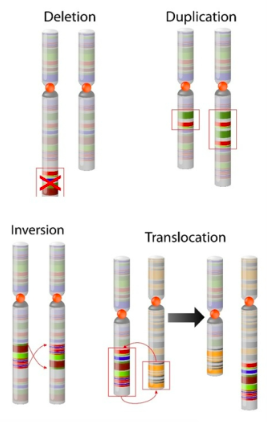
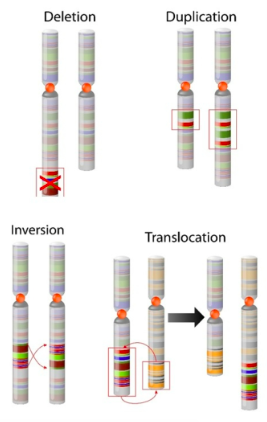
4 types of chromosomal mutations
deletion, duplication, inversion, and translocation
deletion chromosomal mutations
a portion of a chromosome is deleted
duplication chromosomal mutations
a portion of a chromosome is repeated
inversion chromosomal mutations
a portion of a chromosome is flipped
translocation chromosomal mutations
a portion of one chromosome is added to a different chromosome
how do mutations occur
some are simply mistakes in DNA replication or transcription, but mutagens can cause mutations artificially
mutagens
anything that causes a mutation (ex. radioactive substances, certain chemicals, x-rays)
chromosomal mutations involve mistakes in
whole sections of chromosomes