Principles of Program Design
 Note
Note Call Kai
 Learn
Learn Practice Test
 Spaced Repetition
 Match
Match Flashcards
 Knowt Play
 Podcast
1/60

Earn XP
Description and Tags
This set of flashcards covers key vocabulary and concepts from the Principles of Program Design lecture, aiding in exam preparation.
Name | Mastery | Learn | Test | Matching | Spaced | Call with Kai | Chat |
|---|
No analytics yet
Send a link to your students to track their progress
61 Terms
Specificity
Body is better at practice if you train for stregnth, you get stronger, if you train endurance, endurance is better
Reversibility
gains made in fitness can be lost if training ceases.
Overload
placing demands on the body beyond its current capabilities to stimulate change.
Progression
training stress should gradually increase to elicit continued adaptation.
Diminishing returns
as one continues to train, the returns in performance improvements decrease.
(the more you train the harder it becomes to see big improvements, easrly gains are often much quicker)
Minimum effective training dosage
The least amount of exercise needed to produce the desired training effect.
Maximum tolerable dose
The maximum level of training that can be tolerated without negative effects.
Resistance Training (RT)
A form of exercise intended to improve strength and endurance
Adherence
The ability to stick with a given training program over time.
Moderate intensity aerobic PA
Physical activity performed at a level of exertion that raises the heart rate and is sustainable for extended periods.
Basal Metabolic Rate (BMR)
the energy required by the body to minimally function
(rate of energy expenditure)
Metabolic Equivalent (MET)
A unit that estimates the amount of oxygen used by the body during physical activity.
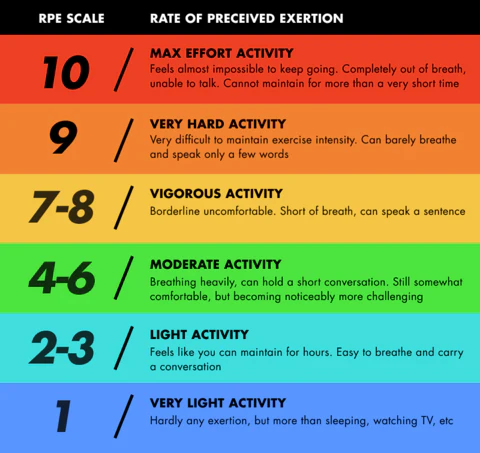
Rate of Perceived Exertion (RPE)
A scale used to measure the intensity of exercise based on how hard you feel you are workin
Heart rate reserve
The difference between resting heart rate and maximum heart rate; used to calculate exercise intensity.
Target heart rate
The heart rate at which an individual aims to exercise to gain fitness benefits.
Anaerobic zone
A level of exercise intensity where the body relies more on anaerobic energy systems.
Recovery heart rate
The rate at which the heart returns to resting levels after exercise.
Initial values
The fitness level of an individual prior to training; affects the rate of improvement.
Training stimulus
The specific challenge imposed upon the body during exercise that promotes adaptation.
Warm up sets
Initial sets performed to prepare the body for more intense work; aimed at increasing blood flow.
Working set
The primary set of an exercise aimed at eliciting a training stimulus.
Resting heart rate
The number of beats per minute when a person is at rest.
Sympathetic nervous system
The part of the autonomic nervous system that prepares the body for stress-related activities.
Parasympathetic nervous system
The part of the autonomic nervous system that promotes relaxation and recovery.
I6. ndividual variability
The differences in how individuals respond to training stimuli
Aerobic recommendations
Guidelines suggesting frequency and intensity of aerobic exercise for health benefits.
Diminishing returns recommendations for health
all muscle groups one per week, 150 minutes of moderate/intense aerobic activity, this can be done about 30 minutes 4-5 days
Vigorous activity for health
20-60 minutes, 3x a week
law of diminishing returns
a point at which the level of benefit gained is less than the amount of energy invested
Sleeping unhealthily
by sleeping 5 hours instead of 7.5, this reduced fat burn and increased muscle loss by 50-90%
sleeping healthy
lose more fat and gain more muscle
1 MET
3.5mL O2 x kg x min
Light MET
1.6-2.9
walking slowly around home, store or office
moderate MET
3.0-5.9
jogging, biking, or playing recreational sports
vigorous MET
greater than 6
MET activities such as running, intense cycling, or competitive sports.
Oxygen consumption and calorie burn
for every liter of oxygen consumed, 5 calories are burned
cons to METS
obscure
intensity is variable
not pragmatic in applied settings
METs used for
the volume of oxygen transported, delivered and consumed to the working muscle
Vo2
volume of oxygen consumed
Resting rate sympathetic nervous system
responsible for body’s resting adn digesting response
decreased respiration, decreased HR, and increased digestion
Resting rate parasympathetic nervous system
directs rapid, involuntary response to dangerous or stressful stimuli, fight or flight
elevated HR, pupils dilate, respiratory rate increases, sweating
Nervous systems control on heart rate
parasympatheti ccontrol. isbelow 110 bpm
sympathetic control is above 110 bpm
HR perscription doctrine
HR increases. in a positive linear fashion to increase intensity of exercise
Surgery and HR
the adrenal glands produce epinephrine adn norepinephrine to regulate HR after surgery
Method to calcluate max hr
HR Max= 220 - agre
HR for 90 y/o, 220 - 90 = 130bpm
resting is 75 bpm
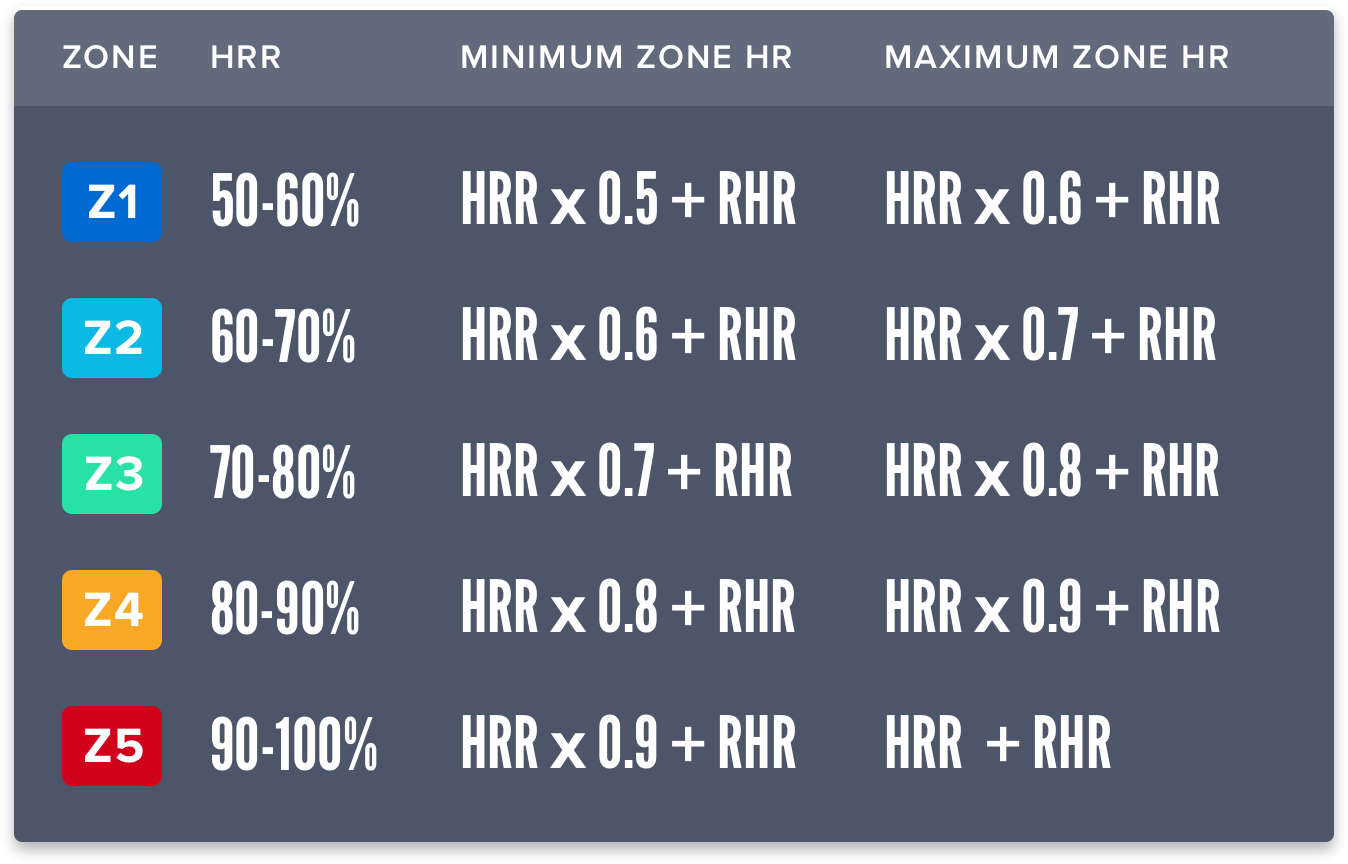
Heart Rate reserve 5 steps
find resting heart rate
find max heart rate
subtract resting from max
multiply by target intensity (decimals)
add resting heart rate
Calculate Heart Rate reserve for 50 bpm and 200 max
HHR= HRmax - Hrest = 150
200-50=150
multiply HHR % of intensity
150 × 0.5 = 75
targeted HR (HRR x trainig %) + resting
150 × 0.50 + 75 + 50 = 125 bpm
training zones for heart rate reserve
find the target HR for. a36 year old who wants to hit 70% of HRR
resting 54
220 - 36 = 184
HRR: 184 - 54 = 130 bpm
HHR: 130 x .70 = 91
+ resting: 91 + 54 + 145 bpm
causes of variability for individual variability
age
health status
genetics
initital fitness level
danger zone
absolutes in a sea of varibaility, one size fitall programs aren’t always good
individuals with low initial physical fitness
show greater relative % gains. and faster rate of improvement in response to exercise training than those of higher fitness levels
first 4-8 weeks of initial training program
are not gains, but nervous system induced, not muscle growth
during the first month of aerobic exercise progran vo2
vo2 max of a client with poor cardiorespiratory endurance may improve 12%
Intensity: Resistance activities. 3methods
Rate of perceived exertion RPE
% Max: percentage. ofmaximum
Repititions in Reserve RIR
warm up sets, working set, stimulus to fatigue
Principles of Program Design
Specificity
Reversibility
Overload
Progression
Diminishing Returns
Individual Variability
Initial Values