Chapter 5: Ground Rules of Metabolism
 Call Kai
 Learn
Learn Practice Test
 Spaced Repetition
 Match
Match Flashcards
 Knowt Play
1/71

There's no tags or description
Looks like no tags are added yet.
Name | Mastery | Learn | Test | Matching | Spaced | Call with Kai |
|---|
No analytics yet
Send a link to your students to track their progress
72 Terms
Energy
The capacity to do work or produce change.
Kinetic Energy
The energy of an object in motion, which can be transferred to perform work.
Thermodynamics
The branch of physics that deals with the relationships between heat, work, temperature, and energy. It defines the laws governing energy transfer and conversion.
First Law of Thermodynamics
Also known as the Law of Energy Conservation, it states that energy cannot be created or destroyed, only transformed from one form to another.
Entropy
A measure of disorder or randomness in a system, indicating the amount of energy that is unavailable for doing work. It increases until there is a net flow of heat from one area to another.
Second Law of Thermodynamics
States that the total entropy of an isolated system can never decrease over time. It implies that energy transformations are not 100% efficient and that disorder tends to increase.
Potential Energy
The energy stored in an object due to its position or configuration, which can be converted into kinetic energy when the object is in motion.
Reactants
Substances that undergo a chemical change during a reaction, combining to form products.
Products
Substances that are formed as a result of a chemical reaction, created from the combination of reactants.
Free Energy
The energy available to do work in a system at constant temperature and pressure, essentially indicating the maximum amount of work that can be extracted from a system.
Endergonic
Describes a reaction that requires an input of energy to proceed, resulting in products with higher free energy than the reactants.
Exergonic
Describes a reaction that releases energy, resulting in products with lower free energy than the reactants.
Activation Energy
The minimum amount of energy required to start a chemical reaction. It is the energy barrier that must be overcome for reactants to be converted into products.
Guncotton (Nitrocellulose)
A highly explosive compound formed by nitrating cellulose, used in military applications and as a propellant. Has an extremely low activation energy and thus explodes randomly.
Catalysis
The process of increasing the rate of a chemical reaction by the addition of a substance, called a catalyst, which is not consumed in the reaction.
Active site
The specific region of an enzyme where substrates bind and undergo a chemical reaction. It is crucial for facilitating catalysis and determining enzyme specificity.
Substrate
The substance upon which an enzyme acts during a chemical reaction. Substrates bind to the active site of the enzyme, leading to the formation of products.
Transition State
The temporary state during a chemical reaction where reactants are transformed into products. It represents the highest energy level of the reaction pathway.
Induced-Fit Model
A model explaining how enzyme active sites undergo a conformational change to better accommodate substrates, enhancing the efficiency of catalysis.
The active site of some enzymes repels ___ when a substrate binds. Intermediates in some reactions are unstable in ___; minimizing its presence allows them to persist longer, increasing the rate of the final reaction.
Water
Too little salt and polar parts of the enzyme attract one another so strongly that the enzyme’s shape ____.
Changes drastically, impairing its function.
Too much salt interferes with the ______ that hold the enzyme in its characteristic shape, and it denatures.
hydrogen bonds
Allosteric Regulation
A process where the binding of a molecule at a site other than the active site alters the enzyme's activity. This can enhance or inhibit the function of the enzyme.
Feedback Inhibition
A regulatory mechanism where the end product of a metabolic pathway inhibits an earlier step, preventing unnecessary accumulation.
Redox (Oxidation-Reduction) Reaction
A chemical reaction involving the transfer of electrons between two species, leading to changes in oxidation states. This process is essential in cellular respiration and photosynthesis.
Electron Transfer Chain
A series of protein complexes and other molecules that move electrons through a membrane, ultimately producing ATP and water as byproducts. This process is crucial in aerobic respiration.
Cofactors
Non-protein chemical compounds that assist enzymes in catalysis by helping in substrate binding or participating in the chemical reaction.
Metal ions as cofactors
They can help bring on the transition state by donating or accepting electrons.
Coenzymes
Small organic molecules that work with enzymes to enhance their activity and facilitate chemical reactions. Often modified by taking part in a reaction and regenerated in separate reactions.
Nicotinamide Dinucleotide (NAD+)
A coenzyme derived from niacin (vitamin B3) that can accept electrons and hydrogen atoms, becoming reduced to NADH. It plays a crucial role in metabolic processes, particularly in cellular respiration and energy production.
Catalase
An enzyme of the peroxisomes that catalyzes the decomposition of hydrogen peroxide into water and oxygen, protecting cells from oxidative damage. It has four tightly bound cofactors called hemes (small organic compounds with an iron atom in the center).
A heme is a _____ and a ______.
Cofactor; Coenzyme
Ascorbic Acid (Vitamin C)
A coenzyme that aids in collagen fiber formation and carries electrons during peroxide breakdown (in lysosomes).
ATP
A coenzyme that transfers energy with a phosphate group.
NADP, NADPH
Nicotinamide adenine dinucleotide phosphate, an electron carrier involved in anabolic reactions.
FAD, FADH, FADH2
Flavin adenine dinucleotide, an electron carrier that participates in redox reactions during cellular respiration.
CoA
Coenzyme A, a vital cofactor that carries acetyl groups (COCH3) during glycolysis.
Coenzyme Q10
Also known as ubiquinone, Coenzyme Q10 is a lipid-soluble antioxidant that plays a crucial role in the electron transport chain, facilitating ATP production.
Heme
A prosthetic group found in hemoglobin and myoglobin, vital for oxygen transport and storage. It contains an iron atom that binds to oxygen molecules.
Antioxidants
Substances that prevent oxidative damage in cells by neutralizing free radicals, thus protecting cellular structures and functions.
Free Radical
An uncharged molecule that has an unpaired electron, making it highly reactive and capable of causing oxidative damage to cells and tissues.
Phosphorylation
The process of adding a phosphate group to a molecule, typically a protein or a carbohydrate, which can alter its function and activity in metabolic processes.
ATP/ADP Cycle
The biochemical process that describes the conversion of ATP to ADP and back again, facilitating energy transfer and storage in cellular metabolism.
Fluid Mosaic Model
A structural model of cell membranes that depicts them as a mosaic of various components, including phospholipids, cholesterol, and proteins, allowing for fluid movement and flexibility.
Diffusion
The passive transport process by which molecules move from an area of higher concentration to an area of lower concentration, driven by concentration gradients.
The greater the difference in concentration, the _____ the rate of diffusion occurs.
Faster
Diffusion occurs more quickly at _______ temperatures.
higher
____ and ______ diffuse more quickly than large molecules.
Ions; small molecules
Diffusion occurs faster at higher ______. This is because it squeezes the atoms and molecules closer together.
Pressures
Hypotonic
A solution that has a lower concentration of solutes compared to another solution, resulting in water moving into cells and potentially causing them to swell or burst.
Hypertonic
A solution that has a higher concentration of solutes compared to another solution, which leads to water moving out of cells and potentially causing them to shrink.
Isotonic
A solution that has the same concentration of solutes as another solution, resulting in no net movement of water into or out of cells.
Osmosis
The movement of water molecules across a semipermeable membrane from an area of lower solute concentration to an area of higher solute concentration, aiming to equalize solute concentrations on either side.
Turgor
The pressure exerted by fluid in a plant cell's vacuole against the cell wall, providing structural support and maintaining the cell's shape.
Osmotic Pressure
The pressure required to stop the flow of water across a semipermeable membrane due to osmosis, proportional to the concentration of solutes in the solution.
Passive Transport
The movement of substances across a cell membrane without the use of energy, relying on concentration gradients.
Facilitated Diffusion
The process of passive transport in which molecules move across the cell membrane via specific transmembrane proteins, aiding their passage without energy expenditure.
Active Transport
The movement of substances across a cell membrane against their concentration gradient, requiring energy, typically in the form of ATP.
Exocytosis
The process by which a cell expels materials in vesicles that fuse with the plasma membrane, releasing their contents outside the cell.
Pinocytosis (bulk phase endocytosis)
The process of cellular ingestion of liquid and small particles by forming vesicles from the plasma membrane. It allows cells to take in extracellular fluid along with dissolved solutes.
Endocytosis
The process by which cells internalize substances by enveloping them in membrane-bound vesicles, allowing uptake of nutrients and signaling molecules.
Receptor-mediated endocytosis
is a specialized form of endocytosis in which cells internalize specific molecules by the binding of those molecules to receptors on the cell surface, leading to vesicle formation.
Phagocytosis
The process by which cells engulf large particles, such as bacteria or dead cells, forming vesicles to internalize them for degradation and recycling. A type of receptor-mediated endocytosis.
Pseudopod
A temporary, foot-like extension of a cell used in the process of phagocytosis to engulf large particles by surrounding and enclosing them.
Membrane Recycling
The process by which cellular membranes are retrieved and reused after vesicle formation, ensuring efficient membrane composition and turnover. This is crucial for maintaining cellular homeostasis and regulating the surface area.
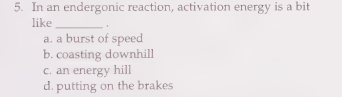
An energy hill
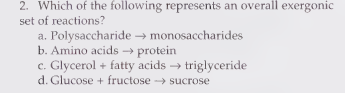
Polysaccharide —> monosaccharides
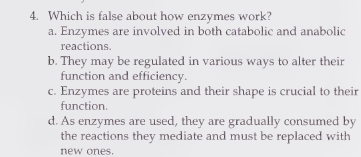
As enzymes are used, they are gradually consumed by the reactions they mediate and must be replaced with new ones.
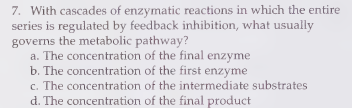
The concentration of the final product.
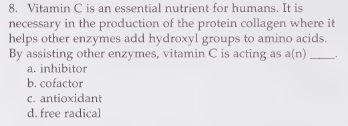
b. Cofactor
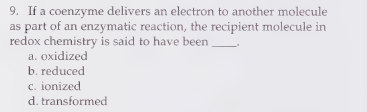
Reduced
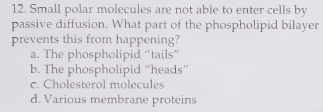
The phospholipid "tails"