Mechanisms

0.0(0)
Studied by 0 people
call kaiCall Kai
learnLearn
examPractice Test
spaced repetitionSpaced Repetition
heart puzzleMatch
flashcardsFlashcards
GameKnowt Play
Card Sorting

1/14

encourage image

There's no tags or description

Looks like no tags are added yet.

Last updated 11:23 AM on 6/12/26
Name
Mastery
Learn
Test
Matching
Spaced
Call with Kai

No analytics yet

Send a link to your students to track their progress

15 Terms

1
New cards

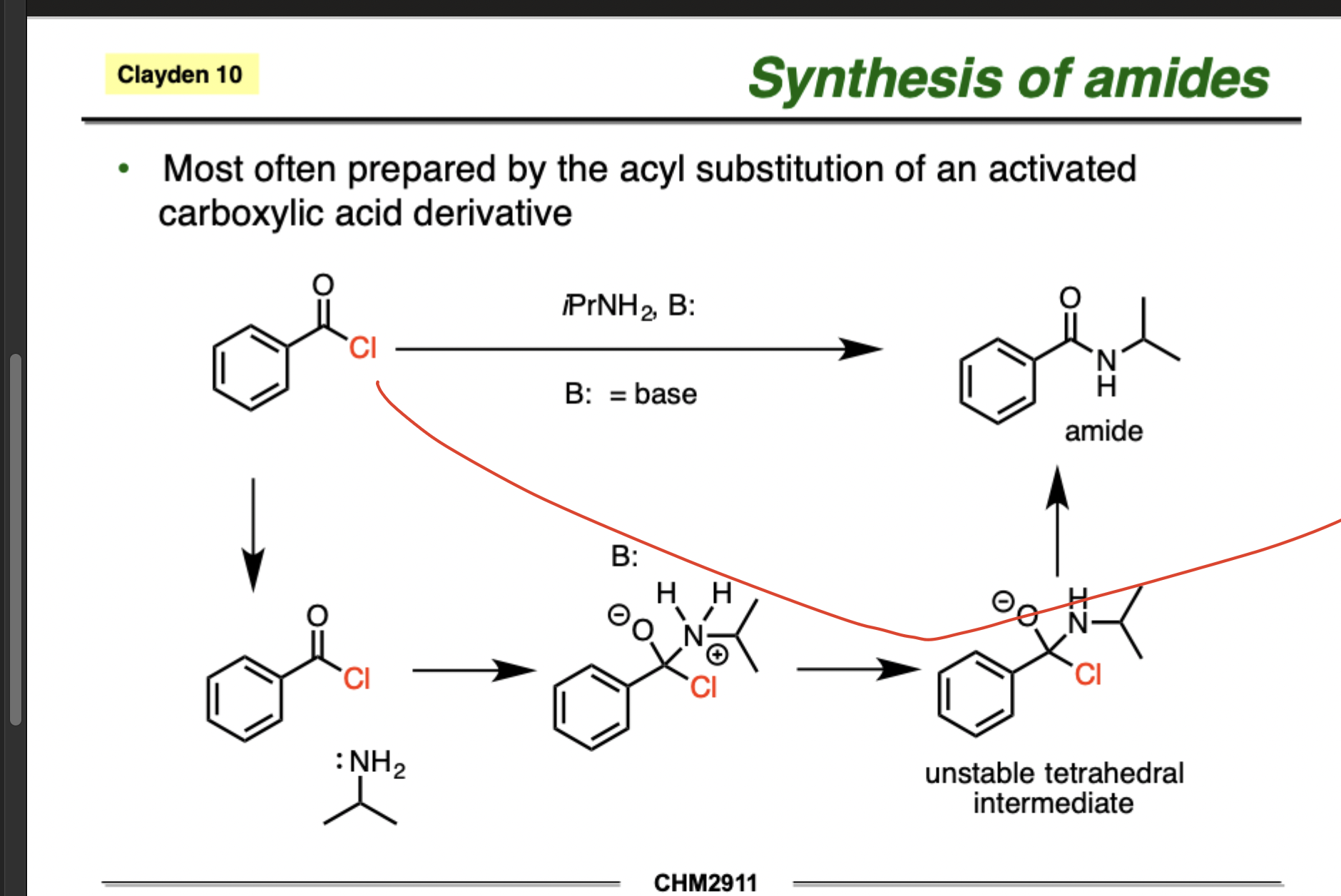
Amide Synthesis - Nucleophilic Acyl Substitution (Acid chloride) - Reversible

(Acid → Amine)

Reagants: Amine with r group, base (Pr), H3o+

  1. Nucleophilic attack

  2. Tetrahedral Intermediate

  3. Proton transfer (O- → OH) (NH2-R) → (NH-R) → Applicable if good leaving group isn’t there.

  4. Turn OH into leaving group using hydronium (Iminum ion forms) → Applicable if good leaving group isn’t there.

  5. Base (Et3N) attacks and takes away H

  6. Amide forms (+H2O)

<p>(Acid → Amine)</p><p>Reagants: Amine with r group, base (Pr), H3o+</p><p></p><ol><li><p>Nucleophilic attack</p></li><li><p>Tetrahedral Intermediate</p></li><li><p>Proton transfer (O- → OH) (NH2-R) → (NH-R) → <strong>Applicable if good leaving group isn’t there.</strong></p></li><li><p>Turn OH into leaving group using hydronium (Iminum ion forms) → <strong>Applicable if good leaving group isn’t there.</strong></p></li><li><p>Base (Et3N) attacks and takes away H</p></li><li><p>Amide forms (+H2O)</p></li></ol><p></p>
2
New cards
<p>Gringard Reaction - Nucleophilic Acyl Addition (Aldehyde → Secondary, Ketone → Tertiary, Ester → Tertiary)</p>

Gringard Reaction - Nucleophilic Acyl Addition (Aldehyde → Secondary, Ketone → Tertiary, Ester → Tertiary)

  1. Nucleophilic attack

  2. Tetahedral Intermediate

  3. Protonate (using hydronium)

  4. Final product

For ester, repeat the process.

  • Two R groups should be present. (tertiary alcohol)
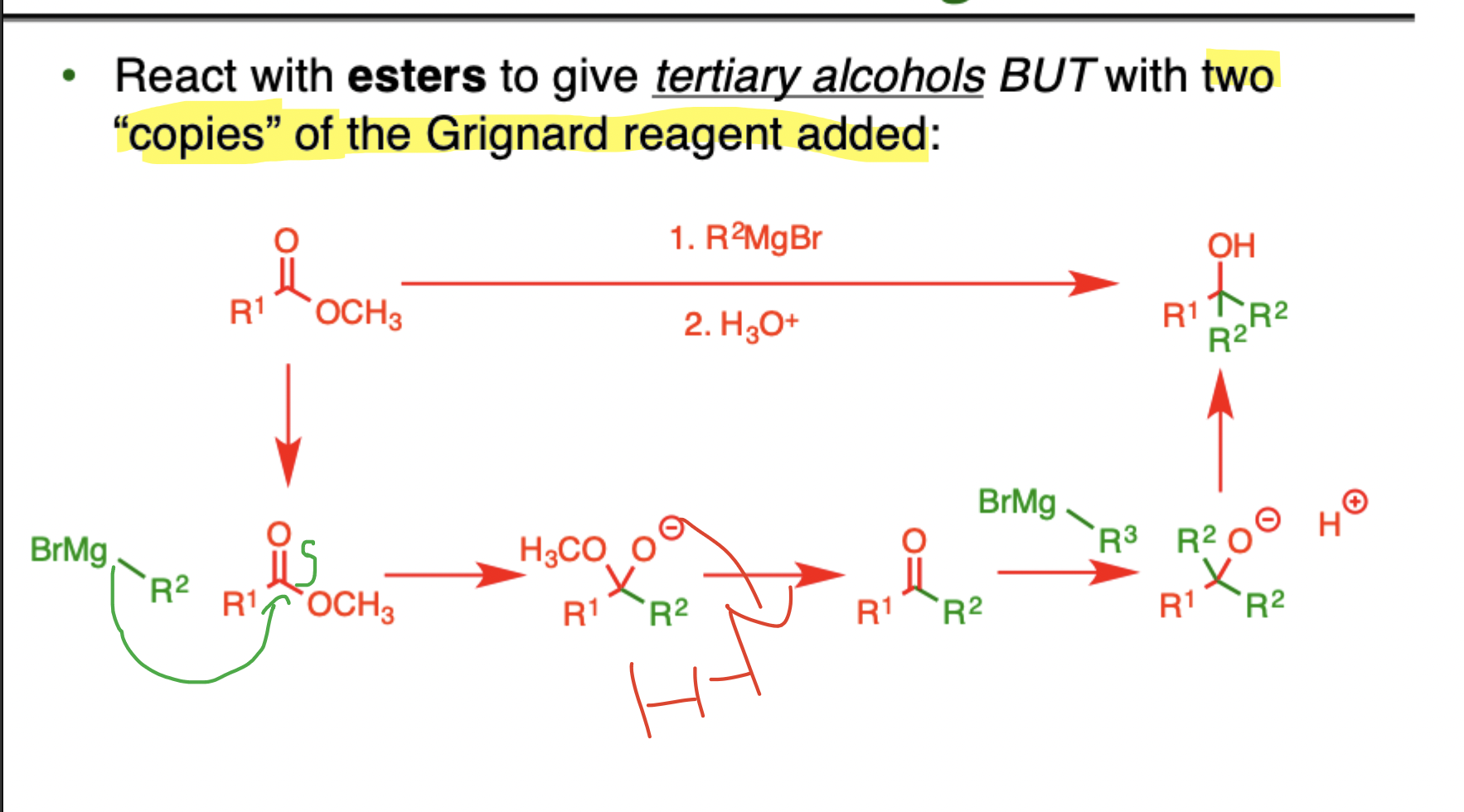
<ol><li><p>Nucleophilic attack</p></li><li><p>Tetahedral Intermediate</p></li><li><p>Protonate (using hydronium)</p></li><li><p>Final product</p></li></ol><p></p><p>For ester, repeat the process.</p><p></p><ul><li><p>Two R groups should be present. (tertiary alcohol)</p></li></ul><p></p>
3
New cards
<p>Nucleophilic Acyl Addition  (Cynanohydrin) Ketone → Tertiary Alcohol  Reagants: H3O+, Nacn</p>

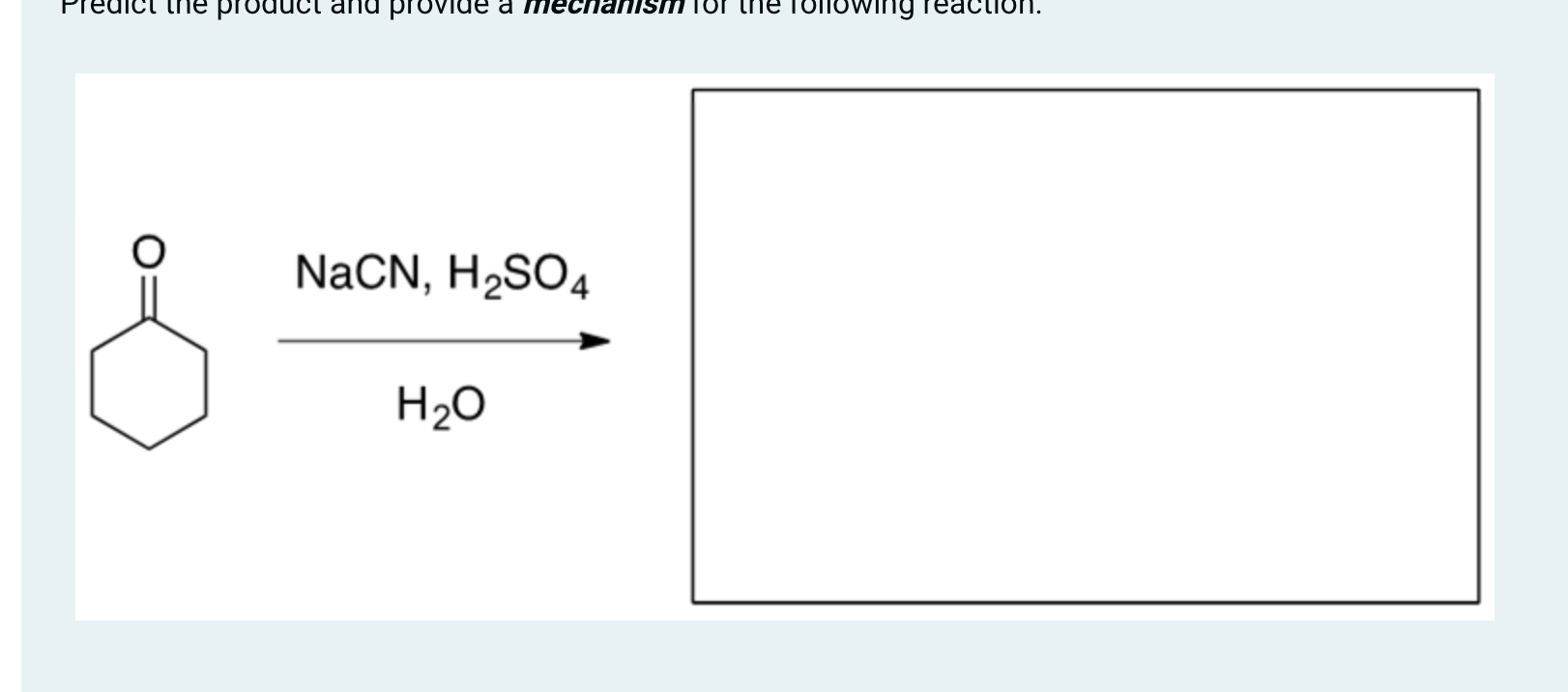
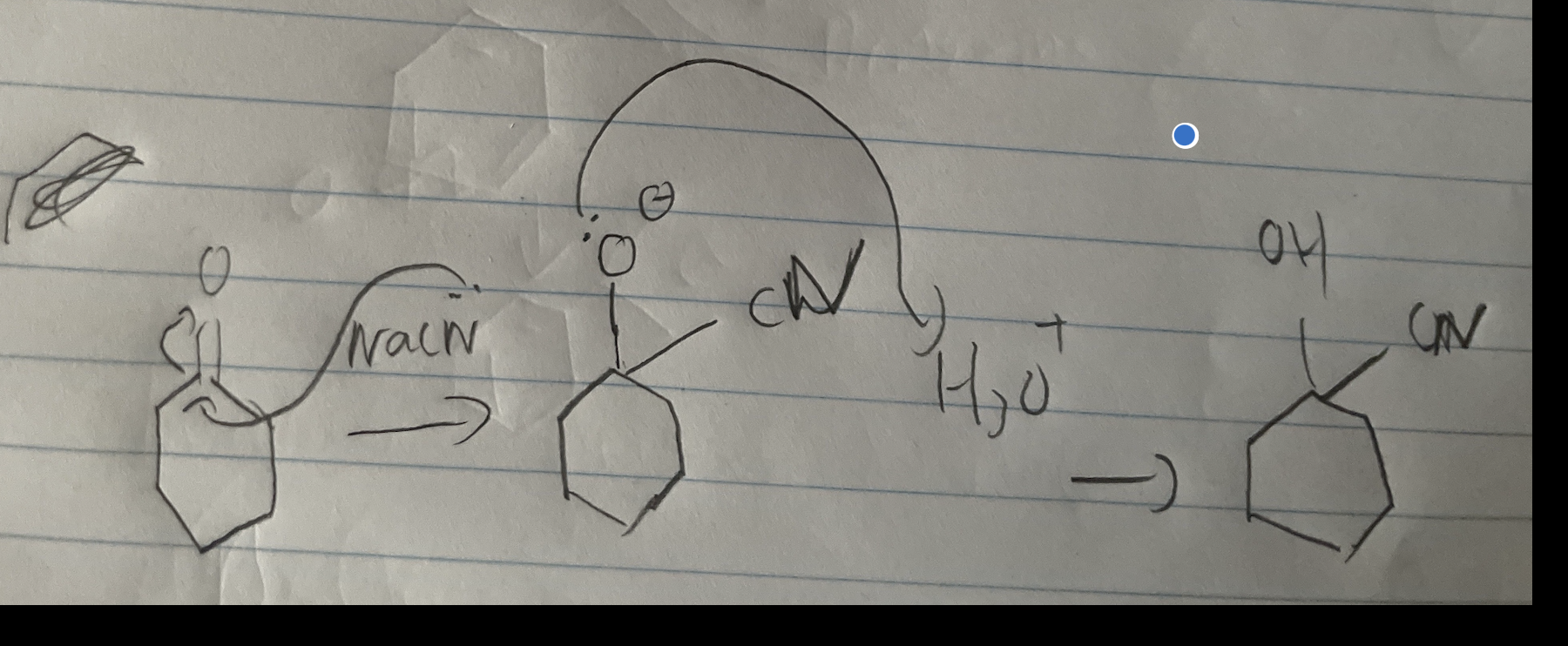
Nucleophilic Acyl Addition (Cynanohydrin) Ketone → Tertiary Alcohol Reagants: H3O+, Nacn

  1. Nucleophilic attack (CN comes in)

  1. Protonation or charged tetrahedral intermediate

  1. Formation of product (H2O also?)

<p></p><p></p><p></p><p></p><ol><li><p>Nucleophilic attack (CN comes in)</p></li></ol><p></p><ol start="2"><li><p>Protonation or charged tetrahedral intermediate</p></li></ol><p></p><ol start="3"><li><p>Formation of product (H2O also?)</p></li></ol><p></p><p></p><p></p>
4
New cards
<p>Formation of amines to imines (Acidic conditions)</p><p></p>

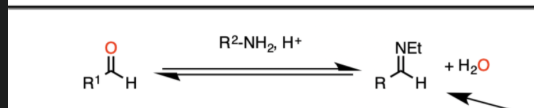
Formation of amines to imines (Acidic conditions)

  1. Nucleophilic attack

  1. Formation of tetrahedral intermediate

  1. Proton transfer (NH2 → NH , O → OH)

  1. Leaving group is good

  1. Leaving group leaves, double bond in N forms

  1. Imminium ion

  1. Lose a proton (from NH)

Note: The reaction of secondary amines give enamines
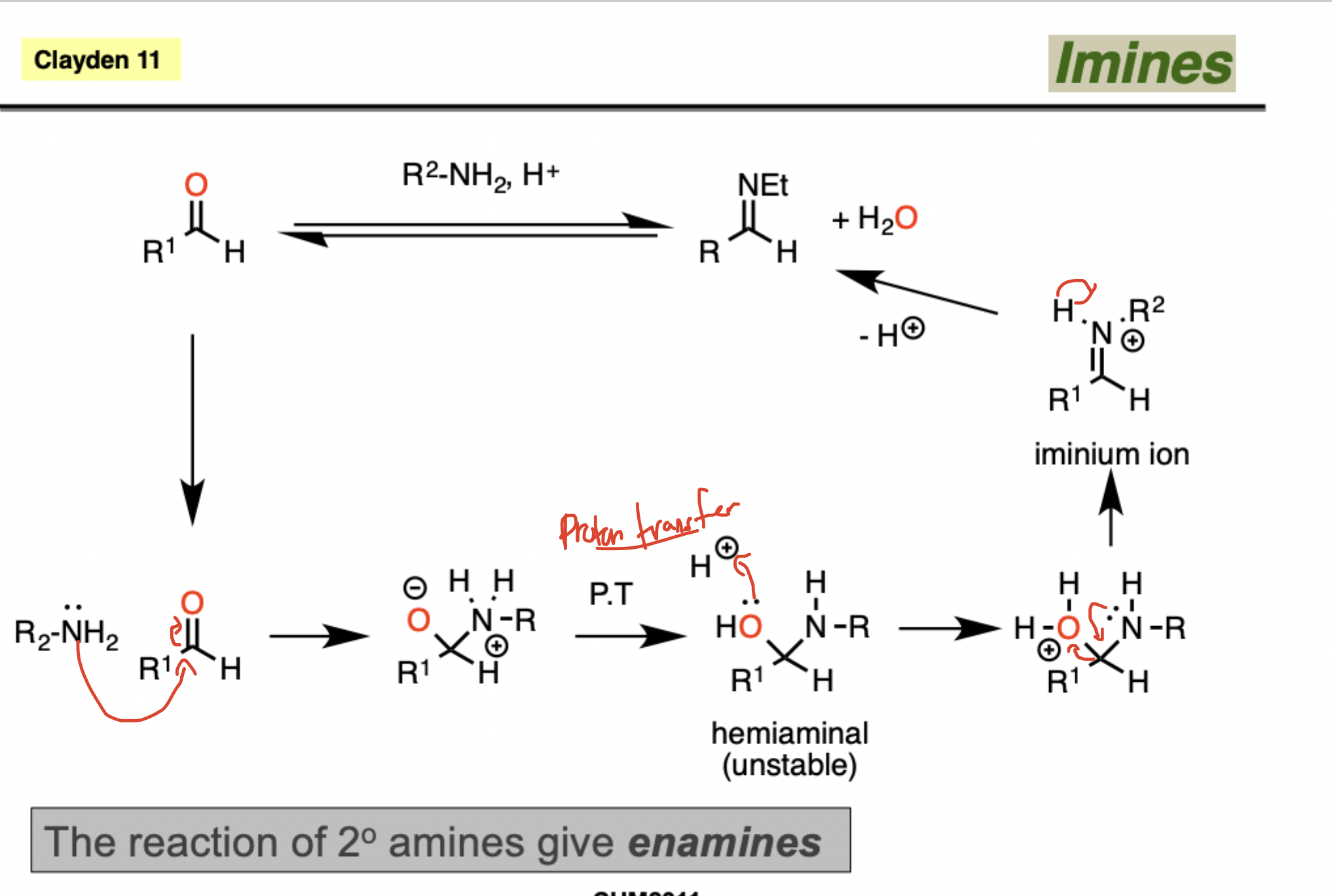
<ol><li><p>Nucleophilic attack</p></li></ol><p></p><ol start="2"><li><p>Formation of tetrahedral intermediate</p></li></ol><p></p><ol start="3"><li><p>Proton transfer  (NH2 → NH , O → OH)</p></li></ol><p></p><ol start="4"><li><p>Leaving group is good</p></li></ol><p></p><ol start="5"><li><p>Leaving group leaves,  double bond in N forms</p></li></ol><p></p><ol start="6"><li><p>Imminium ion</p></li></ol><p></p><ol start="7"><li><p>Lose a proton (from NH)</p></li></ol><p></p><p></p><p>Note: The reaction of secondary amines give enamines</p><p></p><p></p>
5
New cards
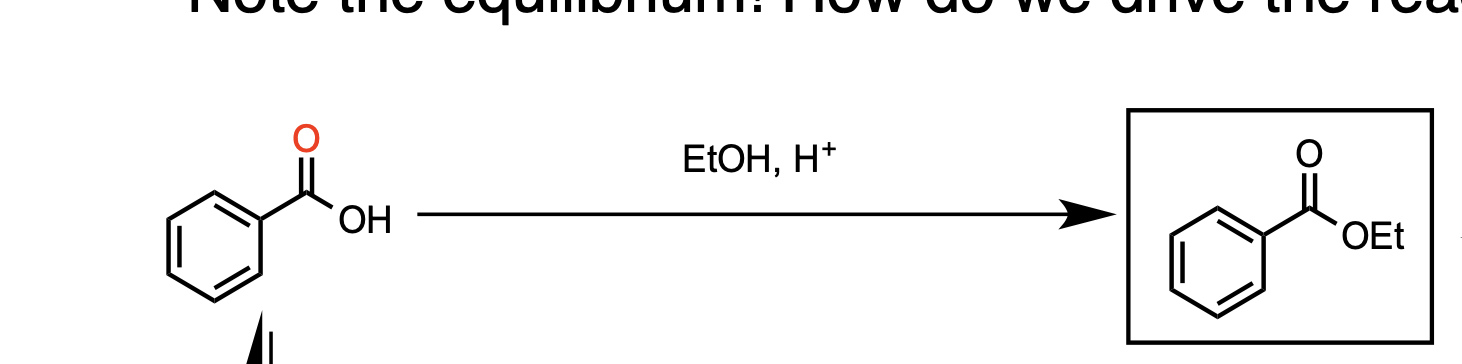
<p>Fischer Esterification (Carboxylic acid → Ester ) :Nucleophlic acyl substitution </p>

Fischer Esterification (Carboxylic acid → Ester ) :Nucleophlic acyl substitution

  1. Aldol reaction (Add H+)

  1. Nucleophilic attack

  1. Tetrahedral intermediate

  1. Deprotonate the r group

  1. Cause leaving group through hydronoim

  1. Deprotonate to remove central hydrogen
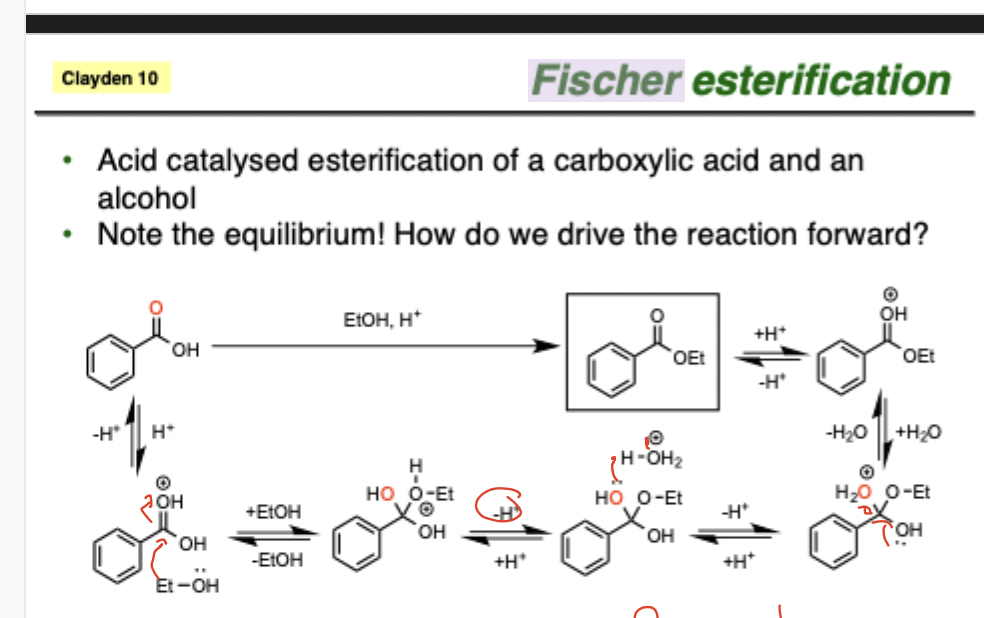
<ol><li><p>Aldol reaction (Add H+)</p></li></ol><p></p><ol start="2"><li><p>Nucleophilic attack </p></li></ol><p></p><ol start="3"><li><p>Tetrahedral intermediate</p></li></ol><p></p><ol start="4"><li><p>Deprotonate the r group</p></li></ol><p></p><ol start="5"><li><p>Cause leaving group through hydronoim</p></li></ol><p></p><ol start="6"><li><p>Deprotonate to remove central hydrogen</p></li></ol><p></p><p></p><p></p>
6
New cards

Jones Oxidation

Primary alcohol → Carboxylic acid (Skips aldehyde)

Secondary alcohol → Ketone

7
New cards

Swern Oxidation (DMSO, base, electrophile)

Primary alcohol → Aldehyde

Secondary alcohol → Ketone

Byproducts: Me2S, Co, Co2, HCl

8
New cards
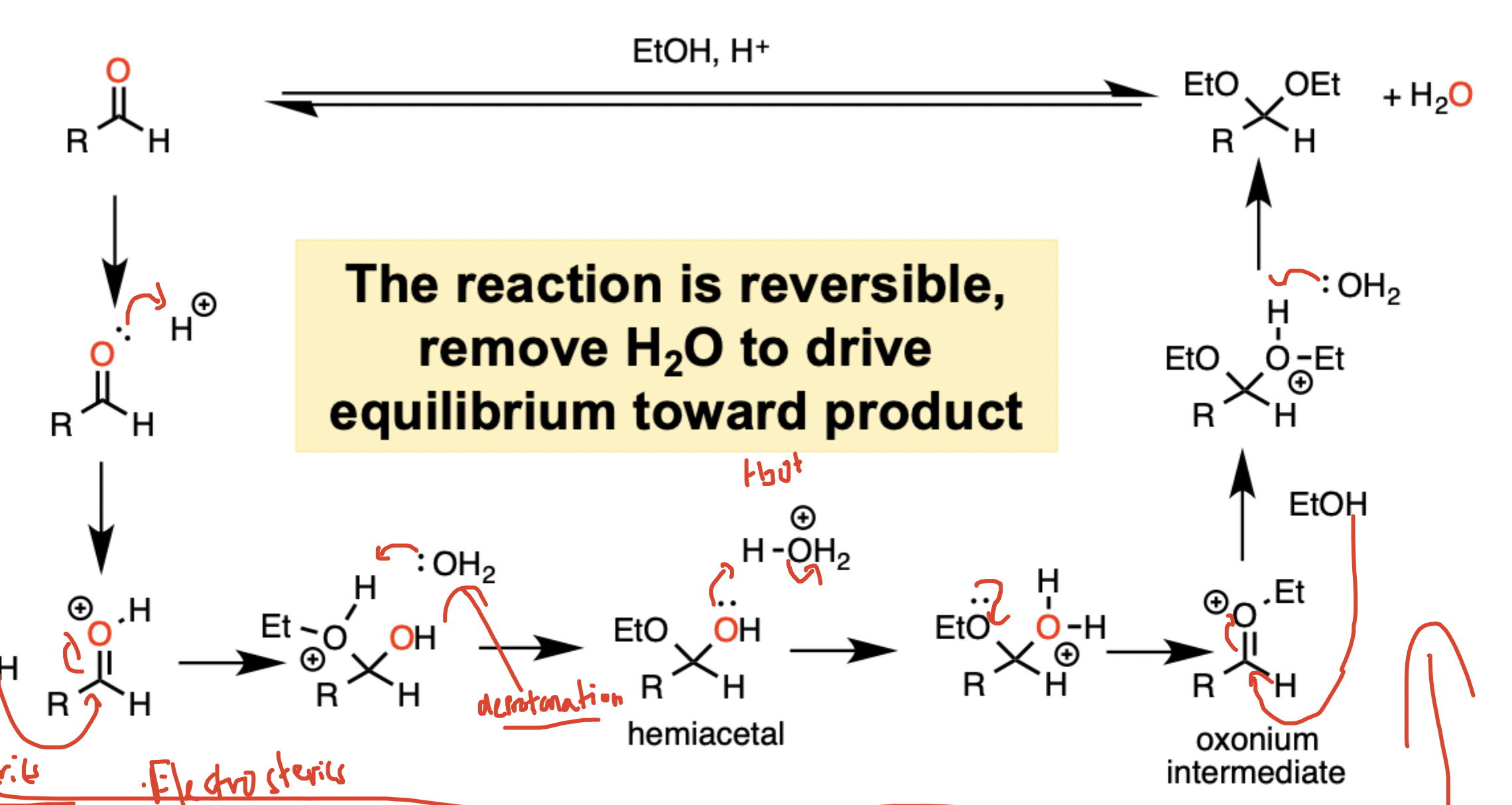
<p>Acetal Formation (Secondary Alcohol → Acetal) </p><p></p>

Acetal Formation (Secondary Alcohol → Acetal)

  1. Aldol

  2. Nucleophilic attack

  3. Deprotonation (using OH2) Now EtO

  4. Leaving group (OH2+) using hydronium

  5. Eto into double bond (Oxinium intermediate)

  6. Nucleophilic attack

  7. Intermediate

  8. DeProtonate

  9. Acetal formed! +H2O

<ol><li><p>Aldol</p></li><li><p>Nucleophilic attack</p></li><li><p>Deprotonation (using OH2) Now EtO</p></li><li><p>Leaving group (OH2+) using hydronium</p></li><li><p>Eto into double bond (Oxinium intermediate)</p></li><li><p>Nucleophilic attack</p></li><li><p>Intermediate</p></li><li><p>DeProtonate</p></li><li><p>Acetal formed! +H2O</p></li></ol><p></p>
9
New cards

Rosenmund reduction

Reduce C-Cl (acid chloride) to C-H bond (uses Pd/BaSo4)
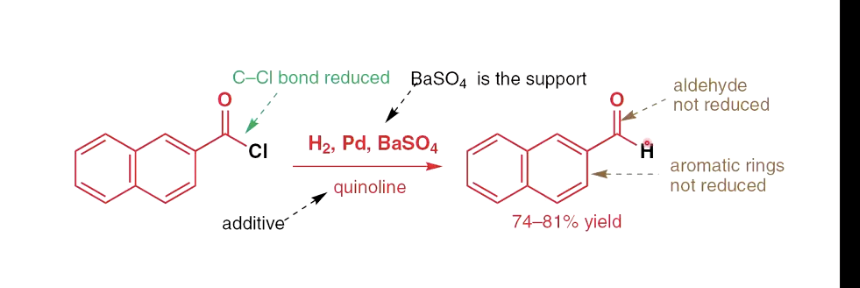
<p>Reduce C-Cl (acid chloride) to C-H bond (uses Pd/BaSo4)</p><p></p>
10
New cards

NaBh4 reduction (mechanism)

  • Reduction of aldehydes and ketones to alcohols

  • Will not reduce esters, carboxylic acid and amides
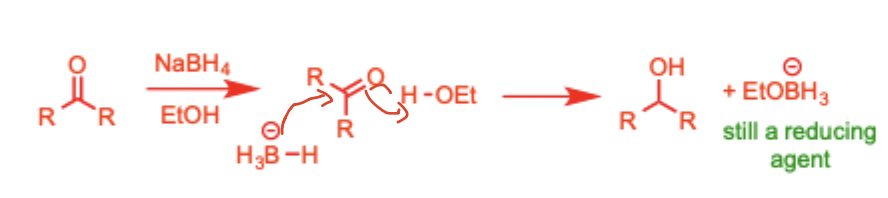
<ul><li><p>Reduction of aldehydes and ketones to alcohols</p></li></ul><p></p><ul><li><p>Will not reduce esters, carboxylic acid and amides</p></li></ul><p></p><p></p><p></p><p></p>
11
New cards

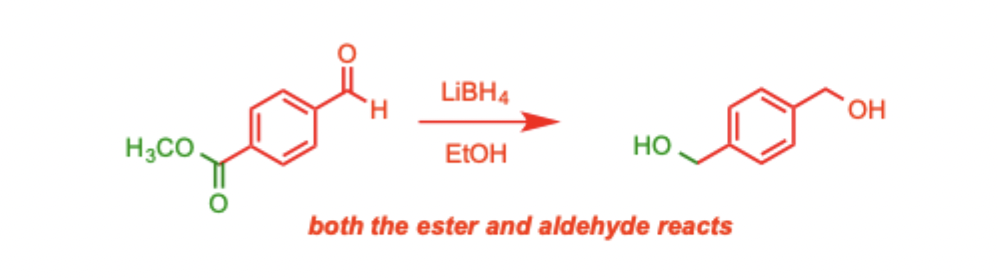
Reduction of LiBh4

  • Reduction of aldehydes and ketones to alcohols

  • WILL reduce esters as well

<ul><li><p>Reduction of aldehydes and ketones to alcohols </p></li></ul><p></p><ul><li><p>WILL reduce esters as well</p></li></ul><p></p><p></p><p></p>
12
New cards

LiAlH4 reduction

  • Reduction of amides to aldehydes amines

  • Reduction to carboxylic acid to alcohol

13
New cards

DiBAL-H (eduction) with -78 degrees

  • Reduction of esters to aldehydes

  • Reduction of nitriles to aldehydes (−C≡N)

  • Lactones (cyclic ester) to lactols (hemiacetal)
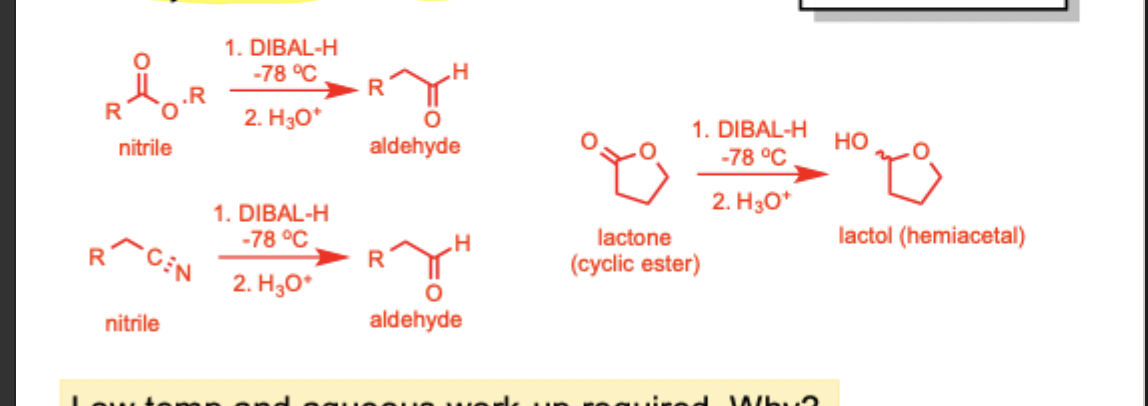
<ul><li><p>Reduction of esters  to aldehydes</p></li></ul><p></p><ul><li><p>Reduction of nitriles to aldehydes (<strong><em>−C≡N)</em></strong></p></li></ul><p></p><ul><li><p>Lactones (cyclic ester)  to lactols (hemiacetal)</p></li></ul><p></p><p></p><p></p><p></p><p></p><p></p>
14
New cards

Reduction of borane

Reduction of amides and carboxylic acids

15
New cards

Reduction using odium cyanoborohydride and sodium triacetoxy borohydride

Ammonium ion reduce to amines
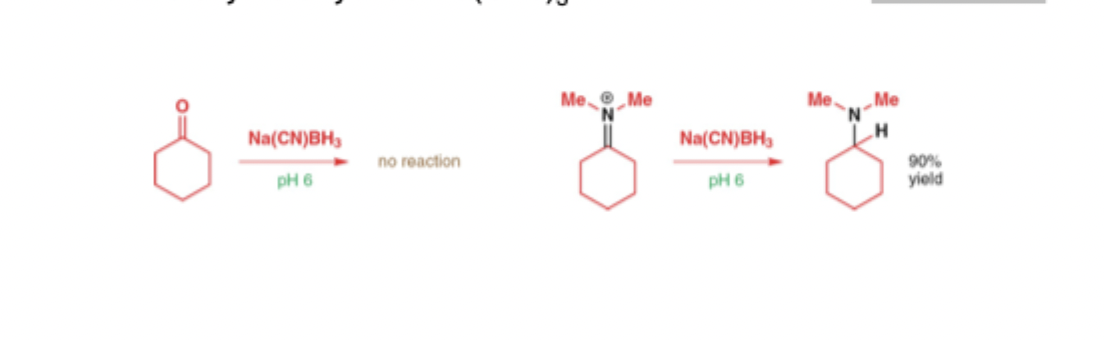
<p>Ammonium ion reduce to amines</p><p></p><p></p><p></p>