Bio 30 brain ear and eye section
 Call Kai
 Learn
Learn Practice Test
 Spaced Repetition
 Match
Match Flashcards
 Knowt Play
1/71

There's no tags or description
Looks like no tags are added yet.
Name | Mastery | Learn | Test | Matching | Spaced | Call with Kai |
|---|
No analytics yet
Send a link to your students to track their progress
72 Terms
Cerebrum
speech, reasoning, memory, personality, movement, sensory
hypothalamus
regulars body temperature and metalbolism. controls hugner, thirst, sleep and sex drive
pituitary gland
part of endocrine system
cerebellum
controls balance, co-ordination of voluntary muscle movementa nd muscle tone
pons
transmits information between two sides of the cerebellum and the cerebellum and the medula oblongata
medulla oblongata
controls the autonomic nervous system, which includes SNS and PNS. things like heart rate, breathing, blood pressure and digestion
frontal lobe
motor control, voluntary movement, like to memory. reasoning. critical thinking, language. and perosnality
temprotal lobe
hearing and smelling (olfactory)
occipital lobe
vision
parietal lobe
sensory areas associated with touch, pressure, temperature, taste. also linked to emotions and interpreting speech
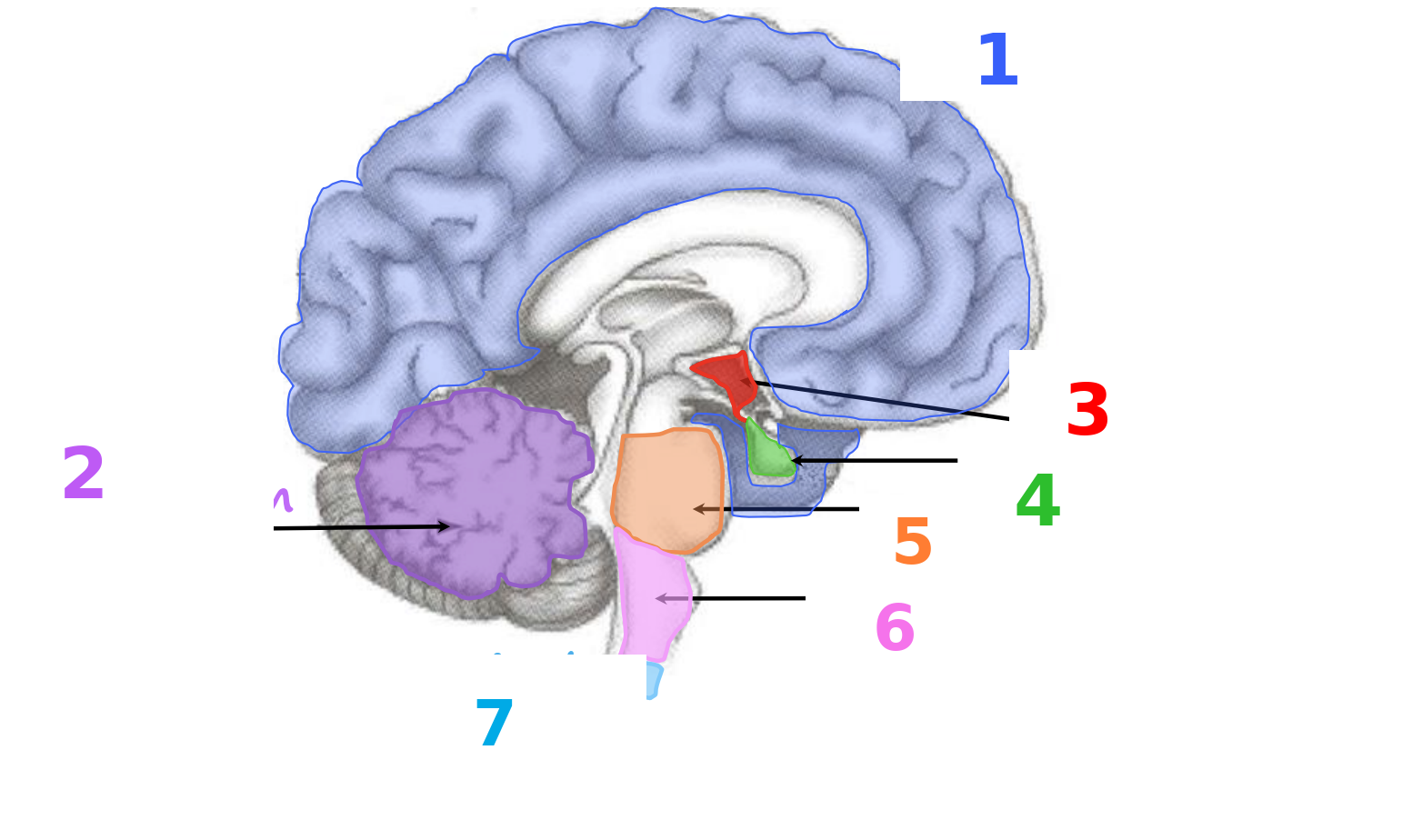
1
cerebrum
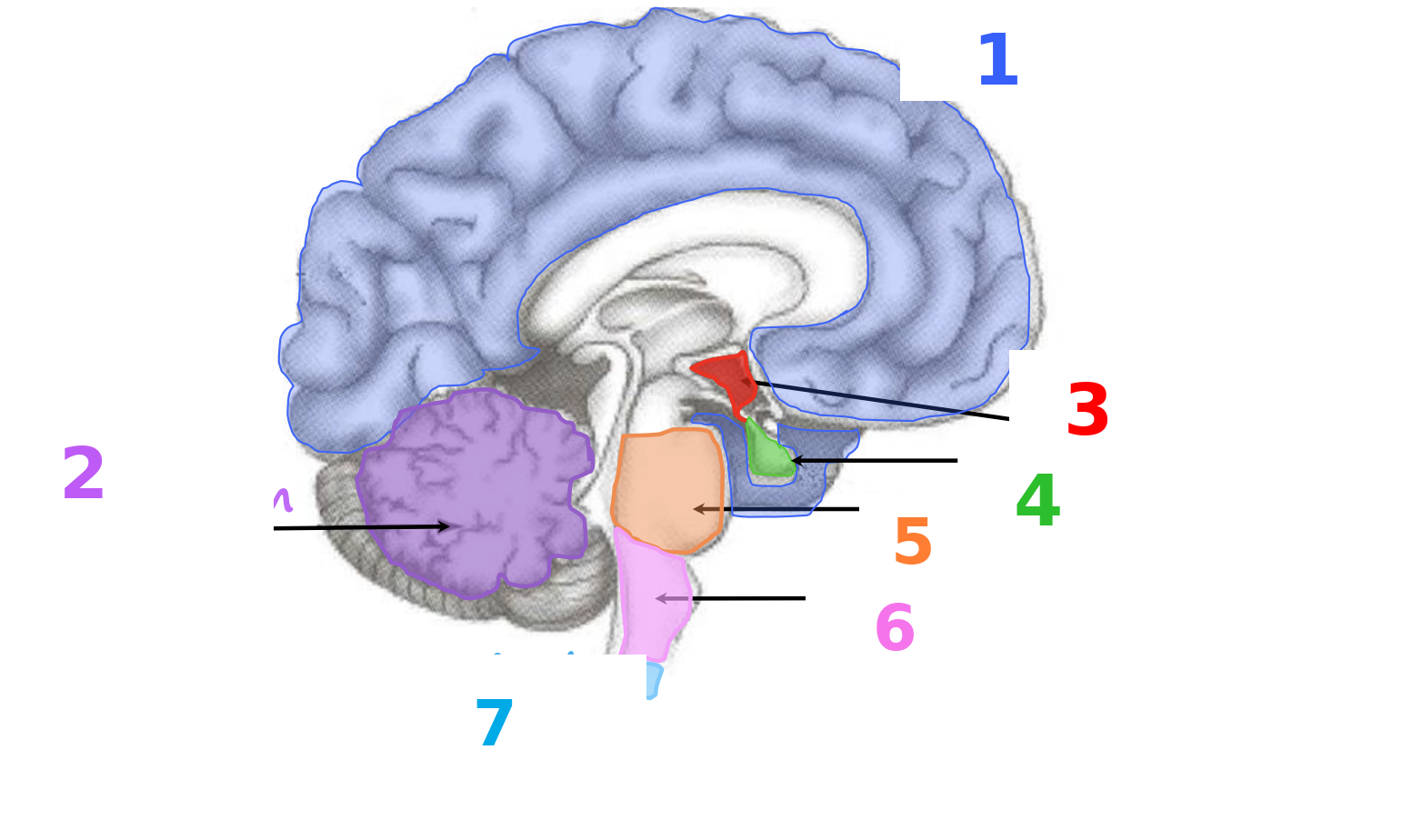
2
cerebellum
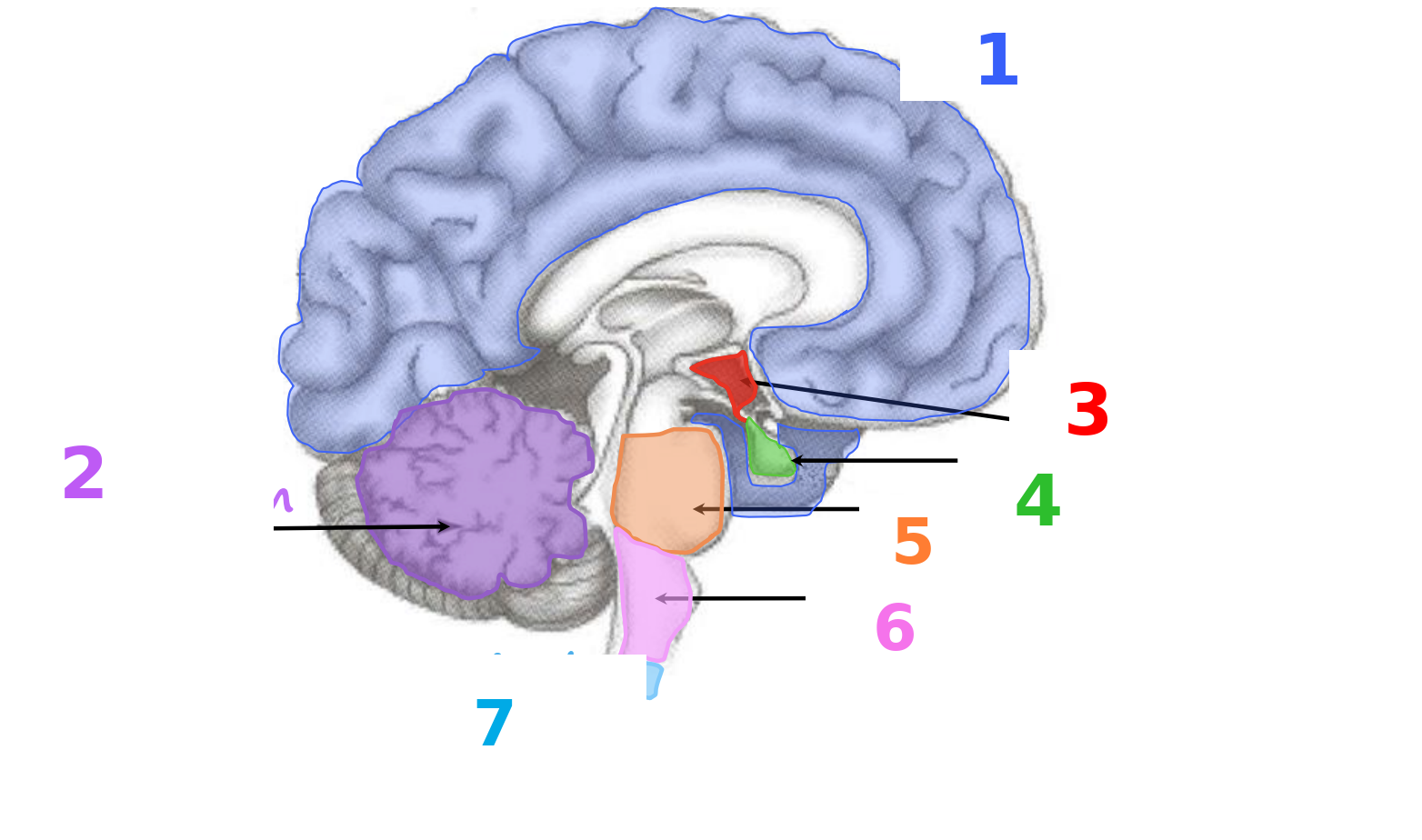
3
hypothalamus
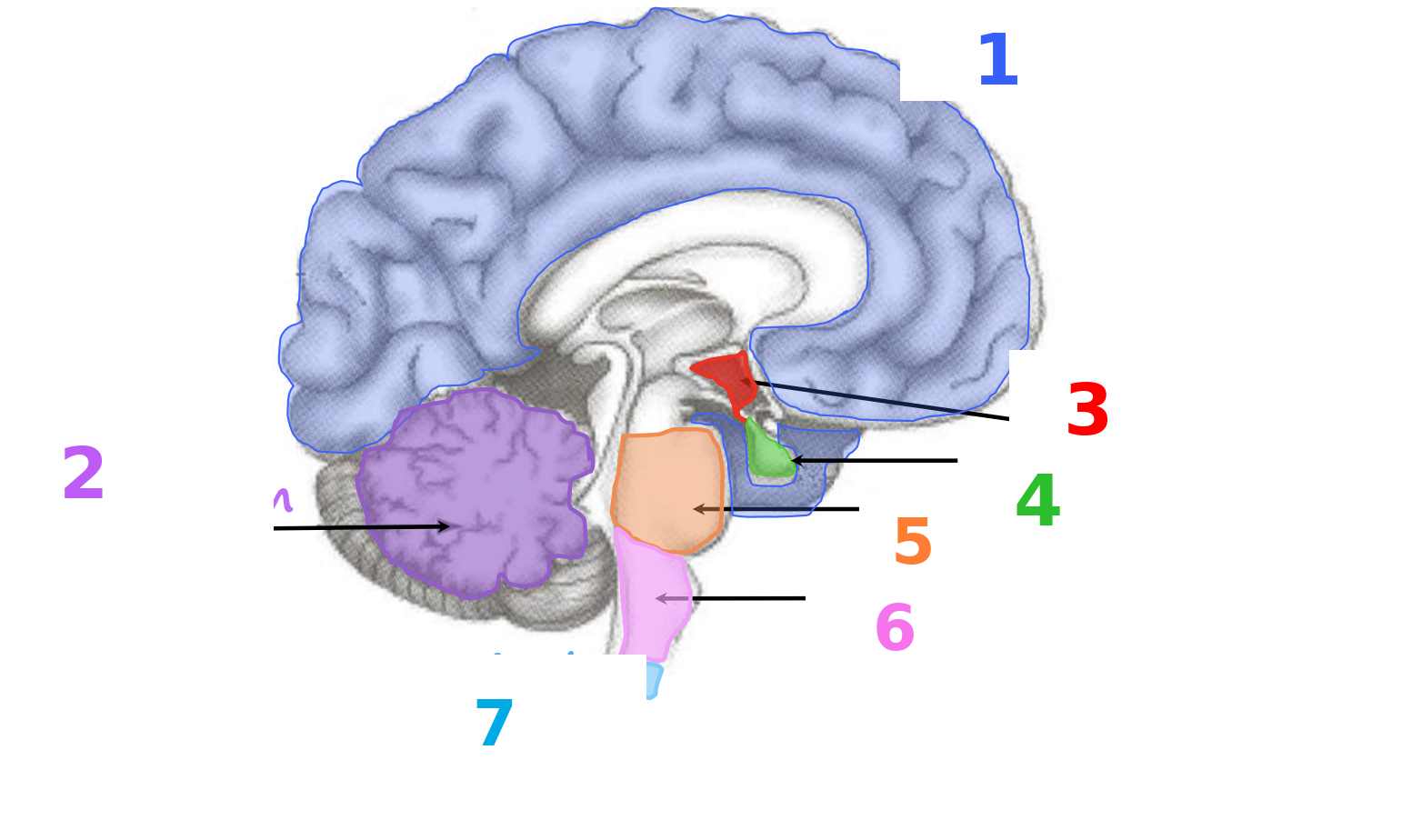
4
pituitary
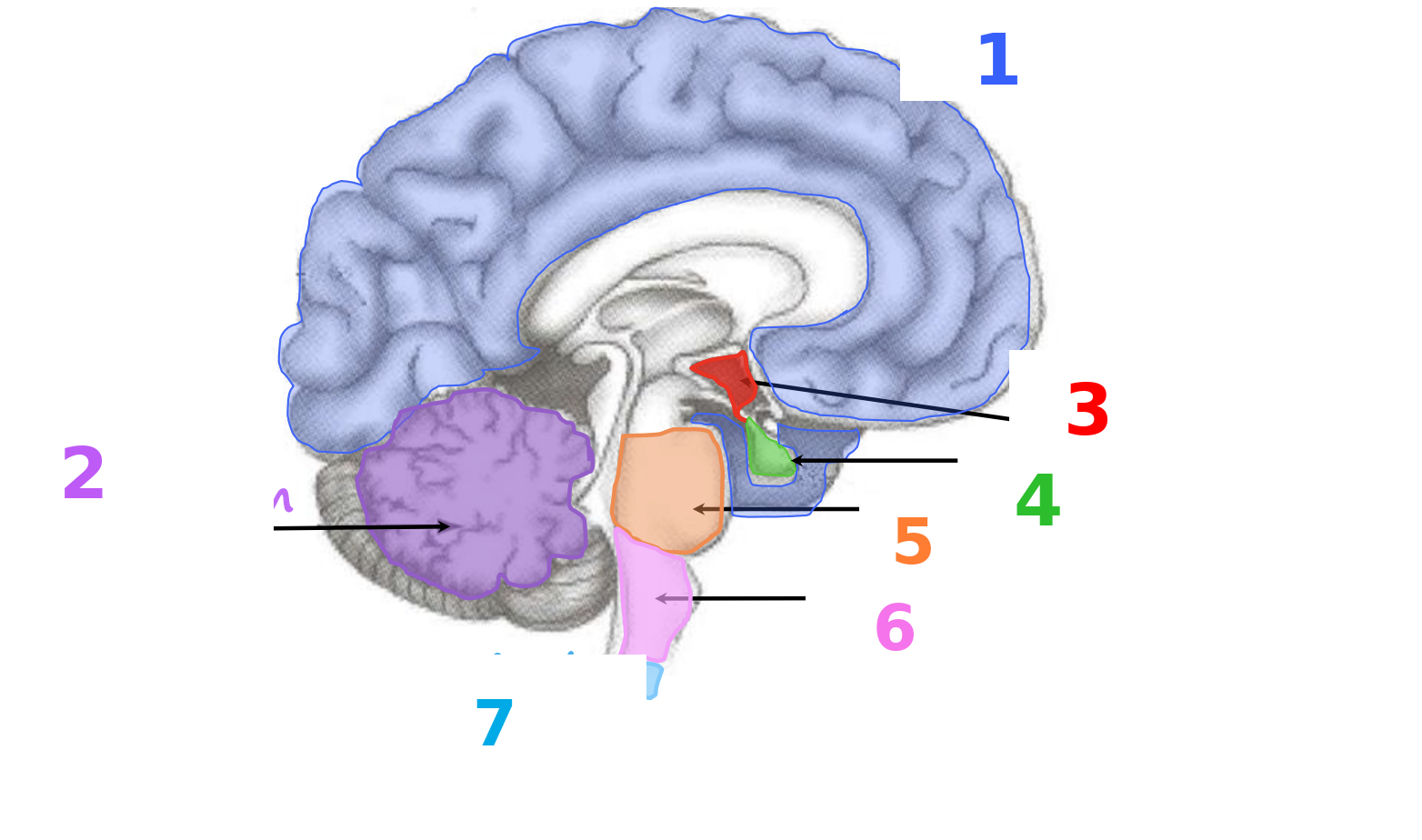
5
pons
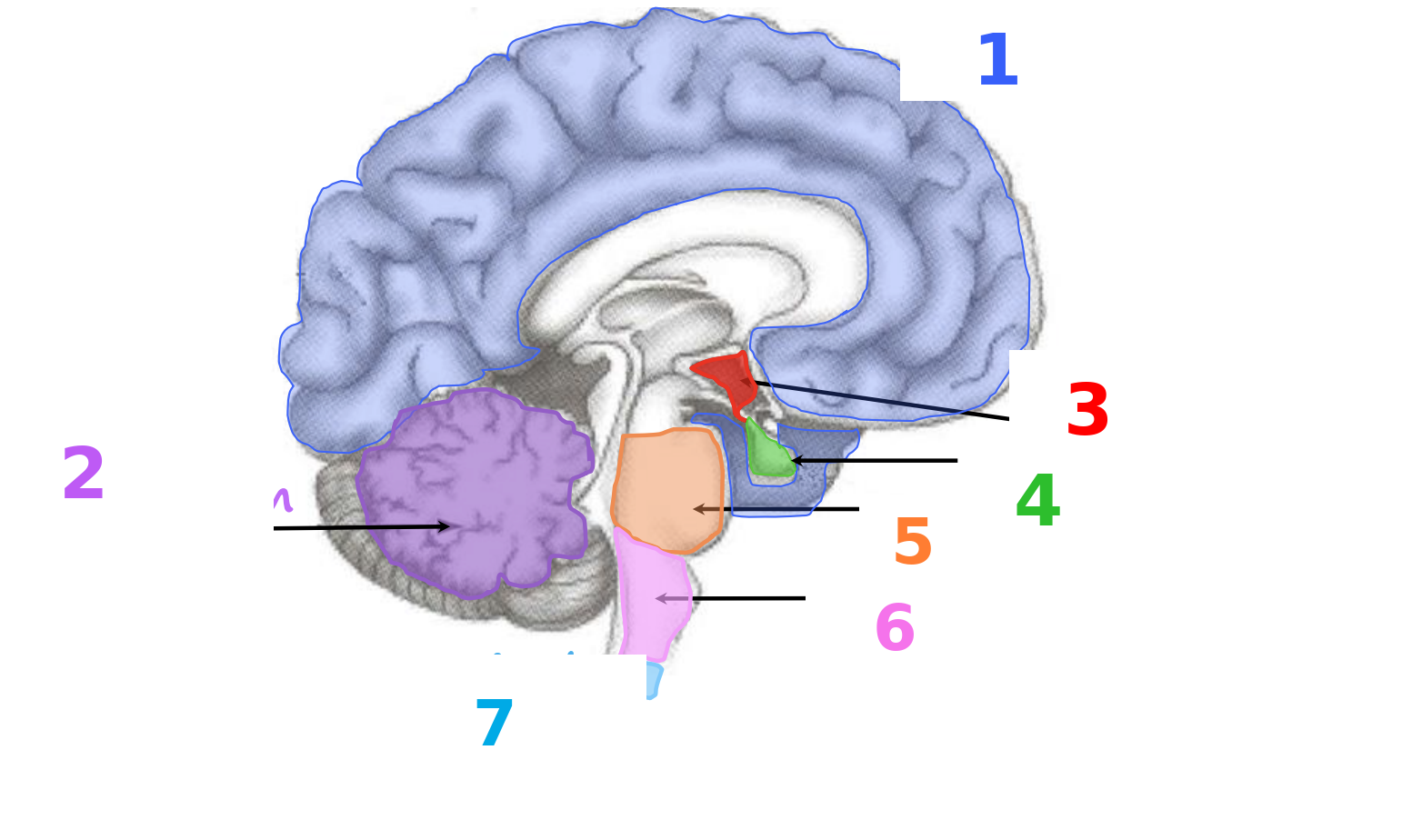
6
medulla oblongata
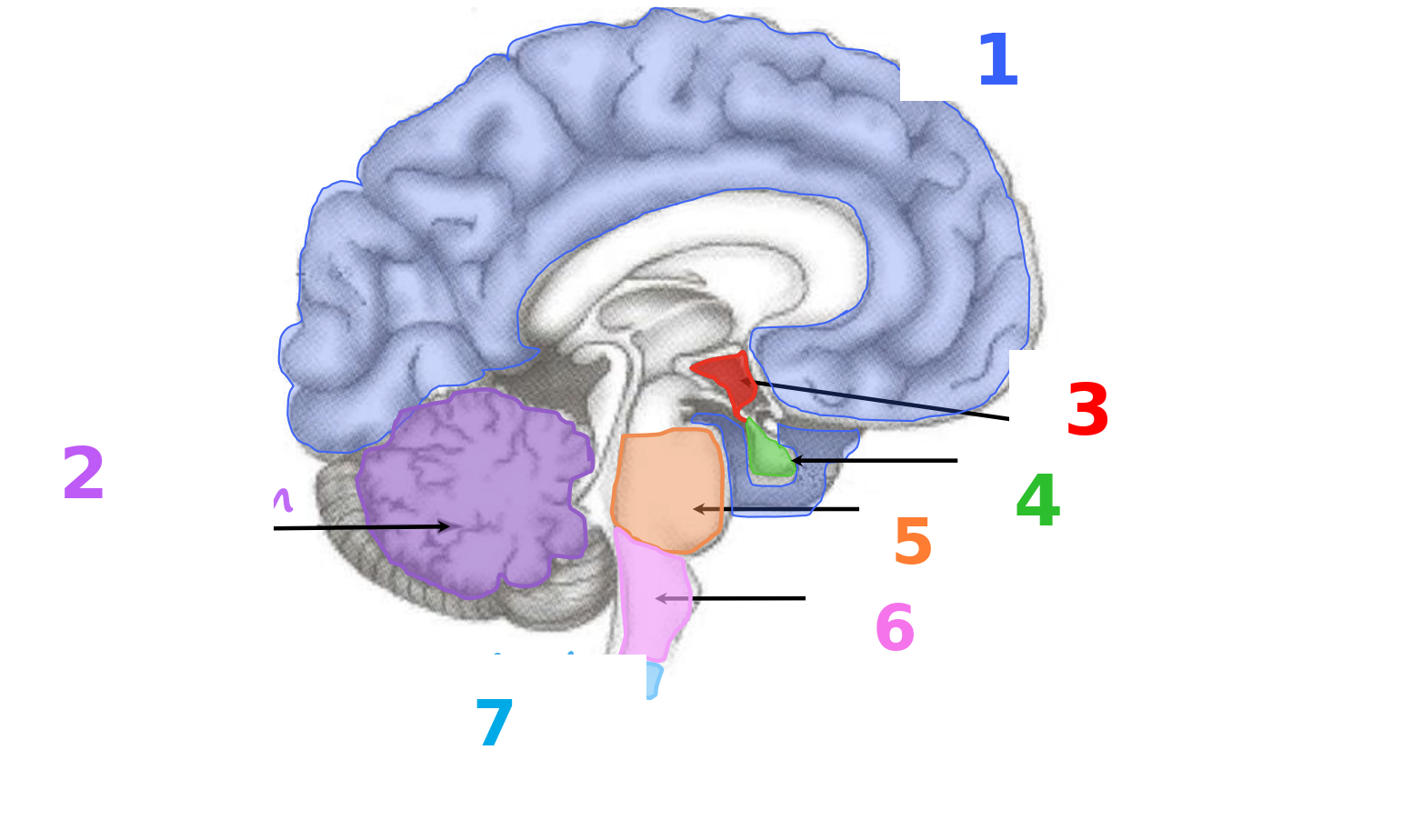
7
spinal cord
Light energy
eyes
sound energy
ears
chemical energy
nose and mouth
heat energy
skin
mechanical energy
skin
sclera
white, tough, fibrous outer layer protects the eye adn maintains eye shape
choroid
blakc middle layer. provides oxygen and nourishment to the retina. it absorbs light and limits reflection within the eye
retina
contians light sentitive cells (cones and rods) that converts light energy into action potentials
cons and rods
photoreceptors
fovea centralis
central part of the retina. filled with cones
optic nerve
transmits impulses to the occipital love from the retina. sensory neurons
iris
coloured part of eye. it is a muscle that controls the size of adjustable circular opening in the center called a pupil
pupil
hole in the middle of the iris. allows light to enter the eye
lens
composed of trnasparent, flexible tissue. along with the cornea, helps to focus light and images on the retina
cornea
tought, clear, outer layer. refract (bends) light toward the pupil. provides most of the eyes focusing power.
pathway of light into eye
cornea, pupil, lens, retina, optic nerve, occipital lobe
camera case
retina
camera lens
lens and cornea
camera diaphragm
sclera
camera aperture
pupil
camera film
iris
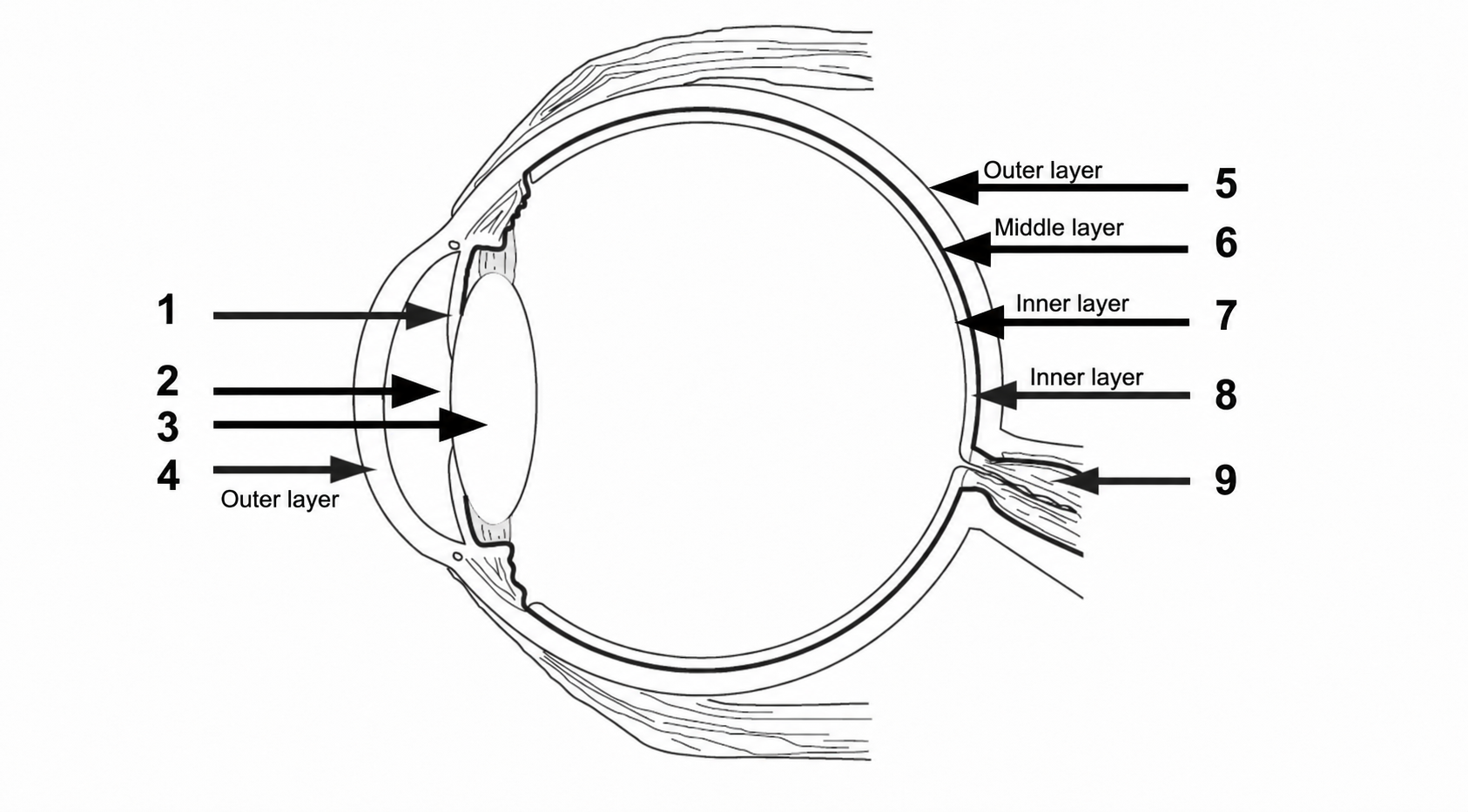
1
iris
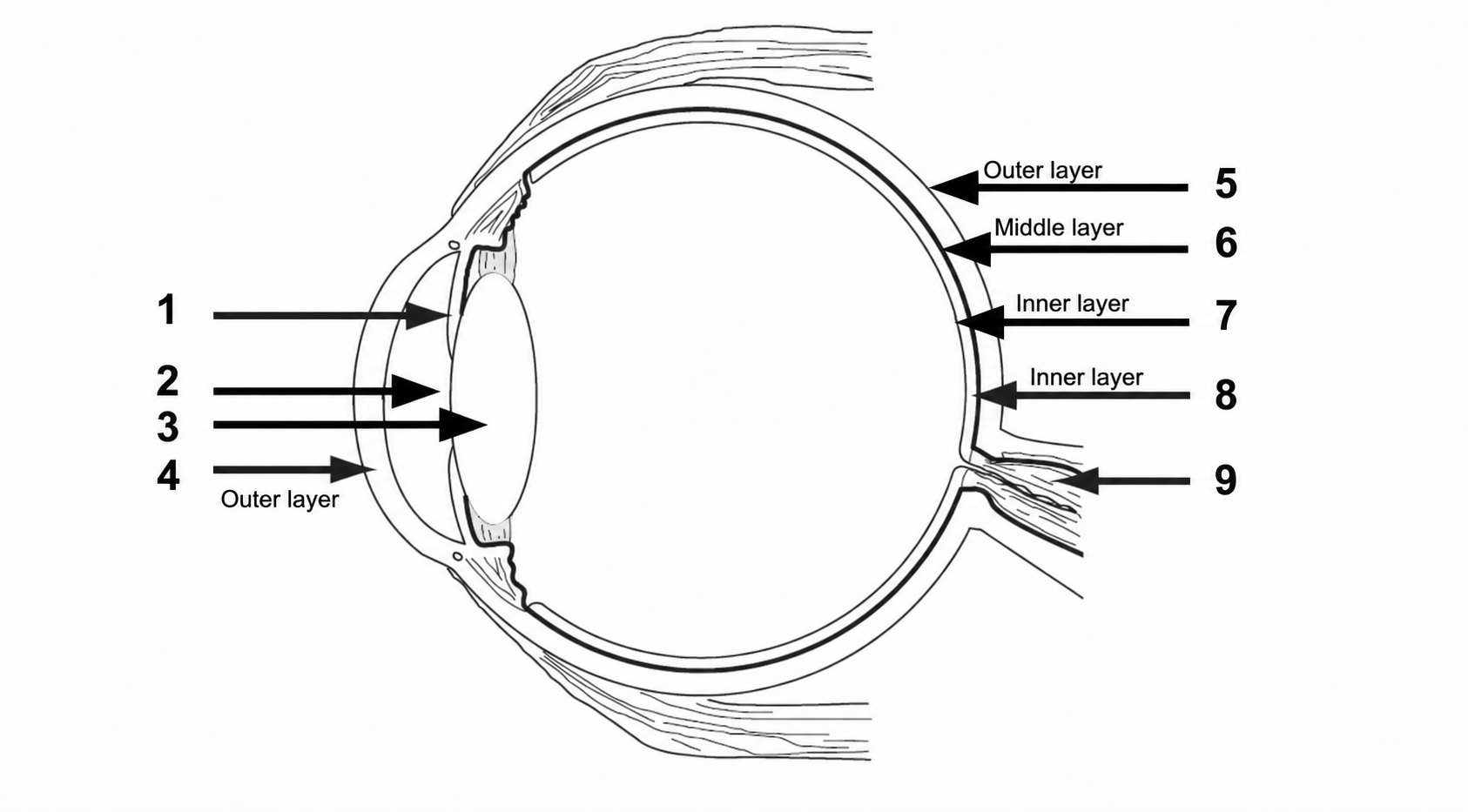
2
pupil
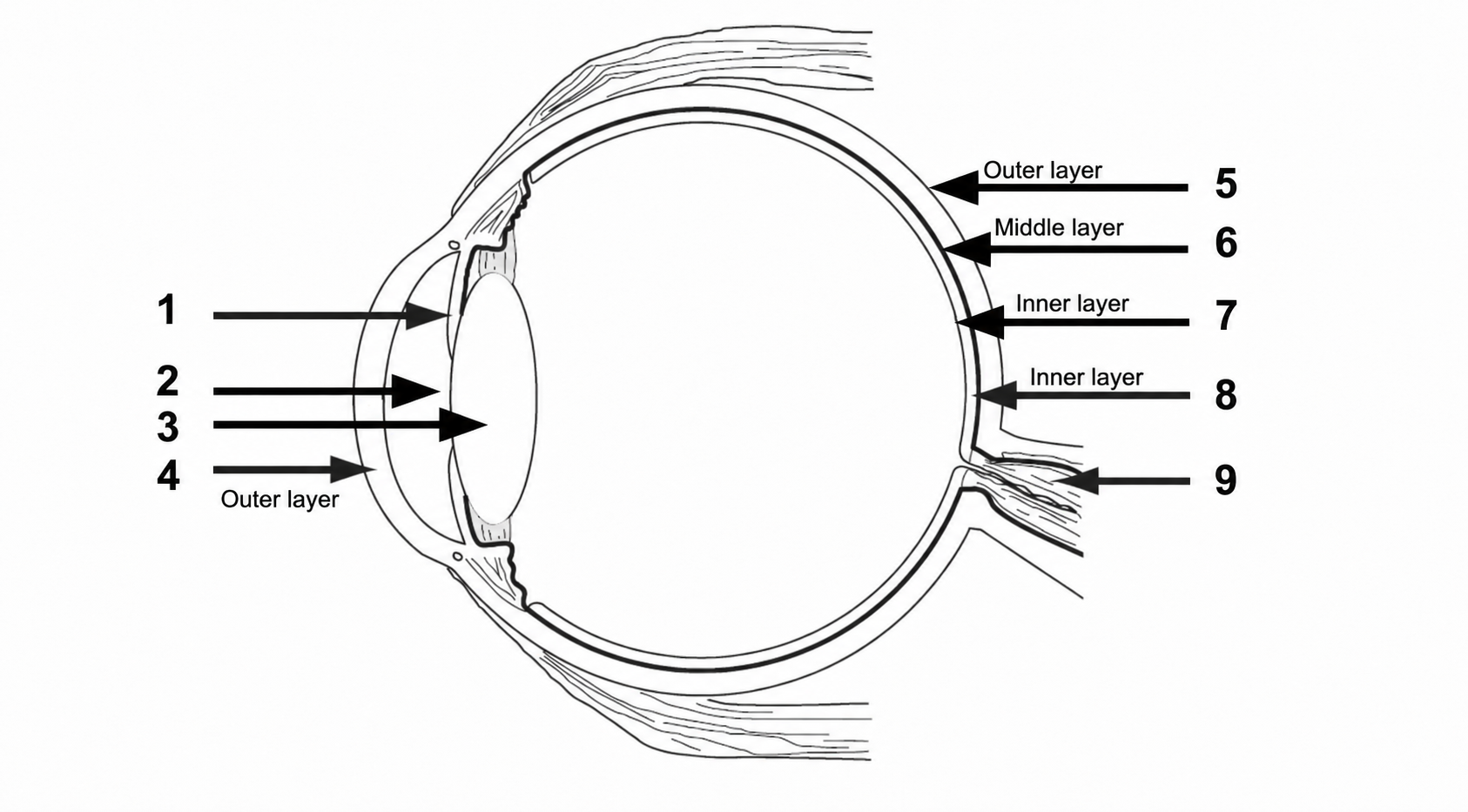
3
lens
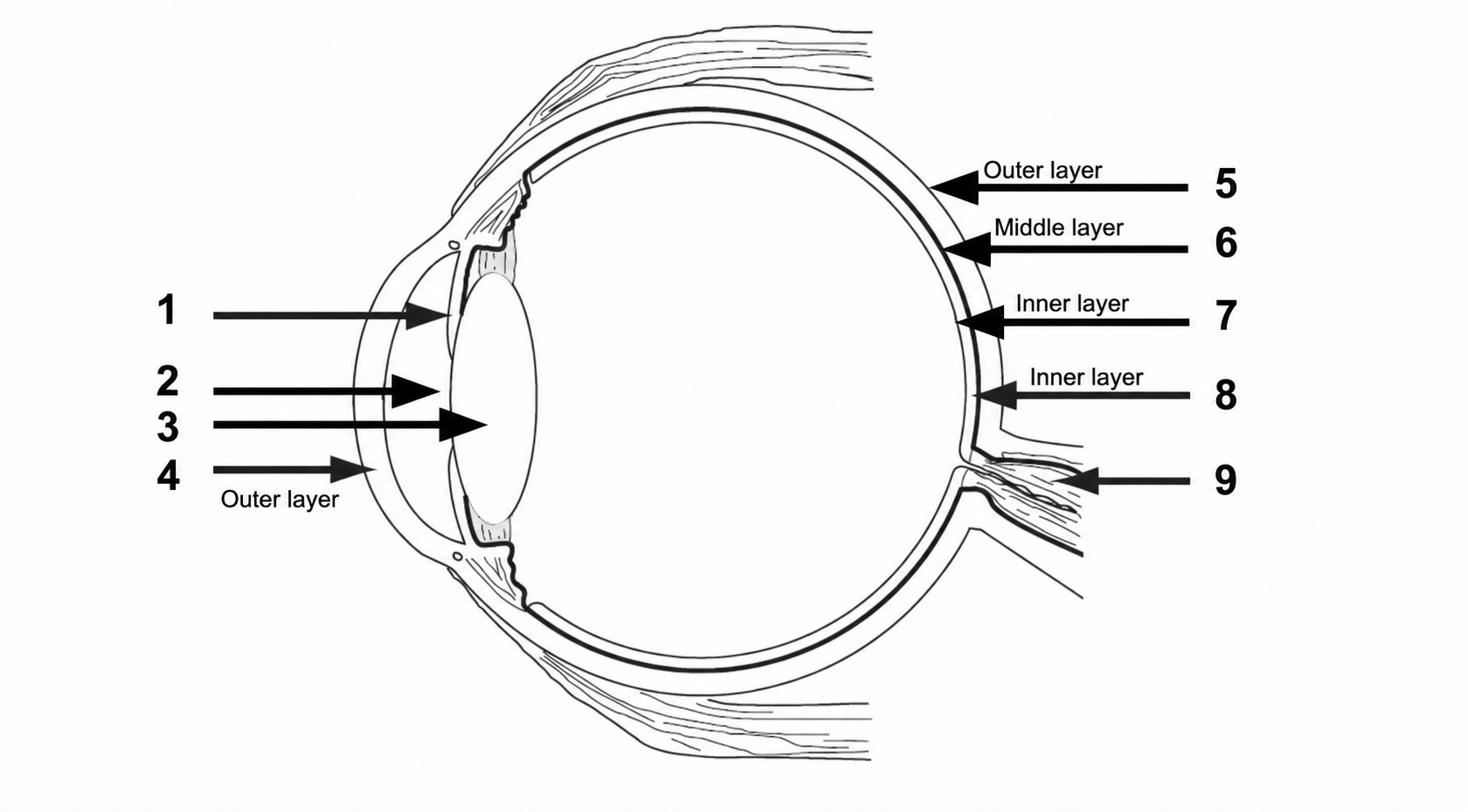
4
cornea
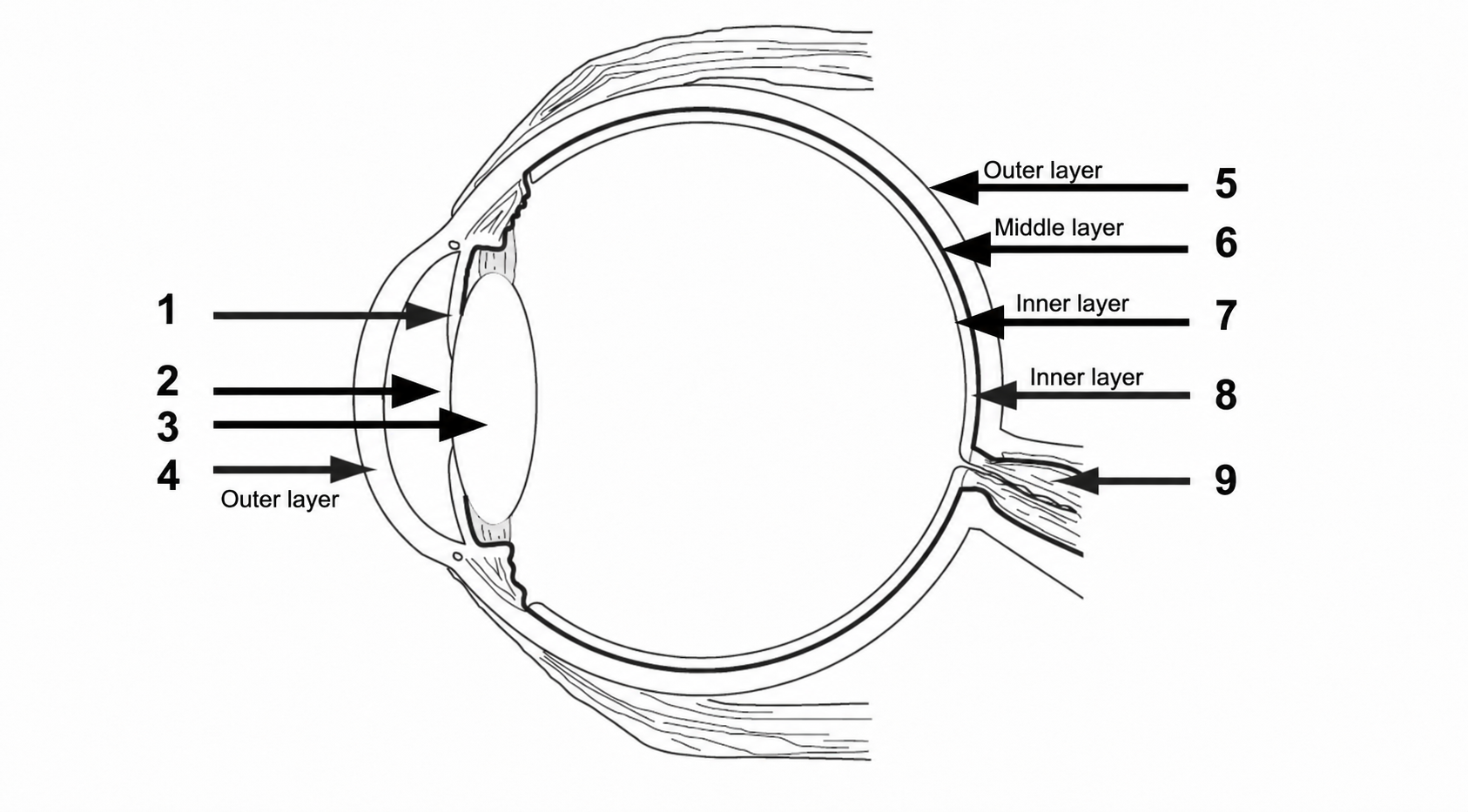
5
sclera
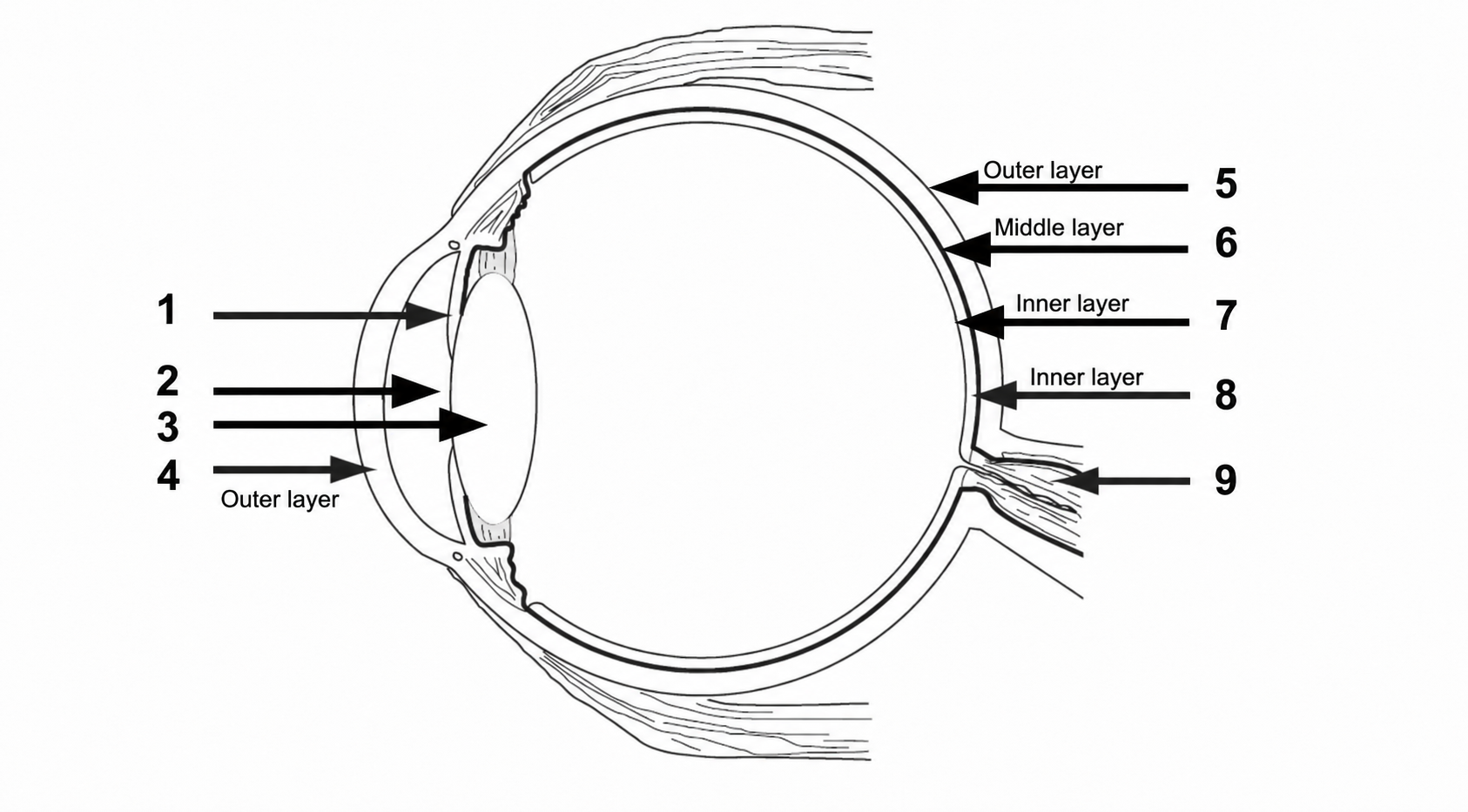
6
choroid
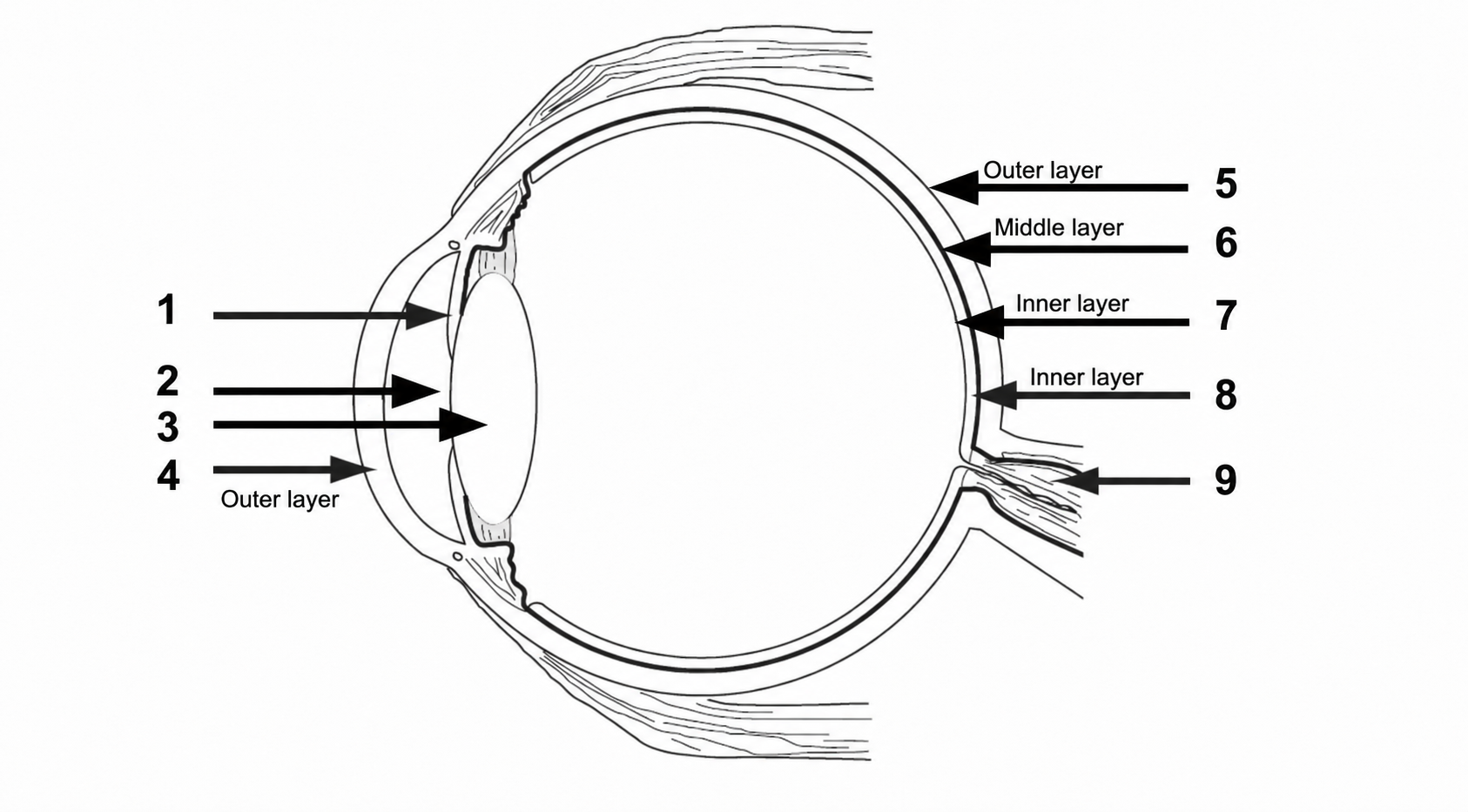
7
retina
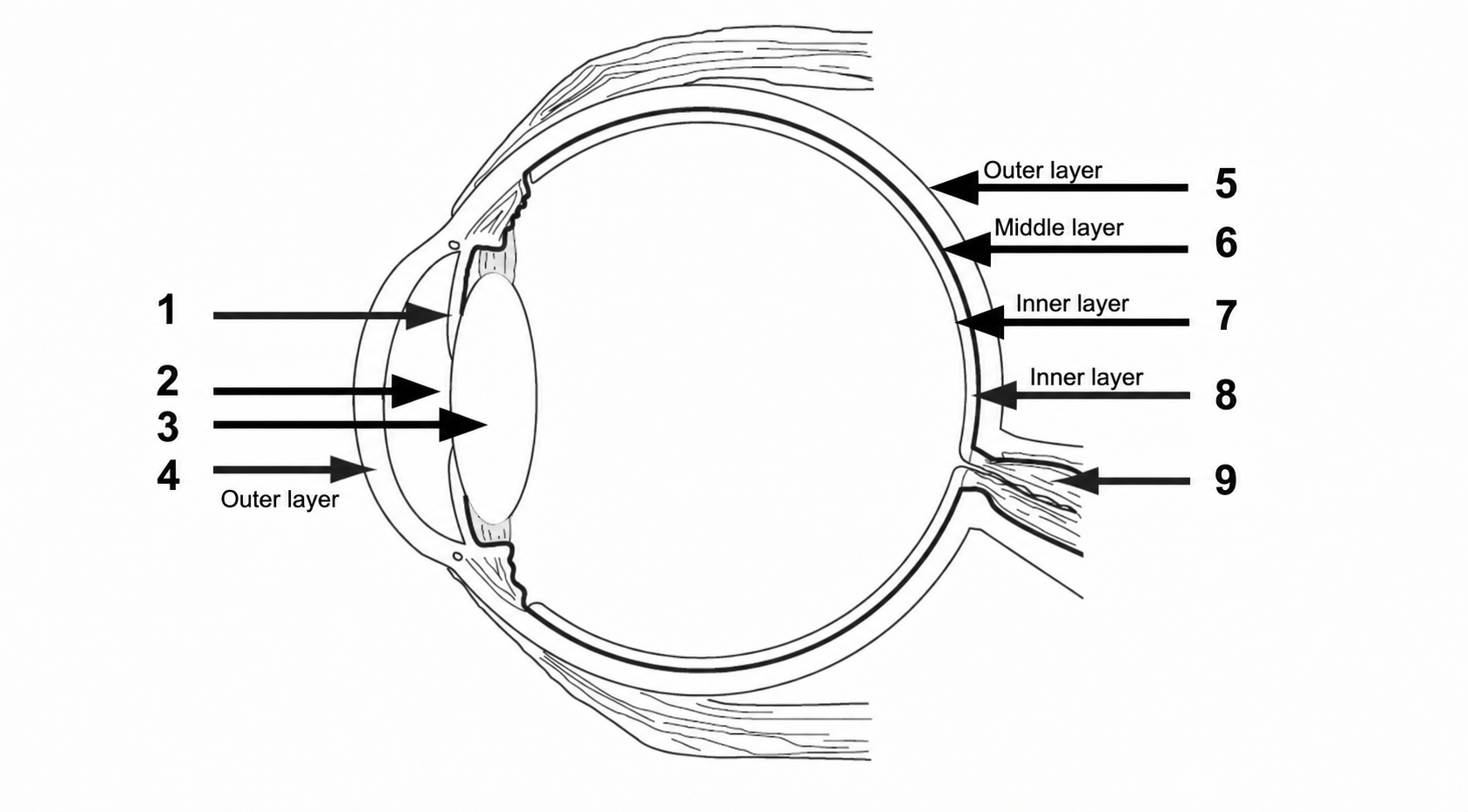
8
fovea centralis
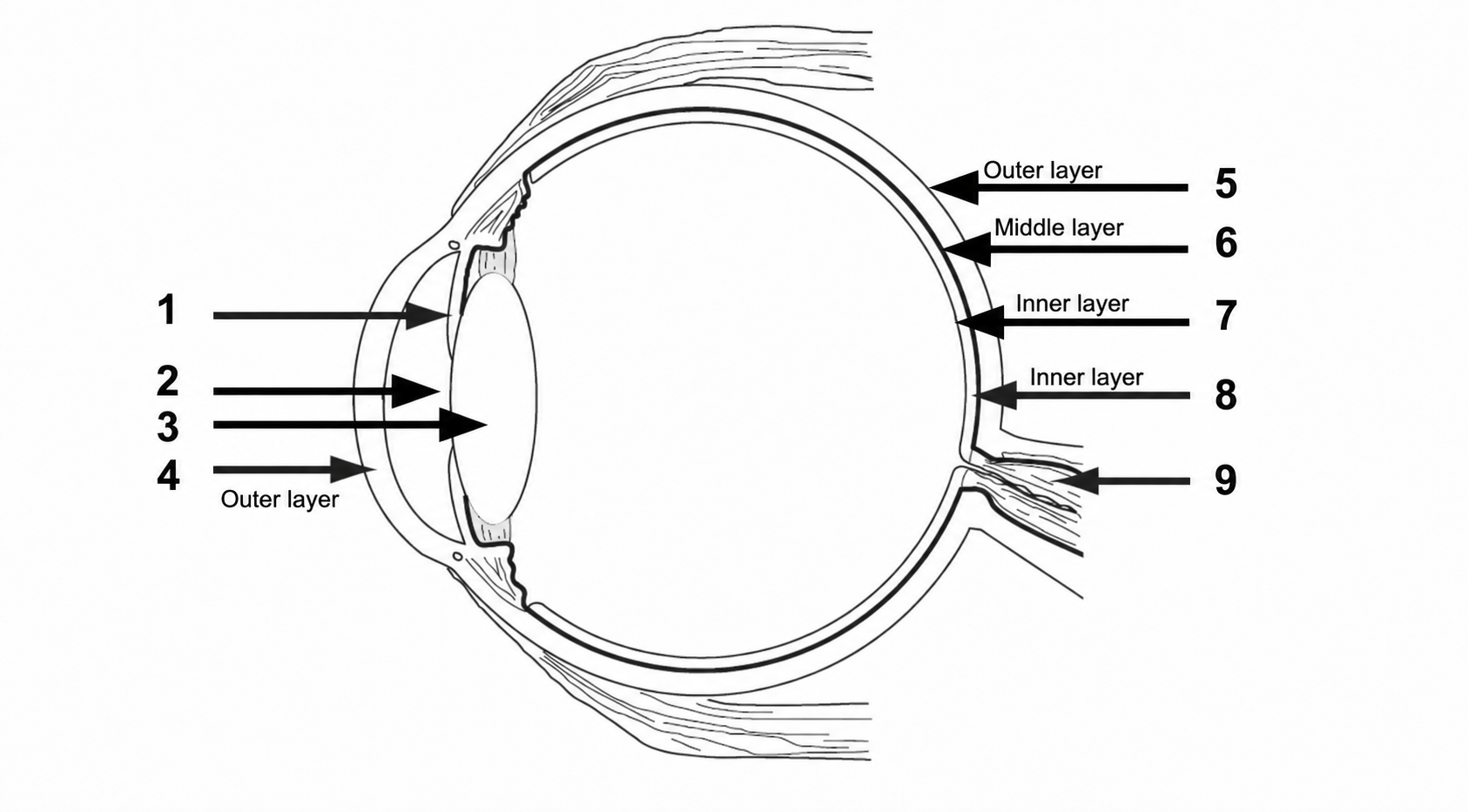
9
optic nerve
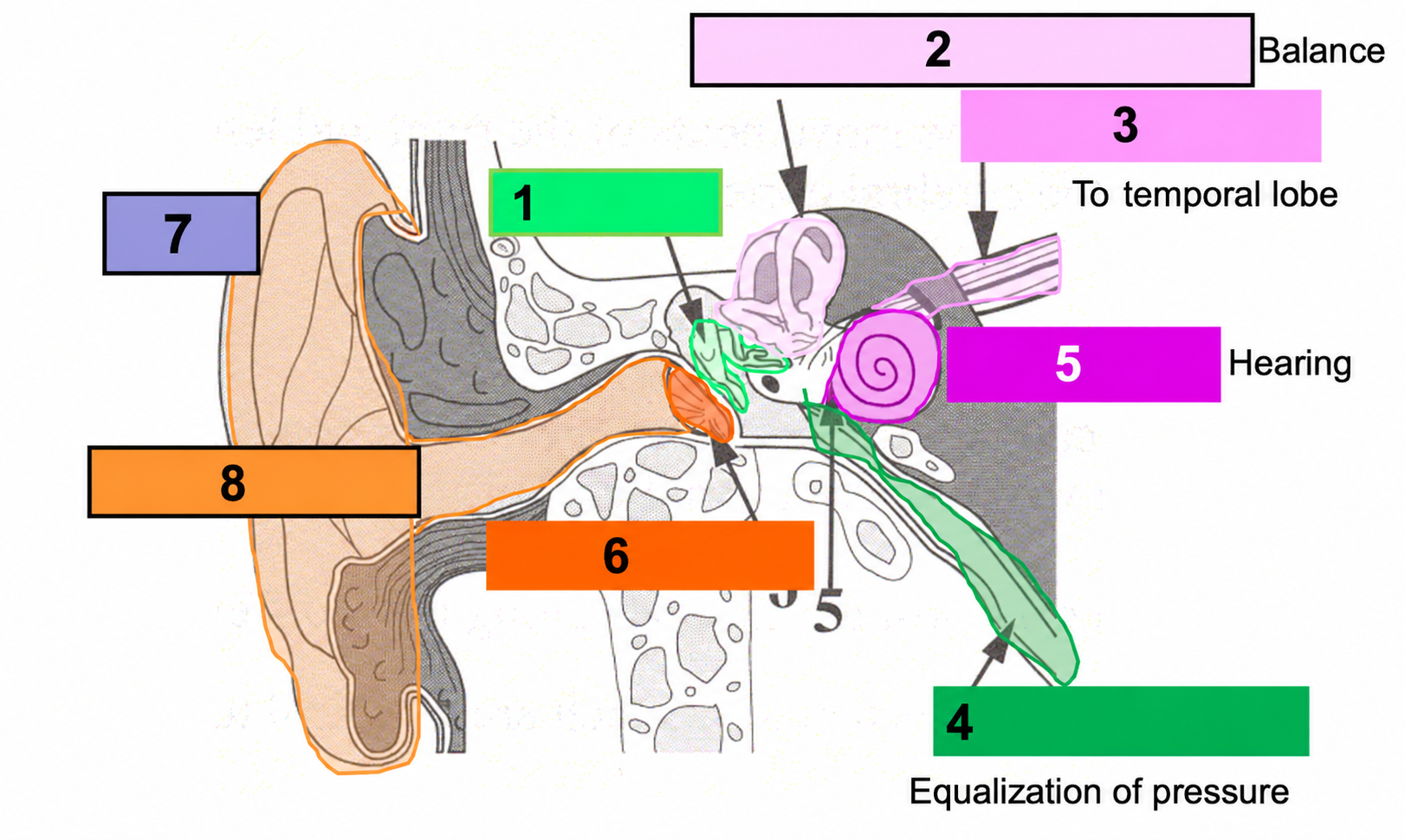
1
ossicles
2
semicircular canals
3
auditory nerve
4
eustachian tube
5
cochlea
6
tympanum
7
pinna
8
auditory canal
compared to the outter and middle ear, the inner ear is filled with
fluid
functions of the ear
balance and hearing
semicricular canals
three tiny, fluid filled tubed in the inner ear that help keep balance during head and body rotation
eustachian tubes
connects the throat to the middle ear
its function is equalization of pressure
pinna
where sound saves are funneled into the auditory canal
tympanum
vibrates and sends the vibrations through tiny bones in the middle ear then transferring the sound vibrations into the cochlea of the inner ear
tiny bones in the middle ear
ossicles
cochlea
carries sound vibrations through the fluid in it
organ of corti
contains hair cells which respond to movement of fluid and causes said hair cells to vibrate and convert those vibrations to action potentials
temportal lobe
recieves action potentials created from hair cells converting vibrations to action potentials which are then sent through the auditory nerve
signals are translated into sounds
Path that sound takes through the ear to the brain
pinna, auditory canal, tympanic membrane, ossicles, cochlea, auditory nerve, temporal lobe
hearing loss is mainly due to
aging and loud noises